

A well-planned travel toiletry kit is one of the few packing jobs that affects every single day of a trip. Get it right and you glide through airport security, keep a small hotel bathroom organized, and avoid buying overpriced replacements on the road. Get it wrong and you spend a holiday hunting for pharmacies, repacking leaky bottles, or replacing a toothbrush at a station kiosk. This guide shows how to build a compact, leak-resistant travel toiletry kit for flights, trains, and longer trips.
You will find a decision checklist, container comparison, current liquid-rule references, and lower-waste options. The method suits carry-on and rail-first trips where every item must earn its space.
Five-part carry-on check
Choose a wipe-clean bag, size refills to the trip, replace suitable liquids with solids, separate items by use, and leave room for replacements bought only when needed.
Get the Eco Rail-First Trip Planner (Free PDF)
Plan calmer, greener trips with a rail-first checklist, buffer planner, and copy/paste templates.
What is a travel toiletry kit
A travel toiletry kit is a small, organized set of personal-care items you carry in your hand luggage or daypack so that daily hygiene, skincare. And basic grooming do not depend on what your hotel provides. In practical terms, it usually lives in a soft zip pouch or hanging organizer, holds containers that meet airline liquid rules. And contains only what you actually use in a normal day. The point is not to bring your whole bathroom. It is to bring the minimum that lets you feel clean, comfortable, and ready for a train, hostel, or overnight sleeper without improvising.
For most travelers a kit covers four jobs: cleaning (face, body, teeth, hands), care (moisturizer, lip balm, deodorant), grooming (razor, comb, nail care). And small emergencies (pain relief, plasters, a stain pen). What you include depends on the climate, the length of the trip. And how often you will have access to a bathroom with running water. A two-night city break is not the same as a two-week rail tour through five countries. And a hot summer trip asks more of a sunscreen and deodorant than a cold winter one.
Why a dedicated kit beats a stuffed washbag
Packing toiletries in their own pouch, rather than loose in a backpack, solves three problems at once. First, you can pull the whole kit out at security without unpacking your bag. Second, leaks stay inside the pouch instead of soaking your clothes. Third, it forces you to decide in advance what is essential, which is the single biggest space saver in any luggage system.
What to pack in a travel toiletry kit
Below is a complete packing list built around a 5- to 14-day trip. Trim it for a weekend, expand it for a longer tour, but resist the urge to bring full sizes. Refillable travel containers of 30 to 100 ml cover almost every traveler for one to two weeks. And you can top up at hotel dispensers, refill shops, or pharmacies on the road.
Core items for the travel toiletry kit
The list below is the working core of any travel toiletry kit for a short to mid-length trip. Most travelers will not need every line; pick the ones you actually use at home and skip the rest.
- Toothbrush (compact or foldable) and a small tube of toothpaste, or toothpaste tablets in a tin.
- Solid shampoo bar or a 50 to 100 ml refillable bottle of shampoo.
- Conditioner bar or a small refillable bottle, especially helpful for longer hair.
- Body wash bar, or a silicone travel bottle filled with body wash.
- Face cleanser (a gentle bar, micellar water in a small bottle, or cleansing sticks).
- Lightweight moisturizer in a 30 to 50 ml container, or a solid moisturizer stick.
- Lip balm with SPF, ideally in a tin or stick format to avoid leaks.
- Deodorant, choosing a stick or cream over aerosol to skip the liquid limit.
- Razor with a protective cap, plus one or two spare blades in a small case.
- Comb or folding hairbrush, and a thin microfiber quick-dry towel.
- Small first-aid basics: pain relief, antihistamine, plasters, and a few rehydration salts.
- Contact lens case and solution, or a spare pair of daily disposables in a hard case.
Skincare adjustments for trains, hostels, and sleeper cabins
Rail-first travel puts you in shared bathrooms more often than a resort holiday. That changes what is worth packing. A travel toiletry kit for trains and hostels benefits from a cleanser that does not need a sink, a quick-dry towel. And a small pump or stick moisturizer that you can apply standing in a sleeper cabin. On overnight trains, you also want anything that helps you sleep in a moving berth: a sleep mask, earplugs. And a small tube of hand cream for dry carriage air. None of these replace your usual routine, but they keep the basics working when the bathroom is at the end of a swaying corridor.
How to choose a toiletry bag
The bag matters as much as what goes inside it. A good toiletry bag for travel has a flat or slightly structured base so it stands on a small hotel shelf, a wipe-clean lining in case of leaks. And a top handle or hook so you can hang it on a hostel bed or a train compartment hook. The size should match the trip, not the contents you wish you had packed. A bag that is too big invites you to overfill it.
| Bag style | Best for | Pros | Tradeoffs |
|---|---|---|---|
| Hanging zip organizer | Hostels, sleeper trains, shared bathrooms | Hangs on a hook, holds many small items, separates clean and used | Bulky, can overstuff quickly |
| Flat zip pouch | Carry-on only, short city breaks | Slips into a backpack, light, easy to flatten when empty | No structure, things slide around |
| Structured case with trays | Longer trips, families, full grooming routines | Stands upright, separates categories, protects glass bottles | Heavier, takes more luggage space |
| Roll-up wrap | Minimalists, ultralight travelers | Very compact when rolled, lays items out flat | Limited capacity, less protection for liquids |
| Wet/dry split pouch | Active trips, beach days, swim stops | Keeps damp items away from dry ones | Extra seams can leak over time |
Material and lining choices
Look for a coated or laminated interior rather than untreated cotton. Coated nylon or polyester wipes clean with a damp cloth and is less likely to grow mildew if a bottle leaks. A covered reverse-coil zipper can reduce snags in a crowded bag. If you travel often, an interior mesh pocket keeps small items visible. And a clear zip window lets security see everything without opening the pouch.
Refillable containers, sizes, and airline liquid rules
Refillable containers are the heart of any reusable travel toiletry kit. They can reduce the need to buy new travel-size containers and let you keep products that already work for you. The right material depends on the product: thicker silicone for shampoo and body wash, PET or HDPE plastic for oils. And aluminum for solid balms and sanitizer sticks.
Container materials at a glance
Soft silicone bottles suit thick shampoo and body wash; rigid PET or HDPE bottles make thin products easier to see and pour. Small metal tins work for dry bars and balms. Glass is heavier and breakable, so it is usually a poor fit for a carry-on.
Formats that skip the liquid limit
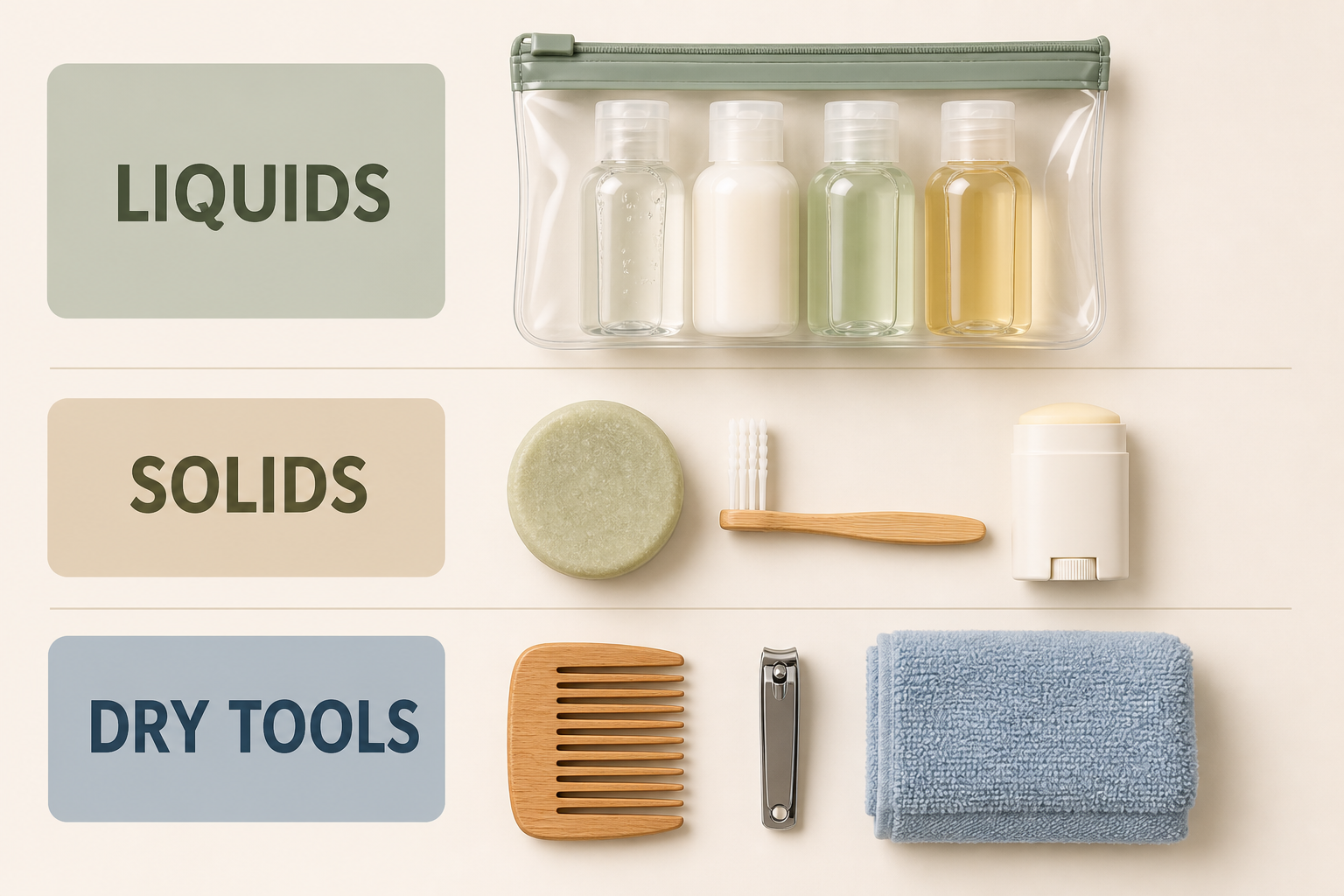
Stick, twist-up, and solid formats are a quiet cheat code for any travel toiletry kit. They are not counted as liquids at most security checkpoints. So they save space inside the clear zip pouch and remove one source of leaks.
- Stick and twist-up tubes: great for deodorant, moisturizer sticks, and lip balm.
- Bar containers: tins or travel cases that hold solid shampoo, conditioner, body wash, and even toothpaste tablets.
- Tablets and powders: toothpaste tabs, solid sunscreen sticks, and dry shampoo powder.
Airline carry-on liquid rules you need to know
Rules depend on the departure airport and itinerary. For U.S. screening, the TSA 3-1-1 guidance limits carry-on liquids, aerosols, gels, creams, and pastes to containers of 3.4 ounces (100 ml) or less inside one quart-size clear bag. The European Commission states a 100 ml container limit inside one transparent, resealable one-liter bag. UK rules can vary by airport, so GOV.UK advises checking every airport on the itinerary. Medical and dietary exemptions may apply. Confirm the current rule with the departure airport before packing.
Eco-friendly swaps for a sustainable travel toiletry kit
An eco-friendly travel toiletry kit is mostly a question of what you avoid, not what you add. The biggest wins come from skipping single-use hotel miniatures, replacing bottled shower products with bars, and choosing containers you can refill for years. A few targeted swaps will cut most of the disposable plastic from your daily routine on the road.
Quick swaps for a lower-waste travel toiletry kit
- Replace bottled shampoo with a solid bar if it works for your hair and trip.
- Choose a cardboard or refillable deodorant stick instead of a new plastic tube.
- Try a body-wash bar or decant your usual wash into a small refillable bottle.
- Keep your current toothbrush until it needs replacing, then consider a lower-waste option.
- Use a guarded reusable razor when its blade rules fit your itinerary.
How to evaluate eco claims on travel products
Eco labels are not all equal. A bar that says “natural” on the front may still be wrapped in mixed plastic. A broad environmental claim may omit disposal conditions or local infrastructure. Before you add a product to your kit, it is worth checking three things. First, the packaging: is it recyclable, refillable, or home-compostable in your local system. Second, the formulation: are surfactants derived from petroleum or plant sources, and is the product free from microplastics. Third, the company: do they publish ingredient lists and specific evidence for refill or take-back claims. None of these checks is perfect, but together they help separate real progress from marketing.
Packing and organizing a leak-proof kit
How you pack a toiletry kit is almost as important as what you pack. The goal is to prevent leaks, pass security quickly, and find what you need without dumping the whole bag on a small hotel sink. Three habits cover most situations: wrap liquids in a small zip pouch, group items by use. And keep the heaviest containers at the bottom of the bag.
A seven-step packing routine for a leak-proof travel toiletry kit
- Decant shampoos, body wash, and lotions into refillable travel bottles no larger than 100 ml, and tighten the caps fully before packing.
- Tape the seam of every screw-top bottle with a small piece of tape, or place a piece of cling film under the cap before closing, to create a secondary seal.
- Place all liquid containers inside a clear zip pouch so any leak stays contained and security screening is faster.
- Group items by job in small mesh or labeled pouches: oral care, skin care, hair care, first aid, and period care.
- Keep small sharp items such as nail clippers and tweezers in a separate pouch so they are easy to remove at security if asked.
- Pack the heaviest items closest to the base of the bag to stop the kit from tipping over on a shelf or sink.
- Leave a small empty space in the bag so you can add extras on the road without crushing the rest.
Common packing mistakes to avoid
Three mistakes cause most toiletry kit failures. The first is overfilling bottles. Overfilled or loosely capped bottles are easier to spill during handling. Leave a small air gap and check every closure. The second is mixing liquids and solids in the same pouch. A leaking shampoo bottle will quickly coat your toothbrush and razor. The third is forgetting a small laundry or plastic bag for used items. A dedicated “used” pouch keeps the kit clean, especially on overnight trains where the only sink may be at the end of the carriage.
Travel toiletry kit by trip type
The right kit depends on how and where you travel. A weekend in one city has different needs from a two-week rail tour or a remote hiking week. The table below summarizes the priorities for each trip type so you can adapt the master list above without re-inventing the kit from scratch.
| Trip type | Core focus | Drop | Add | Notes |
|---|---|---|---|---|
| Weekend city break | Speed through security, light bag | First-aid kit, full skincare routine | Solid shampoo bar, travel deodorant stick | One 50 ml bottle of moisturizer is usually enough. |
| Two-week rail tour | Refillable, durable, organized | Anything you cannot replace at a pharmacy | Refillable bottles, small laundry bag, shoe cleaning wipes | Plan to top up at hotels and pharmacies along the route. |
| Overnight sleeper train | Sleep and comfort, small footprint | Loud packaging, large bottles | Sleep mask, earplugs, hand cream, dry shampoo | Keep the kit small enough to live on a small fold-down shelf. |
| Beach or warm climate | Sun, salt, sweat | Heavy creams, hair oils | Reef-safe sunscreen, after-sun, antifungal powder, salt-water-safe conditioner | Check airline rules for aerosols, which may be restricted. |
| Cold climate or winter rail | Dry air, layered skin care | Lightweight gels | Rich cream or balm, lip balm with SPF, hand cream, thicker moisturizer | Pack a tiny tin of balm for wind-chapped skin on platforms. |
| Hostel or shared bathroom | Hangable, quick dry, contained | Glass bottles, loose items | Hanging organizer, microfiber towel, flip-flops for showers | Keep razor and toothbrush inside a hard case, not loose. |
How should you refill and clean containers?
Pack only enough product for the trip, then refill from products you already own or from a verified refill service. Label every bottle. Between trips, empty it, wash it according to the container and product maker’s instructions, rinse it thoroughly, and let it dry completely before refilling. Do not mix products in an unwashed bottle. This simple routine reduces clutter without claiming that every refill system has the same environmental outcome.
Travel toiletry kit checklist you can print or save
Use the checklist below as a quick reference before you close your bag. Tick off only what you will actually use. Keep the kit light enough that you will not resent carrying it. If you cannot tick an item in five seconds, it probably does not need to be in the kit.
- Toothbrush and toothpaste tabs in a tin, or a small tube of toothpaste.
- Solid shampoo and conditioner bars, or 50 to 100 ml refillable bottles.
- Body wash bar or 50 ml refillable bottle of body wash.
- Face cleanser in bar, stick, or small bottle form.
- Moisturizer in a 30 to 50 ml container or solid stick.
- Lip balm with SPF, in a tin or stick.
- Deodorant stick or cream, alcohol-free where possible.
- Safety razor with one or two spare blades in a small case.
- Comb or folding brush, plus a small quick-dry towel.
- Sunscreen in a 30 to 50 ml bottle, reef-safe for beach trips.
- Hand sanitizer, 30 to 50 ml, in bottle or solid stick form.
- First-aid basics: pain relief, antihistamine, plasters, rehydration salts.
- Clear zip pouch for liquids, sized to airline security rules.
- Small laundry or plastic bag for used items, especially useful on sleeper trains.
Quick answers to common travel toiletry kit questions
How big should a travel toiletry kit be
For most travelers, a kit about the size of a small shoe bag works well. That is enough to hold the core list above without forcing you to overpack. And it fits inside a carry-on backpack or a medium suitcase without taking over the main compartment. A larger kit only makes sense if you are packing for a family or carrying a full skincare routine with multiple serums.
Can you bring a full-size shampoo on a plane
For U.S. and EU screening, carry-on shampoo containers generally must hold no more than 100 ml (3.4 oz in the U.S.) and fit inside the required clear bag. You can carry full-size bottles in checked luggage, but then you risk losing your kit if the bag is delayed. The simplest approach is to decant into refillable travel bottles and refill from a full-size bottle at your destination.
Are solid toiletries allowed in carry-on luggage
Many solid bars and sticks are screened as solids, but the classification of pastes, powders, and borderline products can vary. This includes solid shampoo, conditioner, body wash, deodorant, sunscreen sticks, and toothpaste tablets. They may free space in the liquids bag. Check the rules of your specific airline and departure airport if you are unsure.
What is the lightest travel toiletry kit for backpackers
An ultralight kit usually replaces bottles with bars, drops the razor for a small trimmer, and skips a full skincare routine. A bar of shampoo can serve as body wash and shave soap in a pinch, a small tin of balm replaces several moisturizers. And a microfiber towel replaces a regular one. The trade-off is a smaller comfort margin, so it works best for short, active trips where weight matters more than routine.
How do you keep a toiletry kit organized in a hostel
Use a hanging organizer with a hook so you can keep the kit off a shared sink. Inside, separate clean and used items in two pouches, and keep anything that needs to stay dry in a small dry bag. A small zip pouch for valuables such as a razor, toothbrush. And contact lens case prevents them from being knocked off a shelf or mixed up with someone else’s kit.
Frequently asked questions about travel toiletry kits
What is the difference between a toiletry bag and a Dopp kit
A Dopp kit is a small, traditionally rectangular washbag originally designed for men. Today the term is used for any compact toiletry bag, while “toiletry bag” is the broader, gender-neutral label. In practice the two are interchangeable, and the choice comes down to size, material, and how many compartments you want.
What should you do with leftover toiletries?
Use the product on the next trip if it remains safe and within the maker’s storage guidance. Otherwise follow the product label and local disposal rules. Avoid assuming that an opened personal-care product can be donated.
Can you bring a safety razor in your carry-on
Rules vary by country and airline. In many jurisdictions the blade itself must go in checked luggage, while the razor handle can stay in your kit. A quick check with your airline before you pack avoids a security delay and the awkward moment of having to surrender a blade at the checkpoint.
How do you pack a toiletry kit for a long rail trip across Europe
Build the kit around refillable containers and solid bars, and plan to top up at hotels and pharmacies along the route. Use a hanging organizer so you can keep the kit off shared sinks and small shelves. And pack a small laundry bag for used items. The core list is the same as a flight kit, with extra attention to sleep and comfort items such as a sleep mask, earplugs. And a rich hand cream for dry sleeper cabins.
How this guide was researched
This guide is built from published sources: official guidance, operator or manufacturer documentation, and independent published testing. It is research, not first-hand testing, travel, or ownership by this site. Where a price, rule, or limit is quoted, it is what the source published at the time of review. So confirm the current terms with the provider before you act on them.
Planning your rail-first trip
If you are building a travel toiletry kit for a Europe rail trip, the rest of the Europe rail travel guide covers route planning, sleeper trains, station know-how, and carry-on systems. For packing systems that work on trains, see the packing checklist and carry-on systems guide. For a broader view of low-impact travel habits, the eco-friendly travel essentials page is a good place to start, and the sustainable travel tips guide helps you connect the kit to the wider trip.
Reviewed and updated on 2 September 2026 by the Eco Nomad Travel editorial team. This article is research-based and editorial in nature. Airline, security, and refill-shop rules change often, so please confirm current terms with your carrier and your destination before you travel.
Helpful next step: Before you book, compare location, total cost, cancellation rules, timing, and the practical tradeoffs for this trip.
Affiliate disclosure: EcoNomad Travel may earn a commission when you use qualifying partner links, at no extra cost to you. Recommendations are chosen for reader usefulness and fit.
