
Picture our oceans without their bustling coral cities. It’s a shocking thought, but one we’re getting dangerously close to. Artificial coral reefs are emerging as an essential intervention, acting as engineered foundations for new life and providing the scaffolding needed to rebuild struggling marine ecosystems.
Natural coral reefs, which incredibly support a quarter of all marine life, are in a state of crisis. A perfect storm of warming oceans, pollution, and destructive overfishing is causing them to decline at a frightening pace. Consequently, the delicate balance of these underwater metropolises is being shattered.
This isn’t just a problem for fish. In fact, the loss hits millions of people who depend on healthy reefs for food, for protection from coastal storms, and for the income that tourism brings. Without them, livelihoods and food security are on the line. This is where artificial reefs offer a glimmer of hope.
These man-made structures are designed to give new life a stable place to anchor and grow. They provide immediate shelter for fish and invertebrates, kickstarting a recovery process that would take far longer on a barren seabed. Think of them as a first-aid response for the ocean.
The Urgent Need for Intervention
The situation gets more critical every year. Some research points to a terrifying possibility: a potential global reef collapse as soon as 2026 due to rising temperatures and ocean acidity. Recent surveys of Australia’s Great Barrier Reef confirmed alarming levels of bleaching, driving home the urgency.
As natural ecosystems stumble, these engineered habitats also become critical economic lifelines. They don’t just help restore biodiversity; they also create fresh opportunities for dive tourism and sustainable fishing, directly benefiting local economies. This kind of proactive approach is a key part of the future of sustainable tourism.
Rebuilding Marine Ecosystems and Communities
Artificial reefs do more than just grow coral. They rebuild entire communities—both underwater and on land. By creating complex, stable habitats, they manage to tick several crucial boxes at once:
- Boost Fish Populations: They act as safe nurseries for juvenile fish, allowing them to mature and helping local fish stocks recover.
- Enhance Biodiversity: The nooks, crannies, and varied surfaces attract a whole new range of species, from tiny crabs to larger predators.
- Support Local Economies: Revitalized dive sites and healthier fisheries translate directly into jobs and sustainable livelihoods.
- Provide Coastal Protection: In some cases, large reef structures can help break up wave energy, protecting vulnerable shorelines from erosion.
These projects are a powerful example of how human ingenuity can work with nature to help it heal. They represent a tangible, hands-on step toward mending our oceans, creating real hope and resilience where it’s needed most.
How Artificial Coral Reefs Are Built
So, how do you actually build an underwater city for fish? It’s a lot more than just sinking old junk and hoping for the best. Modern artificial reef construction is a thoughtful blend of marine biology and clever engineering. It all starts with one crucial decision: what to build it out of.
The material you choose is everything. It determines how long the reef will last and whether it’s safe for marine life. It also affects how quickly fish, corals, and other critters will decide to move in.
We’ve come a long way from the days of using old tires (a famously bad idea). Today, the goal is to create surfaces with the perfect texture and chemical makeup. This convinces tiny coral larvae to settle down and start growing.
The Building Blocks of a New Ecosystem
Modern reef projects focus on materials that are both stable and welcoming to marine life from day one. The best ones mimic or even improve upon what nature provides.
Here are a few of the most promising approaches you’ll see today:
- pH-Neutral Concrete: Regular concrete can leak alkaline chemicals, which is bad news for nearby sea life. That’s why serious projects use special pH-neutral concrete mixes. They’re inert and safe from the moment they touch the water, providing a solid, non-toxic foundation.
- 3D-Printed Ceramics: This is where things get really interesting. Scientists can now design and print incredibly complex, latticed structures out of terracotta-based ceramics. These shapes mimic the nooks and crannies of a natural reef, offering perfect hiding spots for small fish and ideal surfaces for coral to attach.
- Biorock Technology: A fascinating technique that gives corals a supercharged head start. It involves a steel frame that gets a safe, low-voltage electrical current. This current pulls minerals from the seawater, causing a limestone coating—chemically very similar to natural reef rock—to grow over the frame. The process can speed up coral growth by three to five times and makes the corals more resilient to heat stress.
This is a simplified look at the process—from a degraded reef to a healthy, revived one—powered by these smart interventions.

As you can see, it’s a journey from identifying a collapsed ecosystem to installing the right kind of scaffolding. Ultimately, this gives nature a foundation to build upon.
Comparison: Best Reef Building Materials
Selecting the perfect material is a balancing act between durability, cost, and ecological impact. For travelers who want to support legitimate projects, understanding these trade-offs is key. You can find hands-on opportunities in this space through our guide on eco-volunteering and regenerative travel. This short comparison helps you understand the best options.
| Material | Sustainability | Durability | Best For |
|---|---|---|---|
| 3D-Printed Ceramic | High (pH-neutral, custom shapes) | High | Mimicking natural reef complexity for biodiversity. |
| Biorock (Mineral Accretion) | High (Uses low-voltage electricity) | Very High (Self-repairing) | Accelerating coral growth in warm waters. |
| Concrete Modules | Medium (Can alter water pH if not treated) | Very High | Large-scale, stable structures for storm protection. |
| Upcycled Steel (e.g., ships) | Low-Medium (Can leach contaminants) | Varies | Creating large, complex habitats for dive tourism. |
Often, the most successful projects don’t stick to just one material. They mix and match, using concrete for a stable base and more complex structures like Biorock or ceramics on top. This creates a diverse and resilient underwater landscape.
From Blueprint to Seabed
Once the materials are chosen, the real work begins. You can’t just drop a new reef anywhere. Marine scientists conduct detailed surveys to find the perfect spot. They look for the right currents, depth, and a suitable seafloor. Crucially, they have to make sure the new structure won’t damage any existing healthy habitats.
When a site is approved, the reef modules are carefully barged out and lowered into the water, usually with a crane. Divers are waiting on the seabed to guide them into a pre-planned layout. This isn’t random; the design is meant to maximize water flow and create different types of habitats.
To give the new reef a head start, some projects practice “seeding.” This is where divers attach small, living coral fragments to the structures. With a solid foundation and a little help, these artificial reefs have the best possible chance of blossoming into the vibrant, self-sustaining ecosystems our oceans desperately need.
The Real-World Benefits of Man-Made Reefs
It’s one thing to talk about the science of artificial coral reefs, but their real story unfolds in the water. Once these structures are in place, they stop being engineering projects. They start becoming living, breathing parts of the ocean that tangibly benefit both marine life and coastal communities.
The most immediate change happens on the seafloor. On a barren, sandy bottom, these reefs are like an oasis in the desert. They instantly provide complex, three-dimensional shelter. For juvenile fish and other small creatures, this is a lifesaver, giving them a place to hide from predators. Consequently, it dramatically boosts their survival rates. Think of them as underwater apartment blocks, opening up move-in-ready homes where there was nothing before.
But it’s not just about shelter. This new habitat triggers a full-blown ecological comeback. Soon, invertebrates, crustaceans, and algae start to colonize the surfaces. This creates a food source that pulls in even more species, and before long, a complex food web takes shape. An empty patch of ocean transforms into a bustling marine neighborhood.

Empowering Local Economies
The positive ripples from these reefs don’t stop at the water’s edge; they flow directly into the lives of people on shore. For fishing communities that have watched their catches dwindle, these new habitats can be a genuine game-changer. They restore local fisheries by giving fish populations a place to recover and thrive.
The link between reef health and human prosperity is powerful. A landmark study found that if overfished reefs recovered, sustainable fish yields could jump by nearly 50% worldwide. For a country like Indonesia, that could mean up to 162 million more sustainable fish servings each year. You can read the full research on this incredible potential.
Beyond fishing, these reefs create entirely new economies built on sustainable tourism. Divers and snorkelers are naturally drawn to these revived underwater worlds. This creates jobs for local guides, boat captains, and guesthouses. This offers a powerful alternative to extractive industries, giving communities a financial reason to protect their marine environment. As a traveler, your choices—like dining at a local restaurant that sources from these restored fisheries—directly fuel these regenerative economies.
A Powerful Case Study in Indonesia
Nowhere is this synergy between reef restoration and community prosperity clearer than in parts of Indonesia. In areas where blast fishing once destroyed the marine environment, community-led artificial reef projects are sparking remarkable turnarounds.
By sinking carefully designed structures, villages have witnessed the return of fish stocks they thought were lost forever. This isn’t just an ecological win; it’s a direct boost to food security and financial stability for thousands of families.
The success of these projects offers a blueprint for other coastal communities around the globe. It proves that with thoughtful, well-planned intervention, we can reverse environmental damage and build a more resilient future. The lessons learned here are fundamental to the principles of responsible wildlife tourism.
Where to See Artificial Coral Reefs in Europe and Asia
So, you’re ready to see some of these underwater restoration projects up close? While many artificial coral reefs are off-limits for scientific research, a growing number are set up to welcome responsible divers. This isn’t about just looking; it’s about turning your trip into something genuinely regenerative.
We’ll highlight some of the most impressive and verifiable projects. From the Biorock gardens of Indonesia to the sunken naval fleets in Portugal, you can see firsthand how these structures are creating new hope. For each region, we’ll point you to a “Best Base City” to help you plan your journey.
A quick logistics tip before you dive in: when figuring out the best route, a good first step is to compare flights. For an easy way to see multiple route options and prices, Aviasales is a great platform for comparing routes and prices. And to make your arrival smoother, it’s a good idea to pre-book an airport transfer with Welcome Pickups to get you to your base city without any hassle.

Pioneering Projects in Southeast Asia
Southeast Asia is ground zero for many community-led reef restoration efforts. These projects are especially critical in areas scarred by historical damage from practices like blast fishing.
- Indonesia: A hotspot for global biodiversity, Indonesia is also a leader in building artificial reefs. The Gili Islands and Pemuteran Bay in Bali are famous for their sprawling Biorock installations. These projects have turned barren seabeds back into living marine habitats you can explore with certified local dive shops.
- Thailand: On the island of Koh Tao, you’ll find several well-known artificial reef sites, like Junkyard Reef and Hin Fai. These are creative examples using everything from concrete blocks to old motorbikes to give marine life a place to anchor and thrive. They’ve become fantastic underwater classrooms for conservation-focused dive courses.
- The Philippines: The country is dotted with grassroots reef projects. One of the best examples is in the waters off Anda, Bohol, where local groups have sunk concrete modules to bring back damaged reef zones. This has led to a visible rebound in fish populations.
Best Base City for Asian Reefs
To see the Indonesian projects, Pemuteran, Bali, is your best bet for a base city. This quiet coastal village hosts the world’s largest Biorock reef restoration project. It has a relaxed vibe with incredible diving and snorkeling right offshore, putting you face-to-face with conservation in action.
Growing Artificial Coral Reef Efforts in Europe
While tropical seas get most of the press, European countries are also using artificial reefs to support their own ecosystems. The focus here is on species adapted to cooler, temperate waters.
- Portugal: The Algarve coast is home to the Ocean Revival Underwater Park. Here, four decommissioned naval ships were deliberately sunk to create one massive artificial reef. It’s located about two miles (about 3.2 kilometers) off the coast of Portimão and has become a huge draw for divers, now teeming with marine life.
- Spain: The Canary Islands, especially Lanzarote, have been experimenting with reef modules for years. The Museo Atlántico, an underwater sculpture museum, also pulls double duty as an artificial reef. The pH-neutral concrete statues have become a magnet for a growing community of fish and invertebrates.
If you’re interested in the marine ecosystems of this wider region, our guide to the Adriatic Sea is a great next read.
Best Base City for European Reefs
For the Ocean Revival Park, Portimão, Portugal, is the ideal base. The city is a hub for the dive operators running trips out to the sunken fleet. It’s a great spot for exploring the Algarve’s stunning coastline, both above and below the water.
A final tip for multi-country trips: staying connected is key. Instead of juggling physical SIM cards, you can lock in your eSIM ahead of time. For digital nomads and frequent travelers who want data the moment they land, an eSIM from Airalo is an excellent choice for digital nomads. Always remember to check for certified eco-dive operators in advance to make sure your visit actively supports sustainable and ethical practices.
How to Responsibly Visit and Support Reef Projects
Visiting an artificial coral reef gives you a front-row seat to ocean restoration in action. But these aren’t just underwater sculptures; they’re fragile, living nurseries that depend on us to be mindful guests. How you visit matters. A lot.
The number one rule is simple: look, but never, ever touch. Even a light brush from a hand or a fin can wipe out brand-new coral polyps. It can also dislodge the tiny creatures that are just starting to call the structure home. Keep a respectful distance and sharpen your buoyancy control if you’re diving.
Your impact actually starts long before you hit the water. Most conventional sunscreens are loaded with chemicals like oxybenzone and octinoxate that are incredibly toxic to corals. Always opt for a reef-safe, mineral-based sunscreen that uses zinc oxide or titanium dioxide. It protects your skin without poisoning the marine life you came to see.
Finding and Supporting Legitimate Projects
Here’s the thing: not all tour operators are created equal. To make sure your visit actually supports real conservation, you need to pick dive centers with solid sustainability credentials. This is your chance to sidestep “greenwashing” and put your money where it counts.
Before you book, ask some direct questions:
- Do you partner directly with the local reef project managers or scientists?
- What percentage of the tour fee goes toward reef maintenance or monitoring?
- What are your specific guidelines for interacting with the artificial reef?
- Are your dive masters trained in marine conservation and ecology?
Legitimate operators will have no problem answering these. In fact, they’ll be glad you asked. You can dive deeper into spotting truly sustainable partners in our guide on how to choose eco-friendly tour operators.
What to Book First for Your Reef Trip
If you’re planning a trip around reef restoration, a little foresight goes a long way. The best volunteer opportunities and specialized tours often have limited availability. It’s smart to book early to secure your spot and avoid disappointment.
Your choice of accommodation also matters. When you’re ready to compare stays, using a platform with sustainability filters is a great idea. For travelers looking to book a regenerative stay near one of these projects, Trip.com offers a wide range of options and allows you to find properties with eco-certifications. It’s a great way to support businesses that share your environmental commitment.
Finally, any responsible trip plan includes preparing for the unexpected. Especially if you’ll be diving or volunteering, having the right travel insurance is non-negotiable. For anyone needing to compare plans and find the best deal for their adventure, VisitorsCoverage can help you compare and find the right travel insurance.
Editor’s Pick: The Global Ecotourism Network (GEN)
If you want to be absolutely sure your money is going to legitimate projects, the Global Ecotourism Network is our top recommendation. It’s not a booking platform but an essential network that vets and lists ecotourism operators worldwide. Use their database to find dive centers and volunteer programs that meet the highest standards of sustainability. It’s one of the best ways to avoid greenwashing and ensure you’re making a real difference.
Key Takeaways
- Practice Zero-Impact Diving: Master your buoyancy and live by the “look, don’t touch” rule to protect the delicate new coral growing on artificial reefs.
- Choose Reef-Safe Products: Stick to mineral sunscreens with zinc oxide or titanium dioxide to avoid polluting the very ecosystem you’re there to appreciate.
- Vet Your Operators: Don’t be shy. Ask dive shops specific questions about their conservation partnerships and practices to sniff out greenwashing.
- Plan and Book Mindfully: Secure your reservation for volunteer spots and eco-certified lodging well in advance. Always get adequate travel insurance for activities like diving.
- Support Verified Projects: Use resources like the Global Ecotourism Network to find and support operators who are genuinely committed to conservation.
- Extend Your Support: Your positive impact doesn’t stop when the dive ends. Choose local, sustainable businesses and become an advocate for marine protection.
Frequently Asked Questions About Artificial Coral Reefs
Are artificial coral reefs as good as natural reefs?
Think of them as essential “starter homes” for marine life rather than perfect replicas of ancient, complex reefs. In areas where the original reef is gone, they provide the crucial structure needed for new corals to settle and for fish to find shelter. They are a catalyst, giving nature a leg up to begin rebuilding itself.
Can any sunken object become an artificial reef?
Absolutely not. This is a dangerous myth. Dumping things like old tires can leach toxic chemicals into the ocean for decades, doing far more harm than good. Real artificial reefs are made from carefully chosen, non-toxic materials like pH-neutral concrete or ceramics and are placed in scientifically vetted locations to maximize ecological benefits.
How long does it take for life to appear on a new reef?
Marine life moves in surprisingly fast. You can see algae and tiny invertebrates colonizing a new structure within weeks, and small fish often show up for shelter within days. For a truly complex ecosystem with mature coral to develop, it takes several years. However, some technologies like Biorock can speed up coral growth rates dramatically.
How much does it cost to build an artificial reef?
The costs vary hugely. A small, community-led project might be relatively inexpensive, perhaps a few thousand U.S. dollars. In contrast, a large, engineered reef using 3D-printing technology can cost hundreds of thousands of dollars. But when you weigh that against their long-term value for fisheries, tourism, and coastal protection—often valued in the millions—they’re frequently an excellent investment.
How can I help artificial reef projects from home?
You don’t have to get wet to make a difference. Many of the non-profits and research institutes behind these projects rely on donations to fund their work. You can also help by raising awareness on social media, advocating for stronger marine protection policies, and shrinking your own carbon footprint—since climate change remains the biggest threat to all coral reefs, natural and artificial.

Book a Sustainable Stay That Fits This Trip
Explore eco lodges, villas, and resorts that match the slower, lower-impact travel style featured on Eco Nomad Travel.
Affiliate disclosure: We may earn a commission if you book through these links at no extra cost to you.
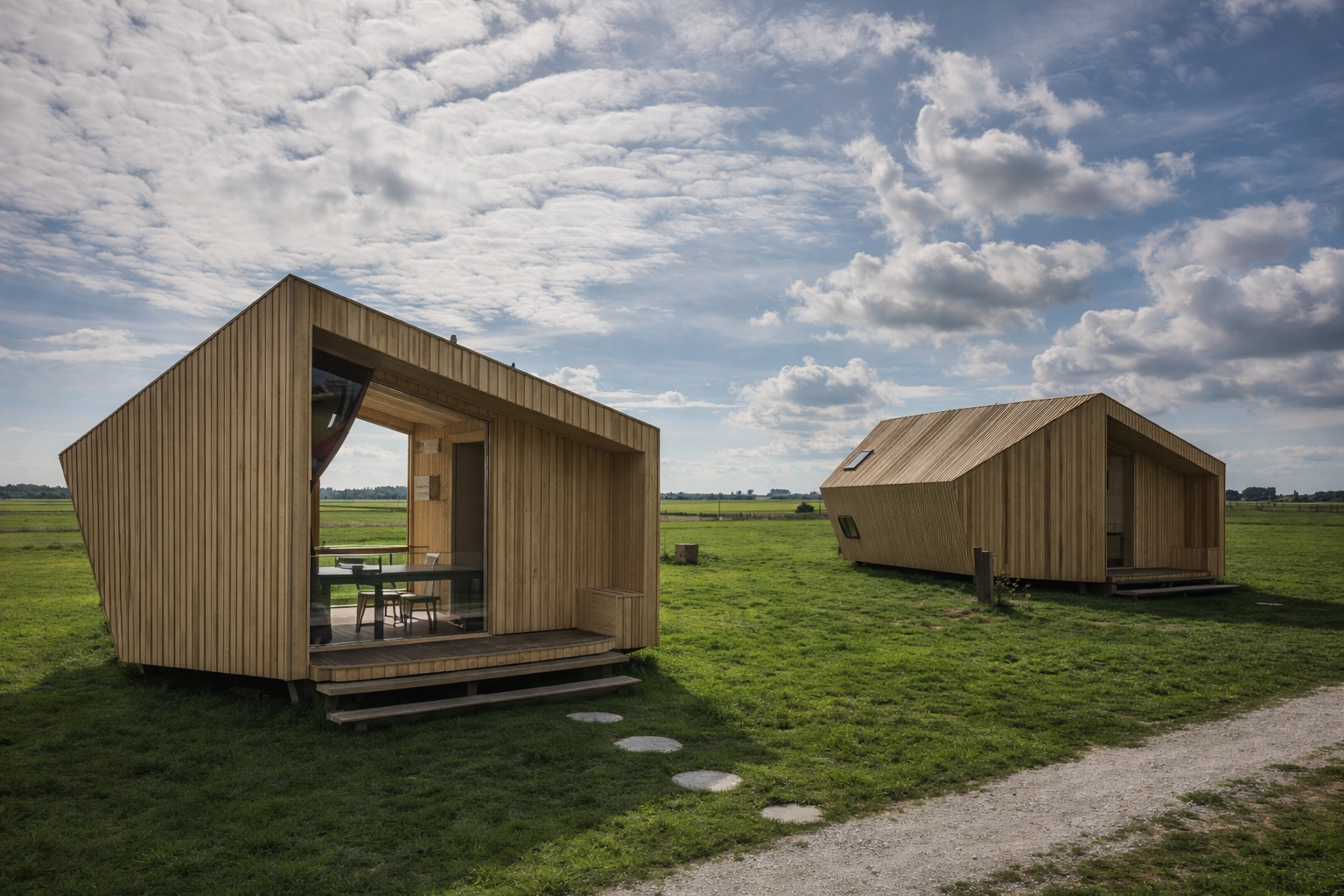
Sustainable Ecolodge at Lauwersmeer National Park and Wadden Sea
Nature-focused stay near wetlands and coast
Check Rates