

Finding the best affordable carry on luggage is probably the biggest secret to smarter, lower-impact travel. With baggage fees going through the roof and a huge shift toward minimalist trips, a solid carry-on is the single most important tool for any modern traveler. The real sweet spot is a bag that nails the balance between durability, weight, and price—one that breezes through strict budget airline rules while making your sustainable packing goals a reality.
Why Finding the Right Affordable Carry On Luggage Matters
Choosing your travel sidekick is so much more than just grabbing a bag. It’s an investment in smoother, cheaper, and less stressful journeys. The right piece of luggage glides through chaotic train stations. It also squeezes into packed overhead bins and keeps your gear safe without weighing you down. This is especially true for eco-conscious nomads who live for flexibility and low-impact travel, like choosing long rail journeys over flights. A well-chosen bag just simplifies your entire travel system.
For example, a lightweight design under 6 pounds (about 2.7 kg) can be the one thing that separates a free carry-on from a painful checked-bag fee on airlines like Ryanair or EasyJet. And small details, like a sturdy, built-in travel lock TSA approved, bring serious peace of mind in busy hostels and airports. The goal is to find a piece that makes your trip better, not more complicated.
This move toward lighter packing isn’t just a niche trend. In 2023, carry-on luggage sales actually outpaced checked luggage by a massive 3:1 ratio worldwide. A big driver is the explosion of low-cost carriers that hit you with heavy fees for checked bags, basically forcing everyone to pack light. This lines up perfectly with the minimalist, zero-waste packing that helps keep your carbon footprint small. You can discover more insights about this luggage market trend and its drivers.
Key Features at a Glance
A quality carry-on doesn’t have to break the bank, but it absolutely should be thoughtfully designed. When you pair smart features with efficient packing—like using compression packing cubes—you can easily travel for weeks with just one bag.
Whether you’re leaning toward a sleek hard-shell or a flexible carry on backpack, prioritizing the right features from the get-go is what matters most. For more specialized advice, check out our guide on the best luggage for train travel.
To cut through the noise, I’ve put together a quick-glance table. It breaks down the essential features to look for when you’re hunting for a carry-on that’s both affordable and aligned with a low-impact travel style.
Affordable Carry-On Luggage At a Glance
| Feature | What to Look For | Why It Matters for Eco-Nomads |
|---|---|---|
| Weight | Under 6 lbs (2.7 kg) | Avoids excess baggage fees and makes navigating stairs and public transit easier. |
| Wheels | 4 spinner wheels (360-degree) | Provides effortless gliding through airports and train stations, reducing physical strain. |
| Material | Recycled Polycarbonate or PET | Offers a durable, lightweight, and more sustainable option compared to virgin plastics. |
| Dimensions | 22 x 14 x 9 inches (55 x 35 x 23 cm) | Ensures compliance with most major and budget airline carry-on size restrictions. |
| Repairability | Brands offering spare parts | Extends the lifespan of your luggage, reducing waste and promoting conscious consumption. |
Ultimately, this table helps you prioritize what’s actually important. A bag that’s lightweight, compliant, and repairable isn’t just a purchase—it’s a long-term tool for more sustainable and enjoyable travel.
What to Look For in Affordable Carry On Luggage
Figuring out the world of affordable carry on luggage can feel a bit overwhelming, but it gets a lot clearer when you focus on a few key features. The right bag is really just a smart balance of durability, size, mobility, and thoughtful design. Your final choice will literally shape how smoothly you glide through airports, navigate train platforms, and settle into new cities.
A great place to start is the classic hard-shell versus soft-shell debate. Hard-shell cases, often built from tough but surprisingly light polycarbonate, are fantastic for protecting fragile gear. On the flip side, soft-shell bags, frequently made from flexible recycled fabrics, give you handy external pockets for things you need to grab quickly. They can also sometimes be squeezed into a tight overhead bin just a little more easily.
This decision tree can help you visualize which style is the best fit for your typical trips, whether you’re off for a work meeting, a mountain trek, or a simple city break.
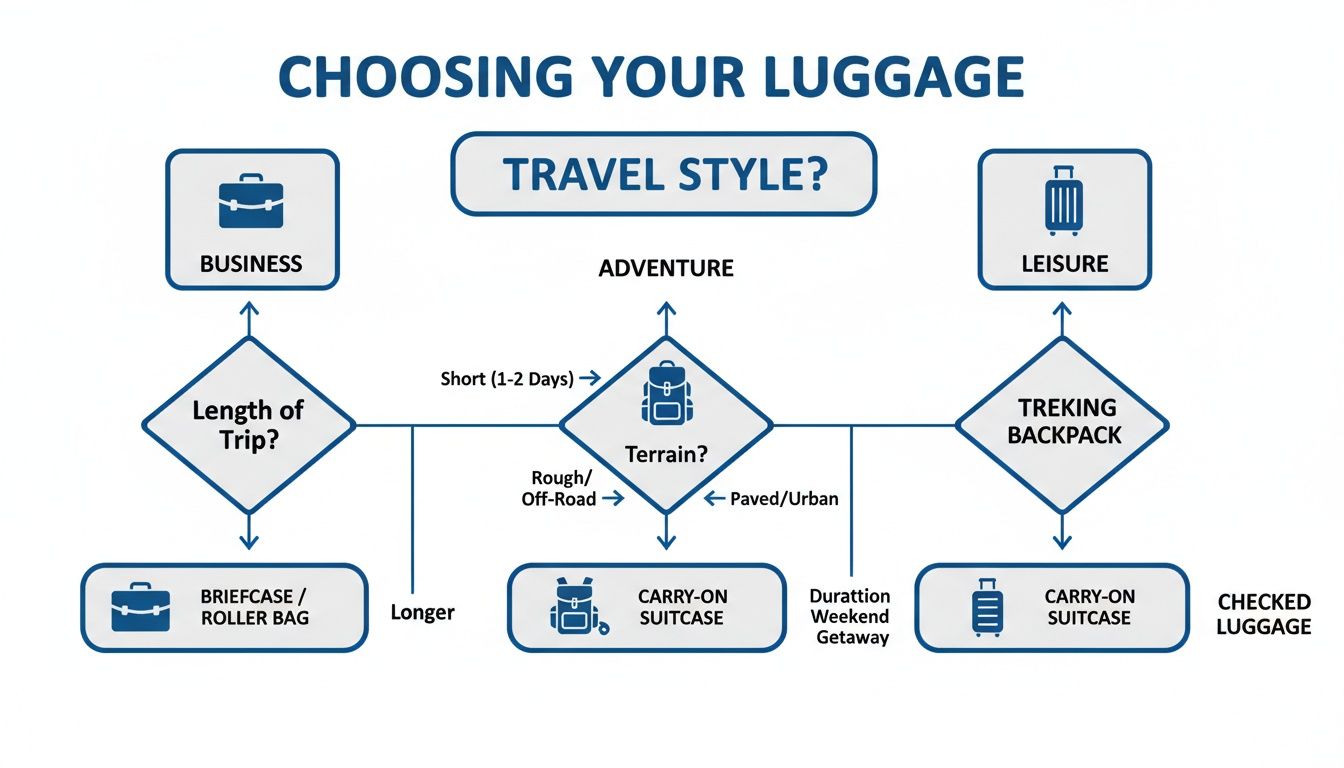
As you can see, your ideal luggage is directly tied to how you travel. Different features are built for completely different kinds of trips, whether it’s for business, adventure, or pure relaxation.
Size and Weight Compliance
For any eco-nomad or budget traveler, getting the size right is non-negotiable. Sticking to the standard IATA-recommended dimensions of 22 x 14 x 9 inches (or 55 x 35 x 23 cm) is your safest bet. This size ensures your bag will be welcome on most major airlines and, crucially, on the notoriously strict budget carriers.
Weight is the other half of the equation. Many low-cost airlines have tight carry-on weight limits, sometimes as low as 15-22 pounds (around 7-10 kg). Tossing a simple luggage scale in your bag can save you from painful and unexpected fees at the check-in desk, keeping your travel budget right where you want it.
Wheels and Mobility
The choice between two wheels and four really comes down to how you like to move. Two-wheeled cases, which you pull behind you, tend to handle rough surfaces like cobblestone streets a little better. The downside is that they can put more strain on your arm and shoulder over long airport treks.
Four-wheel spinners, on the other hand, glide effortlessly right beside you. That 360-degree mobility is a game-changer in crowded terminals and narrow train aisles, making them the go-to choice for most modern travelers who want a stress-free journey.
Interior Organization and Security
A well-designed interior can make packing feel almost effortless. Look for simple features like internal compression straps and zippered dividers. When you use these with compression packing cubes, you can dramatically increase how much you can fit, letting you pack more into a smaller, compliant space.
Security is just as important. Many modern carry-ons now come with integrated TSA-approved locks, which offer some real peace of mind. To learn more about keeping your gear safe, you can check out our guide on the best luggage lock. If you’re carrying pricey electronics, pairing your carry-on with a solid anti theft backpack is a smart move for an extra layer of protection in busy places.
Finding the Sweet Spot in Mid-Range Luggage
You absolutely do not need a luxury price tag to get your hands on a high-quality, dependable suitcase. For most travelers, the real magic happens in the mid-range, which typically falls between $100 and $250. This price point strikes the perfect balance between cost, quality materials, and the essential features that make travel feel less like a chore. It’s the sweet spot where you find the best affordable carry on luggage without having to gamble on reliability.
Brands competing in this space are constantly pushing the boundaries, often using innovative and lightweight materials like recycled polycarbonate to protect your gear without adding unnecessary weight. This is a huge win for anyone trying to stay under strict airline weight limits. These bags frequently include premium features you’d normally expect on more expensive models—think quiet-glide spinner wheels that navigate airports silently, sturdy telescopic handles that don’t wobble, and even expandable compartments for that extra souvenir space.
The rise of direct-to-consumer brands has made these feature-packed bags more accessible than ever before. This healthy competition means you can find a truly reliable piece of carry on luggage that can handle a multi-month journey across varied terrains and still look professional. More importantly, investing in a durable mid-range bag helps reduce waste by steering you away from the cheap, disposable alternatives that end up in landfills after just a few trips.
Why the $100-$250 Range Delivers Peak Value
It’s no accident that the medium-price range dominates the trolley bag market. This segment captures the largest revenue share precisely because it offers the ideal mix of affordability, quality, and features for eco-aware budget travelers. This is especially true for digital nomads plotting low-impact rail itineraries across Asia and Europe who need reliability without the high cost.
In fact, bags priced from $100-$250 appeal to a massive 60% of casual travelers, families, and remote workers who demand specific features like spinner wheels, TSA locks, expandable compartments, and lightweight builds. You can learn more about these trolley bag market trends and what drives consumer choice.
This price range is where you find bags that have thoughtfully integrated features. Instead of just being an empty box, they often include smart interior dividers or compression systems. These elements, when paired with your own packing cubes, create an organizational system that makes living out of a suitcase much simpler. For more ideas on what to pack, check out our guide on the best eco-friendly travel accessories for your next trip.
Durability Without the Designer Price
There’s a common misconception that affordability equals fragility. In the mid-range market, however, brands often use the same durable materials as their high-end counterparts, like virgin or recycled polycarbonate and ballistic nylon. The cost savings come from more streamlined supply chains and less marketing overhead—not from cutting corners on core components.
A well-made mid-range suitcase should easily withstand the rigors of travel for years. This longevity makes it a far more sustainable and cost-effective choice in the long run. By choosing a bag built to last, you are making a conscious decision to consume less and travel more responsibly.
Editor’s Pick: The Best Affordable Carry On Luggage
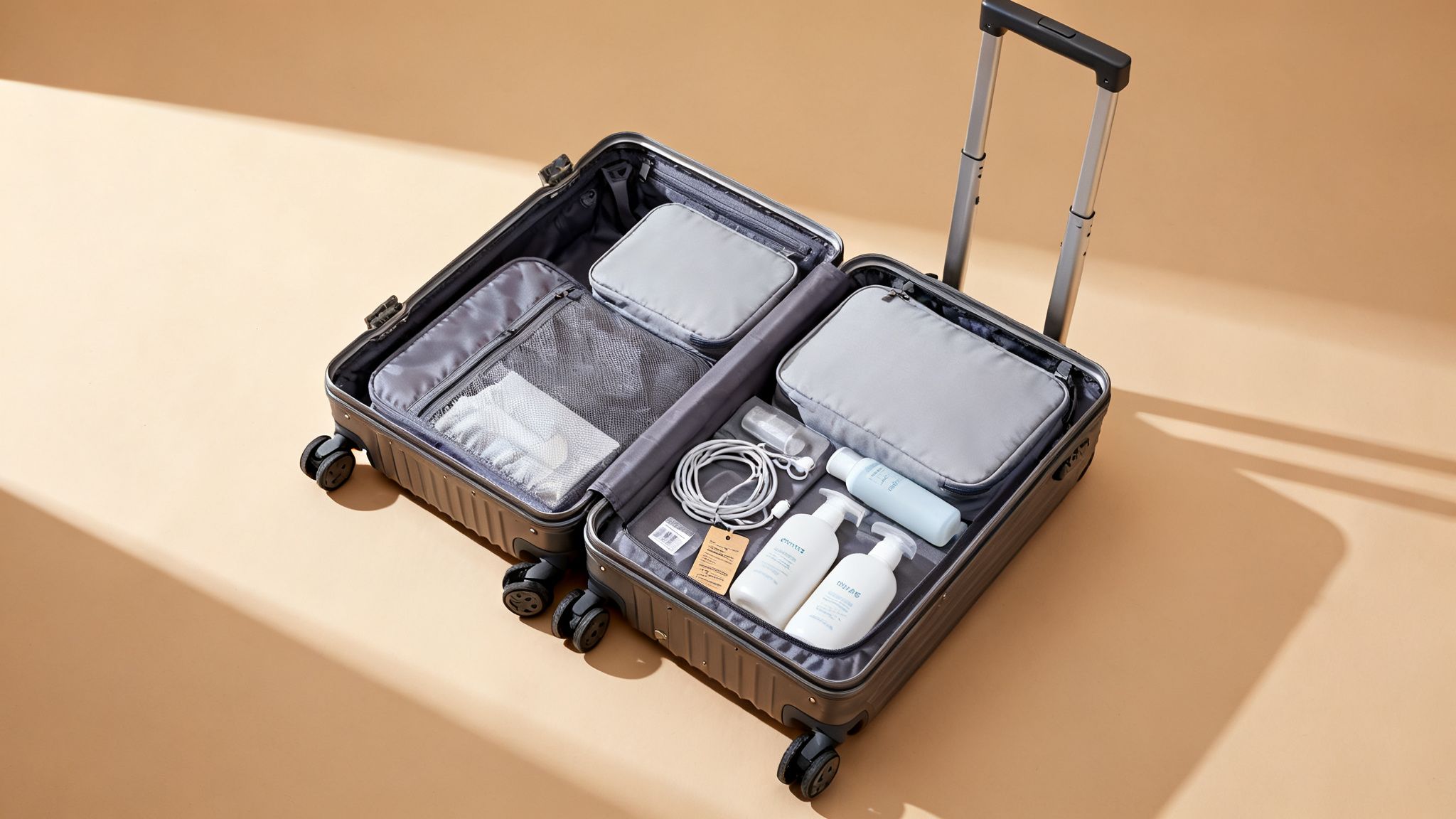
After testing and comparing, one bag kept coming out on top. It’s the one we’re highlighting here because it just nails the balance between smart, sustainable design and a price tag that doesn’t make you wince. This is the kind of best affordable carry on luggage that gets the modern, eco-conscious traveler—a reliable partner that makes the whole journey feel a little smoother.
Why It’s Our Top Choice
This particular bag starts with a win: it’s built from certified recycled materials, so you’re making a responsible choice right out of the gate. Its frame is impressively lightweight, which is a huge deal when you’re trying to stay under those notoriously strict budget airline weight limits. No one wants to start a trip by paying overweight fees. We also put its durable spinner wheels through their paces. They glide just as smoothly over polished airport floors as they do rattling over old-world cobblestone streets. The interior is thoughtfully designed to make organizing your life on the road simple, especially if you’re a fan of packing cubes. Critically, its dimensions are fully compliant with most international and budget airlines, taking the guesswork and anxiety out of boarding. It’s a clear, trustworthy recommendation. It proves you don’t need to spend a fortune to get a fantastic, sustainable travel companion.
Making Sustainable and Ethical Luggage Choices
Finding the best affordable carry on luggage doesn’t have to mean compromising your values. In fact, a thoughtful purchase can support a healthier planet and more responsible companies. This is where the real value of a great travel companion shines through—it’s not just about the price tag, but about conscious consumption.
Choosing a sustainable bag starts with what it’s made of. A lot of forward-thinking brands are now using eco-friendly alternatives like recycled polycarbonate, PET (from plastic bottles), and recycled nylon. These materials divert a ton of waste from landfills and oceans. This in turn cuts the demand for new petroleum-based plastics and lowers your bag’s carbon footprint from day one.
But a truly sustainable approach goes way beyond the fabric and shell. It’s about looking at the entire lifecycle of the product and the ethics of the company behind it. A bag designed to last a decade is infinitely more sustainable than one that falls apart every other year.
Decoding Brand Ethics and Certifications
When you’re comparing different carry-on options, it’s smart to look for signs of a brand’s commitment to doing things right. Certifications are a helpful shortcut to see which companies are actually walking the talk.
Keep an eye out for credentials like these:
- B Corp Certification: This is a tough, third-party standard that measures a company’s entire social and environmental performance. B Corps are legally required to think about how their decisions impact their workers, customers, suppliers, community, and the planet.
- Climate Neutral Certified: This label means a company has measured its full carbon footprint, taken real steps to reduce it, and offset the rest. It’s a clear signal the brand is taking responsibility for its climate impact.
- 1% for the Planet: Members of this global movement commit to donating at least 1% of their annual sales to environmental causes.
These certifications show that a brand is investing in more than just its own bottom line. To dig a little deeper, you can also learn more about what sustainable travel truly means and how your choices can make a real difference.
The Power of Repairability
One of the single most impactful parts of sustainable luggage is repairability. A truly eco-friendly product is one that can be fixed, not thrown away. Before you buy, check if the brand offers replacement parts like wheels, handles, or zippers. A suitcase with a wobbly wheel shouldn’t be destined for the landfill.
Brands that support the right to repair empower you to extend the life of your bag for years. This not only saves you money in the long run but also drastically reduces waste. A modular design with easily swappable components is a hallmark of a thoughtfully engineered, sustainable product. By choosing a bag you can fix, you’re investing in a whole philosophy of mindful consumption.
This mindset can even extend to what you pack inside. Simple swaps like packing a bar of biodegradable soap or a solid shampoo bar instead of single-use plastic bottles contribute to a lower-impact journey. This holistic approach ensures your travel habits align with your values, from your luggage choice all the way to its contents. The goal is to invest in gear that lasts, supports ethical companies, and helps you travel more responsibly.
Packing Light and Smart for Any Trip
Even the best affordable carry on luggage is only half the equation. The real magic happens in how you pack it. Mastering the art of minimalist, zero-waste packing is what truly transforms your travel experience—making it lighter, cheaper, and far more sustainable. It’s all about being intentional, ensuring every single item supports your journey instead of just weighing you down.
A smart packing system always starts with a versatile capsule wardrobe. This just means picking a few key pieces of clothing in complementary colors that you can mix and match into dozens of different outfits. With this simple strategy, you can easily pack for weeks in a single carry-on, which means no more checked bag fees and a much easier time navigating train stations and new cities.
To get the most out of every square inch of your bag, compression packing cubes are an absolute game-changer. These organizers let you group your clothes neatly, then zip them down to a fraction of their original size. You’ll be shocked at how much extra room you create. Plus, your bag stays tidy, and finding that one specific shirt doesn’t require a full-scale excavation.
Reducing Waste and Staying Organized
When it comes to toiletries, it’s easy to follow TSA’s liquid rules while still ditching plastic waste. Just decant your essentials into reusable toiletry bottles instead of buying a bunch of tiny disposables. Even better, make the switch to solid alternatives like a solid shampoo bar or laundry detergent sheets. They’re lighter, totally spill-proof, and way better for the planet.
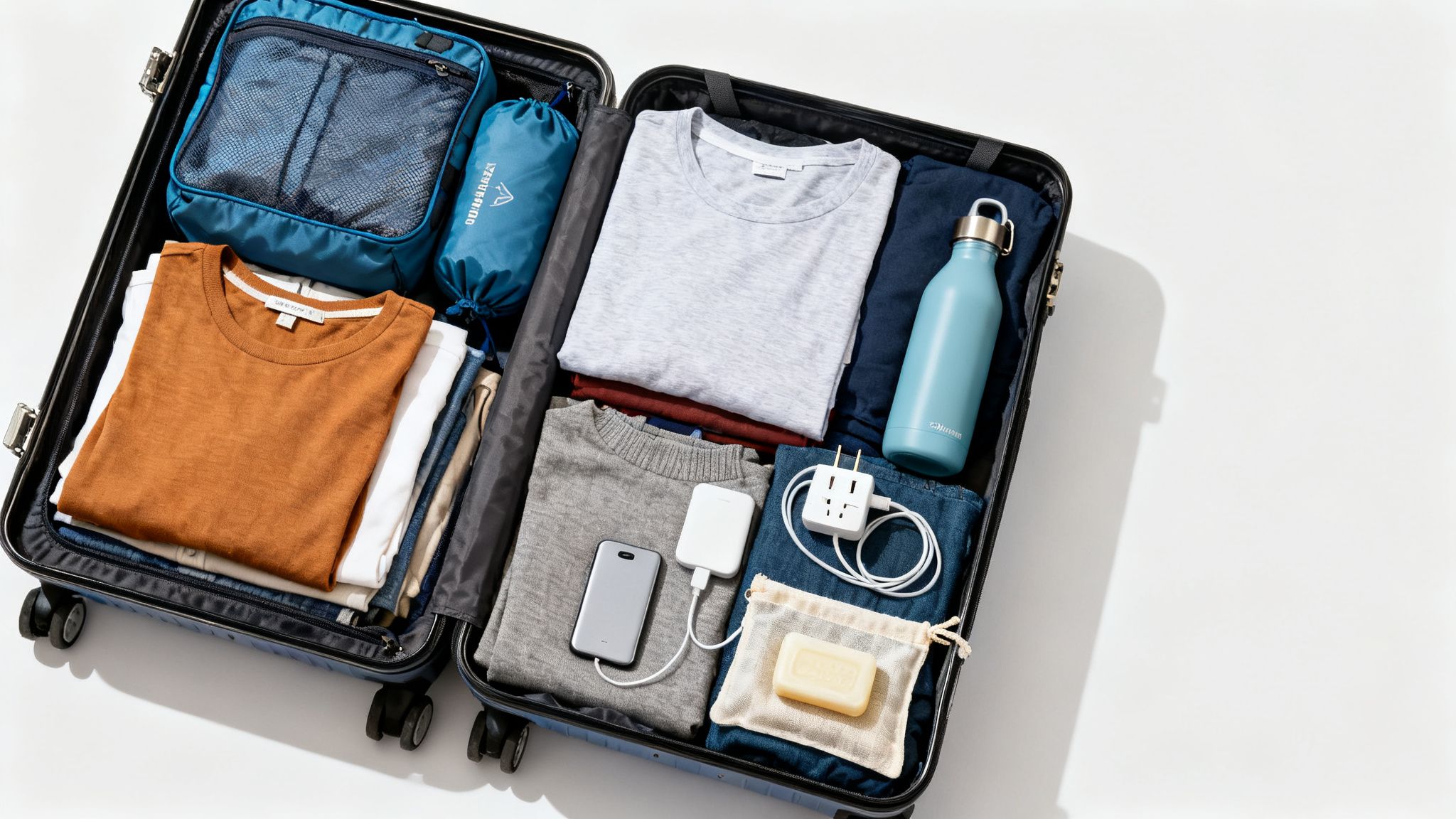
Digital nomads know that keeping tech organized is non-negotiable. A dedicated cable organizer travel pouch is perfect for keeping your universal travel adapter, portable power bank, and various chargers from turning into a tangled mess. It not only keeps everything tidy and easy to find but also protects your expensive gear from getting banged around. You’ll always know exactly where that USB C charger is when you need it.
Essential Gear for the Mindful Traveler
Beyond clothes and tech, a few other items can make your trip smoother while shrinking your footprint.
- Always carry a reusable water bottle. It’s the easiest way to stay hydrated without adding to the mountain of single-use plastic waste. A collapsible one saves even more space.
- For extra peace of mind, especially if you’re staying in shared spaces like hostels, a small portable door lock is a brilliant and lightweight addition.
Once you get into these packing habits, you’ll realize you can travel farther and more freely with so much less stuff. It’s a minimalist approach that doesn’t just lighten your physical load—it aligns your travels with a more conscious and sustainable way of seeing the world.
Key Takeaways
Finding a great, affordable carry-on that actually fits your travel style doesn’t have to be complicated. We’ve boiled down all the research into a few core principles to guide your search. Think of this as your shortlist for making a smart, sustainable investment that will hold up for years of adventures.
Here are the most important things to keep in mind:
- Stick to the Rules on Size and Weight: Keep your search focused on luggage under 6 pounds (around 2.7 kg) that fits the standard 22 x 14 x 9 inches (55 x 35 x 23 cm). This keeps you safe with budget airlines and makes hauling your bag through train stations way easier.
- Find the Value Sweet Spot: The $100 to $250 price range is where you’ll find the best balance of quality, durability, and thoughtful features. You get solid components like smooth spinner wheels without paying for a luxury brand name.
- Choose Materials That Last (and Matter): Go for hard-shell cases made from recycled polycarbonate or soft-shell bags using recycled PET fabrics. Both materials give you excellent protection for your gear while lowering the bag’s overall environmental footprint.
- Master Your Space with Smart Packing: Get a set of packing cubes. Seriously. The compression versions are even better, letting you organize everything neatly while creating a surprising amount of extra room. This system is how people travel for weeks with just one bag.
- Check a Brand’s Ethics and Repair Options: Look for real sustainability credentials, like a B Corp certification, and make sure the company offers replacement parts. A bag you can actually repair is a truly sustainable one.
Low-Impact Travel Tools (Worth It)
Also, if you’re planning a trip and want to keep things simple, these tools help you travel smoother while staying mindful about impact.
Get an eSIM for reliable data → Disclosure: Partner link. No extra cost to you.
Pre-book a transfer for easy arrivals → Disclosure: Partner link. No extra cost to you.
Frequently Asked Questions About Affordable Carry-On Luggage
Picking the right travel gear can feel like a deep dive. To help you feel confident in your choice, we’ve tackled some of the most common questions that come up when you’re hunting for the best affordable carry-on. This should clear up any final doubts before you hit the road.
What’s the real difference between ABS and polycarbonate?
The short answer comes down to flexibility and toughness. ABS is a more rigid plastic, which is why you see it on a lot of budget-friendly bags—it’s cheaper to produce. The downside? That rigidity makes it more likely to crack if it takes a hard hit. Polycarbonate, on the other hand, has more give. It’s designed to flex under pressure and pop back into shape, which makes it far more durable and resistant to scuffs over the long haul. Most of the best affordable carry-on bags in the mid-range use polycarbonate for exactly this reason.
Is expensive luggage actually worth the money?
Honestly, not always. While a luxury brand might come with premium materials and a flashy warranty, the real sweet spot for value is usually in the $100 to $250 range. In this zone, you get durable materials like polycarbonate, smooth spinner wheels, and sturdy handles without paying extra for a designer logo. An ultra-cheap bag might give out after just a few trips, but a solid mid-range case offers the kind of longevity that makes it a much smarter investment.
How do I properly measure my carry-on to avoid fees?
Airlines are notoriously strict, so you have to be precise. Always measure the total dimensions, and that means including the wheels and handles. Grab a tape measure and check the height (from the floor to the very top of the handle), width, and depth. Before you even think about heading to the airport, compare those numbers against your airline’s specific carry-on restrictions to dodge any nasty, expensive surprises at the gate.
How can I make my wheels and zippers last longer?
A little care goes a very long way. For the wheels, make it a habit to wipe them down with a damp cloth to clear out the dirt and grit that causes them to stick or wear down unevenly. For zippers, the biggest enemy is overstuffing your bag, which puts a ton of strain on the teeth. If a zipper does start to catch, rubbing a bit of candle wax or even the tip of a graphite pencil along the teeth can help it glide smoothly again.
What’s the best way to pack for a long trip with only a carry-on?
It’s all about a capsule wardrobe and smart organization. Here’s the formula:
- Use compression packing cubes to categorize your clothes and squeeze out every last bit of air. They’re a game-changer for maximizing space.
- Switch to solid toiletries, like a solid shampoo bar, to free up your liquids bag and eliminate the risk of spills.
- Wear your bulkiest items on the plane. That means your hiking boots and your heaviest jacket are on you, not in your bag.
Is soft-shell or hard-shell better for train travel?
For train journeys, soft-shell luggage often has a slight edge. That little bit of flexibility can make all the difference when you’re trying to squeeze your bag into a tight overhead rack or a packed luggage compartment. Plus, those external pockets are incredibly handy for grabbing a book, snacks, or a portable power bank without having to lay your whole suitcase open in a crowded carriage.
What are the most essential security features to look for?
A built-in travel lock TSA approved is non-negotiable. It lets security agents inspect your bag with a master key if they need to, all without breaking your lock. For extra peace of mind, especially when you’re navigating busy terminals or city streets, look for bags with puncture-resistant zippers. And for your personal item, an anti theft backpack with an RFID blocking wallet pocket is a smart move for protecting your most valuable items.
How should I clean and store my luggage?
To clean your bag, just wipe down the outside with some mild soap and water. For the inside, vacuum out any crumbs or debris and spot-clean any stains. The most important step? Let it air dry completely before you put it away to prevent any mildew from growing. Store your suitcase somewhere cool and dry. If you can, nesting it inside a larger suitcase or putting it in a protective cover will keep it dust-free and ready for your next adventure.
Join the Sustainable Work Movement
Want more rail-first itineraries, low-impact packing systems, and walkable base-city ideas?
