

Picking the best bike bags for any journey always comes down to the demands of the route. For serious, all-weather touring, waterproof panniers like the Ortlieb Back-Roller Classic are legendary for a reason—they’re versatile workhorses. But for lighter trips or true bikepacking, a mix of frame, saddle, and handlebar bags creates a tighter, more aerodynamic profile. The real trick is finding the right balance of capacity, weather protection, and pure usability for the way you travel.
Why the Right Bike Bags Are Essential for Sustainable Travel
Choosing your bike bags isn’t just about gear; it’s a foundational step for any low-impact, rail-first journey. For digital nomads and thoughtful explorers, the right setup is what makes a seamless transition from a crowded train platform to a quiet city bike lane feel not just possible, but easy. It’s what unlocks real freedom without having to fall back on cars or short-haul flights.
A well-planned system lets you carry everything—from a laptop and chargers to a zero-waste toiletries kit—comfortably and efficiently. This goes beyond just hauling stuff. It’s about embracing a philosophy of slower, more intentional travel. When you optimize your luggage for two wheels, you boost your mobility and slash your environmental footprint, directly supporting the core ideas of what is sustainable travel.
This approach turns your bicycle from a simple ride into a powerful tool for exploration. It helps you connect more deeply with your surroundings, whether you’re weaving through a new city or pedaling through scenic countryside between train stops. In the end, your bike bags are what enable a more flexible, self-reliant, and lower-carbon travel life.
Comparing Key Bike Bag Philosophies
When you’re picking a setup, you’re really choosing between two main philosophies. Each has its own strengths depending on how you move and what you need to carry. Getting this first step right is the key to building a mobile toolkit that actually works for you.
| Philosophy | Best For | Typical Setup | Key Advantage |
|---|---|---|---|
| Traditional Touring | Long-distance, multi-week journeys with varied weather. | Rear panniers, front panniers, handlebar bag. | Maximum capacity and easy access to gear. |
| Bikepacking | Off-road adventures, minimalist travel, and aerodynamics. | Frame bag, saddle bag, handlebar roll. | Balanced weight distribution and better handling on rough terrain. |
Comparing the Main Types of the Best Bike Bags
Picking the right bike bags comes down to knowing four main types: panniers, frame bags, saddle bags, and handlebar bags. Each has a specific job, but the real magic is in how you mix and match them. A smart, modular setup gives you the perfect balance of space and weight for any journey, from a quick city commute to a long-haul adventure weaving together bikes and trains.
Panniers are the classic workhorses of bike travel for a reason. They clip onto racks over your wheels and offer huge volume—often 5.3 gallons (20 liters) or more per bag. This makes them the obvious choice for carrying a 15-inch laptop, a few changes of clothes, or a grocery run. Their biggest advantage is keeping all that weight low to the ground, which makes the bike feel stable and planted on longer rides.
They are, by far, the market leaders. Cycle carrier bags like panniers command a massive 59.1% of the market share. Research also shows that their ability to distribute weight so evenly can cut back strain by up to 40% compared to a heavy backpack—a game-changer on multi-day trips. You can learn more about bicycle bag market trends to see just how dominant they are.
Frame Bags for Centralized Storage
Frame bags slot neatly into the main triangle of your bike, and they’re brilliant for carrying dense, heavy items without messing with your handling. Their capacity usually falls between 0.8 to 1.6 gallons (3 to 6 liters), making them perfect for tools, a hefty bike lock, or a water bladder.
By keeping that weight low and perfectly centered, they help your bike feel nimble and responsive. It’s no surprise they’re a favourite for off-road bikepacking and minimalist travel.
Saddle and Handlebar Bags for Quick Access
Saddle bags tuck under your seat and are great for stashing things you won’t need in a hurry—think repair kits, a spare tube, or a packable rain jacket. Handlebar bags do the opposite: they keep your essentials right at your fingertips. Your phone, snacks, wallet, and map all live here.
For those trips where you need a bit more flex space without committing to a full rack-and-pannier system, a good waterproof backpack can be a versatile alternative. We’ve put together a full guide on the best waterproof backpack for exactly that scenario.
This flowchart can help you visualize which bag might be the best starting point for your style of travel.
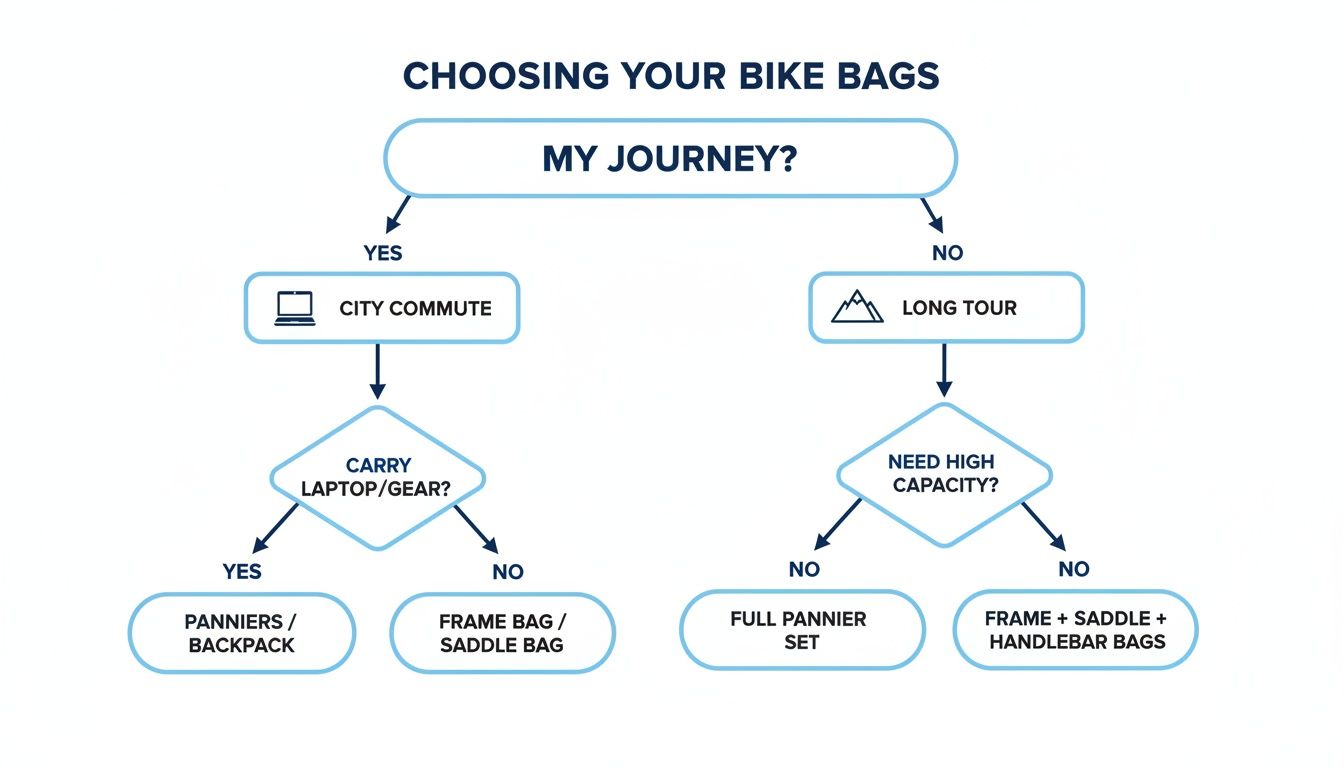
As you can see, panniers are the go-to for serious capacity, while the smaller bags are all about building a minimalist, balanced setup.
The table below breaks down the key differences to help you choose the right starting point.
Bike Bag Comparison for Modern Travelers
| Bag Type | Typical Capacity (Gallons/Liters) | Best For | Train Travel Friendliness |
|---|---|---|---|
| Panniers | 2.6–6.6+ Gallons (10–25+ L) per bag | Long-distance touring, grocery runs, carrying laptops and clothes. | Excellent. Most have quick-release systems for easy removal before boarding. |
| Frame Bags | 0.8–1.6 Gallons (3–6 L) | Carrying heavy tools, water bladders, and essentials centrally. | Very high. Stays on the bike, requiring no extra handling. |
| Saddle Bags | 0.1–4 Gallons (0.5–15 L) | Repair kits, extra layers, or minimalist bikepacking gear. | High. Small ones stay on; larger ones detach easily. |
| Handlebar Bags | 0.5–2.6 Gallons (2–10 L) | Quick-access items like phones, snacks, maps, and cameras. | Good. Many detach to become shoulder bags for valuables. |
By understanding how these core types work together, you can build a personalized system that makes your rail-first, low-impact travel feel seamless and efficient.
Editor’s Pick: Our Top Choice for Versatile Travel
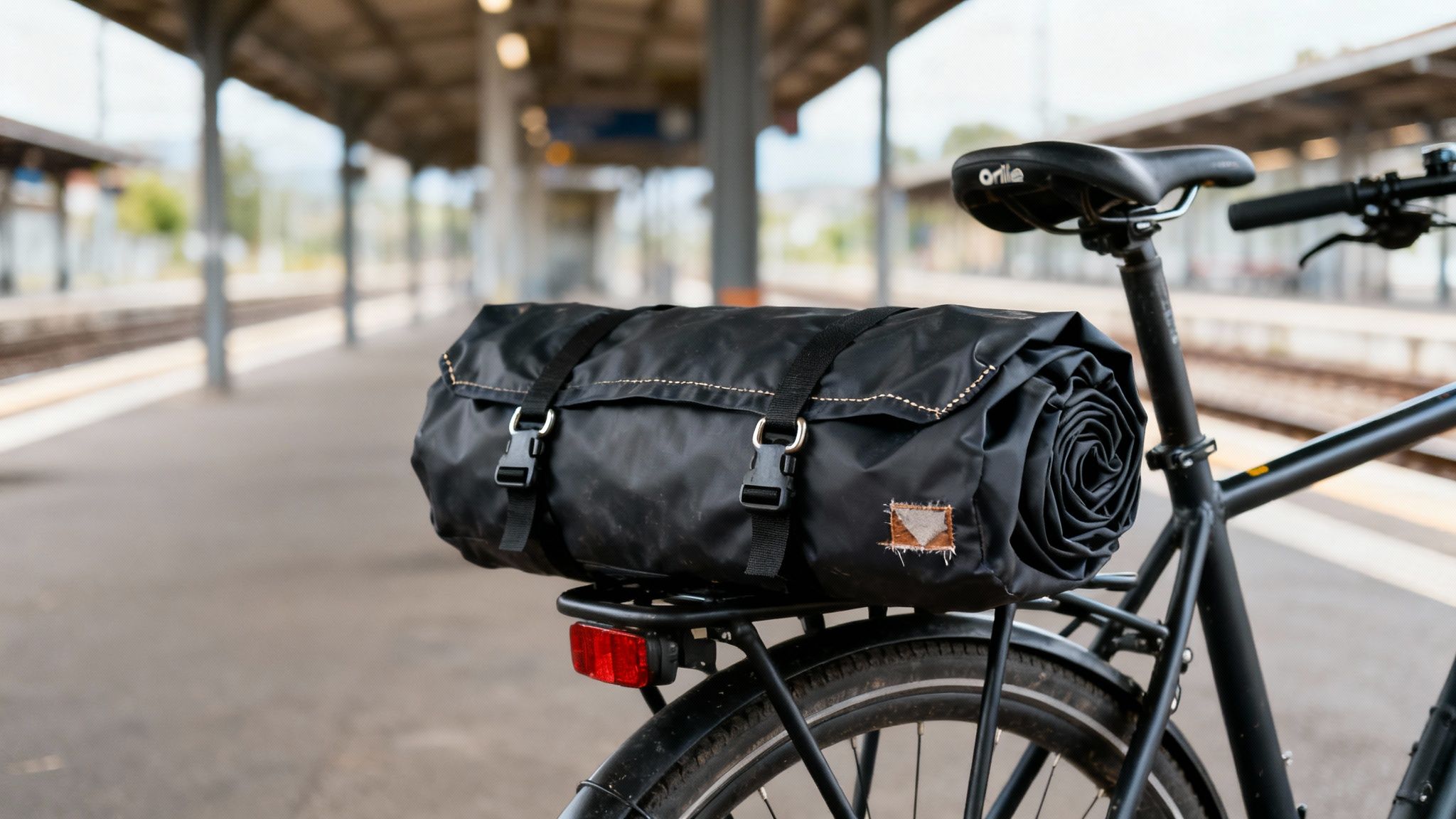
After spending countless hours researching bags and putting them through their paces on actual train trips, one model consistently came out on top: the Ortlieb Back-Roller Classic. This set of panniers is more than just a popular choice; it’s a proven workhorse that hits the sweet spot between durability, user-friendliness, and a long-lasting design philosophy. For any eco-minded digital nomad, it’s a smart, reliable investment that just works.
Why It Excels for Train Travel
The Back-Roller Classic truly shows its worth during those frantic moments at the station. Its Quick-Lock mounting system is the star of the show, letting you clip the bags on or off your bike rack in seconds with just one hand. This is a game-changer when you’re rushing to board a train or weaving through a crowded platform. No more fumbling with awkward straps or finicky clips—just lift and go.
Then there’s the construction, which is legendary for a reason. These panniers are made from a tough, tear-resistant polyester fabric that is 100% waterproof, not just “water-resistant.” The roll-top closure creates a proper airtight seal, guaranteeing your laptop and clothes stay bone-dry even in a torrential downpour. That level of protection gives you genuine peace of mind on a long journey.
A Focus on Durability and Repairability
What really cements the Ortlieb’s place as our top pick is how well it aligns with a low-impact mindset. This isn’t disposable gear. Unlike so many products today, every single component on these bags is designed to be replaceable. From buckles to mounting hooks, you can order spare parts and do the repairs yourself, stretching the lifespan of your bags out for years, if not decades.
This commitment to repairability is a cornerstone of owning sustainable gear, and it fits right in with other key items in our guide to eco-friendly travel accessories. When you invest in a set of Back-Roller Classics, you’re choosing a product built to last, which means less waste and no need for frequent replacements. It’s a practical, no-hype choice for serious travelers who value gear that’s as reliable as it is sustainable.
How We Choose the Best Bike Bags
To recommend the right bike bags, we lean on a clear, transparent process rooted in real-world use. Our criteria go way beyond just capacity or looks; they focus on the practical demands of low-impact, rail-first travel. We believe the best gear not only works flawlessly but also fits a philosophy of slower, more mindful consumption.
This approach keeps our recommendations grounded. We test each bag against four pillars that really matter when you’re navigating train stations, cycling in a sudden downpour, and living out of your luggage for weeks on end. It’s about finding gear that makes your journey smoother and lighter on the planet.
The global bike bags market is booming, growing from USD 172.2 million in 2023 to a projected USD 559.3 million by 2033. With the travel segment making up a massive 80.2% of that, it’s clear that commuters and nomads rely on these bags for everything from laptops to zero-waste kits. You can discover more insights about the bike bags market to see why solid, real-world criteria matter more than ever.
Material Sustainability and Ethical Production
First, we look at what a bag is actually made of. We give priority to bags built from recycled materials—like those using post-consumer PET bottles—and we look for PFC-free durable water repellent (DWR) coatings. These choices make a real difference to a product’s environmental footprint. We also dig into a brand’s commitment to fair labor and a transparent supply chain.
Durability and Long-Term Repairability
A truly sustainable product is one that lasts. We analyze the build quality, checking everything from the seam welding to the strength of the buckles. More importantly, we favor brands that design for repairability from the start.
The ability to easily order and replace a broken buckle or a worn-out mounting hook is a critical factor. Gear that can be repaired on the road stays out of the landfill and represents a far better long-term investment.
Waterproofing and Weather Resistance
For anyone relying on their bike in all conditions, reliable waterproofing isn’t just a nice-to-have; it’s essential. We look past the vague marketing claims and check for specific IP (Ingress Protection) ratings when they’re available. We also evaluate the closure systems—like a classic roll-top versus a zipper—and how well they hold up in a proper downpour, ensuring your electronics and clothes actually stay dry. Our guide on how to pack for low-impact travel dives deeper into why keeping your essentials protected is so crucial.
Train and Boarding Practicality
Finally, we assess how a bag performs within a train-heavy, multimodal travel system. This boils down to a few simple, practical questions:
- Ease of Attachment: How quickly and securely can you get the bag on or off a bike rack?
- Portability: Does it have a comfortable shoulder strap or handle for carrying it through a busy station?
- Compactness: Does it fit into overhead luggage racks on a train without a fight?
These are the details that separate a good bag from a great one for the modern eco-nomad. For your travel needs, don’t forget essentials like a good SIM card from services like Airalo or Yesim, and reliable travel insurance from Visitors Coverage.
Smart Packing Systems for Different Travel Styles
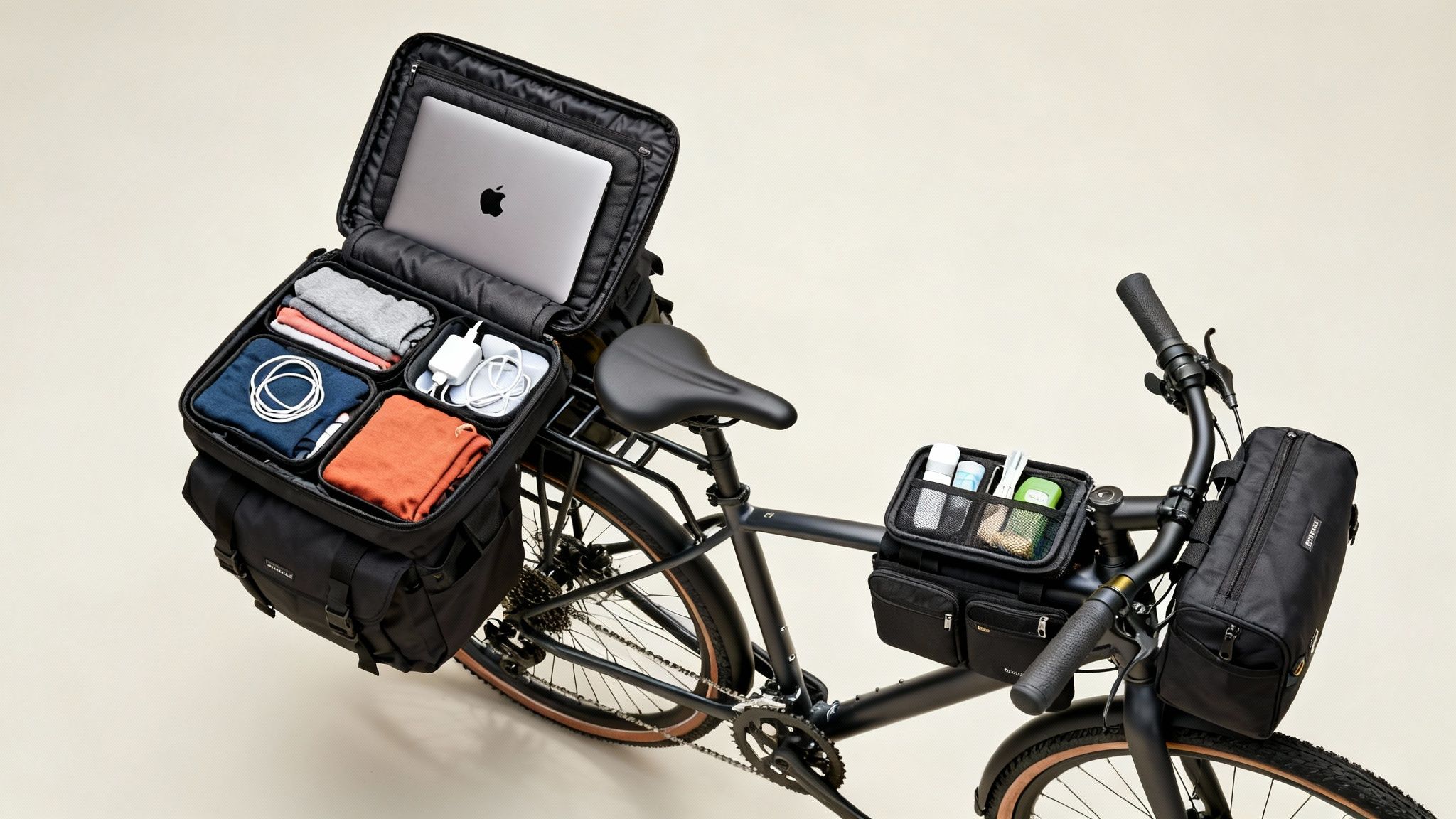
Having the best bike bags is only half the battle. Knowing how to pack them—that’s what makes all the difference. An organized system does more than just protect your gear; it makes the transitions between cycling and train travel feel smooth and completely stress-free. The real key is creating a modular setup where you separate items by function and how often you need to grab them.
This kind of thinking is catching on as more people embrace eco-friendly commuting and leisure cycling. The market for bike bags is on track to grow from US$717.7 million in 2024 to over US$1 billion by 2031, a shift powered by a global move toward greener mobility. You can discover more insights about this growing market and see how investments in cycling infrastructure are boosting sales of accessories.
A smart packing system keeps your essentials within arm’s reach while ensuring heavier items are balanced for better bike handling. This is especially crucial for modern travelers who are often carrying a mix of clothing, work tools, and shared equipment. When booking your transport, consider options like Trip.com for comprehensive travel plans or Aviasales for flights.
The Digital Nomad Setup
For anyone working remotely, protecting your electronics is non-negotiable. This setup is designed to keep your mobile office safe from both road vibrations and the elements, while still leaving plenty of organized space for a week’s worth of clothes.
- Rear Panniers (2 x 5.3 Gallons): Dedicate one entire pannier to your electronics. Slide your laptop into a padded sleeve and place it vertically against the bag’s rigid backplate for support. Toss chargers and cables into a separate pouch so they don’t scratch anything. The other pannier is for your clothing, which you should organize in packing cubes. Our guide on how to pack carry-on only has some great tips for minimalist packing.
- Handlebar Bag (1.3 Gallons): Think of this as your mobile command center. It’s for your phone, wallet, passport, and snacks—everything you need to access quickly without getting off the bike. Many models even detach to become a shoulder bag, which is perfect for keeping your valuables with you when you hop on the train.
The Car-Free Couple Setup
When you’re traveling with a partner, distributing shared gear is the most efficient way to balance weight across both bikes and build in some redundancy. This setup is ideal for a multi-city rail journey where you need to be nimble and self-sufficient. For seamless airport transitions, a service like Welcome Pickups can be very helpful.
- Bike One (Lead Rider): This bike shoulders the bulk of the shared essentials. One pannier can hold the first-aid kit, a proper tool kit, and shared toiletries. The other is for personal clothing, with a handlebar bag up front for navigation and snacks.
- Bike Two (Support Rider): This bike carries the food and cooking gear if you’re camping, or just extra layers and rain jackets for changing weather. The second pannier is then free for personal items. Spreading the load like this prevents one bike from becoming dangerously heavy, which improves stability and comfort for both of you over long distances.
The Shortlist: What Really Matters When Choosing Your Best Bike Bags
Picking the right bike bags for rail-first, low-impact travel isn’t just about storage. It’s about freedom. Your bag system is the bridge between train and bike, and getting it right from the start makes every transition smoother and every journey calmer.
Before you buy anything, remember that the best setup is a balance of capacity and real-world practicality. A system that’s effortless to pack, carry, and clip on makes a huge difference when you’re navigating a busy station or settling in for a long ride. When it works well, you barely even notice it’s there.
Here are the most important points to guide your decision.
- Demand Real Waterproofing and Repairability. Your gear is an investment, so treat it that way. Look for bags with welded seams and durable, PFC-free coatings that offer genuine, all-day protection from the elements. Just as important is the ability to order spare parts—a broken buckle or hook shouldn’t mean a whole new bag. This extends the life of your gear and keeps it out of a landfill.
- Match the Bag Type to Your Travel Style. Panniers are the workhorses here, perfect for carrying bigger loads like a laptop and a week’s worth of clothes, making them the default for digital nomads. A minimalist bikepacking setup with frame and saddle bags, on the other hand, is built for off-road adventures where agility and balance are everything.
- A Quick-Release System Is a Must-Have for Train Travel. Being able to get your bags off the bike rack in seconds is non-negotiable when you’re boarding a train with limited time. A reliable, one-handed mounting system like Ortlieb’s Quick-Lock is the gold standard for a reason—it minimizes stress and makes the switch from cycling to boarding completely seamless.
- See Your Bags as a Tool for Low-Impact Travel. Your bike bags are more than just luggage. They are what enable a slower, more deliberate style of travel, freeing you from cars and flights. They let you connect more deeply with the places you move through, turning the journey itself into the destination.
Your Bike Bag Questions, Answered
Choosing the right gear always brings up a few practical questions, especially when you’re trying to keep a travel setup simple and reliable. Here are some straightforward answers to the most common things people ask about bike bags for train travel.
How Much Weight Can I Actually Carry in My Bags?
This is a great question, and the answer almost always comes down to your bike’s rack, not the bags themselves. Most decent rear racks are rated to hold somewhere between 40 and 55 pounds (18 to 25 kilograms). You should always be able to find the specific weight limit stamped somewhere on the rack itself.
The key to safe handling is distributing that weight as evenly as you can between two panniers. For rackless bikepacking bags, the limits are much lower, so always follow the manufacturer’s guidelines to avoid putting stress on your bike frame or damaging your gear.
Are Expensive Bike Bags Really Worth It?
For anyone serious about long-term, low-impact travel, a high-quality bike bag is one of the best investments you can make. The upfront cost is higher, absolutely, but premium bags from brands like Ortlieb or Arkel are built from far tougher materials, use genuinely waterproof construction, and have hardware that’s meant to survive daily use.
More importantly, they are almost always designed with repairability in mind. The ability to replace a broken buckle or patch a tear while you’re on the road is invaluable. It extends the life of your gear for years, which fits perfectly with a sustainable, buy-it-for-life travel philosophy. Cheaper bags tend to fail quickly, and their next stop is usually a landfill.
How Do I Keep My Bike Bags From Getting Stolen?
Securing your gear when you have to leave your bike unattended is a real concern. For short stops, the simplest method is a thin, flexible cable lock. You can thread it through the bag handles and then lock it to your bike frame and whatever you’re locking the bike to.
But for true peace of mind, the best practice is to take your most valuable panniers with you. This is where a good quick-release system and a comfortable shoulder strap become essential. Leave the bags with clothes or cooking gear locked to the bike, but always, always keep the one with your laptop, camera, or passport on your shoulder.
Key Takeaways
- Invest in Durability and Repairability: Think of good bike bags as a long-term travel partner. Choose gear made from robust, waterproof materials with spare parts available to ensure it lasts for years of journeys.
- Match Your Bag to Your Trip: Panniers are perfect for digital nomads who need to carry a laptop, clothes, and other essentials with high capacity. A minimalist bikepacking setup makes more sense for off-road adventures where agility is the priority.
- A Quick-Release System Is a Must-Have: For train travel, a fast and reliable mounting system is non-negotiable. It makes boarding less stressful and simplifies the transition from platform to bike path.
- Know Your Rack’s Limit: The true limit on what you can carry is your bike rack’s capacity—usually 40–55 pounds (18–25 kg)—not the bag itself. Always balance your load evenly for safer riding.
- Secure Your Gear Smartly: Use a light cable lock for quick stops, but make it a habit to detach and carry any pannier with valuables like electronics and passports whenever you’re leaving the bike for more than a few minutes.
Editor’s Pick: The Ortlieb Back-Roller Classic
For its unmatched blend of rugged durability, 100% waterproof design, and a quick-release system perfect for train travel, the Ortlieb Back-Roller Classic stands out. Its legendary repairability means it’s not just a purchase but a long-term investment in sustainable, hassle-free journeys.
This article was fact-checked using sustainability data from the World Green Building Council, the Global Ecotourism Network, and peer-reviewed architecture studies. All partner links are vetted for compliance with sustainable business certifications.
Join the Sustainable Work Movement
Want more rail-first itineraries, low-impact packing systems, and walkable base-city ideas?
Frequently Asked Questions About the Best Bike Bags
Still deciding which setup is right for your ride? These FAQs break down the most common questions about the best bike bags, including panniers vs bikepacking bags, waterproofing, weight limits, and how to keep your gear safe on trains and in cities.
Choosing the Best Bike Bags for Your Travel Style
1. What are the best bike bags for beginners who want a simple setup?
For most beginners, the easiest place to start is a set of rear panniers on a sturdy rack. This setup is stable, easy to pack, and gives you plenty of space for everyday essentials. If you want even faster access to small items, add a small handlebar bag for your phone, wallet, and snacks.
2. Are panniers or bikepacking bags better for the best bike bags setup?
It depends on the terrain and how much you carry. Panniers are best for high-capacity travel and carrying items like laptops and clothes. Bikepacking bags (frame/saddle/handlebar rolls) are better for off-road routes, minimalist packing, and a tighter profile that handles better on rough terrain.
3. What size bike bags do I need for a 3–5 day trip?
For most travelers, 30–45 liters total is a comfortable range for 3–5 days. That could look like two medium panniers or a bikepacking combo (frame bag + saddle bag + handlebar roll). If you’re carrying work gear, rain layers, and extra shoes, you may want closer to 45–55 liters.
4. What are the best bike bags for carrying a laptop safely?
Rear panniers are usually the best option because they offer the most space and keep weight low. Use a padded laptop sleeve, pack the laptop against the pannier’s rigid back panel, and keep cables in a separate pouch. If it’s raining often, choose fully waterproof panniers with welded seams and a roll-top closure.
5. How do I balance weight correctly across bike bags?
Keep heavy items low and centered. With panniers, distribute weight evenly left/right. With bikepacking bags, place dense items in a frame bag (tools, lock, power bank) and use the saddle and handlebar bags for lighter, compressible items like clothing and layers. A balanced setup improves handling and reduces strain.
Waterproofing, Durability, and Long-Term Value
6. Are waterproof bike bags worth it, or is “water-resistant” enough?
If you’re using your setup for commuting, touring, or rail-first trips where weather changes fast, fully waterproof bags are absolutely worth it. “Water-resistant” fabric can soak through in a long rain. Waterproof panniers with welded seams and roll-top closures protect your laptop, clothing, and chargers without needing extra covers.
7. How can I tell if a bike bag is truly built to last?
Look for reinforced stress points, strong mounting hardware, and abrasion-resistant fabric. The best sign is repairability: if the brand sells replacement buckles, hooks, and straps, the bag is designed to last for years—not just one season.
8. Do the best bike bags need a rack, or can I go rackless?
Panniers usually require a rear rack, while bikepacking bags are made for rackless riding. If you want maximum capacity and easy packing, a rack + panniers setup is ideal. If you want agility and a minimalist profile, rackless bags (frame/saddle/handlebar) can be perfect—especially for mixed terrain.
9. How do I clean and maintain bike bags to make them last longer?
Wipe them down with mild soap and water, then air dry away from direct heat. Check mounting points and straps regularly, and tighten loose hardware before it becomes a failure. If your bags are waterproof, keep the roll-top clean so it seals properly every time.
10. Are expensive bike bags actually worth the price?
For frequent travel, yes. Premium bags often deliver better waterproofing, stronger mounts, and longer lifespans. The biggest difference is that higher-end options are more likely to be repairable, which saves money over time and prevents unnecessary replacements.
Train Travel, Theft Prevention, and Real-World Practicality
11. What are the best bike bags for train travel and quick boarding?
The best bike bags for train travel are the ones you can remove in seconds. Look for panniers with a quick-release system and comfortable carry handles or shoulder straps. The goal is simple: hop off the bike, unclip fast, and walk onto the train without fumbling or blocking the platform.
12. How do I stop bike bags from swinging or rubbing while riding?
Make sure the mounting hooks are properly adjusted and clipped securely onto the rack rails. Use any stabilizing lower hook or strap included with the bag. If the bag still moves, it’s often a sign the rack rails are the wrong diameter for the hooks, or the bag needs tighter adjustment.
13. How do I keep my bike bags from getting stolen in cities?
For quick stops, thread a light cable lock through the handles and lock it to your frame. But the best practice is simple: carry your valuables with you. Detach the pannier that holds your laptop, passport, and camera, and bring it inside whenever you leave your bike for more than a few minutes.
14. How much weight can bike bags safely carry?
Most of the limit comes from your bike rack, not the bags. Many rear racks are rated for roughly 40–55 lbs (18–25 kg). Always check your rack’s rating and keep your load balanced. Overloading can affect handling and increase wear on mounting hardware.
15. What’s the best way to pack bike bags for smoother handling and less fatigue?
Pack by frequency and density. Keep heavy items low (tools, lock, power bank), keep quick-access items up front (snacks, wallet, phone), and pack clothing in cubes so it doesn’t shift. A stable packing system reduces wobble, makes hills easier, and keeps you comfortable on longer rides.
