
The search for the best cities for remote work has fundamentally changed. It is no longer just about fast Wi-Fi and low costs. Instead, it is about finding a sustainable, walkable base that supports a healthier lifestyle and a lower carbon footprint. This guide is for the eco-conscious digital nomad who prefers train journeys over short-haul flights. Additionally, it is for those who value community connection over fleeting stays. We have analyzed cities based on rail connectivity, green initiatives, walkability, and overall quality of life. Consequently, this helps you find a base that aligns with your values.
This list provides a framework for a more intentional, rail-first travel experience. All data is fact-checked using resources like the World Green Building Council, the Global Ecotourism Network, and peer-reviewed architecture studies to ensure reliability. We will explore top destinations that offer not just the practical necessities for remote work. In fact, they also serve as a launchpad for productive, sustainable travel. From the Mediterranean coast to Southeast Asia, the options for a fulfilling work-travel life are expanding.
Best Cities for Remote Work: What to Plan Before You Go (Visas, Costs, Transit & Walkable Neighborhoods)
Before we dive into our top picks, it is important to plan ahead. Securing the right visa is a crucial first step. Understanding local transport and connecting with the community are also vital. This guide provides actionable details, from visa requirements and cost-of-living estimates in US dollars. Moreover, it includes specific walkable neighborhoods and sample train itineraries. Our goal at Eco Nomad Travel is to equip you with the tools and data you need. As a result, you can design a travel lifestyle that is both enriching and responsible. Let’s explore the cities that are setting the new standard for remote work.
1. Lisbon, Portugal – The Affordable European Gateway
Lisbon consistently ranks as one of the best cities for remote work. It blends old-world charm with a modern, tech-forward infrastructure. The Portuguese capital offers a compelling mix of affordability and a vibrant digital nomad community. Also, it boasts strong connectivity, all set against a stunning Atlantic backdrop. Its walkable neighborhoods, reliable public transit, and accommodating visa framework make it a top-tier choice for sustainable, long-term stays.
Digital nomads thrive here due to reliable, high-speed internet. Providers like NOS or MEO offer fiber plans with over 99% uptime. These cost about €35-50 ($38-55 USD) monthly. This robust connectivity supports seamless full-time work. You can work from a sun-drenched apartment or a bustling cafe.

The city’s welcoming atmosphere extends to its legal framework. Portugal offers a digital nomad visa designed specifically for remote professionals. This streamlines the process for longer stays. To learn more about the requirements and application process, you can find detailed information in our guide to digital nomad visas for eco-friendly bases.
Getting Started in Lisbon
For a productive and socially connected experience, many nomads opt for coworking spaces. For instance, Selina in the trendy Príncipe Real neighborhood provides hot desks. It also offers a built-in community for around €250-400 ($270-435 USD) per month. For families or those seeking more space, renting an apartment can be a great option. A two-to-three-month rental in a quieter area like Alcântara can cost between €800-1,200 ($870-1,300 USD). This offers direct river access and a more local feel.
Sustainable Transit and Connections
Lisbon’s Santa Apolónia and Oriente train stations are crucial hubs for low-impact travel. From here, you can connect to Porto, the Algarve coast, or even Spain. A popular slow-travel route involves taking a high-speed train to Madrid. Then, you can connect onward to Barcelona or even Paris, minimizing your carbon footprint.
2. Lisbon — Community & Practical Tips for Remote Work
Beyond its affordability and infrastructure, Lisbon stands out as one of the best cities for remote work due to its vibrant community. Integrating into this well-established digital nomad network is crucial for a smooth transition. Practical planning, from arrival logistics to navigating local bureaucracy, ensures you can focus on productivity. You can also focus on sustainable slow travel rather than administrative headaches. This community-centric approach makes the city feel like home faster.
The key to a successful long-term stay is preparation. Arriving in the shoulder seasons, like April-May or September-October, offers better accommodation rates. It also means fewer crowds. Before you even land, joining Lisbon-focused digital nomad Facebook groups can provide invaluable, real-time advice. You can get tips on apartment hunting, visa appointments, and social meetups. This gives you a support system from day one.
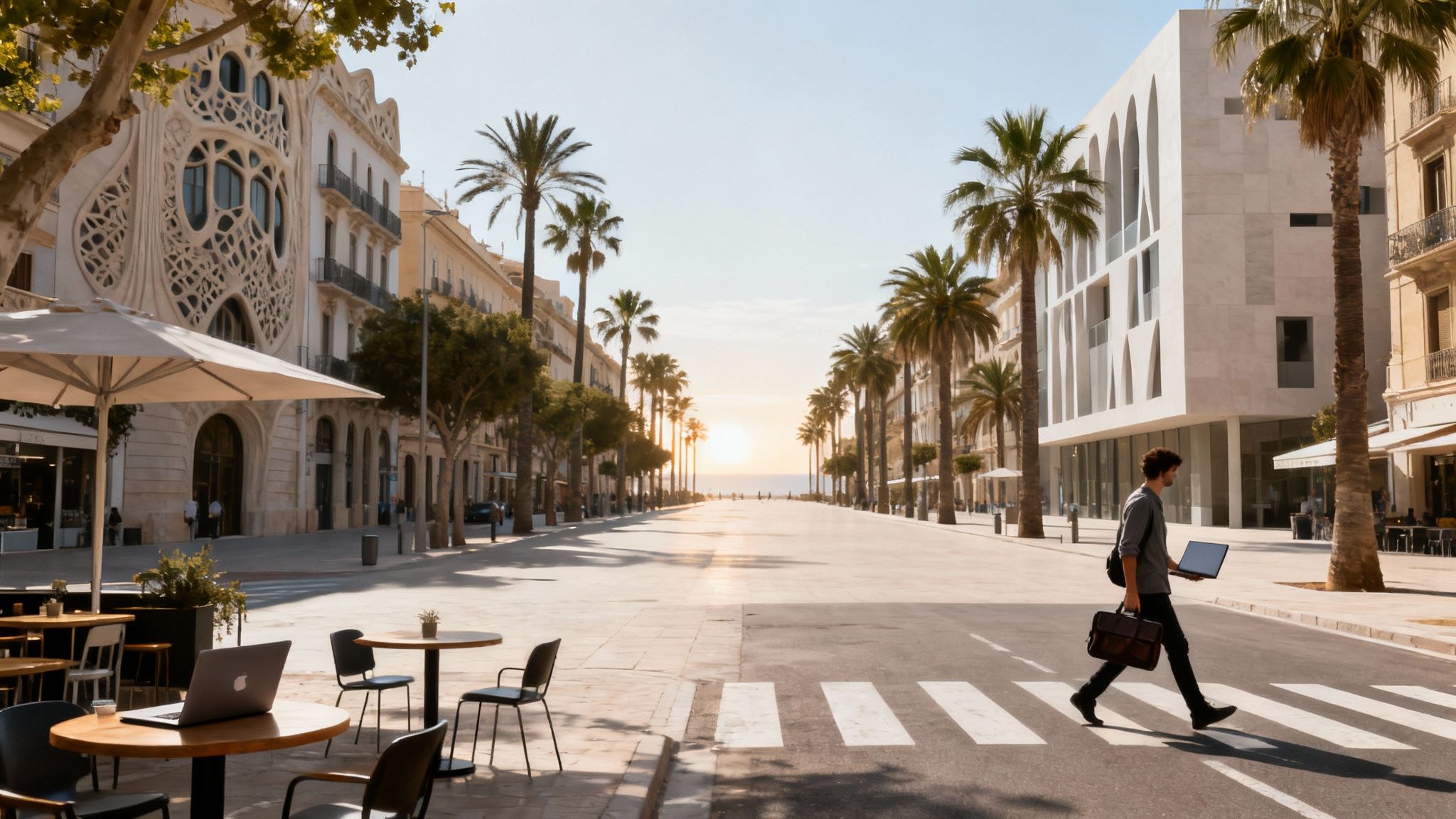
Managing your finances is also vital. Using fintech services like Wise or Revolut for currency conversion can save you significant money. Traditional Portuguese banks often have less favorable exchange rates for foreigners. Once settled, remember to register with SEF (Portugal’s immigration and borders service). You should do this within 30 days of arrival to establish your legal residence. This is a necessary step for taxes and other formalities.
Getting Started with Lisbon’s Community
To connect with fellow remote workers, coworking spaces like Selina or Spaces are excellent starting points. However, to experience the city like a local, explore authentic neighborhoods. Areas like Alcântara and Marvila offer a genuine community feel. They do so without the premium prices found in more tourist-heavy districts.
Sustainable Transit and Connections
For day trips and regional exploration, use CP (Comboios de Portugal), the national train service. Their rail passes offer an economical way to see the country. To save on both costs and carbon, consider a night train. You can take one from Lisbon’s Santa Apolónia station to Madrid or Porto. This also saves you the cost of one night’s accommodation. For broader European travel, a Renfe Spain Pass can be a great value for connecting onward from Madrid.
3. Barcelona, Spain – Urban Walkability with Mediterranean Climate
Barcelona is one of the best cities for remote work. It offers an irresistible combination of urban efficiency and a relaxed Mediterranean lifestyle. The Catalan capital provides a mature digital nomad scene. It also features highly walkable neighborhoods like the famous Eixample grid and excellent infrastructure. All of this is bathed in coastal sunshine. Its balance of work and life, coupled with fantastic rail access to France and the rest of Spain, makes it a premier sustainable base.
Digital nomads can expect exceptional internet connectivity. Providers like Movistar or Orange offer high-speed 300 Mbps fiber optic plans. These cost around €50-60 ($54-65 USD) per month. This ensures reliable performance for demanding remote jobs. This powerful infrastructure supports a seamless workflow. You can work from a modern apartment or one of the city’s countless vibrant cafes.
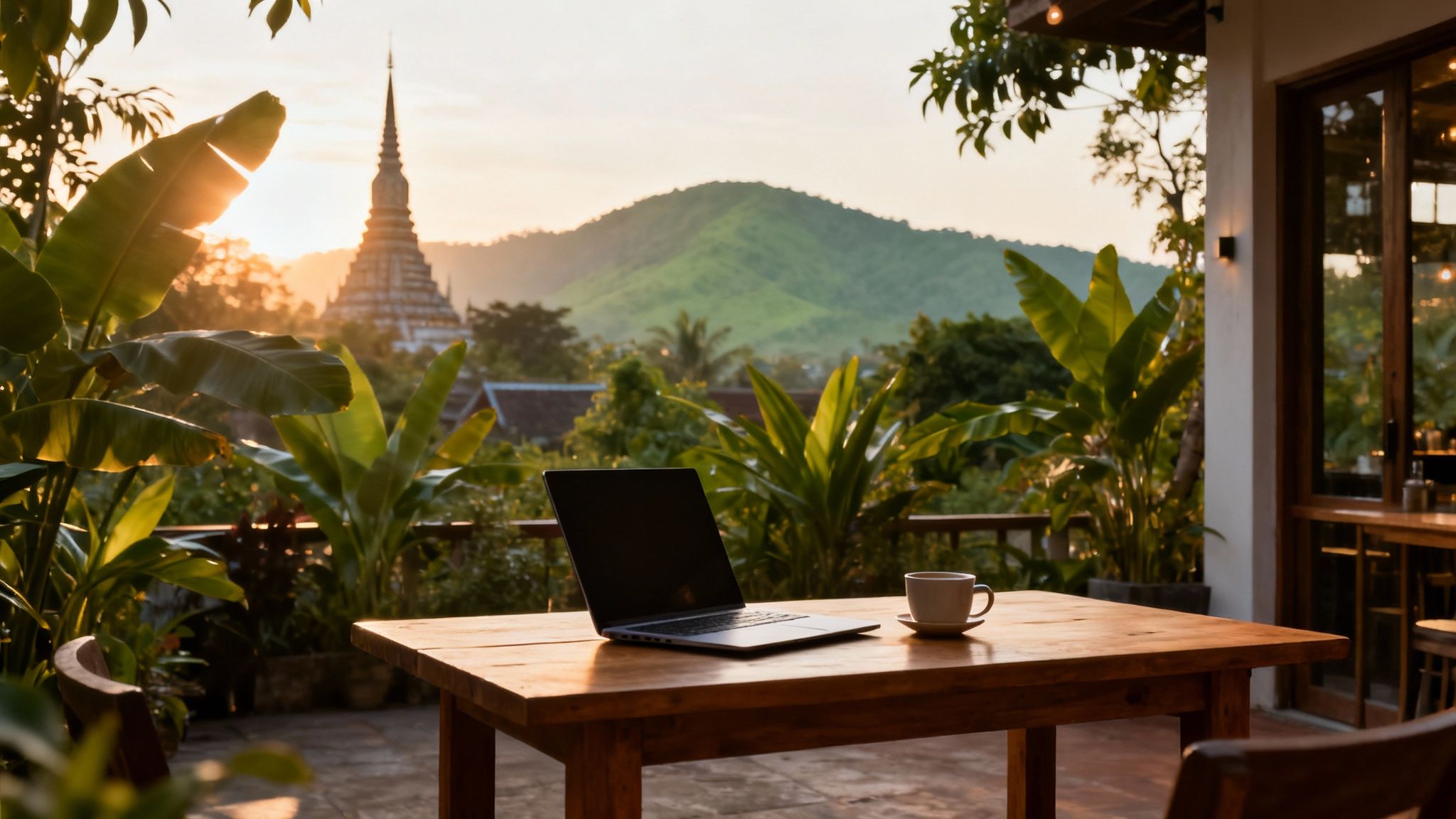
Spain also has a digital nomad visa. This simplifies the legal process for non-EU professionals to live and work in the country long-term. This visa is a key reason why Barcelona remains a top choice for remote workers from around the globe. To see how it compares with other options, check out our updated guide on the best cities for digital nomads.
Getting Started in Barcelona
To integrate into the local tech and creative scene, coworking spaces are an excellent choice. A hot desk at a popular spot like Betahaus in the Gràcia district typically costs between €200-300 ($215-325 USD) monthly. For those needing more space, like families or small groups, renting an apartment is a good option. A three-bedroom apartment in a well-connected neighborhood like Sant Antoni can range from €1,100-1,400 ($1,190-1,515 USD) per month.
Sustainable Transit and Connections
Barcelona Sants is the city’s primary rail hub. It connects you directly to Madrid, Valencia, and even Paris via high-speed train. This makes it an ideal launchpad for eco-friendly, car-free exploration. A popular day trip involves taking the 40-minute train ride to the stunning mountain monastery of Montserrat. This offers a perfect escape from the city bustle.
4. Barcelona, Spain – Neighborhoods & Practical Tips
Barcelona has cemented its place as one of the best cities for remote work. It offers a perfect blend of Mediterranean lifestyle, world-class infrastructure, and a thriving international community. The Catalan capital delivers on all fronts. It provides excellent connectivity, diverse neighborhoods, and a cultural scene that keeps digital nomads engaged. Its efficient public transit and coastal setting make it an ideal base for both focused work and sustainable exploration.
Digital nomads benefit from Spain’s widespread high-speed fiber internet. Providers like Movistar and Orange offer reliable plans for around €40-60 ($43-65 USD) per month. This robust network ensures seamless productivity. You can work from a stylish apartment in Gràcia or a beachside cafe in Poblenou. This connectivity supports a large and active remote work community. This is evident in groups like the Barcelona Nomad Facebook group.

The city’s appeal is enhanced by Spain’s digital nomad visa. This visa offers a clear legal path for remote professionals seeking to establish a long-term base. It simplifies the process of legal residence. This allows you to fully integrate into local life and take advantage of municipal services.
Getting Started in Barcelona
Choosing the right neighborhood is key to a successful stay. You should avoid the tourist-heavy Gothic Quarter and Las Ramblas. Instead, opt for areas like Gràcia, Sant Antoni, or Poblenou. These offer a more authentic and affordable experience. A monthly pass for coworking spaces like MOB or Selina costs approximately €180-280 ($195-305 USD). These spaces provide not just a desk but also access to valuable community events.
Sustainable Transit and Connections
Barcelona is incredibly well-connected for sustainable, rail-first travel. The main hub, Barcelona-Sants station, offers high-speed AVE trains. You can travel to Madrid, Seville, and French cities like Lyon and Paris. For a memorable slow-travel journey, take the train along the coast to Valencia. Or, head north into the Pyrenees. Getting around the city itself is simple and eco-friendly using the T-familiar transport pass. This offers 8 journeys for €10 ($10.90 USD). The Bicing bike-share system is another great option.
5. Valencia, Spain – Mediterranean Cost-Efficiency with Emerging Digital Scene
Valencia presents a compelling case as one of the best cities for remote work. It offers a relaxed Mediterranean lifestyle at a fraction of the cost of other Spanish hubs. With a cost of living roughly 30% lower than Barcelona, this coastal city combines modern infrastructure with a growing digital nomad community. It is an ideal choice for budget-conscious remote workers. Those who prioritize an outdoor lifestyle, cultural richness, and excellent rail connectivity will love it here.
Digital nomads can expect reliable, high-speed internet. Providers like Movistar or Vodafone offer fiber plans costing around €30-40 ($33-44 USD) per month. This robust connectivity ensures seamless productivity. You can work from a rented apartment in a vibrant neighborhood like Ruzafa or a quiet corner in a local café.

Spain’s Digital Nomad Visa makes longer stays straightforward for remote professionals. It allows non-EU citizens to live and work in the country for up to five years. The process requires proof of remote work and sufficient income. This streamlines the transition to a Spanish home base. We cover more details in our guide to the best places to visit in Spain.
Getting Started in Valencia
For a productive start, consider a coworking space like Lanzadera. It offers desks and networking opportunities for about €150-250 ($165-275 USD) per month. For accommodation, budget-conscious couples can find furnished two-bedroom apartments. Look in authentic neighborhoods like Benimaclet for €500-700 ($550-770 USD) monthly. This is especially true when booking for three months or more. These areas offer a local atmosphere and are well-connected by public transport.
Sustainable Transit and Connections
Valencia’s Estació del Nord is a central hub for low-impact travel. From here, high-speed AVE trains connect you to Madrid in under two hours. You can also reach Barcelona in three hours. For a more scenic and budget-friendly journey, the Regional Express trains offer slow travel options. They run along the coast. A popular route is the coastal train to Alicante. It offers beautiful Mediterranean views and a chance to explore smaller towns.
6. Budapest, Hungary – Eastern European Affordability with Rich Culture
Budapest stands out as one of the best cities for remote work. It offers a remarkable blend of affordability, grand historical architecture, and a dynamic modern energy. The Hungarian capital provides incredible value with its low cost of living. It also has a robust digital infrastructure and a central location. This makes it an ideal hub for exploring Central and Eastern Europe. Its efficient public transit and distinct neighborhoods offer a rich cultural experience for any remote professional.
Digital nomads can expect excellent, high-speed internet. Providers like Vodafone or Yettel offer great options. Fiber optic plans are widely available and extremely affordable. They typically cost just €15-25 ($16-27 USD) per month. This reliable connectivity ensures a smooth workflow. You can work from a classic apartment in the Jewish Quarter or a modern coworking space.

Hungary supports remote professionals with its “White Card.” This is a digital nomad visa tailored for non-EU citizens. This residency permit allows you to live and work in the country for up to one year. It also has the possibility of renewal. It is crucial to apply for this visa before your arrival. This ensures a seamless transition.
Getting Started in Budapest
For those seeking community and structure, coworking spaces are a great choice. KAPTÁR or Impact Hub offer monthly memberships for around €120-180 ($130-195 USD). Budget-conscious nomads can find great value in accommodation. Renting a studio apartment in authentic and well-connected neighborhoods is affordable. Areas like District VII (the historic Jewish Quarter) or District VIII can cost as little as €250-350 ($270-380 USD) per month.
Sustainable Transit and Connections
Budapest’s Keleti and Nyugati railway stations are magnificent architectural gems. They are also vital hubs for sustainable travel. Using the MÁV (Hungarian State Railways), you can easily book direct trains. Destinations include Vienna, Prague, and Bratislava. A popular slow-travel itinerary involves taking a scenic train to Vienna. Then, you can continue to Prague. This creates a low-carbon journey through three iconic Central European capitals.
7. Chiang Mai, Thailand – Asia’s Digital Nomad Capital with Ultra-Low Costs
Chiang Mai has long been celebrated as one of the best cities for remote work. It offers an unbeatable combination of extremely low living costs, a deeply established digital nomad community, and a rich cultural landscape. The city provides a laid-back atmosphere. Ancient temples sit alongside modern coworking spaces. Its affordability and robust infrastructure make it an accessible and sustainable choice. Nomads looking to maximize their budget without sacrificing connectivity will find it ideal.
Digital nomads benefit from excellent and cheap internet. Fiber plans cost as little as $10-20 USD per month. Mobile data is equally reliable. Many professionals use dual SIM cards from providers like AIS and TrueMove. This ensures constant 4G backup. This setup supports uninterrupted work from anywhere in the city.
The infrastructure for remote workers is second to none. Countless cafes and dedicated coworking hubs cater to every need. This strong community network provides invaluable social and professional support. It makes it easy for newcomers to integrate and find their footing in this Northern Thai hub.
Getting Started in Chiang Mai
Chiang Mai is famous for its affordable accommodation. A solo nomad can rent a modern studio apartment for $200-300 USD per month. Couples or groups can find entire houses with pools for a fraction of what a small apartment costs in Europe. Many coworking spaces, such as Punspace, offer combined packages. These include accommodation and hot desk access starting around $400-600 USD monthly. This simplifies the setup process for new arrivals.
Sustainable Transit and Connections
Chiang Mai Railway Station is the northern terminus of Thailand’s rail network. It provides a vital link for slow, low-impact travel. The overnight train to Bangkok is a classic journey for eco-conscious travelers. It takes 10-12 hours. It costs as little as $5-10 USD for a basic seat. A comfortable sleeper berth costs slightly more. This route is a sustainable alternative to the popular one-hour flight. It offers a scenic way to transition between Thailand’s major hubs.
8. Chiang Mai, Thailand – The Original Digital Nomad Hub
Chiang Mai is often called the birthplace of the digital nomad movement. It remains one of the best cities for remote work due to its incredibly low cost of living. Its established community and high-quality infrastructure are also key factors. Popularized by authors like Tim Ferriss, this northern Thai city offers a unique blend. You will find ancient temples, lush mountains, and modern amenities. Its affordability and social fabric make it an ideal base for both new and experienced remote professionals.
Digital nomads can expect reliable, high-speed internet perfect for full-time work. Local providers like AIS or TrueMove offer cheap, powerful data plans. These often cost just $5-15 USD per month. You get more than enough data to work from anywhere. This strong connectivity is a cornerstone of Chiang Mai’s appeal.
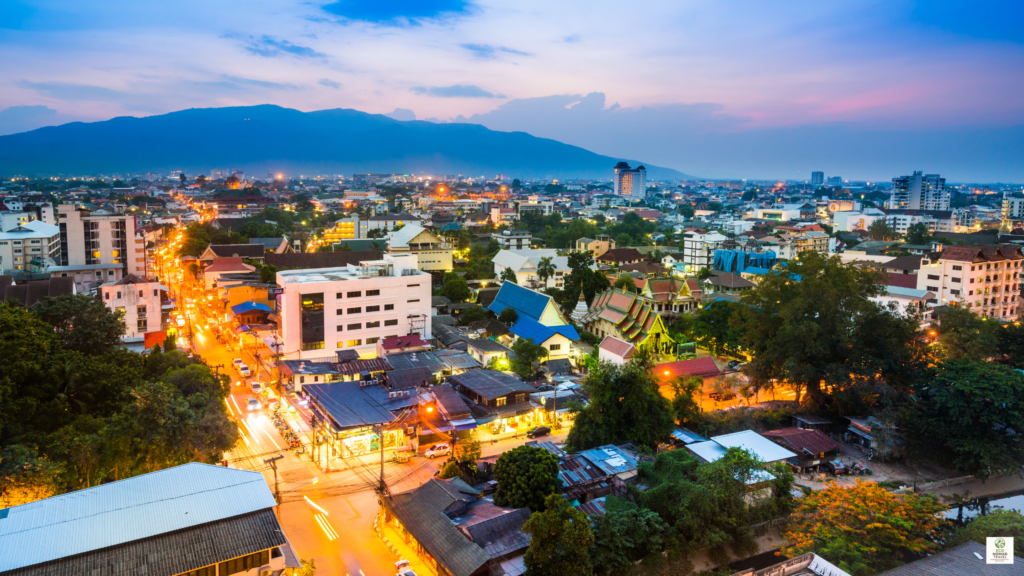
The city’s welcoming vibe is matched by a straightforward visa situation for many nationalities. This often involves 30-day visa exemptions that can be extended. For longer stays, many nomads utilize educational or other long-term visa options. However, it is always wise to check the latest regulations with the Thai embassy.
Getting Started in Chiang Mai
To tap into the city’s social core, joining a coworking space is a must. Punspace is a long-standing favorite. Monthly memberships range from $50-120 USD. These spaces offer not just a desk but also community events. This provides an instant network. Upon arrival, it is a legal requirement to register your address with immigration. You must do this within 24 hours.
Sustainable Transit and Connections
While Chiang Mai doesn’t have a metro, its compact Old City is highly walkable. For longer distances, the local songthaews (red trucks) offer a shared, low-cost transit option. They cost around $1 USD per trip. The city’s train station offers overnight sleeper trains to Bangkok. This is a classic slow-travel journey that minimizes your carbon footprint compared to a flight.
9. Medellín, Colombia – South America’s Emerging Digital Hub with Spring Climate
Medellín has masterfully reinvented itself. It has become one of the best cities for remote work in Latin America. Known for its perfect year-round spring climate, the city combines a growing entrepreneurial ecosystem with an exceptionally low cost of living. Its innovative public transit, including an efficient metro and cable car system, makes car-free living a practical reality. This is a huge benefit for digital nomads.
Remote workers in Medellín benefit from affordable and reliable internet. Providers like Claro and Tigo offer fiber plans with 50-100 Mbps. These cost just $20-30 USD (approx. 80,000-120,000 COP) per month. This stable connectivity ensures you can work efficiently. You can do so from a comfortable apartment or a vibrant local coworking space.

The city’s transformation has fostered a welcoming environment for international professionals. Colombia’s recently introduced digital nomad visa simplifies the process for long-term stays. It allows remote workers to legally reside in the country for up to two years. The application is straightforward. It typically takes only a few weeks to process.
Getting Started in Medellín
To dive into the local nomad scene, coworking spaces are a great start. Espacios Compartidos or Casa Kiwi offer memberships for around $80-150 USD (320,000-600,000 COP) per month. For budget-conscious long-term stays, renting an apartment in quieter, residential neighborhoods is a popular choice. Areas like Laureles or Envigado have monthly costs ranging from $250-400 USD (1,000,000-1,600,000 COP).
Sustainable Transit and Connections
Medellín is a leader in sustainable urban transport in South America. The Metro and Metrocable system is the lifeblood of the city. It connects hillside communities with the valley floor. An unlimited monthly pass costs around $25 USD. This offers an incredibly affordable way to explore. For regional travel, bus stations provide connections. The Terminal del Norte and Terminal del Sur connect to coffee-region towns like Salento and Jardín. They also connect to larger cities like Bogotá and Cali.
10. Mexico City, Mexico – Vibrant Cultural Hub with Affordability
Mexico City offers an unparalleled blend of world-class culture, gastronomy, and modern infrastructure. This makes it one of the best cities for remote work in Latin America. The sprawling capital provides an energetic yet affordable base. Ancient history meets contemporary art here. Its extensive public transport, diverse neighborhoods, and thriving culinary scene continue to attract a growing community of digital nomads.
Remote workers will find the city’s digital infrastructure more than capable. Providers like Totalplay and Telmex offer reliable fiber optic plans. Speeds of 100 Mbps or more cost around $40-50 USD per month. This ensures a stable connection for demanding workdays. You can work from a private apartment or one of the city’s many stylish cafes.

The city’s diverse neighborhoods are a major draw. From the bohemian streets of Roma and Condesa to the historic charm of Coyoacán, there are options for every budget and lifestyle. This vibrant mix of environments makes it an excellent choice for a long-term stay. To see how Mexico compares to other popular destinations, explore our guide to the best countries for remote workers.
Getting Started in Mexico City
For those looking to connect with a professional community, coworking spaces are a great idea. Newton or Espacios Compartidos offer monthly memberships for $80-200 USD. These hubs provide excellent amenities and networking opportunities. Budget-conscious nomads can find long-term apartments in walkable areas. Places like Roma or Condesa cost $400-600 USD per month. This allows for easy exploration of the city’s incredible food and cultural offerings.
Sustainable Transit and Connections
Mexico City’s extensive metro system is key to a car-free, low-impact lifestyle. It connects most major points of interest efficiently. For regional travel, the ADO bus network offers comfortable and affordable journeys. You can travel to nearby cities like Puebla or Querétaro. While rail travel is limited for long-distance routes, the city’s international airport (MEX) serves as a major hub. It has flights across the Americas. However, buses remain the more sustainable choice for exploring the country.
Top 10 Remote-Work Cities Comparison
| Location | Implementation complexity 🔄 | Resource requirements 💡 | Expected outcomes ⭐📊 | Ideal use cases | Key advantages ⚡ |
|---|---|---|---|---|---|
| ### Lisbon, Portugal – The Affordable European Gateway | 🔄🔄 Moderate — D7/DN visas available; some bureaucracy; Portuguese for admin | €1.2k–1.5k/mo; excellent fiber (100+ Mbps); 50+ coworkings | ⭐⭐⭐⭐ Strong community, sunny climate, reliable work setups | European nomads seeking affordable base + rail access | ⚡ Low-cost EU living, strong train links, thriving nomad community |
| ### Lisbon — Community & Practical Tips | 🔄 Low — practical arrival steps and local networks | Use Revolut/Wise; join FB groups; shoulder-season savings | ⭐⭐⭐⭐ Better outcomes if following tips (cost/time savings) | First-time arrivals, slow travelers, social connectors | ⚡ Quick community access, cheaper stays off-season |
| ### Barcelona, Spain – Urban Walkability with Mediterranean Climate | 🔄🔄 Moderate — digital nomad visa available; busy bureaucracy in peak season | €1.4k–1.8k/mo; fiber 100–300 Mbps; 60+ coworkings | ⭐⭐⭐⭐ High QoL, strong culture and transit, higher costs | Nomads wanting city + beach + top transit | ⚡ Excellent public transit, high-speed rail to Madrid/France |
| ### Barcelona — Neighborhoods & Practical Tips | 🔄 Low — neighborhood choices and cost-saving tips simplify setup | Use T-10/Bicing; monthly coworking > daily; avoid tourist cores | ⭐⭐⭐⭐ Easier, cheaper stays when choosing right neighborhoods | Budget-conscious urban nomads prioritizing walkability | ⚡ Save on transport/food by choosing local markets and Bicing |
| ### Valencia, Spain – Mediterranean Cost-Efficiency with Emerging Digital Scene | 🔄🔄 Low–Moderate — simpler bureaucracy than big hubs | €1.0k–1.3k/mo; good fiber in center; 15–20 coworkings | ⭐⭐⭐⭐ Good QoL, beach lifestyle, lower costs than Barcelona | Budget nomads wanting Mediterranean climate & space | ⚡ Lower cost, Turia Gardens car-free routes, solid rail links |
| ### Budapest, Hungary – Eastern European Affordability with Rich Culture | 🔄🔄🔄 Moderate–High — DN visa income requirement high (€2,500/mo); language barrier | €700–1,000/mo; excellent fiber (100–300 Mbps); 15+ coworkings | ⭐⭐⭐ Good value, strong culture, smaller anglophone community | Cost-focused European base for regional travel | ⚡ Very low costs, reliable internet, central rail hub |
| ### Chiang Mai, Thailand – Asia’s Digital Nomad Capital with Ultra-Low Costs | 🔄🔄🔄 High — visa options varied and policy can change; registration required | $400–600/mo; 50–100 Mbps fiber; highest coworking density | ⭐⭐⭐⭐⭐ Exceptional community, affordability, abundant meetups | Long-term low-cost nomads; community-oriented remote workers | ⚡ Lowest costs, massive coworking scene, strong social network |
| ### Chiang Mai — Community & Arrival Tips | 🔄 Low — clear arrival guidance and active groups | Cheap SIMs; book Punspace; avoid haze season; register immigration | ⭐⭐⭐⭐⭐ Smooth integration and safety when following tips | New arrivals seeking quick community entry | ⚡ Fast onboarding, cheap data, plentiful coworking events |
| ### Medellín, Colombia – South America’s Emerging Digital Hub with Spring Climate | 🔄🔄 Moderate — DN visa available; safety and language considerations | $700–1,000/mo; excellent fiber (100+ Mbps); 30+ coworkings | ⭐⭐⭐⭐ Great climate and growing startup/nomad scene | Nomads wanting Latin America base with temperate climate | ⚡ Year-round spring weather, metro+cable car for car-free living |
| ### Mexico City, Mexico – Vibrant Cultural Hub with Affordability | 🔄🔄🔄 Moderate–High — temporary resident visa income requirement; urban complexity | $900–1,300/mo; fiber 100–300 Mbps; 50+ coworkings | ⭐⭐⭐⭐ Outstanding culture/food and transit; some pollution/safety tradeoffs | Culture-focused nomads, foodies, startup founders | ⚡ World-class gastronomy, extensive metro, strong startup ecosystem |
Your Next Chapter Awaits
Choosing from the best cities for remote work is about so much more than a fast internet connection or a low cost of living. It is about designing a life that aligns with your core values. The locations in this guide were selected not just for practical benefits. Instead, they were chosen for their potential to support a more intentional, sustainable, and connected lifestyle. From Lisbon’s sun-drenched hills to Chiang Mai’s tranquil temples, each one offers a unique blueprint. This blueprint is for a life where work integrates seamlessly with exploration, community, and a lower environmental footprint.
This shift towards slow, rail-first travel represents a fundamental change in the digital nomad narrative. We are moving beyond the whirlwind, country-a-week model. Now, we are adopting a more grounded approach. By choosing to settle in for longer stays, we can contribute positively to local economies. We can also form genuine connections and reduce harmful emissions from frequent flights. The walkability of Barcelona, Valencia’s cycle paths, and Budapest’s transit are not just conveniences. They are invitations to experience a destination at a human pace, fostering well-being and environmental responsibility.
Ultimately, this guide is a starting point. It is a collection of possibilities to inspire your own journey. The true art of sustainable remote work lies in the personal choices you make every day. It is in opting for the night train over a budget flight. It is in choosing a regenerative stay that supports local conservation. And it is in packing a zero-waste kit to minimize your impact. These small, conscious decisions compound over time. As a result, they transform your travel from simple consumption into a meaningful exchange.
From Inspiration to Action: Crafting Your Sustainable Nomad Plan
The transition from dreaming about the best cities for remote work to actually booking your train ticket requires a strategic plan. Let’s break down the actionable steps to turn these ideas into your reality.
First, conduct a personal audit. Which city’s profile resonated most with you? Was it the vibrant community and affordability of Medellín? Or was it the historic charm and central European rail access of Budapest? Create a shortlist of two or three top contenders.
Next, dive deep into the logistics for your chosen cities.
- Visa Research: Use official government embassy websites to verify long-stay visa requirements for your nationality. Policies change, so always check the primary source.
- Budgeting: Create a detailed monthly budget using the cost-of-living estimates provided. Factor in one-time setup costs like visa fees and initial deposits. Do not forget to secure comprehensive travel insurance; a reliable option like VisitorsCoverage can provide peace of mind.
- Connectivity: Ensure your communication is sorted before you land. An eSIM from a provider like Airalo or Yesim is a simple, eco-friendly way to get online immediately, avoiding plastic SIM cards.
Finally, start mapping your journey. Use a platform like Trip.com to explore train routes and accommodation. If a flight is unavoidable for the initial long-haul leg, tools like Aviasales can help find options. Pre-booking an airport transfer with a trusted service like Welcome Pickups can also ease your arrival, especially after a long journey.
Editor’s Pick: The Trans-European Night Train Network
For the ultimate in sustainable European travel, our top pick is the expanding network of night trains. Routes like the ÖBB Nightjet connecting cities from Amsterdam to Vienna or the European Sleeper linking Brussels and Prague are game-changers. They combine transport and accommodation, saving you money and a full day of travel time. Most importantly, a typical night train journey emits over 90% less CO2 per passenger than an equivalent short-haul flight, making it the single most impactful choice for a low-carbon, multi-city European work base.
Key Takeaways
- Prioritize Slow Travel: The most sustainable remote work lifestyle involves longer stays, fostering community connections and reducing carbon emissions.
- Embrace Rail-First Itineraries: Opting for trains, especially overnight services, is a powerful way to lower your environmental impact while saving money.
- Walkability is a Superpower: Choosing a walkable or bike-friendly base enhances well-being, reduces costs, and offers a more immersive local experience.
- Conscious Consumption Matters: Your choices in accommodation, daily habits, and support for local businesses contribute to the sustainability of your destination.
- Planning is Paramount: A successful move requires diligent research into visas, creating a realistic budget, and planning logistics like insurance and connectivity.
Your next chapter awaits, not just in a new city, but in a new way of living and working. The world is open, and with a mindful approach, you can explore it in a way that is enriching for you and respectful of the planet we all call home.
Ready to dive deeper into sustainable travel planning? The tools and itineraries at Eco Nomad Travel are designed to help you build low-impact, rail-first adventures. Explore our guides to find the perfect resources for your next journey.
Join the Sustainable Work Movement
Want more rail-first itineraries, low-impact packing systems, and walkable base-city ideas?
Best Cities for Remote Work FAQ
Below are the most common questions readers ask when choosing the best cities for remote work—with practical, eco-friendly answers focused on visas, costs, walkability, and rail-first travel.
Visas & Planning for Remote Work Abroad
Do I need a digital nomad visa to work remotely in another country?
It depends on your passport and how long you plan to stay. Many countries allow short stays under tourist rules, but working (even remotely) may fall into a legal gray area. If you want a longer, low-stress stay, a digital nomad or long-stay visa is usually the safest and most sustainable option.
How long should I stay in one city to travel more sustainably?
Aim for 3–8 weeks per city whenever possible. Longer stays reduce transport emissions, lower your stress, and often unlock better monthly rental pricing. It also makes it easier to build real community connections instead of “passing through.”
What are the most important documents to prepare before you leave?
In most cases you’ll want: passport validity (6+ months), proof of income/employment, proof of address or accommodation, travel insurance, and any visa or residency paperwork. For smoother arrivals, keep digital and printed copies of essentials.
Can I build a rail-first route across Europe as a remote worker?
Yes—Europe is one of the easiest regions for rail-first remote work. You can design a “hub-and-spoke” plan: base in one city for several weeks, then take short train trips on weekends. This keeps travel slower, cheaper, and far lower-impact than frequent flights.
What’s the best way to research walkable neighborhoods before booking?
Look for neighborhoods with grocery stores, cafes, coworking, parks, and transit within a 10–20 minute walk. Use public transit maps, city bike-share maps, and street-view checks to confirm sidewalks, lighting, and daily convenience.
Costs, Wi-Fi, and Remote Work Setup
How much do the best cities for remote work usually cost per month?
It varies widely, but a realistic range is $700–$2,000/month depending on city, season, and lifestyle. Budget-friendly hubs often include parts of Southeast Asia and Latin America, while major European capitals tend to cost more—especially during peak months.
What are the biggest “hidden costs” remote workers forget to budget for?
The most common surprises include deposits for apartments, visa fees, insurance, coworking passes, transit cards, and occasional “productivity upgrades” (extra data plans, noise-canceling headphones, or a better desk setup).
How fast does the internet need to be for remote work?
For most jobs, 25 Mbps down / 5 Mbps up is enough for video calls and cloud tools. If you upload large files (design/video), aim for stronger upload speeds. Always ask hosts to run a speed test, not just claim “fast Wi-Fi.”
Should I stay in a coworking space or work from cafes?
For focus-heavy work, coworking is often the best investment because it gives you reliability, ergonomics, and community. Cafes are great for lighter tasks, creative work, or social energy—but they can be noisy, inconsistent, and less sustainable if you’re constantly “hopping” all day.
What’s the easiest way to get online immediately when I land?
An eSIM is one of the simplest solutions because you can activate data before you arrive. If you want an easy setup, Airalo is a popular option for quick coverage without hunting for a physical SIM.
How do I choose the best accommodation for productivity?
Prioritize quiet, natural light, and a comfortable work surface. Confirm strong Wi-Fi, a desk or table, and decent seating. If you’ll be staying longer than a week, choose a place close to groceries, parks, and transit so your routine stays simple and low-impact.
Sustainable Transit, Walkability & Rail-First Travel
Why does walkability matter so much for remote work?
Walkability helps you stay healthier, reduce transport costs, and avoid daily friction. When your essentials are nearby, you’ll naturally build a better routine—short errands, real breaks, and a calmer workday rhythm.
Is public transit better than rideshares for remote workers?
Usually, yes. Transit is cheaper, lower-carbon, and often faster during rush hours. A reliable metro or tram system also gives you freedom to explore without needing a car—especially in cities designed around walkable neighborhoods.
Are night trains worth it for digital nomads?
They can be one of the best-value travel moves: you save daylight hours, reduce airport stress, and often replace a night of accommodation. They’re especially useful when moving between bases without breaking your work routine.
How can I keep my carbon footprint low while changing cities?
Stay longer in each base, choose trains or buses for regional travel, and avoid quick “weekend flights.” Packing lighter also helps (less baggage weight, fewer purchases). If you must fly long-haul, reduce total flights by building longer regional stays.
What’s the smartest way to plan a train itinerary around work calls?
Travel on low-meeting days, book quieter seats (or first class when it’s a good value), download offline backups, and keep a mobile hotspot ready. If possible, schedule your travel day as a “light admin day” and do deep work the next morning.
Safety, Lifestyle & Staying Productive Long-Term
How do I stay safe while working remotely in a new city?
Choose well-reviewed, walkable neighborhoods, avoid displaying expensive gear in crowded areas, and use rideshares late at night if needed. Most remote work safety is about routine: predictable routes, good lighting, and smart device habits.
What are the best cities for remote work if I want community quickly?
Look for cities with strong coworking ecosystems and recurring events (workshops, meetups, skill shares). The fastest way to build community is joining a coworking space for your first month, then branching into local groups and classes.
How do I avoid burnout while living the digital nomad lifestyle?
Slow down the pace. Choose a stable base, keep your mornings consistent, and build “offline anchors” (walking routes, gym, local café, weekly social plan). Burnout usually comes from overstimulation and constant movement, not from work itself.
What’s the best time of year to move to a new remote-work city?
Shoulder seasons are ideal because they’re cheaper and calmer. You’ll get better accommodation options and fewer crowds, which makes it easier to build a productive routine. Also, it’s often kinder on the environment than peak-season travel.
Do I need travel insurance even if I’m staying for months?
Yes. Long stays increase the odds of needing medical care, travel support, or coverage for unexpected changes. A good policy protects you financially and reduces stress so you can focus on work and life, not worst-case scenarios.
How do I choose a city that fits my work schedule and time zone?
Pick a place where your working hours won’t destroy your sleep. If your team is US-based, Latin America often aligns well. If you work with Europe, EU cities reduce overlap stress. Your “best city” is the one that supports long-term energy.
