
Finding the best countries for remote workers goes beyond just fast Wi-Fi and affordable rent. For a growing number of digital nomads, the ideal location supports a sustainable, low-impact lifestyle where walkable cities, efficient train networks, and regenerative travel are core features, not just afterthoughts. This guide moves past the usual recommendations to provide a practical, data-backed look at destinations where you can build a productive work routine without relying on constant flights or a car-centric daily life.
This roundup is designed for the eco-conscious remote worker who prioritizes train travel, seeks out car-free urban living, and values a lighter footprint. We’ve analyzed everything from digital nomad visa requirements and internet speeds to specific rail connectivity and local green initiatives. Our goal is to help you find a base city that is not only fulfilling and affordable but also aligns with a more sustainable approach to global living.
We will explore top-tier European hubs with incredible train access and emerging destinations in other regions where a rail-first or ferry-first mindset is not just possible, but genuinely enjoyable. Forget the generic advice; this is your blueprint for choosing a home base that connects you to culture, community, and conscious travel. Let’s find your next sustainable base city where your work and values can coexist seamlessly.
Key Takeaways
- Prioritize Rail Connectivity: Focus on countries with robust and affordable national and international train networks to minimize air travel and support a car-free lifestyle.
- Evaluate Visa & Logistics: Digital nomad visas and long-stay permits are critical. This guide breaks down the requirements for our top-ranked sustainable destinations.
- Balance Cost and Quality of Life: The best locations offer a low cost of living without sacrificing essentials like high-speed internet, walkability, and access to nature.
- Seek Sustainable Infrastructure: Look beyond travel options to cities and countries investing in green building, renewable energy, and regenerative tourism initiatives.
- Choose Walkable Base Cities: A successful remote work experience often hinges on a well-chosen neighborhood with daily amenities accessible on foot, reducing local transport emissions and costs.
Editor’s Pick: Essential Tool for Seamless Connectivity
For any remote worker, reliable internet is non-negotiable. Instead of fumbling with physical SIM cards in every new country, using a global eSIM service like Airalo is a game-changer. You can purchase and activate data plans for over 200 countries directly from your phone, ensuring you’re connected the moment you arrive. It’s a simple, affordable, and waste-free way to stay online, making it an indispensable tool for the modern, sustainable digital nomad.
1. Portugal: The European Rail-First Haven for Eco-Conscious Remote Workers
Portugal consistently ranks as one of the best countries for remote workers, and for good reason. It offers a unique combination of affordability, a welcoming digital nomad visa framework, and a national commitment to sustainable travel. Its extensive and efficient train network, managed by Comboios de Portugal (CP), makes car-free, multi-city slow travel not just possible but enjoyable, allowing for a deeper connection with the country’s diverse landscapes and culture.
This focus on rail connectivity allows digital nomads to base themselves in highly walkable cities while easily exploring the rest of the country. With strong urban fiber internet and a thriving community of remote professionals, especially in Lisbon and Porto, Portugal provides the perfect infrastructure for a productive and eco-conscious work-life balance.

Why Portugal is a Top Choice for Remote Work
Portugal’s appeal lies in its blend of modern amenities and traditional charm. Major cities boast reliable, high-speed internet, crucial for seamless remote work. The cost of living, while rising, remains lower than in many other Western European nations, allowing for a higher quality of life on a modest budget. The mild climate and beautiful coastline provide ample opportunities for year-round outdoor activities, from surfing in the Algarve to hiking in the Douro Valley.
Base Cities and Cost of Living
- Lisbon (Príncipe Real): A quiet, walkable neighborhood with abundant cafés. A shared apartment typically costs $1,300–$1,620 USD per month.
- Porto (Cedofeita): Known for its arts scene and excellent train access to nearby cities like Aveiro. Expect to pay $1,080–$1,520 USD monthly for a shared apartment.
- Covilhã: A university town with strong fiber internet and fewer nomads. Monthly costs for a shared apartment are significantly lower, around $650–$870 USD. Discover more car-free base cities and learn more about sustainable workation options on EcoNomadTravel.com.
Practical Tips for a Smooth Transition
To make the most of your time, plan ahead. Apply for the D7 Digital Nomad Visa at least one to two months before your planned arrival to streamline banking and secure long-term housing. For train travel, book tickets two to four weeks in advance on sites like Trip.com for the best fares. Consider purchasing a Cartão Azul train pass for discounts on regional trips. When booking accommodations, use filters for “kitchen” and “wifi,” and always ask the host for a recent internet speed test result.
2. Spain: Affordable Rail Routes and Emerging Nomad Hubs for Remote Workers
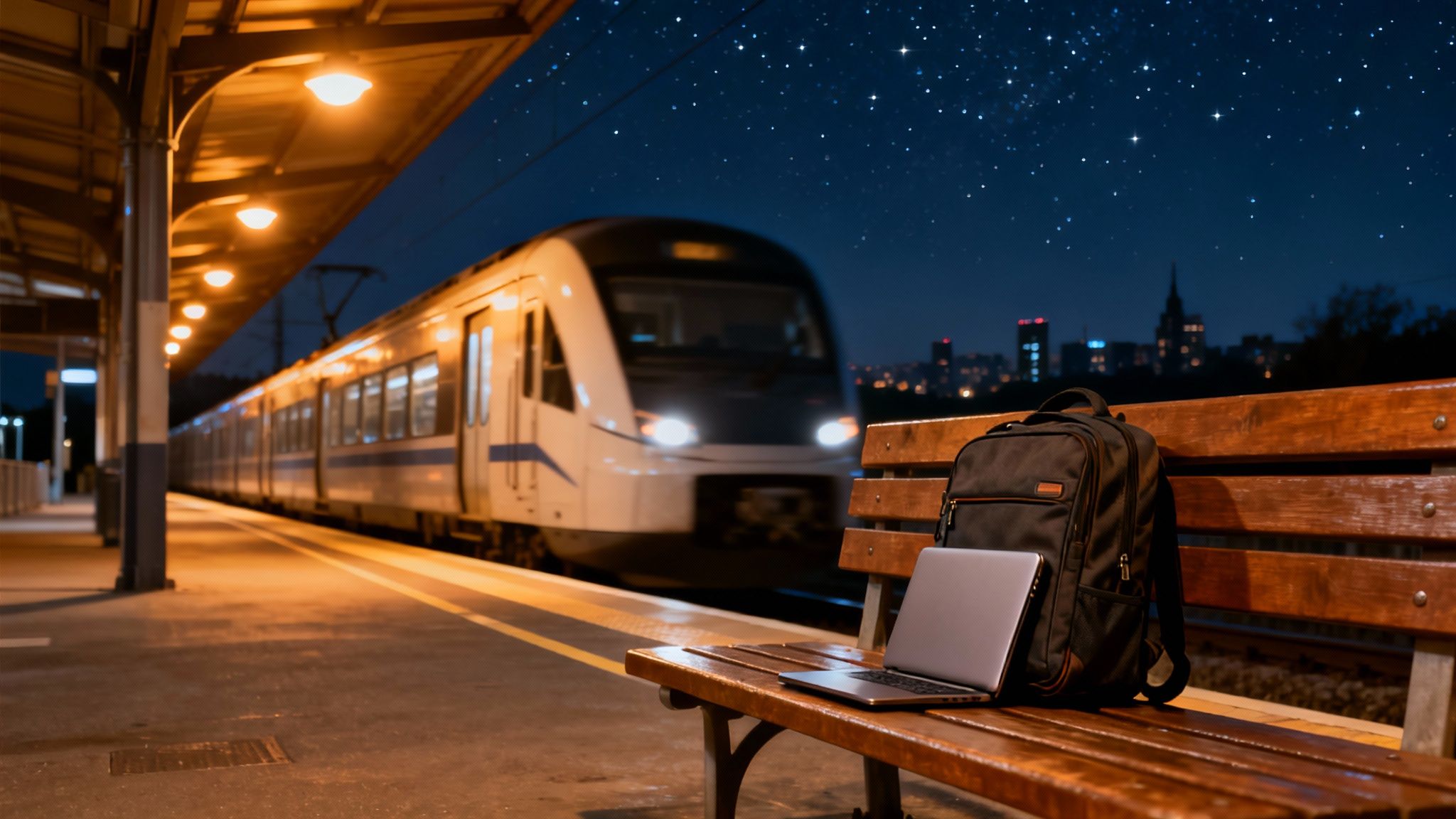
Spain is rapidly becoming one of the best countries for remote workers, thanks to its vibrant culture, affordable cost of living, and an impressive national rail network. Renfe, the state-owned rail company, offers extensive coverage with both high-speed (AVE) and budget-friendly (Avlo) options, making sustainable, multi-city slow travel accessible and efficient. This connectivity allows digital nomads to settle in lively, walkable cities while exploring the diverse regions of Spain without a car.
With its sunny climate, reliable fiber internet in urban centers, and a newly established Digital Nomad Visa, Spain presents a compelling package. Thriving remote work communities in cities like Valencia, Seville, and Barcelona provide the perfect blend of modern infrastructure and rich cultural experiences, fostering an ideal environment for productivity and exploration.
Why Spain is a Top Choice for Remote Work
Spain’s appeal for digital nomads is multi-faceted. The country boasts a lower cost of living compared to many Northern European and North American counterparts, allowing for a comfortable lifestyle on a more modest budget. High-speed internet is widely available, and the country’s famous lifestyle, which emphasizes social connection and leisure, helps create a healthy work-life balance. From the Mediterranean beaches to the historic streets of Andalusia, Spain offers endless opportunities for discovery.
Base Cities and Cost of Living
- Valencia (Ruzafa): This trendy neighborhood offers a vibrant café culture, beach access, and excellent Renfe connections. A shared apartment costs around $760–$980 USD (€700–€900) per month.
- Seville (Santa Cruz): Known for its historic, walkable old town and flamenco culture. Expect to pay $650–$870 USD (€600–€800) monthly for a shared apartment, with easy Renfe access to Córdoba and Madrid.
- Barcelona (Gràcia): A bohemian, village-like neighborhood with an artsy vibe and a strong regional rail hub. Monthly costs for a shared apartment are higher, around $1,300–$1,740 USD (€1,200–€1,600).
Practical Tips for a Smooth Transition
Plan your move by applying for the Spanish Digital Nomad Visa well before your arrival. To save on travel, book Renfe and Avlo train tickets four to six weeks in advance on platforms like Trainline.eu for easy comparison. Before signing any rental agreement, confirm the internet speed is over 100 Mbps; providers like Movistar or Orange offer flexible month-to-month contracts. Joining a coworking space can provide networking opportunities and assist with documentation needed for visas or landlords. Learn more about the beautiful places to explore in Spain by train on EcoNomadTravel.com.
3. Hungary: Budget-Friendly Tier-2 Hub with Rail Access Across Central Europe
Hungary, particularly its capital Budapest, stands out as one of the best countries for remote workers seeking an affordable and well-connected base in Central Europe. It delivers a compelling mix of low living costs, reliable high-speed fiber internet, and a strategic position for train travel. The national rail service, MÁV, offers extensive connections, making it simple to plan weekend trips to Vienna, Prague, and other regional hubs without needing a car.
This exceptional rail access allows digital nomads to settle into a vibrant urban environment while exploring a vast swath of the continent sustainably. With a growing community of remote professionals, a rich history, and a dynamic cultural scene, Hungary provides the perfect infrastructure for a productive and budget-conscious work-life balance, all centered around its efficient train network.
Why Hungary is a Top Choice for Remote Work
Hungary’s main draw is its affordability combined with a high quality of life. The cost of living in Budapest is significantly lower than in most Western European capitals, enabling a comfortable lifestyle on a modest remote work salary. The country’s “White Card” residence permit is specifically designed for digital nomads, simplifying the legal process for long-term stays.
Beyond economics, Budapest offers a vibrant city life with its famous ruin bars, thermal baths, and stunning architecture. Reliable fiber internet is widely available, and a burgeoning tech and startup scene has fostered numerous coworking spaces like Basecamp and Werkend, perfect for networking and collaboration.
Base Cities and Cost of Living
- Budapest (District VII – Kazinczy Street Area): The heart of the “ruin bar” district, this area is lively, walkable, and close to Keleti Railway Station. A shared apartment costs approximately $750–$960 USD (€700–€900) per month.
- Budapest (District IX – Ferencváros): An up-and-coming neighborhood known for its cultural venues and proximity to the Danube promenade. Expect to pay around $640–$850 USD (€600–€800) monthly for a shared apartment.
- Eger: A historic town known for its castle and wine, just a 50-minute train ride from the capital. Monthly costs for a shared apartment are much lower, around $430–$640 USD (€400–€600).
Practical Tips for a Smooth Transition
Plan your move well in advance. Start the application for your “White Card” residence permit before you arrive; consider hiring an immigration lawyer to expedite the process. For train travel, book tickets on the official MÁV website or through a platform like Trainline two to four weeks ahead for the best prices. Before signing a lease, confirm fiber internet availability by checking provider coverage maps for the specific address. Using Budapest as your rail hub for the first few months is an excellent strategy for exploring the region affordably.
4. Greece: Emerging Island and Mainland Rail Network for Sustainable Slow Travel
Greece is rapidly becoming one of the best countries for remote workers by offering an irresistible Mediterranean lifestyle at a low cost of living. Its unique appeal lies in the combination of an improving mainland rail network and an extensive ferry system, which facilitates a sustainable, car-free blend of mainland stability and island-hopping work breaks. This setup is ideal for nomads who want to slow travel and experience both ancient history and idyllic island life.
For digital nomads, this means you can establish a cost-effective base in a mainland city and treat the iconic Greek islands as weekend or short-week getaways. With growing fiber internet availability through providers like Wind and Cosmote, especially in urban centers, Greece provides the necessary infrastructure for a productive work routine balanced with unparalleled travel opportunities.

Why Greece is a Top Choice for Remote Work
Greece’s allure is its affordability, pleasant climate, and the unique flexibility it offers. The cost of living is significantly lower than in many other European Union countries, allowing remote workers to enjoy a high quality of life. The country’s digital nomad visa further simplifies long-term stays. Beyond logistics, the lifestyle is a major draw: imagine finishing your workday with a swim in the Aegean Sea or exploring ancient ruins. The reliable ferry network makes it easy and eco-friendly to explore diverse islands without needing a car.
Base Cities and Cost of Living
- Athens (Exarcheia or Kaisariani): As the central hub for rail and ferry travel, Athens is home to over a thousand digital nomads. A shared apartment in these vibrant neighborhoods costs around $860–$1,080 USD (€800–€1,000) per month.
- Volos: This coastal city offers improving fiber internet and direct boat access to the Sporades islands. Expect to pay $650–$860 USD (€600–€800) monthly for a shared apartment.
- Larissa: A strategic mainland base just 3.5 hours by train from Athens, Larissa is a gateway to the stunning Pelion region. Monthly rent for a shared apartment is very affordable, at $540–$750 USD (€500–€700).
Practical Tips for a Smooth Transition
Plan your living arrangements seasonally: base yourself on the mainland from October to May for lower costs and fewer crowds, scheduling 2-to-5-day working breaks to the islands. Book ferry tickets one to two weeks in advance, as winter schedules are reduced but still operate year-round. Before signing a lease, confirm internet speeds of 80+ Mbps with your landlord and have a coworking space as a backup. To benefit from favorable tax rates, consider registering as a freelancer with a local tax advisor.
5. Poland: Central European Gateway with Affordable Cities and Expanding Rail Access
Poland is rapidly emerging as one of the best countries for remote workers seeking a Central European base. It delivers an attractive mix of high-speed internet, extremely low living costs, and a strategic location. The national rail system, PKP Intercity, provides reliable connections to major domestic cities and neighboring countries like Germany and Czechia, making it an excellent hub for budget-friendly, rail-first slow travel across the continent.
This connectivity allows digital nomads to settle in vibrant, walkable cities while exploring a region rich in history and nature. With robust fiber internet in urban centers and a growing community of remote professionals, particularly in Kraków and Warsaw, Poland offers the ideal infrastructure for a productive and affordable work-life balance without the need for a car.

Why Poland is a Top Choice for Remote Work
Poland’s appeal is its powerful combination of affordability and modern infrastructure. Major cities are equipped with some of Europe’s fastest and most reliable fiber-optic internet. The cost of living is significantly lower than in Western Europe, enabling a comfortable lifestyle on a modest budget. The country’s four distinct seasons offer varied experiences, from snowy winters in the Tatra Mountains to warm summers exploring the Baltic coast.
Base Cities and Cost of Living
- Kraków (Kazimierz): This historic Jewish quarter is now a vibrant, walkable hub with countless cafés and coworking spaces. A shared apartment costs approximately $650–$980 USD (zł2,600–zł3,900) per month.
- Warsaw (Praga/Żoliborz): These trendy districts offer a creative, local vibe with excellent metro access to the central train station. Expect to pay $760–$980 USD (zł3,000–zł3,900) monthly for a shared apartment.
- Wrocław: Known for its stunning Old Town and a rising startup scene, this city offers great value. A shared apartment here typically ranges from $540–$760 USD (zł2,150–zł3,000) per month.
Practical Tips for a Smooth Transition
Plan your move carefully to maximize your experience. To gain flexibility, consider registering as a samozatrudniony (self-employed) person at a local tax office. Book PKP Intercity train tickets two to four weeks in advance on sites like Trainline.eu for the best prices. For lower living costs and fewer crowds, base yourself in Kraków or Wrocław between November and May. Before signing any lease, confirm that 100+ Mbps fiber internet is available, as this is a key advantage of working from Poland.
6. Mexico: Affordable Tier-1 Destination with Growing Rail Routes and Nomad Infrastructure
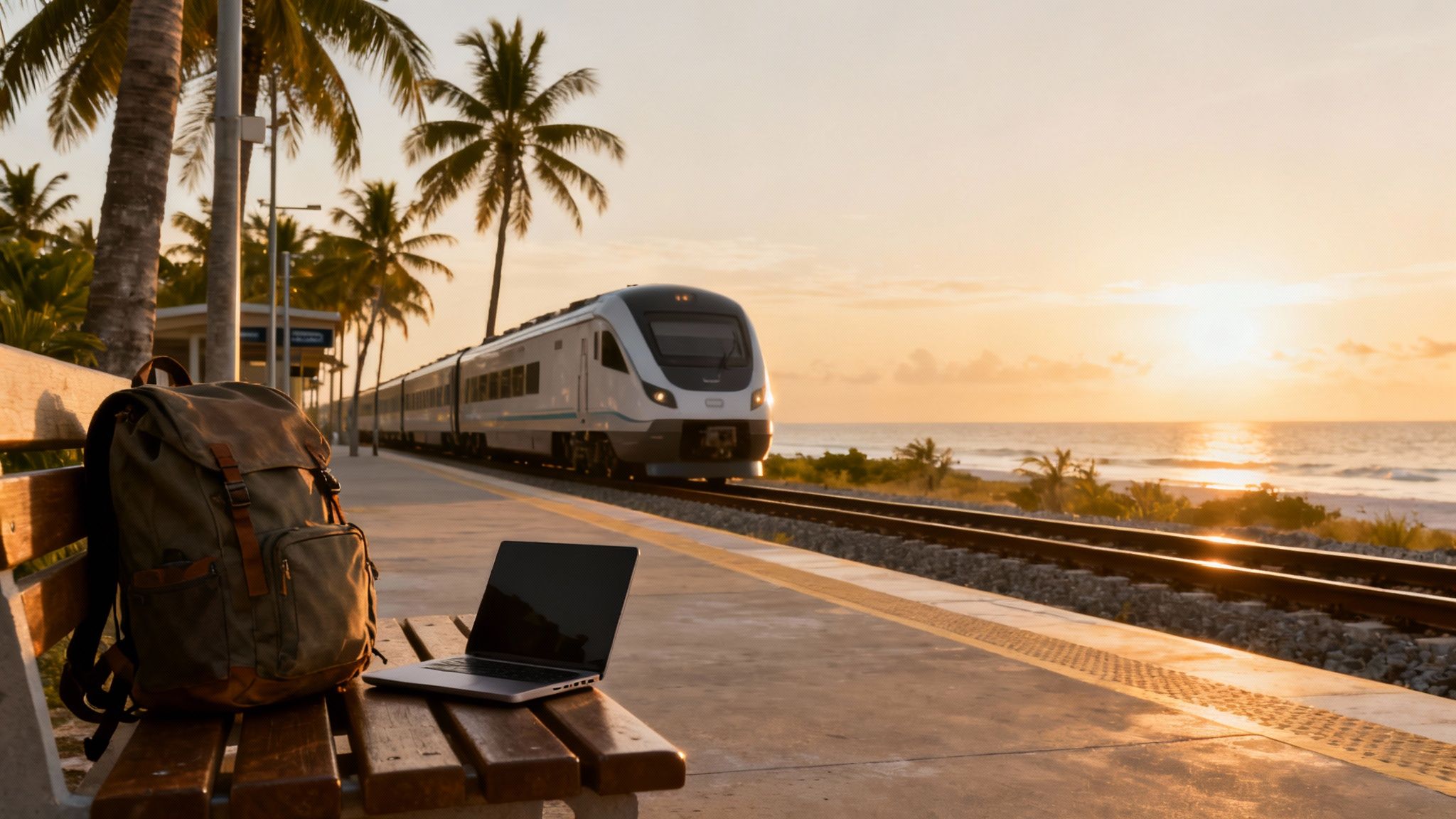
Mexico offers a compelling mix of affordability, vibrant culture, and robust infrastructure, making it one of the best countries for remote workers in North America. Its combination of low living costs, large English-speaking nomad communities, and reliable urban fiber internet creates a welcoming environment. The development of new rail connections, like the Tren Maya, is beginning to offer more sustainable, slow-travel options for exploring the country’s diverse regions.
This blend of modern amenities and rich cultural heritage allows digital nomads to establish a comfortable base in well-connected cities while immersing themselves in a unique lifestyle. From the bustling metropolis of Mexico City to the cultural heart of Oaxaca, Mexico provides the framework for a productive and culturally enriching remote work experience.
Why Mexico is a Top Choice for Remote Work
Mexico’s appeal is its accessibility and value. High-speed internet is widely available in major urban centers, a critical factor for any remote professional. The cost of living is significantly lower than in the United States or Canada, enabling a high quality of life without a large budget. The country’s varied climate, stunning landscapes, and world-renowned cuisine provide endless opportunities for exploration and enjoyment outside of work hours.
Base Cities and Cost of Living
- Mexico City (Condesa/Roma): These vibrant, walkable neighborhoods are famous for their café culture and nomad communities. A shared apartment costs approximately $750–$1,100 USD per month.
- Oaxaca (Centro): Ideal for deep cultural immersion with an emerging coworking scene. Expect to pay around $540–$760 USD monthly for a shared apartment.
- Playa del Carmen: Though costs are tourist-inflated, its proximity to the new Tren Maya corridor is a major draw. A shared apartment typically runs $750–$1,100 USD per month.
Practical Tips for a Smooth Transition
Plan your move by applying for the Temporary Resident Visa about 60 days before your intended travel date, ensuring you have all necessary income and savings documentation prepared. For inter-city travel, the ADO first-class bus network is extensive and reliable; book tickets one to two weeks in advance for the best prices. Before renting an apartment, confirm fiber optic internet availability (Infinitum is a key provider) or have a coworking space membership as a backup. Joining communities like Selina can be a great way to network and find local support.
7. Czech Republic: Budget-Friendly Central Europe with Historic Cities and Efficient Rail
The Czech Republic offers an exceptional value proposition for digital nomads, making it one of the best countries for remote workers seeking a Central European base. It masterfully combines historic charm with modern efficiency. The national rail network, operated primarily by České dráhy (ČD), alongside private carriers like RegioJet, provides seamless, affordable connections for car-free slow travel across the country and into neighboring nations like Germany, Austria, and Poland.
This robust rail infrastructure allows remote workers to settle into highly walkable, historic cities while maintaining easy access to the broader region. With reliable fiber internet in urban centers and a rapidly expanding coworking scene, especially in Prague and Brno, the Czech Republic delivers the perfect framework for a productive, culturally rich, and budget-friendly remote work experience.

Why the Czech Republic is a Top Choice for Remote Work
The Czech Republic’s main appeal is its fusion of high quality of life and low cost of living. Major cities provide fast, dependable internet, which is essential for any remote professional. The cost of living is significantly lower than in Western Europe, enabling a comfortable lifestyle without a hefty price tag. Its central location serves as a strategic launchpad for exploring Europe by train, while its rich history, stunning architecture, and vibrant cultural scene offer endless opportunities for exploration.
Base Cities and Cost of Living
- Prague (Old Town & surrounding areas): A globally renowned historic center that remains highly walkable. A shared apartment costs approximately $750–$1,080 USD (CZK 17,500–CZK 25,000) per month.
- Brno (Veveří): A dynamic university city with a burgeoning tech scene and a more local feel. Monthly costs for a shared apartment are around $540–$750 USD (CZK 12,500–CZK 17,500).
- České Budějovice (Historic Center): A compact, charming city with excellent regional rail access and fewer crowds. Expect to pay $480–$700 USD (CZK 11,000–CZK 16,000) for a shared apartment.
Practical Tips for a Smooth Transition
Plan your move carefully to ensure a seamless setup. For train travel, book tickets with operators like ČD or RegioJet two to four weeks in advance on platforms like Trip.com to secure the best fares. Before signing any rental agreement, confirm fiber internet availability and check the proximity to coworking spaces if needed. For stays longer than 90 days, it is highly recommended to work with local immigration advisors to navigate the residence permit process and understand tax obligations.
8. Regional Comparison Summary: Tiers, Rail Coverage and Nomad Suitability
Choosing the right base from the best countries for remote workers depends heavily on individual priorities like budget, travel style, and community needs. This summary provides a comparative overview to help you strategically select a home base that aligns with your eco-conscious, rail-first travel goals. It categorizes countries into cost tiers, evaluates their train and ferry networks, and assesses the size of their digital nomad communities.
This comparative approach allows you to balance affordability with accessibility. For instance, you can establish a long-term base in a lower-cost country with excellent internet and then use its efficient rail system for short-term workations in more expensive neighboring regions. This strategy maximizes your budget while enabling extensive, sustainable exploration of diverse cultures and landscapes without relying on a car.
Why a Regional Comparison is Crucial for Remote Work
A strategic comparison helps you identify the optimal balance between cost of living and quality of travel infrastructure. It highlights which countries offer the best value for a sustainable, train-focused lifestyle. By understanding the cost tiers and connectivity options, you can plan multi-country itineraries that are both budget-friendly and low-impact. This macro view is essential for long-term planning, ensuring your chosen base supports both productivity and seamless, eco-friendly travel adventures.
Cost Tiers and Nomad Suitability
- Tier 1 (Higher Cost): Countries like Switzerland and the Netherlands offer unparalleled rail connectivity and high quality of life but come with a premium price tag. Monthly shared apartment costs often exceed $1,800 USD. These are best for shorter stays or for those with higher budgets.
- Tier 2 (Mid-Range): Nations such as Germany, Spain, and Portugal provide a fantastic balance. They boast extensive train networks, strong nomad communities, and more manageable living costs, with shared apartments typically ranging from $1,000–$1,600 USD.
- Tier 3 (Lower Cost): Eastern European countries like the Czech Republic and Hungary offer significant affordability, with monthly costs often below $900 USD. While their international rail links are robust, local communities of remote workers might be smaller.
Practical Tips for a Smooth Transition
To make a strategic choice, base yourself in a lower-cost secondary city for three to six months and use rail or ferry for regional hops. Always confirm fiber internet availability and ask for a recent speed test before committing to long-term housing. For frequent travel, purchase regional rail passes or monthly cards where available to significantly reduce transportation costs. For a comprehensive guide on navigating Europe’s train systems, you can learn more about how to travel Europe by train on EcoNomadTravel.com.
9. Visa & Logistics Overview for the Sample Countries
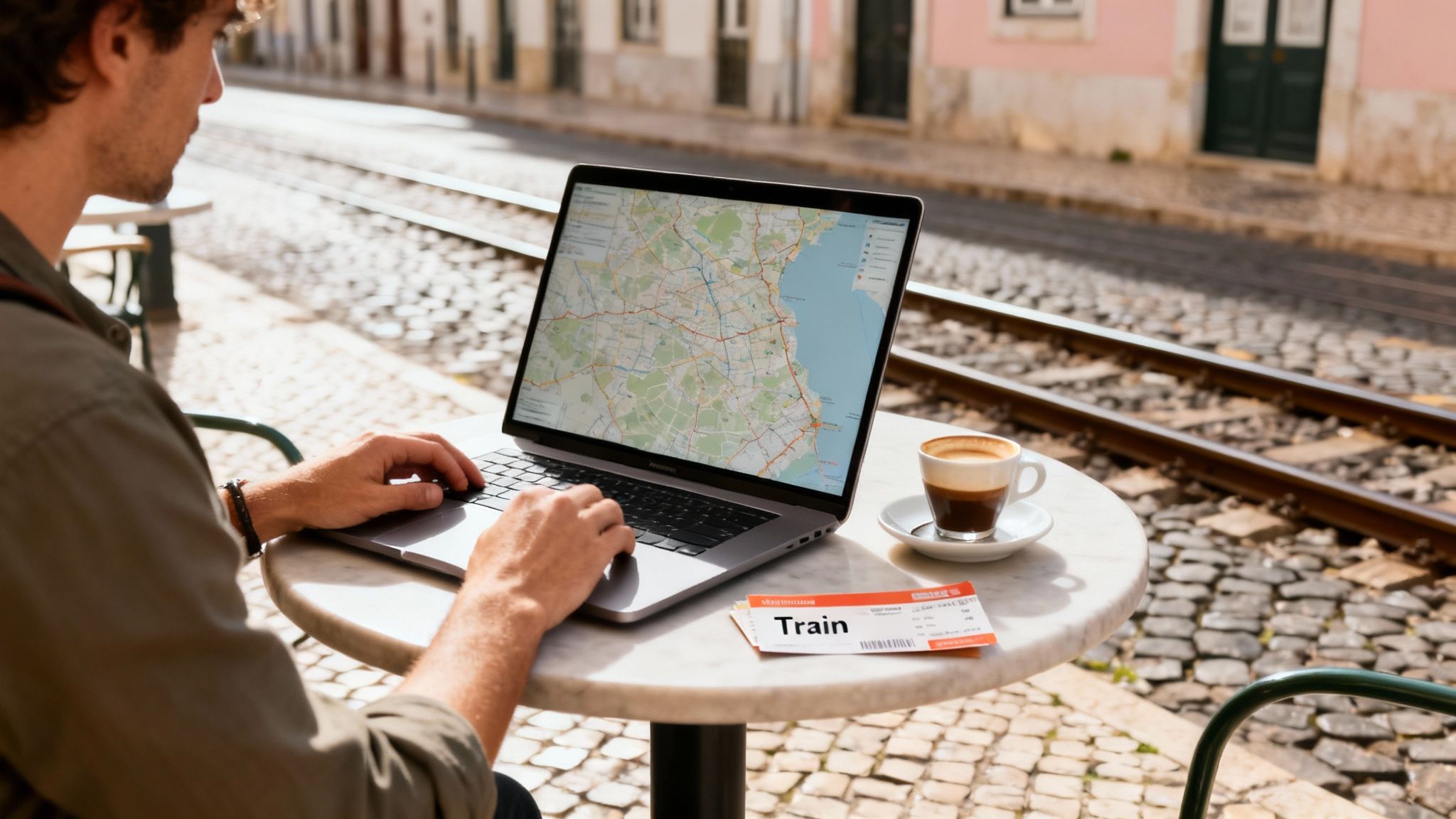
Understanding the visa requirements and logistical groundwork is crucial when planning a long-term stay in one of the best countries for remote workers. Each nation has a distinct set of rules, from digital nomad visas to standard tourist permissions, which dictate the length of stay, income requirements, and necessary paperwork. Navigating these systems successfully from the start prevents legal headaches and ensures a smooth, stress-free transition into your new work-life routine.
This overview simplifies the initial research phase by highlighting key requirements for the countries featured in this guide. Proper preparation, such as applying for visas well in advance and securing short-term housing upon arrival, lays the foundation for a productive and enjoyable remote work experience, allowing you to focus on settling in and exploring your new surroundings.
Why Visa & Logistics Planning is Crucial for Remote Work
A clear understanding of visa options is the first step toward a successful long-term workation. Many of the top countries for remote workers now offer dedicated digital nomad visas, which streamline the process of gaining legal residency. These visas often come with specific income or savings thresholds, typically ranging from $2,000 to $4,000 USD per month, ensuring you can support yourself without participating in the local job market. Planning ahead allows you to gather necessary documents like proof of income, health insurance, and a clean criminal record without a last-minute rush.
Key Visa Types and Financial Thresholds
- Portugal (D7 Visa): Primarily for passive income earners, but often used by remote workers. Requires proof of approximately $9,840 USD in annual income. The new Digital Nomad Visa requires a monthly income of around $3,540 USD.
- Spain (Digital Nomad Visa): Applicants must demonstrate a monthly income of at least $2,835 USD or have significant savings. The process involves securing a national identity number (NIE).
- Japan (Digital Nomad Visa): A newer option requiring an annual income of at least JPY ¥10 million (approximately $63,000 USD). It is limited to citizens of 49 countries with tax treaties with Japan. Dive deeper into the requirements for these and other eco-friendly digital nomad visas on EcoNomadTravel.com.
Practical Tips for a Smooth Transition
Start your visa application well before your planned departure, as processing times can take several months. Upon arrival, book a flexible short-term rental to give yourself time to find long-term housing and verify internet speeds firsthand. Engage with local remote worker communities online or at coworking spaces; these groups are invaluable for advice on navigating local bureaucracy, finding reliable services, and building a professional network.
10. Carbon Emissions Comparison and Travel Guidance
Understanding your travel footprint is fundamental to being an eco-conscious digital nomad, making this a crucial consideration when choosing the best countries for remote workers. Opting for rail- and ferry-first travel significantly reduces carbon emissions compared to flying or driving. This approach involves prioritizing trains and sea travel for multi-city itineraries, transforming your journey into a more sustainable and immersive experience.
By consciously selecting lower-impact transport, remote workers can drastically cut their environmental impact while slow-traveling. For instance, a train journey from Lisbon to Madrid emits approximately 80% less CO2 per passenger than the equivalent flight. This mindful planning allows you to align your work-life with your values, proving that long-term travel can be both productive and regenerative.
Why This Approach Ranks Among the Best
Choosing sustainable transport methods is more than just an environmental decision; it reshapes your entire travel experience. It encourages a deeper connection with the landscapes you traverse and supports local economies along rail and ferry routes. For digital nomads, this means discovering lesser-known towns with excellent connectivity and a lower cost of living, turning transit days into enriching parts of the adventure.
Sample Annual Itinerary and Emissions Savings
- Flight-Heavy Itinerary (Example): Four intra-European round-trip flights (e.g., London-Rome, Berlin-Barcelona) can generate over 1.2 metric tons of CO2 per person.
- Rail-First Itinerary (Example): A multi-country train pass covering the same destinations produces approximately 0.25 metric tons of CO2, representing a massive emissions reduction. This approach not only shrinks your carbon footprint but also saves money on baggage fees and airport transfers. You can explore a detailed breakdown of train vs. plane emissions on EcoNomadTravel.com.
Practical Tips for a Smooth Transition
To fully embrace low-impact travel, prioritize overnight trains where available to save on accommodation costs and maximize your daytime for work or exploration. If you’re staying in a country for an extended period, regional or monthly rail passes often provide the best value. On island-hopping itineraries, such as in Greece or Croatia, always choose ferries over short-haul flights. When multiple ferry options exist, slower vessels often have lower per-passenger emissions.
Top 10 Remote-Worker Countries: Rail, Cost, Visa & Emissions
| Item | Complexity 🔄 | Resources & Logistics ⚡ | Expected outcomes 📊 | Ideal use cases 💡 | Key advantages ⭐ |
|---|---|---|---|---|---|
| Portugal: The European Rail-First Haven | Moderate — straightforward D7/NHR process; some admin for residence | Affordable living; widespread urban fiber; strong CP rail + Cartão Azul monthly pass | Sustainable multi-city slow travel; lower CO₂ (~2.5–4 t/yr); reliable nomad support | Rail-first multi-city stays; eco-conscious slow travel; 3–6 month secondary-city bases | Strong national rail, simple D7 route, large nomad community, low Western Europe costs |
| Spain: Affordable Rail Routes & Emerging Hubs | Moderate — Digital Nomad Visa income threshold (~$2,835 USD/mo) | Extensive Renfe network, Avlo budget trains, night trains, fiber in cities | Good night-train options; cultural networking hubs; CO₂ ~3–5 t/yr | Seasonal moves between Valencia/Seville and Barcelona/Madrid; event/networking trips | Wide rail coverage, established nomad visa, vibrant cultural scenes |
| Hungary: Budget-Friendly Tier‑2 Hub | Medium–high — residence permit bureaucracy; no formal nomad visa yet | Very low costs; high-quality fiber; MÁV international links to Vienna/Prague | Affordable Central/Eastern base; low travel emissions (~2–3.5 t/yr) | Budget nomads linking Central Europe by rail; longer local stays | Very low living costs, strong international rail, competitive internet rates |
| Greece: Emerging Island & Mainland Network | Medium — Golden Visa requires investment; other paths evolving | Ferries robust for islands; limited mainland rail; variable island internet | Mix of mainland stability + island breaks; ferry CO₂ lower than flights (~1.5–2.5 t/yr) | Island-hopping with mainland bases; seasonal workation breaks | Extensive ferry network, low costs, attractive Mediterranean climate |
| Poland: Central European Gateway | Medium — residence permit/self-employed routes, admin required | Low living costs; PKP rail to Berlin/Prague; reliable fiber and urban transport | Very low-cost major-city options; Central European connectivity; CO₂ ~2.5–4 t/yr | Budget Central Europe base for country hops and regional travel | Low cost of living, solid rail links, growing coworking scene |
| Mexico: Affordable Tier‑1 Destination | Moderate — Temporal Resident Visa needs income (~$2,700 USD/mo) or savings | Large nomad communities, good urban fiber, ADO buses; Tren Maya expanding | Tier‑1 amenities with lower costs; current bus-heavy CO₂ ~4–6 t/yr (improving with rail) | North American base with strong community, cultural immersion | Lowest tier‑1 costs, large coworking networks, strong social infrastructure |
| Czech Republic: Historic Cities & Efficient Rail | Medium — self-employed residence permits; standard admin | Efficient ČD rail to Vienna/Berlin, reliable fiber, walkable historic centers | Affordable amenities with excellent rail connectivity; CO₂ ~2–3.5 t/yr | Historic Central Europe base with convenient international hops | Punctual rail, reliable internet, attractive walkable old towns |
| Regional Comparison Summary | Low — synthesized overview (planning tool) | Summarizes tiers, rail/ferry strength, climate and visa clarity | Quick selection guidance by cost, rail coverage, nomad size | High-level planning to pick country tier and strategy | Consolidated view of tiers, rail strength and visa clarity |
| Visa & Logistics Overview | Low–moderate — concentrates visa types and thresholds | Lists visa routes, booking tips, pass recommendations | Clear application priorities; reduced arrival uncertainty | Pre-travel visa planning and on-arrival logistics | Actionable visa thresholds, rail booking and permit tips |
| Carbon Emissions Comparison & Guidance | Low — data summary and scenarios | Mode-specific g/km values; annual scenario estimates | Quantifies emissions benefits of rail/ferry-first itineraries | Environmental planning and itinerary footprint estimation | Clear emissions ranges and practical tips to lower travel CO₂ |
Choosing Your Next Sustainable Work Base
Finding the truly best countries for remote workers goes beyond just fast Wi-Fi and affordable apartments. It’s about discovering a place that aligns with your values, supports your professional goals, and enables a lifestyle that is both fulfilling and mindful of our planet. Throughout this guide, we’ve journeyed through destinations like Portugal, with its unparalleled rail connectivity, to the budget-friendly and culturally rich hubs of Central Europe like Hungary and the Czech Republic. Each country offers a unique blend of walkability, efficient public transit, and a growing infrastructure for digital nomads who prioritize sustainable, slow travel.
The core principle connecting these top-tier locations is their commitment to a car-free lifestyle. Whether it’s navigating Spain’s expanding high-speed rail network, hopping on a night train from Poland to explore neighboring countries, or settling into a walkable neighborhood in Mexico City, the opportunity to reduce your carbon footprint is built into the experience. This approach not only benefits the environment but also enriches your journey, allowing for deeper connections with local communities and a more immersive cultural experience. By choosing a base city with excellent rail access, you unlock the freedom to explore entire regions without ever stepping on a plane.
Ultimately, your ideal remote work destination is a personal choice. It’s a balance of logistical needs like visa requirements and cost of living, with lifestyle preferences such as climate, culture, and community. The destinations profiled here serve as a launchpad, demonstrating that a sustainable digital nomad life isn’t a niche concept but an accessible and rewarding reality. The key is to move from passive tourism to active, conscious residency, even if it’s just for a few months.
Final Thoughts on Your Remote Work Journey
The search for the best countries for remote workers is an invitation to redefine what it means to live and work globally. It’s about moving beyond the conventional and embracing a model that is more intentional, connected, and sustainable. By prioritizing destinations with strong public transit, clear visa pathways, and a commitment to green initiatives, you are not just choosing a temporary home; you are casting a vote for a more responsible way of exploring the world.
Your journey is a powerful statement. It demonstrates that professional ambition and environmental stewardship can go hand in hand. As you plan your next move, use the frameworks and examples in this guide to make informed decisions. Calculate your potential carbon footprint, map out rail-first itineraries, and seek out eco-conscious accommodations. The tools and resources are at your fingertips to build a life that is rich in experience, light in impact, and truly aligned with a forward-thinking vision of global citizenship.
This article was fact-checked using sustainability data from the World Green Building Council, the Global Ecotourism Network, and peer-reviewed architecture studies. All partner links are vetted for compliance with sustainable business certifications.
Join the Sustainable Work Movement
Want more rail-first itineraries, low-impact packing systems, and walkable base-city ideas?
Best Countries for Remote Workers FAQ
Choosing a base
1) What makes the best countries for remote workers in 2026?
The best countries for remote workers combine reliable internet, legal stay options (visa/permits), affordable housing, and a daily lifestyle that doesn’t require a car. For low-impact nomads, strong rail/ferry networks and walkable cities are a major advantage.
2) Should I pick a country first or a specific city/neighborhood?
Pick the city/neighborhood first. Most “remote work problems” (noise, poor Wi-Fi, long commutes, lack of community) are local. Then confirm the country-level items: visa, taxes, health coverage, and banking.
3) What internet speed do I actually need for remote work?
For most jobs: 50–100 Mbps down and 10+ Mbps up is enough. If you do frequent video calls, large uploads, or live collaboration, aim for 150+ Mbps and request a recent speed test from the host.
4) What’s the easiest way to avoid bad Wi-Fi in rentals?
Use a 3-step rule:
- Ask for a speed test screenshot taken within the last 30 days.
- Confirm router location (not hidden in a metal cabinet).
- Have a backup plan: a nearby coworking space or mobile hotspot/eSIM.
5) How do I choose a “walkable” area quickly?
Look for: grocery + pharmacy + café within 10 minutes on foot, frequent transit lines, and a coworking option nearby. If you can live daily life without rideshares, you’ll save money and emissions.
Visas, taxes, and logistics
6) Do I need a digital nomad visa to work remotely abroad?
Often yes for long stays, but not always. Some people work on short tourist stays (where allowed), but rules vary and can create tax/immigration risk. If you want stability, prioritize a clear remote-work or long-stay pathway.
7) How far in advance should I start visa planning?
Start 8–12 weeks before you plan to land. You’ll likely need bank statements, health insurance proof, background checks, and housing documentation.
8) Will I owe taxes in my new country?
Possibly—especially if you stay long enough to become a tax resident. Tax rules depend on residency days, treaties, and your income type. If you plan to stay 90+ days, consider a consult with a tax professional familiar with expats/nomads.
9) What documents should I keep ready for border/landlords?
- Proof of income (employment letter or invoices)
- Health insurance coverage letter
- Bank statements (last 3–6 months)
- Return/onward plan (if required)
- Local address (first stay booking)
10) What’s the best health insurance approach for nomads?
Use travel/expat coverage that includes outpatient care and clear claims support. For long stays, compare local private plans vs international plans and match coverage to your real risk profile (sports, chronic care, etc.).
Rail-first travel and sustainability
11) Why is rail connectivity such a big deal for remote workers?
Because it changes your lifestyle. Strong trains let you live car-free, take low-stress weekend trips, and avoid short-haul flights. That’s usually cheaper, calmer, and lower-impact.
12) Are night trains worth it for work travel days?
Often yes. Night trains can replace a hotel night and reduce the “lost day” effect of airports. For remote workers, they’re great when you can arrive in the morning and start a normal workday.
13) How can I cut emissions without giving up exploring?
Stay longer in each base (4–12 weeks), take regional rail for nearby cities, and use ferries where practical. Fewer long jumps usually beats any single “green hack.”
14) What’s a realistic “slow travel” rhythm for remote work?
A strong default is 6–10 weeks per base, with 1–2 weekend trips by train or bus. You get community and routine, while still exploring.
15) Is it better to base in a big city or a smaller town?
Big cities usually win for internet reliability, coworking, and transit. Smaller towns can be incredible if they’re on a major rail line and have modern internet—test with a short stay first.
Budget, safety, and daily life
16) What’s the #1 budget mistake remote workers make?
Moving too often. Frequent relocations stack fees (transport, deposits, coworking day passes, eating out). Staying longer lowers costs and improves focus.
17) How do I find community fast in a new country?
Join one coworking space for a month, attend 1–2 meetups, and pick 2 “third places” (a café and a gym). Routine creates connection faster than endless sightseeing.
18) What’s the safest way to handle money abroad?
Use a no-foreign-fee card, keep a second backup card, and store emergency cash in two separate places. Avoid large cash withdrawals and use bank ATMs when possible.
19) How do I stay productive while traveling?
Protect a “deep work” window (90–120 minutes), limit travel days to once per week, and keep one consistent setup: same morning routine, same tools, same task list system.
20) What’s the best first country for a new remote worker nomad?
Start somewhere with strong infrastructure: reliable internet, easy transit, and a clear long-stay path. Then refine from there based on your climate preferences, budget, and work demands.

Explore Eco Nomad Travel
📚 Core Guides
🧭 Planning & Logistics
🗺️ Destinations & Seasons
Jeremy Jarvis — founder of Eco Nomad Travel, sustainable travel writer, and advocate for regenerative tourism. His work focuses on low-impact mobility, eco-friendly digital nomad life, and climate-positive travel.
Legal
Affiliate DisclaimerPrivacy Policy
Terms of Service
Image & Media Notice
Cookie Policy
Contact
Affiliate Disclosure: Some links on Eco Nomad Travel are affiliate links, meaning we may earn a small commission at no extra cost to you. This supports our mission to inspire responsible and low-impact travel worldwide.
Connect
✅ Trusted Official Sources
Plan smarter eco trips
Try our free Sustainable Travel Tools for Digital Nomads – carbon calculator, train vs plane comparator, and more.
Open Tools Hub