
Planning a trip and searching for the best European countries to visit can feel overwhelming, especially when your goal is to travel sustainably. For digital nomads and eco-conscious travelers, the ideal itinerary isn’t just about beautiful destinations; it’s about minimizing your carbon footprint, supporting local economies, and moving at a slower, more intentional pace. That’s where a rail-first approach comes in. Europe’s extensive train network offers an incredible opportunity to explore diverse cultures and landscapes without relying on carbon-intensive flights.
This guide moves beyond the typical tourist trails to offer a curated roundup of countries that excel in sustainable, rail-centric travel. We’ll dive into the practical details you need: from the most efficient rail passes and walkable base cities to regenerative stays and sample low-impact itineraries. Whether you’re planning a multi-week workation or a long-term slow travel adventure, this evidence-based list provides a clear roadmap for designing a trip that aligns with your values. Each country has been evaluated based on its rail infrastructure, commitment to sustainable tourism, and digital nomad-friendliness, ensuring you have the tools to travel smarter, not just farther.
Best European Countries to Visit: Data-Backed, Rail-First Planning for Low-Impact Travel
Our focus at Eco Nomad Travel is to blend practical planning with data-backed insights, helping you navigate Europe with confidence and a clear conscience. We’ll cover everything from securing the right eSIM for seamless connectivity to choosing night trains that save you money and reduce emissions. Let’s explore the destinations that make low-impact travel not just possible, but exceptionally rewarding. This article was fact-checked using sustainability data from the World Green Building Council, the Global Ecotourism Network, and peer-reviewed architecture studies. All partner links are vetted for compliance with sustainable business certifications.
Key Takeaways
- Embrace Slow Travel: Prioritize depth over breadth. Spending more time in fewer locations reduces your carbon footprint and fosters a more meaningful connection with local culture.
- Leverage Walkable Base Cities: Choose cities like Vienna, Bern, or Amsterdam as your hub. Excellent public transit and walkability minimize your daily impact and expenses.
- Master the Rail Network: Europe’s train system is your greatest asset. Use night trains for long distances to save on accommodation and travel time, and leverage regional passes for cost-effective exploration.
- Pack Light and Smart: A minimalist, luggage-light approach is essential for easy train travel. It also encourages more conscious consumption and reduces your overall environmental footprint.
- Support Regenerative Stays: Seek out accommodations that actively give back to their communities and environment. Your spending can directly support conservation efforts and sustainable local economies.
- Stay Connected: An eSIM from a provider like Airalo or Yesim ensures you have data access across multiple countries without needing to swap physical SIM cards.
Editor’s Pick: Best Tool for European Train Travel
For simplifying complex, multi-country rail journeys, the Trip.com Train Ticket Platform is an invaluable resource. It consolidates schedules from various national operators, making it easier to compare routes, find the best fares, and book night trains or high-speed connections in one place. Its user-friendly interface removes the headache of navigating multiple websites in different languages, allowing you to focus on planning your low-impact adventure.
1. Germany: The Gold Standard for Sustainable Rail Nomads
For remote workers seeking low-carbon travel, Germany is one of the best European countries to visit, setting the benchmark with its unparalleled rail infrastructure. Anchored by the highly efficient Deutsche Bahn (DB) system, the country offers a seamless, flight-free experience perfect for the eco-conscious digital nomad. High-speed Intercity-Express (ICE) trains connect major hubs like Berlin, Munich, and Hamburg in hours, while the comprehensive ÖBB Nightjet network provides a sustainable alternative to short-haul flights and doubles as accommodation.
Germany excels in creating an environment where a car-free lifestyle is not just possible but preferable. Cities are designed for walkability and cycling, supported by the German Cycling Federation (ADFC), and co-working spaces are abundant. This combination makes it simple to establish a temporary home base and explore the region with minimal environmental impact.
How to Implement a Rail-First German Basecamp
A successful slow-travel strategy in Germany revolves around leveraging its public transport passes and central station hubs.
- Berlin Basecamp (3–4 weeks): Settle into a neighborhood like Prenzlauer Berg or Kreuzberg. Purchase the Deutschlandticket (Germany Ticket) for approximately €49 (about $53 USD) per month, which grants unlimited access to all regional trains. Use it for sustainable day trips or weekend excursions to cultural hubs like Dresden, the historic city of Potsdam, and the vibrant arts scene in Leipzig.
- Munich to Vienna via Night Train: Instead of flying, book an ÖBB Nightjet from Munich. This overnight journey directly connects two major cultural centers, eliminating flight emissions and saving on a night’s accommodation.
- Stuttgart to Frankfurt Corridor: For business-focused nomads, the high-speed ICE route between these two economic powerhouses is incredibly efficient, taking just over an hour.
Practical Tips for the Rail Nomad
- Book Passes Wisely: Purchase the Deutschlandticket immediately upon arrival for unbeatable value on regional travel. For high-speed ICE or international routes, book tickets across Europe on Trip.com.
- Secure Sleepers Early: During peak seasons (summer and holidays), Nightjet sleepers and couchettes sell out quickly. Book 6–8 weeks in advance for the best availability and pricing.
- Stay Near the Station: Consider apartments in a Bahnhofsviertel (train station neighborhood). While historically gritty, many have been revitalized and offer ultimate convenience for frequent train travelers.
- Seamless Last-Mile Travel: For a stress-free arrival with luggage, pre-book a private transfer with a service like Welcome Pickups to get from the station to your accommodation smoothly.
2. Switzerland Travel Guide for Walkable Base Cities
For remote workers prioritizing scenery and seamless public transport, Switzerland is one of the best European countries to visit. Its legendary Swiss Travel System, operated by SBB, makes a zero-car itinerary not just feasible but breathtakingly simple. The network masterfully integrates trains, buses, and boats, allowing eco-conscious travelers to access everything from bustling cities to remote Alpine villages without ever needing a car. This commitment to public transit and regenerative tourism makes it a premier destination for a low-carbon work-and-travel experience.
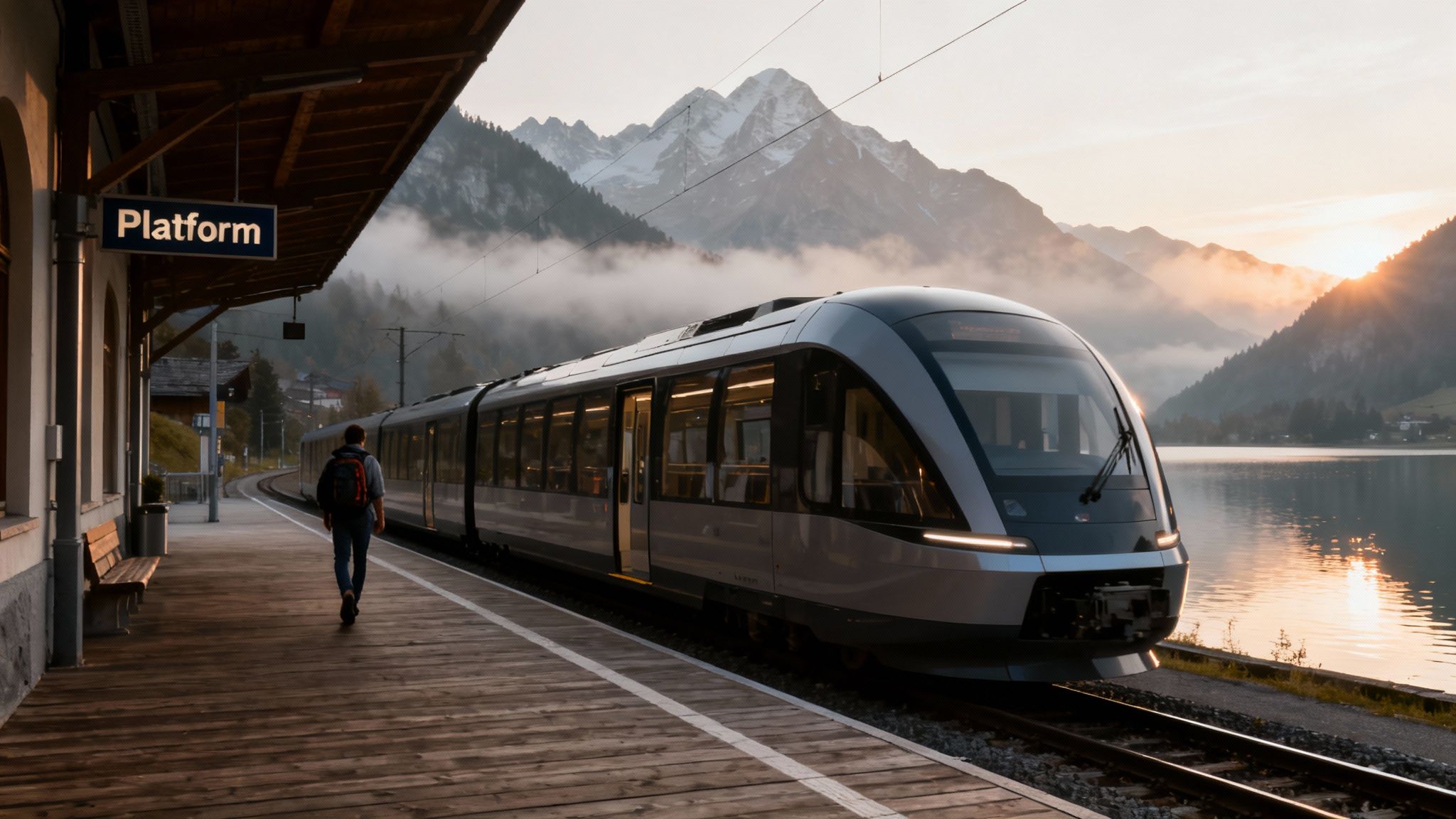
Switzerland excels in creating sustainable travel loops through its hyper-efficient, walkable cities. Hubs like Bern, Lucerne, and Lausanne serve as perfect long-stay bases, offering excellent connectivity for day trips while promoting a slower, more intentional travel pace. The country’s focus on Global Sustainable Tourism Council (GSTC) certifications and regional rail passes empowers nomads to explore deeply, minimizing their environmental footprint while maximizing their connection to the stunning natural landscape.
How to Implement a Rail-First Swiss Basecamp
An effective slow-travel strategy in Switzerland centers on establishing a base in a well-connected city and using a Swiss Travel Pass or regional pass for extensive exploration.
- Bern Basecamp (2–3 weeks): Settle into Switzerland’s charming capital. Its compact, UNESCO-listed Old Town is one of the most walkable city centers in Europe. Use the Swiss Travel Pass for effortless day trips to Interlaken for mountain views, Lucerne for its iconic chapel bridge, and Montreux for a stroll along the Swiss Riviera.
- Lausanne to Montreux Riviera Route: This stunning coastal rail journey offers panoramic views of Lake Geneva and the Alps. It’s an easy, low-emission way to explore lakeside towns, vineyards, and the historic Chillon Castle.
- Valais Region Alpine Exploration: Base yourself in a town like Brig and use a regional pass to access the vast network of mountain trains and cable cars connecting world-class Alpine hiking trails.
Practical Tips for the Rail Nomad
- Analyze Your Pass Needs: The Swiss Travel Pass is invaluable for trips of 4+ days with frequent travel. For shorter, localized stays (5–7 days), a regional pass like the Bernese Oberland Pass or Valais Pass can offer better value.
- Stay Smart to Save: To manage costs, book longer-term, self-catering apartments in cities like Bern or Lausanne, which are generally more affordable than tourist-heavy mountain towns like Zermatt or Grindelwald.
- Book Scenic Trains in Advance: Popular panoramic trains like the Glacier Express or Bernina Express require seat reservations in addition to your pass. Book these seats well in advance, especially during peak season.
- Combine Train and Trail: Leverage the train system to access trailheads. Many routes, like the one to Schynige Platte, are specifically designed to connect hikers with stunning Alpine paths, eliminating the need for a car.
3. France Travel Guide for Slow Rail Routes
For slow travelers aiming to explore diverse landscapes with minimal carbon output, France is one of the best European countries to visit. Its robust SNCF national rail network connects everything from the rolling vineyards of the Loire Valley to the sun-drenched Côte d’Azur, making a flight-free journey not just possible but delightful. The rise of sustainable sleeper brands like Midnight Trains further enhances its appeal, providing a low-impact alternative to domestic flights.
France’s urban planning in cities like Lyon, Bordeaux, and Marseille prioritizes walkability and public transport, enabling remote workers to establish a temporary base and explore regionally without a car. This combination of high-speed intercity routes (TGV) and extensive regional trains (TER) creates a perfect framework for a multi-week, sustainable exploration of French culture, cuisine, and scenery. For more inspiration on building a French itinerary, see our guide to the best train routes in Europe.
How to Implement a Rail-First French Basecamp
A successful slow-travel strategy in France involves selecting a strategic secondary city as your hub and leveraging regional rail for deep dives into the surrounding area.
- Bordeaux Basecamp (3–4 weeks): Settle in this walkable city and use it as a launchpad to explore the southwest. Take easy day trips via regional TER trains to the coastal town of Biarritz, the historic city of Toulouse, and the famous vineyards of Saint-Émilion.
- Paris to Lyon via Night Train: Instead of a daytime TGV that consumes a travel day, book a sleeper service. This overnight journey saves on accommodation costs and eliminates the emissions of a short-haul flight, allowing you to arrive in a new city refreshed and ready to explore.
- Nantes Loire Valley Explorer: Base yourself in the vibrant city of Nantes. From here, the extensive TER network provides direct, affordable access to the stunning châteaux and picturesque towns of the Loire Valley, such as Angers and Saumur, all without needing a car.
Practical Tips for the Rail Nomad
- Get a Discount Card: Before your trip, purchase the Carte Avantage (Advantage Card) from SNCF for approximately €49 ($53 USD). It offers significant discounts on TGV and Intercités tickets for a year.
- Book Sleepers Well Ahead: New sleeper routes, especially with emerging brands like Midnight Trains, have limited capacity. Book your compartments 8–10 weeks in advance to secure a spot.
- Use Regional Trains: For shorter distances (20-50 miles or 30-80 kilometers), the TER network is incredibly cost-effective, with tickets often costing just €5–€15 ($5–$16 USD).
- Base in Secondary Cities: Reduce accommodation costs by 40-60% by choosing basecamps like Lyon, Marseille, or Bordeaux over Paris. They offer excellent rail connectivity and a high quality of life.
4. Austria Travel Guide for Alpine Digital Nomads
For remote workers dreaming of an alpine work-life balance, Austria is one of the best European countries to visit. Its compact geography and world-class ÖBB (Austrian Federal Railways) system make it a paradise for car-free mountain exploration. Centered around the highly efficient ÖBB Nightjet sleeper train network, Austria serves as a sustainable hub, connecting major cities like Vienna, Salzburg, and Innsbruck with the rest of Europe without needing a single flight.
Austria masters the art of accessible alpine living. Cities are eminently walkable, digital nomad infrastructure like co-working spaces is robust, and the train system is designed to get you from a city center directly to a mountain trail. This unique combination allows you to establish a temporary base in a cultural capital and spend weekends hiking in the Alps, all with an exceptionally low carbon footprint.
How to Implement a Rail-First Austrian Basecamp
A successful slow-travel itinerary in Austria leverages its national and regional rail passes alongside the strategic Nightjet network for cross-border journeys.
- Vienna Basecamp (3–4 weeks): Settle into a neighborhood with good transit links. Use Vienna as your hub and take advantage of ÖBB Nightjet routes to explore Berlin, Venice, or even Bucharest overnight. This strategy eliminates flight emissions, saves on accommodation, and maximizes your daytime for work or exploration.
- Salzburg Mountain Hub: From Salzburg, the rail network opens up direct connections to Munich, Linz, and Ljubljana. Use regional passes for day trips into the Salzkammergut lake district or for multi-day, car-free hiking excursions where you can travel from one trailhead to another entirely by train.
- Innsbruck Alpine Immersion: Base yourself in Innsbruck for unparalleled access to mountain sports. Combine regional Tyrol rail passes with cable cars to explore the surrounding peaks, creating a seamless itinerary that merges urban remote work with high-altitude adventure.
Practical Tips for the Rail Nomad
- Book Nightjets Separately: For maximum flexibility, purchase ÖBB Nightjet tickets independently from any rail passes. Sleepers and couchettes sell out fast, especially in peak season, so book 6–8 weeks in advance for the best fares.
- Leverage Regional Passes: For deep dives into specific areas, use regional passes like the Tyrol Rail Pass for 5-7 day blocks of unlimited travel, which is often more cost-effective than single tickets for frequent local trips.
- Stay Long to Save: Amortize higher initial travel costs by staying in one base city like Vienna for 2-3 weeks. This allows you to benefit from lower daily living rates and fully explore the region without rushing.
- Arrive Smoothly: After a long train journey, simplify your arrival by pre-booking a private car with a service like Welcome Pickups to get you and your luggage from the Hauptbahnhof (main station) to your apartment.
5. Italy Travel Guide for Mediterranean Rail Exploration
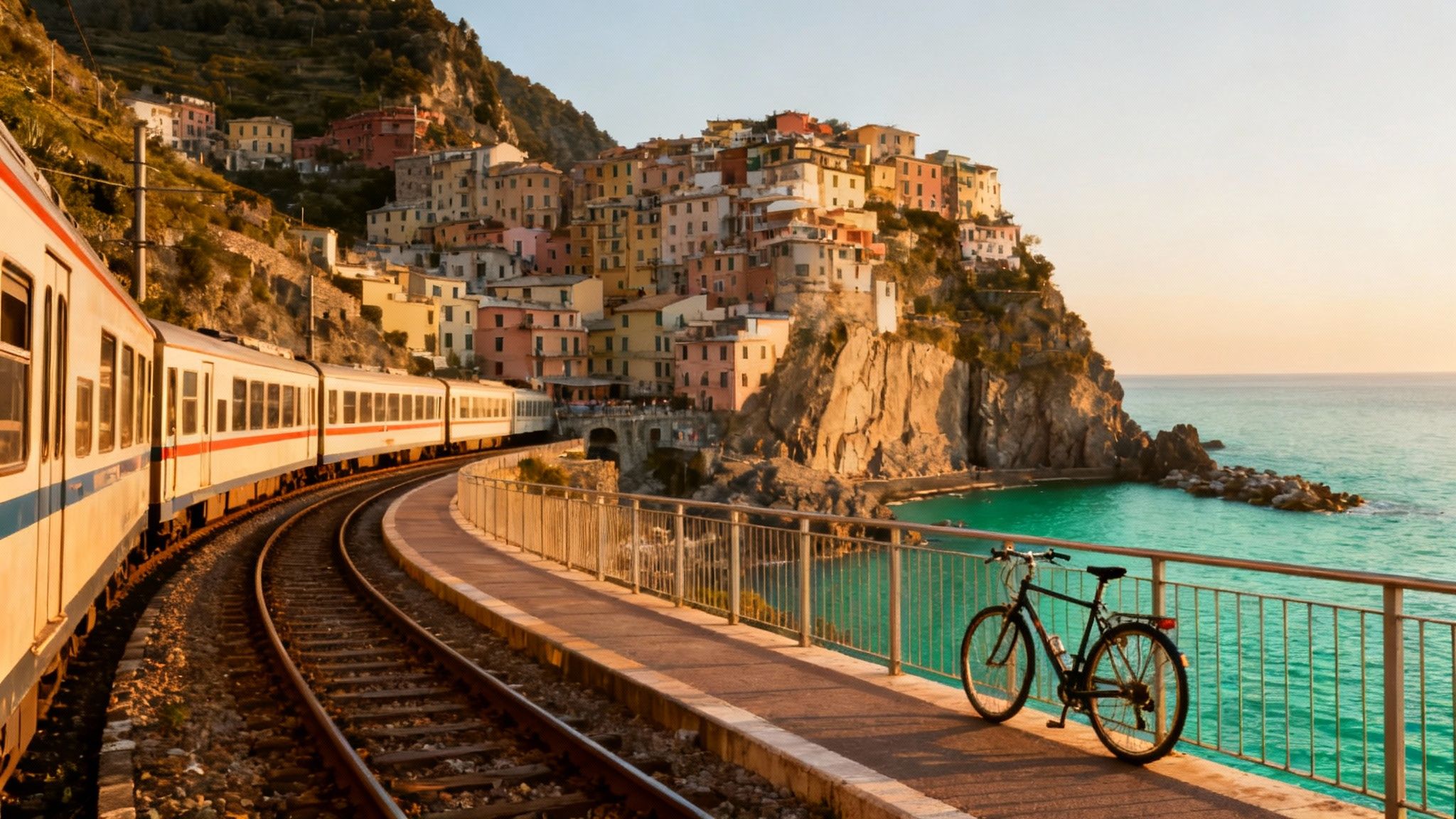
For remote workers dreaming of a Mediterranean lifestyle with minimal environmental impact, Italy is one of the best European countries to visit. Its extensive rail network, managed by Trenitalia, offers a romantic and efficient alternative to domestic flights. High-speed Frecciarossa (Red Arrow) trains connect major hubs like Milan, Rome, and Naples in just a few hours, while the scenic coastal routes through regions like Liguria and the Amalfi Coast provide breathtaking, low-carbon journeys.
The country is a haven for the car-free digital nomad. Ancient city centers in Florence, Rome, and Venice were built for walking, and a growing number of co-working spaces cater to remote professionals. This combination allows you to establish a temporary home in a cultural capital and explore the surrounding countryside, from Tuscan vineyards to Alpine foothills, entirely by train, creating a truly sustainable and immersive Italian experience.
How to Implement a Rail-First Italian Basecamp
An effective slow-travel strategy in Italy centers on leveraging its high-speed and regional train networks from a well-chosen urban base.
- Rome Basecamp (4 weeks): Establish yourself in a walkable neighborhood like Trastevere or Monti. Use the efficient Frecciarossa service for seamless weekend trips to cultural powerhouses like Florence (approx. 1.5 hours) and Naples (approx. 1 hour). Slower, cheaper regional trains offer access to charming towns in Lazio and Umbria.
- Venice to Central Europe via Night Train: Extend your European journey sustainably by booking an ÖBB Nightjet from Venice. This overnight service connects you directly to cities like Vienna or Munich, saving on a hotel night and avoiding a short-haul flight.
- Florence & Tuscany Exploration: Base yourself in Florence to explore the heart of Tuscany without a car. Regular regional trains connect you to Siena, Pisa, and Lucca. For a regenerative escape, combine your city stay with a nearby agriturismo, many of which are accessible from local train stations.
Practical Tips for the Rail Nomad
- Compare Passes and Tickets: The Trenitalia Pass can be valuable if you plan 5+ long-distance high-speed journeys. For more flexible, regional travel, booking point-to-point tickets on the Trenitalia app is often more cost-effective.
- Stay in Secondary Cities: Reduce costs by 30-40% by basing in well-connected but less tourist-heavy cities like Bologna or Padua. They offer excellent rail links and a more authentic local experience.
- Combine Coastal and Inland Stays: For a diverse itinerary, pair a trip on the scenic coastal rail line through Cinque Terre with a stay at an inland agriturismo. This supports local, regenerative agriculture while providing a peaceful work environment.
- Book High-Speed and Sleepers in Advance: Frecciarossa tickets and night train couchettes are cheapest when booked several weeks ahead. For last-minute regional trips, fares are fixed. Book your tickets across Europe on Trip.com.
6. Spain Travel Guide for Budget Rail Networks
For digital nomads prioritizing affordability alongside low-carbon travel, Spain is one of the best European countries to visit, thanks to its extensive and budget-friendly rail network. Operated by Renfe, the system connects diverse landscapes from the green hills of Basque Country to the sun-drenched coasts of Andalusia. High-speed AVE trains link major cities like Madrid and Barcelona efficiently, while a comprehensive network of regional trains offers an incredibly cost-effective way to explore deeper.
Spain’s major cities are exceptionally walkable, with vibrant neighborhoods in Valencia, Seville, and Bilbao providing excellent car-free living. A growing digital nomad community and a lower cost of living, especially outside Madrid and Barcelona, make it an ideal base for slow travelers. With convenient connections and overnight train options, exploring the Iberian Peninsula without a single flight is both practical and rewarding.
How to Implement a Rail-First Spanish Basecamp
A successful slow-travel strategy in Spain centers on choosing a cost-effective base and using a mix of high-speed and regional trains for exploration.
- Barcelona Basecamp (3–4 weeks): Establish a home base in a walkable neighborhood like Gràcia. Use high-speed rail to reach Madrid or Valencia for weekend trips. For shorter excursions, take regional trains to coastal towns like Sitges or the historic city of Girona.
- Andalusian Triangle via Regional Rail: Base yourself in Seville or Córdoba. Create a flight-free itinerary connecting Seville, Córdoba, and Granada using the affordable Media Distancia (MD) trains. The journey between Seville and Córdoba takes less than an hour, making it an easy day trip.
- Bilbao & Basque Country Exploration: Settle in Bilbao and use the local Euskotren network to explore the northern coast. Visit the famed culinary hub of San Sebastián and charming coastal villages, all accessible via scenic and low-cost rail routes.
Practical Tips for the Rail Nomad
- Choose the Right Pass: For itineraries with four or more long-distance journeys, the Renfe Spain Pass offers great value. However, for shorter trips under 100 kilometers (about 62 miles), buying individual regional tickets is often cheaper.
- Travel During Shoulder Seasons: Visit in April-May or September-October. You can expect accommodation costs to be 30–40% lower than in the peak summer months, and the weather is ideal for exploring.
- Book in Advance: Use the Renfe app or a platform like Trip.com to book AVE tickets several weeks ahead for the best prices.
- Base in Secondary Cities: To reduce your budget by 40–50%, consider basing in Valencia, Seville, or Málaga instead of Madrid or Barcelona. These cities offer a high quality of life at a fraction of the cost.
7. Portugal Travel Guide for Car-Free Coastal Exploration
For remote workers dreaming of a sun-drenched, car-free lifestyle, Portugal is one of the best European countries to visit. Its compact size and expanding Comboios de Portugal (CP) train network make it exceptionally suited for multi-week coastal and interior exploration without a car. The country combines high value for budget-conscious travelers with walkable historic city centers, a strong digital nomad community, and a growing commitment to regenerative tourism.
Portugal excels at offering a slower, more intentional travel experience. Cities like Lisbon and Porto are designed for discovery on foot, while scenic rail lines connect them to the Douro Valley vineyards and the stunning Algarve coast. This accessibility makes it easy to establish a long-term base and explore diverse regions sustainably, minimizing both costs and carbon footprint.

How to Implement a Rail-First Portugal Basecamp
An effective slow-travel strategy in Portugal involves leveraging its rail passes for regional discovery from a well-chosen urban hub.
- Lisbon Basecamp (4–6 weeks): Settle in Lisbon and use the efficient train system for easy day trips to the fairytale castles of Sintra and the coastal charm of Cascais. The high-speed Alfa Pendular train connects you to Porto in under three hours for a seamless weekend getaway.
- Porto & Douro Valley Exploration: From a base in Porto, take the famously scenic Linha do Douro railway line. This route follows the river, offering breathtaking views of terraced vineyards. Combine train travel with local hiking for an immersive, low-impact experience in the wine region.
- Algarve Coastal Hub: Set up in a town like Lagos or Faro. Use the regional Algarve Line to hop between charming fishing villages and golden beaches, creating a perfect blend of co-working and coastal relaxation without needing a rental car.
Practical Tips for the Rail Nomad
- Test Routes with a Pass: Before committing to a long-term itinerary, purchase a CP Tourist Travelcard, valid for 3 or 5 days of unlimited travel on certain routes. This is a cost-effective way to explore different regions.
- Leverage Bus Networks: For routes where train service is less frequent, such as deep into the Alentejo region, rely on the efficient and affordable Rede Expressos bus network.
- Stay Longer, Save More: Minimize housing transitions by booking a stay of 3–4 weeks in Lisbon or Porto. This reduces overall transportation costs and allows for deeper cultural immersion.
- Combine with Agritourism: For a truly sustainable journey, pair your train travel with stays at agriturismos or eco-campsites, many of which are accessible via regional transport and offer an authentic connection to Portugal’s landscape.
8. Czech Republic & Central Europe Guide for Extended Slow Travel
For digital nomads seeking exceptional value and an extended slow-travel base, the Czech Republic is one of the best European countries to visit. Its compact, efficient, and budget-friendly rail network, run by ČD (Czech Railways), makes it an ideal hub for exploring Central Europe. The country offers a perfect blend of historic, walkable city centers, a growing regenerative tourism scene, and seamless integration with Europe’s night train network, allowing for low-impact journeys to neighboring countries.
The affordability of living in cities like Prague and Brno allows remote workers to establish a long-term basecamp, minimizing the environmental and financial costs associated with frequent relocation. This slow-travel approach supports a deeper connection with local culture while keeping your carbon footprint small. The Czech Republic’s central location makes it a strategic launchpad for train adventures into Austria, Poland, and Slovakia without ever needing to board a plane.
How to Implement a Rail-First Czech Basecamp
A successful Czech slow-travel itinerary leverages the country’s affordable rail passes and its position as a Central European crossroads.
- Prague Basecamp (4–8 weeks): Settle into a neighborhood like Vinohrady or Žižkov. A longer stay justifies the logistics and dramatically lowers your daily housing cost compared to short trips. Use Prague’s main station, Praha hlavní nádraží, as your gateway for weekend trips to Berlin, Vienna, or Kraków.
- Explore the Moravian Region: Base yourself in Brno, a vibrant and more affordable alternative to Prague. From here, use regional trains to discover the charming towns and wine regions of Moravia. The journey is part of the experience, showcasing the country’s beautiful landscapes.
- Prague to Vienna via Night Train: Connect two of Central Europe’s most iconic capitals sustainably. Booking an overnight train saves on a night’s accommodation and eliminates the emissions of a short-haul flight, arriving refreshed and ready to explore.
Practical Tips for the Rail Nomad
- Book Passes Wisely: For concentrated exploration, purchase a ČD regional pass for unlimited travel over a set number of days. For international routes, compare and book tickets on a platform like Trip.com.
- Secure Sleepers Early: Night trains connecting Prague to cities like Kraków and Budapest are popular. Book your couchette or sleeper compartment 6–8 weeks in advance, especially during peak travel seasons, to secure a spot.
- Stay Near the Station: Look for accommodations near major train stations like Praha hlavní nádraží in Prague or Brno hlavní nádraží. These areas offer excellent connectivity for spontaneous day trips and early-morning departures.
- Seamless Last-Mile Travel: Navigating a new city with luggage can be challenging. Pre-book a private transfer with a service like Welcome Pickups to get from the train station to your apartment without any hassle. Learn more about planning your adventure in this region and discover the best places to travel in Eastern Europe.
9. Netherlands: A Guide to Cycling-First Sustainable Travel
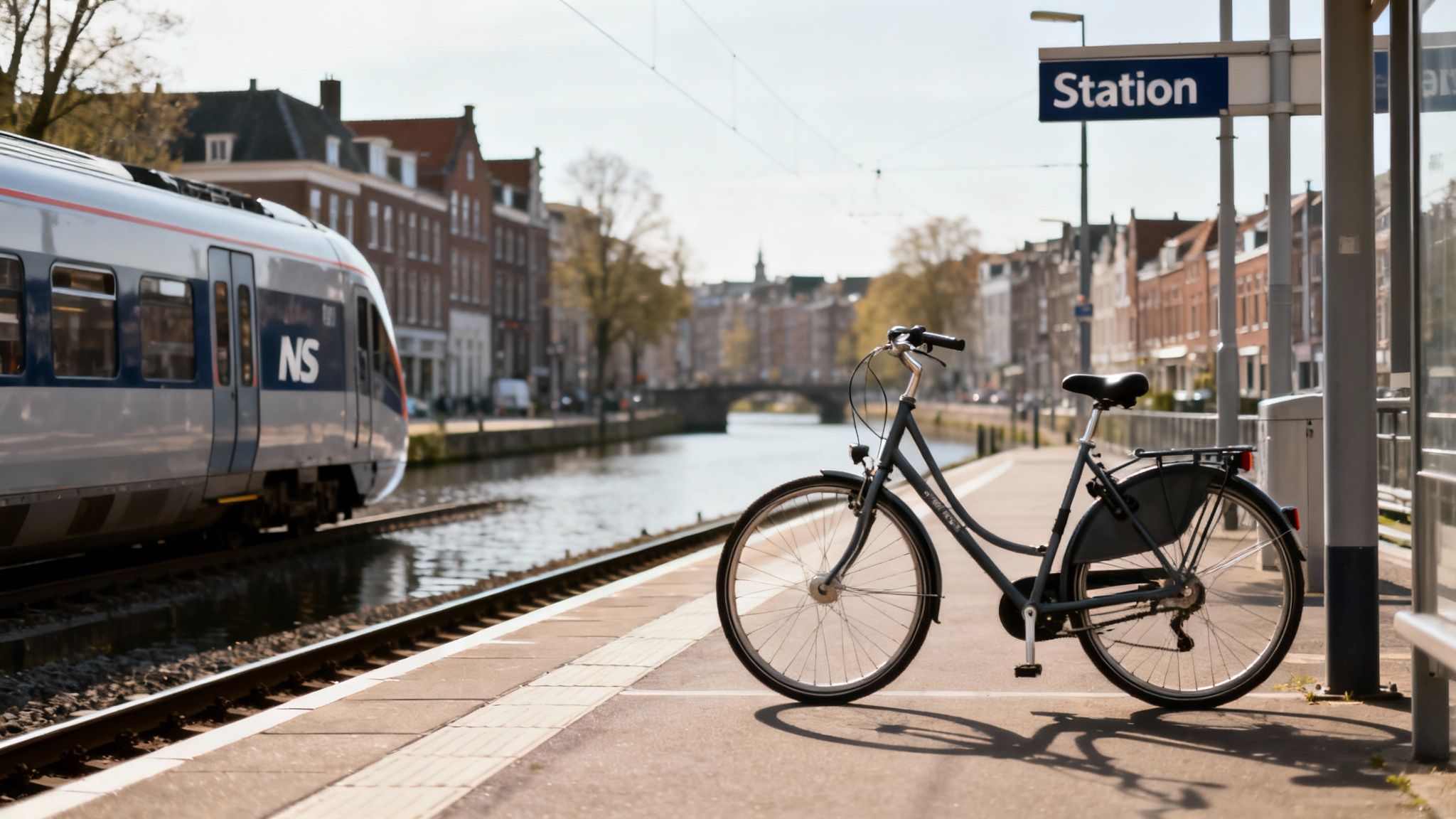
For digital nomads prioritizing hyper-efficient, car-free living, the Netherlands is one of the best European countries to visit, offering a masterclass in integrated transport. The country’s dense and reliable Dutch Railways (NS) network pairs seamlessly with its world-renowned cycling infrastructure, creating an environment where multi-modal, zero-emission travel is the default. This synergy allows for effortless exploration of compact, walkable cities like Amsterdam, Utrecht, and Rotterdam without ever needing a car.
The Dutch commitment to sustainability extends beyond transport, with a strong focus on regenerative tourism and zero-waste initiatives. This makes it an ideal destination for remote workers who want to minimize their footprint while maximizing their mobility and productivity. The compact geography means most major cities are less than an hour apart by train, turning the entire country into a potential well-connected basecamp.
How to Implement a Cycling-First Dutch Basecamp
A successful slow-travel strategy in the Netherlands hinges on combining the national rail system with local cycling. This hub-and-spoke model provides unparalleled freedom and sustainability.
- Utrecht as a Hub (2–3 weeks): Base yourself in Utrecht, a less crowded yet equally charming alternative to Amsterdam. With its central location, over ten other cities are accessible within a 30-minute train ride. Use your bike for local exploration and the train for day trips to The Hague, Delft, or Leiden.
- Amsterdam Arts & Culture Base (3–4 weeks): Settle in a neighborhood like Oud-West or De Pijp. Secure a long-term bike rental and use the efficient tram and metro system for longer cross-city journeys. The train station provides quick escapes to Haarlem or the Zaanse Schans windmills.
- Rotterdam-Delft Design Corridor: For design and architecture-focused nomads, this corridor is perfect. Stay in modern Rotterdam and take the 15-minute train or a scenic 45-minute cycle path to historic Delft. This setup combines cutting-edge urbanism with classic Dutch heritage.
Practical Tips for the Rail & Cycle Nomad
- Get an OV-chipkaart: Upon arrival, purchase an anonymous or personalized OV-chipkaart. This rechargeable card provides tap-and-go access to all trains, trams, buses, and metros nationwide, simplifying your travel immensely.
- Rent Bikes Long-Term: Daily bike rentals are expensive (around €15-€20 or $16-$22 USD per day). For stays longer than a week, monthly rentals from services like Swapfiets offer bikes for as low as €10-€20 ($11-$22 USD) per month.
- Choose Secondary Cities: To save 30-40% on accommodation and daily costs, base yourself in excellent secondary cities like Utrecht, Leiden, or Haarlem instead of central Amsterdam. They offer high quality of life with superior rail connections.
- Use Night Trains (N-trains): The Netherlands runs a limited night network, primarily on weekends, connecting major cities in the Randstad area. This is a great option for late-night returns without relying on taxis.
10. Greece Travel Guide for Island-Hopping by Ferry & Rail
For digital nomads dreaming of ancient ruins and azure waters, Greece is one of the best European countries to visit, offering a unique, low-carbon model for mainland and island exploration. By combining the national rail network (Hellenic Train) with an extensive ferry system, you can craft a flight-free itinerary that connects iconic historical sites with sun-drenched islands. This approach is perfect for the eco-conscious traveler seeking Mediterranean beauty without the emissions of domestic flights.
Greece excels at providing a framework for slow, sustainable travel. Major hubs like Athens and Thessaloniki are increasingly walkable and offer growing remote-work infrastructure, while the ferry network acts as a floating rail system, linking the mainland to countless islands. This combination makes it easy to set up a basecamp and explore diverse landscapes, from the mountains of the north to the iconic Cyclades, with a significantly reduced carbon footprint.
How to Implement a Ferry-and-Rail Greek Basecamp
A successful slow-travel strategy in Greece involves leveraging Athens as a central hub and using overnight ferries to maximize time and budget.
- Athens Basecamp (4–6 weeks): Establish yourself in a neighborhood like Koukaki or Plaka. Use your long stay to deeply explore the city while benefiting from lower daily living costs. From Athens, use the Hellenic Train for sustainable day trips to historical sites like Delphi or the monasteries of Meteora.
- Ferry-Hopping the Cyclades: Instead of flying between islands, plan a route using ferries. A classic itinerary is Athens (Piraeus port) to Mykonos, then to Santorini, and finally to Crete. Book overnight ferries, like those offered by Blue Star Ferries, to combine transport and accommodation costs.
- Thessaloniki Northern Hub: Base yourself in Greece’s second city to explore the north. Use the train to access the unique landscapes of Macedonia and Thrace, then take a ferry to northern islands like Thassos or Samothrace for a different island experience.
Practical Tips for the Ferry & Rail Nomad
- Book Passes & Tickets Strategically: Consider a Greek Rail Pass for your first few mainland journeys to get acquainted with the system. For island hopping, compare operators and book ferry tickets directly or through aggregators well in advance, especially for summer travel.
- Embrace Overnight Ferries: For longer routes like Athens to Crete, an overnight ferry cabin or couchette saves a night’s accommodation cost and minimizes travel-day fatigue. It’s a key strategy for budget-conscious, low-impact island travel. You can find more details in our guide to low-impact island travel in the Mediterranean.
- Travel Off-Season: Visit during the shoulder seasons (April-May, September-November) for 30-50% lower accommodation prices, fewer crowds, and more pleasant weather for exploring.
- Arrange Smooth Port Transfers: Arriving at a busy port like Piraeus with luggage can be chaotic. Pre-book a reliable private transfer with a service like Welcome Pickups to ensure a seamless connection to your city accommodation.
10 European Slow & Sustainable Travel Comparison
| Region | Complexity 🔄 | Resource needs ⚡ | Expected outcomes ⭐ | Ideal use cases 💡 | Key advantages 📊 |
|---|---|---|---|---|---|
| Germany — Sustainable Rail Nomads | Moderate — simple regional passes; Nightjet bookings recommended | Moderate cost (Deutschlandticket €49/mo); strong rail+bike infrastructure | High reliability & low-carbon impact | Multi-week city basecamps with day trips; digital nomads | Cheapest unlimited regional pass; punctual network; strong co-working |
| Switzerland — Walkable Base Cities | Moderate-high — multi-modal planning (trains, boats, cable cars) | High cost (Swiss Travel Pass expensive); excellent integration | Very high — ultra-low CO2 (hydro power) and seamless transfers | Alpine basecamps and scenic slow travel | World-class integration; lowest rail emissions; scenic mountain access |
| France — Slow Rail Routes | Moderate — mix of TER and TGV; advance booking for TGV/night trains | Variable cost — regional fares cheap, TGV/night trains costly without pre-booking | High — diverse landscapes accessible by rail | Regional slow travel, food & wine regions, night-train itineraries | Affordable regional fares; strong night-train options; diverse base cities |
| Austria — Alpine Digital Nomads | Low-moderate — compact country, Nightjet options | Moderate cost; good regional passes; mountain rail included | High — efficient connections + low emissions | Vienna/Salzburg/Innsbruck basecamps for mountain & Central Europe access | Nightjet value; compact rail-first network; strong nomad infrastructure |
| Italy — Mediterranean Rail Exploration | Moderate — mix of regional complexity and high-speed booking needs | Moderate — regional cheap, high-speed costly if late-booked | Moderate-high — scenic routes, agritourism, decent emissions | Coastal and cultural basecamps (Rome, Florence, Venice) | Scenic coastal routes; agritourism access; good night-train links |
| Spain — Budget Rail Networks | Low — straightforward regional network; AVE needs advance deals | Low cost — cheapest regional fares in Western Europe | Good — budget-friendly low-carbon travel | Cost-conscious multi-week stays and regional hopping | Lowest regional fares; good year-round climate; value base cities |
| Portugal — Car-Free Coastal Exploration | Low — compact network, some routes slower; mix trains+buses | Low cost — affordable fares and accommodation | Good — strong value and walkability; modest emissions | Coastal basecamps (Lisbon, Porto) combining train+bus | Very affordable; digital nomad visa; strong regenerative tourism |
| Czech Republic & Central Europe — Extended Slow Travel | Low — simple regional rail; good night-train connections | Very low cost — cheap accommodation and travel | Good — cost-effective slow travel across borders | Long-term basecamps (Prague, Brno) and Central Europe hubbing | Exceptional living value; easy cross-border rail access; night trains |
| Netherlands — Cycling-First Sustainable Travel | Low — highly integrated OV system + bike-first planning | Moderate-high cost (accommodation); low daily transit friction | Very high — excellent bike+rail synergy and ultra-low CO2 | Short city-hops, cycling-enabled basecamps (Amsterdam, Utrecht) | World-leading cycling infrastructure; OV-chipkaart integration |
| Greece — Island-Hopping by Ferry & Rail | Moderate — multi-modal coordination (train + ferries) | Very low cost for accommodation; variable ferry prices | Moderate — low overall emissions vs flying but diesel-heavy rail | Island-hopping with mainland basecamps (Athens, Thessaloniki) | Affordable Mediterranean travel; extensive ferry network; great shoulder-season value |
Final Thoughts on Choosing Your Sustainable European Base
Choosing from the best european countries to visit is a deeply personal decision, one that balances your work needs, travel desires, budget, and commitment to sustainability. This guide has illuminated a path forward for the eco-conscious digital nomad, proving that a low-carbon, rail-first European adventure is not just a niche concept but a practical and profoundly enriching way to explore the continent. By intentionally slowing down, you trade the frantic pace of airport queues for scenic train window views, gaining a more authentic connection to the landscapes and communities you visit.
From Germany’s hyper-efficient rail system to Portugal’s budget-friendly coastal routes, the opportunities for sustainable travel are vast and varied. Whether you establish a long-stay base in a walkable Austrian city or use a Dutch cycling network to explore the countryside, the core principle remains the same: intentional planning is paramount. The itineraries, regenerative stays, and practical tips shared for each country provide a blueprint for crafting a journey that aligns with your values.
Best European Countries to Visit: Small Choices That Make Your Trip More Sustainable
Remember that every choice, no matter how small, contributes to a more responsible tourism model. Opting for a night train over a short-haul flight, choosing a locally-owned guesthouse with a green certification, or packing a zero-waste travel kit are all powerful actions. These decisions ripple outward, supporting local economies and preserving the very destinations that inspire us. Your journey becomes more than just a trip; it becomes a positive contribution.
As you finalize your plans, the real work begins. It’s about more than just booking tickets; it’s about shifting your mindset. It’s about seeing travel not as a checklist of sights, but as an integrated experience that respects the planet and its people. The best European countries to visit are waiting for you to discover them in a way that ensures they remain beautiful and vibrant for generations to come. Your sustainable journey starts now.
Ready to dive deeper into planning your trip? For comprehensive guides on low-impact packing, detailed rail-pass breakdowns, and city-specific sustainable travel tips, visit us at Eco Nomad Travel. We provide the tools and resources you need to confidently explore the best european countries to visit in a way that aligns with your values.
Join the Sustainable Work Movement
Want more rail-first itineraries, low-impact packing systems, and walkable base-city ideas?
FAQ: Best European Countries to Visit (Rail-First, Sustainable Travel)
Quick answers for planning a low-impact, train-first Europe itinerary.
What are the best European countries to visit without flying?
Germany, Switzerland, France, Austria, Italy, Spain, Portugal, the Czech Republic, and the Netherlands stand out because their rail networks connect major cities and regions efficiently—so a flight-free itinerary is genuinely practical.
Which European country is best for rail-first travel on a budget?
Spain, Portugal, and the Czech Republic are usually the strongest budget picks, especially if you base in secondary cities and slow travel with longer stays.
Is a night train really better than a short-haul flight?
In most cases, yes. Night trains reduce flight emissions, replace a hotel night, and preserve daytime for work or exploration—especially when you book couchettes or sleepers in advance.
How far ahead should I book European trains to get the best prices?
For high-speed routes and night trains, booking 6–10 weeks ahead often improves availability and pricing. Regional trains usually have stable pricing and can be bought closer to departure.
Do I need a rail pass, or should I buy point-to-point tickets?
Use a rail pass if you’ll take many long-distance trips in a short window. If you’re slow traveling with fewer long rides, early-bought point-to-point tickets are often cheaper.
What are the best European base cities for slow travel and remote work?
Walkable, well-connected cities like Berlin, Vienna, Utrecht, Bern, Valencia, Lisbon, Prague, and Bologna work well because they support car-free daily life and have strong rail access for weekend trips.
How do I stay connected across multiple countries without buying SIM cards?
Use a Europe-ready eSIM plan. You can activate mobile data instantly and keep consistent connectivity for navigation, bookings, and work tools without swapping physical SIM cards.
What is the simplest way to plan multi-country train routes?
Pick one base city, add 2–3 nearby destinations with direct trains, then include one night-train hop for a longer transition. Keep transfers minimal and build in buffer days.
How can I travel more sustainably besides choosing trains?
Stay longer in fewer places, choose locally owned stays with credible sustainability practices, pack light, and prioritize walking, cycling, and public transit for daily mobility.
Which months are best for low-impact travel in Europe?
Shoulder seasons—typically April–May and September–October—often bring fewer crowds, lower prices, and less pressure on local infrastructure, while still offering great weather for car-free exploration.
Explore Eco Nomad Travel
📚 Core Guides
🧭 Planning & Logistics
🗺️ Destinations & Seasons
Jeremy Jarvis — founder of Eco Nomad Travel, sustainable travel writer, and advocate for regenerative tourism. His work focuses on low-impact mobility, eco-friendly digital nomad life, and climate-positive travel.
Legal
Affiliate DisclaimerPrivacy Policy
Terms of Service
Image & Media Notice
Cookie Policy
Contact
Affiliate Disclosure: Some links on Eco Nomad Travel are affiliate links, meaning we may earn a small commission at no extra cost to you. This supports our mission to inspire responsible and low-impact travel worldwide.
Connect
✅ Trusted Official Sources
Plan smarter eco trips
Try our free Sustainable Travel Tools for Digital Nomads – carbon calculator, train vs plane comparator, and more.
Open Tools Hub