

Ready to explore the rich biodiversity of Central America? Our guide to the best hikes in Costa Rica will take you through lush cloud forests, past active volcanoes, and along pristine coastlines, all with a focus on sustainable, low-impact travel. Costa Rica, a global leader in ecotourism, offers a trail for every type of adventurer, from the casual walker to the seasoned trekker. We detail how to access these natural wonders responsibly, often without needing a rental car, making your journey as green as the landscapes you’ll discover.
This article dives deep into the top trails, highlighting their unique ecosystems, difficulty levels, and the best times to visit for optimal conditions and wildlife viewing. We provide practical logistics for eco-conscious digital nomads and travelers, including walkable base towns, public transport options, and regenerative stays vetted for their commitment to sustainability. By choosing trails that support local communities and conservation efforts, you can ensure your adventure contributes positively to preserving this natural paradise for years to come.
Best Hikes in Costa Rica: Monteverde Cloud Forest to Corcovado Wilderness (Eco-Friendly Hiking Guide)
We cover everything from the misty highlands of Monteverde to the rugged wilderness of Corcovado National Park. Each recommendation is backed by sustainability data and designed to help you plan a trip that’s both unforgettable and responsible. Let’s lace up our boots and explore the trails that make Costa Rica a premier destination for eco-friendly hiking.
1. Monteverde Cloud Forest Reserve Trail System
The Monteverde Cloud Forest Reserve is a quintessential stop for anyone seeking the best hikes in Costa Rica. Situated high in the Tilarán Mountains, this famed biological reserve offers over 8 miles (13 kilometers) of well-maintained, interconnected trails. These paths wind through a mystical, moss-draped environment where the forest floor is lush and the canopy teems with life, from vibrant orchids to elusive birds. Its high altitude (4,600–5,510 feet / 1,400–1,680 meters) creates a unique ecosystem, often shrouded in a captivating mist that defines the cloud forest experience.
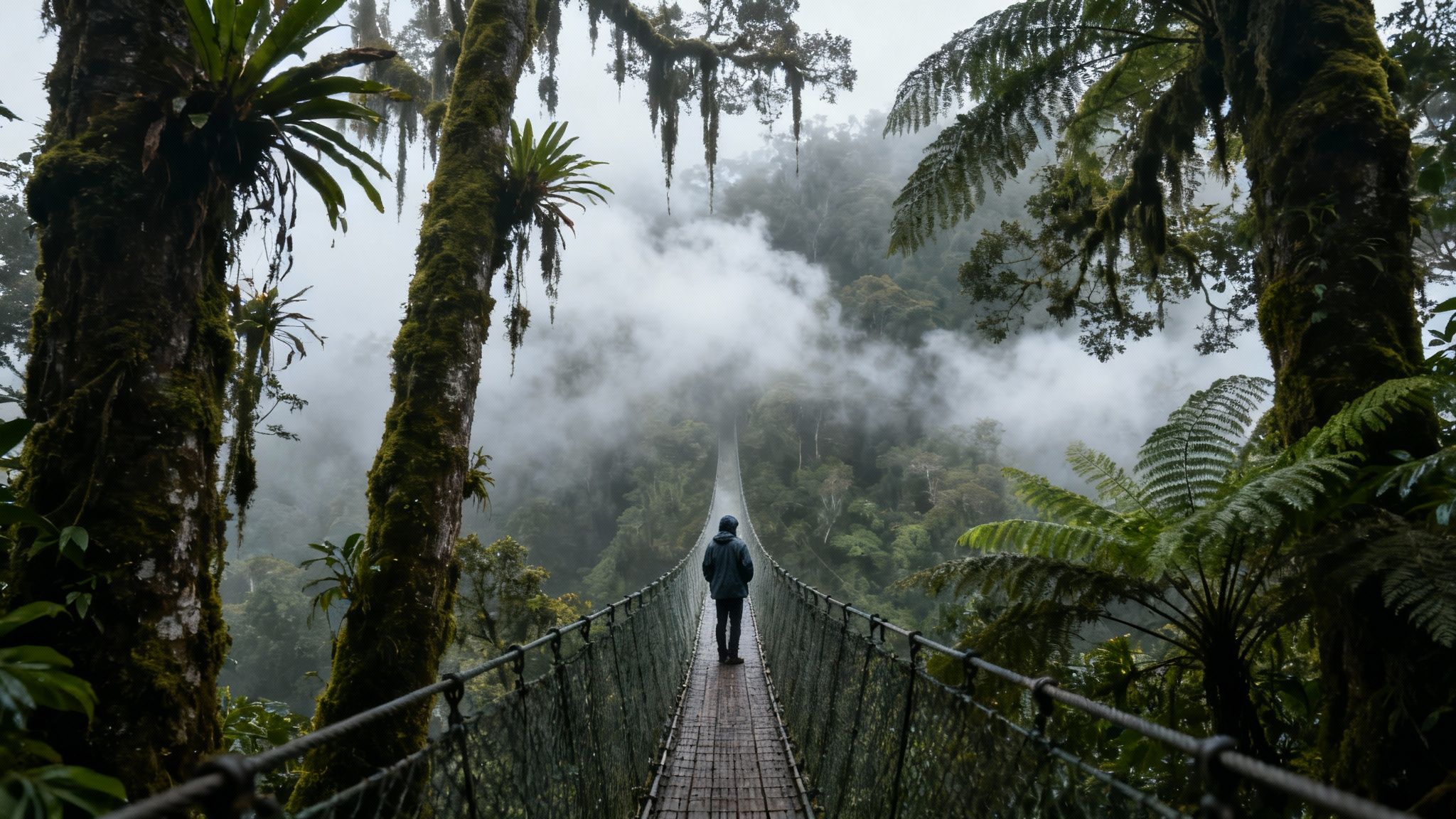
This trail system is exceptionally well-suited for digital nomads and eco-conscious travelers. The nearby town of Santa Elena provides a walkable home base with reliable shuttle services to the reserve, eliminating the need for a rental car. Many eco-lodges in the area support local conservation efforts, making it easy to plan a trip that aligns with the principles of sustainable tourism in Costa Rica. For remote workers, basing yourself here for a couple of weeks allows for an immersive blend of productive workdays and unparalleled nature exploration.
Why Monteverde Is a Top Hike
Monteverde’s trail network offers diverse experiences, from gentle walks to challenging ascents. The Sendero El Camino is a relatively flat, wide trail perfect for a relaxed introduction. Meanwhile, the steep climb on Sendero Chomogo rewards hikers with panoramic views from the Continental Divide. Birdwatchers flock here, especially during the quetzal breeding season (typically May to June), hoping to spot the magnificent Resplendent Quetzal. The combination of accessibility, biodiversity, and breathtaking scenery solidifies its place as one of Costa Rica’s premier hiking destinations.
Actionable Tips for Hiking Monteverde
- Start Early: Arrive before 8 a.m. to experience the forest at its most active and avoid the afternoon clouds that often roll in.
- Dress Smart: Wear moisture-wicking layers and a waterproof jacket. The humid, misty conditions can make cotton clothing uncomfortable and cold.
- Use Trekking Poles: The trails can be steep and slippery, especially after rain. Consequently, poles provide crucial stability on descents.
- Protect Your Gear: A waterproof bag or rain cover is essential for protecting cameras and electronics from the pervasive moisture.
- Travel Car-Free: Book a stay in Santa Elena or Monteverde village and use the convenient local shuttle service to access the reserve trailhead.
2. Unforgettable Views on the Arenal Volcano Observation Trail (Las Hornillas Route)
For those chasing iconic volcano views, the Arenal Volcano Observation Trail is one of the best hikes in Costa Rica. This moderate 3-mile (4.8-kilometer) round-trip hike ascends approximately 1,312 feet (400 meters) through a fascinating landscape of secondary forest and old lava fields. Located on the northern slope of the majestic Arenal Volcano, the Las Hornillas Route rewards hikers with breathtaking, open-ridgeline vistas of the volcano’s cone, the expansive Lake Arenal, and the distant Tilarán Mountain Range.
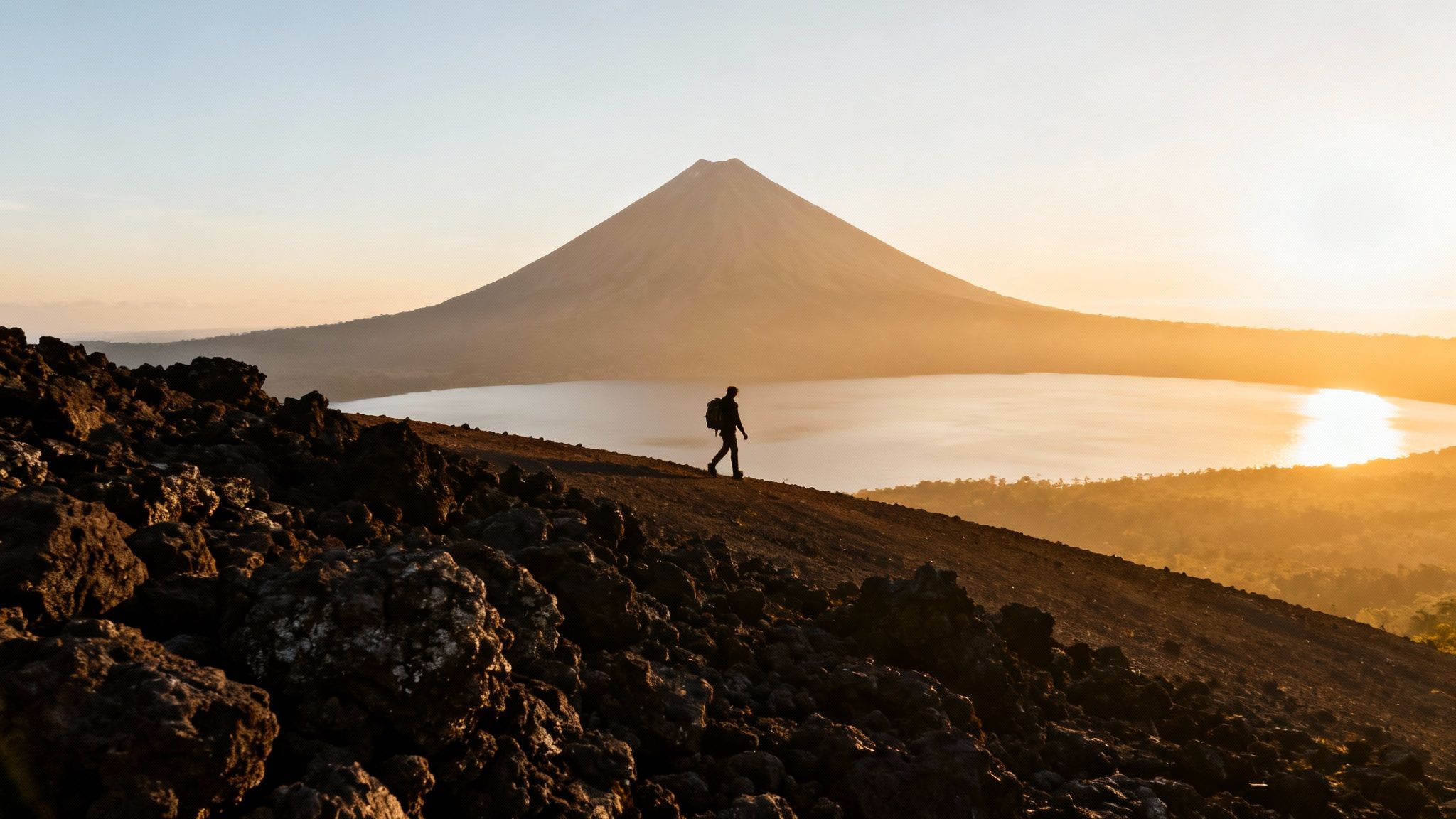
This trail is an excellent choice for digital nomads and eco-conscious travelers based in La Fortuna. The town serves as a convenient hub with shuttle access, making it easy to reach the trailhead without a car. A 2-3 day stay in La Fortuna allows for a perfect blend of work from a local café and outdoor adventures. Budget-conscious groups can share accommodations, reducing per-person costs while enjoying one of the country’s most spectacular natural settings.
Why the Arenal Observation Trail Is a Top Hike
The trail offers a unique opportunity to walk across historic lava flows from Arenal’s past eruptions. This direct interaction with volcanic geology is a powerful experience. The hike culminates in a viewpoint that provides one of the most classic and photogenic perspectives of the volcano. Moreover, the transition from lush forest to the stark, rocky terrain of the lava fields makes for a dynamic and memorable trek, solidifying its reputation among Costa Rica’s must-do hikes.
Actionable Tips for Hiking Arenal
- Go for Sunrise: Leave La Fortuna by 5:30 a.m. to catch the incredible sunrise views from the trail, often the clearest time of day.
- Hire a Local Guide: For around $20-30 USD, a local guide can point out wildlife and explain the volcanic history, greatly enriching the experience.
- Bring Sun Protection: The trail is highly exposed once you leave the forest. Sunscreen, a hat, and sunglasses are essential.
- Travel Car-Free: Take the regional bus from San José to La Fortuna (approx. 3.5 hours, ~$10 USD) to minimize your carbon footprint.
- Plan for Dry Season: Hike between December and April for the best chance of clear skies and unobstructed volcano views.
3. Corcovado National Park – San Pedrillo Trail
Corcovado National Park is a jewel of biodiversity, and the San Pedrillo Trail offers one of the most immersive rainforest experiences, making it one of the best hikes in Costa Rica. This 2.8-mile (4.5-kilometer) trek begins at the San Pedrillo ranger station. It guides you through a stunning landscape where pristine beaches meet primary, old-growth rainforest. The trail involves river crossings and access to a waterfall, showcasing what National Geographic famously called “the most biologically intense place on Earth.” It is an essential stop for travelers seeking a raw, untouched slice of nature.
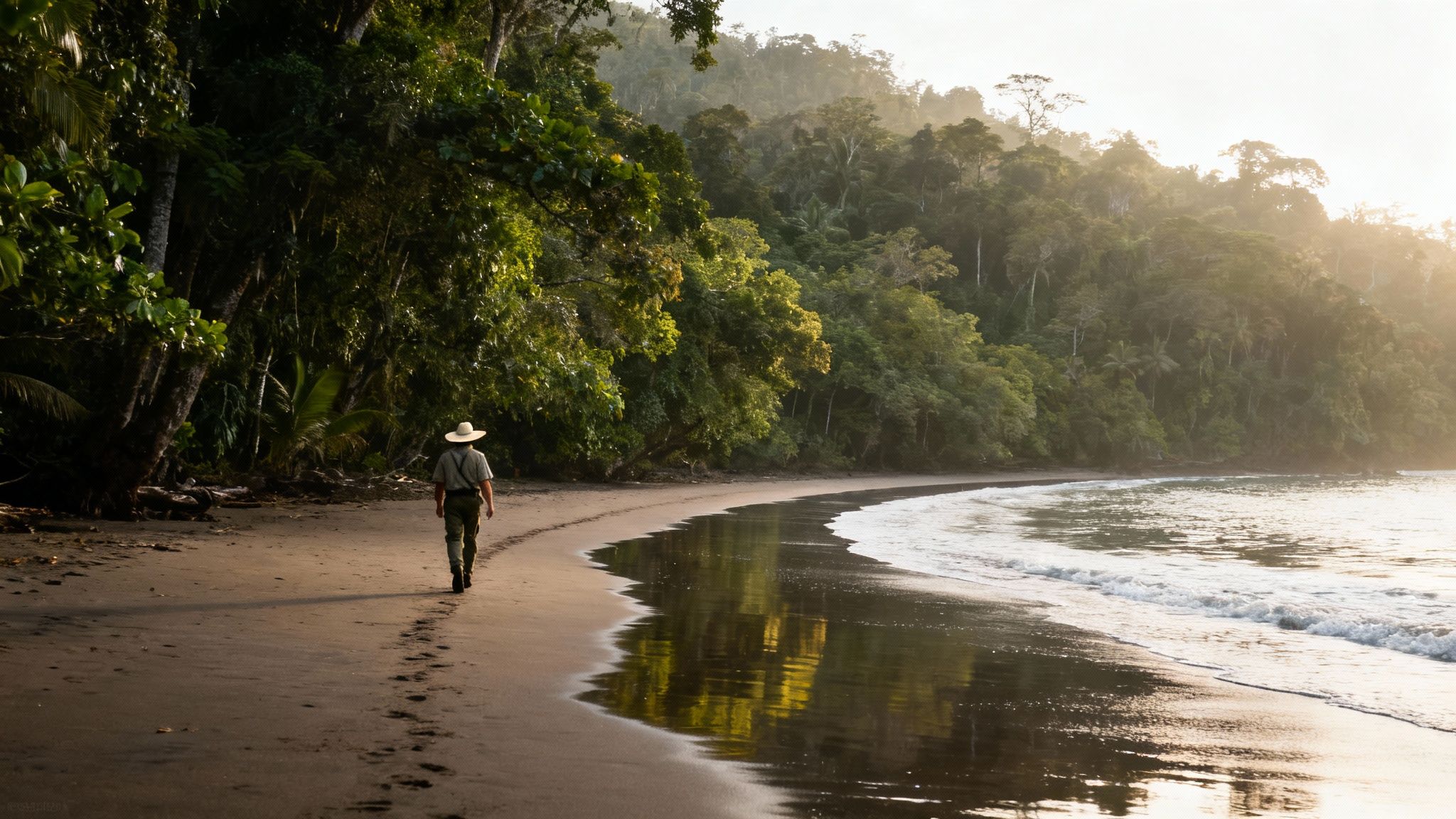
This destination is ideal for eco-conscious travelers and digital nomads planning a true disconnection. Accessing the park requires basing yourself in a gateway town like Puerto Jiménez or Drake Bay and arranging a guided tour, as independent entry is not permitted. This mandatory guide system supports the local economy and aligns with the principles of sustainable ecotourism. For nomads, this is a perfect opportunity for a planned offline period, fully immersing in nature for a few days before returning to a base with connectivity.
Why Corcovado Is a Top Hike
The San Pedrillo Trail provides unparalleled wildlife spotting opportunities. Unlike more crowded parks, Corcovado’s remoteness means you have a high chance of seeing all four of Costa Rica’s monkey species, sloths, tapirs, and vibrant birds like scarlet macaws. The hike is a 4-5 hour guided experience that is both challenging and deeply rewarding. The combination of its UNESCO World Heritage status, mandatory guide-led access for conservation, and extraordinary biodiversity makes this an unforgettable Costa Rican adventure.
Actionable Tips for Hiking Corcovado
- Book Well in Advance: Reserve your spot 2-3 weeks ahead, especially during the dry season (December-April), through a certified tour operator.
- Hire a Certified Guide: A guide is mandatory for safety and is invaluable for spotting camouflaged wildlife. Expect to pay between $150–$200 USD.
- Plan Your Arrival: Reach Puerto Jiménez via a quick regional flight from San José (1.5 hours, ~$120 USD) or a long-distance bus (8-9 hours, ~$15 USD).
- Pack for Water: Use a waterproof expedition bag to protect your belongings during river crossings and potential downpours.
- Embrace Being Offline: There is no cell service or Wi-Fi within the park. Therefore, prepare for a full digital detox.
4. Tárcoles River Mangrove Trail & Crocodile Observation
For a unique take on the best hikes in Costa Rica, the Tárcoles River offers a blend of paddling and short shoreline walks. This guided 1.8-mile (3-kilometer) experience combines kayaking through brackish mangrove forests with brief hikes on muddy riverbanks. It provides an immersive education in mangrove ecology. Furthermore, it is famous for its incredible birdwatching and observation of massive American crocodiles from a safe, respectful distance. The slow pace maximizes wildlife encounters with minimal strenuous hiking.
This adventure is perfect for digital nomads based in coastal hubs like Jaco or Quepos looking for an accessible day trip. It is also a fantastic option for budget-conscious groups, as guide fees ($40-$60 USD) can be split among several people. This tour highlights the importance of protecting vital coastal ecosystems. When booking, ensure your operator follows ethical guidelines for wildlife viewing, which is a key part of responsible wildlife tourism. Its proximity to Carara National Park allows for a comprehensive day of exploring diverse habitats.
Why Tárcoles Is a Top Hike
The Tárcoles River provides an unparalleled opportunity to explore a critical mangrove ecosystem that is often overlooked. This kayak-hike hybrid gets you incredibly close to nature, revealing a world of wading birds, iguanas, and the river’s famous crocodilian residents. Unlike traditional mountain hikes, this experience focuses on the rich biodiversity where freshwater meets the sea. The combination of active paddling and exploratory walking makes it a memorable and educational adventure that stands out from other Costa Rican trails.
Actionable Tips for Hiking Tárcoles
- Book Morning Tours: Schedule a 6-7 a.m. departure for cooler temperatures and peak wildlife activity.
- Hire Local Guides: Support the community by hiring a kayak guide through ASOPROLA-certified operators in Tárcoles village.
- Wear Proper Footwear: Water shoes or sturdy sandals with a back strap are essential for navigating the muddy walking sections.
- Protect Yourself: A rash guard or long-sleeve moisture-wicking shirt offers protection from both the sun and insects.
- Travel Car-Free: Use a regional bus service like Interbus to travel from San José to the Tárcoles area for a low-impact journey.
- Pack Smart: Bring polarized sunglasses to reduce water glare and a waterproof bag for your electronics.
5. Dominical to Ojochal Coastal Trail
For a unique coastal adventure that combines jungle trekking with bohemian beach towns, the Dominical to Ojochal trail is one of the best hikes in Costa Rica. This scenic 8-mile (13-kilometer) route connects two laid-back villages in the southern Pacific zone. The trail winds through primary and secondary rainforest, over rocky headlands, and onto secluded beaches, offering a more rustic and less-trafficked experience than many national park hikes. It’s perfect for slow travel, allowing you to immerse yourself in the local rhythm of Pura Vida.
This multi-day hike is ideal for digital nomads and eco-conscious travelers looking to establish a walkable home base. The route is typically split into two or three days, with overnight stays in eco-lodges or guesthouses in the villages. A great itinerary involves basing yourself in Dominical for several days to work and hike the first section. Then, you can move your base to Ojochal to complete the journey and explore the southern end. This approach minimizes your carbon footprint by eliminating daily travel and supporting small, local economies.
Why the Dominical to Ojochal Trail Is a Top Hike
This trail stands out by offering an authentic blend of nature and culture. Unlike curated park trails, this route feels like a genuine discovery, connecting you directly with the coastal landscape. You’ll experience diverse ecosystems, from dense jungle canopies to tidal zones teeming with marine life. The ability to end a challenging day’s hike in a welcoming village with a cold drink and a good meal makes it a uniquely rewarding trek. It’s a perfect example of regenerative travel, where your adventure directly supports the communities you visit.
Actionable Tips for Hiking Dominical to Ojochal
- Go in the Dry Season: Plan your hike between December and April for the best weather and safest trail conditions.
- Split the Journey: Divide the hike into 2-3 manageable segments, staying overnight in each village to rest, work, and explore.
- Navigate Smart: Use a combination of a reliable paper map and offline Google Maps, as cell service can be spotty.
- Hire a Local Guide: For the first section, consider hiring a guide through the Dominical Tourism Office ($30-40 USD) to learn about the trail and local ecology.
- Start at Dawn: Begin hiking around 6 a.m. to take advantage of cooler temperatures and maximize daylight hours.
- Pack Proper Footwear: Bring sturdy hiking shoes and a pair of reef shoes or water sandals for crossing rocky, wet sections safely.
6. La Fortuna to El Volcán Trail (Arenal Crater Rim Circuit)
For experienced trekkers seeking a true physical challenge, the Arenal Crater Rim Circuit is one of the best hikes in Costa Rica. This demanding 5-mile (8-kilometer) loop trail tackles the steep slopes of the extinct Cerro Chato volcano, gaining roughly 2,300 feet (700 meters) in elevation. The path cuts through dense primary rainforest, culminating in breathtaking panoramic views of the iconic Arenal Volcano, Lake Arenal, and the distant Tilarán Mountains from the crater’s edge. This full-day adventure begins and ends near La Fortuna, offering a rewarding journey for those prepared for its rigor.

This trail is an excellent fit for athletic digital nomads or outdoor-focused remote workers planning an intensive trip in Costa Rica’s northern zone. Basing yourself in La Fortuna for a few days allows for proper acclimatization with easier trails before attempting this strenuous climb. The town provides all necessary amenities, from tour operators to recovery spots like natural hot springs, making it a perfect hub for a multi-day hiking itinerary. Combining this trek with a visit to the Arenal Hanging Bridges the next day is a great way to maximize your time in the area.
Why the Arenal Crater Rim Circuit Is a Top Hike
This trail is more than just a hike; it is a significant physical accomplishment that rewards hikers with unparalleled solitude and spectacular scenery not seen from more accessible viewpoints. The ascent through untouched rainforest provides an immersive nature experience. Meanwhile, the payoff at the summit is a genuine highlight of any Costa Rican adventure. Its difficulty ensures fewer crowds, allowing for a more profound connection with the wild landscape. The combination of intense challenge, pristine forest, and volcanic vistas makes it a truly memorable trek.
Actionable Tips for This Hike
- Hire a Guide: For safety and navigation, book a certified guide from La Fortuna ($50–$80 USD). They provide crucial local knowledge.
- Start Extremely Early: Depart by 5:30 a.m. to beat the heat and ensure an afternoon return before weather conditions change.
- Hydrate and Fuel: Carry 2–3 liters (roughly 67-100 ounces) of water per person and pack high-calorie snacks (600+ calories) to maintain energy.
- Gear Up Properly: Sturdy hiking boots with ankle support are mandatory. Also pack a rain jacket, sun protection, and insect repellent.
- Hike in the Dry Season: Avoid attempting this trail from May to November, when heavy rains create dangerously slippery and muddy conditions.
- Acclimatize First: Spend one or two days on easier local trails, like those in Arenal Volcano National Park, before tackling Cerro Chato.
7. Manuel Antonio National Park – Cathedral Point Loop
The Cathedral Point Loop in Manuel Antonio National Park offers one of the best hikes in Costa Rica for those seeking dramatic coastal views and accessible rainforest wildlife. This 3.1-mile (5-kilometer) trail combines a lush jungle canopy walk with stunning rocky coastline and access to pristine beaches. The loop’s high point, Cathedral Point, provides panoramic Pacific vistas from a compact and incredibly biodiverse protected area. Consequently, it’s a powerful experience packed into a manageable hike.
This destination is ideal for digital nomads and travelers on a tight schedule. The nearby town of Quepos serves as a perfect, walkable base, accessible via a 3.5-hour regional bus from San José. Remote workers can easily spend a few days here, splitting their time between morning hikes and afternoon work sessions at a local café. The park’s layout allows visitors to experience multiple ecosystems in a single visit, maximizing a short trip without feeling rushed.
Why Cathedral Point Is a Top Hike
What makes this trail stand out is its incredible density of wildlife and scenery. In a relatively short walk, you can spot sloths, several species of monkeys, and vibrant tropical birds against a backdrop of turquoise water and white-sand beaches. The trail is well-maintained, making it accessible to most fitness levels. Yet, it delivers the kind of rewarding views typically associated with much more strenuous treks. This blend of accessibility and spectacular natural beauty makes it an unmissable Costa Rican hike.
Actionable Tips for Hiking Cathedral Point
- Arrive Early: Be at the park entrance by 6:30 a.m. to avoid the largest crowds and the intense midday heat.
- Hire a Guide: A park-certified guide ($20-$30 USD) can dramatically enhance your wildlife spotting success and help manage interactions with curious monkeys.
- Travel Light: Do not bring visible food or snacks, as this can lead to unwanted attention from the park’s clever monkeys.
- Wear Proper Footwear: Water shoes or sturdy sandals are recommended for the rocky coastal sections and potential beach crossings.
- Travel Car-Free: Use the regional bus to Quepos and walk to nearby accommodations and restaurants, fully embracing a low-impact travel style.
8. San Gerardo de Dota Cloud Forest Trail System
For a more intimate and off-the-beaten-path experience, the San Gerardo de Dota Cloud Forest offers some of the best hikes in Costa Rica. Tucked away in the high-altitude Tarrazú region (7,200–8,860 feet / 2,200–2,700 meters), this pristine reserve features approximately 5 miles (8 kilometers) of interconnected trails. The area is a haven for regenerative tourism, emphasizing small-group limits and deep engagement with the cloud forest ecosystem, often with fewer crowds than more famous parks.
This destination is perfect for digital nomads planning a “digital detox” or a low-connectivity work week. The quiet, remote setting allows for a focused blend of deep work and immersive nature hikes. The strong emphasis on conservation provides unique opportunities, such as participating in citizen science bird-banding research. Furthermore, its accessibility via a regional bus from San José makes it a fantastic car-free option for eco-conscious travelers seeking an authentic mountain base.
Why San Gerardo de Dota Is a Top Hike
San Gerardo de Dota is renowned as one of the best places in the world to spot the Resplendent Quetzal. The trail system, while less extensive than others, provides unparalleled access to primary cloud forest rich with biodiversity. The commitment to small-scale, sustainable tourism creates a respectful and quiet hiking environment. This focus makes it a prime example of how travel can support conservation, aligning perfectly with the principles of top ecotourism destinations.
Actionable Tips for Hiking San Gerardo de Dota
- Plan Ahead: Book your eco-lodge stay 2–4 weeks in advance, especially during the dry season (December-April), as options are limited.
- Go Car-Free: Take the regional bus from San José directly to the village. The scenic journey takes about 3.5 hours and costs around $8–12 USD.
- Hire a Guide: A local naturalist guide ($30–40 USD) is invaluable for spotting elusive wildlife, especially the quetzal, and sharing insights about the ecosystem.
- Pack for the Elements: Bring moisture-wicking layers and a reliable waterproof jacket. Rain and extreme humidity are common year-round.
- Prepare for a Digital Detox: WiFi is often unreliable. Therefore, plan for offline work and embrace the opportunity to disconnect and immerse yourself in nature.
9. Rincón de la Vieja National Park – Blue Lagoon & Sulfur Vents Trail
For a hike that blends geothermal wonders with lush forest, the Blue Lagoon and Sulfur Vents Trail in Rincón de la Vieja National Park is an unmissable experience. This 2.5-mile (4-kilometer) loop trail, located in the country’s northern volcanic region, offers a fascinating look at the volcano’s powerful activity. You will encounter bubbling mud pots, steaming fumaroles, and sulfur vents, all set against a backdrop of recovering secondary forest. The trail culminates in the stunning Blue Lagoon, whose warm waters provide a unique natural spa experience.

This destination is a fantastic addition to a northern zone itinerary for digital nomads and eco-conscious travelers. Easily accessible from Liberia, it allows for car-free travel via regional buses. Its moderate difficulty makes it an ideal recovery day activity between more strenuous treks, such as those in Monteverde. For remote workers, a stay in nearby Liberia offers a comfortable base with reliable amenities, allowing for productive mornings before an afternoon spent exploring one of Costa Rica’s most dynamic landscapes.
Why Rincón de la Vieja Is a Top Hike
The Blue Lagoon and Sulfur Vents Trail provides one of the most unique and interactive best hikes in Costa Rica. Unlike other mountain hikes, this path immerses you directly in the island’s raw geothermal energy. The ability to witness volcanic features up close, combined with the chance for a passive thermal soak in the beautiful Blue Lagoon, offers a multi-sensory adventure. Its accessibility from a major transport hub and the relatively short trail length make it a highly rewarding and manageable day trip.
Actionable Tips for Hiking Rincón de la Vieja
- Test Waters Carefully: Always test water temperatures before fully immersing yourself. Hiring a local guide for around $20-30 USD is wise to identify the safest spots.
- Arrive Early: Get to the park before 9 a.m. to experience the trail with fewer people and avoid the intense afternoon heat.
- Travel Smart: Take a regional bus from Liberia (a 2-3 hour journey) for a low-impact travel day. This allows you to avoid renting a car.
- Pack Accordingly: Bring quick-dry clothing, a towel, and reef shoes for the potentially sharp edges of the thermal pools. Leave valuables at your accommodation.
- Visit in the Dry Season: Plan your hike between November and March for clearer trails and safer, slightly cooler water temperatures in the lagoon.
10. Cahuita National Park – Coastal Trail Loop
Cahuita National Park offers one of the most unique and scenic best hikes in Costa Rica, blending lush lowland rainforest with stunning Caribbean coastline. The park features a flat, easy 2.5-mile (4-kilometer) trail that follows a sandy path between the turquoise sea and dense tropical jungle. This accessible route allows hikers to experience incredible biodiversity, from howler monkeys in the canopy to colorful coral reefs just offshore. As a result, it is a perfect choice for an active recovery day or a family-friendly adventure.
This trail is an excellent option for digital nomads and eco-travelers looking to slow down and immerse themselves in Caribbean culture. The nearby Cahuita village is entirely walkable, with easy access to local restaurants, shops, and the park entrance, making a rental car unnecessary. By basing yourself here for a few days, you can easily combine light hiking with snorkeling, cultural experiences, and productive work sessions, all while supporting the local community.
Why Cahuita Is a Top Hike
The Cahuita Coastal Trail provides a rare opportunity to hike parallel to Costa Rica’s largest and best-preserved coral reef. The flat terrain makes it accessible to all fitness levels, while the abundant wildlife guarantees an exciting journey. It’s common to spot sloths, capuchin monkeys, and a variety of tropical birds without venturing far from the path. This effortless blend of beach relaxation, wildlife spotting, and jungle exploration makes Cahuita a standout destination.
Actionable Tips for Hiking Cahuita
- Arrive Early: Start your hike before 8 a.m. from the main park entrance to enjoy cooler temperatures and fewer people on the trail.
- Bring Water: Despite the flat terrain, the lowland Caribbean humidity is intense. Carry at least 50 ounces (1.5 liters) of water per person.
- Wear Water Shoes: The trail includes sections where you may walk on rocky reef areas. Water shoes will protect your feet from sharp coral.
- Pack Snorkel Gear: The calm waters offer excellent snorkeling opportunities right off the beach. Remember to use only reef-safe sunscreen.
- Hire a Local Guide: A guide ($15-25 USD) can dramatically enhance your experience by pointing out well-camouflaged wildlife and sharing local cultural insights.
- Travel Car-Free: Take the direct regional bus from San José to Cahuita. The trip takes about 4.5 hours and costs around $12-15 USD.
11. Poás Volcano Summit Trail & Crater Viewing
The Poás Volcano Summit Trail offers one of the most accessible yet dramatic volcanic experiences, making it one of the best hikes in Costa Rica for those with limited time. Located in the Central Valley, this short 1-mile (1.5-kilometer) paved path ascends roughly 650 feet (200 meters) through a unique, stunted elfin forest. The trail leads directly to the observation deck overlooking the main crater, a staggering 980 feet (300 meters) deep, where you can witness active fumaroles venting sulfurous gases. Its proximity to San José makes it an ideal day trip.

This hike is perfect for digital nomads or eco-conscious travelers looking for a high-impact adventure without a significant time commitment. You can easily reach the park via a regional bus from San José, which eliminates the need for a rental car for a single-day outing. Travelers often pair this hike with a visit to the nearby La Paz Waterfall Gardens for a full day of Central Valley exploration. It also works well as a final adventure before flying out of San José International Airport (SJO).
Why Poás Volcano Is a Top Hike
The sheer spectacle of peering into an active volcano crater with minimal physical exertion is what sets Poás apart. The trail is well-maintained and suitable for most fitness levels, offering a massive reward for a small effort. The combination of the otherworldly crater view and the mystical high-altitude forest provides a unique sensory experience. Its accessibility and the high probability of seeing volcanic activity make it a must-do for anyone visiting the region and a standout among the best hikes in Costa Rica.
Actionable Tips for Hiking Poás Volcano
- Go Early: Book your park ticket for the first entry slot around 7 a.m. and depart San José before 6 a.m. to beat the crowds and, more importantly, the clouds that obscure the view by mid-morning.
- Layer Up: The high altitude (8,885 feet / 2,708 meters) means a significant temperature drop. Bring a warm, waterproof jacket.
- Use Public Transport: A direct bus runs from San José to the park entrance, costing only around $3-5 USD for the 1.5-hour journey.
- Acclimatize First: If arriving from sea level, give your body a day or two to adjust to the altitude before attempting this hike to avoid discomfort.
- Protect Your Skin: UV rays are intense at high elevations, even when it’s cloudy. Therefore, wear sunscreen, a hat, and sunglasses.
12. Tortuguero National Park – Jungle Canal System & Rainforest Trails
For a completely different kind of hiking experience, Tortuguero National Park offers one of the most unique adventures on our list of the best hikes in Costa Rica. This remote jungle sanctuary on the Caribbean coast is accessible only by boat or plane, immersing visitors in a world dominated by water. The “trails” here are a 31-mile (50-kilometer) network of natural canals and waterways that you navigate by canoe or small boat. These are supplemented by short, designated walking paths through the dense lowland rainforest.
This boat-only access makes Tortuguero an ideal destination for digital nomads and eco-conscious travelers committed to slow, immersive travel. A multi-day stay at a certified eco-lodge is required, fostering a deeper connection with the environment and supporting local conservation. For those working remotely, this provides a true off-grid escape, perfect for a long weekend disconnect. Planning this trip aligns perfectly with adopting better sustainable travel habits, as it relies entirely on low-impact, community-based tourism.
Why Tortuguero Is a Top Hike
Tortuguero delivers an unparalleled wildlife spectacle. Paddling silently through the canals reveals caimans, river turtles, sloths, and three species of monkeys. The area is a birdwatcher’s paradise, home to over 300 bird species. The true highlight is the sea turtle nesting season (primarily July-October), where visitors can witness green, leatherback, and hawksbill turtles laying their eggs on the protected beaches. This blend of water-based exploration and critical conservation work makes it an unforgettable journey.
Actionable Tips for Hiking Tortuguero
- Book in Advance: Reserve your multi-day eco-lodge package 4-6 weeks ahead, especially during peak season. Packages often include transport, lodging, meals, and guided tours.
- Travel Smart: Reach the travel hub of La Pavona or Moín by shuttle or bus from San José. From there, a boat taxi will take you to your lodge.
- Pack for the Tropics: Bring lightweight, quick-dry clothing, a reliable waterproof jacket, and waterproof footwear. DEET insect repellent is essential.
- Protect Your Gear: Use a lightweight waterproof bag to shield cameras and electronics from humidity and sudden downpours.
- Hire a Guide: A certified naturalist guide (often included in lodge packages) is crucial for spotting wildlife and safely navigating the park.
Top 12 Costa Rica Hikes Comparison
Monteverde Cloud Forest Reserve Trail System
- Complexity 🔄: Moderate — interlinked trails, misty/slippery conditions
- Resources & Logistics ⚡: Low transport needs; shuttle from Monteverde village; entrance ≈ $26 USD
- Expected Outcomes 📊⭐: High biodiversity (450+ birds); canopy views but frequent cloud cover
- Ideal Use Cases 💡: Multi-day eco-nomad base; birdwatching; canopy photography
- Key Advantages ⭐: Pristine biodiversity, walkable village base, conservation-funded
Arenal Volcano Observation Trail (Las Hornillas)
- Complexity 🔄: Moderate — 3 mi (4.8 km), ~1,312 ft (400m) gain; exposed ridgeline
- Resources & Logistics ⚡: Accessible from La Fortuna; half-day route; bring ≥ 1.5 L (50 oz) water
- Expected Outcomes 📊⭐: Panoramic volcano & lake vistas (best mornings); good wildlife viewing
- Ideal Use Cases 💡: Half-day hikers; photography-focused visitors; combine with hot springs
- Key Advantages ⭐: Short duration with strong morning views; intermediate-friendly
Corcovado National Park – San Pedrillo Trail
- Complexity 🔄: High — remote primary rainforest, river crossings, ranger-only access
- Resources & Logistics ⚡: High logistics: overnight ecolodge required; guide fees $150–$200 USD; boat/flight or long bus+boat
- Expected Outcomes 📊⭐: Exceptional biodiversity concentration; immersive wilderness experience
- Ideal Use Cases 💡: Committed multi-day eco-travelers, researchers, serious birders
- Key Advantages ⭐: Highest species density; strong visitor caps and conservation
Tárcoles River Mangrove Trail & Crocodile Observation
- Complexity 🔄: Low — short kayak + walk, guided, tide-dependent
- Resources & Logistics ⚡: Low: public bus access; morning tours $35–$50 USD; kayak gear supplied
- Expected Outcomes 📊⭐: Reliable crocodile and bird encounters; mangrove ecology education
- Ideal Use Cases 💡: Half-day wildlife photography; light-activity groups
- Key Advantages ⭐: Very accessible, low-cost, excellent wildlife photo ops
Dominical to Ojochal Coastal Trail
- Complexity 🔄: Moderate — 8 mi (13 km) split over 2–3 days; mixed terrain, some unmarked sections
- Resources & Logistics ⚡: Moderate: walkable village bases, eco-lodges $30–$60 USD; navigation (GPS/maps) essential
- Expected Outcomes 📊⭐: Scenic coastal vistas, slow-travel immersion, low crowds
- Ideal Use Cases 💡: Multi-day slow-travelers, digital nomads, low-density hikers
- Key Advantages ⭐: Connects walkable hubs; flexible pacing; village-based stays
La Fortuna to El Volcán Trail (Arenal Crater Rim Circuit)
- Complexity 🔄: High — strenuous 5 mi (8 km) loop, ~2,300 ft (700m) gain, rope-assisted sections
- Resources & Logistics ⚡: Moderate: base in La Fortuna; guide recommended $50–$80 USD; carry 2–3 L (67-100 oz) water
- Expected Outcomes 📊⭐: Dramatic ridge panoramas; high fitness challenge; fewer tourists
- Ideal Use Cases 💡: Experienced hikers, fitness-focused travelers
- Key Advantages ⭐: Remote trail with dramatic vistas and primary forest access
Manuel Antonio National Park – Cathedral Point Loop
- Complexity 🔄: Low–Moderate — compact 3.1 mi (5 km) loop, well-marked but very busy
- Resources & Logistics ⚡: Low: accessible from Quepos; park fee ≈ $16 USD; short time commitment
- Expected Outcomes 📊⭐: Concentrated scenic & wildlife viewing; high visitor density
- Ideal Use Cases 💡: Time-limited visitors, families, multi-activity days
- Key Advantages ⭐: Compact trail with beach access and strong wildlife sightings
San Gerardo de Dota Cloud Forest Trail System
- Complexity 🔄: Moderate — high-altitude, small-group limits, research options
- Resources & Logistics ⚡: Low: bus-accessible; eco-lodges (basic Wi‑Fi); visitor caps
- Expected Outcomes 📊⭐: Exceptional birdwatching; research participation possible; low-impact
- Ideal Use Cases 💡: Birders, digital nomads seeking quiet/low-connectivity retreats
- Key Advantages ⭐: Small visitor numbers, research programs, pristine conditions
Rincón de la Vieja – Blue Lagoon & Sulfur Vents Trail
- Complexity 🔄: Low–Moderate — 2.5 mi (4 km) moderate trail with geothermal hazards
- Resources & Logistics ⚡: Low: bus to Liberia; entrance ≈ $15 USD; guide useful for safety
- Expected Outcomes 📊⭐: Geothermal immersion (hot springs); unique geology; moderate crowds
- Ideal Use Cases 💡: Recovery day hikers; geothermal/health-seekers
- Key Advantages ⭐: On-site hot springs, accessible, restorative after strenuous hikes
Cahuita National Park – Coastal Trail Loop
- Complexity 🔄: Low — flat 2.5 mi (4 km) loop, easy terrain suitable for all
- Resources & Logistics ⚡: Low: bus-accessible; free entry (donations); optional snorkeling
- Expected Outcomes 📊⭐: Relaxed beach & reef access; easy wildlife viewing; reef sensitivity
- Ideal Use Cases 💡: Families, recovery days, snorkelers, cultural visitors
- Key Advantages ⭐: Very accessible, reef + cultural experience, minimal exertion
Poás Volcano Summit Trail & Crater Viewing
- Complexity 🔄: Low — short 1 mi (1.5 km) uphill, high-altitude, cloud-dependent
- Resources & Logistics ⚡: Very low: day trip from San José by bus; donation entry; short duration
- Expected Outcomes 📊⭐: Quick crater/fumarole viewing (visibility limited by clouds)
- Ideal Use Cases 💡: Short-day trippers, limited-time visitors, families
- Key Advantages ⭐: Closest volcano experience to capital; minimal time required
Tortuguero National Park – Jungle Canal System & Rainforest Trails
- Complexity 🔄: High — boat/plane access only; multi-day lodge stays required
- Resources & Logistics ⚡: High: lodge packages $350–$500+ USD; boat schedules; advance booking
- Expected Outcomes 📊⭐: Immersive canal-based wildlife viewing; turtle nesting seasons; research
- Ideal Use Cases 💡: Slow-travelers, researchers, committed eco-tourists
- Key Advantages ⭐: Boat-only protection, nesting programs, extensive canal networks
Final Thoughts: Hiking Your Way to Pura Vida
Exploring the best hikes in Costa Rica offers more than just stunning scenery; it provides a profound connection to one of the most biodiverse places on Earth. This journey, from the misty cloud forests of Monteverde to the rugged coastal paths of Corcovado, is a powerful reminder of nature’s intricate beauty and our collective responsibility to protect it. The trails we’ve detailed are not simply routes on a map. They are invitations to engage with the country’s celebrated ‘Pura Vida’ philosophy, a mindset that champions a simple, stress-free life in harmony with the natural world. By choosing trails that champion sustainability, utilizing public transport, and supporting local communities, your adventure becomes a regenerative force, contributing positively to the ecosystems and economies you visit.
Whether you’re watching the sunrise cast a golden glow over Arenal Volcano or trekking through the remote, wildlife-rich jungles of the Osa Peninsula, each step is an opportunity for mindful travel. These experiences are built on a foundation of respect, from adhering to Leave No Trace principles on the trail to selecting regenerative stays that actively support conservation. For digital nomads and long-stay travelers, this approach allows for a deeper, more meaningful immersion. You can establish a base in a walkable town, connect with local conservation efforts, and truly understand the rhythm of life in a country that has placed environmental stewardship at its core.
Best Hikes in Costa Rica for Every Fitness Level (Plus Low-Impact Trip Planning)
The diversity of landscapes means there is a perfect Costa Rican trail for every type of traveler. You might find your bliss on the accessible Cathedral Point Loop in Manuel Antonio, or you might seek the challenging, multi-day treks in Rincón de la Vieja. Remember that responsible planning is key to a low-impact journey. For a seamless trip, consider booking your flights and accommodations in advance. Arranging an airport transfer with a reliable service like Welcome Pickups can help start your adventure stress-free. In addition, ensure you stay connected with an eSIM from Airalo. The trails are waiting.
Integrating Your Hike into a Low-Impact Itinerary
Transforming a hiking trip into a truly sustainable journey involves looking beyond the trail itself. It’s about how you get there, where you stay, and how your presence impacts the local environment. Instead of renting a car for your entire stay, consider using Costa Rica’s public bus system for long-haul travel between regions. It’s affordable, reduces your carbon footprint, and offers a more authentic travel experience. For shorter distances, shared shuttles or local taxis are excellent options.
Once at your destination, choose accommodations that are walkable to trailheads, local markets, and eateries. This not only minimizes your reliance on transportation but also deepens your connection to the community. By planning a ‘base city’ approach, you can settle in, reduce transit time, and fully explore a region’s trails over several days or weeks.
Editor’s Pick: Best Regenerative Stay for Hikers
Finca Luna Nueva Lodge (near Arenal)
For travelers looking to combine world-class hiking with a deep commitment to sustainability, Finca Luna Nueva Lodge stands out. This regenerative farm and eco-lodge offers guests direct access to rainforest trails on its property while actively practicing and teaching principles of permaculture and carbon sequestration. It’s an ideal base for exploring the Arenal area, providing a holistic experience that connects you directly to the land you’re exploring.
Key Takeaways for Your Costa Rican Hiking Adventure
- Plan for Permits and Fees: Many of Costa Rica’s best national parks, like Corcovado and Chirripó, require advance reservations and permits. Always check the SINAC (National System of Conservation Areas) website for the latest requirements to avoid disappointment.
- Embrace Public Transport: Costa Rica’s public bus network is extensive and budget-friendly. Using it to travel between hiking destinations is a fantastic way to lower your carbon footprint and engage more closely with local life.
- Pack for All Conditions: The country’s microclimates are no joke. A single day can bring intense sun, heavy rain, and cool mountain air. Pack lightweight layers, a reliable waterproof jacket, and sturdy, broken-in hiking shoes. Don’t forget reef-safe sunscreen and eco-friendly insect repellent.
- Prioritize Local and Regenerative Stays: Support the local economy and conservation efforts by choosing small, locally-owned guesthouses or certified regenerative lodges. These establishments often provide invaluable local trail knowledge and contribute directly to community well-being.
- Stay Connected Responsibly: While some trails offer a digital detox, staying connected for logistics is crucial. An eSIM from a provider like Yesim ensures you have data access without creating plastic waste from physical SIM cards.
- Protect Your Journey: Unexpected events can happen on any trail. Comprehensive travel insurance from a provider like VisitorsCoverage is essential for peace of mind, covering everything from minor injuries to trip interruptions.
Ready to plan your own sustainable adventure? The principles of low-impact travel and regenerative tourism are at the heart of what we do at Eco Nomad Travel. We create resources and itineraries specifically for travelers who want to explore the world consciously, without compromising on incredible experiences. Visit Eco Nomad Travel to find more car-free guides and sustainable travel systems.
Join the Sustainable Work Movement
Want more rail-first itineraries, low-impact packing systems, and walkable base-city ideas?
Best Hikes in Costa Rica FAQ
These are the most common questions readers ask when planning the best hikes in Costa Rica, with answers designed to help you hike safely, sustainably, and without unnecessary stress.
1. What’s the best time of year to hike in Costa Rica?
The most consistent hiking conditions are during the dry season (typically December through April). That said, the green season (May–November) can be amazing for waterfalls and fewer crowds—just plan for muddy trails, earlier starts, and heavier rain.
2. Do I need to book park tickets or permits in advance?
Often, yes. Many national parks and reserves now use timed entry or daily visitor caps. For popular spots (like Poás Volcano and Manuel Antonio), booking ahead is the safest move, especially during peak season and holidays.
3. Can I do the best hikes in Costa Rica without renting a car?
Absolutely. Many trail regions have strong bus routes, shared shuttles, and walkable base towns. Monteverde, La Fortuna, Quepos/Manuel Antonio, Cahuita, and San José day trips (like Poás) can all be planned car-free with smart logistics.
4. What should I pack for hiking in Costa Rica?
Prioritize breathable layers, a lightweight rain jacket, sun protection, and sturdy shoes with good grip. Bring at least 1.5–3 liters of water, electrolytes, insect repellent, and a dry bag for electronics—especially in cloud forests and rainforest zones.
5. Are guides required for any hikes?
Yes—some places require guided entry, and others strongly recommend it for safety and wildlife spotting. Corcovado is the clearest example where guides are typically mandatory depending on sector and route. Even when not required, a certified local guide can upgrade the experience.
6. What are the easiest hikes for beginners or families?
Manuel Antonio’s Cathedral Point Loop (easy-moderate), Cahuita’s Coastal Trail (easy/flat), and Poás Volcano’s summit path (short/paved) are some of the most beginner-friendly options with high scenic payoff.
7. What are the most challenging hikes on this list?
The Arenal Crater Rim/Cerro Chato-style climbs and remote wilderness routes like Corcovado demand serious preparation. Expect steep elevation gain, heat/humidity, and variable trail conditions. Start early, bring more water than you think you need, and consider a guide.
8. How do I avoid crowds on popular trails?
Start at the first entry slot, hike midweek, and travel in shoulder months (May, early June, late November). Choosing less famous trail systems (like San Gerardo de Dota) and splitting days across regions also helps you avoid peak congestion.
9. What are the most important low-impact hiking rules in Costa Rica?
Stay on marked trails, never feed wildlife, carry out all trash, and use reef-safe sunscreen near coastal areas. Keep noise low, respect closures, and choose operators and stays that support conservation and local communities.
10. How can I stay connected (and safe) on the trail?
Download offline maps, share your route with someone, and keep a small battery pack. In many regions, cell coverage is limited, so an eSIM can help where signal exists—but always plan as if you may have no service for stretches.
