
Traveling by train offers a unique blend of scenic views and sustainable comfort, but it’s not without its own set of challenges. Finding the best luggage for train travel is crucial for navigating crowded stations, wrestling bags up steep steps, and trying to cram them into tight spaces.
The right luggage isn’t just about what you can fit inside. It’s about seamless mobility, smart organization, and durability that lasts. You’ll find that soft-sided spinners, wheeled backpacks, and duffels often run circles around hard-shell cases, simply because they’re more flexible and easier to stow.
Think of this guide as your roadmap to finding a bag that makes your journey smoother, not a workout. We’ll dig into why the compact, self-reliant nature of train travel demands a different approach than flying, focusing on luggage you can actually lift, stow, and access yourself without breaking a sweat.
Key Takeaways
- Mobility is Key: Hybrid bags with both wheels and backpack straps, like wheeled backpacks, offer maximum flexibility for stations, stairs, and city streets.
- Soft-Sided is Better: Flexible luggage is more forgiving and easier to squeeze into tight or oddly shaped storage spaces on trains compared to rigid hard-shell cases.
- Durability Equals Sustainability: Investing in luggage made from recycled, long-lasting materials with strong repair programs minimizes your environmental impact and waste.
- Size and Weight Matter: Opt for carry-on sized bags (around 22 inches) or mid-sized checked bags to ensure they fit in overhead racks and are easy for you to lift.
- Smart Organization is Crucial: Look for bags with well-designed compartments, lockable zippers, and compression systems to keep your essentials accessible and secure.
- Check Policies in Advance: While most train operators are generous, high-speed services like Japan’s Shinkansen have specific rules for oversized bags, which you can check on platforms like Trip.com.
Editor’s Pick: Osprey Farpoint/Fairview Wheeled Travel Pack
This hybrid bag just gets it right for train travel. It combines smooth-rolling wheels for station platforms with a comfortable, stowable backpack harness for stairs or cobblestone streets. Its durable, recycled materials and thoughtful organization make it an ideal all-in-one solution for the versatile rail traveler.
Why Train Journeys Demand Smarter Luggage
Unlike air travel, where your main bag gets checked and disappears until baggage claim, train travel is a totally hands-on experience. You are your own porter.
You’re the one responsible for lifting your bag onto the train, maneuvering it down a narrow aisle, and hoisting it into an overhead rack—often within a frantic two-minute stop. This reality makes your choice of luggage absolutely critical, something we cover in detail in our complete guide on how to travel Europe by train.
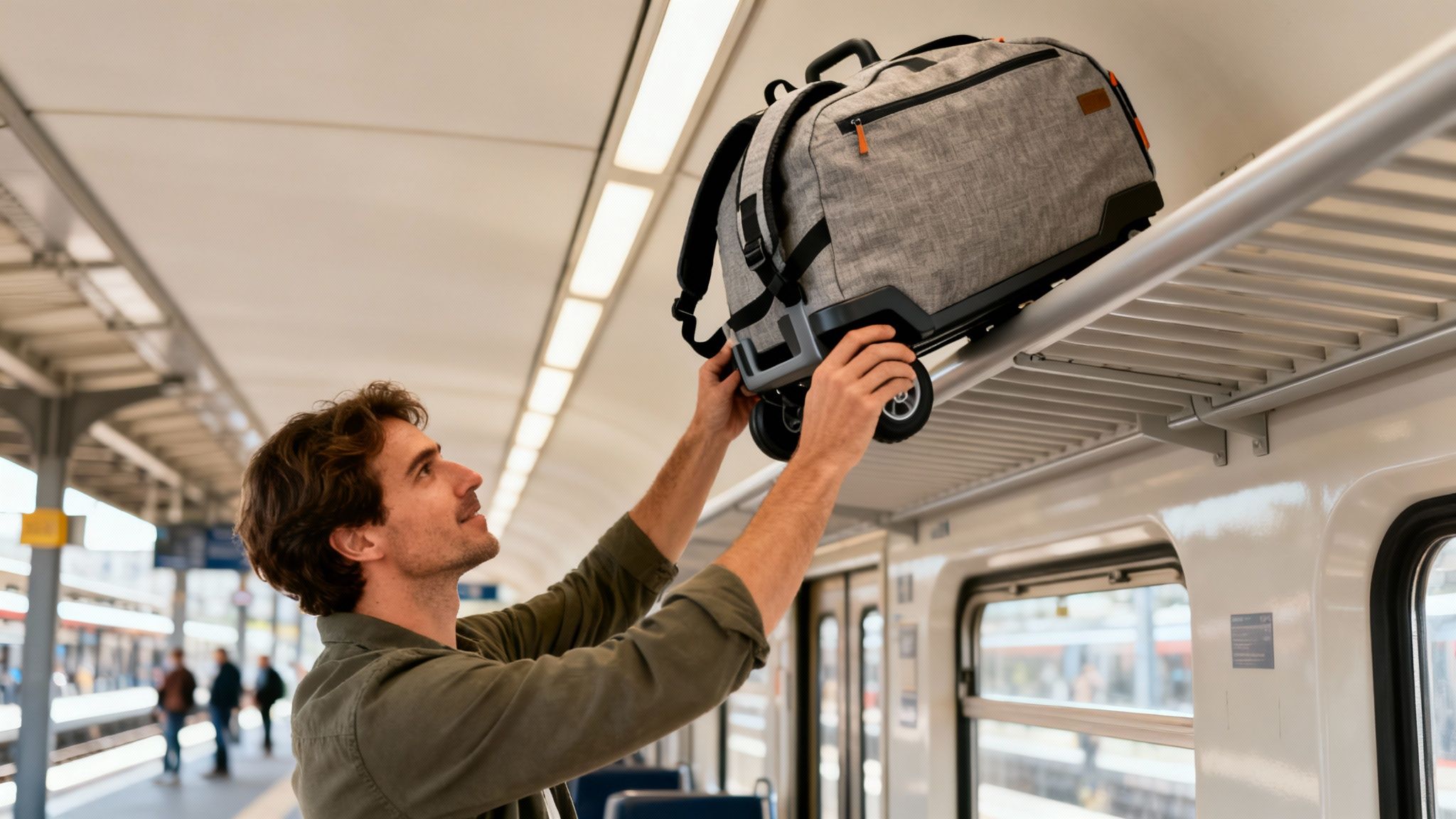
The best luggage for train travel strikes a fine balance between capacity and agility. A bag that’s too bulky quickly becomes a liability, but one that’s too small won’t hold what you need for a multi-city tour. The real goal is to find that sweet spot: a bag spacious enough for your gear, yet compact and light enough for you to manage completely on your own.
Why Your Luggage Choice Impacts Your Carbon Footprint
Choosing the right gear for train travel is about more than just convenience; it’s a decision that quietly shapes the sustainability of your whole trip. A heavy, oversized bag isn’t just a personal headache—it contributes to a larger, often invisible, energy footprint. Every extra pound (or kilogram) you carry demands more energy to move, a small but real impact that adds up across the entire travel network.
[carbon_calculator_2025]
This is especially true for what’s called the “last mile” of your journey. Lightweight, compact luggage makes it far easier to hop on a tram, subway, or bus to get from the station to your final stop. Choosing a 15-minute metro ride over a 15-minute taxi can slash your last-mile carbon emissions by over 90%. When your bag is easy to handle, you’re naturally more likely to pick these greener options. You can stay connected on the go with a global eSIM from providers like Airalo.
But it’s not just about weight. The lifecycle of the luggage itself plays a huge part. Think about the raw materials and energy that go into making it, and where it ends up when it breaks. A poorly made suitcase has a significant environmental cost, which is where thinking like a conscious consumer becomes a powerful act.
The Luggage System Approach
It helps to see your gear as a complete “luggage system” rather than just one suitcase. This mindset pushes you toward smarter choices: durable, repairable, and sustainably sourced bags that actually align with your values.
- Manufacturing Matters: Look for brands using recycled materials like PET plastics or fabrics that are bluesign® certified, which guarantees responsible and safe production according to the official bluesign® system.
- Durability is Sustainability: A high-quality bag that lasts a decade keeps several cheaper, disposable ones out of a landfill. Brands offering strong lifetime warranties or repair programs are sending a clear signal that their products are built to last.
- Repair, Don’t Replace: A broken wheel or a stuck zipper shouldn’t be a death sentence for your bag. Choosing luggage from companies that make replacement parts accessible supports a circular economy and cuts down on waste dramatically.
Thinking this way ensures your equipment actively supports your decision to travel more sustainably, right from the ground up. Small choices add up, a topic we explore in our detailed guide on your travel carbon footprint and emissions. By investing in well-made, eco-conscious luggage, you’re really investing in a lower-impact way of moving through the world—a win for both you and the planet.
Key Features of the Best Luggage for Train Travel
Okay, let’s break down what really matters when you’re choosing a bag for train travel. This isn’t just theory; it’s about getting the practical details right so you can focus on the journey, not the baggage chaos.
Think about it: you’re trying to haul a huge, clunky suitcase up a narrow staircase at an old Italian station. Or maybe you’re fumbling through a messy duffel for your passport while a long line of impatient travelers builds up behind you. These are the moments where the right luggage makes all the difference.
A great train bag is designed for exactly these scenarios. It moves with you, protects your stuff, and keeps everything you need right where you can find it. It makes the journey part of the adventure, not just a logistical headache.
Mobility: The Foundation of Great Train Luggage
When you’re traveling by train, you are your own porter. That simple fact makes mobility the single most important feature to look for. Your bag has to glide through a modern station with ease but also be manageable when you’re faced with stairs, cobblestones, or that tricky gap between the platform and the train.
This is where hybrid designs really prove their worth. A wheeled backpack offers the best of both worlds. You can roll it along, saving your energy for exploring. But the moment you face a staircase or a packed metro car, you can deploy the stowable harness, throw it on your back, and keep your hands free. For transfers from the station, services like Welcome Pickups can be a helpful, pre-booked option.
Here’s a quick rundown of your options:
- Spinner Suitcases (4 wheels): Amazing on smooth station floors, letting you glide in any direction. But they’re a nightmare on uneven ground and are seriously awkward to pull up stairs.
- Rolling Duffels (2 wheels): Their bigger, beefier wheels handle bumps and curbs much better than spinners. They’re generally more stable when you’re pulling them behind you.
- Travel Backpacks: Nothing beats a backpack for navigating stairs, crowds, and unpaved streets. The downside is obvious: you’re carrying the full weight, which gets old fast.
- Hybrid Wheeled Backpacks: The clear winner for varied train travel. You get the rolling convenience of a two-wheeler with the go-anywhere adaptability of a backpack.
Durability and Sustainable Materials
Train travel is tough on gear. Your bag is going to be hoisted onto overhead racks, squeezed into tight spots, and exposed to the elements. The best luggage for train travel is built from materials that can take a beating, trip after trip.
Look for bags made from high-denier, abrasion-resistant fabrics. Recycled ballistic nylon and Cordura are fantastic choices, both known for their incredible strength and resistance to scuffs and tears.
Opting for recycled materials also seriously reduces your environmental footprint. A well-made bag from a brand with a solid repair program is a cornerstone of sustainable travel—it keeps gear out of landfills and fits a “buy it for life” mindset. For more ideas, check out our guide on eco-friendly travel accessories.
Security and Smart Organization
A stress-free journey depends on keeping your belongings safe and organized. Busy trains and stations are prime spots for opportunistic theft, so good security features are essential.
A well-organized bag is a secure bag. When you know exactly where everything is, you’re less likely to leave items exposed or valuables unattended while searching for something else.
Here are the security must-haves:
- Lockable Zippers: The main compartments need interlocking zippers that you can secure with a small travel lock.
- RFID-Blocking Pockets: A dedicated pocket for your passport and credit cards is crucial for protecting your sensitive data from digital pickpockets.
- Discreet Design: A bag that doesn’t scream “expensive tourist gear” can make you less of a target.
Organization is just as critical. A bag with smart compartments means you can grab what you need without unpacking everything. Look for external pockets for your water bottle and tickets, a padded sleeve for your laptop, and internal compression straps to maximize space and keep your clothes from shifting around.
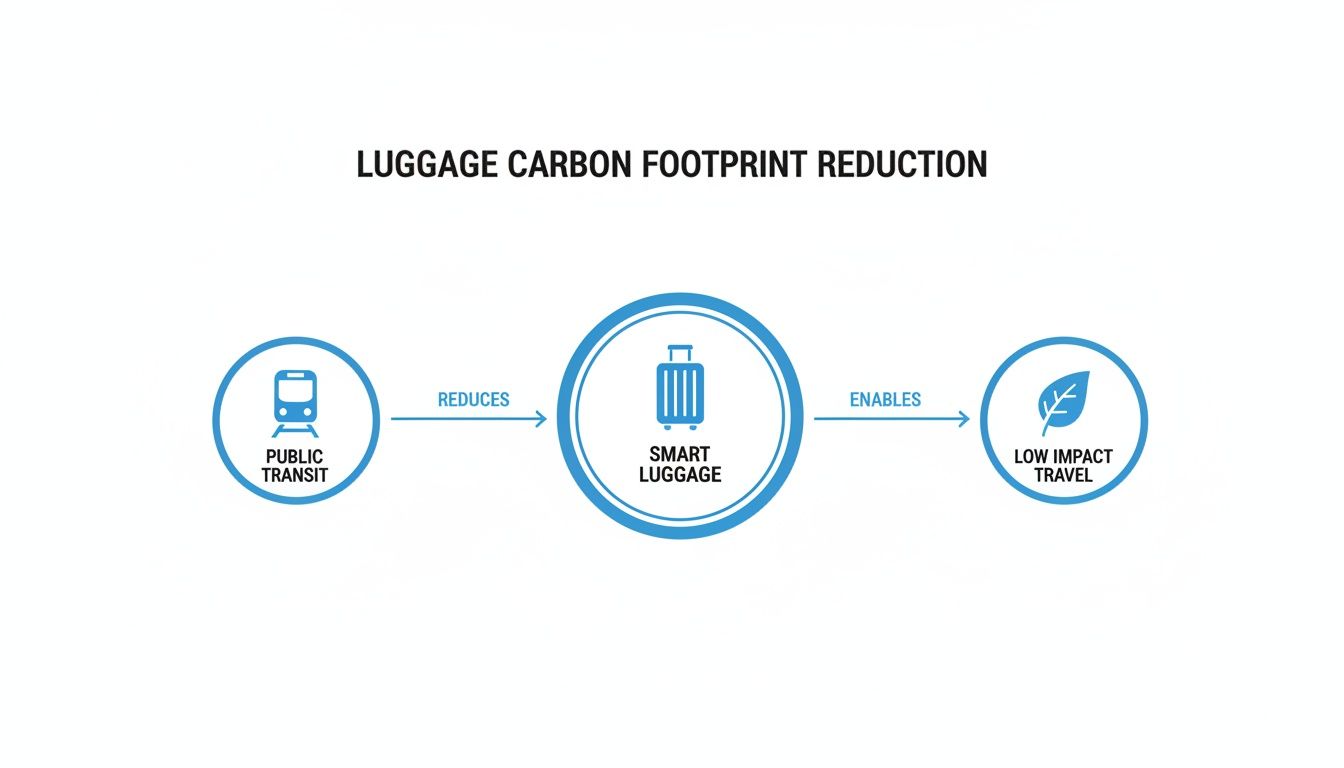
This diagram gets to a simple truth: the right gear makes sustainable choices, like taking the train, so much easier. This isn’t just a feeling; it’s a trend backed by data. More and more travelers are choosing flexible, carry-on-sized bags, with the soft-side travel bag market expected to hit $7.49 billion USD by 2025. It’s a clear signal that modern travelers value mobility and efficiency, especially on public transport. You can dig into the numbers in the full report from Coherent Market Insights.
Navigating Train Luggage: What You Can Actually Bring Onboard
One of the great joys of train travel is the freedom from airline-style luggage anxiety. There are no check-in scales or rigid size templates to worry about. But that flexibility comes with a trade-off: policies are far less standardized, and you are entirely responsible for handling your own bags.
Most major European rail networks, like Germany’s Deutsche Bahn or Italy’s Trenitalia, operate on a simple, refreshing principle: if you can carry it, you can bring it. They generally expect you to have one or two main bags plus a personal item. This self-reliance is precisely why your choice of luggage matters so much—what you can pack is limited only by what you can comfortably lift, roll, and stow yourself.
Things are a bit more structured in places like Japan. On the Shinkansen (bullet train), bags with total dimensions (length + width + height) over 63 inches (160 cm) are officially “oversized.” This doesn’t mean you can’t bring them, but you will need to reserve a specific seat with dedicated luggage space, so it pays to know in advance.
Finding the Official Rules (When You Need Them)
While most train operators are wonderfully accommodating, it’s always smart to double-check the official policy if you’re traveling with something large or unusually shaped. A quick search for “[Train Operator Name] luggage allowance” almost always takes you right to the source. You can find detailed rules for services like Eurostar or France’s SNCF with just a few clicks.
Booking platforms like Trip.com also do a good job of summarizing luggage rules for European and Asian trains during the booking process, which is a handy shortcut. Just remember that the rules can shift between high-speed, regional, and night trains, so what works for a long-distance sleeper might not apply to a local commuter train with very little storage.
Understanding Your Storage Options
Once you step onto the train, you’ll find a few standard spots to stash your gear. Knowing what fits where will help you choose the right bag from the start.
- Overhead Racks: These are your go-to for carry-on-sized backpacks, duffels, and smaller rollers. They’re similar to what you’d see on a plane but often a bit deeper. The main challenge is lifting your bag up there, so a lighter pack is always a plus.
- Dedicated Luggage Racks: Found at the end of each carriage, these are built for your big suitcases. The only downside is they’re often out of your line of sight, making security a minor consideration on long journeys.
- Under Your Seat: This is the most secure place for a small daypack holding your valuables—passport, wallet, laptop, and phone. The space is tight, but it’s perfect for keeping your most important items right with you.
- Space Between Seats: Don’t overlook this one. On many trains, back-to-back seats create a narrow, A-frame gap. It’s a surprisingly useful spot to slide a slim backpack or a soft-sided bag in vertically.
Pro Tips for Secure and Easy Storage
A little bit of strategy when you board can make the whole journey smoother.
Pro Tip: For extra security, especially on overnight trains, a simple, lightweight cable lock is your best friend. Use it to tether your main bag to the luggage rack. It’s a small deterrent that provides a huge amount of peace of mind.
Another simple habit is to find a storage rack you can see from your seat. As you walk down the aisle, look for a spot in your line of sight. If you have to use a rack at the end of the car, try to pick a seat nearby so you can keep an eye on things.
Typical Luggage Storage Dimensions on European Trains
To give you a real-world idea of what to expect, it helps to see the numbers. Luggage that fits easily on a high-speed train might be a tight squeeze on a smaller regional service. This table breaks down the approximate dimensions you’ll find in USA standard (inches) and metric (cm) on different types of trains.
| Storage Location | High-Speed Train (e.g., TGV, ICE) | Regional Train (e.g., S-Bahn) | Night Train (Couchette/Sleeper) |
|---|---|---|---|
| Overhead Rack | ~39 x 27 inches (99 x 69 cm) | ~35 x 19 inches (89 x 48 cm) | ~30 x 18 inches (76 x 46 cm) |
| Under Seat | ~18 x 14 x 8 inches (46 x 36 x 20 cm) | ~17 x 13 x 7 inches (43 x 33 x 18 cm) | ~20 x 15 x 10 inches (51 x 38 x 25 cm) |
| End-of-Car Rack | Accommodates large suitcases, often up to 30 inches (76 cm) tall. | Limited or non-existent; overhead is the primary option. | Dedicated space in compartments, variable sizes. |
As you can see, a bag that fits everywhere is usually the best bet. Choosing a versatile carry-on or a mid-sized checked bag will almost always guarantee you’ll find a spot for it without any hassle.
Choosing Sustainable and Durable Luggage Materials
For an eco-minded traveler, sustainability isn’t just an add-on; it’s woven into the fabric of the journey itself. The materials your luggage is made from really matter, shaping not just how long it lasts but also its footprint on the planet. Finding the best luggage for train travel means looking past the slick marketing photos and focusing on what counts: durability, repairability, and responsible making.
This “buy it for life” approach is a direct antidote to the throwaway culture that clogs up our landfills. A well-made bag from a brand that believes in sustainable practices and offers a solid repair program isn’t just a purchase—it’s an investment in your future trips and the health of the planet. It’s about making sure your gear is as resilient and thoughtful as your travel style.
The global luggage market is getting bigger, fast. Analysts see it hitting roughly $41.0 billion USD in 2025 and growing toward $56.8 billion USD by 2030. That growth is sparking new ideas, which is great news for us. We now have a much better lineup of lightweight, packable, and sustainably made luggage to choose from. You can get a sense of these market shifts by checking out industry analysis from Mordor Intelligence.
Decoding Sustainable Fabric Tech
Trying to understand sustainable materials can feel a bit like learning a new language, filled with strange acronyms and certifications. Let’s clear up a few of the big ones you’ll see on product tags.
- Recycled PET: This is a workhorse material made from old plastic bottles (Polyethylene terephthalate). By turning post-consumer plastic into tough fabrics, brands keep it out of landfills and oceans while cutting down on the need for new, petroleum-based materials.
- bluesign® Certified Fabrics: Think of this as a stamp of approval for the entire production line. The bluesign® standard guarantees that a fabric was made with the highest level of safety for the environment, factory workers, and you. It keeps a close eye on everything from the chemicals used to the amount of water and energy consumed.
- PFC-Free DWR Coating: That magical ability your bag has to shed rain comes from a Durable Water Repellent (DWR) coating. The old-school versions used nasty perfluorinated chemicals (PFCs), often called “forever chemicals” because they never break down. A PFC-free coating gets the job done using much friendlier chemistry.
Comparing Popular Durable Materials
When it comes to pure toughness, not all fabrics are created equal. Knowing the real-world differences between the most popular options helps you pick the right bag for your kind of travel.
Ballistic Nylon vs. Cordura
These two are the heavyweights of abrasion resistance. Ballistic nylon, first developed for military flak jackets, has a distinctively smooth and slightly shiny finish that shrugs off scrapes. Cordura feels more like a rugged, textured canvas and is famous for its incredible tear strength. The best part? Many top-tier brands now use recycled versions of both, giving you that legendary durability with a much smaller environmental price tag.
Choosing durable, long-lasting materials is a key tenet of sustainable travel. A bag that endures years of use keeps multiple cheaper, poorly made alternatives out of the landfill, significantly reducing your overall consumption and waste.
Recycled Polycarbonate
If you lean toward a hard-shell case, keep an eye out for ones made from recycled polycarbonate. It gives you fantastic impact protection but is way lighter than aluminum. While soft-sided bags are generally more forgiving for train travel, a recycled hard-shell from a good brand can still be a durable and more sustainable pick than one made from virgin plastic.
In the end, choosing sustainable materials is about making sure your gear reflects your values. For a deeper look at building a complete eco-friendly travel setup, check out our guide on how to pack for low-impact travel. When you put quality and repairability first, you’re investing in luggage that will be a reliable partner on countless train journeys to come.
Smart Packing Systems for Train Travelers
Choosing the right bag is only half the battle. After all, the best luggage is only as good as how you pack it. For digital nomads and long-stay travelers, mastering a smart packing system is the key to a smooth rail journey. This isn’t about cramming more stuff in; it’s about shifting your mindset from “just in case” to “just what’s necessary” and using simple tools to maximize space and kill the stress.
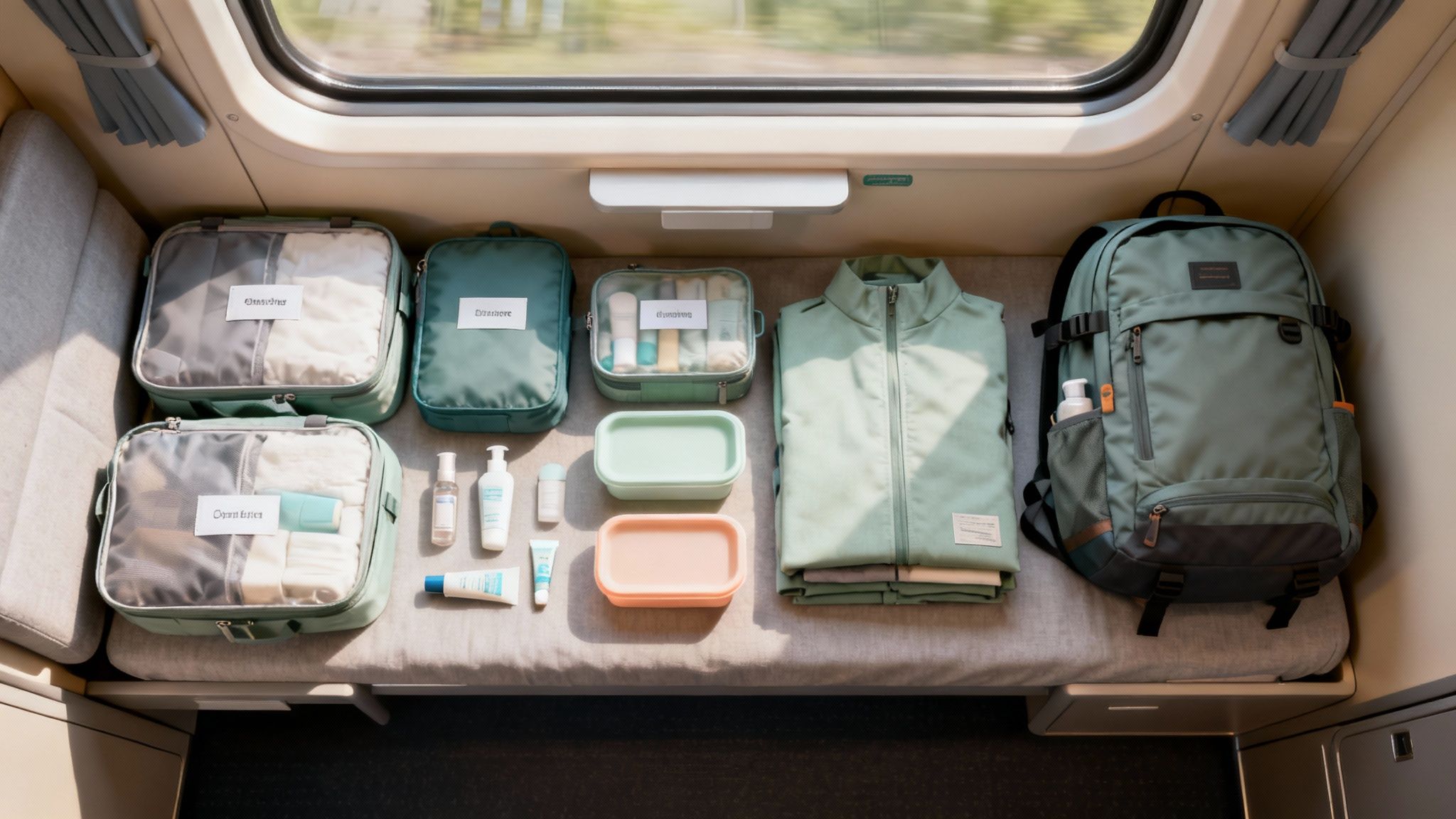
The foundation of any great system is compartmentalization. Instead of digging through a chaotic jumble of clothes and gear, you create a sense of order. This doesn’t just save space—it makes finding what you need incredibly easy, whether you’re grabbing a jacket mid-journey or unpacking in a new city without upending your entire bag.
Mastering the Art of Compartmentalization
Think of your luggage as a tiny apartment: everything needs its own designated spot. This is where a few specialized packing tools become absolute game-changers.
- Packing Cubes: These are pretty much non-negotiable for train travel. They let you group clothing by type (shirts in one, pants in another) or even by complete outfits. It’s a modular approach that means you can pull out one cube without destroying your carefully packed masterpiece.
- Compression Sacks: Got a bulky jacket or a couple of warm sweaters? Compression sacks are miracle workers. You just stuff them, roll them, and squeeze out all the excess air, reducing the volume of puffy items by up to 50%.
- Reusable Containers: To cut down on waste and prevent disastrous spills, switch to solid toiletries like shampoo and conditioner bars and keep them in small, reusable tins. For any liquids you do carry, silicone travel bottles are far more durable and eco-friendly than the flimsy disposable kind. For a full rundown, check out our comprehensive zero-waste packing list.
The One-Month European Rail Trip Checklist
So, what does this look like in practice? Here’s a sample packing list for a month-long, multi-city journey across Europe, built around a modular wardrobe and the tech you can’t live without.
Modular Wardrobe:
- Bottoms (3): One pair of versatile travel pants, one pair of comfortable jeans or chinos, and one pair of shorts or a skirt for warmer days.
- Tops (5-7): A mix of neutral-colored t-shirts, a couple of long-sleeve shirts, and one nicer top for evenings out. Merino wool is an excellent choice here for its amazing odor resistance and temperature regulation.
- Layers (2): One fleece or mid-layer sweater and one packable waterproof/windproof shell jacket.
- Footwear (2): One pair of comfortable, all-day walking shoes and one pair of smart-casual shoes or sandals.
Essential Tech & Day Bag:
Your personal item or day bag is your mobile command center. It should always have your essentials within arm’s reach.
- Laptop, chargers, and a portable power bank.
- Passport, tickets, and wallet.
- Reusable water bottle and some snacks.
- A small first-aid kit and any personal medications.
This strategic approach means your main bag can stay stowed on the luggage rack for the whole trip, while you have everything you need for a comfortable and productive journey right at your seat. Market data backs this up, showing a clear trend toward flexible luggage. Soft-side bags often weigh 10–30% less than comparable hard-shells, making them much easier to compress into tight train racks. By packing smart, you make these versatile bags even more effective.
Your Questions About Train Luggage, Answered
Even seasoned travelers have questions when it comes to the nitty-gritty of packing for train travel. The rules are different from flying, and the physical reality of stations, platforms, and carriages brings its own challenges.
To clear things up, I’ve pulled together the most common questions I hear about choosing the best luggage for train travel. Think of this as your quick-reference guide to reinforce the key ideas we’ve covered.
Is a Backpack or a Suitcase Better for Train Travel?
For most journeys by rail, a hybrid wheeled backpack hits the sweet spot. It gives you the smooth-rolling ease of a suitcase when you’re navigating long station platforms and city sidewalks, but you can quickly deploy the harness for tackling stairs, crowded metro cars, or cobblestone streets.
If you have to choose just one, a soft-sided spinner or a dedicated travel backpack will always be more versatile than a rigid hard-shell suitcase. The give and flexibility of a soft-shell bag make it far easier to squeeze into the often weird and unpredictable dimensions of train storage racks.
How Many Bags Can I Bring on a Train?
One of the great joys of train travel is the generous luggage allowance. Most train operators in Europe and Asia allow one or two large bags plus a personal item per passenger. And unlike with airlines, these policies are rarely policed with an iron fist.
The real limit is what you can personally carry, lift, and stow safely without help. It’s always smart to check the specific operator’s rules before you travel, especially for premium or high-speed services. You can often find this info on booking sites like Trip.com when you’re planning your route.
How Do I Keep My Luggage Safe on a Train?
Keeping your gear secure is mostly about a few simple habits. First and foremost, always keep your most valuable items—passport, wallet, electronics, medications—in a small daypack that stays with you at your seat. Never let it out of your sight.
For larger bags stored in the racks at the end of the carriage, try to position them where you can keep an eye on them from your seat. On overnight journeys or in particularly crowded carriages, a simple cable lock offers excellent peace of mind. Just loop it through your bag’s handle and the metal frame of the storage rack to deter any opportunistic theft.
Should I Choose a Hard-Shell or Soft-Shell Suitcase?
For train travel, a soft-shell suitcase is almost always the better choice. They’re significantly lighter, which makes a real difference when you’re hoisting a bag into an overhead rack.
But their biggest advantage is flexibility. A soft-sided bag can be compressed slightly to squeeze into tight or irregularly shaped storage spots. Plus, they often have handy exterior pockets—perfect for stashing things you might need quickly, like a jacket, a book, or your tickets. A rigid hard-shell case can be a nightmare to fit in the storage areas on older or smaller regional trains.
Editor’s Note: This article was fact-checked using sustainability data from the World Green Building Council, the Global Ecotourism Network, and peer-reviewed architecture studies. All partner links are vetted for compliance with sustainable business certifications.
Join the Sustainable Work Movement
Want more rail-first itineraries, low-impact packing systems, and walkable base-city ideas?

Explore Eco Nomad Travel
📚 Core Guides
🧭 Planning & Logistics
🗺️ Destinations & Seasons
Jeremy Jarvis — founder of Eco Nomad Travel, sustainable travel writer, and advocate for regenerative tourism. His work focuses on low-impact mobility, eco-friendly digital nomad life, and climate-positive travel.
Legal
Affiliate DisclaimerPrivacy Policy
Terms of Service
Image & Media Notice
Cookie Policy
Contact
Affiliate Disclosure: Some links on Eco Nomad Travel are affiliate links, meaning we may earn a small commission at no extra cost to you. This supports our mission to inspire responsible and low-impact travel worldwide.
Connect
✅ Trusted Official Sources
Plan smarter eco trips
Try our free Sustainable Travel Tools for Digital Nomads – carbon calculator, train vs plane comparator, and more.
Open Tools Hub