

For a lot of us, the best luggage lock usually ends up being a TSA-approved combination cable lock. It hits that sweet spot between solid security and real-world travel convenience. This gives you peace of mind whether you’re flying or hopping on a train. Choosing the best luggage lock is a crucial step in preparing for any trip.
Why the Right Luggage Lock is Essential for Modern Travel
If you’re a digital nomad or an eco-conscious traveler, a reliable lock isn’t just about stopping theft. It’s a key piece of a minimalist, secure travel setup. Journeys built around rail travel, shared accommodations, and busy city hubs come with their own unique security puzzles. All your gear, from the laptop in your travel backpack to your essential documents, needs protection you can count on.
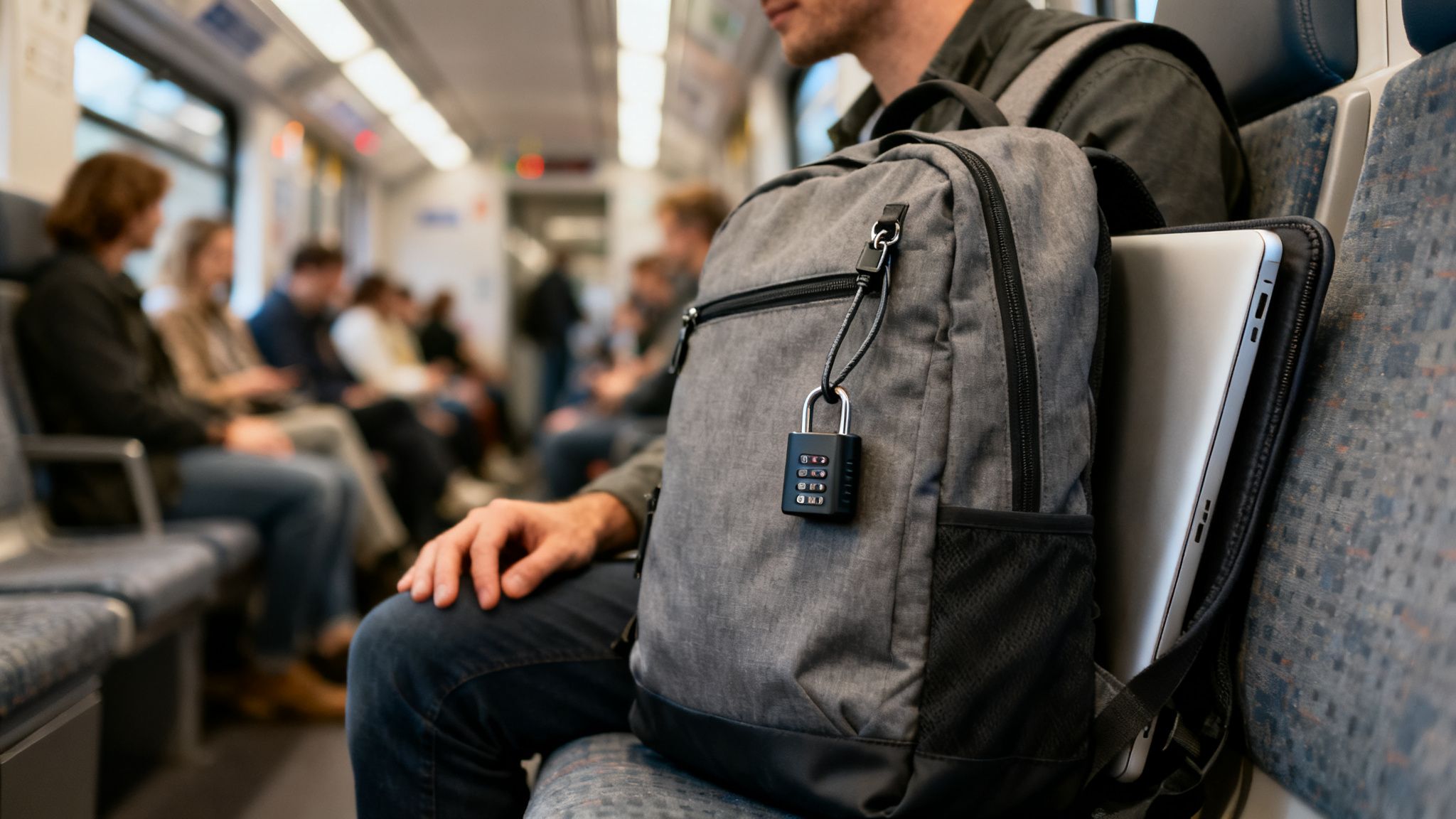
Today’s travel demands a lock that balances robust security with genuine practicality. A huge, heavy padlock might feel secure, but it just adds dead weight to your carry-on. On the flip side, a flimsy lock offers a false sense of security. This leaves your most important gear vulnerable. The real goal is finding a lock that slots perfectly into your travel style. This is true whether you’re securing a bag on an overnight train or locking up your things in a hostel. It’s a small investment that protects your most important assets on the road.
Comparing Key Lock Types
Getting to know the main options is the first step toward picking the right one. Each type has a different job. The best luggage lock for you comes down to your travel habits and priorities. Of course, knowing what you can pack is just as important. You can learn more about if shaving razors are allowed on planes in our detailed guide.
| Lock Type | Primary Benefit | Ideal Use Case |
|---|---|---|
| TSA-Approved Combination | Allows security inspection without damage; no keys to lose. | Frequent flyers, especially to the USA; securing a carry-on backpack. |
| Flexible Cable Lock | Versatility to secure bags to fixed objects or through multiple zippers. | Train travel, securing bags in hostels, oddly shaped luggage. |
| Traditional Key Lock | Simple, often more robust mechanism. | Checked baggage, long-term storage, for those who prefer physical keys. |
| Smart Lock (Bluetooth/Biometric) | High-tech convenience with app-based or fingerprint unlocking. | Tech-savvy travelers who want keyless entry and tracking features. |
Understanding Different Types of Luggage Locks
Before you can pick the right lock, you need to know what you’re choosing from. Each type is built for a different kind of traveler and a different kind of trip. It offers its own mix of security, flexibility, and convenience. The goal is to match the lock’s design to your real-world travel style—whether that means navigating airports or hopping between night trains.
TSA-Recognized Locks and Their Logos
The most common lock you’ll see is the TSA-Approved Combination Lock. For anyone flying in or out of the United States, this is pretty much the standard. Why? Because it allows TSA agents to inspect your bag with a master key instead of just cutting your lock off. You just set a three or four-digit code, and you’re set.
These locks aren’t just a niche travel gadget; they’re big business. The market for TSA-approved luggage locks was valued at a whopping USD 250 million in 2024. It is expected to climb, all thanks to the rebound in global travel. With billions of people flying every year, the demand for security that doesn’t get destroyed during an inspection is massive.
So, how do you know if a lock is compliant? It’s all about the logo. The TSA officially recognizes locks that carry specific emblems. This signals to agents that they have a key for it.
Here’s an example from the TSA’s official guidance showing exactly what to look for:
This image confirms that locks with the Travel Sentry (red diamond) or Safe Skies (red torch) logos are good to go. This ensures your lock makes it through baggage inspection in one piece.
Traditional Key Locks
For travelers who just want a simple, tough mechanism, the Traditional Key Lock is still a contender. There’s no combination to forget, which is a big plus for some people. They often feature hardened steel shackles. These can put up a better fight against brute force than some of the lighter combination models.
But there’s a catch: the key. Losing that tiny piece of metal can turn into a major headache. It can leave you completely locked out of your own gear. For this reason, I find they’re better suited for bags you don’t need to open frequently, like checked luggage or something in long-term storage, rather than your go-to carry-on backpack.
Flexible Cable Locks
A Flexible Cable Lock is, hands down, the most versatile option for a modern nomad. This is especially true for one who relies on trains. Instead of a rigid shackle, it uses a coated steel cable. This cable can snake through awkwardly spaced zippers or loop through several pulls at once.
This adaptability is a game-changer for train travel. You can easily secure your bag to a luggage rack on an overnight train or lock two bags together in a hostel. This adds an extra layer of security that rigid locks just can’t provide. Our guide on the best luggage for train travel explores how this type of gear is essential.
While they are incredibly practical, it’s worth remembering that a thin cable is always going to be more vulnerable to bolt cutters than a thick, hardened steel shackle. Still, for deterring an opportunistic thief, their convenience is hard to beat.
Advanced Smart Locks
For the tech-savvy traveler, Smart Locks offer a keyless, code-less solution. These locks unlock using Bluetooth from your phone or even your fingerprint, which sounds great on paper. Many also come with app features. These can track the lock’s location or send an alert if your bag wanders off.
The convenience, however, comes with a new dependency: battery life. If the lock’s battery dies—or your phone’s does—you’re stuck. They also tend to be heavier and more expensive. This makes them a niche choice for now. It’s an interesting space to watch. But for most rail-first nomads, the practicality of a simple cable or combination lock still wins out.
How to Choose the Best Luggage Lock: A Comparison Framework
Finding the right luggage lock isn’t just about picking the strongest-looking one on the shelf. It’s about matching the right tool to your specific travel style. The beefy padlock that makes sense for a hard-shell checked bag is often overkill and dead weight for a minimalist carry-on backpack.
To make a smart choice, you need a simple framework. It should compare locks on the factors that actually matter when you’re navigating an overnight train or a crowded hostel dorm.
My comparison breaks this down into four key areas: security level, material durability, weight, and everyday usability. By thinking through these elements, you can find a lock that gives you genuine peace of mind without adding unnecessary hassle to your journey.
For instance, a lightweight cable lock might be the perfect deterrent for a rail journey across Europe. On the other hand, a bag going into the cargo hold needs something far more robust to survive the ordeal.
This decision tree gives you a quick visual path for choosing a lock. It all starts with one simple question: are you checking your bag or keeping it with you?
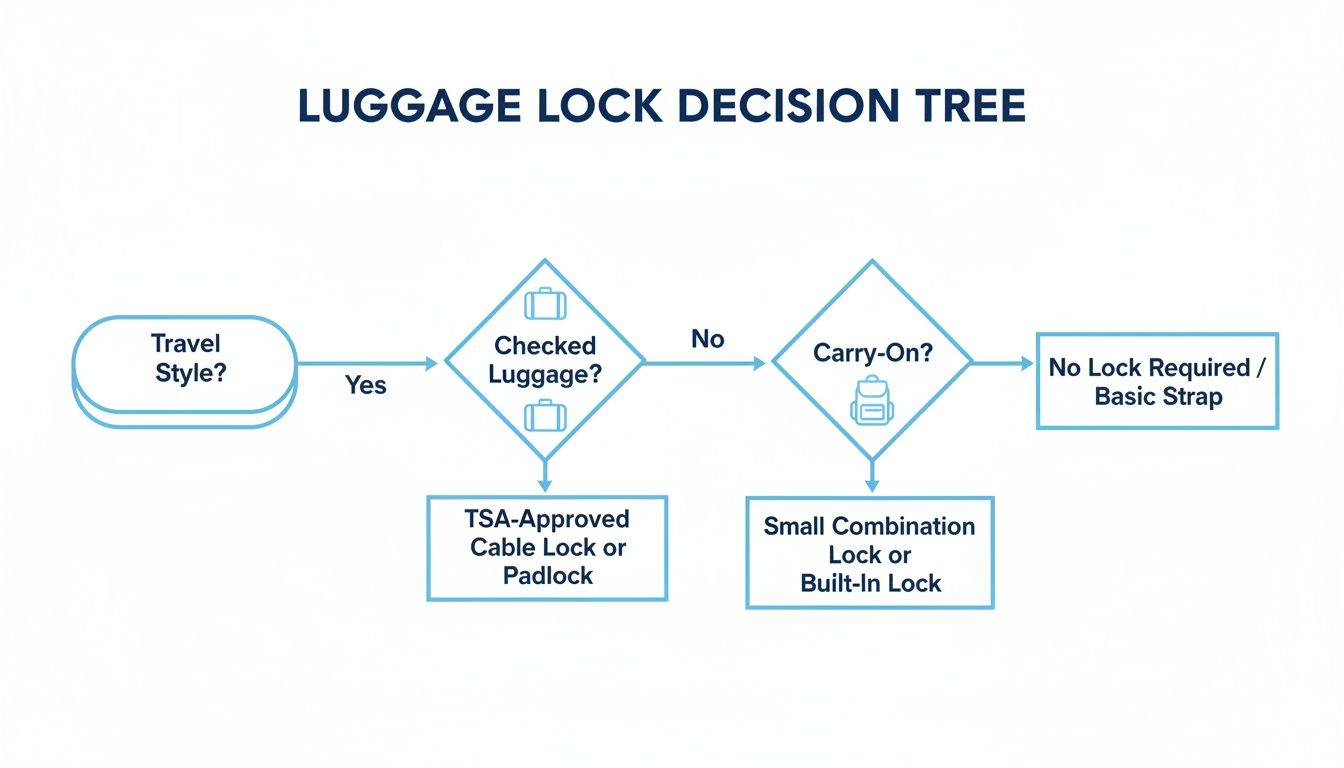
As the flowchart shows, your luggage type is the first filter. It guides you toward either heavier-duty shackle locks for checked bags or more versatile cable options for carry-ons.
Security Level and Mechanism
First things first: the lock’s core job is security. This really comes down to two things—the material of its shackle or cable, and the quality of the locking mechanism itself.
A hardened steel shackle is dramatically tougher to cut than a standard one. It offers real resistance against brute force. Some of the best designs use a thick, single-shank shackle. This prevents bolt cutters from getting a solid grip—a common weakness in classic U-shaped padlocks.
But a strong body means nothing if the locking core is flimsy. I’ve seen budget combination locks that can be decoded with simple tricks in minutes. Therefore, you should stick to reputable brands known for building tamper-resistant designs. While no travel lock is impenetrable, the goal is to be a strong enough deterrent that a thief decides to move on to an easier target.
A TSA-approved travel lock with a solid zinc alloy body and a hardened shackle hits that sweet spot of strength and airport compliance.
Durability and Material Choices
Durability isn’t just about surviving an attack; it’s about withstanding the realities of travel. Your lock will be banged around, dropped, and exposed to rain and humidity. Materials like brass and stainless steel are naturally rust-proof and can handle being tossed around without failing.
This is also where your choice can make a small but meaningful difference from a sustainability perspective. A lock made from recycled metals reduces the demand for virgin resources. On the other hand, many cheap locks are built with plastics and low-grade alloys. These crack under pressure or degrade over time, forcing you to replace them.
A well-made lock should be a long-term travel companion, not a disposable item you buy for a single trip. Think of it like your favorite quick-dry travel towel—built to last.
Weight and Portability
For minimalist travelers and anyone trying to avoid checked bag fees, every ounce matters. The weight of your lock might seem trivial. However, it all adds up when you’re trying to stay under a carry-on limit. A heavy-duty padlock can easily weigh over half a pound (8 ounces). Meanwhile, a simple cable lock might be just 1-2 ounces.
For eco-nomads and rail travelers, a lightweight cable lock is almost always the smarter choice. Its low weight doesn’t throw off your pack’s balance. Additionally, its flexibility is invaluable for securing your bag to train luggage racks or hostel bunk beds.
This trade-off between weight and security is the central decision you have to make. A lighter lock is usually less robust. But for a carry-on bag that’s almost always within your sight, its main job is to deter opportunistic theft, not to withstand a determined assault. Using compression packing cubes can also help you manage your bag’s overall bulk and weight.
Usability and Practical Features
Finally, a lock has to work for you in real-world scenarios. Picture yourself trying to read tiny, shiny dials in the dim light of an overnight train cabin. Or fumbling for a minuscule key with cold fingers. If it’s a pain to use, you’ll stop using it.
Consider these practical points:
- Combination vs. Key: Are you more likely to forget a code or lose a key? Combination locks remove the risk of a lost key, but some people find a simple key more reliable and secure.
- Readability: Look for locks with high-contrast, easy-to-read numbers. Models with bold white numerals on a black background are far clearer than numbers simply etched into metal.
- Mechanism: A lock with a push-button release for the shackle is a game-changer. It’s much easier to operate one-handed compared to models that require you to pull the shackle open manually.
These small details have a huge impact on your daily experience. A frustrating lock quickly becomes a liability. Your travel gear, including a good universal travel adapter and a reliable USB C charger, should simplify your journey, not complicate it.
Luggage Lock Comparison for the Modern Traveler
This table compares the main types of luggage locks across key criteria relevant to digital nomads and sustainable travelers. It helps you choose the right balance of security, weight, and ease of use.
Hardened Steel Shackle
- Security Level: High
- Average Weight: 6-8 ounces (approx. 170-227 grams)
- Sustainability Factor: High (long lifespan, often recyclable metals)
- Best For: Checked luggage, storage lockers, high-risk areas
Standard Combination
- Security Level: Medium
- Average Weight: 3-5 ounces (approx. 85-142 grams)
- Sustainability Factor: Medium (mixed materials, moderate lifespan)
- Best For: General carry-on use, deterring casual theft
Flexible Cable Lock
- Security Level: Low-Medium
- Average Weight: 1-3 ounces (approx. 28-85 grams)
- Sustainability Factor: Medium (metal cable with plastic housing)
- Best For: Backpacks, rail travel, securing bags to fixtures
Keyed Padlock
- Security Level: Medium-High
- Average Weight: 4-7 ounces (approx. 113-198 grams)
- Sustainability Factor: High (durable metals, simple mechanism)
- Best For: Travelers who prefer physical keys over codes
Ultimately, the best lock is one that fits your luggage, travel style, and risk tolerance. For a checked bag, a hardened steel shackle lock is a no-brainer. For the rail-first nomad living out of a carry-on, a lightweight and flexible cable lock is almost always the more practical and sustainable choice.
Editor’s Pick: Forge TSA Approved Cable Luggage Lock
For most travelers, especially those who mix air travel with ground transport, the Forge TSA Approved Cable Luggage Lock hits the ideal balance. Its flexible cable offers versatility for securing bags to train racks or through multiple zippers, while the TSA-approved design ensures it won’t be cut during airport inspections. The durable zinc alloy body and easy-to-read dials make it a reliable, long-lasting tool for securing your belongings without adding unnecessary weight.
Our Pick for the Eco Nomad Traveler
After weighing all the security features, materials, and real-world travel needs, one lock clearly came out on top for the eco-conscious nomad. The Forge TSA Approved Cable Luggage Lock is our top pick. It strikes the perfect balance between a tough build and the practical demands of rail-first travel. It’s a choice that reflects the framework we’ve been discussing—it nails both security and sustainability.
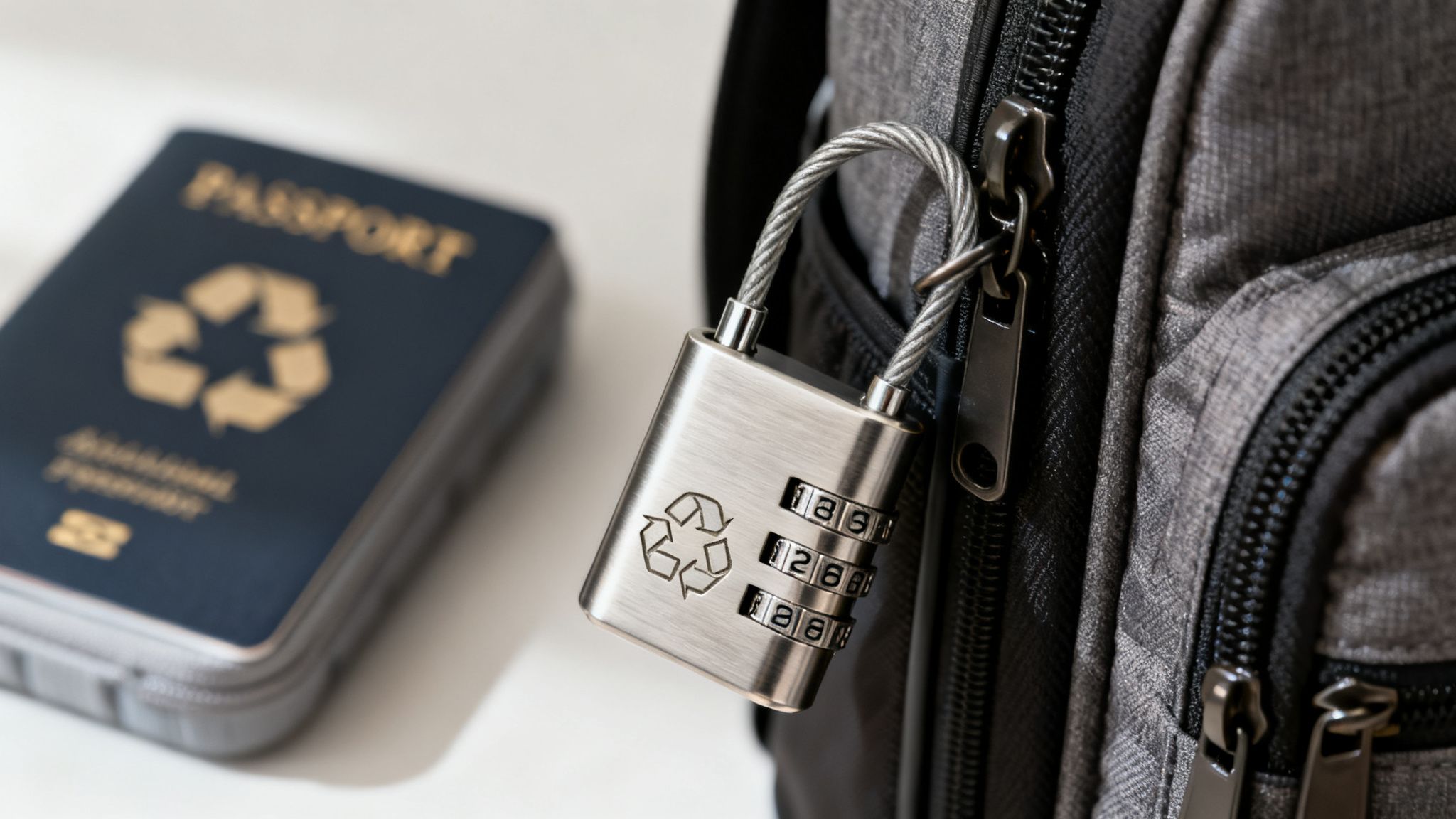
What really makes this lock work is its smart construction. The body is a solid zinc alloy that can take a beating. But the flexible steel cable gives you the versatility you need to loop it around a train rack or a hostel bunk bed. That kind of adaptability is exactly what you need for varied travel days. This is something a rigid shackle lock just can’t offer.
Even better, Forge backs their locks with a lifetime warranty. That’s a real commitment to durability, which helps reduce waste and aligns perfectly with sustainable travel. This isn’t a lock you’ll be replacing after a few trips; it’s a long-term piece of gear. Its high-contrast dials and simple reset mechanism are also a lifesaver in the dim light of an overnight train cabin. When paired with other gear like an anti theft backpack, it creates a truly reliable security system.
Why It’s the Right Lock for Nomads
This lock is practically tailor-made for the pain points of modern, minimalist travel. At just 2.6 ounces (about 74 grams), its weight is negligible. This helps you stay under those ever-stricter carry-on limits without a second thought.
The real advantage here is the blend of TSA compliance with everyday flexibility. You get the assurance that your lock won’t be clipped during an airport inspection. Plus, you get the ability to secure your gear in all the other places your journey takes you.
This versatility is everything. It’s one tool that secures your pack’s zippers, anchors it to a fixed object, or even links it to another bag. That multi-functionality is a core part of packing smart and light, a philosophy we dive into in our guide to eco-friendly travel accessories. In the end, it’s a small, dependable piece of kit that supports a safer and more sustainable way to see the world.
Beyond Security: Sustainability in Luggage Locks
For an eco-conscious traveler, choosing the right luggage lock goes deeper than just preventing theft. The environmental cost of our travel gear, no matter how small, adds up. This means looking at the entire lifecycle of a product. You should consider everything from the materials it’s made of to whether you can repair it down the road.
A genuinely sustainable choice starts with durable, long-lasting materials. Opting for locks made from robust metals like brass or recycled steel is a huge step away from the throwaway culture of cheap, single-use plastics. These materials don’t just offer better security. They ensure your lock can handle the bumps and scrapes of travel for years, which means less waste.
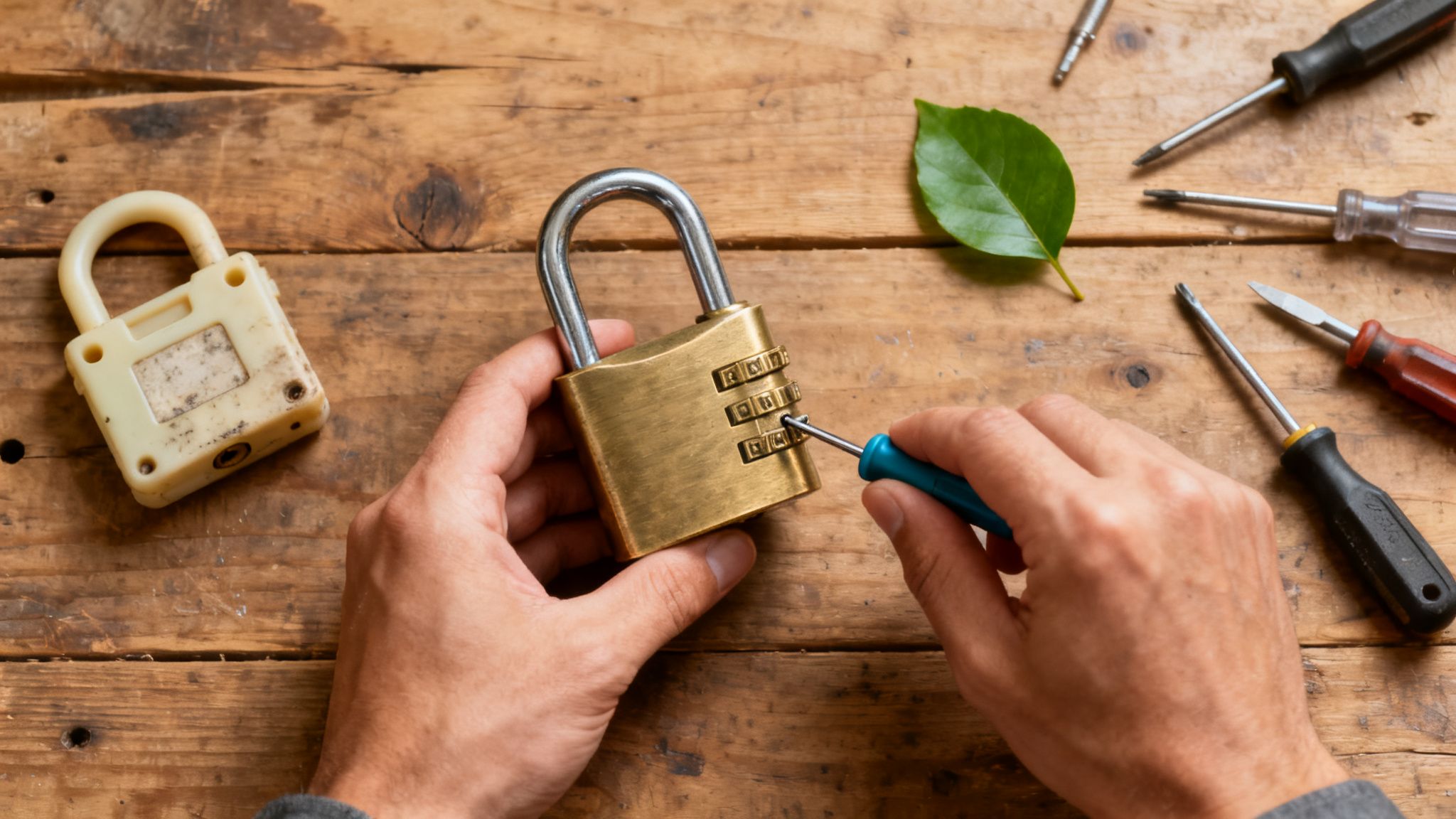
Prioritizing Repairability and Ethical Production
The idea of repairability is a cornerstone of sustainable travel. A lock isn’t sustainable if it’s designed to be tossed at the first sign of trouble. Before you buy, it’s worth checking if a brand offers spare parts or repair services. That commitment to a product’s longevity is a strong sign that a brand values quality over disposability.
It’s also worth looking for brands that are open about their manufacturing process. Ethical production and transparent supply chains are just as important as the materials themselves. This aligns your purchase with values that support both environmental health and fair labor. This turns a simple gear choice into a reflection of your commitment to responsible travel. A complete sustainable setup includes other mindfully chosen items. You can get more ideas from our guide on building an eco travel kit for 2025.
The Growing Market for Secure and Sustainable Gear
The demand for better travel security isn’t a small trend. The luggage locks market is actually seeing some serious growth. This reflects how much more aware travelers have become. Market analysis projects the market will grow by USD 1.23 billion between 2023 and 2028. This boom is driven by a thriving travel industry and a huge number of travelers now choosing modern, tamper-resistant locks. You can explore more of these trends in the full Technavio report.
This growth signals a bigger shift in how we think about travel gear. Travelers aren’t just buying locks; they are investing in peace of mind. As this market matures, expect to see more innovation in sustainable materials and designs that cater to the eco-aware traveler.
By choosing a lock made from durable, recycled materials from a brand with ethical practices, you’re casting a vote for a more sustainable travel industry. It’s a small but powerful way to ensure your gear aligns with your values. This protects both your belongings and the planet. This thoughtful approach extends to all your travel essentials, from your reusable water bottle to a reliable travel lock TSA approved for your luggage.
Picking the Right Lock: Your Final Checklist
Choosing a luggage lock isn’t just about security—it’s about matching the tool to your travel rhythm. Before you decide, run through these final points. This will make sure your choice fits the way you move through the world, especially if you’re a rail-first nomad.
TSA-Approved for Flights? Non-Negotiable. If air travel is even a small part of your itinerary, especially to or within the US, a TSA-recognized lock is essential. It means security can use a master key for inspections without cutting your lock off and leaving your bag vulnerable for the rest of its journey.
Match the Lock to Your Main Mode of Travel. This is where your travel style really dictates your gear. For train nomads and anyone staying in shared spaces, a flexible cable lock is king. It gives you the versatility to loop your bag to a luggage rack on a night train or a bed frame in a hostel. For checked bags taking a beating from baggage handlers, a tough lock with a hardened steel shackle offers much better protection against brute force.
Balance Real-World Security with Weight. A heavier lock often means a stronger lock, but that extra weight is a real drag in a carry-on. For the bags you keep with you, a lighter, easy-to-use lock is almost always the smarter pick. Think about fumbling with tiny dials in a dimly lit train carriage—can you actually read the numbers? Usability in low light is a surprisingly critical feature. You can find more strategies for keeping your pack light in our guide on how to pack for low-impact travel.
Look for Durability and Lower-Impact Materials. A lock that rusts or breaks after one season is just future landfill. Opt for robust, rust-proof materials like brass or recycled steel. A lock backed by a lifetime warranty isn’t just a sign of quality; it’s a nod to sustainability, ensuring your purchase doesn’t become another piece of travel waste.
Key Takeaways
- TSA-Approved is Essential for US Flights: Always choose a lock with the Travel Sentry or Safe Skies logo to prevent it from being cut during security inspections.
- Cable Locks Offer Maximum Versatility: For train travel and hostels, a flexible cable lock is superior for securing bags to fixed objects.
- Balance Weight and Security: A heavy, hardened steel lock is great for checked bags, but a lightweight combination lock is more practical for carry-on luggage.
- Durability Equals Sustainability: Opt for locks made from robust, rust-proof materials like brass or steel to ensure longevity and reduce waste.
- Usability Matters: Choose locks with easy-to-read dials and simple mechanisms that you can operate quickly in various travel conditions.
- Combination Over Key for Convenience: For most travelers, a combination lock eliminates the risk of losing a key, which is a major advantage when on the move.
Low-Impact Travel Tools (Worth It)
Also, if you’re planning a trip and want to keep things simple, these tools help you travel smoother while staying mindful about impact.
Get an eSIM for reliable data → Disclosure: Partner link. No extra cost to you.
Pre-book a transfer for easy arrivals → Disclosure: Partner link. No extra cost to you.
Frequently Asked Questions About Luggage Locks
Sorting through the world of travel security can bring up a lot of questions. To help you feel completely confident in your choice, I’ve put together clear, straightforward answers to the queries I hear most from fellow travelers about finding and using the right lock.
Can TSA Open Any Luggage Lock?
No, the Transportation Security Administration (TSA) can’t just pop open any lock they come across. They can only open locks that are designated as “TSA-Approved” or “TSA-Recognized.” These specific locks have a special keyhole that works with a universal master key held by TSA agents.
If you use a non-approved lock on your checked bag for flights to, from, or within the United States, TSA agents are authorized to cut it off if your bag is flagged for a physical inspection. This is exactly why sticking to a TSA-approved model is so important for air travel. It prevents your gear from getting damaged and ensures your bag can be locked up again after screening. You can spot these locks easily by looking for the official Travel Sentry (red diamond) or Safe Skies (red torch) logo.
Are Combination Locks or Key Locks Better for Luggage?
The choice between a combination lock and a key lock really boils down to your personal travel style. Neither one is definitively “better,” but they each have clear advantages that fit different types of travelers.
- Combination Locks: The biggest win here is not having to worry about losing a tiny key. For minimalist travelers who already have enough to keep track of, this is a huge plus. The flip side? You have to remember the code, and some of the cheaper models have fiddly dials that are tough to read in low light.
- Key Locks: These are often simpler and can feel more robust to some people. The mechanism is straightforward, with fewer moving parts that can go wrong. The obvious weakness is the key itself—if you lose it, you’re locked out of your own bag, which can completely derail your plans.
For most modern travelers, especially nomads who are constantly on the move, a good combination lock offers more practical convenience. Just make sure you pick one with clear, high-contrast numbers that are easy to see, even in a dimly lit train car.
Do I Really Need a Lock on My Carry-On Bag?
It might seem a bit much since your carry-on is with you most of the time, but locking it is just a smart security habit. Opportunistic theft can happen in a split second in a crowded airport, a busy train station, or even on the plane while you’re asleep or in the restroom.
Locking the zippers on your carry on backpack or suitcase acts as a powerful deterrent. It sends a clear signal that your bag isn’t an easy target. This encourages a potential thief to just move on to the next unsecured bag. It’s especially critical if you’re carrying valuable electronics like a laptop or camera. A simple, lightweight cable lock is perfect for this job, adding a layer of security without adding any real bulk.
What Is the Most Secure Type of Luggage Lock?
If we’re talking about pure physical strength, a lock with a thick, hardened steel shackle is generally your best bet against brute-force attacks like cutting or prying. These are often designed as single-shank locks. This makes it incredibly difficult for bolt cutters to get a solid grip.
However, “most secure” really depends on the context. For a backpack on a night train, a flexible cable lock that can tether your bag to a fixed object provides a different, and arguably more practical, kind of security.
The real takeaway here is that the most secure lock is the one that effectively counters the specific risks of your travel environment. For checked luggage, that means a beefy shackle. For a carry-on or train travel, it means a versatile lock that deters a quick grab-and-run.
At the end of the day, no travel lock is completely theft-proof. The real goal is to make your luggage a difficult and time-consuming target.
Can I Use the Same Lock for Different Types of Luggage?
Yes, you absolutely can, and this is a great way to embrace minimalist packing. A versatile travel lock TSA approved with a flexible cable is a fantastic all-in-one solution. Its cable can easily thread through the small zipper pulls on a backpack, the larger ones on a rolling suitcase, or even secure the zips on internal compression packing cubes.
This kind of multi-use capability is perfect for eco-nomads trying to minimize the amount of gear they carry. One high-quality lock can secure your main bag on a flight, your daypack while you’re exploring a city, and your locker at a hostel. It’s a prime example of choosing one solid piece of gear that does the job of many.
Are Smart Locks Worth the Extra Cost?
For most travelers, and especially for those of us focused on sustainability and simplicity, smart locks probably aren’t worth the extra cost and complexity—at least not yet. While the idea of unlocking your bag with your phone or fingerprint sounds cool, they come with some pretty big downsides.
Smart locks are heavier, much more expensive, and completely dependent on battery life. If your phone dies or the lock’s battery gives out, you could be left with no way to get into your own bag. They also introduce another piece of electronics that will eventually become e-waste. For now, a reliable, durable mechanical lock made from recycled metals is a far more practical and sustainable choice. A great travel setup also includes a portable power bank to keep your devices charged.
How Do I Set or Reset a Combination Lock?
Setting or resetting a combination lock is usually pretty simple, though the exact steps can vary a bit by brand. Here’s the general process:
- Open the Lock: Start with the lock open, usually set to the default code (often 0-0-0).
- Find the Reset Button/Lever: Look for a tiny button or lever, often on the bottom or side of the lock. You might need a pen or a paperclip to press it. On cable locks, the trick is often to rotate the shackle 90 or 180 degrees and press down.
- Set Your New Combination: With the reset mechanism engaged, turn the dials to your new code. Pick something that’s memorable for you but not obvious to others (so, no birthdays or “1-2-3”).
- Confirm the Code: Release the reset button or return the shackle to its original position. Your new combination should now be set.
Always, always test the new combination a few times before you actually lock your bag to make sure it’s working correctly.
What Should I Do If I Forget My Combination?
Forgetting your combination is a frustrating moment, but it doesn’t have to be a travel-ending disaster. First, take a breath and try to remember any common number patterns you use. If that doesn’t work, your options depend on where you are and how much time you have.
If you have some time to spare, you can try to manually cycle through all the possible combinations, starting from 0-0-0, then 0-0-1, and so on. For a three-digit lock, this means trying up to 1,000 combinations. This can take anywhere from 30-60 minutes. If you’re at an airport or in a rush, your only real option might be to have the lock cut off. Airport staff or hotel maintenance can often help with this. This is another reason why choosing a simple, memorable code from the get-go is so important.
Eco Nomad Travel provides evidence-based guides and tools for rail-first, low-impact journeys. This article was fact-checked using sustainability data from the World Green Building Council, the Global Ecotourism Network, and peer-reviewed architecture studies. All partner links are vetted for compliance with sustainable business certifications. Explore our resources at https://economadtravel.com to plan your next sustainable adventure.
Join the Sustainable Work Movement
Want more rail-first itineraries, low-impact packing systems, and walkable base-city ideas?
