

Finding the best packable daypack is about more than just cramming a bag into a small space—it’s about unlocking a smarter, more flexible way to travel. For anyone who lives out of a suitcase, the top options nail the balance between durability, comfort, and a ridiculously small packed size. Brands like Osprey and Eddie Bauer consistently get this right.
Imagine this: you’re navigating a bustling European train station or weaving through a quiet city street with just your main travel backpack. You feel light and mobile, knowing you have a capable daypack tucked away, ready for whatever the day holds. This guide is for the eco-minded traveler and digital nomad who puts mobility and minimalism first.
A great packable daypack is your key to exploring a new city without being weighed down by all your luggage. It quickly becomes an indispensable tool for spontaneous side trips, grocery runs, or simply carrying your daily essentials. Think about stashing a reusable water bottle, a light jacket, and some snacks without having to haul your primary bag everywhere you go.
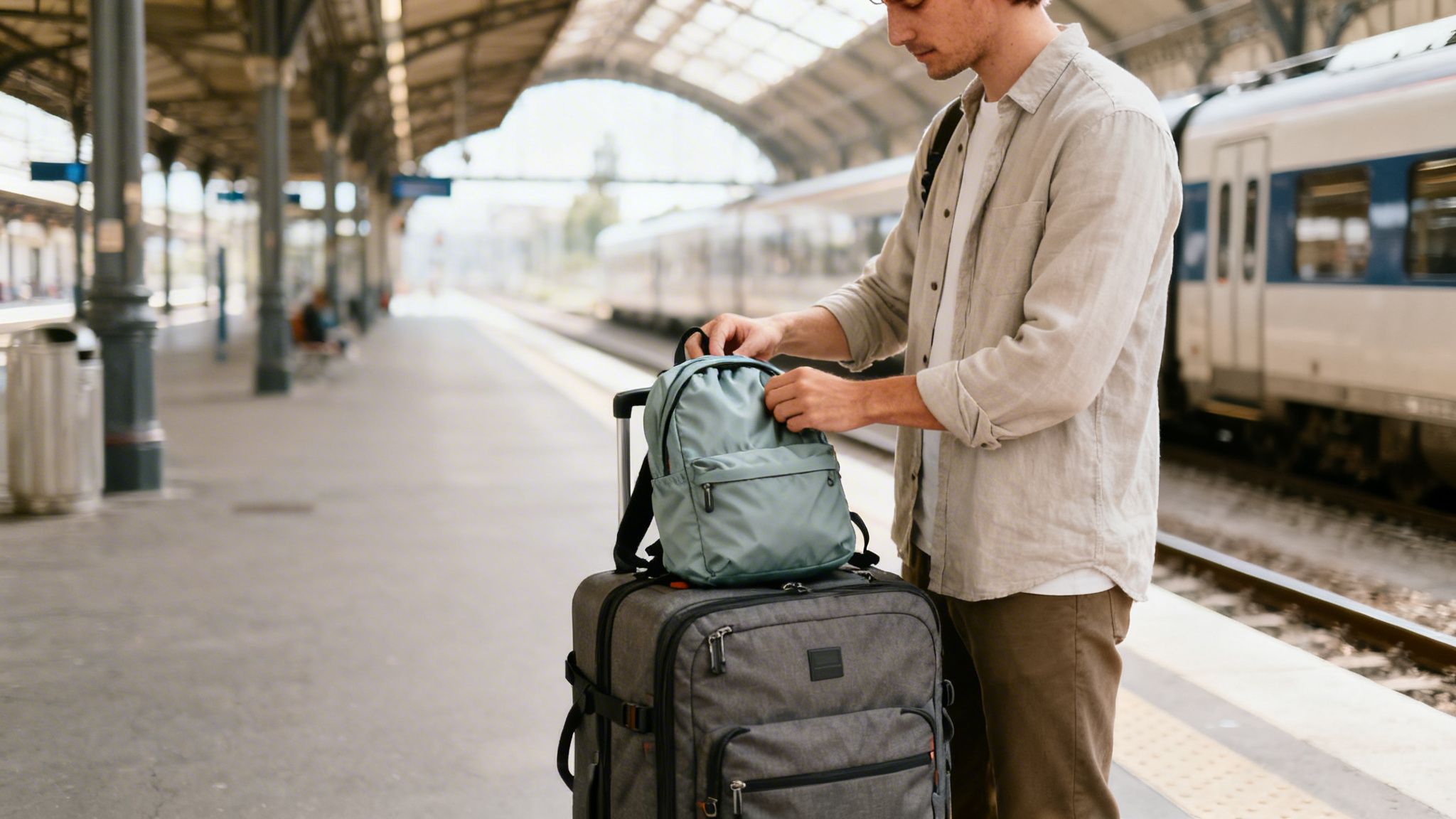
Embracing a Luggage-Light Philosophy
This kind of bag is absolutely essential for a “luggage-light” approach to travel, making the transitions between cities and train stations feel seamless. When your entire setup fits into a single bag, you move more freely and efficiently. The goal is to find a pack that truly supports your travel style without adding pointless weight or bulk.
For more ideas on what to bring, check out our complete minimalist travel packing list.
This guide lays the groundwork for figuring out which features actually matter in the real world. We’ll dive into that critical sweet spot where packability, durability, and sustainable design meet, helping you pick a bag that’s both practical and aligned with a low-impact mindset. We’ll look at materials, comfort, and everyday usability so you can find the perfect companion for your next journey.
Think of it as an investment in smoother, more enjoyable travel.
What Makes the Best Packable Daypack Genuinely Packable?
So, what’s the secret sauce that turns a regular little backpack into a travel essential you can’t live without? It’s not magic, but a clever mix of engineering and modern fabrics. Think of it like a high-performance rain jacket that seems to disappear into its own pocket—the whole point is maximum usefulness with a minimal footprint in your main bag.
The trick is all in how the bag compresses. Once you understand the basic methods, you can glance at any daypack and know instantly whether it’ll work for your style of travel. For anyone trying to master one-bag travel, this is a game-changer. Our guide on how to pack for carry on only shows exactly how a packable daypack fits into the bigger picture.
These bags have become so popular they’re now a major force in the travel gear market. The foldable travel backpack sector, valued at USD 1.2 billion, is expected to skyrocket to USD 3.5 billion by 2033, growing at a blistering 15.9% annual rate. That surge is driven by travelers like us—eco-minded digital nomads who demand smarter, space-saving gear. You can read more about this market’s impressive growth and what it means for future travel trends.
Primary Compression Methods
There are really only three ways these ultralight bags shrink down. Each one offers a different trade-off between speed, convenience, and how small the final bundle gets.
Stuffing Into an Integrated Pocket: This is the classic design. An internal or external pocket is designed to be its own stuff sack. You just turn the pocket inside out and cram the rest of the bag into it before zipping it shut. It’s fast, messy-proof, and you can’t lose the pouch.
Rolling and Securing: Some bags are built to be rolled up tightly, almost like a sleeping bag. Once it’s rolled, you secure it with a built-in strap or clip. This often creates a dense, tube-shaped package that slots perfectly into the side of a larger backpack.
Folding Into a Separate Pouch: This method is less common but can produce the neatest results. It requires you to fold the daypack into a specific shape before tucking it into a small, separate pouch. It takes a bit more care, but the reward is often the smallest, most organized packed form.
The Secret is in the Fabric
The real reason these bags can be crushed and folded without falling apart comes down to one thing: the material. The secret ingredient is almost always a high-tensile, lightweight fabric like ripstop nylon. This stuff is woven with a special crosshatch pattern of thicker threads that stops small tears from turning into trip-ruining rips.
This fabric gives you incredible strength without the bulk you’d find in a traditional backpack. It’s what allows the bag to be compressed and expanded over and over again without losing its structural integrity. It’s the perfect partner to other minimalist gear, creating a truly efficient travel system that’s light, tough, and ready for anything.
What to Look for in the Best Packable Daypack
When you start digging into packable daypacks, you quickly realize they aren’t all created equal. Knowing what to look for is the key. The difference between a trusted travel sidekick and a flimsy, uncomfortable sack often boils down to just a few design choices. Think of this section as your practical buyer’s guide, breaking down the features that actually matter on the road.
We’ll walk through everything from capacity and weight to strap comfort and weather protection. By the end, you’ll know how to size up any packable bag and pick one that truly fits your travel style, helping you build a smart, low-impact travel system.
This flowchart can help you visualize the main decisions you’ll need to make based on how you plan to use the bag.
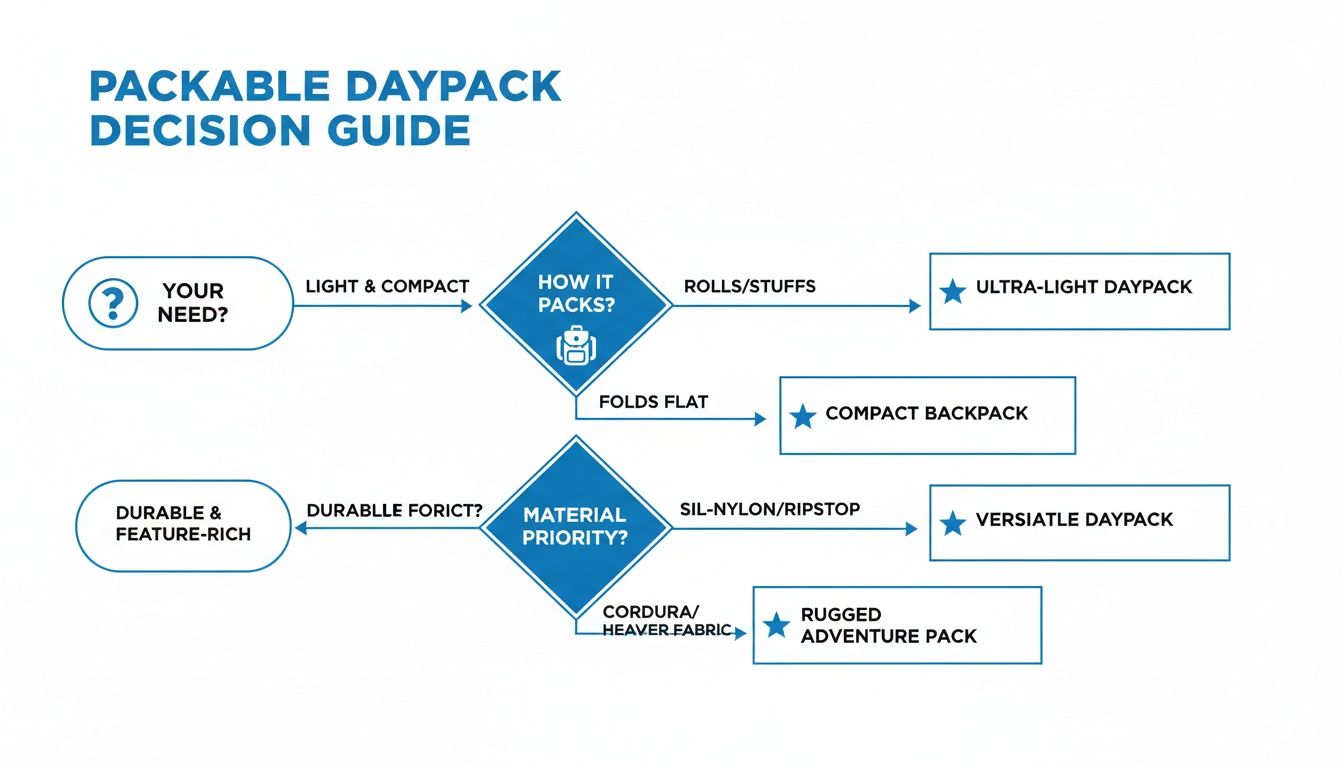
As you can see, choosing the right pack starts with knowing what you’ll be doing. That clarity will tell you exactly which features to prioritize.
Capacity and Usable Space
The first thing to check is capacity, measured in liters. You’ll find options from a tiny 10 liters to over 30, but for most people, the sweet spot for versatility is between 18 and 25 liters. This gives you enough room for a full day of exploring without feeling bulky or tempting you to overpack.
A 20-liter pack, for example, easily holds the essentials:
- A light jacket or rain shell
- A collapsible water bottle
- A few snacks or a small lunch
- A camera and a portable power bank
- A small travel guide or an e-reader
It’s the perfect size for a day wandering a new city, a light hike on a local trail, or a trip to the market. It’s practical and won’t get in your way on a crowded bus or train.
Weight and Material Durability
For any minimalist traveler, every ounce counts. The best packable daypacks should weigh less than 1 pound (around 450 grams) when empty. This is crucial—it ensures the bag itself doesn’t add noticeable weight to your main luggage, sticking to the whole point of a “packable” design.
But a low weight shouldn’t mean sacrificing durability. The secret is in the fabric. Look for high-quality materials like ripstop nylon or polyester. Ripstop fabric is woven with a special reinforcing grid that makes it incredibly resistant to tearing and ripping.
Fabric strength is often measured in denier (D). For a packable daypack, a rating between 70D and 100D strikes an excellent balance between being lightweight and tough enough for daily use.
This level of durability means your bag can handle being repeatedly stuffed into tight corners and survive the scuffs and scrapes of everyday adventures.
Water Resistance and Weather Protection
You can’t control the weather, so your daypack needs to offer some basic protection for your gear. It’s important to know that most packable daypacks are water-resistant, not fully waterproof.
They usually achieve this with a DWR (Durable Water Repellent) coating on the fabric, which makes water bead up and roll right off. This is typically enough to save your stuff during a light shower or drizzle, giving you time to find cover before anything gets soaked.
However, it won’t hold up in a serious downpour. If you expect heavy rain on your trips, it’s worth learning more about fully waterproof backpack options for more serious protection.
Shoulder Straps and All-Day Comfort
Comfort is absolutely non-negotiable, especially when you’re on your feet for hours. The single most important feature for comfort is the shoulder straps. Steer clear of bags with simple, thin webbing straps—they will dig into your shoulders and become painful with even a light load.
Instead, look for straps that are:
- Lightly padded: Even a thin layer of foam makes a huge difference.
- Contoured: S-shaped straps follow the natural curve of your body for a much better fit.
- Made of breathable mesh: This material promotes airflow, which helps reduce sweat and chafing on hot days.
These small details transform a bag from a simple stuff sack into a comfortable piece of gear you won’t mind carrying all day long.
Organization and Accessibility
Finally, think about organization. A great packable daypack finds the sweet spot between simplicity and function. A single, cavernous main compartment can quickly become a black hole where your keys and snacks disappear forever.
At a minimum, look for a bag with at least one external pocket. A stretch-mesh side pocket is incredibly handy for a water bottle or a compact umbrella. A small internal security pocket is also perfect for stashing valuables like your passport, cash, or an RFID blocking wallet, keeping them safe and out of sight while ensuring your most important items are always easy to find.
Editor’s Pick: The Osprey Ultralight Stuff Pack
After testing numerous options, the Osprey Ultralight Stuff Pack stands out as the best packable daypack for its thoughtful blend of packability, comfort, and sustainable design. It packs into its own pocket to the size of a tennis ball but unfolds into a surprisingly capable 18-liter bag. What truly sets it apart is the comfortable mesh harness and the use of Bluesign®-approved recycled nylon, making it a responsible choice for eco-minded travelers who don’t want to compromise on performance.
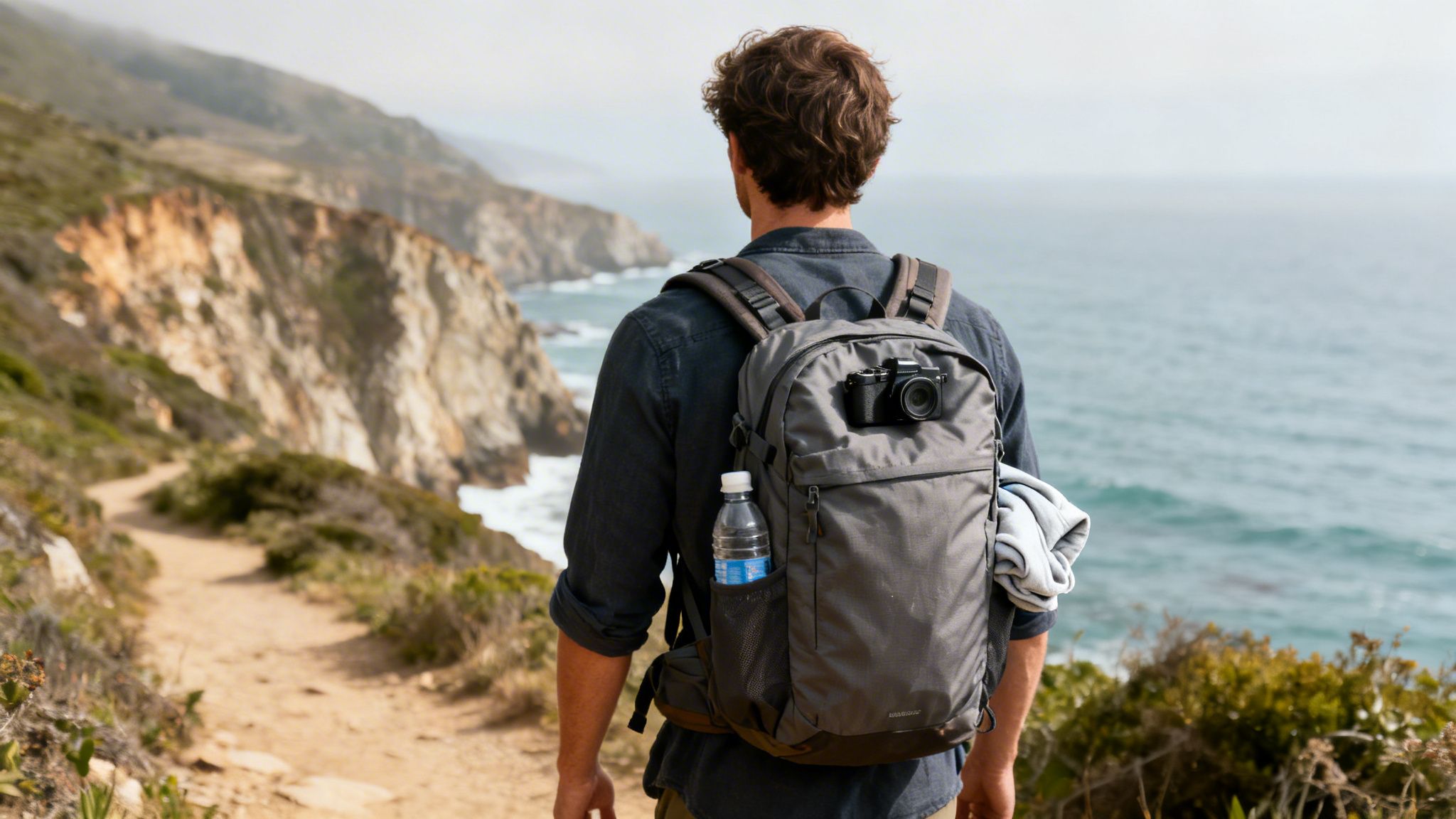
Our reasoning goes deeper than just the feature list. Osprey builds this pack with Bluesign®-approved recycled nylon and finishes it with a PFC-free water-repellent coating. These are the details that matter when you’re trying to align your gear choices with a more sustainable way of traveling.
If you want to learn more about what makes travel gear truly sustainable, our guide to eco-friendly travel accessories is a great place to start.
Why It Excels in Real-World Scenarios
Picture this: you’re set up in Lisbon for a month and, on a whim, decide to hop on a train to Sintra for the day. This is exactly where the Osprey pack proves its worth.
It unfolds from its own tiny pocket—about the size of a tennis ball—into a full 18-liter daypack. It’ll easily swallow a camera, a rain jacket, snacks, and a collapsible water bottle in the surprisingly useful side mesh pocket.
What really sets it apart, though, is the deluxe air mesh harness. For a pack this light, the straps are remarkably comfortable, which is a huge step up from the thin webbing straps on many of its competitors. It feels just as good hauling groceries from a city market as it does on a windy coastal trail.
Ultimately, this pack is more than just a bag; it’s an investment in a more agile, low-impact travel style. It encourages you to leave your main carry on luggage behind and explore with true freedom. Its versatility and durability mean it’ll be a reliable partner for years of adventures, making it an easy recommendation. It strikes the perfect balance for travelers who refuse to choose between performance and principles.
How to Spot a Truly Sustainable Daypack
Beyond features and packability, the best packable daypack should feel right for a conscious traveler. But navigating sustainability claims can feel like walking through a minefield of marketing jargon. How do you separate genuine commitment from clever branding?
This section gives you a clear framework for vetting a brand so you can make a choice you feel good about. We’ll break down the most important signals to look for, from the materials in the bag itself to how a company handles repairs. It’s about finding a pack that not only serves you on the road but also contributes to a healthier planet.
The demand for this kind of thoughtful gear is surging. In the broader active backpack sector, daypacks are showing huge market growth. The active backpack market was valued at USD 1.03 billion and is expected to hit USD 1.56 billion by 2033. It’s also telling that hiking—an activity that aligns with eco-conscious travel—accounted for 50% of that revenue. You can discover more insights about these outdoor bag trends if you’re curious about the numbers.
Sustainable and Recycled Materials
The first place to look is the fabric itself. A truly sustainable daypack almost always starts with recycled materials, which dramatically shrinks its environmental footprint compared to using virgin resources.
Look for these key material callouts:
- Recycled Nylon or Polyester: These fabrics are often made from post-consumer waste like plastic bottles or old fishing nets. They deliver the same strength and durability as new materials but do the critical work of diverting waste from landfills and oceans.
- PFC-Free DWR Coating: The Durable Water Repellent (DWR) finish is what keeps your gear dry. Old-school coatings used per-fluorinated chemicals (PFCs)—harmful “forever chemicals” that pollute waterways. A PFC-free DWR is a much cleaner, more responsible choice.
- Bluesign® Approved Fabrics: This is a tough, independent certification that verifies the entire textile production process is safe for the environment, workers, and you. Think of it as a gold standard for sustainable materials.
A brand that’s upfront and transparent about where its materials come from is already sending a strong positive signal.
Ethical Supply Chains and Labor
A sustainable product isn’t just about eco-friendly materials; it’s also about the people who make it. Vetting a brand’s ethical commitments ensures your purchase supports fair and safe working conditions, which is where third-party certifications become invaluable.
These certifications act as independent watchdogs, verifying that a company meets high standards for social and environmental responsibility. They take the guesswork out of evaluating a brand’s claims.
Look for labels like Fair Trade Certified™, which guarantees that factory workers earn fair wages and work in safe conditions. The Bluesign® certification also extends beyond materials to cover factory emissions and worker safety. A company’s willingness to invest in these certifications shows a real, tangible commitment to ethical production. When you choose a brand that prioritizes its workers, you’re voting for a more equitable industry.
Repairability and End of Life Options
True sustainability is the opposite of throwaway culture. The most eco-friendly product is the one you can use for a very, very long time. That’s why a brand’s approach to repairs and product longevity is a critical piece of the puzzle. The best companies design their gear to be durable and then stand behind it with robust support.
This is a core principle of low-impact travel—choosing durable, repairable items reduces waste and consumption. Brands like Patagonia, with their Worn Wear program, are leading the way by making it easy to repair gear instead of replacing it.
When shopping, ask yourself: does this company offer a strong warranty or a repair service? Choosing a well-made pack from a brand that supports its products is a powerful act of sustainable consumption, ensuring your gear stays out of the landfill and on your adventures for years. For a deeper dive into building a full low-impact travel setup, explore our complete eco-travel kit guide.
Key Takeaways
- Prioritize Comfort: Look for a pack with lightly padded, breathable mesh shoulder straps. Thin webbing straps become uncomfortable quickly, even with a light load.
- Choose the Right Size: An 18 to 25-liter capacity is the sweet spot for versatility, offering enough space for daily essentials without encouraging overpacking.
- Insist on Durable Fabric: Opt for high-quality recycled materials like ripstop nylon with a denier rating between 70D and 100D for a great balance of weight and toughness.
- Verify Sustainable Claims: Look for third-party certifications like Bluesign® or Fair Trade to ensure the brand’s commitment to eco-friendly and ethical production is genuine.
- Check for Smart Features: Essential features include at least one external water bottle pocket and a small internal security pocket for valuables.
Low-Impact Travel Tools (Worth It)
Also, if you’re planning a trip and want to keep things simple, these tools help you travel smoother while staying mindful about impact.
Get an eSIM for reliable data → Disclosure: Partner link. No extra cost to you.
Pre-book a transfer for easy arrivals → Disclosure: Partner link. No extra cost to you.
Your Questions About Packable Daypacks, Answered
Picking the right travel gear can feel like a deep dive, and a few questions always pop up. To make sure you feel totally confident choosing the right packable daypack, I’ve pulled together answers to the most common queries I hear.
Think of this as the final check before you commit to a piece of gear that’s going to join you on countless adventures. From size and weight to whether you can actually use it on a flight, let’s clear up any lingering doubts.
My goal is simple: to help you find a daypack that not only works for your trips but also fits a minimalist, lower-impact travel style.
What Is the Ideal Size in Liters for a Packable Daypack?
For most travelers, the sweet spot is between 18 and 25 liters. This size hits the perfect balance between having enough space and not being a burden to carry.
It’s big enough to hold a day’s essentials—a light jacket, a reusable water bottle, snacks, and a camera—without ever feeling bulky. That versatility makes it perfect for exploring a new city, heading out on a spontaneous hike, or just making a run to a local market.
A pack in this range gives you function without tempting you to overpack.
How Much Should a Good Packable Daypack Weigh?
One of the defining features of a truly great packable daypack is how little it weighs. Ideally, you want it to be under 1 pound (around 450 grams) when empty.
This is a critical benchmark. The whole point of the bag is to add capability, not bulk, to your main luggage. A lightweight design means that when it’s tucked away in your carry on backpack, you’ll barely notice it’s there until you need it.
Are Packable Daypacks Waterproof?
This is a really common—and important—question. The short answer is that most packable daypacks are highly water-resistant, but almost never fully waterproof. They typically have a DWR (Durable Water Repellent) coating on the fabric.
This finish makes water from a light shower or an accidental splash bead up and roll right off, keeping your gear dry. But in a steady, heavy downpour, water will eventually find its way through the seams and zippers. If you’re expecting truly wet weather, you’d need a separate rain cover for total protection.
Can I Use a Packable Daypack as My Personal Item on a Flight?
Absolutely—in fact, this is one of their best uses. The vast majority of packable daypacks fall well within the personal item size limits for major airlines. I find mine is perfect for stashing a portable power bank and my noise canceling earbuds for the flight.
Because they’re soft and unstructured, they’re also incredibly easy to squish down and fit under the seat in front of you. This makes them a fantastic, flexible option for air travel, whether you’re using it for in-flight essentials or as your only bag for a quick weekend trip. Pro tip: grab an eSIM card from Airalo before you go to stay connected on arrival without the roaming fees.
How Do I Care for and Clean My Packable Daypack?
A little bit of proper care will make your daypack last for years. The first step is always to check the manufacturer’s care tag for any specific instructions.
As a general rule, spot clean any dirt or stains with a soft cloth and a bit of mild, biodegradable soap. Try to avoid throwing it in a washing machine; the agitation and harsh detergents can strip the fabric’s water-resistant coatings. After cleaning, let it air dry completely before stuffing it back into its pouch to prevent any mildew from growing.
Are There Packable Daypacks That Can Hold a Laptop Securely?
While the main focus of a packable daypack is being light and compressible, some newer models do include an internal sleeve that can hold a small laptop (usually up to 13 inches) or a tablet.
It’s important to remember, though, that this sleeve is almost always unpadded. If you’re planning to carry your tech, you should definitely use a separate padded case to protect your device from the inevitable bumps and scrapes of travel. A laptop privacy screen can also be a good idea for working in public spaces.
What Is the Difference Between a Packable Daypack and a Regular Small Backpack?
The key distinction comes down to the materials and construction. Packable daypacks are engineered from the ground up to be compressed, so they use thinner, lighter fabrics like ripstop nylon and have a minimalist, unstructured design. This is what allows them to fold or stuff down into an integrated pouch the size of your fist.
A regular small backpack, on the other hand, is built with heavier, more rigid fabrics, and usually features a structured back panel and thick padding. That robust construction offers more support and protection but makes it completely impossible to compress for travel.
Which Sustainable Material Is Best for a Packable Daypack?
For a sustainable choice, recycled ripstop nylon or recycled polyester are the best options out there right now. These materials are fantastic because they give you the same high strength-to-weight ratio and durability as their brand-new, virgin counterparts.
The real win is where they come from: they’re made from post-consumer waste like plastic bottles and old fishing nets. Choosing a pack made from recycled materials directly reduces plastic pollution and lowers the overall environmental footprint of your gear.
Join the Sustainable Work Movement
Want more rail-first itineraries, low-impact packing systems, and walkable base-city ideas?
