
Finding the best places in Europe to live as a digital nomad or remote worker means balancing affordability, connectivity, and quality of life with a low-impact lifestyle. This guide moves beyond the hype, focusing on data-driven insights into cities that excel in walkability, low-carbon rail transport, and genuine sustainability initiatives. We’ll explore Europe’s most promising hubs for those who want to live well while treading lightly on the planet.
At Eco Nomad Travel, we believe slower, smarter travel is the future. That’s why each city on this list has been vetted not just for its co-working spaces and visa options, but for its commitment to green urban living. From extensive public transport networks that make car ownership obsolete to direct night train connections that replace short-haul flights, these destinations empower you to build a life that’s both enriching and environmentally conscious.
We’ll dive into practical details like neighborhood recommendations, monthly budgets in US dollars, and actionable steps for planning your move using low-impact transport. This isn’t just a list; it’s a roadmap for setting up a sustainable home base in Europe, grounded in research from sources like the World Green Building Council and the Global Ecotourism Network. All partner links are vetted for compliance with sustainable business certifications.
Key Takeaways
- Rail Connectivity is Key: The best cities offer extensive national and international rail networks, including sleeper trains, enabling low-carbon travel across the continent.
- Affordability Meets Quality of Life: Cities in Portugal, Spain, and Central Europe provide a high quality of life with monthly budgets often under $1,500 USD.
- Walkability Reduces Costs & Impact: Choosing cities with compact, walkable neighborhoods and efficient public transport eliminates the need for a car, saving money and reducing your carbon footprint.
- Sustainability is More Than a Buzzword: Top destinations are actively investing in green spaces, renewable energy, and public transit, making a sustainable lifestyle easier to achieve.
- Visas and Practicalities Matter: Long-term stays are more accessible in countries with digital nomad visas or straightforward residency options, like Portugal’s D7 visa.
- Plan Ahead for Savings: Booking train tickets and accommodation in advance, especially for popular routes and seasons, is crucial for managing your budget effectively.
For navigating Europe’s complex web of national rail operators, a unified platform is essential. The Train Ticket booking tool on Trip.com simplifies the process of comparing routes, prices, and travel times across different countries. It allows you to book everything from high-speed cross-border services to local regional trains in one place, making it an indispensable resource for planning a seamless, flight-free itinerary. This is the tool we use to map out multi-country, low-impact journeys.
1. Lisbon, Portugal: The Sun-Drenched Rail Hub
Lisbon offers a compelling blend of affordability, vibrant culture, and superb low-carbon transport, making it one of the best places in Europe to live for eco-conscious remote workers. Portugal’s capital excels with its low cost of living, where a single person can comfortably live on $1,100–$1,500 USD per month. This financial accessibility is enhanced by favorable long-stay options like the D7 Passive Income Visa and the non-habitual resident (NHR) tax program, creating a practical framework for digital nomads.
The city’s commitment to sustainability is evident in its extensive public transport system. The iconic trams, efficient metro, and the Gira bike-share network make car-free living not just possible, but preferable. For wider exploration, Lisbon serves as a primary hub for Comboios de Portugal (CP), with Santa Apolónia and Oriente stations connecting you to the entire country and offering direct night train services to Spain. This focus on rail makes Lisbon an ideal base for exploring the Iberian Peninsula without relying on flights.
Sustainable Living in Lisbon
To maximize your experience, consider staying in neighborhoods just outside the main tourist core. Areas like Alcântara, a riverside district with a growing tech scene, and Marvila, a former industrial zone now home to art galleries and coworking spaces, offer lower rents and a more authentic local atmosphere.
- Transportation: Purchase a CP Pass for unlimited regional train travel. For local trips, a monthly pass for the Gira bike-share system is a cost-effective choice at around $27 USD (€25).
- Connectivity: Stay connected to book train tickets and navigate the city with an eSIM. Providers like Airalo offer reliable data plans.
- Low-Impact Food: Embrace the local culture by shopping at neighborhood markets like Feira da Ladra or Mercado de Campo de Ourique for fresh, package-free produce.
- Travel Planning: Book cross-border night trains to Madrid well in advance on platforms such as Trip.com to secure the best fares and availability.
2. Valencia, Spain: A Top Mediterranean Eco-City
Valencia offers a brilliant combination of Mediterranean lifestyle, affordability, and forward-thinking urban design, establishing it as one of the best places in Europe to live. As Spain’s third-largest city, it provides big-city amenities with a relaxed, coastal feel. A single person can live well on approximately $1,100–$1,500 USD per month, making it an attractive base for remote workers seeking both culture and value. The city’s digital nomad visa and favorable long-stay options simplify the process of settling in.
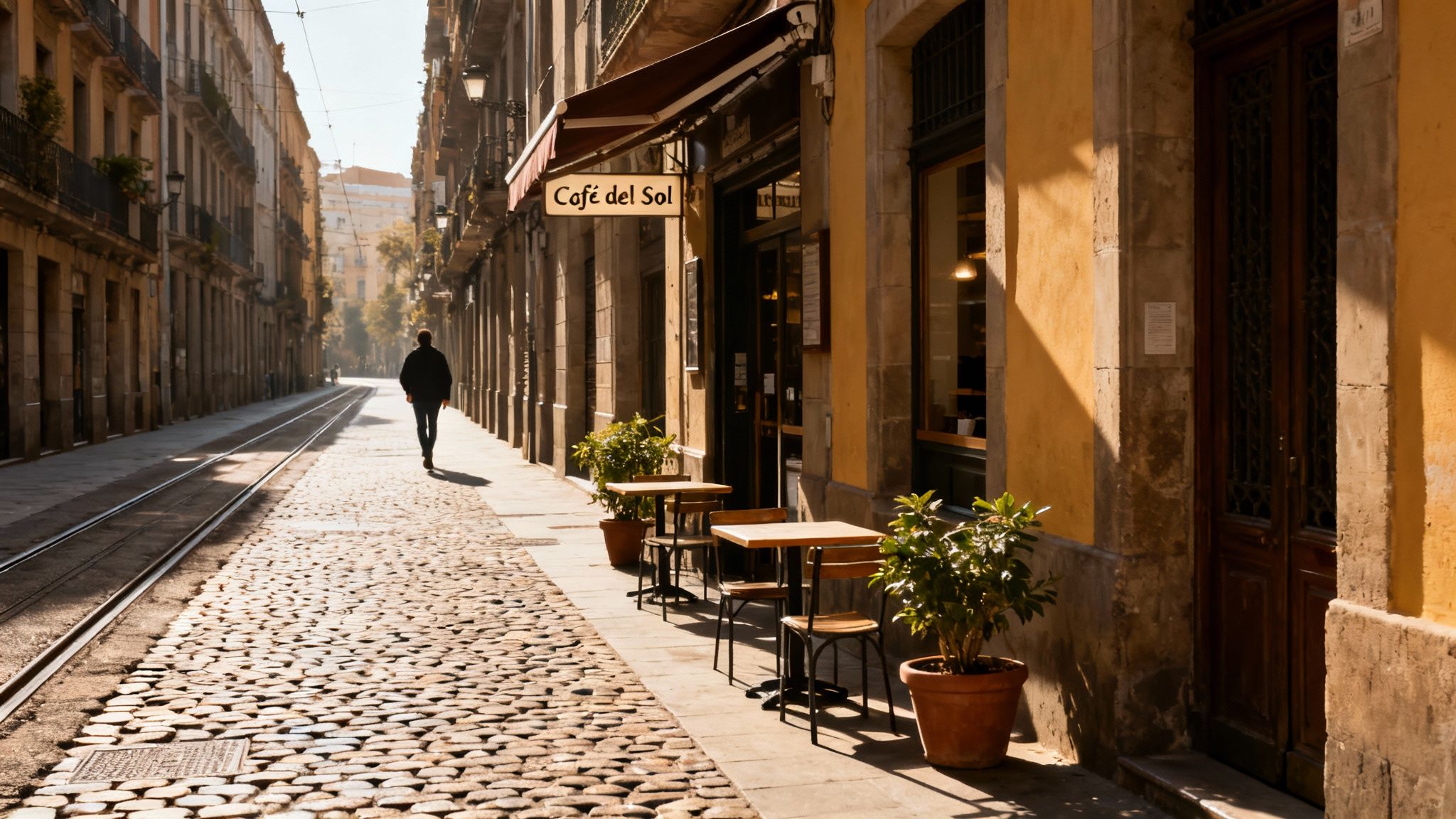
The city is a model for sustainable urban living, most famously demonstrated by the Turia Garden, a massive park built in a former riverbed that snakes through the city. This green lung, combined with an extensive network of bike lanes and an efficient metro and bus system, makes car-free living effortless. From Valencia’s main train station, Estació del Nord, you can easily connect to Madrid, Barcelona, and other major Spanish cities via high-speed rail, positioning it as a fantastic hub for low-carbon exploration of the country.
Sustainable Living in Valencia
To fully embrace the Valencian lifestyle, choose a neighborhood with strong walkability and local character. Areas like Russafa, known for its bohemian vibe, indie boutiques, and vibrant cafes, or El Cabanyal, the historic fishermen’s quarter by the beach, offer an authentic experience away from the central tourist crowds.
- Transportation: Invest in a Suma 10 card for 10 journeys on the metro, tram, and bus network. For regional travel, book high-speed Iryo or Renfe tickets in advance to secure lower fares.
- Connectivity: Ensure you have reliable internet to navigate the city and book transport. An eSIM from a provider like Airalo is a practical solution for staying connected from the moment you arrive.
- Low-Impact Food: Shop for fresh, local produce at the spectacular Mercat Central or smaller neighborhood markets. Valencia’s fertile surroundings mean an abundance of seasonal fruits and vegetables.
- Travel Planning: Use platforms like Trip.com to compare and book train tickets to other Spanish cities, ensuring you get the best prices for your rail adventures.
3. Vienna, Austria: The Imperial Rail Crossroads
Vienna consistently ranks as one of the world’s most livable cities, and for eco-conscious remote workers, it’s one of the best places in Europe to live. Austria’s capital masterfully combines imperial grandeur with a high quality of life, affordable housing compared to other Western European hubs, and an unparalleled public transport network. A single person can expect to live comfortably on around $1,500–$2,100 USD per month, making its sophisticated lifestyle surprisingly accessible.
The city is a central nervous system for European rail travel. The main station, Wien Hauptbahnhof, is a modern hub connecting you directly to Prague, Budapest, Venice, and Berlin via Austria’s efficient ÖBB rail service. Combined with an extensive U-Bahn (metro), tram, and bus system, Vienna makes car-free living effortless. This focus on low-carbon transit makes it an ideal, and beautiful, base for exploring Central and Eastern Europe without ever stepping on a plane. Learn more about walkable cities in Europe.
Sustainable Living in Vienna
To fully embrace Vienna’s local culture, look for accommodation in districts just outside the central first district. Neighborhoods like Neubau, known for its trendy art galleries and young professionals, and Josefstadt, with its quiet streets and traditional coffee houses, offer authentic Viennese life with lower rents and excellent walkability.
- Transportation: A Jahresticket (annual transport pass) offers incredible value for around $40 USD per month (€365 per year), covering all city transport. For cross-border travel, book ÖBB’s Nightjet sleeper trains in advance to secure the best fares.
- Connectivity: Ensure you can book tickets and navigate the city seamlessly with a reliable eSIM. Providers such as Airalo offer excellent data plans for Austria.
- Low-Impact Food: Shop like a local at the famous Naschmarkt or smaller district markets for fresh, regional produce. Embrace the coffee house culture at historic spots like Café Sperl, where a coffee is an affordable luxury at around $4 USD (€3.70).
- Travel Planning: Use platforms like Trip.com to compare and book international train tickets from Vienna, especially for popular routes to neighboring countries.
4. Porto, Portugal: The Authentic Riverside Gem
Porto offers a more authentic and affordable alternative to the capital, cementing its status as one of the best places in Europe to live for remote workers seeking culture and value. As Portugal’s second city, it boasts a lower cost of living, with a single person able to live comfortably on around $900–$1,200 USD per month. Its dramatic, walkable cityscape, defined by steep hills and the Douro River, provides a stunning backdrop for a sustainable, car-free lifestyle.
The city’s charm is matched by its excellent rail connectivity. The historic São Bento and modern Campanhã train stations offer frequent, direct services to Lisbon (around 3 hours) and connections to Spanish cities like Vigo. This makes Porto an ideal base for exploring Northern Portugal and Galicia without needing a car. The city itself is highly walkable, though its steep hills can be a challenge; the funicular and historic tram lines offer a low-impact way to navigate the inclines.
Sustainable Living in Porto
For a more authentic and affordable experience, avoid the central tourist hub of Ribeira for long-term stays. Instead, consider neighborhoods like Miragaia, a quieter hillside area with genuine local life, or Massarelos, a working-class district with lower rents and traditional bars.
- Transportation: A Comboios de Portugal (CP) Pass is perfect for regional exploration, covering trips to the Douro Valley or Lisbon. For day trips, a train to Peso da Régua (about 2 hours) offers stunning views and access to wine tastings.
- Connectivity: Ensure you have reliable internet to navigate the city’s winding streets and book train tickets. An eSIM from a provider like Airalo is an easy way to stay connected from the moment you arrive.
- Low-Impact Food: Discover local tascas for affordable and delicious meals. A classic francesinha costs around $8.50 USD (€8), and fresh seafood dishes are widely available for $10–$15 USD (€9–€14).
- Travel Planning: Book your train tickets to destinations across Portugal and Spain in advance on platforms such as Trip.com to get the best prices, especially on high-demand routes.
5. Prague, Czech Republic: The Affordable Bohemian Hub
Prague presents an enchanting mix of medieval history, an exceptionally low cost of living, and strategic rail connections, solidifying its place as one of the best places in Europe to live for budget-conscious remote workers. The Czech capital’s affordability is a major draw, with a single person able to live comfortably on approximately $1,100–$1,500 USD per month. This financial ease, combined with its compact, walkable city center, creates an ideal environment for a low-carbon lifestyle.
The city is a central node for train travel, with Praha hlavní nádraží (Main Station) offering direct routes to Vienna, Berlin, Budapest, and beyond. Its public transport network of trams and metro is famously efficient and inexpensive, making car ownership entirely unnecessary for daily life. For digital nomads seeking a base to explore Central Europe, Prague’s connectivity and walkability offer a perfect, sustainable foundation.

Sustainable Living in Prague
To fully embrace the local lifestyle and save money, look for accommodation outside the main tourist centers of Old Town and Malá Strana. Neighborhoods like Vinohrady, with its leafy streets and farmers’ markets, or the bohemian district of Žižkov, known for its vibrant arts scene and affordable pubs, offer an authentic and more sustainable living experience.
- Transportation: A 30-day public transport pass costs around $24 USD (550 CZK) and provides unlimited access to trams, buses, and the metro.
- Connectivity: Ensure you have reliable internet for navigating the city and booking tickets with an eSIM from a provider like Airalo.
- Low-Impact Food: Enjoy hearty, low-cost meals at traditional pubs (hospody), where a filling goulash costs just $6–$8 USD (140-185 CZK) and a local beer is around $2 USD (45 CZK).
- Travel Planning: For international journeys, book ČD night trains to destinations like Berlin or Vienna in advance through platforms such as Trip.com to get the best prices.
6. Budapest, Hungary: The Thermal Spa Capital
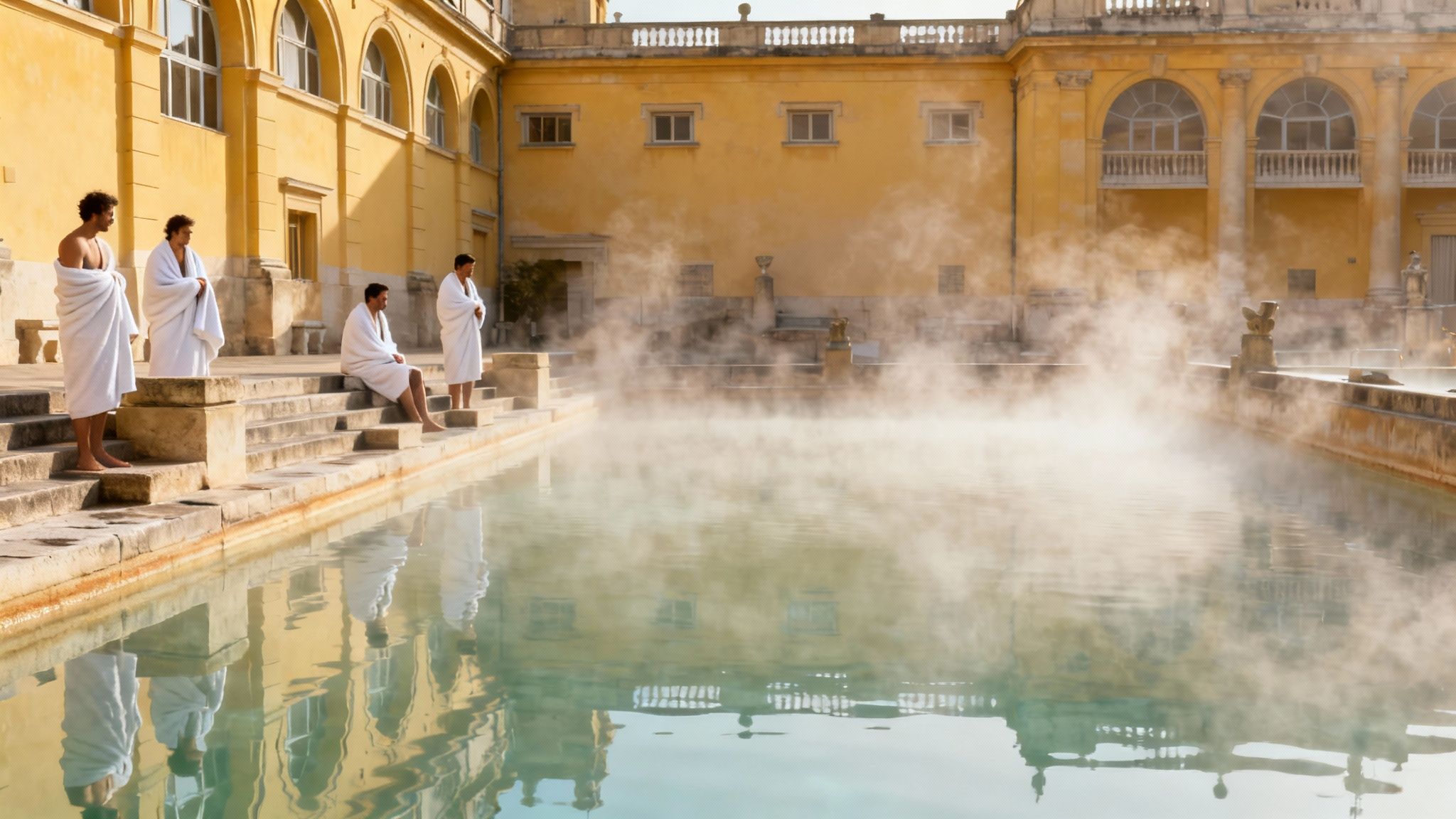
Hungary’s capital offers a unique fusion of historic grandeur, a world-renowned thermal spa culture, and remarkable affordability, solidifying its place as one of the best places in Europe to live. For around $900–$1,300 USD per month, a single person can enjoy a high quality of life. This low cost, combined with an efficient public transport system and excellent Central European rail links, makes Budapest a top contender for remote workers and digital nomads.
The city, split by the Danube River, is a hub of culture and history. Its efficient network of metro lines, trams, and buses makes navigating its 23 diverse districts straightforward and car-free living a practical reality. From Budapest’s Keleti and Nyugati railway stations, you can easily access major cities like Vienna, Prague, and even Venice via direct train services, positioning it as an ideal base for exploring the heart of the continent. For more details on these routes, you can explore some of the best sleeper trains in Europe.
Sustainable Living in Budapest
To embrace an authentic and affordable lifestyle, look beyond the central tourist districts. Consider neighborhoods like Erzsébetváros (the Jewish Quarter) for its vibrant mix of ruin bars, art galleries, and walkability, or Óbuda for its historic charm, Roman ruins, and lower rents while still being accessible to the city center.
- Transportation: A monthly public transport pass costs just $25 USD (9,500 HUF) and provides unlimited travel on the entire BKK network, including metros, trams, and buses.
- Connectivity: Ensure you have reliable internet to navigate the city and book train tickets with a global eSIM from a provider like Airalo.
- Low-Impact Food: Shop like a local at the Great Market Hall or smaller neighborhood markets for fresh produce. Enjoy classic Hungarian goulash for around $5–$7 USD at a local eatery.
- Travel Planning: For cross-border journeys, book night trains to nearby capitals in advance on MÁV’s official site or through platforms like Trip.com to get the best prices.
7. Barcelona, Spain: The Creative Coastal Hub
Barcelona combines Mediterranean vibrancy with superb urban design, making it one of the best places in Europe to live for remote workers seeking creative energy and walkability. While not the cheapest city in Spain, a single person can live comfortably on approximately $1,200–$1,800 USD per month by choosing the right neighborhood. Spain’s digital nomad visa and tax incentives provide a clear path for long-term stays, making it a practical and attractive base.
The city’s commitment to low-carbon living is clear in its extensive public transport and bike lane network. The metro, bus system, and regional Rodalies trains are highly efficient, making it easy to live without a car. Barcelona Sants station is a major rail gateway, connecting you to the rest of Spain via high-speed AVE trains and offering services to France. This robust infrastructure allows for seamless, low-impact exploration of Catalonia and beyond.
Sustainable Living in Barcelona
To find a better cost of living and a more authentic experience, look beyond the central Gothic Quarter. Neighborhoods like Gràcia, with its village-like atmosphere, and Poblenou, a former industrial area turned creative district, offer lower rents and a strong sense of community.
- Transportation: Invest in a T-mobilitat pass for unlimited access to the metro, buses, and regional trains, a cost-effective choice at around $22 USD per month for a single zone.
- Connectivity: Ensure you can navigate and book tickets on the go with an eSIM. Providers like Yesim offer dependable data plans for Spain.
- Low-Impact Food: Shop for local produce at neighborhood markets such as Mercat de l’Abaceria in Gràcia or Mercat de la Llibertat to reduce packaging and support local farmers.
- Travel Planning: For night trains and regional routes, book your Renfe seats in advance on platforms like Trip.com to get the best prices and ensure availability.
Your Next Move: Choosing the Right European Base for You
Finding the perfect spot among the best places in Europe to live is a journey that’s as unique as your own travel style and work habits. This guide has journeyed through a curated list of cities, from Lisbon’s sun-drenched, affordable hills to Vienna’s unparalleled quality of life, each selected for its commitment to sustainability, walkability, and strong public transit. We’ve explored the vibrant energy of Barcelona, the historic charm of Prague, and the thermal-powered wellness of Budapest, all through the lens of a low-impact, car-free lifestyle.
Each destination offers a distinct blend of culture, cost of living, and community, providing a solid foundation for eco-conscious remote workers and digital nomads. The common thread is their robust rail infrastructure and commitment to green initiatives, proving that a fulfilling, modern life doesn’t require a heavy carbon footprint. Your ideal European base is out there, waiting for you to discover it one train ride at a time.
This detailed breakdown is designed to be more than just a list; it’s a practical roadmap. By focusing on actionable details like visa requirements, sample budgets, neighborhood guides, and low-impact transport options, you’re equipped to move from dreaming to planning. The choice is yours, but the path forward is clearer, more sustainable, and ready for you to explore.
Final Thoughts on Finding Your European Home
The search for the best places in Europe to live is an exciting opportunity to align your lifestyle with your values. It’s about more than just finding a new city; it’s about consciously designing a life that is slower, more connected, and less impactful on the planet. By choosing a city with excellent public transportation and a strong sustainability ethos, you are casting a vote for a greener future while enriching your own life.
Whether you are captivated by the historic grandeur of Vienna or the bohemian spirit of Porto, remember that the most rewarding moves are built on careful research and a spirit of adventure. Use the detailed guides in this article as your launchpad, connect with expat and nomad communities online, and start planning your next chapter. The continent is waiting, connected by rail and ready for your arrival.
This article was fact-checked using sustainability data from the World Green Building Council, the Global Ecotourism Network, and peer-reviewed architecture studies. All partner links are vetted for compliance with sustainable business certifications.
Join the Sustainable Work Movement
Want more rail-first itineraries, low-impact packing systems, and walkable base-city ideas?
Explore Eco Nomad Travel
📚 Core Guides
🧭 Planning & Logistics
🗺️ Destinations & Seasons
Jeremy Jarvis — founder of Eco Nomad Travel, sustainable travel writer, and advocate for regenerative tourism. His work focuses on low-impact mobility, eco-friendly digital nomad life, and climate-positive travel.
Legal
Affiliate DisclaimerPrivacy Policy
Terms of Service
Image & Media Notice
Cookie Policy
Contact
Affiliate Disclosure: Some links on Eco Nomad Travel are affiliate links, meaning we may earn a small commission at no extra cost to you. This supports our mission to inspire responsible and low-impact travel worldwide.
Connect
✅ Trusted Official Sources
Plan smarter eco trips
Try our free Sustainable Travel Tools for Digital Nomads – carbon calculator, train vs plane comparator, and more.
Open Tools Hub