
Finding the best places to travel in eastern europe as a digital nomad or remote worker involves more than just affordable cities and fast Wi-Fi. For the eco-conscious traveler, it’s about discovering walkable base cities with robust rail networks, vibrant local food scenes, and opportunities for meaningful, slow travel. This guide moves beyond the typical hotspots to showcase destinations where you can build a low-impact lifestyle, reduce your carbon footprint by choosing trains over planes, and connect with communities on a deeper level. We’ll explore rail-first itineraries, regenerative stays, and practical tips for making your extended stay both sustainable and unforgettable.
From the historic, car-free old towns of Poland to the green, bike-friendly capital of Slovenia, Eastern Europe offers a unique combination of value, accessibility, and commitment to a more sustainable way of living. These cities are not just cheap alternatives; they are thriving hubs for a new generation of travelers who prioritize experiences over fleeting tourism. We’ll dive into the specifics, from monthly transport pass costs in USD to the best neighborhoods for long-term stays, ensuring you have the data-driven insights needed to plan a smarter, slower, and more responsible journey.
Eco-Nomad Travel in Eastern Europe: Rail vs Air Carbon Impacts, Zero-Waste Markets, and Practical Low-Impact Strategies
This roundup is designed for the eco-nomad who wants to travel with intention. We will compare carbon impacts of rail versus air travel for key routes, highlight local markets for zero-waste shopping, and provide actionable strategies for building a travel lifestyle that aligns with your values. Get ready to explore the hidden gems and established favorites that make up the rich tapestry of this dynamic region.
Affiliate disclosure: This post may contain affiliate links. If you buy through them, Eco Nomad Travel may earn a small commission at no extra cost to you.
Key Takeaways for Your Eastern Europe Journey
- Prioritize a Walkable Base: Choose a primary city like Krakow, Prague, or Ljubljana where you can live, work, and explore for 7 to 21 days without relying on a car. This minimizes local transport emissions and costs.
- Embrace the Night Train: Use sleeper trains for longer distances between hubs like Budapest, Krakow, and Bucharest. This combines your travel and accommodation costs, saves time, and dramatically lowers your carbon footprint compared to flying. You can book many of these routes through platforms like Trip.com.
- Go Deeper, Not Wider: Instead of city-hopping every few days, focus on a “hub and spoke” model. Settle into a base city and take day or weekend trips to nearby natural and cultural sites using regional trains.
- Pack for Versatility: A minimalist, zero-waste packing strategy is key. Focus on versatile layers, solid toiletries, and a reusable water bottle and coffee cup to reduce plastic waste and lighten your load for train travel.
- Support Local and Sustainable: Seek out accommodations with green certifications, shop at local farmers’ markets, and choose tour operators that prioritize community and environmental well-being.
Editor’s Pick: The Prague to Budapest Sleeper Train
For the ultimate blend of efficiency, cost-savings, and low-impact travel, the RegioJet sleeper train connecting Prague and Budapest is our top recommendation. You can book a private couchette for as little as $55-$75 (USD), fall asleep in the Czech Republic, and wake up in the heart of Hungary. It replaces a carbon-intensive flight, saves you the cost of one night’s accommodation, and delivers you directly to the city center, ready for the day. It perfectly embodies the slow-travel, high-impact experience this guide champions. You can check schedules and book tickets directly through Trip.com.
1. Krakow, Poland
Krakow stands out as one of the best places to travel in Eastern Europe, especially for remote workers seeking a blend of rich history, modern convenience, and exceptional affordability. Its UNESCO-listed Old Town, a completely car-free zone, is a medieval marvel of cobblestone streets and sprawling squares, making it an ideal, walkable base. The city is a major rail hub, offering seamless, low-carbon connections to other Central European capitals, perfect for slow-travel itineraries.
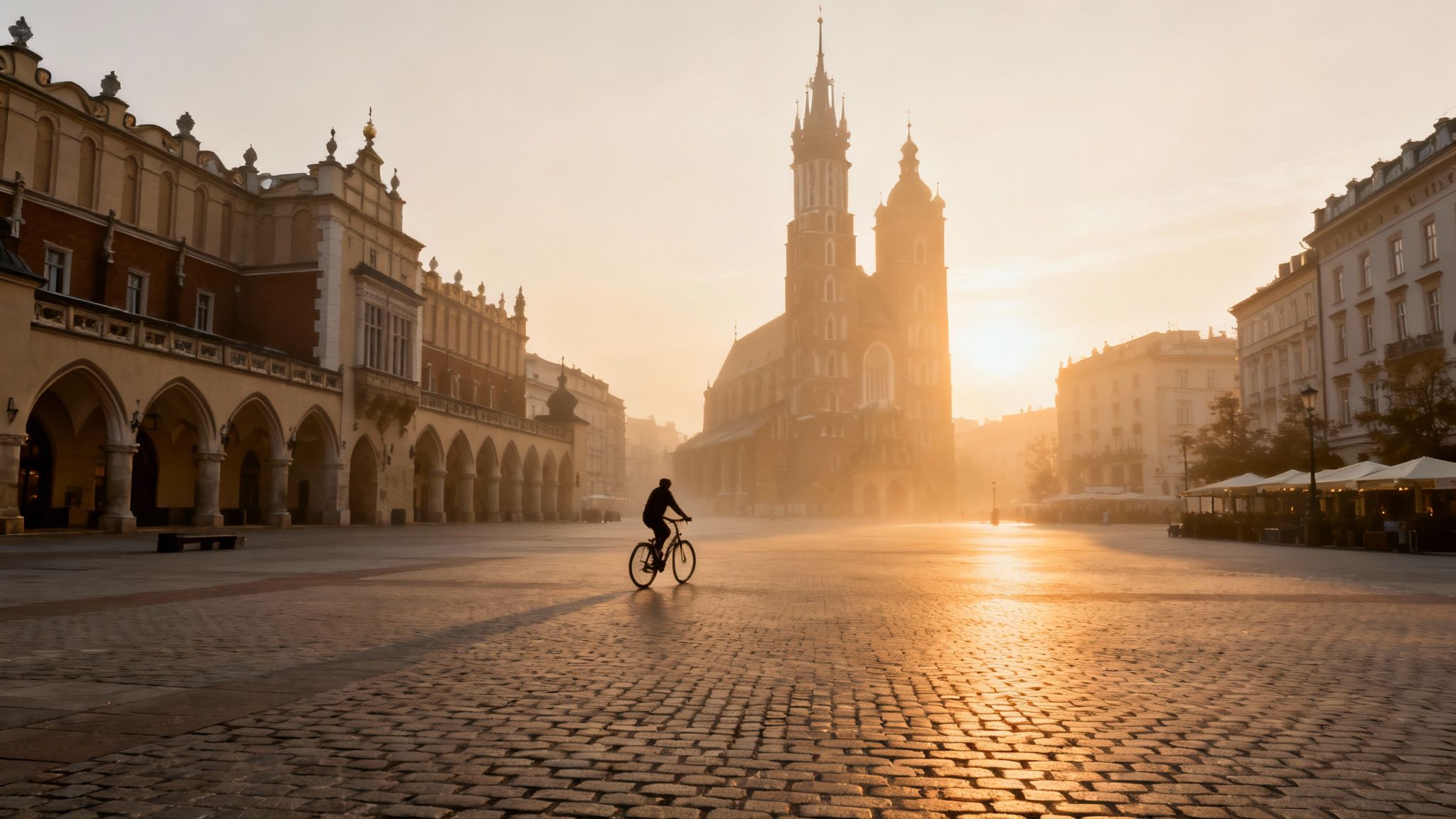
Digital nomads frequently use Krakow as a 1-3 month base, leveraging its low cost of living ($16-27 USD/day for essentials) while taking overnight trains to Vienna (7.5 hours), Prague (8 hours), or Budapest (10 hours) for weekend explorations. This strategy maximizes their time and travel budget without relying on short-haul flights. Its growing number of coworking spaces and vibrant expat community provide a solid foundation for both productivity and social connection. For those on a tight budget, Krakow offers incredible value, a key reason it’s often listed among the cheapest countries in Europe to visit.
Sustainable Stay & Travel Tips
- Walkable Neighborhoods: Book your stay in the Kazimierz (historic Jewish Quarter) or Podgórze districts. They offer authentic local culture, excellent walkability, and are generally more affordable than the main Old Town square.
- Regional Rail Travel: Utilize a PolRail pass for easy day trips. You can sustainably visit the Auschwitz-Birkenau Memorial and Museum, the Wieliczka Salt Mine, or the foothills of the Tatra Mountains without a car.
- Zero-Waste Shopping: Shop like a local at Plac Nowy market. Bring reusable containers and bags to stock up on fresh produce, baked goods, and local cheeses, minimizing plastic waste.
- Community & Co-living: For longer stays (4+ weeks), consider a co-living space like Krakow Coliving. These options often bundle accommodation, utilities, and a built-in community, simplifying logistics for nomads.
2. Budapest, Hungary
Budapest earns its spot among the best places to travel in Eastern Europe with its grand architecture, rejuvenating thermal baths, and superb rail connectivity. The city, bisected by the Danube River, offers distinct yet equally walkable vibes on its Buda and Pest sides, linked by iconic bridges and an efficient tram system. As a major Eurasian rail junction, it’s an ideal hub for remote workers planning multi-country, low-carbon itineraries.
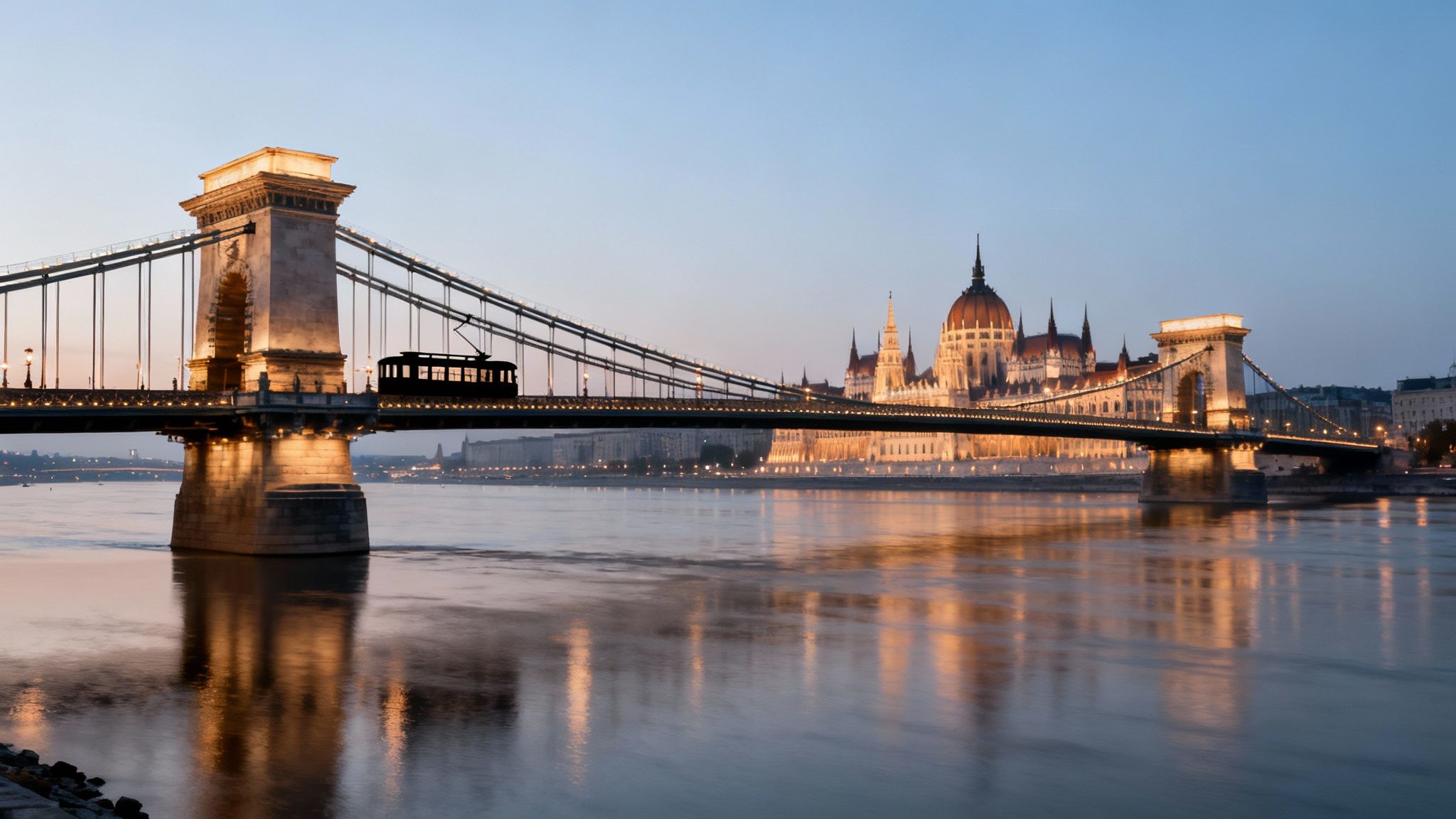
Digital nomads often establish a 2-3 month base in Budapest, drawn by its affordability ($20-30 USD/day) and vibrant expat scene. The city’s thermal baths provide a unique, low-cost wellness routine, while its excellent train links facilitate easy weekend trips. Leveraging the city’s position, travelers can take advantage of the many overnight trains from Budapest to reach Vienna, Prague, Bucharest, or even deep into the Balkans without setting foot on a plane. This makes it a strategic and sustainable base for exploring the wider region.
Sustainable Stay & Travel Tips
- Walkable Neighborhoods: Stay in Districts VI, VII (the historic Jewish Quarter), VIII, or XIII. These areas offer authentic local life, great walkability, and are more affordable than the main tourist zones around the castle.
- Embrace Public Transit: A monthly BKK pass (around $20 USD) provides unlimited access to trams, buses, and the metro. This completely eliminates the need for taxis or car rentals within the city.
- Zero-Waste Shopping: Visit local markets like Rétesy piac or Hunyadi tér market. Bring your own bags and containers to buy fresh, unpackaged produce, local cheeses, and cured meats directly from vendors.
- Wellness on a Budget: Purchase a “Gazdálkodás” card (around $5-10 USD) for discounted entry to the city’s public thermal baths. It’s a great way to experience this quintessential Budapest activity affordably.
3. Brno, Czech Republic
Brno offers a compelling, less-crowded alternative to Prague, making it one of the best places to travel in Eastern Europe for remote workers and slow travelers. As the Czech Republic’s second city, it boasts a vibrant student culture, beautiful Baroque architecture, and a flourishing digital nomad scene without the overwhelming tourist crowds. Its strategic position as a major rail hub provides excellent, low-carbon connectivity to Vienna, Budapest, and Warsaw, cementing its status as a prime base for multi-country exploration.
Digital nomads leverage Brno’s affordability, with daily essential costs ranging from $18-30 USD, often setting up a winter base to take advantage of low-season rates and then using it as a launchpad for spring trips. The 1.5-hour train to Vienna makes day trips for work or leisure incredibly simple. This setup allows for deep immersion in local life while maintaining easy access to other major European capitals, a core strategy for sustainable travel. To see how Brno fits into a larger rail itinerary, you can explore some trip-chaining rail adventures for 2025.
Sustainable Stay & Travel Tips
- Walkable Neighborhoods: Stay in Veveří, Královo Pole, or Husovice. These areas provide an authentic local vibe, are highly walkable, and connect easily to the city center while offering more affordable long-stay options.
- Regional Rail Travel: Use Brno as your gateway to the Moravian wine region. Regional trains combined with local bicycle routes offer a fantastic, car-free way to explore the vineyards and charming small towns.
- Zero-Waste Shopping: Visit the historic Zelný trh (Cabbage Market) in the city center. Bring your own reusable bags and containers to buy fresh, unpackaged produce, local cheeses, and Moravian specialties directly from farmers.
- Community & Co-living: For extended stays, look into co-living spaces or shared apartments near Moravské náměstí station. These options simplify logistics by bundling rent and utilities while offering a built-in community of fellow remote workers.
4. Ljubljana, Slovenia
Ljubljana is a model green city and one of the best places to travel in Eastern Europe for those who prioritize sustainability and outdoor access. Its completely car-free city center, recognized as a European Green Capital, makes it a delight for pedestrians and cyclists. The city is a crucial rail gateway, offering direct routes into the Balkans and Italy, making it an ideal launchpad for multi-country, low-carbon itineraries without relying on flights.
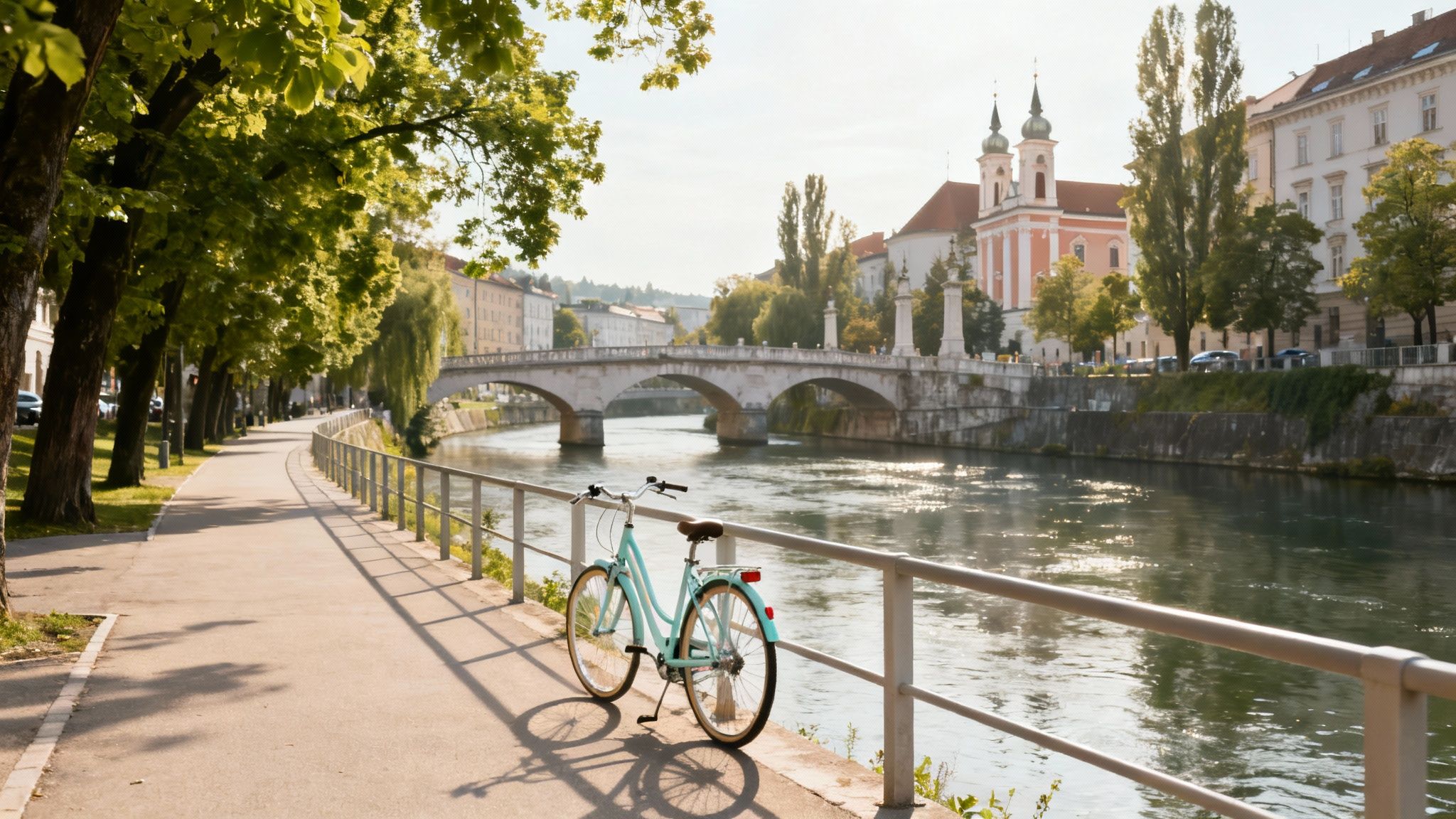
Eco-conscious nomads often set up a 1-2 month base here, using the city’s exceptional quality of life and affordable cost ($28-40 USD/day for essentials) as a foundation for deeper regional exploration. From Ljubljana, you can take a direct train to Zagreb (2.5 hours), Venice (6.5 hours), or even begin a scenic rail journey toward the Croatian coast. The city’s commitment to green living is a core part of its identity, offering a refreshing environment for productive remote work. You can learn more about how cities like this are leading the way in sustainability in travel and tourism.
Sustainable Stay & Travel Tips
- Walkable Neighborhoods: Stay in Central Ljubljana or the adjacent Vič district. Both provide excellent walkability, easy access to Tivoli Park, and a more local, residential feel compared to the tourist-heavy riverbanks.
- Embrace Cycling: Rent a bicycle for the duration of your stay ($16-32 USD/month) or use the “BicikeLJ” bike-sharing system. With over 300 miles (about 490 km) of dedicated bike lanes, it’s the most efficient and enjoyable way to navigate the city.
- Zero-Waste Shopping: Visit the Central Market near the Dragon Bridge. Bring your own reusable bags and containers to buy seasonal produce, local honey, and artisanal cheeses directly from Slovenian farmers, drastically reducing packaging waste.
- Regional Rail Day Trips: Use the efficient national rail service to explore Slovenia’s natural wonders. Book advance tickets for stunning day trips to Lake Bled (1 hour) or Lake Bohinj (1.5 hours) in the Julian Alps, leaving the car behind.
5. Tbilisi, Georgia
Tbilisi is rapidly emerging as one of the best places to travel in Eastern Europe, particularly for remote workers drawn to its unique blend of East and West, exceptional value, and welcoming visa policies. Its compact Old Town is a walkable labyrinth of historic balconies and modern cafes, while efficient metro and minibus networks make exploring the wider city simple and car-free. The city is becoming a strategic hub for slow travelers, with growing rail connections to Turkey and the wider Caucasus region.

Digital nomads are establishing 3-6 month bases here, leveraging the incredibly low cost of living (around $13-22 USD/day or €12-20/day) and a favorable one-year visa-free stay for many nationalities. This allows them to immerse themselves in Georgian culture, explore the Kakheti wine region via affordable minibus tours, and use the city as a launchpad for trips to Istanbul or Baku. Its thriving co-working scene and international community provide a solid foundation for both professional productivity and social life.
Sustainable Stay & Travel Tips
- Walkable Neighborhoods: Stay in the Vake or Saburtalo districts. They offer excellent walkability, a high concentration of co-working spaces, and a more modern, international feel compared to the tourist-focused Old Town.
- Low-Cost City Transit: Use a Metromoney card for ultra-affordable travel on the metro and city buses, with rides costing less than $0.20 USD. This is the most efficient way to navigate the city without a car.
- Zero-Waste Shopping: Shop for fresh produce and local goods at the Dezerter Bazaar. Bring your own reusable bags and containers to minimize waste and experience an authentic slice of Tbilisi life.
- Community & Co-living: For longer stays, consider dedicated digital nomad co-living spaces like LOKAL Tbilisi. These hubs bundle accommodation, workspace, and a built-in community, making it easy to connect with fellow remote professionals.
6. Prague, Czech Republic
Prague easily earns its spot as one of the best places to travel in Eastern Europe, blending medieval grandeur with a dynamic, modern energy perfect for remote workers. The city’s stunning, largely car-free center is a masterpiece of Gothic architecture, connected by an efficient tram and metro system that makes it exceptionally easy to navigate without a car. As a major Central European rail hub, Prague offers direct day and sleeper trains to Vienna, Berlin, Warsaw, and Budapest, making it an ideal anchor for multi-city, low-carbon itineraries.
Digital nomads often establish a 1-3 month base in Prague’s outer districts like Žižkov or Karlín, taking advantage of lower living costs ($22-33 USD/day for essentials) and an authentic local atmosphere. From here, they can take frequent weekend trips via rail to Berlin (4 hours) or Vienna (4 hours) for a fraction of the cost and carbon footprint of flying. The city’s high English proficiency, abundant co-working spaces, and vibrant cultural scene provide a seamless experience for long-term stays, balancing deep work with immersive travel.
Sustainable Stay & Travel Tips
- Walkable Neighborhoods: Stay outside the Old Town in areas like Vinohrady, Žižkov, or Smíchov. These districts offer better value, a more local vibe, and are well-connected by metro and tram, reducing your reliance on central, high-traffic zones.
- Regional Rail Travel: Use your Prague base to explore the Czech countryside. Take regional trains to destinations like the Bohemian Paradise (Český ráj) or Karlštejn Castle for day trips, supporting local economies beyond the capital.
- Zero-Waste Shopping: Skip the supermarket and visit the farmers’ markets like the one at Náplavka on Saturdays. For zero-waste essentials, seek out local shops like the Orgánica network. Remember to bring your own reusable bags and containers.
- Smart Transit: Upon arrival, purchase a 30-day public transport pass for about $27 USD. It offers unlimited travel on trams, buses, and the metro, making it the most cost-effective and sustainable way to explore the entire city.
7. Bucharest, Romania
Bucharest is a rising star among the best places to travel in Eastern Europe, drawing in digital nomads with its unique blend of Ottoman-influenced architecture, incredible affordability, and vibrant energy. The city’s grand boulevards and diverse neighborhoods are highly walkable and well-connected by an efficient metro and tram system, making a car-free lifestyle easy to adopt. It serves as a strategic rail gateway to the Balkans and the Black Sea coast, ideal for deeper, slow-travel explorations.

Many remote workers establish a 2-4 month base in Bucharest, leveraging its extremely low cost of living ($15-24 USD/day) to extend their travels sustainably. From here, they can take overnight trains to Istanbul, Sofia, or Thessaloniki for longer regional journeys without relying on flights. The growing number of co-living communities and favorable visa policies for many nationalities make it a practical and compelling hub for a long-term stay while exploring Southeastern Europe.
Sustainable Stay & Travel Tips
- Walkable Neighborhoods: Choose a stay in authentic districts like Obor, Dorobanți, or Piața Amzei. These areas offer a genuine local vibe, excellent safety, and are more affordable than the tourist-heavy Old Town.
- Affordable City Transit: Ditch taxis and ride-sharing for the metro and tram system. A monthly pass costs around $14 USD, providing unlimited, low-impact travel across the city.
- Zero-Waste Shopping: Visit local markets like Piața Amzei for fresh, unpackaged produce, cheeses, and baked goods. Bring your own reusable bags and containers to minimize waste.
- Community & Co-living: For extended stays, consider dedicated digital nomad spaces like Spaces Co-Living or Thinking Pod. They offer built-in community, integrated amenities, and simplified logistics for settling in quickly.
8. Kraków’s Gateway Region (Krakow + Wieliczka + Tatra Mountains)
Viewing Kraków not just as a city but as a regional hub is one of the smartest ways to experience one of the best places to travel in Eastern Europe. This approach transforms a single city stay into a multi-faceted exploration of history, nature, and culture. By establishing a base in Kraków, remote workers and slow travelers can access the Wieliczka Salt Mine, the Auschwitz-Birkenau Memorial, and the stunning Tatra Mountains foothills, all without needing a car. Regional trains and local minibuses make this entire area a connected, low-carbon playground.
Digital nomads can set up a 3-week base in Kraków, dedicating the first week to the city itself and the following two weeks to day trips. This model balances focused work time with immersive travel, all while leveraging the region’s low cost of living (around $16-27 USD per day). Eco-conscious travelers can use a weekly regional rail pass ($32-54 USD) to explore the greater Carpathian region without the hassle of moving accommodations, maximizing both time and budget. This strategy makes the area a top choice for an extended, sustainable European adventure.
Sustainable Stay & Travel Tips
- Pack for Day Trips: Book a Kraków apartment with a kitchen. Preparing packed lunches for day trips to Zakopane or Wieliczka is a great way to save money and reduce single-use plastic waste from takeaway food.
- Use Regional Transport: Purchase a PolRail regional pass for discounted and flexible train travel. For trips to Auschwitz or the Salt Mine, use Krakow Shuttle or local minibuses instead of organized tours; they are cheaper and allow you to explore at your own pace.
- Book Ahead Online: Reserve tickets for popular sites like the Wieliczka Salt Mine online in advance. This not only secures your spot but also helps you avoid long lines, especially during peak season.
- Explore on Two Wheels: Rent a bicycle in Kraków to explore the city’s surroundings for free. The Vistula river trails offer scenic, flat paths to nearby towns and parks, providing a perfect low-cost recreational activity.
9. Wieliczka Salt Mine, Poland
While not a base in itself, the Wieliczka Salt Mine is an essential, sustainable day trip that makes our list of the best places to travel in Eastern Europe. This UNESCO World Heritage site, located just 9 miles (about 15 km) south of Krakow, offers a surreal journey into a subterranean world of salt-carved chapels, intricate sculptures, and underground saline lakes. It’s easily reachable via a 25-minute regional train, making it a perfect car-free excursion for digital nomads and slow travelers based in the city.
The mine’s unique microclimate, rich in micronutrients, is renowned for its therapeutic properties, offering a restorative break from screen time. It’s an ideal half-day activity that complements a longer stay in Krakow, allowing remote workers to disconnect and experience one of Poland’s most significant historical monuments without a complex itinerary. Combining a morning mine visit with an afternoon exploring Krakow’s nearby Kazimierz district creates a balanced day of history, culture, and local life, all accessible on foot or by public transport.
Sustainable Stay & Travel Tips
- Book Online: Reserve your Wieliczka Salt Mine tickets online in advance (around $36 USD per adult). This helps manage visitor flow and ensures you avoid long queues, especially during peak season.
- Regional Rail Travel: The most sustainable way to visit is by taking the Koleje Małopolskie regional train from Kraków Główny station directly to Wieliczka Rynek-Kopalnia. The journey is quick, efficient, and minimizes your carbon footprint.
- Pack Accordingly: Bring a light jacket or sweater. The underground temperature remains a cool 57-61°F (14-16°C) year-round, regardless of the weather outside.
- Combine & Conquer: Pair your mine tour with a walk through the adjacent graduation tower, where you can inhale the therapeutic salt-rich air. Afterward, take the train back to the Kraków Płaszów stop to explore the historic Podgórze district.
10. Tatra Mountains / Zakopane, Poland
For remote workers based in Krakow needing an alpine escape, the Tatra Mountains serve as a spectacular backyard, making it one of the best places to travel in Eastern Europe for outdoor adventure. Just a two-hour train ride south, the mountain town of Zakopane is the primary gateway to this stunning national park. It offers a dramatic change of scenery, with jagged peaks, pristine alpine lakes, and a distinct highlander culture, providing a perfect natural counterpoint to city life.

Digital nomads use Zakopane for focused work weeks or active weekend getaways, leveraging the region’s hiking, skiing, and natural beauty to recharge. The ability to transition from a historic city hub to a breathtaking mountain environment via a short, low-carbon train journey is a key advantage for a balanced slow-travel lifestyle. The area embodies the eco-conscious ethos of connecting with nature without the need for car rentals or flights, making it an essential addition to any Polish itinerary.
Sustainable Stay & Travel Tips
- Optimal Timing: Plan hiking and alpine trips between May and September for the safest and most pleasant weather conditions. Winter months (December-March) are ideal for skiing and snowshoeing.
- Advance Rail Bookings: The train to Zakopane is popular, especially on weekends and holidays. Book your tickets in advance via a platform like Trip.com to secure a seat and avoid price surges.
- Pack for Mountain Weather: Conditions can change rapidly. Pack layers, waterproof gear, and sturdy hiking footwear, even for summer visits. Always check the forecast before heading out on a trail.
- Eco-Friendly Base: Stay in guesthouses or family-run “willa” accommodations just outside the main tourist center of Krupówki Street. This supports local families and offers a more authentic, quieter experience.
11. Auschwitz-Birkenau Memorial, Poland
While not a typical travel destination, a visit to the Auschwitz-Birkenau Memorial and Museum is a profound and essential experience for understanding European history. Located just over an hour from Krakow, it serves as a solemn reminder of the atrocities of the Holocaust. For slow-traveling digital nomads and thoughtful tourists, integrating this day trip offers crucial historical context to their journey through the region, making it one of the most impactful places to visit in Eastern Europe.

This historic site is best approached as a full-day, low-carbon excursion from a Krakow base. Direct regional trains and public buses offer a sustainable and affordable alternative to private tours, allowing visitors to travel at their own pace. The journey itself provides a quiet period for reflection before and after the emotionally demanding visit. Planning is crucial; booking a timed entry slot and guided tour well in advance via the official website is essential to manage crowds and ensure a respectful, educational experience. A visit here is not for leisure but for learning, remembrance, and bearing witness.
Sustainable Stay & Travel Tips
- Respectful Transport: Opt for the public bus from Krakow’s main station (MDA) or the regional train to Oświęcim. Both options significantly reduce your carbon footprint compared to private taxis and allow you to support the local public transit system.
- Advance Booking: Reserve your entry pass directly on the Auschwitz-Birkenau Memorial and Museum official website weeks or even months ahead. This is a zero-cost, zero-waste process that guarantees your spot and avoids third-party markups.
- Full-Day Commitment: Do not rush your visit. Allocate a complete day to fully absorb the experience at both Auschwitz I and Birkenau (Auschwitz II). The shuttle bus between the two sites is free and efficient.
- Mindful Conduct: Dress modestly and comfortably for extensive walking. Behave with the utmost respect: refrain from taking inappropriate photos, speak in a low voice, and follow all site regulations to honor the memory of the victims.
12. Sofia, Bulgaria
Sofia, Bulgaria’s capital, is a standout choice for one of the best places to travel in Eastern Europe, offering unparalleled value for budget-conscious remote workers. It masterfully combines layers of Roman, Ottoman, and Soviet history with a modern, youthful energy, making it a fascinating and walkable base. With an emerging digital nomad scene and fantastic Balkan rail connectivity, Sofia serves as a low-cost launchpad for deeper, slow-travel explorations of the region.

Digital nomads leverage Sofia’s extremely low cost of living ($14-22 USD/day) for 2-3 month stays, using it as a hub to recover their travel budget between more extensive journeys. Its strategic position allows for sustainable overland trips to the Black Sea coast via an 8-hour train to Varna or cross-border adventures to Thessaloniki, Greece. For those interested in long-term stays, Bulgaria’s digital nomad visa presents a compelling option. You can learn more about digital nomad visas and eco-friendly bases.
Sustainable Stay & Travel Tips
- Walkable Neighborhoods: Opt for accommodation in Lozenets, Iztok, or the areas around Vitosha Boulevard. These districts offer a great local vibe with artisan cafes and green spaces, away from the main tourist crowds.
- Affordable City Transit: Utilize Sofia’s excellent metro and tram system. A single ride costs just $0.87 USD, and a monthly pass is around $16 USD, making it an incredibly cheap and efficient way to navigate the city without relying on taxis.
- Zero-Waste Shopping: Immerse yourself in local life at the Women’s Bazaar (Zhenski Pazar). Bring your own reusable bags and containers to buy seasonal produce, local cheeses, and nuts directly from vendors, drastically reducing plastic waste.
- Regional Rail Exploration: Plan low-carbon getaways using the national rail network. Besides the Black Sea, you can take scenic day trips to Plovdiv (2.5 hours) or the Rila Monastery (requires a bus connection from Dupnitsa), experiencing Bulgaria’s rich culture without a car.
Top 12 Eastern Europe Destinations Comparison
| Destination | 🔄 Travel complexity (process) | ⚡ Cost & accessibility (speed/efficiency) | ⭐ Expected outcome / quality | 📊 Ideal use cases (results/impact) | 💡 Key advantages / tip |
|---|---|---|---|---|---|
| Krakow, Poland | Low — compact, major rail hub, walkable | $16–27/day; strong rail links (sleeper trains) | ⭐⭐⭐⭐ — historic, affordable, walkable | Budget long-stays; rail-based regional exploration | 💡 Book Kazimierz/Podgórze; use PolRail for day trips |
| Budapest, Hungary | Medium — multiple stations, well-connected | $20–30/day; excellent sleeper/rail network | ⭐⭐⭐⭐ — thermal wellness + vibrant city life | Wellness + nightlife; central rail hub for long weekends | 💡 Stay Districts VI–VII; get BKK pass for trams |
| Brno, Czech Republic | Low — compact, easy tram network | $18–30/day; quick trains to Vienna/Prague | ⭐⭐⭐ — quieter, student-driven urban base | Quiet alternative to Prague; short cross-border trips | 💡 Base in Veveří/Husovice; monthly tram pass saves costs |
| Ljubljana, Slovenia | Low — car-free center, excellent cycling | $28–40/day; strong regional train links (Bled, Trieste) | ⭐⭐⭐⭐ — green, safe, highly walkable | Eco-conscious stays; cycling and Alpine day trips | 💡 Rent a bike; use Ljubljana Card for transport+sites |
| Tbilisi, Georgia | Medium — limited rail, strong minibuses/metro | $13–22/day; very low living costs, favorable visas | ⭐⭐⭐ — unique culture, high value for long stays | Long-term visas; cultural immersion and slow travel | 💡 Stay Vake/Saburtalo; use marshrutkas for regionals |
| Prague, Czech Republic | Medium — major hub but tourist congestion | $22–33/day; excellent rail/metro network | ⭐⭐⭐⭐ — world-class culture and transport | Cultural short/medium stays; central hub for trains | 💡 Stay outside Old Town (Žižkov/Karlín) to save money |
| Bucharest, Romania | Medium — Balkan gateway, growing services | $15–24/day; strong rail to Balkans & Black Sea | ⭐⭐⭐ — affordable, emerging nomad infrastructure | Budget long-stays; rail access to Turkey/Greece | 💡 Base in Obor/Dorobanți; use metro pass and local co-living |
| Kraków’s Gateway Region | Low–Medium — Krakow base + regional trains | $16–27/day; cheap regional tickets/passes | ⭐⭐⭐⭐ — diverse cultural + outdoor options | Stay-in-one-base with frequent day trips | 💡 Buy a regional pass; book Wieliczka/Auschwitz ahead |
| Wieliczka Salt Mine (site) | Low — 20–30 min from Krakow by train/shuttle | Ticket ~$36; accessible via regional services | ⭐⭐⭐⭐ — unique UNESCO subterranean site | Half-day cultural/indoor option on bad weather days | 💡 Reserve tickets online; bring a light jacket |
| Tatra Mountains / Zakopane | Medium — ~2 hr train; seasonal variability | Variable (low base cost; activity fees apply) | ⭐⭐⭐⭐ — high-quality outdoor recreation | Weekend hiking/skiing escapes from Krakow | 💡 Hike May–Sep; book trains in peak season |
| Auschwitz-Birkenau Memorial | Low–Medium — shuttle or regional rail + transfer | Low entrance/transport; guided tours vary in price | ⭐⭐⭐⭐ — highly significant educational visit | Educational, historical awareness trips | 💡 Book guided tour slots; allocate a full day; be respectful |
| Sofia, Bulgaria | Medium — Balkan rail options, emerging scene | $14–22/day; good regional connections to Black Sea | ⭐⭐⭐ — authentic, very affordable base | Budget Balkan hub; coastal and mountain day trips | 💡 Stay Vitosha/Lozenets; use metro/tram monthly pass (≈$16) |
Your Next Move: Crafting a Sustainable Eastern European Itinerary
Exploring the best places to travel in eastern europe is more than just checking off a list of cities; it’s an opportunity to reshape your travel habits for a more sustainable and enriching journey. The destinations we’ve covered, from the vibrant streets of Budapest to the green heart of Ljubljana and the historic core of Krakow, offer a powerful template for eco-conscious digital nomads and remote workers. They prove that it’s entirely possible to build a slow, meaningful, and low-impact itinerary centered on walkable cities and efficient rail networks.
This approach transforms travel from a series of hurried flights into a cohesive, intentional journey. By choosing a central, walkable base like Brno or Krakow, you unlock a network of regional and overnight trains, allowing you to explore destinations like the Tatra Mountains or the Wieliczka Salt Mine without ever needing a rental car. This isn’t just about reducing your carbon footprint; it’s about deepening your connection to the region, experiencing the landscape as it unfolds from your train window, and arriving in a new city center refreshed and ready to explore.
Embracing this rail-first philosophy is a practical choice that pays dividends in both experience and environmental impact. Swapping a one-hour flight for a comfortable overnight train between Prague and Budapest, for example, not only saves on airport stress and ancillary costs but also significantly cuts your CO₂ emissions. It’s a tangible way to align your actions with your values, turning every trip into a statement of support for a more sustainable future for tourism. For a comprehensive look at how travel choices impact sustainability, the resources from the Global Ecotourism Network are invaluable.
Putting It All Together: Your Action Plan
Ready to turn inspiration into a concrete itinerary? Here are your next steps:
- Draft Your Route: Pick two or three primary cities from our list that spark your interest. Use a rail map planner like Deutsche Bahn or Omio to visualize the train connections between them. Look for direct day routes and overnight options.
- Calculate Your Carbon: Before booking, use a travel emissions calculator to compare the carbon footprint of your potential train route versus the equivalent flights. Seeing the tangible difference in CO₂ can be a powerful motivator.
- Book Your Backbone Travel: Secure your long-haul train tickets first, especially for popular sleeper routes which can sell out. Flexible regional train tickets can often be purchased closer to your travel date.
- Secure Your Base: Book your long-stay apartment or eco-certified hotel in your chosen base city. Look for properties near the main train station and within a walkable neighborhood to simplify your daily life and excursions.
- Pack with Purpose: Start assembling your minimalist travel kit. Focus on multi-use items and create a digital toolkit with essential apps like Airalo for an eSIM to stay connected without plastic SIM cards, and local transit apps for your chosen cities.
Mastering this approach to travel in Eastern Europe offers rewards far beyond a simple vacation. It builds confidence in your ability to navigate new places sustainably, deepens your appreciation for the local culture, and equips you with a resilient, low-impact travel framework you can apply to any destination in the world.
This article was fact-checked using sustainability data from the World Green Building Council, the Global Ecotourism Network, and peer-reviewed architecture studies. All partner links are vetted for compliance with sustainable business certifications.
Ready to plan your own sustainable journey? Eco Nomad Travel provides in-depth guides, gear recommendations, and rail-first itineraries designed for the modern remote worker. Explore our resources at Eco Nomad Travel to build your next low-impact adventure with confidence.
Join the Sustainable Work Movement
Want more rail-first itineraries, low-impact packing systems, and walkable base-city ideas?
Explore Eco Nomad Travel
📚 Core Guides
🧭 Planning & Logistics
🗺️ Destinations & Seasons
Jeremy Jarvis — founder of Eco Nomad Travel, sustainable travel writer, and advocate for regenerative tourism. His work focuses on low-impact mobility, eco-friendly digital nomad life, and climate-positive travel.
Legal
Affiliate DisclaimerPrivacy Policy
Terms of Service
Image & Media Notice
Cookie Policy
Contact
Affiliate Disclosure: Some links on Eco Nomad Travel are affiliate links, meaning we may earn a small commission at no extra cost to you. This supports our mission to inspire responsible and low-impact travel worldwide.
Connect
✅ Trusted Official Sources
Plan smarter eco trips
Try our free Sustainable Travel Tools for Digital Nomads – carbon calculator, train vs plane comparator, and more.
Open Tools Hub