
Planning a trip to Spain and searching for the best places to visit in spain that align with a sustainable, slow-travel mindset? This guide is for you. We’re moving beyond the typical tourist trail to highlight walkable cities, regenerative stays, and low-impact itineraries perfectly suited for digital nomads and eco-conscious travelers. Spain’s extensive and efficient rail network, from high-speed AVE trains to regional connectors, makes it one of Europe’s premier destinations for car-free exploration. This rail-first approach not only dramatically reduces your carbon footprint but also connects you more deeply with the local culture, landscapes, and rhythms of daily life.
Each destination in this roundup was chosen based on its walkability, public transport quality, sustainable tourism initiatives, and suitability as a base for remote work. We’ll dive into practical details like ideal stay durations, smart rail connections, and the best seasons to visit for a lower environmental impact. Forget the hassle of rental cars and domestic flights; this is your roadmap to experiencing Spain’s incredible diversity—from the culinary heart of the Basque Country to the sun-drenched coasts of Andalusia—in a way that’s both meaningful and mindful.
Best Places to Visit in Spain for Car-Free Workations and Low-Impact Itineraries
Whether you’re setting up a workation base for a few weeks or stringing together a multi-city tour, these locations offer the infrastructure and atmosphere for a productive and enriching stay. We’ll cover everything from monthly transport passes and local market tips to sample carbon savings, giving you actionable insights to plan your journey. All recommendations are grounded in sustainability data and vetted to help you travel smarter and lighter.
Key Takeaways
- Prioritize Rail Travel: Spain’s extensive Renfe train network is a low-carbon, efficient alternative to flights, connecting major hubs like Madrid and Barcelona in under 3 hours.
- Walkability is Essential: Cities like San Sebastián, Granada, and Córdoba feature car-free historic centers, making them ideal for exploration on foot, which reduces local transport emissions.
- Travel Off-Season: Visiting during shoulder seasons (April-May, September-October) reduces strain on local resources, lowers your environmental impact, and offers a more authentic experience with fewer crowds.
- Base in Secondary Hubs: Consider cities like Valencia or Málaga for longer stays. They offer excellent amenities, strong rail links for regional exploration, and a lower cost of living compared to primary hubs.
- Choose Sustainable Accommodation: Opt for stays with eco-certifications or those that support local communities to ensure your tourism dollars contribute positively.
- Stay Connected Easily: Using an eSIM from a provider like Airalo or Yesim simplifies navigation and on-the-go bookings without needing a physical SIM card.
Editor’s Pick: Best Tool for Sustainable Route Planning
For visualizing and booking complex, multi-city train journeys across Spain, the Trip.com train booking platform is an invaluable tool. Its interface simplifies comparing routes, times, and prices for Renfe and other European operators, making it easier to commit to a flight-free itinerary. It’s our go-to for locking in cost-effective, low-carbon connections.
1. Barcelona, Catalonia: The Connected Coastal Metropolis
As one of the best places to visit in Spain for rail-first travel, Barcelona masterfully combines urban energy with a deep commitment to sustainable transit. The city’s extensive public transport system, including a highly efficient metro, tram, and bus network, makes car-free exploration effortless for digital nomads and eco-conscious travelers.
Barcelona’s urban planning is a model for walkability. Neighborhoods like Gràcia, Sant Antoni, and Poble Sec offer an authentic, local feel away from the more crowded Gothic Quarter, providing a perfect base for remote workers. The city’s dedication to pedestrian and cyclist priority is evident in its “superblocks” (superilles), which reclaim streets from cars for community use. This infrastructure, paired with excellent high-speed and regional Renfe train connections to France and the rest of Europe, cements its status as a premier sustainable hub.
Practical Tips for Your Stay
- Ideal Stay Length: 2-4 weeks to settle in as a digital nomad and explore the region.
- Best Season: April–May or September–October for pleasant weather, fewer crowds, and a lower environmental footprint.
- Low-Impact Activities: Explore Gaudi’s architectural marvels on foot, cycle along the beachfront, or visit local markets like La Boqueria for fresh, zero-waste produce.
- Eco-Stay Pick: Yök Casa + Cultura offers stylish, eco-friendly apartments powered by 100% green energy and furnished with local, sustainable materials.
- Getting Around: Purchase the T-mobilitat pass for unlimited, affordable travel. For regional exploration, book Renfe train tickets to Girona or Sitges on Trip.com. Stay connected for easy booking with an Airalo eSIM.
2. Best Places to Visit in Spain: San Sebastián, Basque Country
San Sebastián (Donostia) is renowned as one of the best places to visit in Spain for its world-class culinary scene and pioneering car-free urban design. Since banning cars from its city center in 2003, it has become a model for walkability, allowing digital nomads and slow travelers to immerse themselves in Basque culture without a vehicle. Its compact geography and dedication to local food systems create a deeply sustainable travel experience.
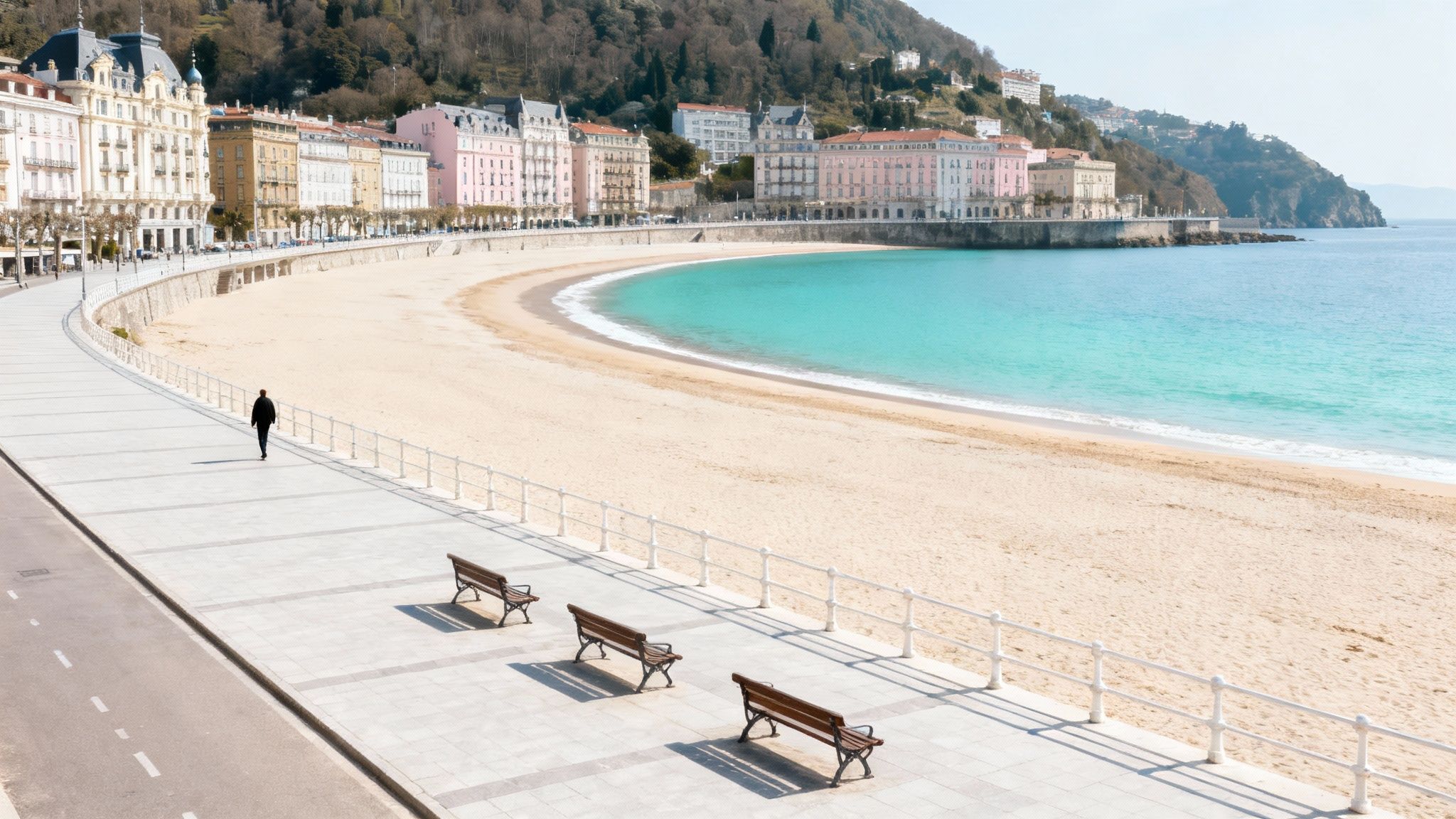
The city is a perfect hub for exploring the wider Basque Country. The efficient Euskotren regional rail network connects you to charming coastal towns and inland villages, while high-speed Alvia trains offer direct routes to Madrid and Bilbao. For nomads seeking a base, neighborhoods like Amara or Egia provide an authentic, affordable lifestyle just a short walk from the iconic La Concha beach and the bustling Old Town, blending productivity with unparalleled quality of life.
Practical Tips for Your Stay
- Ideal Stay Length: 3-4 weeks to embrace the local rhythm and use the city as a base for extensive regional exploration.
- Best Season: September–October offers mild weather, fewer tourists after the summer rush, and more affordable accommodation rates.
- Low-Impact Activities: Shop for zero-waste groceries at Mercado de la Bretxa, hike the coastal trails of the Camino de Santiago that pass through the city, or take a swim at La Concha beach.
- Eco-Stay Pick: While dedicated eco-hotels are emerging, prioritize locally-owned apartments in walkable neighborhoods like Gros or Egia to support the local economy and reduce your footprint.
- Getting Around: Purchase the monthly Denbora card for unlimited travel on the regional Euskotren network. For longer journeys to Madrid or France, book high-speed rail tickets via Trip.com. Ensure seamless connectivity for bookings and navigation with an Airalo eSIM.
3. Valencia, Mediterranean Coast: The Underrated Sustainable Hub
As one of the best places to visit in Spain, Valencia offers a blueprint for sustainable urban living. This underrated gem combines a Mediterranean climate, efficient public transit, and remarkable affordability, making it an ideal base for eco-conscious digital nomads. The city’s crown jewel is the Turia Gardens, a 9-kilometer (approximately 5.6-mile) car-free park built on a former riverbed, providing a lush green corridor perfect for cycling, walking, and remote work.
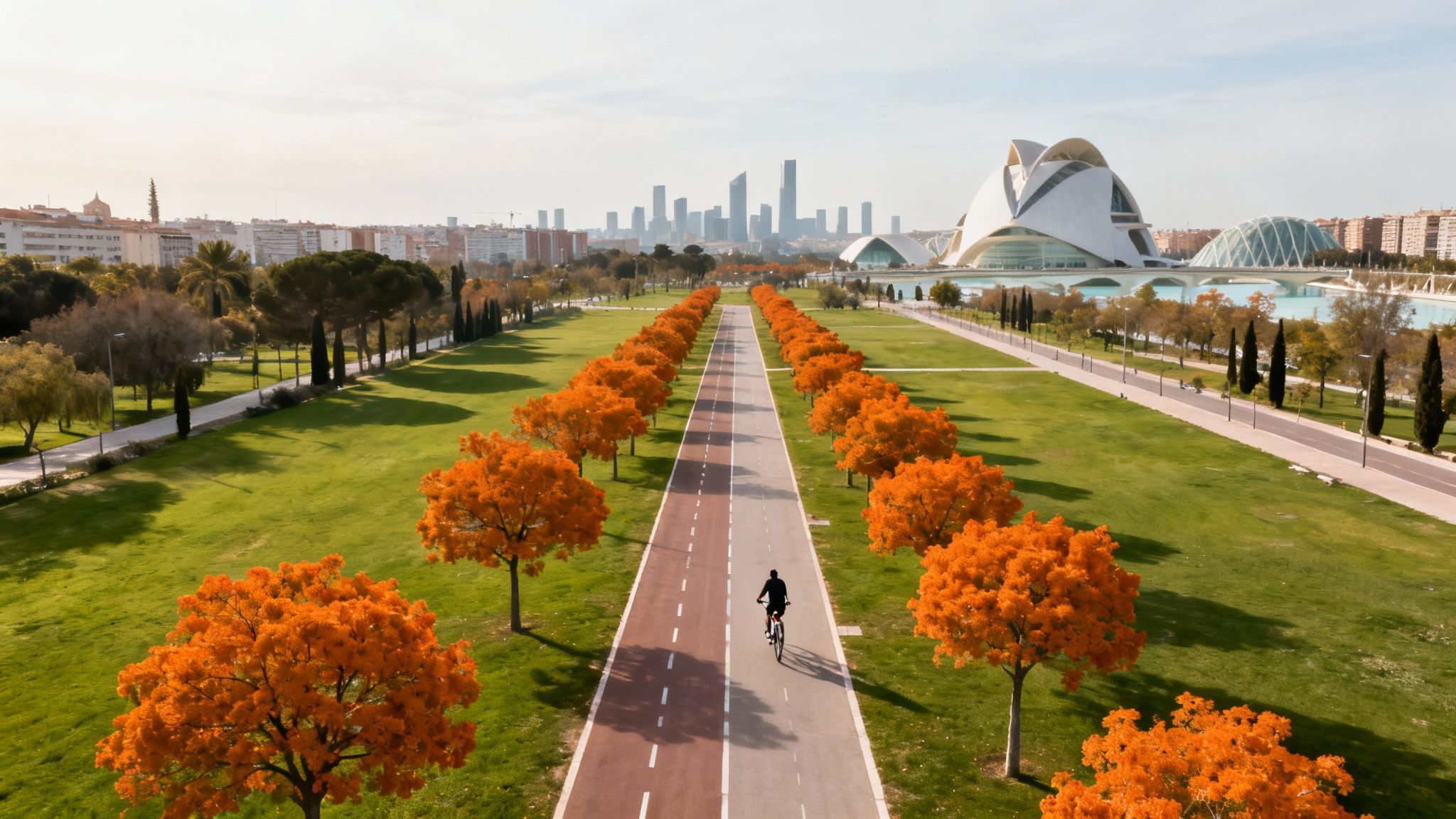
Valencia’s commitment to sustainable mobility extends beyond the Turia. Direct high-speed AVE train connections link the city to Madrid and Barcelona, while its comprehensive metro, tram, and Valenbici bike-share systems make car-free living effortless. Neighborhoods like Ruzafa and Benimaclet offer an authentic, walkable lifestyle with lower costs than Spain’s larger cities, solidifying its status as a top-tier destination for remote workers. This combination of green infrastructure and transit connectivity makes it an excellent choice for a workation without a car.
Practical Tips for Your Stay
- Ideal Stay Length: 3-5 weeks to embrace the slow-travel lifestyle and explore nearby coastal towns.
- Best Season: March–May or October–November for pleasant weather (around 68-75°F / 20–24°C), fewer tourists, and lower living costs.
- Low-Impact Activities: Cycle through the Turia Gardens, explore the Albufera wetlands via local bus, or participate in a local beach clean-up.
- Eco-Stay Pick: The Quartier Hotel offers eco-friendly apartments with kitchens, encouraging stays that support local markets like Mercado de Colón and reduce waste.
- Getting Around: Use the Valenbici bike-share for daily transport. For regional travel, book Renfe train tickets to coastal towns like Cullera or Gandia on Trip.com. Ensure seamless booking with an Airalo eSIM.
4. Madrid, Central Spain: The Ultimate Rail Hub
As Spain’s high-speed rail nucleus, Madrid stands out as one of the best places to visit in Spain for travelers prioritizing connectivity and cultural depth. The capital’s unparalleled Renfe network makes it an ideal launchpad for exploring the entire Iberian Peninsula by train, while its world-class metro system, one of Europe’s most efficient, ensures car-free living is simple and affordable for digital nomads. This seamless integration of local and national transport solidifies its role as a premier transit-oriented base.
Walkability is at the heart of Madrid’s urban experience. Vibrant, energetic neighborhoods like Malasaña, Chueca, and Chamberí offer a rich local culture away from the main tourist thoroughfares, providing an authentic and convenient home for remote workers. While its inland location means higher energy needs for summer cooling and winter heating, Madrid’s function as a hub for night trains to Lisbon, Barcelona, and beyond offers a low-carbon way to travel onward, minimizing the environmental impact of your stay.
Practical Tips for Your Stay
- Ideal Stay Length: 2-4 weeks to use the city as a base for extensive regional exploration.
- Best Season: April–May or September–October to avoid the intense summer heat and winter cold, reducing your reliance on indoor heating and cooling.
- Low-Impact Activities: Spend work mornings in the open air of Retiro Park, explore the world-class Prado and Reina Sofía museums on foot, and source local produce from neighborhood markets like Mercado de San Antón.
- Eco-Stay Pick: The Hat Madrid is a popular boutique hostel and hotel that uses biomass for energy, has reduced water consumption systems, and promotes local culture.
- Getting Around: A 30-day “Abono Turístico” for Zone A offers unlimited metro travel. For day trips, leverage the Cercanías regional rail network; you can learn more about train tickets from Madrid to Toledo for a popular medieval excursion. For longer journeys, book high-speed Renfe tickets on Trip.com. Stay online with an Airalo eSIM.
5. Granada, Andalusia: The Walkable Mountain Gem
Nestled at the foot of the Sierra Nevada mountains, Granada is one of the best places to visit in Spain for an authentic, car-free Andalusian experience. This compact city’s pedestrian-first historic core, especially the medieval Albaicín neighborhood, makes it a haven for digital nomads and slow travelers. Its combination of Moorish history, vibrant local culture, and affordable living creates an ideal base for those seeking a deeper connection with southern Spain.
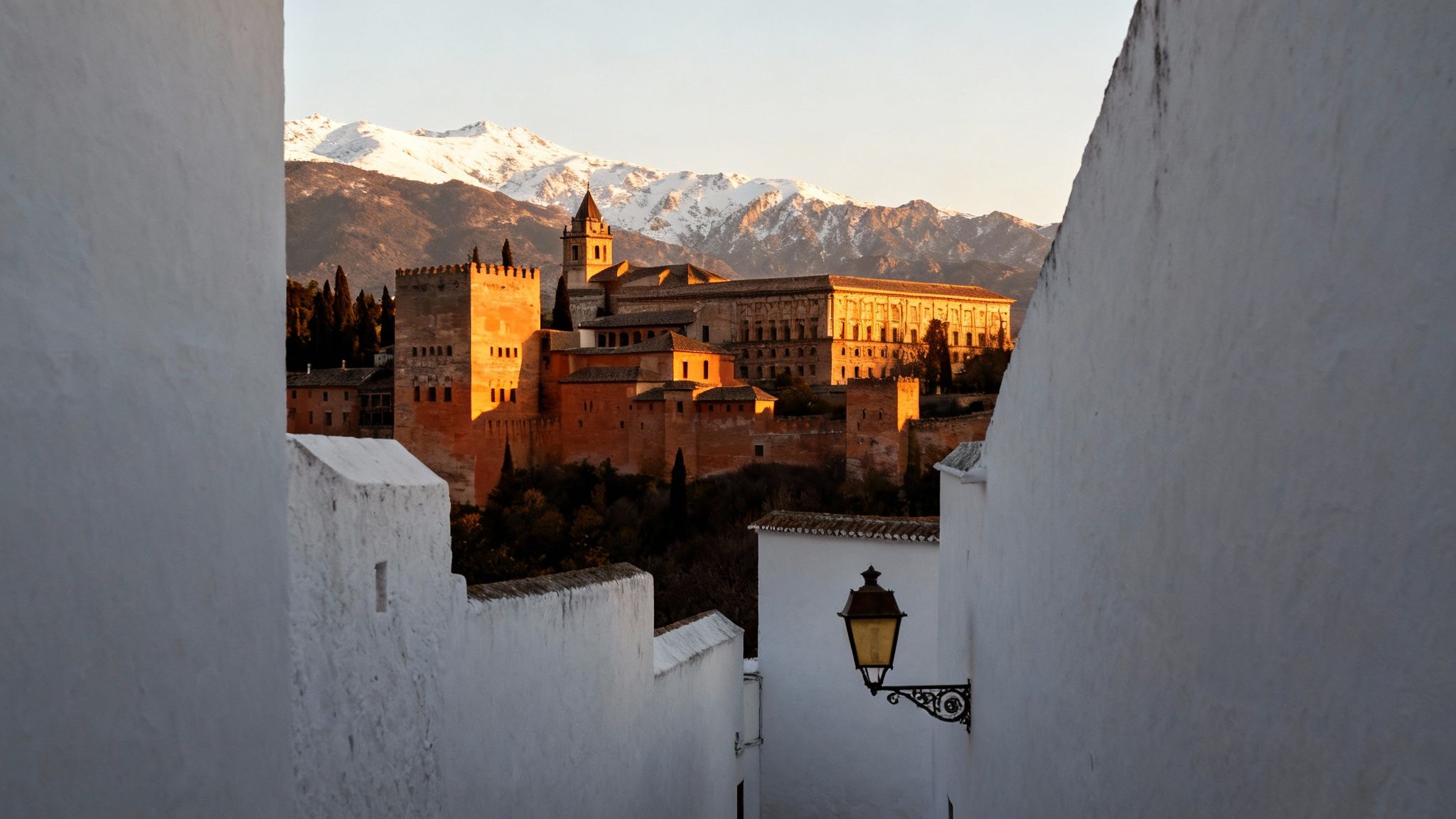
Because the city is compact, it invites exploration on foot. For example, stroll Realejo’s lively tapas bars and plazas. Then, wander Albaicín’s quiet courtyards and hidden lanes. As a result, Granada feels easy to experience without a car. In fact, it ranks among Europe’s most walkable cities. Therefore, you can immerse yourself fully and move at your pace.
Moreover, Renfe rail links make low-impact trips simple. High-speed trains connect to Málaga, Seville, and Córdoba quickly. So, weekend escapes stay easy and car-free. Additionally, you can reach the coast without extra planning. Overall, Granada blends urban living with Andalusia’s best hubs nearby.
Practical Tips for Your Stay
- Ideal Stay Length: 3–4 weeks to embrace the slow-paced lifestyle and take weekend trips.
- Best Season: November–April offers an ideal climate (around 50–65°F / 10–18°C), fewer tourists, and lower prices for a reduced environmental impact.
- Low-Impact Activities: Wander through the Alhambra’s Generalife gardens, shop for local produce at the Mercado de San Agustín, and take a local bus to hike the white villages (pueblos blancos) of Las Alpujarras.
- Eco-Stay Pick: Solar-powered caves at Cuevas el Abanico in the Sacromonte neighborhood offer a unique, traditional, and low-energy stay with stunning views of the Alhambra.
- Getting Around: Base yourself in the highly walkable Realejo or Albaicín neighborhoods. For wider travel, the local bus network is efficient. Book regional Renfe train tickets to Málaga or Córdoba on Trip.com and stay connected with an Airalo eSIM.
6. Seville, Andalusia: The Sun-Drenched Flamenco Capital
As one of Spain’s best places for cultural immersion, Seville feels authentic. Moreover, it offers a car-light lifestyle ideal for digital nomads. As Andalusia’s capital, it’s famous for flamenco and historic architecture. Plus, the city’s flat terrain makes walking and cycling easy. Because the center is compact, you naturally explore on foot. Therefore, you rely far less on motorized transport.
Meanwhile, Seville supports sustainable mobility with the Sevici bike-share program. In addition, public transport is efficient and easy to use. For a quieter base, consider Triana or Santa Cruz. These neighborhoods feel local, yet they remain budget-friendly. Also, you can live near daily essentials without long commutes.
Finally, Seville connects well across Andalusia by rail. For example, Renfe AVE trains link Seville to Madrid quickly. Likewise, regional trains reach Córdoba and Granada with ease. As a result, Seville becomes a perfect hub without a car. Overall, it balances lively city energy with slow travel values.
Practical Tips for Your Stay
- Ideal Stay Length: 3–4 weeks to establish a routine and use the city as a base for regional day trips.
- Best Season: April–May or September–October for pleasant temperatures (around 72–82°F / 22–28°C) and fewer crowds.
- Low-Impact Activities: Explore the historic center on foot, cycle along the Guadalquivir River, and shop for local produce at the Mercado de Triana to reduce waste.
- Eco-Stay Pick: Hotel Gravina 51 is a restored 18th-century manor house committed to sustainability, using local products and energy-efficient systems while offering a culturally authentic stay.
- Getting Around: A monthly Sevici bike-share pass offers excellent value for daily transport. For longer distances or hot days, the metro is a reliable alternative. Book Renfe train tickets for day trips to Córdoba or Málaga on Trip.com. Ensure you’re always connected for bookings with an Airalo eSIM.
7. Córdoba, Andalusia: The Walkable Moorish Jewel
For digital nomads and slow travelers, Córdoba offers authentic, car-free living. Moreover, it’s one of the best places to visit in Spain. As a mid-sized Andalusian city, it feels rich and historic. In addition, its Moorish heritage shapes a truly memorable atmosphere. Because the old town is compact, it’s perfect for immersion. Unlike Seville and Granada, Córdoba feels calmer and less crowded. Therefore, daily life moves slower and lowers your footprint.

Meanwhile, the city’s layout suits minimalist travelers beautifully. The historic center is easy to explore on foot. For example, you can visit the UNESCO-listed Mezquita without hassle. Then, you can wander the Judería’s winding streets with ease. As a result, you skip taxis and daily transport passes. Consequently, this lifestyle stays simple, affordable, and low-impact. Finally, Renfe regional trains connect Córdoba across Andalusia. So, you can explore widely without ever needing a car.
Practical Tips for Your Stay
- Ideal Stay Length: 4–6 weeks for a slow, immersive stay and to take regional day trips.
- Best Season: May–June or September–October for pleasant temperatures (around 68–82°F / 20–28°C) ideal for walking.
- Low-Impact Activities: Wander through the Mezquita’s stunning arcades, explore the Alcázar de los Reyes Cristianos, and visit the archaeological ruins of Medina Azahara via a local bus. Shop for fresh produce at local markets like Mercado de la Victoria to reduce packaging waste.
- Eco-Stay Pick: Las Casas de la Judería de Córdoba offers charming apartments in restored historic houses, promoting cultural preservation while placing you in the heart of the walkable old town.
- Getting Around: No city transport pass is needed; the city center is best explored by foot. For regional travel to Seville or Granada, book your Renfe tickets in advance on Trip.com. Ensure you’re always connected for bookings with an Airalo eSIM.
8. Mallorca, Balearic Islands: The Slow-Travel Island Escape
Mallorca offers a refreshing, sustainable alternative to typical island getaways. Therefore, it’s one of Spain’s best spots for eco-conscious nomads. Although the coastline is stunning, the real draw is slower living. In addition, the island has strong farm-to-table food culture. Plus, public transport makes car-free travel genuinely easy. By taking a low-carbon ferry from Barcelona, you cut emissions. Then, base yourself in walkable Palma for daily convenience. As a result, you enjoy island life while reducing your impact.
Moreover, Palma is a model of walkability for remote workers. Neighborhoods like Ciutat Vella and La Lonja work especially well. From there, you can reach cafes and markets within minutes. Also, the central bus station simplifies day trips across the island. For example, visit mountain villages or quieter coves without driving. Meanwhile, cycling routes are improving across key corridors. Consequently, slow travel feels natural and relaxed. Finally, visiting outside peak summer helps avoid mass-tourism pressure.
Practical Tips for Your Stay
- Ideal Stay Length: 3–4 weeks to establish a routine in Palma and explore the island’s diverse landscapes without rushing.
- Best Season: March–May or October–November for pleasant weather (around 64–75°F / 18–24°C), fewer tourists, and lower prices.
- Low-Impact Activities: Hike in the Serra de Tramuntana mountains, cycle to nearby coves, and shop for zero-waste produce at weekly markets in Sóller or Sineu. Learn more about low-impact island travel on economadtravel.com.
- Eco-Stay Pick: Look for locally-owned “fincas” (rural estates) converted into eco-agriturismos, which often run on renewable energy and serve homegrown food.
- Getting Around: Take the overnight ferry from Barcelona to significantly reduce your carbon footprint (around 13–18 lbs / 6–8 kg CO₂ vs. a flight’s estimated 617 lbs / 280 kg). On the island, purchase a TIB monthly bus pass for island-wide travel and stay connected with an Airalo eSIM for easy navigation.
9. Bilbao, Basque Country: The Regenerated Industrial Hub
Bilbao showcases impressive urban regeneration and cultural renewal. Therefore, it’s one of Spain’s best places for sustainable design fans. Once industrial, it has become a future-focused urban hub. Moreover, an efficient transit network supports daily life without a car. The sleek Metro Bilbao was designed by Norman Foster. In addition, Euskotren regional rail makes Basque travel seamless. As a result, digital nomads can explore easily and responsibly.
Meanwhile, walkability shines along the revitalized Nervión River waterfront. Likewise, Ensanche offers wide, pedestrian-friendly streets and local services. Although it was once an industrial powerhouse, priorities have shifted. Now, Bilbao emphasizes green spaces and protected pedestrian zones. Also, a strong bike-share system supports short trips. Consequently, the city offers a high quality of life. Finally, rail links reach San Sebastián and Vitoria-Gasteiz quickly. So, Bilbao works as a sustainable base for Northern Spain.
Practical Tips for Your Stay
- Ideal Stay Length: 2–3 weeks to absorb the local culture and use it as a transit hub for regional day trips.
- Best Season: May–June or September for milder weather and fewer tourists, ideal for walking and enjoying outdoor art.
- Low-Impact Activities: Explore the Guggenheim Museum and its surrounding sculpture park on foot, cycle the riverside path to the coast, and take the Euskotren to the historic town of Gernika.
- Eco-Stay Pick: For a central and sustainable option, consider apartments in LEED-certified buildings in the Abando or Indautxu neighborhoods, prioritizing walkability and access to public transit.
- Getting Around: Purchase a Barik card for integrated access to the metro, trams, and buses. Book regional train tickets on Euskotren for easy trips to nearby coastal towns. For seamless connectivity, an Airalo eSIM is essential for on-the-go planning.
10. Málaga, Andalusia: The Coastal Tech & Culture Hub
Málaga is rapidly becoming one of the best places to visit in Spain for digital nomads seeking a blend of coastal living, affordability, and excellent connectivity. As a rising tech hub on the sunny Costa del Sol, it offers a walkable city center packed with cultural attractions, from the Picasso Museum to the Alcazaba fortress. Its commitment to pedestrian-friendly zones and an efficient public transport network makes a car-free lifestyle entirely practical.

The city serves as a strategic southern rail gateway. High-speed AVE trains connect Málaga to Madrid in under three hours, while the local Cercanías network provides low-impact access to charming coastal towns. This blend of urban energy, beach access, and strong rail infrastructure makes it an ideal base for remote workers who want both city amenities and easy escapes into Andalusia’s beautiful landscapes.
Practical Tips for Your Stay
- Ideal Stay Length: 3-5 weeks to enjoy the city’s offerings and explore the Costa del Sol.
- Best Season: Spring (April–May) and autumn (September–October) offer the best climate, fewer tourists, and a more sustainable travel experience.
- Low-Impact Activities: Explore the historic center and the port on foot, rent a bike to cycle the coastal promenade, or use Cercanías trains for sustainable day trips. For private transport, Welcome Pickups offers a reliable service.
- Eco-Stay Pick: The Marriott Bonvoy-affiliated AC Hotel Málaga Palacio holds sustainability certifications and offers central, walkable access to the main train station and historic sites.
- Getting Around: The Málaga-María Zambrano station is your hub for both long-distance AVE and local Cercanías trains. Purchase tickets for regional travel on Trip.com. Ensure seamless connectivity for bookings and navigation with an Airalo eSIM.
11. Zaragoza, Aragon: The Strategic High-Speed Rail Hub
Zaragoza is one of the best places to visit in Spain for travelers leveraging the country’s high-speed rail network. Perfectly positioned on the Madrid-Barcelona AVE line, this city offers a compelling, lower-cost alternative to its larger neighbors. Its compact, walkable historic center and efficient public transport system make it an ideal base for digital nomads and eco-conscious explorers looking to discover a different side of Spain without needing a car.
The city’s strategic location makes it a logical stopover or short-term hub for rail-first itineraries through northern and eastern Spain. By basing yourself here, you can enjoy a more relaxed pace of life while still being just a short train ride from major metropolitan areas. This blend of accessibility, affordability, and authentic Aragonese culture solidifies Zaragoza’s status as a smart, sustainable travel destination.
Practical Tips for Your Stay
- Ideal Stay Length: 1-2 weeks to explore the city and use it as a base for regional day trips.
- Best Season: Spring (April–May) or autumn (September–October) to enjoy pleasant weather for walking and avoid the intense summer heat.
- Low-Impact Activities: Wander through the historic Casco Antiguo, explore the Aljafería Palace on foot, and visit the Mercado Central for local produce.
- Eco-Stay Pick: Hotel Sauce offers a central location with a commitment to local sourcing and energy efficiency, perfect for exploring the city’s main attractions without transport.
- Getting Around: Base yourself near Delicias station for seamless transfers. The city center is highly walkable, but a local bus pass is useful for wider exploration. Book high-speed AVE tickets to Madrid or Barcelona on Trip.com. Ensure you’re always connected for bookings with an Airalo eSIM.
12. Alicante, Valencian Community: The Affordable Coastal Base
Alicante offers a practical and sun-drenched alternative to Spain’s larger coastal cities, making it one of the best places to visit in Spain for budget-conscious digital nomads. This city on the Costa Blanca combines excellent regional rail connectivity with an affordable cost of living, providing a walkable and accessible base for remote work and exploration without the high price tag.
The city is compact and easy to navigate on foot, especially around the central areas of El Barrio and the marina. Its well-connected train station offers frequent and efficient Renfe services to Valencia and Murcia, making regional, car-free day trips simple. For longer journeys, seasonal ferry services provide a low-carbon route to the Balearic Islands. Alicante’s focus on a relaxed, beach-centric lifestyle and practical transit makes it an ideal spot for slow travelers seeking sun, sea, and sustainability.
Practical Tips for Your Stay
- Ideal Stay Length: 2-3 weeks to enjoy the city, explore the Costa Blanca, and settle into a work routine.
- Best Season: April–June or September–October. These shoulder seasons provide pleasant weather, fewer tourists, and a more authentic local experience.
- Low-Impact Activities: Hike up to Santa Bárbara Castle for panoramic views, walk the Explanada de España promenade, or spend a day relaxing on Postiguet Beach. Explore local markets for fresh, regional produce.
- Eco-Stay Pick: Hotel Smile & Co Hostal Boutique is a centrally located option that emphasizes a minimal, clean design and is within walking distance of the train station and major sights.
- Getting Around: Alicante’s center is highly walkable. For regional travel, use the Cercanías and Media Distancia trains. Book tickets to Valencia or Murcia on Trip.com. Ensure you’re always connected for bookings and navigation with an Airalo eSIM.
Top 12 Spanish Destinations Comparison
| City | 🔄 Ease of adopting low‑carbon / car‑free lifestyle | ⚡ Transport resources & speed | ⭐ Expected outcomes (quality/effectiveness) | 📊 Ideal use cases (results/impact) | 💡 Key advantages / brief tips |
|---|---|---|---|---|---|
| Barcelona, Catalonia | Moderate — strong infrastructure but seasonal crowding | Excellent — integrated metro/tram/bus + AVE hub | High — walkable, bike‑friendly, strong rail access | Rail hub & urban eco‑nomad base (2–6 weeks) | Integrated transit, Superblocks, active nomad community |
| San Sebastián, Basque Country | Low — city center car‑free since 2003; very walkable | Strong — Euskotren + Renfe; good cross‑border links | Very high — minimal car dependency, food sustainability | Coastal slow travel & deep cultural immersion (3–8 weeks) | Pedestrianized center, exceptional local food, compact layout |
| Valencia, Mediterranean Coast | Low — Turia Gardens & bike network simplify car‑free living | Good — MetroValencia + AVE; Valenbici bike‑share | High — bikeable, green corridors, lower costs than BCN | Affordable coastal base for longer stays (4–8 weeks) | Lower living costs, Turia Gardens, strong markets |
| Madrid, Central Spain | Moderate — excellent transit but inland energy needs | Excellent — Europe‑scale metro + AVE national hub | High connectivity & cultural access; higher climate energy use | Transit hub / cultural base; short stays (2–4 weeks) | National rail hub, abundant coworking, major museums |
| Granada, Andalusia | Low — compact, pedestrian historic core; narrow streets | Moderate — regional Renfe links; fewer direct routes | High authenticity & affordability; mountain climate | Slow cultural immersion & outdoor activities (4–8 weeks) | Very affordable, Alhambra access, Sierra Nevada nearby |
| Seville, Andalusia | Low — flat city, strong bike infrastructure, car‑light center | Good — Sevici bikes + AVE/regional trains | High — walkable/cyclable, warm climate reduces heating needs | Andalusian cultural base & regional exploration (3–6 weeks) | Affordable, bike‑share, riverfront green spaces |
| Córdoba, Andalusia | Very low — extremely walkable; compact medieval core | Moderate — regional trains; AVE to major hubs | High — minimal transport needs, very affordable | Deep cultural immersion & minimalist nomads (4–8 weeks) | Cheap living, Mezquita proximity, walkable everywhere |
| Mallorca (Balearic Is.) | Moderate — island logistics; Palma walkable, ferry option | Good local — TIB buses + Palma; ferry/flight for mainland | High seasonal appeal; sustainability varies with season | Island retreat / slow travel (4–12 weeks) | Ferry low‑carbon option, varied landscapes, mild winters |
| Bilbao, Basque Country | Moderate — strong urban design but rainy climate | Strong — electric metro, Euskotren, Renfe regional links | Good — efficient public transport & cultural offerings | Short cultural stays & Basque region hub (2–3 weeks) | Guggenheim/cultural scene, waterfront, solid transit |
| Málaga, Andalusia | Low — walkable center; car use outside center common | Good — AVE to Madrid, regional rail, international airport | Balanced — beach + city life; seasonal crowding | Beach‑city hybrid base (3–8 weeks) | Airport access, growing nomad services, coastal access |
| Zaragoza, Aragon | Low — compact center easy to navigate car‑free | Excellent — AVE corridor between Madrid–Barcelona | Efficient transit base with lower costs | Rail‑first transit stop or short base (2–4 weeks) | Central high‑speed location, cheaper accommodation |
| Alicante, Valencian Community | Low — walkable marina/old town; relaxed coastal layout | Moderate — regional Renfe; fewer AVE services; seasonal ferries | Good — affordable beach base; limited high‑speed access | Relaxed coastal stays & regional trips (3–8 weeks) | Beaches, markets, lower cost than major metros |
Final Thoughts: Crafting Your Sustainable Spanish Journey
Choosing the best places to visit in Spain is an exercise in intentional travel, especially for digital nomads and eco-conscious explorers. This guide moved beyond the typical highlight reel to focus on a more responsible way to experience this vibrant country: one city, one train ride, and one walkable neighborhood at a time. By prioritizing destinations like Valencia for its cycling infrastructure, San Sebastián for its pedestrian-centric layout, and Barcelona for its world-class public transit, we’ve demonstrated that a low-impact journey doesn’t mean a low-excitement one. It’s about aligning your travel style with your values.
The core principle threaded through each destination is the power of slow, rail-first travel. Opting for a Renfe night train from Barcelona to Granada isn’t just a way to save on a night’s accommodation; it’s a strategic choice that slashes your carbon footprint compared to a short-haul flight. Similarly, basing yourself in a city like Málaga or Seville for a month allows you to explore the wider Andalusian region using efficient regional trains, fostering a deeper connection with the local culture while supporting the public infrastructure.
How Low-Impact Travel Turns You Into a Temporary Local
This approach transforms travel from a frantic checklist into a sustainable practice. It encourages minimalist packing, reduces reliance on rental cars, and supports regenerative accommodations that invest back into their communities and ecosystems. By adopting these strategies, you’re not just a tourist; you’re a temporary resident contributing positively to the places you inhabit.
Ultimately, the best places to visit in Spain are the ones you connect with on a deeper level. By traveling slowly, deliberately, and with respect for the environment, you create space for the spontaneous, authentic moments that define a truly memorable journey.
This article was fact-checked using sustainability data from the World Green Building Council, the Global Ecotourism Network, and peer-reviewed architecture studies. All partner links are vetted for compliance with sustainable business certifications.
Join the Sustainable Work Movement
Want more rail-first itineraries, low-impact packing systems, and walkable base-city ideas?
Explore Eco Nomad Travel
📚 Core Guides
🧭 Planning & Logistics
🗺️ Destinations & Seasons
Jeremy Jarvis — founder of Eco Nomad Travel, sustainable travel writer, and advocate for regenerative tourism. His work focuses on low-impact mobility, eco-friendly digital nomad life, and climate-positive travel.
Legal
Affiliate DisclaimerPrivacy Policy
Terms of Service
Image & Media Notice
Cookie Policy
Contact
Affiliate Disclosure: Some links on Eco Nomad Travel are affiliate links, meaning we may earn a small commission at no extra cost to you. This supports our mission to inspire responsible and low-impact travel worldwide.
Connect
✅ Trusted Official Sources
Plan smarter eco trips
Try our free Sustainable Travel Tools for Digital Nomads – carbon calculator, train vs plane comparator, and more.
Open Tools Hub