
Planning a trip to see the best places to visit in switzerland often brings images of soaring alps and pristine lakes to mind. This guide focuses on experiencing that incredible scenery through a lens of sustainability and slow travel. Consequently, we will explore ten destinations that are not just beautiful but are exceptionally well-suited for low-carbon journeys. We prioritize rail connections, walkable base cities, and meaningful local experiences.
From the iconic peaks of the Bernese Oberland to the quiet vineyards of Lavaux, each location is chosen for its commitment to preserving the very environment that makes it so breathtaking. Forget the hassle of a rental car; Switzerland’s world-class public transport network makes it easy to travel deeper and more responsibly. For instance, you can glide through valleys and along lakesides effortlessly.
Whether you’re a digital nomad looking for a scenic base or a traveler wanting to minimize your footprint, you’ll find practical tips here for a memorable trip. I found that packing light with just a carry on backpack and some compression packing cubes made navigating the train system effortless. This article was fact-checked using sustainability data from the World Green Building Council, the Global Ecotourism Network, and peer-reviewed architecture studies. All partner links are vetted for compliance with sustainable business certifications.
1. Interlaken & Bernese Oberland
For eco-conscious travelers seeking the quintessential alpine experience, the Interlaken and Bernese Oberland region is undeniably one of the best places to visit in Switzerland. This area serves as a magnificent gateway to the country’s most iconic peaks. These include the Eiger, Mönch, and Jungfrau. It is all anchored by a world-class, sustainable public transport network. Interlaken, nestled between Lake Thun and Lake Brienz, acts as the central rail hub. This makes it an ideal, walkable base for exploring the surrounding valleys without a car.

The region’s commitment to low-carbon transit is exemplary. For example, the famous Jungfrau Railway, a UNESCO World Heritage site, ascends to the highest railway station in Europe. It is powered entirely by renewable hydroelectric energy. From here, you can access car-free villages like Mürren, which is reachable only by cable car. This offers a tranquil escape from road traffic. Another highlight is the historic Schynige Platte Railway. It’s an open-air cogwheel train that climbs to panoramic hiking loops with breathtaking views.
Low-Impact Itinerary and Travel Tips
To maximize your sustainable journey, start with a 2-3 day stay in Interlaken to acclimatize and explore the lakes. Then, use the efficient train and cable car system to move to a smaller, higher-altitude village like Grindelwald, Wengen, or Mürren. This provides a quieter, more immersive stay. This approach also decentralizes your impact and supports smaller mountain communities.
- Swiss Travel Pass: Instead of buying individual tickets, opt for a Swiss Travel Pass (valid for 3–15 flexible days). It provides extensive coverage on trains, buses, and boats. It also offers a significant discount on the Jungfrau Railway.
- Hike Between Towns: Well-marked trails connect many villages. A day hike from Grindelwald to Wengen, for instance, minimizes your reliance on transport. It also deepens your connection to the landscape. A good packable daypack is essential for these treks.
- Travel Light: Navigating mountain transport is much easier with minimal luggage. Consider using Switzerland’s luggage forwarding service between major train stations to send your main bag ahead.
- Shoulder Season: Visiting in May-June or September-October means fewer crowds. It also means reduced strain on local infrastructure and often more pleasant hiking weather.
2. Luzern (Lucerne) – A Top Place to Visit in Switzerland
For travelers drawn to the romance of medieval architecture and pristine alpine lakes, Luzern (Lucerne) is one of the best places to visit in Switzerland for a low-carbon journey. This central Swiss city combines a stunningly preserved, walkable Old Town with a highly efficient, integrated transport system of trains and boats. Luzern acts as a key rail nexus and the primary gateway to Lake Lucerne (Vierwaldstättersee). This allows for seamless, car-free exploration of the region’s dramatic mountain landscapes and lakeside villages.

The city’s sustainable ethos is visible in its dedication to public transit and cultural preservation. The iconic Chapel Bridge, Europe’s oldest covered wooden bridge, was painstakingly rebuilt after a 1993 fire using traditional methods. This is a testament to heritage conservation. This is contrasted by the modern KKL Luzern, a Jean Nouvel-designed concert hall celebrated for its sustainable design. The city’s fleet of vintage and modern paddle steamers on Lake Lucerne is fully integrated with the SBB rail network. It offers beautiful, low-impact excursions that connect directly to mountain railways.
Low-Impact Itinerary and Travel Tips
To fully embrace a slow-travel approach, base yourself in Luzern for 3-4 days to explore the city and its immediate surroundings. Use the excellent public transport to embark on combined boat-and-train day trips to nearby peaks like Pilatus or Rigi. This strategy centralizes your stay in a walkable hub. It also provides easy access to quintessential Swiss mountain experiences without the need for a car.
- Lucerne Visitor Card: Most accommodations provide a free Visitor Card. This offers complimentary use of buses and trains within the city (Zone 10) and discounts on museums, cable cars, and boat trips.
- Explore Beyond the Altstadt: For a more local experience and better value, consider staying in the quieter Neustadt district. It’s just east of the Old Town. It offers an authentic neighborhood feel while remaining highly walkable.
- Boat-to-Train Excursions: A classic trip involves taking a paddle steamer to Alpnachstad (about 45 minutes). Then, ride the world’s steepest cogwheel railway up Mount Pilatus for spectacular views.
- Combine Rail Passes: For a multi-city trip, a Swiss Travel Pass is invaluable. You can learn more about finding the best rail passes for Europe to see which option fits your itinerary. This makes planning a loop from Luzern to Interlaken and Montreux incredibly simple.
- Walk the City Walls: For stunning, free panoramic views of the city and lake, walk along the historic Musegg Wall and climb its towers. Go early in the morning to avoid the crowds.
3. Montreux & Lavaux Wine Region
For travelers seeking a blend of cultural sophistication and breathtaking natural beauty, the Montreux and Lavaux Wine Region is one of the best places to visit in Switzerland. This elegant corner of French-speaking Switzerland is centered around the Belle Époque town of Montreux on Lake Geneva (Lac Léman). It offers a seamless, car-free experience. The region is famed for its UNESCO World Heritage Lavaux vineyard terraces. This is a stunning 8,911-acre (2,300-hectare) landscape of ancient, hand-built stone walls and vines that cascade down to the lake.
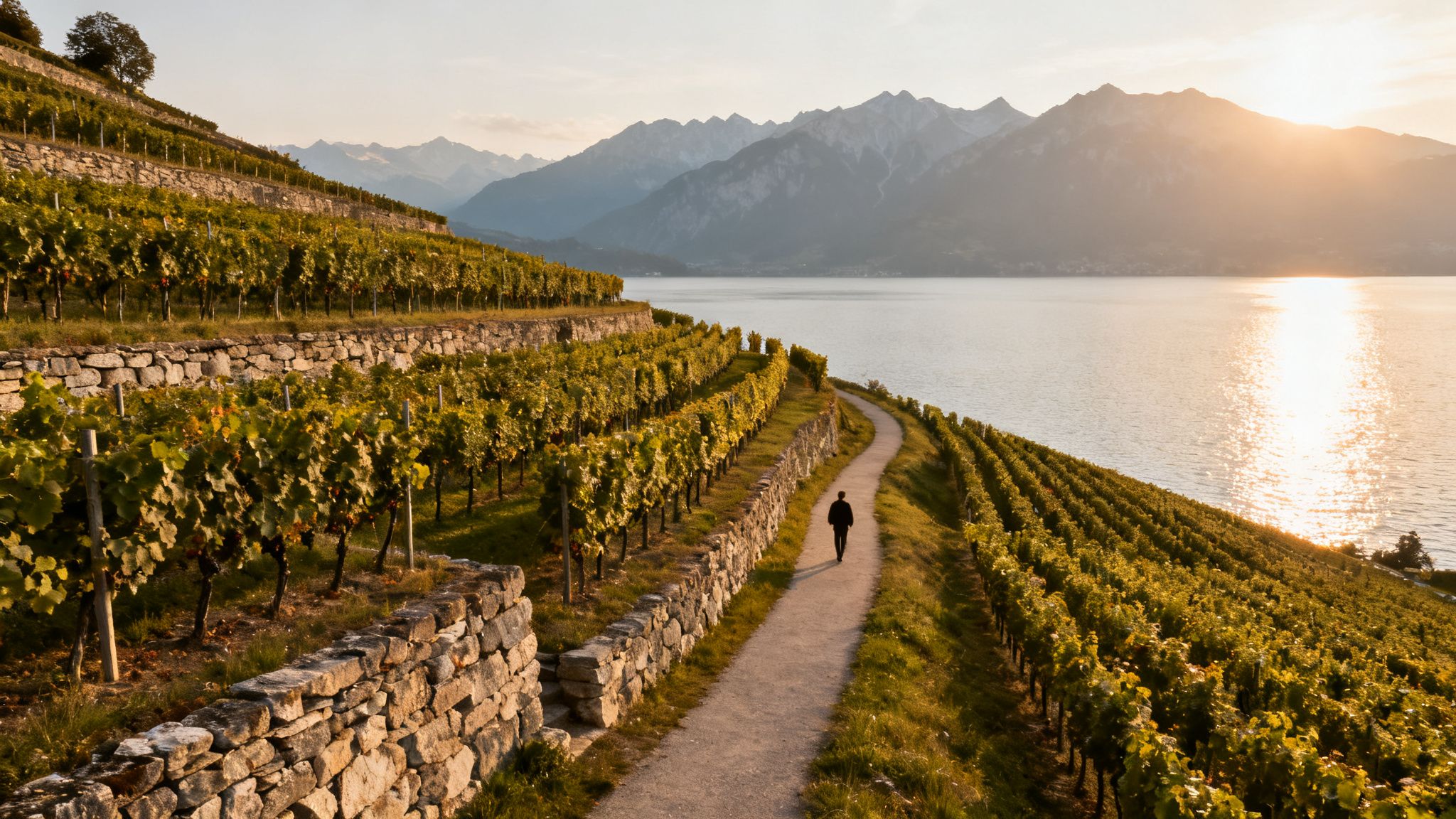
Montreux serves as an excellent, walkable hub with a robust rail and boat network. From its waterfront promenade, you can easily walk to the iconic Chillon Castle. This is a 900-year-old fortress on a lake peninsula. Or, you can hop on a historic paddle steamer for a scenic trip across the lake to France. The region’s commitment to public transport allows for effortless exploration of the entire Vaud region. Be mindful of the world-famous Montreux Jazz Festival in July. Visiting in June or September provides a quieter experience with fewer crowds.
Low-Impact Itinerary and Travel Tips
Base yourself in Montreux for 3-4 days to explore the town and surrounding vineyards. The old town, particularly around Rue du Théâtre, offers a quieter, more authentic atmosphere than the grand waterfront hotels. Use this base to take easy day trips. Leverage the efficient train system to reach Lausanne in just 15 minutes for a day of culture at the Cathedral and Musée de l’Art Brut.
- Lavaux Discovery Pass: This regional pass offers unlimited access to the Lavaux-Oron rack railway and local trains for 1–7 days. This makes it the most cost-effective way to explore the vineyard villages.
- Hike or Bike the Terraces: Instead of organized tours, rent a bike at a local train station. Or, hike the well-marked trails between charming wine-making villages like Lutry, Epesses, and Riex. You can stop at local cellars (caveaux) for tastings at your own pace. A good reusable water bottle is a must for staying hydrated.
- Cross the Lake to France: Take a 45-minute ferry from Montreux to Évian-les-Bains in France. This easy day trip allows you to explore the adjacent Haute-Savoie region and return in the evening. It offers two countries in one low-carbon journey.
- Travel Outside Peak Season: Visiting just before or after the Jazz Festival (in June or early September) ensures better availability of accommodations. It also provides a more relaxed atmosphere for enjoying the lakeside and vineyards.
4. Appenzell Alps & Säntis Region
For travelers seeking a slower, more authentic side of Switzerland, the Appenzell Alps & Säntis Region is a fantastic choice. This corner of northeastern Switzerland offers a genuine escape into rural traditions, preserved folk culture, and dramatic limestone peaks. Far from the bustling tourist circuits, this area is one of the best places to visit in Switzerland for its commitment to small-scale, community-focused tourism. The region is brilliantly connected by the charming narrow-gauge Appenzell Railways. This makes it easy to explore its rolling hills and car-free alpine areas without a vehicle.
The landscape is a storybook of traditional wooden chalets, grazing cows with melodic bells, and vibrant local customs. Appenzell town, with its beautifully preserved medieval square, serves as the perfect walkable hub. From here, you can easily access highlights like the iconic Äscher Alpine Inn. This is a 17th-century hut that appears impossibly built into a cliff face. The region is also a living museum of Swiss crafts. These range from intricate Scherenschnitte paper cutting to traditional folk textile printing, with local studios often welcoming curious visitors.
Low-Impact Itinerary and Travel Tips
To fully embrace the region’s gentle pace, plan a 3-4 day stay based in Appenzell town. This allows ample time for unhurried exploration of the main valley and day trips into the surrounding mountains. Use the local railway to journey to Wasserauen. This is the starting point for the dramatic cable car ascent up Ebenalp or the more challenging Säntis peak. This approach supports the region’s excellent public transport infrastructure. It also provides a deeper connection to the local way of life.
- Appenzell Holiday Card: If you stay three or more nights in the region, many hotels and accommodations offer a complimentary Appenzell Holiday Card. This provides free travel on regional trains and cable cars, a significant value.
- Hike the Alpine Routes: A classic day trip involves taking the train to Wasserauen, the cable car up Ebenalp, and hiking to the Seealpsee lake before returning. A collapsible water bottle is a must for staying hydrated on these trails.
- Embrace Local Culture: Visit a local cheese dairy to see how Appenzeller cheese is made. Or, attend a workshop to learn about local textile crafts. These experiences offer authentic insight and support the local economy directly. For more inspiration on scenic train journeys, explore some of the best train routes in Europe.
- Dine at Mountain Inns: Eat at mountain guesthouses (Berggasthaus) like Äscher or Alp Säntis. They serve hearty, traditional fare like cheese dishes and apple cider. This offers a scenic and budget-friendly alternative to town restaurants.
5. Zermatt & Matterhorn Region
For an unparalleled car-free alpine experience, the Zermatt and Matterhorn region is one of the best places to visit in Switzerland. This iconic village, nestled at the foot of the magnificent Matterhorn, is accessible only by train. This makes it a model for sustainable mountain tourism. The absence of combustion-engine cars preserves the crisp mountain air. It also ensures a tranquil atmosphere. This allows the sounds of nature and church bells to define the soundscape. Zermatt’s commitment to electric-only local transport and reliance on rail access makes it a prime destination for eco-conscious travelers.
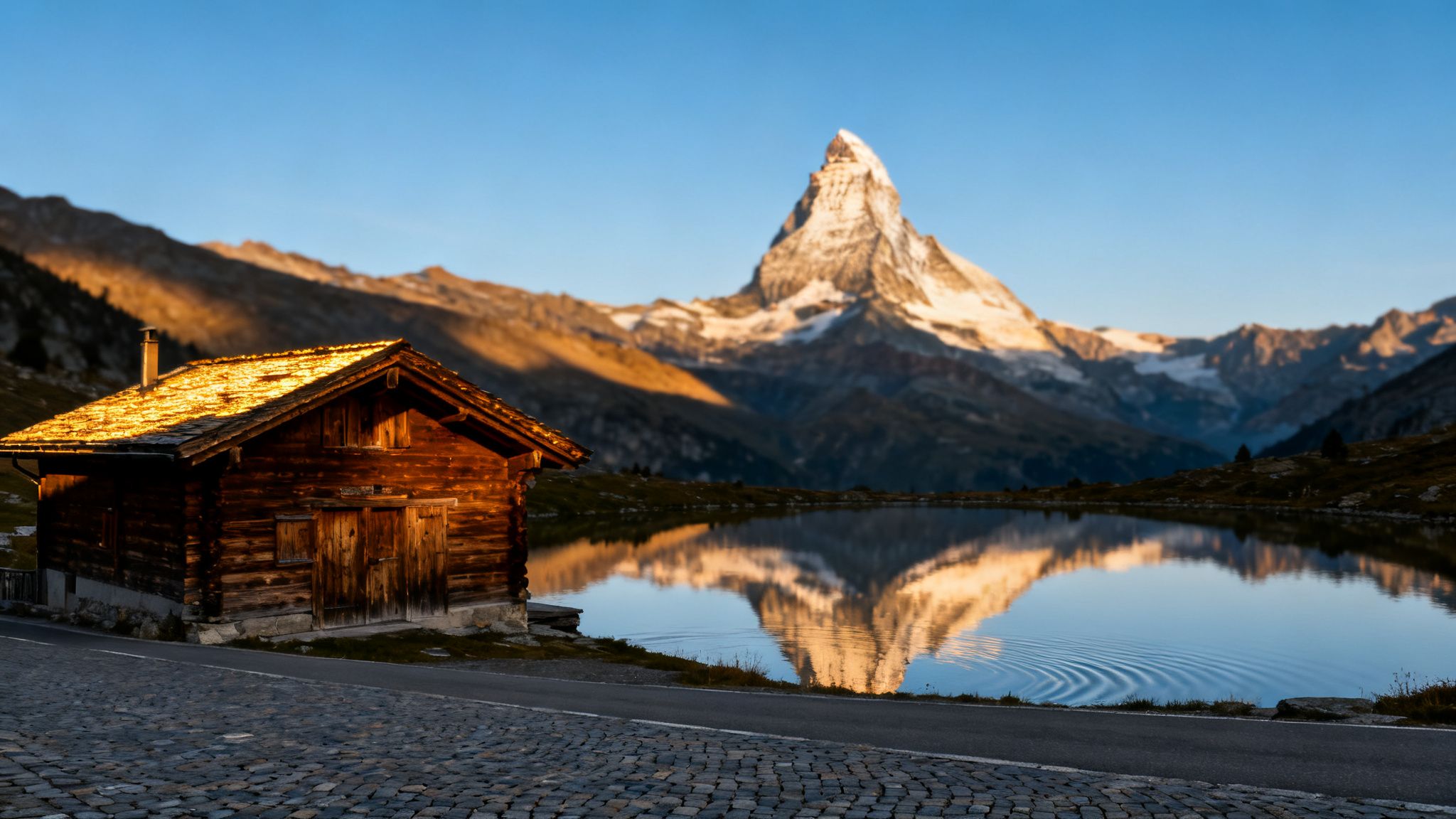
The journey itself is part of the sustainable adventure. For example, the historic Gornergrat Railway, the oldest electric cog railway in Switzerland, winds its way up to breathtaking viewpoints. It offers dramatic panoramas of the Matterhorn and surrounding peaks. This rail network, along with an extensive system of cable cars, eliminates the need for a car entirely. Visitors can explore high-altitude trails, glacier paradises, and charming mountain restaurants using exclusively low-impact transport. The region demonstrates how world-class tourism can coexist with environmental preservation.
Low-Impact Itinerary and Travel Tips
To manage costs and travel more sustainably, consider staying in a town like Visp at the base of the valley. Then, take the scenic Matterhorn Gotthard Bahn for day trips into Zermatt. This approach not only offers significant savings but also distributes tourist spending more broadly. For those staying in Zermatt, embrace the village’s walkability. Everything is easily reachable on foot, a perfect example of slow travel in action.
- Cost-Saving Base: Stay in Visp for a 30–50% reduction in accommodation costs. The beautiful one-hour train ride to Zermatt becomes a daily highlight rather than a one-off journey.
- Hike the Riffelalp Loop: For stunning Matterhorn views without extreme climbing, take the Gornergrat train up and hike down to the Riffelalp station. This 2-3 hour trek is accessible and rewarding; a good lightweight travel backpack is all you need.
- Shoulder Season Benefits: Visit in May-June or September-October. You’ll find fewer crowds on the trails, better accommodation availability, and more stable weather conditions for hiking.
- Matterhorn Gotthard Bahn Pass: Instead of buying single tickets, look into a regional day pass. This often covers the network of cog railways, cable cars, and local buses for one price.
6. Jura Mountains & Val-de-Travers Region
For travelers seeking an authentic, off-the-beaten-path experience, the Jura Mountains & Val-de-Travers region stands out as one of the best places to visit in Switzerland. This gentle, rolling mountain range offers a quieter, more intimate alternative to the high-traffic Alps. It features dense forests, dramatic limestone cliffs, and charming small towns. It’s an ideal destination for car-light travel. You can rely on an efficient network of regional trains and buses that connect its key sights. These range from historic watchmaking towns to the birthplace of absinthe.
The region’s appeal lies in its low-key atmosphere and deep connection to local traditions. For example, you can hike to the breathtaking Creux du Van, a massive natural amphitheater, without encountering large crowds. The historic, narrow-gauge Jura Railways offer scenic journeys. They sometimes have vintage carriages on summer weekends. This area prioritizes small-scale, community-based tourism. This allows you to directly support local cheese dairies and distilleries while enjoying a truly serene escape. This approach aligns perfectly with sustainable travel principles, making your trip both memorable and mindful.
Low-Impact Itinerary and Travel Tips
For a well-rounded trip, base yourself in Neuchâtel for 3–4 days. Its lakeside location and excellent rail connections make it a perfect hub for exploring the region. From here, you can take easy day trips to hike, taste local products, and even cross the border into France. This offers a wider perspective on the Jura culture. This strategy supports a central urban area while allowing for low-impact excursions into more rural landscapes.
- E-Bike Exploration: Rent an e-bike at Neuchâtel station. Many of the best routes, particularly those along the lakes and through the Val-de-Travers, follow flat forest tracks perfect for a day of cycling.
- Hike the Creux du Van: Take the train to Noiraigue and embark on the 4-hour circular hike to the dramatic limestone cliffs of Creux du Van. The views are spectacular, and a sturdy set of toiletry bottles reusable for sunscreen is a must for the trail.
- Absinthe & Cheese: Visit a distillery in Couvet, the historic heart of absinthe production, for a tasting. Pair this with a tour of a local cheese dairy in the Vallée de Joux to experience the region’s rich culinary heritage.
- Cross-Border Journey: The train from Le Locle to Morteau, France, takes just 30 minutes. This easy day trip allows you to explore the French Jura, walk along the Doubs river, and compare the distinct cheese cultures on both sides of the border.
7. Oeschinen Lake & Kandersteg Valley
For an unparalleled alpine water experience, the Kandersteg Valley and its crown jewel, Oeschinen Lake, represent one of the best places to visit in Switzerland. This remote glacial valley offers a quieter, more intimate alternative to the busier hubs of the Bernese Oberland. The car-free village of Kandersteg serves as a charming and walkable base. It has traditional chalets clustered around a historic church. From here, you can easily access the turquoise-blue Oeschinen Lake. This is a stunning alpine lake at nearly 5,249 feet (1,600 meters) with zero commercial activity on its shores.

This region is a gateway to some of Switzerland’s most protected and culturally significant landscapes. The Lötschental, a nearby UNESCO-recognized masterpiece, is a valley where villages preserve unique traditional costumes and a distinct dialect. The area is perfectly suited for low-impact exploration. It prioritizes hiking and water-based pursuits over motorized transport. The primary access to the lake is via a gondola from Kandersteg. This significantly reduces traffic and preserves the serene atmosphere of this high-altitude sanctuary.
Low-Impact Itinerary and Travel Tips
To fully immerse yourself, plan a 3-4 day stay in a traditional Kandersteg guesthouse. Dedicate a full day to exploring Oeschinen Lake. Perhaps try an early morning swim in the summer to see the mountain reflections on the still water. Then, venture further with a multi-day hike into the Lötschental valley. Or, you can tackle the spectacular Gemmi Pass route in stages.
- Hike the Gemmi Pass: This iconic trail can be split into manageable sections. Hike from Kandersteg to the Weisshorn Hut (4–5 hours), stay overnight, and continue to Leukerbad the next day (5–6 hours). This makes for a rewarding two-day adventure.
- Explore the Lötschental: Take the efficient train from Kandersteg to Goppenstein (a 90-minute journey) to reach the entrance of this secluded Valais valley. From there, you can explore its isolated villages entirely on foot.
- Pack Smart: The weather at high altitudes can change in an instant. Packing extra layers, waterproof gear, and a solid shampoo bar to save space and plastic is non-negotiable.
- Optimal Timing: For the best conditions, visit from June to July for vibrant wildflowers. Or, visit in September for clear skies and fewer tourists. The peak season of July and August can be extremely busy.
8. Vallée de Joux & Sainte-Croix (Watch-Making Heritage)
For travelers seeking an authentic glimpse into Switzerland’s artisan soul, the Vallée de Joux and Sainte-Croix region stands out as one of the best places to visit in Switzerland. This protected Alpine valley in the western Jura mountains offers a quiet, low-impact alternative to more crowded destinations. It is a land of pristine lakes and deep-rooted watchmaking heritage. It’s accessible via scenic rail lines that wind through pastoral landscapes, making it a perfect car-free escape.
The region’s identity is shaped by centuries of horological craftsmanship. Legendary brands like Patek Philippe originated here, and the tradition continues in small towns like Le Sentier and Le Chenit. Visitors can explore the Cité de l’Horlogerie (Watchmaking City). Here, artisans’ studios are open for visits. This offers a chance to see masters at work and purchase directly from the makers. This area provides an unvarnished look at Swiss culture, far from the polished tourist hubs. It features traditional covered wooden bridges and preserved 18th-century architecture.
Low-Impact Itinerary and Travel Tips
To fully absorb the valley’s tranquil pace, base yourself in Sainte-Croix for 3-4 days. This allows ample time to explore the local museums, meet watchmakers, and enjoy the surrounding nature trails. From here, you can easily connect to the larger city of Neuchâtel by train (a scenic 1.5-hour journey). This provides a day trip that contrasts the valley’s quietude with urban energy.
- Hike Lake Joux: A beautiful circuit trail (around 5 miles or 8 km, 2-3 hours) starts right from the train station. The path meanders through forests and along the pristine Alpine water. It is perfect for a brisk swim in summer when temperatures reach about 64°F (18°C).
- Rent an E-bike: The train station offers e-bike rentals. This is an ideal way to explore further. A popular day trip is to the nearby Lac de Chalain in France. The border crossing is easy and the scenic ride takes about 30 minutes.
- Visit a Unique Museum: The International Museum of Ancient Watches in Sainte-Croix houses a unique collection. It is often quiet even in peak season, offering an intimate and affordable cultural experience.
- Travel Simply: The focus here is on heritage and nature, not extensive amenities. Pack biodegradable soap for hikes and remember that life moves at a slower pace.
9. Basel & Rhine River Valley
For travelers seeking a vibrant cultural hub with unparalleled cross-border connectivity, the city of Basel and the Rhine River Valley is one of the best places to visit in Switzerland. Situated at the trifecta of Switzerland, Germany, and France, Basel serves as a sophisticated, walkable base for urban exploration. It’s also great for effortless day trips into the Black Forest and Alsace wine region. Its world-class museums, historic old town, and unique river culture make it an exceptional destination for a slow-travel itinerary. This itinerary focuses on art, history, and nature.

The city’s sustainable ethos is evident in its superb public transit and its unique Rhine swimming culture. During summer, locals float down the clean, safe river. This is a testament to the region’s environmental standards. The city is a masterpiece of walkability. Major attractions like the Kunstmuseum Basel, the world’s oldest public art collection, and the medieval Spalentor gate are easily reachable on foot. Basel’s main SBB train station is a critical European rail nexus. It connects you to Freiburg, Germany in an hour and Colmar, France in about 1.5 hours without needing a car.
Low-Impact Itinerary and Travel Tips
To best experience the region, base yourself in Basel for 3-4 days. Dedicate two days to exploring the city’s museums and distinct neighborhoods, like the trendy Kleinbasel district. Use the remaining days for rail-based excursions into Germany or France. This strategy concentrates your stay in a central, low-impact urban core. It also allows for easy, low-carbon regional exploration.
- Basel Museum Pass: If you plan to visit more than two museums, the BaselCard (often included with a hotel stay) or a dedicated museum pass offers exceptional value. It also encourages exploring the city’s 40+ institutions.
- Cross-Border Rail: Plan day trips to Freiburg to explore the Black Forest or to Colmar for Alsatian charm. The train journey itself is a scenic part of the experience. It winds through the Rhine valley. An RFID blocking wallet is useful for keeping cards secure during cross-border travel.
- Stay in Kleinbasel: For a more local feel and access to more affordable accommodation, including some of the best small hotels in Europe, consider staying on the east bank of the Rhine. It’s quieter than the main tourist center but still highly walkable.
- Cycle the Rhine: Rent a bike near the train station and cycle along the river promenade to nearby towns like Rheinfelden. It’s a flat, scenic, and zero-emission way to see the countryside.
10. Valais Valley & Saas-Fee (Glacier Region)
For travelers committed to exploring high-alpine environments with minimal impact, the Valais Valley and Saas-Fee region is one of the best places to visit in Switzerland. This southernmost valley, bordering Italy, is a haven of dramatic peaks and glaciers. It is made accessible through an impressive network of zero-emission transport. The region is home to iconic car-free mountain villages, including Saas-Fee. This village is powered by 100% renewable energy, showcasing a model for sustainable glacier tourism.
The area’s commitment to low-carbon transit makes it a leader in eco-conscious travel. The entire village of Saas-Fee is car-free. It relies on electric shuttle buses for local transport. This policy preserves the pristine mountain air and tranquility. Visitors can also access the magnificent Aletsch Glacier. This is a UNESCO World Heritage site and the largest glacier in the Western Alps. Access is via an efficient cog railway. This approach allows for breathtaking glacier access without the environmental cost of road traffic. It connects you directly with nature.
Low-Impact Itinerary and Travel Tips
To create a sustainable and cost-effective trip, establish a base in the well-connected valley towns of Visp or Brig. These rail hubs offer more affordable accommodation. They also provide easy day-trip access to higher-altitude destinations via cog railways and cable cars. This strategy supports the main transport arteries while reducing your footprint in the fragile alpine villages.
- Valais Super Pass: Instead of single-journey tickets, invest in a regional pass for 1-7 days. It offers unlimited access to most cog railways, cable cars, buses, and trains. This simplifies your travel and provides significant savings.
- Hike the Saas-Fee Loop: For a spectacular day, take a cable car to Hannig (7,677 ft or 2,340m). Then, hike a scenic trail to Spielboden (8,008 ft or 2,411m). You can descend to Saas-Grund and take a bus back. This is a 3-4 hour journey with unmatched glacier views. A good anti theft backpack can secure your essentials for the day.
- Shoulder Season Advantages: Plan your visit for June or September to experience vibrant wildflowers, clearer skies, and fewer crowds. The peak months of July and August see more climbers and an increased risk of afternoon thunderstorms.
- Strategic Rail Journeys: Integrate the famous Glacier Express into your itinerary. This 8-hour scenic train from nearby Zermatt to St. Moritz crosses multiple UNESCO sites. It offers a low-impact way to traverse several regions in a single, unforgettable journey.
Top 10 Swiss Destinations Comparison
Interlaken & Bernese Oberland
Accessibility & Complexity 🔄: Dense rail + cable/rack network; booking essential in peak; moderate logistics.
Cost & Resources ⚡: Moderate–High (premium rail trains; Swiss Travel Pass recommended).
Experience & Impact ⭐📊: ⭐⭐⭐⭐; dramatic alpine scenery; high seasonal crowding.
Ideal Use Cases 💡: Eco-conscious alpine daytrips, hiking/biking base; 3–7 days.
Key Advantages ⭐: Direct Jungfrau/Eiger links; car-free villages; mountain-hut network.
Luzern (Lucerne)
Accessibility & Complexity 🔄: Major rail hub; very walkable; integrated boat access — low planning complexity.
Cost & Resources ⚡: Moderate (good mid-range/budget lodging; lake cruises extra).
Experience & Impact ⭐📊: ⭐⭐⭐⭐; strong cultural + lake appeal; balanced visitor impact.
Ideal Use Cases 💡: Digital nomads, cultural sightseeing, multi-city loops; 4–10 days.
Key Advantages ⭐: Walkable medieval old town; rail+boat hub; reliable work infrastructure.
Montreux & Lavaux Wine Region
Accessibility & Complexity 🔄: Frequent trains + boats; simple scenic transfers.
Cost & Resources ⚡: Moderate (cheaper than big alpine hubs; boat fares variable).
Experience & Impact ⭐📊: ⭐⭐⭐⭐; UNESCO vineyards, relaxed lakeside impact; seasonal events.
Ideal Use Cases 💡: Slow travel, wine tourism, lakeside remote work; 5–14 days.
Key Advantages ⭐: Lavaux terraces (UNESCO); boat-train combos; quieter ambiance.
Appenzell Alps & Säntis Region
Accessibility & Complexity 🔄: Narrow-gauge scenic lines; fewer services; moderate logistics.
Cost & Resources ⚡: Low–Moderate (family-run inns; good value).
Experience & Impact ⭐📊: ⭐⭐⭐; authentic rural culture; low tourism footprint.
Ideal Use Cases 💡: Authentic rural immersion, hiking, shoulder-season stays; 3–5 days.
Key Advantages ⭐: Traditional culture; affordable; scenic local railways.
Zermatt & Matterhorn Region
Accessibility & Complexity 🔄: Train-only access; cog railways and cable lifts; booking essential.
Cost & Resources ⚡: High (premium lodging, trains, dining).
Experience & Impact ⭐📊: ⭐⭐⭐⭐⭐ for iconic views; very high visitor draw and photo impact.
Ideal Use Cases 💡: Short excursions, photography, mountaineering; 2–3 days from Visp.
Key Advantages ⭐: True car-free village; Gornergrat railway; iconic Matterhorn vistas.
Jura Mountains & Val-de-Travers
Accessibility & Complexity 🔄: Regional trains slower/fewer; longer transfers but simple planning.
Cost & Resources ⚡: Low (very good value; cheaper food/accommodation).
Experience & Impact ⭐📊: ⭐⭐⭐; authentic, low-tourism cultural experience; low crowds.
Ideal Use Cases 💡: Eco-conscious nomads, cycling, cheese/absinthe culture; 5–10 days.
Key Advantages ⭐: Creux du Van; local cheese/absinthe heritage; cross-border loops.
Oeschinen Lake & Kandersteg Valley
Accessibility & Complexity 🔄: Remote: train + cable car + short walk; moderate logistics.
Cost & Resources ⚡: Moderate (affordable guesthouses; limited services).
Experience & Impact ⭐📊: ⭐⭐⭐; pristine lake, minimal commercialization; high nature value.
Ideal Use Cases 💡: Nature-focused hikers/couples, remote alpine base; 3–7 days.
Key Advantages ⭐: Car-free village, turquoise lake, access to Lötschental.
Vallée de Joux & Sainte-Croix
Accessibility & Complexity 🔄: Scenic regional rail with lower frequency; easy local travel.
Cost & Resources ⚡: Low (very affordable; small-village pricing).
Experience & Impact ⭐📊: ⭐⭐⭐; unique watchmaking heritage, quiet cultural depth.
Ideal Use Cases 💡: Cultural immersion, watchmaking visits, peaceful stays; 3–7 days.
Key Advantages ⭐: International watch museums, artisan studios, Lake Joux.
Basel & Rhine River Valley
Accessibility & Complexity 🔄: Major international rail hub; trams and easy city mobility — low complexity.
Cost & Resources ⚡: Moderate (cheaper than Zurich; good urban value).
Experience & Impact ⭐📊: ⭐⭐⭐⭐; exceptional museums and multi-country access; cultural impact.
Ideal Use Cases 💡: Urban digital nomads, multi-country day trips, culture-focused stays; 5–14 days.
Key Advantages ⭐: Cross-border rail links, world-class museums, walkable city.
Valais Valley & Saas-Fee (Glacier Region)
Accessibility & Complexity 🔄: Multiple cog/cable access to car-free villages; moderate logistics.
Cost & Resources ⚡: High (premium mountain trains, lodging; passes recommended).
Experience & Impact ⭐📊: ⭐⭐⭐⭐; dramatic glacier scenery, strong sustainability focus.
Ideal Use Cases 💡: Glacier excursions, high-altitude hiking, short multi-peak circuits; 3–7 days.
Key Advantages ⭐: Aletsch Glacier (UNESCO), Saas-Fee sustainability, multiple car-free bases.
Planning Your Own Low-Impact Swiss Adventure
Switzerland’s unparalleled public transportation network and deep-rooted commitment to natural preservation make it one of the world’s premier destinations for sustainable travel. The best places to visit in Switzerland are not just about postcard-perfect peaks. They are about connecting with nature in a way that is both profound and responsible. By embracing the country’s efficient rail system, you can glide through breathtaking landscapes. You can travel from the shimmering shores of Lake Geneva to the dramatic heights of the Bernese Oberland. This all happens while significantly reducing your carbon footprint. This approach isn’t just eco-friendly; it’s a more immersive and relaxing way to experience the soul of the country.
Best Places to Visit in Switzerland: Choose a Walkable Base for Slow Travel and Easy Day Trips
Choosing a walkable town like Luzern or a well-connected city like Basel as your base unlocks a world of possibilities. It allows you to settle in and minimize daily transit friction. You can explore surrounding regions with ease. Imagine waking up, grabbing your carry on luggage, and strolling to the train station for a spontaneous day trip to the Appenzell Alps or the terraced vineyards of Lavaux. This slow-travel mindset, centered on deep exploration rather than a frantic checklist, is where the real magic happens. It’s about savoring a morning coffee at a local café, discovering hidden trails, and returning to a familiar temporary home each evening.
Moreover, this guide has highlighted how a low-impact journey can be surprisingly practical. This is especially true for digital nomads and remote workers. With excellent connectivity and a growing number of co-working spaces, Switzerland supports a work-and-travel lifestyle seamlessly. You can spend your mornings on a productive video call, powered by a reliable portable power bank. Then, spend your afternoons hiking to a glacier or exploring a medieval castle. This proves that sustainability and modern work can go hand-in-hand. This thoughtful approach ensures the stunning destinations we’ve explored remain pristine for generations to come.
Integrating Sustainable Practices into Your Itinerary
Translating these ideas into a concrete plan is simpler than you might think. Start by mapping your primary destinations on a rail map instead of a road map. Tools like the SBB (Swiss Federal Railways) app are invaluable for planning routes, checking timetables, and purchasing tickets. Consider investing in a Swiss Travel Pass. This offers unlimited travel on trains, buses, and boats. It often makes it a cost-effective and convenient choice for multi-city trips.
When packing, think minimalist and multi-functional. A good set of packing cubes can make a world of difference in a carry-on, eliminating the need for checked luggage. Opt for a quick dry travel towel and laundry detergent sheets to reduce plastic waste and lighten your load. A reusable water bottle is an absolute must-have. Swiss tap water is of excellent quality. You can refill it from public fountains found in nearly every town and city. These small, conscious choices collectively make a significant impact on your travel footprint.
Editor’s Pick: The Swiss Travel Pass
For the ultimate freedom in low-carbon Swiss travel, the Swiss Travel Pass is our top recommendation. This all-in-one ticket grants you unlimited access to Switzerland’s entire public transport network of trains, buses, and boats. It also includes free entry to over 500 museums and offers significant discounts on most mountain excursions.
- Why it’s a game-changer: It simplifies your travel immensely. You just hop on and off, with no need to queue for individual tickets.
- Best for: Travelers planning to visit multiple regions and cities over several days.
- Pro-Tip: Download the SBB Mobile app to show your pass digitally and plan journeys in real-time. The convenience is unbeatable for a seamless, car-free adventure.
Key Takeaways
- Embrace Rail Travel: Switzerland’s train network is one of the best in the world. Use it as your primary mode of transport to minimize your carbon footprint and enjoy scenic journeys.
- Choose a Walkable Base: Select cities like Luzern, Basel, or Montreux as a home base to explore surrounding regions. This reduces transit time and supports a more relaxed travel pace.
- Pack with Intention: A minimalist packing strategy using tools like packing cubes and solid toiletries not only lightens your load but also reduces plastic waste and environmental impact.
- Travel in the Shoulder Seasons: Visiting in spring (April-June) or autumn (September-October) means fewer crowds, lower prices, and a more authentic experience.
- Support Local and Sustainable: Opt for locally-owned guesthouses, dine at farm-to-table restaurants, and choose tour operators with recognized sustainability certifications to ensure your tourism dollars benefit the local community.
- Stay Connected Mindfully: For digital nomads, Switzerland offers excellent infrastructure. Leverage co-working spaces and plan your work around exploring to maintain a healthy work-life balance.
Low-Impact Travel Tools (Worth It)
Also, if you’re planning a trip and want to keep things simple, these tools help you travel smoother while staying mindful about impact.
Get an eSIM for reliable data → Disclosure: Partner link. No extra cost to you.
Pre-book a transfer for easy arrivals → Disclosure: Partner link. No extra cost to you.
Frequently Asked Questions
What is the most beautiful part of Switzerland to visit?
Many consider the Bernese Oberland, with its iconic peaks like the Eiger and Jungfrau, to be the most beautiful. However, the terraced vineyards of Lavaux on Lake Geneva and the car-free village of Zermatt below the Matterhorn are also strong contenders. Ultimately, beauty is subjective and depends on whether you prefer dramatic mountains, serene lakes, or charming villages.
How many days are enough for Switzerland?
A trip of 7 to 10 days is ideal to experience several regions without rushing. This allows you to spend a few days in a major hub like Lucerne or Interlaken and take day trips. For a more in-depth exploration covering both the German and French-speaking parts, 14 days would be even better.
What is the best month to visit Switzerland?
June and September are often the best months. You’ll experience pleasant weather for hiking, vibrant green landscapes or early autumn colors, and fewer crowds than the peak summer months of July and August. For winter sports, January to March is prime time.
Is Switzerland expensive for tourists?
Yes, Switzerland is known for being one of the more expensive countries in Europe. However, you can manage costs by staying in smaller towns, using a Swiss Travel Pass for transportation, eating at local markets, and refilling a water bottle at public fountains.
Do I need to speak German, French, or Italian to visit?
While it’s helpful to know a few basic phrases, it’s not necessary. English is widely spoken in tourist areas, at train stations, and in hotels. Signage is often multilingual, especially in major transportation hubs.
What is the best way to travel around Switzerland?
The train system is by far the best way to travel. It’s efficient, punctual, and incredibly scenic, connecting almost every town and village. A Swiss Travel Pass can offer great value if you plan to travel extensively by public transport.
What should I pack for a trip to Switzerland?
Layers are key, as mountain weather can change quickly. Be sure to pack a waterproof jacket, comfortable walking shoes, and sun protection. For eco-friendly travel, bring a reusable water bottle, a packable daypack for hikes, and a universal travel adapter for your electronics.
Can I use US dollars in Switzerland?
No, the official currency is the Swiss Franc (CHF). While some large hotels or shops in tourist-heavy areas might accept Euros, you will almost always receive a poor exchange rate. It’s best to use a credit card or withdraw Swiss Francs from an ATM for the best rates.
Join the Sustainable Work Movement
Want more rail-first itineraries, low-impact packing systems, and walkable base-city ideas?
