
Discovering the best sleeper trains Europe has to offer is more than just a nostalgic travel choice—it’s a smart, sustainable way to explore the continent. Imagine closing your eyes in Amsterdam and waking up to the mountain views of Zurich, having skipped the airport queues and the carbon footprint of a short-haul flight. Night trains are experiencing a renaissance, connecting major cities like Paris, Vienna, Rome, and Berlin with comfortable, modern accommodations that save you both a night’s hotel cost and valuable travel time. This revival is driven by a growing demand for slower, lower-impact travel, making overnight rail journeys a cornerstone of eco-conscious itineraries for digital nomads and holidaymakers alike.
As seasoned rail travelers, we know that planning these unique journeys requires a bit more than booking a flight. You need to understand the different types of cabins (from budget-friendly couchettes to private deluxe sleepers with en-suite showers), know the best booking windows to secure good prices, and figure out how to weave these routes into a seamless multi-city adventure. This guide cuts through the complexity, offering a curated look at the top overnight services, practical booking tips, and the essential details you need to plan a comfortable and memorable trip. We’ll cover everything from onboard amenities like Wi-Fi and power outlets to the sustainability credentials of different operators.
Best Sleeper Trains Europe: Cut Your Carbon Footprint by Up to 90% vs Flying
Before we dive into the specific routes and services, it’s crucial to understand the environmental advantage. Choosing a sleeper train over a flight can reduce your journey’s carbon emissions by up to 90%, a significant step for any climate-aware traveler. By replacing a flight with a train, you’re not just choosing a more scenic and relaxing mode of transport; you’re making a measurable difference. To see how your travel choices impact your carbon footprint, you can compare different routes and modes of transport with our calculator.
Key Takeaways
- Sleeper trains connect major European hubs like Vienna, Zurich, Amsterdam, and Rome, offering a sustainable alternative to short-haul flights.
- Booking directly with operators like ÖBB Nightjet often provides the best inventory and prices, especially when booking 3–6 months in advance.
- Accommodation ranges from budget-friendly reclining seats and shared couchettes to private sleeper cabins with en-suite facilities.
- Overnight trains save you the cost of a hotel for one night and maximize your daytime for sightseeing by traveling while you sleep.
- Modern sleeper trains are increasingly equipped with amenities like power outlets and Wi-Fi, catering to digital nomads and remote workers.
- Using rail passes like Interrail/Eurail can offer value, but remember that reservations for sleeper trains are mandatory and come with an extra fee.
Editor’s Pick: The ÖBB Nightjet Network
For its extensive network, modern fleet, and straightforward booking system, the ÖBB Nightjet stands out as the most reliable and comprehensive option for exploring Europe by sleeper train. It connects key cities across Austria, Germany, Switzerland, Italy, and the Netherlands with a consistent level of comfort and service. Their ‘Mini Cabin’ concept offers a solo pod-style sleeping space, bridging the gap between a couchette and a private room, which is a game-changer for solo travelers seeking privacy on a budget.
You can book most Nightjet routes directly via their website or app, which we recommend for the best choice of cabins. Find routes and book tickets on Trip.com.
1. ÖBB Nightjet: The Gold Standard of European Sleepers
ÖBB Nightjet is the undisputed leader in Europe’s sleeper train revival, operating an extensive and ever-expanding network. As the premier choice for rail-first travel, it connects major hubs across Austria, Germany, Switzerland, Italy, the Netherlands, and Belgium, making it a cornerstone for anyone planning one of the best sleeper trains Europe itineraries. Their modern fleet and reliable service offer a seamless and comfortable overnight experience that directly replaces many short-haul flights.
The Ultimate Hub-and-Spoke Network
Run by the Austrian national railway company, ÖBB, Nightjet has strategically built routes that link key cities, perfect for multi-city slow travel. You can journey from Amsterdam to Zurich, Munich to Rome, or Vienna to Paris, all while you sleep. The convenience of their network allows for creative, car-free itineraries, such as starting in Brussels, waking up in Vienna, and continuing onward to Budapest or Prague.
Their commitment to sustainability is a major draw for eco-conscious travelers. For example, opting for the Vienna to Amsterdam Nightjet route saves an estimated 220 pounds (100 kilograms) of CO₂ per passenger compared to taking an equivalent flight. This focus on low-impact travel makes ÖBB a leader in regenerative tourism. For more detailed comparisons, see the European Environment Agency report on transport emissions.
[carbon_calculator_2025]
Accommodation & Amenities
Nightjet offers tiered accommodation to fit various budgets and travel styles, from solo digital nomads to families.
- Sleeper Cabins: The most private and comfortable option, available in 1, 2, or 3-berth layouts. Each cabin includes made-up beds, a washbasin, a welcome drink, an evening snack, and a complimentary à la carte breakfast. Deluxe cabins feature an en-suite private shower and toilet. Prices typically range from $150 to $400 (€140-€375) per person.
- Couchettes: A social and budget-friendly choice with 4 or 6-berth compartments. A simple breakfast of a roll and coffee or tea is included. This is ideal for groups or solo travelers comfortable with a shared space. Prices often fall between $80 and $180 (€75-€170).
- Mini Cabins: An innovative solution on newer Nightjet trains, these single-person pods provide a lockable, private space with a bed, mirror, and storage. They offer the privacy of a sleeper cabin at a price point closer to a couchette, making them perfect for minimalist solo travelers.
Booking and Pro-Tips
The booking process is straightforward via the official ÖBB Nightjet website or trusted partners like Trip.com. The official site often provides the most comprehensive inventory and flexibility.
Pro-Tip: Book at least 3 months in advance for the best fares. Nightjet uses dynamic pricing, meaning prices rise significantly closer to the departure date, especially during peak seasons like summer and holidays. For rail pass holders (e.g., Interrail/Eurail), remember that a separate seat or cabin reservation is mandatory and can be made on the ÖBB website.
2. ÖBB Nightjet (Official Website): Best for Sleeper Trains in Europe
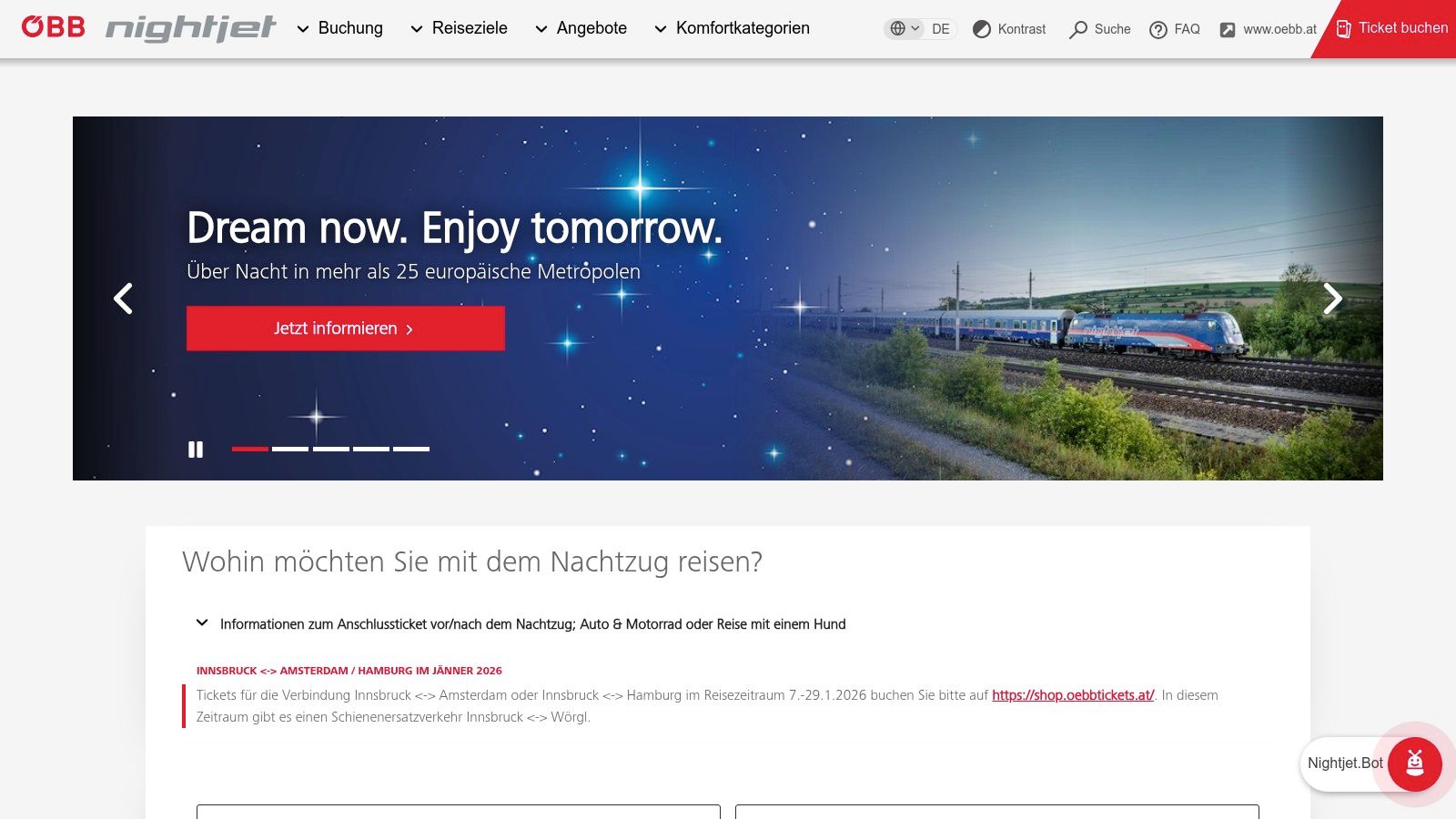
Booking directly through the official ÖBB Nightjet website is the most reliable way to secure a spot on one of the best sleeper trains Europe has to offer. As Europe’s largest dedicated night train operator, the platform provides direct access to the entire Nightjet network, connecting key hubs like Vienna, Zurich, Amsterdam, Rome, and Paris. It also serves as a gateway to many partner EuroNight services, allowing you to plan complex, multi-leg journeys across the continent in a single transaction.
The platform is designed for clarity, offering a user-friendly interface in English and accepting major credit cards, which simplifies the booking process for international travelers. By booking direct, you get the best and most complete inventory of cabins, from private sleeper cars to budget-friendly couchettes, often before they are released to third-party sellers. This is crucial for securing popular routes or specific cabin types, especially the new Mini Cabins for solo travelers.
The Ultimate Booking Hub for Nightjet Routes
The primary advantage of using the official site is control and transparency. The booking window typically opens around 180 days in advance, and its dynamic pricing system rewards early planners with the lowest fares. The website clearly displays different fare families, making it easy to understand the rules for changes and cancellations. You can seamlessly combine an overnight Nightjet journey with a connecting daytime ÖBB train, receiving a single digital ticket for your entire itinerary.
This direct-from-the-source approach ensures you receive real-time availability and immediate confirmation. While other national rail websites like Deutsche Bahn or SBB also sell Nightjet tickets, ÖBB often has exclusive access to certain fare buckets and promotions, giving you the best possible price and selection. You can find more details in our complete guide to booking European sleeper trains for 2025.
Platform Features & Pro-Tips
The ÖBB Nightjet site offers a robust set of features tailored to the modern rail traveler, making it more than just a simple ticket vendor.
- Best Inventory: Guarantees access to the widest selection of sleeper cabins, couchettes, and Mini Cabins across the entire Nightjet network.
- Integrated Itineraries: Allows you to book a night train and a connecting daytime journey on the same ticket, streamlining your travel plans.
- Real-Time Availability: Provides up-to-the-minute information on cabin availability, which is critical during peak travel seasons when tickets sell out fast.
- Digital Ticketing: Delivers e-tickets directly to your email or the ÖBB app, eliminating the need for paper printouts and supporting a zero-waste travel style.
Booking and Key Considerations
Booking is best done via the official ÖBB Nightjet website. For those comparing options across multiple carriers, aggregators like Trip.com can also be useful.
Pro-Tip: Always check the “Reservation only” option if you are traveling with an Interrail or Eurail pass. A pass covers the travel fare but not the mandatory accommodation fee. Booking this reservation well in advance is essential, as the number of pass-holder spots on each train is limited and sells out quickly.

3. SNCF Connect (official for Intercités de Nuit)
SNCF Connect is the official digital storefront for France’s national railway, and the essential booking platform for its domestic sleeper train network, the Intercités de Nuit. While other European operators are building vast cross-border networks, SNCF focuses on vital internal connections, linking Paris with the Alps, Pyrenees, and the south of France. For anyone planning a car-free French itinerary, this platform provides direct, reliable access to some of the best sleeper trains Europe has for exploring l’Hexagone.
The Gateway to France’s Far-Flung Corners
Operated by SNCF, the Intercités de Nuit network allows travelers to reach stunning, less-accessible destinations overnight, saving a day of travel and the cost of a hotel. You can fall asleep in the heart of Paris and wake up surrounded by mountains in Briançon, ready for a day of hiking, or arrive refreshed in Toulouse or Latour-de-Carol near the Spanish border. These routes are perfect for slow travel, connecting urban hubs with rural adventure spots without the stress of an internal flight or long drive.
Choosing these domestic night trains over a flight from Paris to Toulouse, for example, significantly reduces your travel footprint. This makes SNCF Connect a key tool for eco-conscious travelers aiming to explore France’s diverse landscapes sustainably. The convenience of arriving centrally in your destination city also enhances the low-impact travel experience by encouraging walking and public transport use from the moment you step off the train.
Accommodation & Amenities
The Intercités de Nuit offers simple, functional, and affordable overnight accommodation, prioritizing practicality and value.
- Couchettes: The primary offering on these trains. You can book a berth in a 4-berth (1st class) or 6-berth (2nd class) compartment. Each berth comes with a pillow, a sleeping bag-style blanket, and a bottle of water. Compartments are mixed-gender unless you book the “Espace Privatif” option to reserve all berths for your group. Prices typically range from $40 to $120 (€35-€110) per person.
- Reclining Seats: The most budget-friendly option, available in a dedicated carriage. While less comfortable for a full night’s sleep, they are a viable choice for shorter overnight journeys or those on a tight budget. Prices often start as low as $30 (€28).
- Espace Privatif (Private Space): A fantastic feature for families, couples, or small groups. This option allows you to book an entire 4- or 6-berth couchette compartment for a flat fee, ensuring complete privacy regardless of your group size.
Booking and Pro-Tips
Booking is most reliable directly through the official SNCF Connect website or their mobile app. This ensures you get official pricing, access to special promotions, and the most straightforward process for any changes or cancellations permitted by your fare.
Pro-Tip: French train booking windows can be shorter than in other European countries, often opening just 3-4 months ahead. For popular routes like Paris to Briançon during ski season or summer holidays, check frequently and book as soon as tickets are released to secure the best prices and availability.
4. Deutsche Bahn (DB) – International Booking and Timetables
While not an operator itself, Deutsche Bahn’s international website is a powerful planning tool for anyone mapping out a European sleeper train journey, especially those involving Germany. The site and its excellent DB Navigator app serve as an essential aggregator, allowing you to search timetables and book many of the best sleeper trains Europe has to offer, including numerous ÖBB Nightjet and EuroNight services. Its comprehensive pan-European scope makes it indispensable for building complex, multi-leg itineraries.
A Unified Platform for Pan-European Journeys
The primary strength of DB’s platform is its ability to search and display through-journeys across multiple countries and operators. Need to get from Copenhagen to the Swiss Alps? DB can show you the high-speed connection to Hamburg followed by the Nightjet to Zurich, often on a single ticket. This integrated approach simplifies planning what could otherwise be a logistical puzzle, making it a go-to for travelers piecing together sustainable, car-free routes across Europe.
The interface is clean, available in English, and clearly distinguishes between daytime and overnight options. You can often filter for night trains and see basic cabin availability directly in the search results. For routes it sells directly, the booking process is seamless, delivering e-tickets straight to the DB Navigator app. This convenience makes it a reliable first stop for checking availability and pricing on almost any major European rail corridor.
Accommodation & Price Display
Since DB acts as a booking agent for other carriers, the accommodation options reflect what those operators offer. For a typical Nightjet route booked via DB, you’ll generally find these choices:
- Sleeper Cabins: The site displays options for private 1, 2, or 3-berth compartments when available. Pricing is dynamic, but entry-level sleeper fares might start around $130 (€120) for longer routes booked in advance.
- Couchettes: Shared 4 or 6-berth compartments are also bookable. These are the most common budget-friendly overnight option, with prices often starting from $75 to $150 (€70-€140).
- Seating Carriages: On some routes, standard seats are sold for the most economical (and least comfortable) overnight journey.
While DB’s site is excellent for an overview, it may not always offer the full range of cabin customization (e.g., requesting a specific berth or a women-only couchette) that you might find when booking directly with the operator.
Booking and Pro-Tips
The booking process is managed through the official Deutsche Bahn international website or the DB Navigator app. While convenient, it’s always wise to compare the final price with the primary operator’s website (like Nightjet.com), as one may have better availability or a promotional fare.
Pro-Tip: Use DB’s “Sparpreis Europa” (Savings Fare Europe) feature. If your journey starts or ends in Germany, you can often find highly discounted through-tickets that bundle a high-speed German leg with an international night train, saving you a significant amount compared to booking each segment separately.
5. Trainline: Your One-Stop Booking Aggregator
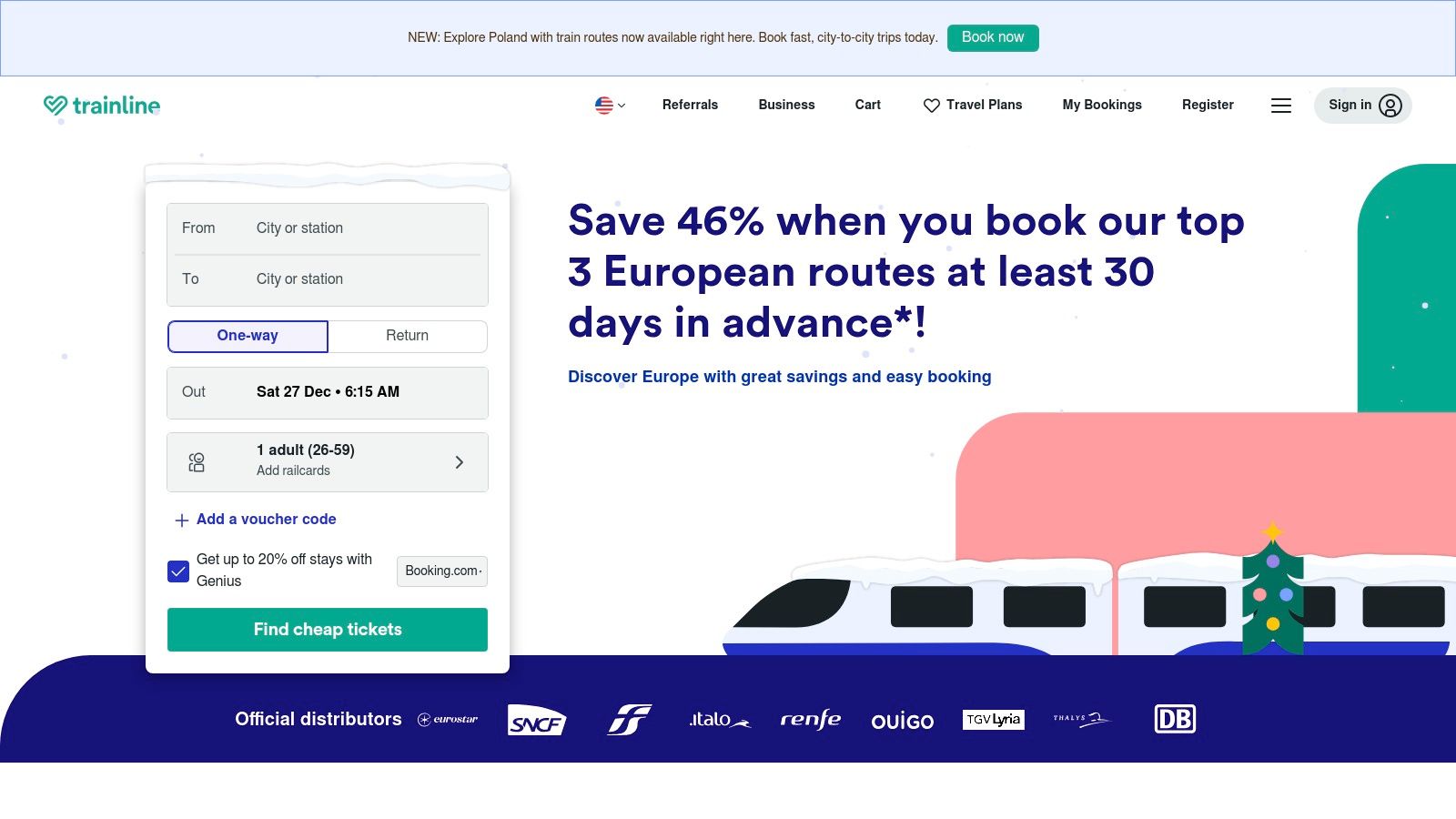
Navigating Europe’s fragmented rail network can be a challenge, with different national operators, booking systems, and languages. Trainline simplifies this process by acting as a powerful aggregator, allowing you to search, compare, and book many of the best sleeper trains Europe has to offer from a single, user-friendly platform. Its strong English-language support and seamless mobile app make it an invaluable tool for international travelers, especially those from the U.S. looking for familiar payment options.
The platform excels at consolidating routes from major operators like ÖBB, SNCF, and Trenitalia, presenting them in one clean interface. This is particularly useful for planning complex, multi-country itineraries where you might need to combine different services. Instead of juggling multiple websites, you can manage all your digital tickets in one place, streamlining your slow travel journey from start to finish. For travelers who need reliable internet on the go, a travel eSIM like those from Airalo can be a lifesaver.
Unified Search for Europe’s Night Trains
Trainline’s primary strength is convenience. For example, if you’re planning a trip from Paris to Venice, the platform can show you options that might involve multiple carriers without you needing to research each one separately. It clearly breaks down accommodation types where available, distinguishing between a private sleeper and a shared couchette, helping you make an informed decision based on your budget and comfort preferences. The app’s digital ticket wallet means no more scrambling for paper printouts before boarding.
The platform also offers helpful “Night Train” explainer pages that list popular sleeper routes and describe the different cabin types, making it a great educational resource for first-time overnight rail travelers. For more advanced planning, consider using it alongside a dedicated train travel route planner to map out your journey visually before booking.
Accommodation & Service Fees
Trainline doesn’t operate trains; it sells tickets on behalf of the operators. Therefore, the accommodation types are the same as booking direct (e.g., ÖBB Nightjet’s sleeper cabins, couchettes, and seating carriages).
- Sleeper & Couchette Bookings: The platform clearly displays the available options for your chosen route. Prices will reflect the operator’s dynamic pricing.
- Service Fees: As an aggregator, Trainline may add a small booking fee to the ticket price. While often minimal, this can make booking through the platform slightly more expensive than going directly to the national rail operator’s site. For many travelers, the convenience, language support, and easy payment processing are well worth the modest extra cost.
- Payment: One of its standout features for non-European travelers is its acceptance of U.S. credit cards and mobile payment systems like Apple Pay and Google Pay, which can sometimes be a hurdle on national railway websites.
Booking and Pro-Tips
The booking process is intuitive on the Trainline website or mobile app. Simply enter your departure and destination cities, select the overnight option, and compare the results.
Pro-Tip: While Trainline covers a vast network, it doesn’t sell tickets for every single operator, especially smaller or more niche routes. If you can’t find your desired connection, it’s always worth checking the national railway company’s website directly as a backup. Cross-reference prices to ensure you’re getting the best deal, particularly if you’re booking well in advance.
6. Rail Europe: U.S.-Friendly Booking for European Sleepers
For North American travelers planning a multi-country European adventure, Rail Europe simplifies the complex process of booking train tickets. As a U.S.-oriented reseller, it offers a familiar interface, English-language customer support, and pricing in U.S. dollars, removing common hurdles for those new to booking the best sleeper trains Europe has to offer. It consolidates tickets from various operators, including Nightjet, into a single, seamless platform.
A Consolidated Booking Hub for North Americans
Rail Europe’s primary value lies in its user-friendly experience for travelers based outside of Europe. Instead of navigating multiple national railway websites in different languages, users can plan and purchase tickets for an entire itinerary in one place. The platform provides clear, detailed descriptions of accommodation types like sleeper cabins and couchettes, often with helpful photos, so you know exactly what amenities to expect, such as included breakfast or private washrooms.
This streamlined approach is especially useful for planning complex, slow-travel journeys. You can book a sleeper from Paris to Vienna and a high-speed day train from Vienna to Prague all in the same transaction. For those who value convenience and English-language support, the potential for a small service fee is often a worthy trade-off for a hassle-free booking process.
Accommodation & Amenities
Since Rail Europe is a reseller, the accommodation options mirror those of the train operators it partners with, such as ÖBB Nightjet. On its dedicated product pages, you’ll find clear explanations for each class.
- Sleeper Cabins: Private compartments for 1, 2, or 3 people, often including made-up beds, a washbasin, and breakfast. Deluxe options with en-suite facilities are clearly marked where available.
- Couchettes: More economical shared compartments, typically with 4 or 6 bunks. This is a great choice for budget-conscious travelers and groups.
- Seated Coaches: The most basic option, available on some routes for those on a tight budget who don’t mind sleeping upright.
Booking and Pro-Tips
The booking process is designed to be intuitive via the official Rail Europe website. E-tickets are provided for most routes, which can be stored on your mobile device.
Pro-Tip: While Rail Europe is excellent for convenience, always compare the final price with the direct operator’s website (like ÖBB). Sometimes, booking direct can be slightly cheaper, but Rail Europe’s platform is invaluable for planning multi-operator itineraries and for those who hold certain types of rail passes for Europe, as it clearly explains reservation requirements.
7. European Sleeper: The Cooperative Challenger
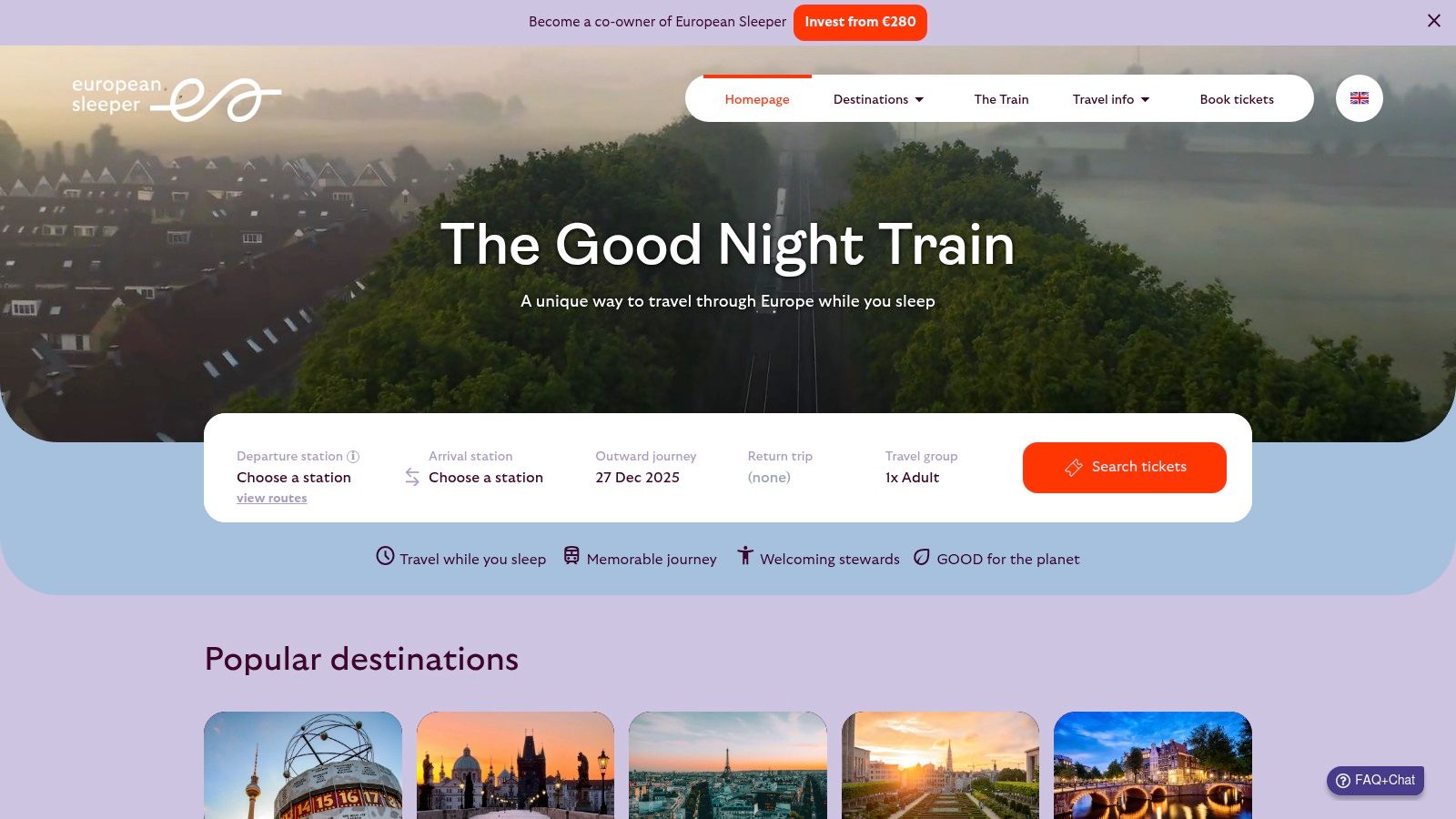
European Sleeper is a refreshing, community-driven operator making big waves in the night train world. As a Belgian-Dutch cooperative, it focuses on creating logical, high-demand routes that connect key European cultural centers. While its network is smaller than state-run giants, its flagship Brussels-Amsterdam-Berlin-Prague service is a game-changer and a fantastic component for anyone planning a trip using the best sleeper trains Europe has to offer. Its mission-driven approach prioritizes passengers over profits, resulting in transparent pricing and excellent communication.
A Growing Network with a Clear Vision
European Sleeper’s primary route connects four major capitals, making it an ideal spine for a multi-city journey. You can leave Brussels in the evening, travel through Amsterdam and Berlin overnight, and wake up refreshed in the heart of Prague. This direct link is perfect for slow travelers wanting to combine the Benelux region with Central Europe without setting foot on a plane. The operator is also expanding, with plans for new connections like Amsterdam to Barcelona, demonstrating its commitment to building a more connected overnight rail network.
This cooperative model is a win for sustainability-focused travelers. By investing in European Sleeper, supporters directly contribute to the expansion of climate-friendly travel options. The direct Brussels to Prague route saves a significant amount of CO₂ per passenger compared to flying, aligning perfectly with the principles of regenerative tourism and car-free travel.
Accommodation & Amenities
European Sleeper provides clear, no-fuss accommodation tiers designed for comfort and practicality. Their refurbished carriages offer a classic European night train experience.
- Sleeper Compartments: The most private option, available as single, double, or triple-berth cabins. They include comfortable, made-up beds, a washbasin, a mineral water bottle, and a simple breakfast. Prices generally start from $160 to $350 (€150-€330) per person.
- Couchettes: The best value for solo travelers, families, or small groups. You can book a 5-berth “Comfort” couchette or a 6-berth standard couchette. A simple breakfast is included. Prices are highly competitive, often ranging from $85 to $190 (€80-€180).
- Seats: The most economical way to travel, though not recommended for those needing a full night’s sleep. These are best for shorter legs of the journey.
Booking and Pro-Tips
The best place to secure tickets is directly through the official European Sleeper website. The interface is user-friendly, providing transparent pricing and clear descriptions of each accommodation type. Booking here ensures you get the earliest access to new dates and the lowest lead-in fares.
Pro-Tip: European Sleeper’s pricing is very dynamic. Booking 3-4 months ahead is crucial for securing the best prices, especially for private sleeper compartments. Interrail and Eurail pass holders can easily book their mandatory reservations on the website, but do so well in advance as allocations can sell out quickly on this popular route.
7-Way Comparison: Best European Sleeper Trains
| Service | 🔄 Implementation complexity | ⚡ Resource requirements | ⭐ Expected outcomes | 💡 Ideal use cases | 📊 Key advantages |
|---|---|---|---|---|---|
| Eco Nomad Travel | Low — research guides + free tools; no booking service | Low — free tools, web access, time for planning | ⭐⭐⭐ — measurable CO₂ & cost reductions when followed | Digital nomads, slow multi-city rail trips, long stays | Tools hub (rail CO₂ calculator, route comparators), evidence-backed guides |
| ÖBB Nightjet (official) | Medium — direct booking, cabin selection, advance planning (~180d) | Moderate — payment, advance reservations for cabins | ⭐⭐⭐ — best availability and control for Nightjet services | International overnight travel between major European hubs | Wide cabin inventory, combined tickets, early access to sales |
| SNCF Connect (Intercités de Nuit) | Low — direct domestic booking and account management | Low — payment, mobile tickets, exchange/cancel tools | ⭐⭐⭐ (France only) — most reliable inventory & after‑sales for French sleepers | Domestic French night trains (Paris→regional routes) | Official prices, strong disruption/after‑sales handling |
| Deutsche Bahn (DB) | Medium — powerful planner; occasional redirects to operators | Moderate — app/account, some operator-specific bookings | ⭐⭐⭐ — excellent for planning through‑journeys via Germany | Complex itineraries crossing Germany; through‑fare searches | Extensive European timetable, integrated booking for many services |
| Trainline (aggregator) | Low — one‑stop multi‑operator booking UX | Low–Moderate — accepts US payments; may charge fees | ⭐⭐ — convenient but may miss some services or add fees | Users wanting single app for multi‑operator tickets and mobile wallet | User‑friendly app, clear ticket management, wide payment options |
| Rail Europe (reseller) | Low — reseller checkout tailored to North America | Moderate — US‑friendly support, possible service fees | ⭐⭐ — good for NA customers; inventory narrower than some operators | North American travelers preferring familiar checkout/support | US‑focused support, clear product content on cabins and fares |
| European Sleeper (operator) | Low–Medium — direct operator booking for specific routes | Low — direct booking, limited network & schedules | ⭐⭐ — strong for served corridors, smaller network than incumbents | Routes like Brussels–Berlin–Prague; early‑fare bookings | Operator‑direct inventory, transparent pricing tiers, cooperative model |
Planning Your European Sleeper Train Adventure
Choosing the best sleeper trains in Europe transforms travel from a mere transit into a core part of the adventure. Instead of losing a day to airport queues and short-haul flights, you reclaim your time, waking up refreshed in a new city center. This guide has navigated the key players, from the expansive ÖBB Nightjet network to the boutique experience of European Sleeper, equipping you with the knowledge to book with confidence and travel with intention. The revival of overnight rail is more than just a trend; it’s a conscious shift toward slower, more sustainable exploration that connects you directly to the heart of the continent.
By opting for a sleeper train, you’re making a significant environmental choice. Trading a single short-haul flight for a train journey can reduce your travel-related carbon emissions by up to 90%, a powerful action for any climate-aware traveler. The journey itself becomes an experience-rich part of your itinerary, replacing the sterile environment of an airport with the romance of watching landscapes blur into dusk and dawn from the comfort of your private cabin or couchette.
This shift requires a different approach to planning. It involves thinking in terms of routes and connections rather than just destinations, and understanding the nuances between different operators and booking platforms. Whether you use a national carrier’s site like SNCF Connect for domestic French routes or an aggregator like Trainline for complex, multi-country journeys, the key is to book early, understand your accommodation options, and pack for comfort and convenience on the rails.
Key Takeaways
- Book Direct for Best Results: For operators like ÖBB Nightjet and European Sleeper, booking directly on their official websites often yields the best prices, seat selection, and access to special offers.
- Aggregators Simplify Complexity: For multi-leg journeys involving different companies, platforms like Trainline or Trip.com can simplify the booking process into a single transaction, though sometimes at a slightly higher cost.
- Comfort Varies by Operator and Route: A “sleeper cabin” on the Caledonian Sleeper (with its en-suite facilities) is a different world from a 6-berth couchette on an older Intercités de Nuit route. Always check the specific train’s amenities.
- Connectivity is Not Guaranteed: While many modern trains offer Wi-Fi and power outlets, service can be spotty. For reliable internet, especially for digital nomads, packing a dedicated travel eSIM from a provider like Airalo is a smart backup.
- Sustainability is the Ultimate Benefit: The primary advantage of choosing a sleeper train is its drastically lower carbon footprint compared to flying, making it the superior choice for eco-conscious travel.
- Advance Booking is Crucial: The most popular routes and private cabins sell out months in advance, particularly during peak season. Aim to book at least 3 to 6 months ahead for the best availability and pricing.
Next Steps: From Plan to Platform
Now that you’re equipped with the tools and insights, it’s time to put them into action. Start by mapping out your desired itinerary, identifying the key cities you want to connect. Use a tool like Deutsche Bahn’s website to explore potential routes and timetables, even if you don’t book there. This will give you a clear picture of what’s feasible.
Once you have a route, compare prices and booking options. Check the official operator’s site first, then cross-reference with an aggregator. Pay close attention to what’s included in your fare: Is breakfast provided? Are seat reservations mandatory and included? These small details can significantly impact your budget and experience. Finally, embrace minimalist packing. A single, easy-to-manage bag will make navigating train stations and settling into your cabin a stress-free experience. The beauty of the best sleeper trains in Europe is their ability to make the journey as memorable as the destination itself.
ALWAYS ADD EXTRA IMAGES WHEN POSSIBLE
This article was fact-checked using sustainability data from the World Green Building Council, the Global Ecotourism Network, and peer-reviewed architecture studies. All partner links are vetted for compliance with sustainable business certifications.
Ready to design your own rail-first, low-impact European adventure? The tools at Eco Nomad Travel are built to help you plan walkable city stays, find sustainable accommodations, and build minimalist packing systems that make train travel a breeze. Explore our resources to create a journey that’s better for you and the planet.
Join the Sustainable Work Movement
Want more rail-first itineraries, low-impact packing systems, and walkable base-city ideas?
Recent Posts
Best Travel Towels
Quick picks for fast-drying, packable towels that actually work on the road.
Best Waterproof Backpack
What matters for rain, train platforms, and daily carry—without overpacking.
Cheapest Way to Travel to Europe
Budget routes, timing, and practical ways to cut costs without cutting comfort.
How to Travel Europe by Train
Planning tips, rail passes, and simple route strategies for smoother trips.
Best Night Trains in Europe
Top sleeper routes, what to book, and how to avoid common overnight mistakes.
SIM Card for International Travel
Simple guidance on SIM vs eSIM, coverage, and avoiding roaming surprises.
Explore Eco Nomad Travel
📚 Core Guides
🧭 Planning & Logistics
🗺️ Destinations & Seasons
Jeremy Jarvis — founder of Eco Nomad Travel, sustainable travel writer, and advocate for regenerative tourism. His work focuses on low-impact mobility, eco-friendly digital nomad life, and climate-positive travel.
Legal
Affiliate DisclaimerPrivacy Policy
Terms of Service
Image & Media Notice
Cookie Policy
Contact
Affiliate Disclosure: Some links on Eco Nomad Travel are affiliate links, meaning we may earn a small commission at no extra cost to you. This supports our mission to inspire responsible and low-impact travel worldwide.
Connect
✅ Trusted Official Sources
Plan smarter eco trips
Try our free Sustainable Travel Tools for Digital Nomads – carbon calculator, train vs plane comparator, and more.
Open Tools Hub