

Figuring out the best time to go to Paris really comes down to what you want to get out of your trip. If you’re like most travelers, you’re probably looking for that sweet spot of great weather and crowds you can actually navigate. For that, the shoulder seasons of spring (April to June) and autumn (September to October) are pretty much unbeatable.
This is when the city truly shines. You get the blooming parks and golden-lit avenues without the oppressive summer heat or the damp winter chill. The pleasant weather makes it easy to explore with just a lightweight travel backpack.
This guide will walk you through what each season in Paris actually feels like on the ground. The goal is to help you match your visit to what matters most to you—whether that’s hitting all the sights, soaking up local culture, or finding a walkable home base for a month of remote work.
Honestly, choosing your dates wisely is the first real step to a better, more sustainable trip. It makes everything easier, from navigating the charming streets of Le Marais to avoiding two-hour queues for a museum ticket.
Paris At a Glance: A Seasonal Summary
To get started, here’s a quick comparison of what to expect from the weather, crowds, and costs as the seasons change in Paris. It’s a simple way to see the trade-offs and find the window that works best for your travel style. This chart helps you decide the best time to visit Paris.
| Season | Average Temperature (Fahrenheit/Celsius) | Crowd Levels | Average Cost | Best For |
|---|---|---|---|---|
| Spring (Mar-May) | 46-60°F / 8-16°C | Moderate to High | Moderate to High | Blooming gardens, café culture, pleasant walks. |
| Summer (Jun-Aug) | 63-67°F / 17-19°C | Very High | High | Long daylight hours, outdoor festivals, lively streets. |
| Autumn (Sep-Nov) | 48-61°F / 9-16°C | Moderate to Low | Moderate | Golden light, cultural events, cozy bistros. |
| Winter (Dec-Feb) | 40-42°F / 4-6°C | Low | Low | Holiday markets, museums without queues, lower prices. |
As you can see, the “best” time really depends on whether you’re prioritizing sunshine, solitude, or savings. For a balanced, low-impact trip, the shoulder seasons almost always win out.
Why Shoulder Seasons Are the Sweet Spot for Low-Impact Travel
Spring and autumn consistently come out on top for a few solid reasons, especially if you’re trying to travel more consciously:
- Walkable Weather: The temperatures are just right for exploring on foot. You’ll find yourself relying less on energy-intensive transport and discovering more of the city’s hidden corners.
- Fewer Crowds: With the summer rush over, you can actually enjoy the museums and monuments without feeling like you’re in a human traffic jam. This also means your money is more likely to support local businesses that need it year-round.
- Better Value: Flights and accommodation are often much more reasonable. This can free up your budget for a longer, more immersive stay instead of a frantic weekend trip.
These seasons just naturally align with a slower, more sustainable way of traveling. You can see how this idea applies to other destinations in our guide to off-peak eco-escapes in Europe. At the end of the day, the best time to visit Paris is when the city’s rhythm matches your own.
Spring in Paris: When the City Reawakens
Spring, particularly the window from mid-April through mid-June, is easily the best time to go to Paris if you’re planning a lower-impact trip. This is when the city shakes off its winter grey and comes alive. Parks like the Jardin des Tuileries burst into bloom, creating a stunning backdrop for rail-first itineraries and the kind of slow, mindful exploring we love.
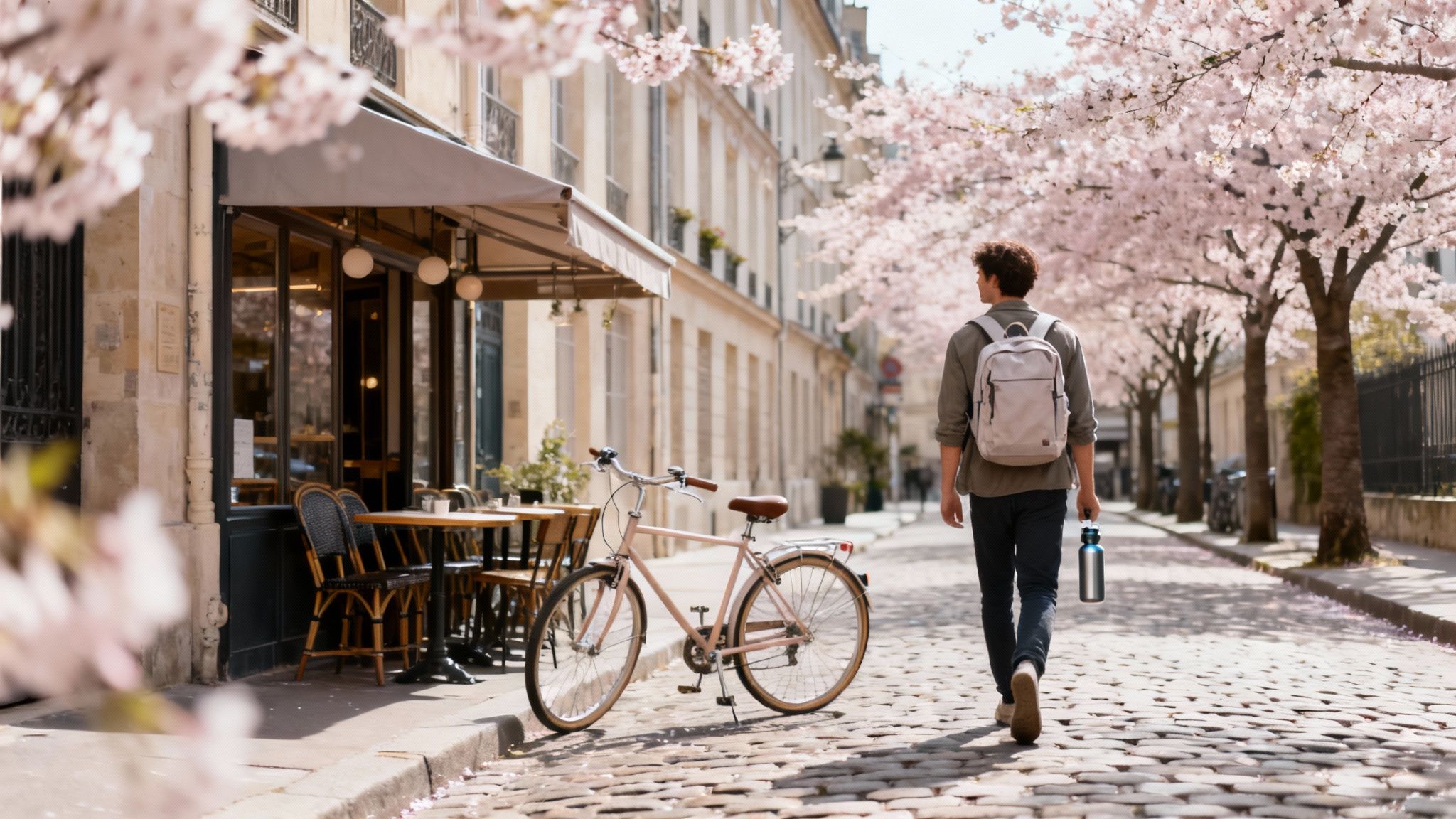
Picture yourself wandering through Le Marais as cherry blossoms drift down, all without the suffocating heat of summer. Average temperatures sit in a perfect sweet spot between 50-68°F (10-20°C). It’s ideal weather for discovering walkable neighborhoods on foot, which naturally reduces the need for energy-hungry indoor activities. Using a packable daypack makes these long walks much more comfortable.
This shoulder season is where you find the magic balance of beautiful weather and more manageable crowds. Arriving before the summer peak significantly lessens your footprint on local infrastructure. For context, while Paris welcomed 47.5 million visitors in 2023, the summer months saw a surge of up to 40% compared to spring. Fewer people means hotel occupancy and prices are more reasonable, making a regenerative stay feel much more accessible. You can find more Paris tourism statistics on Roadgenius.com.
Why Spring Works for Eco-Conscious Travelers
For digital nomads and remote workers, the long daylight hours are a huge plus. They create perfect conditions for setting up a temporary office on a café terrace or finding a spot in a leafy park to get some work done. The atmosphere is vibrant but not chaotic, which is great for both productivity and well-being. Keeping a USB C charger handy ensures your devices stay powered.
Events like the Paris Marathon in April add a real buzz to the city. You can soak up the energy while keeping your carbon footprint low by exploring the festivities on foot or using the excellent Métro system. Choosing this season isn’t just about getting a better travel experience; you’re also helping to create a more balanced, year-round tourism economy that local businesses depend on.
Ultimately, spring travel allows for a more authentic connection with the city. Fewer crowds mean shorter queues at your favorite boulangerie, easier reservations at that little bistro you’ve been eyeing, and more space to simply sit and absorb the Parisian way of life. It allows you to see Paris as it should be seen: beautiful, alive, and breathing.
If you’re mapping out a trip on a budget, you might also want to check out our guide on the cheapest way to visit Europe.
Summer in Paris: Navigating the Peak Season Crowds
Come summer, Paris transforms. From June to August, the city buzzes with an undeniable energy, fuelled by long, sun-drenched days and landmark events like Bastille Day. While this is arguably the best time to go to Paris for sheer vibrancy, it’s also the absolute peak of tourist season. This means facing the biggest crowds and highest prices of the year—a real challenge for anyone trying to travel with a lighter footprint.
Getting through this bustling period without the stress requires some forward thinking. If you want to find more sustainable places to stay or lock in better train fares, booking well in advance is non-negotiable. It’s also a good time to pre-book a transfer with Welcome Pickups for an easier arrival.
Finding Pockets of Calm—Sustainably
To sidestep the worst of the tourist bottlenecks, you have to venture beyond the usual postcard spots. Try exploring the less-trodden arrondissements, like the 11th or 12th, where you’ll get a much more authentic feel for local life.
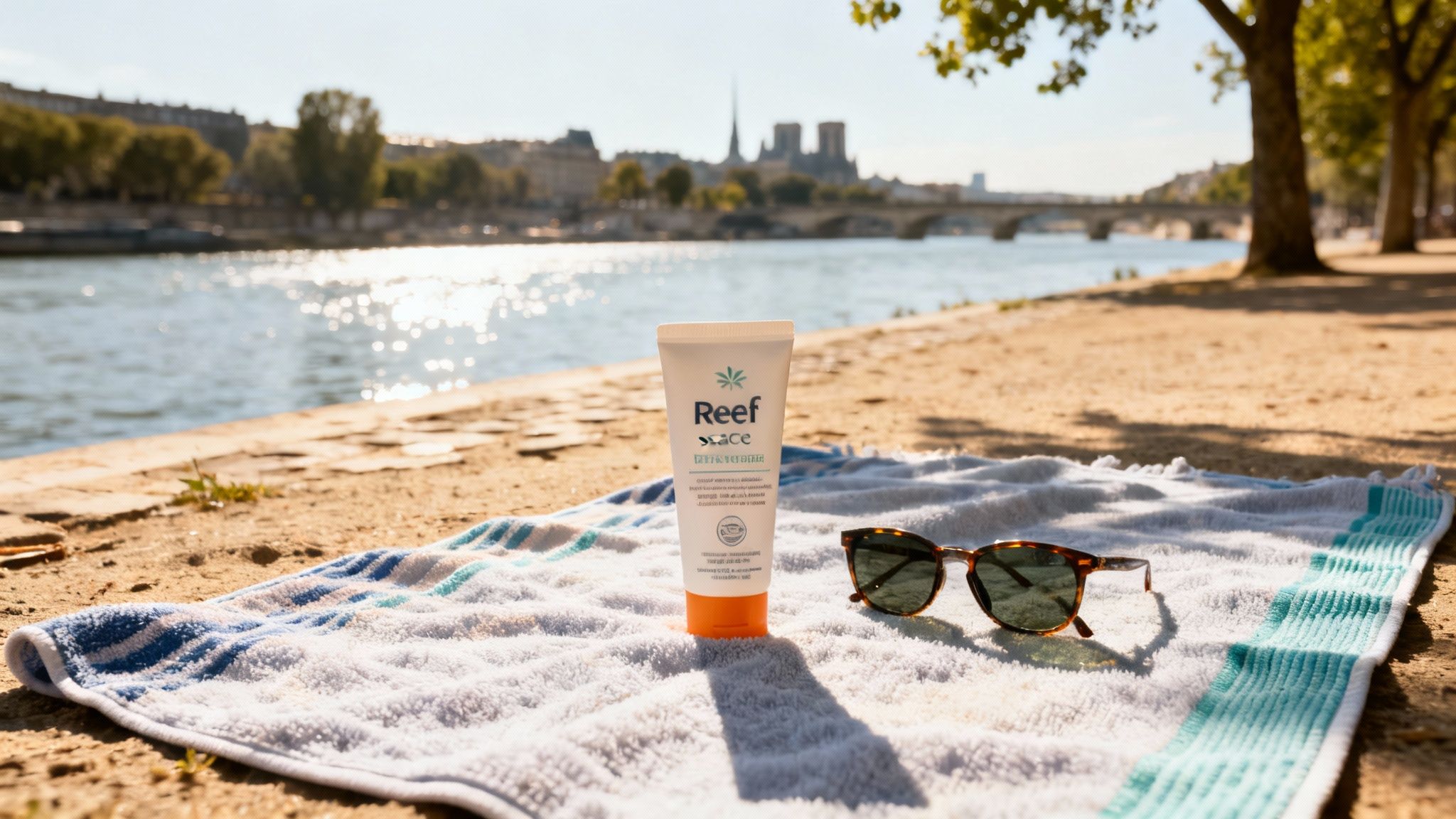
Paris’s sprawling green spaces are another perfect escape hatch. A lazy afternoon in the massive Bois de Boulogne or the hilly Parc des Buttes-Chaumont feels worlds away from the Louvre’s queues. These parks are ideal for an impromptu picnic; packing a quick dry travel towel to sit on makes it easy. Just remember that long days of walking also mean a lot of sun, so always have some reef safe sunscreen handy.
The Trade-Offs of Peak Season Travel
Let’s be honest: traveling in summer comes with a higher environmental price tag. The sheer volume of visitors puts a significant strain on public transport, energy grids, and waste systems. You can get a clearer picture of the impact by reading our guide comparing train vs plane emissions.
But that doesn’t mean your trip has to be part of the problem. You can offset this impact by making smarter choices on the ground.
- Opt for walking or taking the Métro instead of relying on ride-sharing apps.
- Support local markets for your meals—it’s fresher, more authentic, and cuts down on food miles.
- Always carry a collapsible water bottle to stay hydrated without contributing to the mountain of single-use plastic.
Summer in Paris definitely presents its challenges, but with a bit of mindful planning, you can still soak up the city’s electric atmosphere without compromising your values.
Autumn in Paris: A Sustainable Traveler’s Dream
Autumn in Paris, from September through mid-November, is that golden window of opportunity for a truly authentic stay. As the summer heat fades, the city’s cultural pulse quickens against a backdrop of crisp air and burnished leaves. For travelers chasing a slower, more meaningful connection, this is hands down the best time to go.
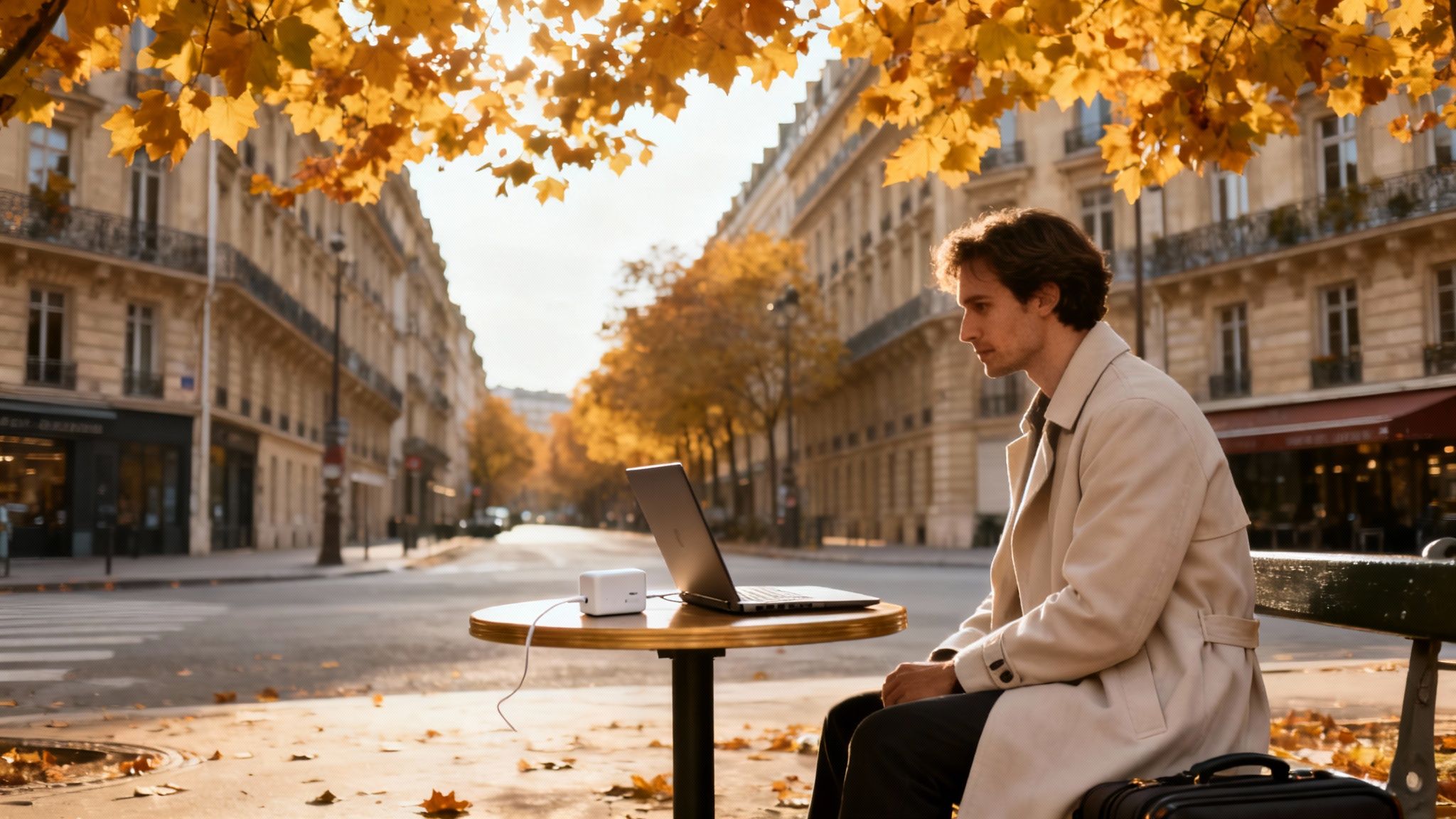
The weather during these months is invigorating—perfect for long walks along the Seine and for rail-based day trips to nearby forests. Fewer crowds mean you can actually breathe and explore without feeling rushed, allowing you to sink into the real rhythm of Parisian life. It’s an ideal season for building a low-impact journey focused on local experiences.
This season is especially prime for digital nomads. There’s a tangible back-to-school energy in the air that’s great for productivity, and significantly lower accommodation costs make a long, sustainable stay much more feasible. It’s the perfect setting to settle into a neighborhood café to work, but remember to pack a universal travel adapter to keep all your gear charged and ready.
Cultural Richness Meets Lower Costs
Autumn is when Paris’s cultural calendar truly comes alive. Events like the all-night arts festival Nuit Blanche in October give you a unique chance to see the city’s creative side burning bright after dark. With fewer tourists, museums are far more enjoyable; you can actually linger at an exhibit without the pressure of a queue shuffling you along. Using a laptop privacy screen can give you peace of mind while working in public spaces.
The economic benefits of autumn travel are also a huge plus for a sustainable trip. This season emerges as an optimal time for slow travel, with tourist volumes dropping by a welcome 30-35% from their summer peak. Consequently, hotel rates fall by 20-25% from their highest marks, making it much easier to invest in longer, more regenerative stays that better support the local economy.
Why Autumn Is Perfect for Sustainable Travel
The cooler temperatures and thinner crowds of autumn align perfectly with the principles of sustainable tourism. The city feels less strained, and your presence as a traveler can have a more positive, less extractive impact.
- Rail-First Itineraries: The comfortable weather is ideal for arriving via night train or taking regional trains for day trips, which drastically reduces your carbon footprint.
- Walkable Exploration: You can comfortably explore arrondissements on foot for hours, discovering hidden courtyards and local markets without ever needing a taxi. Packing light with just a carry on backpack makes this even easier.
- Support Local Businesses: With fewer tourists around, your spending is more likely to directly benefit the small, locally-owned shops, bistros, and galleries that depend on year-round business to thrive.
Ultimately, visiting in the fall allows you to experience Paris not just as a destination, but as a living, breathing city. It offers a more mindful and rewarding way to travel. You can learn more about this approach in our complete guide to sustainable tourism.
Winter in Paris: A Quiet and Cozy Alternative
Most people picture Paris in the spring or summer, but there’s a quiet magic to the city from December through February. While it might not be the obvious choice, winter can be the best time to go to Paris if you’re looking for a tranquil, cozy, and budget-friendly trip. The chilly air and shorter days are a trade-off for the glow of holiday markets, the warmth of neighborhood cafés, and the rare chance to see world-class museums without the crowds.
This slower season lets you connect with the city on a much more intimate level. Imagine strolling through a nearly empty hall in the Louvre or finding the perfect corner table in a historic bistro without a reservation. It’s a fantastic time for reflective, unhurried travel. A good pair of noise canceling earbuds can make the train ride even more peaceful.
Embracing the Winter Atmosphere
The key to a great winter trip is smart preparation. Packing well is essential; using compression packing cubes is a simple trick to fit bulky sweaters and warm jackets into your carry on luggage. Days are shorter, so it’s wise to plan your sightseeing around daylight hours, leaving your evenings free for concerts, theatre, or a long, leisurely dinner.
Arriving by an overnight train really adds to the cozy experience and is a comfortable, low-carbon way to land right in the heart of the city. One practical tip for exploring in the cold: bring a reliable portable power bank. Frigid temperatures can drain your phone’s battery much faster than you’d expect.
What to Expect from Winter in Paris
- Holiday Magic: In December, the city is draped in festive lights, and Christmas markets (marchés de Noël) pop up everywhere, offering mulled wine and handcrafted gifts.
- Fewer Crowds: January and February are the quietest months of the entire year, perfect for enjoying major attractions like the Musée d’Orsay at your own pace.
- Lower Costs: Flights on sites like Aviasales and accommodation rates on platforms like Trip.com hit their annual lows, making it the most affordable season to visit.
- Cozy Culture: Winter is the season of hygge, Parisian style. It’s all about ducking into a warm pâtisserie for a thick hot chocolate or spending an afternoon reading in a classic café.
You’ll definitely need to bundle up, but the pay-off is a more authentic and peaceful version of Paris that few summer tourists ever get to see.
Your Month-by-Month Guide to Visiting Paris
To really nail down the perfect time for your trip, it helps to see how the city breathes through the seasons. Let’s break down the year in Paris, month by month. Think of this as your quick-glance guide to temperatures, crowds, and what’s actually happening on the ground.
Whether you’re a digital nomad trying to schedule work calls around museum hours or just looking for that quiet, rainy-day café vibe, knowing the city’s rhythm makes all the difference.
No matter when you go, a little prep goes a long way. Keeping your passport and cards safe in an RFID blocking wallet is a smart move year-round, but it’s especially critical during the bustling festival months when the crowds are thick. Every month offers its own unique balance of weather, cost, and energy.
This timeline gives you a visual snapshot of winter in Paris, showing how the vibe shifts from the buzz of holiday markets to the quiet calm of January’s museums and cozy cafés.
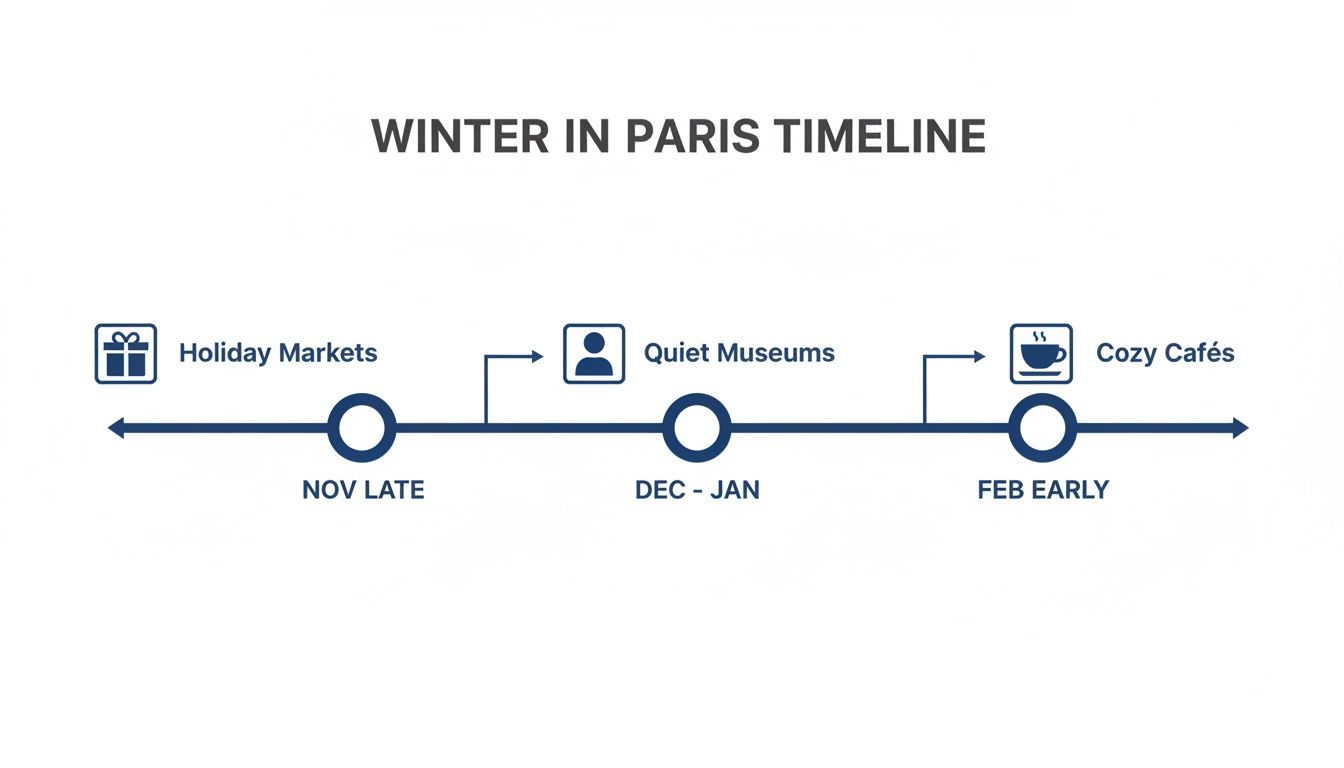
As you can see, the winter season really slows things down. It’s the ideal time for anyone who wants to dive deep into the city’s incredible indoor culture without fighting the summer crowds.
Your Guide to Paris Throughout the Year
Here’s a more detailed chart to help you line up your travel plans with the perfect conditions on the ground. This chart details monthly weather, events, and travel tips to help you decide when to visit Paris.
January in Paris
- Avg. High Temp: 46°F / 8°C
- Avg. Low Temp: 37°F / 3°C
- Key Events & Notes: Quietest month, sales season (Les Soldes).
February in Paris
- Avg. High Temp: 48°F / 9°C
- Avg. Low Temp: 37°F / 3°C
- Key Events & Notes: Low crowds, Valentine’s Day romance.
March in Paris
- Avg. High Temp: 55°F / 13°C
- Avg. Low Temp: 41°F / 5°C
- Key Events & Notes: Spring emerges, Paris Fashion Week.
April in Paris
- Avg. High Temp: 62°F / 17°C
- Avg. Low Temp: 45°F / 7°C
- Key Events & Notes: Cherry blossoms, Paris Marathon.
May in Paris
- Avg. High Temp: 68°F / 20°C
- Avg. Low Temp: 51°F / 11°C
- Key Events & Notes: Beautiful weather, French Open begins.
June in Paris
- Avg. High Temp: 73°F / 23°C
- Avg. Low Temp: 56°F / 13°C
- Key Events & Notes: Long days, Fête de la Musique.
July in Paris
- Avg. High Temp: 77°F / 25°C
- Avg. Low Temp: 60°F / 16°C
- Key Events & Notes: Peak season, Bastille Day, Tour de France finish.
August in Paris
- Avg. High Temp: 77°F / 25°C
- Avg. Low Temp: 59°F / 15°C
- Key Events & Notes: Many locals on holiday, peak heat.
September in Paris
- Avg. High Temp: 70°F / 21°C
- Avg. Low Temp: 53°F / 12°C
- Key Events & Notes: Great weather, European Heritage Days.
October in Paris
- Avg. High Temp: 62°F / 16°C
- Avg. Low Temp: 48°F / 9°C
- Key Events & Notes: Autumn colors, Nuit Blanche art festival.
November in Paris
- Avg. High Temp: 52°F / 11°C
- Avg. Low Temp: 42°F / 6°C
- Key Events & Notes: Fewer crowds, Armistice Day.
December in Paris
- Avg. High Temp: 47°F / 8°C
- Avg. Low Temp: 38°F / 4°C
- Key Events & Notes: Christmas markets, festive lights.
Understanding these seasonal flows is incredibly helpful, especially if Paris is just one stop on a longer, multi-city journey. If you’re building a bigger itinerary, you can learn more about the best rail passes for Europe in our guide.
Editor’s Pick: The Best Time to Visit
For the ideal balance of beautiful weather, manageable crowds, and good value, late September to early October is my top choice. The city is bathed in a gorgeous golden light, the summer crowds have thinned out, and the cultural season is in full swing. It’s the perfect window for walking, exploring, and experiencing Paris at its most authentic and comfortable pace.
Low-Impact Travel Tools (Worth It)
Also, if you’re planning a trip and want to keep things simple, these tools help you travel smoother while staying mindful about impact.
Get an eSIM for reliable data → Disclosure: Partner link. No extra cost to you.
Pre-book a transfer for easy arrivals → Disclosure: Partner link. No extra cost to you.
Key Takeaways for Planning Your Paris Trip
- For Great Weather & Fewer Crowds: The shoulder seasons are your best bet. Spring (April-June) and autumn (September-October) give you that perfect mix of pleasant days and crowds that feel manageable, not overwhelming.
- For Budget Travelers: Winter (November-February) is easily the most affordable time to be in Paris. Flights and hotels see their lowest prices, but you’ll want to pack for the cold.
- For Buzz and Excitement: Nothing beats summer (July-August) for sheer energy and a packed events calendar. Just be ready for the highest prices, biggest crowds, and the occasional heatwave.
- For Sustainable Travel: Spring and autumn are ideal. You’re supporting local businesses without straining the city’s resources. It’s also the best time for a low-impact trip, especially if you’re planning a rail-first itinerary.
- Best Overall Month: Late September offers a fantastic combination of pleasant weather, fewer tourists than summer, and a vibrant local atmosphere as Parisians return from their holidays.
- Pack Smart: No matter the season, comfortable shoes are essential. Layers are key for spring and fall, while a warm coat is non-negotiable for winter.
Your Paris Questions Answered
Still sorting out the details for your trip? Here are answers to some of the most common questions travelers ask when planning a visit to Paris.
What is the cheapest month to visit Paris?
For the absolute best deals, aim for the heart of winter—specifically January and February. Once the holiday sparkle fades, flight and hotel prices take a noticeable dip. You’ll find the lowest rates of the year, but be ready to bundle up for cold, often grey, Parisian weather. Checking prices on Aviasales can help you find the best fares.
How many days do I really need for a first visit?
Give yourself four to five full days for a first trip. That’s the sweet spot for seeing heavy hitters like the Eiffel Tower and the Louvre without feeling like you’re in a constant sprint. It also leaves room for a day of just getting lost in a neighborhood like Le Marais, people-watching from a café, and soaking it all in.
What’s the best way to get around Paris sustainably?
Paris is a walker’s dream, and exploring on foot is easily the greenest choice. For anything further, the Paris Métro is your best friend—it’s fast, covers the whole city, and has a tiny carbon footprint per person. For a more scenic ride, grab a bike from the city’s Vélib’ bike-share scheme. Using biodegradable soap can also lighten your environmental load.
Is Paris safe for solo travelers?
Yes, Paris is generally a safe and welcoming city for solo travelers. Like any major global hub, the key is to be aware of your surroundings, especially in packed tourist spots and on the Métro. Keep your essentials secure in a good anti theft backpack and watch out for the usual city scams. For extra security, a portable door lock is a small, lightweight addition to your packing list.
What should I actually pack for Paris?
Your packing list will change with the seasons, but comfortable walking shoes are non-negotiable, no matter the month. Layers are your best strategy for spring and autumn. For any trip, a reusable water bottle, a trusty portable power bank, and a universal travel adapter are essential. Tossing in a few packing cubes can also make living out of a suitcase feel much more organized.
When is the best time to dodge the crowds?
If you want the city’s landmarks almost to yourself, visit during the deep winter months of January and February. The shoulder seasons also offer a great balance—late autumn (October-November) and early spring (March) have far fewer tourists than the summer crush, making for a much more relaxed visit.
Do I need to speak French to get by?
It’s not strictly necessary, but learning a few key phrases will make your trip infinitely better. A simple Bonjour (hello), Merci (thank you), Au revoir (goodbye), and S’il vous plaît (please) goes a long way. People in the tourism industry almost always speak English, but Parisians genuinely appreciate the effort. Staying connected with an eSIM from Airalo can help with translations.
What’s the rainiest month in Paris?
May often gets the most rain, but the truth is, a shower can surprise you any time of year. Don’t let it ruin your plans—a rainy afternoon is the perfect excuse to dive into a world-class museum or find a cozy café. Just be sure to pack a light rain jacket or a small umbrella. Travel insurance from VisitorsCoverage is also a good idea for unexpected changes.
This article was fact-checked using sustainability data from the World Green Building Council, the Global Ecotourism Network, and peer-reviewed architecture studies. All partner links are vetted for compliance with sustainable business certifications.
Join the Sustainable Work Movement
Want more rail-first itineraries, low-impact packing systems, and walkable base-city ideas?
