

Figuring out the best time to go to Vietnam really comes down to which part of this long, beautiful country you want to explore. But if you’re dreaming of a trip that covers a bit of everything, the shoulder seasons from March to April and September to November are your sweet spot. They offer the best balance of pleasant weather, smaller crowds, and better prices—perfect for a more mindful, sustainable journey.
Finding Your Perfect Vietnam Travel Window
Staring at a map of Vietnam can feel a bit much. It’s incredibly long, with climates that shift dramatically from north to south. This guide is here to cut through that confusion and help you pinpoint your ideal travel window.
While Vietnam has something to offer all year round, most travelers find their groove in those shoulder seasons. You get this wonderful mix of agreeable weather across the country, fewer tourists clogging up the sights, and a natural rhythm that encourages slower, more thoughtful travel.
We’ll break down Vietnam’s three distinct climate zones—North, Central, and South—to help you plan a trip that matches what you want to do. Whether that’s trekking in Sapa, kicking back on a beach in Da Nang, or getting lost in Hanoi’s old-world streets, timing is everything.
The trick is to think regionally. While one part of the country might be in the middle of monsoon season, another could be enjoying brilliant sunshine. This is actually a huge plus for flexible travelers. For instance, if you’re set on exploring the north, October and November are absolutely stunning, with dry, mild weather that’s perfect for hiking and sightseeing.
For more ideas on traveling outside the chaotic peak season, you might like our guide to sustainable off-peak escapes in Europe, which shares a similar mindset.
Understanding Vietnam’s Three Climate Zones
To really nail the best time to visit Vietnam for your trip, you have to get your head around its three distinct weather systems. This geographical diversity is what makes the country so fascinating, but it can also make planning tricky if you aren’t prepared.
Here’s the simple breakdown:
Northern Vietnam (Hanoi, Halong Bay, Sapa): This region has four proper seasons. Winters (December-February) are cool and dry, while summers (June-August) are hot, humid, and rainy. The best times to visit are spring (March-April) and autumn (September-November).
Central Vietnam (Hoi An, Da Nang, Hue): This area enjoys a long dry season, usually from February to August. The rainy season, which can bring typhoons, runs from about September to January.
Southern Vietnam (Ho Chi Minh City, Mekong Delta): The south keeps it simple with two seasons. The dry season runs from November to April, and the wet season is from May to October, known for its heavy but brief afternoon downpours.
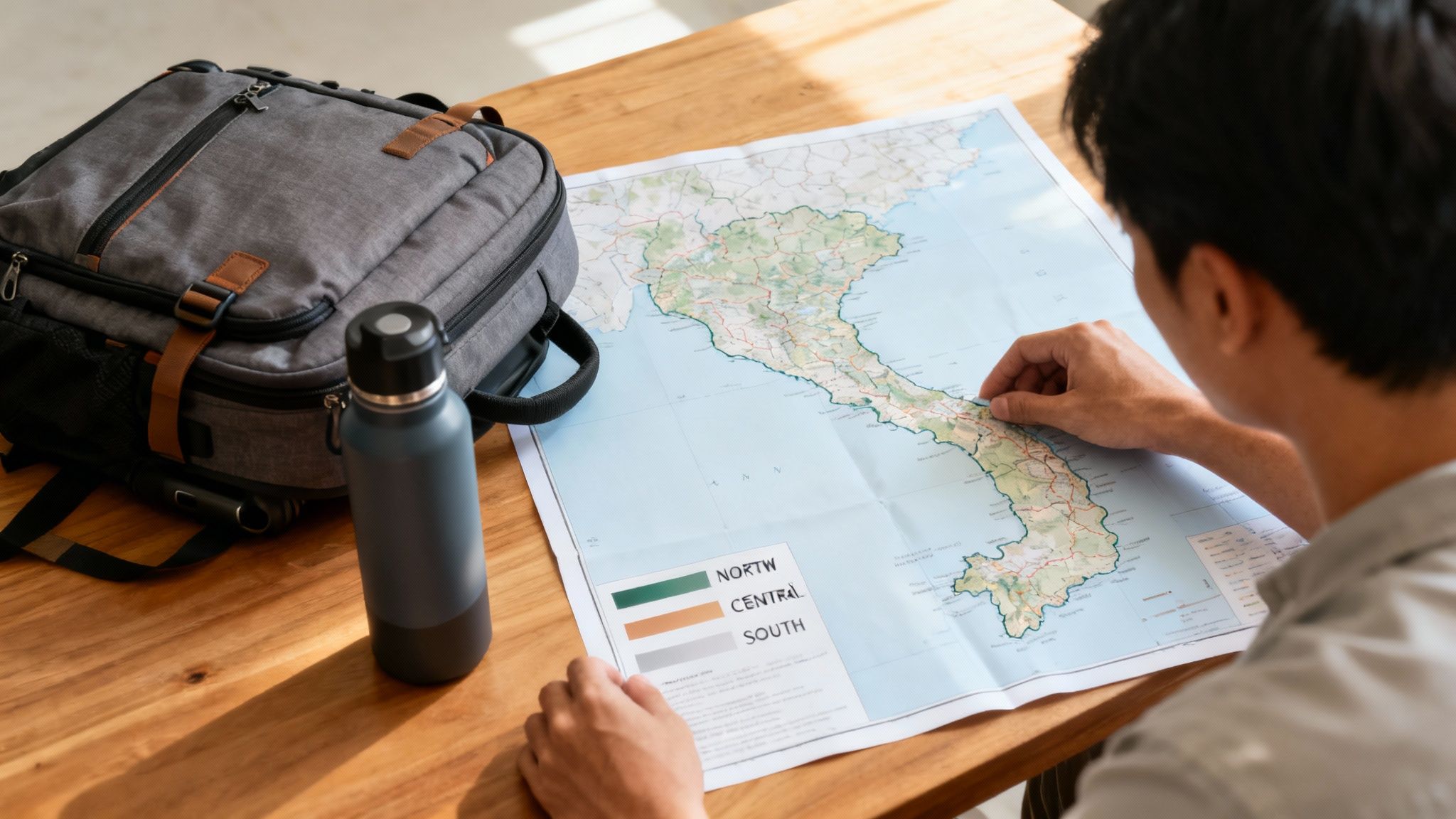
Timing your visit for these optimal windows means you’re far more likely to enjoy all the outdoor adventures you have planned without getting rained out or scorched.
Vietnam Regional Travel at a Glance
If you’re just starting to sketch out your itinerary, this quick-reference table can help you match your travel dates to the best regions. It’s a high-level look at what to expect, weather-wise, and how to plan with a lighter footprint.
| Region | Best Months to Visit | Typical Weather | Sustainable Travel Tip |
|---|---|---|---|
| Northern Vietnam | Mar-Apr & Sep-Nov | Mild, dry, and sunny. Cool in the mountains. | Travel by overnight train from Hanoi to Sapa to reduce your carbon footprint and save on a night’s accommodation. |
| Central Vietnam | Feb-Aug | Hot and dry with lots of sunshine. Ideal for beaches. | Visit smaller, locally-owned businesses in Hoi An and Hue to ensure your money supports the community directly. |
| Southern Vietnam | Nov-Apr | Hot and dry. Lower humidity than the wet season. | Explore the Mekong Delta with a small, community-based tour operator instead of a large commercial one. |
Ultimately, choosing the right season lets you experience Vietnam at its best, supporting a slower, more intentional style of travel that benefits both you and the places you visit.
When to Visit Northern Vietnam for the Best Experience
Northern Vietnam is the country’s cultural heart, home to the electric capital of Hanoi and the otherworldly limestone karsts of Halong Bay. This part of the country has four proper seasons, so timing your trip is key to getting the experience you’re after. Choosing the best time to go to Vietnam for a northern adventure often boils down to a classic trade-off: perfect weather with big crowds, or great weather with a bit more breathing room.
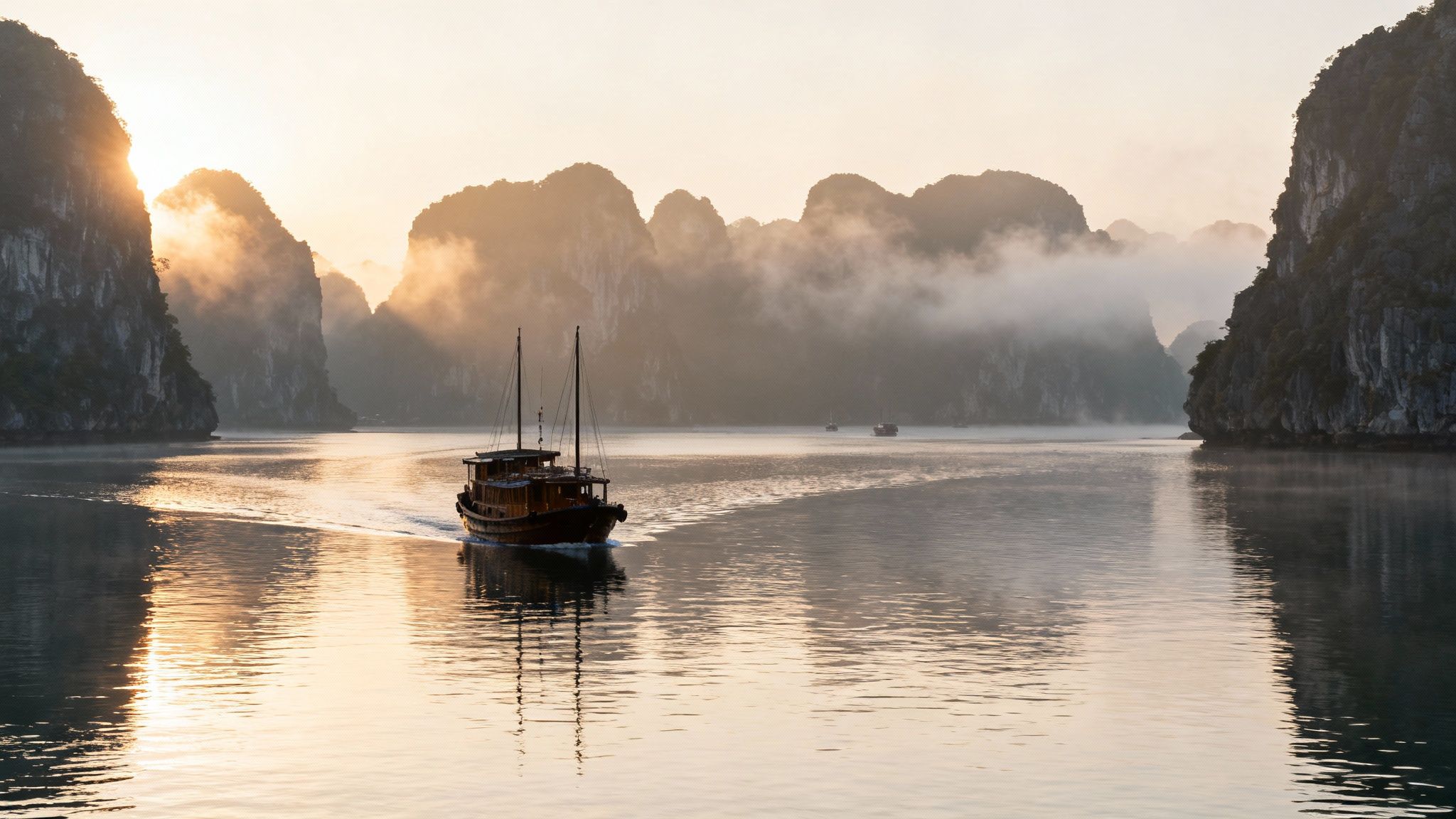
The high season here kicks in from December to February. During these months, the weather is cool and dry—perfect for getting lost in Hanoi’s historic Old Quarter or gliding across the emerald waters of Halong Bay. But this popularity comes with a price. Expect a serious spike in visitor numbers and higher costs for everything from hotels to boat tours.
Why Shoulder Seasons are a Smarter Choice
For a more mindful and sustainable trip, the shoulder months of October to November and March to April are easily the better bet. You’ll get comfortable, mild temperatures, fewer boats dotting the horizon in Halong Bay, and less pressure on local infrastructure and natural resources.
These windows also happen to be the absolute best time for trekking in the mountains around Sapa. In autumn, the rice terraces are a stunning gold after the harvest, while spring brings a vibrant, fresh green to the valleys.
By choosing these months, you’re supporting a more responsible model of tourism. Your visit helps spread income more evenly throughout the year and eases the environmental strain that comes with massive peak-season crowds. Plus, with fewer people around, the whole experience just feels more personal and authentic.
Navigating the Peak and Off-Seasons
While the shoulder seasons are my top pick, it helps to know the full picture. The winter months (December-February) bring dry, pleasant days with temperatures hovering around 59-68°F (15-20°C). This is when international arrivals soar; in a recent peak, Vietnam welcomed a record-breaking 21.2 million international visitors, with the busiest period aligning with this cool, dry weather. You can read more about Vietnam’s tourism trends on vietnamnet.vn.
On the flip side, summer (June-August) means serious heat, high humidity, and heavy downpours. The landscapes are incredibly lush and green, but the weather can easily throw a wrench in your plans, especially for outdoor activities like trekking or cruising.
Low-Impact Travel in the North
One of the best ways to explore Northern Vietnam sustainably is by train. The overnight sleeper from Hanoi to the Sapa region isn’t just a classic Vietnamese adventure—it also slashes your carbon emissions compared to a short flight. It’s a smart way to travel, saving you the cost of a night’s accommodation and letting you wake up to incredible mountain scenery. To keep your gear organized, compression packing cubes are a lifesaver.
As you explore, always carry a reusable water bottle. This simple habit helps reduce plastic waste, which is a major issue in many popular tourist spots. And if you’re interested in ethical animal encounters, it’s worth reading up on the principles of responsible wildlife tourism before you leave. With just a little planning, you can soak up the north’s incredible beauty while leaving a much lighter footprint.
When Is the Best Time to Go to Vietnam’s Central Coast?
Central Vietnam, home to iconic spots like Hoi An, Hue, and Da Nang, moves to a completely different rhythm than the north or south. Its climate is unique, too.
If you’re trying to figure out the absolute best time to go to Vietnam for this coastal stretch, aim for the sweet spot between February and April. These months deliver endless sunshine, wonderfully low humidity, and temperatures that are just right for exploring ancient streets or kicking back on the beach.
This glorious dry season is a world away from the region’s typhoon season. From roughly July to October, the coast can get hammered by serious storms, so it’s a period best avoided for both safety and sustainability. Visiting during the calmer, drier months puts far less strain on local infrastructure and ensures your plans won’t get washed out.
The ancient town of Hoi An, a designated car-free zone, is a fantastic, walkable base for digital nomads and slow travelers. Its lantern-lit streets and impossibly well-preserved architecture create an atmosphere you won’t forget.
Finding the Sweet Spot for Weather and Crowds
For eco-nomads eyeing this part of the country, that February to April window is pure gold. It’s a popular time, for good reason—historical tourist arrivals have been known to jump by up to 26% year-over-year during this period.
You can expect sunny days with temperatures hovering between a comfortable 77-86°F (25-30°C). It’s perfect weather for a bike-packed itinerary, especially in UNESCO-listed Hoi An where the car-free paths and glowing lanterns feel like low-impact bliss.
The perks for conscious travel are real, too. Hotel occupancy is a bit lower before the absolute peak season hits, meaning you can often find regenerative homestays for around $30-50 USD per night. This timing also helps reduce water strain in a region that’s often vulnerable to typhoons later in the year.
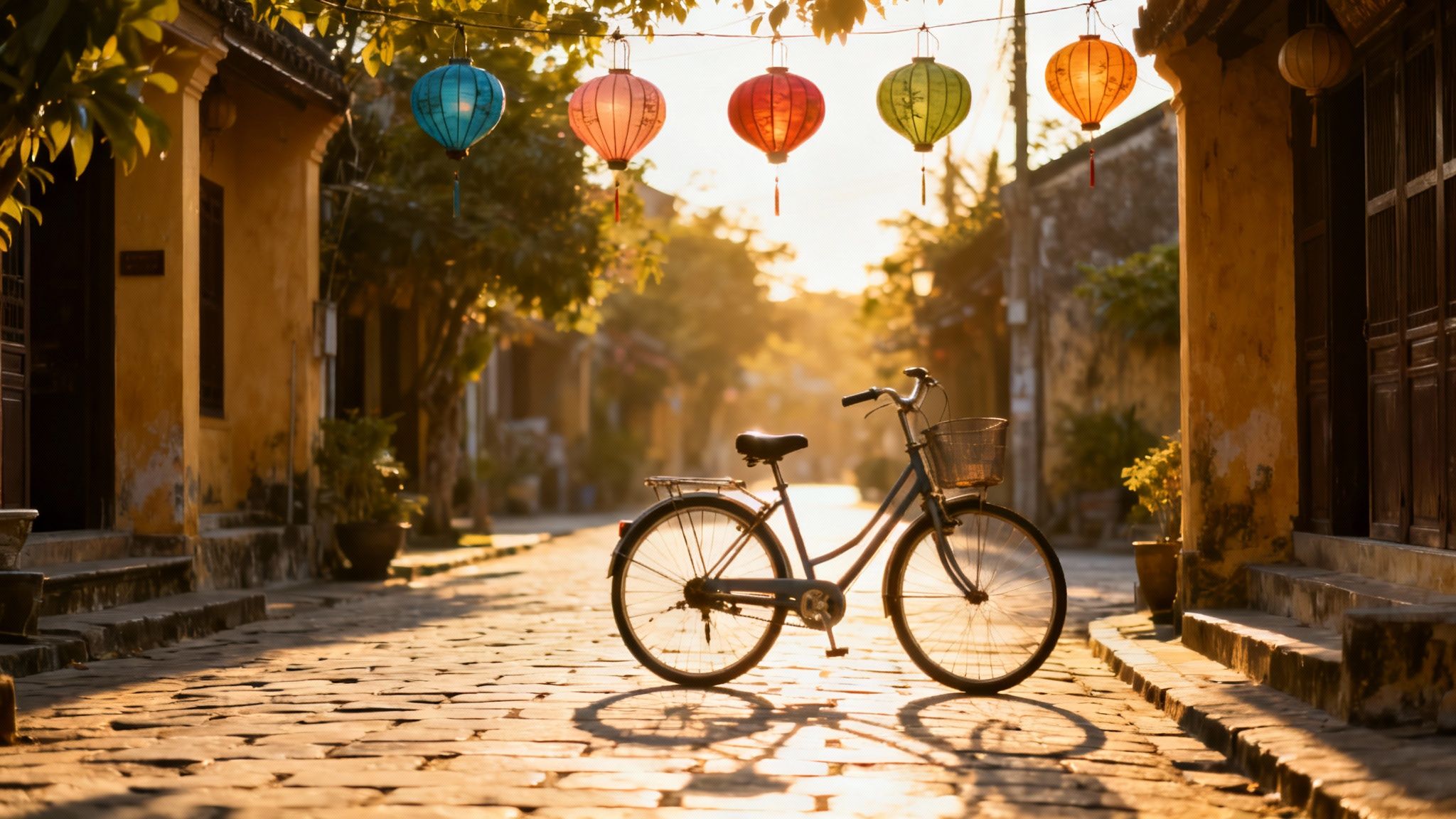
This is the kind of magic you get in Hoi An’s ancient town. Visiting during the dry season means you can soak it all in under clear, sunny skies.
Sustainable Travel Between Central Cities
One of the best ways to move between hubs like Da Nang, Hue, and Hoi An is by train. The historic Reunification Express offers absolutely breathtaking coastal views, especially on the stretch through the Hai Van Pass. This low-impact travel alternative isn’t just scenic; it’s a deeply authentic Vietnamese experience.
When you’re packing for beach days in Da Nang or nearby An Bang, make sure to bring a good reef safe sunscreen to protect the delicate marine ecosystems. You can learn more in our guide on how to choose the best reef-safe options.
A few other smart packing choices can make a big difference. For train journeys where you’re packing light, a quick dry travel towel is a minimalist essential that serves you well. It takes up almost no space and dries in a flash, perfect for hopping between locations. Similarly, using reusable toiletry bottles for your liquids helps cut down on single-use plastic waste. These small, conscious choices really do help preserve the beauty of Central Vietnam for everyone.
Southern Vietnam & The Mekong Delta
Down south, things get simpler. The region around Ho Chi Minh City and the watery world of the Mekong Delta runs on a two-season clock: wet and dry. That’s it. It’s one of the easiest parts of the country to plan for.
Most travelers aim for the peak dry months, but the real sweet spot—the best time to go to Vietnam for a truly memorable southern experience—is the shoulder season.
The main tourist window runs from December to April. This is the dry season, and it delivers clear skies and less sticky humidity, making it a great time for wandering the city without getting caught in a daily downpour. But this is also when you’ll find the biggest crowds and highest prices for just about everything.
For a smarter, more rewarding trip, aim for October to December. The monsoon has just finished its work, leaving the entire landscape incredibly green and full of life. You get beautiful weather, fewer people at the popular spots, and much better value. It’s a win-win.
Why the Post-Monsoon Shoulder Season Wins
That little window from October to December—after the rains but before the crowds—is perfect for a few reasons. Tourist numbers are starting to climb, but you’re still ahead of the main holiday rush. To give you an idea, recent data showed September arrivals hitting 1.56 million, a jump that signals the start of the good season.
The weather settles into a comfortable 77-82°F (25-28°C), ideal for boat trips on the delta without the oppressive heat or flooding you might find mid-year. You can dig into more of Vietnam’s official tourism statistics on their site.
For Eco Nomad travelers, this shoulder period can shave 25-40% off accommodation costs. You can find lovely Mekong eco-lodges for as little as $25 USD a night. It’s also a great time for slow travel, as land arrivals from Cambodia pick up, making multi-country overland routes much easier.
This is the time for a lazy boat tour through the Mekong’s winding canals or for getting lost in Ho Chi Minh City’s energetic neighborhoods.
Visiting right after the rainy season means the canals are full and the jungle is at its most vibrant.
Planning Your Southern Vietnam Itinerary
When you’re hopping between Ho Chi Minh City and the delta, a lightweight travel backpack is all you really need for day trips. For a more regenerative experience, think about booking a local homestay. It’s an honest look into delta life and a guarantee that your money supports the community directly.
Ho Chi Minh City is a major international hub, so you’ll want a universal travel adapter to keep your gear charged. If you’re working on the go, a laptop privacy screen is surprisingly useful in the city’s buzzing cafes. Getting connected is simple, too; an eSIM from a provider like Airalo can be up and running the moment you land.
And for a smooth start after a long flight, pre-booking a transfer with a service like Welcome Pickups is a great way to skip the airport chaos. One last small thing that makes a big difference: a good cable organizer travel case will save you from digging through a tangled mess of chargers. These little bits of prep make the flow between city and countryside feel effortless.
Your Month-by-Month Vietnam Travel Planner
To really nail down the best time to go to Vietnam, let’s break down what to expect each month across the country’s three distinct regions. Think of this as your go-to reference when sketching out an itinerary, whether you’re planning an epic cross-country train journey or just settling into one spot for a while.
We’ll walk through the typical weather patterns, flag major festivals like Tet (the Lunar New Year), and offer a few eco-conscious tips for each season. This way, you’re ready for whatever climate comes your way.
A quick practical tip: for those long train rides between regions, a reliable portable power bank is a lifesaver for keeping your gear charged. And trust me, a good pair of noise-canceling earbuds can turn a chaotic journey into a peaceful one.
To help you visualize how the weather shifts from north to south, we’ve put together a detailed table. It’s a great tool for spotting the sweet spots where you can enjoy great weather across multiple regions at once.
Vietnam Weather and Events by Month
| Month | North (Hanoi/Sapa) | Central (Hoi An/Da Nang) | South (HCMC/Mekong Delta) |
|---|---|---|---|
| January | Cool, dry, often overcast. Cold in mountains. | Clearing up, mild temps, less rain. | Peak dry season. Sunny, low humidity. |
| February | Cool & dry. Perfect for city exploring. | Sunny & dry. Great beach weather begins. | Glorious dry season continues. |
| March | Warming up, clear skies. Ideal for Halong Bay. | Hot & dry. Prime beach season. | Hot & dry, but humidity starts creeping up. |
| April | Warm, sunny spring weather. Fantastic all-rounder. | Peak hot & dry. Excellent for coast. | Getting hotter. Still mostly dry. |
| May | Hot & humid. Start of rainy season. | Still hot & dry. Perfect beach conditions. | Start of monsoon. Afternoon downpours. |
| June | Peak heat & humidity. Daily heavy rains. | Hot & dry. Great for coastal adventures. | Hot, humid, with frequent heavy rain. |
| July | Hot, humid, and very wet. Typhoon risk. | Still hot & dry, but very high temps. | Peak monsoon season. Flooding possible. |
| August | Rains continue, still hot & humid. | Last month of dry season. Very hot. | Wet season continues. Heavy rain daily. |
| September | Rains start easing. Temps become pleasant. | Rainy season begins. Typhoon risk increases. | Rains start to lessen toward month’s end. |
| October | Pleasant, dry autumn. Rice harvest in Sapa. | Peak rainy season. Flooding is common. | Rains subsiding, landscapes are lush. |
| November | Cool, dry, clear skies. Excellent trekking. | Rainy season continues, but eases a bit. | Dry season begins. Pleasant temps. |
| December | Cool & dry. Festive season in Hanoi. | Rains linger but conditions improve. | Peak dry season returns. Perfect weather. |
This table gives you a solid at-a-glance idea, but remember that weather is never a guarantee. Always check a detailed forecast closer to your travel dates.
January to March: The Peak Dry Season
This is prime time for Southern and Northern Vietnam. Down south, you’ll be greeted with dry, sunny skies—perfect for wandering through Ho Chi Minh City or floating down the Mekong Delta. The north is cool and dry, making it ideal for sightseeing in Hanoi or cruising Halong Bay, though it can get genuinely chilly, especially up in the mountains around Sapa.
Central Vietnam is just shaking off its rainy season in January, with conditions getting significantly better by February and March. The biggest thing to plan around, however, is Tet, the Lunar New Year. It usually lands in late January or early February. While it’s a fascinating cultural spectacle, it causes massive travel disruptions as the entire country shuts down for family celebrations. If you’re traveling during Tet, book everything far, far in advance.
April to June: Shoulder Season Transitions
April is arguably one of the best months to see the entire country. It strikes a beautiful balance, offering great weather everywhere before the intense heat and humidity really kick in. The north is enjoying warm, clear spring days, the central coast is in its sunny prime, and the south is still hanging on to its dry season.
By May and June, the heat cranks up nationwide. The south and north slide into their monsoon seasons, which means hot, sticky days punctuated by powerful afternoon downpours. The central coast, however, stays hot and mostly dry, making it an incredible beach destination during this time.
This chart is a fantastic visual guide to understanding these seasonal shifts, particularly for Southern Vietnam.
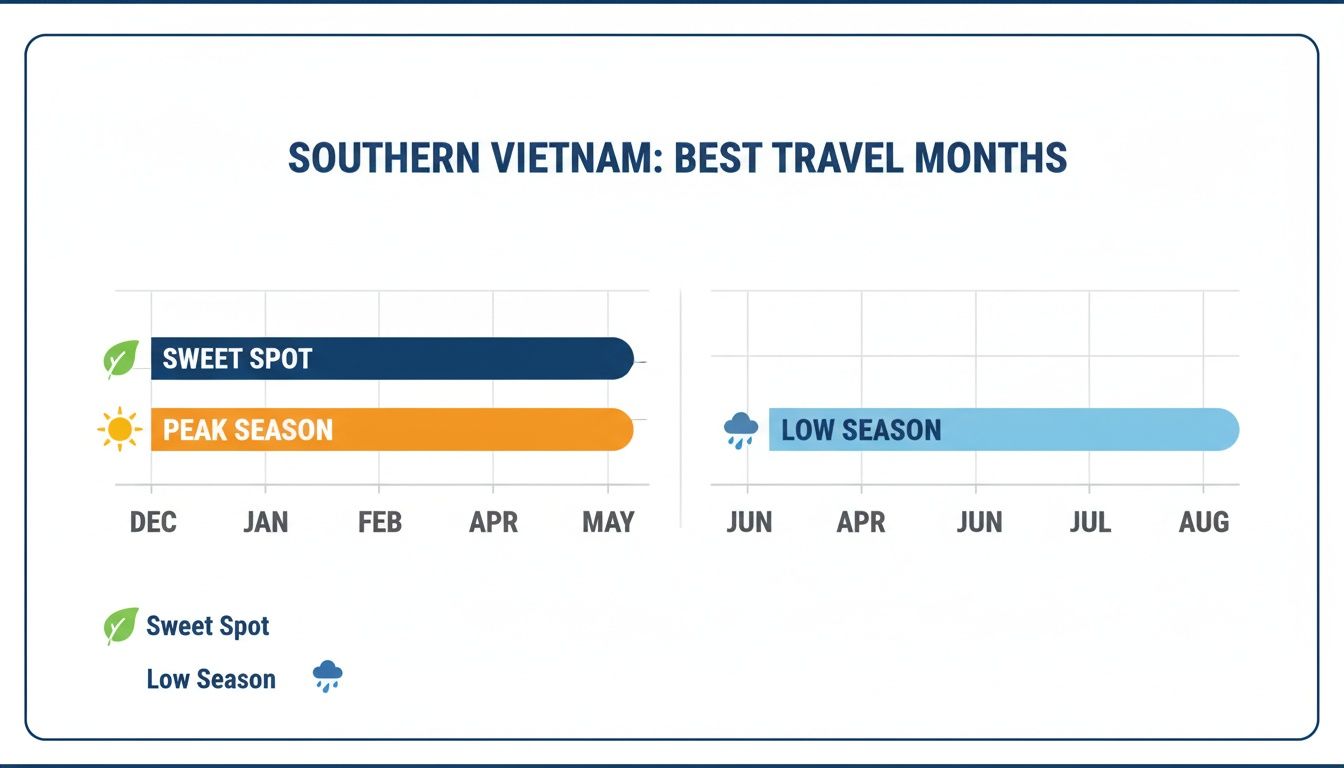
As you can see, that sweet spot from October to December offers a perfect blend of lush, green landscapes right after the monsoon, but with fewer crowds before the peak season rush hits.
July to September: The Wet Season Peak
This period is dominated by the monsoon in both the north and south. You can expect hot, humid weather with frequent, heavy rain that can sometimes lead to localized flooding, especially in the Mekong Delta.
On the flip side, the central coast remains dry and sunny, though temperatures can be scorching. If you’re planning a beach-focused trip around Da Nang and Hoi An, this is an excellent time to go. Just be aware that toward the end of this period, the central region’s own rainy season starts, often bringing a higher risk of typhoons.
October to December: The Ideal Shoulder Season
October brings a welcome change of pace. The rains finally start to let up in the north and south, leaving behind incredibly lush, green landscapes and much more pleasant temperatures. This is a spectacular time for trekking in Sapa, as the rice terraces turn a brilliant gold for the harvest.
Central Vietnam, however, dives into its peak rainy season, so it’s a region best avoided during these months. By November and December, the whole country—aside from the lingering rains in the central part—is enjoying fantastic weather. The north is cool and dry, and the south enters its glorious dry season, making this another amazing window to find the best time to go to Vietnam.
For digital nomads planning a longer stay, keeping connected is straightforward. You can learn more in our guide on the best SIM card for international travel.
Editor’s Pick and Final Takeaways
After breaking down Vietnam’s complex, sprawling climate, one window really stands out. If you’re looking for a single period that offers the best balance for a thoughtful, memorable trip, this is it. It’s the sweet spot that gives you the most flexibility and the best conditions across this wonderfully diverse country.
Journeys like the train ride over the Hai Van Pass are just better under the clear skies the shoulder season provides. This scenic route between Da Nang and Hue is a fantastic low-impact way to travel, with coastal views that are hard to beat.
Our Top Choice for Visiting Vietnam
So, when would we go?
Editor’s Pick: Mid-March to Mid-April
For the ultimate balance of good weather, manageable crowds, and lush, green landscapes, aim for mid-March to mid-April. This window is a true sweet spot. The north is just waking up into a pleasant spring, the central coast is sunny and dry, and the south is still enjoying its dry season before the intense heat really kicks in. It’s the perfect time to explore the entire length of the country, from the mountains down to the Mekong.
This period perfectly captures the spirit of shoulder season travel—it’s not just about avoiding the crowds, but about reducing your impact while getting a better experience. To build on that, you can check out these simple and actionable low-impact travel habits that work anywhere in the world.
Key Takeaways for Planning Your Trip
Before you book, here are the main things to remember:
- Embrace the Shoulder Seasons: March-April and September-November give you the best mix of weather, costs, and crowds. It’s a smarter, more sustainable way to travel.
- Travel by Region, Not by Season: Vietnam’s climate varies wildly from north to south. Don’t think of the country as having one single “best season”—plan your route based on the specific regions you want to see.
- Choose Train Travel: The Reunification Express is a scenic, low-impact way to see the country unfold. It connects all the major hubs from Hanoi down to Ho Chi Minh City.
- Pack for Multiple Climates: Layering is your best friend. Be ready for cool evenings up in the northern mountains and proper tropical heat in the south, sometimes on the same trip.
- Avoid Typhoon Season: Steer clear of the central coast from July to October. This is when heavy storms can roll in, causing serious travel disruptions.
- Book Ahead for Tet: If your trip falls during the Lunar New Year (late January/early February), book your transport and accommodation well in advance. The entire country is on the move, and things sell out fast.
Low-Impact Travel Tools (Worth It)
Also, if you’re planning a trip and want to keep things simple, these tools help you travel smoother while staying mindful about impact.
Get an eSIM for reliable data → Disclosure: Partner link. No extra cost to you.
Pre-book a transfer for easy arrivals → Disclosure: Partner link. No extra cost to you.
Your Vietnam Trip: Frequently Asked Questions
Got questions about planning your Vietnam adventure? You’re in the right place. Here are answers to the most common things travelers ask, covering everything from the best time to ride the Ha Giang Loop to whether you really need all that cash.
What’s the cheapest month to travel to Vietnam?
If you’re purely chasing the lowest prices, the rainy season from May to September is your window. Flights on hubs like Trip.com and hotel rooms see their biggest discounts then. The catch? You’ll be dealing with serious, often daily, downpours, especially down south. For the best flight deals, it is always smart to check a comparison site like Aviasales.
For a much better blend of good weather and good value, aim for the shoulder months. I always tell people to look at April, May, October, or November. You get a sweet spot of fewer crowds, lower prices, and much more predictable, pleasant weather.
When is the monsoon season in Vietnam?
One of the best things about Vietnam is that the monsoon hits different regions at different times. This staggered weather pattern means you can almost always find a dry, sunny spot somewhere in the country.
- The South (Ho Chi Minh City & Mekong Delta): The rains run from May to November.
- The Center (Hoi An, Da Nang): Wet season is September to December, and this is also when the risk of typhoons is highest.
- The North (Hanoi & Sapa): The wettest months are June through August.
Is visiting during the Tet holiday a good idea?
Traveling during Tet (the Lunar New Year, usually late January or early February) is a double-edged sword. On one hand, you get a fascinating look into Vietnam’s most important cultural event. On the other, it requires some serious advance planning.
Many shops, restaurants, and businesses shut down completely for several days. Public transport gets booked solid weeks in advance as everyone travels home to family, and big cities like Hanoi can feel eerily quiet. If you decide to go, you absolutely must book flights, trains, and hotels far ahead and plan to stay in one place for the main few days of the holiday.
How many weeks do I really need to see Vietnam?
To get a solid taste of the country’s main highlights—north, center, and south—give yourself at least two weeks. This lets you move between the big spots without feeling like you’re constantly in transit. I’m a big fan of traveling light with just a single piece of carry on luggage to stay nimble.
But if you want to go deeper, maybe do a proper trek in Sapa or explore some places that aren’t on every Top 10 list, three to four weeks is the sweet spot. It gives you the breathing room to travel overland, linger where you like, and really soak it all in.
What’s the best time for a motorbike trip?
For legendary routes like the Ha Giang Loop in the north, the weather is everything. You definitely want to ride during the dry seasons. Aim for either March to May in the spring or September to November in the autumn.
Riding during these months gives you the best road conditions, clear skies for those epic views, and comfortable temperatures. Trust me, you don’t want to be navigating mountain switchbacks on a packable daypack in the slippery, rain-soaked roads.
Do I need travel insurance for Vietnam?
While not a legal requirement for entry, traveling without insurance is a significant risk. Medical care for foreigners can be expensive, and unexpected trip cancellations or emergencies can happen. A policy from a provider like VisitorsCoverage offers peace of mind. It is always best to be prepared for any situation.
Is Vietnam safe for solo female travelers?
Yes, Vietnam is widely considered a safe and welcoming place for women traveling alone. Violent crime against tourists is very rare. Like anywhere, though, you need to use common sense. Just remember to keep your cards and cash safe with a good RFID blocking wallet, especially in crowded markets. An anti theft backpack can also add an extra layer of security.
Stick to well-lit areas at night, be aware of your surroundings in busy places, and keep an eye on your belongings. Vietnamese people are generally warm, respectful, and more than willing to help if you ever need it.
What currency is used in Vietnam?
The official currency is the Vietnamese Dong (VND). While you might see some tour operators or upscale hotels accept US dollars ($), you should plan on using Dong for almost everything. You’ll always get a better price on street food, market shopping, and local transport when you pay in the local currency.
ATMs are everywhere in cities and towns, so it’s easy to pull out cash as you go. Just give your bank a heads-up about your travel plans before you leave to avoid any blocked cards.
This article was fact-checked using sustainability data from the World Green Building Council, the Global Ecotourism Network, and peer-reviewed architecture studies. All partner links are vetted for compliance with sustainable business certifications.
Join the Sustainable Work Movement
Want more rail-first itineraries, low-impact packing systems, and walkable base-city ideas?
