

Determining the best time to travel to New York depends entirely on your priorities. Are you seeking lower-carbon travel options, aiming for a long-stay work-from-anywhere base, or hoping to avoid the peak-season crowds? This isn’t just another guide about weather; it’s a strategic breakdown for the modern, conscious traveler. We’ll move beyond generic advice and dive into the specifics of planning a trip that aligns with your values, whether that means prioritizing sustainability, budget, or unique local experiences.
This comprehensive month-by-month roundup unpacks the distinct advantages of each season. You’ll find actionable insights on everything from leveraging shoulder-season travel for a lower environmental footprint to identifying the best rail-access windows for a seamless slow-travel itinerary. We’ll cover signature events that define the city’s cultural calendar, highlight walkable neighborhoods ideal for extended stays, and offer practical notes on packing and booking timelines. The goal is to equip you with the detailed information needed to craft a trip that feels intentional and impactful.
Forget one-size-fits-all recommendations. This guide provides a framework for choosing your ideal travel window based on what matters most to you. From the quiet, reflective calm of a winter off-season trip to the vibrant energy of the fall arts scene, we’ll help you pinpoint the perfect time for your New York adventure, ensuring your plans are both memorable and mindful.
1. Shoulder Season Travel (April–May & September–October)
For many, the best time to travel to New York isn’t during the peak summer rush or the festive holiday season. Instead, the “shoulder seasons” of April–May and September–October offer a perfect balance of pleasant weather, manageable crowds, and lower costs. These periods provide a more relaxed and authentic experience. Consequently, they are ideal for slow travelers, remote workers, and anyone seeking to connect with the city beyond its most crowded attractions.
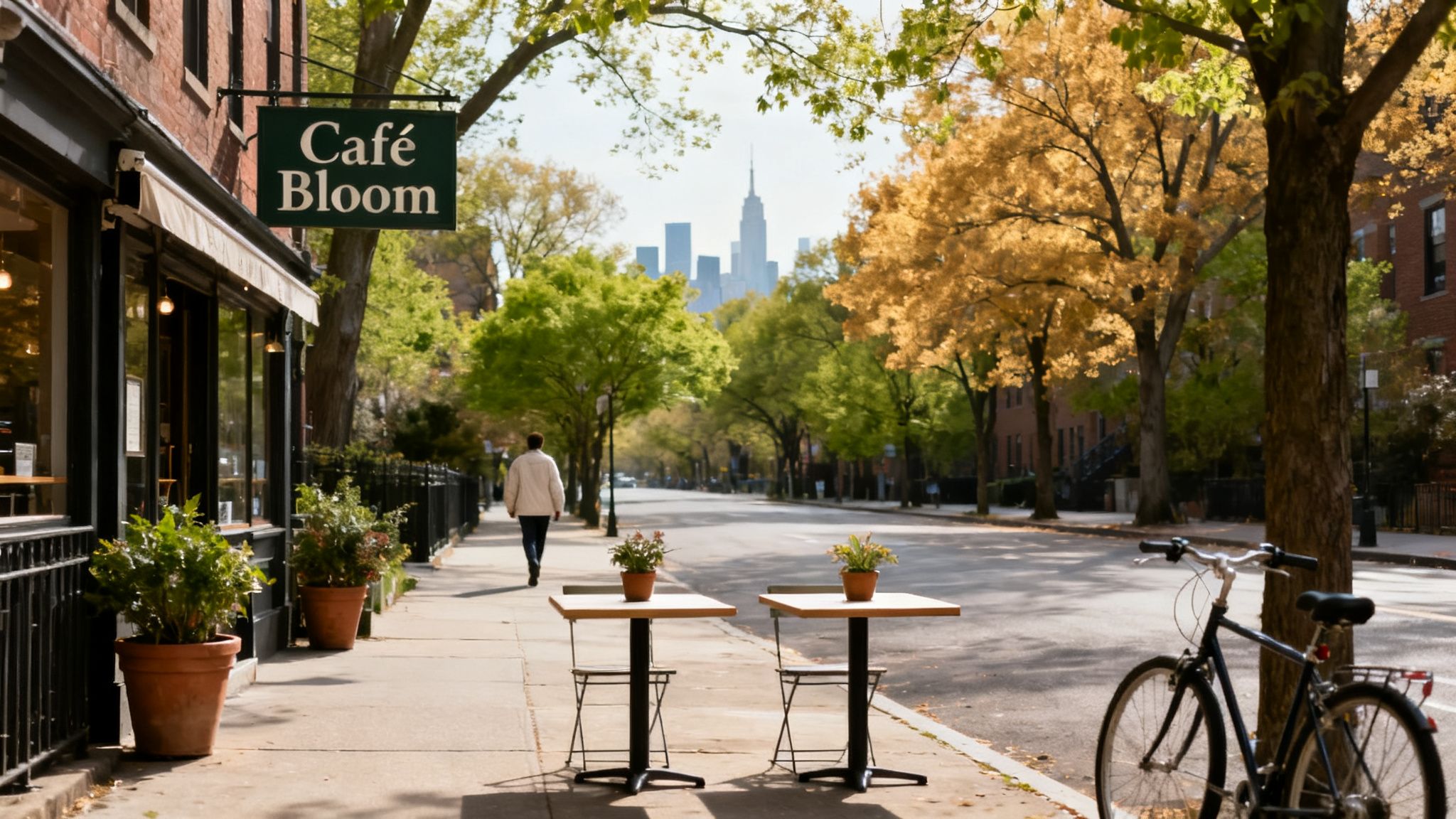
During these months, average temperatures hover between a comfortable 50–70°F (10–21°C). This mild weather is perfect for exploring the city’s diverse neighborhoods on foot. You can also enjoy a picnic in Central Park or cycle along the Hudson River Greenway. The city feels alive but not overwhelmed. For instance, spring brings blooming flowers to the botanical gardens, while autumn paints the parks in stunning shades of gold and red.
From a sustainability perspective, visiting during shoulder season reduces the strain on New York’s infrastructure. Fewer tourists mean less demand on public transit, accommodation, and local resources. This approach aligns with principles of regenerative tourism, similar to those found in off-peak eco-escapes in Europe, where travelers contribute positively to the local environment and community. For digital nomads, this translates into practical benefits. Think lower prices on month-long stays in walkable neighborhoods like Astoria or Williamsburg, allowing for a more immersive, base-city experience. Arriving via Amtrak from Boston or Philadelphia is seamless and affordable, especially when you book a few weeks ahead.
Actionable Tips for Shoulder Season Visits
To make the most of your shoulder season trip, consider these strategies:
- Book Regional Transit Early: Secure the best fares on Amtrak or regional buses by booking your tickets 2–4 weeks in advance. This ensures availability and often cuts costs significantly.
- Explore Outer Boroughs: With fewer crowds, it’s the perfect time to discover gems in Queens, Brooklyn, and the Bronx. Explore the vibrant street art in Bushwick or the diverse culinary scene in Jackson Heights without the summer rush.
- Leverage Local Events: Community-run street fairs, free walking tours, and outdoor markets are abundant in the spring and fall. Check local listings for authentic experiences.
- Pack Smart: Bring layers. A light jacket, a sweater, and comfortable walking shoes are essential. A packable daypack is also useful for carrying essentials like a reusable water bottle and any finds from local markets.
2. Winter Off-Season (November–March, excluding holidays)
For the budget-conscious traveler and the long-stay digital nomad, the best time to travel to New York is undoubtedly the deep off-season. The winter months from November to March, consciously excluding the frantic holiday period from December 20th to January 2nd, offer unparalleled savings and a unique, introspective city experience. This period is ideal for those who prioritize value and a slower pace over warm weather. This allows for a deeper connection with the city’s indoor culture.
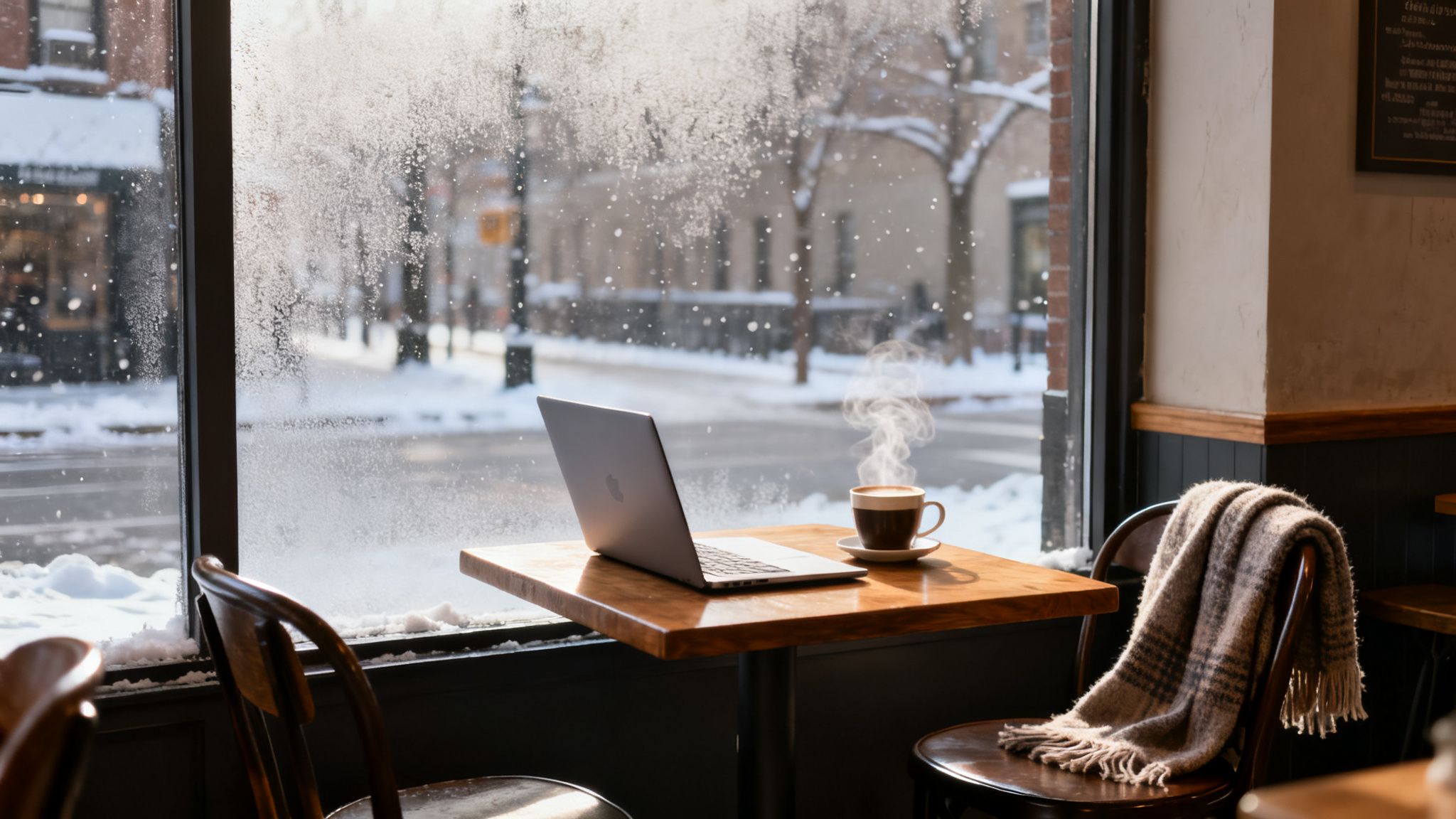
During this time, average temperatures range from 25–45°F (-4–7°C), making outdoor exploration a brisk affair. However, the cold encourages a focus on New York’s world-class museums, theaters, cozy cafes, and vibrant indoor markets. For remote workers, these conditions are perfect for settling into a 6 to 12-week base-city stay. Affordable leases are available in neighborhoods like Sunset Park, Ridgewood, or Astoria. You can find accommodation at a 30-40% discount compared to peak season rates.
From a sustainability standpoint, winter travel significantly lessens the burden on New York’s resources. With fewer tourists, there’s reduced consumption across public transit and accommodations, leading to a lower environmental footprint. This season is also a dream for rail-first travelers. Amtrak’s Northeast Regional and local commuter rail services operate reliably year-round. They offer a low-carbon way to arrive from cities like Boston or D.C. Mid-week winter travel often yields the lowest fares, making spontaneous day trips or multi-city itineraries both feasible and affordable.
Actionable Tips for Winter Off-Season Visits
To maximize your winter trip and embrace the city’s quiet charm, use these strategies:
- Book Accommodations in January: For the absolute lowest prices, book your February and March stays in January. This is when demand hits its annual low, and availability is at its peak.
- Layer Clothing Strategically: Your comfort depends on proper layering. Start with thermal base layers, add a merino wool mid-layer for insulation, and top it with a compact winter coat. A carry on backpack is perfect for stowing layers as you move between heated indoor spaces and the cold outdoors.
- Utilize Heated Public Spaces: New York is full of warm, welcoming public spaces. Spend an afternoon working from a branch of the New York Public Library, exploring a museum on a pay-what-you-wish day, or lingering in a cozy cafe.
- Plan Mid-Week Rail Trips: Take advantage of lower fares and less crowded trains by planning day trips via Amtrak to Philadelphia or other nearby cities on a Tuesday or Wednesday.
3. Spring Festival Season (April–May: Cherry Blossoms, Earth Day, Brooklyn Book Festival)
For travelers who want their trip to revolve around unique cultural events, the best time to travel to New York is undoubtedly the spring festival season. April and May transform the city into an event-driven destination. They offer vibrant local experiences without the peak summer crowds or prices. Therefore, this period is ideal for eco-conscious remote workers and slow travelers who want to connect with the city’s community spirit.
Spring festivals align perfectly with sustainability values. They showcase local culture and concentrate foot traffic in specific neighborhoods on certain dates. This allows for strategic planning, especially for those arriving by rail. You can time a 4- to 6-week stay to coincide with Earth Day on April 22. Then, you can participate in green-themed events and explore different boroughs at lower shoulder-season rates. Cherry blossom enthusiasts can use the botanical gardens in the Bronx and Brooklyn as weekend day-trip destinations, easily reachable via subway or regional transit.
This approach offers a different kind of immersion. It is similar to how one might plan a trip around cultural events in other world-class cities, which you can learn more about in this guide on the best time to go to Paris. By centering your travel around local happenings, you support community-run initiatives and get a more authentic feel for the city’s rhythm. It’s a perfect way to combine work and exploration, using the festivals as anchors for a longer, more meaningful stay.
Actionable Tips for Spring Festival Visits
To make the most of your festival-focused trip, consider these strategies:
- Book Rail Travel Strategically: For Earth Day week (April 20–25), secure your Amtrak tickets from Boston, Philadelphia, or DC at least four weeks in advance to get the best fares and availability.
- Source Local Goods: Attend farmers’ market festivals around Earth Day at locations like Union Square, Tompkinsville, or Sunset Park. They are excellent spots to find zero-waste groceries and locally made products.
- Plan Botanical Day Trips: Use the cherry blossom peak as a reason to explore. The New York Botanical Garden in the Bronx is a short ride on the Metro-North, while the Brooklyn Botanic Garden is easily accessible via the subway.
- Stay in Outer Boroughs: To avoid Manhattan crowds and support local communities, book your stay in neighborhoods like Astoria, Sunset Park, or Ridgewood. This also gives you a front-row seat to smaller block parties and local events.
- Pack for the Occasion: A lightweight travel backpack is essential for carrying snacks from street fairs, while a collapsible water bottle helps you stay hydrated and reduce waste.
4. Fall Arts & Culture Season is the Best Time to Travel to New York for Creatives
For culturally curious travelers, the best time to travel to New york is undoubtedly the fall. September and October mark the city’s artistic reset. This period bursts with creative energy from Fashion Week, the New York Film Festival, and the official start of the Broadway season. This timeframe offers a potent combination of stimulating events, ideal walking weather, and a brief lull in tourist crowds. Consequently, it’s perfect for immersive, long-term stays.
During these months, the city enjoys crisp, comfortable temperatures, typically ranging from 60–70°F (15–21°C). This pleasant climate is ideal for exploring gallery districts like Chelsea and the Lower East Side on foot. You can also enjoy an evening stroll after a matinee show. The palpable buzz of major cultural events creates a unique atmosphere, yet the city feels more accessible than during peak tourist seasons.
From a slow-travel perspective, arriving in early September allows you to settle in just as post-summer accommodation prices dip. This makes it a strategic time for a 6–8 week base-city stay. You can choose a walkable, well-connected neighborhood like Astoria or Sunset Park. Digital nomads can easily arrive via Amtrak’s Northeast Regional, securing reasonable fares from Boston or D.C. before the holiday price hikes. This extended stay supports a regenerative travel model. It allows you to contribute to local cafes, independent shops, and neighborhood art scenes rather than just visiting major landmarks.
Actionable Tips for the Fall Arts Season
To fully immerse yourself in New York’s cultural calendar, consider these practical strategies:
- Attend Free Cultural Events: You don’t need expensive tickets to participate. Experience the buzz of Fashion Week by exploring street-style hubs near Bryant Park. Also, attend free-to-enter gallery openings during “First Fridays” in Chelsea and Williamsburg.
- Plan Around Festivals: Use the New York Film Festival schedule to plan weekly cinema outings. Many participating theaters offer discounted matinee showtimes, providing an affordable way to see world-class films.
- Find Affordable Theater Tickets: For Broadway and Off-Broadway shows, use the TKTS booth in Times Square for same-day, half-price tickets. Exploring regional theaters in the outer boroughs also reveals hidden gems at a lower cost.
- Pack for Versatility: Autumn weather can be unpredictable. Pack layers, including a light jacket and sweater. A durable anti theft backpack is perfect for carrying your essentials, including a reusable water bottle and a notebook for festival schedules.
5. Summer Base-City Strategy (June–August, with strategic timing)
While many travelers avoid New York’s peak summer, a strategic approach can make it the best time to travel to New York for long-stay remote workers and eco-conscious visitors. The key is timing. Focusing on early June or late August allows you to enjoy the vibrant outdoor culture without the extreme crowds and costs of July. This method is ideal for those establishing a “base city” for a month, using slower, rail-first travel to immerse themselves in a neighborhood.
During these bookend summer months, temperatures typically range from a pleasant 70–85°F (21–29°C). This warm weather is perfect for exploring the city’s extensive waterfronts, enjoying free outdoor programming in the parks, and soaking in the rooftop culture. By arriving in early June, digital nomads can secure month-long apartment sublets in affordable outer-borough neighborhoods like Astoria or Ridgewood before prices surge. Similarly, arriving in late August captures the end of summer’s energy as costs begin to dip.
This strategy supports a more sustainable, in-depth travel style. Opting for a longer stay reduces the per-day environmental impact and fosters a deeper connection with the local community, a core principle of slow travel. For example, a remote worker could settle in Sunset Park for a month. Then they can enjoy local street festivals and plan weekend trips to Philadelphia or Boston via Amtrak’s night trains. This approach transforms a typical tourist trip into a meaningful, low-carbon experience.
Actionable Tips for a Summer Base-City Stay
To execute this strategy successfully, consider these specific tips:
- Time Your Arrival: Book your stay to begin in the first week of June or the last week of August. This timing helps you avoid the peak pricing and crowds of mid-summer while still benefiting from the warm weather.
- Explore Outer Boroughs: Settle into walkable neighborhoods like Astoria, Sunset Park, or Ridgewood. These areas host numerous street fairs and block parties in June and late August, offering an authentic local experience.
- Plan for Free Events: Secure tickets for iconic free events like Shakespeare in the Park through the online lottery weeks in advance. Plan your evenings around these unique cultural opportunities.
- Embrace Early Mornings: Use the extended daylight for early morning activities. Go for a bike ride along the Hudson River Greenway or through Prospect Park before the midday heat and crowds build up. Make sure to carry a reusable water bottle to stay hydrated.
6. Post-Labor Day Transition (Early September: Back-to-School Calm)
For the strategic slow traveler, the best time to travel to New York is the brief, quiet window immediately following Labor Day. This early September period offers a unique sweet spot as summer crowds disperse. Families return for the school year, and the city exhales before the fall arts season fully ignites. This transition creates a local-focused rhythm. As a result, it is perfect for remote workers and digital nomads seeking a more authentic, neighborhood-centric experience.
During the first two weeks of September, visitor numbers dip, and so do prices. Accommodation costs can drop sharply, sometimes 30–40% below their August peaks. The weather remains pleasant, often holding onto summer’s warmth without the intense humidity. This climate is ideal for exploring potential base-city neighborhoods on foot. You can wander from the brownstones of Cobble Hill to the vibrant streets of Astoria, all without the overwhelming tourist presence.
This period is especially advantageous for those planning longer, base-city stays. Arriving between September 3rd and 10th allows remote workers to secure multi-month leases at some of the lowest rates of the year. The lull provides ample time to settle in, discover local cafes, and establish a routine before the city’s cultural calendar ramps up. For rail-first travelers, regional transit services like Amtrak and NJ Transit stabilize after the holiday rush. They offer reliable and more moderately priced connections from hubs like Boston and Philadelphia.
Actionable Tips for a Post-Labor Day Trip
To capitalize on this unique early September window, consider these strategies:
- Secure Leases Early: Contact neighborhood property managers and local Airbnb hosts directly in late August. Many are eager to fill units and offer September-specific discounts to secure longer-term tenants.
- Time Your Arrival: Plan to arrive before September 15th to maximize your choice of accommodation and lock in the most favorable rates for month-long stays.
- Explore Like a Local: Use the first week to visit potential base-city neighborhoods in person. Experience them at their quietest and most authentic moment to see if they fit your lifestyle.
- Book Regional Rail Smartly: Book your train tickets on Amtrak during the final week of August. Schedules are full, but prices become more moderate for post-Labor Day travel, especially for mid-week journeys.
7. Amtrak Northeast Regional Window is the Best Time to Travel to New York by Train
For rail-first travelers and eco-nomads, the best time to travel to New York isn’t a season, but a specific travel window. Off-peak train travel days, typically Tuesdays through Thursdays, offer a strategic advantage. This is especially true for those arriving from other Northeast cities. Booking on Amtrak’s Northeast Regional, NJ Transit, or Metro-North during these mid-week days can lead to fare reductions of 15–30%. It also means significantly less crowded trains, making for a more relaxed and affordable journey.
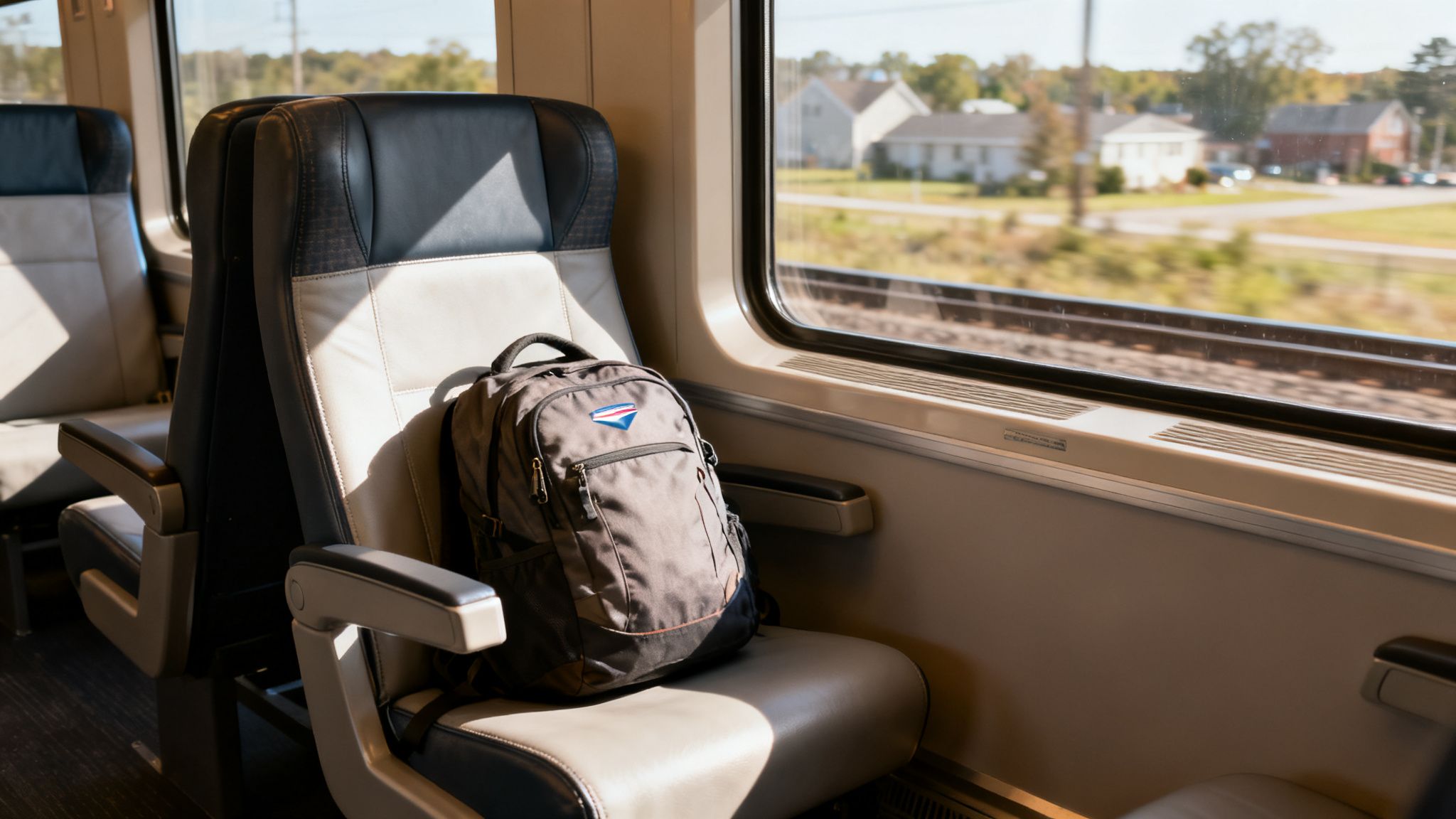
This approach is ideal for remote workers and digital nomads who have flexible schedules. For example, a traveler from Boston or Philadelphia can book a Tuesday morning train for $25–$45 USD. This compares to weekend rates that often exceed $80 USD. This timing aligns perfectly with settling into a long-stay apartment in a neighborhood like the Upper West Side or Jersey City before the weekend rush. It’s a practical way to minimize transit costs while maximizing comfort.
From a sustainability standpoint, mid-week travel is a smart choice. While peak-time trains are full, off-peak travel still supports the efficiency of the rail system. This is a much lower-carbon alternative to flying or driving. This method of cost-saving aligns with the principles of budget-conscious, low-impact travel. It is similar to strategies used for finding the cheapest way to visit Europe. By combining a Tuesday arrival with a shoulder-season stay, travelers can compound their savings on both transport and accommodation.
Actionable Tips for Off-Peak Rail Travel
To maximize the benefits of traveling during the Amtrak Northeast Regional window, use these strategies:
- Book Mid-Week Tickets Early: Secure the lowest off-peak fares on Amtrak.com by booking your Tuesday–Thursday tickets 2–4 weeks in advance. These discounted seats are limited and sell out closer to the departure date.
- Compound Your Savings: Pair your off-peak rail ticket with a shoulder-season stay (April–May or September–October). This can result in a significant total trip cost reduction, with savings on both your journey and your lodging.
- Travel Light for Easy Transit: A well-organized carry on luggage makes navigating train stations and subways much easier. Use compression packing cubes to keep your belongings tidy and accessible throughout your trip.
- Join Loyalty Programs: Sign up for Amtrak’s Guest Rewards program to earn points on your travel. These points can be redeemed for future trips, further reducing your travel expenses.
- Explore Regional Rail Options: Don’t forget to check NJ Transit and Metro-North schedules if you’re coming from nearby areas. These commuter rail lines often offer even steeper mid-week discounts than long-distance services.
8. Holiday Avoidance Strategy (November 1–20 & January 3+ as alternatives)
For eco-nomads and slow travelers, the best time to travel to New York is often found by strategically avoiding its most intense periods. The holiday season, while magical, brings peak pricing and overwhelming crowds. This is especially true during Thanksgiving week (November 21–28) and the Christmas to New Year’s window (December 15–January 2). By sidestepping these specific dates, you can unlock a quieter, more affordable, and sustainable New York experience perfect for extended stays.
The early November (1–20) and post-New Year’s (January 3–31) windows offer the city’s festive charm without the chaos. You can still see the holiday preparations or the lingering lights but with a fraction of the visitors. This approach dramatically cuts costs, with accommodation discounts often reaching 40–60% compared to peak holiday rates. For a remote worker planning a three-month winter base-city stay, this timing is perfect. Arriving in early November and staying through January means accessing the lowest annual prices while enjoying the city’s cozy winter culture. This timing also reduces strain on local resources, a key principle of regenerative travel. It offers a more authentic experience, much like discovering unique eco-friendly destination dupes.
This strategy is ideal for those who prioritize deep immersion over fleeting tourist moments. A couple could spend all of January exploring museums, cafes, and neighborhoods at the year’s lowest rates before returning to their home base. It’s a chance to settle in, establish a routine, and truly live in the city. The cold weather encourages exploration of indoor cultural gems and cozy local spots, fostering a deeper connection to the rhythm of New York life.
Actionable Tips for a Holiday Avoidance Visit
To maximize savings and experience during these off-peak winter windows:
- Commit to Shoulder Dates: Lock in your travel for November 1–20 or January 3–31. Strictly avoid the peak Thanksgiving and Christmas weeks to secure the best rates and fewest crowds.
- Book Longer Stays in January: Landlords are most motivated to fill vacancies in January. This is the prime time to book month-long or longer leases at a significant discount.
- Leverage Off-Peak Rail Fares: Winter is a fantastic time for day trips. Amtrak and regional rail fares to Boston, Philadelphia, or Washington D.C. can be as low as $30–$50 USD round-trip, making multi-city exploration easy and affordable.
- Pack for Winter Efficiency: Focus on layers that offer maximum warmth with minimal bulk. Merino wool, a packable daypack for essentials, thermal base layers, and a down jacket are key. Also, don’t forget to pack a solid shampoo bar and a quick dry travel towel to save space.
Best Times to Visit New York — 8-Point Comparison
| Option | 🔄 Implementation Complexity | ⚡ Resource Requirements | 📊 Expected Outcomes | 💡 Ideal Use Cases | ⭐ Key Advantages |
|---|---|---|---|---|---|
| ### Shoulder Season Travel (Apr–May & Sep–Oct) | Low — flexible dates, simple bookings | Moderate — regional rail tickets, layered clothing | Lower costs (20–40%), mild weather, fewer crowds | Eco-nomads, 2–6 week walkable stays, rail-first arrivals | ⭐⭐⭐ Lower prices, authentic neighborhoods, sustainable travel |
| ### Winter Off-Season (Nov–Mar, excl. holidays) | Low–Medium — avoid holiday windows, winter prep | Low — cheapest accommodation but heavier packing | Biggest savings (40–60%), quieter transit, indoor-focused stays | Remote workers, 6–12 week base-city stays, rail-reliant travel | ⭐⭐⭐⭐ Deep cost savings, strong local integration, reliable rail |
| ### Spring Festival Season (Apr–May) | Medium — sync travel with event dates | Moderate — event/ticket planning, flexible lodging | High cultural engagement, concentrated crowds on peak days | Festival-focused travelers, eco-conscious market visits | ⭐⭐⭐ Event-driven culture, supports local sustainable vendors |
| ### Fall Arts & Culture Season (Sep–Oct) | Medium — coordinate festival/theater schedules | Moderate — ticketed events, regular transit use | Rich programming, comfortable walking weather, 25–35% off summer | Art-focused nomads, short cultural immersions (4–8 weeks) | ⭐⭐⭐ Cultural immersion, walkability, off-peak value |
| ### Summer Base-City Strategy (June & late Aug) | Medium — strategic timing to avoid peak weeks | Higher if in peak July–Aug; lower in early June/late Aug | Outdoor programming, long daylight; 15–25% savings if timed | Outdoor/activity-focused travelers, month-long rotations | ⭐⭐ Strong outdoor culture, abundant free programming |
| ### Post-Labor Day Transition (early Sep) | Low — short window, timing-sensitive | Low — high accommodation availability, negotiable rents | Sharp price drops (30–40%), calm city, cultural season kickoff | Multi-month lease starts, negotiators seeking best rates | ⭐⭐⭐ Easy access to low pre-holiday rates and choice listings |
| ### Amtrak Northeast Regional Window (Tue–Thu) | Medium — requires mid-week travel flexibility | Very low — cheaper mid-week fares, night-train options | 15–30% fare savings; lower per-passenger emissions; compound savings with shoulder seasons | Rail-first eco-nomads, flexible itineraries, overnight travel | ⭐⭐⭐ Cost + carbon savings; night trains double as lodging |
| ### Holiday Avoidance Strategy (avoid Nov 21–Jan 2) | Low–Medium — calendar planning and long-stay bookings | Low — largest accommodation discounts but winter gear needed | Maximum off-season discounts (40–60%), minimal crowds, extended stays affordable | Long-term remote workers seeking cheapest winter base-city stays | ⭐⭐⭐⭐ Greatest savings, reduced environmental and infrastructure strain |
Concluding Thoughts
Determining the absolute best time to travel to New York ultimately depends on your personal travel style, budget, and priorities. As we’ve explored, there is no single right answer. Instead, there are a series of strategic windows that align with different goals. For the eco-conscious, slow traveler, the shoulder seasons of April-May and September-October consistently emerge as the top contenders. They offer a harmonious blend of pleasant weather, manageable crowds, and lower costs. This sweet spot allows for a deeper, more sustainable connection with the city, free from the frenetic energy of peak summer or the unpredictable chill of deep winter.
However, the “best” time is subjective. If your goal is to experience the city’s festive magic, a carefully planned trip around the holidays, avoiding the peak travel days, can be unforgettable. For the budget-focused digital nomad planning a longer stay, the deep off-season from January to March presents an unparalleled opportunity for value, provided you’re prepared for the cold. By aligning your travel dates with your core objectives, whether it’s cultural immersion, budget optimization, or crowd avoidance, you can craft an itinerary that feels intentional and impactful.
The key is to move beyond generic advice and think strategically about the trade-offs. Are you willing to pack an extra layer for significantly lower accommodation prices? Would you prefer vibrant street festivals over quiet museum mornings? Using the insights from this guide, you can pinpoint the exact weeks that offer the ideal balance for your unique travel needs, ensuring your New York experience is not just memorable but also mindful and perfectly timed.
Low-Impact Travel Tools (Worth It)
Also, if you’re planning a trip and want to keep things simple, these tools help you travel smoother while staying mindful about impact.
Get an eSIM for reliable data → Disclosure: Partner link. No extra cost to you.
Pre-book a transfer for easy arrivals → Disclosure: Partner link. No extra cost to you.
Frequently Asked Questions
What is the absolute cheapest month to visit New York City?
January and February are consistently the cheapest months to visit. Post-holiday tourism lulls, combined with cold weather, drive down prices for flights and accommodations. You can often find great deals on flights using a service like Aviasales. For travelers focused on indoor activities like museums, theater, and culinary experiences, this is the prime time for a budget-friendly trip. Just be sure to pack warm layers and a good pair of waterproof boots.
What is the best time to visit NYC to avoid crowds?
The period from early January through mid-March offers the fewest crowds. Another excellent window is the first two weeks of September, right after Labor Day. This is when summer tourists have departed and the school year has just begun. These times provide a more relaxed atmosphere. As a result, it is easier to navigate popular attractions and enjoy the city’s neighborhoods like a local.
How far in advance should I book a trip to NYC?
For optimal pricing and availability, especially when traveling during shoulder seasons (spring and fall), aim to book flights and accommodations 3 to 4 months in advance. If you’re planning a trip during peak times like summer or the December holidays, booking 5 to 6 months out is highly recommended. Last-minute deals are rare for high-demand periods.
Is New York walkable for a long-stay trip?
Absolutely. New York is one of the most walkable cities in the world, making it an ideal base for remote workers and slow travelers. By choosing a neighborhood like the West Village, Upper West Side, or Brooklyn’s Park Slope, you can establish a base where daily errands and attractions are accessible on foot. A reliable lightweight travel backpack and comfortable shoes are all you really need for daily exploration.
How does train travel compare to flying for visiting NYC?
For visitors traveling along the Northeast Corridor (e.g., from Boston, Philadelphia, or Washington D.C.), Amtrak is a superior choice. It offers a significantly lower carbon footprint. Also, it delivers you directly to Penn Station in Midtown Manhattan. It eliminates the stress of airport security and ground transportation. Plus, you can pack liquids like your favorite biodegradable soap without TSA restrictions.
What’s the best way to stay connected while visiting?
Relying on public Wi-Fi can be insecure and slow. The most reliable option is getting an eSIM for your phone. Services like Airalo or Yesim allow you to download a digital SIM card and get affordable data instantly upon arrival. This is much easier than finding a physical SIM card shop and ensures you have maps and communication access right away.
Is travel insurance necessary for a trip to New York?
While it’s not legally required, travel insurance is highly recommended. Unexpected events like trip cancellations, medical emergencies, or lost luggage can be very expensive, especially in the US. A service like VisitorsCoverage can provide peace of mind by protecting you against unforeseen costs. It is always better to be prepared.
What is a practical tip for arriving at the airport?
NYC airports can be overwhelming, and finding a taxi or rideshare can be chaotic. To ensure a smooth, stress-free arrival, consider booking an airport transfer in advance. A service like Welcome Pickups provides a driver who meets you at baggage claim, helps with your luggage, and takes you directly to your accommodation at a fixed price.
Key Takeaways
- Shoulder Seasons are Optimal: April-May and September-October offer the best overall balance of good weather, manageable crowds, and moderate pricing, making them the top choice for a sustainable and enjoyable trip.
- Off-Season Means Big Savings: For the budget-conscious traveler who doesn’t mind the cold, January and February provide the lowest prices on flights and hotels.
- Timing is Everything for Crowds: The weeks immediately following Labor Day in September and the period between New Year’s and mid-March are the least crowded times to visit.
- Strategic Planning Unlocks Value: Booking travel 3-6 months in advance and choosing mid-week, off-peak travel days (especially for Amtrak) can lead to significant savings.
- Walkability is a Core Asset: NYC’s design makes it perfect for a car-free, low-impact stay. Choosing a walkable neighborhood minimizes your carbon footprint and deepens your connection to the city.
- Preparation is Key for a Smooth Trip: Pre-booking an airport transfer, getting an eSIM for data, and securing travel insurance can prevent common travel headaches and make your visit more enjoyable.
Editor’s Pick: The Sustainable Traveler’s Sweet Spot
For the ideal blend of sustainability, affordability, and experience, the last two weeks of September stand out as the best time to travel to New York. The weather is crisp and comfortable, summer crowds have thinned, and the city’s vibrant arts and culture scene is in full swing. This period allows you to fully embrace a walkable, rail-first itinerary. You can enjoy everything from outdoor markets in Brooklyn to evening strolls through Central Park without the peak-season surcharge or environmental strain. It’s the perfect window for a mindful, restorative, and deeply engaging urban adventure.
This article was fact-checked using sustainability data from the World Green Building Council, the Global Ecotourism Network, and peer-reviewed architecture studies. All partner links are vetted for compliance with sustainable business certifications.
Ready to plan your own low-impact, walkable adventure? At Eco Nomad Travel, we specialize in creating rail-first itineraries and sustainable city guides that help you explore the world more mindfully. Discover more actionable tips and destination guides at Eco Nomad Travel to make your next trip both memorable and regenerative.
Join the Sustainable Work Movement
Want more rail-first itineraries, low-impact packing systems, and walkable base-city ideas?
