
Pinpointing the best time to visit Brazil can feel like scheduling a meeting with an entire continent. The country is enormous, with wildly different climates all happening at once. So, let’s cut through the noise.
For most people, especially if you’re dreaming of wildlife and outdoor adventures, the best time to visit Brazil is the dry season from May to September. This window generally delivers sunny skies, comfortable temperatures, and prime conditions for everything from Amazon explorations to Pantanal wildlife safaris.
This guide is for travelers who want more than just a stamp in their passport—it’s for those of us who want our trips to feel meaningful and leave a light footprint. We’ll look at how timing your visit can lead to richer experiences, lower costs, and less pressure on local communities and ecosystems.
Key Takeaways
- Optimal Travel Window: The dry season, from May to September, is generally the best all-around time for visiting Brazil, offering great weather for wildlife spotting in the Pantanal and Amazon.
- Regional Climate Variation: Brazil is huge, so the “best time” really depends on where you’re going. The south gets chilly in winter (June-August), while the northeast coast is a warm, beachy paradise year-round.
- Embrace the Shoulder Seasons: For fewer crowds and better prices, think about traveling in April-May and October-November. This eases tourism pressure and supports a more sustainable travel model.
- Carnival Season: For the world’s biggest party, you’ll need to be in Brazil in February or early March. Just be ready for peak crowds and prices, especially in Rio de Janeiro and Salvador.
- Wildlife Viewing Peaks: Jaguar spotting in the Pantanal is at its absolute best from June to October. As water sources shrink, the big cats and other animals gather around the remaining pools, making them much easier to find.
Editor’s Pick: Our Recommended eSIM for Brazil
Staying connected is a modern travel must, but roaming charges can be brutal. For easy and affordable data in Brazil, we always recommend an eSIM from Airalo.
It lets you download and activate a local data plan right on your phone without fumbling with a physical SIM card. It’s a simple, sustainable fix that cuts down on plastic waste and gets you online the moment you land. We’ve used Airalo all over Latin America and it has never let us down. Find the best plan for your trip on their website.
Understanding Brazil’s Vast Regional Climates
Thinking about the “best time to visit Brazil” is a bit like asking about the best time to visit Europe. It’s a massive place. Spanning over 3.2 million square miles (8.5 million square kilometers), Brazil is larger than the contiguous United States, and the weather acts accordingly. You can be enjoying glorious sunshine on a beach in the Northeast while someone in the South is pulling on a jacket for a chilly evening.
Your perfect travel window depends entirely on where you want to go and what you want to do.
Forget the classic four seasons you might be used to. In Brazil, the most important rhythm is the dance between the wet and dry seasons, and this timing shifts dramatically from north to south. Getting a feel for this rhythm is the key to planning a trip that delivers, whether you’re here for jaguars, street festivals, or quiet beach days.
This chart gives you a quick visual of how your priorities—wildlife, weather, or avoiding crowds—line up with the calendar.
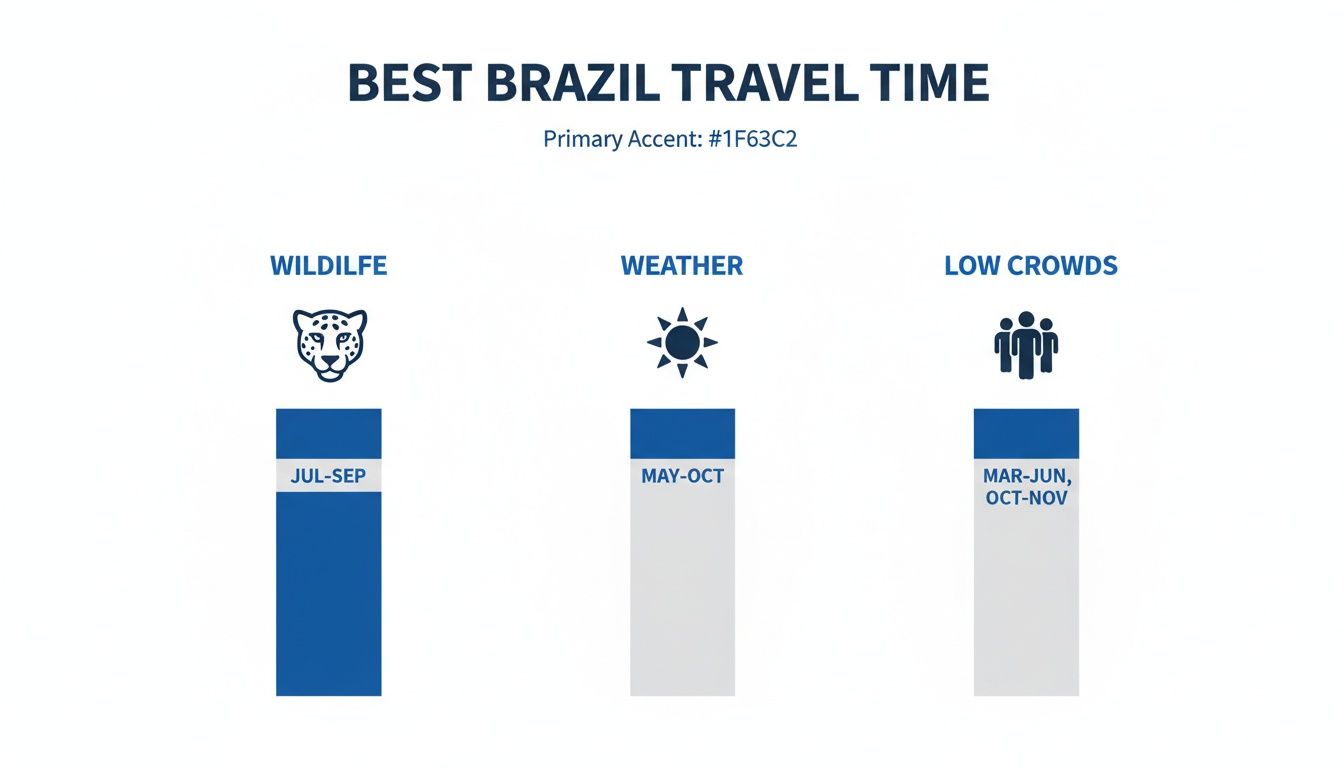
As you can see, the dry season months from roughly May to September often create that sweet spot where great weather and peak wildlife viewing overlap.
To make this easier to plan around, here’s a quick summary of Brazil’s regional climate patterns.
Brazil’s Regional Climate Guide At a Glance
This table breaks down the best times to visit Brazil’s main regions, focusing on what you’ll experience on the ground.
| Region | Best Months to Visit | Average Dry Season Temp (°F) | Key Sustainable Activities |
|---|---|---|---|
| The Amazon Rainforest | June to November (Dry Season) | 80°F – 95°F | Forest hiking, community lodge stays, wildlife spotting at waterholes. |
| The Pantanal Wetlands | April to October (Dry Season) | 70°F – 85°F | Jaguar spotting safaris, birdwatching, supporting conservation-focused fazendas. |
| Northeast Coast | June to September | 75°F – 88°F | Exploring Lençóis Maranhenses lagoons, coastal hikes, visiting fishing villages. |
| Southeast (Rio & São Paulo) | June to August (Winter) | 65°F – 75°F | City exploration in mild weather, hiking in nearby national parks. |
| The South | March-May & Sept-Nov (Shoulder) | 55°F – 70°F | Exploring canyons, visiting wineries, enjoying European-influenced towns. |
This gives you a starting point. Now, let’s dive into what these seasons actually feel like in each place.
The Amazon Rainforest: A World of Water and Humidity
Up in the north, the Amazon is basically hot, humid, and rainy all year. But it does have two distinct phases: the rainy season (December to May) and the “drier” season (June to November). During the rainy season, the rivers swell and flood the forest floor, creating the magical igapós—flooded forests you can only explore by canoe.
Once the drier season hits, the waters pull back, opening up forest trails for hiking. Wildlife also becomes much easier to see, as animals gather around the rivers and shrinking waterholes. Temperatures stick around the 80s and 90s Fahrenheit (27-32°C) year-round, but it’s the humidity that you’ll really feel.
The Pantanal: A Dramatic Wet-and-Dry Cycle
As the world’s largest tropical wetland, the Pantanal lives and breathes by its water cycle. From November to March, the summer rains flood the vast plains, spreading wildlife out over an enormous area. It’s incredibly green and beautiful, but finding animals becomes a serious challenge.
For wildlife, especially jaguars, the dry season from April to October is prime time. As the land dries up, animals—capybaras, caimans, giant otters, and the iconic jaguar—flock to the remaining riverbanks and pools. It’s an incredible concentration of life and your best shot at those once-in-a-lifetime sightings.
The Sunny Northeast Coast
Brazil’s Northeast, home to destinations like Salvador and the unbelievable dunes of Lençóis Maranhenses, has a much more stable tropical climate. It’s warm here all year, with temperatures usually hovering between the mid-70s and high 80s Fahrenheit (24-31°C).
The main thing to watch here is the rain. The wettest months are typically April through July, but the rain often comes in short, powerful bursts followed by sunshine. For perfect beach days and to see the famous lagoons of Lençóis Maranhenses at their peak, aim for June to September. The rains will have just filled the pools between the dunes, creating a truly spectacular landscape.
The Temperate Southeast and South
The Southeast is where you’ll find the icons: Rio de Janeiro and São Paulo. This part of the country has more recognizable seasons. Summer (December to March) is hot, sticky, and comes with frequent downpours. It’s also the busiest time, especially around Carnival in February or March.
Winter (June to August) is much drier and pleasantly mild, with temperatures in the 60s and 70s Fahrenheit (18-24°C). Many locals and long-time visitors consider this the best time for exploring the cities without the oppressive heat and crowds.
Travel even further south, and states like Santa Catarina can get genuinely cold in the winter. Don’t be surprised if temperatures drop into the 40s Fahrenheit (around 4-9°C).
Figuring out which region fits your travel style is a great first step. If you’re interested in how your trip can create a positive impact, learning about community-based ecotourism in Latin America is a fantastic way to connect your travels with a more sustainable and rewarding model.
The Best Time to Visit Brazil in the Shoulder Seasons
While the dry season gets all the attention and draws the biggest crowds, the real sweet spot for a more thoughtful, relaxed trip to Brazil is during the shoulder seasons. These windows—usually March-April and again in October-November—offer a perfect blend of good weather, smaller crowds, and better prices. It’s a win-win for you and for the places you visit.
Traveling during these months means you get to sidestep the peak tourist crush. This isn’t just about comfort; it directly eases the pressure on local infrastructure, from water supplies to waste management, and helps protect fragile ecosystems from being loved to death. Imagine exploring the trails around Iguazu Falls with room to breathe, or finding a quiet patch of sand on Ipanema without the packed-in energy of December.
It’s a calmer, more authentic way to see the country. With fewer people around, you’ll find more chances for genuine conversations and unhurried moments, turning a standard holiday into a more meaningful cultural exchange.
The Real-World Benefits: Lighter Footprints and Lower Costs
The upsides of shoulder season travel aren’t just a feeling; you can see them in the numbers. Flight and accommodation prices can easily drop by 15-25% compared to the high-season frenzy. For eco-nomads and slow travelers, those savings can fund a longer, more immersive stay.
The best time to visit Brazil for a low-impact itinerary is during the shoulder seasons of March-April and October-November. Tourist arrivals dip 15-25% below the peak, slashing costs and crowds while giving nature a chance to breathe.
Recent tourism data from sources like CEIC’s visitor arrival analysis backs this up. While Brazil’s overall visitor numbers are climbing, a month like April sees about 20% fewer arrivals than the December peak. This dip helps spread tourism’s economic benefits more evenly across the year, supporting communities beyond just a few frantic weeks.
This strategy isn’t unique to Brazil—it’s a core principle of responsible travel everywhere. If you’re planning other trips, our guide to off-peak eco-escapes in Europe explores similar ideas for a lighter footprint across the Atlantic.
How to Make the Most of a Shoulder Season Trip
A little bit of planning goes a long way in turning a good shoulder season trip into a great one. The trick is to lock in your main logistics ahead of time, which frees you up for more spontaneity once you’re on the ground.
- Book Flights Early: Even in the off-season, grabbing your flights in advance usually locks in the best deals. We recommend using a flight aggregator like Aviasales to compare your options and find a good price.
- Sort Your Connectivity Before You Go: Don’t wait until you land to figure out your phone plan. An eSIM from a provider like Airalo or Yesim can be downloaded and activated from home, so you’re connected the moment you touch down.
- Embrace Slow Travel: Use the money you save to slow your pace. Instead of hopping between cities every few days, consider spending more time in one region, using low-carbon ground transport like buses to explore the surrounding areas.
- Pack for Changeable Weather: Shoulder season weather can be more unpredictable. The key is layers. A beautiful sunny day in the Southeast in April might be followed by a short, intense rain shower. Packing a light rain jacket and a mix of clothing means you’re ready for whatever the day brings.
Timing Your Trip for Brazil’s Unforgettable Experiences
Knowing Brazil’s regional climates is one thing, but planning the perfect trip often boils down to a simpler question: What do you really want to do? A dream beach holiday and a world-class wildlife safari don’t always share the same spot on the calendar. This is where we get practical.
Let’s move beyond general weather charts and start planning around the experiences themselves. Whether you’re picturing yourself dancing at Carnival, spotting a jaguar in the Pantanal, or paddling through the flooded Amazon, timing is everything. It’s how you make sure you’re in the right place at the right moment for an adventure that truly sticks with you.
For the Wildlife Enthusiast
If seeing Brazil’s staggering biodiversity is your main goal, your timing is critical. Animal movements are dictated by the seasons, and getting the window right dramatically increases your chances of that once-in-a-lifetime sighting.
Jaguar Spotting in the Pantanal:
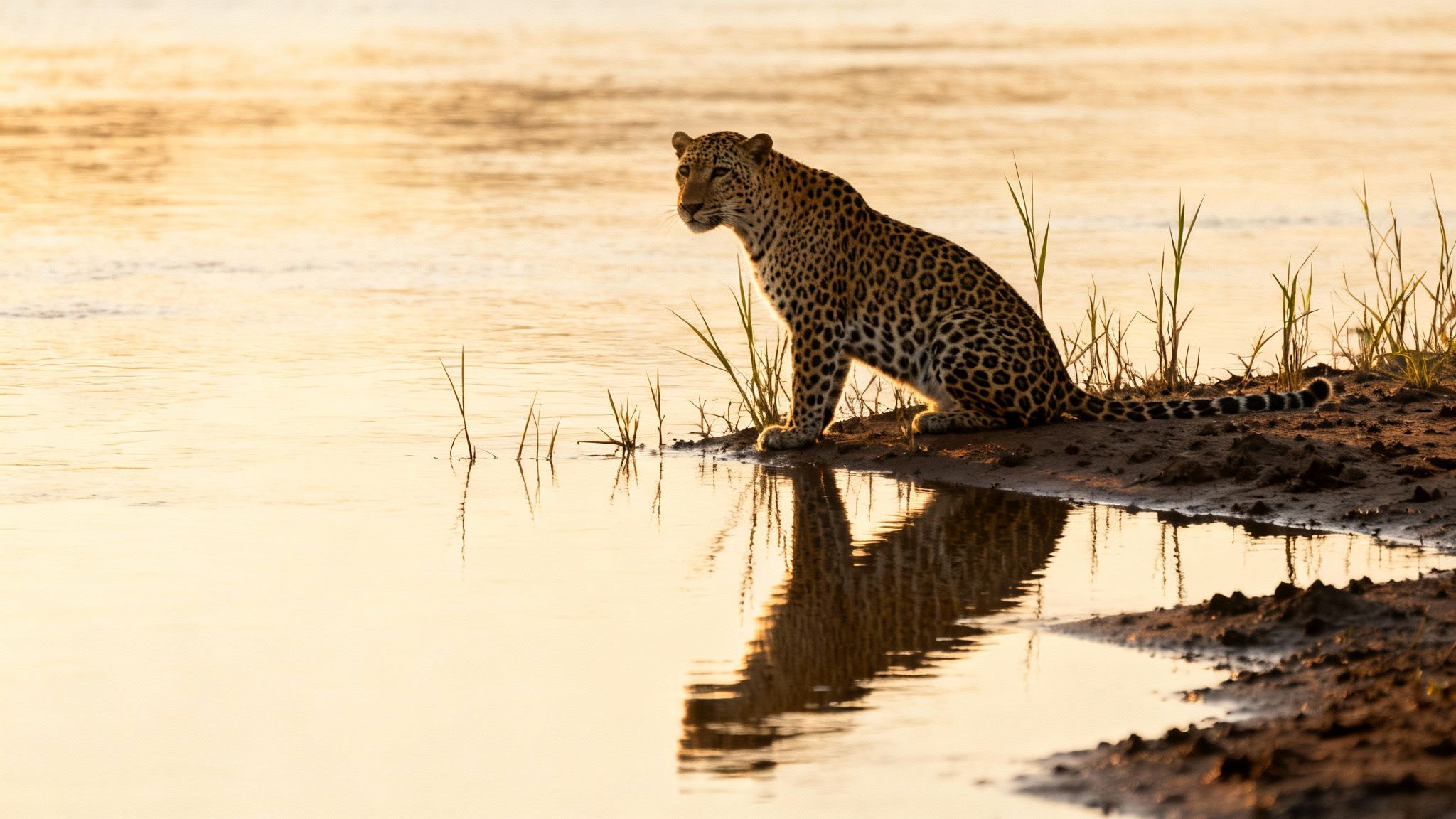
The ultimate prize for many is seeing a jaguar in the wild. The absolute prime time for this is the dry season, from June to October. As the vast wetlands recede, wildlife—including the jaguars’ prey—clusters around the remaining rivers and waterholes. This forces the big cats out into the open, making them much easier to spot along the riverbanks near Porto Jofre. Booking a stay at one of the conservation-focused fazendas (ranches) is your best bet.
Amazon Rainforest Treks & River Tours:
To explore the Amazon on foot, the “drier” season from June to November is perfect. Water levels are lower, which opens up the forest trails and means you’re less likely to get caught in a torrential downpour. But if you dream of gliding through the flooded igapós (forests) by canoe, the high-water season from December to May offers a completely different—and equally magical—experience.
Whale Watching on the Coast:
From July to November, southern right whales migrate to the warmer waters off the coast of Santa Catarina to breed and calve. The town of Praia do Rosa is a famous hotspot, offering incredible opportunities for both shore-based and responsible boat-based viewing.
For the Culture and Festival Seeker
Brazil’s cultural calendar is buzzing year-round, but one event stands head and shoulders above the rest. If vibrant street parties and dazzling parades are what you’re after, you’ll need to plan well ahead.
Experiencing Carnival:
The world-famous Carnival is a pre-Lenten bash, so the exact dates change every year but typically land in February or early March. Rio de Janeiro’s Sambadrome parade is iconic, but for a different flavor, Salvador’s Carnival is legendary for its massive street parties (blocos) with deep Afro-Brazilian roots.
Sustainable Tip for Carnival: To participate more responsibly, look for locally-owned guesthouses (pousadas), buy from street vendors, and choose costumes made from recycled or local materials. This helps ensure your tourism dollars flow directly into the community.
For the Beach Lover and Surfer
With over 4,600 miles (7,400 kilometers) of coastline, Brazil is a true beach paradise. But timing can influence everything from perfect sunshine to epic surf.
- Northeast Beaches (e.g., Jericoacoara, Porto de Galinhas): This region is blessed with warm weather all year. For guaranteed sun and minimal rain, though, the driest period runs from August to December.
- Surfing: The best swells hammer Brazil’s southern coasts during the winter months from April to October. Florianópolis in Santa Catarina is a major hub, with a huge variety of breaks for every skill level.
- Lençóis Maranhenses National Park: To see this otherworldly landscape of white sand dunes and turquoise lagoons at its most breathtaking, you must visit between June and September. This is right after the rainy season, when the thousands of lagoons are full and shimmering.
By matching your visit to these specific windows, you not only get a better experience but also often travel at a time that’s naturally suited to the environment you’re exploring. For more ideas on where to stay, our guide to incredible eco-friendly lodges can help you find accommodations that put you right in the heart of the action.
A Digital Nomad’s Guide to Long-Term Stays in Brazil
For remote workers, the best time to visit Brazil isn’t just about chasing sunny days. It’s about finding that sweet spot where productivity, affordability, and a healthy work-life balance all click into place. An extended stay gives you the breathing room to move beyond the tourist hubs and find your own rhythm in this incredible country.
Timing your arrival for the shoulder or dry seasons is a game-changer. Think about setting up a long-term base in Rio de Janeiro between May and September. During these months, the city settles into a comfortable groove with average highs around 77°F (25°C) and rainfall dropping to just 2 inches (50 mm) per month. More importantly for your budget, this is when you’ll find 20-40% discounts on accommodations—a huge win for monthly rentals.
This strategy lets you settle in, build a routine, and explore without the peak season crowds and inflated prices. It’s a smarter way to experience the country on your own terms.

Setting Up Your Sustainable Base
Choosing the right city is crucial for a productive stay. While Rio and São Paulo have a magnetic pull, it’s worth considering alternatives that offer a more balanced lifestyle. Florianópolis, down south, is a digital nomad favorite, perfectly balancing beautiful beaches with a growing tech community. Curitiba is famous for its innovative urban planning and vast green spaces, making it a highly walkable and pleasant city to call home for a while.
Before you get too far in your planning, make sure your paperwork is in order. Brazil has specific visa requirements for longer stays, and getting this sorted is a critical first step. You can learn more by checking out our comprehensive guide on eco-nomad visas and where to apply.
Essential Tools for a Smooth Stay
A successful long-term stay really hinges on a few reliable tools that just make life easier. Staying connected is non-negotiable. Instead of hassling with finding a local SIM card the minute you arrive, an eSIM from a global provider like Airalo or Yesim lets you get online the moment you land.
Getting from the airport to your new home base should be just as seamless. Pre-booking a transfer with a trusted service like Welcome Pickups completely removes the stress of navigating a new city after a long flight, ensuring you start your Brazilian chapter on the right foot.
Your Brazil Questions, Answered
Even after mapping out the perfect itinerary, a few questions always pop up. Brazil is a massive country, after all. This section tackles the most common queries we get about planning a trip, giving you clear, straightforward answers to help you lock in your plans with confidence.
Think of these tips as a way to travel smarter and with a lighter touch. If you’re interested in going deeper into that mindset, our guide on how to lower your ecological footprint has some great frameworks that apply to any journey.
What Is the Cheapest Month to Travel to Brazil?
If you’re hunting for a bargain, aim for the low season. This typically runs from November to March, but—and this is a big but—you have to steer clear of the sky-high prices around Christmas, New Year’s, and, of course, Carnival.
During these off-peak months, you can find some serious discounts on flights and places to stay, sometimes shaving off as much as 30% compared to the high season. The trade-off? This is also the rainiest time of year for much of the country.
For a sweet spot that balances cost and climate, look at the shoulder months like April, May, and October. You’ll still find good deals, but with a much better shot at clear, sunny days.
Is It Safe to Visit Brazil During the Rainy Season?
Yes, it’s generally safe to travel in Brazil during the rainy season, but you’ll need to pack a bit of patience and flexibility. Along the coast in cities like Rio de Janeiro, the rain usually hits in short, powerful downpours that clear up as quickly as they arrive, leaving the rest of the day perfectly pleasant.
It’s a different story in places like the Amazon and the Pantanal, where the rainy season truly makes its presence felt. Heavy rains can cause localized flooding, which might make some trails or roads temporarily impassable. On the plus side, it’s a spectacular time to see Iguazu Falls at its most powerful, but it’s less than ideal for a classic beach holiday or a wildlife-spotting safari. Always keep an eye on regional forecasts and pack a good waterproof jacket.
How Many Weeks Do I Need to See Brazil?
Brazil is enormous—it’s the fifth-largest country on the planet—so you simply can’t see it all in one go. For a first trip, 10 to 14 days is a realistic starting point. That gives you enough time to get a real feel for one or two distinct regions, like pairing the vibrant energy of Rio de Janeiro with the raw power of Iguazu Falls.
If you’re hoping to add more remote destinations like an Amazon jungle lodge or a Pantanal safari to your itinerary, you really need to set aside at least three weeks. We’re big believers in slower travel; immersing yourself in one or two places is almost always more rewarding than just ticking off a list of airports.
Key Questions and Practical Tips
- Health Precautions: Chat with your doctor about recommended vaccinations like Yellow Fever, especially if the Amazon or Pantanal is on your list. And insect repellent is non-negotiable.
- Currency: Brazil’s currency is the Real (BRL). Cards are fine in the cities, but you’ll want cash (which is approximately 5 BRL to 1 USD, though this fluctuates) for smaller towns, markets, and street food vendors.
- Language Basics: Brazilians speak Portuguese. A few simple phrases like “Olá” (Hello) and “Obrigado/Obrigada” (Thank you) go a very long way.
This article was fact-checked using sustainability data from the World Green Building Council, the Global Ecotourism Network, and peer-reviewed architecture studies. All partner links are vetted for compliance with sustainable business certifications.
Join the Sustainable Work Movement
Want more rail-first itineraries, low-impact packing systems, and walkable base-city ideas?
Best Time to Visit Brazil FAQ
Quick answers to help you choose the best time to visit Brazil based on weather, wildlife, crowds, and budget.
Weather and seasons
1) What is the best time to visit Brazil overall?
For most travelers, the best time to visit Brazil is May to September because many regions are drier, humidity drops, and outdoor plans are easier to lock in.
2) What months are considered Brazil’s dry season?
It depends on the region, but many popular itineraries align with roughly May to September for drier conditions (especially for wildlife-focused trips).
3) When is Brazil’s rainy season?
Often December to March for much of the country, with heavier rain in the Amazon and wetlands. Coastal cities can see intense but shorter downpours.
4) Are shoulder seasons a good idea for Brazil?
Yes. March–April and October–November can deliver solid weather plus fewer crowds, which supports a lower-impact, more relaxed trip.
Best time by region
5) Best time to visit Rio de Janeiro?
May to September is popular for Rio because it’s typically drier and more comfortable for city days, hikes, and beaches without peak summer humidity.
6) Best time to visit the Amazon Rainforest?
June to November is often best for more trail access and easier wildlife viewing. December to May is ideal if you want flooded-forest canoe experiences.
7) Best time to visit the Pantanal?
April to October is prime because conditions are drier and animals concentrate near remaining water sources.
8) Best time for Brazil’s Northeast beaches?
August to December is a strong pick for sunshine with less rain. Many beach towns stay warm year-round, so timing is mostly about rainfall and crowd levels.
9) Best time to visit southern Brazil?
March–May and September–November are great for mild temps and fewer extremes. Winter (June–August) can feel genuinely chilly in the far south.
Wildlife and nature highlights
10) When is the best time to spot jaguars in Brazil?
June to October in the Pantanal is typically the best window for jaguar sightings because wildlife is more concentrated along rivers.
11) When is Lençóis Maranhenses at its best?
June to September is usually ideal because the lagoons are filled after the rainy season, creating the signature dune-and-water landscape.
12) When is the best time for whale watching?
July to November is a common peak window along parts of the southern coast (seasonal migrations vary by exact location).
Festivals, crowds, and costs
13) When is Carnival in Brazil?
Carnival is usually in February or early March (dates change each year). Expect the highest prices and biggest crowds in hotspots like Rio and Salvador.
14) What is the cheapest time to visit Brazil?
Often the low season outside major holidays. If you want value without constant rain, aim for April–May or October–November.
15) When should I avoid Brazil if I hate crowds?
Avoid late December through early January and Carnival weeks in major tourist cities. Shoulder seasons are calmer and easier to navigate.
Planning, packing, and low-impact travel
16) What should I pack for Brazil by season?
Dry season: breathable layers + sun protection. Rainy season: a real rain shell, quick-dry clothing, and waterproof day protection for electronics.
17) Is it worth visiting Brazil in the rainy season?
It can be if you’re flexible and want greener landscapes or fewer crowds. Just plan for disrupted logistics in some regions and build buffer days into your itinerary.
18) How many days do I need for a first trip?
10–14 days works well for one or two regions (for example, Rio + a nature add-on). For Amazon or Pantanal + cities, 3 weeks is more comfortable.
19) What’s the most low-impact way to plan Brazil?
Stay longer in fewer places, choose locally owned lodging, book ethical wildlife operators, and travel overland when practical. Shoulder seasons also reduce pressure on communities.
20) How can I stay connected sustainably in Brazil?
Use an eSIM to avoid plastic SIM waste and arrive connected. If you need reliable data immediately after landing, set it up before your flight.

Explore Eco Nomad Travel
📚 Core Guides
🧭 Planning & Logistics
🗺️ Destinations & Seasons
Jeremy Jarvis — founder of Eco Nomad Travel, sustainable travel writer, and advocate for regenerative tourism. His work focuses on low-impact mobility, eco-friendly digital nomad life, and climate-positive travel.
Legal
Affiliate DisclaimerPrivacy Policy
Terms of Service
Image & Media Notice
Cookie Policy
Contact
Affiliate Disclosure: Some links on Eco Nomad Travel are affiliate links, meaning we may earn a small commission at no extra cost to you. This supports our mission to inspire responsible and low-impact travel worldwide.
Connect
✅ Trusted Official Sources
Plan smarter eco trips
Try our free Sustainable Travel Tools for Digital Nomads – carbon calculator, train vs plane comparator, and more.
Open Tools Hub