
Picture this: you’re wandering the charming, walkable streets of an old European city when the skies open up. Or maybe you’re caught in a sudden monsoon downpour in Southeast Asia. In those moments, finding the best waterproof backpack isn’t just a nice-to-have accessory; it’s critical insurance for your laptop, camera, and travel documents.
For the eco-conscious nomad who prefers minimalist packing and getting around by rail, the right bag is the cornerstone of a good trip. A truly waterproof backpack means you can skip the disposable plastic rain covers and travel with a lighter, more sustainable setup. This guide will help you decode waterproof ratings, weigh the impact of different materials, and find the perfect size for carry-on-only adventures.
The move toward durable, weather-ready gear isn’t just a niche trend. The waterproof bags market hit USD 20.12 billion in 2023 and is on track to reach USD 29.8 billion by 2031. This growth is partly fueled by a shift in what buyers care about, with 55% of consumers now actively looking for eco-friendly materials like recycled PET. It’s a change that fits perfectly with a more sustainable way of traveling. You can see more on this in the full market research.
Key Takeaways
- Waterproof vs. Water-Resistant: It’s crucial to know the difference. “Water-resistant” might handle a light drizzle, but “waterproof” offers serious protection from a downpour, which is what you need when carrying expensive electronics.
- Sustainable Materials Matter: Look for backpacks made from recycled materials like rPET (recycled polyester) and those using PFC-free waterproof coatings to keep your environmental footprint small.
- Size for Minimalist Travel: A bag in the 25–40 liter range (around 1500–2400 cubic inches) is the sweet spot for carry-on-only travel, making train journeys and navigating cities much easier.
- Essential Nomad Features: A padded laptop sleeve, smart internal pockets for chargers and cables, and ergonomic straps are non-negotiable for comfortable, car-free exploration.
- Invest in Durability: Choosing a well-made bag from an ethical brand with a repair program is a core tenet of sustainable consumption. It reduces waste and saves you money in the long run.
Editor’s Pick: Our Top Choice for Eco-Conscious Nomads
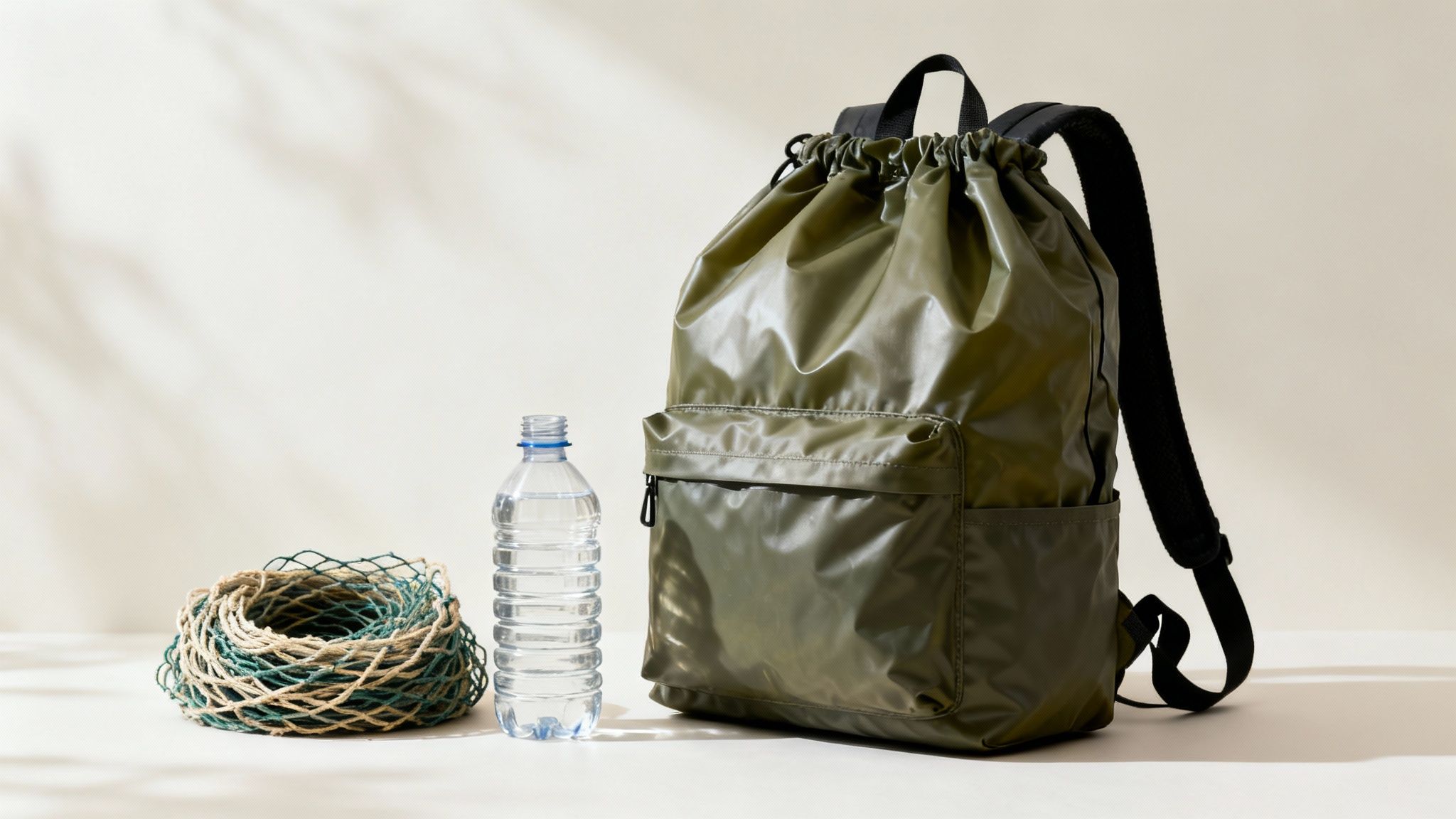
Patagonia Guidewater Backpack 29L
The Patagonia Guidewater is a standout for its uncompromising performance and deep commitment to sustainability. It’s fully submersible (rated IPX7), offering the highest level of protection for your tech. Just as important, it’s built from 100% recycled nylon and made in a Fair Trade Certified™ factory, aligning perfectly with our travel values. Its 29-liter capacity is spot-on for minimalist travel, fitting everything a digital nomad needs without feeling bulky. This isn’t just a purchase; it’s an investment in gear that lasts and supports a healthier planet.
Why a Waterproof Backpack Is Your Most Important Gear Investment
For a digital nomad or slow traveler, your backpack is your mobile office, your wardrobe, and your lifeline all rolled into one. Unlike a typical vacationer who leaves their bag safely in a hotel room, you often carry your most valuable assets—laptop, camera, passport—with you as you explore. A sudden storm can turn a travel day into an expensive disaster if your gear isn’t protected.
Investing in the best waterproof backpack means you can navigate any environment with confidence, from a rain-slicked street in Amsterdam to a humid trail in Costa Rica, knowing your essentials are safe and dry. This peace of mind allows for more spontaneity and a lighter packing list, as you won’t need to carry secondary dry bags or flimsy plastic covers.
It’s a foundational piece of a resilient, low-impact travel system and pairs well with other smart choices from our list of eco-friendly travel accessories. This single piece of gear empowers you to travel smarter, lighter, and with peace of mind, no matter what the weather has in store.
Decoding Waterproof Technology to Keep Your Gear Dry
Walking through an outdoor gear shop can feel like trying to learn a new language. You’ll see tags covered in technical terms, all claiming to protect you from the elements. When it comes to a backpack that’s holding your laptop, camera, and passport, it pays to know what those claims actually mean.
Think of it like rain gear. Water-resistant is your light windbreaker—fine for a surprise drizzle on your way to a café. Waterproof is the full-on rain suit you’d trust in a coastal storm. For a digital nomad hopping between trains in a city known for its downpours, or a traveller caught in a tropical shower, that difference is everything.
A water-resistant bag might get your gear through a quick dash, but only a truly waterproof pack gives you the peace of mind that everything inside will stay bone dry, even in a prolonged soaking. That’s what keeps a travel day on track, no matter what the sky is doing. Knowing the lingo helps you see past the marketing hype and focus on the features that deliver real-world protection.
IP Ratings: What the Numbers Actually Mean for Travel
One of the most honest ways to judge a pack’s water protection is its IP (Ingress Protection) rating. This is a standardized system, which means a bag has been tested to a specific benchmark. No guesswork, no vague marketing claims. The rating usually looks like “IPX” followed by a number—the ‘X’ just means it wasn’t rated for dust, and the number tells you how well it handles water.
These ratings can feel a bit abstract, so here’s a table that translates them into scenarios you might actually encounter on the road.
Waterproof Ratings and Real-World Travel Scenarios
| IP Rating | Technical Meaning | Eco Nomad Travel Scenario |
|---|---|---|
| IPX4 | Protected against splashing water from any direction. | Getting caught in a light city rain shower or splashed by a passing bus. |
| IPX6 | Protected against powerful water jets. | Cycling through a torrential downpour or getting hit with heavy sea spray on a ferry. |
| IPX7 | Can be submerged in up to 3.3 feet (1 meter) of water for 30 minutes. | Accidentally dropping your pack in a river or needing absolute certainty during monsoon season. |
An IPX7 rating is pretty much the gold standard if you’re carrying expensive electronics near water or traveling through regions where the weather can turn on a dime. Anything less is a calculated risk.
This diagram helps pull together how these technical specs, eco-conscious materials, and travel-ready features all intersect in a well-designed waterproof pack.
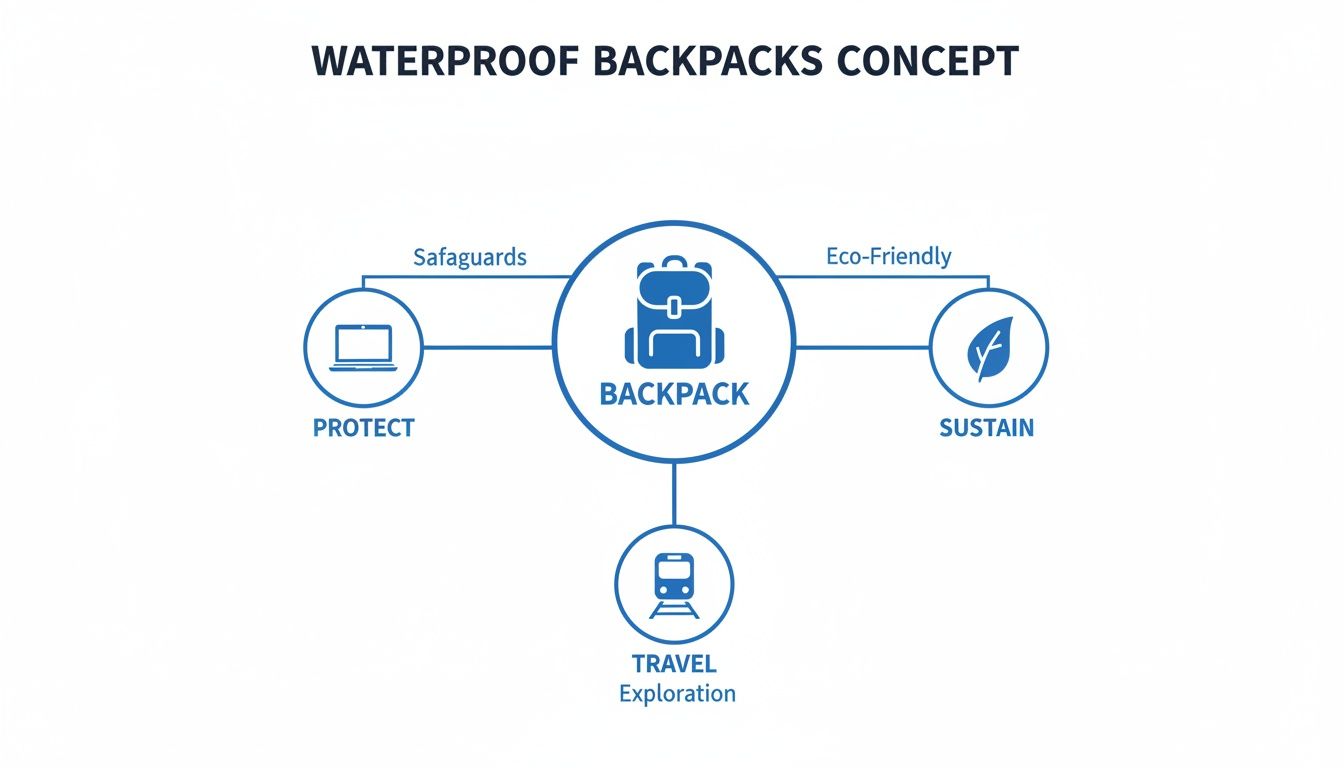
As you can see, the best gear balances robust protection for your tech with materials and a design built for minimalist, low-impact travel.
Construction Methods: The Keys to a Watertight Seal
Beyond the ratings, the way a backpack is physically put together is what determines if it will hold up. Even the best waterproof fabric is useless if water can creep in through a weak seam or a leaky closure. Two things matter most: the seams and the main opening.
Seams: Taped vs. Welded
Traditional stitching punches thousands of tiny holes in the fabric, creating perfect entry points for water. High-quality waterproof packs get around this in two ways:
- Taped Seams: This is a common and effective method where a waterproof tape is applied over the interior of the stitched seams, sealing up all those little needle holes.
- Welded Seams: This is the more advanced technique. Instead of sewing, two pieces of fabric are fused together with heat and pressure. The result is a single, continuous bond that’s completely impermeable and generally more durable.
Closures: Roll-Tops vs. Zippers
How the bag closes is just as critical as the seams.
- Roll-Top Closures: Simple, tough, and incredibly reliable. You just roll the top of the bag down a few times and clip it shut. This creates a powerful, compressive seal that is the hallmark of a true dry bag.
- Weatherproof Zippers: These aren’t your average zippers. They have a polyurethane coating and interlocking teeth designed to block water. They’re super convenient for quick access, but they do need a bit of maintenance—you have to keep them clean to ensure they maintain a perfect seal over time.
For most digital nomads, the combination of welded seams and a roll-top closure offers the ultimate defense for a laptop, camera, and hard drives. To see how these features come together in real-world gear, take a look at our guide on eco-friendly gear for digital nomads in 2025. Choosing a pack with the right construction is a direct investment in keeping your most essential items safe on the road.
Choosing Sustainable Materials and Ethical Brands
A truly great waterproof backpack does more than just keep your gear dry; its entire lifecycle should line up with a conscious traveller’s values. When you’re choosing your next pack, looking beyond performance to its material origins and the ethics of the brand behind it is a powerful act of sustainable travel. It’s about ensuring the gear that carries you through the world also helps protect it.
The materials used in a backpack tell a story about its environmental impact. Forward-thinking brands are moving away from virgin plastics and embracing innovative, recycled alternatives that cut down landfill waste and shrink a product’s carbon footprint.
Recycled Fabrics Leading the Way
The most impactful choices often involve fabrics made from post-consumer waste. These materials give you the same durability and waterproof performance as their virgin counterparts but with a much lighter environmental touch.
- Recycled Polyester (rPET): This common eco-friendly material is made from melted-down plastic bottles. Using rPET diverts plastic from landfills and oceans and requires less energy to produce than virgin polyester.
- Recycled Nylon: Often sourced from discarded fishing nets, pre-consumer fabric waste, and industrial plastics, recycled nylon helps clean up marine pollution—a major environmental hazard—while creating a rugged, abrasion-resistant fabric perfect for backpacks.
By choosing a pack made from these materials, you are directly supporting a circular economy, where resources are reused rather than just tossed out. This simple decision is a core part of practicing what is sustainable travel and minimizing your impact on the destinations you love.
Ditching “Forever Chemicals”
The waterproofing itself is another critical consideration. For years, the industry standard has been DWR (Durable Water Repellent) coatings made with per- and polyfluoroalkyl substances (PFCs or PFAS). These “forever chemicals” don’t break down in the environment and have been linked to significant health and ecological concerns.
Progressive brands are now shifting to PFC-free DWR alternatives. While these newer coatings may require occasional reapplication to maintain peak performance, they represent a vital step away from polluting, persistent chemicals.
When you’re looking at a backpack, keep an eye out for labels like “PFC-Free DWR” or “PFAS-Free”. This shows the company is actively working to reduce its chemical footprint, a crucial factor for any eco-conscious traveller.
Ethical Production and a Commitment to Repair
Beyond materials, the ethics of a brand speak volumes. How a company treats its workers and what it does when your gear breaks are just as important as the fabric it uses.
Look for certifications that signal a commitment to social and environmental responsibility:
- B Corp Certification: This rigorous certification assesses a company’s entire social and environmental performance, from supply chain to employee benefits.
- Fair Trade Certified™: This label ensures that the workers who made your backpack were paid fair wages and work in safe conditions.
Finally, the most sustainable backpack is the one you don’t have to replace. Leading ethical brands get this and build their products to last. They also offer repair programs, which is a cornerstone of sustainable consumption. A brand that helps you fix a broken buckle or patch a small tear instead of pushing you to buy a new bag is a brand worth supporting. Choosing durable, repairable gear directly lowers your long-term environmental impact and consumption.
Finding the Right Size and Features for the Best Waterproof Backpack
The perfect backpack shouldn’t complicate your trip; it should make a low-impact, rail-first travel style feel effortless. For minimalist travelers and digital nomads, the best waterproof backpack is all about striking a balance between capacity, organization, and comfort. The goal is a bag that feels like a natural extension of you, whether you’re weaving through a bustling train station or exploring a city’s walkable historic core.
When it comes to size, less is nearly always more. The sweet spot for carry-on-only travel is a pack between 25 and 40 liters (around 1,525 to 2,440 cubic inches). Staying in this range means you can skip checked bag fees, keep your luggage with you on trains, and move with agility. A bag that’s too big just tempts you to overpack, adding unnecessary weight and bulk that makes car-free journeys a real drag.
Sizing Up Your Needs for Carry-On Only
A 25-liter pack works beautifully for true minimalists on shorter trips, while a 40-liter bag offers plenty of room for a multi-week journey if you pack smart. This is more than enough space, especially when paired with the right gear. A compact, efficient travel wardrobe can dramatically cut down on the room you need—our guide on fast-drying travel clothes shows you how. Choosing a bag in this “sweet spot” is the first step toward a more flexible, enjoyable travel experience.
The market for these kinds of versatile packs is growing fast. The outdoor backpacks sector is expected to expand by USD 997.1 million between 2025 and 2029. Waterproof fabrics are now a standard feature in 70% of premium models, which is great news for us. This growth is especially strong in the Asia-Pacific region, which holds a 38% market share, as urbanization in India and China drives demand for adaptable 20-50L packs perfect for long-stay travelers.
Essential Features for the Modern Digital Nomad
Beyond pure volume, the internal layout of your backpack is what keeps you organized and productive on the move. For digital nomads, a few features are non-negotiable. A dedicated, well-padded laptop sleeve is absolutely critical to protect your mobile office from the bumps and knocks of travel. Look for one that suspends your device off the bottom of the pack—that little bit of clearance provides a surprising amount of extra shock absorption.
Smart internal organization is another game-changer. Look for:
- Dedicated Tech Pockets: Compartments for chargers, power banks, and cables keep that tangled mess from forming at the bottom of your bag.
- Quick-Access External Pockets: A small, easy-to-reach pocket is perfect for stashing your passport, phone, or an Airalo eSIM QR code printout for instant connectivity when you arrive.
- Water Bottle Holders: Stretchy side pockets are a must for staying hydrated without having to stop and unpack everything.
Ergonomics for Walkable Cities and Train Travel
Finally, comfort is king. A bag’s ergonomic design is what determines whether you can wear it for hours while exploring a new city or standing on a crowded train. The best waterproof backpack will have a harness system that distributes weight properly, saving your shoulders and back from strain.
Look for adjustable shoulder straps, a sternum strap to stabilize the load, and a ventilated back panel. These features promote airflow, cut down on sweat, and let you dial in the fit to your body, making car-free journeys not just possible, but genuinely enjoyable.
Our Top Picks for the Best Waterproof Backpack
Choosing the right backpack is a big decision for any traveller. For an eco-conscious digital nomad, though, it’s a careful balance between performance and principles. We’ve handpicked a few of the best waterproof backpacks that really deliver on durability, remote-work functionality, and a solid commitment to sustainable manufacturing. These aren’t just popular bags; each one fits the Eco Nomad Travel ethos of buying better and making it last.
Our mini-reviews focus on what matters most for a low-impact, rail-first travel style. We’ll look at the specific waterproof tech, the use of recycled and PFC-free materials, and the smart design choices that make navigating walkable cities and train stations feel effortless. We’ve included options for different needs and budgets to help you find the perfect partner for your adventures.
The market for this kind of gear is growing, valued at around $500 million globally. This growth is driven by a surge in outdoor activities, but it has also pushed brands to innovate. We’re now seeing lighter packs, some under 4.4 lbs (2 kg), with advanced roll-top seals and fabrics made from recycled ocean plastics, which seriously cuts their carbon footprint. You can learn more about these market trends in this detailed report.
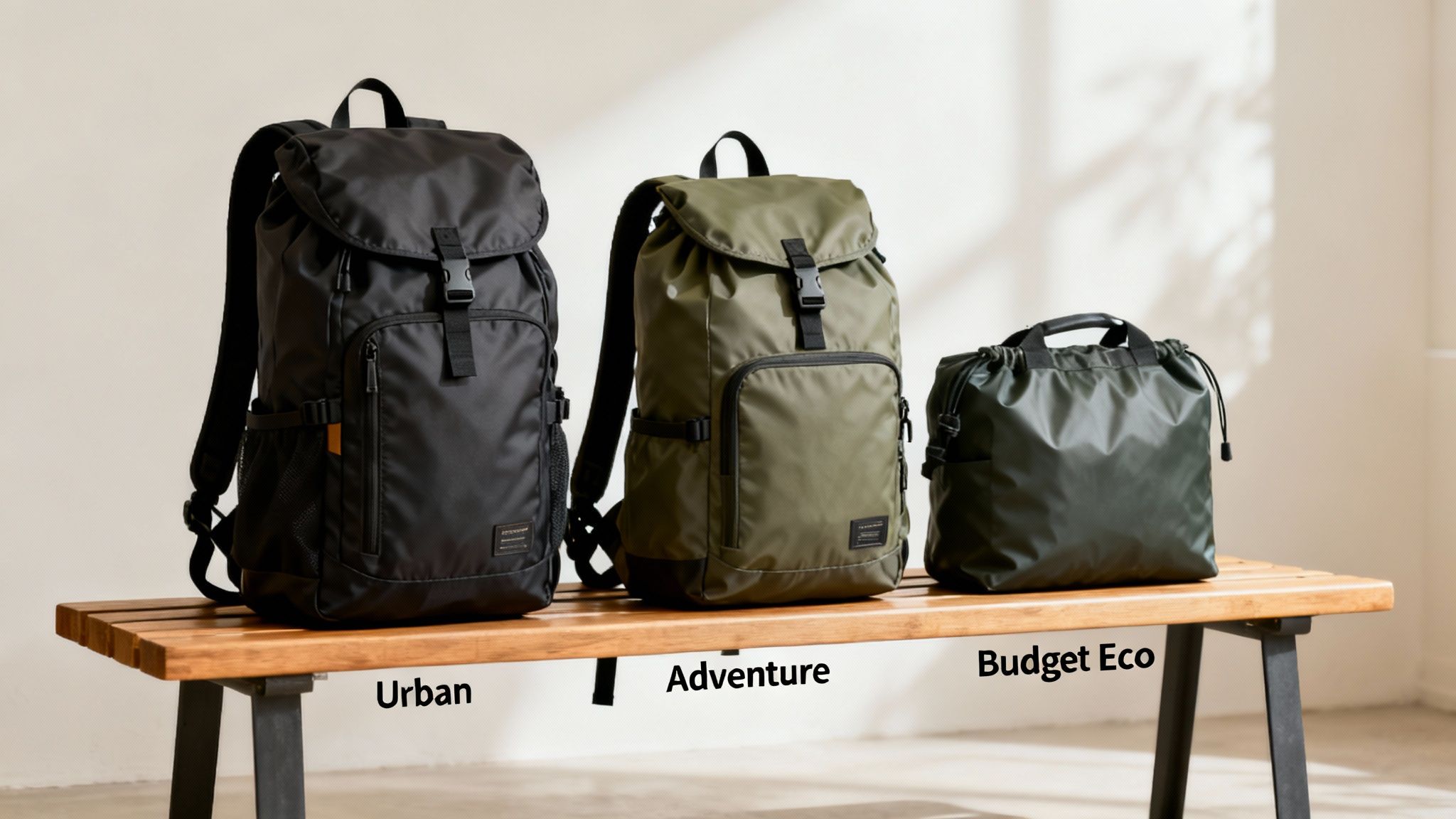
Most Durable for Adventure Travel: Patagonia Guidewater 29L
The Patagonia Guidewater is a top-tier choice for travellers who need absolute protection and trust in ethical sourcing. This pack is fully submersible with an IPX7 rating, which means it can handle being completely underwater for up to 30 minutes. That’s more than enough peace of mind to protect your laptop and camera during a monsoon or an accidental drop from a ferry.
- Capacity: 29 Liters / 1,770 Cubic Inches
- Weight: 2.1 lbs / 0.95 kg
- Materials: Built from rugged 100% recycled nylon with a PU coating on the outside and a TPU coating on the inside. It’s also made in a Fair Trade Certified™ factory.
- Key Features: The design is minimalist and focused on keeping water out, but the internal organizer pocket is perfect for stashing small essentials. The harness and back panel are genuinely comfortable for long days on your feet.
This bag is an investment, but its durability and Patagonia’s commitment to repair make it a truly sustainable choice that will last for years of travel.
Best for Urban Exploration and Commuting: Tortuga Travel Backpack 40L
For the digital nomad who spends more time navigating city streets and train stations than remote trails, the Tortuga Travel Backpack offers a brilliant blend of organization, comfort, and weather protection. While not fully submersible, its SHELL200™ sailcloth material is highly waterproof and will keep your gear dry in even the heaviest downpours.
It opens like a suitcase (clamshell style), which makes packing and finding things incredibly easy—no more digging around for that one adapter. The harness system is also top-notch, with thick padding on the shoulder straps and hip belt to distribute weight evenly, a real lifesaver on long travel days.
- Capacity: 40 Liters / 2,441 Cubic Inches
- Weight: 4.5 lbs / 2.04 kg
- Materials: SHELL200™ waterproof sailcloth, a durable and surprisingly lightweight fabric.
- Key Features: It has a padded sleeve that fits up to a 17-inch laptop, loads of internal pockets for organization, and it’s sized to be the maximum allowable carry-on for most airlines.
Top Budget-Friendly Eco Option: Osprey Transporter Roll Top WP 25
Osprey is a name you can trust in backpacks, and the Transporter Roll Top WP 25 delivers excellent waterproofing and sustainable design at a more accessible price. It boasts an IPX6 rating, meaning it can withstand powerful jets of water, so a serious storm is no problem. The roll-top closure provides a reliable seal to protect your electronics.
This pack is made from 100% recycled and bluesign®-approved main body fabrics, with a PFC-free DWR coating. It’s a fantastic choice for travellers who want a dependable, eco-friendly bag without the premium price tag of a fully submersible model.
- Capacity: 25 Liters / 1,526 Cubic Inches
- Weight: 2.0 lbs / 0.9 kg
- Materials: 400D Recycled Nylon with TPU double coating.
- Key Features: It has a zippered front panel pocket for quick access and an internal padded sleeve for a laptop or tablet. Its straightforward design makes it a versatile companion for both city trips and light outdoor excursions.
Comparison of Top Sustainable Waterproof Backpacks
To help you see how these options stack up at a glance, here’s a quick comparison table. It highlights the features that matter most for digital nomads and eco-conscious travellers, from capacity to the materials used.
| Backpack Model | Key Feature | Capacity (Liters / Cubic Inches) | Materials | Price Range (USD) |
|---|---|---|---|---|
| Patagonia Guidewater 29L | Fully submersible (IPX7), Fair Trade Certified™ | 29 L / 1,770 cu in | 100% Recycled Nylon | $250 – $300 |
| Tortuga Travel Backpack 40L | Clamshell opening, airline carry-on max | 40 L / 2,441 cu in | SHELL200™ Waterproof Sailcloth | $350 – $400 |
| Osprey Transporter Roll Top WP 25 | IPX6 rating, bluesign®-approved fabrics | 25 L / 1,526 cu in | 100% Recycled 400D Nylon with TPU | $150 – $200 |
Each of these packs offers a different blend of features, but they all share a commitment to durability and responsible manufacturing. Whether you need expedition-grade waterproofing or a smart urban organizer, one of these should fit your travel style perfectly.
How to Care for Your Backpack and Keep It Going for Years
True sustainability isn’t just about buying the right gear; it’s about making that gear last as long as possible. A well-chosen waterproof backpack is your first step, but how you treat it determines whether it survives a few trips or a decade of them.
Proper care reduces waste and cuts the environmental cost of making a replacement. The good news is, it’s simpler than you think and makes a huge difference in the long run. Regular cleaning is crucial, as built-up dirt and grit can slowly grind away at the fabric and its waterproof coatings. Just remember one golden rule: never, ever put your backpack in a washing machine.
Cleaning Your Waterproof Backpack
For the usual trail dust or city grime, spot cleaning is your best friend. A soft brush or cloth with a little mild soap and water is all you need to gently scrub the dirty area. This low-impact approach keeps you from putting unnecessary stress on the pack’s seams and coatings.
When the whole bag needs a proper wash after a long trip, a hand wash is the only way to go.
- First, empty every single pocket and give the pack a good shake or brush-off to get rid of any loose dirt.
- Fill a tub or large sink with lukewarm water and a small amount of a gentle, gear-specific soap.
- Submerge your backpack and use a soft sponge to clean both the inside and outside.
- Rinse it with cool, clean water until every last bit of soap is gone.
- Hang it up to air dry completely, but keep it out of direct sunlight, which can weaken and fade the fabric over time.
Bringing the Water Repellency Back to Life
Over time, that factory-applied DWR (Durable Water Repellent) coating will wear down. You’ll start to see water soaking into the outer fabric—”wetting out,” as it’s called—instead of beading up and rolling off like it used to.
When that happens, it’s easy to bring it back. Just grab a PFC-free DWR spray. After you’ve cleaned and dried your pack, spray the treatment evenly across the outside and let it cure according to the instructions on the bottle. It’s a five-minute job that restores your pack’s first line of defence against the rain.
This simple act of maintenance is a core part of our philosophy for a zero-waste packing list—focusing on making things last instead of just replacing them. Smart storage helps, too. Keep your bag in a cool, dry place to prevent the materials from breaking down. And don’t be afraid of small field repairs; a tiny patch over a puncture or a new buckle can extend your pack’s life for years, empowering you to travel more sustainably.

A Few Final Questions Before You Choose
We’ve walked through the tech, the materials, and the small details that make a great waterproof backpack. Still, a few common questions always come up from fellow nomads. Here are some quick answers to help you choose with total confidence.
What Should a Good Eco-Friendly Waterproof Backpack Cost?
Think of a great waterproof backpack as an investment in keeping your mobile life safe and dry. You should expect to spend between $150 and $350 USD for a really solid model that uses recycled materials and a PFC-free DWR coating. Sure, you can find cheaper options, but this price range is where you start seeing the good stuff: welded seams, genuinely comfortable harness systems, and ethical manufacturing that lines up with a lower-impact mindset.
Do I Really Need a Fully Submersible Bag for City and Train Travel?
Honestly, for most city-based and rail-first travel, a fully submersible (IPX7) bag is overkill—but it does offer incredible peace of mind. A highly water-resistant pack, say with an IPX6 rating and a solid roll-top, will handle torrential downpours on city streets without breaking a sweat. If your travels often take you near the water or through serious monsoon seasons, though, that extra submersible protection starts to look like very smart insurance for your expensive gear.
Is a 40L Pack Small Enough for European Carry-On Rules?
Yes, a 40-liter backpack is just about the sweet spot. It’s generally the largest size you can get away with on most European airlines and still fit comfortably on train luggage racks. You’ll always need to double-check the stricter carriers like Ryanair, but for minimalist, carry-on-only travel, 40L is a dependable standard. It’s perfect for skipping baggage fees and weaving through crowded stations with ease.
What’s the Single Most Important Feature for a Digital Nomad?
For anyone carrying their office on their back, the one feature that trumps all others is a well-padded, suspended laptop sleeve. This simple design trick keeps your computer from smacking the ground every time you set your pack down, providing crucial shock absorption. While waterproofing protects your gear from the elements, a suspended sleeve protects your most valuable tool from the bumps and drops of daily life on the move.
This article was fact-checked using sustainability data from the World Green Building Council, the Global Ecotourism Network, and peer-reviewed architecture studies. All partner links are vetted for compliance with sustainable business certifications.
Join the Sustainable Work Movement
Want more rail-first itineraries, low-impact packing systems, and walkable base-city ideas?
Explore Eco Nomad Travel
📚 Core Guides
🧭 Planning & Logistics
🗺️ Destinations & Seasons
Jeremy Jarvis — founder of Eco Nomad Travel, sustainable travel writer, and advocate for regenerative tourism. His work focuses on low-impact mobility, eco-friendly digital nomad life, and climate-positive travel.
Legal
Affiliate DisclaimerPrivacy Policy
Terms of Service
Image & Media Notice
Cookie Policy
Contact
Affiliate Disclosure: Some links on Eco Nomad Travel are affiliate links, meaning we may earn a small commission at no extra cost to you. This supports our mission to inspire responsible and low-impact travel worldwide.
Connect
✅ Trusted Official Sources
Plan smarter eco trips
Try our free Sustainable Travel Tools for Digital Nomads – carbon calculator, train vs plane comparator, and more.
Open Tools Hub