
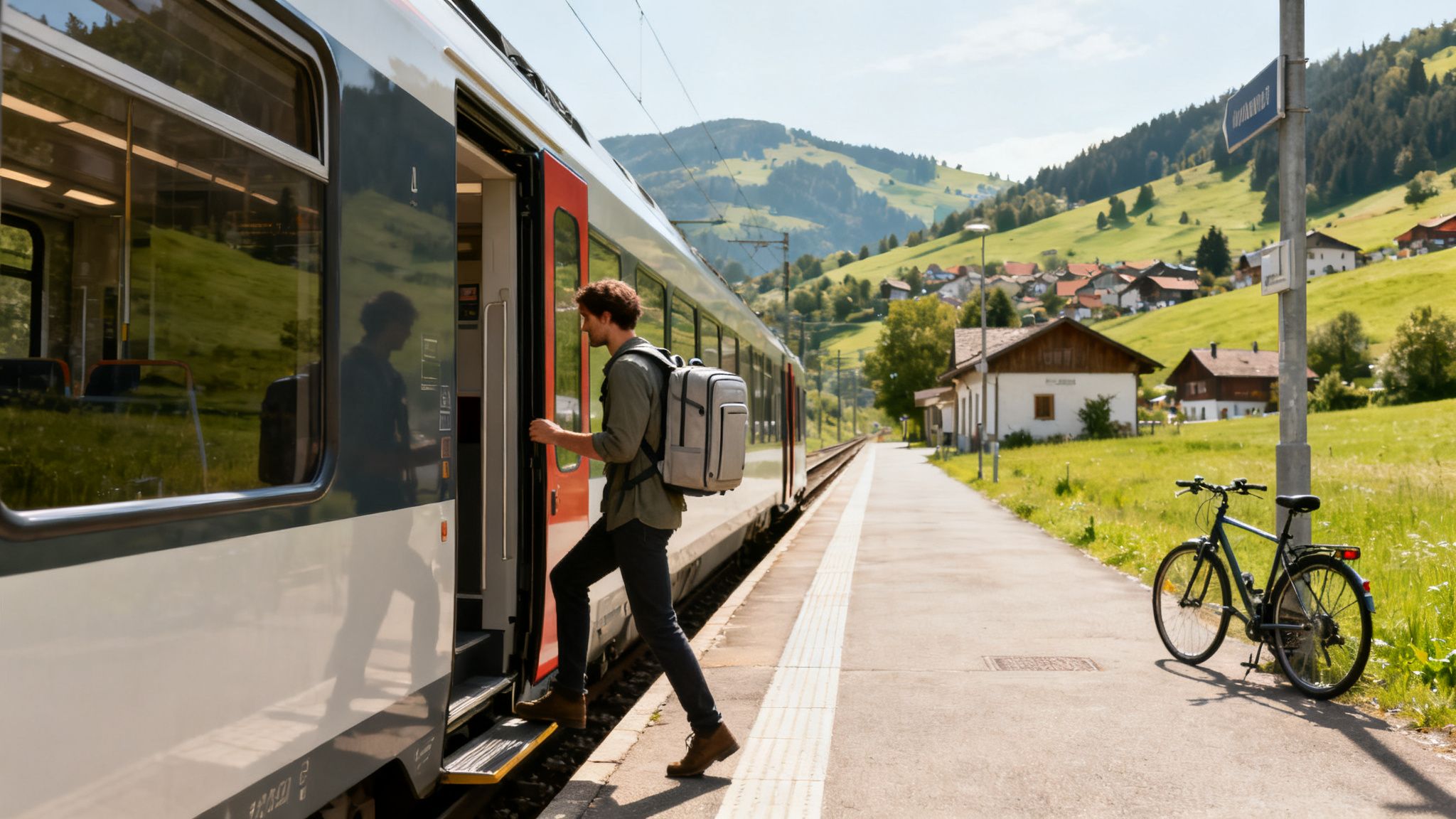
Deciding on the best way to travel through Europe usually boils down to a trade-off between cost, time, and the quality of the experience. But for eco-minded digital nomads, the answer is pretty clear: a rail-first approach is the most sustainable, efficient, and honestly, the most enjoyable way to see the continent. Trains give you an unbeatable mix of productivity, incredible scenery, and direct access to walkable city centers—a perfect fit for modern slow travel.
Why Rail Is the Best Way to Travel Europe
Choosing the train isn’t just about shrinking your carbon footprint; it’s a strategic move that makes your whole trip better. Forget the stressful dash to a remote airport. Train stations are almost always right in the heart of the city. That means you can step off the platform and be just minutes from your apartment or a great neighborhood cafe, saving you time and the cost of an expensive airport transfer.
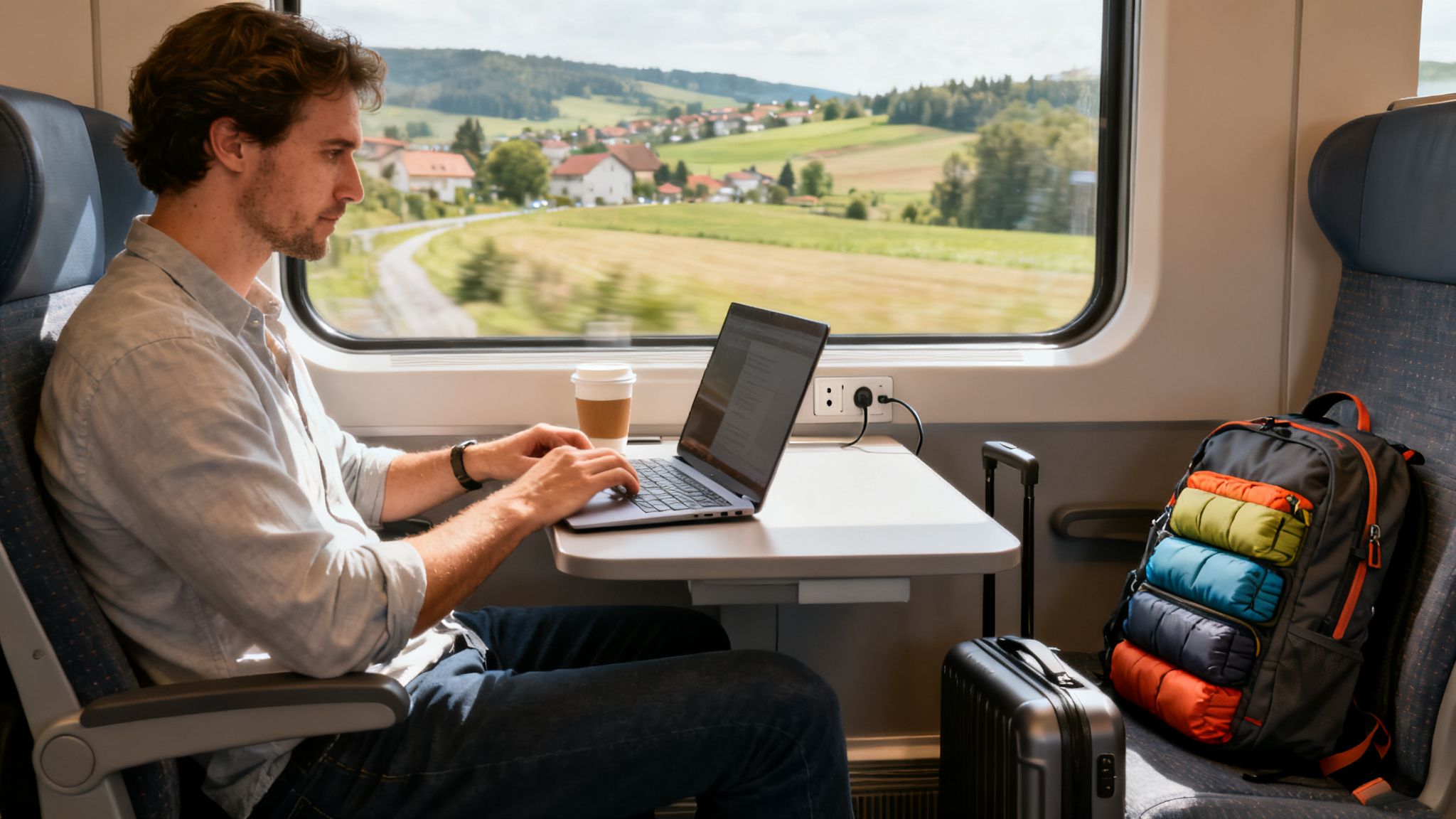
For digital nomads, the perks are even more obvious. Most European trains have reliable Wi-Fi and power outlets, turning what would be dead time into productive work sessions. Imagine finishing up a project while gliding past the Alps—it’s a seamless blend of work and wonder that you just don’t get on a plane. Packing is simpler, too, with generous luggage rules that let you bring what you need without facing surprise fees at a check-in desk.
Comparing the Core Travel Factors
When you actually line up trains against other ways of getting around, the advantages really start to stack up. Sure, a budget flight might look cheaper at first, but the hidden costs and hassles add up fast.
The numbers don’t lie. Data from the European Environment Agency shows that rail travel is responsible for a tiny 0.4% of greenhouse gas emissions from passenger transport in the EU. Aviation? A whopping 13.2%. Choosing the train is a powerful, practical vote for the planet.
Let’s break down how each option stacks up for a mindful, modern traveler. If you want to dive deeper into the principles behind this, check out our full guide on what is sustainable travel.
| Feature | Train Travel | Air Travel | Bus Travel |
|---|---|---|---|
| Sustainability | Excellent: Lowest emissions per passenger. | Poor: Highest emissions, major climate impact. | Good: Better than flying, but still more than rail. |
| Convenience | Excellent: City-center stations, no long security lines. | Fair: suburban airports, long waits, and transfers. | Good: Central drop-offs but can involve many stops. |
| Productivity | Excellent: Wi-Fi, power outlets, and actual table space. | Poor: Limited connectivity and cramped seats. | Fair: Wi-Fi can be spotty; not much room to work. |
| Luggage Allowance | Good: Generally more generous and less expensive. | Poor: Strict limits and high fees for checked bags. | Good: Often includes one or two bags for free. |
Why Train Travel Is Back on Track in Europe
Across Europe, railways are buzzing. This isn’t just nostalgia for the golden age of travel; it’s a full-blown renaissance, driven by travelers and governments who see trains as the smartest way to move across the continent. People are shifting their thinking, choosing journeys that are as meaningful as the destination itself.
This revival is being supercharged by real policy changes. In 2023, France took a bold step by banning short-haul domestic flights wherever a high-speed train could make the trip in under 2.5 hours. The effect was immediate: train ridership on those routes jumped by over 20%. It proved that when a convenient, green alternative exists, people will happily choose it.
This official push is perfectly in sync with what travelers want. A huge recent survey of 11,000 people found that nearly half plan to travel more by train and less by plane in the next five years. Digging deeper, 62% of EU citizens actually support banning short-haul flights. It’s a clear signal from the ground up: people are demanding smarter, more sustainable travel.
The Rise of the Modern Rail Nomad
You can see this momentum in the numbers. Rail pass companies like Eurail are reporting record-breaking sales, and a new kind of traveler is leading the charge: digital nomads, remote workers, and eco-conscious explorers. For them, the train is more than just transport—it’s a rolling office with an ever-changing view of Europe’s landscapes.
A rail pass offers the kind of flexibility that fits the nomadic lifestyle perfectly. It’s the freedom to be spontaneous—to hop off in a small town that catches your eye or decide to stay an extra week in a city you’ve fallen for. With just a reliable carry-on backpack and a Eurail pass, the entire continent becomes an open-ended map. Add in the ability to stay connected and work on the go, and you have the ideal setup for long-term, slow travel. You can even plan your entire adventure by exploring some of the best train routes in Europe.
Investing in a Connected Future
This isn’t just a grassroots movement; it’s backed by serious government investment. Billions of euros are flooding into infrastructure upgrades, new high-speed lines, and the revival of sleeper trains connecting major cities. These “hotels on wheels” are a game-changer, letting you cover huge distances while you sleep, saving you time and the cost of a hotel room.
It all creates a powerful cycle. As more people opt for rail, the services get better and the network expands, which in turn makes train travel an even more compelling choice. For anyone looking for the best way to travel Europe, getting on board with this renaissance means choosing a mode of transport that’s not just better for the planet but also more efficient, comfortable, and deeply rewarding.
Comparing How You Travel: Emissions, Cost, and Time
Choosing how to move across Europe always comes down to a trade-off between sustainability, cost, and time. When you break down the main options—train, plane, and bus—the data keeps pointing to rail as the smartest choice for the modern traveler. A quick glance at a flight price might look tempting, but the full picture tells a very different story.
This is especially true once you factor in the entire journey. Budget airlines often use smaller, more remote airports, which means you’re spending extra time and money just getting into the city center. Throw in the fees for everything from carry-on luggage to picking a seat, and that initial “deal” often disappears. Trains, on the other hand, drop you right in the heart of the city, ready to go.
Buses, while often the cheapest ticket, come with their own set of compromises. They can be painfully slow, with multiple stops turning a straightforward trip into an all-day event. And while their emissions are lower than flying, they still can’t match the efficiency of Europe’s electric rail network. The experience is also less comfortable, making it tough to work or truly relax.
Recent sentiment among European travelers shows a major shift, with a clear preference for more sustainable and efficient train journeys starting to emerge.
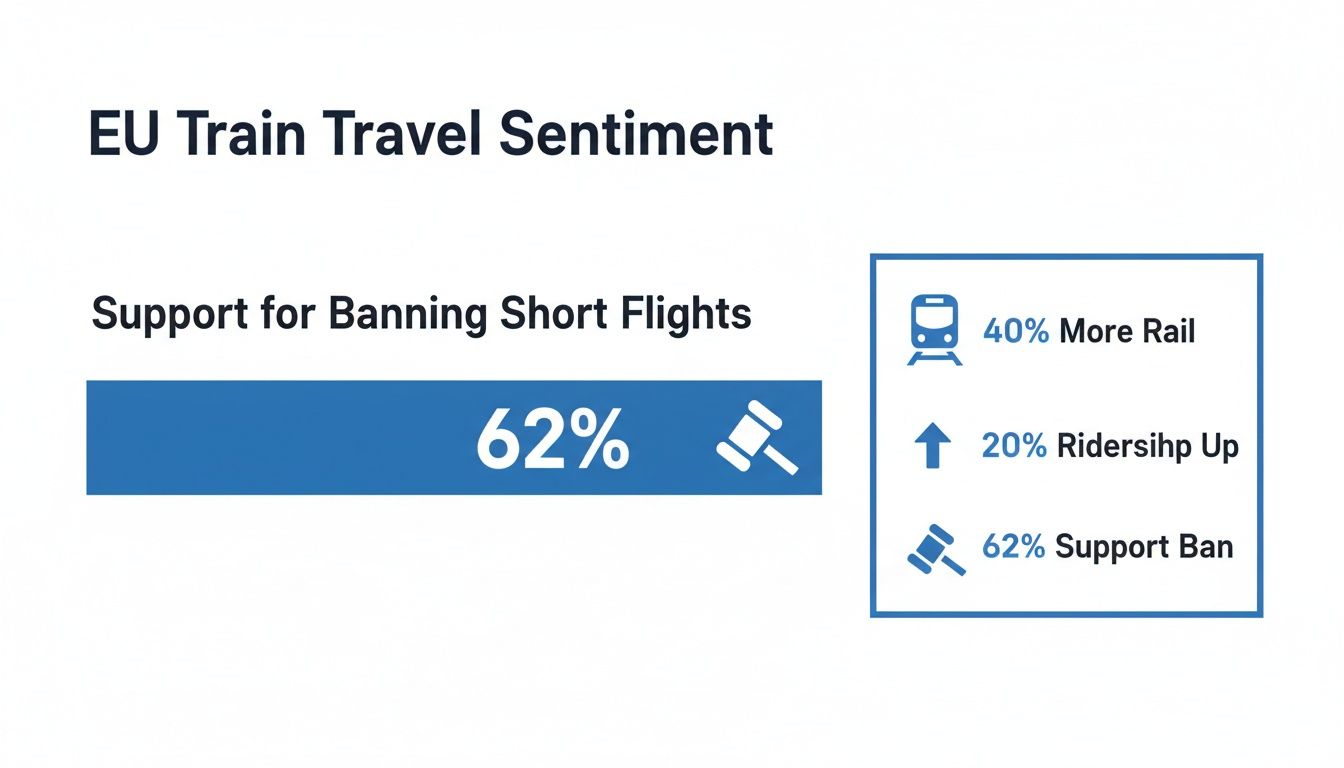
The data here shows a powerful trend. A majority supports banning flights where good train alternatives exist, and a huge chunk of travelers plan to use rail more, driving a noticeable rise in ridership.
A Data-Driven Look at Emissions
The environmental case for train travel is rock-solid. Rail transport in the EU accounts for just 7% of passenger kilometers but emits a tiny 0.4% of transport CO2 emissions. It’s a staggering difference in efficiency.
For example, a high-speed train from Paris to Brussels covers the distance in about 1.5 hours, with emissions around 10-20 grams of CO2 per passenger kilometer. A flight on the same route? Over 150 grams. It’s no surprise that 3 in 4 EU citizens say they’d swap planes for high-speed trains when possible. For a traveler, this means a rail-first itinerary can slash your carbon footprint by up to 90% compared to flying.
Europe Travel Mode Comparison: Train vs. Plane vs. Bus
To really see the trade-offs, it helps to put these options side-by-side. This table breaks down the key factors for choosing your travel mode in Europe, helping you decide based on your priorities for sustainability, cost, and overall convenience. As you’ll see, the best way to travel often means looking beyond the sticker price.
| Travel Mode | Average Emissions (CO2/pkm) | Typical Cost (Mid-Range) | Average ‘Door-to-Door’ Time | Best For |
|---|---|---|---|---|
| Train | 14-76g | €50–€150 ($54–$162 USD) | Journey time + 30 min | Sustainable travel, productivity, city-center convenience. |
| Plane | 150-250g | €40–€200 ($43–$216 USD) | Journey time + 3-4 hours | Long-distance travel between non-connected regions. |
| Bus | 50-100g | €20–€80 ($22–$86 USD) | Journey time + 1 hour | Extreme budget travel for shorter, regional trips. |
This comparison makes it clear why trains so often come out on top. The time saved by skipping airport security and transfers is huge, and the ability to work comfortably makes the journey itself part of a productive day.
You can dive deeper into this topic by reading our detailed guide on train vs. plane emissions in Europe. Ultimately, trains offer a superior blend of efficiency, comfort, and low environmental impact, making them the clear winner for most travel within Europe.
Mastering European Rail Travel: Practical Tips for Nomads
Knowing train travel is the smart way to see Europe is one thing; navigating the system like a pro is another. A few practical strategies can transform your journey, saving you time, money, and hassle. It all comes down to smart planning that unlocks the full potential of Europe’s incredible rail network.
This starts with how you book. For long-term nomads, the choice often boils down to buying individual tickets versus investing in a rail pass. Likewise, embracing options like night trains can completely change your itinerary, turning a simple transit day into a time-saving, cost-effective adventure.
A well-organized approach means you can focus on the experience, not the logistics. That means packing efficiently, choosing the right home base, and using modern tools to keep your plans simple. With these tips, you’ll be set for a seamless, low-impact journey across the continent.
Night Trains: A Nomad’s Secret Weapon
Night trains are a game-changer for efficient, sustainable travel. Instead of losing a travel day, you cover long distances while you sleep, arriving in a new city refreshed and ready to go. This “hotel on wheels” approach also saves you the cost of one night’s accommodation—a real win over a multi-week trip.
Popular routes like the Nightjet from Vienna to Paris or Amsterdam are comfortable and surprisingly affordable when booked ahead. You wake up in a new country without the stress of airports. For instance, the Paris-Vienna overnight train emits approximately 50g of CO2 per kilometer, a tiny fraction of the 200g+ you’d see from a flight.
Rail Passes vs. Point-to-Point Tickets
Deciding between a rail pass and individual tickets comes down to your travel style. A Eurail or Interrail Pass offers incredible flexibility, perfect for spontaneous travelers who want the freedom to change plans on the fly. If you plan to travel extensively over a short period, a pass is often the most cost-effective option. You can check out our detailed guide on using a rail journey planner to compare your options.
On the other hand, nomads with a fixed itinerary and fewer long-distance journeys might find it cheaper to book point-to-point tickets in advance. Cross-border rail travel is becoming increasingly seamless thanks to EU initiatives. This simplifies routes like Brussels to Amsterdam (1.5 hours, from about $32 USD or €30) or Zurich to Munich (4 hours, from about $54 USD or €50), making luggage-light travel from walkable bases easier than ever.
Logistics for Long-Term Nomads
For extended stays, choosing a strategic “base city” with excellent rail connections is a must. Cities like Berlin, Prague, or Lyon serve as fantastic hubs, allowing for easy day trips and weekend excursions without needing to pack up everything each time. Look for highly walkable neighborhoods close to the main train station.
Managing your gear is also crucial. A lightweight travel backpack is far more practical than bulky wheeled luggage on trains and cobbled streets. Using compression packing cubes helps you fit more into a smaller space, making it easy to handle luggage storage on board. To keep your essential documents safe from digital theft while on the move, an RFID blocking wallet is a small but wise investment. This streamlined approach makes moving between destinations feel effortless, not like a chore.
Inspiring Low-Impact Itineraries by Train
Theory is great, but seeing a rail-first plan in action makes it real. To show you just how seamless and rewarding this can be, we’ve pulled together two sample itineraries. These routes are designed for nomads who want to connect iconic cities with charming local spots, all without stepping on a plane.
Think of them as practical blueprints for crafting your own journey. Each one balances travel time with deep local experiences, highlighting walkable neighborhoods and opportunities to support smaller businesses. These aren’t rushed highlight tours; they’re thoughtfully paced journeys that let you settle in.
The real beauty of European rail is the freedom it gives you to be spontaneous. If a small town along the route captures your heart, a rail pass makes it easy to just hop off and stay for a few days. Packing light is the key to this flexibility—all you need is a good carry on backpack and a packable daypack for local exploring.
Central European Classics by Rail
This classic loop connects three of Central Europe’s most captivating capitals: Prague, Vienna, and Budapest. It’s an ideal route for first-time train travelers in the region, as the connections are frequent, fast, and incredibly scenic.
- Prague, Czech Republic (4 nights): Start in Prague, basing yourself in the walkable Vinohrady or Karlín districts. Beyond the main sights, a day trip to Kutná Hora by regional train is a fantastic, easy excursion.
- Train to Vienna (4 hours): Settle in for a comfortable ride on the Railjet train, which drops you right in the city center.
- Vienna, Austria (4 nights): Stay in Neubau (District 7) for a creative, local vibe. Vienna’s public transit is superb, making it a breeze to explore car-free.
- Train to Budapest (2.5 hours): Another quick and easy journey brings you to the “Pearl of the Danube.”
- Budapest, Hungary (4 nights): Find a spot in the vibrant Jewish Quarter (District VII). From here, you can easily explore both sides of the city, Buda and Pest, on foot or by tram.
The Mediterranean Coastal Journey
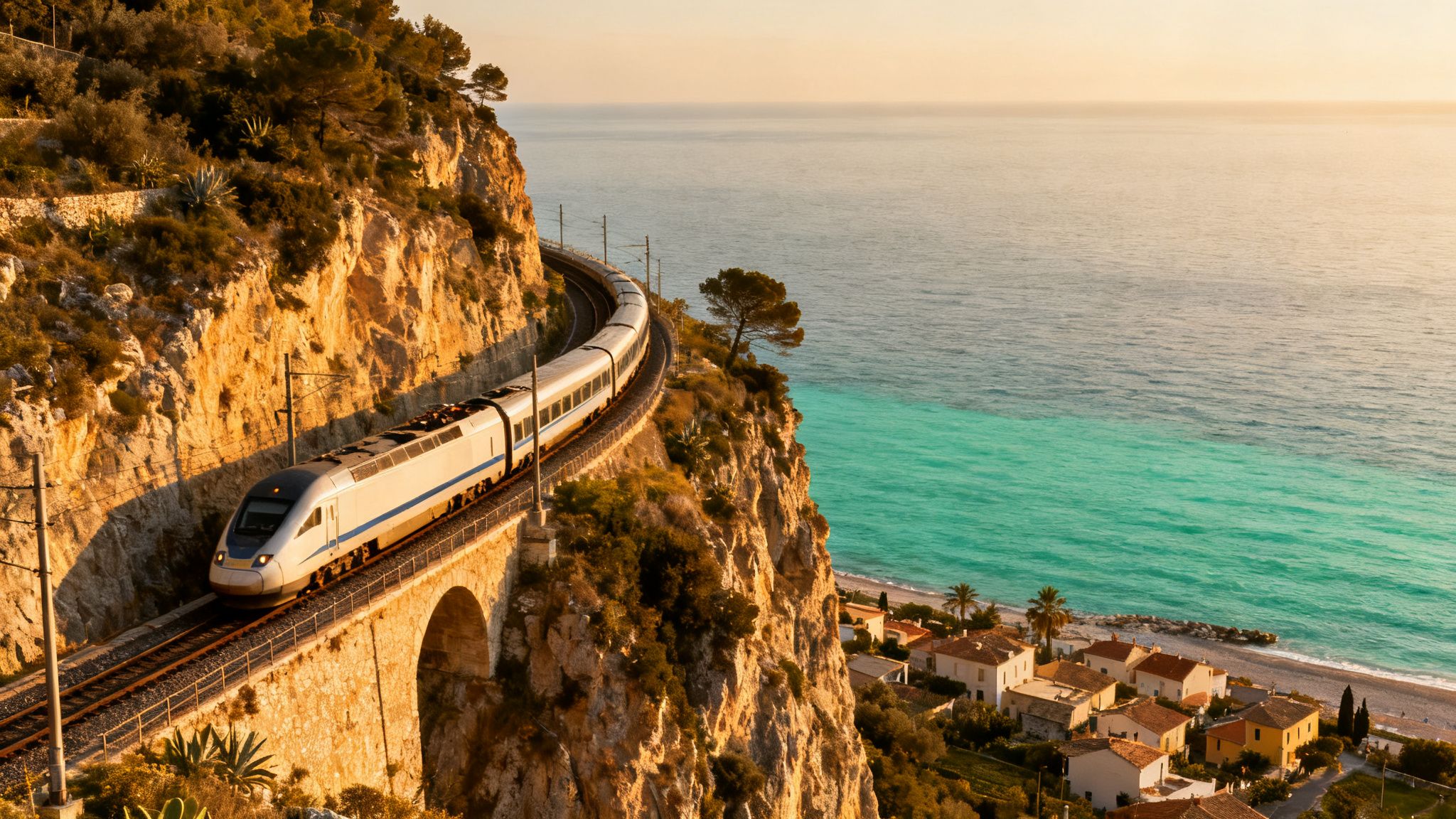
This route follows the sun-drenched coastline from Spain to Italy, blending world-class cities with stunning sea views. It’s a perfect example of how trains can connect diverse cultures and landscapes without a single flight.
- Barcelona, Spain (5 nights): Kick things off in the Gràcia neighborhood, known for its bohemian feel. Spend your days exploring Gaudí’s architecture and wandering through local markets.
- Train to Marseille, France (4.5 hours): This high-speed TGV journey hugs the coast, offering breathtaking views of the Mediterranean.
- Marseille, France (3 nights): Base yourself near the Old Port (Vieux-Port). The city is a great jumping-off point for exploring the Calanques National Park, easily reachable by local bus and hiking trails.
- Train to Genoa, Italy (approx. 4–5 hours): This leg involves a few changes (via Nice and Ventimiglia) but it’s one of Europe’s most scenic coastal rides. It’s a true slow-travel experience.
- Genoa, Italy (3 nights): Take a few days to discover this underrated port city before the final leg of your trip.
- Train to Rome, Italy (5 hours): The train delivers you straight into the heart of the Eternal City, ready to explore ancient history.
Editor’s Pick Central Europe’s Railjet Service
The Railjet trains connecting Prague, Vienna, and Budapest are a standout for comfort and efficiency. With spacious seating, onboard dining, and reliable Wi-Fi, they make the journey as enjoyable as the destination. Booking a business class seat for a small upgrade fee offers an even quieter, more productive environment for digital nomads, making this the best way to travel Europe’s imperial heartland.
Deciding how to get around Europe is a huge part of planning any trip, but for modern travelers, one option consistently comes out on top: the train. A rail-first journey just makes sense—it aligns with a desire for sustainability, efficiency, and a much deeper connection to the places you visit. It’s a way of moving that respects both your time and the planet.
Forget the frantic airport dashes, long security lines, and hidden baggage fees. Rail travel is all about seamless transitions from one city center to the next. That travel time can become a productive work session or just a quiet moment to watch Europe’s incredible landscapes glide past your window.
This isn’t just about shrinking your carbon footprint; it’s about making your travel experience richer. You arrive refreshed, right in the heart of the city, and ready to explore. For digital nomads and thoughtful travelers, the train isn’t just transportation—it’s a smarter way to see the world.
Low-Impact Travel Tools (Worth It)
Also, if you’re planning a trip and want to keep things simple, these tools help you travel smoother while staying mindful about impact.
Get an eSIM for reliable data → Disclosure: Partner link. No extra cost to you.
Pre-book a transfer for easy arrivals → Disclosure: Partner link. No extra cost to you.
Frequently Asked Questions About European Travel
Planning a trip across Europe always brings up a few questions, from the big logistical puzzles to the small, practical details. Getting clear, straightforward answers is the key to feeling ready for your adventure. This section tackles some of the most common things travelers ask. We’ll cover everything from finding the most budget-friendly transport to staying safe and connected on the road. Think of it as a final checklist to make sure you have what you need for a smooth, enjoyable, and sustainable European journey.
What is the cheapest way to travel around Europe?
If your number one goal is the absolute lowest ticket price, buses are usually your answer. Companies like Flixbus offer fares that can dip as low as $5-$10 USD for some routes, which is tough to beat. But it comes with a trade-off: bus journeys are much slower than trains and far less comfortable, making for a long and draining travel day. For a better balance of cost, comfort, and speed, your best bet is often booking train tickets well in advance. By planning 2-3 months ahead, you can lock in deeply discounted fares on high-speed services that are often competitive with last-minute flight prices. You can find excellent deals on sites like Trip.com.
Is a Eurail Pass worth it?
A Eurail Pass can be a fantastic investment, but it really boils down to your travel style. It delivers the most value for travelers who want total flexibility and plan on taking multiple long-distance train journeys in a short amount of time. The freedom to hop on a train spontaneously is a huge perk for nomads who prefer an open-ended itinerary. However, if your travel plans are mostly fixed and you only have a few big train trips lined up, buying individual point-to-point tickets in advance is almost always the cheaper option. Before you buy a pass, do the math. Price out your intended journeys as individual tickets and compare that total against the cost of the pass to see which makes more sense for your specific trip.
How far in advance should I book European trains?
For the best prices, especially on popular high-speed and long-distance routes, aim to book your tickets two to three months in advance. European rail operators release tickets in batches, and the cheapest fares always sell out first. Booking early is the single best strategy for saving money. This advice doesn’t apply to all trains, though. Regional and local trains usually have fixed prices, meaning the fare is the same whether you buy it months ahead or minutes before departure. For these shorter trips, there’s no need to book in advance—just grab your ticket at the station on the day of travel.
How do I stay connected while traveling in Europe?
Staying connected is easier than ever. The most convenient and cost-effective solution for most travelers is an eSIM from a provider like Airalo or Yesim. An eSIM lets you purchase and activate a data plan directly from your phone, giving you reliable internet across multiple countries without the hassle of swapping physical SIM cards. On top of an eSIM, you’ll find free Wi-Fi is widely available in cafes, accommodations, and on most long-distance trains. To make sure your devices are always ready to go, a reliable portable power bank is an essential piece of gear for any traveler, keeping you charged up during long transit days.
What is the best way to pack for European train travel?
The golden rule for European train travel is to pack light. A high-quality carry on luggage is far more practical than a bulky checked suitcase. You’ll find it much easier to navigate train station stairs, narrow aisles, and the charming but uneven cobblestone streets common in historic city centers. To maximize your space, packing cubes are a game-changer, letting you fit more clothing into a smaller bag. It’s also smart to bring a collapsible water bottle to stay hydrated and cut down on plastic waste. Finally, a small set of laundry detergent sheets makes it easy to do a quick wash in your apartment, which means you can pack fewer clothes overall.
Is it safe to travel alone in Europe?
Yes, Europe is generally considered a very safe destination for solo travelers. Taking standard precautions is all you really need to have a secure and enjoyable trip. Just be aware of your surroundings, particularly in crowded tourist areas, on public transport, and at train stations, as these are common spots for pickpockets. To add an extra layer of security, keep your passport, cards, and cash secured in an anti theft backpack. When you’re back in your hotel or rental for the night, a portable door lock can provide extra peace of mind. These simple measures help you relax and focus on the experience.
What is the best travel insurance for Europe?
Choosing the right travel insurance is a critical part of planning your trip. You need a comprehensive plan that covers medical emergencies, trip cancellations or interruptions, and theft or loss of your belongings. A reliable policy is your safety net for when things don’t go as planned. Providers like VisitorsCoverage offer robust plans designed for international travel. When you’re picking a policy, make sure to read the details carefully to ensure it aligns with your itinerary and any specific activities you have planned, like hiking or adventure sports.
Do I need cash in Europe or is a card enough?
While credit and debit cards are widely accepted across Europe, especially in cities and larger businesses, you shouldn’t rely on them exclusively. It’s always a good idea to carry some cash—Euros, or the local currency of the country you’re visiting. You’ll find cash is often necessary for small purchases at local markets, independent coffee shops, or for leaving tips. It can also be a lifesaver if you run into a rare “cash-only” spot or a card reader that’s out of service. For security, keep your cards and cash in an RFID blocking wallet to protect against electronic pickpocketing.
Key Takeaways
- Massive Carbon Savings: Swapping a short-haul flight for a train ride can slash your travel emissions by up to 90%. It’s the single biggest decision you can make for a more sustainable trip in Europe.
- Cost-Effective & Flexible: If you book ahead or use a rail pass like Eurail, train travel is often cheaper than flying—especially once you factor in the hidden airline fees and pricey airport transfers.
- A Mobile Office for Nomads: For remote workers, trains are rolling offices. With reliable Wi-Fi, power outlets, and actual table space, you can turn travel days into productive work days. That’s just not happening on a cramped budget flight.
- The Joy of the Journey: Rail travel connects you to the landscape. You get scenic views and stress-free arrivals in central, walkable neighborhoods, making the journey itself part of the adventure.
- City Center Convenience: Train stations are almost always in the heart of the city, saving you hours of transit time and the cost of expensive airport transfers compared to flying.
- Pack Smarter, Not More: With more generous luggage allowances than airlines, trains let you bring what you need without facing surprise fees. A good carry on backpack and compression packing cubes are all you need.
Join the Sustainable Work Movement
Want more rail-first itineraries, low-impact packing systems, and walkable base-city ideas?
