

Picture this: you wake up not to an alarm clock, but to the chorus of tiny coqui frogs in a lush rainforest. Or maybe it’s the sound of gentle Caribbean waves washing over a secluded beach. This is what camping in Puerto Rico feels like—an experience that swaps out crowded, noisy campgrounds for the island’s own vibrant, natural soundtrack. It’s a place where you can pitch your tent under a thick canopy of tropical trees one day and on the edge of a world-class beach the next.
Why Puerto Rico Is a Unique Camping Destination
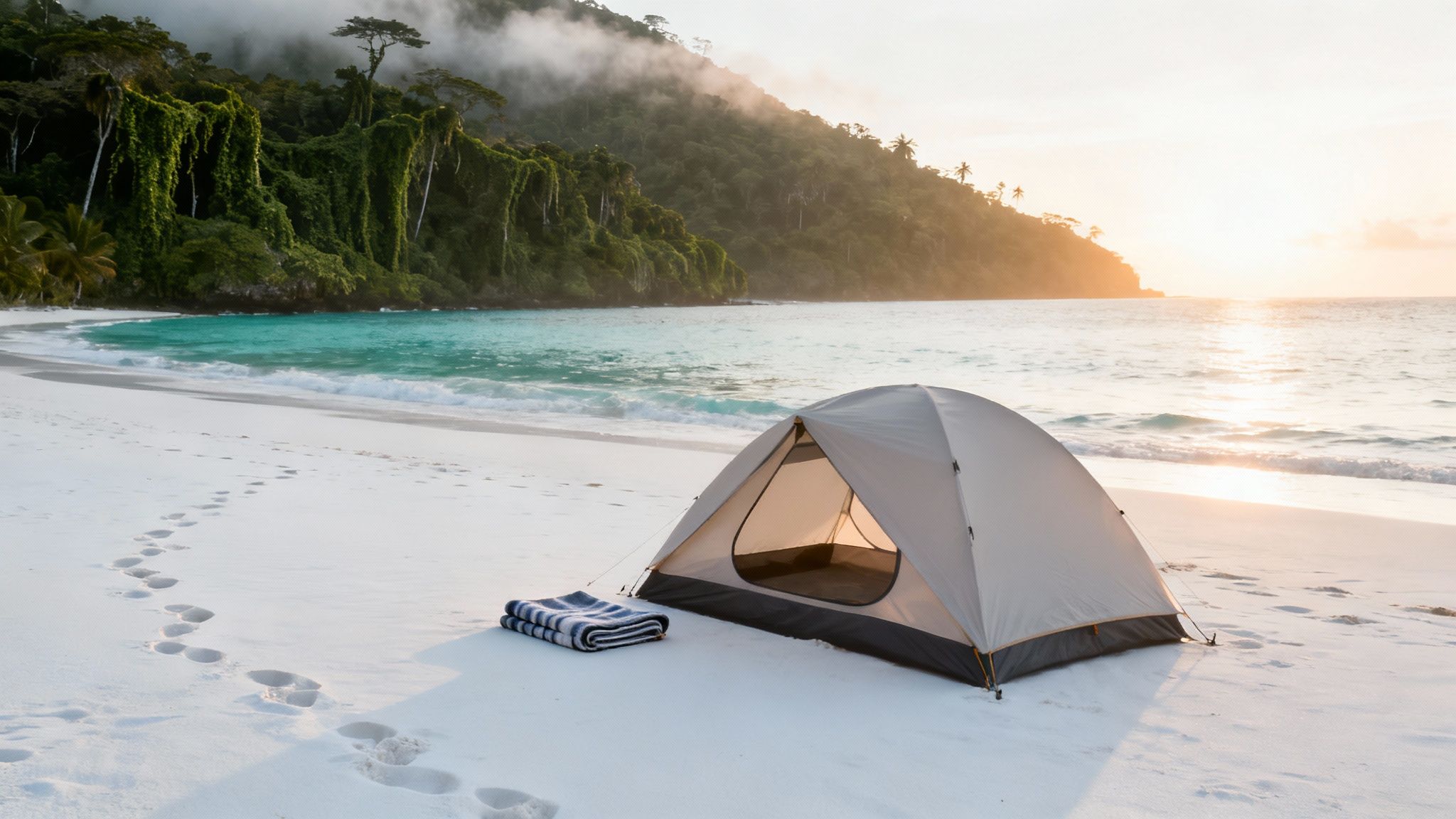
What makes camping here so special is the sheer variety of landscapes packed into such a small island. Puerto Rico is so much more than just sandy shores; it’s a mosaic of completely different ecosystems, all waiting to be explored. This makes it a perfect spot for travelers who crave variety but don’t want to spend their whole trip on the road.
You can go from the misty, cloud-covered peaks of El Yunque National Forest—the only tropical rainforest in the entire U.S. National Forest System—to the cactus-studded, desert-like climate of the Guánica Dry Forest in just a few hours. For those looking for more of a challenge, the island’s central mountain range, the Cordillera Central, offers cooler air and rugged terrain for more serious treks.
Connecting with Nature and Community
What really sets Puerto Rico apart is a growing commitment to low-impact, regenerative travel. Camping fits perfectly into this way of thinking. It allows you to directly experience the island’s natural treasures while keeping your footprint as light as possible, supporting the rising interest in truly sustainable tourism.
Camping has long been an established part of the outdoor scene here, with thousands of people taking part each year. After Hurricane Maria, the tourism sector made a powerful comeback, hitting $8.9 billion USD in revenue by 2022. This rebound highlights just how important resilient, nature-based activities like camping are to the local economy.
This focus on responsible tourism helps you build a deeper connection—not just with the environment, but with the local communities, too. By choosing to camp, you’re taking part in a style of travel that respects the island and supports its long-term health. For more on this, take a look at our guide on community-based ecotourism in Latin America.
More Than Just Tents
The camping scene here is also surprisingly diverse, with options for just about every comfort level and travel style.
- Developed Campgrounds: Places like Toro Negro State Forest have amenities like picnic tables, running water, and bathrooms. They’re a great starting point for families or first-time campers.
- Beach Camping: Iconic spots like Flamenco Beach in Culebra and Sun Bay in Vieques have designated areas where you can legally camp right on the sand.
- Remote Forest Sites: For a more raw experience, forests like Guajataca and Río Abajo offer primitive camping among unique karst (limestone) landscapes.
This variety means that whether you’re a seasoned backpacker carrying everything on your back or just looking for a simple night under the stars, you’ll find a spot that’s just right for your kind of adventure.
How to Get Your Camping Permits and Follow Regulations
One of the first things to get straight for any camping trip in Puerto Rico is how to do it legally. Securing the right permits isn’t just a box-ticking exercise; it’s your first act as a responsible traveler and a non-negotiable step for protecting the island’s delicate natural habitats.
Think of it as a partnership. By following the rules, you’re directly helping conservation efforts and ensuring these wild places stay wild.
The main authority for most public lands is the Departamento de Recursos Naturales y Ambientales (DRNA), or the Department of Natural and Environmental Resources. This is the agency managing state forests, nature reserves, and many of the best beach camping spots. Their system helps manage visitor numbers, preventing the kind of overcrowding that can damage fragile ecosystems. Getting your permit is a small but crucial part of your adventure.
Navigating the DRNA Permit Process
For any state-managed site, you’ll need to apply for a permit online through the DRNA’s official portal. It’s smart to do this at least a few weeks ahead of time, especially if you’re eyeing popular spots like Flamenco Beach in Culebra or Sun Bay in Vieques during peak season.
Here’s the typical flow:
- Pick Your Spot: First, figure out which DRNA-managed forest or beach you want to camp at.
- Head to the Online Portal: Go to the DRNA’s permit website, create an account, and start a new application.
- Fill in the Details: You’ll need to provide your dates, the number of people in your group, and contact info.
- Pay the Fee: Permit fees are very reasonable, usually around $4 to $10 USD per tent per night, though this can vary.
- Get Your Permit: Once it’s approved, you’ll receive the official permit by email. Make sure to print a copy or save it to your phone—rangers do check.
This isn’t just random bureaucracy. A comprehensive outdoor recreation plan for the island showed a growing demand for camping, which prompted better management systems to handle the interest from both locals and visitors.
Rules for Federal Lands Like El Yunque
Camping in El Yunque National Forest is a different story because it’s managed by the U.S. Forest Service, not the DRNA. Right now, developed campgrounds inside El Yunque are closed. To protect the rainforest’s incredibly sensitive ecosystem, dispersed or “wild” camping is not allowed.
Always check the official U.S. Forest Service website for the absolute latest information before making any plans for El Yunque. Regulations can and do change. A great alternative is to engage with licensed tour operators, which is another excellent way to experience the forest responsibly. If you need some pointers, our guide on how to choose eco-friendly tour operators has you covered.
Exploring Puerto Rico’s Top Camping Regions
Okay, you’ve got the permits sorted. Now for the fun part: figuring out where to pitch your tent for the best camping in Puerto Rico. The island’s small size is a huge advantage here, letting you jump between wildly different landscapes, sometimes in the same day.
We’ll focus on three core experiences that show off Puerto Rico’s incredible biodiversity. First, the misty, high-altitude world of El Yunque National Forest. Then, we’ll hop over to the classic white-sand beaches of Vieques and Culebra. Finally, we’ll dive into the rugged, lesser-known karst forests for a true off-grid adventure.
To give you a quick overview, here’s how the main regions stack up against each other.
Comparing Puerto Rico’s Camping Regions
This table breaks down the three main camping environments. Use it to match the kind of trip you’re looking for—rainforest immersion, beach life, or rugged solitude—with the practical details like accessibility and permits.
| Region | Primary Ecosystem | Best For | Accessibility (Car-Free) | Permit Authority |
|---|---|---|---|---|
| El Yunque | Tropical Rainforest | Immersive nature, hiking, biodiversity | Moderate (tours/taxis from San Juan area) | U.S. Forest Service |
| Vieques & Culebra | Coastal/Beach | Iconic beach camping, snorkeling, island life | Good (ferry/plane + local transport) | DRNA / Municipality |
| Karst Country | Limestone Forest | Solitude, caving, off-the-beaten-path | Challenging (best with a rental car) | DRNA |
Each region offers a completely different rhythm and requires a different mindset. Choose El Yunque for the sounds of the forest, the islands for the sound of the waves, and the karst country for the sound of silence.
El Yunque National Forest: A Top Spot for Camping in Puerto Rico
El Yunque is the crown jewel, and for good reason. It’s the only tropical rainforest in the entire U.S. National Forest System, a place buzzing with life. Camping here feels like stepping into another world—one filled with giant ferns, towering tabonuco trees, and the constant, iconic serenade of the coquí frog.
You can’t just pitch a tent anywhere, though. To protect the fragile ecosystem, dispersed or “wild” camping is not allowed. The forest has historically had designated camping areas, but their availability can change based on weather, trail conditions, or maintenance. Always check the official U.S. Forest Service website for the current status before you even think about packing.
Being a responsible visitor in El Yunque means sticking to marked trails and embracing Leave No Trace principles. Its proximity to San Juan makes it a hugely popular day trip, but staying overnight offers a much deeper connection to the forest’s rhythm. You could even pair a camping trip with a stay at one of the nearby off-grid lodging options to extend your stay.
The flowchart below shows you which government body handles permits depending on where you want to camp.
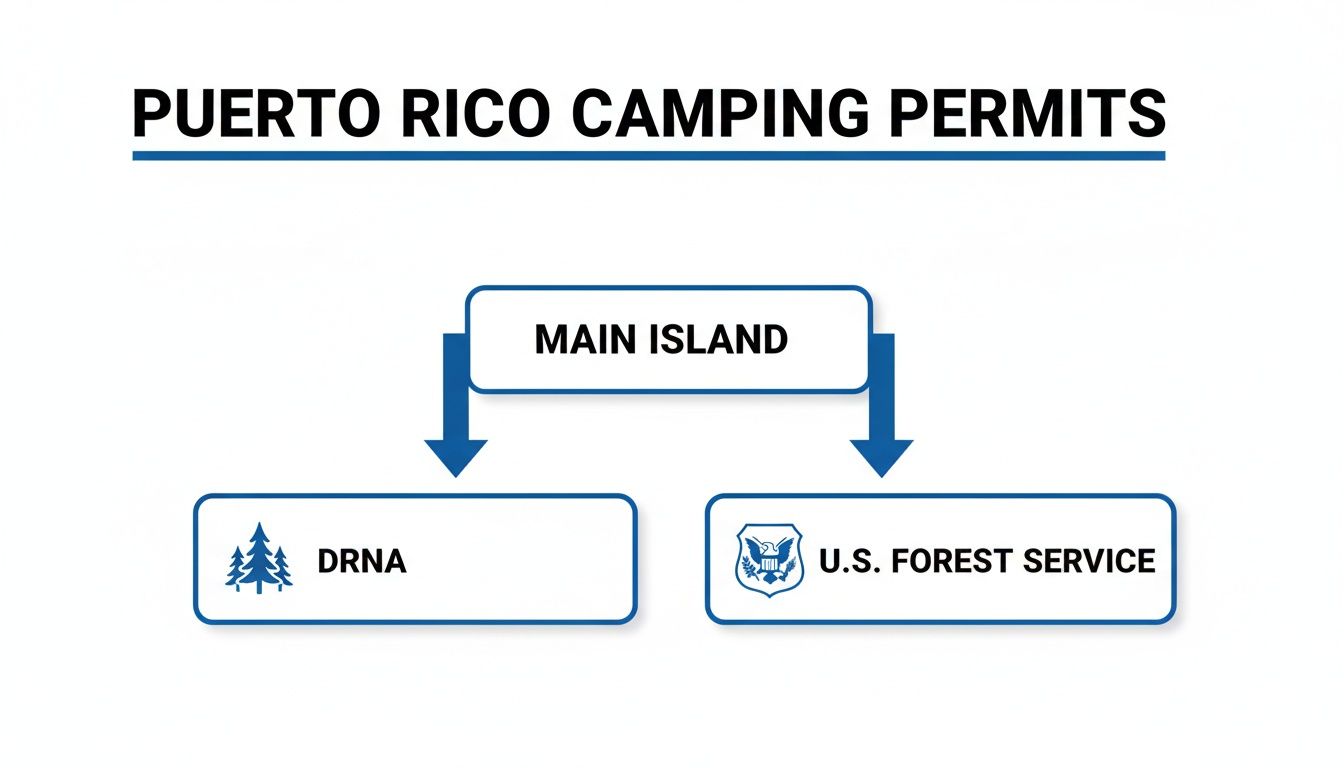
It’s a simple but crucial distinction: know whether your campsite is on state or federal land, and you’ll know who to contact.
Vieques and Culebra: Pristine Island Camping
For many, this is the ultimate Caribbean dream: camping just steps from the water on a world-class beach. The islands of Vieques and Culebra make it happen. Getting there is an adventure in itself, requiring a short ferry or a tiny plane ride, which immediately sets a different pace.
- Culebra: This is home to the legendary Playa Flamenco, a beach that regularly appears on “world’s best” lists. The campground is right there, letting you wake up to turquoise water and impossibly white sand. It’s an iconic experience.
- Vieques: The vibe here is a bit more rustic at Sun Bay Beach. It’s a stunning, crescent-shaped bay managed by the DRNA. You’ll find basic facilities like bathrooms, and it serves as a fantastic base for exploring the island’s famous bioluminescent bay (Mosquito Bay).
Camping on these islands comes with a serious responsibility to protect their fragile marine ecosystems. That means using reef-safe sunscreen, packing out absolutely everything you bring in, and giving wildlife its space. The logistics take a bit more planning, but the reward is falling asleep to the sound of waves under a sky full of stars.
The Karst Country: A Rugged Alternative
If you’re looking for genuine solitude, head inland to Puerto Rico’s karst country. This region is a dramatic landscape of limestone caves, sinkholes, and steep, rounded hills called mogotes. State forests like Guajataca and Río Abajo offer a camping experience that couldn’t be more different from the coast.
Here, you’re trading beaches for dense forests and trails that wind toward hidden caves and stunning overlooks. The facilities are primitive, which is perfect for self-sufficient campers who truly want to disconnect. These forests are also vital habitats for native species, including the endangered Puerto Rican parrot, so a light touch is non-negotiable.
This is where sustainable tourism really proves its value. A 2016-2017 survey noted 7,212 campers visiting reef-adjacent areas alone, part of a broader tourism industry that generated $8.9 billion USD in 2022. Low-impact camping helps inject money into local economies while preserving the very landscapes and cultural heritage—including deep Taíno roots—that make these places so special. You can read more about the island’s tourism economy and its history on Wikipedia.
Finding the right flights is the first step in any successful camping trip. Aviasales simplifies this process by comparing hundreds of airlines, helping you find the most efficient and affordable routes to San Juan (SJU). This allows you more time and budget to focus on your low-impact adventure on the ground.
Your Essential Low-Impact Packing List
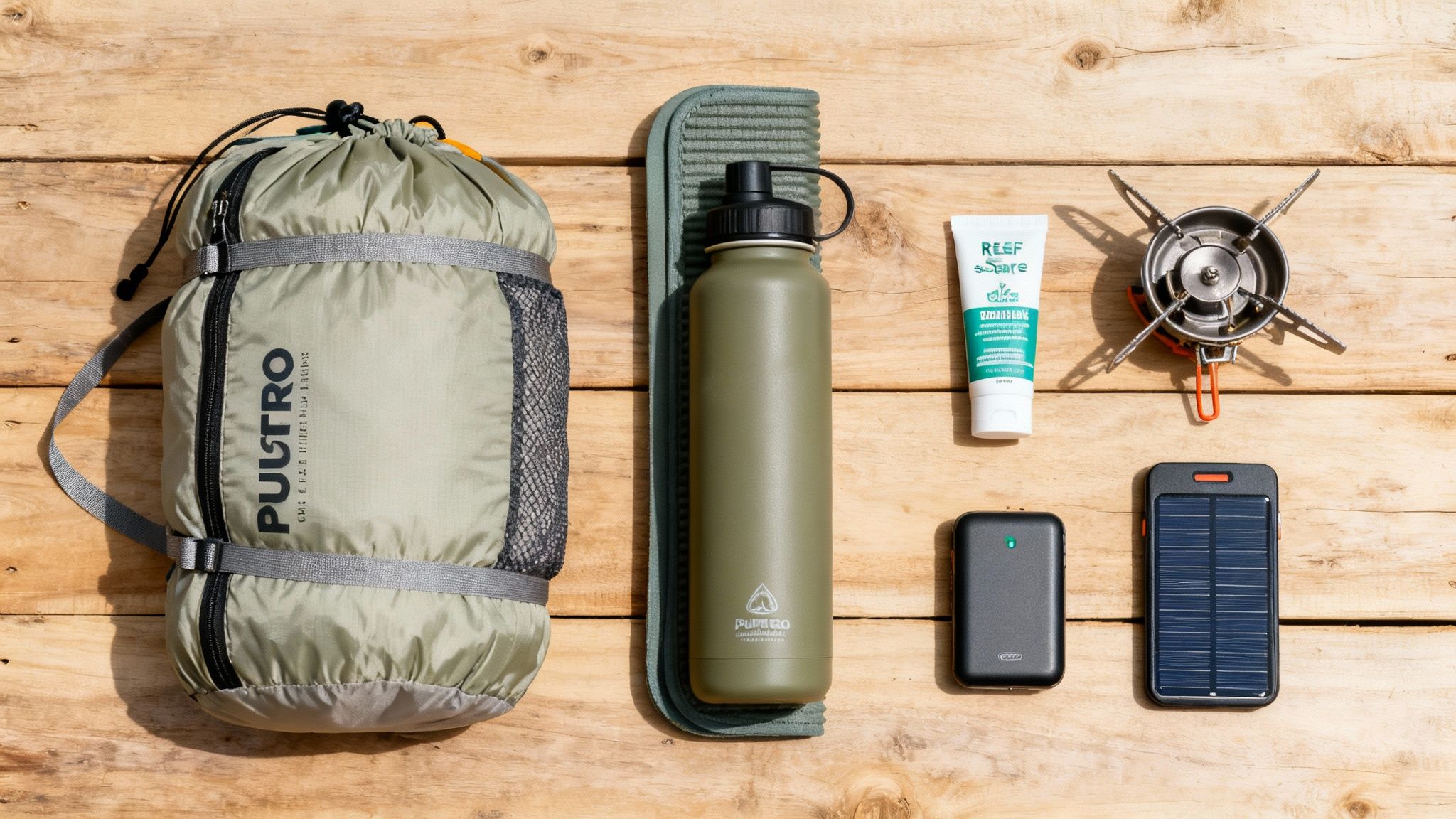
Smart packing is the first real move you make on any trip, and for camping in Puerto Rico, it’s everything. The goal isn’t just about being comfortable in a tropical climate; it’s about leaving the smallest footprint possible. Think lightweight, multi-purpose, and genuinely eco-conscious.
Your pack should feel like a self-sufficient, zero-waste toolkit. Every single item needs to earn its spot by serving a real purpose, helping you ditch single-use plastics and protect the island’s fragile ecosystems.
This approach lightens your load, sure, but it also deepens your connection to the very environment you’re there to experience. A well-curated pack means you can handle a sudden rainforest downpour or a humid night on the beach without leaving a trail of trash behind.
Shelter And Sleep System
Your tent and sleeping gear are your home base, so picking the right setup for Puerto Rico’s warm, humid nights is crucial.
- Lightweight, Waterproof Tent: You’re looking for a tent that can handle both tropical heat and an unexpected downpour. Prioritize models with plenty of mesh for ventilation—it makes a huge difference with the humidity—and a rainfly you can trust.
- Warm-Weather Sleeping Bag: A heavy-duty bag is just dead weight here. A lightweight bag or even just a liner rated for around 50-60°F (10-15°C) is all you’ll need for the island’s balmy nights.
- Sleeping Pad: Don’t skip this. A lightweight, inflatable pad provides that essential layer of comfort and insulation from the damp ground, which means a much better night’s sleep.
Eco-Friendly Gear And Toiletries
This is where your low-impact commitment really comes to life. Every item here is a small vote for a healthier planet.
A core tenet of sustainable travel is eliminating single-use plastics. Simple swaps, like a water filter for plastic bottles and solid toiletries for liquids, can drastically reduce your waste and protect local ecosystems from pollution.
- Reusable Water Filter or Purifier: This is the single most important eco-friendly item you can pack. It gives you the freedom to safely drink from taps and natural sources, completely sidestepping the need for disposable plastic bottles.
- Reef-Safe Sunscreen: Standard sunscreens are loaded with chemicals like oxybenzone that are devastating to coral reefs. Always, always choose a mineral-based, reef-safe formula to protect marine life whenever you get in the water.
- Biodegradable Insect Repellent: Mosquitos are a fact of life in the tropics. Pack a plant-based, biodegradable repellent that protects you without leaching harmful chemicals into the environment.
- Solid Toiletries: Shampoo bars, conditioner bars, and solid soap are a minimalist packer’s dream. They eliminate plastic bottle waste, are lighter, smaller, and will never leak in your bag.
Clothing And Cooking Essentials
Pack versatile layers and a simple cook kit to stay comfortable and self-reliant.
- Quick-Drying Clothing: Lightweight, moisture-wicking fabrics are your best friend. A few shirts, shorts, and a pair of long pants for sun and bug protection are all you really need.
- Rain Gear: A lightweight, packable rain jacket is absolutely non-negotiable.
- Minimalist Cook Kit: A small stove, fuel, one pot, a reusable spork, and a mug are enough. This simple setup lets you make your own meals, which means less reliance on restaurant takeaway containers.
Digital Nomad Tech Kit
For remote workers, staying connected without creating waste is the goal.
- Solar Charger and Power Bank: Use the Caribbean sun to your advantage. A solar panel paired with a reliable power bank will keep your phone and laptop running when you’re truly off-grid.
- Reliable eSIM: The last thing you want is to be without a connection when you need to check a map or confirm a permit. An eSIM from a provider like Airalo or Yesim gives you instant data when you land, no plastic waste required.
When to Go and How to Get Around
Figuring out when to go is just as critical as deciding where to pitch your tent for a memorable camping trip in Puerto Rico. The island’s climate splits the year into two main seasons, and each one offers a completely different vibe for your adventure. Getting a feel for the weather’s rhythm—and how to move around the island with a light touch—will shape your entire experience.
The best window for camping is easily the dry season, which runs from December to April. During these months, you can count on more sunshine, less humidity, and generally predictable weather, making it perfect for beach camping and long hikes. Just remember, this is also peak tourist season, so you’ll want to lock in your permits and transport well ahead of time.
Then there’s the wet season, from May to November. This period brings higher humidity and more frequent rain, though it’s usually just a short, intense downpour in the afternoon. This is also when the Atlantic hurricane season officially runs (June to November). Camping is still absolutely doable, but you’ll need top-notch rain gear, a flexible mindset, and a close eye on the weather forecast. The trade-off? Far fewer people and landscapes so lush and green they practically glow.
Seasonal Camping Guide for Puerto Rico
Deciding between the dry and wet seasons comes down to your priorities. Are you looking for guaranteed sunshine for beach days, or do you prefer solitude and vibrant, rain-fed nature? This table breaks down the key differences to help you choose the best time for your trip.
| Factor | Dry Season (Dec–Apr) | Wet Season (May–Nov) | Recommendation |
|---|---|---|---|
| Weather | Sunny, lower humidity, predictable. | More rain, higher humidity, chance of hurricanes. | Dry season is best for reliable beach and hiking weather. |
| Crowds | Peak tourist season; busier sites. | Fewer travelers, more solitude. | Wet season (especially shoulder months) for quiet trails. |
| Landscape | Drier, but still green. | Incredibly lush, vibrant, and green. | Wet season for the most dramatic, verdant scenery. |
| Planning | Book permits, ferries, and sites far in advance. | More flexibility, but monitor weather closely. | Dry season requires meticulous advance planning. |
| Mosquitoes | Present, but less active. | More active, especially after rain. | Always pack repellent, but be extra prepared in the wet season. |
Ultimately, there’s no “wrong” time to camp in Puerto Rico if you’re prepared. The dry season offers classic tropical bliss, while the wet season rewards flexible, resilient campers with a wilder, more intense version of the island.
Whether you need a hotel for the night before heading to a remote campsite or a place to relax after your trip, Trip.com offers a wide range of accommodation options. Its user-friendly platform makes it simple to find and book stays that fit your low-impact travel style and budget, from eco-lodges to simple guesthouses.
Navigating Puerto Rico Sustainably
Getting around without a car isn’t just doable; it’s a fantastic way to lower your ecological footprint and get a real feel for local life. Puerto Rico has several transport options that are perfect for the eco-minded camper.
The público system is a network of shared vans that run along set routes, connecting towns and rural spots. They’re cheap, authentic, and a great way to meet people, but they run on a famously loose schedule—so patience is key. For island hopping, the ferry from Ceiba to Vieques and Culebra is a scenic and essential lifeline.
Choosing public transport like the ferry or ‘públicos’ over a private rental car is a direct way to reduce your travel emissions. This small decision supports local transport networks and contributes to a more sustainable tourism model for the island.
For quick trips within San Juan or to nearby trailheads, ride-sharing apps work well. But if your heart is set on exploring the remote state forests deep in the central mountains, renting a car might be the only practical way to get the flexibility you need.
A Low-Impact Itinerary for Remote Workers
For digital nomads, the goal is to balance work with adventure. This sample 7-day itinerary is built around minimizing travel time and maximizing immersion, all with a lighter environmental touch.
Days 1-2: Arrival and San Juan Base
Arrive at SJU and take a pre-booked transfer like Welcome Pickups to your spot in Old San Juan. Settle in, get some work done at a local café, and explore the incredibly walkable historic city.Days 3-4: El Yunque Exploration
Grab a rideshare or join a small tour heading to the El Yunque area. Camp nearby if permits are available (always check official sites first) or find a local eco-lodge. Dedicate one full day to the trails and a quiet morning to work before heading back.Days 5-6: Culebra Beach Camping
Travel to Ceiba using a público or rideshare, then catch the ferry to Culebra. Set up your tent at Flamenco Beach. This is your time to disconnect and soak in the raw nature, using a solar charger for any essential power needs.Day 7: Return and Departure
Catch an early ferry back to Ceiba, then a público to the San Juan area for your flight home.
Think of this itinerary as a template. The real strategy is to cluster your activities geographically to cut down on transit days—a core principle you can explore further in our guide on how to lower your ecological footprint while traveling. By embracing a slower, more intentional pace, you create a trip that’s restorative for you and respectful of the island.
Final Checklist for a Low-Impact Trip
Before you pack your bags and head out, let’s run through the most important points for a smooth, sustainable trip. Think of this as your final pre-flight check for camping in Puerto Rico, covering everything from legal paperwork to staying safe in the tropics.
A little prep goes a long way. Getting these details right from the start means less stress on the ground and more time to actually enjoy the incredible places you’re about to see.
This isn’t just about following rules; it’s about traveling with respect. Following these guidelines helps protect the island’s fragile beauty, ensuring it’s just as wild and wonderful for the next camper.
- Secure Permits Early: This is non-negotiable. Always get the correct permits from the DRNA or the U.S. Forest Service well before your trip begins.
- Embrace Leave No Trace: These principles are the absolute foundation of responsible camping. You must pack out everything you pack in to protect the island’s ecosystems.
- Pack for the Tropics: Think lightweight, waterproof gear. Bring reef-safe sunscreen and biodegradable products to handle the heat, humidity, and sun without leaving a chemical trace.
- Stay Flexible and Safe: Tropical weather can change in an instant. Always have a backup plan, monitor forecasts closely, and prioritize your safety above everything else.
- Respect Local Communities: Remember you’re a guest. Your adventure is happening in someone else’s home. Be respectful, support local businesses whenever you can, and travel with kindness.
- Plan Your Transportation: Book ferry tickets to Vieques and Culebra far in advance, especially during peak season, and get familiar with the schedules for local públicos if you’re planning car-free travel.
A Few Final Questions About Camping in Puerto Rico
Even with the best plans, a few practical questions always pop up just before a trip. Let’s run through some of the most common ones about camping in Puerto Rico so you can finalize your details with confidence. Getting these sorted—from safety to local customs—is what makes an adventure feel smooth.
Camping here is an incredible way to get close to the island’s raw beauty, but it pays to be prepared. Understanding the local context for safety, regulations, and even language will make the whole experience richer.
Here are the practicalities you need to know before you go.
Staying connected to check permit status or navigate to a remote campsite is essential. Airalo’s eSIMs offer a simple, affordable way to get data on your phone as soon as you land, without the hassle of physical SIM cards. It’s a practical tool for modern, low-impact travel.
Is It Safe To Camp in Puerto Rico?
Yes, camping is generally safe as long as you use standard outdoor common sense. Just like anywhere else, it’s smart to secure your valuables, be aware of your surroundings, and stick to official, designated campgrounds.
Beyond that, safety here is mostly about being prepared for the natural environment. That means packing an effective, biodegradable insect repellent and knowing what to do if you encounter local wildlife—which is mostly small and non-threatening. Most importantly, always keep an eye on the weather, especially during the Atlantic hurricane season from June to November.
Can You Camp for Free on Beaches?
True “wild camping” for free on public beaches isn’t really a thing here. Those regulations are in place for a good reason: to protect the island’s fragile coastal ecosystems from overuse and pollution.
But that doesn’t mean you have to give up on the dream. The DRNA manages several official, low-cost beach campgrounds in stunning spots like Flamenco Beach and Sun Bay. You’ll need to secure a permit, which usually runs about $10 USD per night, but it ensures the area is managed sustainably and gives you a safe, legal way to fall asleep to the sound of the waves.
What Is the Best Month To Go Camping?
The dry season, from December to April, offers the most reliable and pleasant weather for camping. Expect sunnier days, lower humidity, and very little rain, making it perfect for adventures in both the forests and on the coast.
If you want a great balance of good weather with fewer people, think about the shoulder months like late November or May. Camping then lets you dodge the biggest tourist crowds while still enjoying fantastic conditions for getting outdoors.
Do I Need to Speak Spanish?
While Spanish is the main language, you absolutely don’t need to be fluent to get by. English is widely spoken in major tourist areas, at the airport, and by officials in government offices like the DRNA.
That said, learning a few basic Spanish phrases is a wonderful way to show respect for the culture. Simple words like hola (hello), por favor (please), and gracias (thank you) go a long way and are always met with warmth.
This article was fact-checked using sustainability data from the World Green Building Council, the Global Ecotourism Network, and peer-reviewed architecture studies. All partner links are vetted for compliance with sustainable business certifications.
Key Takeaways
- Plan Ahead: Always research and obtain camping permits from the DRNA or U.S. Forest Service well before your trip to ensure you can camp legally.
- Choose Your Season Wisely: Opt for the dry season (December-April) for the best weather, but be prepared for more crowds and book everything in advance.
- Pack Smart and Light: Bring a waterproof tent, reef-safe sunscreen, a reusable water filter, and quick-drying clothes to stay comfortable and minimize your impact.
- Embrace Leave No Trace: Protecting Puerto Rico’s natural beauty is crucial. Pack out everything you bring in and follow all local environmental guidelines.
- Use Sustainable Transport: Whenever possible, use públicos and ferries to get around the island to reduce your carbon footprint and support the local economy.
Join the Sustainable Work Movement
Want more rail-first itineraries, low-impact packing systems, and walkable base-city ideas?
FAQ: Camping in Puerto Rico
If you’re planning camping in Puerto Rico, these are the questions readers ask most—permits, rules, best beaches, gear, safety, and how to keep your trip low-impact.
Permits and Regulations
1) Do I need a permit for camping in Puerto Rico?
2) Where do I apply for DRNA camping permits?
3) How far in advance should I book permits for Culebra or Vieques?
4) Is wild camping allowed on beaches or in forests?
5) Can I camp inside El Yunque National Forest?
Best Places to Camp
6) What’s the best beach for camping in Culebra?
7) What’s the best beach campground on Vieques?
8) Are there family-friendly campgrounds with amenities?
9) Where can I camp for more solitude away from beaches?
10) Can I do a “one-trip” itinerary that includes rainforest and beach camping?
Gear and Low-Impact Packing
11) What kind of tent works best in Puerto Rico?
12) Do I need a sleeping bag in the tropics?
13) What’s the single most eco-friendly item I should bring?
14) Is reef-safe sunscreen really necessary for camping trips?
15) What should I pack to handle sudden tropical rain?
Safety, Weather, and Logistics
16) Is it safe to camp in Puerto Rico?
17) What’s the best time of year for camping in Puerto Rico?
18) How do I avoid mosquitoes while camping?
19) Can I camp car-free and still reach good sites?
20) What are the top “Leave No Trace” rules I must follow?
