

The quick, honest answer to “can you recycle receipts” is almost always no. For travelers collecting slips from cafes, train stations, and markets, those glossy little things are unfortunately contaminants in the recycling stream. Most are destined for the landfill, and for a very good reason.
This is because the flimsy, shiny receipts you get from most stores aren’t standard paper. They’re typically printed on thermal paper, which has a special heat-sensitive chemical coating that creates the text and images you see. This chemical layer is the root of the problem.
Why Most Receipts Are a Recycling Nightmare
The big reason you can’t just toss receipts in the paper bin is that most aren’t made of simple paper. They’re printed on thermal paper, a special material coated with a cocktail of chemicals that react to heat. This is how modern cash registers print so quickly and quietly—they use a heated print head instead of ink ribbons. It’s efficient for businesses, but a disaster for recycling.
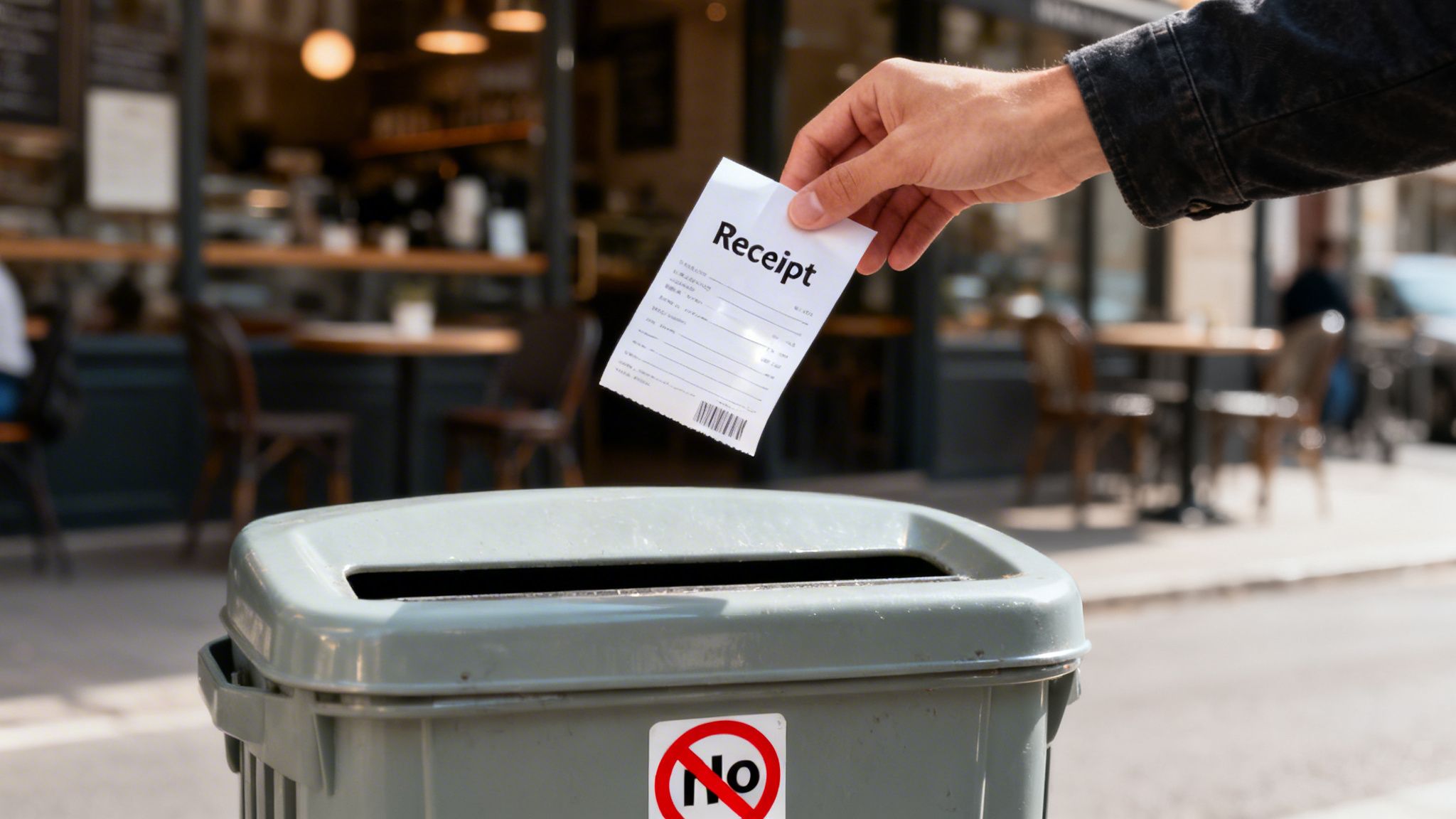
That smooth, slightly slippery feel on a typical store receipt is your first clue it isn’t normal paper. Manufacturers add a coating that reacts to heat and turns dark, which creates the text and numbers. Think of it less like ink on paper and more like developing a photo: the image sits inside the chemical layer, and heat brings it out.
Unfortunately, that chemical “magic” carries a real environmental cost. Manufacturers load the coating with developers like Bisphenol A (BPA) and its close cousin Bisphenol S (BPS). These chemicals act as endocrine disruptors, so they can interfere with the body’s natural hormone systems.
The Contamination Problem
When even one thermal receipt slips into the paper recycling stream, it contaminates the load. During pulping—when facilities mix paper with water and beat it into slurry—the chemical coating dissolves and spreads through the entire batch.
It’s like tossing one red sock into a load of white laundry—everything comes out pink. Likewise, one thermal receipt can taint tons of clean paper pulp with BPA or BPS. That’s a bigger problem than it sounds because manufacturers can turn that contaminated pulp into everyday products like paper towels, napkins, toilet paper, or even pizza-box cardboard. Then those chemicals can end up right back on your hands through normal use.
Health Risks and Recycling Realities
Beyond contaminating recycling, frequent handling of thermal receipts can push BPA or BPS onto your skin and into your body. For travelers and digital nomads who collect receipts for expenses all day, that habit can create a small but steady stream of chemical exposure.
The global paper recycling system is actually a huge success story. In 2021, the industry recovered over 50 million tons (about 110 billion pounds) of paper, hitting an impressive 68% recovery rate. But that success hinges on keeping the raw material clean. Thermal receipts throw a wrench in the works. You can explore more global recycling data from the World Economic Forum.
So, even with the best intentions, putting that glossy slip of paper in the recycling bin does far more harm than good. It undermines the entire system and pushes unnecessary chemicals back into circulation. For now, the only safe place for a thermal receipt is the trash. So, the safest and most responsible way to handle these receipts is to put them in the trash. That single action helps keep the recycling stream clean and effective, which is a key part of learning how to lower your ecological footprint while you’re on the move. When in doubt, always throw it out.
How to Tell if You Can Recycle Receipts
When you’re constantly on the move, telling receipts apart might feel like the last thing you have time for. But a couple of simple, real-world tests can help you sort them in seconds. The easiest way to spot a non-recyclable thermal receipt is the fingernail scratch test.
Just scratch the printed side of the receipt with your nail. If a dark gray or black mark appears, you’re holding thermal paper. This happens because the friction generates just enough heat to activate the chemical coating—proof that it belongs in the trash, not the recycling bin. This quick check is especially handy at supermarkets, gas stations, and ATMs, where those thin, glossy receipts are everywhere. Knowing the difference is a small but powerful step in refining your packing strategy. If you want to learn more, we show you how to pack for low-impact travel in our complete guide.
Comparing Textures and Appearances
Beyond the scratch test, you can often identify a receipt just by its look and feel. Thermal paper is typically very thin, smooth, and has a slightly glossy finish that feels almost slick. In contrast, recyclable receipts from smaller shops or cafes are often printed on thicker, matte-finish paper that feels much more like standard office paper. This flowchart gives you a simple decision tree to help you quickly figure out what to do with a receipt based on how it looks and feels.
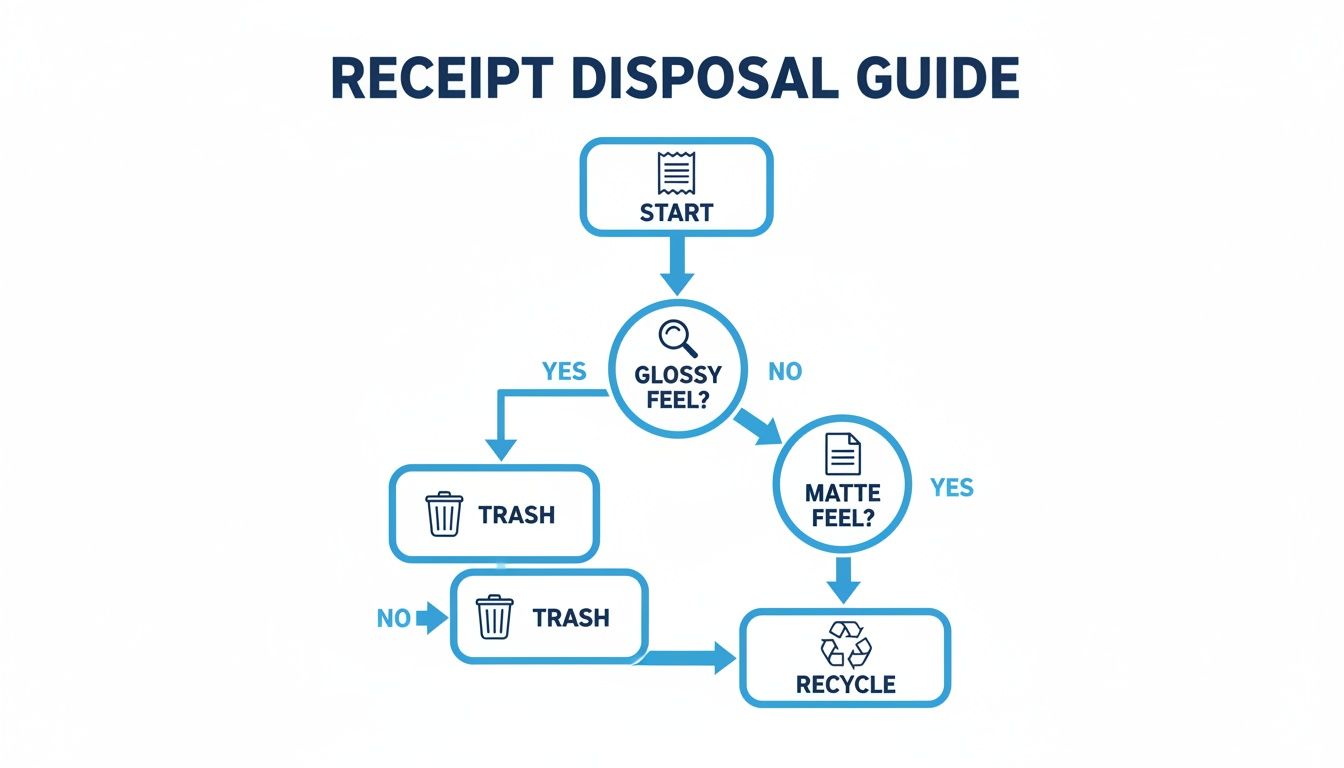
The visual guide really simplifies things: if the receipt is glossy and slick, it goes in the trash. If it’s matte and feels like regular paper, it can most likely be recycled.
When Even Paper Receipts Can’t Be Recycled
There’s an important exception to remember, though. Even a standard, recyclable paper receipt becomes trash if it’s heavily contaminated, which happens often when you travel. For example, grease from a takeaway meal, spilled coffee, or food residue can stain a receipt and make it non-recyclable. Those oils and contaminants ruin an entire batch of paper pulp during processing, much like the chemicals on a thermal receipt would.
So, when you’re clearing out your travel gear, like pulling an old snack wrapper from your packable daypack, make sure any paper receipts you’ve kept are clean before tossing them in the recycling. If they’re stained, the trash is the only place for them.
The Hidden Environmental Cost of Paper Receipts
Long before you even face the recycling bin dilemma, that little slip of paper has already run up a serious environmental tab. The real problem isn’t just about disposal—it’s about the massive amount of resources we burn through just to create these things in the first place.
Globally, billions of receipts are printed every year. Each one starts its life as a tree, consuming huge amounts of water and energy on its journey to the cash register. For a mindful traveler, every receipt you accept is another tiny vote for this incredibly resource-heavy cycle to continue.
The scale of this is staggering. In the United Kingdom alone, the production of 11.2 billion receipts a year churns out an estimated 28,000 tonnes (over 30,000 US tons) of CO2. To put that into a traveler’s perspective, that’s roughly the same carbon footprint as 10,000 transatlantic flights from London to New York.
From Forest to Landfill: A Costly Journey
The environmental hit doesn’t stop at production. While we’ve gotten pretty good at recycling paper—the U.S. recycled 68.2% of its paper in 2018, according to the EPA—receipts are the stubborn exception. With over half of them coated in unrecyclable BPA, they’re destined for either the landfill, where they can leach chemicals into the soil, or the incinerator. You can discover more insights about paper waste from the EPA.
Thinking about this bigger picture makes the simple act of refusing a paper receipt feel much more significant. Each time you opt for a digital version, you’re not just keeping contaminants out of the recycling stream; you’re helping dial down the demand that fuels this wasteful system from the very start.
The Traveler’s Role in Cutting Receipt Waste
As someone on the move, you have a unique chance to vote with your wallet and your actions. Politely refusing a receipt sends a small but clear signal to businesses that consumers are ready for more sustainable options. Every choice adds up. Keeping your travel documents organized digitally, using a reliable portable power bank to keep your phone charged for e-receipts, and consciously reducing your paper trail are all practical steps. The goal isn’t just about smarter disposal; it’s about eliminating the need for it altogether.
Your Guide to Managing Receipts While Traveling
We’ve all been there: the ever-growing collection of paper slips from cafes, train tickets, and souvenir shops that seems to multiply in our bags. When you’re on the move, the best way to handle receipts isn’t figuring out where to recycle them—it’s to stop collecting them in the first place. Going paperless is the simplest, most effective way to cut down on your travel footprint and keep your luggage blissfully clutter-free.

The easiest and most powerful habit you can build is to politely refuse paper receipts whenever you can. From big chains to tiny local shops, most businesses now offer a digital option. A simple, “Could I get that emailed?” or even “No receipt is fine, thank you,” stops the waste before it even starts. It’s a small shift that makes a surprisingly big difference, reducing resource consumption and your exposure to those pesky chemicals.
Embrace Digital Receipt and Expense Apps
For digital nomads, or anyone tracking expenses on the road, a pocketful of fading paper turns into a mess fast. Luckily, a whole ecosystem of apps now solves this exact problem. These tools help you go paperless and manage expenses anywhere without the hassle. Here’s a quick comparison of some of the best options for travelers.
Digital Receipt and Expense Apps for Travelers
| App Name | Key Feature for Travelers | Pricing Model | Best For |
|---|---|---|---|
| Expensify | Automated SmartScan technology for capturing receipt data with minimal effort. | Freemium with paid plans for teams and advanced features. | Business travelers and digital nomads needing detailed expense reports. |
| Evernote | Versatile note-taking with a powerful document scanner and searchable text recognition. | Freemium with paid tiers for more storage and features. | Travelers who want an all-in-one organizer for receipts, tickets, and notes. |
| Google Drive/Photos | Simple, free cloud storage with built-in scanning and photo organization. | Free with paid upgrades for more storage. | Minimalist travelers who just need a basic, reliable place to save receipt images. |
| Receipts by Wave | Free and unlimited receipt scanning that syncs with Wave’s accounting software. | Completely free. | Freelancers and small business owners who already use Wave for their finances. |
With these apps, you can scan and digitize any paper receipts you must take, then immediately toss the physical copy in the right bin. No more clutter, no more stress.
What to Do with Unavoidable Paper Receipts
Sometimes, you just can’t avoid a paper receipt. When that happens, remember the golden rule: if it’s that glossy, thermal paper, it goes in the trash. Don’t “wish-cycle” it by putting it in the paper recycling bin, because you’ll just end up contaminating the whole batch.
For the rare few receipts you absolutely need to keep—for a warranty, a potential return, or a major business expense—get a simple system in place. A small, dedicated pouch, like a cable organizer travel case, is perfect. It keeps those important slips clean, flat, and safely separate from everything else in your bag. For more minimalist packing ideas, check out our guide to building the perfect eco travel kit. Ultimately, the goal is to shift your mindset from managing paper to eliminating it. By always choosing the digital option and having a smart system for the rare exception, you’ll not only lighten your environmental load but also make your travels a whole lot smoother.
Key Takeaways on Recycling Receipts
- Most Receipts are Not Recyclable: The vast majority of receipts are printed on thermal paper coated with chemicals like BPA, making them unsuitable for recycling.
- The Fingernail Test: To check if a receipt is thermal paper, scratch it with your fingernail. If a dark mark appears, it’s thermal and belongs in the trash.
- Avoid Contamination: Never put thermal receipts in the recycling bin. Doing so can contaminate an entire batch of paper, rendering it unusable.
- Go Digital First: The best eco-friendly approach is to refuse paper receipts altogether. Always ask for an e-receipt or digital copy when possible.
- Proper Disposal is Key: If you must take a paper receipt, dispose of it correctly. Thermal receipts go in the trash; clean, matte paper receipts can be recycled.
- Use Apps for Organization: For expense tracking, use apps like Expensify to scan and digitize receipts, eliminating the need for physical copies.
Editor’s Pick: Best Tool for Going Paperless
Expensify
For travelers needing to track expenses, Expensify is a game-changer. Its SmartScan feature automatically captures all the key details from a receipt photo, saving you time and eliminating manual data entry. It supports multiple currencies and integrates with accounting software, making it ideal for digital nomads. This app helps you ditch paper clutter, stay organized on the road, and reduce your environmental footprint, all from your phone.
When you’re trying to manage expenses while living out of a backpack, the last thing you want is a pocketful of flimsy thermal paper receipts. Expensify is a brilliant tool for anyone on the move, but it really shines for digital nomads and slow travelers.
Its SmartScan feature is a game-changer. Just snap a photo of a receipt, and the app pulls out every detail automatically—the vendor, the date, and the total amount. It saves a massive amount of time, and the multi-currency support makes it incredibly useful for sorting out expenses from different countries without a headache. This app fits perfectly with a minimalist, rail-first travel style where cutting down on physical clutter is a top priority. Instead of stuffing fading paper into your wallet, you get a clean, organized, and secure digital record.
It also integrates smoothly with most accounting software, which makes it an essential part of a remote worker’s toolkit. By digitizing receipts the moment you get them, you’re not just keeping your bag organized; you’re also maintaining a zero-waste mindset and keeping your financial data safe. The ability to categorize everything and generate reports on the fly is more than just convenient—it streamlines your entire workflow and makes sure you’re ready for tax time without the usual last-minute scramble. Keeping a carry on backpack tidy becomes so much easier when paper clutter is gone, letting you focus on the journey itself. You can find more recommendations like this in our guide to digital nomad eco-friendly gear.
Low-Impact Travel Tools (Worth It)
Also, if you’re planning a trip and want to keep things simple, these tools help you travel smoother while staying mindful about impact.
Get an eSIM for reliable data → Disclosure: Partner link. No extra cost to you.
Pre-book a transfer for easy arrivals → Disclosure: Partner link. No extra cost to you.
Frequently Asked Questions About Recycling Receipts
Even with the basics covered, a few common questions pop up when you’re trying to do the right thing with receipts on the road. Let’s clear up the last few details.
Are there any eco-friendly receipt alternatives?
Yes, but they are not a perfect solution yet. Some companies are switching to phenol-free thermal paper, which is a step up because it avoids BPA and BPS. However, it’s still thermal paper and usually can’t be recycled. Since it looks identical to the toxic kind, the only truly sustainable alternative remains the digital e-receipt.
What if a store only offers paper receipts?
It happens. When a digital receipt isn’t an option, the best thing to do is take the paper copy and dispose of it properly. If you can tell it’s glossy thermal paper, it goes in the trash. This is much better than “wish-cycling”—tossing it in the recycling bin and accidentally contaminating an entire batch of good paper.
Can I compost or burn receipts?
Definitely not. Burning thermal receipts is a terrible idea, as it can release harmful BPA and BPS chemicals directly into the air. Composting is also a bad idea because adding these toxins to your compost pile means they will end up in the soil, potentially harming plants.
Are credit card slips also thermal paper?
Yes, almost always. Most credit card slips use the same shiny thermal paper (often BPA/BPS-coated) as itemized receipts. Therefore, treat them the same way: toss them in the trash, not the recycling bin, so they don’t contaminate recyclable paper.
How can I encourage businesses to go digital?
Your voice makes a difference. When you’re at the checkout, a simple “Do you offer email receipts?” or “I’d prefer a digital receipt, please” is all it takes. Politely explaining that you’re trying to reduce paper waste helps businesses see there’s real customer demand for greener options. It helps to have a good universal travel adapter so your phone is always ready to receive those e-receipts.
Join the Sustainable Work Movement
Want more rail-first itineraries, low-impact packing systems, and walkable base-city ideas?
*This article was fact-checked using sustainability data from the World Green Building Council, the Global Ecotourism Network, and peer-reviewed architecture studies. All partner links are vetted for compliance with sustainable business certifications.*
