
Exploring the best canada tourism spots doesn’t require a rental car or a heavy carbon footprint. This guide is designed for the modern traveler: the digital nomad, the remote worker, and the eco-conscious explorer seeking deep, regenerative experiences without compromising on adventure. We move beyond generic travel tips to offer a practical blueprint for sustainable Canadian journeys. Each destination featured is chosen not just for its beauty, but for its accessibility via low-impact transport like VIA Rail or regional bus networks.
Inside, you’ll find actionable advice for planning a car-free trip. We detail specific rail routes, identify the most walkable base cities and neighborhoods, and highlight low-impact activities that connect you with local ecosystems and communities. Learn the best seasons to visit for fewer crowds and lower costs, and discover unique stays that prioritize sustainability. This isn’t just a list of places; it’s a resource for building a mindful itinerary that respects both the environment and your travel budget. We focus on point-to-point routes and simple, efficient systems, from packing light with a reliable carry on backpack to choosing accommodations that support local economies. Prepare to see Canada’s iconic landscapes and vibrant cities through a fresh, responsible lens.
This article was fact-checked using sustainability data from the World Green Building Council, the Global Ecotourism Network, and peer-reviewed architecture studies. All partner links are vetted for compliance with sustainable business certifications.
1. Banff and Lake Louise, Alberta
Nestled in the Canadian Rockies, Banff National Park and Lake Louise are quintessential Canada tourism spots, offering an iconic landscape of turquoise lakes and dramatic peaks. This UNESCO World Heritage site is a leader in sustainable alpine exploration, making it ideal for the eco-conscious traveler. The park prioritizes low-impact access through extensive public transit and pedestrian-friendly villages, allowing you to experience its grandeur without a rental car.

For those committed to rail-first travel, the region is beautifully accessible. VIA Rail’s cross-country “The Canadian” route offers a scenic, low-carbon journey from Toronto or Vancouver. Opting for this 15-hour train ride from Vancouver can reduce your travel emissions by up to 90% compared to a domestic flight. Find great deals on flights with a tool like Aviasales if flying is your only option.
Low-Impact Itinerary Ideas
- Digital Nomad Base: Spend two weeks based in the walkable Banff townsite. Use the Parks Canada shuttle system for day trips to Lake Louise and Moraine Lake, keeping your footprint minimal.
- Eco-Couple’s Route: Use Banff as a 5-day hiking hub. Afterwards, continue west to Whistler via a low-emission coach service for a multi-destination, car-free adventure.
Sustainable Travel Tips
- Best Seasons: Visit in May or from September to October. These shoulder seasons offer fewer crowds and a lower environmental impact while trails and services remain accessible.
- Transit First: Rely on the Parks Canada HyperHub shuttle system. It connects Banff, Lake Louise, and Moraine Lake efficiently, eliminating the need for a personal vehicle.
- Walkable Stays: Book accommodation in the Banff townsite. This allows you to walk to restaurants and shops, avoiding the vehicle dependency of more isolated lakeside lodges.
- Pack Light: For a hiking-focused trip, pack a lightweight travel backpack and rent specialized gear like bear spray or trekking poles on-site. This reduces luggage weight and supports local businesses.
2. Vancouver: A Premier Canada Tourism Spot
As one of the key Canada tourism spots, Vancouver serves as the country’s primary Pacific gateway for low-impact travel planning. The city is a model of urban sustainability, highly walkable, bikeable, and connected via the SkyTrain rapid transit system. This makes it a perfect 3-to-7-day base for eco-conscious travelers looking to combine city exploration with easy mountain access. Upon arrival, you can immediately board the SkyTrain from the airport, avoiding rental cars entirely.
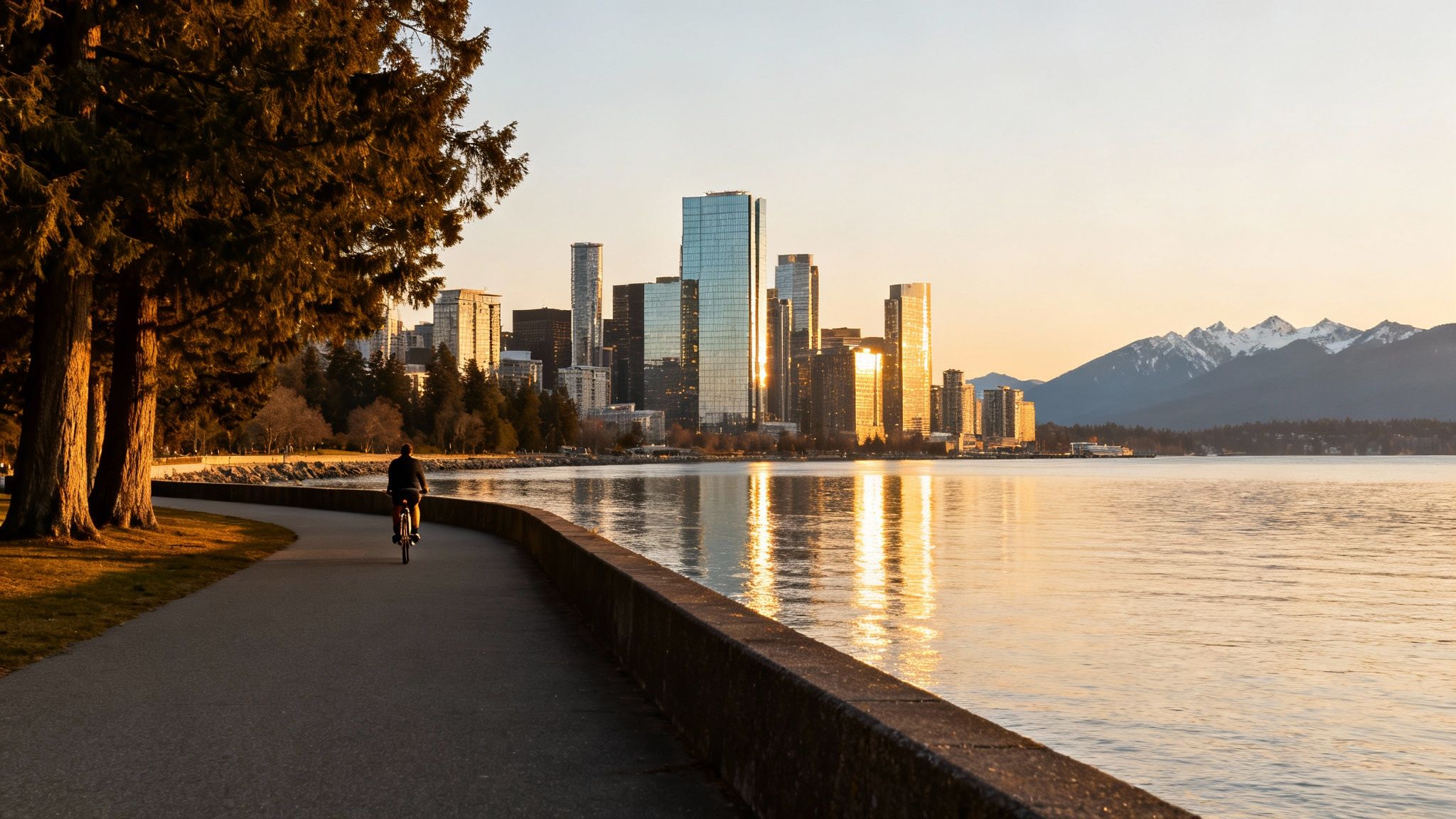
This focus on sustainable transit, popularized by Tourism Vancouver’s initiatives, makes car-free trips effortless. From Vancouver, you can seamlessly connect to onward rail and coach services. For instance, the Rocky Mountaineer offers a luxury low-impact rail experience starting from the city, while the Amtrak Cascades coach service provides a low-carbon alternative to flying for cross-border trips to Seattle.
Low-Impact Itinerary Ideas
- Remote Worker Base: Establish a 4-week base in the walkable Kitsilano neighborhood. Use co-working spaces and access local mountain trails via the SkyTrain and public bus system.
- Car-Free Urban Explorer: Arrive at Vancouver International Airport (YVR) and take the SkyTrain directly downtown. Spend 7 days exploring the city car-free before taking a coach to Whistler for a multi-destination adventure.
Sustainable Travel Tips
- Best Seasons: Visit during the shoulder seasons of May-June or September-October. You’ll find pleasant weather for exploring and fewer crowds than in the peak summer months.
- Transit First: Purchase a monthly SkyTrain pass for longer stays (approx. $105 CAD, or $77 USD) to save significantly over daily fares. For shorter trips, a reloadable Compass Card is ideal.
- Walkable Stays: Book accommodation in neighborhoods like Main Street or Kitsilano. This allows you to walk to local cafes, shops, and parks, minimizing your reliance on transit.
- Pack Light: For urban and light trail use, a packable daypack is sufficient. A good rain jacket is essential year-round, but other specialized gear can be rented locally.
3. Sea-to-Sky Corridor, British Columbia
Stretching from Vancouver to Pemberton, the Sea-to-Sky Corridor is one of the most scenic Canada tourism spots, offering a breathtaking journey through coastal forests, mountain passes, and vibrant communities. This route is an excellent choice for slow, sustainable travel, prioritizing local economies and outdoor recreation over mass tourism. Its accessibility via regional coach services allows for a multi-destination, car-free experience that significantly reduces your carbon footprint.
The corridor is designed for point-to-point exploration. Coach operators like the YVR Skylynx and Epic Rides offer frequent, low-emission services connecting Vancouver, Squamish, and Whistler. This makes it simple to build an itinerary that supports smaller villages and artisan businesses, moving beyond the typical day-trip model and embracing a more regenerative approach to travel.
Low-Impact Itinerary Ideas
- Slow-Travel Route: Take a coach from Vancouver to Whistler for a few days, then continue to Pemberton. Stay in local guesthouses, cycle the valley trails, and explore the region’s agricultural scene.
- Adventure Day-Trip: Use a Vancouver base for a coach trip to Squamish. Spend the day hiking or climbing in Stawamus Chief Provincial Park and return in the evening, minimizing accommodation changes.
Sustainable Travel Tips
- Best Seasons: Plan your visit for June or September. These months offer pleasant weather for outdoor activities, fewer crowds than peak summer, and full operational schedules for coach services.
- Coach First: Rely on regional coach operators for inter-city travel. Booking in advance is recommended, especially during peak seasons, to secure your spot and avoid a last-minute rental car.
- Village Stays: Opt for accommodation in smaller communities like Pemberton or Function Junction in Whistler. This distributes tourism revenue and offers a more authentic, less crowded experience.
- Pack Smart: Travel with an anti theft backpack and rent specialized gear like climbing equipment or mountain bikes locally. This supports the community and simplifies coach travel.
4. Niagara Falls and the Golden Horseshoe
As one of North America’s most popular destinations, Niagara Falls and the Golden Horseshoe region offer surprising advantages for sustainable travel. This area, which includes the Toronto-Hamilton-Niagara corridor, is one of the best Canada tourism spots for car-free exploration. Excellent rail connectivity via GO Transit and VIA Rail makes multi-city itineraries seamless, eliminating the need for a rental car.
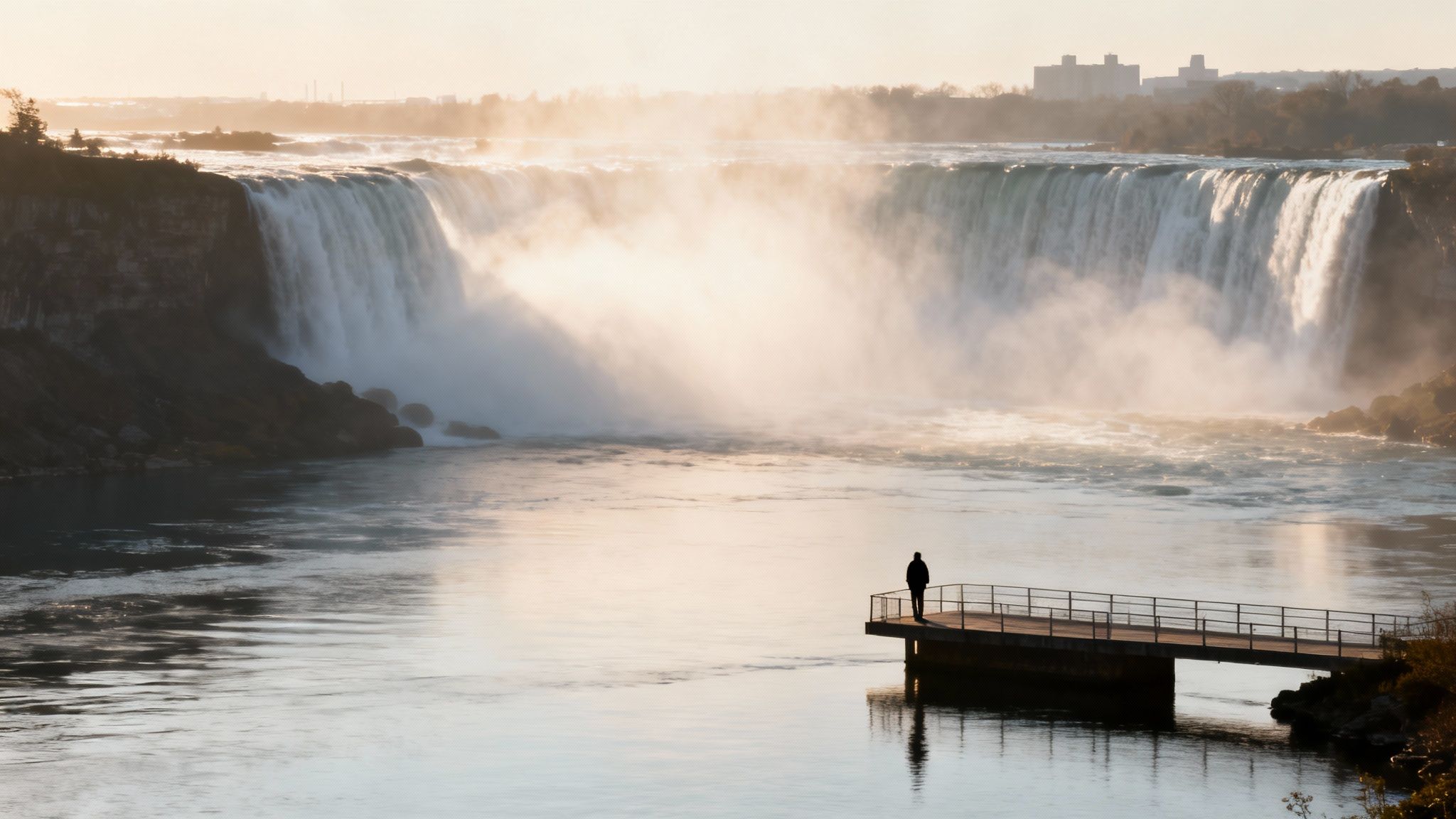
The region’s infrastructure supports low-impact tourism through walkable districts like Clifton Hill and the historic Old Town Niagara-on-the-Lake. This setup allows travelers to easily connect urban exploration in Toronto with the natural wonder of the falls and the charm of nearby wine regions, all using efficient public transit. Booking your stay through a platform like Trip.com can help you find centrally located accommodations.
Low-Impact Itinerary Ideas
- Digital Nomad Base: Set up a two-week Ontario base. Spend four days in Toronto, three in Niagara, and three in Hamilton, using a GO Transit regional pass for effortless travel between cities.
- Eco-Couple’s Route: Plan a slow-travel rail journey starting from Toronto. Take VIA Rail to Niagara Falls, then use a coach service to explore the Grimsby wine region for a completely car-free vacation.
Sustainable Travel Tips
- Best Seasons: Visit in May or September. You’ll find pleasant weather, fewer crowds, and prices up to 40% lower than in the peak months of July and August.
- Transit First: Purchase a GO Transit regional pass (approx. $150-200 USD per week) for unlimited travel. This is the most cost-effective and eco-friendly way to explore the Golden Horseshoe.
- Walkable Stays: Book accommodation in Old Town Niagara-on-the-Lake. It’s a 25-minute transit ride from the falls but offers a quieter, walkable heritage atmosphere.
- Pack Light: For a multi-city trip, use packing cubes to keep your belongings organized in a carry-on. This makes navigating train stations and public transit much easier.
5. Montreal and Quebec City Rail Loop
As premier Canada tourism spots, Montreal and Quebec City offer a deep dive into French-Canadian culture with unparalleled walkability. This rail loop is perfect for a car-free itinerary, connecting two of Canada’s most historic and vibrant urban centers. The entire region is a hub for sustainable, culturally rich travel, with Quebec City’s Old Town recognized as a UNESCO World Heritage site and Montreal’s neighborhoods offering endless pedestrian-friendly exploration.
The connection between these cities is exceptionally low-carbon and efficient. VIA Rail’s frequent service covers the distance in just three hours, making it easy to travel between them without a car. This convenient rail link allows for flexible, multi-city trips, ideal for digital nomads or couples seeking a slow-travel experience focused on cultural immersion rather than transit logistics.
Low-Impact Itinerary Ideas
- Digital Nomad Base: Settle in Montreal’s Plateau Mont-Royal neighborhood for three weeks. Use a metro pass and the Bixi bike-share system for local travel, exploring co-working spaces and cafes.
- Eco-Couple’s Route: Plan a 10-day rail journey. Spend five days exploring Montreal’s distinct boroughs, then take the train to Quebec City for another five days of historical discovery, all without renting a vehicle.
Sustainable Travel Tips
- Best Seasons: Visit in May or September. These months provide pleasant weather for walking, fewer crowds, and lower prices on accommodations and activities.
- Transit First: Rely on Montreal’s STM metro and Quebec City’s RTC bus system. For inter-city travel, book your VIA Rail ticket in advance.
- Walkable Stays: Book lodging in Montreal’s Plateau or Mile End, or within the walls of Old Quebec City, to keep restaurants, shops, and attractions within easy walking distance.
- Pack Light: For a city-focused trip, a carry on backpack is sufficient. Pack a reusable water bottle to refill at public fountains, reducing plastic waste and saving money.
6. Toronto and the Great Lakes Region
Toronto is not just one of Canada’s top tourism spots; it’s the country’s primary rail hub, making it a perfect gateway for eastern North American exploration. The city’s extensive walkability and robust transit infrastructure support long-stay, car-free itineraries. Its strategic position allows for seamless multi-city trips connecting Montreal, Niagara Falls, and the Canadian Maritimes via VIA Rail, appealing to digital nomads and slow travelers.

This destination is ideal for those committed to rail-first travel. Arriving via VIA Rail’s Corridor service or Amtrak from the U.S. brings you directly to Union Station, placing you in the heart of the city and eliminating the need for a car rental entirely. This approach significantly reduces your carbon footprint compared to flying into one of Toronto’s busy airports. Stay connected with a reliable eSIM from providers like Airalo.
Low-Impact Itinerary Ideas
- Digital Nomad Base: Establish a 3-week base in the walkable St. Lawrence or Distillery District neighborhoods. Use a TTC pass for city exploration and GO Transit for day trips to Niagara Falls and Hamilton.
- Eco-Couple’s Route: Use Toronto as a 5-day rail hub. Arrive from the U.S. via Amtrak, explore the city, then depart to Montreal via VIA Rail for a 2-week eastern Canada adventure.
Sustainable Travel Tips
- Best Seasons: Visit in May or September. These months offer a great balance of pleasant weather, lower prices, and fewer crowds than the summer peak.
- Transit First: A weekly TTC pass (currently $43.75 USD / $57.25 CAD) offers excellent value for stays of five days or more. Consider Bike Share Toronto for shorter trips to reduce transit reliance.
- Walkable Stays: Book accommodation in downtown or waterfront neighborhoods like the Distillery District to maximize walkability and minimize transit costs.
- Pack Light: For a multi-city train journey, a trusty set of compression packing cubes is essential. It keeps you mobile and avoids checked luggage fees on connecting transportation.
7. Whistler Blackcomb, British Columbia
Just 75 miles (120 km) north of Vancouver, Whistler Blackcomb is North America’s largest ski resort and a premier year-round mountain destination. It stands out as one of the top Canada tourism spots for eco-conscious travelers due to its exceptional low-carbon connectivity and pedestrian-first design. The resort village is intentionally car-free, featuring walkable plazas and efficient shuttles that make a rental car entirely unnecessary.
This destination is a prime example of integrated, sustainable transport. Excellent coach services from Vancouver provide a scenic, low-emission alternative to driving. This connectivity allows for seamless 10 to 14-day British Columbia mountain itineraries that can begin with a train arrival into Vancouver, eliminating the need for domestic flights and prioritizing a slower, more immersive travel experience.
Low-Impact Itinerary Ideas
- Digital Nomad Base: Settle into Whistler for the summer (June-August) to balance remote work with alpine hiking. Use weekend coach trips to access Vancouver’s urban amenities, all without a car.
- Eco-Couple’s Route: Combine a 5-day urban exploration in Vancouver with a 3-day alpine hiking trip in Whistler, using only the coach service for a stress-free, multi-destination adventure.
Sustainable Travel Tips
- Best Seasons: Visit in June, July, or September for an ideal mix of pleasant weather, open trails, and lower prices compared to the peak ski season.
- Transit First: Leverage the efficient coach services from Vancouver and rely on the free village shuttle system once you arrive to access trailheads and amenities.
- Walkable Stays: Book accommodation directly within Whistler’s central car-free village. This avoids the need for shuttles or taxis required by more isolated mountainside lodges.
- Pack Light: For alpine hiking, pack essentials like a universal travel adapter in your bag and rent specialized gear like trekking poles locally. This reduces luggage weight on coach transport and supports the local economy.
8. Whistler to Pemberton: The Sea-to-Sky Highway Walkable Circuit
The Sea-to-Sky corridor offers one of the most scenic Canada tourism spots, best explored without a car. This 25-mile (40 km) route connects Whistler and Pemberton via a reliable coach service, creating a walkable circuit focused on smaller villages, farmland, and local artisan culture. It’s an ideal setup for slow travelers and digital nomads who want to experience authentic mountain life beyond the main resort hub.
This car-free approach prioritizes local immersion and reduces road congestion in a sensitive ecosystem. Regular coach services like the Whistler-Pemberton Commuter make it simple to travel between the towns. This allows you to explore the distinct character of each community, from Whistler’s vibrant village to Pemberton’s pastoral charm, all while keeping your carbon footprint low.
Low-Impact Itinerary Ideas
- Digital Nomad Base: Spend a week based in Pemberton, using it as a quiet hub for remote work. Explore the area’s cycling routes and farm-to-table cafes, taking the coach to Whistler for occasional day trips.
- Eco-Couple’s Route: Plan a slow-travel loop. Stay two nights in Whistler for mountain access, then take the coach to Pemberton for two nights of peaceful farm stays and local brewery visits before returning.
Sustainable Travel Tips
- Best Seasons: Visit in June or September. These shoulder months provide pleasant weather for outdoor activities but with fewer crowds than the peak summer season.
- Coach First: Book your coach travel between Whistler and Pemberton in advance, especially during weekends. This ensures your spot and supports the local transit system.
- Walkable Stays: Choose accommodation in Pemberton’s village center or Whistler Village. This allows for easy, car-free access to shops, trails, and transit stops.
- Pack Light: For easy coach travel, use a carry on luggage piece and rent specialized gear like bikes or hiking poles in Pemberton or Whistler. This supports local businesses and simplifies transit.
9. Canadian Maritimes: Halifax & Bay of Fundy
The Canadian Maritimes blend coastal charm with authentic urban heritage, making them standout Canada tourism spots for slow travel. Halifax serves as a vibrant, walkable hub, while the Bay of Fundy showcases the world’s highest tides. This region is ideal for car-free exploration, connecting a historic port city with dramatic natural wonders. It champions a more deliberate pace of travel, focusing on local culture and low-impact discovery.

For travelers committed to sustainable transit, the Maritimes are wonderfully accessible. VIA Rail’s “The Ocean” route provides a scenic, overnight journey from Montreal to Halifax, turning the trip itself into a memorable experience. This rail connection is central to a car-free Maritime adventure, allowing seamless entry into the region’s primary transport hub. From Halifax, regional coach services provide efficient links to surrounding points of interest.
Low-Impact Itinerary Ideas
- Digital Nomad Base: Set up a 3-week base in a walkable Halifax neighborhood. Combine remote work with weekend coach trips to explore Lunenburg, Peggy’s Cove, and the Annapolis Valley.
- Eco-Couple’s Route: Plan a 14-day itinerary beginning with VIA Rail’s “The Ocean” to Halifax. Use the city as a 5-day hub, then take a coach to explore the Bay of Fundy’s tidal landscape.
Sustainable Travel Tips
- Best Seasons: Visit from May to June or September to October. These shoulder seasons offer pleasant weather, fewer crowds, and a more sustainable balance for local communities.
- Transit First: Establish Halifax as your base and rely on Maritime Bus for day trips. Their network connects to key destinations like the Bay of Fundy, eliminating the need for a rental car.
- Walkable Stays: Book accommodation on the Halifax peninsula. This central location lets you explore the waterfront, museums, and restaurants entirely on foot.
- Pack Light: A collapsible water bottle is perfect for a multi-stop Maritime trip. This helps you stay hydrated and reduce plastic waste while exploring.
10. Prince Edward Island (Confederation Trail and Coastal Routes)
Prince Edward Island offers a unique, slow-travel approach to experiencing Canada’s Maritime charm. Its rolling countryside and charming coastal villages are perfectly suited for car-free exploration, making it one of the most distinctive Canada tourism spots for cyclists and walkers. The island’s backbone is the Confederation Trail, a decommissioned railway line converted into a 279-mile (449-kilometer) path, offering a safe and scenic route away from vehicle traffic.
This destination is ideal for multi-day, luggage-light itineraries. Regional coach services, like Maritime Bus, connect PEI with Halifax and Moncton, allowing for seamless, low-carbon travel throughout the region. This connectivity makes it simple to combine a peaceful island cycling trip with urban exploration in neighboring provinces without ever needing a rental car.
Low-Impact Itinerary Ideas
- Cyclist’s Loop: Complete a 5-day Confederation Trail circuit, staying in guesthouses along the way. Travel with just a packable daypack to keep your journey light and agile.
- Maritime Slow Travel: Spend 10-14 days pairing PEI with Halifax. Use the Maritime Bus coach service for a scenic, low-emission connection, creating a comprehensive, car-free Maritime experience.
Sustainable Travel Tips
- Best Seasons: Visit from May to June or in September. These shoulder seasons provide pleasant weather for cycling, fewer crowds on the trail, and lower accommodation prices.
- Rent Locally: Rent a bike directly on the island to support local businesses and avoid the hassle of transporting your own. Many outfitters offer multi-day rentals and pannier bags.
- Advance Bookings: Reserve your spot on Maritime Bus coaches well in advance, especially during peak and shoulder seasons, to secure your low-carbon travel between provinces.
- Pack Ultra-Light: When cycling the trail and staying in shared guesthouses, pack minimally. A quick dry travel towel and a solid shampoo bar save space and reduce waste.
11. Lake Louise and Moraine Lake Circuit
Located within Banff National Park, the Lake Louise and Moraine Lake Circuit offers some of the most photographed and iconic Canada tourism spots. The area is famous for its brilliant turquoise glacial waters set against the dramatic backdrop of the Valley of the Ten Peaks. For eco-conscious travelers, this circuit is a model of sustainable access, utilizing an efficient shuttle system and well-maintained trails to eliminate the need for a car rental.
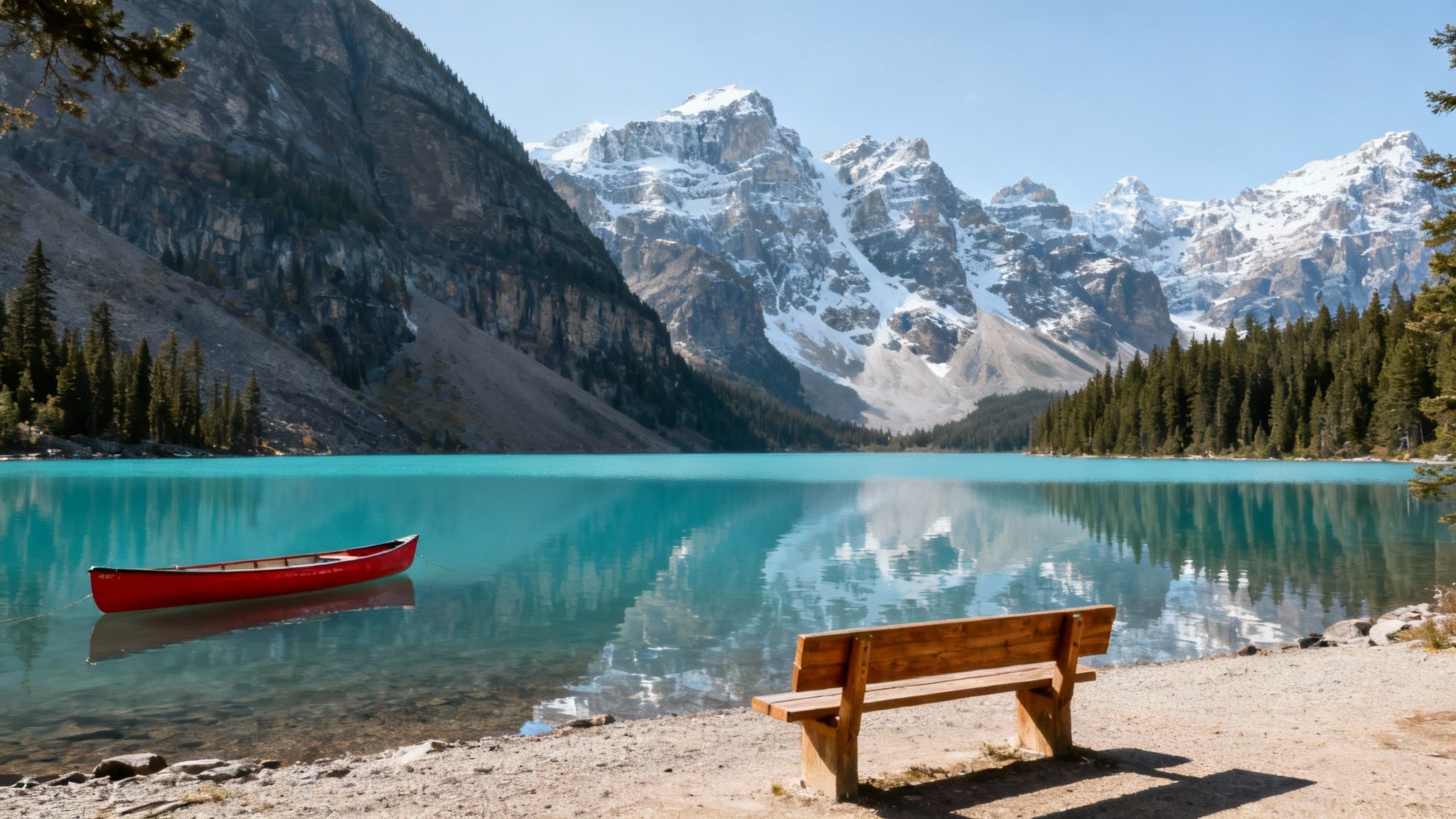
This destination is ideal for those committed to car-free travel. Major rail operators like VIA Rail and Rocky Mountaineer provide scenic, low-carbon journeys into Banff from both Vancouver and Calgary. From there, the Roam Transit system and Parks Canada shuttles provide seamless connections, allowing you to create a complete itinerary from arrival to departure without ever getting behind the wheel.
Low-Impact Itinerary Ideas
- Digital Nomad Duo-Base: Combine a 3-day alpine hiking stay in Lake Louise with a 4-day base in the Banff townsite. Use the efficient Roam Transit shuttle system to connect the two hubs for a car-free, dual-destination experience.
- Rail-to-Lodge Retreat: Book a Rocky Mountaineer package from Vancouver to Banff and Lake Louise. These all-inclusive options often include lodge stays and transfers, creating a seamless, low-impact luxury trip.
Sustainable Travel Tips
- Best Seasons: Plan your visit for May or September. You’ll find a better balance of trail accessibility and lower accommodation prices while avoiding the peak crowds of July and August.
- Transit First: Rely entirely on the Roam Transit and Parks Canada shuttle systems. Book your shuttle reservation in advance to guarantee a spot.
- Walkable Stays: Choose accommodation in the Lake Louise village center. This allows you to walk to amenities and shuttle stops, avoiding the dependency on additional transport required by more isolated lodges.
- Full-Day Hike: The Plain of Six Glaciers Trail (8.7 miles / 14 km round-trip) is a perfect full-day alpine adventure. Packing snacks and biodegradable soap for the journey helps you avoid single-use plastics and stay fresh.
12. Jasper National Park and the Icefields Parkway
Known for its rugged wilderness, Jasper National Park and the connecting Icefields Parkway offer one of North America’s most scenic alpine journeys. As top Canada tourism spots, they provide a less crowded alternative to Banff while prioritizing sustainable exploration. The region’s gateway is the walkable Jasper townsite, which supports car-free stays focused on hiking and wildlife viewing.

The area is a highlight for slow travel enthusiasts committed to low-carbon transport. VIA Rail’s iconic “The Canadian” route offers a spectacular, multi-day train journey from Toronto or Vancouver directly to Jasper. This 40-hour trip from Toronto isn’t just transport; it’s an immersive experience that significantly cuts emissions compared to flying.
Low-Impact Itinerary Ideas
- Digital Nomad Base: Settle in Jasper for two weeks. Combine your remote work sprints with daily hikes and use local coach tours for sightseeing, all accessible from a central, walkable base.
- Eco-Couple’s Route: Plan a 10-day Rocky Mountain rail adventure. Take VIA Rail from Toronto to Jasper (40 hours), explore Jasper for 4 days, then travel the Icefields Parkway by coach to Lake Louise for a 3-day stay.
Sustainable Travel Tips
- Best Seasons: Visit in May or September. You’ll find better prices, fewer people, and pleasant weather, reducing strain on local infrastructure during the peak summer months.
- Train First: Book your VIA Rail journey 2-3 months in advance, especially for sleeper cars. Treat the long train ride as a core part of your vacation.
- Walkable Stays: Choose accommodation in the Jasper townsite. This central location allows you to access trails, shops, and tour departures on foot.
- Pack Light: For the VIA Rail journey, pack laundry detergent sheets and rent larger alpine gear like hiking poles in Jasper to minimize luggage and support local outfitters.
Top 12 Canadian Tourism Spots Comparison
Banff and Lake Louise, Alberta
| 🔄 Complexity | ⚡ Resources Required | 📊 Expected Outcomes / ⭐ Quality | 💡 Ideal Use Cases |
|---|---|---|---|
| Moderate — shuttle & seasonal logistics | Medium — park passes, shuttle/rail bookings, lodge gear | High 📊⭐ — iconic alpine scenery, extensive trails, lower transport emissions via rail/shuttle | 4–7 day alpine hiking base, rail-first scenic itineraries, photography |
Vancouver
| 🔄 Complexity | ⚡ Resources Required | 📊 Expected Outcomes / ⭐ Quality | 💡 Ideal Use Cases |
|---|---|---|---|
| Low — urban transit straightforward | Medium — SkyTrain pass, bike access, higher accommodation costs | High 📊⭐ — walkable city, strong rail/coach gateway, low urban transport emissions | 3–7 day urban base, digital nomads, gateway for rail/coastal trips |
Sea-to-Sky Corridor
| 🔄 Complexity | ⚡ Resources Required | 📊 Expected Outcomes / ⭐ Quality | 💡 Ideal Use Cases |
|---|---|---|---|
| Low–Moderate — coach schedules, season-sensitive | Low — regional coach tickets, local stays, light gear | Medium 📊⭐ — scenic coastal/mountain mix, village slow-travel, reduced car use | Multi-day excursions from Vancouver, village stays, outdoor activities |
Niagara Falls & Golden Horseshoe
| 🔄 Complexity | ⚡ Resources Required | 📊 Expected Outcomes / ⭐ Quality | 💡 Ideal Use Cases |
|---|---|---|---|
| Low — frequent regional rail & transit | Low–Medium — GO/VIA passes, local transit | High 📊⭐ — major attractions, walkable historic towns, easy multi-city loops | Short trips from Toronto, sightseeing, wine-region day trips |
Montreal ⇄ Quebec City Rail Loop
| 🔄 Complexity | ⚡ Resources Required | 📊 Expected Outcomes / ⭐ Quality | 💡 Ideal Use Cases |
|---|---|---|---|
| Low — simple VIA Rail + metro logistics | Low — VIA tickets, metro/Bixi passes, modest lodging | High 📊⭐ — strong cultural immersion, excellent walkability, cost-effective rail | 10–14 day cultural rail loop, digital-nomad base cities |
Toronto & Great Lakes Region
| 🔄 Complexity | ⚡ Resources Required | 📊 Expected Outcomes / ⭐ Quality | 💡 Ideal Use Cases |
|---|---|---|---|
| Low–Moderate — multi-city routing via hub | Medium — TTC pass, VIA connections, higher lodging costs | High 📊⭐ — urban exploration, rail hub access for multi-city itineraries | Urban base for 1–2 weeks, multi-city eastern Canada travel |
Whistler Blackcomb, BC
| 🔄 Complexity | ⚡ Resources Required | 📊 Expected Outcomes / ⭐ Quality | 💡 Ideal Use Cases |
|---|---|---|---|
| Moderate — coach timing, resort seasonality | Medium — coach fare, village lodging, trail/ski gear | High 📊⭐ — alpine recreation, car-free village, strong hiking/ski options | Mountain stays (3–7 days), summer hiking or ski trips combined with Vancouver |
Whistler → Pemberton Circuit
| 🔄 Complexity | ⚡ Resources Required | 📊 Expected Outcomes / ⭐ Quality | 💡 Ideal Use Cases |
|---|---|---|---|
| Low — short corridor, coach-dependent | Low — coach tickets, guesthouses, local rentals | Medium 📊⭐ — quieter village experiences, farm visits, cycling routes | Slow-travel loop, farm-to-table stays, week-long local exploration |
Canadian Maritimes: Halifax & Bay of Fundy
| 🔄 Complexity | ⚡ Resources Required | 📊 Expected Outcomes / ⭐ Quality | 💡 Ideal Use Cases |
|---|---|---|---|
| Moderate — limited train frequency, coach planning | Low–Medium — VIA Ocean/coach bookings, regional lodging | Medium–High 📊⭐ — coastal scenery, unique tides, affordable stays | 7–14 day car-free Maritime itineraries, coastal day trips by coach |
Prince Edward Island (Confederation Trail)
| 🔄 Complexity | ⚡ Resources Required | 📊 Expected Outcomes / ⭐ Quality | 💡 Ideal Use Cases |
|---|---|---|---|
| Low — bike/coach centric logistics | Low — bike rental, guesthouses, coach links | Medium 📊⭐ — car-free cycling, rural charm, low overtourism | Multi-day cycling on Confederation Trail, slow rural stays |
Lake Louise & Moraine Lake Circuit
| 🔄 Complexity | ⚡ Resources Required | 📊 Expected Outcomes / ⭐ Quality | 💡 Ideal Use Cases |
|---|---|---|---|
| Moderate — seasonal shuttle queues & bookings | Medium — Roam Transit, high-cost accommodation, hiking gear | High 📊⭐ — iconic lakes, intensive hiking, heavy peak-season demand | 2–4 day alpine circuits, concentrated hiking/photography trips |
Jasper National Park & Icefields Parkway
| 🔄 Complexity | ⚡ Resources Required | 📊 Expected Outcomes / ⭐ Quality | 💡 Ideal Use Cases |
|---|---|---|---|
| Moderate–High — long train/coach logistics, remote services | Medium — VIA Rail Canadian bookings, coach tours, lodging | High 📊⭐ — expansive alpine scenery, glacier access, quieter than Banff | Multi-day scenic rail journeys, coach-based mountain circuits |
Low-Impact Travel Tools (Worth It)
Also, if you’re planning a trip and want to keep things simple, these tools help you travel smoother while staying mindful about impact.
Get an eSIM for reliable data → Disclosure: Partner link. No extra cost to you.
Pre-book a transfer for easy arrivals → Disclosure: Partner link. No extra cost to you.
Key Takeaways
- Prioritize Rail and Public Transit: Canada’s rail network, particularly VIA Rail’s Corridor and The Canadian routes, offers a scenic and lower-carbon alternative to domestic flights for accessing top tourism spots.
- Choose Walkable Hubs: Base your stays in walkable neighbourhoods like Vancouver’s Kitsilano or Montreal’s Plateau Mont-Royal to minimize local transit emissions and experience daily life.
- Embrace Low-Impact Activities: Opt for activities like hiking, cycling, kayaking, and guided eco-tours that connect you with nature without causing harm.
- Travel in the Shoulder Seasons: Visiting in spring or fall often means fewer crowds, lower prices, and less strain on local infrastructure and ecosystems.
- Pack for Simplicity and Sustainability: A well-organized carry on backpack with items like a solid shampoo bar, laundry detergent sheets, and packing cubes reduces waste and improves mobility.
- Support Regenerative Tourism: Seek out accommodations and tour operators with recognized eco-certifications or those that actively contribute to local conservation and community projects.
Editor’s Pick: The Best Low-Impact Canadian Route
For the ultimate blend of iconic scenery, accessibility, and sustainable travel infrastructure, the Montreal to Quebec City Rail Loop stands out. VIA Rail’s Corridor service offers frequent, comfortable, and relatively low-emission transit between two of Canada’s most historic and walkable cities.
Once there, you can explore centuries of history entirely on foot or by using efficient public transit. This route requires minimal planning for maximum impact, making it the perfect entry point for anyone new to car-free Canadian travel. The seamless connection between urban exploration and rich cultural heritage makes it our top recommendation.
Frequently Asked Questions about Canada Tourism Spots
What is the most visited tourism spot in Canada?
Niagara Falls, located in Ontario, is widely considered the most visited tourist attraction in Canada, drawing millions of visitors each year to witness its powerful cascades. Its easy accessibility from Toronto via rail and coach makes it a popular destination.
What is the best month to visit Canada?
The best time to visit depends on the region and your desired activities. However, September is often ideal. It offers pleasant, mild weather across most of the country, fewer crowds than the summer peak, and stunning fall foliage in eastern provinces.
What are the top 3 tourist attractions in Canada?
The top three attractions are typically considered to be Niagara Falls for its natural wonder, Banff National Park for its breathtaking Rocky Mountain scenery and alpine lakes, and Old Quebec City for its historic European charm and status as a UNESCO World Heritage site.
Is Canada an expensive country to visit?
Canada can be moderately expensive, similar to the United States and Western Europe. Major cities like Vancouver and Toronto have high accommodation costs. However, you can save money by traveling in the shoulder season (May/June or September/October), using public transit, and opting for self-catering stays.
How can I travel in Canada without a car?
Canada is very navigable without a car by using VIA Rail for long-distance train travel between major cities, regional coach services like Maritime Bus or Red Arrow, and excellent public transit systems within cities like Vancouver’s SkyTrain and Montreal’s Metro.
Do I need travel insurance for Canada?
Yes, it is highly recommended. Healthcare in Canada is expensive for non-residents, and unforeseen circumstances like trip cancellations or lost luggage can be costly. Securing a policy from a provider like Visitors Coverage is a wise precaution for any trip.
What should I pack for a sustainable trip to Canada?
Pack light and smart. Essential items include a reusable water bottle to reduce plastic waste, a solid shampoo bar to save space and liquids, packing cubes for organization, and a packable daypack for excursions. Also, bring layered clothing to adapt to changing weather conditions.
How do I stay connected to the internet while traveling in Canada?
To avoid high roaming charges, purchasing an eSIM before your trip is the most convenient option. Companies like Airalo or Yesim offer affordable data plans that can be activated instantly upon arrival, ensuring you have reliable internet access.
Join the Sustainable Work Movement
Want more rail-first itineraries, low-impact packing systems, and walkable base-city ideas?
