

When you hear the term carbon-neutral travel, the simplest way to think about it is like a planetary budget. Every flight you take, every hotel you stay in, and every activity you do is a carbon ‘spend.’ To get back to neutral, you have to balance that budget by ‘saving’ an equal amount somewhere else, usually through a mix of direct reductions and carbon offsets.
It’s about taking responsibility for the emissions your journey creates. This ensures that, on balance, you’re not adding extra carbon to the atmosphere. Traveling this way is a key part of the larger movement towards a more sustainable world.
The goal isn’t to be perfect overnight, but to start making more conscious decisions. Before you can balance your carbon budget, you have to understand what you’re spending. This is where measurement comes in. Carbon footprint calculators are useful tools that translate your travel plans—flights, train rides, hotel stays—into a tangible number, usually measured in tons of CO₂. Seeing that number turns an abstract concept into a real starting point for making changes.
This all fits into the bigger picture of what it means to be a thoughtful traveler, which you can read more about in our guide to sustainable travel.
Shifting From Spending to Saving
Once you have a handle on your carbon spend, the real work begins: reducing it. The most effective way to get closer to carbon neutrality is to slash your initial emissions as much as you can. This is the “saving” side of your budget. It’s also where you have the most power.
Here are a few high-impact ways to start saving:
- Prioritize Rail Travel: Choosing a train over a short-haul flight is one of the single biggest carbon reductions a traveler can make. It’s a game-changer.
- Choose Efficient Accommodations: Look for hotels or stays that are certified for their sustainable practices. This includes running on renewable energy or having serious recycling programs.
- Pack Mindfully: You can cut down on a surprising amount of waste by packing a reusable water bottle, a solid shampoo bar, and biodegradable soap. This simple habit helps you avoid single-use plastics, which have their own significant carbon lifecycle.
- Travel Slower: Spending more time in one place isn’t just a more meaningful way to travel. It also drastically cuts your transportation emissions.
By focusing on these reduction strategies first, you shrink the amount of carbon that needs to be balanced later through offsets. This proactive approach is the absolute cornerstone of responsible, low-impact travel.
Carbon Neutral vs Net-Zero vs Carbon Negative
When you see hotels, airlines, or tour operators making green claims, it’s easy to get lost in the jargon. Words like carbon-neutral, net-zero, and carbon negative get thrown around a lot. However, they mean very different things. Knowing the difference is key to spotting genuine commitment versus clever marketing.
Think of these terms as different levels of climate ambition. Each one represents a unique approach to tackling a traveler’s footprint. While they all aim to deal with carbon emissions, the strategies and the effort required vary significantly. Once you know what to look for, you can make much smarter choices on the road.
This is also a good moment to zoom out and understand the wider impact of your travel decisions. To learn more, check out our guide on the differences between an environmental footprint and a carbon footprint, which explains how the two are connected.
This flowchart breaks down the journey from making a travel choice to achieving a carbon-neutral balance through reduction and offsetting.
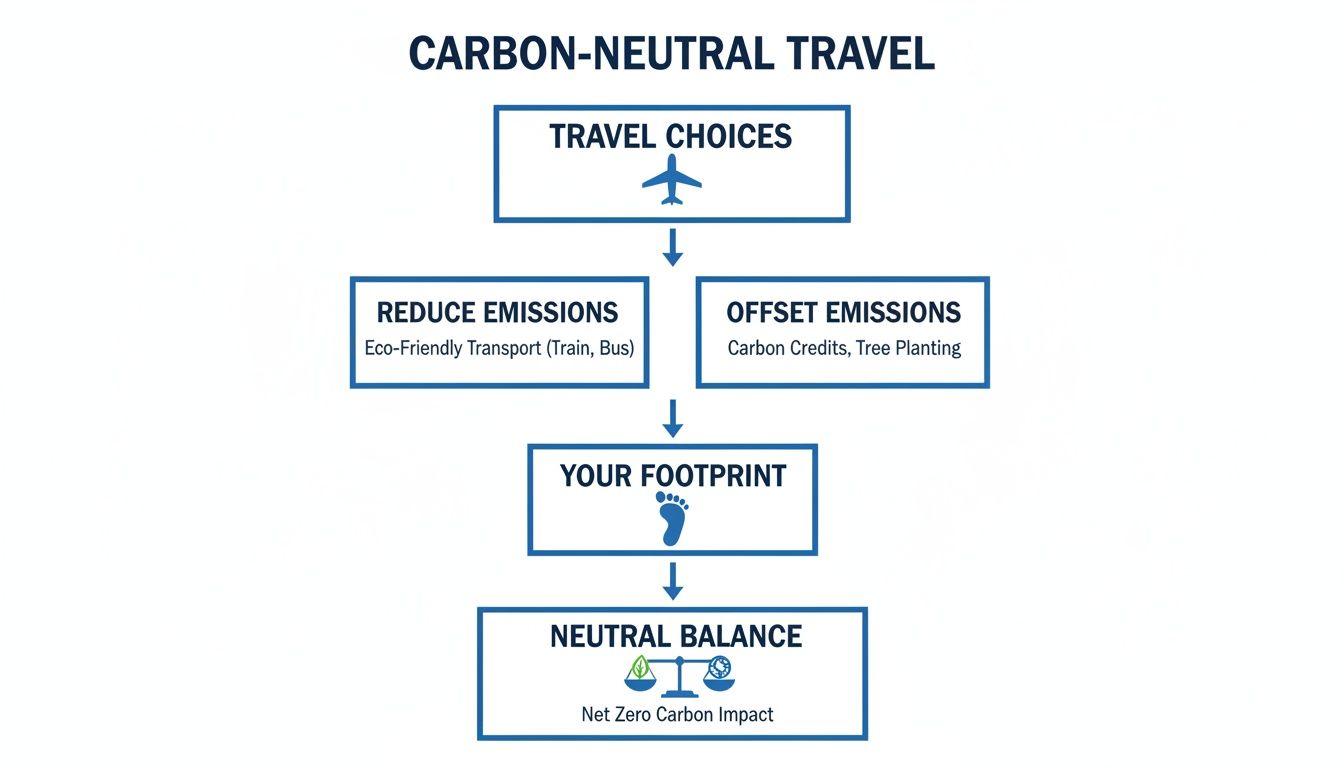
As the graphic shows, achieving a neutral balance is the final step. This happens only after you’ve calculated your impact and, ideally, reduced it first.
Understanding The Three Main Goals
At its core, carbon-neutral is about balance. It means calculating your total greenhouse gas emissions. Then, you compensate for them by purchasing an equivalent amount of carbon offsets. It’s an important first step. But it doesn’t always require a company to actually reduce its own emissions first.
Net-zero is a much more demanding and widely accepted long-term goal. Here, the priority is to reduce emissions as much as possible—often by 90% or more. This is done through direct changes in how things are run. Only the small, unavoidable remainder is then neutralized with high-quality carbon removals. This “reduce first, offset last” approach is the gold standard.
Finally, carbon negative (or climate positive) is the most ambitious stage. This means an activity goes beyond balancing its own emissions. It actually removes more carbon dioxide from the atmosphere than it produces. It’s not just about doing no harm; it’s about actively doing good.
Sustainability Goals At a Glance
To make these concepts easier to grasp, let’s put them side-by-side. The key difference really lies in the primary method used to get there. It’s about simply offsetting versus making deep, internal reductions.
| Concept | Primary Goal | Primary Method | Simple Travel Example |
|---|---|---|---|
| Carbon Neutral | Balance current emissions to achieve a net impact of zero. | Compensating for emissions, primarily through purchasing carbon offsets. | A hotel calculates its energy use and buys offsets from a reforestation project to match it. |
| Net-Zero | Radically reduce emissions first, then neutralize the small remainder. | Deep internal reductions (over 90%) in emissions from all operations. | An airline switches to sustainable aviation fuels, drastically cutting its emissions before offsetting any residual amount. |
| Carbon Negative | Remove more carbon from the atmosphere than is emitted. | Active carbon removal projects that exceed the organization’s own footprint. | A tour operator invests in a carbon capture project that sequesters double the emissions its tours create. |
Carbon-Neutral Claims: How to Spot Real Emissions Reductions (Not Just Offsets)
By understanding this hierarchy, you can better evaluate a travel provider’s claims. Look for companies that talk about their reduction strategies, not just their offsetting programs. A true commitment to sustainability starts with minimizing impact at the source. This is a much more powerful approach than simply paying to balance the books after the fact.
You can’t manage what you don’t measure. It’s a simple rule, but it’s the absolute starting point for taking control of your travel emissions and moving toward carbon-neutral travel. Before you can reduce your impact, you need a clear, honest picture of what it actually is.
Guesswork just doesn’t cut it. The best way to begin is with a carbon footprint calculator. It translates your plans—flights, train rides, hotel stays—into a real number.
Seeing your trip quantified in tons of CO₂ gives you a powerful baseline. It turns an abstract idea into something concrete you can actually manage. From there, you can build a reduction strategy that really works.

Prioritize High-Impact Reduction Strategies
Once you have your number, the goal is to shrink it as much as possible before you even think about offsetting. It’s about making smart, strategic choices that deliver the biggest carbon savings, not just token gestures. Your biggest wins will almost always come from transportation and lodging.
Here are a few of the most effective moves for any traveler:
- Adopt a Rail-First Mindset: This is the big one. Choosing a train over a short-haul flight can slash your transport emissions by over 90%. For many routes, it’s the single most powerful decision you can make.
- Choose Walkable Base Cities: Pick a central neighborhood for your stay. When you can explore on foot, you minimize your reliance on taxis and ride-shares. This cuts down on daily emissions without a second thought.
- Fly Smarter When You Must: If flying is the only option, go for direct flights. Takeoffs are incredibly fuel-intensive. So, one longer flight is better than two shorter ones. Also, fly economy—premium seats take up more room, meaning your share of the flight’s emissions is significantly higher.
These big-picture decisions are the bedrock of any low-impact trip. If you need a hand crunching the numbers for your own itinerary, our travel carbon footprint calculator gives you a detailed breakdown.
Pack Light and Eliminate Single-Use Items
What you pack matters more than you’d think. A lighter bag means less weight for the plane to carry. This translates directly to lower fuel burn. Using compression packing cubes inside a good carry on backpack is a simple way to fit more into less space, helping you avoid checked bags entirely.
Beyond weight, your gear choices can dramatically reduce plastic waste. This waste has its own heavy carbon lifecycle. Simple swaps make a huge difference.
Packing reusable toiletry bottles is a great start. Even better? Ditch the plastic altogether with a solid shampoo bar and laundry detergent sheets.
And a reusable water bottle is non-negotiable. It stops you from buying a mountain of single-use plastic bottles. This is a massive source of both pollution and emissions. These small habits add up fast.
Understanding Carbon Offsets and Green Certifications
So, you’ve done everything you can to shrink your travel footprint, but some emissions are just unavoidable. This is where carbon offsetting enters the picture—a common tool for tipping the scales back toward a carbon-neutral balance.
It helps to think of an offset not as a free pass. Instead, see it as an investment in a project somewhere else in the world. These projects are actively pulling greenhouse gases out of the air or stopping them from being released in the first place.
These projects come in all shapes and sizes. You might be funding tree planting in a deforested region. You could be helping build a new wind farm. Or, you might be giving communities access to clean cookstoves instead of ones that burn charcoal. The idea is simple: your investment cancels out your travel emissions by preventing an equal amount of carbon from ever hitting the atmosphere.
Still, it’s critical to see offsetting as the absolute final step. The most powerful move is always to cut your own emissions first. We get into the weeds on this in our deep dive into whether carbon offsets are effective.

How to Spot a High-Quality Carbon Offset Project
Here’s the catch: not all offsets are created equal. It’s essential to back projects that make a real, verifiable difference. Low-quality offsets can be worse than doing nothing. They create a false sense of progress without actually helping the planet.
To make sure your money is well spent, look for these three non-negotiable criteria:
- Additionality: The project must only be happening because of the offset funding. If that forest was going to be protected anyway, your money isn’t creating any additional climate benefit.
- Permanence: The carbon reduction has to last. A reforestation project is useless if the trees are cut down a few years later. This releases all that stored carbon right back into the atmosphere.
- Third-Party Verification: This is your quality guarantee. Reputable standards like Gold Standard and Verra (Verified Carbon Standard) rigorously audit projects to ensure they’re legit. Always, always choose offsets certified by these bodies.
Decoding Green Certifications to Avoid Greenwashing
Just like with offsets, the world of hotel and tour certifications can feel like a maze. Plenty of travel companies slap an “eco-friendly” label on their website. But only a handful have the credentials to back it up. Learning to spot the real certifications is your best defense against greenwashing.
These are the labels that signal a genuine commitment to doing things right:
Look for certifications like B Corp, Green Globe, or LEED (Leadership in Energy and Environmental Design) for buildings. These aren’t just marketing badges. They require businesses to pass a demanding assessment of their environmental and social impact.
A B Corp certification, for instance, means a company is legally bound to consider how its decisions affect its workers, customers, community, and the environment. Spotting one of these logos is a strong sign that you’re dealing with a provider that truly takes its responsibility seriously.
Global Progress Towards a Decarbonized Future
Your individual travel choices, like opting for a train instead of a plane, are powerful. They are part of a much larger, incredibly hopeful global movement. When you choose sustainable travel, you’re not acting alone. You are plugging into a worldwide trend of decarbonization that is already reshaping our planet for the better.
This isn’t just wishful thinking—it’s backed by solid data. In a remarkable shift, 35 countries have successfully reduced their fossil CO₂ emissions over the past decade. This includes major economies like the United States and the entire European Union. All while their economies continued to grow.
This progress doubled the number of countries achieving this feat from the previous decade. It shows that economic expansion and environmental health can go hand in hand. It’s powered by the very infrastructure you interact with as a traveler.
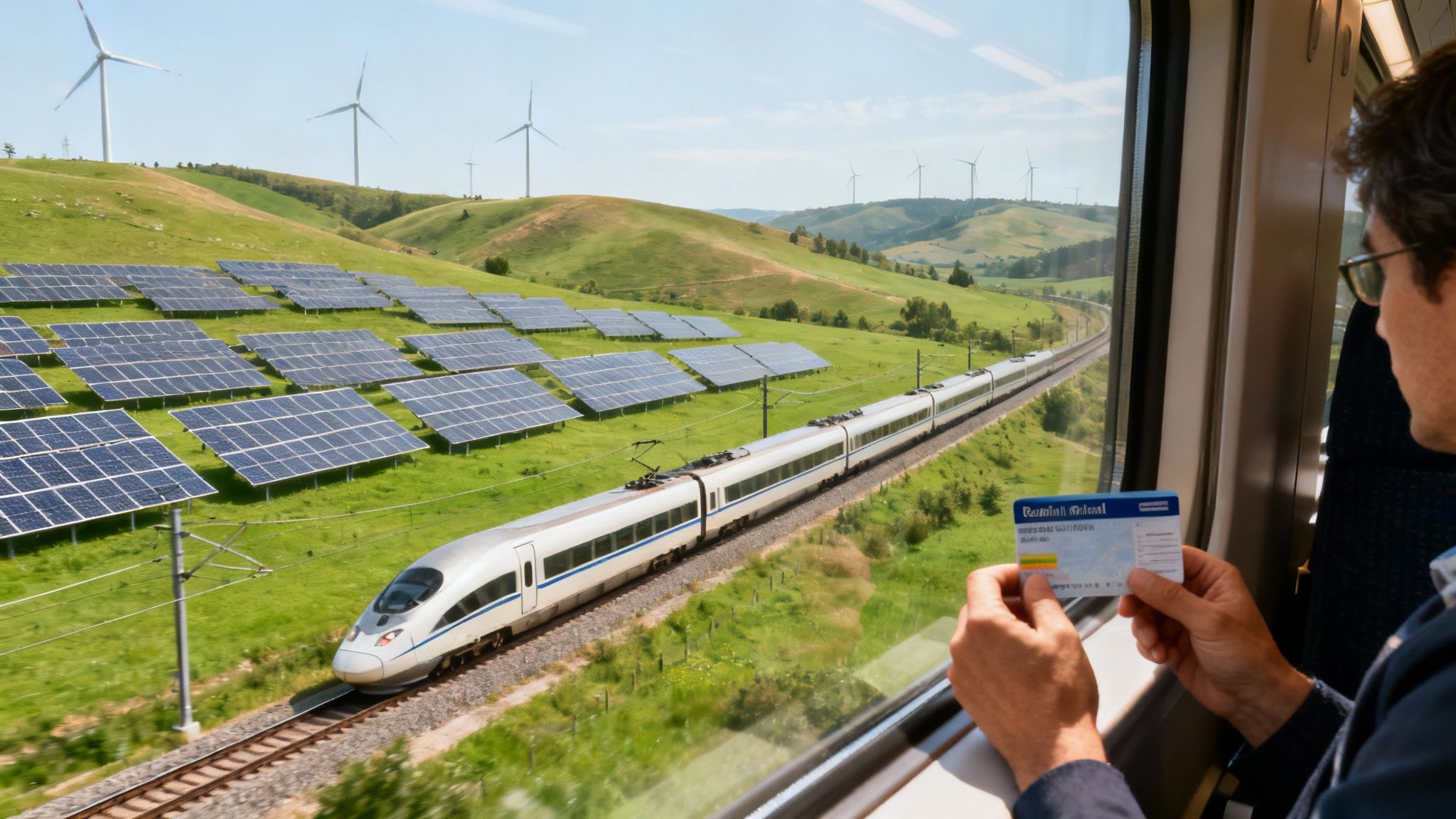
Think of the expanding renewable energy grids that power your hotel. Consider the growing network of electrified high-speed rail lines that make a carbon-neutral journey possible. When you book a night train across Europe or use a regional rail pass, you are directly supporting these massive, crucial national-level investments in a cleaner future.
Connecting Your Choices to Global Momentum
It’s easy to feel like your personal decisions are just a drop in the ocean. But the global shift toward decarbonization depends on millions of individual choices. These choices create demand for sustainable options. When travelers consistently choose rail, it sends a clear signal to governments and companies to invest even more in that infrastructure.
The growth of renewable energy is a perfect example. The building sector is making huge strides in energy efficiency. This directly impacts the footprint of your hotel stay. Your choice to stay in a LEED-certified hotel supports this trend.
Similarly, when you plan a trip using a service like Welcome Pickups for an electric vehicle transfer, you are participating in the transition to cleaner transportation.
Tangible Examples of Progress on the Ground
The evidence of this shift is all around you when you travel consciously. Here are a few ways your travel choices align with this larger movement:
- Electrified Rail Networks: Countries across Europe and Asia are pouring billions into high-speed, electric train networks. Every ticket you buy helps justify further expansion. This makes low-carbon travel the default choice for more people.
- Renewable Energy Powering Your Stay: More hotels are installing solar panels and sourcing energy from wind farms. This means the power for your room, and even charging your USB C charger, comes from a clean source.
- Walkable Cities as a Priority: Urban planners worldwide are redesigning cities to be more pedestrian-friendly. By choosing a walkable base city, you support policies that reduce car dependency. This also improves quality of life for everyone.
Every conscious decision reinforces that your personal actions matter. You are part of a tangible, positive shift toward a cleaner, more sustainable future. You contribute to the broader principles of sustainability in travel and tourism. Your journey becomes a vote for the kind of world you want to see.
How to Plan a Carbon-Neutral Trip
Navigating the world of carbon-neutral travel can feel a bit overwhelming. But it really boils down to a handful of core ideas. Think of this as your quick-reference summary—the most important takeaways from this guide. It is broken down into simple, actionable advice for your next low-impact journey.
Carbon-Neutral Travel Isn’t About Perfection: Make Smarter Choices That Add Up One Trip at a Time
The goal here isn’t perfection. It’s about giving you the essential knowledge to make smarter choices. These choices add up, one trip at a time. Use these points to reinforce the key themes: understanding your footprint, reducing before you offset, and choosing a better way to move.
Measure Your Impact First: You can’t manage what you don’t measure. The first step is always to get an honest baseline of your emissions with a travel carbon footprint calculator. This simple act turns an abstract problem into a real number you can work on shrinking.
Prioritize Reduction, Always: The most powerful way to become carbon-neutral is to create less carbon in the first place. This “reduce first” mindset is everything. Focus your energy on high-impact wins like choosing trains over planes and packing light before you even think about offsetting.
Adopt a Rail-First Mentality: For any journey under 500 miles (around 800 kilometers), switching from a plane to a train is the single biggest carbon-saving move you can make. It’s not a small tweak—this one decision can slash your transport emissions by over 90%.
Critically Evaluate Green Claims: Not all sustainability labels are created equal. Get comfortable telling the difference between simply balancing emissions with offsets (carbon-neutral) and making deep, systemic cuts to emissions (net-zero). Look for credible, verifiable certifications like B Corp or Green Globe to sidestep greenwashing.
Pack Smart to Reduce Waste: Your gear really does matter. A simple kit built around a collapsible water bottle, solid toiletries, and a few compression packing cubes helps you travel lighter while kicking single-use plastics to the curb.
Navigating Your Carbon-Neutral Travel Options
Trying to wrap your head around sustainable travel can sometimes feel like you’re left with more questions than answers. That’s perfectly normal. This section is here to give you clear, straightforward answers to the questions we get asked most often about shrinking your travel footprint.
The goal is to cut through the noise and give you practical clarity. Making a few thoughtful choices, like packing a packable daypack so you can walk to local markets instead of hailing a taxi, is a small but real step toward a more carbon-neutral journey. Let’s get into it.
Is a 100% Carbon-Neutral Trip Actually Possible?
Honestly, achieving a perfectly zero-carbon trip is almost impossible with today’s technology. Just about everything has some kind of footprint.
But here’s what is possible: getting incredibly close. You can do this by slashing your emissions where it counts. Then, you can offset the small, unavoidable slice that’s left. The real aim isn’t perfection; it’s meaningful progress. Think of it as a strategic game. Opting for a train over a short-haul flight can cut that leg’s emissions by over 90%. That one move does more to get you toward neutrality than a dozen smaller actions combined.
What Is the Easiest First Step to Reduce My Travel Footprint?
Change how you move. It’s the simplest and most powerful first step you can take.
Before you book your next trip, just pause and compare the carbon cost of taking a train versus a plane. You can look up flight options on a site like Aviasales. Then, use an online calculator to see how a rail alternative stacks up. That one shift in mindset—thinking “rail-first”—is the foundation of low-impact travel. Another easy win? Always pack a reusable water bottle. It costs you nothing and instantly cuts out a major source of plastic waste and all the carbon tied to it.
How Can I Find Genuinely Eco-Conscious Travel Companies?
Look for two things: transparency and third-party proof. A truly sustainable company will be refreshingly open about how they’re reducing their impact. They won’t just talk about how much they’re offsetting. Dig around their website for a sustainability report or real details on their emissions-cutting projects.
Also, keep an eye out for credible certifications like B Corp, Green Globe, or LEED for hotels. These aren’t just fancy badges. They’re tough standards that require companies to prove they meet high environmental and social benchmarks. Using a platform like Trip.com that lets you filter for these certifications is a great shortcut to find pre-vetted places.
What Gear Makes the Biggest Difference for Low-Impact Travel?
Anything that replaces single-use items. That’s where you get the biggest bang for your buck.
Beyond a water bottle, things like a solid shampoo bar and biodegradable soap are game-changers. They get rid of plastic packaging. They also stop harmful chemicals from polluting local waterways. Another smart swap is using laundry detergent sheets instead of buying those tiny plastic bottles of liquid soap on the road.
For security, a durable travel lock TSA approved for your bag and a simple portable door lock for your room are smart, long-term investments that prevent waste. Same goes for a good RFID blocking wallet—it protects your data for years, so you’re not buying flimsy, disposable alternatives.
Editor’s Pick: A Smart Carbon-Neutral Tool
Option: BUNK Hotel Utrecht
Why it’s a smart choice: Housed in a beautifully repurposed church, BUNK offers affordable, stylish pods and rooms right in the city center. Its location next to the central station makes it an ideal hub for rail-first travel. Its design encourages a minimalist, low-clutter mindset without sacrificing comfort or community.
Do Offsets Really Work or Are They Just Greenwashing?
This is a big one. The short answer is, it depends. High-quality offsets from verified projects are genuinely positive. They channel money into vital work like reforestation, carbon capture, and renewable energy development.
But they become a form of greenwashing when companies or individuals use them as a free pass to pollute without changing their behavior.
The golden rule is simple: reduce first, offset last.
Think of offsets as the final step. Use them to balance the small, unavoidable fraction of your footprint after you’ve done everything else to shrink it. And when you do buy them, always choose projects certified by rigorous standards like Gold Standard or Verra.
Is It More Expensive to Travel Sustainably?
Not at all. In fact, many of the core habits of sustainable travel will actually save you money. Choosing long-distance trains over flights is often cheaper, especially in places like Europe and Asia. Staying in central, walkable areas cuts down on daily transport costs.
Packing light in a good carry on backpack helps you dodge those expensive checked bag fees. And carrying a reusable water bottle saves you from buying overpriced bottled water at every turn. While some high-end eco-lodges can be pricey, a low-impact lifestyle often goes hand-in-hand with budget-savvy travel.
How Does My Choice of Destination Affect My Footprint?
It has a huge effect. This is mostly because of the distance and mode of travel needed to get there.
Choosing destinations closer to home that you can reach by train is one of the biggest wins for a carbon-neutral approach. Beyond that, some places are miles ahead in sustainable infrastructure. They have things like extensive public transit and power grids running on renewables. When you spend your tourist dollars in these destinations, you’re voting for and encouraging that kind of green development.
What’s One Thing I Can Do on Every Trip to Make It Greener?
Support the local economy. Directly. Eat at family-run restaurants that source their ingredients from nearby farms. Buy souvenirs from local artisans, and hire local guides.
This simple practice does two powerful things. It drastically cuts down on “food miles.” It also ensures your money actually benefits the community you’re a guest in. This helps make your trip more regenerative and less extractive. It’s a small act that makes your presence a genuinely positive one.
Key Takeaways
- Measure First: Always start with a carbon calculator to get a clear baseline for your trip’s emissions.
- Prioritize Reduction: Focus on creating less carbon in the first place. This is always more effective than offsetting.
- Go Rail-First: Whenever it’s a practical option, choose trains over planes. This is your biggest lever for cutting travel emissions.
- Pack Smart and Light: Use compression cubes to pack lighter and carry reusables like a water bottle and solid toiletries to eliminate plastic waste.
- Choose Your Base Wisely: Stay in central, walkable areas to cut down on daily transport like taxis or ride-shares.
- Support Local: Spend your money with local businesses to reduce “food miles” and directly benefit the community you are visiting.
Low-Impact Travel Tools (Worth It)
Also, if you’re planning a trip and want to keep things simple, these tools help you travel smoother while staying mindful about impact.
Get an eSIM for reliable data → Disclosure: Partner link. No extra cost to you.
Pre-book a transfer for easy arrivals → Disclosure: Partner link. No extra cost to you.
Frequently Asked Questions
1. What is the most effective way to start reducing my travel carbon footprint?
The single biggest thing is to take trains instead of planes for any journey under 500 miles (around 800 km). Short-haul flights are incredibly carbon-intensive. Making this one switch will slash your emissions.
2. How accurate are online carbon footprint calculators?
No calculator is perfect—they rely on averages for things like aircraft type and passenger numbers. But they are more than accurate enough to compare the relative impact of your choices. This is what helps you make smarter, more carbon-neutral decisions.
3. Does packing light really make a difference for a flight’s emissions?
Your individual bag has a tiny effect. But when you zoom out, it adds up. If every single passenger on a wide-body jet packed just a few pounds lighter, the total weight reduction would save a meaningful amount of fuel. It’s a simple habit that contributes to a much larger positive trend.
4. Is it better to take a direct flight or one with a layover?
Direct flights are almost always better for the planet. A plane’s takeoff and landing burn the most fuel. One direct journey uses far less than two shorter flights with a stop in between to cover the same distance.
5. How can I reduce my carbon footprint from accommodations?
Look for hotels with legitimate green certifications (like LEED or Green Globe). This shows a real commitment to energy and water efficiency. Opting for smaller, locally-owned guesthouses is also a great move. They often have a much lower footprint than massive resort complexes.
Are Electric Rental Cars a Smart Low-Carbon Choice?
6. Are electric rental cars a good option for low-carbon travel?
They can be a fantastic option, but only if the local electricity grid is powered by renewables. Renting an EV can dramatically cut your on-the-ground emissions compared to a gas car. However, it’s worth checking where the power comes from.
7. Does eating local food help reduce my travel carbon footprint?
Absolutely. When you eat at restaurants that source locally, you’re cutting down on “food miles”—the long distances food is often shipped. This minimizes transport emissions. It also puts money directly into the local economy.
8. Besides a reusable bottle, what other gear helps make travel more carbon-neutral?
A quick dry travel towel means you don’t need hotels to launder one for you, saving water and energy. A portable power bank lets you charge devices on the go. If you can charge it from a renewable source, even better. And investing in durable carry on luggage that lasts for years avoids the waste and emissions from constantly replacing cheap, broken bags.
Join the Sustainable Work Movement
Want more rail-first itineraries, low-impact packing systems, and walkable base-city ideas?
