
Finding the cheapest countries in Europe to visit isn’t just about saving money; it’s about discovering authentic, less-traveled destinations where your travel can make a positive impact. This guide focuses on Europe’s most budget-friendly nations that also offer incredible opportunities for sustainable, rail-first travel. We’ll explore destinations where you can immerse yourself in local culture, enjoy breathtaking landscapes, and minimize your carbon footprint, all without breaking the bank. Forget the crowded, overpriced hotspots; these countries offer a richer, more rewarding experience for the eco-conscious nomad and slow traveler.
From the untouched coastlines of the Balkans to the medieval towns of Central Europe, each country on this list provides a unique blend of affordability, adventure, and accessibility via train or bus. We’ll break down realistic daily budgets, from accommodation and food to local transport, giving you the practical tools needed to plan your trip. Whether you’re a digital nomad looking for a walkable base city or a traveler planning a multi-country itinerary, these destinations prove that sustainable travel and budget travel can go hand-in-hand.
Cheapest Countries in Europe to Visit for Low-Carbon, Budget-Friendly Travel
At Eco Nomad Travel, our mission is to make lower-carbon travel easier and more accessible. This list is built on that principle, prioritizing destinations with strong public transport networks, walkable cities, and opportunities for regenerative tourism. We’ll cover everything from leveraging night trains to save on accommodation to finding local, farm-to-table food that supports the community. Let’s dive into the places that offer the best value for both your wallet and the planet.
Key Takeaways
- Focus on Eastern Europe and the Balkans: These regions consistently offer the lowest daily costs for accommodation, food, and transport, often 40-60% cheaper than Western Europe.
- Prioritize Rail and Bus Travel: Many of these countries have excellent rail networks (like Romania and Poland) or comprehensive bus systems that make low-carbon, multi-country travel both affordable and efficient. You can find excellent options for train tickets in Europe.
- Embrace Slow Travel in Walkable Cities: Base yourself in cities like Tirana, Plovdiv, or Kraków, where walkable centers and cheap public transport eliminate the need for a rental car, reducing both costs and emissions.
- Digital Nomad Infrastructure is Growing: Countries like Hungary, Romania, and Georgia offer a perfect blend of low living costs and robust digital nomad infrastructure, including affordable coworking spaces and reliable Wi-Fi.
- Shoulder Seasons Offer the Best Value: Traveling in April-May or September-October provides the ideal balance of pleasant weather, fewer crowds, and lower prices for flights and accommodation.
- Stay Connected Affordably: Using an eSIM from a provider like Airalo or Yesim can save you money on roaming fees while ensuring you have data for navigation and booking.
Editor’s Pick: Rail Europe Pass
For multi-country itineraries across the cheapest countries in Europe to visit, a Eurail or Interrail pass often provides the best value. It simplifies ticketing, offers flexibility, and encourages low-carbon travel by making train journeys more accessible than budget flights. A single pass can cover travel through Hungary, Poland, and Romania, significantly reducing per-trip costs and planning complexity. It’s a practical tool for any serious rail-first traveler.
1. Albania: Balkan Budget Gateway with Untouched Coastlines
Albania stands out as one of the cheapest countries in Europe to visit, offering an unparalleled blend of affordability, natural beauty, and authentic culture. Its value proposition is simple: significantly lower daily expenses, often 40-60% less than in Western Europe, combined with stunning Adriatic coastlines and rugged mountain interiors. This makes it a prime destination for budget-conscious travelers seeking an alternative to the crowded and costly Mediterranean hotspots.
The country’s affordability stems from low labor costs, a favorable exchange rate with the Albanian Lek (ALL), and a tourism sector that hasn’t yet seen the price inflation common in more established destinations. For slow travelers and digital nomads, this translates into a sustainable, high-quality lifestyle on a minimal budget. Cities like Tirana and Durrës offer excellent walkability, reliable Wi-Fi, and a vibrant local scene, allowing for deep cultural immersion without financial strain.
Albania is particularly well-suited for low-carbon, car-free travel. While the rail network is limited, an extensive and incredibly cheap network of buses and shared minibuses, known as furgons, connects all major towns and even remote villages. This system allows for spontaneous, flexible itineraries that minimize your carbon footprint.
[carbon_calculator_2025]
Daily Cost Breakdown & Budgeting
- Overall Daily Budget: $25-40 USD per person
- Accommodation: Guesthouses or private rooms run $13-20 USD, while entire apartments on platforms like Trip.com can be found for $25-40 USD.
- Food: Eating at local tavernas is a highlight, with hearty meals costing just $3-5 USD. A coffee costs less than $1 USD.
- Transportation: A cross-country furgon ride, like from Tirana to Sarandë near the Greek border, rarely exceeds $10 USD.
Sustainable & Slow Travel Tips
For a truly low-impact trip, embrace Albania’s local transport and accommodation. Staying in family-run guesthouses not only saves 30-50% compared to hotels but also directs your money into the local community. For connectivity, purchase a local SIM card from Vodafone or ALBtelecom for around $5-10 USD, or get an international eSIM from a provider like Airalo before your arrival for seamless data access. By visiting in the shoulder seasons of May or September, you’ll find the best balance of pleasant weather, lower prices, and fewer crowds. To dive deeper into planning your affordable European adventure, you can learn more about budget-friendly travel in Europe.
2. Bulgaria: Eastern European Rail Hub with Thermal Spas and Mountain Towns
Bulgaria solidifies its position as one of the cheapest countries in Europe to visit by offering an exceptional mix of cultural depth, natural beauty, and extreme affordability. The nation presents a compelling value proposition with daily costs often 50-70% lower than in Western Europe, centered around authentic mountain towns, thermal spas, and dynamic cities like Sofia and Plovdiv. This makes it a top choice for travelers looking to extend their stay and immerse themselves in Eastern European culture without financial pressure.
The country’s low cost of living is driven by affordable local services, a favorable exchange rate with the Bulgarian Lev (BGN), and a tourism infrastructure that remains authentic and budget-friendly. For digital nomads and slow travelers, this translates to a high quality of life on a minimal budget; a comfortable lifestyle is achievable for around $900-1,300 USD per month in cities like Plovdiv. Walkable city centers and reliable Wi-Fi provide a perfect base for remote work and deep exploration.
Bulgaria is an ideal destination for sustainable, rail-first travel. Its extensive national rail network, operated by Bulgarian State Railways (BDZ), connects major cities and provides direct links to neighboring Greece, Romania, and Turkey. This robust system allows for seamless, low-carbon, multi-country itineraries, such as taking the scenic overnight train from Sofia to Istanbul, which is far more eco-friendly and affordable than a short-haul flight.
Daily Cost Breakdown & Budgeting
- Overall Daily Budget: $25-45 USD per person
- Accommodation: Hostels and guesthouses are available for $12-18 USD, while entire private apartments on platforms like Trip.com can be found for $25-40 USD per night.
- Food: A meal at a traditional Bulgarian restaurant (mehana) costs around $4-7 USD. A Shopska salad, a national dish, can be found for just $2-4 USD.
- Transportation: A long-distance train ticket, such as from Sofia to Burgas on the Black Sea coast (about 240 miles or 386 km), costs approximately $10-15 USD. City tram or bus tickets are often less than $1 USD per ride.
Sustainable & Slow Travel Tips
For a low-impact journey, leverage Bulgaria’s excellent rail network and stay in locally-owned guesthouses, especially in spa towns like Sandanski and Bansko, where accommodation often includes thermal spa access for a total of just $15-25 USD per night. This approach keeps travel costs low while supporting local economies. To navigate Cyrillic signage, use a translation app like Google Lens. Maximize your travel budget by considering one of the best rail passes for Europe if planning a multi-country trip. By shopping at local “zelen pazar” (green markets) and basing yourself in the more affordable and walkable city of Plovdiv, you can enjoy an authentic and sustainable Bulgarian experience.
3. Bosnia and Herzegovina: A Top Choice Among the Cheapest Countries in Europe to Visit
Bosnia and Herzegovina stands as one of the most intriguing and cheapest countries in Europe to visit, presenting a compelling mix of profound history, stunning natural landscapes, and incredible affordability. It offers travelers a chance to explore authentic Ottoman-influenced architecture and resilient cultural heritage, with daily expenses often sitting 50-70% lower than in Western Europe. This significant value makes it an ideal destination for slow travelers, digital nomads, and anyone seeking a deeper, more meaningful European experience away from the tourist crowds.
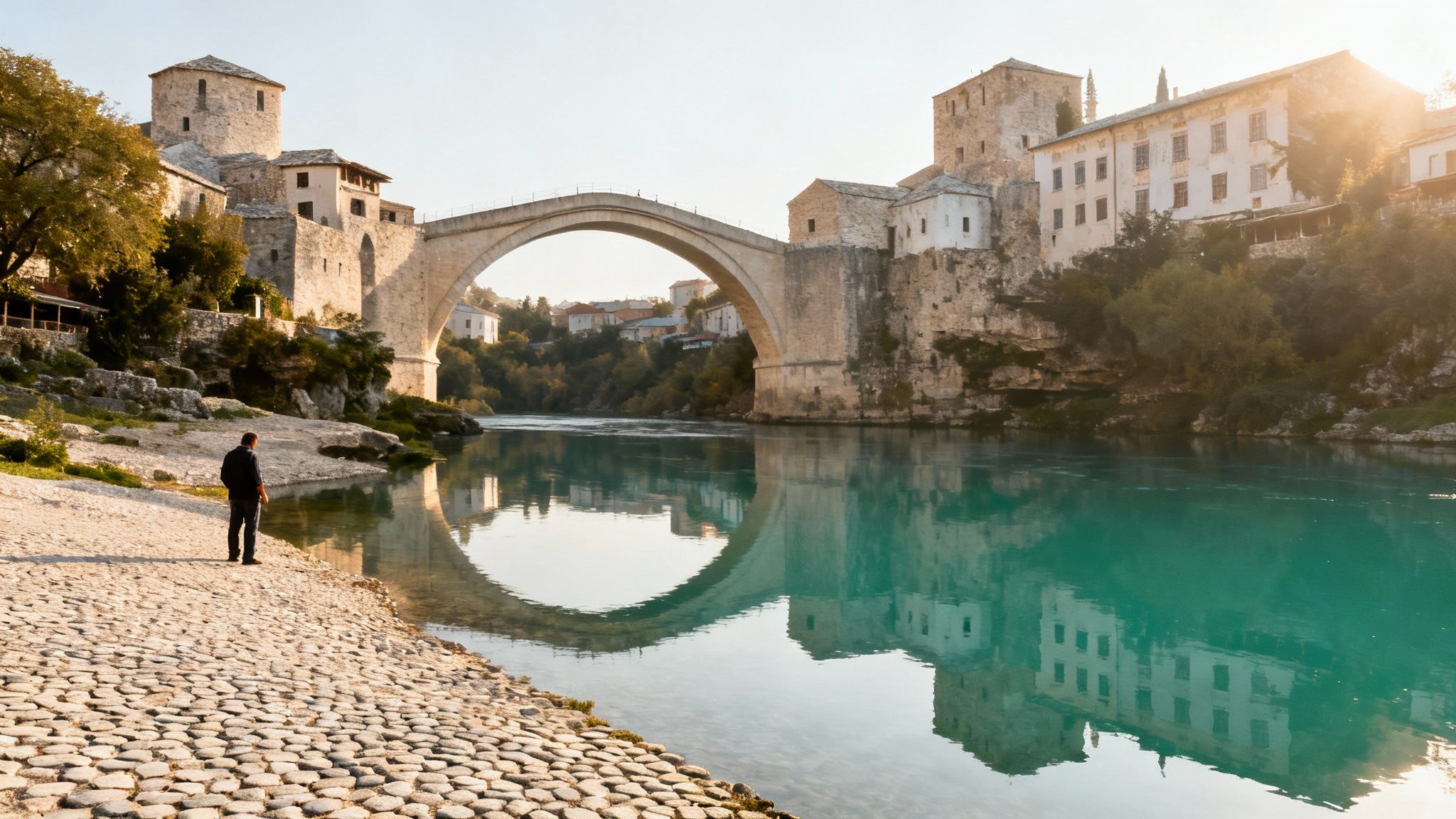
The country’s low cost of living, combined with the stable Bosnian Convertible Mark (BAM), means budgets stretch exceptionally far. Cities like Sarajevo and Mostar are remarkably walkable, allowing for immersive exploration without constant transportation costs. For digital nomads, Sarajevo is a burgeoning hub with reliable internet and an affordable lifestyle; monthly budgets of $950-1,200 USD are easily achievable. The growing emphasis on cultural preservation and small-scale, family-run tourism adds to its appeal for conscious travelers.
Bosnia and Herzegovina is perfectly structured for low-carbon, car-free travel. A comprehensive bus network connects all major cities and towns, making it easy and cheap to explore destinations like Mostar, Travnik, and Jajce from a base in Sarajevo. The scenic train journey from Sarajevo to Mostar is also a must-do, offering breathtaking views of the Neretva River canyon. This infrastructure empowers travelers to create flexible, multi-city itineraries that minimize their environmental impact while maximizing cultural engagement.
Daily Cost Breakdown & Budgeting
- Overall Daily Budget: $20-35 USD per person
- Accommodation: Family-run guesthouses often cost $14-20 USD per night, frequently including breakfast. Entire apartments are available for $25-45 USD.
- Food: Local eateries and burek shops offer delicious and filling meals for just $1-3 USD. A sit-down meal at a traditional restaurant (ćevabdžinica) costs around $4-6 USD.
- Transportation: The scenic bus ride from Sarajevo to Mostar typically costs only $5-7 USD. Local city transport is under $1 USD per ride.
Sustainable & Slow Travel Tips
To support the local economy directly, prioritize staying in family-run guesthouses, which you can find by filtering for “family-run” options on booking platforms. This not only provides a more authentic experience but also ensures your money benefits local communities. For seamless connectivity, a local SIM card from BH Telecom or Eronet costs around $5-10 USD, with monthly data plans as low as $3-5 USD. Basing yourself in Sarajevo’s historic Baščaršija district allows for maximum walkability. As you plan your journey through this stunning region, you can explore more about sustainable travel between the Balkan Mountains and the Adriatic Sea.
4. North Macedonia: Underdeveloped Tourism Infrastructure with Lake and Mountain Access
North Macedonia is a true outlier for those seeking the cheapest countries in Europe to visit, offering a raw, authentic travel experience far from the typical tourist trail. Its incredible affordability comes from underdeveloped tourism infrastructure, which translates to rock-bottom prices for food, lodging, and transport. Travelers can enjoy spectacular natural beauty, from the serene shores of Lake Ohrid to the rugged peaks of its national parks, all while spending a fraction of what they would in a Mediterranean hotspot.
The country’s value is undeniable for slow travelers and digital nomads aiming for a very low cost of living. A monthly budget of $700-900 USD in cities like Skopje is entirely feasible. While the country’s rail network is minimal, its compact size and cheap regional buses make it ideal for low-impact, car-free exploration. Lakeside towns like Ohrid are entirely walkable, allowing you to immerse yourself in local life and stunning landscapes without needing a vehicle.
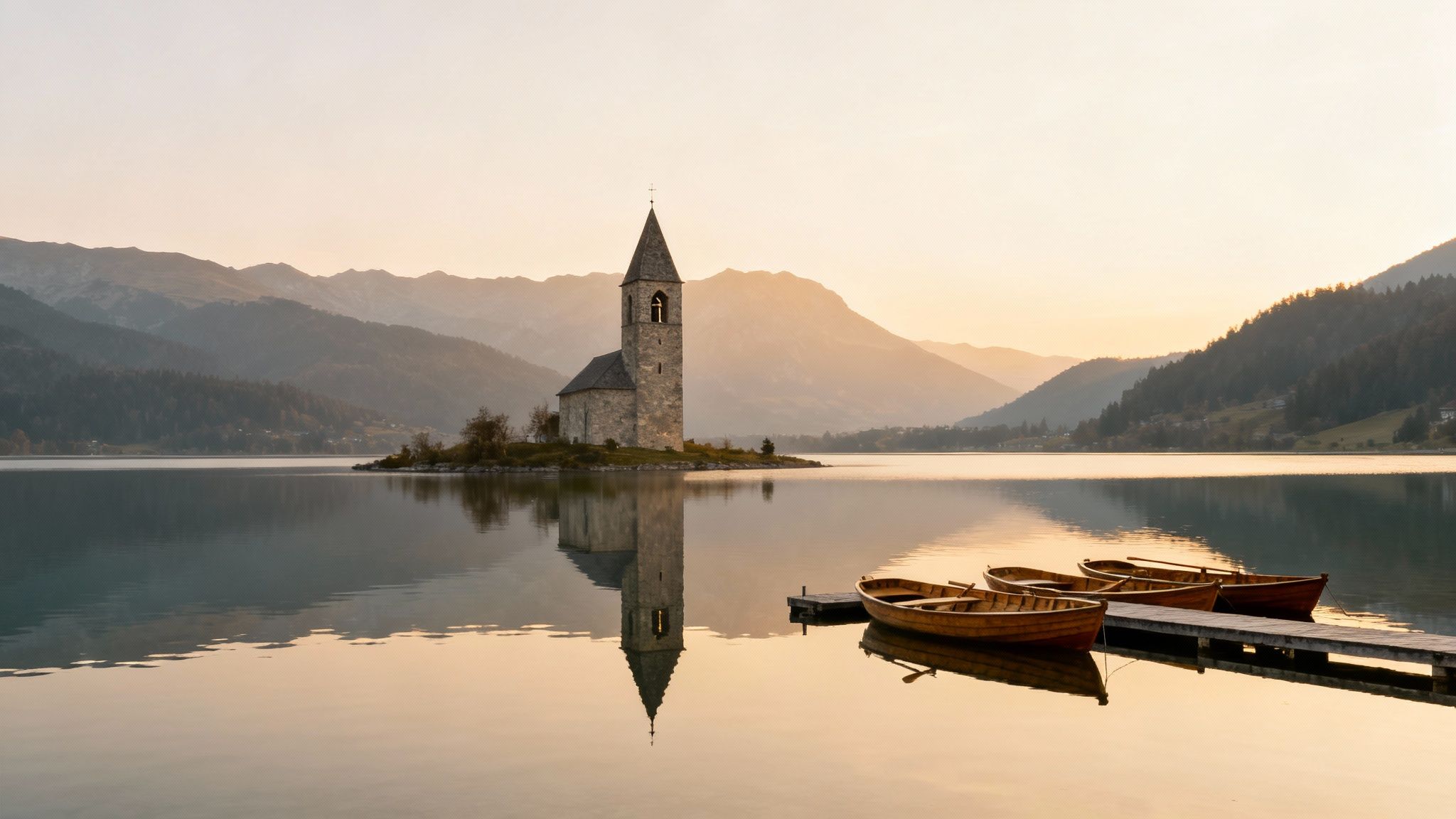
This makes North Macedonia a perfect destination for those prioritizing deep cultural immersion and offline adventures over modern amenities. The limited coworking spaces are balanced by exceptional value in locally-owned guesthouses, which form the backbone of its sustainable tourism model. By staying in these establishments, you directly support local families and experience true Macedonian hospitality.
Daily Cost Breakdown & Budgeting
- Overall Daily Budget: $20-35 USD per person
- Accommodation: Lakeside guesthouses in Ohrid average just $13-18 USD per night, often including breakfast. Entire apartments in Skopje can be found on sites like Trip.com for $25-40 USD.
- Food: A delicious, hearty meal at a local restaurant or market stall will only set you back $2-4 USD. Avoid the pricier tourist restaurants along Ohrid’s waterfront to keep costs low.
- Transportation: Intercity bus routes are incredibly cheap, with tickets costing around $2-5 USD. A local minibus from Skopje to the stunning Matka Canyon is just $3 USD.
Sustainable & Slow Travel Tips
For a truly low-impact trip, base yourself in Ohrid for its supreme walkability and easy access to nature. Many guesthouses lack an online booking presence, so don’t be afraid to book directly via email or phone for the best rates. For connectivity, grab a local SIM card from A1 or Telemacedonia for about $5 USD, or prepare ahead with a global eSIM from a provider like Airalo. Embracing offline travel by downloading maps beforehand is a great way to navigate while minimizing data use. By focusing on local businesses and transport, you can explore one of Europe’s hidden gems while contributing positively to its economy. You can find more ideas for similar destinations in this guide to off-peak eco-escapes in Europe.
5. Kosovo: Post-Conflict Emerging Market with Cultural Tourism and Urban Walkability
As Europe’s youngest country, Kosovo presents a unique and exceptionally affordable travel experience, making it one of the cheapest countries in Europe to visit. Its value lies in a nascent tourism scene, which means rock-bottom prices for food and accommodation, and an authentic, unfiltered cultural atmosphere. For travelers seeking an off-the-beaten-path destination rich with history, post-conflict resilience, and genuine hospitality, Kosovo offers an unparalleled opportunity for deep, budget-friendly immersion.
The country’s affordability is driven by its use of the Euro combined with extremely low local living costs. This dynamic is particularly appealing to digital nomads and slow travelers, who find cities like Pristina to be functional, walkable, and welcoming. A growing infrastructure of reliable Wi-Fi, coworking spaces, and a vibrant café culture supports a comfortable, productive lifestyle for a fraction of what it would cost elsewhere in Europe.
Kosovo serves as a fantastic, central hub for car-free Balkan exploration. While it lacks a passenger rail network, its modern and efficient bus system connects it seamlessly to neighboring Albania, North Macedonia, and Serbia. These frequent and cheap connections allow for easy, low-impact, multi-country itineraries without the need for flights or rental cars.
Daily Cost Breakdown & Budgeting
- Overall Daily Budget: $20-30 USD per person
- Accommodation: Private rooms in guesthouses average $15-22 USD, while long-stay shared apartments in Pristina can be found for $270-375 USD per month.
- Food: Eating locally is incredibly cheap. A meal of burek (savory pastry) costs around $1-1.60 USD, and a full meal at a simple restaurant is often just $3-5 USD.
- Transportation: A regional bus journey, such as from Pristina to the cultural hub of Prizren, costs only $2-4 USD.
Sustainable & Slow Travel Tips
To maximize value and support the local economy, base yourself in Pristina for its digital nomad infrastructure or Prizren for its cultural charm and walkability. Use platforms like Trip.com and filter for “guesthouses” to find the best deals run by local families. For connectivity, grab a local SIM card from Vala or IPKO for about $5 USD, or prepare ahead with an international eSIM from a provider like Airalo for instant data upon arrival. Embrace the walkable city centers and use offline maps to navigate, minimizing your reliance on data and transport.
6. Romania: Carpathian Mountains and Medieval Towns with EU Rail Infrastructure
Romania offers a compelling combination of deep affordability and legitimate rail infrastructure, positioning it as one of the cheapest countries in Europe to visit for sustainable, rail-first travelers. Its major advantage is providing a Western European-style train network at Eastern European prices, allowing for comfortable, low-carbon journeys. Daily expenses are often 50-70% lower than in countries like France or Germany, making it a sustainable choice for both your wallet and the planet.
The country’s value proposition is amplified for digital nomads and slow travelers. Walkable medieval cities like Brașov and Cluj-Napoca serve as ideal, low-cost bases with robust infrastructure. Unlike some Balkan neighbors, Romania’s extensive CFR rail network connects seamlessly with Hungary, Bulgaria, and beyond, featuring practical overnight trains that save on both travel time and accommodation costs. This blend of historic charm, stunning Carpathian mountain landscapes, and modern connectivity creates an unparalleled value-to-infrastructure ratio.
For those committed to car-free travel, Romania is a standout. The national rail system, CFR Călători, is the backbone of intercity travel, connecting major hubs and smaller towns. This network makes it easy to design itineraries centered on hiking in the Carpathians, exploring the medieval towns of Transylvania, or experiencing the vibrant student culture in Cluj-Napoca, all without renting a car.
Daily Cost Breakdown & Budgeting
- Overall Daily Budget: $25-45 USD per person
- Accommodation: Private rooms in guesthouses cost $15-25 USD, while entire apartments on platforms like Trip.com can be found for $30-50 USD.
- Food: A meal at a local market or a traditional dish like mici (grilled meat rolls weighing about 2.5 ounces or 70 grams each) costs just $3-5 USD. A coffee is typically around $1.50 USD.
- Transportation: A long-distance train ticket, such as the overnight from Bucharest to Sofia, can be as low as $27-38 USD, combining transport and a night’s stay.
Sustainable & Slow Travel Tips
Base yourself in a walkable city like Brașov for direct access to Carpathian hiking trails or Cluj-Napoca for its burgeoning digital nomad scene. Book train tickets directly on the official CFR Călători website for accurate schedules and the best prices, as third-party sites can be unreliable. For connectivity, grab a local SIM from Digi or Orange for as little as $5-10 USD to get cheap, fast 4G data. Embrace the local piața (markets) for fresh produce and affordable meals, which supports local farmers and reduces waste. Visiting during the shoulder seasons of May-June or September-October ensures pleasant weather, fewer tourists, and even lower prices.
7. Georgia (Country): Caucasus Gateway with Hyperlocal Food Culture and Walkable Tbilisi
Straddling the border of Europe and Asia, Georgia emerges as one of the cheapest countries in Europe to visit, captivating travelers with its distinct culture, ancient history, and profoundly affordable cost of living. Its value is exceptional, with daily expenses often falling 50-70% lower than in Western Europe. This affordability is paired with the vibrant, walkable capital of Tbilisi, legendary hospitality, and a hyperlocal food and wine scene rooted in millennia of tradition.
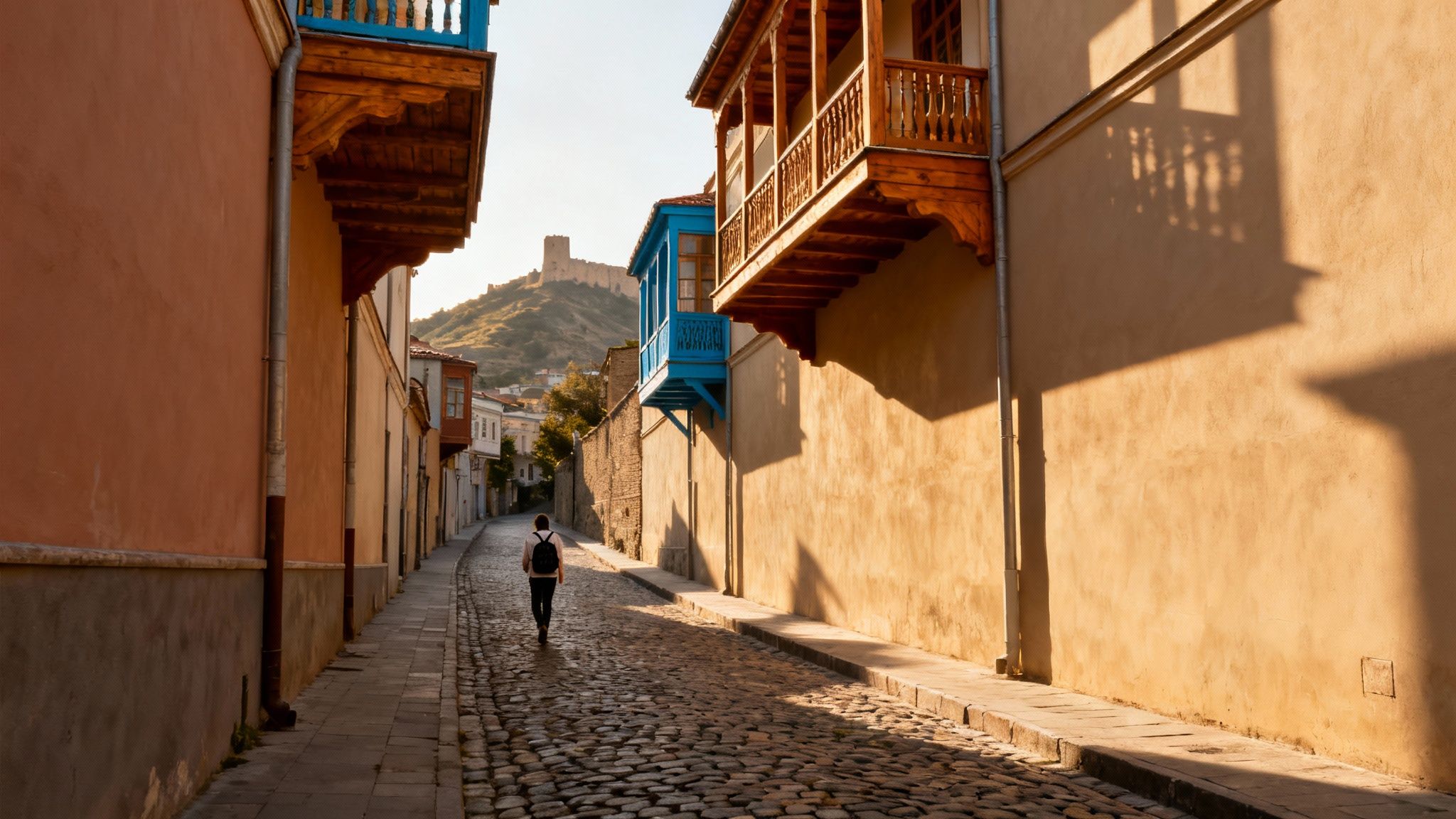
The country’s low costs are driven by a favorable exchange rate with the Georgian Lari (GEL) and a tourism infrastructure that remains authentic and budget-friendly. For digital nomads and slow travelers, Tbilisi offers an incredible quality of life, with monthly budgets often between $900-1100 USD. Walkable neighborhoods like Vake and Saburtalo are hubs for remote workers, filled with coworking spaces, cozy cafes, and reliable internet.
Georgia is ideal for low-carbon exploration, although it’s outside the main European rail network. Within the country, an efficient system of minibuses, known as marshrutkas, connects cities and remote mountain villages for just a few dollars, minimizing the need for car rentals. This network, combined with Tbilisi’s cable cars and metro, allows for a flexible, low-impact travel style that supports local operators.
Daily Cost Breakdown & Budgeting
- Overall Daily Budget: $20-35 USD per person
- Accommodation: Guesthouses or private rooms in walkable neighborhoods cost $14-20 USD, while entire apartments can be found on platforms like Trip.com for $25-45 USD.
- Food: Eating locally is both a cultural highlight and incredibly cheap. A fresh khachapuri (cheese bread) from a bakery costs $1-2 USD, while a full meal at a family-run restaurant is around $3-5 USD.
- Transportation: A marshrutka ride from Tbilisi to the Kakheti wine region is typically under $5 USD. City transport via metro or bus is less than $0.50 USD per ride.
Sustainable & Slow Travel Tips
To travel sustainably, base yourself in walkable neighborhoods like Vake or Saburtalo and rely on the marshrutka system for intercity travel. Staying in family-owned guesthouses not only reduces costs but also directly supports local families. For connectivity, purchase a local SIM card from Beeline or Silknet for about $3-5 USD, or get an international eSIM from a provider like Airalo for instant data upon arrival. Visiting in the shoulder seasons of May, June, or September offers pleasant weather for hiking and exploring, fewer tourists, and even lower prices.
8. Hungary: Danube River Hub with Thermal Baths and Digital Nomad Infrastructure
Hungary presents a compelling case as one of the cheapest countries in Europe to visit, expertly blending affordability with a rich cultural tapestry and outstanding infrastructure for remote workers. Its primary appeal lies in providing a high-quality European experience, from the grandeur of Budapest to its rustic wine regions, at a fraction of the cost of its western neighbors. The country’s value is rooted in reasonable living expenses, a favorable exchange rate with the Hungarian Forint (HUF), and a well-developed, yet inexpensive, public transit system.
For digital nomads and slow travelers, Hungary is a standout choice. The capital, Budapest, is a major hub with excellent Wi-Fi, numerous coworking spaces like HubHub and MOW, and walkable neighborhoods that allow for deep immersion. This combination of modern amenities and low daily costs makes it an ideal base for those looking to work remotely while exploring Central and Eastern Europe.
The country is a champion of sustainable, rail-first travel. Hungary’s extensive MÁV rail network offers seamless connections to Austria, Slovakia, Romania, and beyond. Opting for a night train, such as the Budapest to Vienna route, not only significantly reduces your carbon footprint compared to flying but also saves on a night’s accommodation costs, making your budget stretch even further.
Daily Cost Breakdown & Budgeting
- Overall Daily Budget: $30-45 USD per person
- Accommodation: Private rooms in guesthouses or shared apartments can be found for $20-30 USD, while entire apartments on platforms like Trip.com are often available for $35-50 USD.
- Food: Enjoy hearty, traditional meals at local markets like the Great Market Hall (Nagy Vásárcsarnok) or family-run étkezde restaurants for just $5-8 USD.
- Transportation: A night train ticket from Budapest to Vienna can cost as little as $22-38 USD when booked in advance, and local transport passes in Budapest offer excellent value for extensive city exploration.
Sustainable & Slow Travel Tips
To maximize both your budget and your positive local impact, base yourself in Budapest’s District VII (Jewish Quarter) or the outer parts of Pest for more affordable, authentic stays. For connectivity, a local SIM from Yettel or Vodafone costs around $5-10 USD, or you can secure an international eSIM from a provider like Airalo for instant data upon arrival. Exploring regional towns like Eger, known for its “Bull’s Blood” wine, is simple via affordable regional buses. By embracing local transport and dining, you directly support the community and enjoy a more genuine Hungarian experience. For those considering a longer stay, you can find more information about the country’s welcoming environment for remote professionals by researching Hungary’s digital nomad visa options.
9. Poland: Baltic-to-Carpathian Rail Corridor with Medieval Towns and Regenerative Food Culture
Poland represents one of the cheapest countries in Europe to visit, merging incredible value with a first-rate rail system and profound cultural depth. It offers a compelling mix of affordability, historic medieval cities, and a burgeoning regenerative food culture. Daily expenses are often a fraction of those in Western Europe, allowing travelers to experience everything from the Baltic coast to the Carpathian mountains without financial pressure. The value is rooted in a favorable exchange rate with the Polish Złoty (PLN) and a cost of living that remains low despite its modern infrastructure.
This affordability makes Poland a haven for digital nomads and slow travelers. Cities like Kraków and Warsaw are not just walkable and rich in history; they are also well-equipped with reliable Wi-Fi, abundant cafes, and coworking spaces. For those prioritizing low-impact travel, Poland’s extensive and efficient PKP rail network provides an excellent car-free alternative, connecting major hubs like Gdańsk, Kraków, and Warsaw, as well as offering routes to neighboring Germany, Czech Republic, and Lithuania. This makes multi-city, sustainable exploration both easy and economical.
The country’s emphasis on local and seasonal ingredients is evident in its vibrant markets and traditional “milk bars” (bar mleczny), where hearty, authentic meals can be found for just a few dollars. This focus on farm-to-table dining provides an authentic taste of Polish culture while supporting local producers, making it a perfect destination for eco-conscious foodies.
Daily Cost Breakdown & Budgeting
- Overall Daily Budget: $30-45 USD per person
- Accommodation: Private rooms in guesthouses cost $20-30 USD, while entire apartments on platforms like Trip.com can be found for $35-50 USD.
- Food: A filling meal at a traditional bar mleczny costs only $4-7 USD. Local beers and coffee are typically under $2-3 USD.
- Transportation: A long-distance train ticket from Warsaw to Gdańsk can be as low as $15-25 USD when booked in advance. Promotional FlixBus tickets can sometimes be found for under $5 USD.
Sustainable & Slow Travel Tips
Embrace Poland’s efficient rail system for a low-carbon journey. Booking PKP night trains with sleeping berths for longer routes, like to Prague or Budapest, saves on accommodation and travel time. Base yourself in Kraków for its unmatched walkability and vibrant digital nomad scene, or Warsaw for its central transport links. For authentic, budget-friendly meals, seek out local markets and bar mleczny. Stay connected with a local SIM from Orange or Play for about $5-10 USD. For instant data upon arrival, consider an international eSIM from a provider like Airalo. Visiting in the shoulder seasons (April-May or September-October) means fewer crowds in popular spots like Kraków’s Old Town and more competitive pricing.
10. Poland: Practical Completion & Regional Notes
Poland solidifies its place as one of the cheapest countries in Europe to visit by offering a remarkable combination of historic cities, diverse landscapes, and rock-bottom prices. The country delivers immense value, with daily costs easily 30-50% lower than in neighboring Germany. This affordability makes it an ideal hub for slow travelers and digital nomads looking to explore Central Europe without breaking the bank, from the Baltic coast in the north to the Carpathian Mountains in the south.
The country’s low cost of living is driven by a strong local economy and the Polish Złoty (PLN), which offers a favorable exchange rate against the US dollar and Euro. This economic advantage allows for an extended, high-quality stay on a minimal budget. Major cities like Kraków and Warsaw are incredibly walkable and boast efficient public transport, allowing for deep cultural immersion and minimal daily spending.
Poland is exceptionally well-suited for low-carbon, rail-first travel. The national rail carrier, PKP Intercity, provides extensive and affordable connections between all major urban centers. Combined with regional trains and promotional bus routes from operators like FlixBus, it’s easy to create a multi-city itinerary that minimizes both costs and carbon emissions.
Daily Cost Breakdown & Budgeting
- Overall Daily Budget: $30-50 USD per person
- Accommodation: Hostel dorms can be found for $12-18 USD, while private rooms or entire apartments on platforms like Trip.com are often available for $30-50 USD per night.
- Food: A meal at a traditional bar mleczny (milk bar) offers an authentic taste of Polish cuisine for just $4-7 USD. A local beer or coffee typically costs around $2-3 USD.
- Transportation: A long-distance train journey, such as from Kraków to Gdańsk, can be booked in advance for as little as $15-25 USD.
Sustainable & Slow Travel Tips
To maximize savings and support the local economy, prioritize eating at bar mleczny and shopping at local food markets. For seamless connectivity, a local SIM card is cheap, or you can prepare in advance with an international eSIM from a provider like Airalo. If traveling during the peak summer months of July and August, be sure to book accommodation and popular night train routes well in advance to avoid price hikes and sellouts. Using Kraków as a base, you can take affordable PKP regional trains for weekend trips to Zakopane in the mountains or Gdańsk on the coast.
Quick Comparison: 10 Cheapest European Countries
| Destination | Ease of Travel (🔄) | Cost & Resources (⚡) | Expected Outcomes (⭐) | Ideal Use Cases (💡) | Key Advantages (📊) |
|---|---|---|---|---|---|
| Albania: Balkan Budget Gateway with Untouched Coastlines | 🔄 Bus/furgon network, limited rail; walkable Tirana/Durrës; informal schedules | ⚡ Daily $25–40; monthly $850–1,100; cheap SIM/data | ⭐ Very low-cost coastal & mountain access; good urban Wi‑Fi; minimal crowds | 💡 Budget digital nomads, low‑carbon coastal slow travel | 📊 Lowest daily costs in Europe; authentic culture; strong minibus network |
| Bulgaria: Eastern European Rail Hub with Thermal Spas and Mountain Towns | 🔄 Extensive BDZ rail + buses; night trains available; Cyrillic signage | ⚡ Daily $25–45; coworking $85–160/month; cheap guesthouses | ⭐ Rail-first multi-country routes; thermal spa & mountain access | 💡 Rail travelers, multi‑country slow travel, wellness tourism | 📊 Strong rail network, night trains, low accommodation costs, spas |
| Bosnia & Herzegovina: War‑Recovery Gem with Cultural Heritage | 🔄 Bus-dependent intercity travel; walkable Sarajevo/Mostar; limited rail | ⚡ Daily $20–35; Sarajevo coworking $85–130; family guesthouses | ⭐ Authentic cultural stays with very low visitor density | 💡 Cultural heritage seekers, budget nomads seeking authenticity | 📊 Low prices, family-run sustainable stays, walkable UNESCO districts |
| North Macedonia: Underdeveloped Tourism Infrastructure | 🔄 No rail; regional buses & minibuses; walkable lakeside towns (Ohrid) | ⚡ Daily $20–35; Ohrid guesthouses $13–18/night; basic amenities | ⭐ Extremely affordable, minimal tourism, strong natural scenery | 💡 Nature-focused low-impact travelers, lake‑side slow travel | 📊 Untouched landscapes, walkable Old Towns, stable low prices |
| Kosovo: Post‑Conflict Emerging Market with Urban Walkability | 🔄 No rail; regional buses to neighbors; Pristina highly walkable | ⚡ Daily $20–30; coworking $85–130/month; cheap local transport | ⭐ Affordable urban base with growing nomad infrastructure | 💡 Post‑conflict cultural exploration, budget nomads in Pristina | 📊 Low costs, improving English, central bus links for multi‑country trips |
| Romania: Carpathians & Medieval Towns with EU Rail | 🔄 Extensive CFR rail + night trains; walkable medieval towns | ⚡ Daily $25–45; Cluj coworking $110–160; night‑train savings | ⭐ Rail‑friendly routes, mountain access, established nomad hubs | 💡 Rail-first nomads, hikers, medieval town exploration | 📊 Good rail network, night trains, Carpathian access, walkable old towns |
| Georgia (country): Caucasus Gateway with Walkable Tbilisi | 🔄 No EU rail; marshrutka/minibus + buses; Tbilisi very walkable | ⚡ Daily $20–35; coworking $85–130; long visa allowances | ⭐ Unique culture, strong food/wine scene, low tourist density | 💡 Nomads seeking underexplored destinations, food & wine tourism | 📊 Visa-friendly, low costs, walkable neighborhoods, distinct cuisine |
| Hungary: Danube River Hub with Thermal Baths & Nomad Infrastructure | 🔄 MÁV rail + night trains; Budapest highly walkable | ⚡ Daily $30–45; coworking $130–190/month; spa entry $11–16 | ⭐ Strong nomad infrastructure + rail connectivity and spas | 💡 Digital nomads wanting infrastructure + culture, wellness tourists | 📊 Excellent rail links, coworking, thermal baths, Danube region |
| Poland: Baltic‑to‑Carpathian Rail Corridor | 🔄 PKP modern rail + budget buses; compact medieval centers | ⚡ Daily $30–45; Kraków coworking $110–160; promo buses available | ⭐ Reliable rail corridor, rich food culture, UNESCO towns | 💡 Rail corridor travel, regenerative food experiences, urban nomads | 📊 Modern rail, frequent connections, budget bus promos, strong heritage |
| Poland: Practical Completion & Regional Notes | 🔄 Mix PKP night trains + FlixBus; plan for summer crowding | ⚡ Use promo fares and advance bookings to cut costs | ⭐ Optimized, lower‑emission multi‑city itineraries when planned | 💡 Seasonal planners and promo‑savvy slow‑travelers | 📊 Combining rail + buses reduces cost and transport emissions |
Planning Your Affordable and Sustainable European Adventure
Embarking on a journey to find the cheapest countries in Europe to visit is more than just a budget-hacking exercise; it’s an invitation to a more intentional and impactful way of traveling. As we’ve explored, destinations from Albania’s sun-drenched coastlines to Poland’s historic rail corridors offer profound experiences without the premium price tag. The real wealth of these places lies not just in their affordability but in their rich cultural tapestry, untapped natural beauty, and the opportunity for genuine connection.
By choosing countries like Bosnia and Herzegovina, North Macedonia, or Romania, you are actively participating in a more sustainable tourism model. Your dollars directly support local entrepreneurs, family-run guesthouses, and community-based initiatives that are often overshadowed by the continent’s tourism giants. This approach redistributes tourism revenue and fosters regenerative growth, ensuring these incredible destinations retain their unique character for years to come.
Adopting a slow-travel, rail-first mindset is the cornerstone of this philosophy. It transforms the journey itself into a vital part of the adventure, reducing your carbon footprint while revealing the geographic and cultural threads that connect one place to another. From leveraging night trains to maximize your time to meticulously planning cross-border routes, you can craft an itinerary that is both cost-effective and climate-conscious.
Key Takeaways for Your Budget European Trip
- Focus on Eastern and Southeastern Europe: Countries like Albania, Bulgaria, and Romania consistently offer the best value, with daily budgets often falling between $30 and $50 USD per person for savvy travelers.
- Prioritize Ground Transportation: Europe’s extensive rail and bus network is your best asset. For multi-country trips, consider a rail pass, and for point-to-point journeys, book tickets in advance through platforms like Trip.com to secure the best fares.
- Embrace Shoulder Seasons: Traveling in spring (April-May) or autumn (September-October) provides the perfect balance of pleasant weather, fewer crowds, and lower prices for both accommodation and transport.
- Stay Local and Eat Local: Opt for locally-owned guesthouses, apartments, and eco-lodges over international hotel chains. Eating at local markets, bakeries, and small family-run restaurants is not only cheaper but offers a more authentic taste of the culture.
- Connectivity is Key: Don’t get caught with high roaming fees. An eSIM from a provider like Airalo or Yesim provides affordable data across multiple countries, which is essential for navigating, booking, and staying in touch.
Final Steps to a Meaningful Journey
The true mastery of budget travel isn’t about finding the absolute cheapest option; it’s about optimizing for value, experience, and impact. The strategies discussed throughout this article, from choosing walkable base cities to packing a zero-waste travel kit, are designed to work in harmony. They create a travel system that saves you money, minimizes your environmental footprint, and maximizes your cultural immersion.
Remember that flexibility is your greatest ally. A train delay can lead to an unplanned afternoon in a charming village. A conversation with a local market vendor could reveal the best, non-touristy restaurant in town. These unscripted moments are often the most memorable and are far more likely to happen when you’re not rushing from one tourist hotspot to the next. By embracing a slower pace and staying open to serendipity, you transform a simple vacation into a rich, life-enhancing exploration.
Cheapest Countries in Europe to Visit: Budget-Friendly, Sustainable Travel That Still Feels Meaningful
Ultimately, your journey through the cheapest countries in Europe to visit can be a powerful statement. It’s proof that sustainable, ethical, and deeply personal travel is accessible to everyone. You don’t need a luxury budget to see the world in a way that respects both the planet and its people. All it takes is thoughtful planning, a spirit of adventure, and the right resources to guide you—like the practical budget planning advice from Rick Steves: https://www.ricksteves.com/travel-tips/money/budget-travel
This article was fact-checked using sustainability data from the World Green Building Council, the Global Ecotourism Network, and peer-reviewed architecture studies. All partner links are vetted for compliance with sustainable business certifications.
Ready to put these ideas into action? For more in-depth guides, rail-first itineraries, and tools to help you plan your next low-impact adventure, explore the resources at Eco Nomad Travel. We provide the framework you need to travel affordably and sustainably, so you can focus on what truly matters.
Join the Sustainable Work Movement
Want more rail-first itineraries, low-impact packing systems, and walkable base-city ideas?
Recent Posts
Best Travel Towels
Quick picks for fast-drying, packable towels that actually work on the road.
Best Waterproof Backpack
What matters for rain, train platforms, and daily carry—without overpacking.
Cheapest Way to Travel to Europe
Budget routes, timing, and practical ways to cut costs without cutting comfort.
How to Travel Europe by Train
Planning tips, rail passes, and simple route strategies for smoother trips.
Best Night Trains in Europe
Top sleeper routes, what to book, and how to avoid common overnight mistakes.
SIM Card for International Travel
Simple guidance on SIM vs eSIM, coverage, and avoiding roaming surprises.
Explore Eco Nomad Travel
📚 Core Guides
🧭 Planning & Logistics
🗺️ Destinations & Seasons
Jeremy Jarvis — founder of Eco Nomad Travel, sustainable travel writer, and advocate for regenerative tourism. His work focuses on low-impact mobility, eco-friendly digital nomad life, and climate-positive travel.
Legal
Affiliate DisclaimerPrivacy Policy
Terms of Service
Image & Media Notice
Cookie Policy
Contact
Affiliate Disclosure: Some links on Eco Nomad Travel are affiliate links, meaning we may earn a small commission at no extra cost to you. This supports our mission to inspire responsible and low-impact travel worldwide.
Connect
✅ Trusted Official Sources
Plan smarter eco trips
Try our free Sustainable Travel Tools for Digital Nomads – carbon calculator, train vs plane comparator, and more.
Open Tools Hub