
Last updated: December 17, 2025

If you’re searching Chiang Mai North Thailand, you’re probably trying to answer the real planning questions: where to stay, how to get around without turning your trip into a scooter-or-car sprint, what’s actually worth doing, and how to keep your days calm, walkable, and low-impact. Chiang Mai can feel busy on the surface, but when you choose the right base and build a “one-loop-per-day” rhythm, it becomes one of the easiest places in Thailand to slow down and still feel like you experienced a lot.
This guide is written for remote workers, long-stay travelers, and eco-conscious planners who want a practical plan: a simple neighborhood choice, a rail-first arrival strategy when it makes sense, a few nature days that don’t require constant driving, and a packing-and-habits approach that keeps waste and friction low. If you like trip structures that reduce decisions, you’ll love Chiang Mai: morning cafés, temple loops, markets, and mountain air—without the constant “what now?” feeling.
How to Plan a Car-Free Chiang Mai, North Thailand Itinerary (2025)
We’ll cover when to go, where to stay, how to plan a car-free Chiang Mai itinerary, what to do with a short or long timeline, and how to add a mountain day or rice-terrace scenery without overcommitting. For the bigger context of low-impact travel habits, you can pair this with our guides on eco-friendly travel tips and low-impact travel habits.
Affiliate disclosure: Eco Nomad Travel may earn a commission from qualifying purchases at no extra cost to you. We only recommend partners we’d use ourselves.
Key takeaways for Chiang Mai North Thailand (2025)
- Choose one walkable base: Old City, Nimman, or Riverside—then build simple daily loops.
- Go slow on purpose: One major destination per day beats “temples + mountains + markets” in one rush.
- Plan a low-impact mountain day: Pick one: Doi Suthep area, Chiang Dao scenery, or Doi Inthanon-style big nature.
- Reduce friction: An eSIM, a reusable bottle, and a small tote prevent a lot of last-minute purchases.
- Book responsibly: Prioritize stays close to transit/walkability so you don’t default to daily rideshares.
Quick start: find a great base in Chiang Mai
If you already know Chiang Mai North Thailand is next, the fastest win is choosing a base that keeps you walkable. Compare locations and filter for neighborhoods that match your pace here: Browse Chiang Mai stays on Trip.com → (affiliate link)
What Chiang Mai feels like when you travel slow
Chiang Mai is one of those places where your daily rhythm matters more than your checklist. When you travel fast, it can feel like a blur of heat, traffic, and “next stop” planning. When you travel slow, it becomes a set of repeatable comforts: a morning café you return to, a shaded temple courtyard you stumble into, a night market that becomes your dinner routine, and one bigger nature day that resets your nervous system.
A helpful planning lens: decide whether your main goal is temple culture, mountain air, food + markets, or remote-work livability. Pick one primary goal and let everything else be secondary. Most “overwhelming” Chiang Mai trips aren’t overwhelmed by the city—they’re overwhelmed by the itinerary.
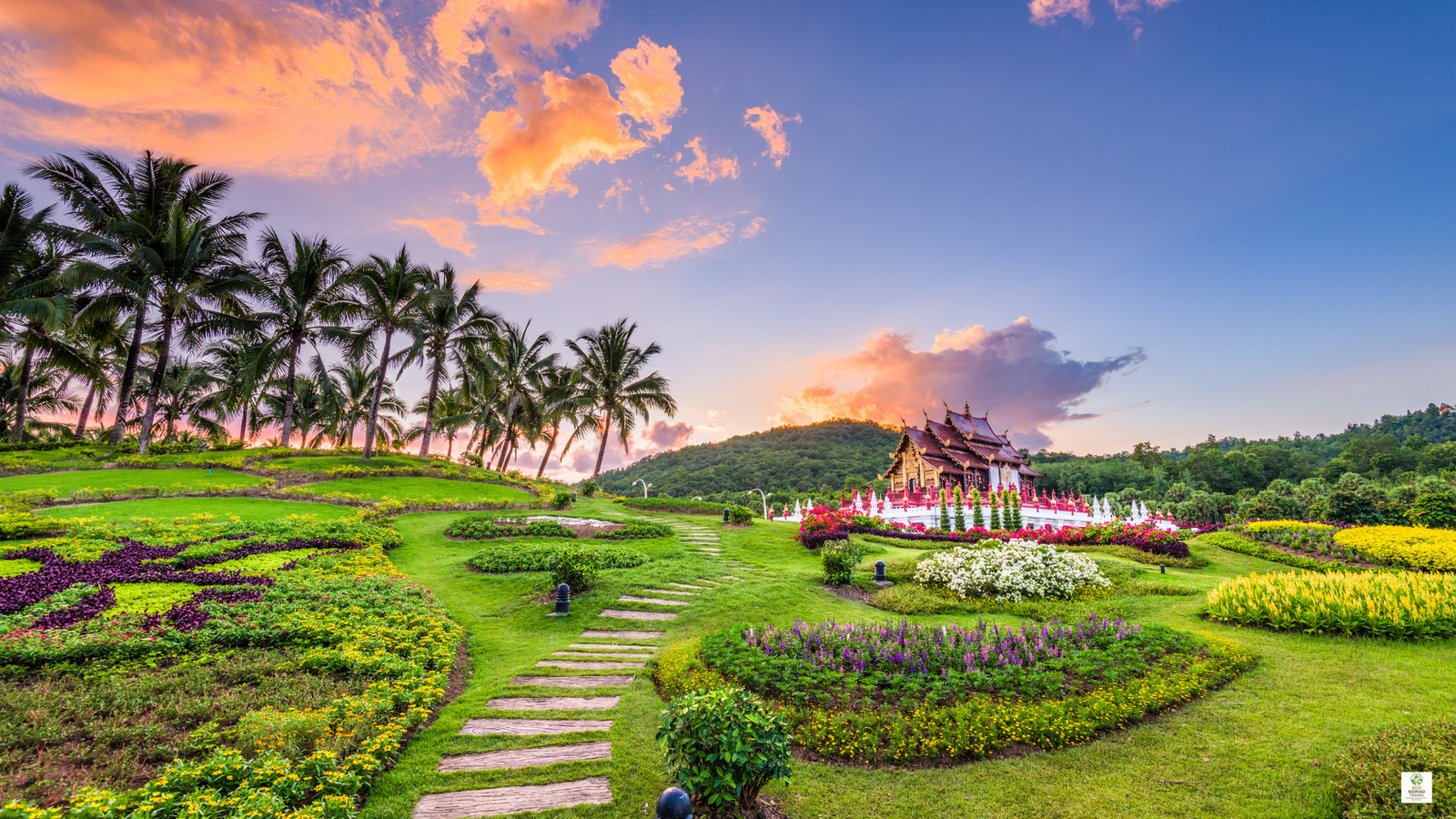
Best time to visit Chiang Mai North Thailand
Chiang Mai changes a lot depending on season. The simplest way to plan is to pick the version of Chiang Mai you want: cooler walking weather, greener landscapes, or fewer crowds. Generally, many travelers aim for the cooler, drier months for long walking days, while the greener months can feel more lush and quiet (but may require more flexibility).
If your goal is a low-impact, walkable week, prioritize conditions that keep you outside: comfortable mornings, manageable afternoons, and evenings that make night markets enjoyable instead of exhausting. That one choice improves everything: you walk more, you transit more, and you spend less time “escaping” the day with taxis.
How to get to Chiang Mai with a rail-first mindset
If you’re building a slower Thailand route, Chiang Mai works well as a “north anchor” that you don’t rush. A rail-first approach usually looks like this: arrive by train when it fits your itinerary (especially if you’re coming from Bangkok), then build a walkable base so you’re not paying the transport “tax” every day.
If you do fly for any leg, treat it like a single strategic hop—not something you repeat across multiple day trips. The biggest footprint wins usually come from reducing the number of transfers and staying longer in one region. If you want a planning framework for that, see: Train vs. plane emissions (2025) and our carbon-neutral travel guide.
Optional: if you want to quantify the difference for your route, you can use our on-site calculator: [carbon_calculator_2025]
Where to stay in Chiang Mai for a calm, car-free trip
The single biggest “make or break” decision for a Chiang Mai North Thailand trip is your base. If your hotel or apartment is walkable to food, cafés, and your daily loop, you’ll naturally do a more low-impact trip: fewer rideshares, fewer rushed transfers, and more time actually enjoying temples, markets, and parks. If your base is inconvenient, you’ll pay a daily “transport tax” in money, time, and stress—especially in hot afternoons.
Old City: best for first-timers who want a simple temple-and-café loop
If your goal is to wake up and immediately be in “Chiang Mai mode,” the Old City is the easiest choice. It’s the most intuitive place to build a car-free Chiang Mai itinerary because your day can be a repeatable loop: temples in the morning, a long café break, a shaded walk, then a night market dinner. It’s also the best base if you want the trip to feel grounded and traditional rather than spread out across districts.
Practical tip: choose lodging that’s close to everyday needs (coffee, a small shop/market, and a quiet street). That way, even if you do one bigger day trip later, your default days stay walkable and calm.
Nimman (Nimmanhaemin): best for remote workers who want modern cafés and an easy routine
Nimman is often the most comfortable “work-friendly” zone: modern cafés, coworking energy, and a neighborhood layout that makes it easy to keep a consistent schedule. If you’re a digital nomad in Chiang Mai (or you’re building long-stay days with work blocks), Nimman is usually the easiest place to build a stable rhythm: same breakfast spot, same work café, same evening walk.
It can feel less “historic” than the Old City, so many travelers do Nimman as the routine base and then make the Old City a few intentional walking days. If you’re balancing productivity with exploration, this approach works extremely well.
Riverside: best for slower mornings, quieter nights, and a more restorative pace
Riverside stays can feel calmer and more restorative, especially if you’re coming off a busy stretch of travel. This can be a great fit if your version of Chiang Mai is early walks, longer reading/work blocks, and evenings that don’t feel chaotic.
The key is location: pick a Riverside stay that still keeps you close enough to your daily needs so you don’t default to rideshares. A quiet base is only “low-impact” if it doesn’t create extra transport.
If you want to compare bases quickly (and filter by walkability-friendly locations): Check Chiang Mai stays on Trip.com → (affiliate link)
If you want a simple framework for choosing accommodation and building a lighter footprint trip, pair this section with: Sustainable travel guide (2025) and Sustainable digital nomad lifestyle.
Low-impact essentials that make Chiang Mai easier
Sustainability isn’t only what you book—it’s how you move through the day. In Chiang Mai North Thailand, the simplest habits have outsized impact: walk first, transit second, rideshare last. Pack a reusable bottle and a small tote so groceries, markets, and takeaway don’t turn into a pile of single-use waste. Add a light rain layer and a breathable sun layer so you’re not buying “just in case” items mid-trip.
eSIMs for Chiang Mai (so you can navigate without stress)
A reliable data connection is one of the most underrated low-impact tools—because it prevents panic decisions. If you’re navigating Old City lanes, finding a café base, or mapping a day trip, having data reduces “friction rides” (those unplanned taxis taken because you’re lost or tired). If you want a simple setup, compare: Airalo eSIM → (affiliate link) or Yesim eSIM → (affiliate link)
Transfers for arrival day (keep it simple, keep it calm)
Arrival day sets the tone. If you arrive late, in rain, or with more than a daypack, a pre-booked transfer helps you avoid the “arrival chaos” that turns into overspending and stress. Two solid options: Welcome Pickups → (affiliate link) or Kiwitaxi → (affiliate link)
Pro tip: if you pre-book, keep your first 12–24 hours light. Do one gentle loop, get groceries, and identify one café you’d return to. That’s how Chiang Mai becomes calm fast.
If you do rent a car for one big nature day, do it intentionally
You can stay low-impact and still choose one strategic “car day” to access wider nature (mountains, viewpoints, or a quieter region). If you go this route, make it a single-purpose day: one primary destination, no multi-stop sprint, and then return to your walkable base. Compare options here: GetRentACar → (affiliate link)
For more practical habits that keep waste low (especially on market-heavy trips), see: Zero-waste packing guide and Low-impact travel habits.
Finally, build in a “slow constraint”: limit yourself to one major destination per day. Chiang Mai rewards this more than most places. When you stop over-optimizing and let neighborhoods, temples, cafés, and markets do the heavy lifting, the trip becomes easier, cheaper, and noticeably more aligned with eco-conscious travel.
What to do in Chiang Mai without overplanning
Chiang Mai is best when your itinerary is built around repeatable loops, not constant movement. Think in “themes”: one cultural loop, one food-and-market loop, one nature reset. This approach helps you travel car-free in Chiang Mai, protects your energy, and makes the city feel livable—especially for longer stays.
Loop 1: Old City temples + café breaks (a calm first-timer structure)
Pick a starting gate, walk a loose loop, and let the day unfold. The goal is not to “collect” temples—it’s to find one or two spaces that actually slow your brain down: a quiet courtyard, a shaded walkway, a place where you sit for ten minutes and feel your shoulders drop. This loop works best early morning or late afternoon when walking feels easier.
Make it practical: choose 2–3 temples, one long café break, and one market stop. That’s enough for a full day that still feels light.
Loop 2: Markets + food as your nightly ritual (the easiest “high value” routine)
One of the best Chiang Mai routines is letting the evening decide dinner. Instead of booking “must-do” restaurants every night, choose one night market or bazaar rhythm and repeat it. It reduces decisions, keeps spending predictable, and makes the city feel familiar fast.
Low-impact bonus: repeating one area means fewer transport hops and less packaging waste, because you can bring your tote and bottle and keep it consistent.
Loop 3: A park-and-neighborhood day (remote-work friendly)
If you’re working remotely, plan one “light output” day: a morning work block, a long midday walk, a simple evening meal. This is how Chiang Mai becomes sustainable for your body and mind—not just a place you pass through.
If you’re using Chiang Mai as a digital nomad base in North Thailand, this loop is what keeps you from burnout while still feeling like you’re traveling.

The best nature day trips near Chiang Mai (pick one)
The fastest way to keep your Chiang Mai North Thailand itinerary low-stress (and low-impact) is to plan one major nature day—not three. Choose one destination that matches your goal (views, forest air, waterfalls, or a quieter mountain town), start early, and keep the route simple. Most travelers enjoy Chiang Mai more when nature is a single highlight day, not a daily transport mission.
Option A: Doi Suthep area for an easy “mountain + temple” reset
If you want the classic Chiang Mai “up high” feeling without a full expedition, the Doi Suthep area is the simplest choice. It’s ideal for travelers who want a half-day or an “early start + back by lunch” rhythm. Go early for cooler air, slower crowds, and better walking.
Best for: first-time visitors, short trips, and anyone who wants a mountain viewpoint plus a cultural layer without committing to a full-day road trip.
Option B: Chiang Dao for big scenery and a quieter pace
If your dream day looks like dramatic limestone mountains and a calmer vibe than the city center, Chiang Dao is the direction many slow travelers fall in love with. The key is to plan it as a single-purpose day: one main viewpoint/scenery area, one long walk, one relaxed meal.
Best for: travelers who want a North Thailand mountain day that feels quieter and less “checklist,” and remote workers who need a nervous-system reset.
Option C: Doi Inthanon-style “big nature” if you want the full mountain day
If you want waterfalls, forest air, and a full “I was in nature today” feeling, plan one big national-park-style day (often associated with the Doi Inthanon direction). This is the most transport-heavy option, which is why it works best as one intentional day.
Best for: hikers and nature-first travelers who want the most “big landscape” payoff. Not ideal if you’re trying to stack multiple day trips in a short timeline.
If you’re building a lower-footprint route around this day-trip structure, you’ll also like: Train vs. plane emissions (2025) and Carbon-neutral travel guide (2025).
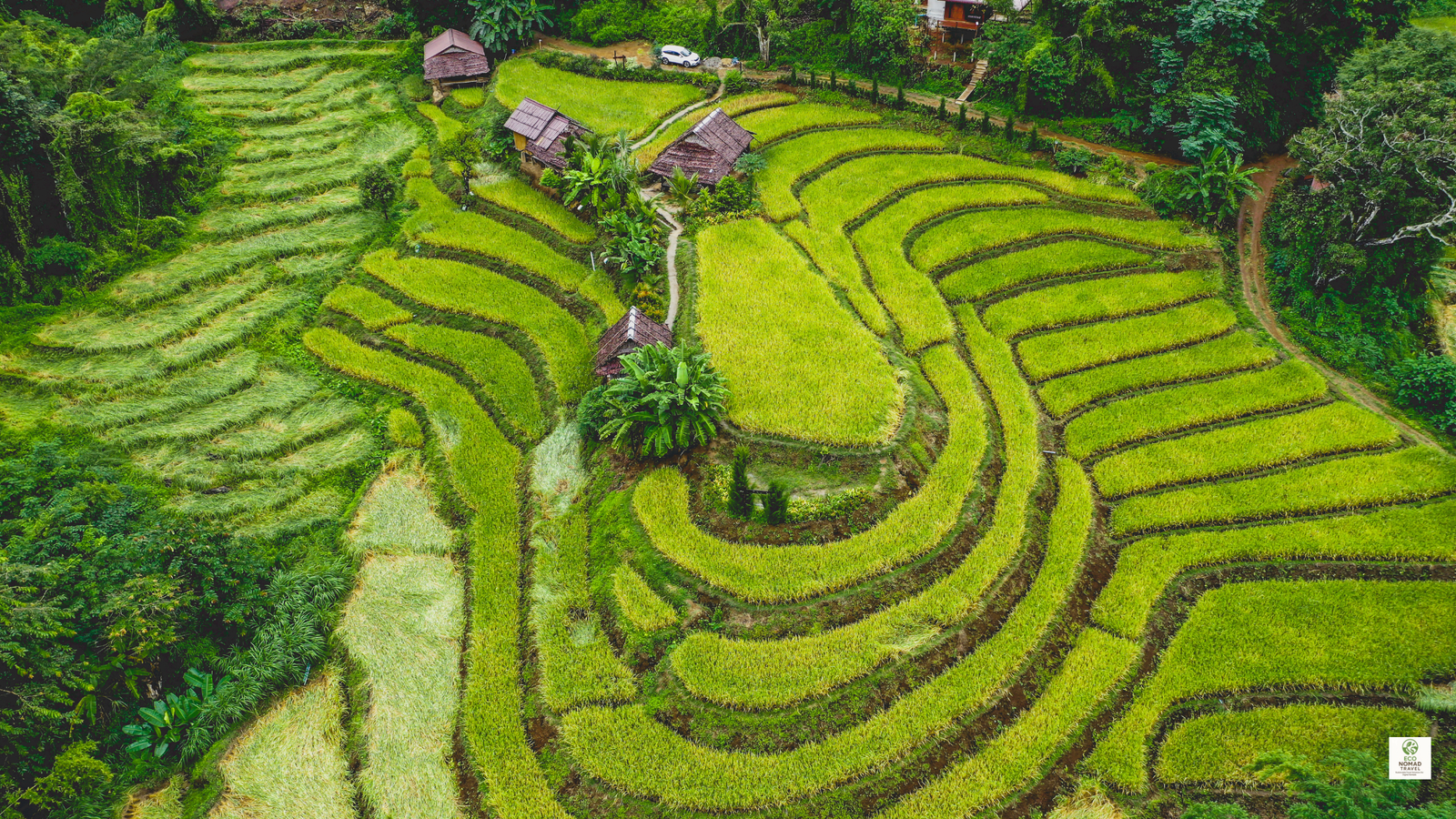
How to plan a rice-terrace day without turning it into a road trip marathon
Rice-terrace scenery is one of the best “slow travel” upgrades in North Thailand—if you plan it with restraint. The mistake most people make is trying to see terraces, mountains, and multiple towns in one day. Instead, choose one region, one main viewpoint area, and a relaxed meal stop. Your photos improve, your stress drops, and the day stops feeling like a transport mission.
If you’re not renting a car, consider a small-group day tour with a realistic route and an early start. If you do rent a car, keep it to one day only and return to your walkable base immediately after. That’s how you keep the overall trip aligned with low-impact travel habits.
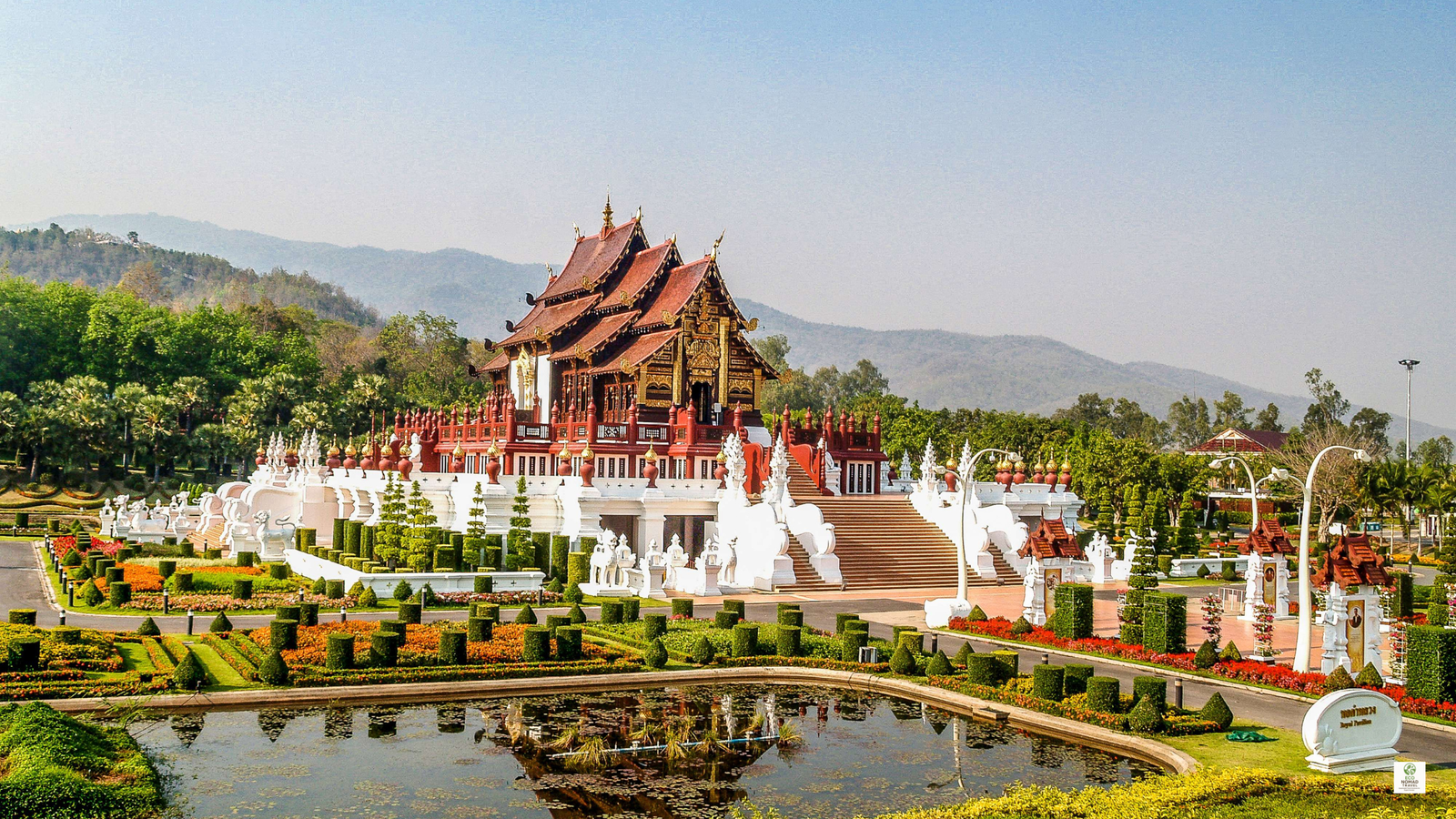
A calm half-day: gardens, a royal pavilion, and cooler air
If you want a low-effort day that still feels special, plan a gardens-and-viewpoints half-day. This is perfect for the middle of your trip when you want something structured, but you don’t want another “big push.” Keep it simple: go early, walk slowly, drink water, sit down often, and treat it like recovery.
This style of day pairs well with the Eco Nomad Travel approach: fewer transfers, more time outside, and enough margin that you can actually enjoy where you are.
Car-free Chiang Mai itineraries (2 days, 4 days, and 7 days)
2 days in Chiang Mai: a clean first-timer plan
- Day 1: Old City temple loop + café breaks + night market dinner.
- Day 2: One “up high” half-day + neighborhood walk + slow evening.
4 days in Chiang Mai: the best city + nature balance
- Day 1: Old City loop (walk) + market night.
- Day 2: Remote-work-friendly day (Nimman cafés + park loop).
- Day 3: One nature day (pick one: Doi Suthep area / Chiang Dao / big park day).
- Day 4: Flex day (repeat your favorite loop + shopping + a long dinner).
7 days in Chiang Mai: slow travel mode (best for remote workers)
- Two light work days with long walking loops and early nights.
- Two city exploration days (Old City + markets + museums/temples at your pace).
- One big nature day (only one).
- One scenery day (rice terraces or gardens) with a deliberately short route.
- One buffer day to rest, catch up, and enjoy Chiang Mai without plans.
Chiang Mai North Thailand: the “slow travel” planning details most people skip
If you searched Chiang Mai North Thailand, you’re probably trying to answer the same practical questions everyone has: Where should I base myself? How do I get around without turning the trip into nonstop driving? What’s actually worth doing beyond the highlight reel? Chiang Mai is one of those places that can feel wildly different depending on your “defaults.” Pick a walkable base, keep your day trips simple, and the city becomes a calm, creative, nature-adjacent home base for remote work, long-stay travel, and eco-conscious itineraries. But if you try to cram Old City, Nimman, temples, mountains, markets, waterfalls, and rice terraces into three days, you’ll spend the whole trip in transit.
The easiest way to plan is to choose your main trip identity first: a digital nomad base (cafés + coworking + neighborhood rhythm), a temple-and-culture trip (pagodas + night markets + slow mornings), or a mountain-and-nature reset (Doi day trips + forest air + early nights). You can absolutely blend all three—but the blend works best when you pick one as the “center,” then add the others as accents. That’s how Chiang Mai stays relaxing instead of becoming a checklist.
Where to stay for a car-light trip (and why your neighborhood matters)
For first-timers, the Old City is the simplest base for walkability, temple loops, and quick access to food, massages, markets, and low-key evenings. If you prefer a modern vibe—creative cafés, apartments, and a more “remote worker” rhythm—Nimman (Nimmanhaemin) is often the easiest fit. The tradeoff is that Nimman can feel more like a lifestyle district than a cultural core, while the Old City can feel busier in the most popular lanes. A strong compromise for many travelers is staying just outside the Old City walls: you keep the walkability without being in the busiest pocket.
A low-impact rule that works: choose a base where you can do two full days without needing a scooter. If your lodging forces daily rides, you’ll spend more money, create more friction, and feel more tired—especially if you’re trying to work remotely. The best Chiang Mai trips have a gentle routine: morning temple walk or café session, a midday rest, and a night market loop. Build that first. Then add the mountains.
Getting around Chiang Mai without overcomplicating it
Chiang Mai is not a “perfect transit” city, but it can still be car-light. Inside your neighborhood, walking is the default. For longer hops, short rides with local transport options can be practical—but the big footprint jump usually comes from stacking too many far-apart stops in one day. Instead, use a “one loop per day” structure: one main area, one main experience, and one flexible meal/market plan. If you’re adding mountains (like Doi Suthep, Doi Inthanon, or scenic viewpoints), treat that as the day’s anchor.
For nature days (mountains, waterfalls, rice terraces), aim for one well-planned day trip rather than multiple rushed ones. Travelers often underestimate how restorative Chiang Mai can be when you keep the schedule light: a pagoda morning, a slow lunch, a shaded park walk, and then a night market. That rhythm is also what makes this destination great for longer stays—less moving around, more actually living.
Temple and pagoda planning that feels real (not rushed)
Chiang Mai’s temples and pagodas hit differently when you visit them like places of meaning—not like photo stops. Go early, keep your voice low, dress respectfully, and give yourself time to sit for a few minutes instead of sprinting to the next pin on your map. If you’re building a “temple day,” plan it as a walkable circuit near your base, then end with a market or a simple dinner. This is one of the easiest ways to keep the trip low-impact while still feeling like you experienced the city.
If you want a reliable starting point for official visitor info (seasonal notes, attractions, events), you can cross-check Thailand’s tourism site here: Tourism Thailand: Chiang Mai events overview .
Connectivity and safety basics for longer stays (eSIM + insurance)
If you’re working remotely in Chiang Mai North Thailand, reliable data is not a luxury—it’s your stress-reduction plan. An eSIM lets you land, connect, and handle maps, banking, and messaging without hunting for a shop on day one. If you want a simple setup, pick one provider and keep it consistent across trips: Airalo eSIM → (affiliate) or Yesim eSIM → (affiliate).
Travel insurance matters most on the exact days people forget about it: scooter accidents, mountain day trips, food poisoning, or a missed connection. If you already have a preferred travel insurance provider or affiliate link, add it in the slot below so it’s always included in this post: Compare travel insurance options → (affiliate)
Finally, if you’re booking accommodations as part of a longer Chiang Mai stay, it helps to browse in a way that matches your pace: choose a walkable neighborhood, prioritize quiet at night, and look for reviews that mention reliable Wi-Fi and desk space. Browse Chiang Mai stays on Trip.com → (affiliate)
Further Reading and Sustainable Work Resources
Editor’s Note
This guide is designed to help you travel Chiang Mai in a way that’s calmer, more walkable, and easier to sustain: one great base, simple daily loops, and one intentional nature day instead of constant transfers.
This article was fact-checked using sustainability data from the World Green Building Council, the Global Ecotourism Network, and peer-reviewed architecture studies. All partner links are vetted for compliance with sustainable business certifications.
FAQs: Chiang Mai North Thailand travel (2025)
Staying and getting around
What’s the best area to stay in Chiang Mai for a walkable trip?
Old City is the simplest first-timer base. Nimman is great for remote work routines. Riverside can feel calmer if your location still keeps you walkable.
Do I need to rent a scooter in Chiang Mai?
Not if you choose the right base. Most travelers can walk, use occasional rideshares, and plan one intentional nature day without depending on a scooter.
Is Chiang Mai good for remote workers and digital nomads?
Yes—especially if you like café-based work blocks, neighborhood routines, and a slower pace that still offers nature access.
How do I keep transport low-impact in Chiang Mai?
Walk first, rideshare last. Choose a base near your daily needs so you don’t pay a “taxi tax” every day.
What’s the easiest way to reduce stress on arrival day?
Pre-book a transfer if you arrive late, keep your first day light, and do one short walking loop to get oriented.
Timing and planning
How many days do I need in Chiang Mai?
Two days is a solid intro, four days feels balanced, and seven days is ideal if you’re remote working or traveling slow.
When is the best time to visit Chiang Mai North Thailand?
Choose your priorities: cooler walking weather vs greener landscapes. For most people, comfortable walking conditions create the best low-impact trip.
Is Chiang Mai expensive?
It can be, depending on lodging. Staying walkable often reduces transport spending, and repeating a simple food routine helps control costs.
What’s a good “first day” plan in Chiang Mai?
Pick one walking loop, find one café you’d return to, and make your evening meal a market routine. Don’t schedule a big day trip on day one.
How do I avoid overplanning in Chiang Mai?
Use a “one major destination per day” rule. Repeat what you love. Add one nature day only.
Nature, mountains, and ethics
What’s the best nature day trip from Chiang Mai?
Pick one: a simple Doi Suthep-style half-day, Chiang Dao scenery, or a full national-park-style day for big nature.
Is Chiang Dao worth visiting?
Yes if you want dramatic scenery and a calmer pace. It’s best as a single-purpose day, not a multi-stop rush.
How do I plan a rice-terrace day responsibly?
One region, one main viewpoint area, and lots of margin. Avoid building a long driving route just to “see it all.”
How do I keep nature days low-impact?
Go early, choose one destination, bring reusables, stay on established paths, and avoid stacking multiple big transport days.
Should I book animal-related activities near Chiang Mai?
Be careful. Prioritize education-first experiences with transparent welfare standards, and avoid anything that feels exploitative or rushed.
Practical essentials
What should I pack for Chiang Mai?
Breathable layers, a light rain layer, comfortable walking shoes, a reusable bottle, and a small tote for markets and groceries.
Do I need an eSIM for Chiang Mai?
It helps a lot—especially for navigation and reducing arrival stress. Reliable data prevents last-minute, high-friction decisions.
Is it easy to find good cafés and work spots?
Yes. Choose a base that matches your work rhythm (often Nimman or central zones), and build a repeatable routine.
How do I choose a good hotel or apartment base?
Prioritize walkability: groceries, cafés, and your daily loop within easy distance. A slightly higher nightly rate can reduce transport cost and stress.
What’s the simplest way to make Chiang Mai feel less overwhelming?
Do fewer things, deeper. One loop per day, one nature day, and repeat the places that feel good.
Disclosure: This post may contain affiliate links. If you use them, we may earn a commission at no extra cost to you.
Join the Sustainable Work Movement
Get visual guides, packing systems, and slow, rail-first itinerary ideas on our Pinterest.




Explore Eco Nomad Travel
📚 Core Guides
🧭 Planning & Logistics
🗺️ Destinations & Seasons
Jeremy Jarvis — founder of Eco Nomad Travel, sustainable travel writer, and advocate for regenerative tourism. His work focuses on low-impact mobility, eco-friendly digital nomad life, and climate-positive travel.
Legal
Affiliate DisclaimerPrivacy Policy
Terms of Service
Image & Media Notice
Cookie Policy
Contact
Affiliate Disclosure: Some links on Eco Nomad Travel are affiliate links, meaning we may earn a small commission at no extra cost to you. This supports our mission to inspire responsible and low-impact travel worldwide.
Connect
✅ Trusted Official Sources
Plan smarter eco trips
Try our free Sustainable Travel Tools for Digital Nomads – carbon calculator, train vs plane comparator, and more.
Open Tools Hub