
Figuring out the cost of a trip to Ireland is a common question for many travelers. For a comfortable, mid-range traveler, you’re looking at $150 to $250 USD per day (€140–€230). If you’re backpacking on a tighter budget, you can get by on as little as $70–$90 USD a day (€65–€85). For those after a bit of luxury, the sky’s the limit, but costs can easily top $500 USD per day (€465).
These numbers give you a solid starting point. They cover your bed, meals, local transport, and a few activities—but not your international flight to get here.
This guide is built to give you a clear, data-driven look at every expense you’ll run into. We’re big believers in a sustainable, rail-first travel philosophy, and we’ll show you how to soak up Ireland’s incredible beauty without breaking the bank or harming the planet. By swapping a rental car for the train and picking eco-conscious stays, you can make a real difference to both your wallet and your carbon footprint.
Key Takeaways
- Average Daily Cost: A mid-range traveler should plan for $150–$250 USD (€140–€230) per day, while a budget traveler can manage on $70–$90 USD (€65–€85).
- Rail is Your Friend: Choosing the train over a rental car is one of the single best ways to cut both your costs and your carbon footprint. Booking in advance can save you over 50%.
- Shoulder Season Savings: Visiting in spring (April-May) or autumn (September-October) can knock 15-30% off flight and accommodation prices compared to the summer peak.
- Accommodation is Your Biggest Expense: Where you sleep will have the biggest impact on your daily spend. Booking well in advance is key to managing the cost of a trip to Ireland.
- Cash is Still Handy: While cards are widely accepted, it’s a good idea to have €50–€100 EUR ($54–$108 USD) in cash for small pubs, local markets, and rural shops.
- Stay Connected Easily: Instead of costly roaming, consider an eSIM for affordable data. Providers like Airalo eSIM offer reliable plans for travelers.
Editor’s Pick: Best Value for Sustainable Travel
Irish Rail Tourist Tickets: If you’re planning a multi-city trip, the tourist tickets from Iarnród Éireann (Irish Rail) are a fantastic deal. The Trekker Four Day pass, for instance, gives you four straight days of unlimited rail travel for about $118 USD (€110 EUR). It’s a practical, low-carbon alternative to driving that lets you sit back and soak in the scenery.
Breaking Down Your Ireland Travel Budget

Figuring out the cost of a trip to Ireland isn’t about finding one magic number; it’s about understanding the main things you’ll spend money on. While Ireland might not top the list of the cheapest countries in Europe to visit, a bit of smart planning makes it surprisingly affordable.
Your final tally will almost always come down to four core things: where you sleep, how you get around, what you eat, and the activities you choose.
Think about it this way: choosing a cozy, family-run B&B over a big hotel chain doesn’t just save you cash; it funnels your money directly into the local community. In the same way, using the brilliant Irish Rail network to hop between cities is often far cheaper—and much more sustainable—than renting a car, especially once you add up fuel, insurance, and parking.
This guide breaks down each of these pieces, with real price ranges and insider tips for saving money without cutting corners on the experience. Whether you’re a digital nomad settling in for a few weeks or a couple on a whirlwind one-week adventure, you’ll find what you need to plan a trip that’s both memorable and budget-friendly. We’ll cover it all, from hostel prices in Dublin to the entry fee for the majestic Cliffs of Moher.
Daily Budget Guide: What a Trip to Ireland Really Costs
Before we dive deep, let’s get a ballpark idea of what you’ll actually spend per day. The total cost of a trip to Ireland really boils down to your travel style, but thinking in daily chunks makes planning feel much less overwhelming.
Whether you’re counting every euro or happy to splurge a little, a clear daily budget is your best friend for a stress-free adventure.
Estimated Daily Cost of a Trip to Ireland Per Person (USD/EUR)
Your daily budget will look very different depending on whether you’re staying in hostels and eating from markets or booking boutique hotels and dining out. Recent analysis puts a typical three-day trip at around $1,500 USD per person for a couple traveling together, which works out to about $500 USD per day.
To give you a clearer picture, here’s how those daily costs break down across different travel styles.
| Expense Category | Budget Traveler | Mid-Range Traveler | Luxury Traveler |
|---|---|---|---|
| Accommodation | $30–$50 USD (€28–€47) | $80–$150 USD (€75–€140) | $300+ USD (€280+) |
| Food & Drink | $25–$40 USD (€23–€37) | $50–$80 USD (€47–€75) | $120+ USD (€112+) |
| Transport | $10–$15 USD (€9–€14) | $20–$40 USD (€19–€37) | $60+ USD (€56+) |
| Activities | $5–$15 USD (€5–€14) | $25–$50 USD (€23–€47) | $100+ USD (€93+) |
| Daily Total | $70–$120 USD (€65–€112) | $175–$320 USD (€164–€299) | $580+ USD (€541+) |
Note: These are estimates to help you start planning. Your actual spending will vary based on your specific choices and travel pace.
As you can see, the gap between a shoestring trip and a comfortable mid-range one is significant.
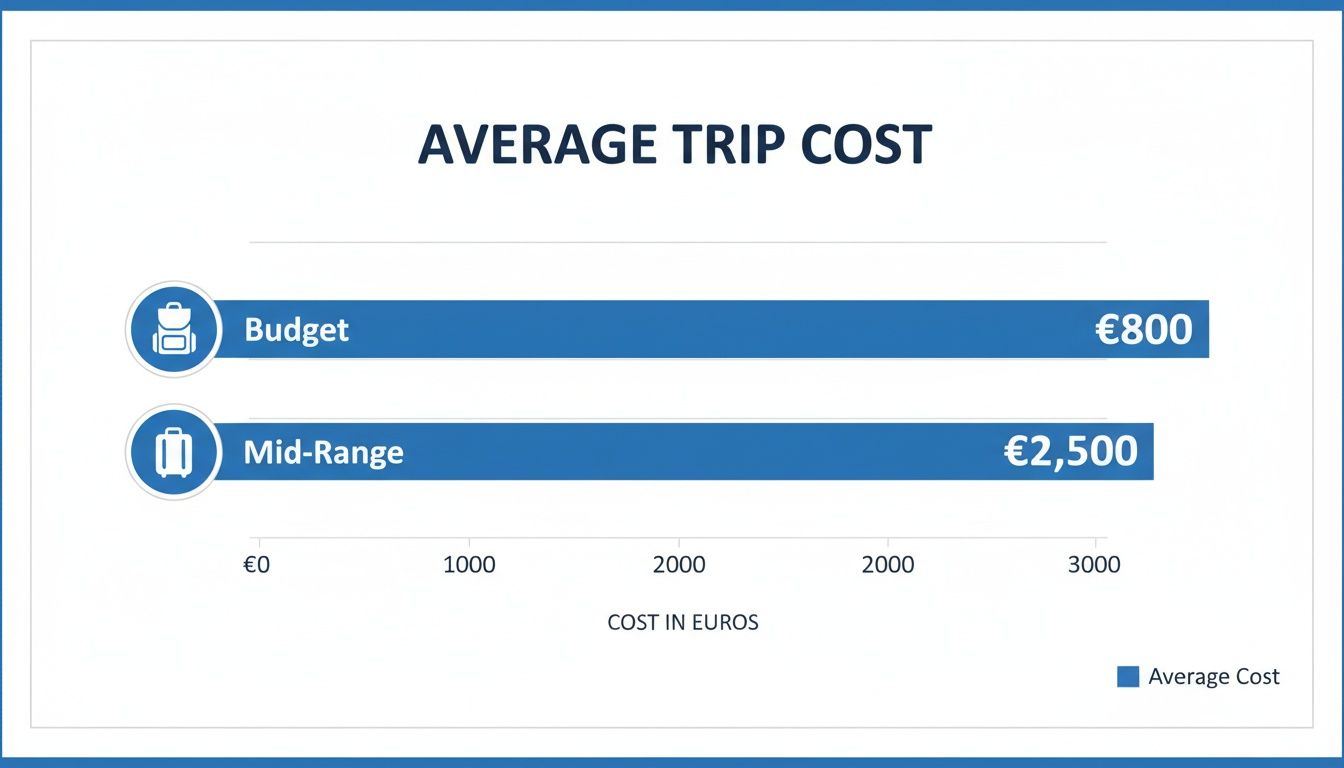
This chart really drives home how much planning can influence your total cost. A few smart decisions can easily cut your expenses in half, making Ireland accessible no matter your budget. These numbers are a great starting point, but with the right strategies, you can bring them down even further.
To learn more about keeping costs low across the continent, check out our guide on how to find cheap travel in Europe.
Getting Around Ireland: The Smart, Sustainable & Affordable Way
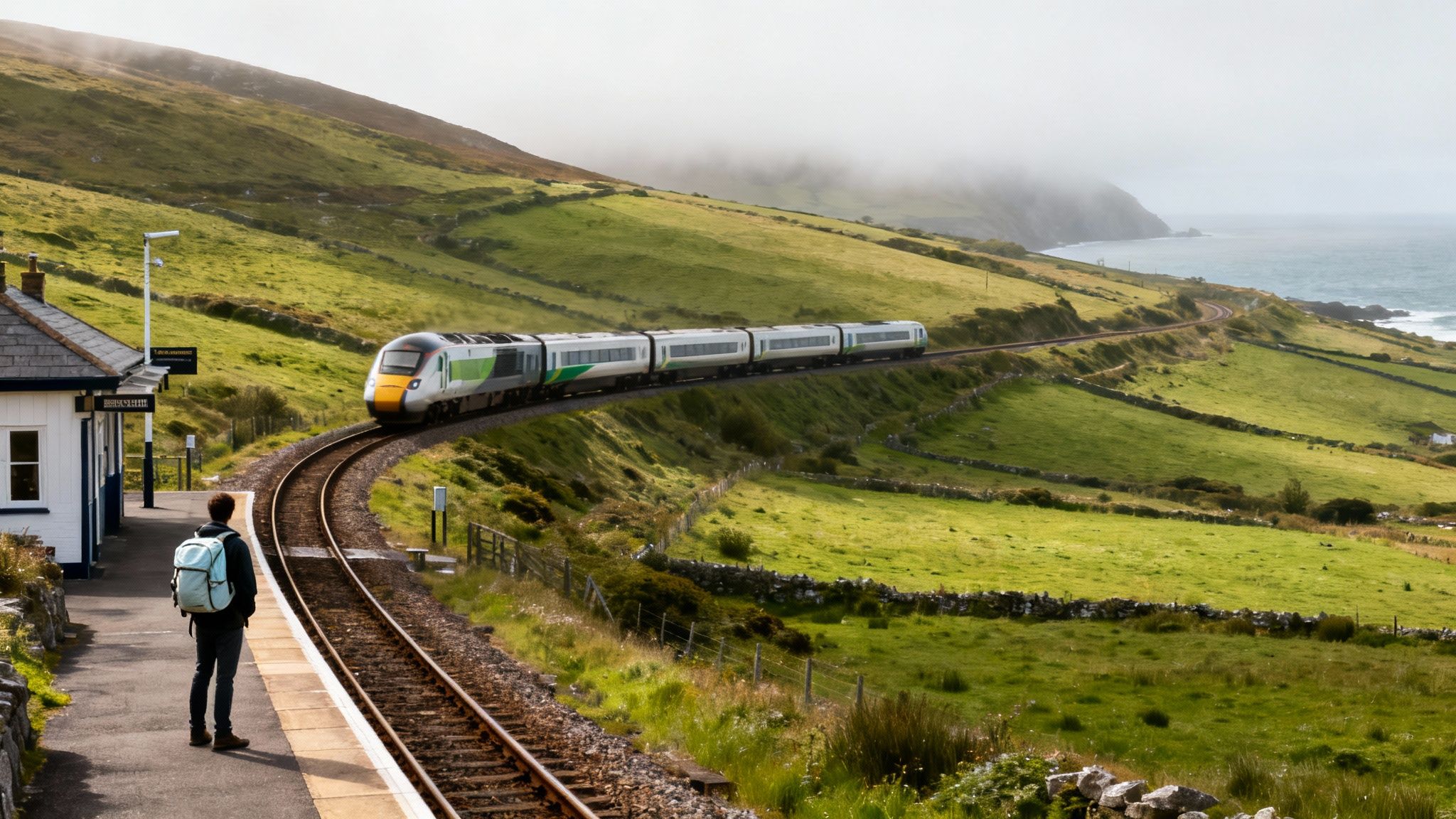
One of the smartest ways to manage your trip to Ireland cost is to rethink how you move around. The classic image of driving narrow country lanes is romantic, sure, but it comes with a hefty price tag—both for your wallet and the environment.
A rail-first approach isn’t just a sustainable choice. It’s a strategic move to save serious money and see the country from a much more relaxed point of view.
Ireland’s national rail network, Iarnród Éireann (Irish Rail), connects every major city and a surprising number of charming towns with real efficiency. You get to glide through that iconic green countryside, dodging the stress of left-side driving, the endless hunt for pricey parking, and the sting of fuel costs.
Choosing the train isn’t just about cutting your carbon emissions; it’s one of the best ways to keep your daily budget firmly in check. The key is to plan ahead.
Why Irish Rail Makes Financial Sense
Booking train tickets in advance can slash your travel expenses. Unlike car rentals, where last-minute deals are a myth, Irish Rail rewards early birds. Lock in your tickets a few weeks out, and you can often cut the price by 50% or more compared to buying them on the day. You can compare and book tickets for trains in Europe on Trip.com.
Take the scenic two-and-a-half-hour journey from Dublin Heuston to Galway. A spontaneous traveler might pay $40 USD (€37 EUR) or more for a one-way ticket. But if you book ahead, you can often snag that same seat for as little as $18 USD (€17 EUR). These are the kinds of savings that really add up.
This rule holds true for other popular routes linking hubs like Dublin, Cork, Limerick, and Belfast. Over a multi-city trip, that’s cash freed up for things that matter more, like a fantastic local food tour or entry to a stunning heritage site.
A Real-World Cost Comparison
Let’s break down the actual numbers. A small rental car in Ireland during the shoulder season might advertise for around $50 USD (€47 EUR) a day. But that’s just the start.
That base price doesn’t include mandatory insurance (another $20–$30 USD daily), fuel (which is far more expensive than in the US), or city parking fees that can easily hit $25 USD (€23 EUR) per day. If you do need a car for remote areas, you can compare options on a platform like GetRentACar.
A week-long car rental, once all the hidden costs are tallied, could easily top $500 USD (€465 EUR). In stark contrast, a series of pre-booked train journeys for the exact same itinerary might only set you back $120–$180 USD (€112–€168 EUR).
For travelers planning a lot of rail journeys, it’s worth exploring different ticket types. To get a handle on what might work for your trip, check out our guide on the best rail passes for Europe.
Getting Around Cities for a Few Dollars
Once you arrive in a city, the savings continue. Major hubs like Dublin have excellent tram (Luas) and bus networks that are efficient and incredibly cheap. This is where a rail-first strategy truly shines—you arrive right in the city center and can immediately tap into low-cost local transit.
A few real-world examples:
- Train tickets between Dublin and Cork can start from just $16 USD (€15 EUR) for early departures.
- City tram fares in Dublin range from $1.80 to $2.70 USD (€1.70–€2.50 EUR) for an adult single.
- A standard 90-minute bus fare in Dublin is just over $2 USD (€1.85 EUR).
- In other cities like Cork and Galway, single bus fares are even cheaper, often under $1.50 USD (€1.40 EUR).
Grabbing a TFI Leap Card, a reloadable travel card, is the easiest way to get the best value, offering discounted fares on most public transport services nationwide. By combining intercity trains with local buses and trams, you can build a flexible, low-impact itinerary that lets you see the best of Ireland without the cost or carbon footprint of a car.
From Eco-Hostels to Green Hotels: Sustainable Stays in Ireland
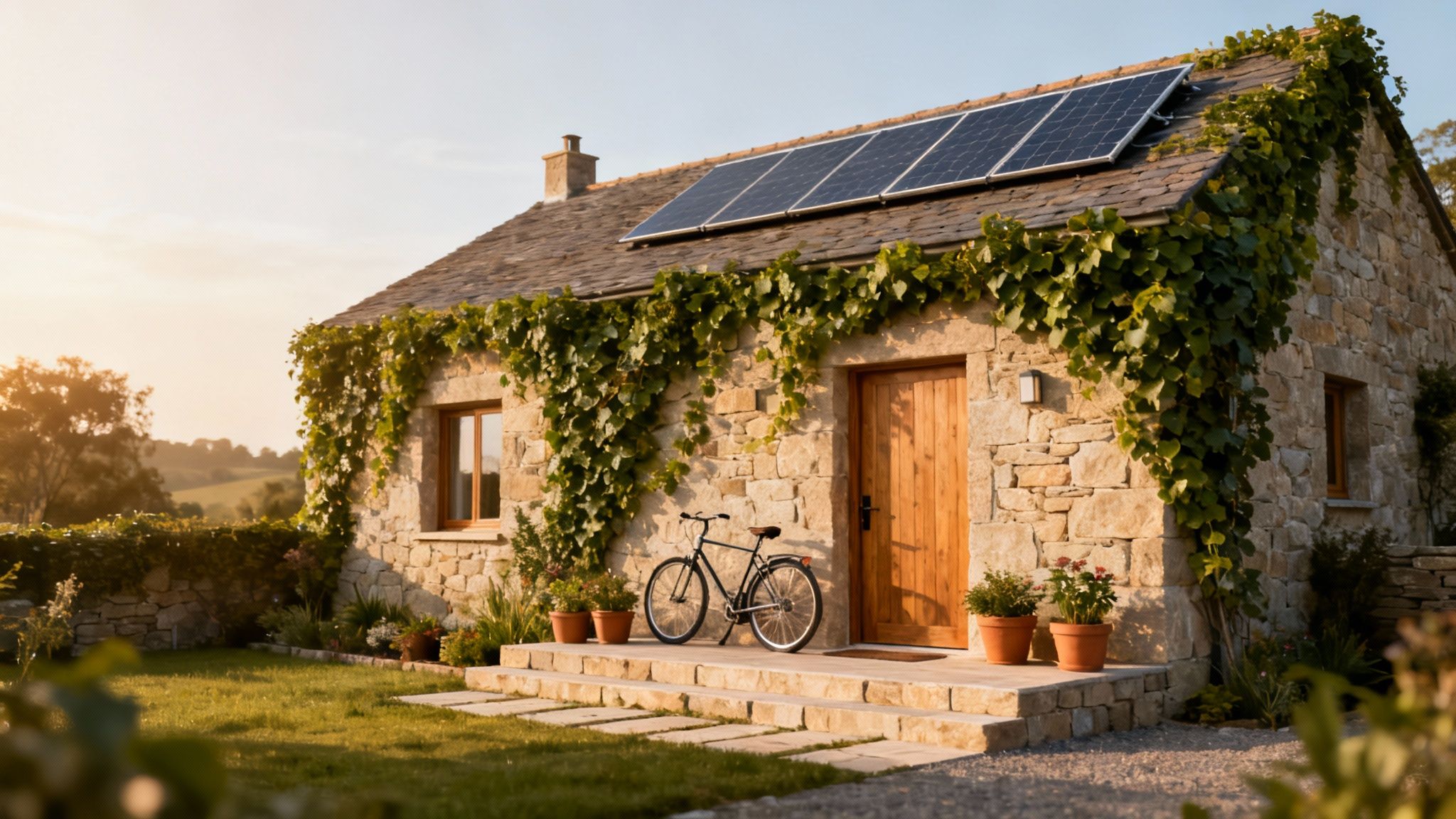
Right after transport, the place you rest your head will have the biggest say in your total trip cost to Ireland. The good news? The country has a fantastic spread of sustainable lodging, from buzzing eco-hostels to quiet green hotels, that work for almost any budget. You can find a range of options on sites like Trip.com.
Choosing wisely here isn’t just about shrinking your carbon footprint. It can genuinely lower your daily spending and plug you into a more authentic side of Ireland.
Your accommodation budget will swing quite a bit depending on where you are and what time of year you visit. A dorm bed in Dublin is a classic budget move, while a family-run B&B in a rural village gives you that perfect blend of value and real Irish hospitality.
This kind of strategic thinking is gold for digital nomads or anyone planning a longer workation. Many guesthouses and B&Bs offer solid discounts for weekly or monthly stays, making an extended, low-impact trip much more affordable than you might think. Let’s dig into the numbers.
Sustainable Stays for Every Budget
Ireland’s commitment to green tourism is getting stronger every year, with more properties earning certifications for their environmental efforts. This makes it much easier to find a place that fits your values without emptying your wallet.
Here’s a breakdown of what you can expect to pay per night for a stay that feels good:
- Certified Eco-Hostels: Perfect for solo travelers and budget adventurers. A dorm bed in a green-certified hostel in a city like Dublin or Galway will typically run you $35–$60 USD (€33–€56 EUR). If you want more privacy, private rooms are usually available for $90–$140 USD (€84–€130 EUR).
- Locally-Owned B&Bs and Guesthouses: For a more personal feel and incredible value, this is the sweet spot. Expect to pay $90–$170 USD (€84–€158 EUR) per night for a double room, which almost always includes a massive, locally sourced Irish breakfast.
- Green Hotels: In the bigger cities, hotels with recognized sustainability certifications generally range from $180–$300+ USD (€168–€280+ EUR) per night. These spots often invest in energy-efficient systems, smart waste reduction, and real support for their local communities.
The Power of a Walkable Home Base
Basing yourself in a walkable city like Galway or Cork does more than save a few dollars on bus fare—it completely changes how you experience Ireland. Staying central means you can explore historic lanes, lively markets, and cozy pubs entirely on foot.
This approach is a perfect match for a rail-first travel style. You can catch an affordable intercity train to your base city and then rely on your own two feet for local exploring. It’s an immersive, low-impact way to see the country.
If you’re looking for unique stays beyond the city centers, our guide to the world’s best eco-friendly lodges has plenty of inspiration for truly regenerative travel.
Long-Stay Deals for Nomads and Remote Workers
If you’re planning on staying in Ireland for more than a week, don’t be shy about asking for a long-stay discount. Many independent B&Bs and apartment rentals will happily offer a reduced rate for bookings of a week, a fortnight, or a month, especially outside the peak summer rush.
This simple question can be a game-changer for your budget, often knocking the nightly rate down by 15-25%. It lets you settle into a comfortable, walkable base where you can work productively while soaking up the local rhythm of life.
Eating Well in Ireland Without Breaking the Bank
Let’s be honest, a huge part of any trip to Ireland is the food and drink. From cosy pubs to bustling city markets, the culinary scene is woven into the very fabric of the culture. But it doesn’t have to be the part of your budget that spirals out of control. With a few local tricks, you can enjoy hearty, authentic meals that support small producers without emptying your wallet.
The key is simply to balance your splurges with smarter, everyday options. Think of it less as “budgeting” and more as eating like a local. This approach not only saves you a surprising amount of money but also plugs you directly into the local food scene.
One of the easiest wins is to embrace self-catering for at least a few meals. A visit to a place like the legendary English Market in Cork or Dublin’s Temple Bar Food Market isn’t just a supply run—it’s an experience. You get to sample fresh, regional produce and chat with the people who grow it, all while seriously cutting down your daily food spend.
Navigating Pubs, Cafes, and Markets
A trip to Ireland without a pub meal is hardly a trip at all. Pubs are far more than just places to grab a pint; they’re the beating heart of local communities and, happily for us, often serve some of the best-value food around. You’ll find delicious, filling meals that are a fraction of the price of a formal restaurant.
To help you get a feel for your daily budget, here are some typical costs. Just remember, prices will almost always be higher in central Dublin and other major tourist hubs.
- Pint of Guinness: $6.50–$8.50 USD (€6–€8 EUR)
- Cup of Coffee (Cappuccino): $3.75–$5.00 USD (€3.50–€4.60 EUR)
- Main Course in a Pub (e.g., Fish & Chips, Stew): $17–$24 USD (€16–€22 EUR)
- Sandwich from a Deli/Cafe: $7–$11 USD (€6.50–€10 EUR)
- Three-Course Restaurant Meal (Mid-Range): $55–$85 USD (€50–€80 EUR) per person
Practical Tips for Affordable Eating
Beyond choosing a pub over a high-end restaurant, there are a few other local habits that will help you save. Keep an eye out for “early bird” specials, which are fixed-price menus available before the main dinner rush (usually between 5:00 PM and 7:00 PM). These deals are fantastic, often giving you two or three courses for what you’d pay for a single main dish later on.
A true Irish institution is the “carvery” lunch. Look for pubs advertising them—it’s a classic dining style where you get a huge plate of roasted meat, potatoes, and vegetables for a very fair price, often around $16–$20 USD (€15–€18 EUR). It’s a proper, filling meal that can easily see you through until a light dinner.
Finally, don’t underestimate local bakeries and delis. Grabbing a freshly made sausage roll or a gourmet sandwich is the perfect way to have a quick, cheap, and genuinely delicious lunch on the go. Pair it with a piece of fruit from a local grocer, and you’ve got the ideal meal for a day of exploring.
Budgeting for Activities and Attractions
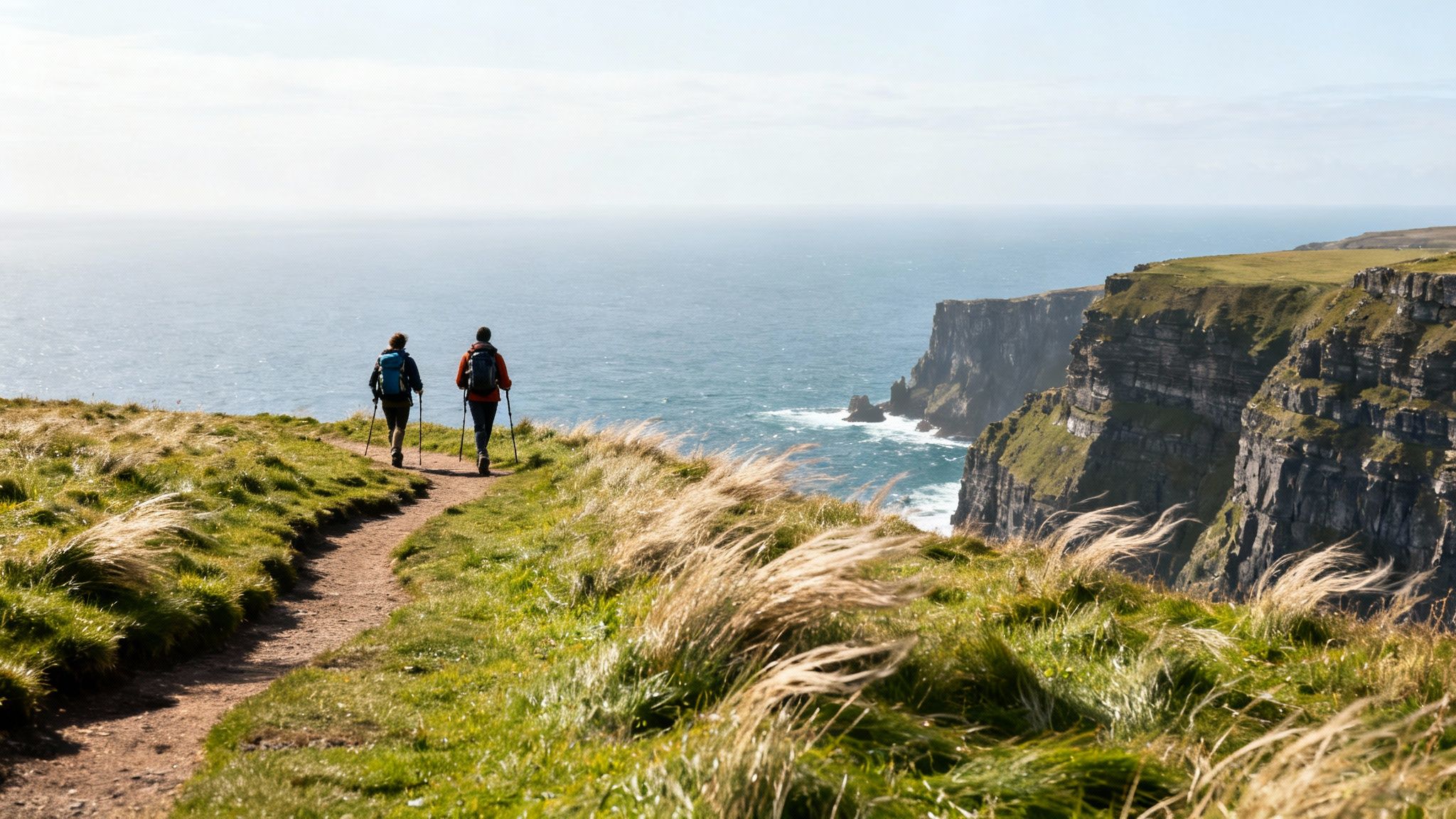
A huge chunk of your cost of a trip to Ireland will come down to what you decide to see and do. The good news? Ireland’s greatest attraction—its wild, dramatic landscape—is often completely free to explore. The real secret to an affordable and unforgettable trip is balancing these natural wonders with a few iconic paid sites.
So many of the most rewarding experiences won’t cost you a single dollar or euro. Think of a windswept hike in Killarney National Park or a slow, scenic drive along a quiet stretch of the Wild Atlantic Way. These kinds of low-impact activities connect you directly to the country’s soul.
Even so, you’ll probably want to budget for a few must-see historic sites and cultural experiences. A little planning here goes a long way and can save you a surprising amount of money, especially if you plan on visiting several locations.
Major Attraction Costs and Savings
While the parks and coastlines are free, Ireland’s most famous artificial landmarks do have entrance fees. It’s almost always a good idea to book these online in advance—not just to secure a spot but often to get a better price.
Here’s a rough idea of what to expect for the big names:
- Cliffs of Moher: Tickets usually run between $7.50–$13 USD (€7–€12 EUR) per adult when you book online, with prices varying by entry time.
- Guinness Storehouse (Dublin): A standard adult ticket will start at around $30 USD (€28 EUR).
- Blarney Castle & Gardens: Expect to pay about $21.50 USD (€20 EUR) for one adult ticket.
If you’re a history buff planning to hit several castles and heritage sites, the OPW Heritage Card is an absolute game-changer. For a flat fee of roughly $43 USD (€40 EUR), it gives you unlimited access to over 80 state-managed sites for an entire year, including gems like Brú na Bóinne and the Rock of Cashel.
Finding Authentic, Low-Cost Experiences
Stepping off the main tourist trail opens up a world of authentic and affordable activities. Consider spending an afternoon just exploring the colorful streets of a small town like Kinsale, browsing a local farmer’s market, or catching a traditional music session in a village pub. These experiences often cost little to nothing but provide some of the richest memories.
Exploring these less-traveled areas also aligns perfectly with sustainable travel. We dig deeper into how to identify these kinds of authentic and low-impact options in our guide on what makes a tour truly sustainable. By choosing activities that support small, local communities, you help build a more regenerative form of tourism that benefits everyone.
This article was fact-checked using sustainability data from the World Green Building Council, the Global Ecotourism Network, and peer-reviewed architecture studies. All partner links are vetted for compliance with sustainable business certifications.
FAQ
General essentials
1) What currency is used in Ireland?
The Republic of Ireland uses the Euro (€). If you’re also visiting Northern Ireland (UK), you’ll need Pound Sterling (£) there.
2) Is Ireland expensive compared to other European destinations?
Ireland is moderately expensive, especially in Dublin and during summer. However, if you book early and use trains, it’s very possible to keep the cost of a trip to Ireland in a reasonable mid-range zone.
3) Can I drink the tap water in Ireland?
Yes. Tap water is generally safe to drink across Ireland. Bringing a reusable bottle is a simple way to save money and reduce plastic waste.
4) Do I need a power adapter in Ireland?
Yes. Ireland uses the Type G plug (UK-style) and 230V. Most modern electronics are dual-voltage, but check your charger label (look for “100–240V”).
Timing, weather, and trip length
5) What’s the cheapest time to visit Ireland?
For better value, aim for the shoulder seasons: April–May and September–October. You’ll often find noticeably lower airfare and room rates than peak summer.
6) How many days do I need for a first trip to Ireland?
7–10 days is the sweet spot. It’s enough time for Dublin plus one or two regions (for example, Galway + Cliffs of Moher, or Cork + Killarney) without turning your trip into a constant sprint.
7) What should I expect from Ireland’s weather?
Expect variety—sometimes in the same hour. Pack for wind + light rain year-round, and bring layers so you can adjust quickly as conditions change.
8) What’s the best way to keep costs down if I’m staying longer?
Slow travel is your best friend. Staying 7+ nights in one base city can reduce transport costs, cut decision fatigue, and often unlock weekly discounts—especially outside summer.
Transport and getting around
9) Is it better to rent a car or use public transport?
For cost and sustainability, a rail-first plan is usually the best move. Trains between major cities are comfortable and often cheaper than a car once you add insurance, fuel, and parking. A car makes sense mainly for remote areas where transit is limited.
10) How can I save money on Irish Rail tickets?
Book ahead. Irish Rail pricing typically rewards early purchase. Even a few weeks’ lead time can make a meaningful difference compared to buying on the day of travel.
11) Are there passes that help reduce local transport costs?
Yes. In cities, a TFI Leap Card can lower fares on eligible buses and trams. It’s one of the simplest “small wins” for keeping day-to-day transport spending under control.
12) How much should I budget for local transport per day?
Many travelers land around $10–$40 USD per day depending on how much you move. If you set up a walkable base and use transit strategically, it’s easier to stay near the lower end.
Stays, food, and daily spending
13) What’s the biggest factor in the cost of a trip to Ireland?
Accommodation is usually the biggest driver—especially in Dublin and during summer. Booking early and staying in locally owned guesthouses or B&Bs can keep your nightly average in a healthier range.
14) What’s a realistic food budget per day?
Budget travelers can often manage around $25–$40 USD by mixing markets, bakeries, and casual spots. Mid-range travelers commonly spend $50–$80 USD depending on how often they sit down for pub meals and dinner.
15) Is Ireland good for vegetarian and vegan travelers?
Yes—especially in cities like Dublin, Cork, and Galway. In addition, many pubs now offer at least one solid plant-based option, which makes staying on budget easier without hunting too hard.
16) Do I need cash, or is card enough?
Cards are widely accepted. Still, it’s smart to carry €50–€100 for small purchases, rural spots, or the occasional “cash only” moment.
Costs, passes, and sustainable choices
17) How much should I budget for a 7-day Ireland trip (excluding flights)?
A practical mid-range estimate is often around $1,200–$1,800 USD for one week, excluding flights. Budget travelers can sometimes do $600–$900 USD with hostels, simple meals, and a rail-first itinerary.
18) What are common hidden costs travelers forget?
The usual surprises are car insurance add-ons, parking, fuel, tolls, and ATM/foreign transaction fees. Planning your route and paying attention to banking fees can prevent most of these.
19) Are there tourist passes that can save money on attractions?
Yes. If you plan to visit several state-managed heritage sites, the OPW Heritage Card can offer excellent value. It’s especially helpful for travelers building a history-heavy itinerary.
20) What’s the simplest way to travel more sustainably in Ireland?
Choose a train-first itinerary, stay in locally owned lodging, and build your days around low-impact activities like hiking, cycling greenways, and local markets. It’s good for your budget and better for the places you’re visiting.
Join the Sustainable Work Movement
Want more rail-first itineraries, low-impact packing systems, and walkable base-city ideas?

Explore Eco Nomad Travel
📚 Core Guides
🧭 Planning & Logistics
🗺️ Destinations & Seasons
Jeremy Jarvis — founder of Eco Nomad Travel, sustainable travel writer, and advocate for regenerative tourism. His work focuses on low-impact mobility, eco-friendly digital nomad life, and climate-positive travel.
Legal
Affiliate DisclaimerPrivacy Policy
Terms of Service
Image & Media Notice
Cookie Policy
Contact
Affiliate Disclosure: Some links on Eco Nomad Travel are affiliate links, meaning we may earn a small commission at no extra cost to you. This supports our mission to inspire responsible and low-impact travel worldwide.
Connect
✅ Trusted Official Sources
Plan smarter eco trips
Try our free Sustainable Travel Tools for Digital Nomads – carbon calculator, train vs plane comparator, and more.
Open Tools Hub