
Welcome to the definitive guide on Costa Rica sustainable tourism, an approach that’s woven into the very fabric of the nation. More than just a friendly greeting, the famous ‘Pura Vida’ is a national philosophy—a deep-seated commitment to living in harmony with nature and prioritizing community well-being. It shapes every part of a journey here, making Costa Rica a true global leader for eco-minded travelers.
The True Meaning of Pura Vida in Costa Rican Tourism
Pura Vida—literally ‘pure life’—is the heartbeat of Costa Rica. It’s a mindset built on a profound respect for nature, a slower and more deliberate pace of life, and a focus on collective happiness. This isn’t just a clever marketing slogan; it’s a government-backed commitment that has methodically transformed the country into a blueprint for responsible travel.
For decades, Costa Rica has been at the forefront of conservation and ecotourism. The results are real and tangible. Over a quarter of the country’s land is protected in national parks and reserves, and robust certification programs are in place to help travelers make genuinely responsible choices. This national strategy has successfully attracted not just tourists, but serious investment in green infrastructure.
For instance, Costa Rica has become a global pioneer in using its biodiversity to attract visitors who care. The country recently welcomed around 2.6 million tourists, and foreign direct investment hit a record $5.008 billion USD. A huge chunk of that—over $600 million USD—was funneled directly into tourism projects like eco-lodges and park improvements. This proves the country’s powerful appeal to travelers who look for clear environmental standards. You can read more about Costa Rica’s eco-tourism investments and its economic landscape.
A National Commitment to a Greener Future
This journey didn’t start yesterday. The country famously abolished its army back in 1948, a foundational decision that allowed it to redirect its national budget toward education, healthcare, and environmental protection. This move set the stage for a society that sees its natural capital as its greatest asset. The outcomes have been incredible:
- Reforestation Success: Once hit hard by deforestation, Costa Rica has completely reversed the trend. Today, forest cover is back to over 50% of its territory.
- Renewable Energy: The nation generates nearly all its electricity from renewable sources like hydropower, wind, and geothermal. This dramatically lowers the carbon footprint of the entire tourism sector.
- Biodiversity Hotspot: Despite its small size, Costa Rica is home to nearly 6% of the world’s biodiversity, making its preservation a global priority.
This guide will show you how to experience this incredible country in a way that actively supports local communities and protects the breathtaking nature that makes Costa Rica so unforgettable. From finding genuinely sustainable lodges to navigating with a lighter footprint, you’ll learn how to travel in a way that truly embodies the Pura Vida spirit.
How to Find Genuinely Sustainable Eco-Lodges
Finding a place to stay that truly embodies Costa Rica sustainable tourism means looking past the vague “eco-friendly” labels plastered on booking sites. With so many hotels claiming to be green, it’s easy to fall for clever marketing instead of meaningful action.
The key is to hunt for verifiable credentials—proof that a lodge is committed to both the environment and the local community.
Luckily, Costa Rica makes this pretty straightforward with its pioneering Certification for Sustainable Tourism (CST) program. Run by the Costa Rican Tourism Institute, the CST is a serious standard that grades businesses on four critical fronts: their relationship with nature, their internal management, their engagement with guests, and their socio-economic impact. This isn’t just a simple checklist; it’s a tough system designed to filter out greenwashing and celebrate the real deal.
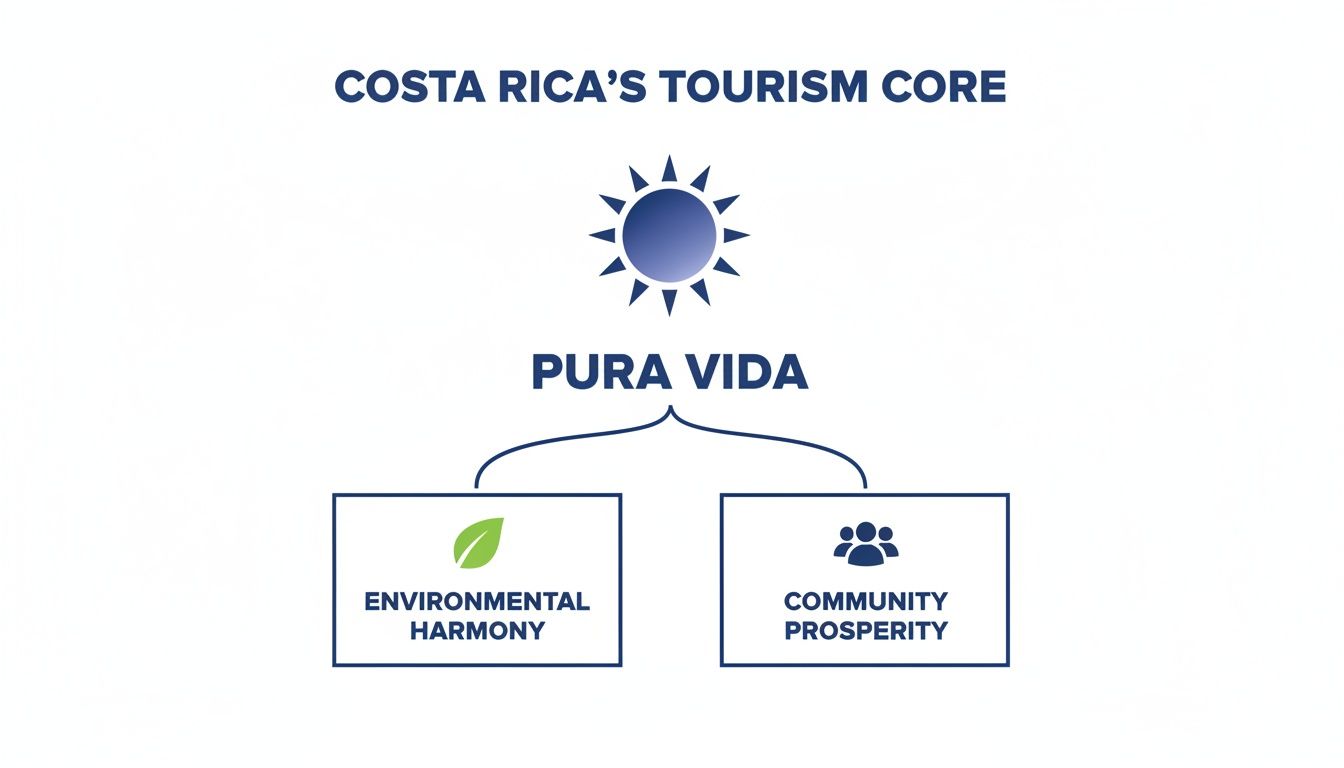
This entire philosophy—balancing visitor experience with ecological and social well-being—is the engine behind the country’s famous Pura Vida ethos. As the diagram shows, the whole concept rests on the twin pillars of environmental harmony and community prosperity.
Understanding Costa Rica’s CST Sustainability Levels
The CST program rates accommodations and tour operators on a scale of one to five “leaves,” making it easy for travelers to quickly gauge a business’s commitment. A higher leaf rating means the lodge excels in concrete practices like water conservation, renewable energy use, hiring local staff, and supporting community projects.
| CST Level (Leaves) | Commitment Level | What It Means for Your Trip |
|---|---|---|
| 1 Leaf | Basic | The business has started implementing some sustainable practices but is in the early stages. |
| 2 Leaves | Committed | A solid effort is underway, with clear policies on resource management and community support. |
| 3 Leaves | Good | The lodge has well-established sustainability programs and actively tracks its impact. A reliable choice. |
| 4 Leaves | Excellent | A leader in the field, with advanced systems for conservation and deep integration with the local community. |
| 5 Leaves | Outstanding | The highest level of achievement. This property is a model for sustainability, innovating across all areas. |
When you choose a property with a high CST rating, you can feel confident that your stay is actively contributing to Costa Rica’s national sustainability goals, not just paying lip service to them.
Verifying a Lodge’s Credentials
So, how do you find and double-check these eco-lodges? The official CST website is the best place to start, as it keeps a directory of certified businesses. Beyond that, here are a few practical steps to take before you book:
- Dig into their website. Look for a dedicated sustainability page. Do they offer real data on their energy sources, water treatment systems, or conservation partners? Or is it just fluffy language?
- Ask direct questions. Don’t be shy. Email a potential lodge and ask about their practices. Inquire about their local hiring policies, where they source their food, and how they contribute to the nearby community. Their response (or lack thereof) tells you a lot.
- Read recent reviews with a critical eye. Scan for comments that mention sustainability in action. Previous guests often share details about recycling programs, plastic-free initiatives, or amazing locally-sourced meals.
- Look for other respected certifications. While CST is the national standard, some lodges also hold international credentials like Rainforest Alliance or LEED (Leadership in Energy and Environmental Design), which signal a serious, long-term commitment.
Choosing where you stay is one of the most powerful decisions you can make as a traveler. For a deeper dive, check out our complete guide on how to choose genuine eco-friendly lodges. Taking a few extra minutes to research your accommodation ensures your trip is in sync with the authentic Pura Vida spirit.
Navigating Costa Rica with a Lighter Footprint
How you move around Costa Rica plays a huge role in your trip’s overall impact. While the country doesn’t have a rail network to lean on, there are excellent, low-impact ways to explore that don’t involve renting a car. Embracing local transport like public buses and shared shuttles not only shrinks your carbon footprint but also gives you a much more authentic window into daily life here.
It’s simpler than you might think to plan an itinerary around these services. For the main arteries connecting hubs like San José to popular spots like La Fortuna, Monteverde, or the coasts, these options are reliable and run frequently. Every seat filled on a bus or shuttle is a win, dramatically cutting emissions compared to the one-person-per-car model.

Riding the Public Bus System
The public bus network is the lifeblood of Costa Rica. It’s extensive, incredibly affordable, and the way most locals get around. It connects just about every town and village, plugging you directly into the country’s rhythm. Yes, it might ask for a bit more planning and patience, but the rewards are huge.
A trip from San José to La Fortuna, for instance, will only set you back around $5 USD (about 2,600 CRC). It’s an unbeatable value. The buses are generally safe and comfortable enough, though you don’t get the hotel drop-off of a private service. You’ll need to find the right terminal in the city, but the experience of traveling alongside Costa Ricans is something you just can’t buy.
The Convenience of Shared Shuttles
For travelers trying to find that sweet spot between sustainability and convenience, shared shuttles are a brilliant solution. Think of them as modern, air-conditioned vans that run on fixed routes between the most popular tourist destinations. By grouping passengers, they keep the per-person carbon footprint much lower than individual taxis or rental cars.
Companies like Interbus or Caribe Shuttle are great for direct routes that can be tricky by public bus, like the winding journey from La Fortuna to Monteverde. This kind of trip costs roughly $25–$30 USD (13,000–15,600 CRC) and shaves off a significant amount of travel time. You can—and should—book these online in advance to lock in your spot. You can check flight deals on Aviasales or find tour packages on Trip.com.
Making Smart Transport Choices
Understanding the real impact of your travel is the key to making better choices. A short domestic flight might look fast on paper, but it pumps out a wildly disproportionate amount of carbon. In contrast, covering that same distance by bus or shuttle slashes your environmental toll. To see the numbers for yourself, you can plug different scenarios into a travel carbon emissions calculator before you book.
Here’s a quick breakdown to help you decide:
- Public Bus: The most eco-friendly and cheapest option by a long shot. It’s perfect for budget travelers and anyone wanting a genuine cultural dive. Best for straightforward routes between major towns.
- Shared Shuttle: A fantastic middle ground. You get more comfort and direct hotel pickups while still making a low-impact choice. Ideal for the most common tourist routes.
- Private Transfer: The most expensive and least sustainable option. It’s really best reserved for groups or travelers with specific accessibility needs. Welcome Pickups offers reliable pre-booked airport services if you need one.
- Rental Car: Offers total flexibility but has the highest environmental impact for solo travelers or couples. If you absolutely must rent, look into an electric vehicle where the charging infrastructure supports it.
Another powerful move is to pick a walkable home base—a central spot in La Fortuna or a beachfront area in Puerto Viejo, for example. This simple decision drastically cuts your need for daily transport. When you can explore your immediate surroundings on foot or by bicycle, you’re deepening your commitment to leaving a lighter footprint.
Engaging in Regenerative Community-Based Travel
True sustainable travel in Costa Rica isn’t just about minimizing your impact. It’s about leaving a place better than you found it—actively contributing to the local ecosystems and communities you have the privilege of visiting. This is the heart of regenerative travel, an approach that moves beyond simple ecotourism and turns your trip into a quiet force for good.
This means seeking out genuine, respectful experiences where your time and money directly fuel rural economies and conservation efforts. Costa Rica is rich with these opportunities, offering a chance to connect with the country on a much deeper level. You get to move past being a spectator and become a participant in the nation’s incredible story of preservation.
The country’s whole national strategy is built around this idea. Costa Rica’s National Tourism Plan intentionally focuses on developing rural, coastal, and community-based regenerative tourism to protect biodiversity while creating meaningful jobs. You can discover more insights about Costa Rica’s tourism reshaping and see how this vision is taking shape on the ground.
Supporting Community-Based Initiatives
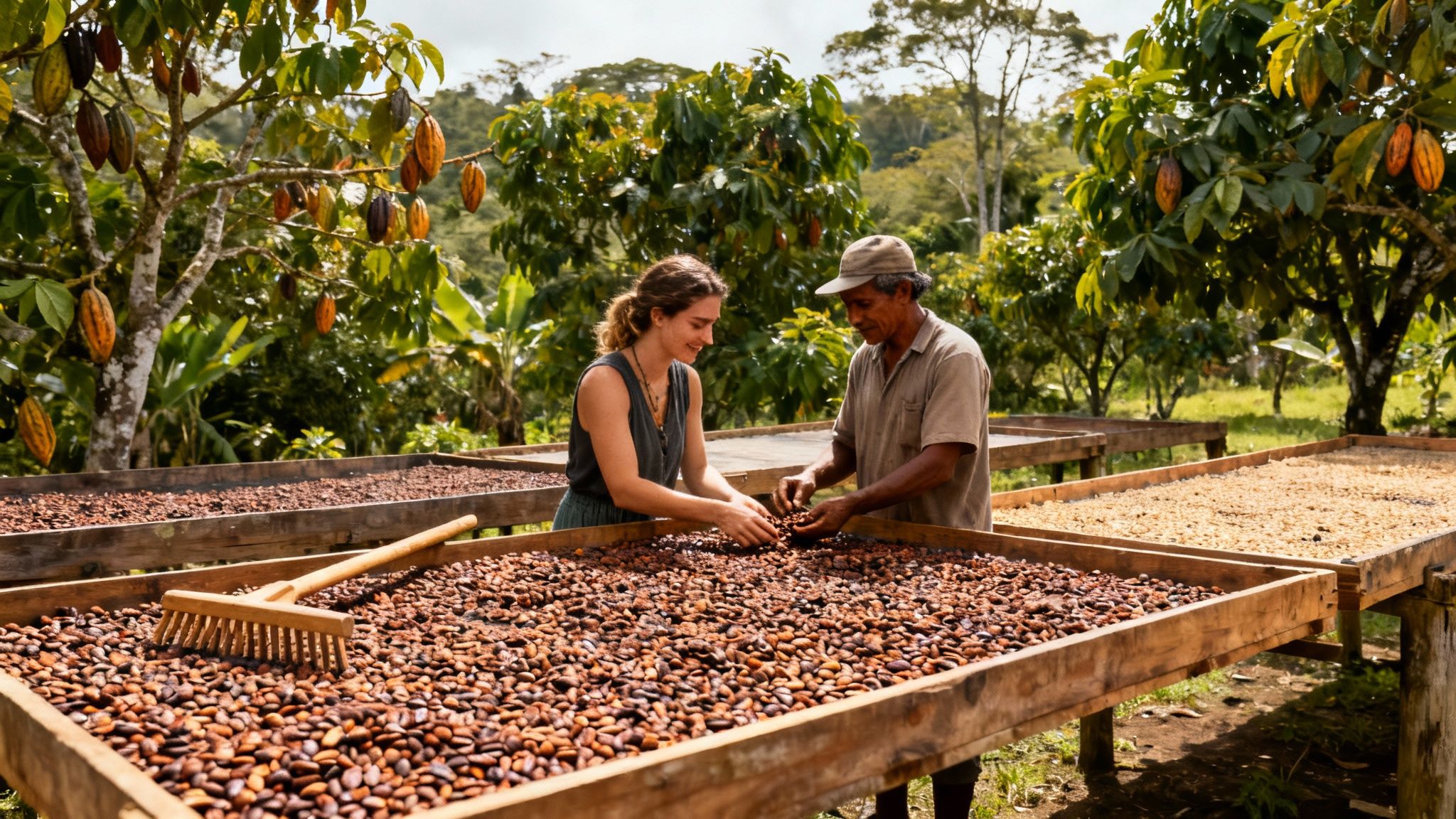
Across Costa Rica, small communities have opened their doors to travelers, offering an authentic glimpse into their way of life. These grassroots initiatives ensure that tourism revenue stays local, empowering families and funding community projects like schools and health clinics.
Instead of booking a large, foreign-owned resort, you could stay with a local family or visit a rural cooperative. These experiences often revolve around traditional practices, providing a rich cultural exchange you simply won’t find anywhere else.
- Farm Stays (Fincas): Spend a few days on a family-run organic coffee or cacao farm. You can help with the harvest, learn the process from bean to cup, and share fresh, home-cooked meals.
- Indigenous Community Tours: Visit territories like the Bribri Indigenous Reserve near Puerto Viejo. Guided by community members, you’ll learn about medicinal plants, ancient traditions, and their deep connection to the rainforest.
- Rural Lodges: Stay at small lodges owned and operated by local cooperatives. These ventures provide sustainable livelihoods that don’t depend on deforestation or other harmful practices.
Participating in Conservation and Wildlife Projects
For anyone wanting to get their hands dirty, Costa Rica offers countless opportunities for hands-on conservation work. These programs allow you to directly contribute to protecting the country’s world-renowned biodiversity. It’s a powerful way to make your trip truly matter.
Regenerative travel is about creating a reciprocal relationship. It’s not just about what you take from a place—the photos, the memories—but also what you give back to its people and its environment.
Meaningful engagement can take many forms, from a single day helping out to a longer-term volunteer placement. Many rescue centers and conservation projects rely on visitor support to fund their vital work.
Consider these options:
- Wildlife Rescue Centers: Help care for injured or orphaned animals like sloths, monkeys, and macaws. Tasks can range from preparing food and cleaning enclosures to assisting with enrichment activities.
- Sea Turtle Conservation: During nesting season (which varies by coast and species), you can join night patrols to protect nesting turtles and their eggs from poachers and predators.
- Reforestation Initiatives: Get involved in tree-planting projects that are helping restore critical wildlife corridors and reverse the effects of past deforestation.
By choosing these kinds of experiences, you actively support a tourism model that values cultural preservation and environmental health. For more on this, explore our guide on how eco-volunteering can be a gateway to regenerative travel. Your journey can become part of the solution, helping to ensure that Costa Rica’s natural wonders thrive for generations to come.
Planning Your Low-Impact Costa Rica Itinerary
Crafting a genuinely low-impact trip is at the heart of sustainable tourism in Costa Rica. This process starts long before you ever set foot in the country, with thoughtful choices about when to go, what you bring, and how you’ll get around. A little foresight here goes a very long way in shrinking your footprint.
Choosing the right season can make a huge difference. While the dry season (December to April) is undeniably popular, the “green season” (May to November) has its own quiet advantages. Traveling during this time means fewer crowds, better prices, and a whole lot less pressure on local resources like water and electricity.
The rainforests are at their most lush and vibrant, and the odd afternoon shower rarely gets in the way of travel plans. By visiting in the shoulder or green season, you also help spread the economic benefits of tourism more evenly across the year, which supports a much more stable local economy.
Adopting a Zero-Waste Packing Mentality
What you decide to pack has a direct line to your waste output on the ground. Costa Rica has made impressive strides in banning single-use plastics, but you can give those efforts a major boost by arriving prepared. A zero-waste approach is surprisingly simple and incredibly effective.
Think of these items as non-negotiable:
- A Reusable Water Bottle with a Filter: Tap water is generally safe to drink in most of the country, but a good filter gives you peace of mind and completely eliminates the need for plastic bottles.
- Reusable Shopping and Produce Bags: Perfect for grabbing souvenirs or fresh mangoes from a local market without having to accept a plastic bag.
- A Reusable Cutlery Set and Straw: This little kit is your best friend for saying no to disposable plastics when you grab a quick meal or a smoothie from a roadside stall.
- Solid Toiletries: Shampoo bars, conditioner bars, and solid soap cut down on both plastic waste and the chance of a messy spill inside your luggage.
Reducing Your Footprint on the Ground
Once you’re in Costa Rica, your daily choices are what really matter. Simple habits can dramatically reduce your environmental impact while deepening your connection to the local culture. For instance, always be mindful of your water use; short showers are a must, as water is a precious resource, especially during the dry season.
Make a point to eat at “sodas”—the small, family-run restaurants you’ll see everywhere. This keeps your money directly in the hands of local families and shrinks your food miles, since they almost always source ingredients from nearby farms. Lastly, while Costa Rica is a leader among the top ecotourism destinations of 2025, it’s still vital to offset any unavoidable emissions from your flights. Look for credible, local carbon offset projects that fund reforestation or renewable energy within Costa Rica itself.
Sample Itinerary Ideas for Sustainable Travel
So, what does this look like in practice? Here are a couple of simple frameworks for a lower-impact trip:
- The 10-Day Rainforest & Community Immersion: Start in San José and hop on a shared shuttle to La Fortuna. Spend three days exploring the area on foot and with local guides. From there, take another shuttle to a community-run lodge near the Monteverde Cloud Forest for three days of hiking and learning about local conservation. Finish up with a few days at a CST-certified eco-lodge on the Pacific coast, using public buses to move between the small coastal towns.
- The 1-Month Digital Nomad Deep Dive: Settle into a walkable town like Puerto Viejo on the Caribbean coast. Rent an apartment for the month, work during the week, and explore nearby wildlife rescue centers and indigenous communities on the weekends. Use a bicycle for getting around town and public buses for longer day trips, allowing you to really sink into the Pura Vida lifestyle.
For a smooth journey, remember essentials like travel insurance from providers like VisitorsCoverage and an eSIM from Airalo for connectivity.
Your Sustainable Travel Checklist for Costa Rica
So, you’re ready to put all the pieces together for a trip that genuinely reflects Costa Rica’s Pura Vida spirit. This isn’t about a rigid set of rules, but a simple checklist to keep in your back pocket—a quick reference for the final planning stages and for your time on the ground.
Following these ideas is how you shift from simply being a tourist to becoming an active partner in the country’s incredible conservation story. Every small, conscious choice you make helps protect the jaw-dropping biodiversity and supports the local communities that define this place.
Final Preparations for a Mindful Trip
Before you even think about zipping up your bag, a few last-minute checks can make all the difference. Getting these details right beforehand means you can slip into the local rhythm seamlessly, avoiding the common travel traps that create needless waste or strain on local resources.
This is the time to double-check that your packing list is full of reusables and to confirm your chosen tour operators have the certifications to back up their claims. For a full rundown on packing light and smart, our guide to eco-friendly travel tips will get you sorted.
Your On-the-Ground Commitment
Once your boots are on the ground, it’s your daily habits that truly count. It comes down to respecting local customs, being mindful of precious resources like water, and making sure your money is going directly to the people whose home you’re visiting. Don’t be shy—get into the habit of asking questions and choosing businesses that are open about how they operate.
For instance, make a point to eat at restaurants that source their food locally, or choose to walk or use shared transport instead of grabbing a private taxi for short hops. These small, consistent actions add up, protecting the very essence of what makes Costa Rica a world leader in sustainable travel.
Your Questions on Sustainable Travel in Costa Rica, Answered
Planning a low-impact trip to Costa Rica can bring up some practical questions. To make sure you feel ready, I’ve put together answers to the queries I hear most often from travelers who want their journey to have a positive ripple effect.
Think of this as your quick-start guide for the details. It builds on the core ideas of responsible travel and gives you what you need for a smooth, memorable, and regenerative trip.
What Is the Best Time to Visit for Sustainable Travel?
While most people flock here during the dry season (December to April), the green season from May to November is often the better choice for a sustainable journey. Traveling during these months helps spread tourism income more evenly across the year, easing the pressure that comes with over-tourism in popular spots.
You’ll also find fewer crowds, better prices on lodging, and a landscape that is almost unbelievably green and alive. The occasional afternoon rain shower rarely gets in the way of plans and, more often than not, just adds to the magic of the rainforest.
Is Costa Rica Expensive for Eco-Conscious Travelers?
Costa Rica can work for almost any budget, and making sustainable choices doesn’t mean you have to spend more. In fact, many eco-friendly decisions are also the most affordable. A perfect example is eating at local, family-run restaurants, known as “sodas,” which are far cheaper than the tourist-focused places and serve up incredible, authentic food.
The same goes for transport. Using the public bus system instead of private shuttles or rental cars will save you a huge amount of money. A bus ticket for a journey that takes several hours can be as little as $5 USD (around 2,600 CRC), making it a genuinely wallet-friendly and low-carbon way to get around.
How Can I Ensure My Tour Operator Is Genuinely Ethical?
To check if a tour operator is truly committed to sustainability, start by looking for official certifications. The Certification for Sustainable Tourism (CST) is Costa Rica’s gold standard, but keep an eye out for international credentials like Rainforest Alliance certification, too.
But don’t stop at the logos. Dig into their actual practices. Do they hire guides from the local community? Do they partner with community-run projects? A truly ethical company will be transparent about its policies on animal welfare, waste reduction, and how it supports the local economy. Never hesitate to ask them directly before you book. A great place to start is with certified tours on G Adventures.
What Should I Do About Water and Plastic Bottles?
Single-use plastic is a huge problem globally, but it’s surprisingly easy to avoid in Costa Rica. The single most important item you can pack is a reusable water bottle with a built-in filter. While the tap water is safe to drink in most towns and tourist areas, having a filter gives you that extra layer of confidence, especially when you’re in more remote spots.
This one simple habit completely gets rid of the need to buy disposable plastic bottles. You’ll find that most hotels, eco-lodges, and restaurants are more than happy to refill your bottle, supporting the country’s huge collective effort to cut down on plastic waste.
How Do I Stay Connected Sustainably?
Staying connected is useful for practical things, like checking a bus schedule or pulling up a map. Instead of getting a physical SIM card that just becomes more plastic waste, go for an eSIM. It’s a digital SIM that you can download straight to your phone before you even leave home.
Services like Airalo or Yesim offer affordable data plans for Costa Rica. It’s a small but meaningful way to keep your tech footprint light while ensuring your trip runs smoothly.
Editor’s Pick: Best Sustainable Tour Operator
For travelers seeking an immersive and responsible trip, we recommend G Adventures. They excel at partnering with local communities, upholding animal welfare standards, and reducing their environmental impact.
Their small-group tours ensure your investment directly supports the people and places you visit, aligning perfectly with the principles of Costa Rica sustainable tourism.
Key Takeaways
- Pura Vida as Policy: Understand that Pura Vida is more than a greeting; it’s a national philosophy that drives Costa Rica’s commitment to conservation and community well-being.
- Pioneering Ecotourism: Costa Rica has a long history of environmental leadership, from abolishing its army to investing heavily in reforestation and renewable energy.
- Look for Certifications: Rely on official programs like the Certification for Sustainable Tourism (CST) to identify genuinely sustainable businesses and sidestep greenwashing.
- Travel with Intent: Your choices matter. Opting for locally-owned eco-lodges, community-based tours, and low-impact transport directly contributes to the nation’s sustainability goals.
- Embrace Regenerative Travel: Go beyond “leave no trace.” Look for opportunities to actively restore ecosystems and empower local communities, like volunteering at a wildlife rescue center.
- Economic Impact: Sustainable tourism is a major economic driver, attracting significant foreign investment dedicated to green infrastructure and preserving the country’s natural assets.
Join the Sustainable Work Movement
Want more rail-first itineraries, low-impact packing systems, and walkable base-city ideas?
Costa Rica Sustainable Tourism FAQ
These answers cover the most common planning questions eco-minded travelers ask before booking a trip. Each one is designed to help you practice Costa Rica sustainable tourism in a way that supports local communities, protects wildlife, and avoids greenwashing.
Use this FAQ to plan a trip that protects biodiversity, supports local communities, and reflects the real Costa Rica sustainable tourism model (not the watered-down version).
Planning & Seasonality
1 When is the best time to visit for Costa Rica sustainable tourism?
The green season (May–November) is often the most sustainable choice. It reduces over-tourism pressure, spreads income across the year, and delivers lush rainforest scenery. Dry season can be great too, but book early and choose certified operators to reduce strain on water and infrastructure.
2 How many days do I need for a low-impact Costa Rica itinerary?
10–14 days is the sweet spot if you want fewer transfers and more time in each region. If you have a month, choose one walkable base (like Puerto Viejo or La Fortuna) and take short, local day trips instead of bouncing between five destinations.
3 Is Costa Rica expensive if I want to travel sustainably?
Not necessarily. Many sustainable choices are cheaper—like eating at local sodas, taking public buses, and staying longer in one place. Eco-lodges can cost more, but you can balance your budget by mixing a certified stay with locally-owned guesthouses.
Eco-Lodges & Certifications
4 What does the CST certification actually mean?
CST (Certification for Sustainable Tourism) is Costa Rica’s official sustainability rating system. It evaluates businesses on environmental practices, internal management, guest education, and local socio-economic impact. Higher “leaf” levels usually indicate stronger resource management, community support, and conservation alignment.
5 How can I verify a lodge is truly sustainable (not just “eco” marketing)?
Look for verifiable proof: official CST listing, transparent sustainability reporting, and specific practices like water treatment, renewable energy, local hiring, and food sourcing. If the “sustainability page” is vague and has no measurable actions, treat it as a red flag.
Tip: Ask one direct question before booking, like “How do you manage wastewater and plastics on-site?” The quality of the answer is very revealing.
6 Are international eco-certifications like Rainforest Alliance or LEED worth trusting?
Yes—especially when they appear alongside CST. Rainforest Alliance and LEED can signal strong standards around environmental design, land stewardship, and operational systems. Still, your best move is to combine certifications with real-world checks (recent reviews, policies, and transparency).
Transport & Low-Impact Mobility
7 What is the most sustainable way to get around Costa Rica?
The lowest-impact options are the public bus and shared shuttles. Buses are the most eco-friendly and budget-friendly choice. Shared shuttles are a great middle ground when routes are complex or you want hotel pickup with fewer transfers.
8 Should I rent a car if I’m trying to travel responsibly?
If you’re traveling solo or as a couple, a car usually increases your footprint. However, if you’re a group of 4+ people, a single vehicle can be efficient. A better approach is to choose one walkable base and use shuttles or buses for longer hops.
9 Are domestic flights inside Costa Rica compatible with sustainable travel?
Use domestic flights only when absolutely necessary. Short flights can produce a disproportionate amount of emissions compared to ground transport. For most popular routes, buses and shared shuttles can get you there with a much lighter impact.
Wildlife Ethics & Regenerative Travel
10 How do I know if a wildlife experience is ethical?
Ethical wildlife experiences prioritize distance, minimal disturbance, and conservation outcomes. Avoid tours that promise guaranteed sightings, encourage touching animals, or use baiting/handling. Reputable guides talk about habitats, behavior, and protection—not “photo ops.”
11 Can I volunteer ethically without touching or handling animals?
Yes—and that’s usually the ethical standard. Many meaningful roles focus on habitat restoration, monitoring support, data collection, and facility operations. Ethical projects minimize handling to reduce stress, disease risk, and behavioral harm to wildlife.
12 How much does wildlife conservation volunteering usually cost?
Costs vary by country and project type, but your budget typically includes program fees (food/accommodation/training), transport, visas, vaccinations, and insurance. Ethical programs should explain how fees support conservation operations, staff wages, and community programs—not just admin overhead.
13 How do I avoid scams when booking a wildlife conservation volunteering placement?
Verify partnerships, read independent reviews, ask direct questions about animal policies and finances, and avoid programs selling “guaranteed wildlife encounters.” Legitimate projects focus on conservation outcomes—not unrealistic promises or influencer-style content.
Practical Essentials
14 What should I do about drinking water and plastic bottles?
Bring a reusable water bottle (ideally with a filter). In many towns, tap water is safe, and most lodges are happy to refill your bottle. This single habit can eliminate dozens of plastic bottles over a trip.
15 How can I stay connected sustainably while traveling Costa Rica?
16 What’s one simple action that has the biggest positive impact?
Choose a CST-certified lodge or operator and stay longer in one region. Fewer transfers + verified sustainability standards is one of the most effective ways to practice Costa Rica sustainable tourism with real impact.
