
Yes, Croatia is in Europe. This fact is more significant than it sounds. For a long time, the details were a bit fuzzy for travelers. Geographically, it sits squarely in Southeast Europe, sharing borders with countries like Slovenia and Hungary.
But the real news for travelers? Croatia is now fully plugged into the European Union’s core systems. This integration makes it more accessible than ever before. It’s a key reason why understanding that Croatia is Europe is so important for planning your trip.
In the last couple of years, Croatia pulled off a huge double-win for travelers. It joined both the Schengen Area and the eurozone. These two changes completely reshape how you can explore the country. This is especially true if you’re a sustainable nomad planning a multi-country adventure by train.
What does that mean in practice? It means smoother borders and simpler money.
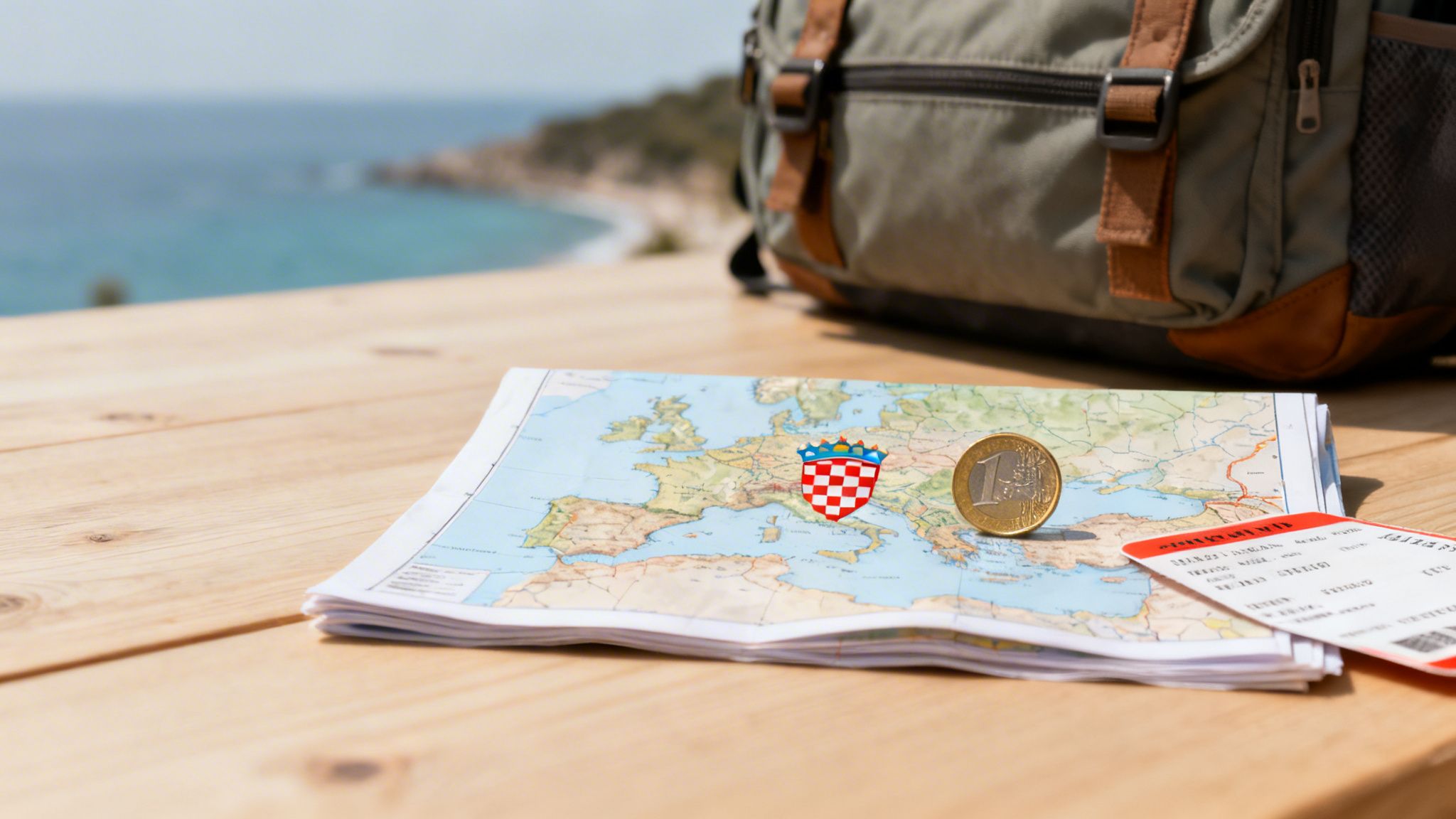
This deep integration makes planning a low-impact journey so much easier. You can now glide from Italy or Austria right into Croatia. There are no passport checks or fumbling with currency exchange booths at the border. Packing your carry on backpack for a multi-country trip is now much simpler.
Rail connections are getting better, too. They are slowly but surely linking Croatia into the wider European train network. Forget the old days of frequent border stops and juggling different currencies. Your trip can now flow as smoothly as it would between France and Germany.
Ultimately, these shifts set the stage for a proper car-free adventure. You can now easily link cities like Zagreb and Split to hubs like Vienna or Budapest. This makes Croatia a key stop when exploring the best places to travel in Eastern Europe. Because Croatia is Europe, it’s now a core part of a connected, borderless travel zone. This is perfect for eco-conscious nomads.
The days of complicated logistics are over. This guide unpacks what that really means for your trip.
Understanding Croatia’s European Journey: How It Affects Travelers
To really get why traveling in Croatia is so smooth today, it helps to look at its recent integration into Europe. The idea that Croatia is Europe isn’t just a map fact. It’s a political and economic reality. This reality makes your trip easier, cheaper, and more connected.
Joining the European Union
It started with joining the European Union in 2013. This was the first big step. It unlocked funds for major infrastructure upgrades. This included the very rail lines we rely on for sustainable, car-free travel. It laid the tracks, literally and figuratively, for what was to come.
Adopting the Euro
Then, in 2023, everything clicked into place. First, Croatia adopted the Euro. The Euro instantly killed off currency exchange headaches and sneaky fees. For anyone arriving from Germany, Italy, or another eurozone country, budgeting became completely seamless. A good RFID blocking wallet is a smart choice to keep your finances secure on any multi-country trip.
The Schengen Area Game-Changer
The final, and arguably biggest, piece of the puzzle was Croatia joining the Schengen Area in 2023. This single move wiped away the old land and sea border controls with its neighbors. It cemented Croatia’s place in Europe’s borderless travel zone.
This official EU timeline of Croatia’s journey shows the steps that led to this moment.
For train travelers, this is a huge win. Hopping on a train from Slovenia or Hungary into Croatia now feels like crossing a state line. It is no longer an international frontier. No more long stops for passport checks, and no more queues. It’s just a smooth, uninterrupted ride.
This unlocks a new level of freedom. A train journey from Vienna to Zagreb is now as effortless as one from Paris to Brussels. For digital nomads and rail-first travelers, it means treating this entire region as one seamless network.
This tight integration makes Croatia an even better hub for exploring incredible landscapes. You can travel between the Balkan mountains and the Adriatic Sea, all without the logistical hurdles of the past. It’s proof that Croatia isn’t just on the edge of Europe. It’s a deeply connected part of a system built for borderless travel.
To make this all crystal clear, here’s a quick summary of how each step makes your trip better.
Croatia’s European Integration at a Glance
This table breaks down the key milestones in Croatia’s recent European journey. It also explains what each one means for you as a traveler.
EU Membership Benefits
| Milestone | Year Joined | How It Improves Your Trip |
|---|---|---|
| European Union | 2013 | Opened up funding for better infrastructure, like modernized rail lines. |
Eurozone and Schengen Advantages
| Milestone | Year Joined | How It Improves Your Trip |
|---|---|---|
| Eurozone | 2023 | Eliminated currency exchange fees and simplified budgeting with the Euro (€). |
| Schengen Area | 2023 | Removed land and sea border controls for seamless travel from other Schengen countries. |
Each of these steps was a deliberate move to make travel and trade more fluid. For sustainable travelers who rely on rail, the benefits are impossible to ignore. Finding affordable flights with Aviasales has also become easier.
Why Croatia Is a Top Sustainable Destination in Europe
Croatia’s deep connections to the rest of Europe make it a natural hub for sustainable, overland travel. A huge number of its visitors already arrive from nearby countries. These include Germany, Austria, and Slovenia. Many of them travel by train or car, which are journeys with a much lighter carbon footprint than long-haul flights.
This trend toward regional, overland travel is exactly what responsible tourism looks like. It encourages slower journeys. It also spreads economic benefits more evenly across the continent. You can see this in the rising popularity of campsite stays. This minimalist style of low-impact travel is perfectly suited for those who pack light.
This all fits neatly with the Croatian government’s focus on quality over quantity. Authorities are working to protect fragile ecosystems from overtourism. They actively manage visitor numbers in hotspots like Dubrovnik and Plitvice Lakes. It’s a clear signal that because Croatia is Europe, it’s part of a connected and increasingly eco-conscious travel network.
Connected and Eco-Conscious Travel
This timeline shows Croatia’s key steps toward full European integration. This journey has made overland, sustainable travel easier than ever.
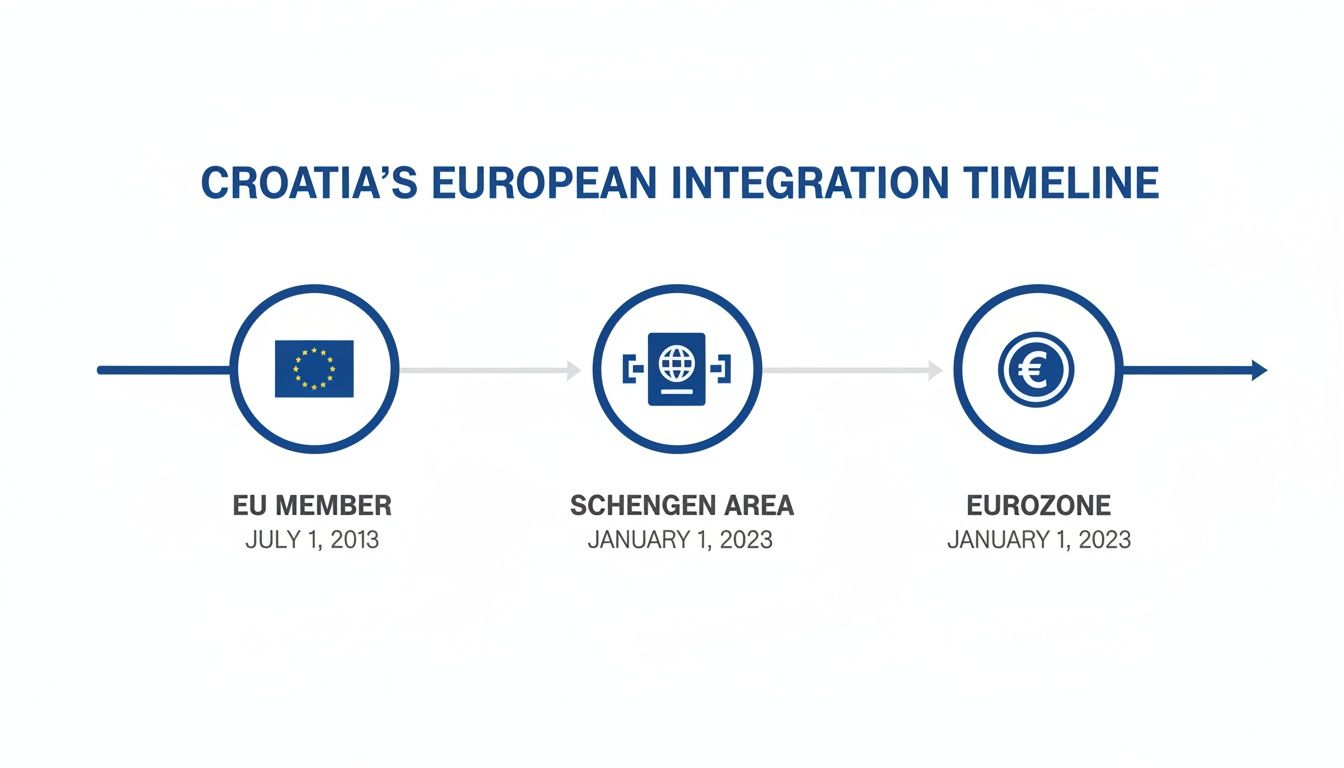
Each of these milestones—joining the EU, then the Schengen Area and the eurozone—has stripped away layers of friction. The result is more seamless, lower-carbon journeys by rail and road.
This integration is a big reason why Croatia has become a powerhouse in European tourism. It ranks as the ninth-most-visited country in the EU. The numbers are staggering. There are over 21.8 million tourist arrivals and a massive 110.1 million overnight stays each year. These are mostly concentrated along the Adriatic coast.
This ease of access makes it simple to plan trips that are kinder to the planet. You can combine a visit to the mainland with a thoughtfully planned, eco-friendly sailing adventure. For anyone interested in seeing the stunning coastline responsibly, our guide to sailing in Croatia in 2025 for eco-nomads breaks down the best low-impact options. By choosing slower ways to travel, visitors can help preserve the natural beauty that makes Croatia so special.
Planning Your Train Itinerary to and Through Croatia
Now that we know how deeply Croatia is woven into Europe, planning a car-free adventure is more straightforward. The country’s solid rail connections make it a fantastic destination for sustainable travel. This is especially true if you’re coming from Central Europe.
Major hubs like Munich, Vienna, and Budapest offer direct train routes. These comfortable trains go right into Croatian cities like Zagreb and Rijeka. These lines are well-established. They cater to the huge numbers of German and Austrian visitors who head south every year. Germany is still Croatia’s number one tourism market. Visitors from neighboring European countries drive over 75% of all foreign stays.
Why a Night Train Is a Smart Choice
For a truly efficient and low-impact journey, think about booking an overnight train. Sleeper services from cities like Munich or Zurich let you cover huge distances while you sleep. This saves you precious daylight hours and the cost of a night’s accommodation. You’ll wake up refreshed and ready to explore in a new country.
Navigating Croatia by Rail
Once you’re there, getting around by train is a great way to see the country. If you choose a walkable base like Zagreb or Split, you can explore surrounding areas without a car. Take day trips to smaller towns or just hop between major destinations. Because Croatia is Europe, its train system is part of a vast, interconnected network.
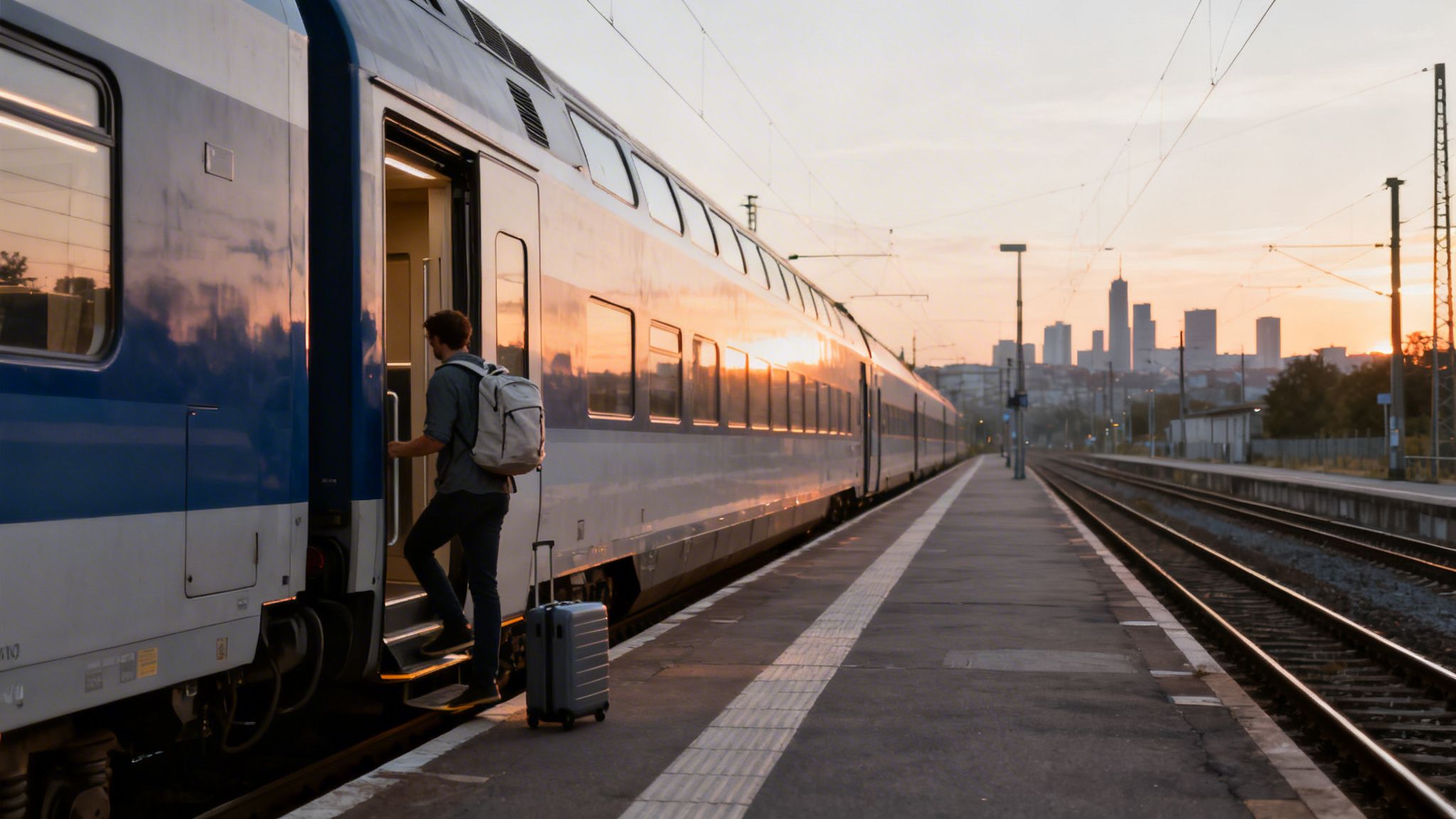
As you can see on most European rail maps, Zagreb acts as a key hub. It links the country to Slovenia, Hungary, Austria, and beyond. Whether planning a multi-country slow travel itinerary or just focusing on Croatia, the train is a great choice. It makes for a rewarding, simple, and sustainable adventure.
For more tips on planning your overland journey, check out our complete Europe to Croatia guide for detailed travel advice.
Our Favorite Walkable Base for a Low-Impact Stay
While Croatia’s coast usually steals the show, the capital city of Zagreb is our top pick. It is a truly sustainable home base. It’s an ideal hub for slow travelers and digital nomads. They put walkability and great train connections at the top of their list.
Unlike a lot of sprawling European capitals, Zagreb has a wonderfully compact core. It is best explored on foot. For everything else, there’s an incredibly efficient tram network. This makes getting around the entire city a breeze—no car needed. This blend of pedestrian-friendly streets and solid public transport makes it one of the best walkable cities in Europe.
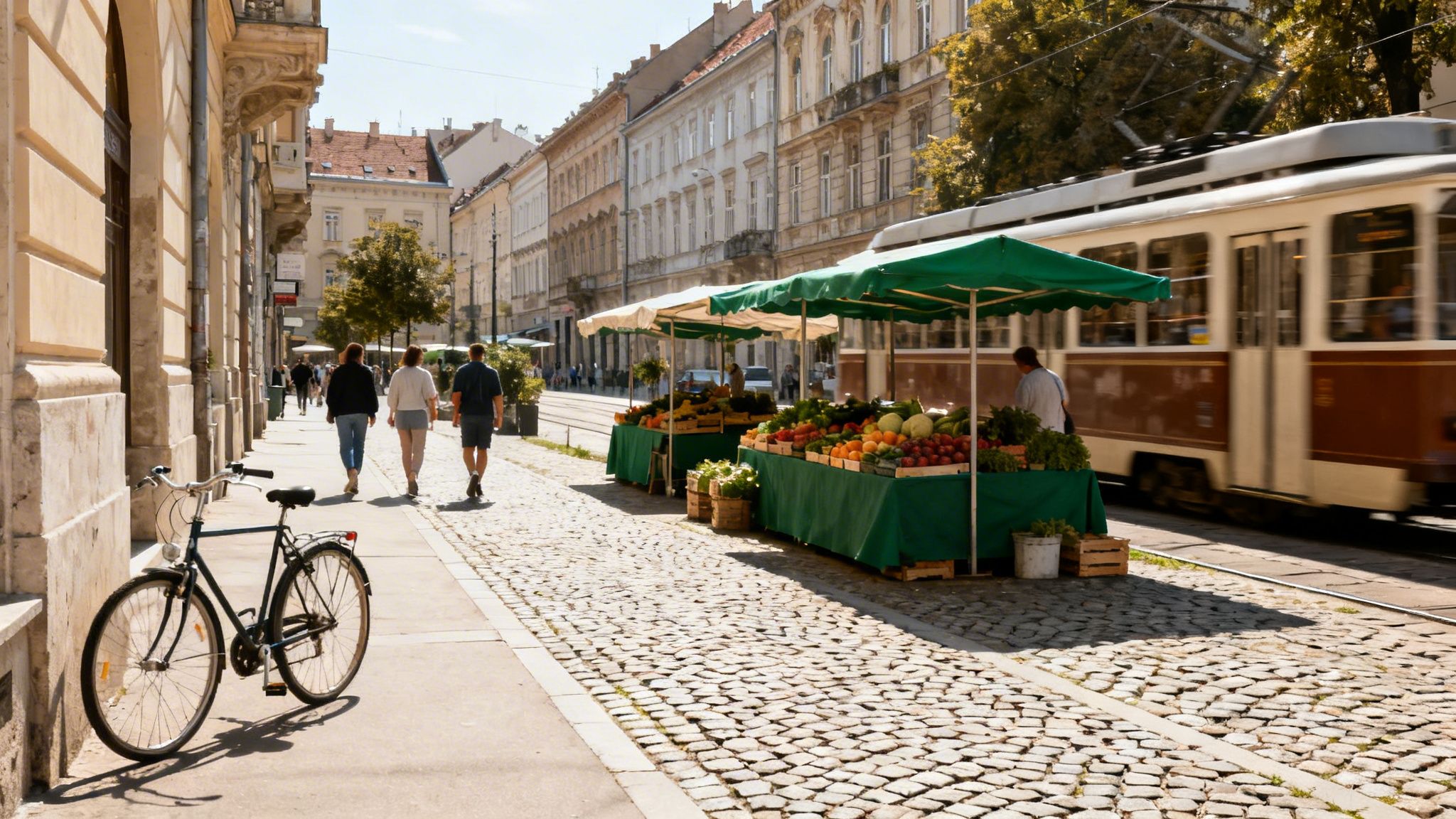
From the city’s main station, you have direct rail routes. They connect you to the rest of Central Europe. And within the city itself, you’re never far from vibrant green markets or eco-friendly stays. You’ll also find countless local shops, all within walking distance. A good quality packable daypack is all you need for a day of exploring. This is true whether you’re hitting up museums or grabbing fresh produce at the famous Dolac Market.
Basing yourself in a city like Zagreb doesn’t just lower your carbon footprint. It also gives you a much deeper connection to local culture. It offers a more authentic Croatian experience away from the busiest tourist hubs.
Editor’s Pick: Zagreb
For a low-impact and well-connected base, Zagreb is our top choice. Its excellent walkability, efficient tram system, and direct international rail links make it an ideal hub for sustainable travelers. You can easily explore the city’s rich culture on foot and use it as a launchpad for train adventures across Central Europe.
So, What Does This Mean for Your Trip?
Let’s boil it all down. Grasping that Croatia is Europe in every way that matters for a traveler makes planning a smart, low-impact journey so much simpler. It helps to understand the practical benefits for your next adventure.
No More Borders, No More Kuna
Croatia is fully in the EU, the Schengen Area, and the eurozone. For you, this means no border checks coming from neighboring Schengen countries. It also means no annoying currency exchange fees. It makes multi-country train trips incredibly smooth and hassle-free.
Arrive by Train, Skip the Car
With excellent rail links from hubs like Munich and Vienna, getting to Croatia without a car is easy. It is also a far more sustainable choice. It’s a perfect fit for a modern, eco-conscious itinerary. Staying connected is easy with an eSIM from Airalo or Yesim.
A Shift to Smarter Tourism
Croatia is moving away from the “pack them in” model. It is focusing more on managing visitor numbers. This helps protect its incredible natural beauty for the long run. By traveling in the shoulder seasons, you support this effort.
One Seamless Travel Zone
Using the Euro and having open borders puts Croatia on the same page as its neighbors. This includes Italy, Slovenia, and Austria. It feels less like crossing countries and more like moving through one unified region. A reliable airport transfer from Welcome Pickups can make your arrival even smoother.
Low-Impact Travel Tools (Worth It)
Also, if you’re planning a trip and want to keep things simple, these tools help you travel smoother while staying mindful about impact.
Get an eSIM for reliable data → Disclosure: Partner link. No extra cost to you.
Pre-book a transfer for easy arrivals → Disclosure: Partner link. No extra cost to you.
Frequently Asked Questions
Planning a trip is a lot simpler now that Croatia is fully plugged into Europe’s travel systems. Here are quick answers to the most common questions for nomads thinking about train travel and longer stays.
1. Do I Need a Visa for Croatia Now That It’s in Schengen?
If you can already travel visa-free in the Schengen Area, you’re all set for Croatia. This includes visitors from the USA, Canada, UK, and Australia. It now falls under the exact same rules. Your time in Croatia now counts toward the 90-day limit within any 180-day period for the entire zone. This is a huge win for slow travelers.
2. Is the Euro the Official Currency in Croatia?
Yes, it is. As of January 1, 2023, the Euro (€) became the official currency. The old Croatian Kuna was retired. This makes life much easier if you’re coming from another eurozone country. Cards are widely accepted, but it’s smart to keep some Euros in cash for smaller purchases.
3. What’s the Best Time to Visit Croatia to Avoid Overtourism?
For the sweet spot between good weather and fewer crowds, aim for the shoulder seasons. Think May to early June or September to early October. During these months, the Adriatic is still warm enough for a swim. However, spots like Dubrovnik and Split feel much more relaxed than in July and August.
4. How Easy Is It to Find Sustainable Travel Options?
It’s getting easier all the time. You can make a difference with a few simple choices. Look for locally-owned guesthouses (sobe) or farm stays (agroturizam). Choosing the train over a domestic flight is a massive win for your footprint. And please, pack a reusable water bottle. The tap water is excellent and safe to drink everywhere.
5. Can I Get By With English in Croatia?
Absolutely. In main cities and coastal towns, English is widely spoken. This is especially true for younger people and those in tourism. You won’t have issues communicating. That said, learning a couple of basic Croatian phrases like Dobar dan (Good day) and Hvala (Thank you) is a small gesture that locals appreciate.
Key Takeaways
- Croatia is Fully European: As a member of the EU, Schengen Area, and Eurozone, travel to and within Croatia is seamless for most international visitors.
- The Euro is a Game-Changer: No more currency exchange is needed. The Euro (€) is the official currency, simplifying budgeting and transactions.
- Overland Travel is Easy: Strong train connections from Central Europe make Croatia an ideal destination for sustainable, car-free travel.
- Zagreb is a Great Base: The capital offers excellent walkability, public transport, and international rail links for a low-impact stay.
- Travel Smart: Visit during the shoulder seasons (May-June, Sept-Oct) to avoid crowds and support sustainable tourism efforts.
- Pack Sustainably: Bring a reusable water bottle and a packable daypack to reduce waste and explore comfortably.
Join the Sustainable Work Movement
Want more rail-first itineraries, low-impact packing systems, and walkable base-city ideas?
