
The best digital nomad jobs are the ones that let you work from anywhere with a decent internet connection—think roles in tech, creative fields, and marketing. Positions like software development, graphic design, and content writing give you the flexibility to build a real career while traveling the world at a slower, more sustainable pace. The trick is to find that sweet spot where your skills meet a high-demand, remote-friendly industry.
Launching Your Sustainable Digital nomad Career
The idea of blending a passion for low-impact travel with a career that actually pays the bills has never been more real. With the huge shift toward remote work, countless opportunities have opened up for a more sustainable lifestyle, letting you earn a living without being chained to one spot. This freedom is what a modern nomad career is all about—it supports your travel dreams without forcing you to compromise on your values.
Just thinking about this path is the first step. You really can build a professional life that works with a rail-first, walkable-base approach to exploring the world. It all comes down to being intentional, both in your career choices and your travel habits, to create a balance between meaningful work and genuine adventure.
The Rise of the Remote Work Movement
Working from anywhere isn’t some niche fantasy anymore; it’s a mainstream reality. The global digital nomad population has ballooned to an estimated 45 million people, and projections show that number soaring past 60 million by 2030. This boom is powered by the demand for remote-friendly jobs in tech, marketing, and creative fields.
Professionals like software developers, digital marketers, and UX/UI designers are using fast internet and modern tools to do their jobs from literally anywhere. This movement is more than just a passing trend—it’s a fundamental change in how we think about the relationship between our careers and our lives.
For eco-conscious travelers, this shift unlocks a world of possibilities. It makes a slower, more deliberate travel style possible, which naturally reduces your carbon footprint. You can learn more about building a sustainable digital nomad lifestyle in our detailed guide.
Finding Your Place in the Nomad Economy
To get started, it’s helpful to know which fields are most compatible with this lifestyle, because not all remote jobs are created equal. The best digital nomad jobs offer flexible schedules, project-based tasks, and a company culture that truly gets behind location independence.
Here’s a quick look at the top job categories where aspiring nomads usually find their footing.
Top Digital Nomad Job Categories at a Glance
Here is a summary of the most popular and viable job sectors for aspiring digital nomads, highlighting the key skills needed and their income potential.
| Job Category | Essential Skills | Typical Annual Income (USD) |
|---|---|---|
| Technology | Coding (Python, JavaScript), Cybersecurity, Data Analysis, Cloud Computing | $70,000 – $150,000+ |
| Creative Services | Graphic Design (Adobe Suite), Content Writing, Video Editing, UX/UI Design | $45,000 – $100,000+ |
| Marketing & E-commerce | SEO, Social Media Management, PPC Advertising, Email Marketing | $50,000 – $120,000+ |
| Online Business | Project Management, Virtual Assistance, Online Teaching, Customer Support | $40,000 – $90,000+ |
This table gives you a starting point. As you can see, the income potential varies, but a solid skillset in any of these areas can support a comfortable and sustainable life on the road.
Here are a few key areas where aspiring nomads often find success:
- Technology: Roles like web development, cybersecurity, and data analysis are always in high demand and can be done from anywhere with a stable internet connection.
- Creative Services: Graphic designers, video editors, and writers can build freelance businesses from the ground up or work for agencies that serve clients all over the world.
- Marketing and E-commerce: Skills in social media management, SEO, and digital advertising are incredibly portable and vital for businesses everywhere.
By figuring out what skills you already have—or which ones you’re willing to learn—you can create a clear roadmap. This guide will help you navigate the next steps: finding these high-demand roles, landing your first gig, and handling the practical side of working from anywhere.
Exploring High-Demand Digital Nomad Jobs
Figuring out the right digital nomad job feels a lot like packing for a long trip—you need versatile, reliable skills that will serve you well no matter where you land. A solid remote career is built on roles that aren’t just portable but are also consistently in demand. The best jobs give you the freedom to choose your own office, whether that’s a buzzing café in Lisbon or a quiet apartment overlooking the Alps.
This kind of freedom lets you build a career on your own terms. It’s about more than just earning a living; it’s about designing a life where professional growth and personal adventure can actually coexist. Let’s break down the most popular and profitable career paths that make this lifestyle work, so you can pack your professional “bag” with everything you need to succeed.
The heart of a strong remote career lies in a few key fields: technology, creative services, and business support. These areas are full of opportunities for freelancers, contract workers, and full-time remote employees alike.
This article was fact-checked using sustainability data from the World Green Building Council, the Global Ecotourism Network, and peer-reviewed architecture studies. All partner links are vetted for compliance with sustainable business certifications.
This diagram shows the main career paths for digital nomads, branching into tech, marketing, and creative roles.
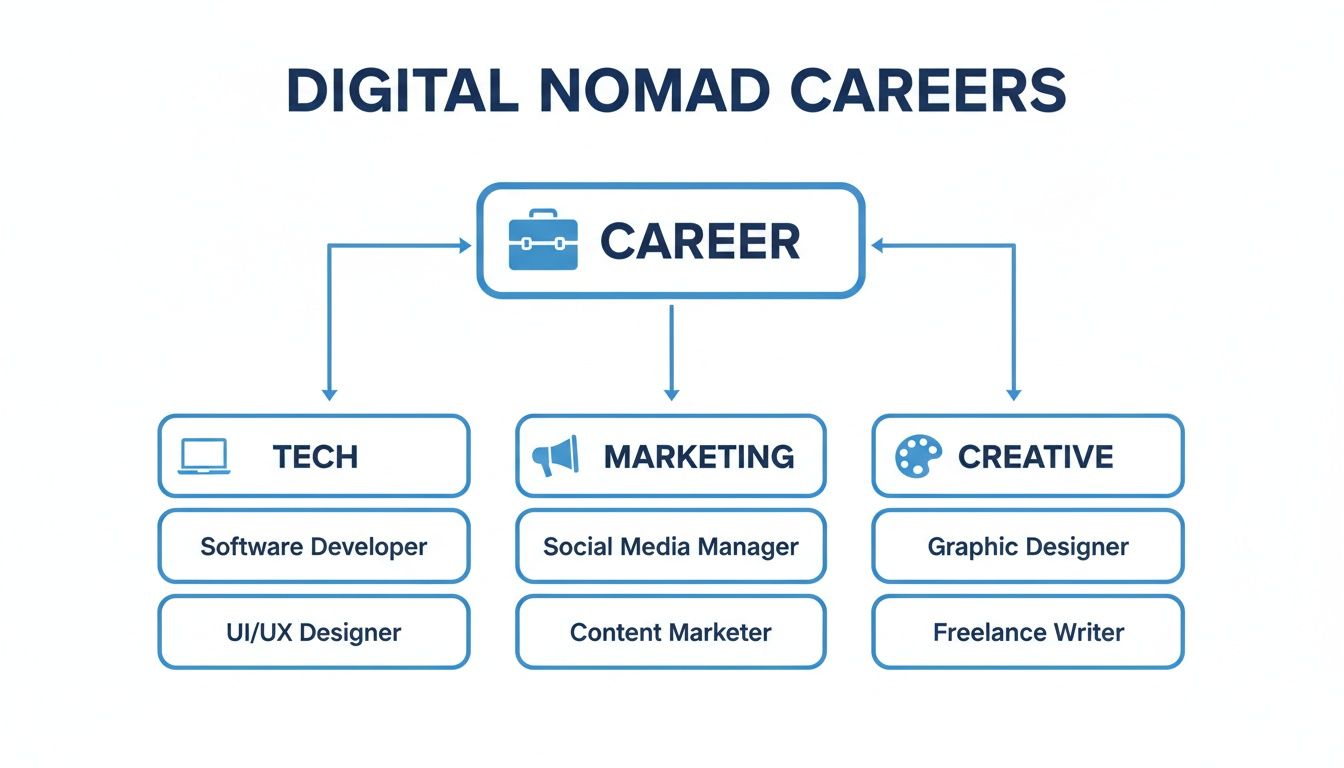
While tech roles often have a higher income ceiling, the creative and marketing fields offer a huge range of accessible entry points for aspiring nomads.
Thriving in the Tech Sector
The tech industry is pretty much the backbone of the remote work world. Many of these roles are location-independent by their very nature, focusing on results rather than where you physically sit.
Software and web developers are consistently among the highest-paid digital nomads. With skills in languages like Python, JavaScript, or React, you can build websites, mobile apps, and software for clients anywhere on the planet. The average salary for a remote developer can range from $80,000 to over $150,000 USD a year, depending on your experience and what you specialize in.
Other key tech roles include:
- Data Analyst: These are the people who help businesses make sense of complex data to drive better decisions.
- Cybersecurity Specialist: With everyone working remotely, the need for experts who can protect digital assets has absolutely skyrocketed.
- UX/UI Designer: These designers are all about creating intuitive and enjoyable user experiences for websites and apps.
Creative and Marketing Digital Nomad Jobs
If coding isn’t your thing, don’t worry. The creative and marketing industries are overflowing with remote opportunities. These roles are perfect for anyone who excels at communication, storytelling, and visual design.
Graphic designers, content writers, and video editors can build thriving freelance careers or work for agencies from anywhere. A skilled graphic designer might earn between $50,000 and $95,000 USD annually, and experienced content writers often pull in similar rates.
Digital marketing is another powerhouse field for nomads. Popular roles include:
- SEO Specialist: Getting websites to rank higher on search engines is a crucial skill for any online business.
- Social Media Manager: These experts create and manage engaging content across platforms like Instagram, TikTok, and LinkedIn.
- PPC Manager: These pros manage paid advertising campaigns on Google and social media to drive traffic and sales.
Business and Client Support Roles
Not every digital nomad job requires a highly specialized technical or creative skill set. A huge number of remote positions exist in business support, project management, and customer service—the essential roles that keep businesses running smoothly.
Virtual assistants (VAs), for example, provide administrative, technical, or creative help to clients from afar. Project managers coordinate teams and timelines to make sure projects get finished on time and on budget.
Job satisfaction is a huge perk here. Nearly 80% of nomads report being happy with their work-life integration. The earnings are strong, too; developers, data analysts, and product managers can earn between $62,000 and $137,000 USD annually. On top of that, 46% of people in the creator economy are thriving on their internet-based skills.
Choosing one of the best cities for digital nomads can take your quality of life even further.
How to Land Your First Remote Job
Finding your first remote job can feel like trying to solve a puzzle with half the pieces missing, but it’s more straightforward than you think. The trick is to stop thinking like a traditional job seeker and start showing companies you’re someone who can deliver great work without someone looking over your shoulder.
This is your roadmap. We’ll walk through everything from overhauling your resume to handling a remote interview, giving you a clear path to locking down one of the thousands of real digital nomad jobs out there.
Your journey starts with your resume and how you present yourself online. A standard resume often talks a lot about in-office teamwork. For remote roles, you need to flip that script. Your new focus is on proving you have the self-discipline, proactive communication skills, and time management chops to thrive on your own. Think back to any project where you worked independently or had to manage your own deadlines—those are the gold nuggets that prove you don’t need hand-holding.
Your online portfolio and LinkedIn profile are your digital storefront. They need to be sharp, professional, and signal loud and clear that you’re looking for remote work.
Fine-Tuning Your Application for Remote Roles
When you’re applying for digital nomad jobs, a copy-paste application is a fast track to the “no” pile. Hiring managers are scanning for clues that you actually get what it takes to work without a physical office.
Start by dissecting the job description. Mirror its language in your cover letter and resume. If they mention “asynchronous communication” or specific tools like Asana, you need to echo that language back with your own experience. It shows you’re paying attention.
Here are a few ways to sharpen your application:
- Spotlight Remote-Ready Skills: Carve out a dedicated “Remote Work Competencies” section on your resume. Fill it with skills like time-zone flexibility, digital collaboration, and your comfort level with tools like Slack, Trello, and Zoom.
- Frame Your Experience Around Projects: Instead of a dull list of duties, talk about specific projects. Describe your role, the steps you took, and the concrete results you delivered. This proves you’re focused on outcomes, not just clocking in.
- Use Numbers to Tell the Story: Quantify everything you can. “Managed social media” is forgettable. “Grew social media engagement by 45% in six months with a new content strategy” is a statement that gets you an interview.
Where to Find the Right Gigs (and How to Apply)
Knowing where to look is half the battle. You can find remote listings on general job boards, but you’ll save a ton of time and energy by going straight to the source: specialized platforms built for location-independent work.
Sites like FlexJobs, We Work Remotely, and Remote.co are your best friends here. They do the heavy lifting of filtering out scams and lowball offers. Beyond the job boards, your LinkedIn network can be a goldmine for roles that never even get posted publicly. Start joining groups in your industry, engage with people’s posts, and build real connections.
A common mistake is holding out for a fully remote job from day one. Don’t overlook “remote-first” or hybrid companies. They often have a strong culture that supports off-site employees and can be a fantastic way to get your foot in the door.
Nailing the Remote Interview
A remote interview is a different beast. Your main goal is to project professionalism, reliability, and clear communication—all through a camera lens.
First, do a tech check. Make sure your camera, microphone, and internet are rock-solid before the call. A glitchy connection is the fastest way to make a bad first impression. If you plan to be on the road, an eSIM from a provider like Airalo or Yesim can be a lifesaver for reliable data.
Second, expect questions about your remote setup and be prepared to answer them clearly. Bring specific examples that prove you can handle the day-to-day logistics. Explain how you stay organized, manage your schedule across time zones, and keep communication smooth with teammates you haven’t met in person. The goal is to show that you’ve already built a system that makes remote work reliable and easy.
Finally, bring your energy. Without the feedback of being in the same room, your tone of voice and body language on camera carry all the weight. You need to consciously project your enthusiasm and personality. Let them see you’re genuinely excited about the role.
Finding Niche Jobs for the Eco-Conscious Nomad
For many of us, a remote career is about more than just seeing new places; it’s about making sure our work lines up with our values. If you’re passionate about sustainability, you’ll find plenty of digital nomad jobs that let you make a real, positive impact. These roles go way beyond the usual tech and marketing gigs, offering a chance to weave your eco-conscious principles right into your professional life.
This kind of work makes a low-impact, rail-first travel style feel even more cohesive. Imagine consulting for a small eco-lodge in Costa Rica from your base in Spain, or writing articles about regenerative agriculture while traveling by train through Italy. Careers like these offer more than just an income—they give you a sense of purpose and a direct link to the causes you care about.
These niche opportunities let you build a career that truly reflects who you are. Instead of walling off your work from your passion for the planet, you can merge them into a single, fulfilling lifestyle. It’s about finding work that sustains both you and the environment.
Roles in Sustainable Tourism and Conservation
The sustainable travel sector is growing, and with it comes a wave of unique digital nomad jobs for those with the right skills. Many eco-lodges, conservation projects, and ethical tour operators desperately need remote help with things like marketing, fundraising, and community outreach.

Here are a few roles that keep popping up:
- Sustainable Tourism Consultant: You could help small tourism businesses develop and market their eco-friendly practices, from cutting down on waste to supporting local communities.
- Remote Grant Writer for NGOs: Environmental non-profits are always looking for skilled writers to help them secure funding for crucial conservation work. It’s a perfect fit for a detail-oriented wordsmith.
- Digital Marketing for Eco-Resorts: Many sustainable hotels and lodges just don’t have the budget for a full-time marketing team. You can step in to manage their social media, SEO, and email campaigns from anywhere in the world.
If you’re interested in blending this with some hands-on work, you might also explore our guide on wildlife conservation volunteering opportunities, which can sometimes be combined with remote work.
Becoming a Regenerative Travel Writer or Content Creator
Got a knack for storytelling? You can build a career documenting and promoting sustainable travel. This isn’t your typical travel blogging; it’s about focusing on stories that actually matter. You can shine a light on regenerative projects, ethical wildlife encounters, and communities that benefit directly from responsible tourism.
The goal of regenerative travel content is to inspire a different way of seeing the world. It’s not just about showcasing beautiful places but also about explaining how travelers can leave a destination better than they found it.
To do well in this niche, you’ll need strong writing, photography, or videography skills. You also need a genuine, deep understanding of sustainability issues so you can steer clear of greenwashing. A great way to start is by building a portfolio on platforms like Medium or your own blog. From there, you can pitch articles to environmental publications or partner with sustainable brands. It’s a path that encourages you to travel slowly and thoughtfully, turning your journeys into powerful stories that can actually inspire change.
Managing Visas, Taxes, and Staying Connected
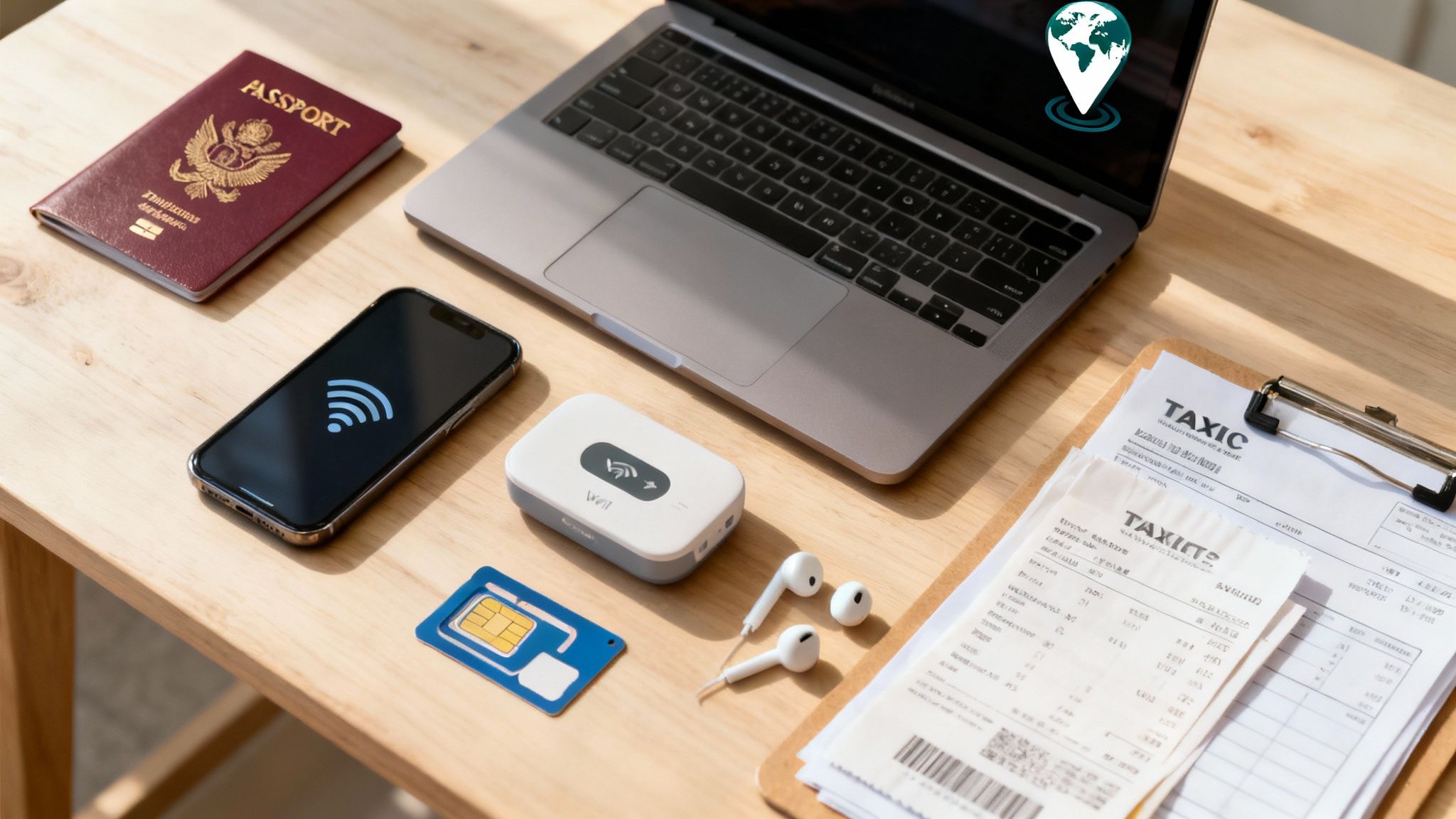
Finding a great remote job is just one side of the coin. The other is figuring out the real-world logistics of visas, taxes, and internet that actually keep you on the road. It can feel like the most intimidating part of the whole digital nomad puzzle, but with a bit of planning, it’s completely manageable.
Breaking these down makes them far less daunting. While the freedom to travel is built into many digital nomad jobs, that freedom comes with the responsibility of playing by each country’s rules. Getting a handle on these basics is what separates a short-term trip from a sustainable, long-term lifestyle.
Let’s walk through the essentials, from visa options to staying connected without breaking the bank, so you can handle the admin side of your new career with confidence.
Navigating Digital Nomad Visas
One of the biggest shifts for remote workers has been the rise of the digital nomad visa. Dozens of countries, from Portugal to Estonia, now offer specific long-stay visas designed for people who earn an income from abroad. These are a game-changer, giving you a clear legal path to live somewhere for an extended period—often one to two years—without breaking tourist visa rules.
To qualify, you’ll typically need to prove you have a steady remote income that hits a certain threshold, hold valid health insurance, and pass a background check. Each country sets its own bar, so research is crucial. For example, some might require a minimum monthly income of $2,000 USD, while others look for something closer to $4,000 USD. Our in-depth guide offers more detail on the best digital nomad visas available right now.
A Simple Look at Tax Obligations
Taxes can feel like the most tangled part of the nomad puzzle, but the key is to understand your “tax home,” or country of tax residency. For most people, this is simply your home country, where you’ll likely continue to file taxes just as you always have, especially if you’re a U.S. citizen.
Things can get a little tricky if you spend more than a certain number of days (often 183) in another country, as this can sometimes trigger a tax liability there, too.
The good news is that many countries have tax treaties designed to prevent double taxation, so you won’t pay taxes twice on the same income. Still, it’s always a smart move to chat with a tax professional who specializes in expatriate or nomad tax law to make sure you’re compliant.
Staying Connected on the Go
For any digital nomad, a stable internet connection is the lifeline. While Wi-Fi is easy enough to find in cafes and co-working spaces, having your own reliable data is essential for productivity and peace of mind. This is where eSIMs have become a nomad’s best friend.
Providers like Airalo or Yesim offer affordable data plans you can activate on your phone in minutes. This means you can have internet access the moment your train pulls into a new city, without the old hassle of tracking down a local SIM card shop.
For the travel days themselves, services like Aviasales for finding flights to your new base and Welcome Pickups for arranging airport transfers can simplify your arrival. And don’t forget to lock in travel medical insurance through a reliable provider like Visitors Coverage.
Wrapping Up: Your Roadmap to Becoming an Eco Nomad
This whole journey is about building a career that lets you see the world without leaving your values behind. As you start putting these ideas into practice, think of the points below as your compass for finding great, sustainable digital nomad jobs.
It’s a quick-glance reminder of the big ideas we’ve covered, designed to keep you on track as you move from dreaming about this life to actually living it.
Your Digital Nomad Blueprint
Here are the most important takeaways to guide you.
Stick to High-Demand Fields: Focus your energy on building skills in steady sectors like tech, digital marketing, and creative services. These fields are where you’ll find the most flexible and reliable remote roles—the kind that form a solid foundation for a nomadic career.
Ditch the Generic Resume: A standard application just won’t do. You need to show you can thrive remotely. Make sure you highlight skills like asynchronous communication, self-management, and your comfort with tools like Slack or Trello. That’s what gets a remote hiring manager’s attention.
Explore Eco-Conscious Niches: Don’t be afraid to look beyond the obvious. There’s a growing world of opportunity in sustainable tourism consulting, grant writing for environmental NGOs, and creating content about regenerative travel. This is where your work can really align with what you care about.
Get the Logistics Right: Be proactive about the practical stuff. A bit of research into digital nomad visas, a basic understanding of your tax situation, and reliable internet from day one (think eSIMs) will make your journey smooth and legal. To dig deeper, check out our guide on how to work remotely without hurting the planet.
Your Top Questions About Digital Nomad Jobs Answered
Jumping into the world of digital nomad jobs always kicks up a lot of questions. We all wonder about the same things: how much money do I actually need to save? How do I build real friendships on the move? These are the practical, real-world concerns that pop up long before you book a flight.
My goal here is to tackle these common worries head-on. By giving you some straight-up advice, I hope to give you the confidence you need to start building a sustainable, location-independent life.
Think of this as your go-to guide for the questions that really matter. We’ll cover everything from financial planning to staying productive and finding your people—all to make your transition as smooth as possible.
How Much Money Do I Need to Start?
This is the big one, and for good reason. The honest answer? It really depends. The amount you need is tied directly to your destination’s cost of living and, just as importantly, your own spending habits.
A solid rule of thumb is to save at least three to six months’ worth of living expenses before you even think about leaving.
For example, if you’re heading to Southeast Asia, you might budget $1,000 to $1,500 USD per month. That means a safe starting fund would be anywhere from $3,000 to $9,000 USD. But if you’re setting up in Western Europe, where costs can easily hit $2,500 to $4,000 USD monthly, you’ll want a much bigger cushion of $7,500 to $24,000 USD. This buffer isn’t just a number; it’s the peace of mind you need while you land your first clients or settle into a new remote role.
How Can I Stay Productive While Traveling?
Staying focused on the road is a classic challenge, but it’s completely manageable once you find your rhythm. The secret is creating a routine that puts a clear line between your work life and your travel adventures. This isn’t about forcing a rigid 9-to-5 schedule on yourself—it’s about setting boundaries that work for you.
Here are a few strategies that seasoned nomads swear by:
- Time Blocking: Carve out specific, non-negotiable blocks in your day just for work. This simple act signals to your brain that it’s time to focus, even if your “office” is a café with an incredible view.
- Find Your Workspace: Figure out where you can actually get things done without distractions. It could be a co-working space, a quiet corner of a library, or even your Airbnb during set hours.
- Set Weekly Goals: Ditch the daily to-do list overwhelm. Instead, set clear, achievable goals for the week. This gives you the flexibility to take a day off to explore without feeling like you’re falling behind.
Is It Hard to Make Friends and Build Community?
Loneliness can be one of the toughest parts of this lifestyle, but building a community is easier than you might think. The nomad world is filled with people actively looking to connect and share experiences. It just takes a little bit of intentional effort.
Start by plugging into local nomad groups. Co-working spaces are natural hubs for meeting other professionals. You can also join local Facebook groups for nomads or expats and check out events on platforms like Meetup. Just remember, almost everyone is in the same boat, hoping to form real connections.
One of the best ways to build lasting friendships is through shared interests. Join a local yoga class, a hiking group, or a language exchange. These activities create natural opportunities to bond with people beyond the usual surface-level travel talk.
How Do I Handle Healthcare and Insurance Abroad?
Figuring out healthcare in different countries can feel daunting, but it’s a non-negotiable part of your planning. Your health insurance from back home almost certainly won’t cover you for long-term travel. This is where specialized travel medical insurance is essential.
Companies like Visitors Coverage offer plans built specifically for digital nomads and long-term travelers. These policies cover everything from emergency medical situations to trip interruptions. Always read the fine print before you buy to understand exactly what’s covered, especially when it comes to pre-existing conditions or adventure sports. Having solid insurance isn’t just a smart move; it’s critical for your safety and sanity.
Editor’s Pick for Finding Your Community
For building a real community on the road, [Outsite](https://www.outsite.co/) is a standout choice. It offers a network of co-living spaces in beautiful locations designed for remote workers. It’s not just about a place to stay; it’s about plugging into an instant community of like-minded professionals, making it much easier to combat loneliness and build lasting connections.
What Are the Best First Steps to Take?
The single best first step is to lock down your remote income. Before you book a single flight or start packing, you need a reliable way to earn money. That could mean landing a fully remote job, building up a steady base of freelance clients, or getting an online business off the ground.
Once your income is stable, you can dive into the logistics. Start researching visa requirements for your first destination, build up your financial buffer, and get your essential gear sorted. When you take these steps in order, a huge, intimidating goal transforms into a series of small, manageable actions.
Key Takeaways
Here’s a quick rundown of the most important points to keep in mind as you start planning your move into the world of digital nomad jobs.
- Build a Financial Safety Net: Before you go anywhere, save at least 3-6 months of living expenses based on your target destination. This buffer is your most important tool for a stress-free start.
- Create a Solid Routine: Productivity on the road comes from structure. Use techniques like time blocking and setting weekly goals to balance work and travel without burning out.
- Be Proactive About Community: Don’t just wait for friendships to happen. Actively look for connections by joining co-working spaces, attending local meetups, and finding activities based on your hobbies.
- Prioritize Health and Safety: Get comprehensive travel medical insurance before you leave. A reliable plan from a provider like Visitors Coverage is essential for handling any unexpected health issues.
- Secure Your Income First: The most critical first step is establishing a stable remote income. Focus on landing a remote job or building a freelance business before you tackle travel logistics.
Join the Sustainable Work Movement
Want more rail-first itineraries, low-impact packing systems, and walkable base-city ideas?
Digital Nomad Jobs FAQ (Everything You Need to Know)
These quick answers cover job options, income, tools, visas, and how to travel with a lighter footprint while working remotely.
Getting Started
1) What are the best digital nomad jobs for beginners?
Great starter options include customer support, virtual assistant work, content writing, social media management, basic design, and entry-level QA testing. These roles reward consistency, communication, and reliability more than advanced credentials.
2) Do I need a degree to get a remote job?
No. Many remote roles prioritize skills, proof of work, and strong communication. A portfolio, certifications, or real project results can replace a traditional degree in many industries.
3) How do I build a portfolio fast if I’m starting from scratch?
Build 3–5 simple projects and make them easy to view. For writers, publish samples on a blog or Medium. For designers, create mock brand packs. For marketers, document a mini SEO or social campaign and show before/after results.
Finding Legit Remote Work
4) Where can I find legit remote job listings?
Use reputable boards like FlexJobs, We Work Remotely, Remote.co, and LinkedIn. You’ll also find good opportunities by applying directly on “Careers” pages of remote-first companies.
5) How do I avoid scams when applying for digital nomad jobs?
Never pay to “get hired,” avoid vague job posts with unrealistic pay, and verify the company website + staff on LinkedIn. If they demand gift cards, crypto, or rushed banking info before onboarding, it’s a scam.
6) Should I freelance or find a full-time remote job?
Full-time remote work is more stable and predictable. Freelancing offers flexibility and faster upside once you have clients. Many people start with part-time freelancing while building toward a stable remote income base.
Income and Career Growth
7) How much can a new digital nomad realistically earn?
Beginners often start lower while building proof and confidence, then scale quickly with experience. The fastest path to higher earnings is choosing a high-demand skill and improving your results month by month.
8) What skills pay the most for remote work?
Software development, cybersecurity, data analytics, paid advertising (PPC), conversion-focused copywriting, and UX/UI design usually pay the most. High pay comes from skills tied directly to business outcomes.
9) How do I stand out in a competitive remote job market?
Use measurable results, not generic claims. Show a mini case study, include numbers, and write a short cover letter proving you understand the role. “Here’s what I’d improve in your workflow” beats “I’m hardworking” every time.
Remote Setup and Productivity
10) What gear do I need for a reliable nomad work setup?
A dependable laptop, noise-canceling earbuds, a compact laptop stand, and a backup internet plan are the essentials. A small power bank and a universal adapter also prevent work-stopping problems on travel days.
11) How do I stay productive while traveling?
Use time blocks and pick a predictable “work window” each day. Keep travel days lighter, schedule deep work on stable days, and avoid constantly changing locations if you want consistent focus.
12) What’s the best way to manage time zones with clients or teams?
Anchor your schedule to 2–4 overlap hours and communicate them clearly. Use async updates, shared docs, and status messages so progress doesn’t depend on real-time calls.
13) Is coworking worth paying for?
Yes if you need stable Wi-Fi, quiet focus, or community. It also helps you create a work boundary, which can boost productivity and reduce burnout when you’re constantly in new environments.
Visas, Taxes, and Safety
14) Do I need a digital nomad visa?
If you plan to stay longer than a standard tourist allowance, a nomad visa can keep you legal and stress-free. Start here: digital nomad visas guide.
15) How do taxes work if I’m from the United States?
US citizens typically still file US taxes, even while abroad. If you spend long periods in another country, extra tax rules can apply. A nomad-savvy tax professional is worth it once you start earning consistently.
16) What insurance should digital nomads have?
At minimum, you want travel medical coverage that protects you from unexpected emergencies. If you work with clients, consider professional liability coverage too, depending on your field.
Sustainable Nomad Travel
17) How do I choose a sustainable base city?
Prioritize walkability, strong public transit, and access to local food markets. Cities that support car-free living make it easier to travel slower and cut your footprint while keeping daily life simple.
18) What’s the easiest way to reduce my travel footprint as a nomad?
Stay longer in each destination and reduce constant flights. Choose rail-first routes, pack lighter, and pick eco-certified stays when possible. This guide helps: sustainable digital nomad lifestyle.
19) How do I stay connected without expensive roaming?
Use an eSIM for instant data in new countries and keep it as your backup internet on travel days. Partner links (affiliate): Airalo eSIM or Yesim eSIM.
Community and Next Steps
20) What are the best next steps to start this month?
Pick one skill, build 3 proof projects, update your resume for remote work, and apply to 10–20 quality roles weekly. Then lock a sustainable routine using this guide: how to work remotely without hurting the planet.
