
When you hear the word ecotourism, it’s easy to picture a remote jungle lodge or a volunteer trip tagging sea turtles. But that’s only a tiny part of the story. At its heart, ecotourism is about travel that actively conserves environments, empowers local communities, and includes real education about the places you visit. This guide for digital nomads will show you how to integrate these principles.
Think of it as being a thoughtful, long-term guest instead of a fleeting tourist. It’s a mindset that fits the digital nomad lifestyle like a glove. Consequently, you can make a positive impact.
What Ecotourism Really Means for Digital Nomads
For nomads, embracing ecotourism isn’t about giving up comfort or sacrificing productivity. It’s simply a framework for making smarter, more intentional choices that lead to richer, more fulfilling travel experiences.
It’s the difference between just passing through a place and genuinely connecting with it—leaving it a little better than you found it. When you travel this way, your money becomes a powerful tool for positive change.
The whole idea is to weave your work and travel life into the well-being of your temporary home. This means shifting the questions you ask. Instead of just hunting for the cheapest flight or the most convenient hotel, you start to wonder:
- How can I minimize my footprint here?
- How can my presence actually benefit the local economy?
- What can I learn about this culture and ecosystem that a quick trip would miss?

This isn’t some fringe idea, either. The shift is already happening. Globally, 84% of travelers now say they prioritize sustainability. Last year alone, 33%—that’s roughly 21.55 million Americans—deliberately chose green accommodations.
This movement empowers nomads to build incredible multi-city adventures using regional rail passes and shoulder-season trips, which can slash emissions by up to 95% compared to short-haul flights.
The Core Principles of Ecotourism
To put this into practice, it helps to understand the four pillars that hold up the entire concept. Think of them as a simple checklist for every decision you make, from booking a train ticket to choosing where to get your morning coffee.
- Minimize Your Impact: This is the most obvious one. It’s choosing trains over planes, packing reusable items to cut down on waste, and being mindful of water and energy use wherever you stay. For example, a reusable water bottle can save dozens of plastic bottles on a single trip.
- Build Real Awareness: Ecotourism is educational at its core. It’s about learning the story of a place—its environment, its culture, its politics—which naturally fosters a deeper respect. This makes the travel experience more meaningful.
- Directly Fund Conservation: Your travel budget should help protect the natural areas you’re enjoying. This happens when you pay entrance fees to national parks or choose a tour operator that funnels a share of profits into local conservation projects.
- Empower Local People: This is crucial. True ecotourism ensures that the money you spend stays in the community. That means hiring local guides, staying in family-run guesthouses, and buying from local artisans and markets.
Weaving Ecotourism into the Digital Nomad Lifestyle
The digital nomad lifestyle is practically built for this. Unlike a tourist on a one-week vacation, you have the luxury of time. This opens the door to a slower, more meaningful way of traveling that just isn’t possible on a tight schedule.
For a nomad, ecotourism isn’t a separate activity; it’s the very architecture of their journey. It’s choosing a walkable city for a month-long stay, using regional trains for weekend trips, and becoming a regular at the local market.
Here’s what that looks like in the real world:
- Longer Stays: Planting yourself in one spot for several weeks or months massively reduces your overall transportation footprint. It also lets you invest your money more deeply into the local economy and build genuine connections.
- Low-Carbon Transport: With a flexible schedule, you can opt for a scenic train journey instead of a quick, carbon-heavy flight. Prioritizing rail is one of the single biggest things you can do to shrink your travel emissions.
- Walkable Base Cities: Choosing a base with great public transport and walkability means you won’t need a rental car. This cuts costs and emissions while encouraging a healthier lifestyle and more spontaneous discoveries.
Ultimately, making ecotourism part of your life is about a series of small, conscious choices that add up. To get a better handle on the entire philosophy, dive into our complete guide on what ecotourism is and how it can shape your travels.
How to Spot Real Ecotourism and Avoid Greenwashing
Navigating the world of sustainable travel can feel like walking through a hall of mirrors. With so many businesses slapping an “eco-friendly” label on their marketing, it’s tough to know which ones truly walk the walk. This is where you need to get good at spotting genuine ecotourism and sidestepping “greenwashing”—the all-too-common practice of making fuzzy or misleading claims about environmental benefits.
Think of certifications as the ingredient labels of the travel world. They give you a clear, standardized way to check an operator’s commitment to sustainability. Instead of just taking their website at face value, you can look for proof from trusted, third-party organizations that have already done the hard work of auditing their practices.
This moves you beyond vague promises and into the realm of solid evidence. When a hotel or tour operator has earned a reputable certification, it’s a strong signal they’re serious about minimizing their footprint and supporting the local community.
Understanding Key Ecotourism Certifications
Not all eco-labels are created equal. Some are rigorous, globally recognized, and hard-earned, while others can be little more than a logo bought online. Getting familiar with the top-tier standards is your first move toward making smarter choices. These certifications look at everything from water conservation and waste management to fair wages for local staff and protecting cultural heritage.
Here’s a look at the most credible names in the industry and what they focus on.
Comparing Top Ecotourism and Sustainable Travel Certifications
This table breaks down the focus areas of top global certifications to help you identify credible sustainable travel partners.
| Certification | Primary Focus | Key Areas Covered | Best For Checking |
|---|---|---|---|
| GSTC Criteria | Global Baseline Standard | Sustainable management, socio-economic, cultural, and environmental impacts. | Hotels, tour operators, and destinations. |
| Green Globe | Performance-Based Audits | Water and energy use, waste management, community development, conservation. | Tourism businesses, hotels, and conference centers. |
| EarthCheck | Scientific Benchmarking | Energy, water, waste, carbon footprint, and social contributions against industry data. | Destinations, hotels, and attractions. |
| B Corp | Overall Social & Environmental Performance | A company’s entire social and environmental impact, from supply chain to employee benefits. | Tour companies and travel-related businesses. |
Knowing these names helps you filter out the noise and zero in on operators who have put their practices under a microscope. It’s the difference between a vague promise and a verified commitment.
Red Flags That Signal Greenwashing
Beyond looking for positive signs like certifications, it’s just as important to recognize the red flags of greenwashing. Clever marketing can easily mask unsustainable practices.
Be wary of businesses that throw around vague, undefined terms like “green” or “eco-minded” without offering any specific details or proof to back them up. Another common trick is to shine a spotlight on small, highly visible gestures—like asking guests to reuse towels—while conveniently ignoring much bigger issues like food sourcing, energy consumption, or labor practices.
A truly sustainable operator is transparent. They are proud of their efforts and willing to answer your questions in detail. If a company seems evasive or can’t provide specifics, consider it a major red flag.
Questions to Ask Before You Book
To cut through the marketing fluff, you need to ask the right questions. A genuinely sustainable business will welcome your curiosity. Their answers—or lack thereof—will tell you everything you need to know about their real commitment to ecotourism.
Before you book a tour or a room, reach out and ask a few direct questions:
- Community Involvement: Are your guides from the local community? How do you ensure that the money I spend benefits local people directly?
- Resource Management: How do you manage your waste and conserve water and energy? Can you share any specific data or practices?
- Sourcing and Supply Chain: Where do you source the food for your restaurant? Do you prioritize local and organic producers?
- Conservation Efforts: Do you contribute to any local conservation or community development projects? If so, which ones?
Asking these questions helps you become an active partner in responsible travel. You can find more detailed guidance in our article on how to choose eco-friendly tour operators and start supporting the businesses that are making a real, positive difference.
Planning Your First Low-Impact Ecotourism Journey
Putting ecotourism into practice is a lot easier than you might think. It really just starts with a shift in mindset. You move away from whatever’s quickest and most convenient toward making more intentional, low-impact choices. This section is a practical guide to building a sustainable itinerary from the ground up, turning your travel plans into a responsible reality.
The cornerstone of this approach is a “rail-first” philosophy. We’ve been conditioned to see flying as the default for long-distance travel, but it’s easily the most carbon-intensive way to get around. Choosing trains, especially in well-connected regions like Europe and Asia, can slash your travel emissions dramatically. For instance, a single train journey from Amsterdam to Paris produces around 90% fewer carbon emissions per passenger than the equivalent flight. That one simple choice creates a massive ripple effect, making it one of the most powerful decisions you can make.
Select a Walkable Base City
Your choice of a home base sets the tone for your entire trip. Instead of hopping between destinations every few days, pick a single city to settle into for a longer period. This doesn’t just reduce your transportation footprint; it lets you invest more deeply in the local economy and culture.
Look for a city that ticks three key boxes:
- Excellent Walkability: Can you get to cafes, coworking spaces, and grocery stores on foot? Cities built for people, not cars, make low-impact living feel effortless.
- Robust Public Transport: A reliable network of trams, buses, and subways is a must for exploring the city without needing a car.
- Regional Rail Access: Your base city should be a hub for regional train lines, letting you take easy, low-carbon day trips or weekend getaways to nearby towns and natural areas.
For digital nomads, this strategy creates the ideal environment. And the good news is, you’re not alone. Regenerative stays are becoming more common in these well-connected hubs, especially now that 83% of global travelers consider green travel a priority. By choosing a walkable base, you’re tapping into a growing infrastructure that supports a more sustainable way to live and travel.
Master the Art of Train Travel
Once you’ve picked your base, it’s time to lean into the rails. Modern train travel is comfortable, scenic, and surprisingly efficient. Booking night trains, for example, is a classic nomad hack. You cover long distances while you sleep, saving a full day of travel and the cost of a night’s accommodation. Platforms like Trip.com have made it simple to find and book these sleeper routes across continents.
Rail passes can also unlock huge savings and flexibility. A single pass often gives you unlimited travel within a country or region for a set period, which is perfect for encouraging spontaneous exploration. For more ideas on this, check out our guide on designing flight-free travel itineraries.
The infographic below shows a simple, three-step process for making responsible booking choices.
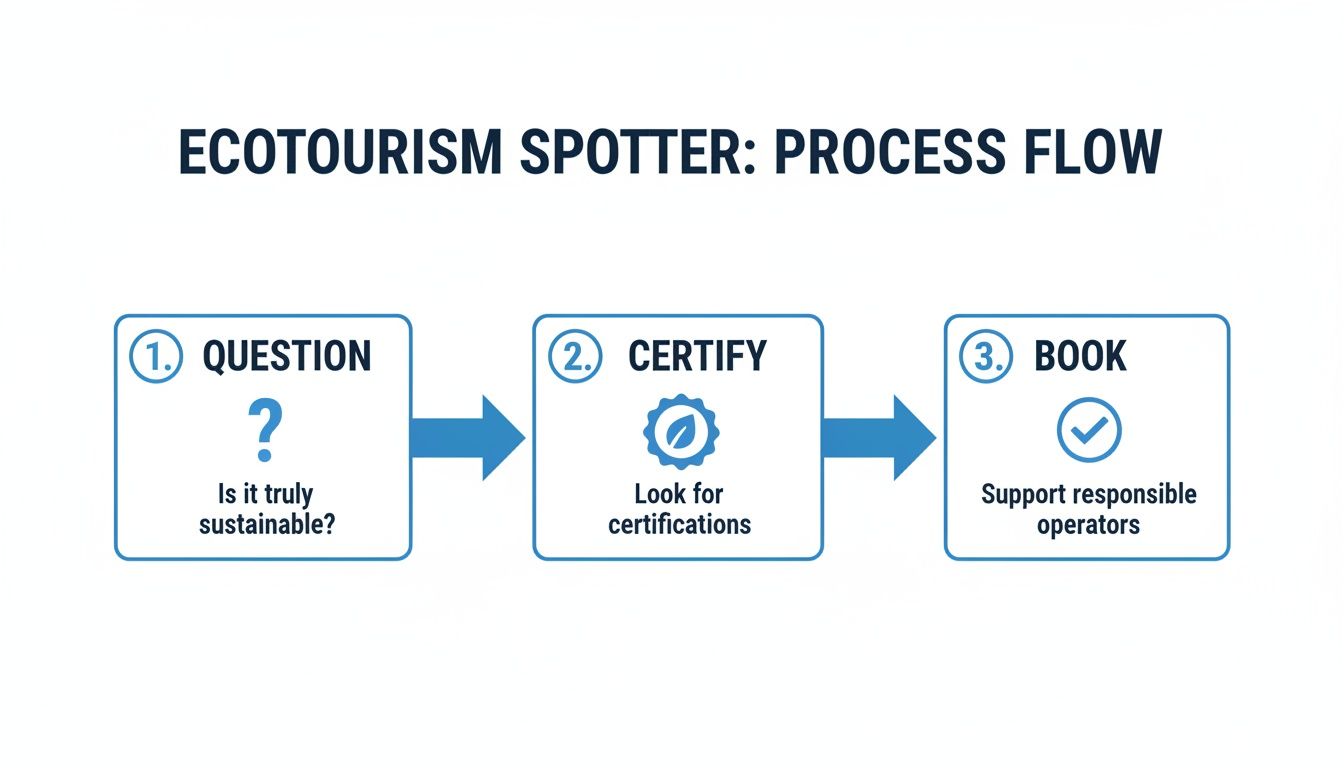
This flow—Question, Certify, Book—works as a quick mental checklist. It helps you make sure your choices line up with genuine ecotourism principles every time you book.
Adopt a Zero-Waste Packing System
Finally, what you pack is just as important as how you get there. A minimalist, zero-waste approach reduces your consumption. It also makes sure you don’t leave a trail of plastic waste behind. The goal is to be self-sufficient and resourceful on the road.
Your zero-waste travel kit should be all about reusability and versatility. Here’s a simple checklist to get you started:
- Solid Toiletries: Shampoo bars, conditioner bars, and solid toothpaste tablets get rid of the need for plastic bottles. They also last longer and won’t leak in your bag.
- Reusable Containers: A collapsible coffee cup, a water bottle with a built-in filter, and a set of reusable utensils are non-negotiable. Throw in a cloth tote bag for grocery shopping.
- Versatile Wardrobe: Pack high-quality, neutral-colored clothing made from natural fibers like merino wool or Tencel. These items can be layered, worn in multiple settings, and need washing less often.
- Digital Essentials: Ditch the plastic waste from physical SIM cards by using an e-SIM. Services like Airalo or Yesim let you download a data plan directly to your phone, keeping you connected sustainably.
By combining a rail-first philosophy with a walkable base and a zero-waste packing system, you create a powerful framework for truly low-impact ecotourism.
The Real Benefits and Challenges of Ecotourism
When you practice it thoughtfully, ecotourism is a powerful force for good. It creates positive ripples that reach far beyond a single trip. In fact, it turns your travel dollars into a direct investment in the health of the planet and the prosperity of local communities.
But like any powerful idea, it’s not perfect. It’s essential to understand both its incredible potential and its possible downsides. This isn’t meant to discourage you; it’s about making sure your travels have the genuinely positive impact you intend.
A conscious approach to travel is no longer a niche interest. Sustainability has become a massive shift in how we move. Now, 84% of global travelers are prioritizing it and 83% believe green practices are crucial. This shift is reshaping ecotourism into a $386.87 billion market. It’s expected to hit nearly $998.17 billion by 2032. You can learn more about this market growth from recent ecotourism research.
The Positive Impacts of Responsible Ecotourism
When ecotourism is done right, the benefits are clear, tangible, and feed into each other. Your decision to support a responsible operator contributes to a healthier, more equitable world.
Environmental Conservation: This is the most direct benefit. Your park fees, tour costs, and donations to local projects provide the funding needed for habitat restoration, anti-poaching patrols, and scientific research. It creates a real economic incentive for governments and communities to protect their natural assets rather than exploit them.
Empowering Local Communities: True ecotourism puts local people first. It creates sustainable, well-paying jobs for guides, lodge staff, and artisans that are a genuine alternative to more extractive industries. By choosing locally-owned businesses, you ensure your money stays in the community to fund schools, healthcare, and infrastructure.
Creating Richer Travel Experiences: Ecotourism fosters a deeper, more authentic connection to a place. Learning from a local guide about the medicinal uses of rainforest plants or the history of their village offers an insight you just can’t get from a guidebook. This focus on education and genuine interaction creates memories that last a lifetime.

Navigating the Potential Downsides
It’s just as important to be aware of the challenges that can pop up, even with the best intentions. Recognizing these risks is the first step toward avoiding them. It also helps you choose operators who are actively working to find solutions.
The Problem of Economic Leakage
One of the biggest challenges in tourism is economic leakage. This is what happens when money spent by tourists doesn’t actually stay in the local economy. Instead, it “leaks” out to the international corporations that own the big resorts, airlines, and booking platforms.
In some destinations, this leakage can be as high as 80%. This is exactly why prioritizing small-scale, locally-owned stays and tour operators is so critical for making a real impact.
Over-Tourism in Fragile Places
Even places marketed as “eco” are not immune to the pressures of over-tourism. Too many visitors can lead to soil erosion on popular trails, wildlife disturbance, and an overwhelming demand for resources like water and energy. Responsible operators manage this by limiting group sizes, sticking to designated paths, and carefully controlling their footprint.
For reliable ground transport that supports local drivers, you can book airport transfers with a service like Welcome Pickups.
The Fine Line of Cultural Exchange
Finally, there’s a delicate balance between authentic cultural exchange and performances staged for tourists. Ecotourism should foster genuine, respectful interaction. Be wary of experiences that feel transactional or reduce a culture to a stereotype.
Look for opportunities that promote a two-way dialogue, where you are a guest learning from a community, not just a spectator. And for peace of mind on your journey, consider securing travel insurance from a provider like VisitorsCoverage.
Two Sample Rail-First Ecotourism Itineraries
Alright, let’s move from theory to practice. It’s one thing to talk about ecotourism principles, but it’s another to see what they look like on a map. These sample itineraries show just how incredible a rail-first adventure can be for a digital nomad. They weave together work, culture, and low-impact travel.
Think of these as blueprints. They’re designed to be adapted to your own work rhythm and travel style. The goal here is to show that sustainable travel isn’t about sacrifice. In fact, it’s about making smarter, more rewarding choices than the old fly-in, fly-out routine. These journeys are all about depth over distance and connection over convenience.
Below are two very different itineraries, one carving through Europe and the other across Japan, both built around the quiet efficiency of train travel. They favour longer stays in walkable cities. This gives you time to settle in, be productive, and explore a region in a way that actually benefits the local economy.
European Cultural Rail Tour: Lisbon to Prague
This three-week journey is a masterclass in slow travel. It connects vibrant cultural hubs across Western and Central Europe without a single flight. Additionally, it’s built around walkable cities, farm-to-table food, and stays that put money directly into local hands.
- Route: Lisbon → Madrid → Barcelona → Lyon → Zurich → Prague
- Duration: 21 days (roughly 3-4 days per city)
- Estimated Carbon Savings: Choosing the train for this route cuts carbon emissions by approximately 85% compared to flying between each city.
- Accommodation Types: Look for locally-owned guesthouses, certified eco-apartments, and small boutique hotels tucked into central, walkable neighborhoods.
- Key Ecotourism Activities:
- Get lost in Lisbon’s Alfama district on foot and join a food tour led by a local.
- Explore Madrid’s sprawling public parks like Retiro and its community urban gardens.
- Cycle through Barcelona’s Gothic Quarter before dinner at a farm-to-table Catalan restaurant.
- Discover Lyon’s hidden “traboules” (passageways) and stock up at the Les Halles Paul Bocuse market.
- Hike the trails of Uetliberg mountain just outside Zurich, easily reached by public transport.
- Support local artisans at the markets in Prague’s Old Town Square.
This itinerary is perfect for nomads who want to soak up history, art, and food culture while keeping their footprint light. Booking train segments and finding stays is straightforward on platforms like Trip.com.
Japanese Nature and Tech Adventure
This two-week trip leans on Japan’s world-class Japan Rail Pass. It creates a seamless journey blending hyper-modern cities with serene natural landscapes. It’s a perfect example of how brilliant public transport makes ecotourism feel effortless, even in one of the world’s most advanced countries.
- Route: Tokyo → Hakone → Kyoto → Naoshima Island → Hiroshima
- Duration: 14 days
- Estimated Carbon Savings: Using the Shinkansen (bullet train) network saves over 90% in carbon emissions compared to taking domestic flights.
- Accommodation Types: Stay in traditional ryokans (Japanese inns) run by local families, or choose green-certified city hotels.
- Key Ecotourism Activities:
- Explore Tokyo’s immaculate parks, getting around on its flawless public transit system.
- Hike the trails of Hakone National Park and experience a traditional onsen (hot spring).
- Rent bicycles to explore Kyoto’s ancient temples and quiet bamboo forests.
- Visit Naoshima, the “art island,” to see how art, nature, and sustainability can merge.
- Reflect on history at Hiroshima’s Peace Memorial Park before taking a ferry to the sacred Miyajima Island.
For a journey like this, having solid travel insurance from a provider like VisitorsCoverage is always a smart move. Both itineraries prove that an ecotourism mindset opens up a world of deeper, more meaningful travel. You can find more inspiration for your own rail routes in our guide to trip chaining.
Editor’s Pick: The ÖBB Nightjet Experience
For a truly seamless and sustainable European journey, the ÖBB Nightjet network is our top recommendation. Connecting major cities like Vienna, Amsterdam, Paris, and Rome, these modern sleeper trains let you travel comfortably overnight. This saves a night’s accommodation cost and an entire day of travel. More importantly, a trip like Vienna to Amsterdam on the Nightjet produces around 90% fewer carbon emissions than the equivalent flight. It’s the perfect blend of efficiency, comfort, and low-impact travel for any digital nomad’s itinerary.
Your Ecotourism Questions, Answered
As you start weaving these ideas into your own travel plans, some practical questions naturally pop up. Here are a few common ones I hear, with straightforward answers to help you get started.

Is Ecotourism Always More Expensive?
Not at all. While you can certainly find high-end eco-lodges with premium price tags, the core habits of ecotourism can actually save you money. For example, the real value is in the choices you make on the ground.
Opting for a locally-owned guesthouse instead of a global hotel chain often costs less and guarantees your money supports the local community directly. Likewise, taking regional trains instead of flights or cooking a few meals with fresh market ingredients are both gentle on your wallet and your carbon footprint. It’s about traveling thoughtfully, not just spending more.
Can a City Trip Be Considered Ecotourism?
Absolutely. Urban ecotourism is just applying the same principles to a city setting. It means choosing a green-certified hotel, getting around on public transport, and making a point to support local businesses—from that neighborhood coffee shop to the independent bookstore.
It also means exploring a city’s green lungs, like its parks and botanical gardens, or visiting cultural sites that actively preserve local heritage. Any destination can be an ecotourism destination when you travel with intention.
How Can I Offset My Carbon Footprint if I Have to Fly?
Reducing your emissions in the first place is always the best move. But when a flight is unavoidable, you can purchase carbon offsets from projects certified by credible, third-party standards like Gold Standard or Verra. These programs fund verified renewable energy, reforestation, or community initiatives that remove or prevent carbon emissions.
It’s crucial to see offsetting as a last resort for the emissions you can’t avoid, not as a free pass to fly without a second thought. The main goal should always be to shrink your footprint from the start.
What’s the Difference Between Sustainable Tourism and Ecotourism?
Think of it like this: sustainable tourism is the big-picture goal for the entire travel industry. It’s a broad framework aiming to make all kinds of travel—from business trips to beach holidays—environmentally, socially, and economically viable for the long haul.
Ecotourism is a specific, focused niche within that larger idea. It’s almost always nature-based. It also centers on three core pillars: actively conserving natural environments, directly benefiting local communities, and providing a genuine educational experience for the traveler.
Wrapping Up: Your Next Steps Toward Sustainable Travel
Ecotourism isn’t about chasing some impossible standard of perfection. It’s about making intentional, informed choices. These choices turn your travels from a simple visit into something that actively gives back. For digital nomads and remote workers, this mindset fits perfectly with a lifestyle already built around flexibility and deeper cultural connection.
Every decision—choosing a train over a plane, buying produce at a local market, staying an extra week in one spot—is a small but meaningful step. Over time, these actions add up, creating a style of travel that helps conserve environments, empower communities, and make your own experiences richer. It’s an achievable and deeply rewarding way to see the world.
Now that you have a clear framework, you can start planning your next low-impact journey with confidence. Use our on-site tools and guides to turn these principles into a real-world itinerary. Taking that next step is easier than you think.
A great place to start is our practical guide on how to travel carbon neutral, which will help you build your own sustainable adventure from the ground up.
Key Takeaways
- Ecotourism Is a Mindset: It’s about making choices that prioritize conservation, support local communities, and include genuine education—not just visiting a pretty forest.
- Verify All Claims: Always look for proof behind “eco-friendly” marketing. Use reputable, third-party certifications like the GSTC Criteria or Green Globe to identify truly sustainable operators.
- Make Rail Your Default: Prioritizing train travel over flying is one of the single most impactful actions you can take to dramatically reduce your carbon footprint while on the road.
- Support Local Economies Directly: Fight economic leakage by consciously choosing small-scale, locally-owned accommodations, tour guides, and restaurants to ensure your money benefits the community.
- Ask Critical Questions: Be an active participant. Choose providers who are transparent about how they manage waste, source their supplies, and engage with the local community.
This article was fact-checked using sustainability data from the World Green Building Council, the Global Ecotourism Network, and peer-reviewed architecture studies. All partner links are vetted for compliance with sustainable business certifications.
Join the Sustainable Work Movement
Want more rail-first itineraries, low-impact packing systems, and walkable base-city ideas?
Ecotourism FAQ for Digital Nomads
Still have questions? These quick answers will help you put ecotourism into practice as a remote worker—without overthinking every decision.
1) What is ecotourism in simple terms?+
Ecotourism is travel that protects nature, supports local communities, and helps you learn something real about the place you’re visiting. It’s less about the destination and more about your choices—how you get there, where you stay, who you book with, and where your money ends up.
2) Can digital nomads practice ecotourism in cities?+
Absolutely. In cities, ecotourism looks like choosing a walkable base, relying on public transport or biking, staying somewhere locally owned (or credibly certified), and directing your spending toward local markets, cafés, and small businesses. The setting changes, but the principles don’t.
3) What’s the fastest way to reduce my travel footprint?+
Start with two high-impact moves: stay longer in one base and choose trains or buses for short-to-medium routes whenever possible. Fewer “travel days” usually means fewer emissions, less stress, and a better nomad routine.
4) How do I spot real ecotourism and avoid greenwashing?+
Look for specific actions, not vague labels. Credible operators explain how they handle waste and water, how they hire and pay locally, and how conservation is funded. Strong signs include alignment with recognized standards (like GSTC) plus transparent reporting. Red flags are “eco” claims with no proof or a focus on tiny gestures while ignoring the biggest impacts.
5) Which certifications are worth trusting?+
Use certifications as a filter, not a final answer. A good starting point is alignment with globally recognized frameworks like the GSTC Criteria. You may also see programs such as Green Globe and EarthCheck. After that, confirm with real details: local hiring, conservation contributions, and resource management practices.
A quick ecotourism checklist for remote workers
If you want a simple “do this first” plan: pick a walkable base, stay longer, book one local guide experience, and reduce single-use waste. Those four moves cover the biggest wins without turning travel into a stressful research project.
6) Is ecotourism always more expensive?+
No. Many low-impact choices are also budget-friendly: longer stays, regional trains, cooking with local market ingredients, and choosing locally owned guesthouses. Luxury eco-lodges exist, but the core habits of ecotourism are accessible on almost any budget.
7) What are the best ecotourism habits for a month-long stay?+
Choose a walkable neighborhood, build routines with local businesses, avoid single-use items, and plan day trips by rail or bus. Then add one “give back” habit: book a community-led workshop, pay park/conservation fees, or choose a locally guided nature tour that keeps money in the region.
8) Does buying local really make a difference?+
Yes—because it reduces economic leakage (money leaving the destination). When you book locally owned stays, hire local guides, and shop markets, more of your spending supports wages, small businesses, and community services in the place you’re actually visiting.
9) Should I offset flights if I have to fly?+
Reduce first: fewer flights, longer stays, and rail-first routes. If flying is unavoidable, offsets can be a backstop—but only when they’re verified by credible third-party standards. Treat offsets as a last-step tool, not a free pass to fly more.
10) What’s the difference between sustainable tourism and ecotourism?+
Sustainable tourism is the big umbrella—making all travel more responsible over time. Ecotourism is a more focused niche within that umbrella, often nature-connected, and defined by three pillars: conservation, community benefit, and education.
Note: This section is for educational purposes and isn’t financial or legal advice.
