

When people talk about ecotourism tourism, they’re not just throwing around another travel buzzword. It’s a specific, deeply impactful way to see the world. At its core, ecotourism is responsible travel to natural areas that conserves the environment, sustains the well-being of local people, and involves both interpretation and education. It’s less about a simple vacation. Instead, it is more about becoming a temporary, respectful guardian of a place.
Why Ecotourism Is Such a Vital Idea
In a world where travel is more accessible than ever, understanding what ecotourism really means is the first step. This helps you make choices that heal rather than harm. It’s a philosophy built on the idea that your presence in a destination can be a force for good.
Unlike general travel, which often prioritizes the visitor’s experience above all else, ecotourism creates a symbiotic relationship. This bond is between you, the local community, and the environment. This approach ensures the money you spend goes directly toward protecting the very natural wonders you’ve come to see.
This isn’t just about avoiding plastic straws or reusing towels, either. True ecotourism is a complete system designed to deliver tangible benefits. It involves actively choosing accommodations, tours, and experiences that are deeply rooted in conservation and community empowerment.

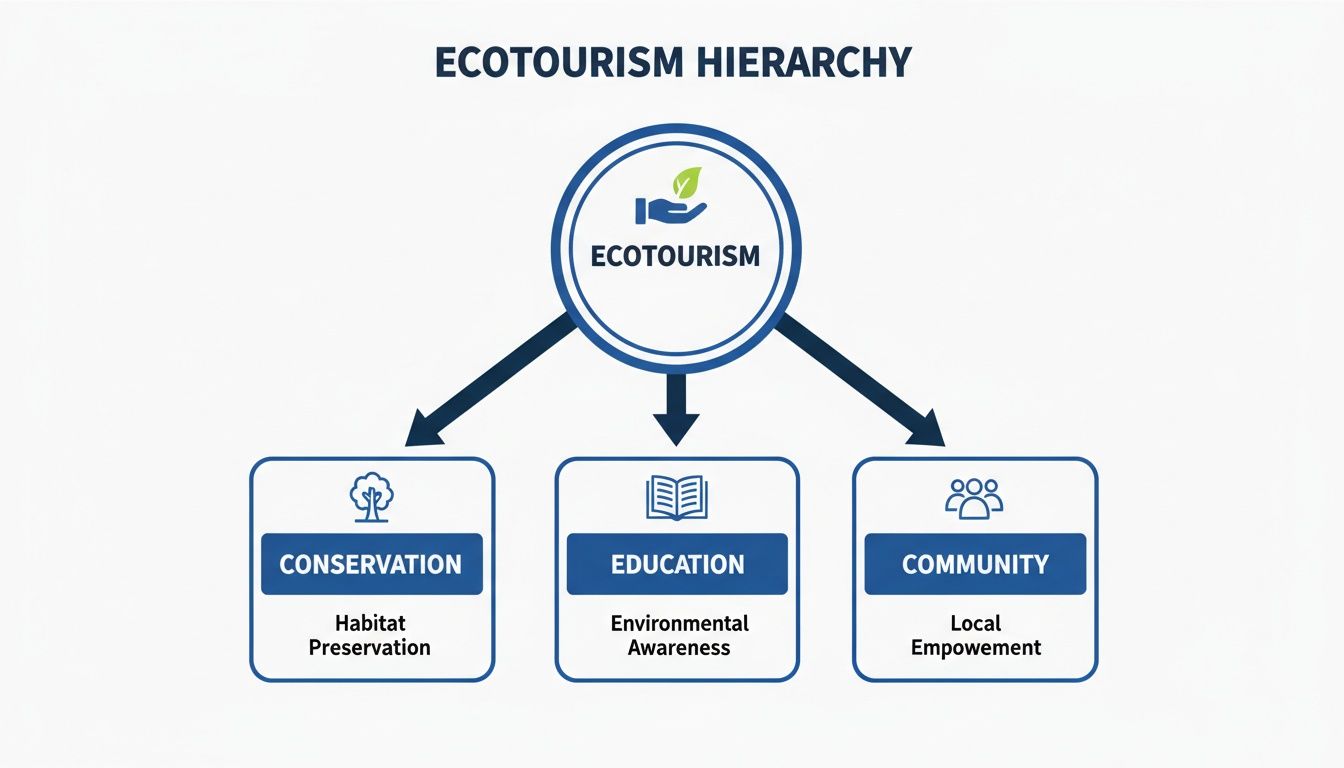
The Three Pillars of Authentic Ecotourism
To really get it, it helps to break the concept down into its three pillars. These principles are what separate genuine ecotourism from other kinds of travel that might just happen to take place in nature. Following these ideas makes your journey more meaningful.
- Conservation at its Core: The number one goal is to actively contribute to protecting biodiversity and natural habitats. This means your travel funds might support reforestation projects, anti-poaching units, or scientific research.
- Community Empowerment: Ecotourism ensures local populations are the primary beneficiaries. It creates sustainable livelihoods, respects cultural traditions, and involves community members in decisions. This prevents the “economic leakage” so common in mass tourism.
- Education and Awareness: A key component is fostering a deeper understanding and appreciation for a destination’s natural and cultural heritage. This applies to both the traveler and the host community, building a shared sense of stewardship.
“Ecotourism is responsible travel to natural areas that: conserves the environment; socially and economically sustains the well-being of the local people; and creates knowledge and understanding through interpretation and education of all involved.”
— The Global Ecotourism Network (GEN)
Ultimately, internalizing these pillars transforms you from a passive tourist into an active participant in global conservation. It moves beyond the idea of “leaving no trace” to a more proactive goal: leaving a place better than you found it. This conscious approach is central to what makes ecotourism such a powerful tool for positive change. As you’ll see, these principles are also foundational to the broader movement of sustainable travel in the future.
Core Principles of Genuine Ecotourism Tourism
So, what separates a genuinely impactful trip from a standard holiday that just happens to be in a forest? It comes down to a few core principles. These aren’t just buzzwords; they’re the active ingredients that make ecotourism tourism a force for good. They turn your travel choices into a partnership that funds conservation and empowers local communities.
Think of these principles as a compass. They help you navigate away from experiences that simply use nature as a backdrop. Consequently, they point you toward those that actively help protect it. This framework is championed by organizations like the Global Sustainable Tourism Council (GSTC). This group sets the global standard for what “sustainable” should actually mean in practice.
Minimizing Your Footprint
This is the baseline, and it goes so much deeper than just reducing waste or reusing a towel. The most fundamental principle of ecotourism is to minimize the negative physical, social, and behavioral impacts of your presence. Every small action contributes to this goal.
A true eco-lodge in the Amazon won’t just ask you to turn off the lights. It will be built from sustainably sourced materials and run on solar power. It will also treat its own wastewater naturally and source food from local farms to slash “food miles.” Every operational choice is geared toward leaving the lightest touch possible.
Building Environmental and Cultural Awareness
Authentic ecotourism is an active, educational journey, not a passive one. It’s designed to create a much deeper appreciation for both the natural world and the local culture you’re visiting. In essence, it’s about building respect from both sides of the exchange.
Instead of a generic bus tour, imagine a guided walk with a local naturalist. They might point out medicinal plants and explain the intricate web of life in the ecosystem. This transforms a simple hike into a profound learning experience. It connects you to the place on a completely different level. As The Global Ecotourism Network emphasizes, this educational component is non-negotiable.
Providing Direct Financial Benefits for Conservation
Here’s where your trip becomes a powerful tool for protection. A core pillar of genuine ecotourism is ensuring that a meaningful chunk of the money you spend flows directly back into conservation. Your visit should tangibly help protect the local biodiversity.
Think of a wildlife conservancy in Kenya where your park fees directly fund the salaries of anti-poaching rangers. Or a marine research center in the Galápagos that relies on responsible diving tours to finance its work. This is ecotourism tourism in action—where your travel dollars become a direct investment in the health of the planet. Want to dig deeper into this? You can learn more about what makes a tour truly sustainable in our detailed guide.
Empowering Local Peoples and Communities
Finally, real ecotourism is about making places better for people to live in first, and better for people to visit second. It ensures that local communities have a real stake and a voice in how tourism develops in their home.
It provides financial benefits and creates economic opportunities. These chances don’t force people to choose between their livelihood and their heritage. A community-run guesthouse in a remote mountain village is a perfect example. By staying there, your money directly supports local families. It also helps preserve cultural traditions and reduces the pressure for young people to leave for overcrowded cities. It’s a model that builds local pride and ensures the community sees a clear, positive benefit from protecting their home.
How to Spot and Avoid Greenwashing
In the world of ecotourism, not all that glitters is green. As travelers have become more aware of their impact, many companies have started using environmental claims as a simple marketing tool. This practice, known as greenwashing, is when a business spends more time and money looking sustainable than it does on actually minimizing its footprint. It’s a sneaky tactic that can trip up even the most well-intentioned travelers.
Spotting it can be tricky. A hotel might proudly display a sign about reusing towels to save water—a minor, cost-saving measure. Meanwhile, it could be running a wasteful buffet, using single-use plastics everywhere, and operating a massive, energy-hungry swimming pool. This is a classic example. It highlights one small “eco” action to distract from much larger, unsustainable practices. The key is to look beyond the surface claims and ask what’s really going on behind the scenes.
Learning to see through this green sheen is crucial. It empowers you to support businesses genuinely committed to conservation and community upliftment. This ensures your travel dollars fund real change, not just a clever ad campaign.
Red Flags for Greenwashing in Ecotourism
Becoming a savvy traveler means knowing what to look for. Vague, fluffy language is often the biggest giveaway. Therefore, be wary of feel-good terms that sound nice but mean very little.
Here are a few common red flags to watch out for:
- Vague and Unproven Claims: Phrases like “eco-friendly,” “green,” or “natural” without any proof or specific data are often meaningless. A genuinely sustainable operator will tell you how they are eco-friendly—for example, “we are powered by 100% solar energy” or “we compost 90% of our food waste.”
- Irrelevant Highlights: This is the classic “towel trick.” A company might boast about a tiny positive action to distract from its major negative impacts elsewhere. Always try to see the bigger picture.
- Hidden Trade-Offs: Sometimes a product is labeled “green” based on a very narrow set of qualities while ignoring other significant environmental problems. For instance, a tour might use “energy-efficient” vehicles but operate in a way that disrupts sensitive wildlife habitats.
The core problem with greenwashing is the lack of transparency. If a company makes it hard to find specific details about its sustainability practices, that in itself is a major warning sign.
How to Vet Your Travel Choices
Fortunately, you have plenty of tools and strategies to vet your options. Asking the right questions and looking for credible proof can help you separate the truly sustainable businesses from the pretenders. Before you book anything, do a little digging. A few minutes of research can make a huge difference. For more detailed guidance, check out our guide on how to choose eco-friendly tour operators.
Start by checking for recognized, third-party certifications. These aren’t just fancy logos. They are proof that an independent body has audited the company against rigorous sustainability standards.
- Look for reputable certifications like Green Globe, Fair Trade Tourism, or those recognized by the Global Sustainable Tourism Council (GSTC).
- Don’t be afraid to ask direct questions. Email the hotel or tour operator and ask: “How does my visit directly benefit the local community?” or “Can you share your most recent sustainability report?” A legitimate eco-business will be proud to answer.
- Examine their online presence. Do they have a dedicated sustainability page with concrete goals, data, and progress reports? Or is it just a few stock photos of trees and vague promises? Transparency is everything.
Planning Your Low-Impact Ecotourism Adventure
Turning your travel ideals into a real itinerary is where the true impact of ecotourism tourism begins. Planning a low-impact adventure isn’t about sacrifice. Instead, it’s about making smarter, more intentional choices that line up with your values. This is all about the practical stuff: how you move, where you stay, and what you pack.
The goal here is to craft a journey that not only shrinks your footprint but also makes a genuinely positive contribution to the places you visit. It’s a mindset shift away from speed and convenience and toward depth and connection. Thankfully, this isn’t some fringe idea anymore. The global ecotourism market, recently valued at over $295 billion USD, is projected to rocket past $761 billion USD by 2030. Europe holds a major slice of that pie, which shows a massive shift in what travelers are looking for. This is especially true for digital nomads and slow travelers planning regenerative stays and rail-first routes.
Embrace Low-Impact Routing with Rail Travel
Your transportation choices have the single biggest impact on your trip’s carbon footprint. Period. Choosing trains over planes is one of the most powerful decisions you can make as an eco-conscious traveler. In Europe and parts of Asia, rail travel isn’t just greener—it’s an experience in itself.
Night trains are particularly brilliant for this. They bundle your transport and accommodation into one, saving you money and a night’s worth of hotel emissions. There’s nothing quite like waking up in a new city after a comfortable journey. It’s efficient, enjoyable, and just plain smart. Platforms like Aviasales can help compare flight options if rail isn’t available, but always make train travel your priority.

As you can see, planning a multi-city rail journey is straightforward. Tools like this let you build complex, low-carbon itineraries without the usual booking chaos. If a flight is truly unavoidable, you can find options on platforms like Aviasales, but always make rail your first choice.
Finding and Booking Regenerative Stays
Where you sleep matters just as much as how you get there. A regenerative stay is an accommodation that actively works to improve its local environment and community. Think small-scale, community-owned lodges, family-run guesthouses, or eco-farms.
To find them, you need to look beyond the usual hotel search engines. Use booking platforms that let you filter for sustainability certifications, or try searching for terms like “community-based tourism” or “eco-lodge.” You can find some excellent options on platforms like Trip.com.
When vetting a potential stay, look for a few specifics:
- Local Ownership: Does the money you pay actually stay within the community?
- Sustainable Practices: Do they talk about using renewable energy, composting, or sourcing local food?
- Community Engagement: How do they support local people—hiring local guides, funding community projects?
Master Zero-Waste and Minimalist Packing
Packing light is a cornerstone of low-impact travel. A lighter bag is easier to handle on trains and public transport, meaning you’re less likely to need a taxi. More importantly, a minimalist approach forces you to bring only what you truly need. This cuts down on consumption from the start.
Zero-waste packing takes this a step further by focusing on eliminating single-use plastics. A few simple swaps can make a massive difference.
“The greatest threat to our planet is the belief that someone else will save it.” – Robert Swan
Start with solid toiletries—shampoo bars, conditioner bars, and toothpaste tablets. They last longer, are lighter, and come with zero plastic packaging. These products often weigh just a few ounces. And, of course, always carry a reusable water bottle and coffee cup. For a deeper dive, check out our detailed guide on how to pack for low-impact travel. These small changes really do add up to a significant reduction in waste over your journey.
Inspiring Examples of Ecotourism in Action
Theory is one thing, but seeing ecotourism tourism work in the real world is what really brings the idea to life. These examples show how travel, when done right, can become a powerful engine for conservation and community well-being. They’re proof that a commitment to sustainability isn’t just a nice ideal—it’s a practical, working model.
From the mountains of Europe to the rainforests of Asia, operators are building incredible experiences. These are grounded in respect for nature and local culture. These aren’t just trips; they are partnerships between travelers, communities, and ecosystems. Let’s look at a couple of specific examples. They show what authentic ecotourism looks like on the ground, moving the core principles we’ve discussed from abstract ideas to inspiring realities.
Ecotourism Europe: A Romanian Community Revival
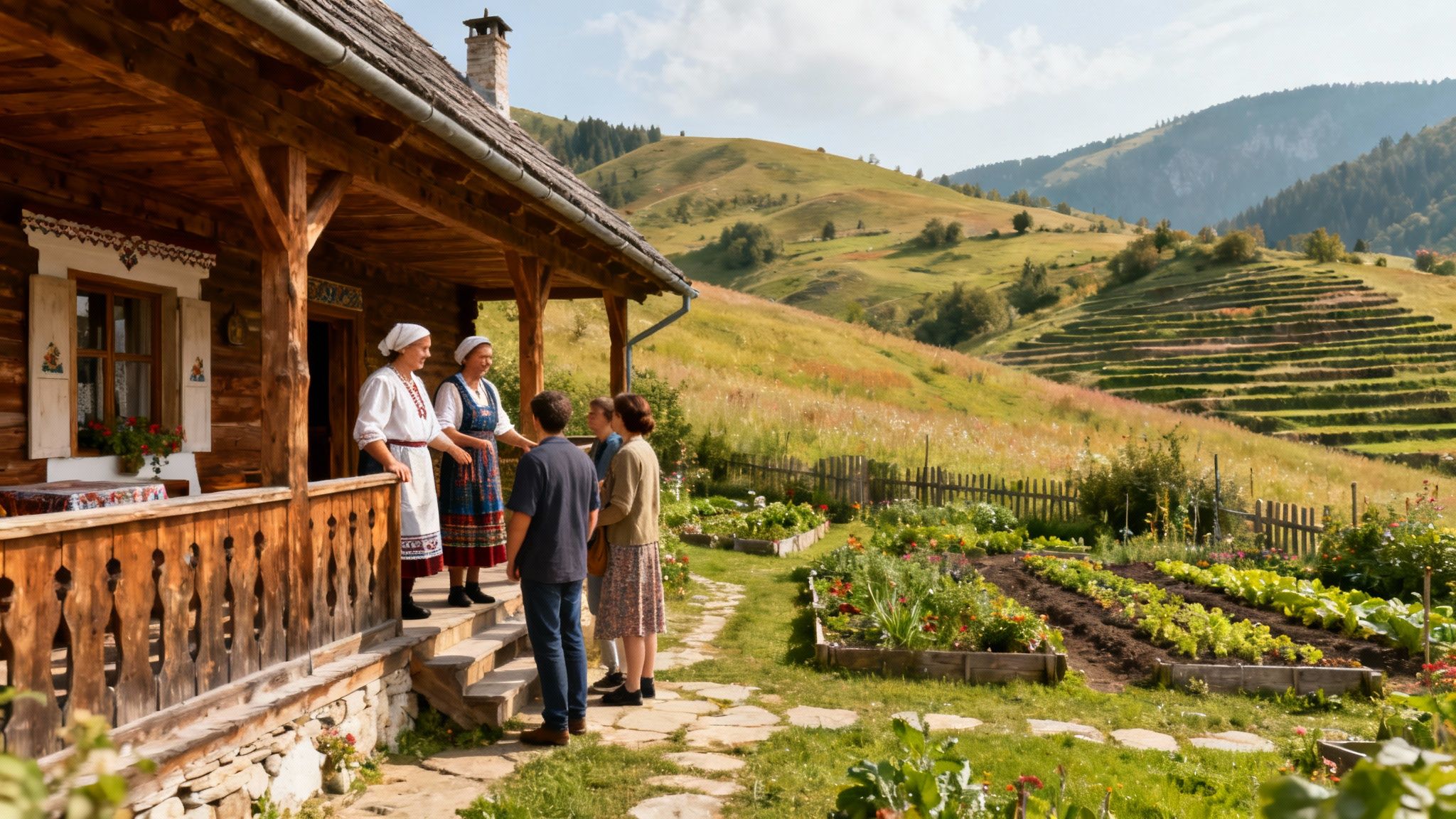
Deep in the Carpathian Mountains of Romania, a network of community-run guesthouses offers a powerful example of ecotourism. Here, tourism isn’t outsourced to some big corporation. Instead, it’s woven directly into the fabric of village life. Travelers stay in restored traditional homes, eat meals cooked with ingredients grown a few steps away, and follow guides who have known these forests their whole lives.
The benefits here are immediate and clear:
- Economic Empowerment: Tourism revenue stays entirely within the community, creating sustainable incomes. This reduces the pressure for destructive logging or migration to cities.
- Cultural Preservation: By sharing their traditions and food, the community reinforces its cultural identity and builds genuine local pride.
- Conservation Incentive: The forest and its wildlife—including bears and wolves—transform from a resource to be exploited into a valuable asset to protect. The community has a direct financial stake in keeping the ecosystem healthy.
This model is a perfect example of how community-based tourism creates a self-reinforcing cycle of preservation and prosperity.
Ecotourism Asia: Protecting Borneo’s Orangutans
Over in the dense rainforests of Borneo, the Sepilok Orangutan Rehabilitation Centre is a world-renowned example of conservation funded by tourism. The center rescues orphaned and injured orangutans, rehabilitates them, and prepares them for release back into the wild. A huge chunk of that operation is paid for by visitor entrance fees.
This is ecotourism at its most direct. Your visit isn’t just a chance to see these incredible animals; it’s an active contribution to their survival. The center also provides jobs for local guides and staff. It educates thousands of visitors each year about the threat of deforestation from palm oil plantations. Consequently, it turns tourists into advocates. For more inspiration, you can explore our list of the top 10 ecotourism destinations.
Editor’s Pick: Ecotourism Stay
Bucovina, Romania Community Guesthouses: This network of locally-owned guesthouses in Romania’s northern region is the real deal. Visitors experience authentic local culture while their stay directly supports families and incentivizes the preservation of traditional farming landscapes and nearby forests. You can find options on booking platforms like Trip.com by searching for smaller, locally-rated properties away from major hotels.
These projects prove that ecotourism is far more than a niche market. It’s a scalable, effective strategy for protecting the planet’s most precious places while empowering the people who call them home.
Key Takeaways
- Ecotourism is Active, Not Passive: It requires conscious choices to support conservation and communities, not just visiting a pretty place.
- Always Vet “Eco” Claims: Look for third-party certifications like Green Globe to sidestep greenwashing and ensure your money supports genuine work.
- Prioritize Low-Impact Transport: Choosing trains, especially night trains, over planes dramatically reduces your travel carbon footprint.
- Support Local Ownership: Staying at community-run guesthouses or lodges ensures your money directly benefits the local economy.
- Your Choices Matter: Every booking is a vote for the kind of tourism you want to see in the world. Choose wisely.
- Pack for Zero Waste: Simple swaps like solid toiletries and a reusable water bottle significantly cut down on plastic waste during your travels.
Low-Impact Travel Tools (Worth It)
Also, if you’re planning a trip and want to keep things simple, these tools help you travel smoother while staying mindful about impact.
Get an eSIM for reliable data → Disclosure: Partner link. No extra cost to you.
Pre-book a transfer for easy arrivals → Disclosure: Partner link. No extra cost to you.
Frequently Asked Questions About Ecotourism
What is the main difference between ecotourism and sustainable tourism?
Think of sustainable tourism as the big-picture goal for the entire industry—to minimize negative impacts across all types of travel. Ecotourism is a specific niche within that. It focuses on visiting natural areas to actively contribute to conservation and community well-being. One is a broad ideal, while the other is a targeted practice.
Is ecotourism always more expensive?
Not at all. While some high-end eco-lodges can be pricey, many ecotourism experiences can be more affordable. For instance, staying in a community guesthouse or volunteering on a conservation project can cost less than a standard resort holiday. The value is in the impact, not just luxury.
How can I be an ecotourist on a budget?
Focus on slow travel. Use public transport or trains instead of flights. Stay in locally-owned homestays and eat at local spots. Choose free activities like hiking on public trails. You can often have a richer, more authentic experience for less money.
What is the single most impactful choice I can make as a traveler?
Your mode of transport. Choosing to travel by rail instead of air, especially for shorter distances, drastically cuts your carbon emissions. Sustainability data from sources like the World Green Building Council consistently shows this is the biggest factor in a trip’s environmental footprint.
How do I know if a tour operator is genuinely eco-friendly?
Look for transparency and certifications. A legitimate operator will proudly share detailed info about their sustainability practices. They will explain how they support local communities and what percentage of your fee goes to conservation. Check for certifications from organizations like the Global Sustainable Tourism Council (GSTC).
Does ecotourism tourism really help wildlife?
Yes, when it’s done right. Well-managed ecotourism provides a direct economic incentive for communities to protect local wildlife and habitats. Your park fees and tour costs can fund anti-poaching patrols, habitat restoration, and research. This makes animals more valuable alive than dead.
Can I practice ecotourism principles in a city?
Absolutely. While classic ecotourism is nature-based, you can apply its principles anywhere. Choose hotels with strong sustainability certifications. Eat at farm-to-table restaurants. Use public transport and take tours from community guides that focus on local culture and history.
What is “community-based tourism”?
This is a form of ecotourism where the local community has substantial control and ownership over the tourism activities. They manage the guesthouses, lead the tours, and make the key decisions. This ensures the benefits stay right there in the community.
Is travel insurance important for ecotourism trips?
Yes, it’s essential. Ecotourism often takes you to more remote locations where medical facilities might be limited. Reliable travel insurance like VisitorsCoverage ensures you’re protected if something unexpected happens. This gives you peace of mind.
How can I stay connected in remote ecotourism destinations?
Getting an eSIM from a provider like Airalo or Yesim before you go is a great idea. It lets you have reliable data for navigation and communication without having to hunt down a physical SIM card when you arrive.
Join the Sustainable Work Movement
Want more rail-first itineraries, low-impact packing systems, and walkable base-city ideas?
*This article was fact-checked using sustainability data from the World Green Building Council, the Global Ecotourism Network, and peer-reviewed architecture studies. All partner links are vetted for compliance with sustainable business certifications.*
