
Mastering ethical travel is a simple idea with a big impact: it’s about exploring the world with a deep respect for the places you visit—the culture, the local economy, and the environment. Think of it like being an incredibly considerate guest in someone’s home. Your goal isn’t just to see the sights; it’s to leave the place and its people better off, or at least as well as you found them.
This mindset weaves together social fairness with environmental care, turning a simple trip into something more meaningful. For instance, opting for a durable carry on backpack over disposable luggage helps reduce waste long-term.
The term goes way beyond industry buzzwords. It signals a fundamental shift in how we see ourselves as travelers. Instead of just consuming a destination for its highlights, we become active participants in its health and well-being. This approach nudges us to make conscious choices that ripple out positively, from the train we take to the souvenirs we bring home.
This philosophy is especially vital for digital nomads and remote workers. When you’re living in one place for weeks or months, your daily decisions—where you eat, shop, and work—add up. Ethical travel is about making sure that cumulative effect is a good one, actively supporting the communities that become your temporary home.
What is ethical travel and why does it matter?
A major force behind the push for ethical travel is the very real problem of overtourism. We’ve all seen the pictures: beautiful destinations struggling under the weight of strained infrastructure, environmental damage, and displaced local residents. An ethical traveler aims to be part of the solution, not the problem.
This often means:
- Visiting during the shoulder season: Traveling just outside of peak months helps spread the economic benefits more evenly across the year and eases the pressure on local resources.
- Exploring less-traveled areas: Spreading out to secondary cities or rural regions supports smaller communities that are often overlooked by the tourist trail.
- Prioritizing local businesses: Choosing family-run guesthouses, eating at neighborhood restaurants, and hiring local guides ensures your money flows directly into the community.
It Starts with Your Mindset and Your Gear
Adopting an ethical travel mindset begins long before you pack your bags. It’s about planning with intention. This can be as straightforward as choosing a lightweight travel backpack that makes navigating public transport a breeze, reducing your reliance on taxis. It’s also about carrying a reusable water bottle to slash your single-use plastic waste—a massive issue in many parts of the world.
A simple packable daypack is perfect for trips to local markets, allowing you to support artisans by purchasing handmade goods without needing a plastic bag. These small choices, made consistently, add up to a much lighter footprint. The core idea is to travel lightly on the planet and respectfully within its communities. If you’re interested in the environmental side of things, you can learn more about what sustainable travel means in our detailed guide. Every decision, from your gear to your itinerary, becomes an opportunity to make a positive difference.
How to Plan Your Ethical Travel Transportation
Your transportation choices almost always make up the biggest slice of your travel carbon footprint. This also means they’re your single biggest opportunity to make a positive change. Adopting a rail-first mindset is a cornerstone of ethical travel, shifting your focus from pure speed to the quality of the journey itself—and dramatically cutting your emissions along the way.
When you choose the train, you’re not just getting from A to B. You’re turning the travel day into one of the highlights of your trip.
For digital nomads and remote workers, this isn’t just an ethical choice; it’s a practical one. Trains double as comfortable, scenic mobile offices. You can stay connected with a secure laptop privacy screen, get work done, and arrive right in the city center, saving a ton of time and money on airport transfers.
The environmental case for trains is just undeniable. Tourism-related transport is responsible for about 5% of global carbon dioxide emissions, a huge number that really drives home the need for smarter choices. For anyone planning low-impact routes, especially across the well-connected networks in Europe and Asia, the data speaks for itself: trains emit up to 90% less CO2 per passenger than an equivalent short-haul flight. You can dig into more of this data by exploring the latest green tourism trends at Statista.com.
Prioritizing Rail for a Lower Impact
Choosing the train isn’t just about emissions; it’s a more holistic decision that genuinely improves your travel experience. Taking a high-speed train from Paris to Rome, for example, doesn’t just save a massive amount of CO2 compared to flying. It also erases the stress of airport security lines and the long, expensive commutes to and from suburban airports.
By booking night trains, you can even save on a night’s accommodation, arriving refreshed and ready to explore your new city. It’s a fantastic strategy for maximizing both your time and your budget. For a detailed breakdown of the numbers, check out our guide comparing train vs. plane emissions.
The decision tree below helps visualize the core mindset of an ethical traveler. It’s all about focusing on respect and being a thoughtful, considerate guest.
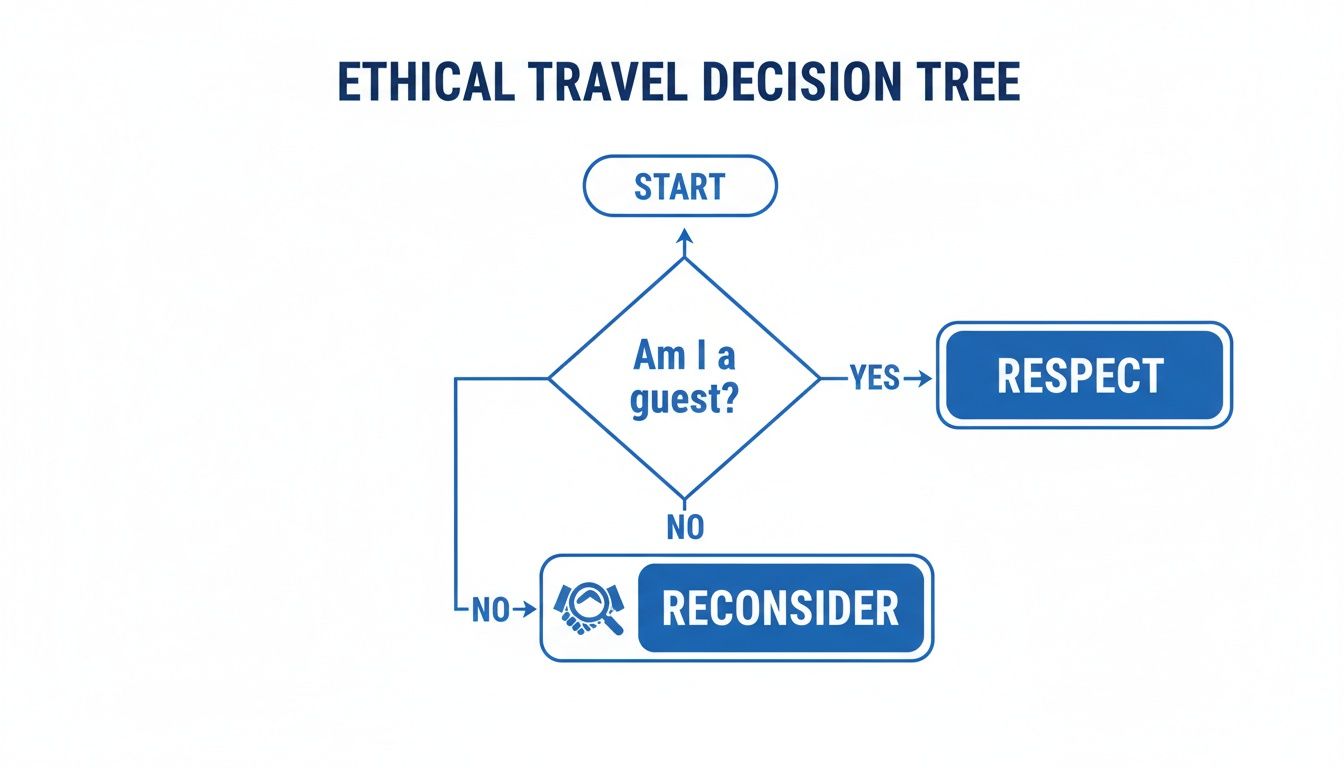
This flowchart really reinforces the idea that ethical travel starts with a simple recognition: we are guests in someone else’s home, and our actions should reflect that.
Comparing Ethical Transportation Options
When you’re planning a trip with multiple stops, it’s incredibly helpful to see how different modes of transport stack up against each other. This table gives you a clear comparison based on the factors that matter most for both ethical and practical travel planning.
| Transport Mode | Average CO2 Emissions (per person, 310 miles / 500 km) | Typical Cost (Europe) | Door-to-Door Time (310 miles / 500 km) | Key Ethical Benefit |
|---|---|---|---|---|
| High-Speed Rail | 13 lbs (6 kg) CO2 | $60–$150 USD | 3.5–5 hours | Extremely low emissions and direct city-center access. |
| Intercity Bus | 62 lbs (28 kg) CO2 | $25–$70 USD | 6–8 hours | Very budget-friendly and accessible for smaller towns. |
| Short-Haul Flight | 388 lbs (176 kg) CO2 | $80–$200+ USD | 4–6 hours (incl. airport time) | Fastest for very long distances where rail isn’t an option. |
| Electric Vehicle (EV) | Varies (grid dependent) | Varies (charging costs) | 5–6 hours | Lower emissions than gas cars, but less efficient than rail. |
As you can see, while a flight might look faster on paper, high-speed rail is often just as quick—or quicker—when you factor in total door-to-door travel time for distances under 500 miles (about 800 km). And it does so with just a tiny fraction of the environmental cost. It’s a clear win-win.
Choosing Stays That Support Local Communities
Where you lay your head at night matters just as much as how you get there. The right accommodation isn’t just a bed; it’s a direct line to supporting the local economy and protecting cultural heritage. It’s about moving past vague “green” labels to find places that are genuinely woven into the fabric of their community.
This means seeking out stays that are deeply rooted in their environment. These are the spots that prioritize fair wages for local staff, source their food from nearby farms, and often put their profits back into local conservation projects. When your money stays in the community, it helps build a more resilient, sustainable tourism industry where the benefits are shared by the people who actually call the place home.
The demand for this is exploding. A huge 84% of global travelers now say sustainability is important, and 33% specifically chose eco-friendly stays last year. This isn’t just a niche trend; regenerative eco-lodges and zero-waste apartments now hold a 32% share of the booming eco-tourism market.

How to Find Truly Ethical Accommodations
Finding places that genuinely put their community first takes a bit of research, but it’s worth it. The goal is to look for real proof of their positive impact, not just slick marketing. It pays to dig a little deeper.
Here’s a simple process for vetting your options:
- Look for recognized certifications: Keep an eye out for stays certified by reputable groups like the Global Sustainable Tourism Council (GSTC), Green Key, or B Corp. These aren’t just badges; they represent a serious commitment to environmental, social, and economic standards.
- Read their “About Us” page: A truly committed business will be transparent. Look for specifics on how they hire locally, where they source their materials, and how they contribute to community projects. Vague promises are a red flag.
- Check guest reviews for clues: Fellow travelers often leave breadcrumbs. Look for reviews that mention the hotel’s local connections, how staff are treated, and the overall feel of the place—comments that go beyond just cleanliness and comfort.
Taking these extra few minutes can make all the difference, ensuring you book a stay that truly aligns with your values.
The Power of Regenerative Stays
While sustainable places aim to do no harm, regenerative stays go a step further. They actively work to leave their local environment and community better than they found it. Think of them as the gold standard for ethical lodging.
These are the places running reforestation projects, supporting local schools, or helping revive traditional crafts.
A regenerative approach sees tourism not as an extractive industry, but as a powerful force for positive change. It asks, “How can this place leave the local ecosystem and community better than it was before?”
Choosing a regenerative stay means your travel dollars become a direct investment in the destination’s future. It’s a powerful way to become a partner in building a more equitable tourism model. For more ideas on this, check out our full guide on finding truly environmentally friendly accommodation.
The Art of Mindful and Low-Impact Packing
Conscious, ethical travel doesn’t start when you step on a train or check into an eco-lodge. It begins right in your own home, with the choices you make when you pack your bag. This isn’t just about fitting everything in; it’s a deliberate strategy to shrink your footprint by cutting down on waste and consumption from the get-go.
The whole approach is built on a simple principle: pack with intention to avoid single-use anything. Every item you bring should serve a clear purpose—ideally, more than one. If you think ahead, you can almost completely sidestep the need to buy disposable plastics, which are a massive headache for the environment in so many popular places.
For digital nomads and remote workers, this isn’t about sacrifice. It’s about being efficient. A well-packed bag makes navigating a new city or hopping on a train that much smoother. And packing light isn’t just practical—it directly lowers the carbon footprint of every bus, train, or car you take, since lighter loads need less fuel.

Building Your Low-Waste Travel Kit
Pulling together a low-impact packing system is surprisingly straightforward. It’s all about swapping out common disposables for durable, reusable alternatives. This not only slashes your waste but also saves you a good bit of money in the long run.
Your core kit should include a few key items:
- Solid Toiletries: A solid shampoo bar and biodegradable soap mean no more tiny plastic bottles. They last for ages and, best of all, they can’t leak all over your clothes.
- Reusable Containers: Instead of buying travel-sized products, just refill your own reusable toiletry bottles with your favorites from home. A collapsible water bottle is another absolute essential for staying hydrated without constantly buying plastic.
- Smart Organization: Using compression packing cubes is a game-changer for keeping your carry on luggage organized and compact. You’ll never have to rummage around for a clean pair of socks again. A good luggage scale can also prevent surprise baggage fees.
These simple swaps are the foundation of a more responsible way to travel. For a full checklist and more tips, check out our complete guide on how to pack for low-impact travel.
Packing for Place and Planet
Mindful packing also means thinking about where you’re actually going. This shows a deeper level of respect for both the local culture and the environment you’re stepping into.
For instance, packing modest clothing for visits to temples or more conservative areas is a simple but powerful way to show cultural awareness. If you’re heading to the coast, packing reef-safe sunscreen is crucial for protecting fragile marine ecosystems from chemicals that can cause serious damage.
Finally, think about the practical stuff. Bringing along laundry detergent sheets is a brilliantly convenient and eco-friendly way to wash clothes on the move, letting you skip the plastic jugs or single-use packets. A quick dry travel towel is another excellent addition for minimalist packers. Every little choice, from your soap to your sunscreen, adds up to a more positive and sustainable trip.
How Your On-the-Ground Behavior Makes a Difference
True ethical travel is so much more than a pre-trip checklist. It’s a mindful approach that quietly guides your actions every single day of your journey. Your behavior on the ground is where good intentions become reality, directly shaping your impact on the local community and the environment around you.
It all starts with small, simple acts of respect. Learning a few basic phrases in the local language—like “hello,” “please,” and “thank you”—is a tiny gesture that opens doors and shows you value the culture. The same goes for observing local etiquette, like dressing modestly when visiting religious sites. It shows you’re a considerate guest, not just a consumer.
This mindset naturally extends to your economic choices. When you make a conscious decision to buy from a local market instead of a multinational chain, your money flows directly to families and small business owners. This is the real heart of responsible tourism in action.
Engaging Respectfully with Local Culture
One of the most important rules of ethical photography is to always ask for permission before taking pictures of people, especially children. A warm smile and a gesture toward your camera are often all it takes. Just remember that people are not tourist attractions; they are individuals who deserve the same courtesy you’d expect at home.
Another critical area is avoiding harmful “voluntourism.” While intentions are usually good, many short-term volunteer projects can unintentionally take jobs from local workers or create unhealthy dependency. Instead of jumping into these, a far more ethical approach is to support community-led initiatives through established local organizations or by hiring accredited local guides for your tours and activities.
Your Spending Power as a Tool for Good
Your daily spending choices are incredibly powerful. By hiring local guides, eating at family-owned restaurants, and paying fair prices without aggressive haggling, you contribute to a much more equitable tourism model. To keep your valuables secure in busy markets while you shop, carrying an anti theft backpack or using an RFID blocking wallet can offer valuable peace of mind. For extra security in your accommodation, a portable door lock is a simple but effective tool.
The global shift towards this kind of thinking is huge. The sustainable tourism market is projected to hit USD 3.72 trillion, a surge driven by rising eco-awareness among travelers. Over 80% of global travelers now see sustainable travel as vital, with a growing number weighing community impact in their decisions. This demand helps fuel regenerative stays that can reinvest up to 70% of their profits locally. You can see the full breakdown of these powerful sustainable tourism market trends at Precedence Research.
Ultimately, ethical travel is a positive exchange. It transforms your journey from a passive experience into an active, respectful partnership with the places you visit. To explore this further, you can read our guide on building sustainable low-impact travel habits.
Editor’s Pick: The Rail-First Approach
For truly impactful ethical travel, the single best choice is prioritizing train travel. Using a platform like Trip.com to book rail tickets, especially in Europe and Asia, simplifies planning and often reveals routes that are not only more scenic but also emit up to 90% less carbon than flying. This one shift in mindset reduces your largest travel impact and enriches the journey itself.
Key Takeaways
- Prioritize Ground Transport: Make trains and buses your default choice for distances under 500 miles to dramatically cut your carbon footprint.
- Support Local Economies: Choose locally-owned guesthouses, restaurants, and tour guides to ensure your money directly benefits the community.
- Pack to Reduce Waste: A simple kit with a reusable water bottle, solid toiletries, and a packable daypack significantly reduces single-use plastic consumption.
- Verify ‘Green’ Claims: Look for official certifications like GSTC or B Corp to find accommodations and businesses that are genuinely committed to sustainability.
- Engage with Respect: Learn basic local phrases, ask permission before taking photos of people, and follow cultural customs to show you are a considerate guest.
- Travel Slower: Spending more time in one place reduces your overall transport emissions and allows for deeper, more meaningful connections with the local culture.
Low-Impact Travel Tools (Worth It)
Also, if you’re planning a trip and want to keep things simple, these tools help you travel smoother while staying mindful about impact.
Get an eSIM for reliable data → Disclosure: Partner link. No extra cost to you.
Pre-book a transfer for easy arrivals → Disclosure: Partner link. No extra cost to you.
Frequently Asked Questions About Ethical Travel
Once you start digging into ethical travel, a lot of questions come up. That’s a great sign—it means you’re thinking past the surface and really considering your footprint. Here are answers to the most common ones.
Is ethical travel more expensive?
This is a common myth. While luxury eco-lodges exist, the core principles of ethical travel often save you money. Choosing trains over planes, staying in locally-owned guesthouses, and eating at neighborhood restaurants are usually more affordable than their mainstream alternatives. Your money supports the local economy directly, creating a positive financial impact.
How can I tell if a business is genuinely ethical?
Look for transparency and official certifications. A truly sustainable business will be open about its practices. Check their website for a detailed sustainability page. Also, look for credentials from reputable organizations like the Global Sustainable Tourism Council (GSTC) or B Corp. When booking, sites like Trip.com often let you filter for accommodations with these certifications.
What is the single most impactful change I can make?
Prioritize ground travel. Your transportation method is typically the largest part of your travel carbon footprint. By adopting a “rail-first” mindset and choosing trains or buses over short-haul flights, you can reduce related emissions by up to 90%. If you must fly, using a tool like Aviasales to find direct routes can help minimize fuel consumption.
How do I handle animal encounters ethically?
The golden rule is to observe wildlife from a safe and respectful distance in their natural habitat. Avoid any attraction that involves riding, touching, or taking selfies with wild animals, as these often involve cruel training practices. Instead, support legitimate conservation projects or sanctuaries where animal welfare is the top priority.

What if I make a mistake?
It happens. Ethical travel is a journey of continuous learning, not a test with a pass/fail grade. The goal is progress, not perfection. If you make a choice you later regret, simply learn from it and aim to do better next time. Having comprehensive travel insurance from a provider like VisitorsCoverage can provide peace of mind for the unexpected, allowing you to focus on making better choices.
How can I minimize my waste while traveling?
It starts with packing. Bring a reusable water bottle, a solid shampoo bar, and a packable daypack to avoid single-use plastics from drinks, toiletries, and shopping bags. On the ground, politely refuse plastic straws and bags. Simple habits make a huge difference in reducing your environmental footprint.
Is slow travel a better approach?
Absolutely. Slow travel is a key component of ethical travel. By staying in one destination for a longer period, you significantly reduce your transportation emissions. It also allows you to support the local economy more consistently and build deeper, more meaningful connections with the community and its culture. An eSIM from a provider like Airalo or Yesim can help you stay connected without the plastic waste of physical SIM cards.
What essential gear should I pack for ethical travel?
Beyond reusable items, consider practical tech. A universal travel adapter and a portable power bank are essential for staying charged responsibly. Keeping cords tidy with a cable organizer travel case reduces clutter and protects your gear. These small additions make your travels smoother and more efficient without adding unnecessary waste.
This article was fact-checked using sustainability data from the World Green Building Council, the Global Ecotourism Network, and peer-reviewed architecture studies. All partner links are vetted for compliance with sustainable business certifications.
Join the Sustainable Work Movement
Want more rail-first itineraries, low-impact packing systems, and walkable base-city ideas?
