
For minimalist nomads and eco-conscious explorers, the best fast drying travel clothes are usually made from high-performance fabrics like merino wool or recycled synthetics. Finding the right quick dry travel clothing is crucial for packing light. These materials are the secret to packing light. You can wash them in a hotel sink, hang them to dry overnight, and completely skip the energy-hungry laundromat. It’s the key to making a carry-on-only approach actually work.
For the modern traveler—especially anyone embracing rail-first itineraries and multi-city adventures—what you pack is just as important as where you’re going. Choosing fast-drying travel clothes isn’t just about convenience. It’s a strategic decision that unlocks a more sustainable and flexible way of seeing the world. These garments are the backbone of a carry-on-only philosophy, a simple practice that directly cuts your travel emissions.
Lighter luggage means less weight on trains and planes, which translates to lower fuel consumption. It might seem small, but according to organizations like the World Green Building Council, transportation is a massive contributor to global emissions. Every pound (or kilogram) you don’t pack makes a difference.
Key Takeaways
- Pack Lighter, Travel Greener: Fast-drying clothes are the key to carry-on-only travel, which reduces luggage weight and, consequently, your carbon footprint on flights and trains.
- Avoid Energy-Intensive Laundry: The ability to wash clothes in a sink and have them dry overnight eliminates the need for laundromats and hotel laundry services, saving energy and water.
- Greater Flexibility and Mobility: A lighter bag makes navigating train stations, cobblestone streets, and public transit significantly easier, encouraging more walking and less reliance on taxis.
- Save Time and Money: By doing your own quick laundry, you save the time and expense associated with finding and using laundry facilities on the road.
- Supports a Minimalist Mindset: Embracing a small, versatile wardrobe encourages mindful consumption and focuses your travel experience on activities rather than possessions.
Editor’s Pick
The Patagonia Capilene Cool Daily Shirt stands out for its balance of performance and sustainability. Made from 50-100% recycled polyester with built-in odor control and UPF 50+ sun protection, it dries in a few hours, making it exceptionally well-suited for a minimalist, multi-climate travel wardrobe. It’s a versatile base layer that performs equally well on a city walk or a mountain trail.
Why Fast Drying Clothes Are Essential For Modern Travel
Packing light also fundamentally changes how you travel. It enables more spontaneous, car-free exploration. When you’re not dragging heavy bags around, you’re far more likely to walk, hop on public transport, and really immerse yourself in a destination.
This minimalist approach aligns perfectly with a sustainable mindset, helping you learn how to lower your ecological footprint with every trip. It’s about being self-sufficient, relying less on energy-intensive services, and moving through the world with a lighter touch.
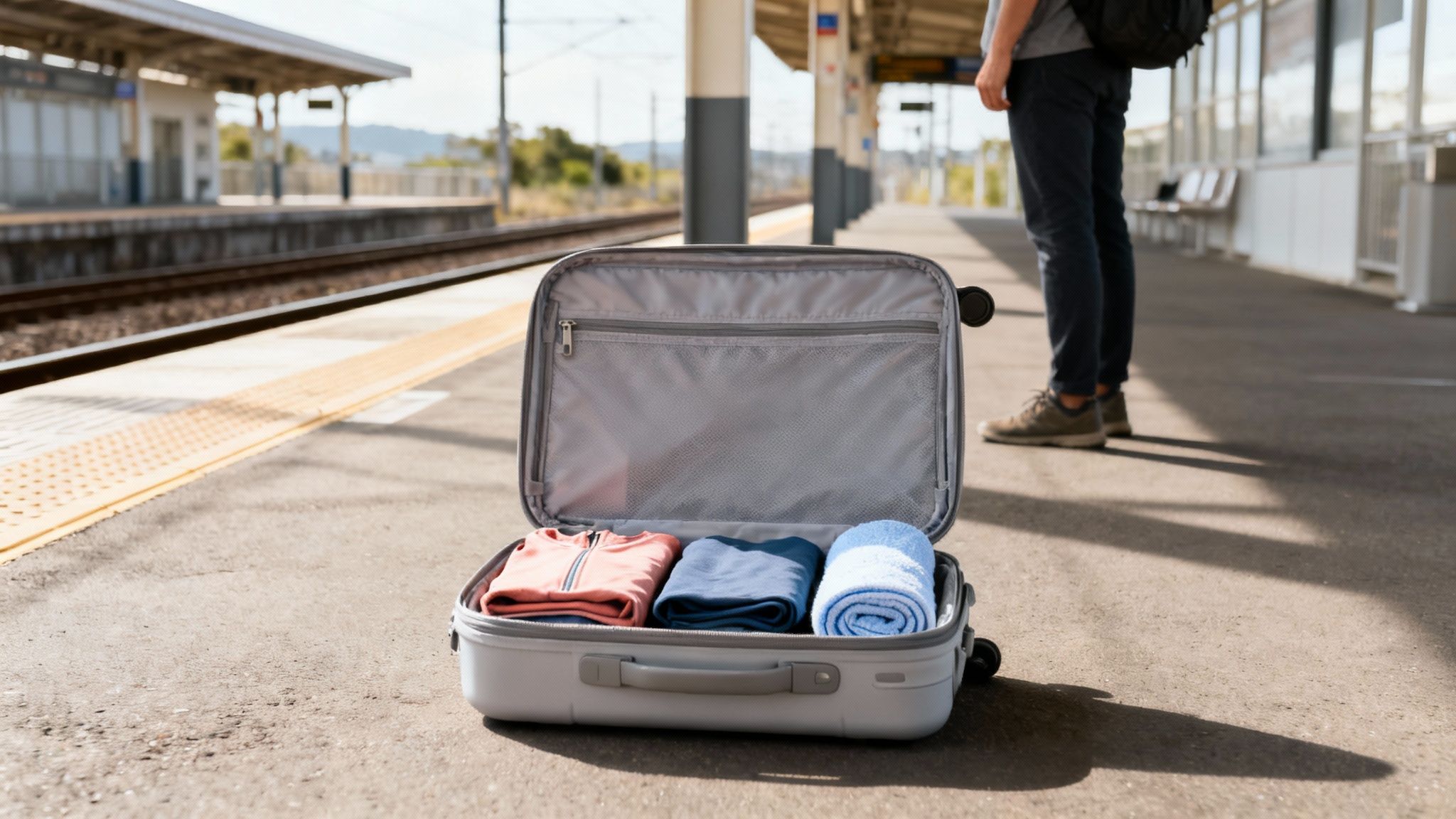
Choosing The Right Quick Dry Fabrics for Travel Clothes
Navigating the world of fast-drying travel clothes means looking past marketing slogans and really getting to know the materials themselves. The fabric you choose directly impacts not only how quickly your shirt dries in a hostel sink but also its durability, odor resistance, and environmental footprint.
Getting this right is the key to building a travel wardrobe that’s genuinely functional and sustainable.
The innovation in this space has been impressive. Leaps in fabric tech have totally changed travel wardrobes, with the global market for quick-drying clothes valued at $15 billion USD in 2025 and growing steadily. For nomads plotting rail-first routes with tickets from providers like Trip.com, these clothes—often polyester-nylon blends—can dry up to 80% faster than standard cotton.
Even better, over 50% of new quick-dry lines now use recycled polyester from plastic bottles. This simple switch reduces production emissions by a staggering 75% compared to virgin fibers, a huge win for any eco-conscious traveler.
[carbon_calculator_2025]
Synthetics: Recycled Polyester and Nylon
Recycled polyester and nylon are the undisputed workhorses of the quick-dry world. These synthetic fabrics are engineered to be lightweight, tough, and exceptionally good at wicking moisture. They pull sweat away from your skin and spread it across the fabric’s surface, where it can evaporate in a flash.
This makes them a lifesaver in humid climates—picture exploring the bustling streets of Bangkok—or for any activity where you’re likely to break a sweat.
Their main drawback? Over time, they can start to hold onto odors, as the smooth fibers can create a breeding ground for bacteria. Thankfully, many modern garments are treated with antimicrobial finishes to keep things fresh. From a sustainability angle, always look for versions made from recycled materials, which give a second life to post-consumer waste like plastic bottles and fishing nets. These recycled options are often stars in collections of eco-friendly travel accessories.
Natural Fibers: Merino Wool and Tencel
On the natural fiber side, Merino wool is truly in a class of its own. Its fibers are incredibly fine and soft—nothing like the itchy wool sweaters of the past. A natural crimp in the fibers traps air, making it a brilliant thermoregulator that keeps you warm when it’s cold and cool when it’s hot.
But its standout feature for travelers is its natural odor resistance. You can genuinely wear a merino wool shirt for days on end without it smelling, which is an absolute game-changer for minimalist packing.
While it might dry a touch slower than pure synthetics, it’s the superior choice for cooler destinations or multi-day treks, like a hiking trip through Patagonia.
Tencel™ (a brand of lyocell) is another plant-based champion, derived from sustainably sourced wood pulp. It’s known for its silky-smooth feel, fantastic breathability, and impressive wrinkle resistance. It also dries much faster than cotton and has a lower environmental impact due to its closed-loop production process. It’s a wonderfully comfortable option for travel dresses and relaxed-fit tops.
To make the choice easier, here’s a quick side-by-side look at how these materials stack up for life on the road.
Comparing Fast Drying Travel Fabrics
| Fabric Type | Drying Speed (Relative) | Odor Resistance | Best For | Sustainability Notes |
|---|---|---|---|---|
| Recycled Polyester | Very Fast | Low to Medium | Humid climates, active travel, base layers. | Look for 100% recycled from post-consumer sources (PET bottles). Reduces reliance on virgin petroleum. |
| Recycled Nylon | Very Fast | Low | Outerwear, trousers, swimwear due to high durability. | Often sourced from fishing nets and industrial plastic. Stronger and more durable than polyester. |
| Merino Wool | Medium to Fast | Excellent | Multi-day wear, cooler climates, hiking, base layers. | Natural, renewable, and biodegradable. Choose brands with ethical animal welfare certifications (e.g., RWS). |
| Tencel™ Lyocell | Medium | Good | Warm weather, casual wear, dresses, and shirts. | Made from sustainably sourced wood pulp in a closed-loop system that recycles water and solvents. |
Ultimately, the best travel wardrobe often includes a smart mix of these fabrics. A couple of merino tops for odor-free layering, a pair of recycled nylon pants that can handle anything, and a Tencel shirt for relaxed city days will have you covered for almost any adventure.
Mastering The Art Of Laundry On The Go
Embracing a minimalist travel style is all about self-sufficiency. For me, nothing feels more liberating than skipping the laundromat entirely.
With the right fast drying travel clothes, you can easily stay fresh on the road just by mastering a few simple on-the-go laundry skills. It’s a game-changer that lets you pack lighter and travel with way more freedom.
It all starts in the sink. Whether you’re in a hotel room, a hostel dorm, or even a tiny train bathroom, a quick hand-wash is all it takes.
To keep my pack light and eco-friendly, I always carry a solid laundry detergent bar. This simple swap means no risk of spills, less plastic waste, and a more streamlined travel kit. For a deeper dive into low-impact packing, our zero-waste packing list for 2025 has you covered.
Once your clothes are clean, the real magic is in the drying. Aggressively wringing out high-performance fabrics is a bad idea—it can damage their delicate fibers and stretch them out of shape for good. Instead, the “towel burrito” roll is your absolute best friend.
The Towel Burrito Technique
This move is incredibly effective and removes a shocking amount of water without stressing the fabric. Just lay a clean, dry towel flat, place your wet garment on top, and then roll the two together tightly like a burrito.
Once it’s rolled up, press down firmly with your body weight. You can stand on it, kneel on it, or just push down with your hands. The absorbent towel will wick away a huge amount of excess moisture, drastically cutting down on hang-dry time. Honestly, this one step is the single most important part of getting your gear dry and ready to wear by morning.
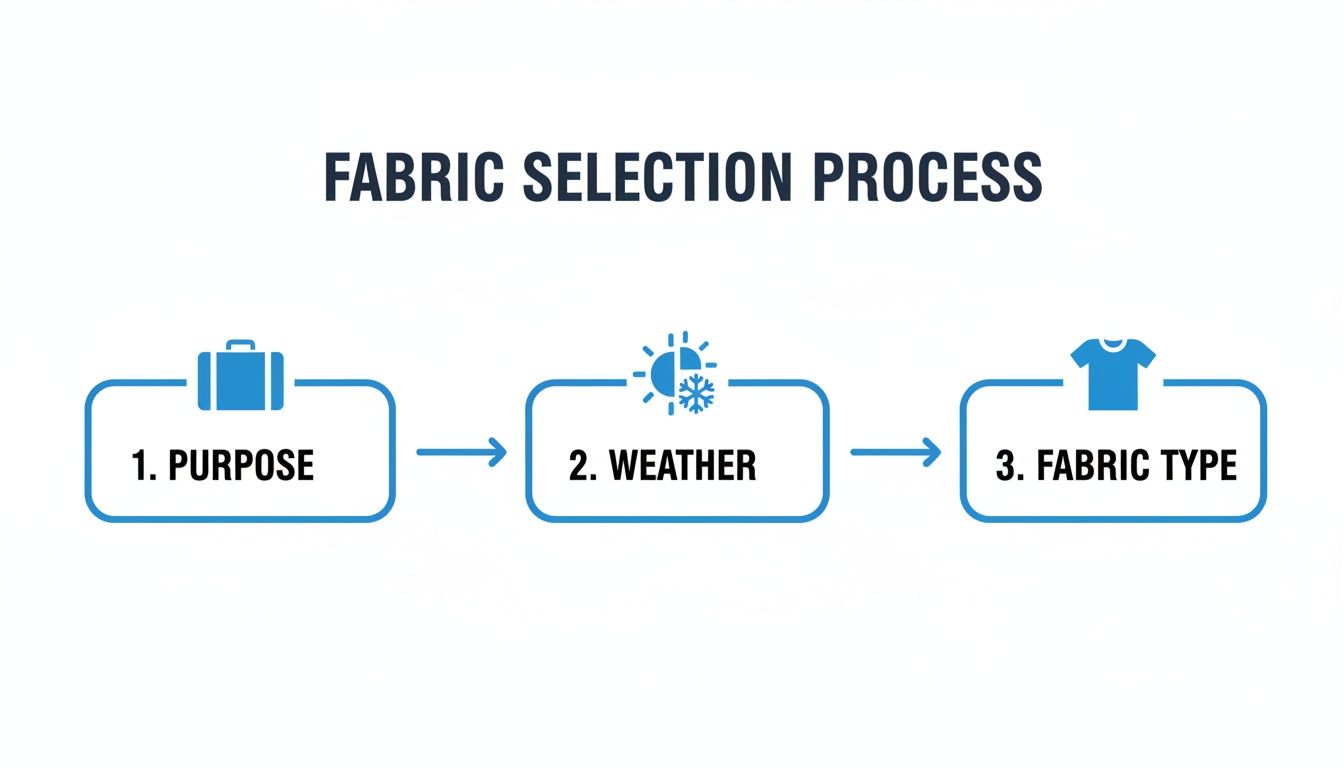
The graphic above simplifies how I think about choosing fabrics in the first place. It’s a simple flow: start with your trip’s purpose and climate, then pick the fabric that fits. Following this logic ensures you’re packing clothes that not only suit your destination but are also a breeze to care for on the move.
Maximizing Airflow for Faster Drying
After you’ve squeezed out as much water as possible, it’s time to hang everything up. A travel clothesline is an indispensable tool here, especially one with built-in clips or twists that don’t need clothespins. You can string it up almost anywhere—between hostel bunk beds, across a hotel room, or even in a train cabin.
The real key to success, particularly in humid climates, is maximizing airflow.
- Create Space: Don’t let your clothes touch. Leave at least a few inches (or several centimeters) between each item so air can circulate freely around them.
- Find Ventilation: Hang your line near an open window, an air conditioning vent, or even in the path of a small fan if you’re lucky enough to have one.
- Rotate and Flip: About halfway through the drying process, flip your clothes inside out and rotate their position on the line. This simple move ensures every part of the garment gets exposed to the air.
By combining a solid washing technique with these smart drying strategies, you basically become your own laundromat. This kind of self-sufficiency is what sustainable, minimalist travel is all about—staying fresh and comfortable with just a handful of versatile, fast drying travel clothes.
Building Your Minimalist Fast Drying Travel Wardrobe
Okay, now that you’ve got the fabrics and washing techniques down, let’s put it all together. This is where the real freedom of carry-on travel comes from: building a small, smart wardrobe around a few core fast drying travel clothes. The whole strategy is about layering and picking pieces that pull double (or triple) duty.
Think of a single shirt that works for a morning city tour and a casual dinner, or pants comfortable enough for a long train ride but sharp enough for a museum. This isn’t about restriction; it’s about making strategic, versatile choices. When your clothes serve multiple purposes, you just don’t need to pack as much. That’s the bedrock of sustainable, low-impact travel.
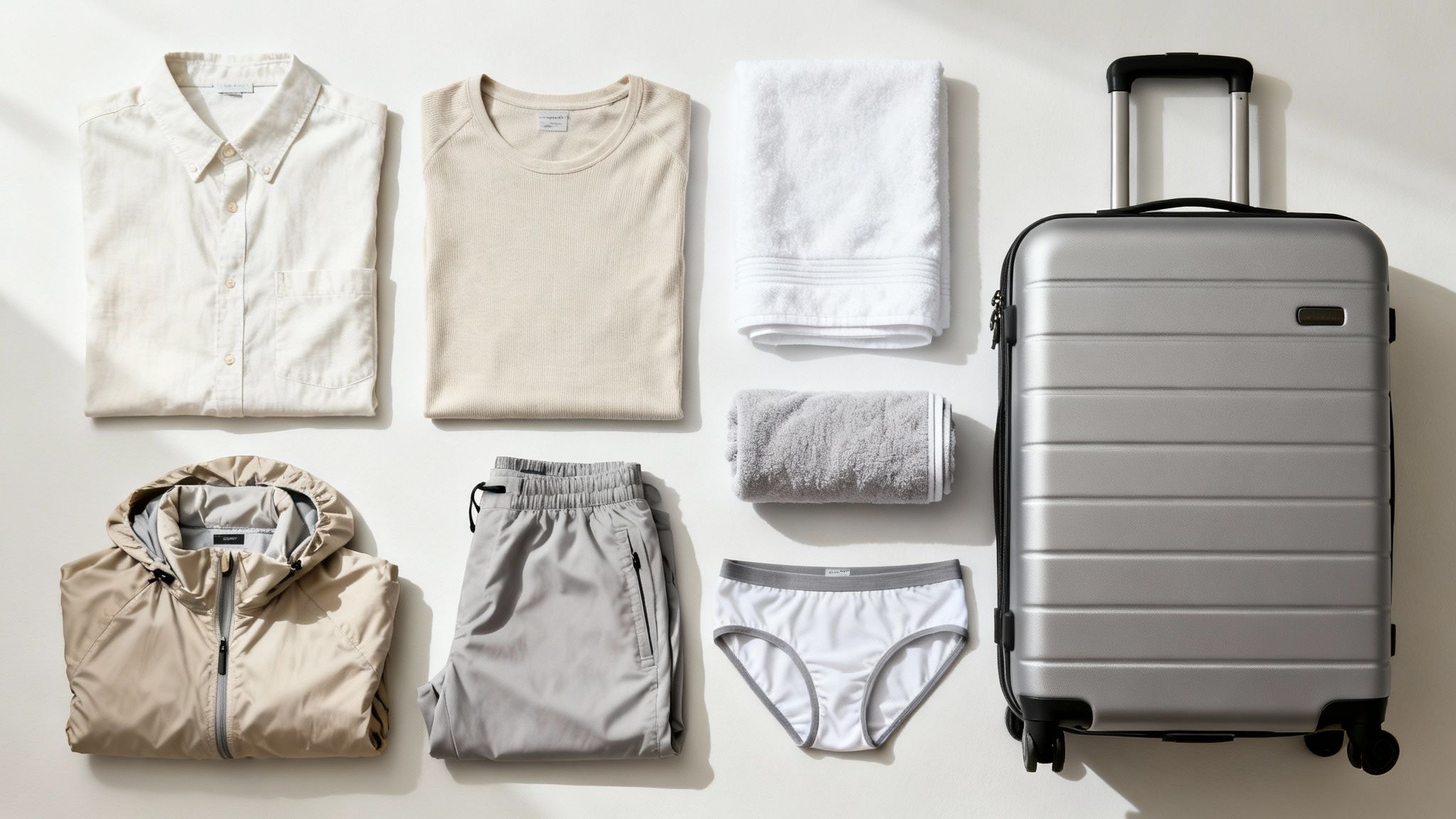
This minimalist mindset has a real, measurable impact on your carbon footprint. Lighter luggage means less fuel is burned to move you, whether you’re on a train or a plane. It’s a small change that adds up to a more eco-conscious journey.
The 5-Piece European Capsule Blueprint
To show you how this works in the real world, here’s a sample packing list for a week-long European trip that fits easily into a carry-on. With just five core items, you can create more than a dozen different outfits for all sorts of weather and activities.
- Two Merino Wool T-Shirts: Go for one neutral (like charcoal or navy) and one in an accent color. Their natural odor resistance is a game-changer, letting you wear them multiple times between washes.
- One Long-Sleeve Button-Down (Tencel or Recycled Blend): This is your Swiss Army knife. Wear it as a light jacket over a t-shirt, on its own, or as a smarter layer for a cool evening.
- One Pair of Versatile Trousers (Recycled Nylon/Spandex): Choose a well-fitting pair in black or olive that you can dress up or down. They’ll be durable, quick to dry, and comfortable for long travel days.
- One Multi-Purpose Dress or Skirt: A simple, wrinkle-resistant dress or a dark-colored midi skirt can be styled for a day of sightseeing and then transition effortlessly to a nice dinner out.
This streamlined approach is getting easier all the time, thanks to huge growth in the travel apparel market. The global demand for quick-drying clothes is projected to hit $12,500 million USD by 2025, and it’s being driven by eco-aware travelers like us.
Brands are listening. Recycled nylon now makes up 40% of travel clothing production, which cuts the carbon footprint from virgin synthetics by 30-50% without sacrificing that fast-drying performance we need.
Making It Work With Layers And Accessories
The real magic, though, is in the accessories. A lightweight scarf, a simple belt, and one or two pieces of jewelry can completely transform an outfit without adding any real bulk or weight to your bag.
Once you get the hang of mixing and matching, you’ll realize you’re ready for almost anything. Our full guide digs deeper into this strategy, showing you exactly how to pack for low-impact travel.
How To Make Your Travel Gear Last Longer
True sustainability isn’t just about what you buy; it’s about making what you own last as long as possible. When you invest in high-performance, fast-drying travel clothes, protecting that investment is a powerful antidote to fast fashion.
This isn’t just about saving money, though it certainly does that. Simple maintenance habits reduce textile waste, help your gear perform as it should trip after trip, and shrink your environmental impact in a real, tangible way.
Proper Washing and Drying Techniques
The biggest mistake I see travelers make is treating their technical fabrics like a load of old towels. The high heat of commercial dryers and the harsh chemicals in fabric softeners will absolutely destroy the very features you paid for, like elasticity and water resistance.
- Wash with Cold Water: Always use a cold wash cycle. It’s gentler on the fibers, prevents shrinking, and uses significantly less energy.
- Avoid Fabric Softeners: This is a non-negotiable. Fabric softeners leave a waxy residue that clogs the pores of technical fabrics, killing their ability to wick moisture and breathe.
- Air-Dry Whenever Possible: Never, ever put your performance gear in a machine dryer. The intense heat degrades elastic fibers, melts special coatings, and can even cause microplastics to shed. Just hang your clothes to dry.
High heat is the enemy of elasticity and waterproof coatings. By air-drying your clothes, you can extend their functional lifespan significantly, stopping them from becoming brittle and ineffective over time.
On-the-Go Repairs and Maintenance
Even the most durable gear can suffer a small tear or a failing zipper. Being prepared to make simple repairs on the road is a key part of a sustainable travel mindset and, frankly, an essential skill for any minimalist traveler.
A few thoughtful additions to your luggage can save a favorite garment from being discarded. A compact sewing kit, some tenacious tape for patching rips in outerwear, and a bit of zipper wax can fix most common issues right in your hotel room. Learning these basic skills is a core part of building a comprehensive eco-travel kit for your 2025 essentials.
For items with a Durable Water Repellent (DWR) finish, like your rain jacket, you can easily refresh the coating yourself. Once you notice water is soaking in instead of beading up, a simple wash with a specialized tech wash followed by a low-heat tumble dry (only if the care label permits!) can reactivate the treatment, restoring its performance.
Your Questions Answered: Making the Most of Fast-Drying Gear
When you’re fine-tuning a minimalist travel kit, a few practical questions always come up. Investing in high-performance gear is a big step, so getting straight answers helps you choose with confidence and get the most out of every piece you pack.
Let’s dig into some of the most common queries I hear, from justifying the price of premium fabrics to keeping synthetics fresh on a long-haul train journey. My goal is to clear up any confusion so you can embrace a lighter, smarter way of exploring.
Is Merino Wool Really Worth the High Price Tag?
Absolutely. For a serious traveler, it’s one of the smartest investments you can make. While the initial cost is higher than polyester or nylon, the natural odor resistance of merino wool is a complete game-changer. You can genuinely wear a merino shirt or base layer multiple times between washes, which means packing far fewer items and traveling significantly lighter.
But it’s not just about odor. Merino is also a brilliant natural thermoregulator, keeping you comfortable across a huge range of conditions—from a cool morning train ride to a warm afternoon wandering through a new city. Over the long haul, its durability, versatility, and low-maintenance nature make it a cost-effective and sustainable choice that consistently outperforms cheaper synthetics.
How Do I Stop Synthetic Travel Clothes From Smelling?
This is a classic issue with synthetics like polyester, but it’s completely manageable if you have a good routine. The single most important thing is to air out your synthetic clothes immediately after wearing them. Don’t just stuff them in a laundry bag where bacteria can have a field day; hang them up to breathe, even if it’s just for an hour.
Many modern performance fabrics are treated with antimicrobial tech like Polygiene, which actively stops odor-causing bacteria from growing. For a deeper clean on the road, a quick pre-soak with a specialized sports wash before your main hand-wash can work wonders on stubborn smells. That one extra step makes a huge difference on a multi-week trip.
Can I Use a Hairdryer to Speed Up Drying?
I would strongly advise against it. It might seem like a clever shortcut, but the concentrated, high heat from a hairdryer can easily damage the delicate fibers in your technical gear. This heat can melt synthetics, weaken elastics, and degrade special coatings like a Durable Water Repellent (DWR) finish.
You’re much better off using the ‘towel burrito’ method we covered earlier to wring out the bulk of the water. After that, just hang the garment somewhere with decent airflow. This gentle approach protects the fabric’s integrity, preserves its performance features, and ensures your investment lasts for many more trips.
Protecting your gear from high heat is crucial. The longevity of your fast-drying travel clothes depends on gentle care, and avoiding hairdryers is a simple but effective way to preserve their technical properties.
What Are the Best Colors for a Minimalist Wardrobe?
For maximum versatility, build your travel wardrobe around a solid, neutral base. Colors like charcoal gray, navy blue, olive green, and classic black are incredibly adaptable. They do a great job of hiding dirt, they pair effortlessly with just about anything, and they always look put-together.
Once you have that neutral foundation, you can inject some personality with one or two accent colors. Think smaller, easily packable items like a t-shirt, a beanie, or a scarf. This strategic approach gives you a surprising number of outfit combinations from a tiny packing list—it’s a cornerstone of minimalist, sustainable travel.
This article was fact-checked using sustainability data from the World Green Building Council, the Global Ecotourism Network, and peer-reviewed architecture studies. All partner links are vetted for compliance with sustainable business certifications.
Join the Sustainable Work Movement
Want more rail-first itineraries, low-impact packing systems, and walkable base-city ideas?
Explore Eco Nomad Travel
📚 Core Guides
🧭 Planning & Logistics
🗺️ Destinations & Seasons
Jeremy Jarvis — founder of Eco Nomad Travel, sustainable travel writer, and advocate for regenerative tourism. His work focuses on low-impact mobility, eco-friendly digital nomad life, and climate-positive travel.
Legal
Affiliate DisclaimerPrivacy Policy
Terms of Service
Image & Media Notice
Cookie Policy
Contact
Affiliate Disclosure: Some links on Eco Nomad Travel are affiliate links, meaning we may earn a small commission at no extra cost to you. This supports our mission to inspire responsible and low-impact travel worldwide.
Connect
✅ Trusted Official Sources
Plan smarter eco trips
Try our free Sustainable Travel Tools for Digital Nomads – carbon calculator, train vs plane comparator, and more.
Open Tools Hub