

If you want your 2025 travel itineraries to feel big and cinematic without stacking short-haul flights, this guide is for you. Below you’ll find copy-ready trip plans, train itineraries, and a Pacific Northwest road trip plan that all replace planes with rail, ferries, and scenic drives wherever possible.
These routes are designed as templates you can tweak. Every itinerary includes a flight-free version plus a realistic “one-flight” low-flight option, so you can see exactly how much flying you’re cutting out. Use them alongside our Carbon Neutral Travel in 2025: The Complete Guide and step-by-step carbon-neutral travel checklist to build your own rail-first, low-impact adventures.
This guide contains affiliate links (including Amazon and travel partners). If you book or buy through them, we may earn a small commission at no extra cost to you. We only feature tools and gear that fit a lower-impact, slow-travel mindset.
Key Takeaways: Low-Flight Travel Itineraries in 2025
- You can swap most short-haul flights in Europe and the Pacific Northwest for trains, ferries, and road trip plans without shrinking the experience.
- Every route below includes a flight-free version plus a single “one-flight” low-flight variant so you can keep one positioning flight if needed.
- Use the Eco Nomad Travel Carbon Footprint Calculator 2025 alongside independent tools like EcoPassenger and the ICAO flight calculator to compare train vs plane and choose the lowest-impact option.
- Pair these itineraries with a smart eco travel kit and a few carefully chosen Amazon travel essentials (lightweight carry-on, reusable bottle, universal adapter) so you can pack light, move easily, and avoid wasteful single-use items along the way.
Why Low-Flight Travel Itineraries Matter in 2025
Transport is the largest slice of tourism’s climate impact, and aviation is the most carbon-intensive mode per passenger kilometre. Recent UN tourism research shows that tourism-related transport emissions are on track to keep rising toward 2030 if we don’t change how we move between destinations.
In this guide, “flight-free” means building your entire trip around rail, ferry, and slow mobility. “Low-flight” means allowing a single positioning flight (for example, into Europe or into Seattle) and then using lower-carbon modes for everything else. That still cuts a large share of emissions compared with stringing together multiple short hops.
How Flight Free Travel Itineraries 2025 Align With Global Ecotourism Standards
The ethos is aligned with global ecotourism standards: travel that conserves the environment, supports local communities, and avoids the worst greenwashing. We lean on criteria from the Global Ecotourism Network and the Global Sustainable Tourism Council when we recommend routes, stays, and tools.
How We Compare CO₂: Train vs Plane vs Road in These Trip Plans
The tools behind our “up to X% lower” claims
For each travel itinerary below, we estimate emissions in two ways:
- Our in-house Travel Carbon Footprint Calculator 2025 for whole-trip comparisons (multi-leg routes, mixed modes, lodging).
- Independent calculators to sanity-check the numbers:
- EcoPassenger for train vs car vs plane on specific routes.
- ICAO Carbon Emissions Calculator for individual flights.
- Sustainable Travel International calculator for an extra cross-check.
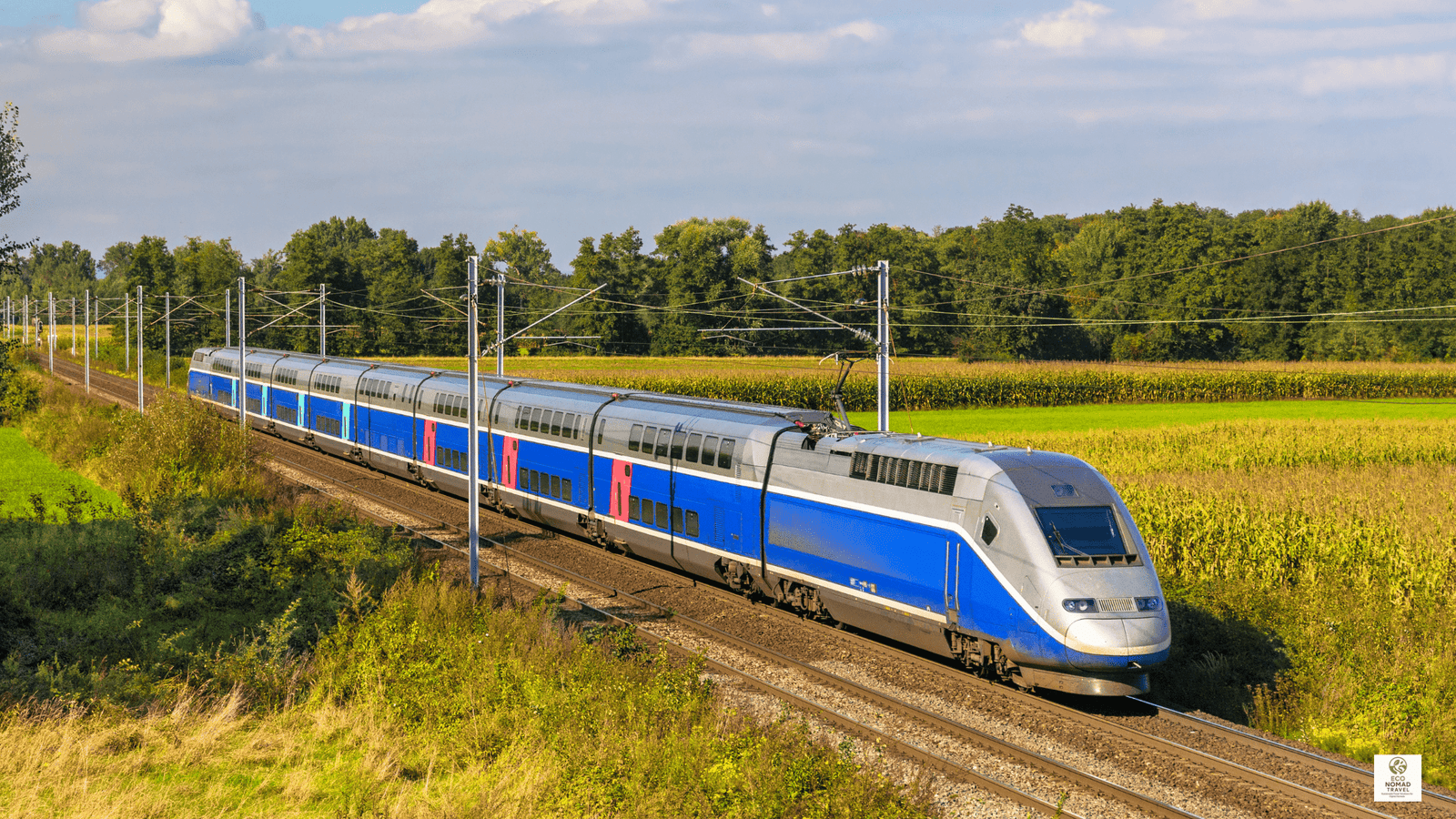
On many popular European routes, independent comparisons show that taking the train instead of flying can reduce per-passenger emissions by 80–90%, especially when you use high-speed rail or combined train–ferry options instead of short-haul flights.
Visualising train vs plane in your itinerary
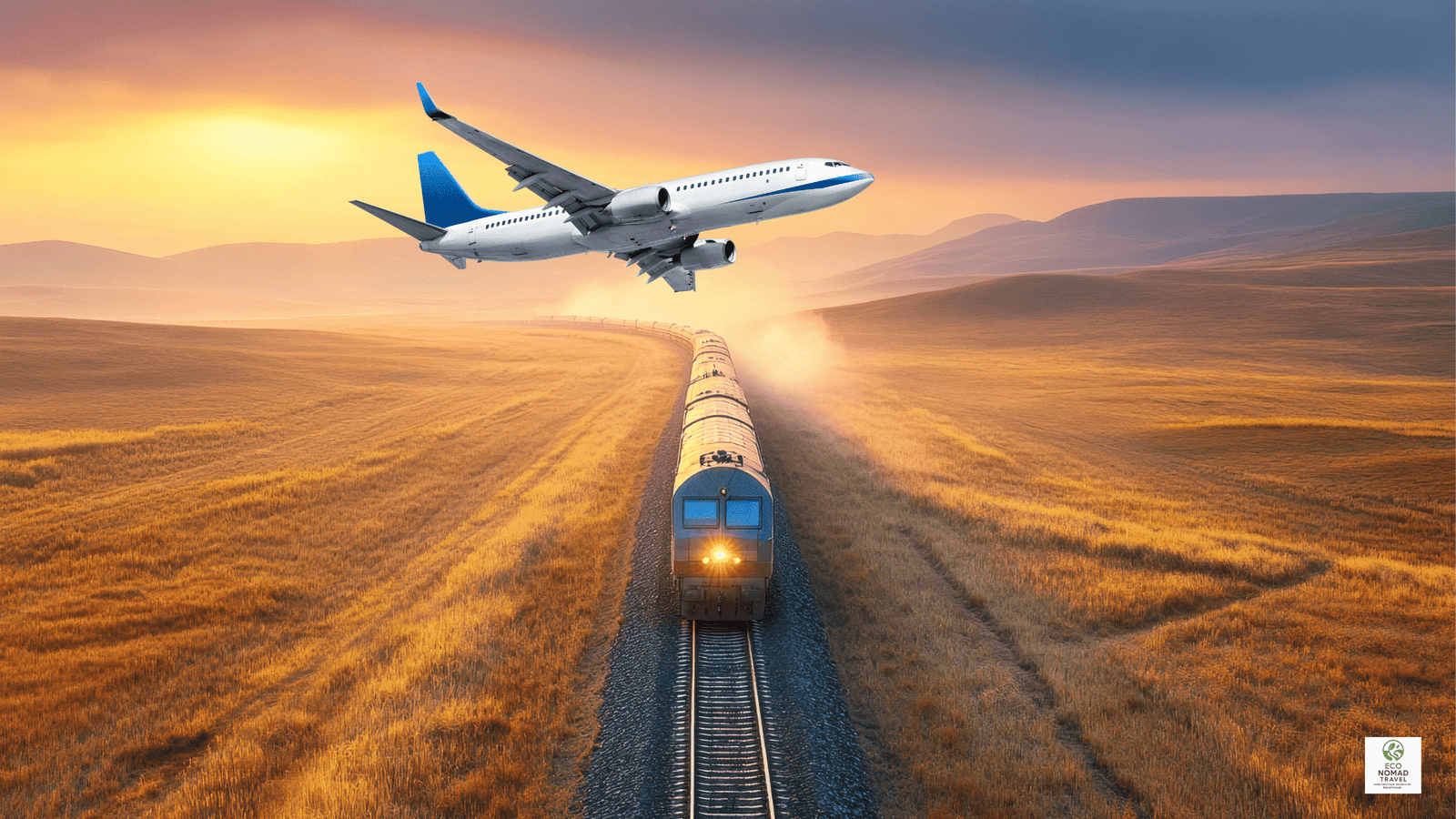
Flight-Free & Low-Flight Travel Itineraries for 2025
Each itinerary below includes:
- a trip plan snapshot with length, cities, and main modes;
- a flight-free version that relies on rail, ferries, and/or road;
- a realistic “one-flight” low-flight version if you need one plane ride; and
- pointers to tools and booking partners that align with slow, lower-impact travel.
Iberian Rail Loop (Spain & Portugal, 10–14 Days)
Barcelona → Valencia → Granada → Seville → Lisbon → Porto


This European itinerary swaps budget flights for high-speed and regional trains across Spain and Portugal. It’s ideal if you want architecture, food, and culture with relatively short rail hops between each city.
- Length: 10–14 days
- Main modes: high-speed and regional trains
- Flight-free version: arrive in Barcelona or Porto overland (if you’re already in Europe)
- Low-flight version: one return flight into Barcelona or Lisbon, then all rail
Use rail planners recommended in our Sustainable Travel Tools for Digital Nomads (2025) and pack light using the Eco Travel Kit 2025 so you can move easily between stations and city-centre accommodations.
For this kind of rail-first trip, three small upgrades from Amazon make a big difference: a lightweight carry-on backpack, a universal travel adapter, and a stainless-steel water bottle you can refill at stations.
Central Europe Night-Train Chain (7–14 Days)
Paris → Brussels → Amsterdam → Berlin → Vienna (with optional Prague)



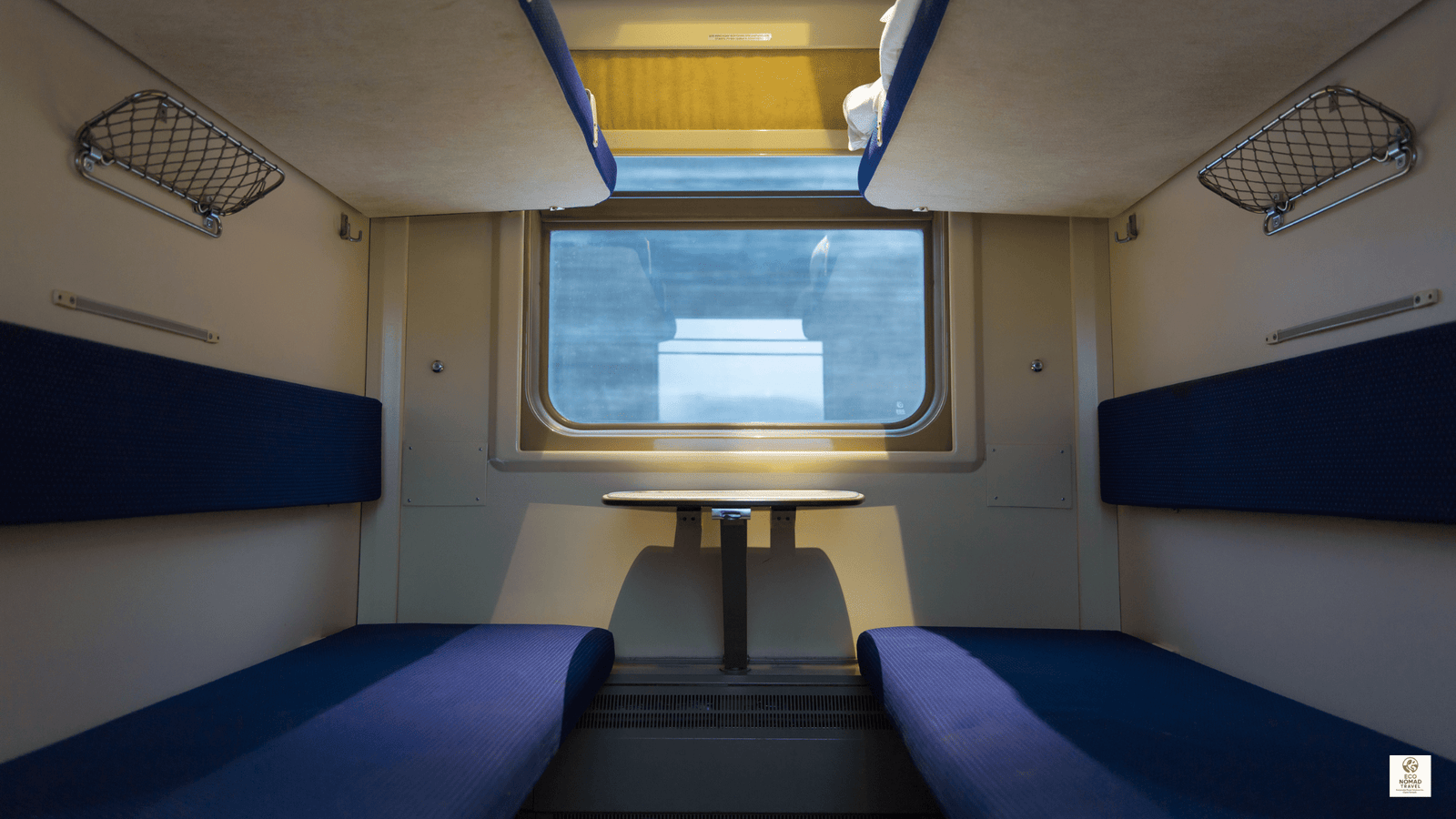
This European rail itinerary chains together iconic capitals using day trains and night trains instead of quick flights. You spend days exploring and roll between countries while you sleep.
- Length: 7–14 days (depending on how long you linger)
- Main modes: high-speed day trains + night trains
- Flight-free version: arrive by rail from your home base in Europe
- Low-flight version: one return flight into Paris or Amsterdam, then trains only
For practical route maps and sleeper layouts, see The Man in Seat 61’s guide to European train travel and the dedicated Nightjet overviews. Combine that with our night trains for eco nomads and train vs plane emissions guide when planning.
London to Paris, Brussels & Amsterdam by Ferry + Train (7–10 Days)
London → Dover → Calais (ferry) → Paris → Brussels → Amsterdam


This route replaces London–Paris or London–Amsterdam flights with the classic Dover–Calais ferry plus trains. It is an easy win for anyone living in or already visiting the UK who wants a more climate-conscious trip itinerary into mainland Europe.
- Length: 7–10 days
- Main modes: train + ferry
- Flight-free version: all surface from London
- Low-flight version: one return flight into London, then ferry + trains only
Use ferry + rail combinations with our 2025 tools hub and compare emissions using EcoPassenger .
Alps & Northern Italy Scenic Rail (10–14 Days)
Zurich → Lucerne → Milan → Florence → Rome


This itinerary feels like a greatest-hits reel of the Alps and northern Italy. You ride through lake country, cross the Alps by rail, and end in Rome without needing the usual zig-zag of regional flights.
- Length: 10–14 days
- Main modes: scenic and high-speed trains
- Flight-free version: overland into Zurich from elsewhere in Europe
- Low-flight version: one return flight into Zurich or Milan, then all rail
When you compare trains vs planes on these routes in our carbon footprint calculator and on EcoPassenger, the difference in emissions is often dramatic.
Pacific Northwest National Park Road Trip (7–10 Days)
Seattle → Olympic National Park → Mount Rainier → (optional North Cascades) → Seattle


This road trip itinerary turns one flight (or an overland arrival) into a week of national parks instead of stacking multiple domestic flights around the US. Seattle is your hub; everything else is forests, mountains, and coastline.
- Length: 7–10 days
- Main modes: shared car / EV + shuttles + hiking
- Flight-free version: arrive in Seattle by train or bus from within the region
- Low-flight version: one return flight into Seattle, then a single loop road trip
To keep this as low-impact as possible, travel with a full car, choose smaller vehicles or EVs via GetRentACar partners , and book off-grid cabins and eco lodges instead of oversized resorts by following our off-grid lodging guide for eco nomads .
For connectivity without stacks of local SIM cards, use a global eSIM from Airalo or Yesim , both of which we regularly recommend in our eco travel kit and sustainable digital nomad guides .
How to Build Your Own Low-Flight Travel Itinerary
1. Start with must-see places, then connect them by surface
Instead of opening a flight search engine first, list your must-see cities and landscapes. Drop them on a map, then look for rail, ferry, and bus routes between them. Only when you hit a hard gap should you consider a single positioning flight.
Use this guide alongside the frameworks in Carbon Neutral Travel in 2025: The Complete Guide and our 2025 sustainable travel guide to keep the whole trip aligned with your climate goals.
2. Use planner tools that prefer trains, ferries, and buses
Multi-modal planners and rail-specific apps make this much simpler. In our Sustainable Travel Tools for Digital Nomads (2025) we highlight the best trip-planning apps for rail-first routes, including options to show lowest emissions rather than just fastest time.
3. Book “boring but crucial” infrastructure: trains, eSIMs, and transfers
Once you like your trip plan, lock in the structural elements:
- key rail segments and any night trains;
- ferries or long-distance buses that are hard to replace;
- airport station transfers (if you’re flying once);
- eSIM and airport–city transfers.
For flights you genuinely can’t avoid, you can compare prices with Aviasales or Trip.com via Travelpayouts , and then clean up residual emissions via a vetted offset provider once you’ve minimised flying.
Night Trains & Low-Flight Travel in the News (2024–2025)
Over the last couple of years, more coverage has focused on night trains and flight-free routes as real climate solutions, not just niche experiments. Environmental groups have highlighted that European airline emissions are on track to exceed pre-pandemic levels by 2025, even as new regulations push for more sustainable aviation fuel and stricter carbon pricing.
How Flight Free Itineraries and Green Levies Are Reshaping Travel Costs in 2025
At the same time, some tour operators are shifting away from relying on carbon offsets and instead investing directly in lower-carbon operations and more domestic or flight-free itineraries. Countries such as Singapore are also introducing green levies on flights to fund sustainable aviation fuel, signalling that frequent flying will likely become more expensive over time.
For everyday travelers, the takeaway is simple: cutting just two or three short-haul flights from a trip plan often has more impact than buying offsets for everything. That’s exactly what the itineraries in this guide are designed to help you do.
Further Reading & Tools for Sustainable Trip Planning
From Eco Nomad Travel
- Carbon Neutral Travel in 2025: The Complete Guide
- How to Travel Carbon-Neutral in 2025: A Step-by-Step Guide for Eco Nomads
- Travel Carbon Footprint Calculator 2025
- Best Off-Grid Lodging Options for Eco Nomads (2025 Edition)
- Eco Travel Kit 2025: Essentials Every Nomad Needs
- Sustainable Travel Tools for Digital Nomads (2025)
External calculators & standards
Editor’s Note
This article was fact-checked using climate and tourism data from UN Tourism, independent travel carbon calculators, and global ecotourism standards. All travel partners and affiliate tools mentioned here are vetted for alignment with slower, lower-impact travel—prioritising rail, ferries, shared road trips, and sustainability-focused planning apps over high-frequency flying.
Join the Sustainable Work & Travel Movement
If this kind of rail-first, slower, more intentional travel resonates with you, follow Eco Nomad Travel on Pinterest for fresh itineraries, packing ideas, and low-impact destination inspiration all year long.
Follow Eco Nomad Travel on Pinterest →
Or head back to the cornerstone guide to zoom out: Carbon Neutral Travel in 2025: The Complete Guide .
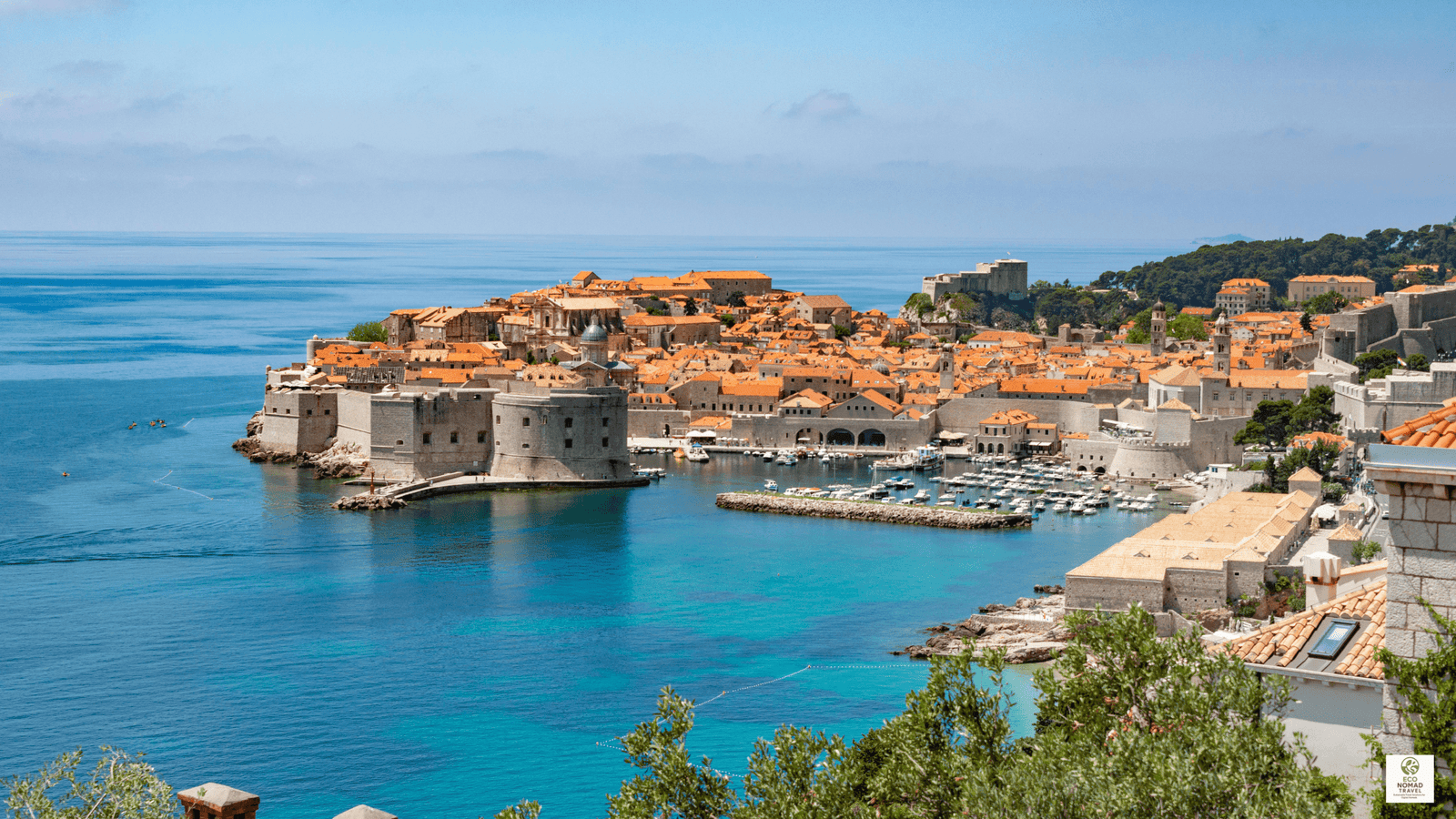
Iberian Rail Loop in Pictures: Barcelona to Porto by Train
To help you visualise this rail-first trip itinerary, here’s a quick photo tour of the Iberian loop. Every stop is reachable by train, and you can stitch them together into one continuous flight-free travel itinerary or keep a single positioning flight at the start or end.
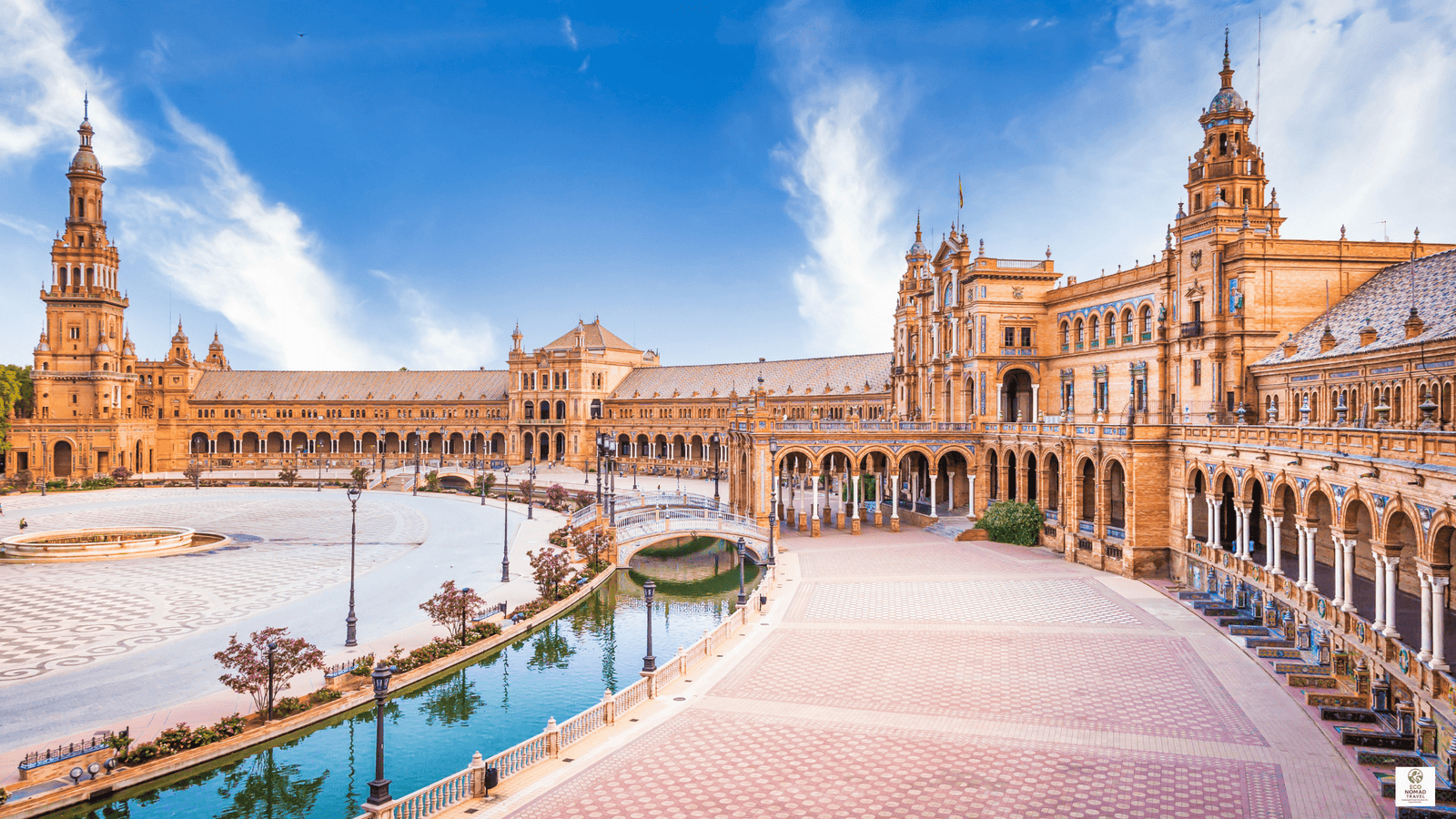

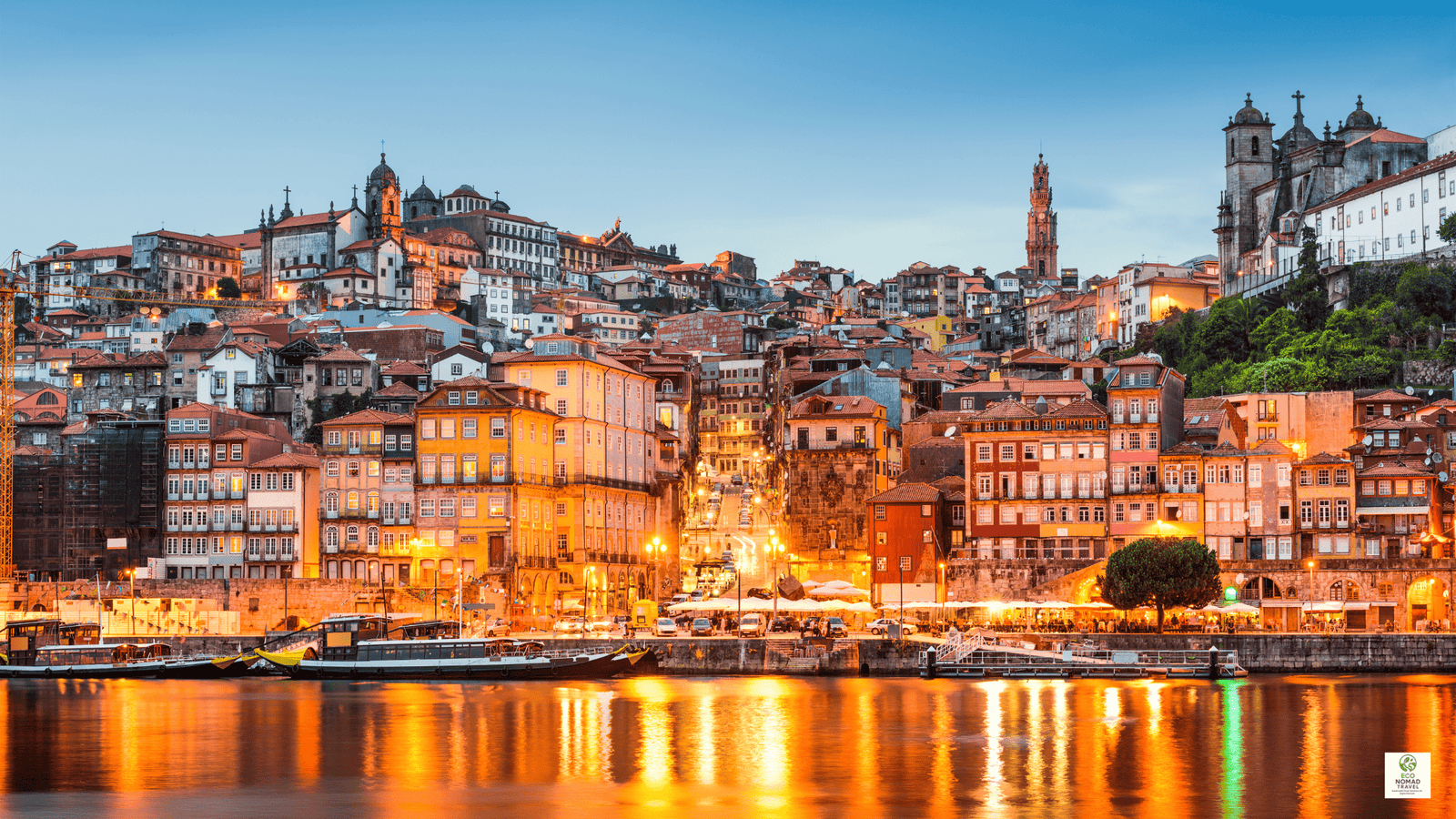
You can combine these cities into one rail itinerary with nothing but trains and local transfers, using the packing ideas in our Eco Travel Kit 2025 and off-grid lodging picks from our off-grid lodging guide .
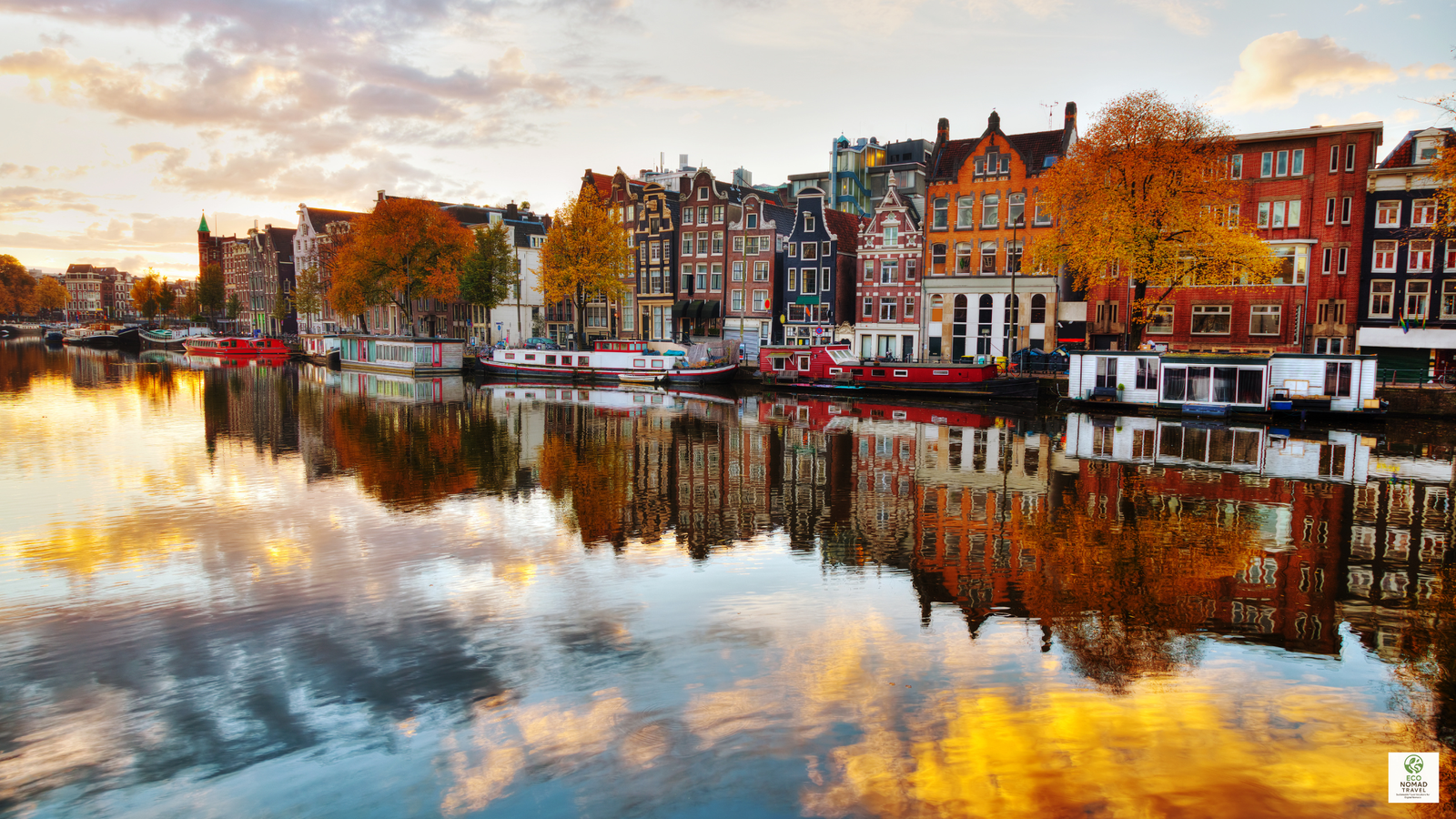
Central Europe by Rail: Capitals, Canals & Night Trains
The Central Europe night-train chain is all about stringing together major capitals without burning through extra short-haul flights. These images show how easy it is to move from landmark to landmark entirely by rail.








Alps & Northern Italy by Train: Milan, Florence & Rome
The Alps and northern Italy rail itinerary proves that you don’t need multiple flights to connect big-name cities. Fast trains and scenic routes thread the entire region together.


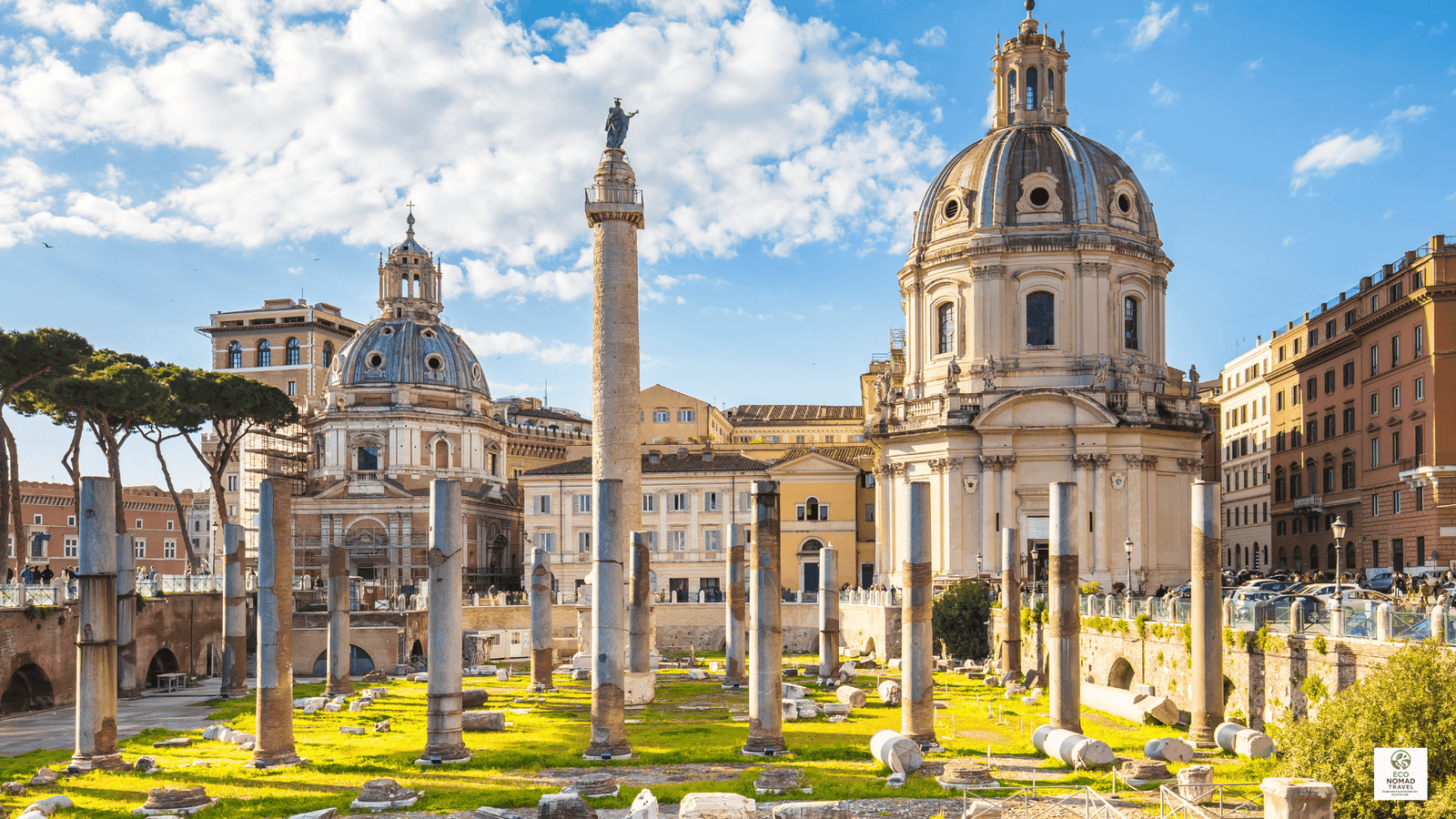
With a single rail pass or point-to-point tickets booked in advance, you can treat these three cities as chapters in one story rather than separate weekend breaks stitched together with flights. Pack everything into a single carry-on and a small daypack, and you’ll glide from platform to platform instead of queueing at check-in.
Pacific Northwest Road Trip: Forest Highways & Hidden Peaks


With a single return flight into Seattle (or none at all if you arrive overland), you can spend a full week immersed in forests, mountains, and coastlines instead of bouncing between airports. Use our carbon calculator to compare one full loop road trip against multiple short-haul flights, then tweak the itinerary until you’re comfortable with the footprint and the pace.
Carbon Footprint 101: Making Your Itinerary “Neutral-ish” in Practice
A carbon footprint is simply a way of quantifying the greenhouse gas emissions linked to your choices – in this case, your travel itinerary. Flights are the most visible part, but trains, ferries, car rentals, lodging, and even the gear you buy all add up.
The goal of these flight-free and low-flight travel itineraries isn’t perfection; it’s to move your trip into a much lower-emissions ballpark with a few smart decisions:
- swap several short-haul flights for one positioning flight or none;
- prioritise trains, ferries, and full cars over empty seats and repeated hops;
- stay longer in fewer places instead of racing between dozens of stops; and
- book genuinely eco-conscious stays rather than greenwashed mega-resorts.
Once you’ve reduced everything you reasonably can, you can look at vetted offset programmes via our guide to the best carbon offset programmes for travelers in 2025 . Offsets should be the final 5–20% of your impact, not a licence to fly as if nothing has changed.
Flight Free Travel Itineraries 2025: Turn Templates Into Your Own Trip Plan
When you start planning flight free travel itineraries 2025, it is tempting to copy and paste a ready-made route. However, these examples work best as flexible templates. Each itinerary on this page is a starting point you can bend, stretch, or simplify into your own trip plan, while you still keep emissions low.
Instead of treating them like rigid packages, see them as building blocks for your favourite travel itineraries. You can add nights, remove stops, or swap cities. Because the structure is already rail-first and low-flight, your customised road trip plan or train route will usually stay lower in carbon than a flight-heavy alternative.
Why Flight Free Travel Itineraries 2025 Need a Different Planning Mindset
Traditional trips often begin with a flight search and only later consider trains, ferries, or buses. In contrast, flight free travel itineraries 2025 flip that order. First, you connect your must-see places by surface. Then, only if needed, you add a single positioning flight at the start or end.
As a result, your trip itinerary immediately looks calmer. There are fewer airport transfers, fewer security lines, and fewer missed connections. Consequently, you gain longer stretches of actual holiday time in each place. You also reduce your overall carbon footprint before you even think about offsets.
Start With the Carbon-Neutral Travel Framework
To ground your planning, begin with the cornerstone article, Carbon Neutral Travel in 2025: The Complete Guide . It explains, step by step, how to reduce transport emissions, choose better lodging, and use offsets only as a last step. Then, move to the detailed how-to, How to Travel Carbon-Neutral in 2025: A Step-by-Step Guide for Eco Nomads , which walks through each decision from route to packing.
Together, these guides form the backbone behind any of the travel itineraries on this page. Therefore, it makes sense to scan them before you book trains or hotels. They help you see your trip plan as one connected system instead of a series of isolated bookings.
Use Trip Planning Apps That Prefer Trains, Not Extra Flights
Many travellers now rely on some kind of trip planning app or trip planning website. However, not all of them are equally helpful for flight free travel itineraries 2025. Some tools still push flights by default, even on routes where rail or bus is faster door to door.
For better results, combine mainstream tools with the specialist options in Sustainable Travel Tools for Digital Nomads (2025) . In that hub, you will find multi-modal planners, rail search engines, and emissions calculators. These help you design a trip itinerary where trains, ferries, and long-distance buses appear first, and where flights are genuinely optional.
Once you have a draft in your favourite travel itinerary planner, you can treat our Iberian loop, Central Europe chain, Alps route, or PNW road trip as overlays. You simply match segments of your plan with similar sections from these travel itineraries and adjust the length to fit your calendar.
Pack for Flight Free Travel Itineraries 2025 (and Keep It Light)
Rail-first and road-trip routes work best when you travel light. If your luggage is compact, you can board trains quickly, walk between stations, and use local public transport instead of taxis. That is why packing is part of the sustainability story, not an afterthought.
To simplify this, work through Eco Travel Kit 2025: Essentials Every Nomad Needs . That guide, combined with your preferred trip itinerary planner, helps you bring a compact, reliable set of gear: a reusable bottle, universal adapter, eSIM, and a lightweight backpack. For a durable option that still fits in overhead racks and under seats, you can check this travel backpack on Amazon (affiliate link). Such small upgrades mean you can step off night trains or ferries and start walking immediately instead of hunting for extra transfers.
View Travel Backpack Options on Amazon →
Measure the Emissions of Your Trip Plan Before You Offset
Before you book anything, it helps to see the carbon impact of each option. A regular trip itinerary planner will not show that number. Fortunately, our Travel Carbon Footprint Calculator 2025 is designed to fill this gap.
You can enter your road trip plan from Seattle, your rail loop across Europe, or your island-hopping route and compare variations. For instance, you might test “one positioning flight plus trains” against “three short-haul flights”. Frequently, the difference is dramatic, which then justifies the extra effort of planning a flight free travel itinerary or at least a strongly low-flight one.
For extra confidence, you can also cross-check single legs using external calculators. Tools like EcoPassenger for rail vs car vs plane and the ICAO Carbon Emissions Calculator for flights give independent benchmarks. Consequently, you can be sure that your chosen travel itineraries genuinely cut emissions rather than only shifting them around.
Choose High-Quality Offsets for Low-Flight Travel Itineraries
Once you have reduced everything you can, offsets come last. At this point, your flight free travel itineraries 2025 might only have one unavoidable flight or a few necessary ferries left. Therefore, the remaining emissions are smaller and easier to address.
To navigate the offset space, use Best Carbon Offset Programs for Travelers in 2025 . That guide highlights projects with strong verification and explains common red flags. Offsets should cover only the last 5–20% of your footprint. They are not a licence to keep flying as if nothing has changed.
Finding Flight Free Travel Itineraries 2025 When You Are Ready to Travel Differently
When people finally decide to change how they travel, they usually start with simple online searches. They type phrases like “travel itinerary planner”, “trip planning app”, “trip plan”, or “road trip plan”. Because this guide uses those natural phrases and shows complete flight free travel itineraries 2025, it is easy to follow once they arrive. First, you see real sample routes. Then, you learn how to adapt them to your own dates, budget, and comfort level with slow travel.
From here, you can move smoothly into more detailed support articles. With one click, you can open the carbon-neutral travel guide , the step-by-step tutorial on how to travel carbon-neutral , the eco travel kit , the sustainable travel tools hub , and the travel carbon footprint calculator . As a result, you do not stay stuck at the inspiration stage. Instead, you can move step by step from ideas to a clear, bookable trip plan.
Flight Free Travel Itineraries 2025 Inside the Eco Nomad Travel Cluster
Finally, it helps to see this page as one chapter in a larger Eco Nomad Travel story. The cornerstone guide explains whyhow to cut emissions in practice. The sustainable tools hub, eco travel kit, off-grid lodging guide, and carbon footprint calculator handle the practical with what. This article, with its detailed flight free travel itineraries 2025, delivers the where and when.
When you read them together, your next travel itinerary is no longer just a list of cities. Instead, it becomes a plan that respects your time, your budget, and the climate realities of this decade. Moreover, because you now have a cluster of trusted resources in one place, you can reuse the same framework every time you design a new trip plan. You keep the epic views, night trains, forest highways, and coastal sunsets. At the same time, you dramatically reduce unnecessary flights. That is what flight free travel itineraries 2025 are really about: moving through the world with more intention, less carbon, and far more meaning.
Flight Free Travel Itineraries 2025: Frequently Asked Questions
Basics of Flight Free Travel Itineraries 2025
1. What is a flight free travel itinerary in 2025?
A flight free travel itinerary in 2025 is a complete trip plan that uses trains, ferries, buses, and shared road trips instead of planes. First, you pick your region and key stops. Then you connect those stops only by surface transport, which usually lowers your total carbon footprint dramatically.
2. What is the difference between flight free and low flight itineraries?
Flight free itineraries avoid planes entirely once the trip begins. Low flight itineraries still allow one essential positioning flight in or out, and then rely on trains, ferries, and ground transport for everything else. In both cases, the main goal is to remove multiple short-haul flights that create most of the emissions.
3. Can I still take one flight and call my trip low flight?
Yes, you can. A single return flight into a hub city, followed by rail and road for the rest of the route, is a classic low flight itinerary. As a result, you keep the access that one flight gives you while removing the extra hops that usually push your footprint up.
4. Are flight free travel itineraries 2025 more expensive than flying?
Not always. In many parts of Europe, advance-purchase trains and night trains can compete with flight prices, especially once you add baggage fees and airport transfers. Additionally, if you stay longer in fewer places, you often spend less on accommodation and activities overall.
5. How do I start planning a flight free itinerary if I have limited vacation time?
First, choose one region and just three or four key stops instead of trying to cover a whole continent. Then, connect those places with direct trains, ferries, or a compact loop road trip. For extra guidance, you can follow the frameworks in our Carbon Neutral Travel in 2025 guide and the step-by-step tutorial on how to travel carbon-neutral .
Planning Routes, Time and Budget for Low Flight Trips
6. Which regions are easiest for flight free travel itineraries 2025?
Europe and the Pacific Northwest are two of the easiest regions for flight free travel itineraries 2025. Rail networks, night trains, ferries, and national park loops make overland planning simple. However, other regions can also work once you accept one positioning flight to reach a good overland hub.
7. How do trains compare to planes for CO₂ emissions on these routes?
On many routes, trains emit roughly 80–90% less CO₂ per passenger than planes. This is especially true where rail is powered by cleaner electricity. Therefore, when you replace a short-haul flight with a train, your footprint usually drops sharply while your trip remains comfortable.
8. Do I need a rail pass for these European itineraries?
A rail pass can help for flexible, multi-country routes, but it is not essential. In fact, for some fixed itineraries, advance point-to-point tickets are cheaper and easier. As a rule of thumb, use a pass if you want spontaneity; otherwise, book individual tickets early for the best prices.
9. How can I adapt these sample itineraries into my own trip plan?
Start by using each route as a backbone, then adjust the number of nights and side trips. You can remove stops that do not interest you, add places that do, or even join two sample itineraries together. As long as you keep the rail, ferry, and road structure, your customised trip plan will remain low flight.
10. Can families with kids realistically follow flight free travel itineraries?
Yes, many families find trains and ferries easier than airports with children. There is more space, fewer queues, and more chances to move around. To make it smoother, build in longer stays, pick family-friendly cabins or compartments, and keep the number of travel days lower than on a typical city-hopping trip.
Packing, Transport and Lodging on Flight Free Itineraries
11. What kind of luggage works best for rail-first and ferry-based trips?
A carry-on backpack or small rolling case plus a daypack usually works best. This combination is light enough for station stairs and short walks, yet roomy enough for a multi-week trip. In addition, packing cubes and a small organiser for tech and documents keep everything easy to grab on the move.
12. How do I find eco-conscious lodging along these routes?
Look for small guesthouses, eco-certified hotels, and off-grid cabins near rail or bus links. Our guide to off-grid lodging options for eco nomads highlights examples that genuinely reduce energy use and waste. Then you can map those options directly onto the flight free and low flight itineraries in this article.
13. How do I stay connected on long rail and road trips without lots of SIM cards?
An eSIM is usually the easiest solution. You install it once, top it up online, and avoid hunting for new SIM cards in every country. Our Eco Travel Kit 2025 guide shows how eSIMs fit into a light, low-waste packing setup.
14. Is renting a car always bad for the climate on low flight itineraries?
Not necessarily. A small, fuel-efficient car or EV shared by two to four people can be reasonably efficient, especially in rural areas with limited public transport. However, it is best to avoid long solo drives that duplicate good rail routes, and instead treat car segments as short connectors to trailheads or remote stays.
15. How do I calculate the carbon footprint of my trip plan?
First, plug your flights, trains, ferries, and road segments into our Travel Carbon Footprint Calculator 2025 . Then compare different versions of the same trip to see how the numbers change. This simple process makes the impact of a flight free or low flight itinerary very clear before you book.
Offsets, Seasons and Working on the Road in 2025
16. When should I consider using carbon offsets?
You should only look at offsets after you have reduced your emissions as much as you reasonably can. Once your flight free or low flight itinerary is as efficient as possible, the remaining emissions are smaller. At that point, you can use our guide to the best carbon offset programs for travelers in 2025 to choose high-quality projects.
17. Are flight free or low flight itineraries safe and reliable in winter?
Winter always adds some risk, whether you fly or travel by rail. However, rail networks often recover from storms faster than airports. To stay flexible, build in buffer days, choose flexible tickets where possible, and keep one simple backup route in mind for key legs.
18. Can digital nomads combine remote work with these itineraries?
Yes, digital nomads can easily combine remote work with flight free travel itineraries 2025. The key is to move slowly, treat each city or region as a temporary base, and stay at least one to two weeks in most stops. Reliable connectivity, a compact tech kit, and quieter lodgings make the work side feel sustainable.
19. How far in advance should I book trains, ferries, and lodging?
For peak seasons and popular night trains, it is wise to book several weeks or even a few months in advance. Outside peak times, you can often wait longer, but it still helps to secure long-distance segments and your first nights early. Then you can leave shorter hops and extra nights more flexible.
20. Where can I learn more about carbon-neutral and sustainable travel?
The best starting point is the full Eco Nomad Travel cluster. You can read the Carbon Neutral Travel in 2025 cornerstone , the step-by-step carbon-neutral guide , the Eco Travel Kit 2025 , the sustainable travel tools hub , and the carbon footprint calculator . Together, these resources show you exactly how to design, measure, and refine your own low flight trip plan.
Ready to Plan Your Own Flight-Free Travel Itineraries 2025?
At this point, you have everything you need to turn these sample flight free travel itineraries 2025 into your own low-flight route. You have rail-first ideas, ferry links, national park loops, and a clear framework for cutting emissions before you even think about offsets.
Next, open the cornerstone guide, Carbon Neutral Travel in 2025: The Complete Guide , work through the step-by-step checklist , and then plug your ideas into the Travel Carbon Footprint Calculator 2025 . Together, these tools help you test versions of your trip until the footprint and the pace both feel right.
If you want more gear ideas and planning tools as you go, you can also keep Eco Travel Kit 2025 and Sustainable Travel Tools for Digital Nomads (2025) open in a separate tab while you plan.
Join the Sustainable Travel Movement
Want more slow itineraries, night-train ideas, and low-flight trip plans throughout the year? Follow Eco Nomad Travel on Pinterest for fresh boards on rail routes, eco stays, and minimalist packing:



Recent Posts
Best Travel Towels
Quick picks for fast-drying, packable towels that actually work on the road.
Best Waterproof Backpack
What matters for rain, train platforms, and daily carry—without overpacking.
Cheapest Way to Travel to Europe
Budget routes, timing, and practical ways to cut costs without cutting comfort.
How to Travel Europe by Train
Planning tips, rail passes, and simple route strategies for smoother trips.
Best Night Trains in Europe
Top sleeper routes, what to book, and how to avoid common overnight mistakes.
SIM Card for International Travel
Simple guidance on SIM vs eSIM, coverage, and avoiding roaming surprises.


Explore Eco Nomad Travel
📚 Core Guides
🧭 Planning & Logistics
🗺️ Destinations & Seasons
Jeremy Jarvis — founder of Eco Nomad Travel, sustainable travel writer, and advocate for regenerative tourism. His work focuses on low-impact mobility, eco-friendly digital nomad life, and climate-positive travel.
Legal
Affiliate DisclaimerPrivacy Policy
Terms of Service
Image & Media Notice
Cookie Policy
Contact
Affiliate Disclosure: Some links on Eco Nomad Travel are affiliate links, meaning we may earn a small commission at no extra cost to you. This supports our mission to inspire responsible and low-impact travel worldwide.
Connect
✅ Trusted Official Sources
Plan smarter eco trips
Try our free Sustainable Travel Tools for Digital Nomads – carbon calculator, train vs plane comparator, and more.
Open Tools Hub