

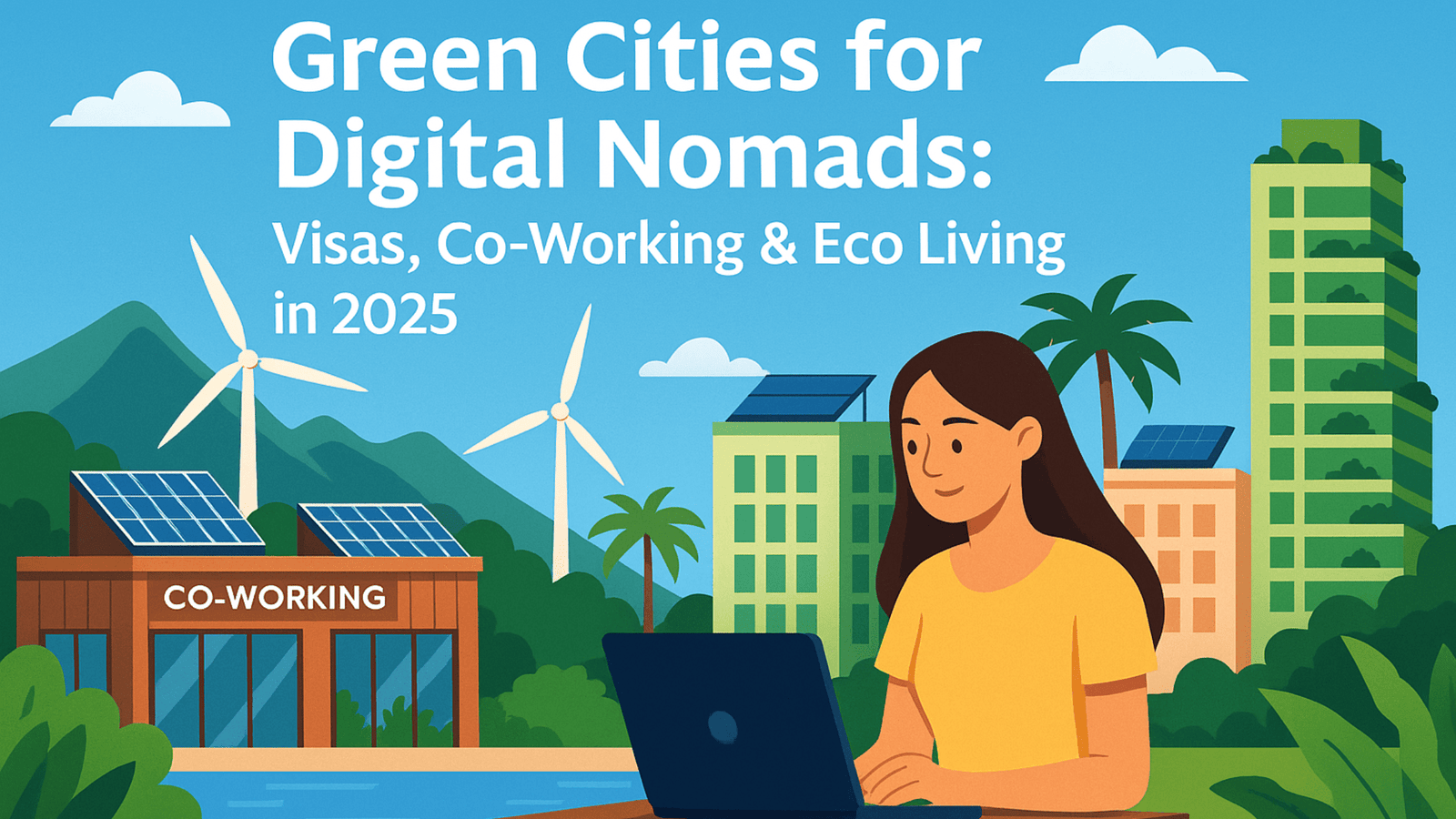
Why Green Cities Are Redefining the Digital Nomad Lifestyle in 2025
In 2025, the digital nomad lifestyle is no longer defined by café Wi-Fi and coworking passes—it’s about conscious mobility. The rise of green cities for digital nomads reflects a shift toward low-impact living, renewable energy, walkability, and community-first design. Remote workers now prioritize destinations that balance high-speed internet with clean air, efficient public transport, and access to nature. These cities aren’t just pleasant; they’re prototypes for how technology and ecology can coexist.
As the climate crisis intensifies, long-haul flights and single-use habits are giving way to low-impact travel habits, slow travel, and longer stays. The goal is not to “see it all,” but to experience deeply while leaving the lightest footprint possible. Leading destinations like Copenhagen, Singapore, Vancouver, and Lisbon invest in renewable power, cycling networks, and circular economies—attracting travelers who value eco-certified places to stay and community-led co-living spaces.
Embracing the eco-friendly digital nomad lifestyle is not about perfection; it’s about progress. Each decision—from the flight you offset to the reusable bottle you carry—contributes to a movement toward greener travel culture. Green cities lead the charge, proving you can enjoy the freedom of remote work while protecting the environments that inspire it.
Why eco-travel matters for digital nomads
Travel opens minds, but it also emits carbon, strains water systems, and can displace communities. As a nomad who blends work with wander, your choices compound: routes, stays, food, and gear all add up. The ethos here is simple—low impact, high experience.
Sustainable travel in practice: transport, stays & habits
Smarter transport
Ask on every leg: “Can I lower emissions?” Choose trains over planes for regional hops; when you must fly, pick efficient routes and offset. Prefer EV rentals or public transit over ride-hailing.
Green stays & low-impact accommodations
Pick stays that run on renewables, manage water responsibly, compost, and support local supply chains. Co-living geared to nomads often includes solar, shared kitchens, and dedicated work zones—ideal for longer, slower travel.
Daily habits for the mindful nomad
- Carry a reusable bottle; avoid single-use plastics.
- Pack a zero-waste kit (mug, cutlery, tote). See: Zero-waste packing guide 2025.
- Shop local markets; favor independent cafés and eateries.
- Offset unavoidable emissions and support conservation where you stay.
🌍 Trusted Travel Partners for Eco Nomads 2025
Every service below helps digital nomads travel lighter, smarter, and greener. We may earn a small commission if you book through them — always at no extra cost to you.
🚖 Airport Transfers
Reliable, eco-efficient rides with trusted drivers worldwide.
Book with Kiwitaxi →Try Welcome Pickups
📱 eSIM Data Plans
Stay connected worldwide—no plastic waste or roaming fees.
Airalo →Yesim →
Saily →
⛵ Yacht & Sea Adventures
Charter low-emission sailboats and explore the coast responsibly.
Explore Searadar →*Affiliate Disclosure: These links support Eco Nomad Travel’s mission to promote sustainable exploration worldwide.*
Best Sustainable Destinations for Digital Nomads in 2025
Digital nomads in 2025 are gravitating toward cities that balance climate action with convenience. These eco-conscious hubs blend high-speed internet, renewable power grids, efficient public transit, and a community of remote workers who care about the planet. Whether it’s Europe’s cycling capitals, Asia’s solar-powered coworking spaces, or Latin America’s emerging green tech zones, these destinations redefine what “sustainable travel” really means.
Explore our cornerstone guides for full breakdowns:
Top 10 Eco-Friendly Digital Nomad Destinations for 2025 · 10 Best Sustainable Destinations for Digital Nomads in 2025
Copenhagen: Cycling Culture & Renewable Energy
Copenhagen remains the global leader in green urbanism. Nearly half of all commuters travel by bike, and the city’s remote-work infrastructure is powered by wind energy. Nomads can enjoy coworking spaces along the harbor, vegan cafés, and climate-neutral public transport. Its strong sustainability policies make it a model city for digital nomads seeking balance between productivity and environmental ethics.
Lisbon & the Iberian Green Transition
Lisbon’s rise as a renewable hub continues into 2025. The city’s hybrid coworking/co-living setups, powered by solar, attract remote workers seeking year-round sunshine and affordable living. Digital nomads benefit from Portugal’s progressive visa policies and growing network of community-led sustainability projects, many verified by Green Key.
Vancouver: Nature Meets Urban Innovation
Vancouver’s extensive parks, zero-waste initiatives, and tech ecosystem make it an ideal green base for long-term nomads. With its hydro-powered grid and ocean access, it’s perfect for those balancing deep work with outdoor exploration. Learn how to reduce your footprint while enjoying Canada’s eco-minded hospitality in our Eco-Travel Places 2025 Guide.
Slow Travel & Off-Peak Seasons
Slow travel is the new luxury. Staying longer and exploring less-traveled regions dramatically reduces emissions and enriches cultural experiences. Travel in off-peak seasons to avoid overtourism and support local economies year-round. See: Off-Peak Eco Escapes in Europe 2025.
Remember that the best destinations are those you respect—support local businesses, use sustainable transport, and share accurate sustainability data with fellow travelers. This peer accountability builds a global network of informed eco-nomads.
Packing Smart: Zero-Waste & Minimal-Impact Kits
Minimalism is more than a travel trend—it’s an environmental strategy. The average nomad’s carbon footprint often comes from frequent purchases and disposable gear. By packing light and consciously, you not only simplify your journey but reduce waste and logistics emissions. Think long-life gear, modular clothing, and digital tools that eliminate paper waste.
- Durable gear: Choose a high-quality backpack made from recycled materials. Brands like Patagonia and Tortuga lead in repairable travel design.
- Solar energy: A foldable solar charger or compact power bank cuts reliance on nonrenewable power while remote.
- Zero-waste essentials: A reusable mug, bamboo cutlery, tote, and stainless water bottle with filter reduce landfill impact wherever you roam.
- Light tech loadout: Pack lean—laptop, noise-cancelling headphones, and eSIM access. Skip excess gadgets that demand charging cycles.
- Eco personal care: Solid shampoo, refillable deodorant, and biodegradable wipes prevent microplastic pollution.
Full minimalist kit: Zero-Waste Packing List 2025.
By reusing and repairing, you join the “circular travel economy”—a mindset where each item you carry serves multiple purposes and lasts for years. This approach aligns perfectly with Low-Impact Travel Habits that keep both you and the planet lighter.
Train vs. Plane: Choosing Carbon-Conscious Transport
Air travel remains one of the largest contributors to travel-related carbon emissions. But alternatives are increasingly efficient and scenic. For regional trips, high-speed trains emit up to 90% less CO₂ per passenger. Sleeper trains, now resurging across Europe and Asia, double as both accommodation and adventure, helping digital nomads work and rest sustainably on the move.
For intercontinental flights, choose airlines investing in SAF (Sustainable Aviation Fuel), such as KLM or United’s Eco-Skies program. Offset unavoidable routes with certified carbon projects—see our Carbon-Neutral Travel Guide 2025 for verification methods.
- Use public transport over private cars when possible.
- Support electric bus services and ride-shares powered by renewables.
- For local commuting, invest in foldable bikes or rent e-scooters from sustainable providers.
Traveling slow doesn’t mean traveling less—it means traveling with awareness. Your carbon savings compound each trip, proving that eco-friendly digital nomad travel can be both efficient and inspiring.
Workation & Remote-Work Ethos: Build Your Base, Respect the Place
Nomadism is evolving from escapism to stewardship. In 2025, the eco-nomad workation movement emphasizes community integration and environmental reciprocity. It’s about embedding your digital career within the local culture and ecosystem—not hovering above it.
- Choose regenerative stays: Co-living spaces that reforest land, compost waste, and hire locally set a new sustainability benchmark. See Sustainable Stays 2025.
- Work mindfully: Use daylight hours efficiently, reduce energy use, and engage with local coworking initiatives that give back to the community.
- Contribute locally: Participate in cleanup events, teach digital skills, or collaborate on community sustainability projects.
- Stay longer: Longer stays reduce per-day emissions and foster real relationships with locals—essential for sustainable travel practices.
More ideas: Workation Cities 2025 Without a Car.
Remember: sustainability isn’t a checkbox—it’s a rhythm. Remote work gives you freedom; responsible nomadism ensures that freedom doesn’t come at the planet’s expense. Your lifestyle can inspire a shift toward regeneration, one destination at a time.
Affiliate links & transparency
Some links are affiliates. If you buy through them, we may earn a commission at no extra cost to you. We recommend only tools we use or carefully vet. Compare options and choose what fits your needs—trust is the foundation of our work.
Internal resources you should explore
Measuring Your Impact & Staying Accountable as a Green Nomad
True sustainability begins with self-awareness. Every journey, meal, or workspace choice carries an environmental footprint, and digital nomads have the rare advantage of visibility. Tracking your own impact isn’t about guilt—it’s about data-driven empowerment. Estimate your emissions monthly, review the sustainability of each provider you use, and make conscious swaps toward cleaner alternatives. Use transparent tools like MyClimate and the ICAO Carbon Calculator to calculate and offset emissions from flights, coworking, or accommodation energy use.
Accountability doesn’t stop at carbon. Ethical travel also includes cultural, economic, and digital impact. Are you contributing to local economies or draining them? Are your tech habits energy-efficient? Consider switching to a green-hosted website or VPN if you run a blog or remote business. Use sustainable banking or offset credit cards that reinvest in reforestation. These micro-habits align your online work with the offline world you’re exploring.
Start small: track your travel modes in a spreadsheet or use an app like Joro or GreenChoice. Set quarterly reduction goals—such as replacing one flight per quarter with a train ride or carpool. Share progress publicly or within remote-work communities; transparency inspires others to follow suit. Our Carbon-Neutral Travel Guide 2025 explains how to verify offsets and find legitimate sustainability programs for global travelers.
Challenges & How to Overcome Them in Sustainable Nomadism
Cost Trade-offs and Smart Budgeting
Eco-friendly options sometimes cost more up front—but they often pay dividends long-term through energy efficiency, reduced consumption, and better quality of life. Many renewable coworking spaces and co-living hubs now offer discounts for longer stays, encouraging slow travel. Compare local costs using open data from Numbeo and check community boards for sustainability-minded rentals. Treat sustainability like insurance for your future comfort—it’s not a luxury, it’s resilience.
Connectivity vs. Nature Conflict
It’s one of the defining paradoxes of 2025: the best nature retreats often lack the Wi-Fi speeds we depend on. Solve this tension by alternating your schedule—dedicated focus weeks in connected green hubs like Tallinn or Singapore, followed by digital-detox time in nature preserves or off-grid eco-villages. Tools like Nomad List and Workfrom help filter destinations with both infrastructure and access to the outdoors.
Greenwash & Misleading Marketing
Not all “eco” labels are created equal. Some accommodations claim sustainability while relying on token gestures. Look for verifiable certifications such as Green Key, Global Tourism Plastics Initiative, or EarthCheck. Cross-reference with user reviews and independent watchdog sites before booking. To understand the red flags, visit Sustainable Stays 2025 for practical checks that separate real sustainability from marketing fluff.
Wrapping Up: Your Path Toward Intentional, Sustainable Nomadism
Being a digital nomad in 2025 is a privilege that comes with global responsibility. Every train you take instead of a flight, every eco-stay you support, and every mindful habit you adopt adds momentum to a worldwide movement of conscious mobility. The most powerful form of activism today is lifestyle alignment—choosing consistency over perfection.
Start small but stay consistent. Replace single-use habits with reusables, book verified green accommodations through partners like Trip.com, and share sustainable finds within your nomad circles. If you run a business or blog, dedicate one post per quarter to climate accountability or local eco initiatives. Google’s latest ranking algorithms increasingly favor original research, helpful experience, and transparent sourcing—so your E-E-A-T improves as your authenticity does.
For deeper insight into sustainable digital lifestyles, explore Sustainable Digital Nomad Lifestyle and Eco-Friendly Travel Tips. Each journey you take can either extract or enhance—choose enhancement, and let your adventures model a regenerative future.
🌿 Frequently Asked Questions — Green Cities for Digital Nomads 2025
1. What are the best green cities for digital nomads in 2025?
Copenhagen, Lisbon, Singapore, Vancouver, and Stockholm lead with renewables, transit, and walkability.
2. How do green cities support remote workers?
Renewable-powered infrastructure, fiber internet, and community-minded coworking hubs.
3. Why choose sustainable destinations?
Lower emissions, cleaner air, and stronger community wellbeing.
4. How can I measure my travel carbon footprint?
Use calculators like MyClimate or ICAO; offset via verified projects.
5. Are trains better than planes?
For comparable routes, rail can emit ~90% less CO₂ per passenger.
6. What are sustainable coworking spaces?
Work hubs using solar power, recycled materials, and circular-economy practices.
8. What packing essentials reduce waste?
Reusable bottle, bamboo cutlery, refillable toiletries, recycled-fiber towel. See Zero-Waste Packing List 2025.
9. Which countries offer eco-friendly visas?
Portugal, Costa Rica, Estonia, and Spain offer remote-work visas with green pledges.
10. Are eco-cities more expensive?
Not necessarily—public transit and renewable utilities often offset higher rent.
11. Cleanest urban transport?
Walking, cycling, e-scooters, and trams powered by renewable grids.
12. How do I find eco hotels?
Filter for “eco-certified,” “Green Key,” or “LEED” on Trip.com.
13. How to offset unavoidable flights?
Buy verified offsets (Gold Standard or VCS) for reforestation/renewables.
14. Digital tools for tracking sustainability?
Apps like Green Choice and Joro estimate emissions and suggest reductions.
15. How do green cities manage waste?
Strict recycling, composting programs, and waste-to-energy plants.
16. Can I live car-free?
Yes—rely on transit and occasional EV rentals with GetRentACar.
17. Are boats sustainable?
Sail-powered or hybrid-electric charters from Searadar minimize fuel use.
18. How can nomads support local communities?
Shop local, use regional coworking, volunteer with grassroots initiatives.
19. Green travel vs eco-tourism?
Eco-tourism is trip-based; green travel is a lifestyle across daily choices and longer stays.
20. Where to learn more?

Explore Eco Nomad Travel
📚 Core Guides
🧭 Planning & Logistics
🗺️ Destinations & Seasons
Jeremy Jarvis — founder of Eco Nomad Travel, sustainable travel writer, and advocate for regenerative tourism. His work focuses on low-impact mobility, eco-friendly digital nomad life, and climate-positive travel.
Legal
Affiliate DisclaimerPrivacy Policy
Terms of Service
Image & Media Notice
Contact
Affiliate Disclosure: Some links on Eco Nomad Travel are affiliate links, meaning we may earn a small commission at no extra cost to you. This supports our mission to inspire responsible and low-impact travel worldwide.
Connect
🌍 Eco Travel Partners ▼
✅ Trusted Official Sources
Plan smarter eco trips
Try our free Sustainable Travel Tools for Digital Nomads – carbon calculator, train vs plane comparator, and more.
Open Tools Hub