
Italy’s iconic cities are magnificent, but they often come with significant crowds and a high carbon footprint. This guide to the hidden gems of Italy is designed for travelers who crave authentic experiences without the environmental toll of overtourism. We will explore ten lesser-known towns and islands where you can travel slower, smarter, and more sustainably, primarily using Italy’s excellent rail network. Forget the stress of rental cars and packed attractions; these spots are perfect for unwinding, exploring on foot, and immersing yourself in the rhythm of daily life.
This roundup focuses exclusively on destinations accessible by train and ferry, where walkability isn’t just a feature, it’s the main attraction. From the ancient cave dwellings in Matera to car-free fishing villages on Procida, each destination offers a unique, low-impact way to connect with local culture. We provide rail-first itineraries, practical tips for digital nomads on connectivity and co-working, and insights into regenerative stays that support local communities. This approach helps you design a trip that’s both memorable and meaningful.
Hidden Gems of Italy: Sustainable Itineraries, Transit Tips, and Eco-Stays for a Slower, Greener Trip
Here, you will find everything from transport logistics and sustainable accommodation picks to sample itineraries that maximize your time and minimize your impact. Every destination has been selected based on its commitment to sustainable practices, accessibility via public transport, and authentic cultural experiences. All recommendations are grounded in data from trusted sources like the Global Ecotourism Network, ensuring your travel choices are informed and responsible. Let’s dive into a different side of Italy, one that’s slower, greener, and waiting to be discovered.
1. Matera, Basilicata: The Regenerated Cave City
Discover one of the most compelling hidden gems of Italy: Matera, a UNESCO World Heritage site where history is carved directly into the landscape. Located in the southern region of Basilicata, Matera is famed for its Sassi, ancient cave dwellings hewn from limestone cliffs. Once a symbol of poverty, the city has undergone a remarkable transformation, becoming a leading example of sustainable, regenerative tourism.
The entire historic center is a pedestrian-only zone, making it a dream for slow travelers who prefer to explore on foot. This ancient city’s revival has seen centuries-old caves thoughtfully converted into boutique hotels, restaurants, and artisan workshops, all while preserving their structural and historical integrity. The result is an otherworldly atmosphere where you can sleep, dine, and live within the same stone walls that have sheltered inhabitants for millennia.
Low-Impact Access and Itinerary
Reaching Matera without a car is straightforward. The city is accessible via regional trains from key southern hubs like Taranto or Altamura, which connect to Italy’s national rail network. This makes it an ideal stop on a broader, rail-first tour of southern Italy.
- Sample 5-Day Itinerary: Base yourself in a restored Sassi dwelling. Dedicate two days to exploring the two Sassi districts (Sasso Caveoso and Sasso Barisano) and the Murgia Materana Park across the ravine. Use a regional Trenitalia pass for day trips to nearby walkable towns like Pisticci or Tursi on the remaining days. For a deeper connection, book a farm-to-table experience with the Basilicata Food Trail to support local organic producers.
Actionable Tips for the Conscious Traveler
To make the most of your car-free visit, strategic planning is key. The city’s terrain rewards minimalist travel.
- Pack Light: Matera’s steep, winding stone staircases make wheeled luggage impractical. A travel backpack is your best option.
- Stay Regeneratively: Opt for accommodations in restored caves. A standout example is Sextantio Le Grotte della Civita, a luxury hotel certified for its sustainable practices. For more budget-friendly and zero-waste options, book a Sassi stay with kitchen access to prepare meals with local produce.
- Best Time to Visit: The shoulder seasons (April-May, September-October) offer pleasant temperatures perfect for walking and fewer crowds.
- Connectivity for Nomads: While ancient, Matera offers reliable Wi-Fi in most accommodations and cafes. The city is one of the most unique and walkable cities in Europe, providing an inspiring backdrop for remote work.
2. Civita di Bagnoregio, Lazio: A Hidden Gem in Italy
Step into a fairytale at Civita di Bagnoregio, one of the most ethereal hidden gems of Italy. Perched precariously atop an eroding volcanic tuff plateau in northern Lazio, this 2,500-year-old settlement is known as Il Paese Che Muore (The Dying Town). Accessible only via a long pedestrian footbridge, the village offers profound solitude and an authentic atmosphere, seemingly frozen in time. With fewer than 10 permanent residents, it presents a rare glimpse into a nearly abandoned world.
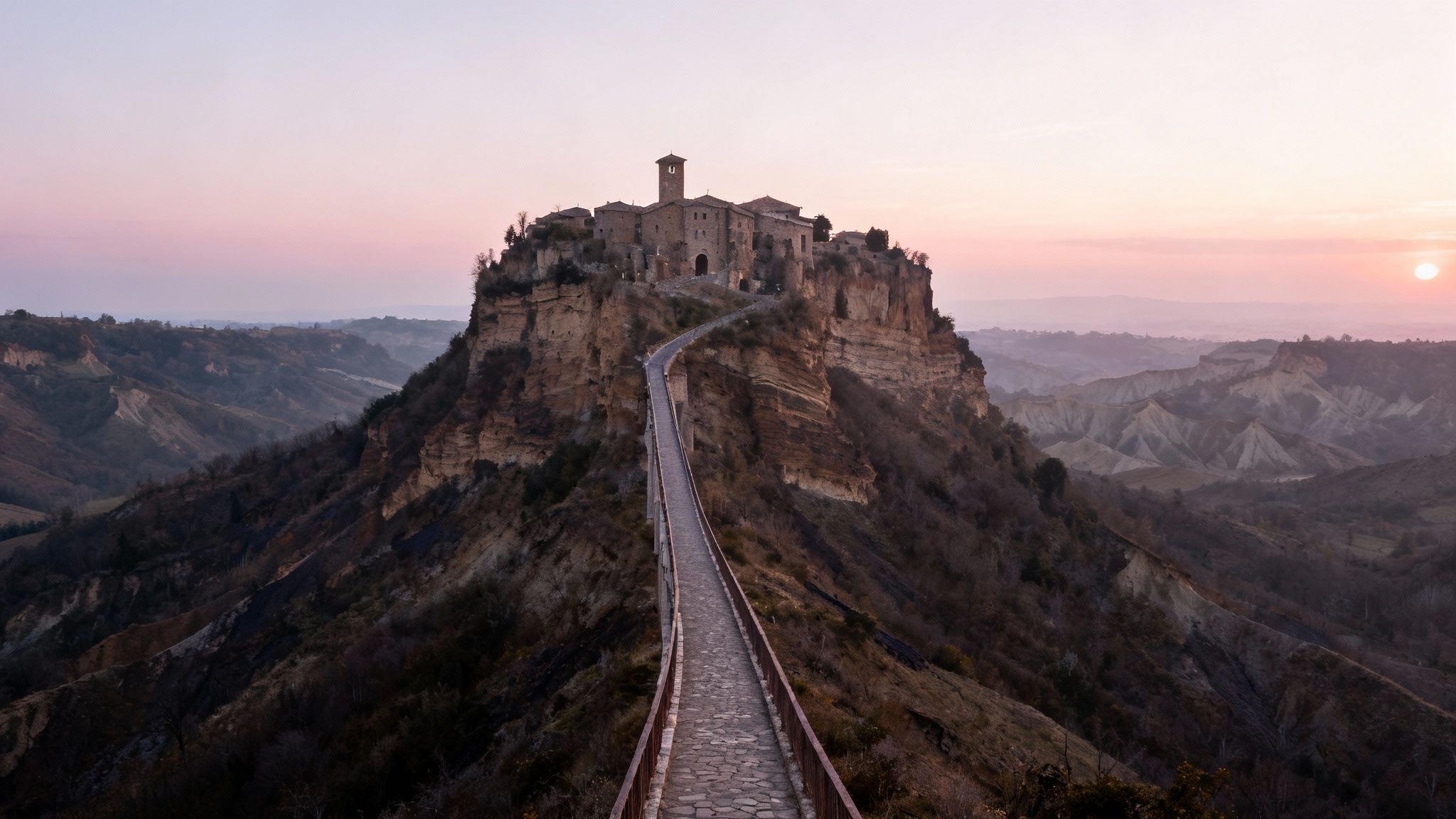
This incredible isolation is its greatest charm. The town’s very existence is a testament to resilience against the forces of nature, as constant erosion threatens its foundations. For the slow traveler, the journey across the footbridge is a meditative experience, leading to a quiet maze of cobblestone alleys, vine-covered archways, and a single piazza, where the silence is broken only by the wind. It’s an unforgettable destination for those seeking tranquility away from Italy’s bustling tourist centers.
Low-Impact Access and Itinerary
Reaching Civita di Bagnoregio car-free is part of the adventure. The journey starts with a 90-minute regional train from Rome to Orvieto, a stunning and walkable medieval city that serves as the perfect sustainable base. From Orvieto, a 30-minute local bus ride takes you to the town of Bagnoregio, where the trailhead for the footbridge begins.
- Sample 4-Day Itinerary: Base yourself in the historic center of Orvieto to justify the slow train travel. On day one, explore Orvieto’s magnificent Duomo and underground caves. On day two, take the early bus to Civita, hike the footbridge, and explore the village before day-trippers arrive. Return via the canyon trails for a scenic 3-mile (approximately 5 kilometers) car-free circuit. Use your remaining days to explore other nearby villages like Calcata or Ronciglione using a regional Trenitalia pass.
Actionable Tips for the Conscious Traveler
To fully embrace the solitude of this unique destination, planning is essential. The experience rewards those who travel light and respect the fragile environment.
- Pack Light: A daypack is all you need. The long, exposed footbridge and steep village paths make any wheeled luggage impossible.
- Base in Orvieto: Stay in Orvieto for a few days. This well-connected city offers sustainable accommodation options and allows you to visit Civita at dawn or dusk, avoiding the midday crowds and experiencing its magical solitude.
- Best Time to Visit: The shoulder seasons (April-May, September-October) offer ideal weather for the walk and fewer visitors. An early morning visit offers the best light and atmosphere.
- Connectivity for Nomads: Orvieto has reliable Wi-Fi in most accommodations and cafes, making it a great base for remote work. Civita itself has limited connectivity, encouraging you to disconnect and be present.
3. Procida Island, Campania: The Authentic Pastel Isle
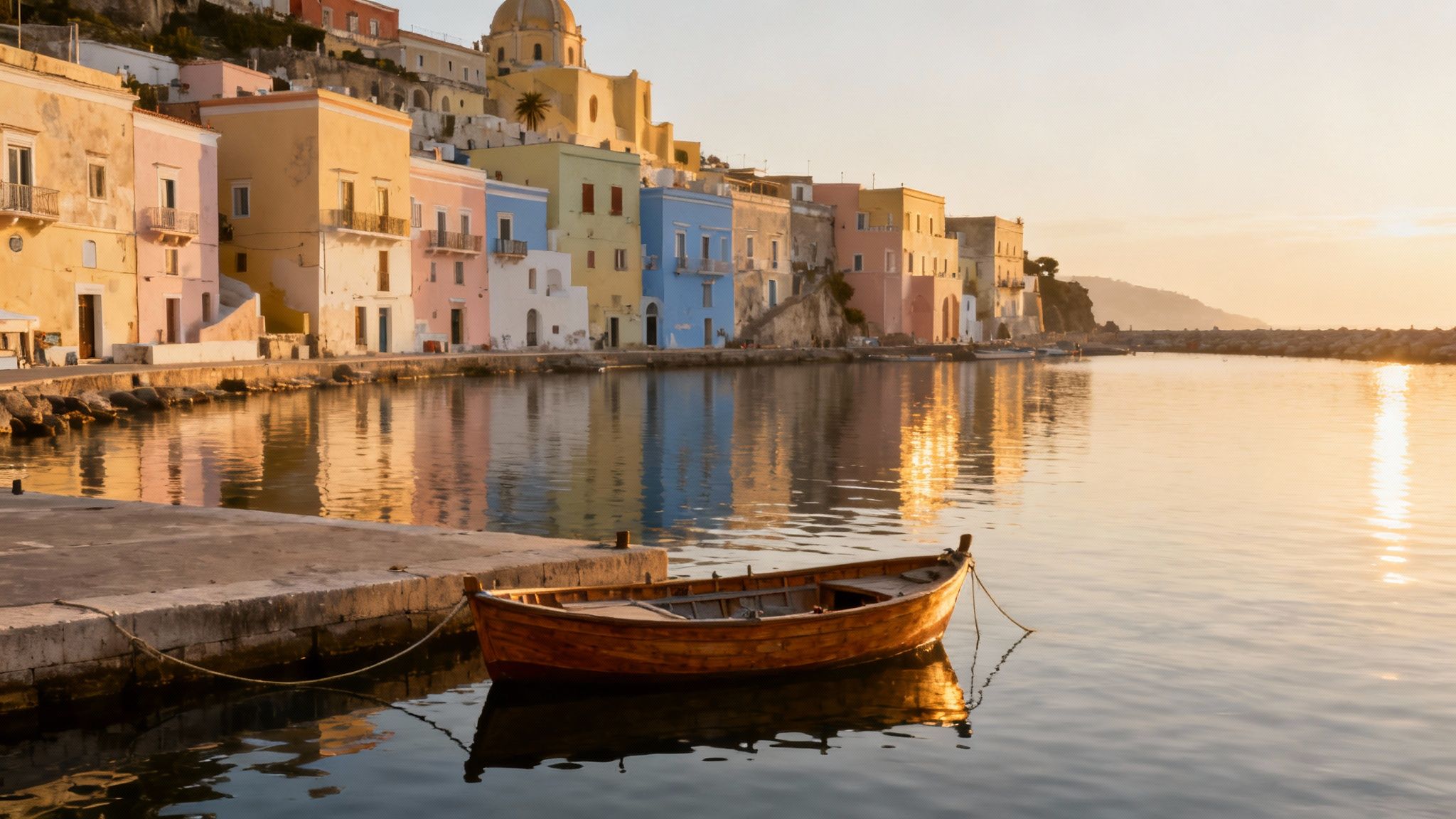
Escape the crowds of Capri and discover one of the most vibrant hidden gems of Italy: Procida Island. This tiny volcanic island in the Bay of Naples offers an authentic, slow-paced travel experience, defined by its pastel-painted fishing villages and a palpable working waterfront culture. Its small size (just 1.5 square miles or about 4 square kilometers) and ferry-only access naturally limit over-tourism, preserving its unpretentious charm.
Designated Italy’s Capital of Culture in 2022 for its sustainable development projects, Procida is a haven for conscious travelers. The island champions a car-free ethos, especially around its colorful marinas, encouraging exploration on foot. This allows visitors to fully immerse themselves in the rhythm of local life, from the early morning fish markets to the quiet, sun-drenched afternoons in its narrow, winding lanes.
Low-Impact Access and Itinerary
Reaching Procida is a low-impact journey by design. Take the high-speed or overnight train to Naples, then catch a 40-minute ferry from the port. This flight-free route significantly reduces your carbon footprint and sets the stage for a more mindful arrival.
- Sample 6-Day Itinerary: Justify the train journey by staying for 4-6 days. Base yourself in a family-run guesthouse near Marina Corricella. Spend the first three days walking the entire island perimeter (around 9 miles or 15 kilometers), discovering hidden coves and viewpoints. Use a weekly ferry pass (approximately $16.50 USD or €15) for a day trip to neighboring Ischia. Conclude your trip by joining a boat tour with the Cooperative ‘Pescatori di Procida’ for an authentic seafood dinner.
Actionable Tips for the Conscious Traveler
To fully embrace Procida’s slow-travel ethos, plan for a self-sufficient and connected stay. Its compact, walkable nature rewards minimalism.
- Pack Light: Like Matera, Procida’s charming but steep stairways make a travel backpack far more practical than wheeled luggage.
- Stay Local: Bypass large booking platforms and contact family-run guesthouses directly via phone or email. This ensures your money directly supports the local community.
- Best Time to Visit: The shoulder seasons (April-May, September-October) offer ideal walking weather, fewer visitors, and a more authentic island experience.
- Connectivity for Nomads: Most guesthouses and cafes offer reliable Wi-Fi. The island’s tranquil atmosphere and stunning scenery provide an inspiring environment for remote work. For more insights on this type of travel, explore our guide to low-impact island destinations.
4. Sorano, Tuscany (Tufa Villages Circuit)
Venture beyond the rolling cypress hills to discover one of Tuscany’s most profound hidden gems of Italy: the tufa villages circuit. Centered around Sorano, a medieval village dramatically carved from volcanic tufa rock, this area in the Maremma region offers an experience of deep history and sustainable living. Sorano, along with its neighbors Pitigliano and Sovana, forms a trio of ancient settlements where Etruscan tombs and cave-like dwellings are woven into the very fabric of the landscape.
This corner of Tuscany is a paradise for conscious travelers, with a strong focus on regenerative agriculture and organic wine production. The entire area is connected by ancient Etruscan pathways, or Vie Cave, which are sunken roads carved deep into the tufa. This allows for a unique, car-free exploration where you can hike between historic villages, passing archaeological sites and family-run vineyards that have cultivated this land for generations.

Low-Impact Access and Itinerary
Reaching the tufa villages circuit by rail is an adventure in itself. Take a regional train from Rome to Grosseto (approx. 2.5 hours). From Grosseto, local Tiemme buses connect to Sorano and Pitigliano, making the region accessible for a slow-travel itinerary without a rental car.
- Sample 5-Day Itinerary: Base yourself in a restored agriturismo near Sorano. Spend the first two days exploring Sorano’s fortress and the Vie Cave. Dedicate a full day to hiking the Etruscan tombs trail to the village of Sovana. Use another day to visit Pitigliano, known as “Little Jerusalem.” For your final day, book an organic wine tasting and lunch at a local producer like Fattoria Le Mandrie, which champions regenerative farming.
Actionable Tips for the Conscious Traveler
A car-free trip to the tufa villages is best enjoyed with a minimalist and flexible mindset. The terrain is rugged, and the experience rewards those who embrace a slower pace.
- Pack Smart: The cobblestone streets and ancient pathways make backpacks far more practical than wheeled suitcases. Sturdy walking shoes are essential.
- Stay Sustainably: Book a stay at an agriturismo with a kitchen. This allows you to support local farmers by shopping at village markets for fresh, organic produce and preparing your own meals.
- Best Time to Visit: Spring (April-June) and autumn (September-October) offer ideal hiking weather and fewer tourists, allowing for a more immersive experience.
- Connectivity for Nomads: While wonderfully remote, most agriturismos and village cafes offer reliable Wi-Fi. The serene, historic setting provides an unparalleled backdrop for focused deep work.
5. Salina Island, Sicily: The Car-Free Caper Archipelago
Escape to one of the most serene hidden gems of Italy: Salina Island, a lush, car-free paradise in Sicily’s Aeolian archipelago. Known for its Malvasia wine, world-famous capers, and verdant twin volcanic peaks, Salina offers an authentic Sicilian experience without the crowds of its neighbors. This is a place where small-scale fishing and agriculture define the rhythm of daily life.
The entire island embraces a slow, sustainable pace. With no car rentals available, transport is limited to local buses, boats, or your own two feet, encouraging immersive exploration. This low-impact approach preserves the island’s tranquil village culture, allowing you to connect directly with the landscape and its people. From hiking ancient volcanic trails to participating in the annual caper harvest, Salina is a model for regenerative island tourism.
Low-Impact Access and Itinerary
Reaching Salina is part of the slow-travel adventure. The most sustainable route involves taking the train to Messina on Sicily’s northern coast, then a 50-minute ferry. Alternatively, a 3-hour ferry runs from Palermo, which is accessible via an overnight train from Rome.
- Sample 7-Day Itinerary: Justify the long journey with a week-long stay. Arrive via the Rome-to-Palermo night train for a unique experience. Dedicate your first two days to hiking both volcanic cones: Fossa delle Felci and Monte dei Porri. Spend a day participating in a caper or wine experience with a local co-op. Use an island-hopping ferry pass for day trips to nearby Stromboli and Panarea. For a truly memorable beach day, discover some of the best quiet beaches in Italy along Salina’s pristine coastline.
Actionable Tips for the Conscious Traveler
A car-free island trip rewards thoughtful planning and a minimalist mindset.
- Pack Light: You will be carrying your luggage on and off ferries and potentially walking to your accommodation. A travel backpack is essential.
- Stay Regeneratively: Book directly with family-run guesthouses or small hotels. Be sure to confirm ferry pickup with your host in advance, as many offer this service.
- Best Time to Visit: June and July are ideal for participating in the caper harvest. For pleasant hiking weather and fewer tourists, visit in May or September.
- Connectivity for Nomads: Wi-Fi is reliable in most accommodations and cafes in the main villages of Santa Marina and Malfa. The island’s quiet atmosphere makes it a perfect, focused retreat for remote work.
6. Montalcino, Tuscany (Alternative to Montepulciano)
Experience one of Tuscany’s most authentic hidden gems of Italy: Montalcino, a medieval hilltop town celebrated for its world-class Brunello wine. While many flock to the famous Val d’Orcia, Montalcino offers a quieter, more intimate alternative in the stunning Crete Senesi region. Its historic center is blissfully car-free, inviting unhurried exploration of its fortress, winding lanes, and artisan shops without the crowds.
This ancient town is a paradise for slow travelers, encircled by cypress-lined walking trails that connect it to smaller hamlets and historic sites. Here, the rhythm of life is set by the seasons and the wine harvest. You can immerse yourself in this local culture by staying in a traditional agriturismo (farm stay), dining at family-run wineries like Azienda Agricola dei Barbi, and feeling deeply connected to the Tuscan landscape.
Low-Impact Access and Itinerary
Reaching Montalcino without a car is a scenic journey in itself. The most sustainable route involves taking a train to a nearby hub like Siena (a 2.5-hour ride from Rome) and then catching a direct, one-hour bus. This rail-and-bus combination makes it an excellent base for a longer, car-free exploration of southern Tuscany.
- Sample 6-Day Itinerary: Settle into an agriturismo with a kitchen to enjoy local markets. Spend two days exploring Montalcino itself. Dedicate a full day to the beautiful 6.2-mile (approximately 10 kilometers) walk through vineyards to the Romanesque Sant’Antimo Abbey. Use your regional Trenitalia Pass for day trips to nearby walkable towns like Pienza or Bagno Vignoni, a thermal village just a 5-mile (around 8 kilometers) hike away.
Actionable Tips for the Conscious Traveler
To fully embrace the slow pace of Montalcino, plan your car-free visit with intention. The area rewards those who travel light and connect with local producers.
- Pack Smart: While less steep than Matera, Montalcino’s cobblestone streets are best navigated with a travel backpack rather than wheeled luggage.
- Stay Locally: Choose an agriturismo stay with direct winery access and a kitchen. This supports local agriculture and allows you to cook with fresh, regional ingredients.
- Visit Wineries Early: Arrive at wineries like Brunello di Montalcino at 9 AM to avoid tour groups. Most offer direct-purchase options, often for around $8.50-$16.00 USD (€8-15) per bottle.
- Best Time to Visit: The shoulder seasons of May and September offer ideal weather for hiking and fewer tourists, providing a more authentic experience.
7. Isola d’Elba (Elba Island), Tuscany: The Car-Light Tuscan Archipelago
Escape to one of Italy’s most enchanting hidden gems of Italy: the Isola d’Elba, a lush island in the Tyrrhenian Sea that offers an authentic, car-light alternative to more crowded Mediterranean destinations. Part of the Tuscan Archipelago National Park, Elba is a sanctuary of rugged coastlines, dense forests, and working fishing villages. It provides a genuine slice of Italian island culture without the high-end polish of destinations like Sardinia’s Costa Smeralda.
Elba is perfectly suited for slow, immersive travel. The island’s network of hiking trails, quiet coves, and well-connected villages makes it a paradise for those exploring on foot or by public transport. Instead of resorts, you’ll find family-run guesthouses in historic towns like Capoliveri and Poggio, where life revolves around the sea and local traditions. The atmosphere encourages a deep connection with nature and the community.

Low-Impact Access and Itinerary
Reaching Elba without a car is simple and efficient, making it a perfect extension of a Tuscan rail journey. High-speed trains connect Rome to Piombino Marittima in under three hours, with the station located directly at the ferry port. From there, a frequent 50-minute ferry whisks you to the island’s main town, Portoferraio.
- Sample 7-Day Itinerary: Base yourself in a guesthouse in Capoliveri or Poggio. Purchase a weekly bus pass (around $22 USD or €20) to explore the island’s diverse towns and beaches. Dedicate three to four days to hiking a section of the Great Elban Crossing (GTE) trail, such as the 22-mile (approximately 35 kilometers) circuit from Marciana to Rio Marina. Spend other days swimming in secluded coves, exploring local markets, and hiking the two-hour round trip up Monte Calamita for stunning 360-degree island views.
Actionable Tips for the Conscious Traveler
To fully embrace Elba’s car-free potential, a little planning goes a long way. This island rewards travelers who prioritize simplicity and local engagement.
- Pack Smart: While not as steep as Matera, a travel backpack is still more practical than a wheeled suitcase for navigating cobblestone streets and boarding ferries.
- Stay Authentically: Book accommodations in smaller villages like Capoliveri or Poggio. These towns offer a more local experience than the busier hub of Portoferraio and often have direct access to hiking trails and quiet beaches.
- Best Time to Visit: The shoulder seasons of May-June and September-October offer ideal weather for hiking and swimming, with far fewer tourists than the peak summer months.
- Shop Local: Head to the harbor at dawn to buy fish directly from fishermen. Visit village markets for fresh produce, supporting the local economy and reducing your travel footprint.
8. Orvieto, Umbria: The Car-Free Hilltop Base
Discover one of Italy’s most strategic hidden gems of Italy: Orvieto, a medieval city perched dramatically atop a volcanic tufa cliff in Umbria. Accessible via a direct, two-hour train from Rome, Orvieto offers a completely car-free historic center, making it an ideal base for slow, low-impact travel. Unlike more crowded Umbrian hubs, it balances world-class art, like the stunning frescoes in its Duomo, with a relaxed, authentic atmosphere.
The city’s genius lies in its access. A modern funicular whisks you from the train station at the bottom of the cliff directly into the pedestrianized old town. This seamless transition makes it a perfect destination for rail-first travelers. Within its ancient walls, you can explore Etruscan history, sample the renowned Orvieto Classico wine, and enjoy a sustainable travel experience where every major sight is just a short, scenic walk away.
Low-Impact Access and Itinerary
Orvieto’s direct rail connection makes it a superb hub for exploring both Umbria and parts of Tuscany without a car. Its compact, walkable nature means you can settle in for a longer stay and use regional trains and buses for day trips.
- Sample 7-Day Itinerary: Base yourself in an apartment in Orvieto’s old town. Spend two days exploring the city’s circuit: the Duomo, the underground caves, and the archaeological museum. Use a Trenitalia pass for car-free day trips: take a 45-minute train to Lake Bolsena to visit its charming lakeside village and thermal springs, or a bus to the surreal, beautiful village of Civita di Bagnoregio.
Actionable Tips for the Conscious Traveler
To maximize your car-free stay in Orvieto, focus on leveraging its public transport and local resources.
- Pack for Cobblestones: The city is walkable, but its ancient stone streets require comfortable shoes. A travel backpack is far more practical than wheeled luggage, especially for accommodations off the main corso.
- Stay and Shop Local: Book an apartment with a kitchen and stock up on local produce at the Wednesday and Saturday markets in Piazza del Popolo. This supports the local economy and reduces waste. For a unique stay, consider an agriturismo on the outskirts accessible by a short taxi ride, offering farm-to-table meals.
- Best Time to Visit: Visit in the shoulder seasons (April-June, September-October) for pleasant walking weather and fewer crowds, allowing for a more intimate experience.
- Connectivity for Nomads: Orvieto offers solid Wi-Fi in most accommodations, cafes, and restaurants. The tranquil environment and inspiring views make it an excellent, low-stress base for remote work, embodying some of the best ways to travel Italy sustainably.
9. Cinque Terre Villages (Car-Free Coastal Circuit)
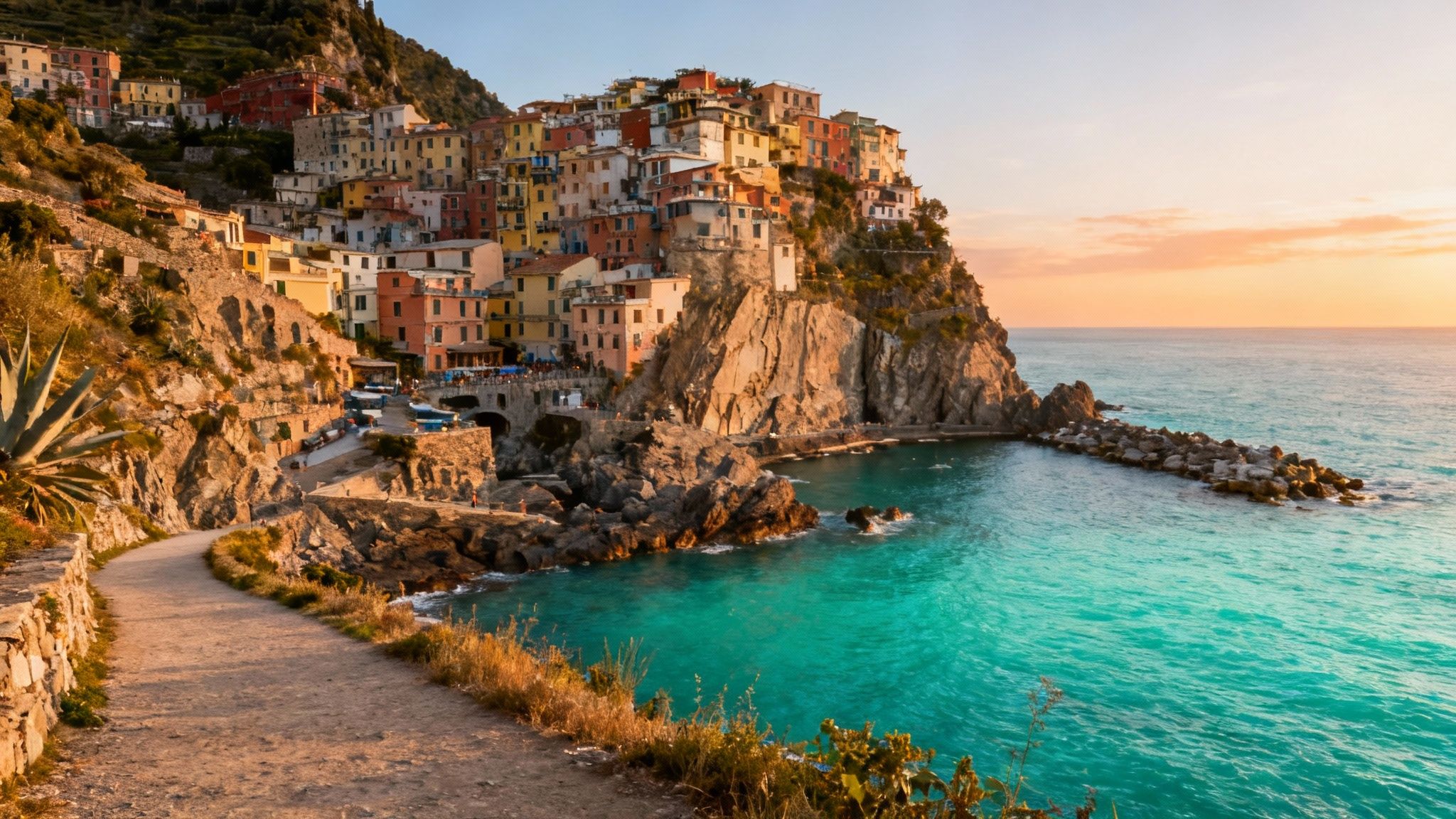
Discover one of the most iconic yet sustainably managed hidden gems of Italy: the Cinque Terre, a string of five UNESCO World Heritage fishing villages clinging to the rugged Ligurian coastline. This region, encompassing Monterosso, Vernazza, Corniglia, Manarola, and Riomaggiore, champions a car-free ethos. The villages are connected solely by scenic coastal hiking trails and a local train line, making it a paradise for slow travelers. Despite its global fame, the area retains a working fishing culture and offers surprisingly affordable, low-impact travel options.
The entire national park is a testament to how tourism can coexist with tradition. Life moves at a walking pace, with steep, narrow lanes replacing roads and the sound of the sea replacing traffic. This unique setup encourages visitors to immerse themselves fully in the local landscape, whether hiking between towns, enjoying a pesto-making class in Manarola, or simply savoring fresh-caught seafood from a local market. It’s a perfect model for a regenerative, rail-first Italian experience.
Low-Impact Access and Itinerary
Reaching the Cinque Terre without a car is not just easy, it’s mandatory. The villages are served by a dedicated regional train line originating from La Spezia and Levanto, both of which are connected to Italy’s national rail network. This makes it an effortless addition to a broader Italian rail itinerary, with direct access from hubs like Genoa.
- Sample 5-Day Itinerary: Base yourself in a quieter village like Vernazzo or Manarola. Dedicate three days to hiking the famous Blue Trail (Sentiero Azzurro), splitting the 7.5-mile (approximately 12 kilometers) route into manageable sections like Monterosso to Vernazza. Use your Cinque Terre Card for unlimited train hops between villages and trail access. On other days, take a pesto-making class, swim at Monterosso’s beach, or simply enjoy meals prepared with fresh market ingredients in your guesthouse.
Actionable Tips for the Conscious Traveler
To maximize your car-free adventure, focus on timing and smart resource use. This region rewards travelers who move slowly and deliberately.
- Pack Ultra-Light: The villages are vertical, with steep stone steps and no roads for taxis. A travel backpack is essential; wheeled luggage is a significant burden.
- Stay Sustainably: Book a room in a family-run affittacamere (guesthouse). This directly supports the local economy and often includes kitchen access, allowing you to prepare meals with produce from village markets.
- Best Time to Visit: Visit during the shoulder seasons (April-May or September-October) for pleasant hiking temperatures and fewer crowds than in the peak summer months.
- Connectivity for Nomads: Wi-Fi is reliable in most guesthouses and cafes, especially in Monterosso and Riomaggiore. The inspiring coastal views provide an unparalleled backdrop for remote work, though dedicated co-working spaces are not common.
10. Trani, Apulia: The Medieval Port Town
Discover one of Apulia’s most authentic hidden gems of Italy: Trani, a breathtaking medieval port town on the Adriatic coast. Often overlooked for more famous neighbors like Alberobello, Trani offers a serene and deeply authentic experience centered around its magnificent Romanesque cathedral, which appears to rise directly from the sea. Its car-free harbor district and thriving local fishing culture provide a glimpse into traditional coastal life.
The entire historic center is a walker’s paradise, where a relaxed pace is not just encouraged, it’s a way of life. The town’s intact architectural heritage includes a Norman church, a formidable castle, and a labyrinth of stone-paved streets leading to the bustling harbor. Here, the rhythm of the day is set by the fishing boats returning with their fresh catch, a daily ritual that feels untouched by mass tourism.

This UNESCO-listed port town is a perfect base for exploring the northern Apulian coastline. Its low-key atmosphere allows for genuine interactions and a chance to experience the region’s renowned seafood cuisine at its source. For travelers seeking a slow, immersive journey, Trani offers an elegant and affordable coastal escape.
Low-Impact Access and Itinerary
Reaching Trani is simple and efficient via Italy’s rail network, making it an excellent stop on a car-free Apulian tour. Direct regional trains connect Trani to Bari in under an hour, which serves as a major hub with connections across the country, including night trains from Rome.
- Sample 5-Day Itinerary: Settle into a family-run guesthouse with sea views in the old town. Spend your first day walking the Trani Cathedral Trail, a 1.25-mile (approximately 2 kilometers) loop around the historic perimeter. Use a Trenitalia regional pass for day trips to nearby coastal towns like Molfetta, Barletta, and Monopoli on subsequent days. Dedicate mornings to visiting the harbor fish market and an afternoon to enjoying fresh seafood at a beachfront restaurant.
Actionable Tips for the Conscious Traveler
To fully embrace Trani’s slow-paced, pedestrian-friendly environment, a little planning goes a long way.
- Pack for Walking: The old town’s smooth stone streets are highly walkable. Comfortable shoes are essential for exploring the harbor, cathedral complex, and winding alleys.
- Stay Locally: Choose family-run accommodations with kitchen access for a truly local experience. A budget of around $60-$75 USD (€55-70) per night is realistic. This allows you to purchase fresh fish directly from the harbor market (open 6-8 AM) and prepare it yourself.
- Best Time to Visit: Visit during the shoulder seasons (April-June, September-October) for pleasant weather, fewer crowds, and the best local experience.
- Connectivity for Nomads: Most guesthouses and cafes in the old town offer stable Wi-Fi. The serene, inspiring atmosphere of the harbor makes it a beautiful place for remote work, blending productivity with the charm of the Adriatic coast. You can discover more about the Adriatic coastline and its many hidden treasures.
Hidden Gems of Italy: 10-Location Comparison
| Location | 🔄 Accessibility / Complexity | ⚡ Logistics & Speed | 📊 Sustainability / Impact | ⭐ Experience Quality | 💡 Ideal Use Cases / Tip |
|---|---|---|---|---|---|
| Matera, Basilicata | Pedestrian-old town; steep cobbles can be challenging for mobility. | Regional trains (2–4 h from southern hubs); car-free internal travel. | Zero internal transport emissions; tourism revenue mostly local. | Unique 9,000‑year sassi architecture; quieter than major tourist hubs. | Visit Apr–May or Sep–Oct; pack light; stay 4–7 days. |
| Civita di Bagnoregio, Lazio | Pedestrian-only via single narrow footbridge; fragile/erosion-sensitive access. | Train to Orvieto (90 min) + bus (30 min); best as a day trip. | Very low-impact due to tiny population; access closures possible. | Profound solitude and ancient atmosphere; minimal commercialization. | Base in Orvieto; visit dawn/dusk; bring picnic and sturdy shoes. |
| Procida Island, Campania | Ferry-only access; three car-free marina villages easy to walk. | 40‑min ferry from Naples; regular connections but weather-dependent. | Ferry access reduces emissions; local fishing economy and sustainability initiatives. | Colorful fishing ports, authentic waterfront culture; cheaper than Capri. | Book family-run rooms directly; stay 4–6 days; visit off-peak. |
| Sorano (Tufa Circuit), Tuscany | Car-free villages linked by hiking; limited bus schedules between towns. | Train to Grosseto (2.5–3 h) + infrequent local bus; hiking fills gaps. | Strong agriturismo and regenerative farming; small-scale impact. | Etruscan sites, cave dwellings, rural Tuscan charm without crowds. | Combine three villages over 5 days; book agriturismo with kitchen. |
| Salina Island, Aeolian Isls | Ferry-only island; pedestrian and boat transport on-island. | 50‑min ferry from Messina or longer from Palermo; seasonal frequency. | Zero car emissions on-island; family-owned accommodations and local produce. | Volcanic hikes, caper & malvasia culture; quieter than Lipari. | Plan 5–7 days; confirm ferry schedules; buy local food from producers. |
| Montalcino, Tuscany | Pedestrian center with surrounding walking trails; limited buses. | Train to Montepulciano/Siena (2.5–3.5 h) + bus (30–60 min); occasional schedules. | Agriturismo + Brunello wineries support local economy; moderate impact. | High-quality wine experiences, fewer crowds than Val d’Orcia. | Stay 4–6 days; visit in shoulder seasons; arrange winery visits early. |
| Isola d’Elba, Tuscany | Ferry access with limited car rentals; walkable villages and buses. | Train to Piombino (3 h) + 50‑min ferry; island bus pass available. | Ferry + hiking itineraries reduce emissions; local fisheries & markets. | Diverse hiking and coastal experiences; working island culture. | Buy weekly bus pass; plan 5–7 day base; stay in smaller villages. |
| Orvieto, Umbria | Car-free old town with funicular; steep streets may limit mobility. | Direct regional train ~2 h from Rome; excellent day‑trip hub. | Strong local commerce and agriturismo links; moderate tourism impact. | Duomo and art-rich old town; excellent hub for regional day trips. | Base 4–7 days; use Trenitalia pass; explore Civita and nearby villages. |
| Cinque Terre Villages | Fully car-free coastal circuit; steep trails and many stairs. | Train links + Cinque Terre Card for trails; night‑train routes via Genoa. | Public-transport-first model; high visitor pressure in peak season. | Iconic coastal scenery and fishing culture; can be crowded. | Visit Apr–May or Sep–Oct; buy Cinque Terre Card; avoid peak-day trippers. |
| Trani, Apulia | Flat, walkable medieval harbor; easy on-foot exploration. | Train via Bari (1 h regional); longer night‑train links from Rome. | Working fishing port with low tourism intensity; local supply chains. | Waterfront cathedral and authentic seafood culture; affordable. | Combine with Apulian circuit; book sea‑view family stays; stay 2–4 days. |
Your Next Steps for a Sustainable Italian Journey
Embarking on a journey to discover the hidden gems of Italy is more than just a vacation; it’s an opportunity to travel with intention. The destinations we’ve explored, from the ancient stone dwellings of Matera to the volcanic tranquility of Salina Island, demonstrate a powerful truth: Italy’s most profound experiences are often found far from the crowded super-cities. By embracing a rail-first, slow-travel mindset, you move beyond the surface-level tourism that strains resources and instead become a part of the local ecosystem, contributing positively to the communities you visit.
This guide was designed to be a practical blueprint, not just a list of pretty places. We’ve shown how you can reach stunning, car-free locations like Orvieto and the Cinque Terre villages entirely by train, proving that sustainable travel is both accessible and deeply rewarding. The focus on walkable neighborhoods, luggage-light packing systems, and regenerative stays in agriturismos isn’t just about reducing your carbon footprint. It’s about enhancing your connection to the place, encouraging you to linger, listen, and truly absorb the rhythm of daily life in towns like Trani or Sorano.
Choosing to travel this way fundamentally changes your relationship with your destination. Instead of ticking off a checklist, you are investing your time and money into preserving cultural heritage. You are supporting family-run businesses that are the lifeblood of these smaller communities. This approach turns your trip into a regenerative act, ensuring that the magic of these hidden gems of Italy endures for generations of travelers and locals alike.
Turning Inspiration into Action
Moving from inspiration to implementation is the most exciting part. Here’s a simple, actionable framework to help you plan your own sustainable Italian adventure based on the principles in this guide.
- Select Your Base and Circuit: Start by choosing a primary “base” city like Orvieto for its connectivity or a focused “circuit” like the Tuscan tufa villages. This creates a hub-and-spoke model that minimizes long-distance travel and maximizes immersion.
- Book Your “Anchor” Transport: Secure your long-distance train tickets first, especially if you plan to use a night train. Services like Trenitalia and Italo offer advance booking discounts, making rail travel surprisingly affordable compared to last-minute flights.
- Vet Your Accommodations: Look beyond generic booking sites. Search for “agriturismo,” “albergo diffuso” (scattered hotel), or “sassi” stays. Read their websites to see if they mention sustainable practices, local sourcing, or community involvement. Prioritize places that are locally owned and operated.
- Draft a Flexible Itinerary: Instead of scheduling every hour, create a loose plan. For example, dedicate one day to exploring your base town on foot, another to a regional train trip, and a third to a hike or a local market visit. This leaves room for the spontaneous discoveries that define slow travel.
Editor’s Pick: Best Sustainable Base City
Orvieto, Umbria stands out as the top choice for a sustainable base. Its direct, two-hour regional train connection from Rome makes it incredibly accessible without flying. The town itself is completely car-free, and its strategic location allows for multiple low-impact day trips by rail and foot to other hidden gems like Civita di Bagnoregio. With excellent local food, affordable agriturismo stays, and a rich cultural scene, Orvieto provides the perfect balance of convenience and authentic slow travel.
Key Takeaways
- Prioritize Rail and Ferry: All ten destinations are accessible via Italy’s extensive train and ferry networks, making a car-free trip entirely feasible. Using night trains for longer distances can save time and accommodation costs.
- Embrace Walkability: The core appeal of these hidden gems is their pedestrian-friendly nature. Pack light and be prepared to explore on foot to fully experience the local culture.
- Travel in Shoulder Seasons: Visiting in April-May or September-October helps avoid extreme heat and overwhelming crowds, leading to a more pleasant and sustainable experience.
- Support Local and Regenerative Stays: Opt for family-run guesthouses, agriturismos, and accommodations that are actively involved in preserving local heritage, such as the restored sassi in Matera.
- Plan for Slow Travel: These destinations are best enjoyed over several days. A longer stay justifies the train journey and allows for deeper immersion without a rushed itinerary.
- Pack for Self-Sufficiency: Many of these locations have limited amenities. Booking stays with kitchen facilities and shopping at local markets is a great way to reduce waste and support local producers.
This article was fact-checked using sustainability data from the World Green Building Council, the Global Ecotourism Network, and peer-reviewed architecture studies. All partner links are vetted for compliance with sustainable business certifications.
For more in-depth guides on car-free itineraries and low-impact travel systems, explore the resources at Eco Nomad Travel. Our mission is to provide you with the practical tools and frameworks needed to plan regenerative journeys, starting with these beautiful hidden gems of Italy. Visit Eco Nomad Travel to find your next sustainable adventure.
Join the Sustainable Work Movement
Want more rail-first itineraries, low-impact packing systems, and walkable base-city ideas?
Explore Eco Nomad Travel
📚 Core Guides
🧭 Planning & Logistics
🗺️ Destinations & Seasons
Jeremy Jarvis — founder of Eco Nomad Travel, sustainable travel writer, and advocate for regenerative tourism. His work focuses on low-impact mobility, eco-friendly digital nomad life, and climate-positive travel.
Legal
Affiliate DisclaimerPrivacy Policy
Terms of Service
Image & Media Notice
Cookie Policy
Contact
Affiliate Disclosure: Some links on Eco Nomad Travel are affiliate links, meaning we may earn a small commission at no extra cost to you. This supports our mission to inspire responsible and low-impact travel worldwide.
Connect
✅ Trusted Official Sources
Plan smarter eco trips
Try our free Sustainable Travel Tools for Digital Nomads – carbon calculator, train vs plane comparator, and more.
Open Tools Hub