
Knowing how do we reduce our ecological footprint can feel like a huge, complicated job, especially when your life is built around movement. But the real answer is simpler than you think: it comes down to making more conscious choices about how you travel, where you stay, and what you consume.
This isn’t about restriction. It’s about intentionally choosing lower-impact alternatives that, more often than not, lead to richer, more local experiences anyway.
The shift starts the moment you begin to understand the true scale of your impact. It’s easy to get lost in the thrill of planning a multi-country tour—booking flights, scouting unique stays, and dreaming of new experiences. But that familiar sense of adventure can come with a creeping awareness of the environmental cost. The freedom of the nomad lifestyle carries a weight measured in more than just checked baggage.
This article was fact-checked using sustainability data from the World Green Building Council, the Global Ecotourism Network, and peer-reviewed architecture studies. All partner links are vetted for compliance with sustainable business certifications.
Key Takeaways
- Look Beyond Carbon: Your ecological footprint includes all resources you consume (land, water, food) and waste you produce, not just CO₂ emissions.
- Acknowledge Overshoot: We are currently using the planet’s resources 80% faster than they can regenerate, consuming as if we have 1.8 Earths.
- Mindset Matters: Reducing your footprint is about making intentional, informed choices, not sacrificing the quality of your travels.
- Start with Measurement: You can’t improve what you don’t measure. The first step is to get a baseline understanding of your personal impact.
- Focus on High-Impact Areas: For most travelers, transportation and accommodation are the two largest contributors to their footprint.
- Embrace Slower Travel: Staying in one place longer and using overland transport are powerful strategies for significant impact reduction.
Editor’s Pick: A Practical First Step
The best way to begin is by understanding your current impact. The Global Footprint Network’s calculator is a robust and user-friendly tool that helps you visualize your personal footprint. Answering its detailed questions provides a clear baseline, showing you exactly where your biggest impacts lie—whether it’s flights, diet, or consumption. It transforms an abstract concept into actionable data, empowering you to make targeted changes.
Understanding Your Ecological Footprint as a Nomad
Your ecological footprint is the total amount of biologically productive land and sea needed to produce the resources you use and absorb the waste you create. It’s a holistic measure that goes way beyond your carbon output—that’s just one piece of a much larger puzzle.
For a deeper dive, our guide explores the key differences between an environmental footprint vs a carbon footprint.
This bigger view includes everything from the farmland required for your food and clothing to the forests needed to soak up your flight emissions. When we talk about reducing it, we’re really talking about lightening our demand on the planet’s finite resources.
The Reality of Global Overshoot
The numbers paint a stark picture. Right now, humanity is consuming resources as if we had about 1.8 Earths to draw from. The average ecological footprint is 2.6 global hectares (gha) per person, but our planet’s biocapacity—its ability to regenerate what we use—is only about 1.5 gha per person.
This gap is known as ecological overshoot, a deficit we’ve been running since the early 1970s. You can see more data on how this ecological debt has accumulated over the years.
This isn’t just an abstract concept. It has tangible consequences, from climate change and biodiversity loss to resource scarcity. For nomads, whose lifestyles depend on the health and accessibility of global ecosystems, this reality hits especially close to home. Moving from passive concern to proactive change isn’t just an ethical choice; it’s a practical one for preserving the very world we love to explore.
Rethinking Your Journey to Reduce Your Travel Footprint
When you live a nomadic life, how you move from place to place becomes the biggest part of your environmental footprint. The usual advice—”just fly less”—is a good start, but it doesn’t really help you plan a life on the move. The real shift happens when you build a “rail-first” mindset, making overland travel your default for weaving through multiple cities.
This isn’t about giving things up. It’s about smarter, more scenic, and often more relaxing travel. Picture yourself gliding through the European countryside on a night train. You fall asleep in one country and wake up in a new city center, having saved on a night’s accommodation and avoided a whole day lost to airports. It reframes travel from a logistical headache into part of the adventure itself.
Planning these overland journeys across Europe and Asia has become surprisingly simple. By leaning into this style, you can string together incredible itineraries, hopping between destinations with a tiny fraction of the environmental cost. The trick is to see the journey itself as an experience, not just a chore to get through.
The Power of Choosing the Tracks
To see just how big a difference this makes, let’s look at a classic route: London to Rome. A direct flight covers about 895 miles (1,440 km) and punches a significant hole in your personal carbon budget. Opting for the train instead can slash your transport emissions for that same trip by a massive 70–90%.
Our detailed guide on train vs plane emissions digs deeper into the numbers, showing how these savings compound over a full year of travel.
Globally, the single most powerful way to shrink our collective footprint is to cut our reliance on fossil fuels. For a digital nomad, swapping just one medium-haul flight for a train journey is a huge win. When you normalize rail-first travel and longer stays, you’re not just making a personal choice—you’re part of a bigger shift toward more efficient, thoughtful movement.
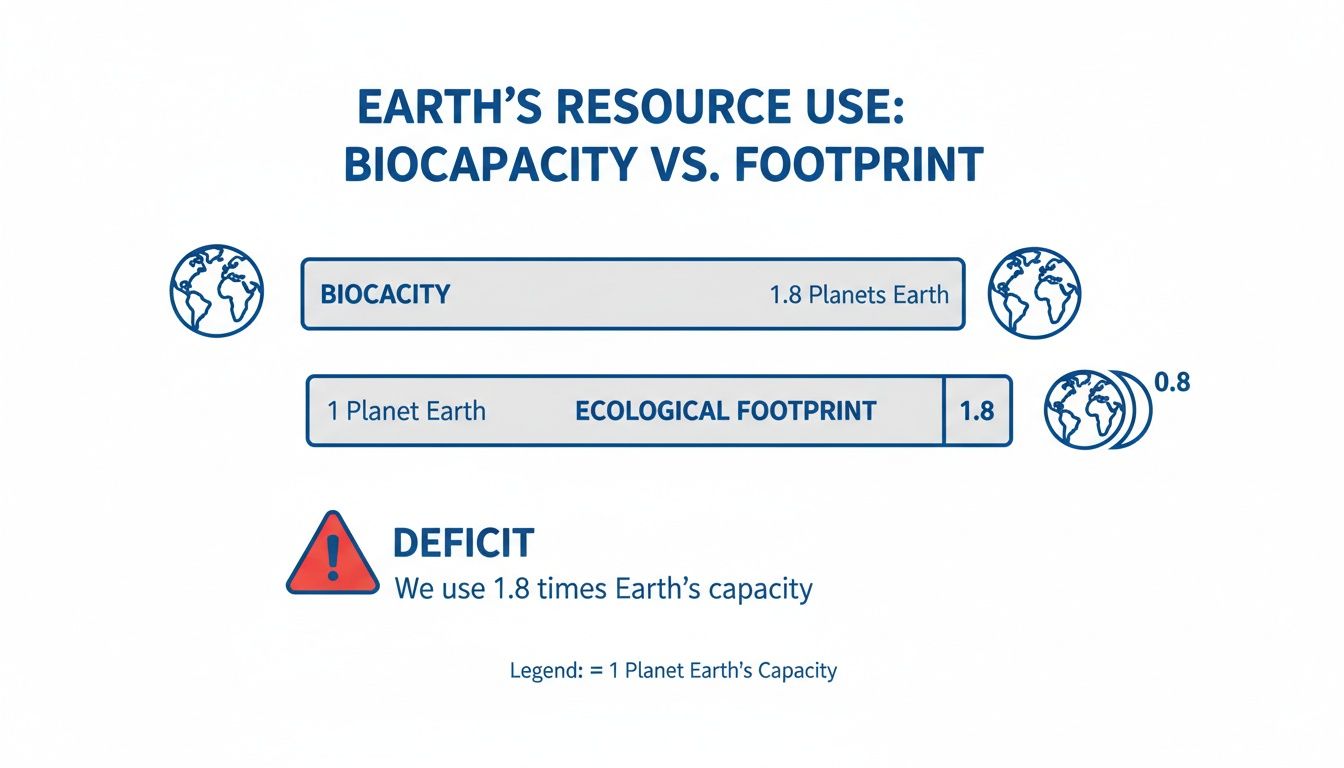
This image is a stark reminder of the deficit we’re living in, using resources far faster than our planet can regenerate them. It’s why rethinking high-impact activities like frequent flying is so critical.
Making Rail Travel Your Go-To
When I’m piecing together a complex rail journey, I always start with a single platform to keep things from getting chaotic. Using a service like Trip.com for train tickets in Europe and Asia lets me see all my options—routes, times, and prices—in one place. It makes building a multi-stop itinerary feel easy, without having to wrestle with a dozen different national rail websites.
Here’s a simple framework I use for planning a rail-first adventure:
- Map Your Route: Sketch out your main destinations on a map. Look for the natural overland corridors and think about interesting stops you could add along the way.
- Embrace Night Trains: For any leg over 6-8 hours, a night train is a game-changer. You cover serious ground while you sleep, saving precious travel time and the cost of a hotel room.
- Book Ahead: Especially for popular routes or sleeper cabins, booking a few weeks or months out usually gets you better prices and guarantees you a spot.
- Pack Light: Navigating train stations is a thousand times easier with one manageable bag. It also forces you into a more minimalist and mindful packing habit.
A Head-to-Head Comparison of Travel Emissions
To really drive home the impact of your choices, this table breaks down the emissions for a typical 500-mile (800 km) journey. It’s a simplified but powerful look at how different modes of transport stack up.
| Travel Mode | Estimated CO₂e Emissions (kg) | Key Considerations for Eco Nomads |
|---|---|---|
| Short-Haul Flight | 265 – 330 lbs (120 – 150 kg) | Highest impact by far; includes non-CO₂ warming effects at high altitude. |
| Car (solo driver) | 220 – 285 lbs (100 – 130 kg) | Inefficient for one person; emissions vary with fuel type and vehicle size. |
| Intercity Bus/Coach | 44 – 66 lbs (20 – 30 kg) | A fantastic low-carbon option, especially in regions with limited rail. |
| Electric Train | 11 – 33 lbs (5 – 15 kg) | The gold standard for low-impact travel, powered by increasingly green grids. |
The takeaway is clear: shifting just one or two journeys from the top of this list to the bottom can dramatically reduce your annual travel footprint. It’s the most direct and effective change you can make.
Choosing Stays That Heal, Not Harm
After you’ve figured out how you’re going to get somewhere, where you sleep is the second pillar of a low-impact nomad life. Your choice of accommodation is the next biggest chance you have to shrink your ecological footprint. It’s about so much more than a bed for the night; it’s a vote for businesses that are actively part of the solution.
This means learning to see past the vague “eco-friendly” marketing slogans and spotting properties genuinely committed to sustainability. Cutting our footprint isn’t just about energy—it’s also about how we use land. For travelers, this links directly to our choices on the ground. Staying in a certified eco-lodge that protects or restores its surrounding habitat helps safeguard vital forest carbon sinks.
The goal is simple: find stays that heal their local environment and community, not harm them.
A Checklist for Finding Genuinely Sustainable Properties
“Greenwashing” is rampant in the travel industry, making it tough to know who to trust. Forget the buzzwords. Instead, use this practical checklist to vet potential accommodations before you book.
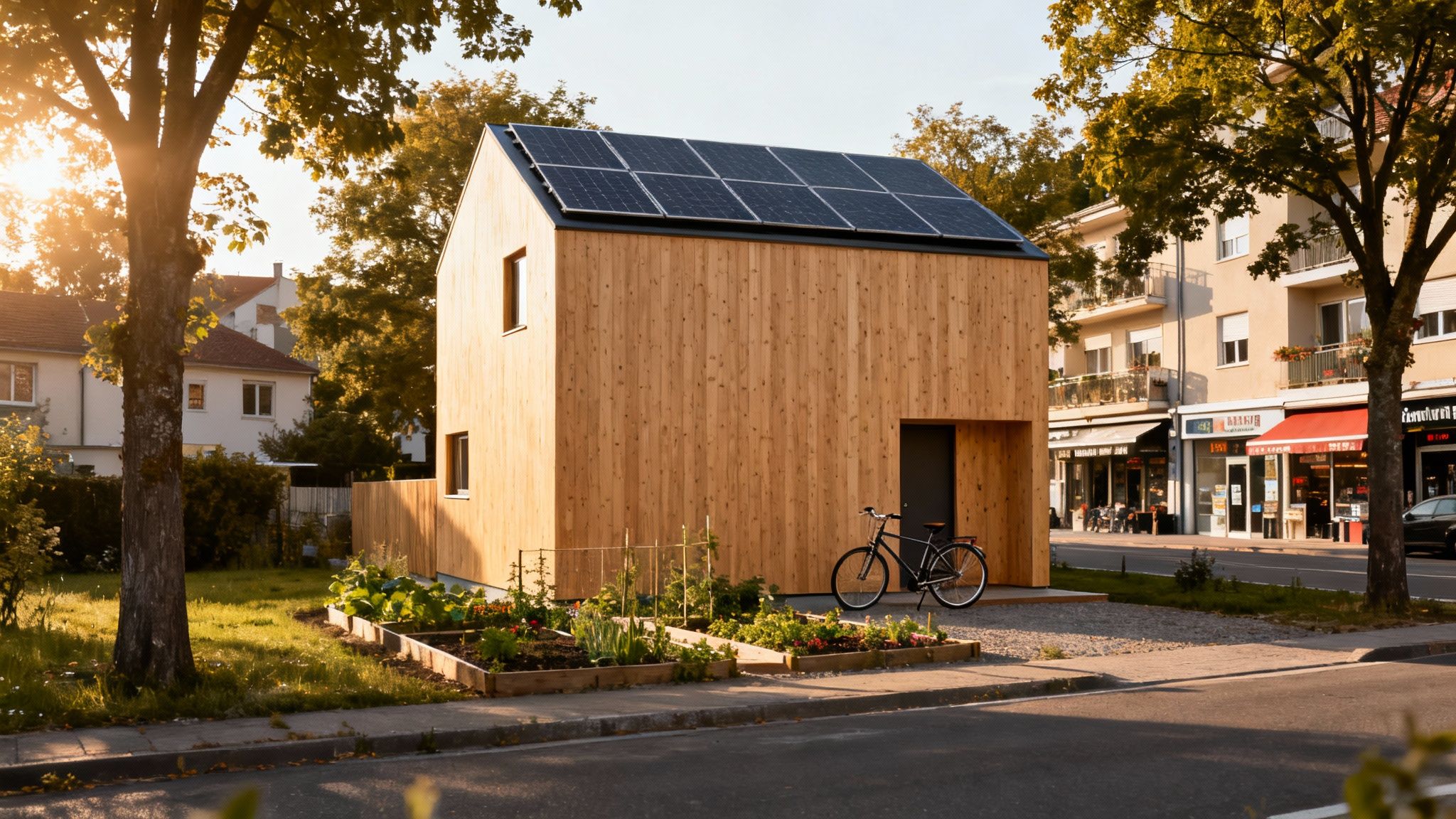
- Look for Real Certifications: Search for recognized, third-party labels. Certifications like LEED (Leadership in Energy and Environmental Design), B Corp, or Green Globe mean a property has met tough, independent standards for environmental and social performance.
- Check for Local Sourcing: Does the hotel restaurant proudly name its local farm suppliers? Are the furnishings and art made by local artisans? This shows a real commitment to the local economy and slashes transport emissions.
- Investigate Community Impact: A truly sustainable property invests in its people. Look for evidence that they hire and train staff from the local community, pay fair wages, and actively support local conservation or social projects.
- Review Their Resource Management: Dive into their website’s sustainability page. Do they mention specific actions like rainwater harvesting, solar panel arrays, comprehensive recycling, or water-saving fixtures? The more detail, the better.
If you’re looking for a curated list of places that already tick these boxes, you can check out our guide on finding truly eco-friendly lodges.
Vetted Examples of Eco-Conscious Stays
Some places just get it right. They weave sustainability into every part of the guest experience, proving that comfort and environmental responsibility can absolutely go hand-in-hand.
Take Finca Luna Nueva Lodge in Costa Rica, a pioneer in regenerative agriculture. A stay there is an immersive experience on a biodynamic farm where your food travels mere feet to your plate. Over in Chile, the geodesic domes of EcoCamp Patagonia run on 100% renewable energy and are designed to leave no trace in one of the world’s most fragile ecosystems.
These aren’t just hotels; they’re living examples of how tourism can be a powerful force for good.
The Long-Stay Nomad: The Art of the Base City
For nomads who settle in one place for weeks or months, your choice of a base city—and even your neighborhood—is a massive lever for reducing your ecological footprint. The key is to pick a location that makes a car-free lifestyle not just possible, but easy and enjoyable.
By intentionally choosing a walkable, transit-rich neighborhood for a long-term stay, you eliminate thousands of miles of potential driving emissions over the course of a year. It’s one of the most impactful, yet often overlooked, sustainable travel habits.
Opt for a central apartment in a dense, mixed-use area over a sprawling suburban rental. Living where you can walk to grocery stores, cafes, and co-working spaces drastically cuts your daily transport needs. It also helps preserve local ecosystems by reducing demand for new roads and infrastructure that fragment natural habitats.
Choosing a well-connected city with excellent public transit means you can explore the entire region without ever needing a car. This single decision—where you choose to live for a while—can define the overall impact of your stay more than almost any other factor.
Mindful Consumption on the Move
Beyond how you get there and where you stay, your ecological footprint is shaped by the small, daily choices you make on the road. Learning how do we reduce our ecological footprint means tackling these consumption habits head-on. It’s a shift from a mindset of pure convenience to one of conscious consumption, where every purchase is a chance to lighten your impact.
This starts before you even zip your bag, with a zero-waste packing strategy. The goal is simple: buy less, choose better. That means ditching the throwaway plastics for durable, multi-use gear and building a small wardrobe from ethically made pieces built to last.
Every item in your bag has an environmental story—from the resources used to create it to the waste it eventually becomes. When you pack intentionally, you take control of that story.

Zero-Waste Packing Essentials
Going zero-waste doesn’t mean you need a shopping spree for expensive new gear. It’s about smart swaps for things you already use, focusing on reusability and longevity.
- Solid Toiletries: Forget those bulky plastic bottles of shampoo and soap. Concentrated solid bars last longer, weigh less (usually 2-3 ounces or 50-80 grams per bar), and completely cut out plastic packaging.
- Reusable Containers: A good reusable water bottle and a travel coffee mug are non-negotiable. I also carry a set of lightweight bamboo cutlery and a collapsible food container to avoid single-use plastics when grabbing takeaway.
- Minimalist Wardrobe: Build your travel wardrobe around versatile, high-quality pieces made from natural fibers like merino wool or organic cotton. A capsule wardrobe of 15-20 items that can be mixed and matched is often all you need, which means less laundry and lighter luggage.
For a full checklist, our guide to building an eco-friendly travel kit for 2025 has you covered. It’s all about packing light and living large with less waste.
Shrinking Your Foodprint
What you eat is another massive piece of the puzzle. Your “foodprint” includes the land, water, and energy used to produce your meals. By prioritizing plant-based dishes and eating locally sourced food, you can dramatically cut emissions tied to industrial agriculture and long-distance transport.
Shifting your diet is an incredibly powerful lever. Studies show that a plant-based diet can slash an individual’s food-related carbon footprint by up to 73%. It’s one of the biggest personal changes you can make for the planet.
Navigating a foreign farmers’ market becomes a genuine adventure, connecting you directly with the people who grow your food. If you have a kitchen in your rental, you can plan meals to reduce food waste by only buying what you need for a few days. When you eat out, look for restaurants that highlight their local suppliers—it’s a great sign they’re committed to a shorter, more sustainable supply chain.
Conscious Consumerism Supporting Local Economies
Finally, every dollar, euro, or baht you spend is a vote for the kind of world you want to see. This is especially true when it comes to souvenirs. Instead of buying mass-produced trinkets that were probably shipped halfway across the globe, seek out local artisans and independent shops.
Buying directly from the maker ensures your money stays in the community, supports traditional crafts, and gives you a far more meaningful memento of your travels. It turns shopping from a passive act into a form of cultural exchange and economic support. This simple shift helps preserve local heritage and makes your journey a positive force in the places you visit.
It’s not just your physical travel that leaves a mark—your digital life has a footprint, too. As a remote worker, every video call, cloud sync, and email you send taps into a massive, energy-hungry global infrastructure. Answering how do we reduce our ecological footprint means we have to look at these invisible costs.
The data centers powering our online world are one of the fastest-growing sources of electricity demand. From the constant draw of our devices to the industrial-scale cooling systems needed for server farms, our digital habits have a very real-world weight.
But just like with travel and consumption, small, intentional changes can make a huge difference. Getting smart about your digital workflow and daily energy use is a powerful way to weave sustainability into every corner of your nomadic life.
Taming Your Digital Impact
Reducing your digital footprint doesn’t mean you have to disconnect. It’s about being more efficient with the resources you’re already using, which helps ease the load on the servers that support your work.
- Optimize Your Streaming: Video streaming is incredibly data-heavy. If you’re just listening to music or a podcast, switch to the audio-only option. For video, dropping from high definition (HD) to standard definition (SD) can slash data usage and energy consumption by over 80%.
- Clean Up Your Cloud: Think of your cloud storage as a digital attic that needs a clear-out. Deleting old files, chunky attachments, and redundant backups you no longer need reduces the data that servers have to store and power. It lightens the collective load.
- Streamline Your Subscriptions: Unsubscribe from all those newsletters and marketing emails you never open. Each one takes energy to send, receive, and store. Cleaning up your inbox is a simple way to trim this unnecessary digital waste.
Conserving Energy in Your Daily Life
These mindful habits can easily carry over from your digital world into your physical one. The principles of efficiency and conservation apply just as much to your temporary home as they do to your laptop. Whether you’re in an apartment for a month or a guesthouse for a week, your daily energy use adds up.
Simple adjustments to your routine can significantly cut electricity and water consumption, lowering your footprint and often your bills, too. It’s all about making conscious choices that become second nature over time.
A lot of this actually starts with the gear you choose to carry. Our guide on eco-friendly gear for digital nomads breaks down how selecting energy-efficient electronics is a crucial first step in building a lower-impact setup from the ground up.
A common energy myth is that electronics on standby use almost no power. In reality, these “vampire” loads can account for up to 10% of a household’s electricity use. Unplugging chargers and devices when they’re not in use is one of the easiest energy-saving wins out there.
Here are a few other effective habits to get into:
- Maximize Natural Light: Set up your workspace near a window during the day to avoid flicking on artificial lights. It’s better for your eyes and your energy bill.
- Unplug Everything: When you head out for the day or go to bed, make it a ritual to unplug your laptop charger, phone charger, and any other non-essential electronics.
- Shorter, Cooler Showers: Heating water is extremely energy-intensive. Cutting just a few minutes off your shower and using slightly cooler water makes a surprisingly big difference.
- Air-Dry Your Clothes: Whenever you can, skip the electric dryer. A travel clothesline is a lightweight, easy-to-pack tool that uses zero energy.
Common Questions About Lowering Your Footprint
Let’s get into the practical side of things. It’s one thing to read about big ideas like an “ecological footprint,” but it’s another to figure out what it means for your wallet, your schedule, and whether your choices actually make a dent.
This is where the theory hits the road. Below are some honest answers to the questions that come up most often when nomads start thinking about traveling with a lighter impact.
Is This Going to Be More Expensive or Complicated?
One of the biggest myths holding people back is the idea that sustainable travel is automatically pricey and difficult. In reality, a lot of eco-conscious habits are actually kinder to your budget and lead to a far more relaxed way of seeing the world.
Think about it: slow travel—staying in one place for a few weeks or months—doesn’t just slash your transport emissions. It also unlocks huge weekly or monthly discounts on accommodations that you’d never see with a fast-paced itinerary.
The same goes for food. Shopping at local markets and cooking a few of your own meals is almost always cheaper and healthier than eating out three times a day. It’s about shifting your mindset from a packed checklist to a richer experience. The most sustainable choices often double as the most intentional and affordable ones.
Where Should I Even Start? I’m Overwhelmed.
Feeling overwhelmed is completely normal. The key is to forget about doing everything perfectly and instead focus on the areas that have the biggest impact. For nearly every traveler, that conversation starts and ends with transportation.
Here’s a simple way to prioritize your energy for the biggest wins:
- Top Priority: How You Move. Your single biggest lever is transportation. Swapping just one long-haul flight for an overland journey by train can save more carbon than a whole year of perfect recycling. Start here.
- Second Priority: Where You Stay. Choosing certified eco-lodges or just a centrally located apartment in a walkable city makes a huge difference. It cuts down on resource use and your daily need for taxis or buses.
- Third Priority: What You Eat. Reducing how much meat and dairy you eat, especially beef, has a massive impact on your “foodprint.” It directly lowers the strain on land and water resources.
- Fourth Priority: Your Daily Habits. Things like carrying a reusable water bottle, conserving electricity, and packing light all add up. While each action is small, together they reinforce a mindful travel habit.
Focusing on the big wins first stops you from getting bogged down in tiny decisions and ensures your efforts are making a real, measurable difference.
Does My One Small Choice Actually Matter?
It’s easy to feel like your individual actions are just a drop in the ocean. But the answer is an emphatic yes, they absolutely matter. Every sustainable choice you make sends a powerful signal to the travel industry, creating real demand for more responsible options.
When more travelers book trains instead of short-haul flights, it puts direct pressure on airlines to invest in sustainable aviation fuels. When eco-lodges are consistently booked out, it incentivizes other hotels to get certified and adopt greener practices.
Your spending is a vote for the kind of travel industry you want to see.
Beyond that, your actions create a ripple effect. When you share stories about your overland adventures or your favorite zero-waste travel gear, you help normalize these choices. It helps shift the collective mindset from “this is a sacrifice” to “this is a better, more rewarding way to explore the world.”
Ecological Footprint FAQs
1) What is an ecological footprint?
Answer: It’s the total amount of biologically productive land and water needed to produce all the resources you consume and absorb the waste you generate. It’s a much broader measure than just a carbon footprint.
2) Why is reducing our ecological footprint important for travelers?
Travel is very resource-intensive, especially when it involves flights and high consumption. As travelers who love the planet, reducing our impact helps preserve the beautiful places we visit for future generations.
3) Can one person really make a difference?
Absolutely. Individual actions create collective impact. Your choices send a clear message to the travel industry about the demand for sustainable options, encouraging businesses to change their practices.
4) What’s the best first step to take?
Measure your current footprint using a tool like the Global Footprint Network’s calculator. Understanding where your biggest impacts are (flights, diet, etc.) helps you focus your efforts where they’ll matter most.
5) What is “ecological overshoot”?
It means humanity is using nature’s resources faster than ecosystems can regenerate them. Currently, we are using the equivalent of 1.8 Earths, creating an ecological deficit.
6) What is the single biggest change I can make to my travel habits?
For most people, it’s flying less. Swapping even one medium- or long-haul flight for overland travel (like a train) drastically cuts your personal emissions for the year.
7) How can I find genuinely sustainable accommodations?
Look for official third-party certifications like LEED, B Corp, or Green Globe. Also, check their website for specific actions they take, such as using renewable energy, sourcing food locally, and supporting community projects.
8) Is a “rail-first” approach practical for long-term travel?
Yes, especially in regions with extensive networks like Europe and parts of Asia. Night trains, in particular, are incredibly efficient for covering long distances, saving you time and the cost of a hotel.
9) How does choosing a “base city” affect my footprint?
A lot! Choosing a walkable city with great public transit for a long-term stay can completely eliminate the need for a car, which is a huge reduction in your day-to-day footprint.
10) Does packing light really help the environment?
Yes, in a few ways. Lighter luggage on planes means slightly less fuel is burned. More importantly, it encourages a minimalist mindset, leading you to consume less and rely on versatile, reusable items instead of disposables.
11) Is it more expensive to travel sustainably?
Not necessarily. While some eco-lodges can be pricey, habits like slow travel, taking trains instead of planes, and cooking your own meals from local markets often save you a lot of money.
12) Are carbon offsets a good solution?
Offsets can be a useful tool, but they should be a last resort after you’ve done everything you can to reduce your emissions first. Focus on reducing your impact directly, then offset what you can’t avoid through a reputable program.
13) How much money can I save by taking a night train?
It varies, but you typically save the cost of one night’s accommodation (e.g., $50-$150 USD) and a full day of travel time. When you factor both in, it’s often a great value.
14) Is it hard to eat a plant-based diet while traveling?
It’s getting easier all the time! Apps like HappyCow can help you find vegetarian and vegan options worldwide. Focusing on local markets and cooking some of your own meals also gives you more control.
15) What’s the best way to handle money sustainably?
Prioritize spending your money at small, locally-owned businesses, restaurants, and artisan shops. This ensures your money directly supports the local community rather than large international corporations.
16) What is “greenwashing” and how can I spot it?
Greenwashing is when a company uses vague marketing terms like “eco-friendly” or “green” without any real proof. Spot it by looking for specifics: do they have certifications? Do they publish data on their energy use? If it’s all buzzwords and no substance, be skeptical.
17) How can I reduce plastic waste on the road?
The essentials are a reusable water bottle (with a filter if needed), a reusable coffee cup, a set of travel cutlery, and solid toiletries (shampoo bars, etc.). These simple swaps can eliminate a huge amount of single-use plastic.
18) Does my digital footprint really matter?
Yes. Data centers that power the internet and cloud services consume enormous amounts of energy. Habits like streaming in standard definition, cleaning out your cloud storage, and unsubscribing from junk emails collectively reduce this energy demand.
19) What’s the difference between eco-tourism and sustainable tourism?
Eco-tourism typically focuses on travel to natural areas with an emphasis on conservation and education. Sustainable tourism is a broader concept that applies to all types of travel, aiming to minimize negative impacts and maximize positive benefits for the environment, economy, and local communities.
20) What is a zero-waste travel kit?
It’s a small collection of reusable items designed to help you avoid single-use products while traveling. Common items include a water bottle, cutlery, a cloth napkin, solid toiletries, and reusable bags or containers for food.
Join the Sustainable Work Movement
Want more rail-first itineraries, low-impact packing systems, and walkable base-city ideas?
Explore Eco Nomad Travel
📚 Core Guides
🧭 Planning & Logistics
🗺️ Destinations & Seasons
Jeremy Jarvis — founder of Eco Nomad Travel, sustainable travel writer, and advocate for regenerative tourism. His work focuses on low-impact mobility, eco-friendly digital nomad life, and climate-positive travel.
Legal
Affiliate DisclaimerPrivacy Policy
Terms of Service
Image & Media Notice
Cookie Policy
Contact
Affiliate Disclosure: Some links on Eco Nomad Travel are affiliate links, meaning we may earn a small commission at no extra cost to you. This supports our mission to inspire responsible and low-impact travel worldwide.
Connect
✅ Trusted Official Sources
Plan smarter eco trips
Try our free Sustainable Travel Tools for Digital Nomads – carbon calculator, train vs plane comparator, and more.
Open Tools Hub