
Deciding how to get from Seoul to Jeju Island really boils down to two paths: a quick one-hour flight or a much slower, more scenic ferry journey. This guide will help you understand the best travel options.
For anyone trying to travel thoughtfully, this is the classic trade-off between speed and sustainability. Flying is undeniably fast and convenient. The ferry, on the other hand, is a lower-carbon alternative that turns the travel day itself into part of the adventure.
This guide will lay out the real-world differences in travel time, cost, and carbon footprint for both. We’ll get into the actual logistics of each route, helping you pick the one that fits your travel style and personal values. As big believers in smarter, lower-impact journeys, we think understanding these trade-offs is everything.
Key Takeaways
- Fastest Route: Flying from Seoul’s Gimpo Airport (GMP) is the quickest option, with a flight time of about one hour.
- Most Eco-Friendly: The train-and-ferry combination is the most sustainable choice, cutting carbon emissions by up to 75% compared to flying.
- Best for Budgets: The ferry is often cheaper, especially when you factor in generous luggage allowances, avoiding extra airline fees.
- Best for Luggage: Ferries offer ample space for luggage at no extra cost, perfect for digital nomads and long-term travelers.
- Stay Connected: Order an eSIM from a provider like Airalo before you go so you have data as soon as you arrive.
- Compare Prices: Use a tool like Aviasales or Trip.com to find the best deals on flights and travel packages.
Editor’s Pick: The Slow Travel Special
Our favorite route is the KTX train from Seoul down to Mokpo, followed by the ferry to Jeju. It strikes a beautiful balance between scenic travel, reasonable cost (around $75 USD or ₩100,000 KRW total), and a much lower carbon footprint. This combo is perfect for travelers who want to experience the journey, not just race to the destination.
Our goal is to give you the complete picture, from navigating airports and ferry terminals to booking the right ticket for your needs. This practical approach is central to the whole philosophy behind what is sustainable travel, which is all about making informed choices that shrink your environmental impact while making the travel experience richer.
How to Get from Seoul to Jeju Island: At a Glance
Here’s a quick comparison of flying versus taking the ferry from the Seoul area to Jeju Island, focusing on the key factors for eco-conscious travelers.
| Travel Mode | Total Travel Time (approx.) | Average One-Way Cost (USD) | Estimated CO2 Emissions (per person, one-way) |
|---|---|---|---|
| Flight | 4–5 hours (door-to-door) | $40–$100 | ~220 lbs (~100 kg) |
| Ferry | 7–16 hours (door-to-door) | $35–$70 | ~55 lbs (~25 kg) |
While the numbers vary by season and carrier, the pattern is clear: flying saves a lot of time, but the ferry offers a significant win for both your wallet and your carbon budget.
Comparing Your Travel Options
Choosing your path from Seoul to Jeju involves weighing speed, cost, and your carbon footprint. Here’s a visual breakdown of how flying and taking the ferry really stack up against each other.
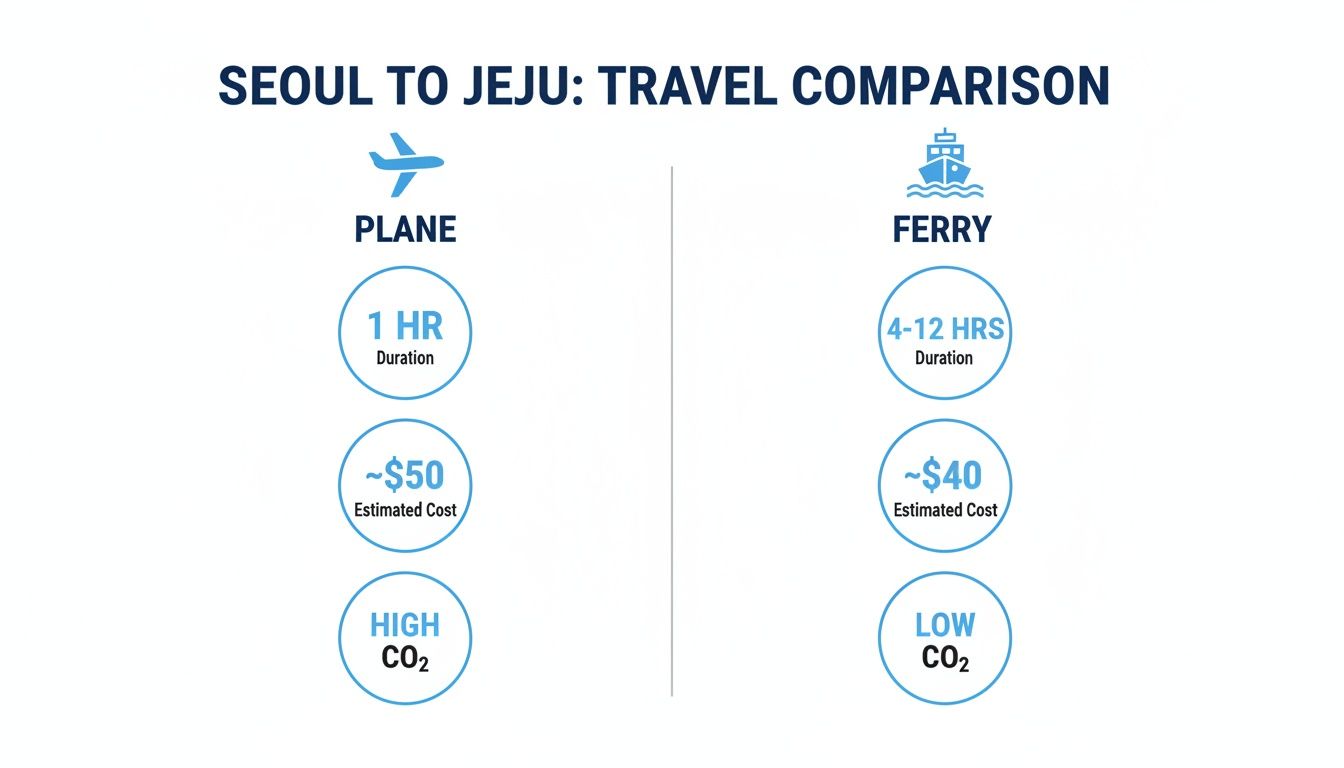
The chart makes it obvious: while a flight gets you there in a fraction of the time, the ferry is a substantially lower-carbon and more budget-friendly way to make the journey.
Flying to Jeju: The Fast but Carbon-Heavy Choice
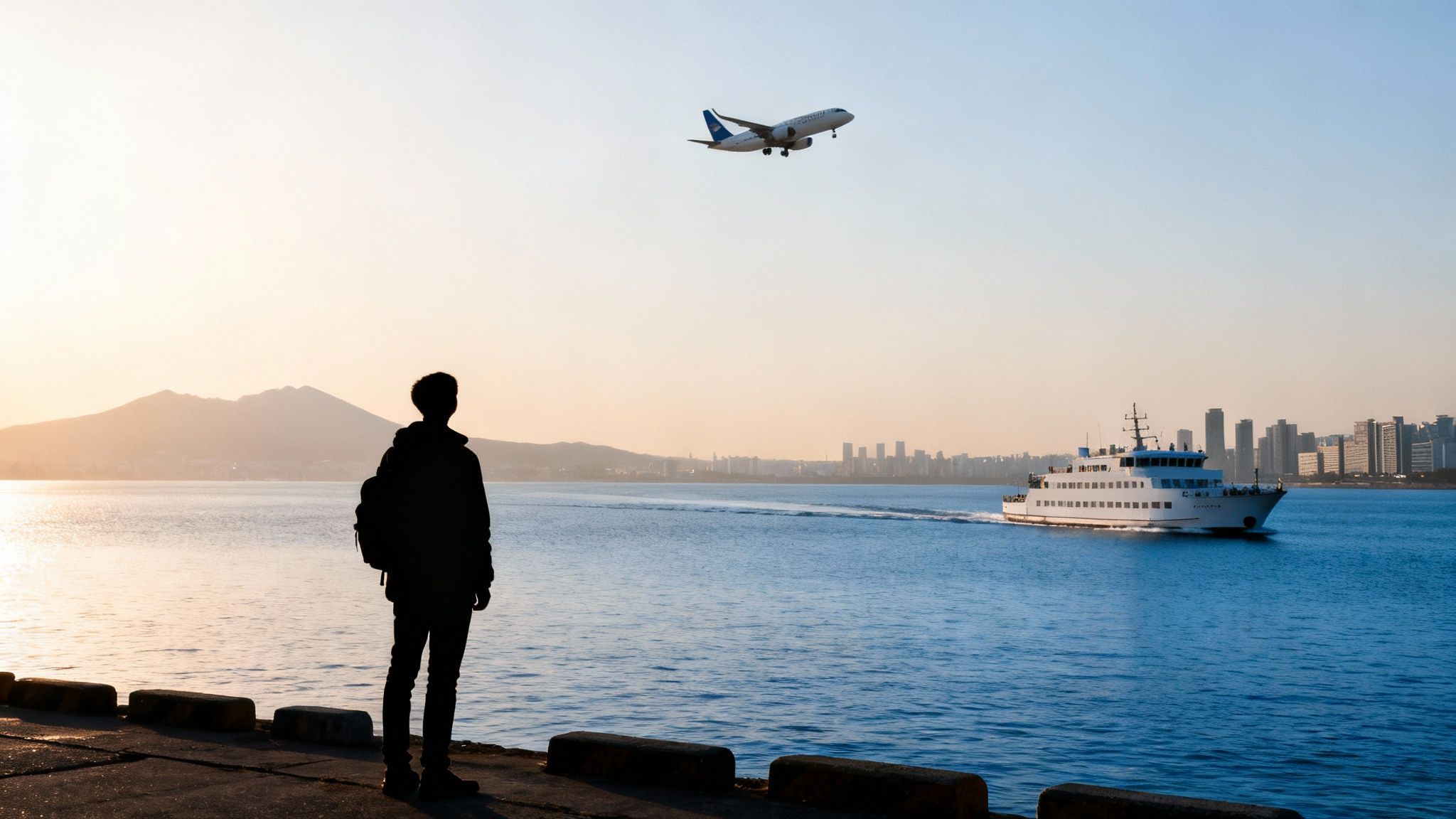
If you’re pressed for time, flying is the undisputed king for getting from Seoul to Jeju Island. The journey is incredibly fast—you’re in the air for just over an hour—making it the go-to choice for both Koreans on a weekend break and international travelers on a tight schedule.
Most domestic flights to Jeju leave from Seoul’s Gimpo International Airport (GMP). This is a key detail: unlike Incheon, which handles the bulk of long-haul international traffic, Gimpo is the main hub for domestic travel. It’s also much closer to the city center and conveniently hooked into Seoul’s excellent subway system, which makes getting there from neighborhoods like Hongdae or Myeongdong way easier and cheaper.
Once you’re at Gimpo, the domestic terminal is compact and refreshingly simple to navigate. The route is dominated by a handful of low-cost carriers like Jeju Air, T’way Air, and Jin Air, which keeps the market competitive. Translation? You can often snag some seriously cheap fares if you book ahead.
Navigating Airlines and Airports
To find the best deals without opening a dozen tabs, a flight aggregator is your best friend. Platforms like Aviasales or Trip.com let you compare prices across all the major players in a single search. A one-way ticket usually runs somewhere between $35 and $70 USD (₩50,000 to ₩100,000 KRW), but that price can swing wildly depending on the season, public holidays, and how far in advance you book.
A word of warning: pack light. Korean low-cost carriers are famously strict about luggage. They typically allow one small personal item and a carry-on of up to 22 pounds (10 kg). Checked baggage fees can add a nasty surprise to your total cost, which is a real consideration for digital nomads who tend to travel with a bit more gear.
As soon as you touch down at Jeju International Airport (CJU), you’ll want to get connected. An eSIM from a provider like Airalo is a lifesaver here. You can get it set up before you even leave Seoul and have data the second you land—perfect for hailing a taxi or figuring out the local bus routes.
The Environmental Cost of Convenience
While flying offers speed you just can’t beat, its environmental impact is impossible to ignore. The Seoul-to-Jeju route is one of the busiest in the entire world, and that traffic comes with a massive carbon footprint. In fact, over 90% of people traveling between the two choose to fly, which adds up to a staggering amount of emissions.
A roundtrip flight between Seoul and Jeju pumps out roughly 0.25 to 0.4 metric tons (550 to 880 pounds) of CO2 per passenger. That’s a world away from the ferry, which emits less than 0.05 metric tons (110 pounds) for the same trip. You can find more context on Jeju’s travel patterns on the-independent.com.
This huge difference really gets to the heart of the trade-off you’re making. For any sustainable traveler, that high carbon cost is a serious deal. And while offsetting is always an option, the best move is to reduce emissions at the source whenever you can. Understanding these numbers is the first step, and you can dive deeper into effective strategies in our guide on how to travel carbon neutral.
Ultimately, flying is a practical solution if you’re short on time. But for eco-conscious nomads, the high emissions make it a choice that requires some real thought and a commitment to balancing the impact.

The Ferry to Jeju: A Guide to the Slow Travel Route
For anyone who believes the journey is just as important as the destination, figuring out how to get from Seoul to Jeju Island quickly leads to one clear answer: the ferry. This is the gold standard for slow, sustainable travel, swapping the carbon intensity of a flight for a scenic and genuinely relaxing sea voyage. It’s an experience that forces you to unplug, slow down, and watch the South Korean coastline gently fade into the horizon.
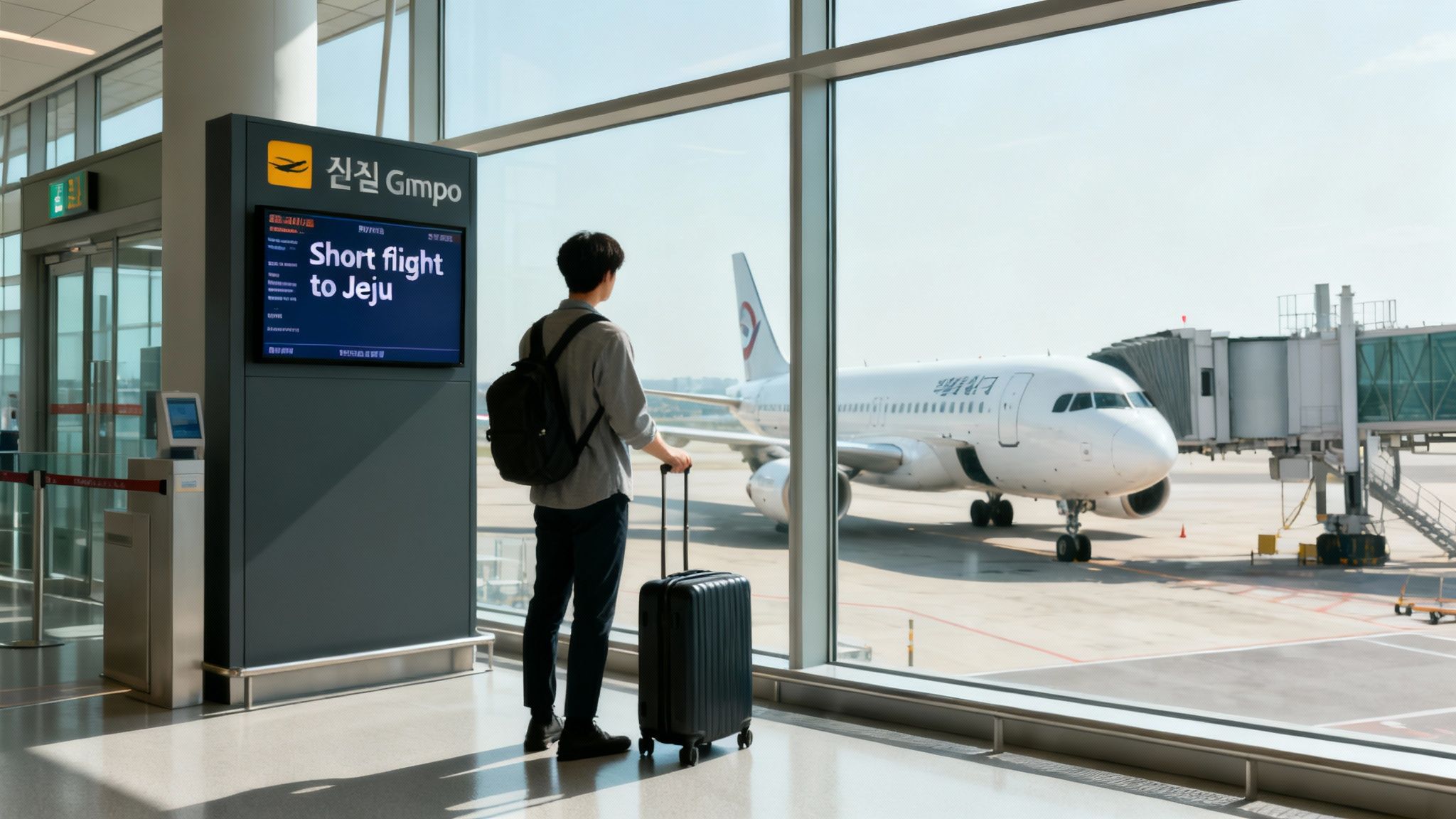
Your adventure begins not at the coast, but on South Korea’s excellent high-speed rail network. From Seoul, you’ll catch the KTX train to one of two main port cities: Mokpo or Incheon. The KTX ride itself is a pleasure—smooth, quiet, and efficient, offering a rolling view of the country’s varied landscapes.
The train from Seoul to Mokpo takes roughly 2.5 to 3 hours, with a one-way ticket usually costing around $40 USD (₩55,000 KRW). Getting to Incheon’s port is much quicker, as it’s already part of the greater Seoul metropolitan area. Both routes are simple to navigate, and you can easily book train tickets online ahead of time.
Mokpo vs. Incheon: Comparing the Ferry Experiences
The port you choose will completely shape your ferry experience. Mokpo is the most popular and practical route for most travelers coming from Seoul. Incheon, on the other hand, offers a longer, more immersive overnight journey.
Here’s how they break down:
- From Mokpo (The Shorter Route): This is the faster sea crossing, clocking in at 4 to 5 hours. Ferries from Mokpo are modern and comfortable, equipped with amenities like convenience stores, cafes, and plenty of seating. It’s a straightforward day trip that lands you on Jeju with the whole evening ahead of you.
- From Incheon (The Overnight Route): The voyage from Incheon is a true slow-travel commitment, lasting around 13 to 15 hours. These are larger vessels that feel more like mini cruise ships, offering private cabins, restaurants, and lounges. It’s a fantastic choice if you want to save on a night’s accommodation and wake up refreshed on the island.
Cost and Carbon: A Winning Combination
When you run the numbers, the train-plus-ferry option is often surprisingly competitive with flying. A standard economy ferry ticket from Mokpo to Jeju usually runs between $30 and $45 USD (₩40,000 to ₩60,000 KRW). This puts your total one-way cost (train + ferry) at around $70–$85 USD, which frequently beats last-minute flight prices, especially once you add in airline baggage fees.
The real win, though, is for the planet.
Opting for the ferry over a flight can slash your travel-related carbon emissions for this leg of the journey by over 80%. This massive reduction makes it the undisputed choice for any traveler serious about minimizing their impact. This principle is a cornerstone of sustainable travel, a concept we dive into in our guide to low-impact island travel.
For digital nomads and long-term travelers, the ferry isn’t just a sustainable choice—it’s a practical one. Unlike the strict 22-pound (10 kg) carry-on limits on low-cost airlines, ferries have incredibly generous luggage allowances at no extra cost. You can bring all your gear without the stress or expense of excess baggage fees.
Ultimately, the journey by sea is more than just transport. It’s a chance to embrace a different pace, turning a simple transit day into a memorable part of your Korean adventure where you can work, read, or just watch the waves go by.
Booking Your Trip and Seasonal Tips
Smart planning is essential when you’re figuring out how to get from Seoul to Jeju Island. The timing of your trip can have a huge impact on your budget, your experience, and even your environmental footprint. It’s always a good idea to secure plane or ferry tickets in advance, but it becomes non-negotiable during South Korea’s major holidays.
For holidays like Chuseok (Korean Thanksgiving) in the fall and Seollal (Lunar New Year) in late winter, tickets sell out weeks—sometimes months—ahead of time, and prices go through the roof. If you have to travel then, book early.
For digital nomads and anyone with a flexible schedule, the shoulder seasons are the sweet spot. April and May bring pleasant spring weather and fields of blooming canola flowers, while September and October offer crisp air and beautiful autumn foliage. Traveling during these months means smaller crowds, better prices on transport and accommodation, and a much lighter strain on Jeju’s natural resources.
Booking platforms like Aviasales for flights or Trip.com for both flights and ferry packages can help you compare all your options in one place. These tools are invaluable for spotting deals, especially if your dates aren’t set in stone.
Key Takeaways for Smart Booking
- Book Early for Holidays: For major holidays like Chuseok and Seollal, lock in your tickets 2-3 months in advance to avoid sold-out routes and painful price hikes.
- Embrace the Shoulder Seasons: Aim for April-May or September-October. You’ll get the best mix of good weather, lower costs, and fewer tourists.
- Compare Total Costs: When weighing flights against ferries, don’t forget to factor in airport transfers and baggage fees to see the true price difference.
- Pack for the Season: Jeju’s weather can be unpredictable. You’ll want layers for spring and fall, while summer is hot and humid, and winter can be surprisingly cold and windy.
- Stay Connected Seamlessly: Before you travel, grab an eSIM from a provider like Airalo. It ensures you have reliable data the second you arrive on the island.
Luggage and Connectivity Considerations
One of the biggest practical differences between flying and taking the ferry comes down to luggage. Korean low-cost airlines are famously strict, often limiting carry-on bags to just 22 pounds (10 kg). This can be a real headache for digital nomads traveling with laptops, cameras, and other gear, as excess baggage fees add a hefty hidden cost.
Ferries, on the other hand, have far more generous luggage allowances. This makes them the clear winner for anyone traveling heavy.
Seasonal visitor data for Jeju really drives this point home. On a peak July weekend, the island can see over 216,000 daily visitors, a massive spike fueled almost entirely by flights from Seoul. By choosing to travel in a shoulder season like October, when daily visitors drop to around 118,000, you’re directly contributing to a more balanced, sustainable tourism model. You can understand the data behind sustainable planning to see how much these patterns matter.
Finally, don’t overlook connectivity. Having a reliable data connection from the moment you land is crucial for navigating, booking a local bus, or finding a café to work from. An eSIM from a provider like Yesim or Saily is a simple fix you can set up before your trip even begins.
Your Seoul to Jeju Questions, Answered
Planning a new route always brings up a few last-minute questions. Below are some quick, practical answers to the most common things travelers ask when sorting out the final details of their Seoul-to-Jeju journey.
What Is the Absolute Cheapest Way to Get from Seoul to Jeju?
If you’re looking purely at the ticket price, booking a flight on a low-cost carrier well in advance is almost always the cheapest way to go. You can snag some incredible deals, especially during sales. A flight aggregator like Aviasales is perfect for comparing different airlines and dates at a glance.
But hold on—it’s not that simple. Once you add the cost of getting to the airport and paying for checked bags, the Mokpo ferry paired with a slow train ticket can sometimes work out to be the more budget-friendly option overall. Always do the math on the total door-to-door cost before you book.
I’m a Digital Nomad with a Lot of Luggage—What’s Best?
The ferry, without a doubt. This is a clear win for anyone traveling with more than a carry-on.
Domestic Korean airlines are notoriously strict with baggage allowances, often capping carry-ons around 22 pounds (10 kilograms). Those excess baggage fees can add up shockingly fast, turning a cheap flight into an expensive headache.
Ferries, on the other hand, have incredibly generous luggage allowances, usually at no extra cost. This makes the entire journey far more relaxed and affordable for long-term travelers, remote workers, or anyone carrying extra gear.
Is It Better to Fly Directly to Jeju from My Home Country?
For most travelers coming from North America or Europe, the answer is no. It’s far more practical to fly into Seoul’s massive Incheon International Airport (ICN) first and then catch a separate domestic flight to Jeju.
Jeju’s international airport has a limited number of direct long-haul flights; its routes are mostly from nearby Asian countries.
Taking this two-step approach also gives you the perfect excuse to explore Seoul for a few days before heading to the island—an easy and rewarding way to break up a long travel day.
How Can I Explore Jeju Island Without a Car?
You’d be surprised how accessible Jeju is without a car. The island has a fantastic public bus system that connects most major sights and towns. For hikers and slow travelers, the famous Jeju Olle Trail offers stunning coastal walks that are best experienced on foot.
When you need a more direct ride, ride-hailing apps like Kakao T are readily available and easy to use. By choosing a walkable base, like somewhere in Seogwipo, you can dramatically reduce your need for transport and seriously lower your travel footprint. Finding ways to travel without a car is a huge part of learning how to lower your ecological footprint on the road.
As Jeju’s tourism bounces back, air travel’s dominance is stark. Flights from Seoul’s airports now account for over 95% of all arrivals, with more than 200 Gimpo-Jeju flights every week. In contrast, ferries capture less than 5% of the market share. The emissions gap is massive: planes produce 150-250g of CO2 per passenger-kilometer, while ferries average just 20-50g. This makes sea travel up to five times greener—a powerful reason to consider the slow route. You can read more about Jeju’s tourism trends and see why these choices matter.
This article was fact-checked using sustainability data from the World Green Building Council, the Global Ecotourism Network, and peer-reviewed architecture studies. All partner links are vetted for compliance with sustainable business certifications.
Join the Sustainable Work Movement
Want more rail-first itineraries, low-impact packing systems, and walkable base-city ideas?
Explore Eco Nomad Travel
📚 Core Guides
🧭 Planning & Logistics
🗺️ Destinations & Seasons
Jeremy Jarvis — founder of Eco Nomad Travel, sustainable travel writer, and advocate for regenerative tourism. His work focuses on low-impact mobility, eco-friendly digital nomad life, and climate-positive travel.
Legal
Affiliate DisclaimerPrivacy Policy
Terms of Service
Image & Media Notice
Cookie Policy
Contact
Affiliate Disclosure: Some links on Eco Nomad Travel are affiliate links, meaning we may earn a small commission at no extra cost to you. This supports our mission to inspire responsible and low-impact travel worldwide.
Connect
✅ Trusted Official Sources
Plan smarter eco trips
Try our free Sustainable Travel Tools for Digital Nomads – carbon calculator, train vs plane comparator, and more.
Open Tools Hub