

Figuring out how to go to Jeju Island from Seoul is your first real step into a proper South Korean adventure. Most people just default to the quick, one-hour flight—and it’s easy to see why. But for anyone traveling with a bit more intention, there are greener, more scenic alternatives that turn the journey itself into part of the experience.
This guide breaks down every option, helping you travel more consciously without getting bogged down in the details.
The trip from Seoul’s kinetic urban energy to Jeju’s volcanic calm offers a clear choice: speed versus experience. It’s a classic travel dilemma, a balance of time, cost, and environmental impact. Your two main paths are flying directly or pairing a high-speed train with a slow, relaxing ferry ride.
Each route offers a completely different feel. Flying is undeniably efficient, perfect if you’re on a tight schedule.
But the train-and-ferry combo? That’s different. It transforms a simple transfer into a memorable part of your trip. Moreover, it lets you watch South Korea’s beautiful landscapes unfold while seriously cutting your carbon footprint. It’s a move that aligns perfectly with the core ideas of sustainable travel and tourism.
This choice matters more than you might think, especially with Jeju’s massive popularity. In 2023, the island welcomed a staggering 13.34 million tourists, with the vast majority flying in from the Seoul area. During peak holidays, there can be over 1,600 domestic flights. Consequently, the collective impact is huge, making a mindful travel choice all the more meaningful. For more on Jeju’s tourism trends, you can explore the data on Invest Korea.
How To Go To Jeju Island From Seoul: A Comparison
To make your decision easier, let’s lay out the key differences between flying and taking the ferry. This table gives you a quick snapshot of what to expect from each route.
H3: Comparing Your Travel Options at a Glance
| Travel Mode | Total Journey Time | Estimated One-Way Cost (USD/KRW) | Carbon Footprint (Approx. CO2e) |
|---|---|---|---|
| Direct Flight | 3–4 hours (including transfers) | $35–$90 (₩45,000–₩115,000) | ~220 lbs (~100 kg) |
| Train + Ferry | 7–11 hours (including transfers) | $55–$120 (₩70,000–₩155,000) | ~44 lbs (~20 kg) |
While the ferry journey takes longer, the trade-off is a significantly smaller environmental impact and a much richer travel experience. Flying is fast and often cheap, but the overland-and-sea route gives you a real sense of distance and discovery.
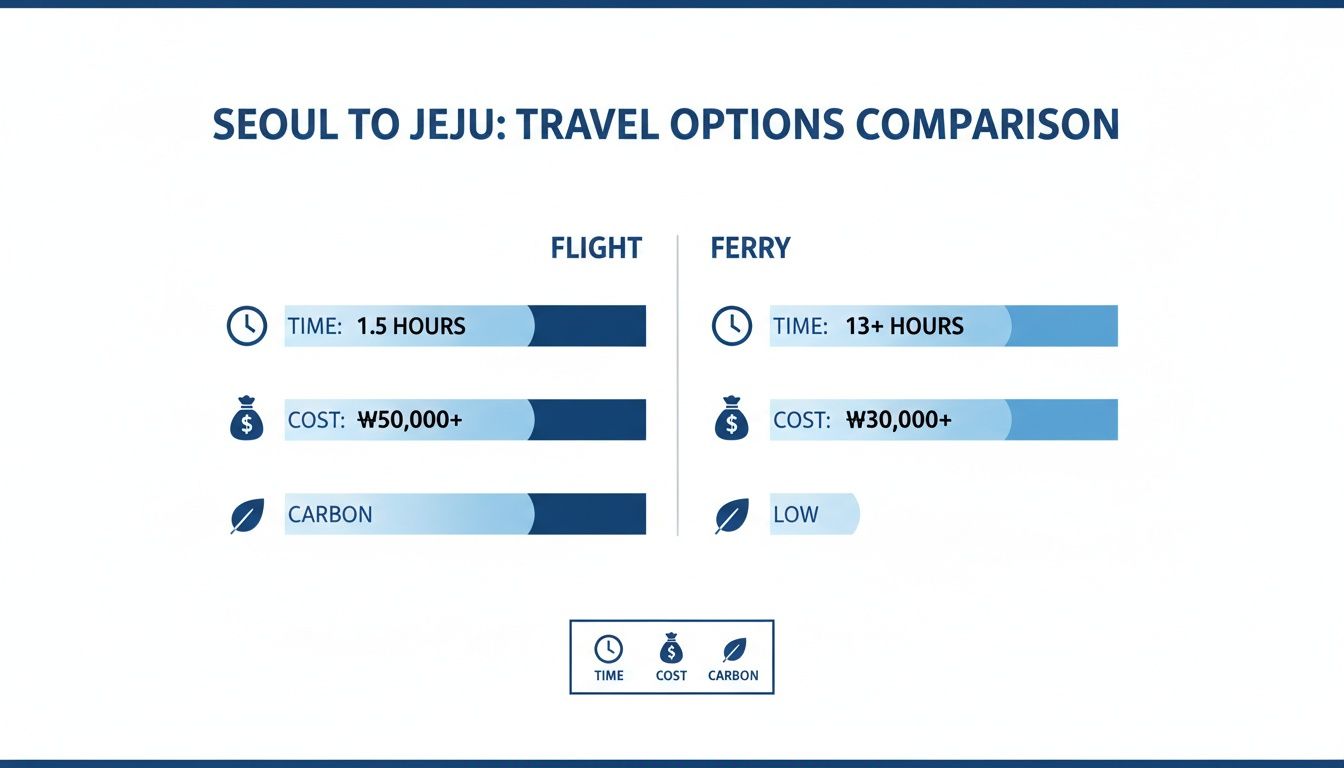
Whether you’re a digital nomad embracing slow travel or just want a low-impact getaway, you’ll find everything needed to plan your trip in the sections below. We’ll break down each route in detail to make your decision as easy and informed as possible.
Flying to Jeju: The Quickest and Most Common Route
When your main goal is to get to Jeju’s volcanic shores as fast as possible, flying is the clear winner. For most travelers figuring out how to go to Jeju Island from Seoul, this is the default choice. The Seoul-Jeju air corridor is one of the busiest on the planet, which means you’ll have an almost overwhelming number of flights to pick from.
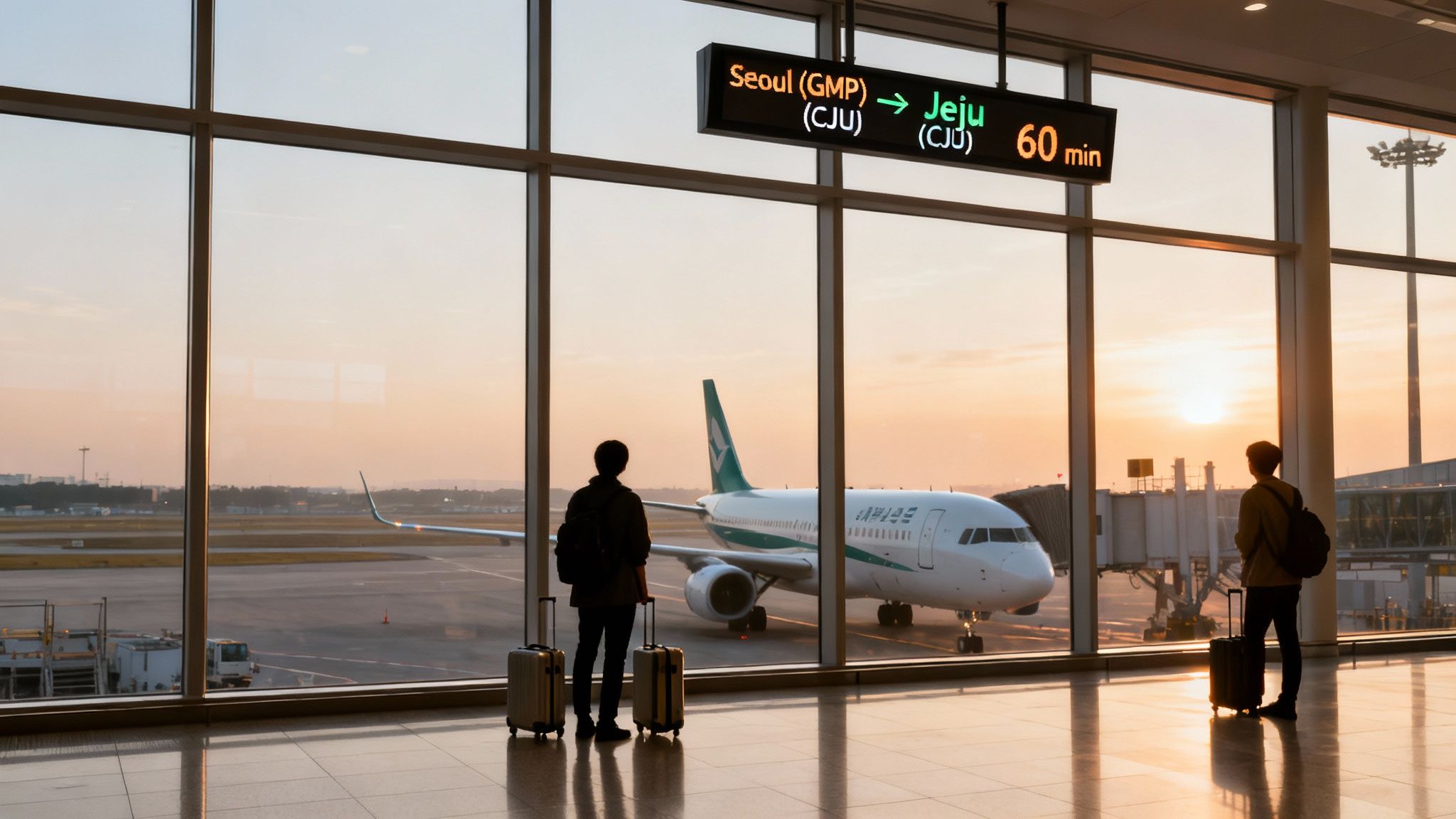
Your journey will start at one of two airports in the Seoul area. Gimpo International Airport (GMP) is much closer to the city center and handles the vast majority of domestic flights, making it the most convenient option by far. The other choice is Incheon International Airport (ICN), the massive international hub, which also has a handful of domestic flights to Jeju.
Honestly, choosing between them usually comes down to simple logistics. If you’re already in Seoul, Gimpo is almost always the smarter pick. But if you’re flying into South Korea and connecting directly to Jeju, a flight from Incheon might save you a long, cross-city transfer.
Airlines and Booking Your Flight
You’ll find a great mix of airlines on this route. Full-service carriers like Korean Air and Asiana Airlines offer a more premium experience, but the real workhorses are the low-cost carriers (LCCs). Airlines like Jeju Air, Jin Air, T’way Air, and Air Seoul run constant, competitive flights all day long.
Actual time in the air is a quick 60 to 70 minutes.
Prices can swing wildly depending on the season and how far out you book. During the off-season, you can sometimes snag one-way tickets for as little as $30 USD (around ₩40,000 KRW). In peak travel times like summer or major Korean holidays, those same tickets can easily jump above $100 USD (around ₩135,000 KRW).
To find the best deals, platforms like Aviasales or Trip.com are excellent for comparing prices across all the airlines at once. Just keep an eye on baggage allowances with the LCCs—they often charge extra for checked bags, so be sure to factor that into your total cost.
Getting to the Airport and The Environmental Impact
Getting to either airport from central Seoul is refreshingly simple. From popular areas like Myeongdong or Hongdae, the AREX (Airport Railroad Express) train is your best bet for a good balance of speed and cost. An airport limousine bus or a taxi are also reliable options, especially if you’re wrestling with heavy luggage.
But here’s the trade-off: the convenience of flying comes at a significant environmental cost. Air travel has a much higher carbon footprint than taking the train and ferry. If you want to see the actual numbers, you can plug the routes into a travel carbon emissions calculator and see the difference for yourself.
The sheer volume of flights really highlights the impact. Over 90% of visitors arrive on Jeju by air. The hourly flights from Gimpo to Jeju alone bring in 70% of the island’s 13 million annual visitors. For eco-conscious travelers, this data is a stark reminder of why it’s worth considering the slower, lower-impact journeys when your schedule allows. You can dig into more of Jeju’s visitor stats by exploring this tourism report.
Staying Connected on Arrival
Once you land at Jeju International Airport (CJU), you’ll want to get online to navigate the island. Instead of messing with physical SIM cards, I’d strongly recommend getting an eSIM for instant data access.
Providers like Airalo or Yesim offer affordable plans for South Korea that you can activate right on your phone. This saves you the time and hassle of hunting down a store when you land, letting you book a ride or look up a bus route the moment you step out of the terminal.
Traveling by Train and Ferry: An Immersive Eco-Friendly Journey
If you’re not in a rush, swapping the plane for a high-speed train and ferry is a fantastic way to travel. This approach turns a simple transit day into a memorable part of your adventure. It’s the perfect answer for anyone wondering how to go to jeju island from seoul while wanting a lower environmental impact and a richer, more scenic experience.
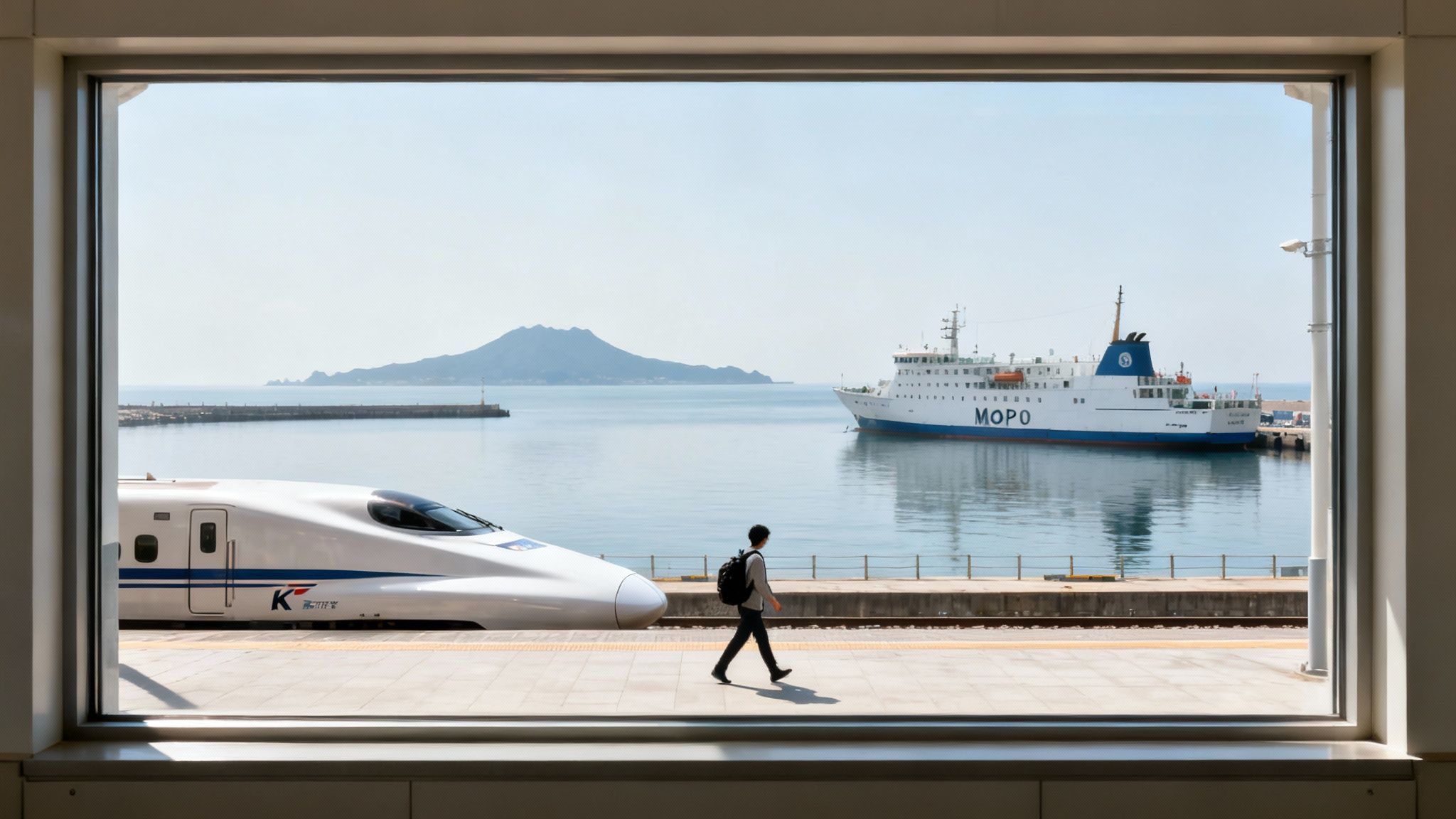
Since no ferries run directly from Seoul, this journey always starts on land. You’ll first take the KTX high-speed train from Seoul Station down to one of South Korea’s southern port cities. Then, you complete the final leg of the trip by sea. It’s a wonderful chance to see the Korean countryside glide by before you ever smell the salt in the air.
This hybrid route isn’t just about the views; it’s a tangible step toward more sustainable travel. Choosing the train and ferry over a flight can cut your carbon footprint by up to 80%. For travelers who embrace slow travel, like those exploring our guide to low-impact island travel in the Mediterranean, this method feels both responsible and rewarding. You can find more details on the lower impact of these routes in this transport study.
The Primary Route Through Mokpo
The most popular and efficient sea route to Jeju starts in the port city of Mokpo. It’s a well-trodden path for good reason, offering a great balance between travel time and comfort.
Your journey kicks off at Seoul Station. Here, you’ll hop on the KTX for a smooth ride that takes approximately 2.5 to 3 hours. Once you arrive at Mokpo Station, the ferry terminal is just a short taxi ride away, usually about 10-15 minutes.
Seastar Cruise and Queen Jenu are the main operators on this route. They offer several sailings a day, and the crossing to Jeju Port takes around 4.5 to 5.5 hours. This gives you plenty of flexibility to find a departure that fits your schedule.
The Overnight Journey From Busan
Another excellent option is to travel via Busan, South Korea’s second-largest city. This route is particularly appealing if you want to save on a night’s accommodation or explore Busan as part of your trip.
The KTX ride from Seoul to Busan is similar in comfort to the Mokpo route, taking around 2.5 to 3 hours. From Busan Station, you’ll need to transfer to the Busan Port International Passenger Terminal.
The real difference here is the ferry itself. The journey from Busan to Jeju is a longer, overnight trip that typically takes about 12 hours. You can board in the evening, sleep in a cabin, and wake up fresh in Jeju the next morning. It’s a practical and experience-rich way to travel.
Understanding Ferry Classes And Costs
Ferry travel gives you a variety of seating and cabin options to fit different budgets and comfort levels, making the journey very customizable.
- Economy Class: The most budget-friendly choice, with open-plan seating or floor space where you can stretch out. It’s a communal, social way to travel and perfect for backpackers.
- Seated Class: Similar to airline or train seating, this provides you with a reserved, individual seat for the duration of the trip.
- Private Cabins: For more privacy and comfort—especially on the overnight Busan ferry—you can book a private cabin. These range from simple two-person rooms to larger family cabins with private bathrooms.
The cost for this combined journey is often competitive with last-minute flights. A one-way trip, including the KTX and an economy ferry ticket, generally costs between $55 and $120 USD (₩70,000–₩155,000 KRW). I highly recommend booking both tickets in advance, especially during weekends and Korean public holidays when seats fill up fast. Platforms like Trip.com can be useful for securing your ferry passage ahead of time.
Practical Tips For A Smooth Journey
A little planning goes a long way in making sure your train and ferry trip is seamless.
When you book your KTX ticket, leave yourself a generous buffer—at least 1.5 to 2 hours—between your train’s arrival and the ferry’s departure. This accounts for any potential delays and gives you plenty of time to transfer to the port without stress.
Most ferries have onboard amenities like convenience stores, cafes, and sometimes even game rooms. So, you’ll have everything you need for a comfortable crossing. Lastly, pack some snacks and a reusable water bottle to stay refreshed and minimize waste during your scenic and sustainable voyage to the beautiful island of Jeju.
Getting Around Jeju With a Lighter Footprint
Your eco-conscious journey doesn’t stop once you land. After you’ve figured out how to go to Jeju Island from Seoul, the next challenge is exploring the island itself without defaulting to a standard rental car. The good news? Jeju is surprisingly well-equipped for low-impact travel, letting you soak in its natural beauty responsibly.
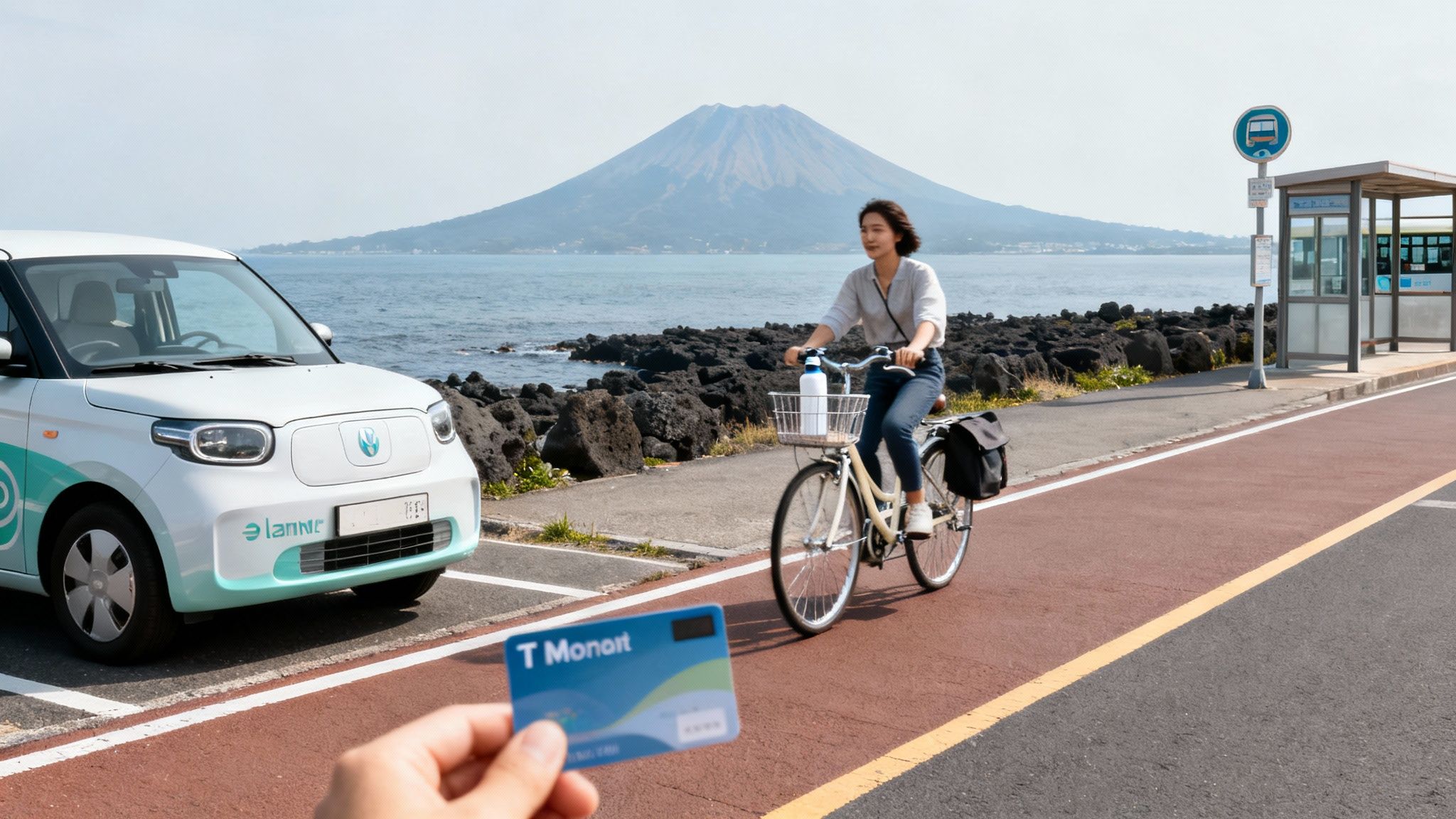
The island’s public bus system is excellent, connecting the main hubs of Jeju City and Seogwipo with nearly every major sight you’ll want to see. Just use your T-money card (the same one from Seoul) for a simple tap-on, tap-off ride. For route planning, apps like Naver Maps or Kakao Maps give you real-time bus schedules and directions, making it surprisingly easy to navigate.
If you’re arriving late or just want to get to your accommodation without any fuss, pre-booking an airport transfer is a smart move. A service like Welcome Pickups can get you settled in smoothly, so you can drop your bags and start planning your adventures.
Embracing a Car-Free Jeju
Jeju is remarkably friendly to travelers without a car. The trick is to pick your base camp wisely. Staying in a walkable hub like Jeju City or Seogwipo puts you right next to bus terminals, local markets, and great restaurants. From there, you can easily launch day trips to Hallasan National Park or the island’s famous coastal cliffs using the bus network.
If you do want a set of wheels for more freedom, there are some great green options available.
- Electric Cars: Jeju is a frontrunner in electric vehicle (EV) infrastructure. Charging stations are everywhere, making it easy to rent an EV and significantly shrink your carbon footprint.
- Scooters and E-Bikes: For exploring a specific region or just zipping between beaches, an electric scooter or bike is a fantastic, low-impact choice. It’s fun, efficient, and lets you feel the sea breeze.
- Day Tours: To reach more remote spots without wrestling with bus schedules, a small-group day tour is a great compromise. They bundle several key sights together, which is perfect if you’re short on time.
Editor’s Pick The Jeju Fantasy Bicycle Path
For a truly immersive, active way to experience the island, nothing beats cycling. The Jeju Fantasy Bicycle Path is a stunning 145-mile (234-kilometer) coastal loop that circles the entire island. You don’t have to conquer the whole thing; just rent a bike for the day and pedal a section to see incredible beaches, volcanic fields, and quiet fishing villages at your own pace. It’s a beautifully maintained, safe, and unforgettable way to connect with Jeju’s raw nature.
Choose Your Stay, Lower Your Impact
Where you sleep plays a huge role in how sustainably you travel. By basing yourself in a central, walkable area, you automatically cut down your need for transport. This doesn’t just lower your impact; it also immerses you in the local community. For a deeper look at this, our guide to finding eco-friendly lodging has more tips on making conscious accommodation choices.
Ultimately, getting around Jeju sustainably is all about making deliberate choices. Every time you hop on a local bus, pedal along the coast, or explore a neighborhood on foot, you’re helping to preserve the island’s unique environment. It’s a mindful approach that ensures Jeju’s incredible landscapes remain for generations to come—letting you truly enjoy everything the “Hawaii of Korea” has to offer.
Figuring out the logistics of getting from Seoul to Jeju is one thing, but timing your trip and packing smart is what really makes the journey smooth and memorable. A bit of foresight transforms a good trip into a great one, ensuring you’re ready for whatever the island throws at you, from booking tickets to packing your bag.
The Best Time to Visit Jeju
Your experience on Jeju can change dramatically depending on when you go. While it’s a fantastic year-round spot, the shoulder seasons of spring (April to June) and autumn (September to November) are pure magic. The weather is mild and pleasant—perfect for hiking Hallasan or cycling the coastal roads—and the crowds are much thinner than in the peak summer months.
Booking your travel well in advance is absolutely non-negotiable, especially if you’re traveling during a major Korean public holiday like Chuseok (the autumn harvest festival) or Seollal (Lunar New Year). Flights, KTX train seats, and ferry tickets can sell out weeks, sometimes even months, ahead of time. I always aim to lock in my main transport at least a month out to avoid sold-out routes and last-minute price hikes.
Packing for a Low-Impact Island Adventure
Jeju’s weather is famously fickle. It’s not unusual to see bright sunshine, gusty winds, and a sudden rain shower all in the same afternoon. The trick is to pack light and smart with versatile layers. A minimalist, low-waste approach not only makes getting around easier but also helps protect the island’s delicate environment.
Here’s a quick checklist for the eco-conscious traveler:
- Versatile Layers: Pack a mix of short and long-sleeved tops, a fleece or other mid-layer, and a waterproof, wind-resistant shell. This setup has you covered for everything from a warm beach day to a breezy hike up an oreum (volcanic cone).
- Reusable Water Bottle & Coffee Cup: Single-use plastic is a huge problem on islands everywhere. Bringing your own reusables is one of the easiest and most impactful things you can do.
- Solid Toiletries: Shampoo bars, conditioner bars, and solid toothpaste are travel gold. They reduce plastic waste and, best of all, they won’t leak all over your bag.
- A Solid Daypack: You’ll need something comfortable to carry your water, snacks, and extra layers while exploring Jeju’s incredible trails and coastlines.
For a deeper dive into what to bring, check out our complete system on how to pack for low-impact travel. It’s all about multi-use items that are both functional and kind to the planet.
Staying Connected and Managing Money
Having internet access the moment you land is a huge help for navigating the airport or booking a ride. Instead of messing with physical SIM cards, an eSIM is a much cleaner solution. Providers like Airalo or Yesim offer affordable data plans for South Korea that you can activate on your phone in minutes.
The local currency is the South Korean Won (KRW). While credit cards are accepted almost everywhere—hotels, convenience stores, and larger restaurants—it’s always a good idea to have some cash on hand. You’ll need it for local markets, bus fares (if you don’t have a T-money card), and those amazing little family-run eateries. I’d recommend keeping at least $50-$100 USD worth of Won (about ₩65,000–₩135,000 KRW) with you.
A few basic Korean phrases will also go a long, long way:
- Annyeonghaseyo (안녕하세요) – Hello
- Gamsahamnida (감사합니다) – Thank you
- Juseyo (주세요) – Please give me… (e.g., “Mul juseyo” for water)
Don’t Forget Travel Insurance
No matter how well you plan, life happens. This is why comprehensive travel insurance is an absolute must. It’s your safety net for the unexpected, covering everything from trip cancellations and lost luggage to medical emergencies. Services like VisitorsCoverage offer reliable, customizable plans that can cover your whole trip. It’s a small investment for some serious peace of mind.
Your Top Jeju Travel Questions, Answered
Planning a trip always brings up those last-minute questions. To make sure you feel totally ready for your Jeju adventure, here are a few straightforward answers to the queries we hear most often.
What Is the Cheapest Way to Get to Jeju Island From Seoul?
For the absolute lowest price, booking way ahead is your best strategy. If you can plan a few months out, you can often find a cheap flight on a low-cost airline like Jeju Air or T’way Air. One-way tickets can sometimes drop as low as $30 USD (around ₩40,000 KRW).
That said, don’t overlook the ferry. An economy ticket from Mokpo can be surprisingly competitive, especially when flight prices spike for last-minute bookings. If your budget is the top priority, the game is all about comparison. Check flight prices on a platform like Aviasales and then cross-reference them with the ferry operators’ official sites well before you travel.
Can You Really Do a Day Trip to Jeju From Seoul?
While it’s technically possible given the short flight, a day trip to Jeju is just not practical. We strongly advise against it. The time you’d spend getting to and from airports, going through security, and boarding would eat up most of your day.
To get any real feel for what makes Jeju special—from its volcanic craters to its coastal trails—you need to get your boots on the ground for more than just a few hours. A two to three-day stay is the absolute minimum to make the journey worthwhile.
Do I Actually Need to Book My Jeju Travel in Advance?
Yes, without a doubt. Booking your transport early is non-negotiable, especially if you’re traveling during peak season (summer) or over major Korean holidays like Chuseok and Seollal. Flights, KTX seats, and ferry tickets can sell out weeks, sometimes even months, ahead of time.
Booking early isn’t just about securing a spot; it’s also how you lock in the best prices. For a trip that feels relaxed instead of rushed, get your main travel legs booked at least a month in advance.
Is It Better to Fly From Gimpo or Incheon Airport?
For almost everyone already in Seoul, Gimpo International Airport (GMP) is the way to go. It’s much closer to the city, which makes the journey there quicker and cheaper. Gimpo is the workhorse for domestic travel, so you’ll find a much wider and more frequent schedule of flights to Jeju.
Incheon International Airport (ICN) is South Korea’s main international gateway. It’s really only the better option if you’re flying into the country and want to catch an immediate connecting flight to Jeju without having to cross the city. Otherwise, stick with Gimpo for a smoother, more efficient domestic trip.
Key Takeaways
- Two Main Paths: Your primary options for how to go to Jeju Island from Seoul are a quick flight or a slower, more scenic train and ferry combination.
- Fly for Speed: A direct flight is the fastest method, taking only 3-4 hours total travel time. It’s ideal for those on a tight schedule.
- Train + Ferry for Sustainability: The combined train and ferry route dramatically reduces your carbon footprint (by up to 80%) and offers a more immersive travel experience.
- Book Well in Advance: Regardless of your choice, book all tickets (flight, KTX, ferry) at least a month ahead, especially for travel during peak seasons or Korean holidays.
- Gimpo is Best for Domestic: If you are already in Seoul, always choose Gimpo Airport (GMP) over Incheon (ICN) for a more convenient and faster domestic departure.
- Pack for All Weather: Jeju’s weather is unpredictable. Pack versatile layers, a waterproof jacket, and reusables to stay comfortable and travel with a lower impact.
This article was fact-checked using sustainability data from the World Green Building Council, the Global Ecotourism Network, and peer-reviewed architecture studies. All partner links are vetted for compliance with sustainable business certifications.
Join the Sustainable Work Movement
Want more rail-first itineraries, low-impact packing systems, and walkable base-city ideas?
FAQ: How to Go to Jeju Island from Seoul
Quick, practical answers to the most common planning questions—without turning the FAQ into a giant section.
Fast answers for planning your route
Flights vs. train + ferry
What’s the easiest way to go to Jeju Island from Seoul?
Flying from Gimpo (GMP) is the simplest option for most travelers already in Seoul. It’s quick and frequent, especially compared with multi-step overland routes.
Is train + ferry a real alternative, or just a novelty?
It’s a real, workable route when you have time. You take KTX to a southern port city, then continue by ferry. It’s slower, but more scenic and typically lower-impact than flying.
Which route is better for a low-impact trip?
If your schedule allows, train + ferry is the more eco-friendly choice. It trades speed for a calmer journey and a smaller transport footprint.
Costs, timing, and bookings
What is the cheapest way to get to Jeju from Seoul?
Usually a low-cost flight booked well in advance. In peak weeks, compare flight totals (including baggage fees) with ferry pricing—sometimes the ferry becomes competitive when flights surge.
How far ahead should I book flights, KTX, or ferry tickets?
Aim for at least a month ahead for weekends and busy seasons. For major Korean holidays, book as early as you can because seats can sell out.
Can I do Jeju as a day trip from Seoul?
Technically, yes by flight—but it’s not recommended. You’ll spend most of the day in transit and airport logistics. A 2–3 day minimum is more realistic to enjoy Jeju.
Airports and arrival
Should I fly from Gimpo or Incheon?
If you’re already in Seoul, Gimpo (GMP) is usually best because it’s closer and has the most domestic frequency. Incheon (ICN) makes sense mainly if you’re connecting straight off an international arrival.
What’s the easiest way to stay connected once I arrive?
An eSIM is the simplest option—set it up before you land so you can navigate, check bus routes, and message your accommodation immediately.
Tip: If you’re taking the KTX + ferry option, leave a generous buffer (at least 1.5–2 hours) between your train arrival and ferry departure.
