
If you want to know how to lower your ecological footprint, the journey starts with a simple first step: measuring where you are right now.
Think of it as setting a baseline. Before you can effectively shrink your impact, you have to understand the total demand your travel and lifestyle currently place on the planet’s resources.
Your ecological footprint is a much bigger picture than just your carbon emissions. It’s a holistic measure of your consumption, from the jet fuel burned on a flight to the land needed to grow the food you eat. It’s all tallied up in a unit called global hectares (gha).
Key Takeaways
- Measure First: Use a tool like the Global Footprint Network’s calculator to understand your personal impact before making changes.
- Prioritize Transport: Air travel is the biggest contributor to a traveler’s footprint. Opt for trains, fly direct when you must, and choose economy class.
- Choose Stays Wisely: Look for accommodations with verifiable green certifications (like LEED or B Corp) or tangible sustainable practices like solar power and water conservation.
- Consume Mindfully: Reduce your impact by packing light, eating more plant-based local foods, and buying souvenirs directly from local artisans.
- Offset as a Last Resort: Focus on reducing emissions first. If you must offset, use high-quality, verified projects from providers like Gold Standard or Verra.
- Practice Regenerative Travel: Go beyond “doing no harm” by actively participating in local conservation or restoration projects to leave a destination better than you found it.
Your Travel Footprint and How to Measure It
This gives you a clear, if sometimes uncomfortable, picture of how your choices compete for the planet’s finite biocapacity. The carbon piece is usually the largest and fastest-growing part of a traveler’s footprint, making it the most critical place to start.
[carbon_calculator_2025]
To put the numbers in perspective, the average global footprint is 2.6 global hectares per person. The problem? Earth only has about 1.5 gha of biocapacity available for each of us. This means humanity is currently overspending its annual resource budget by around 73%.
Finding Your Baseline
Calculating your footprint isn’t about chasing a perfect, hyper-accurate number. It’s about understanding the scale of your impact and identifying your personal “hotspots”—the areas where you can make the biggest difference. Several online tools do a great job of this.
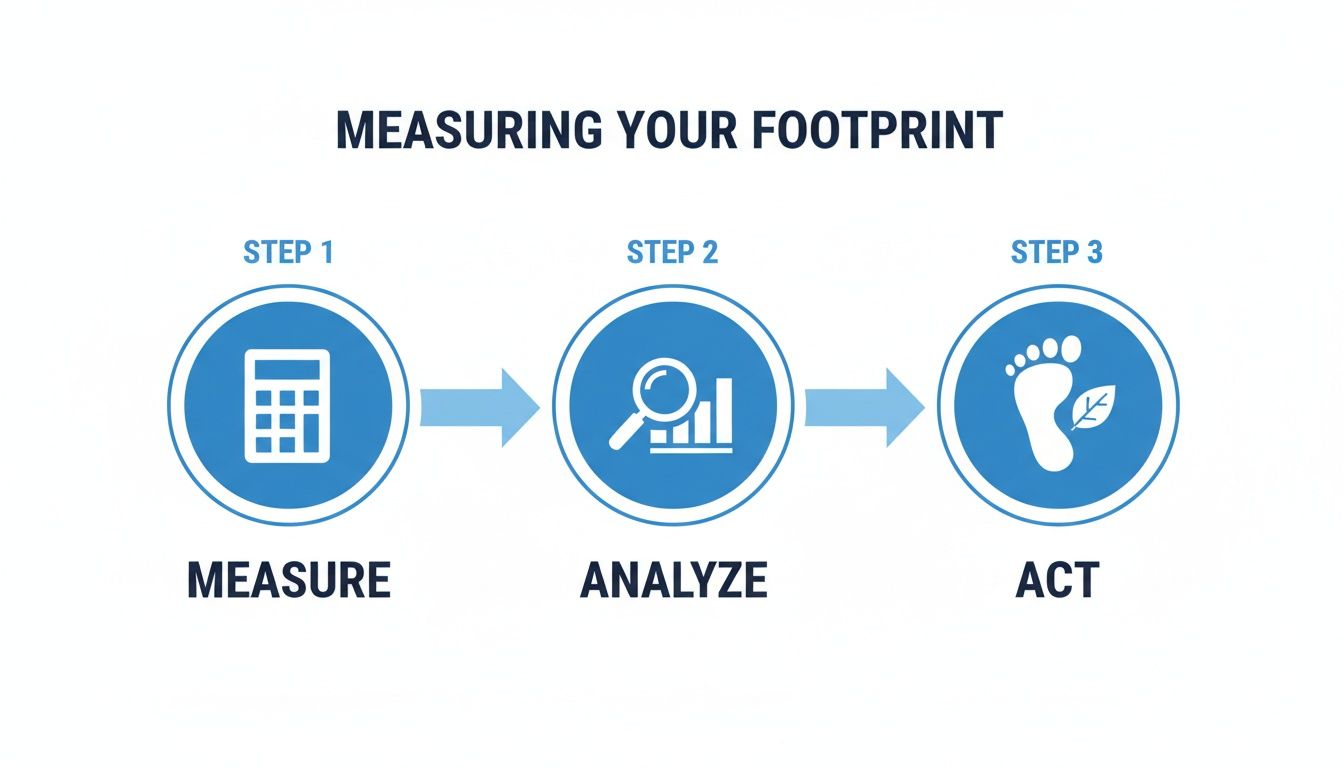
The flow is straightforward: measure your current habits, analyze the results to find the low-hanging fruit, and then take targeted action.
These calculators typically walk you through questions about your home energy, transport habits (especially flights), diet, and spending. Our go-to tool is the Global Footprint Network’s calculator. It’s user-friendly, comprehensive, and moves beyond simple carbon counting to give you a full ecological overview.
Answering the questions honestly will give you a personalized result, often showing how many “Earths” we would need if everyone lived like you. For a deeper dive into the travel-specific numbers, check out our comprehensive guide to your travel carbon footprint.
This first step is all about gaining clarity. It’s the knowledge you need to start making meaningful, informed changes on your journey toward a lighter footprint.
Before you jump into a calculator, it helps to know what makes up a typical traveler’s footprint. The biggest chunks usually come from just a few key areas.
Key Components of a Traveler’s Ecological Footprint
| Footprint Component | Primary Contributor | High-Impact Example | First Step to Reduce |
|---|---|---|---|
| Transport | Air travel | A long-haul, round-trip flight (e.g., London to Bangkok) | Swap one short flight for a train or coach journey. |
| Accommodation | Energy & water use | A large, air-conditioned room in a luxury resort. | Choose smaller, locally-owned guesthouses or eco-lodges. |
| Food | Meat & dairy | Daily consumption of red meat and imported foods. | Try eating plant-based for a few days each week. |
| Goods & Services | Consumption habits | Buying new gear and souvenirs for every trip. | Pack a zero-waste kit and repair gear instead of replacing. |
Seeing it broken down like this makes it clear where the biggest wins are. A single flight can often outweigh months of careful recycling, which is why we focus so heavily on transport first.
Smarter Transport Choices On The Move
For most of us on the road, transportation is the single biggest chunk of our ecological footprint. It’s the long-haul flights, the short city hops, the daily taxi rides—they all add up. But here’s the good news: rethinking how you get from point A to point B doesn’t mean less adventure. Often, it leads to richer, more grounded experiences.
Slashing your travel emissions starts with a simple shift in mindset, especially for overland journeys in places with great train networks like Europe and Asia. Think “rail-first.” A scenic train ride doesn’t just offer stunning views you’d miss from 30,000 feet (about 9,144 meters); it carries a tiny fraction of the carbon cost of a short-haul flight. Even a quick one-hour flight racks up a heavy emissions toll once you factor in airport transfers and security lines.
It’s about making conscious choices and prioritizing modes of travel that align with a lighter impact. This is where you can take direct control over the largest part of your travel footprint.
Prioritizing Low-Carbon Journeys
When you’re planning a multi-city trip, try looking at the map through the lens of a railway network instead of an airline route map. Imagine a classic European tour: instead of flying from Amsterdam to Berlin and then hopping on another plane to Prague, you can connect these vibrant cities with comfortable, efficient train journeys. You’ll arrive right in the city center, ready to explore, having saved a significant amount of CO₂ along the way.
Here are a few actionable strategies to put this into practice:
- Embrace Night Trains: For longer distances, sleeper trains are a game-changer. They combine your transport and accommodation costs for one night, saving you time and money while drastically cutting emissions compared to flying the same route.
- Book Direct Flights: When flying is truly the only option, always opt for direct routes. A huge portion of a plane’s fuel is burned during takeoff and landing, so minimizing the number of flights is key. Services like Aviasales or Trip.com can help you filter for non-stop options.
- Fly Economy: This one’s simple but effective. Business and first-class seats take up more space, meaning their per-person carbon footprint can be three to four times higher than an economy seat on the same flight.
If you want to dive deeper into the numbers, our guide on the train vs plane emissions debate provides a clear, side-by-side comparison.
Ground Transport Matters, Too
Your choices don’t end once you’ve reached your destination city. How you get around day-to-day plays a huge role in your overall footprint. Opting for a centrally located, walkable base can nearly eliminate the need for daily taxi rides or rental cars.
Choosing a base in a walkable neighborhood with good public transport links is one of the most effective strategies for reducing your daily travel footprint. You’ll save money, get more exercise, and experience the city like a local.
When you do need a vehicle, think smaller. Renting a compact, fuel-efficient car uses far less fuel than an SUV. Services like GetRentACar often have a wide selection, allowing you to choose a vehicle that fits your actual needs rather than defaulting to a larger, less efficient model. Always ask for the most fuel-efficient option available, whether it’s a hybrid or just a smaller car.
Ultimately, it all comes down to making conscious decisions at every stage. By prioritizing trains for overland travel, flying smarter when you must, and choosing efficient ground transport, you can dramatically lower your ecological footprint and travel with a lighter conscience.
Choosing Accommodations That Reduce Your Impact
Once you’ve sorted out your transport, your choice of accommodation is the next biggest lever you can pull to shrink your ecological footprint. Where you stay isn’t just a place to sleep. It’s a whole system of energy use, water consumption, waste management, and local economic impact.
A conscious choice here turns a simple booking into a quiet vote for better travel practices.
The trick is to move beyond vague “eco-friendly” marketing claims. The stays that make a real difference are the ones with sustainability baked into their core operations, not just sprinkled on top as an afterthought. You want to see tangible evidence—from the materials used in construction to how they source their food and manage their resources.
For instance, a hotel generating its own power from solar panels or harvesting rainwater is making a measurable difference. Those are the kinds of features that separate a genuinely green stay from a property just hoping you won’t look too closely.
Decoding Sustainable Stays
So, what should you actually look for? The key is finding properties that can show a holistic approach to sustainability. Third-party certifications are a great place to start, as they provide a reliable benchmark for a hotel’s environmental performance.
Keep an eye out for credentials like:
- LEED (Leadership in Energy and Environmental Design): A globally recognized green building standard that covers design, construction, and operation.
- Green Key Global: An international eco-label awarded to hotels and other establishments committed to sustainable business practices.
- B Corp Certification: This signals that a business meets high standards of social and environmental performance, accountability, and transparency.
While certifications are helpful, they aren’t the whole story. Many smaller, independent properties run fantastic sustainable operations without going through a formal process. This is where a little digging pays off.
Check their website or “About Us” page for specifics. Do they mention solar panels, composting programs, or partnerships with local farmers? These are all strong signs of a genuine commitment. Our guide on how to spot and avoid greenwashing in sustainable stays offers more tips on vetting properties.
Inspiring Examples in Action
To see what this looks like in the real world, just look at the properties leading the charge. In Costa Rica, the Finca Luna Nueva Lodge is a prime example of regenerative tourism. It’s a working organic biodynamic farm where guests learn about sustainable agriculture while surrounded by preserved rainforest. The entire operation is designed to have a positive impact, not just a neutral one.
Meanwhile, in a city setting, Amsterdam’s Conscious Hotel Westerpark proves that urban stays can be deeply sustainable. The hotel runs entirely on renewable energy, uses furniture made from recycled materials, and features a green roof that boosts biodiversity and insulation. It’s proof that learning how to lower ecological footprint doesn’t mean you have to give up modern comforts or a central location.
Editor’s Pick: A Model for Urban Sustainability
Conscious Hotel Westerpark in Amsterdam stands out for its comprehensive approach to urban sustainability. Powered entirely by Dutch wind energy and featuring reclaimed furniture, it sets a high bar. Its location within a park encourages car-free exploration, making it an excellent choice for travelers committed to a low-impact city break.
Your Role as a Conscious Guest
Finally, remember that your own actions as a guest play a huge part. Even the most sustainable hotel can’t undo wasteful behavior. Simple habits, when adopted by many, add up to a massive collective difference.
Treating your hotel room with the same resourcefulness as you would your own home is a powerful mindset shift. Turn off lights and air conditioning when you leave, take shorter showers, and reuse towels for multiple days.
These small acts are easy to adopt and directly cut the energy and water consumption of your stay.
By choosing your accommodations wisely and practicing conscious habits, you can ensure that where you rest your head aligns with your goal of traveling more lightly on the planet. This thoughtful approach transforms your accommodation from a simple expense into an investment in a more sustainable future for travel.
Mindful Consumption: Packing, Eating, and Shopping on the Road
Every choice you make on the road adds up. The snack you grab, the souvenir you choose, the clothes you pack—it’s all part of your “consumption” footprint. By being more intentional with these daily decisions, you can lighten your impact on the planet and often have a much richer travel experience.
It really starts before you even lock your front door. Minimalist packing isn’t just about making your bag easier to carry; it’s a direct way to cut fuel use. Lighter luggage means less weight for planes, trains, and buses to haul, which trims the carbon cost of your journey.
Focus on packing versatile, high-quality gear. One durable, waterproof jacket is far better than three separate ones for different weather. This saves space, sure, but it also reduces your reliance on fast-fashion items that come with a massive environmental price tag.

The Powerful Impact of Your Plate
Of all your daily choices, food carries some serious weight. Cutting back on meat, especially beef, is one of the most powerful moves you can make. The numbers are staggering: producing just 2.2 pounds (around 1 kg) of beef pumps out roughly 218 pounds (99 kg) of CO2 equivalent. For comparison, the same weight in lentils generates less than 2 pounds (0.9 kg). As you can see, even small shifts at the dinner table make a real difference. For a deeper dive, check out the environmental impacts of food on Our World in Data.
This doesn’t mean you have to go vegan overnight. It’s about making conscious, incremental changes that feel right for you.
Here are a few simple ways to eat more sustainably while traveling:
- Embrace “Meatless Mondays” (or Tuesdays, or Wednesdays): Set aside a few days a week to explore amazing plant-based dishes.
- Dive into Local Cuisine: Many traditional diets around the world are naturally light on meat. Exploring the local food scene is a fantastic way to discover delicious vegetable, grain, and legume-based meals you’ve never tried.
- Hit the Farmers’ Markets: This is the absolute best way to eat fresh, seasonal food while putting money directly into the pockets of local growers. It slashes “food miles”—the distance your food travels—and gets rid of tons of plastic packaging.
Eating locally and seasonally connects you to a place on a deeper level. It’s a win for your taste buds, the local economy, and the planet.
Packing with Purpose and Less Waste
Your packing strategy is a huge piece of the puzzle when learning how to lower your ecological footprint. A well-planned bag can prevent a mountain of single-use plastic and other trash from ever being created during your trip.
The goal is to be self-sufficient and sidestep the need for disposables. For a full rundown of what to bring, our comprehensive zero-waste packing list has you covered, from solid toiletries to reusable containers.
A simple zero-waste kit—containing a reusable water bottle, coffee cup, cutlery set, and a cloth bag—can prevent hundreds of pieces of plastic from ending up in landfills or oceans over the course of a single long trip.
Thoughtful Souvenir Shopping
Bringing a memento home is a beautiful part of travel, but this is where mindful consumption really shines. So many mass-produced souvenirs are made in factories far from where they’re sold, often using unsustainable materials and questionable labor practices. Their journey to the tourist shop racks up a hefty carbon footprint.
Instead, look for things that tell a genuine story about the place and its people.
Here’s how to shop more consciously:
- Buy Directly from Artisans: Seek out local craft markets or cooperatives where you can meet the makers. This ensures your money supports them and their community directly.
- Choose Natural and Local Materials: Look for items crafted from sustainable, locally sourced materials like wood, clay, or natural fibers.
- Opt for Consumable Souvenirs: A bottle of locally pressed olive oil, a bag of fair-trade coffee, or a jar of regional honey are incredible low-impact souvenirs you can actually enjoy and share.
By packing light, eating mindfully, and shopping with intention, you turn everyday decisions into meaningful actions. Each choice becomes a small opportunity to support local communities and protect the very environments you traveled so far to experience.
Powering Your Digital Nomad Lifestyle Sustainably
As a digital nomad, figuring out how to lower ecological footprint goes beyond just airports and hotels—it seeps into the very fabric of your daily work. Your laptop, your Wi-Fi, the cafe you work from… they all add up. This is about weaving sustainability directly into your professional routine.
Your tech is the obvious starting point. When it’s finally time for an upgrade, look for energy-efficient laptops with certifications like ENERGY STAR. A much quicker win, however, is tackling “phantom” or “vampire” energy drain. Just get into the habit of unplugging chargers and devices when they’re not actively in use. Using an eSIM like Airalo or Yesim also helps avoid the plastic waste of physical SIM cards.
But the single biggest lever you can pull? It’s your choice of accommodation and coworking spaces. Actively seeking out places powered by renewable energy is a game-changer that can shrink your personal energy footprint while you work.
Sourcing Clean Energy on the Road
Choosing a base that runs on solar, wind, or geothermal power directly slashes your reliance on fossil fuels. In places like the U.S. and E.U., households that switch to renewable energy sources can cut their personal energy footprints by an incredible 80-90%.
The impact is massive. A typical U.S. home’s annual electricity use pumps out about 4.5 tons of CO2, an amount that can be entirely wiped out by installing solar panels. You can play around with these numbers yourself using the EPA’s GHG calculator.
While you can’t install solar panels on your Airbnb, you can actively seek out hosts and hotels that already have. Look for keywords like “solar power,” “renewable energy,” or “green electricity” in property descriptions. If you don’t see it, just ask!
Simple habits make a huge difference, too. Work by a window and use natural light instead of flicking on a switch. And be ruthless with air conditioning—it’s a notorious energy hog. Only use it when you’re actually in the room and set the thermostat to something reasonable, like 78°F (around 25°C).
Reducing Your Digital Carbon Footprint
The hidden impact of our online lives is easy to forget. Every email you send, every video you stream, every file saved to the cloud—it all demands energy from data centers around the world. While this “digital footprint” feels less tangible than a plane ticket, its collective impact is growing fast.
You can take a few simple steps to trim it down:
- Manage Your Cloud Storage: Go through your cloud drives and delete old files, emails, and photos you no longer need. This reduces the energy required to keep them stored on servers 24/7.
- Stream Smarter: Instead of streaming the same playlist or podcast repeatedly, download it for offline access. When you do stream video, choosing standard definition (SD) over high definition (HD) makes a noticeable difference.
- Optimize Your Website (If You Have One): If you run a personal blog or business site, make sure you’re using a green web host that powers its data centers with renewable energy.
These actions, paired with choosing the right tech, are a powerful combination. Our guide on sustainable travel tools for digital nomads has more resources for finding low-impact gear and software.
The table below gives you a clear picture of how different choices stack up, showing just how much control you have over your professional footprint.
High-Impact vs. Low-Impact Digital Nomad Choices
Making smarter, more intentional choices about where and how you work can dramatically lower your ecological footprint. The difference between a high-impact and low-impact day is often just a few small decisions.
| Area of Impact | High-Footprint Choice | Low-Footprint Alternative | Estimated Impact Reduction |
|---|---|---|---|
| Workspace Power | Standard grid electricity (coal/gas) | Coworking space with solar panels | 80-90% of electricity footprint |
| Data Usage | Streaming HD video for background noise | Downloading a playlist for offline listening | Up to 75% less data used per hour |
| Tech Hardware | Buying new, energy-intensive devices | Choosing refurbished, ENERGY STAR-rated gear | 30-50% less energy per device |
| Daily Commute | Daily taxi ride to a coworking space | Staying in a walkable area and working from home | Near 100% reduction in commute emissions |
By being mindful about where you plug in and how you use your tech, you can ensure your professional life is just as low-impact as your travel. It’s all about building a sustainable routine that supports both your career and the planet.
Moving Beyond Offsetting with Regenerative Travel
Simply canceling out your carbon footprint is yesterday’s goal. The real frontier in conscious travel pushes past just balancing the scales with offsets and into something far more powerful: regenerative travel.
The idea is simple but profound: leave a place even better than you found it.
This approach completely reframes the goal from “doing less harm” to actively “doing good.” While buying high-quality, verified carbon offsets for unavoidable emissions is still a responsible final step, regeneration is about making direct, positive contributions to the ecosystems and communities you visit. It’s about turning your presence from a drain into a force for positive change.
This can mean anything from hands-on participation to making very specific choices about where your money goes. The aim is to create a net positive impact.
Putting Regeneration into Practice
Regenerative travel isn’t some abstract concept; it’s a series of clear, actionable choices you can make. Instead of just paying to offset your flight’s carbon, you can invest your time and money in projects that actively heal and restore the local environment.
Here’s what that looks like on the ground:
- Volunteering with Conservation NGOs: Dedicate a day or more of your trip to a local environmental organization. This could be anything from a beach cleanup to helping with reforestation projects or monitoring local wildlife.
- Choosing Regenerative Tour Operators: Look for companies that do more than just guide you. Many now directly fund and participate in ecosystem restoration, like operators who contribute a portion of their profits and guest time to coral reef research and planting.
- Staying at Restorative Properties: Book your stay at a lodge or guesthouse that is actively reforesting its own land or running a local conservation initiative. Your tourist dollars directly support these on-the-ground efforts.
This hands-on approach builds a much deeper connection to a place. It transforms a vacation into a partnership, where you become an active participant in preserving a destination’s natural and cultural heritage for the future. The goal is to make your travels a tangible benefit to the planet.
Your Sustainable Travel Questions, Answered
Navigating the world of sustainable travel always brings up a few good questions. Here are some straightforward, honest answers to the queries that land in our inbox most often.
Is Carbon Offsetting Actually Effective?
It can be, but it’s a complicated tool that’s best used as a final step, not a first resort.
Think of it like this: reducing your emissions is like preventing a spill in the first place, while offsetting is cleaning it up after the fact. The real win always comes from preventing the mess. Focus your energy on flying less and choosing efficient ground transport, then—and only then—use a reputable offset program for the emissions you genuinely couldn’t avoid.
If you do offset, look for high-quality, verified projects with certifications from groups like Gold Standard or Verra. These ensure the money funds legitimate carbon reduction efforts.
How Can I Travel Sustainably on a Tight Budget?
This is a common myth—sustainable travel is often much cheaper than the alternative. The biggest expenses in conventional travel are usually flights and resort stays, which also carry the heaviest environmental price tag.
Slowing down immediately saves you money. Swapping a flight for a train or bus, staying in locally-owned guesthouses instead of international hotel chains, and eating at bustling food markets are all classic budget travel moves. And they just happen to be incredibly sustainable.
Even small habits add up. Packing a reusable water bottle and coffee cup can save you a surprising amount over a long trip while slashing your plastic waste.
What’s the Single Biggest Change I Can Make?
For the vast majority of travelers, it all comes down to flying. Air travel almost always accounts for the biggest slice of a trip’s carbon footprint.
The most powerful change you can make is simply to fly less often.
When you do need to fly, choose direct routes to avoid the extra fuel burned during multiple takeoffs and landings. And always fly economy class. Even replacing just one short-haul flight a year with a train journey will make a massive dent in your overall travel footprint.
This article was fact-checked using sustainability data from the World Green Building Council, the Global Ecotourism Network, and peer-reviewed architecture studies. All partner links are vetted for compliance with sustainable business certifications.
Join the Sustainable Work Movement
Want more rail-first itineraries, low-impact packing systems, and walkable base-city ideas?





Explore Eco Nomad Travel
📚 Core Guides
🧭 Planning & Logistics
🗺️ Destinations & Seasons
Jeremy Jarvis — founder of Eco Nomad Travel, sustainable travel writer, and advocate for regenerative tourism. His work focuses on low-impact mobility, eco-friendly digital nomad life, and climate-positive travel.
Legal
Affiliate DisclaimerPrivacy Policy
Terms of Service
Image & Media Notice
Cookie Policy
Contact
Affiliate Disclosure: Some links on Eco Nomad Travel are affiliate links, meaning we may earn a small commission at no extra cost to you. This supports our mission to inspire responsible and low-impact travel worldwide.
Connect
✅ Trusted Official Sources
Plan smarter eco trips
Try our free Sustainable Travel Tools for Digital Nomads – carbon calculator, train vs plane comparator, and more.
Open Tools Hub