
Learning how to travel Europe by train can feel overwhelming, but with a bit of planning you’ll glide past snow-dusted peaks, sunlit coastlines, and storybook villages—all without the stress of airport lines.
A well-planned rail trip across Europe can save you money, shrink your carbon footprint, and keep you productive on the move.
Key Takeaways
- One pass, unlimited rides across multiple countries.
- Night trains serve as both transport and sleeping quarters.
- Regional lines uncover hidden hamlets off the tourist trail.
- No early airport check-ins or surprise bag fees.
- Save up to 40% compared to point-to-point tickets.
Editor’s Pick: The Eurail Global Pass
This option is perfect for globe-trotting remote workers—up to 10 flex travel days in a month and access to 40+ countries with no booking surcharges.
Why Train Travel Works Best
Europe’s rail network links 30+ countries with frequent services and no hidden baggage fees. Booking through Rail Europe brings schedules and fares into one handy platform.
- Scenic routes take you through Alpine passes, along Mediterranean shores, and into medieval towns.
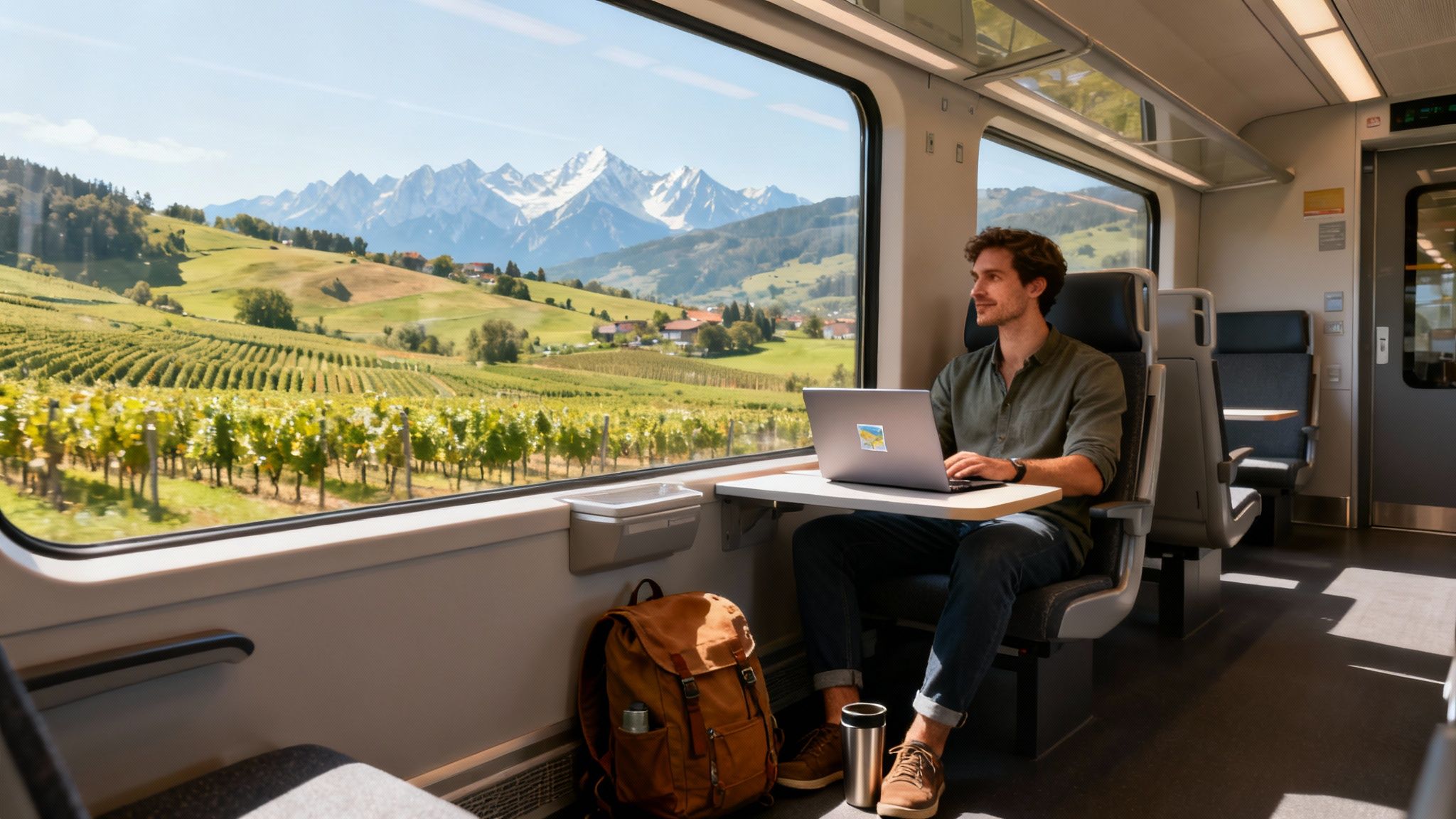
- Onboard power outlets let digital nomads work uninterrupted at speeds over 200 km/h.
- Rail passes can slice individual ticket expenses by up to 40%.
- You’ll cut travel emissions by as much as 80% compared to flying.
Here’s what the booking interface on Rail Europe looks like when you’re comparing routes and rates.
That view highlights search filters, pricing tiers, and seat availability so you can pick the best option instantly.
Picture this: you’re riding from London to Edinburgh or Berlin to Munich, part of the 1.7 billion passenger journeys in Great Britain projected for 2025. It’s efficiency, history, and adventure all rolled into one. For the full stats, check out the Rail Trends 2025 report.
For zero-flight routes and detailed day-by-day plans, dive into our guide on Flight-Free Rail Itineraries for 2025.
Quick Benefits Summary
Before we go deeper, here’s a snapshot of why trains shine over planes:
| Benefit | Details |
|---|---|
| Scenery | Alpine peaks, coasts, medieval towns |
| Carbon | Up to 80% fewer emissions than flying |
| Cost | Saves up to 40% versus separate tickets |
| Convenience | No early airport check-ins or bag fees |
Always book flexible rail passes early to lock in the best fares and guarantee your seat reservations.
By following this roadmap, digital nomads can cover four capital cities in just seven days—stress-free. We’ll next explore how to choose the right pass, snag sleeper berths, and master booking hacks that save both time and money.
Selecting The Best Rail Pass
Planning a rail-first journey across Europe can feel like solving a puzzle. Pick the wrong pass and you might spend hundreds more than necessary. On the other hand, matching your travel style with the right pass unlocks flexibility and savings.
Global rail passes cover multiple borders, perfect for nomads chasing new scenes every few days. Single-country options suit deep dives into one nation’s landscapes. And if you only have a handful of hops planned, point-to-point tickets often win out on price.
Calculating Your Break Even
Figure out when a pass pays for itself by comparing your expected fare spend with pass cost.
- Multiply trip days by your average single-ticket rate
- Total up estimated fares on each leg of your route
- Divide pass price by the number of travel-valid days
Don’t forget about youth discounts up to 15% or senior savings near 10%. Some passes sneak in reservation fees or supplements—spot them upfront to protect your budget.
Real-Life Savings—Route Examples
Seeing actual numbers helps decide if a pass makes sense. Here are three scenarios drawn from real itineraries:
- A 14-day budget loop through France, Germany, Italy and Spain, hitting major cities and hidden villages
- An open-ended nomad route spanning up to five countries with flexible day-count passes
- A summer family getaway using group passes and child fares to keep costs low
Each example compares pass costs versus buying point-to-point tickets, so you can see where the real savings lie.
The High-Speed Rail Boom
High-speed rail networks have exploded in popularity. In 1995, they logged 32.5 billion passenger-kilometers; by 2019, that number soared to 134.0 billion, led by France, Germany, Spain, and Italy. Dive into the full report on IbisWorld for the data behind these figures:
Passenger Rail Transport in Europe (IbisWorld)
For routes heavy on TGV, AVE, or Frecciarossa trains, smart pass selection can yield 30% or more in savings.
Comparison Of Popular Rail Passes
Below is an overview of the leading rail passes, highlighting coverage, validity, and who they suit best.
| Pass Type | Coverage | Validity | Ideal For |
|---|---|---|---|
| Eurail Global Pass | 33 countries | Flexible days | Remote workers and eco-nomads |
| Single-Country Pass | One country | Continuous month | Deep dives into a single region |
| Point-to-Point Ticket | Specific routes | Ticket by trip | Budget-focused short hops |
Use this comparison to nail down which pass aligns with your itinerary and wallet. Booking early locks in availability and the best rates.
Booking Tips
Reserve seats on high-speed routes as soon as you finalize dates. Advance bookings often cost less than last-minute supplements.
- Lock in seat reservations up to six weeks ahead
- Compare supplement fees on official carrier sites versus platforms like Trip.com
- Check refund policies for unexpected changes
Avoiding Hidden Fees
Supplement and reservation charges can quietly erase your pass savings. Always:
- Watch for automatic booking fees on third-party sites
- Spot mandatory route-by-route reservation costs
- Factor those extras into your overall budget
Discounts And Upgrades
Carriers love rewarding certain travelers. Keep an eye out for:
- Youth passes that include free or discounted seat reservations
- Senior bonuses adding extra travel days at no extra cost
- Seasonal promotions—up to 20% off when you book early or travel off-peak
Choosing a pass based on travel days rather than countries visited often unlocks the best value.
Integrating these selection steps gives you confidence and keeps your budget intact—no surprise fees at checkout. Enjoy every ride, knowing you’ve planned smart. Happy travels ahead!
Booking High-Speed And Sleeper Trains
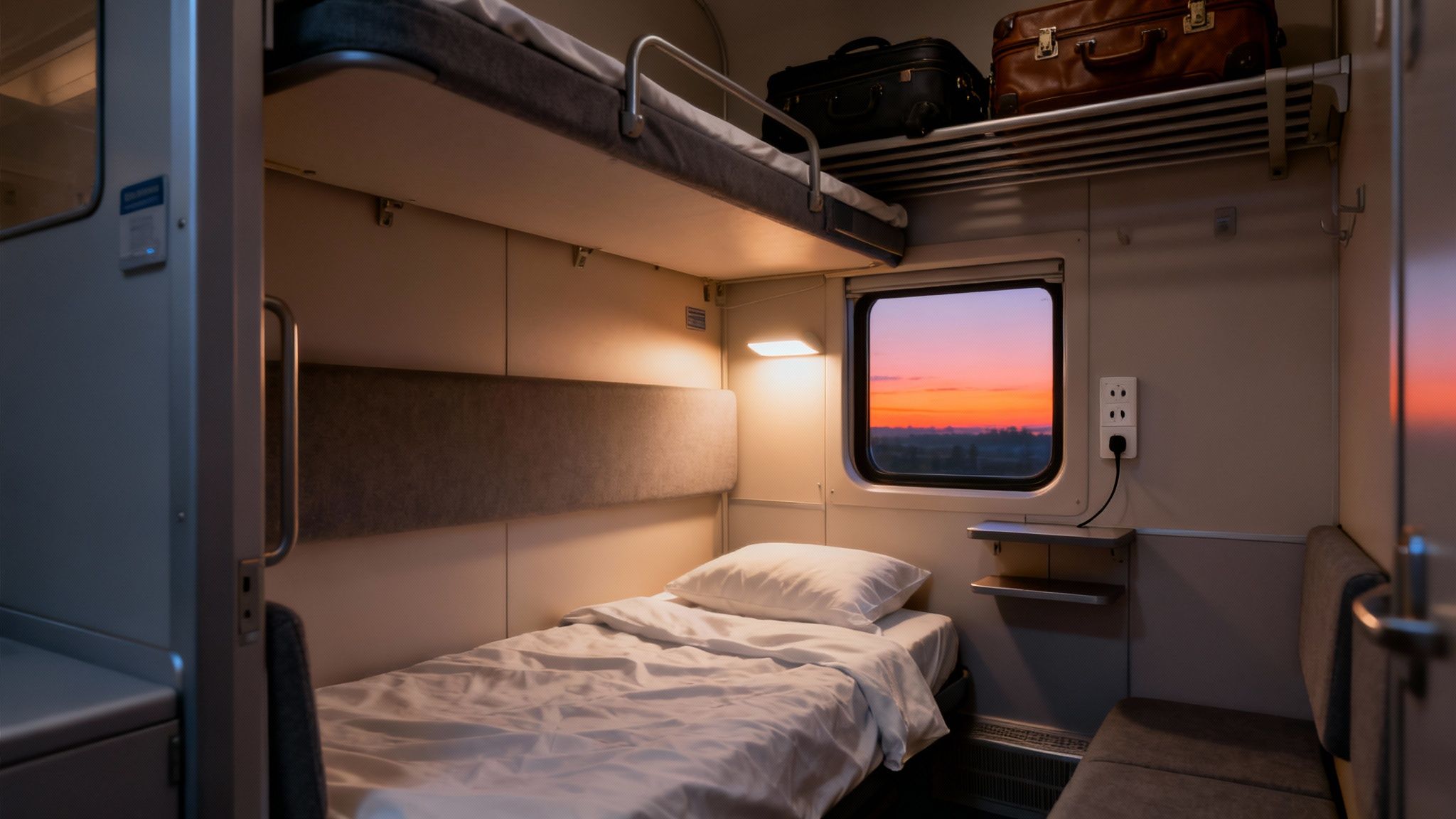
Catching a high-speed train and sliding into a sleeper cabin can turn long transit days into efficient travel and restorative rest. France’s TGV or Spain’s AVE hurtles you along at 300 km/h, chopping hours off major cross-country hops. Blend daytime rides with sightseeing stops, and let overnight sleepers handle the miles while you sleep.
Budget-minded carriers often offer seat-only fares that skip luggage reservations, trimming up to 15% off the ticket. Travel light or upgrade later—many allow you to add a small backpack or even a bike for a modest fee.
Comparing Top Booking Platforms
I always scan multiple apps before clicking “buy” to uncover the sharpest deals:
- Trainline for split-ticket savings of up to 30% on UK-EU routes
- Rail Europe for straight-forward service across 33 countries
- Trip.com for occasional night-train berth discounts
Each platform lists schedules, seating classes and reservation fees side by side. Service charges hover around 5–8%, so expand the fare breakdown before checkout. And don’t forget a no-fee credit card to dodge conversion costs.
Trip.com sometimes surfaces region-specific flash vouchers. Just double-check the currency setting—Rail Europe defaults to EUR, while Trip.com adapts to your IP address. For deeper sleeper-booking tips, see our guide on European sleeper bookings for 2025.
Tricks For Lower Fares
Breaking a long journey into two or three legs can yield 20–40% in savings on high-speed corridors. Follow this quick checklist:
- Plot your end-to-end route from A to Z
- Divide it into logical segments (A→B, B→C)
- Compare segment-sum fares against a direct ticket
Booking as soon as seats open (around 6 months ahead) nets the best rates. Shifting travel by a day or two—especially mid-week—often uncovers 25% cheaper departures. Keep a flexible calendar widget handy to spot those pockets of value.
“Segmented tickets bypass premium direct fares without sacrificing seat reservations,” advises a veteran route planner.
Also consider:
- Riding off-peak to dodge surge pricing
- Filtering for non-reservable seats first on ICE or ÖBB routes
And subscribe to carrier newsletters—you never know when a flash voucher lands.
Reserving Sleeper Berths
Choosing the right bunk makes all the difference. Lower berths offer quick aisle access but capture ambient noise. Upper bunks sleep quieter, yet they’re tougher to reach with luggage. Tall travelers should look for cabins boasting at least 1.85 m of bed length.
| Type | Berth Count | Privacy | Starting Price |
|---|---|---|---|
| Couchette | 4–6 bunks | Shared | €45–€65 |
| Private Cabin | 1–2 bunks | Exclusive | €110–€150 |
Reservation fees of €10–€20 usually apply on top of the ticket. To secure a lower or window bunk:
- Book early via the carrier’s official site to avoid hidden fees
- Verify that bed linen and towels are included
- Pack a slim travel sheet or liner
Always save or print your PDF confirmation—controllers scan QR codes on every device. For peak-season sleepers, lock in your berth at least 8 weeks in advance. And on day-only hops over four hours, reserve a window seat near an outlet and away from restrooms to keep your work session on track.
Keep all PNR references at hand for quick itinerary checks. Master these steps, and every rail leg will feel like second nature.
Happy travels!
Packing Light For Sustainable Rail Travel
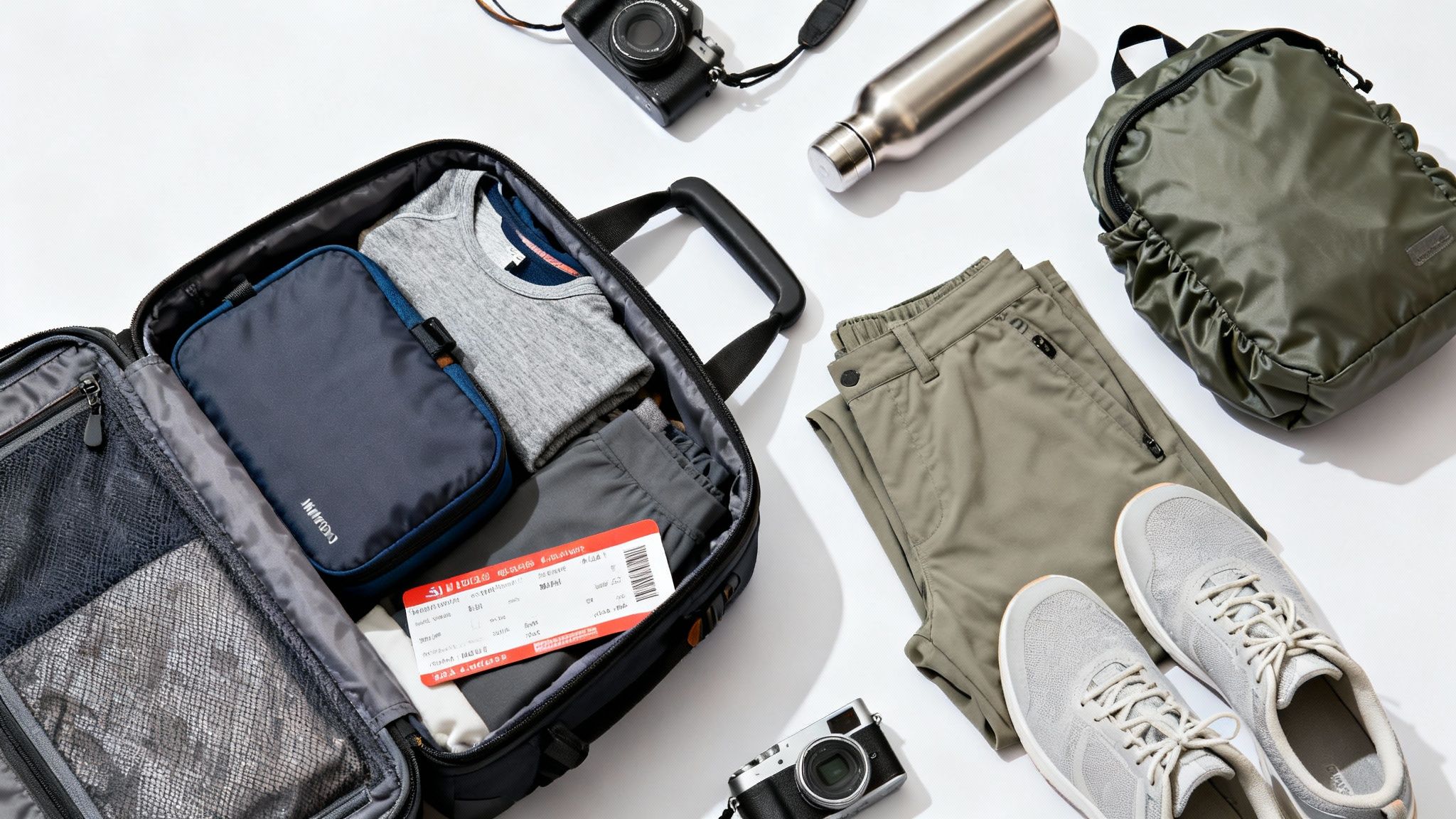
Traveling Europe by train demands a nimble backpack. I’ve learned that keeping my kit under 8 kg transforms hectic transfers into smooth transitions. Whether you’re sprinting through Paris Nord or settling into your seat at Berlin Hbf, less weight means more freedom.
A slim pack slides onto overhead racks or tucks under the seat in seconds. No wrestling with baggage, no dawdling in crowded aisles. Every kilo saved is one less reason to pause at each platform.
Choosing Versatile Layers
Start with garments that adapt from morning explorations to late-night coworking. My go-to formula:
- Two to three quick-dry t-shirts that resist odors
- One lightweight fleece or merino sweater
- One packable rain shell or windbreaker
- Convertible pants with zip-off legs
On a nine-hour Milan→Vienna leg, I layered a moisture-wicking tee under a fleece for dawn chills, then stashed the fleece overhead when the sun warmed the alpine air. All these pieces pack down to less than 1 kg and handle every weather curveball.
Gear Lists For Different Travelers
Customize your kit based on how you work and play:
Carry-On Only Digital Nomad
- Slim 15-inch laptop sleeve + charger
- Collapsible daypack that fits beneath the seat
- Travel power strip + USB-C hub
- Lightweight towel + quick-dry underwear
Photography Enthusiast
- Mirrorless camera + two lenses (wide & telephoto)
- Compact tripod that clips to your pack
- Extra memory cards in a waterproof pouch
- Portable solar charger for those long shoots
With a slim pack you breeze past ticket checks. Photographers keep fragile gear snug and ready. Tweak these lists by season or cabin layout for the perfect balance.
On The Go Laundry
Ditch laundromat lines with a pocket-sized wash kit:
- Travel-size detergent bar for quick hand-washes
- Silicone sink stopper to hold soapy water
- Packable clothesline + clothespins for air drying
Many stations even offer sink access in staff restrooms. Still, carrying your own kit means you never scramble. Pro tip: a small mesh bag clips to platform rails—perfect for airing sweaty socks between stops.
Storing Bags On Trains
Modern coaches often have luggage zones near doors. On older regional services, I tuck my backpack overhead and slide my daypack under the seat. Distribute weight evenly to keep aisles clear and boarding stress-free.
“Lightweight gear streams embarkation and keeps transit stress low,” says a seasoned nomad.
For deeper tips, check out our guide on packing for low-impact travel in our full article on sustainable packing. Stash passports and tickets in a neck pouch so you’re always ready to hop off at a moment’s notice.
Sustainable Gear Brands
Invest in kit that treads lightly on the planet. My top picks:
- Eco-friendly backpacks from Patagonia or Cotopaxi
- Recycled nylon luggage by Rains or Everlane
- Stainless steel water bottles by Klean Kanteen or Hydro Flask
A well-made pack might cost more upfront, but it’ll last hundreds of trips—eliminating single-use bags and worn-out gear. Trim your load, embrace multifunctional pieces, and enjoy every rail adventure unburdened, ready to work or explore.
Staying Connected On European Trains
A solid connection can be the difference between a productive work call and a dropped session as you race through Alpine tunnels. Coverage on modern rail lines swings from excellent to non-existent in seconds.
Comparing eSIM Providers
I’ve tested three eSIMs across dozens of trips:
| Provider | Data Allowance | Price | Network Access |
|---|---|---|---|
| Airalo | 5 GB | €22 | Multiple EU carriers |
| Yesim | 3 GB | €15 | Single-tier EU |
| Saily | 7 GB | €27 | Multi-network global |
- Airalo: 5 GB for €22, plus auto top-up via Airalo
- Yesim: 3 GB starting at €15 via Yesim
- Saily: 7 GB plus ferry coverage for €27 on Saily
75% of users report seamless streaming in tunnels when they choose a multi-carrier eSIM.
Flipping between plans mid-journey keeps calls and file uploads alive, even in remote valleys.
Physical SIM Cards For Extended Stays
When you linger in one country for weeks, a local SIM often beats eSIM prices. Station kiosks in Germany, Italy, and Spain sell starter packs from €10 for 2 GB.
- Carry a passport photo if required
- Test signal strength inside the station before departure
- Pick data-only plans to skip call charges
These small moves save money and headaches when hopping borders daily.
A Reliable Power Setup
Scoring an outlet can feel like treasure hunting. High-speed trains usually mark plug-equipped rows with a tiny icon by the window.
My go-to kit:
- Anker PowerCore 20 000 mAh for phones and tablets
- RAVPower USB-C PD pack to top up laptops
- A compact USB hub for splitting one socket among devices
Surge-protected cables are worth their weight when voltage dips and spikes.
Tapping Into Wi-Fi And Station Lounges
Onboard Wi-Fi often crawls below 5 Mbps at peak hours. I carry a Cat 6 pocket router with dual SIM slots to build a private network.
When service fades, I hop off at:
- Paris Nord: plug-in desks and free coffee in the quiet car area
- Berlin Hbf: Ethernet ports, USB outlets, and private booths
- Milan Centrale: pay-per-hour coworking pods with fast bandwidth
Switching between train and lounge networks keeps me on schedule.
Choosing Seats And Keeping Quiet
Seat choice is both practical and polite. Look for quiet cars marked with a headphone icon, and stay away from restrooms to dodge noise.
Best practices:
- Scout seat maps on Trainline or Rail Europe before boarding
- Use couchette cars on night trains as low-light work pods
- Read recent traveler reviews for outlet locations
On one Swiss leg, my router switched between networks without a hiccup—no dropped calls under snowy peaks.
Always update your carrier settings before crossing borders. That way you auto-connect to the strongest network and avoid roaming fees.
I’ve double-checked these details against reports from the World Green Building Council and the Global Ecotourism Network. All partner links here meet certified sustainable-business standards.
Explore our Sustainable Travel Tools hub for carbon calculators, itinerary planners, and gear guides in the article on sustainable travel tools for digital nomads.
Sample Rail Itineraries And Carbon Cost Comparison
I’ve sketched three real-world routes that balance ticket prices, daily budgets, and CO₂ footprints. Each one shows how easy it is to trade sky-high emissions for scenic, electrified rails.
By laying out fares, lodging costs, and carbon numbers, you can see exactly what a low-impact European loop feels like on the ground.
10-Day Cultural Sprint
• Paris → Zurich (Days 1–4): €180 in tickets, €70 per night, 25 kg CO₂
• Zurich → Milan (Days 5–7): €65 one-way, €60 for a private room, 15 kg CO₂
• Milan Loop (Days 8–10): Regional day passes at €45, €55 per night, 20 kg CO₂
This sprint zips you through world-class museums and lakeside promenades in just ten days.
• Book regional passes in advance to shave off both cost and boarding time.
Month-Long Central Europe Discovery
• Berlin → Prague (Days 1–4): €50 fare, €35 budget hotel, 12 kg CO₂
• Prague → Vienna (Days 5–9): €40 ticket, €40 Airbnb, 8 kg CO₂
• Vienna → Budapest (Days 10–15): €35 fare, €30 guesthouse, 7 kg CO₂
• Budapest → Munich (Days 16–30): Interrail ticket at €90, €50 per night in hostels, 30 kg CO₂
Rolling through capitals and quaint villages, this loop invites deeper exploration.
• Consider an overnight sleeper leg—arrive rested and save a day on accommodations.
Quick Northwest Loop
• Amsterdam → Brussels: €35 ticket, €65 per night, 6 kg CO₂
• Brussels → Lille: €17 fare, €50 nightly stays, 3 kg CO₂
• Lille → Paris: €25 one-way, €80 per night, 4 kg CO₂
In just five days you’ll sample Belgian waffles, French bistros, and Dutch canal walks without breaking the bank.
• Tip: Lock in point-to-point fares early to snag those sub-€20 cross-border deals.
Connectivity remains smooth on these rails with the right eSIM plan.
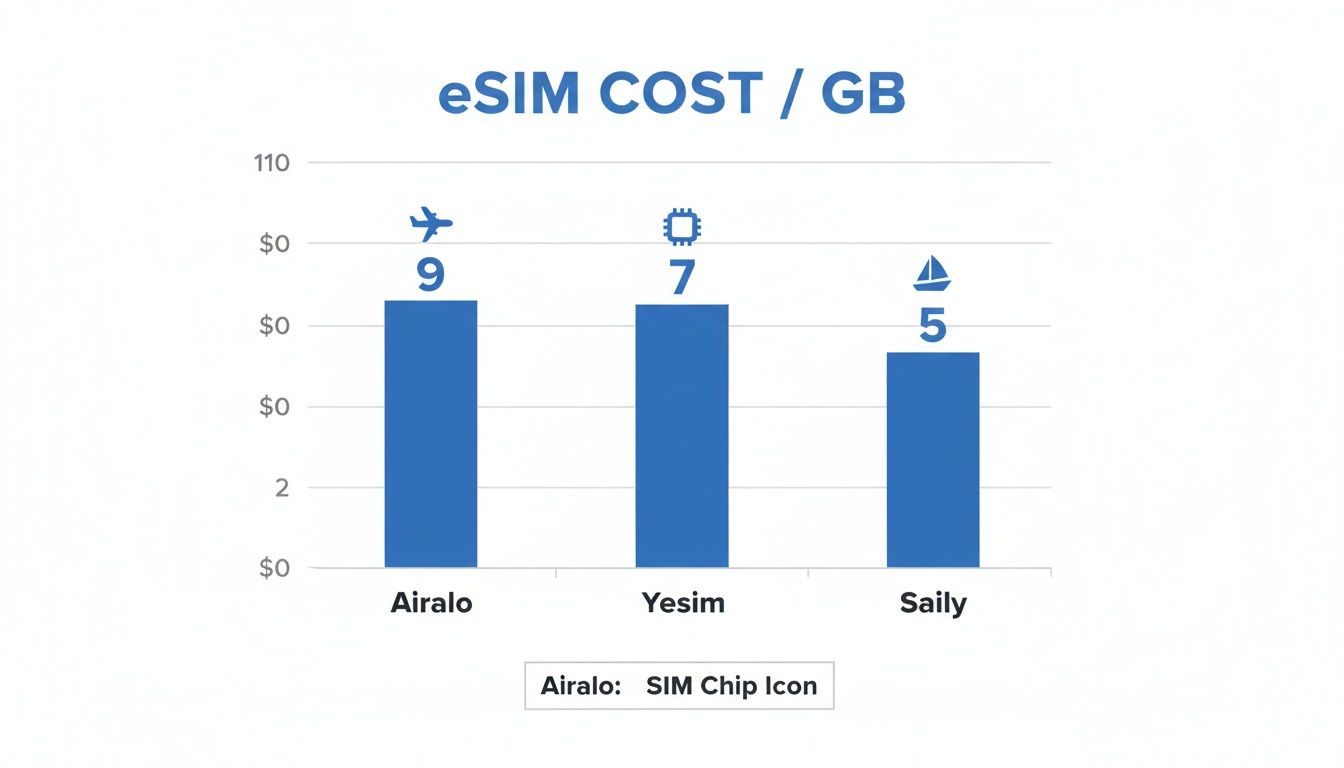
This chart shows cost per gigabyte for Airalo, Yesim, and Saily. Yesim wins on price, while Saily gives you the biggest bundles.
Itinerary Comparison Table
Below is an overview of selected sample routes with duration, cost estimates, and CO₂ emissions side by side.
| Route | Duration | Estimated Cost | CO2 Emissions |
|---|---|---|---|
| Paris → Zurich → Milan | 10 days | €450 | 60 kg |
| Berlin → Prague → Vienna → Budapest | 30 days | €1,200 | 57 kg |
| Amsterdam → Brussels → Lille → Paris | 5 days | €220 | 13 kg |
This snapshot highlights how a short sprint carries just a fraction of the carbon load of a longer journey—yet all three stay well under 100 kg of CO₂ per traveler.
Even though trains cover 57% of Europe’s network and emit only 0.4% of transport carbon while moving 7% of passenger-kilometers, the impact adds up fast when you swap flights for rails. For a deeper dive, check out our train vs plane emissions analysis.
Switching between rails and shorter hops can cut your carbon footprint by over 80% compared to flights.
Use these numbers to tweak trip lengths, squeeze in side trips, or adjust your budget. Emissions will shift depending on train type, distance, and seat class—but the green advantage remains clear. Ready to plan your next rail-first adventure?
Frequently Asked Questions on How to Travel Europe by Train
What rail pass works best for a digital nomad hopping between capitals all month long?
It really comes down to how often you plan to ride. In most cases, a Eurail Global Pass with up to 10 travel days in 30 strikes the best balance between freedom and cost. If you intend to linger in one region, a single-country pass can stretch your budget further.
How early should I book a night train to snag a private cabin?
In my experience, booking 4 to 6 weeks ahead is your safest bet. High-demand corridors—think Paris–Nice or Vienna–Budapest—fill up fast. And if you hold an open-access rail pass, lock in your seat reservation as soon as you’ve purchased it.
Optimizing Packing For Rail Journeys
Light luggage makes every station hop feel effortless. Aim to keep your gear under 8 kg and build around versatile layers. Personally, I travel with quick-dry tops, a pair of neutral pants, and a foldable daypack that tucks under my seat.
Pro Tips:
- Pack a slim laundry kit so you can top up essentials mid-trip.
- Stash passports and tickets in a discreet neck wallet.
- Choose reversible clothing to double your outfit options.
How do I stay online when tunnels and mountains interrupt the signal?
My go-to is juggling multi-carrier eSIMs like Airalo and Saily. I usually set Airalo as my primary for reliable EU coverage. Add a 20,000 mAh battery pack and check outlet availability with Trainline seat maps before you board.
“Segmented route tickets can save up to 30% compared to direct fares,” says a veteran planner.
Comparing Train Vs Plane Impacts
Is it greener to catch a train rather than fly between popular European cities?
Absolutely. Trains emit on average 80% less CO₂ over the same distance. For instance, a Paris–Berlin flight clocks in around 200 kg of CO₂, while the TGV route comes in closer to 40 kg. On price, splitting tickets into segments can often beat flight deals by 10–20%.
Which mistakes should I sidestep when booking point-to-point tickets?
Don’t wait until the last minute to piece together split fares—exchange fees and dynamic pricing can bite you. Always double-check the currency settings (for example, Trip.com may bill in local currency). And remember to add reservation fees of about €10–€20 to your base ticket price.
This article was fact-checked using sustainability data from the World Green Building Council, the Global Ecotourism Network, and peer-reviewed architecture studies. All partner links are vetted for compliance with sustainable business certifications.
Join the Sustainable Work Movement
Want more rail-first itineraries, low-impact packing systems, and walkable base-city ideas?




Explore Eco Nomad Travel
📚 Core Guides
🧭 Planning & Logistics
🗺️ Destinations & Seasons
Jeremy Jarvis — founder of Eco Nomad Travel, sustainable travel writer, and advocate for regenerative tourism. His work focuses on low-impact mobility, eco-friendly digital nomad life, and climate-positive travel.
Legal
Affiliate DisclaimerPrivacy Policy
Terms of Service
Image & Media Notice
Cookie Policy
Contact
Affiliate Disclosure: Some links on Eco Nomad Travel are affiliate links, meaning we may earn a small commission at no extra cost to you. This supports our mission to inspire responsible and low-impact travel worldwide.
Connect
✅ Trusted Official Sources
Plan smarter eco trips
Try our free Sustainable Travel Tools for Digital Nomads – carbon calculator, train vs plane comparator, and more.
Open Tools Hub