

Seeing Iceland in five days is absolutely possible, and you can have an incredible adventure without ever getting behind the wheel of a rental car. This guide is built around a low-impact approach: using Reykjavik as your home base and joining excellent guided tours from eco-conscious local operators to experience the country’s raw landscapes.
It’s a simple shift that shrinks your carbon footprint while deepening your connection to Iceland’s wild, pristine nature.
Your Sustainable Iceland in Five Days Adventure
A five-day trip gives you a perfect taste of Iceland—a little urban culture, a lot of raw, natural beauty. By going car-free, you’re actively helping to preserve the fragile ecosystems that make this island so unique.
Forget navigating unfamiliar roads or stressing about Iceland’s notoriously volatile gas prices (often over $8.50 per gallon or 280 Icelandic Króna per liter). Instead, you can kick back and let local experts show you their home.
This entire itinerary is built on smart, low-impact choices. It starts with staying in a walkable part of Reykjavik, which puts the city’s vibrant art scene, cozy cafes, and fascinating museums right at your doorstep.
For the bigger adventures, we’ve handpicked tour partners who are serious about their commitment to sustainable business practices. They typically use smaller, more fuel-efficient vehicles and employ local guides who offer incredible insights into the geology, folklore, and history of the places you’ll visit.
Why a Car-Free Itinerary Works for Iceland in Five Days
Honestly, a car-free approach just makes your trip easier. You won’t have to think about parking, deciphering winter road closures, or dealing with the high cost of rentals and fuel. All that energy goes directly into the experience itself.
You can fully immerse yourself in the dramatic landscapes of the Golden Circle or the South Coast without the distraction of driving.
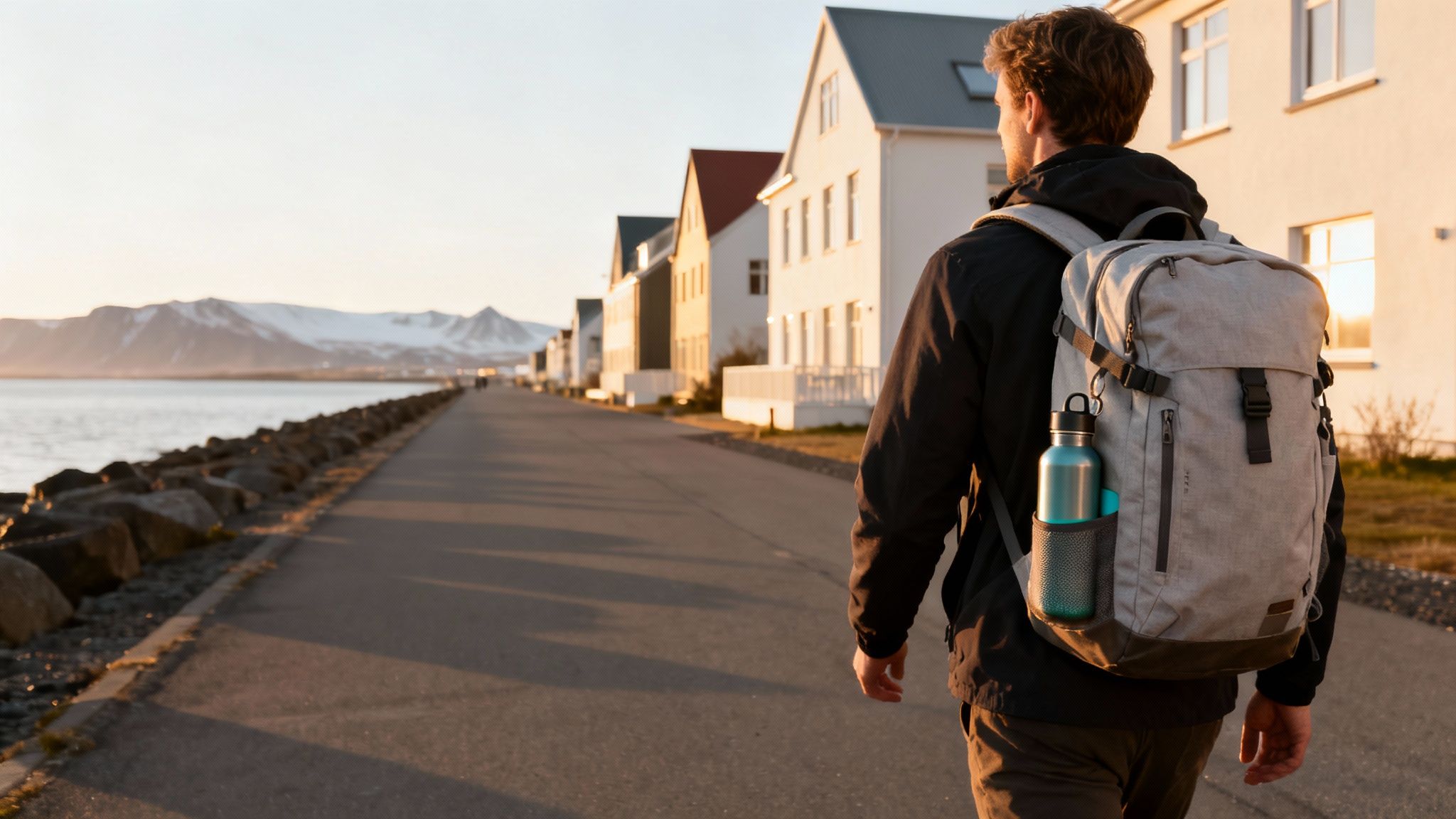
This style of travel also encourages you to pack mindfully. Fitting everything into a comfortable carry on backpack makes hopping on and off tour buses seamless. Essentials like a reusable water bottle are a must—Iceland’s tap water is among the purest in the world, so there’s zero need for single-use plastic bottles.
This journey is all about making thoughtful choices that both enhance your adventure and respect the destination. For a deeper look at these principles, our guide on the fundamentals of sustainable travel and tourism is a great place to start. It’s about creating a trip that is as memorable for you as it is gentle on the planet.
Essential Planning for Your Low-Impact Trip
Before you even think about packing for five days in Iceland, a little groundwork goes a long way. It makes the whole adventure smoother, cheaper, and much kinder to the places you’re visiting.
The single biggest factor? Timing. Summer brings the midnight sun, but it also brings the biggest crowds and sky-high prices.
I always recommend the shoulder seasons instead—think May, early June, September, or early October. You get a beautiful balance: the weather is often surprisingly pleasant, the main sights are far less crowded, and you’ll find better deals on everything from flights to guesthouses.
This isn’t just about saving a few bucks; it’s about traveling more intentionally. For climate-aware travelers, shoulder season routing really pays off. June often sees over 200,000 visitors, but May’s numbers are closer to 159,000. That shift means you could save up to 30% on stays while putting less strain on local infrastructure. You can dig into Iceland’s visitor trends on Travel Mole.
Choosing the right season is crucial for a low-impact trip. The table below breaks down what to expect throughout the year, helping you decide when to visit based on your priorities.
A Seasonal Guide to Your 5-Day Iceland Trip
| Season | Months | Pros | Cons |
|---|---|---|---|
| Summer (Peak) | Late June–August | Midnight sun, all roads open, warmer weather, puffin season. | Peak crowds, highest prices, requires booking far in advance. |
| Shoulder | May–early June, Sept–early Oct | Fewer crowds, lower prices, good driving conditions, Northern Lights possible in autumn. | Some highland roads may be closed, weather can be unpredictable. |
| Winter (Low) | Late Oct–April | Northern Lights, ice caves, dramatic snowy landscapes, fewest crowds. | Very short daylight hours, challenging driving conditions, many tours are weather-dependent. |
Ultimately, the shoulder months offer the best sweet spot for balancing good weather, lower costs, and a lighter footprint, which is exactly what this itinerary is built for.
Getting to and Around Reykjavik
Once you touch down at Keflavik Airport (KEF), your first move is getting to Reykjavik, which is about a 45- to 60-minute drive. Taxis are always waiting, but they’re the priciest option by a huge margin—often setting you back over $150 USD (around 20,800 ISK).
A much smarter, lower-impact choice is a pre-booked bus transfer. Companies like Welcome Pickups offer direct routes or even hotel drop-offs that are comfortable and efficient. Booking ahead takes all the stress out of arrival day and is way better for your wallet. To make sure you can access your booking info seamlessly, an eSIM from a service like Yesim is a lifesaver.
Choosing Your Sustainable Base
Where you stay really matters. For a car-free trip, setting up your base in a walkable part of downtown Reykjavik is non-negotiable. Look for guesthouses or hotels with recognized eco-certifications; this ensures you’re supporting businesses committed to things like waste reduction and energy efficiency.
Staying centrally means you can explore the city’s best spots—like Hallgrímskirkja church, the Harpa Concert Hall, and all the colorful side streets—completely on foot. It also puts you within easy walking distance of the pickup points for your day tours.
When it comes to tours, a little research makes a huge difference. Don’t just book the first one you see. Our guide on how to choose eco-friendly tour operators walks you through what to look for.
Smart Tech and Gear Prep
A few small pieces of gear can make a massive difference in your comfort and preparedness. Iceland uses the standard European plug (Type F), so a universal travel adapter is an absolute must-have for keeping your devices charged.
You’ll be leaning on your phone for everything from maps and tickets to photos, which makes a reliable portable power bank a true lifesaver. It’s especially crucial on long day tours where outlets are few and far between.
A few other small things I never travel without:
- A simple
cable organizer travelpouch to keep cords from becoming a tangled mess in your bag. - A
portable door lockfor extra peace of mind and security in your accommodation.
A little bit of planning here ensures you stay connected and ready to capture every moment without the dreaded dead-battery anxiety.
Your 5-Day Car-Free Iceland Blueprint
Here’s a day-by-day plan for a memorable, lower-impact adventure in Iceland in five days. Each day is built around trusted tour operators, letting you soak in the landscapes while keeping your footprint light. We’ll kick things off by exploring Reykjavik’s creative pulse on foot before heading out to see the country’s most iconic natural wonders.
This framework lets you experience the best of Iceland without the carbon cost or logistical headaches of a rental car. For the day trips, a good packable daypack is a must for stashing extra layers and snacks. I’ve also found that a pair of noise canceling earbuds makes the bus journeys between epic landscapes much more relaxing.
Going car-free is not only a win for the environment; it genuinely simplifies the trip. You can just sit back and watch the incredible scenery unfold without stressing over maps, icy roads, or parking.
Planning a low-impact Iceland trip really boils down to three key decisions.
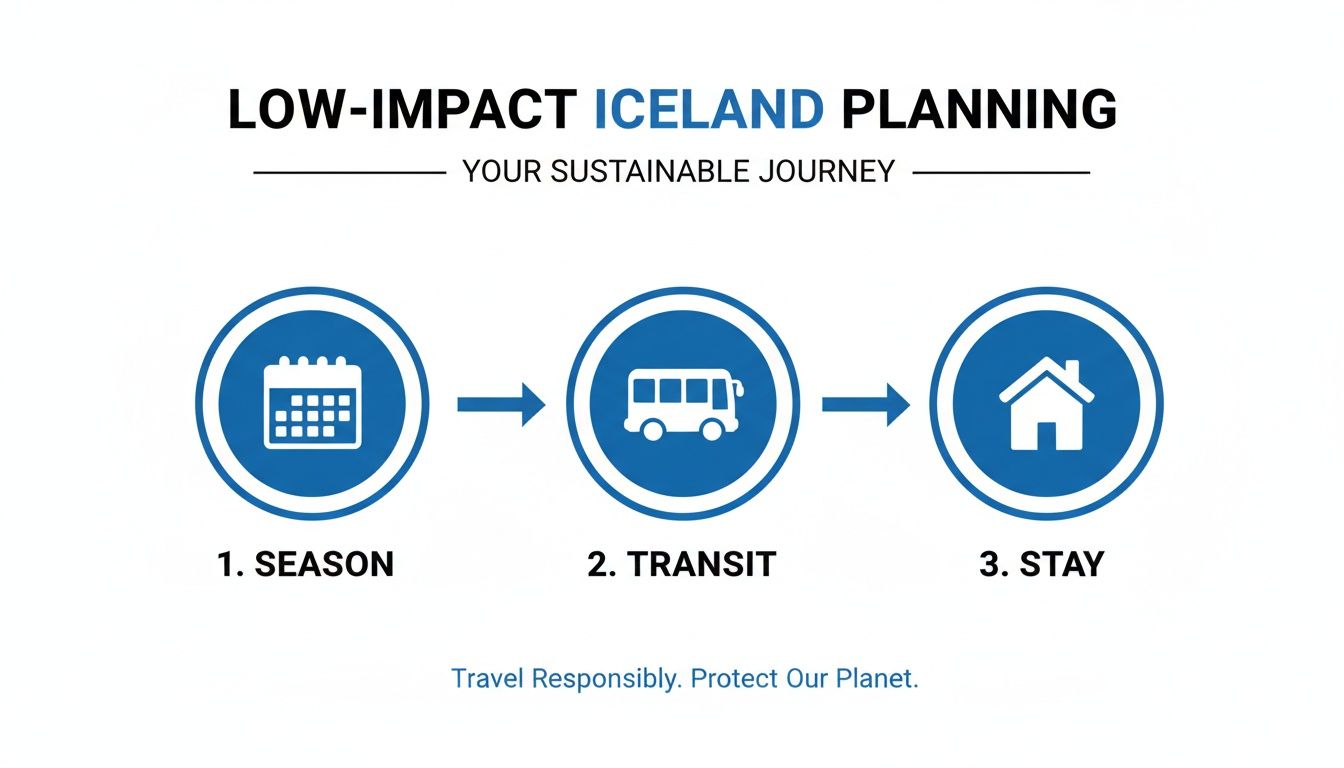
As the visual shows, your choice of season, how you get around, and where you stay are the foundational pieces of a truly sustainable Icelandic adventure.
Day 1: Arrival and Reykjavik on Foot
Your journey starts the moment you touch down at Keflavik Airport (KEF). Once you’ve grabbed your carry on luggage, find your pre-booked bus transfer for the scenic 45-minute drive into Reykjavik. For a seamless and affordable ride straight to your eco-certified guesthouse, I recommend a service like Welcome Pickups.
After you’ve dropped your bags and settled in, it’s time to explore Reykjavik by foot. The city is wonderfully compact and walkable. Spend your first afternoon wandering the colorful streets of the city center, soaking in the creative energy and admiring the striking architecture.
A perfect first stop is the iconic Hallgrímskirkja church. Take the elevator to the top for a panoramic view of the city’s vibrant rooftops stretching out to the bay. Later, stroll down to the waterfront to see the stunning Harpa Concert Hall and the sleek Sun Voyager sculpture. For dinner, you’re spoiled for choice with countless restaurants serving delicious, locally sourced Icelandic cuisine.
Day 2: The Golden Circle Adventure
Today is all about Iceland’s most famous trio of natural wonders: the Golden Circle. This is where a pre-booked, small-group tour really proves its worth. It’s not just a more sustainable choice; the insights from a local guide bring the landscape to life in a way you’d miss on your own. If you’re still planning your travel, you can find some great flight deals to Iceland on platforms like Aviasales to get things started.

A typical tour will hit these three incredible stops:
- Þingvellir (Thingvellir) National Park: A UNESCO World Heritage site where you can literally walk in the rift valley between the North American and Eurasian tectonic plates.
- Geysir Geothermal Area: Home to the mighty Strokkur geyser, which erupts every 5–10 minutes, launching a column of boiling water up to 130 feet (about 40 meters) into the air.
- Gullfoss Waterfall: A breathtakingly powerful, two-tiered waterfall that thunders into a rugged canyon. The sheer scale of it is something you have to feel to believe.
Don’t forget to pack your reusable water bottle—you can refill it with pure, cold Icelandic water right from the taps at the visitor centers.
Day 3: South Coast Waterfalls and Black Sand Beaches
Iceland’s South Coast is a photographer’s dream, a coastline packed with one dramatic landscape after another. A guided day tour from Reykjavik is the best way to see the highlights without the stress of driving. Make sure you have a solid lightweight travel backpack to carry your waterproofs and some snacks for the road.
Your trip starts in the Capital Region, where 89% of visitors spend their time, and then moves to the Southern Region, which sees a 79% visitor share. Choosing low-impact buses for these routes instead of a rental car is a huge win, cutting your travel emissions by up to 90%. You can discover more insights about Iceland tourism statistics to see why these choices matter.
Key sights on a South Coast tour usually include:
- Seljalandsfoss: The famous waterfall you can actually walk behind (as long as conditions are safe).
- Skógafoss: A massive, powerful cascade where you can climb the staircase alongside it for an incredible top-down view.
- Reynisfjara Black Sand Beach: Famous for its otherworldly basalt columns, roaring waves, and striking sea stacks just offshore.
A Quick Safety Note: The waves at Reynisfjara are famously unpredictable and dangerous. Always keep a very safe distance from the water’s edge and never, ever turn your back on the ocean.
Day 4: A Geothermal Spa Day
After a couple of busy days exploring, today is all about one of Iceland’s most unique experiences: soaking in a geothermal spa. You have two fantastic options, and both are easy to reach from Reykjavik with pre-booked bus transfers.
The world-famous Blue Lagoon is an icon, known for its milky-blue, mineral-rich waters and silica mud masks. It’s a classic Icelandic experience for a reason. For something a bit different, the newer Sky Lagoon offers a stunning infinity-edge pool with ocean views and a unique seven-step “ritual” for a more tranquil spa day. To simplify international bookings, consider using a travel platform like Trip.com.
Whichever you choose, booking your ticket and transfer well in advance is absolutely essential. This is the perfect way to relax and soothe tired muscles. I always pack my quick dry travel towel for these trips; it’s light and saves me from having to pay rental fees.
Day 5: Final Moments and Departure
On your last morning, treat yourself to a leisurely Icelandic breakfast at a local bakery. If your flight schedule allows, you might have time for some last-minute souvenir shopping or a visit to one of Reykjavik’s excellent museums, like the National Museum of Iceland.
Your pre-booked bus will take you back to Keflavik Airport, making for a totally stress-free departure. As you head home, you’ll be carrying memories of unbelievable landscapes and the quiet satisfaction of having explored Iceland in a more thoughtful, sustainable way. Before you go, make sure you protect your trip with reliable travel insurance from a provider like VisitorsCoverage.
This car-free itinerary for Iceland in five days is proof that you can have an epic adventure while traveling responsibly. By using Reykjavik as a base and opting for guided tours, you directly support the local economy and massively reduce your environmental impact.
Sustainable Packing and Smart Travel Tips
Packing smart is probably the single best thing you can do to make a trip to Iceland smooth, sustainable, and genuinely enjoyable. The weather here is famously all over the place, which makes high-quality layers and reliable waterproof gear your absolute best friends. A well-thought-out packing list means you stay comfortable without having to buy last-minute gear or create unnecessary waste.
The real goal? Fit everything into one bag, ideally a comfortable carry-on backpack. It’s not just about saving on checked bag fees; it makes navigating bus transfers and guesthouse stairs so much easier. Trust me, you’ll be glad you did. To pull this off, compression packing cubes are a complete game-changer. They organize your clothes while squeezing out every last bit of air, creating a shocking amount of space.
Beyond the clothes, a few small choices can make a huge dent in your environmental impact. Switching from liquid toiletries to solid versions—like a solid shampoo bar and biodegradable soap—is an easy win against single-use plastic. They’re also lighter and, crucially, will never leak in your bag.
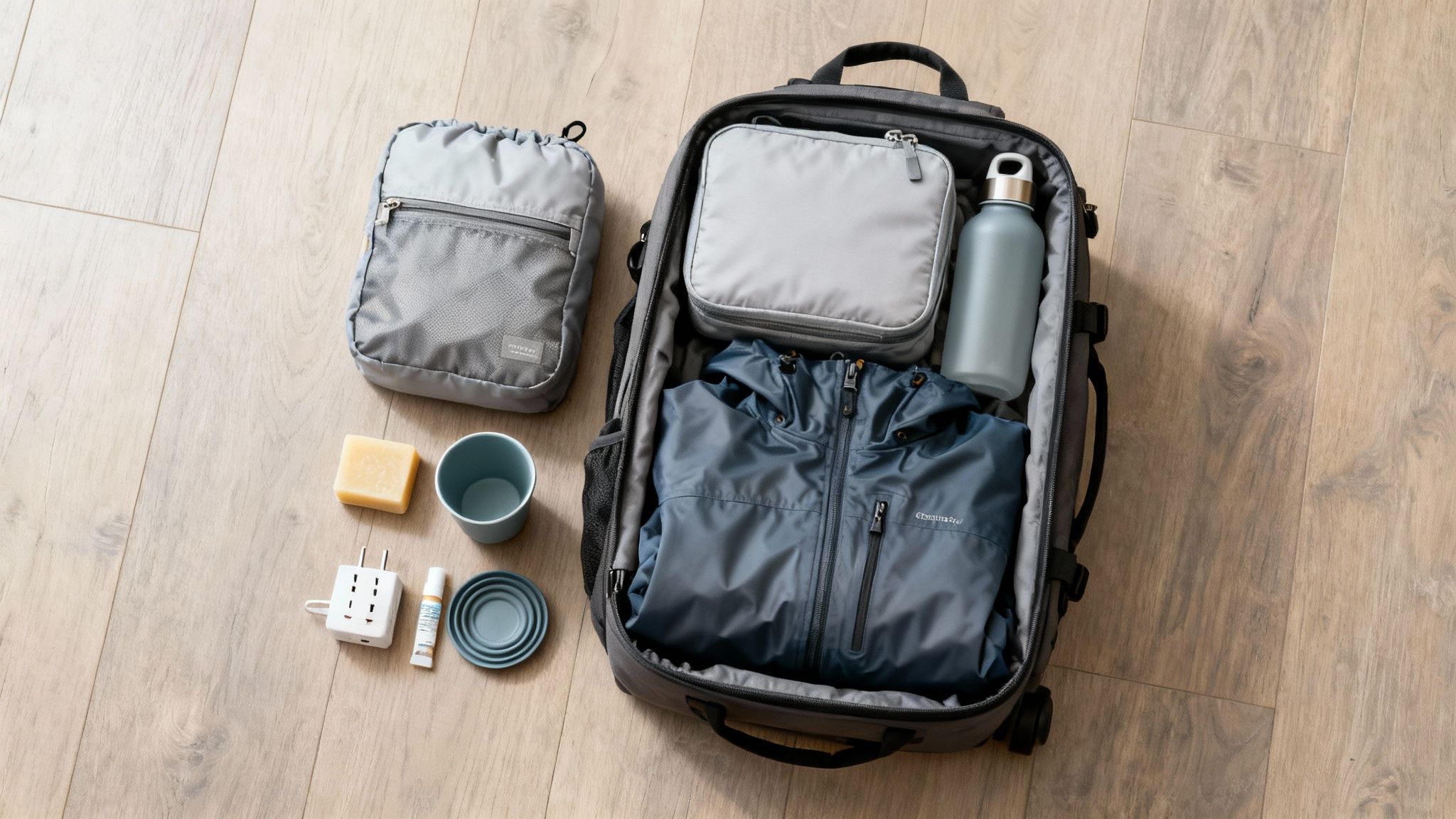
Your Essential Iceland Packing Checklist
For a five-day trip based out of Reykjavik with day tours, you don’t need expedition-level kit. What you do need are versatile, performance-oriented layers you can add or shed as the conditions shift throughout the day. Here’s a practical list to get you started.
Outerwear (The Most Important Layer)
- A fully waterproof and windproof jacket: This is non-negotiable. Aim for a shell jacket that you can comfortably wear over your other layers without feeling constricted.
- Waterproof pants: Absolutely essential for staying dry near waterfalls or when a sudden downpour hits. You can just pull them on right over your hiking pants.
Mid and Base Layers
- Fleece or insulated jacket: This is your main warmth layer. A lightweight down or synthetic insulated jacket is perfect.
- Thermal long-sleeve shirts (2-3): Wool or synthetic base layers are key because they wick moisture away from your skin, keeping you warm even if you sweat. Avoid cotton at all costs.
- Hiking pants or comfortable trousers (2 pairs): Stick with materials that are quick-drying.
Footwear and Accessories
- Waterproof hiking boots: Make sure they are well broken-in before you arrive. Good grip is crucial for walking on Iceland’s often uneven and slick terrain.
- Warm wool socks (3-4 pairs): They’ll keep your feet warm even if they happen to get a bit damp.
- Warm hat, gloves, and a scarf or buff: These are vital for protecting yourself from Iceland’s famously biting winds.
For a more in-depth look at minimalist packing, our guide on how to pack for low-impact travel has more detailed strategies and checklists.
Eco-Friendly Practices On the Ground
That sustainable mindset shouldn’t end once your bag is packed. Once you’re in Iceland, your actions have a direct effect on its famously delicate environment. If you remember one thing, make it this: always stay on marked trails. The moss and fragile vegetation can take decades, even centuries, to recover from a single misplaced footstep.
Minimizing waste is another huge one. Iceland’s tap water is some of the purest and best-tasting in the world, so there is zero reason to ever buy bottled water. Carry a collapsible water bottle with you and refill it every chance you get.
Iceland is home to incredible wildlife, including puffins (in summer), seals, and Arctic foxes. Always observe them from a respectful distance and never, ever feed them. Your presence shouldn’t alter their natural behavior in any way.
Finally, a quick tip on money. Using a credit card with no foreign transaction fees will save you a surprising amount over the course of the trip. For peace of mind, keeping your cards and passport in an RFID blocking wallet is a simple but effective way to protect your information. These small, conscious choices really do add up, ensuring your adventure is as respectful as it is remarkable.
Editor’s Pick: The Best Low-Impact Golden Circle Tour
When you’re visiting Iceland’s famous Golden Circle, your choice of tour operator really matters. For a trip that respects this fragile landscape, our top pick is always a provider that specializes in small-group tours with a proven, transparent commitment to sustainability.
We don’t just pull these recommendations out of thin air. They’re based on clear criteria: official eco-certifications, the use of more fuel-efficient vehicles, and a clear dedication to hiring knowledgeable local guides. This approach ensures your visit contributes positively to the local economy while minimizing your footprint on Iceland’s most cherished natural sites.
A smaller group size also means a much more personal experience. You get better access to your guide, more time at each stop, and a less crowded view of sights like Gullfoss waterfall and the Geysir geothermal area.
To understand what makes a tour truly sustainable beyond the marketing claims, you can learn more in our dedicated guide: https://economadtravel.com/what-makes-a-tour-truly-sustainable-2025/. By choosing thoughtfully, you help protect these incredible landscapes for future visitors and your choice has a real, positive ripple effect on the local community and environment.
Tying It All Together: Your Iceland in Five Days Blueprint
So, there you have it. An eco-conscious trip to Iceland in five days isn’t about sacrifice; it’s about making smarter choices that lead to a better, more intentional adventure.
This guide is built around a simple framework: use Reykjavik as your home base, travel car-free with vetted small-group tours, and you’ll automatically support local communities while shrinking your travel footprint. The real magic happens when you visit during the shoulder seasons like May or September. You dodge the worst of the crowds and get a much more authentic feel for the place.
The other half of the puzzle is packing light and right. A versatile layering system, truly waterproof outerwear, and broken-in hiking boots are your non-negotiables. Using smart tools like compression packing cubes helps you fit everything into a carry on backpack, making your journey smoother from start to finish.
And don’t forget the small things that make a big difference. A reusable water bottle for Iceland’s incredibly pure tap water and a solid shampoo bar are easy wins for cutting down on waste.
Think of this as your final checklist for an incredible, low-impact adventure. By embracing these ideas, you get a trip that’s not only memorable but genuinely respectful of the stunning landscapes you came all this way to see. It’s about traveling with intention, one thoughtful step at a time.
Key Takeaways
- Go Car-Free: Base yourself in Reykjavik and use small-group tours to see major sights like the Golden Circle and South Coast. This reduces your carbon footprint and simplifies logistics.
- Travel in Shoulder Season: Visiting in May, early June, September, or early October means fewer crowds, lower prices, and a more sustainable experience.
- Pack Smart and Light: Focus on waterproof layers, broken-in hiking boots, and use compression packing cubes to fit everything in a carry-on.
- Prioritize Low-Impact Choices: Always stay on marked trails, carry a reusable water bottle to avoid single-use plastic, and choose eco-certified accommodations and tour operators.
- Plan Ahead: Pre-book airport transfers, day tours, and geothermal spa tickets well in advance to save money and ensure availability.
Low-Impact Travel Tools (Worth It)
Also, if you’re planning a trip and want to keep things simple, these tools help you travel smoother while staying mindful about impact.
Get an eSIM for reliable data → Disclosure: Partner link. No extra cost to you.
Pre-book a transfer for easy arrivals → Disclosure: Partner link. No extra cost to you.
Frequently Asked Questions About Your Iceland Trip
We’ve walked through the five-day itinerary, the packing list, and how to keep your trip low-impact. But you probably still have a few questions floating around. Let’s get them answered so you can book with confidence.
How Much Should I Budget for 5 Days in Iceland?
Iceland has a reputation for being pricey, and it’s not wrong. But traveling car-free is a huge money-saver. For a comfortable mid-range trip, I’d suggest planning for $200–$250 USD per person, per day. That should comfortably cover your tours, food, and a dip in a geothermal spa.
Here’s how that might break down:
- Tours: Small-group day trips usually land somewhere between $80 and $150 USD a pop.
- Food: Eating out for every single meal will drain your wallet fast. A good mix is budgeting $60–$80 USD daily, hitting bakeries and grocery stores for snacks and lunches to balance out nicer evening meals.
- Accommodation: A solid eco-certified guesthouse or budget hotel in Reykjavik will run you $120–$200 USD per night.
Keep in mind, that’s not including your flights or airport transfer. The best way to keep costs in check is to travel during the shoulder season and book your tours and stays well ahead of time.
Is 5 Days Enough to See the Northern Lights?
It can be! But you need two things: the right timing and a bit of luck. The Northern Lights season runs from late September to early April, so you must visit then.
Even during the season, sightings are never a sure thing—it all comes down to solar activity and whether the skies are clear. To give yourself the best possible shot, book a dedicated Northern Lights tour. The guides are pros at escaping Reykjavik’s light pollution and use sophisticated forecasts to hunt down the aurora.
What Is the Best Month to Visit Iceland for 5 Days?
If I had to pick one, it would be September. It’s the sweet spot. The weather is still pretty stable, the summer crowds have thinned out, and the Northern Lights are just starting to make an appearance. All the main tours are running and the roads are clear.
May is another fantastic option, with the bonus of ridiculously long daylight hours and fields of blooming lupine.
Can You Really Do Iceland Without a Car?
One hundred percent yes. In fact, this whole guide is proof that not only is it possible, but it’s often a better way to experience the country.
Basing yourself in walkable Reykjavik and using high-quality guided tours lets you see iconic spots like the Golden Circle and the South Coast without the hassle and environmental footprint of a rental car. You’ll save a ton on fuel and insurance, and you’ll get insights from local guides that you’d never find on your own.
What Should I Actually Wear in Iceland?
Layers, layers, and more layers. The weather can flip from sunny to sideways rain in ten minutes, even in summer.
Your non-negotiable packing list should include:
- A fully waterproof and windproof jacket and pants (the outer shell).
- A warm mid-layer, like a fleece or a packable down jacket.
- Thermal base layers (merino wool is ideal; avoid cotton at all costs).
- Waterproof hiking boots with grippy soles.
- A warm hat, gloves, and a scarf or buff.
And a quick-dry travel towel is a brilliant little extra to bring for your geothermal spa day.
Do I Need Cash, or Is a Card Fine?
Iceland is practically a cashless society. You can use a credit or debit card for almost everything, from a coffee in a remote café to a hot dog from a street stand. You could easily go the whole trip without touching Icelandic Króna (ISK).
That said, it never hurts to have a small amount of cash (maybe $50 USD worth) tucked away for a true emergency. Just make sure your card has no foreign transaction fees, and keep it safe in an RFID-blocking wallet.
What Kind of Power Adapter Will I Need?
Iceland uses the standard European two-pin plug, also known as Type F. If you’re coming from the US, UK, or another region with different outlets, you’ll need a universal travel adapter.
Since your phone will be your camera, map, and lifeline, a good portable power bank is also a must-have. You’ll be glad you have it when you’re out on a long day tour.
Is Iceland Safe for Solo Travelers?
Iceland is consistently named one of the safest countries on the planet, which makes it a phenomenal destination for solo travelers. Crime is incredibly low.
The real safety concerns here come from Mother Nature. You need to respect the wildness of the place—unpredictable weather, sneaker waves on black sand beaches, and icy paths near waterfalls. As long as you listen to safety warnings and travel with experienced guides, you’ll have an amazing and secure adventure.
Join the Sustainable Work Movement
Want more rail-first itineraries, low-impact packing systems, and walkable base-city ideas?
This article was fact-checked using sustainability data from the World Green Building Council, the Global Ecotourism Network, and peer-reviewed architecture studies. All partner links are vetted for compliance with sustainable business certifications.
