

Planning a trip that’s both meaningful and mindful can feel challenging, especially in a country as vast and diverse as India. We’ve curated a list of incredible India tourism spots perfect for slow travelers and digital nomads who prioritize sustainability. This guide moves beyond typical itineraries, focusing on destinations easily accessible by rail. This approach promotes a lower-carbon footprint while maximizing cultural immersion and supporting local economies.
From the serene backwaters of Kerala to the majestic Himalayan foothills, each location offers a unique way to experience India’s rich heritage responsibly. Consequently, you can forget rushed schedules and internal flights; these spots are designed for deep connection with places and people. We will show you precisely how to navigate this vibrant country using its extensive and efficient train network, a cornerstone of sustainable travel. You will discover how to find eco-conscious accommodations, from regenerative farm stays to community-run guesthouses.
This listicle provides actionable advice on engaging in low-impact activities that directly support local communities. Whether you’re packing your lightweight travel backpack for a month-long journey or a short, immersive escape, these destinations prove that responsible, slow travel can be truly transformative. Furthermore, this guide is your blueprint for an adventure that respects both culture and climate, providing practical steps for a rail-first journey through India.
1. Taj Mahal, Agra: A Low-Carbon Approach to an Iconic Wonder
Visiting iconic India tourism spots like the Taj Mahal doesn’t have to come with a heavy carbon footprint. While this 17th-century marble mausoleum is one of the world’s most recognized landmarks, its location in Agra makes it an ideal destination for sustainable, rail-first travel. Approaching this UNESCO World Heritage Site by train from hubs like Delhi or Jaipur eliminates the need for domestic flights, significantly reducing your travel emissions from the start.

The journey itself becomes part of the experience. The overnight train from Delhi, for example, is not only a low-carbon choice but also a practical one. It saves you the cost of a night’s accommodation and allows you to arrive in Agra refreshed and ready for a sunrise visit. Once there, Agra serves as a walkable base city for exploring other Mughal marvels like the Agra Fort and Fatehpur Sikri. These are all accessible via local electric rickshaws or public buses.
This approach transforms a typical tourist stop into a meaningful, slow-travel immersion. You can engage more deeply with the local culture, support smaller transport operators, and minimize your environmental impact. Be sure to pack your reusable water bottle to stay hydrated in the heat without creating plastic waste.
Best Season & Getting There
Best Season: The shoulder seasons of February-March and September-October offer the best balance of pleasant weather and manageable crowds. The winter months (November-January) can be foggy, obscuring views, while summer (April-June) is intensely hot.
Rail Route: The most popular route is from Delhi. The Gatimaan Express is the fastest (under 2 hours), but several overnight trains like the Taj Express offer a classic, budget-friendly journey (around 7-8 hours). You can book tickets in advance through the official IRCTC website or platforms like Trip.com.
Low-Impact Activities in Agra
- Sunrise Walk: Arrive early to witness the Taj Mahal’s marble shift colors with the morning light.
- Explore Agra Fort: Discover this massive red sandstone fortress, a UNESCO site with a rich history.
- Mehtab Bagh: Visit these gardens across the river for a stunning, crowd-free sunset view of the Taj.
- Local Food Tour: Use a local guide to find authentic street food stalls and support small businesses.
2. Kerala Backwaters, Kochi & Alleppey: A Regenerative Waterway Journey
For a truly immersive slow-travel experience, few India tourism spots can rival the serene ecosystem of the Kerala Backwaters. This vast network of lagoons, lakes, and canals offers a unique opportunity to explore a landscape where life moves at the pace of the water. Accessible via major rail hubs like Kochi and Alleppey, this region allows you to ditch domestic flights. Instead, you can embrace a journey deeply connected to local life and the environment.
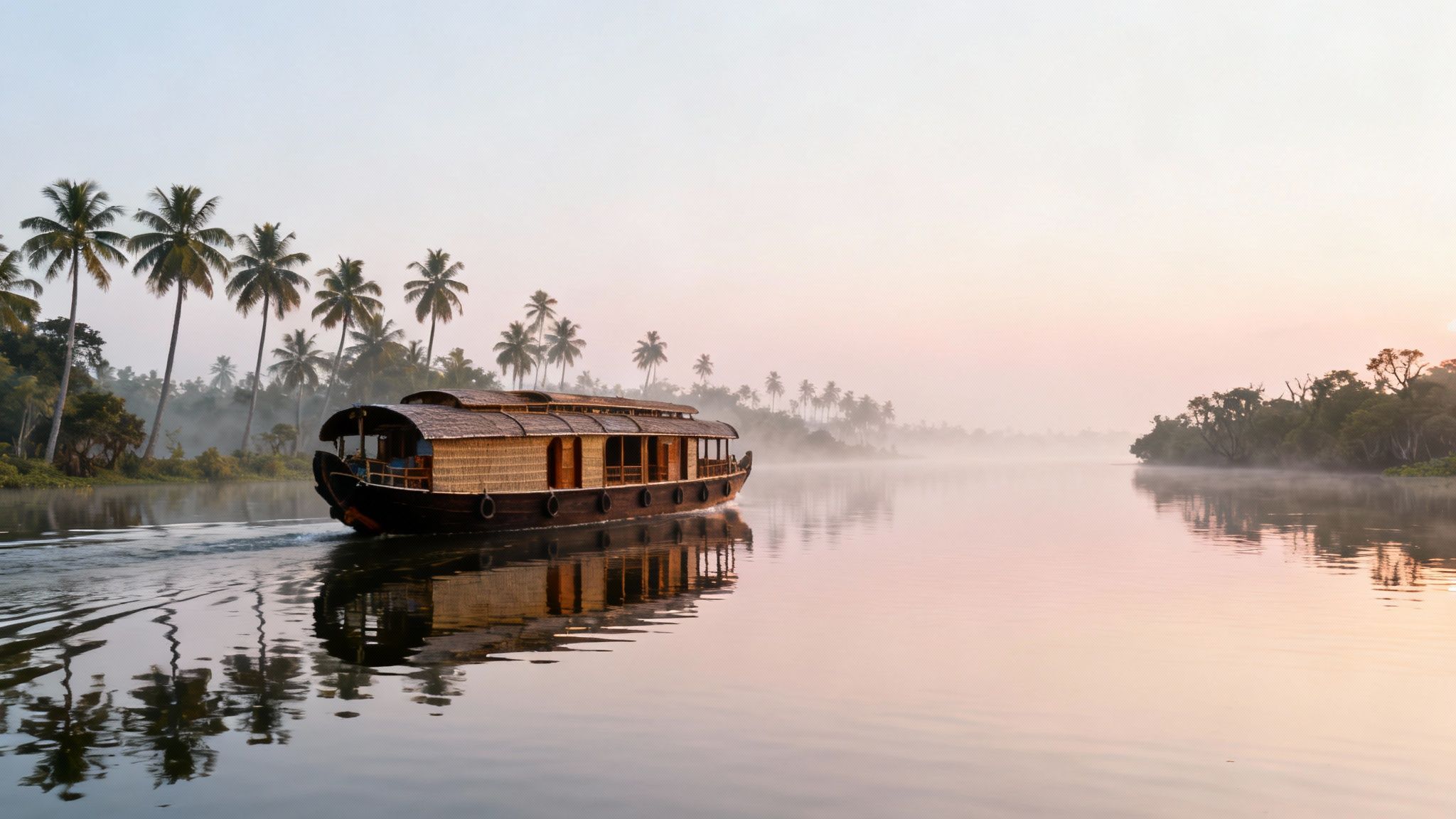
The experience is centered on regenerative tourism. Instead of large, corporate chains, you can opt for houseboats operated by local families. These are often powered by traditional methods and support village economies built on fishing and spice cultivation. Staying in a homestay in Alleppey, a quieter base than the more tourist-focused Kochi, allows for direct cultural exchange. Moreover, it ensures your money supports the community. This approach turns a scenic trip into a meaningful connection with one of India’s most unique ecosystems.
A multi-day backwater tour is essential for getting beyond the crowded main channels and into remote villages. Be sure to pack your biodegradable soap and reef safe sunscreen to minimize your impact on the delicate waterways.
Best Season & Getting There
Best Season: The monsoon and post-monsoon months (May-September) offer an authentic experience with lush green landscapes, fewer tourists, and lower prices. The peak season (December-February) has pleasant weather but is significantly more crowded.
Rail Route: Kochi (Ernakulam) and Alleppey (Alappuzha) are the primary rail gateways. Trains from major cities like Mumbai, Bangalore, and Chennai connect here. The journey from Kochi to Alleppey is a short and scenic train ride (around 1.5 hours) or a 2-hour local boat ride. You can book rail tickets via the IRCTC website or an aggregator like Trip.com.
Low-Impact Activities in the Backwaters
- Multi-Day Houseboat Tour: Choose a 2-3 day tour from a local, eco-certified operator to explore remote canals.
- Village Homestay: Stay with a local family in Alleppey to learn about Keralan cuisine and daily life.
- Explore Fort Kochi: Discover the historic port, Chinese fishing nets, and colonial architecture on foot.
- Kayaking the Canals: Rent a kayak to navigate the smaller, quieter waterways that larger boats cannot access.
3. Jaipur’s Old City & Pink City Heritage, Rajasthan
Exploring the vibrant, grid-patterned streets of Jaipur offers a unique lesson in sustainable urban heritage. As one of the most well-connected India tourism spots, the “Pink City” is an ideal anchor for a rail-based Rajasthan itinerary. Its status as a UNESCO World Heritage Site isn’t just for its iconic pink-hued architecture; it’s a testament to its 18th-century urban planning. This makes the historic core incredibly walkable and easy to navigate without a car.
The city’s role as a major rail hub allows travelers to arrive directly from Delhi, Agra, or Mumbai. This creates a seamless multi-city journey that completely avoids domestic flights. Booking an overnight train from Delhi is a classic low-impact strategy. You not only cut emissions but also save on a night’s accommodation, arriving early in the morning ready to explore the bustling bazaars as they come to life.
Basing yourself in the Old City means you can access major sights like the Hawa Mahal, City Palace, and Johari Bazaar entirely on foot. This slow-travel approach supports local economies directly. For instance, you support family-run guesthouses and the small dhaba restaurants serving authentic Rajasthani cuisine. Remember to bring a packable daypack for daily essentials as you wander through the narrow, fascinating lanes.
Best Season & Getting There
Best Season: The cooler, drier months from October to March are ideal for comfortable exploration. The intense heat of summer (April-June) and the monsoon season (July-September) can make sightseeing challenging.
Rail Route: The overnight Ajmer Shatabdi or Delhi-Jaipur Double Decker trains from Delhi are popular choices (around 5-6 hours). These services deliver you to Jaipur early in the morning, maximizing your first day. You can book tickets via the official IRCTC website or an easy-to-use platform like Trip.com.
Low-Impact Activities in Jaipur
- Early Morning Bazaar Walk: Explore Johari and Bapu Bazaars between 6-8 AM to see local life unfold before the tourist crowds arrive.
- City Palace at Opening: Visit this royal complex right at opening time to enjoy its courtyards in the cool morning air with fewer people.
- Hire a Local Walking Guide: Support the local community by hiring a guide from your homestay to navigate the intricate lanes and discover hidden artisan workshops.
- Eat at Local Dhabas: Skip the tourist traps and enjoy authentic, affordable meals (around ₹80-200, or $1-$2.50 USD) at neighborhood eateries.
4. Varanasi’s Ghats & Ganges River, Uttar Pradesh
Experiencing deeply spiritual India tourism spots like Varanasi can be done thoughtfully and with minimal impact. As one of the world’s oldest living cities, Varanasi offers a profound cultural immersion along its sacred ghats (river steps). Reaching this Hindu holy city by train is a core part of a sustainable travel strategy. It connects you to North India’s spiritual heartland without relying on carbon-intensive domestic flights.
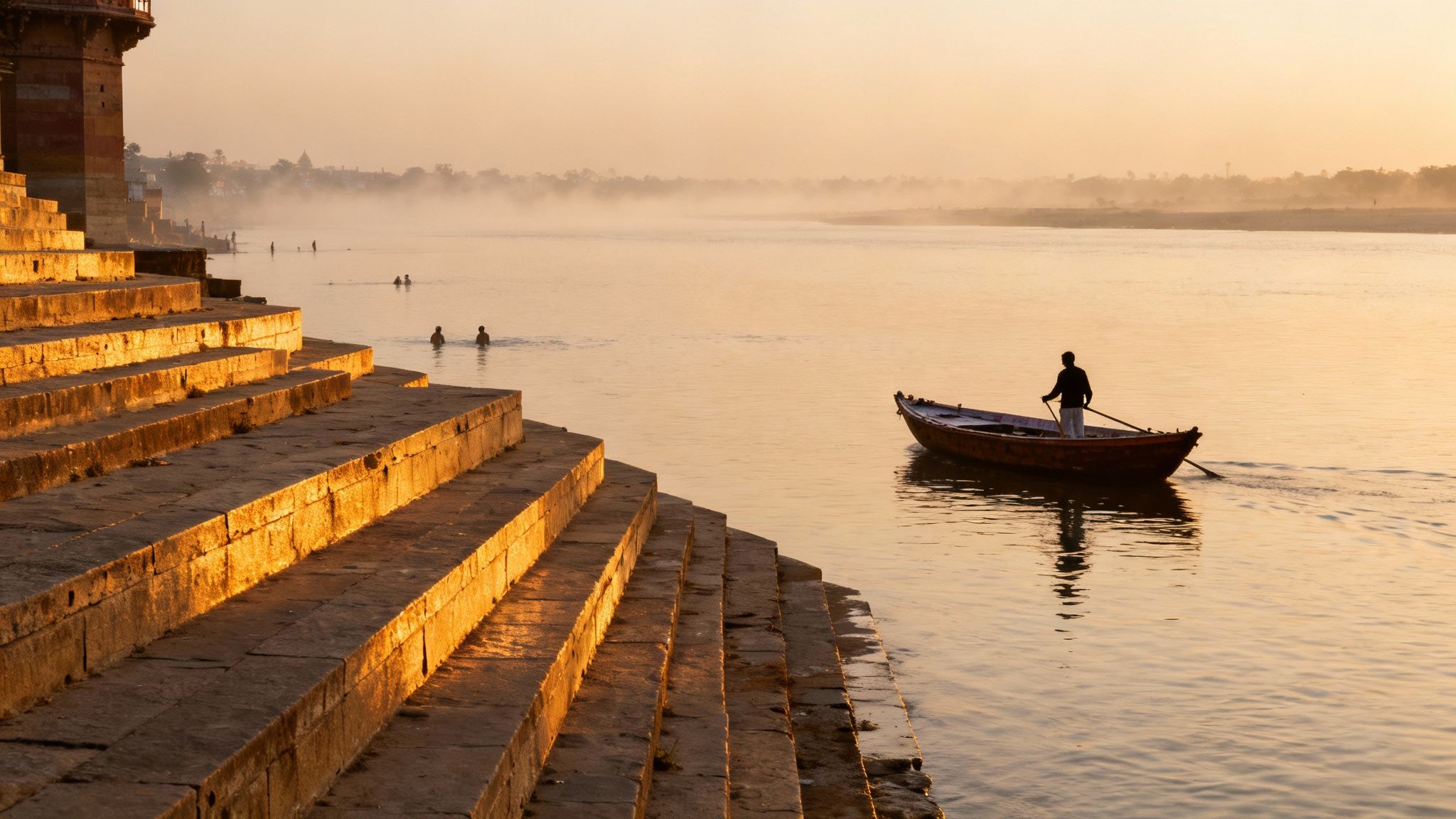
The rail journey to Varanasi Junction is not just about reducing emissions; it’s a transition into the region’s unique rhythm. Opting for an overnight train from a hub like Delhi or Kolkata saves on accommodation costs and allows you to arrive ready to explore. Once in Varanasi, the city’s ancient, labyrinthine lanes are best navigated on foot. Meanwhile, electric rickshaws provide low-impact transport for longer distances. This car-free approach lets you engage directly with the city’s vibrant daily life.
By staying for at least two to three nights, you allow the initial sensory overload to transform into genuine appreciation. You can support local boatmen, hire knowledgeable local guides, and dine at small, family-run eateries. Remember to pack a collapsible water bottle and use filtered water sources to avoid single-use plastics.
Best Season & Getting There
Best Season: The cooler, dry winter months from October to March are ideal. The weather is pleasant for walking the ghats and taking boat rides. The intense heat of summer (April-June) and the monsoon rains (July-September) can make exploration challenging.
Rail Route: Varanasi is a major rail hub. Multiple overnight trains connect it to Delhi, such as the Shiv Ganga Express. The journey takes around 10-12 hours, making it perfect for preserving daytime for exploration. You can book tickets via the official IRCTC site or user-friendly platforms like Trip.com.
Low-Impact Activities in Varanasi
- Sunrise Boat Tour: Arrange a pre-dawn rowboat cruise (not a motorboat) to witness the ghats come alive with morning rituals.
- Explore the Ghats on Foot: Walk from Assi Ghat in the south to Manikarnika Ghat, observing daily life and ancient temples.
- Attend the Ganga Aarti: Witness the evening worship ceremony at Dashashwamedh Ghat, a powerful and atmospheric ritual.
- Old City Heritage Walk: Hire a local guide to navigate the narrow alleys and understand the spiritual significance of the city.
5. Hampi’s Ruins & Temple Complex, Karnataka
The ancient, boulder-strewn landscape of Hampi offers a profound lesson in slow travel. This UNESCO World Heritage Site, a sprawling open-air museum of the Vijayanagara Empire’s remnants, is one of those rare India tourism spots best explored without a car. Its remote location in northern Karnataka and minimal modern infrastructure naturally encourage a low-carbon footprint. This makes it a perfect match for eco-conscious digital nomads.
The journey to Hampi is an integral part of its sustainable appeal. Taking an overnight train from a hub like Bangalore not only eliminates a domestic flight but also saves on a night’s accommodation. Upon arrival, the primary modes of transport are your own two feet, a rented bicycle, or a local auto-rickshaw. This car-free approach allows for an unhurried, intimate connection with the surreal scenery and its rich history.
Embracing this pace means you can fully absorb the atmosphere, from the intricate carvings of the Virupaksha Temple to the quiet majesty of the Royal Enclosure. By staying in village guesthouses and hiring local guides, you directly support the community preserving this historical treasure. Remember to carry a universal travel adapter to charge devices and electrolyte tablets; the arid climate requires constant hydration.
Best Season & Getting There
Best Season: The cooler, drier months from October to February provide the most comfortable conditions for exploring the vast, open-air ruins. The shoulder seasons of September and March are also pleasant, with fewer crowds. Avoid the intense heat of summer (April-June).
Rail Route: The overnight Hampi Express from Bangalore (Bengaluru) is a classic choice, taking around 8-9 hours and arriving early in the morning. This allows you to check in and start exploring before the midday sun. You can book tickets via the official IRCTC website or an aggregator like Trip.com.
Low-Impact Activities in Hampi
- Bicycle Exploration: Rent a bicycle for a few dollars a day to freely navigate the sprawling temple complexes at your own pace.
- Coracle Boat Ride: Take a traditional, circular coracle boat on the Tungabhadra River for a unique perspective of the ruins and to support local boatmen.
- Hemakuta Hill Sunset: Hike up Hemakuta Hill in the late afternoon to watch the sunset cast a golden glow over the granite boulders and temples.
- Hire a Local Guide: Engage a local, knowledgeable guide to bring the history of the Vijayanagara Empire to life while ensuring your money benefits the community directly.
6. Darjeeling Tea Gardens & Himalayan Hill Station, West Bengal
For a journey that embraces slow travel, the misty hills of Darjeeling are one of the most rewarding India tourism spots. This UNESCO World Heritage region, famous for its world-class tea, is a prime example of how multi-modal, low-carbon travel can enhance an itinerary. The classic approach involves an overnight train from Kolkata to New Jalpaiguri (Siliguri). This is followed by a ride on the iconic Darjeeling Himalayan Railway, a heritage narrow-gauge steam train that winds its way up into the mountains.

This rail-first method replaces a carbon-intensive flight with an immersive experience. The overnight journey (around 14 hours) saves on accommodation costs, and arriving in the morning aligns perfectly with the “Toy Train” departure. Once in Darjeeling, the town is highly walkable, and shared jeeps provide efficient transport to nearby viewpoints and monasteries. Staying in a tea estate homestay further reduces your impact. It directly supports local agricultural families instead of large hotel chains.
This approach allows for gradual acclimatization to the 6,700 feet (2,042 meters) altitude and a deeper connection to the region’s unique blend of colonial history, Tibetan Buddhist culture, and tea-growing traditions. Remember to pack a portable power bank for long train journeys, allowing you to keep devices charged.
Best Season & Getting There
Best Season: The post-monsoon period from October to November offers crisp air and clear Himalayan views. March to May is also pleasant, with blooming rhododendrons, though cloud cover can be more frequent.
Rail Route: Take an overnight train from Kolkata (Sealdah or Howrah station) to New Jalpaiguri (NJP). The journey takes about 14 hours. From NJP, you can board the Darjeeling Himalayan Railway “Toy Train” for the scenic 7-hour ascent. Book train tickets well in advance on the official IRCTC site or via platforms like Trip.com.
Low-Impact Activities in Darjeeling
- Toy Train Ride: Experience the UNESCO-listed railway for stunning views and a touch of history.
- Tiger Hill Sunrise: Join a pre-dawn shared jeep tour to witness the sunrise over Kanchenjunga, the world’s third-highest peak.
- Tea Estate Homestay: Live with a local family on a working tea plantation to learn about tea processing firsthand.
- Monastery Visits: Explore spiritual centers like the Ghoom Monastery and the Japanese Peace Pagoda, ideally during early morning prayer sessions for an authentic experience.
7. Mumbai’s Colonial Architecture & Street Culture, Maharashtra
Mumbai serves as a perfect, low-carbon gateway to many India tourism spots. While known as India’s bustling financial capital, the city is also a treasure trove of Victorian Gothic and Art Deco architecture. Its status as the country’s largest rail hub makes it an ideal entry or exit point for sustainable, multi-city itineraries. This allows you to sidestep domestic flights entirely.
The best way to embrace Mumbai’s energy is by using it as a strategic transit hub. Arriving via an overnight train from Goa or Bangalore not only slashes your carbon emissions but also saves you a night’s accommodation cost. Base yourself in walkable South Mumbai neighborhoods like Colaba or Fort. This allows you to explore colonial-era buildings, vibrant markets, and iconic landmarks on foot. This approach lets you experience the city’s chaotic charm without relying on taxis.
By using Mumbai as a two-night stopover, you can dive into its intense street culture and then seamlessly transition to your next destination. This method transforms a potentially overwhelming metropolis into an efficient and exciting part of a broader slow-travel journey. Remember to carry an anti theft backpack to navigate crowded local trains and streets with ease and peace of mind.
Best Season & Getting There
Best Season: The cooler, drier winter months from November to February offer the most pleasant weather for exploring the city on foot. The monsoon season (June to September) brings heavy rains, while the pre-monsoon heat (April to May) can be intense.
Rail Route: Mumbai is incredibly well-connected. Overnight trains are a practical choice from major hubs like Goa (approx. 12 hours) and Bangalore (approx. 18 hours). For shorter journeys, frequent services connect to Pune (around 3.5 hours). You can reserve your seats via the official IRCTC site or user-friendly platforms like Trip.com.
Low-Impact Activities in Mumbai
- South Mumbai Architecture Walk: Start early (6-8 AM) to photograph the stunning colonial buildings in Fort and Kala Ghoda without the usual crowds and heat.
- Marine Drive Sunset: Join the locals for an evening stroll along the “Queen’s Necklace” to watch the city lights come to life.
- Dhobi Ghat Visit: Witness the world’s largest open-air laundry in action. Arrive between 7-8 AM for peak activity and consider hiring a local guide for respectful access.
- Authentic Street Food: Sample Mumbai’s famous cuisine like Vada Pav from standing street vendors, which often follows zero-waste practices.
8. Rishikesh’s Yoga, Ashrams & Ganges Confluence, Uttarakhand
Known globally as the “Yoga Capital of the World,” Rishikesh offers a profound blend of spiritual depth and natural beauty. This makes it one of the most unique India tourism spots for slow travelers. This sacred town, nestled in the Himalayan foothills where the Ganges River flows, is an ideal destination for regenerative wellness. Its car-free ashram zones and focus on yoga, meditation, and Ayurveda encourage a mindful, low-impact travel style.

The journey to Rishikesh exemplifies a sustainable approach. A comfortable and scenic train ride from Delhi eliminates the need for a domestic flight, reducing your carbon footprint significantly. This rail-first approach allows you to slow down. Consequently, you can appreciate the changing landscapes as you leave the bustling capital for the tranquil foothills of Uttarakhand.
Upon arrival, the town itself is best explored on foot. You can spend weeks living in an ashram, participating in daily yoga sessions, and learning from spiritual teachers. All this happens while supporting local communities. Remember to pack a quick dry travel towel to minimize bulk and stay fresh during your stay.
Best Season & Getting There
Best Season: The shoulder months of September-October and February-April provide pleasant weather perfect for both outdoor activities and spiritual practice. The monsoon season (July-August) can bring heavy rains, while winter (November-January) can be quite chilly.
Rail Route: The most direct route is from Delhi to Rishikesh Junction (RKSH), a journey of approximately 4-5 hours. Several daily trains, including the Doon Express, offer a convenient and low-carbon travel option. You can book your tickets in advance on platforms like Trip.com.
Low-Impact Activities in Rishikesh
- Ashram Stay: Immerse yourself in a disciplined, mindful lifestyle by staying at a traditional ashram like Parmarth Niketan.
- Ganga Aarti Ceremony: Witness the captivating evening fire ceremony on the banks of the Ganges for a powerful cultural experience.
- Trekking & Nature Walks: Explore the surrounding Himalayan foothills with local guides on trails leading to waterfalls and viewpoints.
- White Water Rafting: Hire a certified local operator for a thrilling and safe adventure on the Ganges River.
9. Darjeeling Himalayan Railway: A Heritage Slow Travel Journey
Among the most unique India tourism spots, the Darjeeling Himalayan Railway offers an experience that is the destination itself. This UNESCO World Heritage narrow-gauge railway, affectionately known as the “Toy Train,” embodies the principles of slow, mindful travel. Instead of a high-speed transit, the journey from New Jalpaiguri to Darjeeling is a deliberate, scenic climb. It winds through the Eastern Himalayas, prioritizing experience over efficiency.
This historic railway, powered by both steam and diesel engines, is a living piece of engineering history. Opting for this train journey directly supports the preservation of this cultural landmark and its local operators. The route winds through vibrant market towns, dense forests, and picturesque tea plantations. It offers intimate glimpses into local life that are impossible to see from a plane or highway. Arriving in Darjeeling, you’ll find a walkable town perfect for exploring on foot.
Choosing the Toy Train aligns perfectly with an eco-conscious travel ethos. It transforms a simple transfer into the highlight of an itinerary, encouraging a deeper connection with the landscape. To extend the heritage experience, consider pairing the ride with a stay at a local tea estate homestay. This will further immerse you in the region’s culture. Bring your noise canceling earbuds for the journey to enjoy some quiet reflection.
Best Season & Getting There
Best Season: The post-monsoon months of October to November provide clear skies and stunning views of the Kanchenjunga mountain range. The spring season from March to May is also ideal, with pleasant weather and blooming rhododendrons.
Rail Route: The full journey starts at New Jalpaiguri (NJP) and ends in Darjeeling, taking around 7 hours. For a shorter experience, you can take one of the daily tourist “Joy Rides” from Darjeeling to Ghum and back. Book tickets well in advance, especially during peak season, via the IRCTC website or platforms like Trip.com.
Low-Impact Activities in Darjeeling
- Tea Estate Visit: Tour a local tea garden like Glenburn or Makaibari to learn about organic tea production.
- Tiger Hill Sunrise: Walk or take a shared taxi to witness the breathtaking sunrise over Kanchenjunga.
- Monastery Exploration: Visit the Ghum Monastery and Bhutia Busty Monastery on foot to experience the serene local culture.
- Walk the Mall Road: Stroll along this pedestrian-only promenade, enjoy the views, and support local artisans and cafes.
10. North India Rail Triangle (Delhi–Agra–Jaipur Multi-city Itinerary)
The North India Rail Triangle offers a quintessential journey through some of the most iconic India tourism spots without ever stepping on a plane. This classic multi-city loop connects Delhi, Agra, and Jaipur, bundling three heritage-rich destinations into a single, low-carbon itinerary. The incredible frequency of day and overnight trains makes this triangle perfect for a 3-to-5-day slow-travel adventure. As a result, it proves that sustainable travel can also be highly efficient.

This rail-first approach allows you to maximize sightseeing while minimizing your environmental impact and accommodation costs. Taking an overnight train from Delhi to Agra, for instance, lets you wake up ready for a sunrise visit to the Taj Mahal. From there, a short daytime train takes you to Jaipur, the “Pink City.” You can immerse yourself in local life by basing your stay in walkable neighborhoods, like Agra’s Taj Ganj or Jaipur’s Old City. This reduces the need for intra-city transport.
By booking your monument and train tickets in advance, especially for timed entries like the Taj Mahal, you can ensure a smooth journey. Remember to pack light in your carry on backpack to make navigating train stations and local transport easier. This itinerary is not just a trip; it’s a practical demonstration of how slow, mindful travel can create a deeper connection to a region.
Best Season & Getting There
Best Season: The cooler, drier months from October to March provide the most comfortable weather for exploring all three cities. This period avoids the intense summer heat and the monsoon season, making it ideal for walking and sightseeing.
Rail Route: The triangle is exceptionally well-connected. Fast Shatabdi and Gatimaan Express trains cover the Delhi-Agra and Delhi-Jaipur legs in just a few hours. Overnight trains are available for longer stretches, saving on accommodation. You can book all tickets through the IRCTC website or an easy-to-use platform like Trip.com.
Low-Impact Activities in the Triangle
- Delhi’s Heritage Walks: Explore the narrow lanes of Old Delhi on foot to discover historic mosques, temples, and bustling markets.
- Agra’s Mughal Marvels: Beyond the Taj, use electric rickshaws to visit Agra Fort and the Tomb of I’timād-ud-Daulah.
- Jaipur’s Pink City Exploration: Wander through the City Palace, Hawa Mahal, and vibrant bazaars, all within walking distance of each other.
- Cycle Tours: Join a guided cycling tour in Jaipur or Delhi for a unique, low-impact perspective on the city’s landmarks.
Comparison of 10 Indian Tourism Spots
| Destination | 🔄 Implementation complexity | ⚡ Resources & logistics | ⭐ Expected outcomes (quality) | 💡 Ideal use cases / tips | 📊 Key advantages / impact |
|---|---|---|---|---|---|
| ### Taj Mahal, Agra | 🔄 Moderate — timed entry, crowds management | ⚡ Rail access from Delhi; online tickets; early-morning visit; guide optional | ⭐ Very high — iconic architecture & photography | 💡 Best at sunrise/sunset; book tickets & trains in advance | 📊 UNESCO icon; highly accessible; walkable Old City |
| ### Kerala Backwaters, Kochi & Alleppey | 🔄 Moderate — arrange houseboat/homestay, seasonal planning | ⚡ Rail to Kochi/Alleppey; houseboat bookings; biodegradable supplies; boat transfers | ⭐ High — serene slow‑travel, regenerative community experiences | 💡 Stay 2–3 nights; prefer homestays; pack reef‑safe toiletries | 📊 Low‑carbon (rail + boats); community income; biodiversity |
| ### Jaipur Old City & Pink City | 🔄 Moderate — heat and crowd timing, bazaar navigation | ⚡ Major rail hub; walkable Old City; local guides for bazaars | ⭐ High — cohesive heritage, architecture, markets | 💡 Base in Walled City; visit bazaars early; overnight train option | 📊 Compact UNESCO core; excellent rail connectivity; affordable heritage stays |
| ### Varanasi Ghats & Ganges | 🔄 Moderate–High — cultural sensitivity, crowd & sanitation management | ⚡ Major rail hub; pre‑dawn boat; local guide recommended; health precautions | ⭐ Very high — deep spiritual immersion and ritual spectacle | 💡 Stay near Assi Ghat; book early boat; respect rites & dress codes | 📊 Profound cultural value; car‑free Old City; strong pilgrimage draw |
| ### Hampi Ruins & Temple Complex | 🔄 Moderate — limited rail connections; extensive walking/cycling | ⚡ Train to Hampi Junction (limited); bicycle/foot; water & sun protection | ⭐ High — unique archaeological landscape, dramatic vistas | 💡 Rent a bike; start early; stay 2–3 nights; hire local guide | 📊 Low‑cost, car‑free exploration; UNESCO heritage; preserved authenticity |
| ### Darjeeling Tea Gardens & Hill Station | 🔄 Moderate — multi‑modal rail + Toy Train logistics; weather variability | ⚡ Rail to Siliguri + Toy Train; tea estate homestays; layered clothing | ⭐ High — scenic tea estates, mountain views, heritage railway | 💡 Book Toy Train early; stay on tea estate; 3–4 nights for acclimatization | 📊 UNESCO railway; tea‑estate livelihoods; cool climate reduces energy use |
| ### Mumbai Colonial Architecture & Street Culture | 🔄 High — dense crowds, navigation and safety considerations | ⚡ Major rail hub; local trains; short walks in South Mumbai; vigilance in crowds | ⭐ High — rich urban heritage, street culture, colonial architecture | 💡 Stay in Colaba/Fort; walk early morning; use local trains | 📊 Ultimate connectivity hub; highly walkable heritage precincts; street food culture |
| ### Rishikesh Yoga, Ashrams & Ganges | 🔄 Low–Moderate — booking ashrams/activities and seasonal rafting safety | ⚡ Rail access from Delhi; ashram reservations; certified rafting operators | ⭐ High — wellness immersion + adventure options | 💡 Combine 2–3 days retreat with 2–3 days adventure; respect dress codes | 📊 Affordable ashram stays; low‑carbon access; versatile spiritual/adventure mix |
| ### Darjeeling Himalayan Railway (Toy Train) | 🔄 Moderate — slow service, advance booking, seasonal closures | ⚡ Connects with Siliguri/NJP; reserve seats in advance; day seats for views | ⭐ High for heritage & scenic value; slower transit | 💡 Take reverse route or pair with tea‑estate stay; book 2–3 weeks ahead | 📊 UNESCO heritage line; rail‑first ascent; strong photographic appeal |
| ### North India Rail Triangle (Delhi–Agra–Jaipur) | 🔄 Low–Moderate — scheduling trains and monument timed entries | ⚡ Multiple overnight/day trains; monument tickets; coordinated itinerary | ⭐ High — concentrated heritage coverage and efficient sightseeing | 💡 Use overnight trains; base nights in walkable cores; book Taj timed slots | 📊 Highly rail‑efficient; amortizes carbon across 3 major heritage sites |
Your Sustainable Journey Through India Awaits
The journey through this guide to India's most compelling tourism spots reveals a country best savored, not rushed. From the ethereal glow of the Taj Mahal at dawn to the serene backwaters of Kerala, each destination offers more than just a photograph. It presents an opportunity for a deeper, more sustainable connection. This curated list was designed to move beyond the typical itinerary. It focuses on rail-first travel, walkable base cities, and regenerative stays. It's a blueprint for the eco-conscious digital nomad and the slow traveler alike.
Traveling this way transforms your experience. Instead of simply observing, you participate. You support local economies directly by choosing family-run guesthouses and engaging in low-impact activities. These include walking tours in Jaipur or riverside meditation in Rishikesh. The extensive Indian rail network is not merely a means to an end; it is the connective tissue of your adventure. It offers a scenic and socially rich alternative to carbon-intensive flights. With a reliable cable organizer travel, you can keep your devices ready while the diverse landscapes of India unfold.
This approach demonstrates that mindful travel is not about sacrifice but about enhancement. It’s about richer interactions, a smaller footprint, and memories that are both profound and responsible. By embracing slower travel, you give yourself the time to truly absorb the cultural nuances. For example, you can feel the spiritual pulse of Varanasi's ghats or see the quiet majesty of Darjeeling's tea plantations. It’s about packing light, maybe with a versatile carry on luggage and some compression packing cubes, and leaving places better than you found them.
Reimagining Your Indian Adventure
The true value of this approach lies in its scalability and personal impact. By choosing trains over planes for routes like the classic Delhi-Agra-Jaipur triangle, you actively reduce your travel emissions. Opting for a set of toiletry bottles reusable instead of single-use plastic, or packing laundry detergent sheets for longer stays, are small acts. Collectively, they preserve the fragile beauty of these destinations.
The ultimate goal is to craft a journey that aligns with your values. It's about creating an itinerary that is as kind to the planet as it is enriching for your soul. India offers an unparalleled canvas for this style of travel. Its vibrant culture, historical depth, and natural wonders are best experienced with intention and respect. As you plan your trip, consider the broader impact of your choices. Seek out experiences that foster genuine connection and support sustainable practices.
Editor's Pick: The North India Rail Triangle
For the quintessential slow travel experience that blends history, culture, and sustainable logistics, the North India Rail Triangle (Delhi–Agra–Jaipur) is our top recommendation. This route is not just a collection of destinations; it's a perfectly integrated, rail-first itinerary that showcases some of the best India tourism spots with minimal environmental impact. The frequent, comfortable, and affordable train services connecting these three iconic cities make it exceptionally accessible for digital nomads and car-free travelers. It proves that you can witness world wonders like the Taj Mahal and Jaipur's Pink City entirely through low-carbon, public transport, creating a truly regenerative journey.
Key Takeaways
Before you book your next adventure, keep these core principles in mind to guide your sustainable journey through India:
- Prioritize Rail Travel: Leverage India's extensive and efficient railway system for intercity travel. It significantly lowers your carbon footprint and offers an authentic, scenic travel experience.
- Choose Walkable Base Cities: Select accommodation in central, pedestrian-friendly neighborhoods to explore on foot, reducing reliance on taxis and supporting a slower pace of discovery.
- Support Local and Regenerative Stays: Opt for eco-lodges, certified green hotels, and locally-owned guesthouses that invest in community well-being and environmental conservation.
- Engage in Low-Impact Activities: Focus on experiences like heritage walks, cycling tours, cooking classes, and visiting local markets to connect with the culture in a meaningful and minimally disruptive way.
- Pack Mindfully: Reduce waste by carrying reusable items like a water bottle, solid shampoo bar, and travel utensils. A versatile backpack is perfect for daily excursions without extra bulk.
- Travel During Shoulder Seasons: Visiting just outside of peak tourist times can lead to a more authentic experience, reduce strain on local infrastructure, and often result in lower prices.
Ready to put these ideas into action? For more detailed guides, rail-first itineraries, and resources for sustainable travel, explore the other articles and tools from Eco Nomad Travel. We provide the practical insights you need to plan low-impact, high-value trips to the world's most incredible destinations. This includes these remarkable India tourism spots. Visit us at Eco Nomad Travel to start building your next responsible adventure.
Low-Impact Travel Tools (Worth It)
Also, if you’re planning a trip and want to keep things simple, these tools help you travel smoother while staying mindful about impact.
Get an eSIM for reliable data → Disclosure: Partner link. No extra cost to you.
Pre-book a transfer for easy arrivals → Disclosure: Partner link. No extra cost to you.
Frequently Asked Questions
1. What are the best India tourism spots for a first-time visitor?
For first-timers, the “Golden Triangle” (Delhi, Agra, Jaipur) is highly recommended. It offers a fantastic introduction to India’s rich history, iconic architecture like the Taj Mahal, and vibrant culture. It is also exceptionally well-connected by an efficient rail network, making it perfect for sustainable travel.
2. How can I travel sustainably in India?
Prioritize train travel over domestic flights to significantly reduce your carbon footprint. Stay in locally-owned guesthouses or eco-certified hotels. Additionally, support local economies by hiring local guides and eating at small restaurants. Also, always carry a reusable water bottle and avoid single-use plastics.
3. Is train travel in India safe for solo female travelers?
Yes, train travel in India can be safe for solo female travelers with proper precautions. Book tickets in higher classes like AC 2-Tier or AC 1st Class, which are more secure. Choose an upper berth for more privacy. Also, travel during the day when possible and always be aware of your surroundings and belongings.
4. What is the best time of year to visit most India tourism spots?
The cooler, drier months from October to March are generally the best time to visit most parts of India. This period avoids the intense heat of summer and the heavy monsoon rains. However, for Himalayan regions like Darjeeling, the shoulder seasons of spring and autumn offer the clearest mountain views.
5. Do I need a visa to travel to India?
Yes, most foreign nationals require a visa to enter India. The e-Visa is a convenient option available for citizens of many countries for tourism, business, or medical purposes. It is crucial to apply for your visa well in advance of your travel dates through the official Government of India website.
6. How can I stay connected to the internet while traveling in India?
Staying connected is relatively easy. You can purchase a local SIM card upon arrival, though this requires documentation. A more convenient option is to get an eSIM from providers like Airalo or Yesim before your trip. This allows you to have data access as soon as you land.
7. What should I pack for a trip to India?
Pack light, breathable clothing made from natural fibers like cotton and linen. Modest attire is recommended, especially when visiting religious sites. Essentials include a reusable water bottle, a universal travel adapter, a portable power bank, and any necessary medications. Also consider packing a solid shampoo bar to save space and reduce plastic waste.
8. Is travel insurance necessary for a trip to India?
Absolutely. Comprehensive travel insurance is highly recommended for any trip to India. It should cover medical emergencies, trip cancellations, lost luggage, and other unforeseen incidents. You can find reliable plans from providers like Visitors Coverage to ensure you are protected throughout your journey.
Join the Sustainable Work Movement
Want more rail-first itineraries, low-impact packing systems, and walkable base-city ideas?
*This article was fact-checked using sustainability data from the World Green Building Council, the Global Ecotourism Network, and peer-reviewed architecture studies. All partner links are vetted for compliance with sustainable business certifications.*
