
So, is it ethical to travel to Hawaii right now? That’s the big question, and the answer isn’t a simple yes or no anymore. It’s shifted to something more thoughtful: how can you visit in a way that’s actually helpful? A trip to these sacred islands is still possible, but it requires a real commitment to travel with respect, awareness, and the intention to give back more than you take.
Deciding whether to visit Hawaii means weighing the islands’ economic reality against some very real environmental and cultural pressures. For decades, tourism has been the engine of the state’s economy, putting food on the table for countless local families and keeping small businesses alive. Many livelihoods are tied directly to the visitors who come to see the islands’ incredible beauty.
That economic reliance makes a powerful case for continuing to travel, as pulling the plug would hit residents hard and fast.
Affiliate disclosure: This post may contain affiliate links. If you buy through them, Eco Nomad Travel may earn a small commission at no extra cost to you.
But that lifeline has a cost. The sheer number of visitors puts a huge strain on Hawaii’s fragile ecosystems, freshwater sources, and public infrastructure. “Overtourism” isn’t just a buzzword here; it’s a daily reality felt in packed beaches, gridlocked roads, and the slow erosion of natural treasures. Choosing a sustainable tour can help ease some of that pressure. Even small things, like packing a lightweight travel backpack, make it easier to use public transit or walk, shrinking your footprint.
Mālama ‘Āina: The Guiding Principle for Visitors
At the heart of this whole conversation is the foundational Hawaiian value of mālama ‘āina—a deep, reciprocal duty to care for the land and sea. This isn’t just a friendly suggestion. It’s a cultural imperative that shapes how locals see tourism. For Native Hawaiians and longtime residents, the land isn’t a product to be sold but a living ancestor that must be protected for generations to come.
Recent events, especially the devastating Maui wildfires, have thrown this discussion into sharp focus, highlighting just how vulnerable the islands are. Community leaders and Native Hawaiian groups are speaking up, pushing for a move toward regenerative tourism—a model that puts the well-being of the local community and environment ahead of just boosting visitor numbers.
Ultimately, an ethical trip to Hawaii is one where you actively practice mālama. It means doing your homework on Hawaiian history and culture before you land. It also means supporting locally-owned businesses instead of big chains and treating every natural place with genuine respect. It’s about understanding you’re a guest in someone’s cherished home, not just a customer at a resort. When you come with that mindset, your visit can be a positive force, helping to preserve the very soul of what makes Hawaii so special.
Understanding Hawaii’s Overtourism Paradox
To really get a handle on the ethics of traveling to Hawaii right now, we need to look past the postcard images and dig into some surprising numbers. A strange trend has popped up recently: fewer people are visiting, but they’re spending more money than ever. This creates a weird economic squeeze that strains the islands’ resources without necessarily helping everyday residents.
This imbalance messes with everything from the amount of available freshwater to the sky-high cost of housing, making life harder for locals. When a smaller group of wealthy tourists spends big in concentrated areas, it pushes prices up and puts immense pressure on popular spots. This model is fundamentally at odds with regenerative travel, which is all about longer, lower-impact stays that spread the economic love around more fairly.
The data makes this divergence crystal clear. Hawaii’s tourism economy just saw visitor spending hit a record $21.75 billion USD—a 5.7% jump from the year before. But hiding behind that big number is a concerning fact: the state only welcomed 9,642,991 visitors, which is actually a 0.6% drop. This paradox shows that while fewer people are coming, the ones who do are spending a lot more each day, putting a focused and intense demand on local infrastructure.
What High Spending and Low Arrivals Mean
This shift toward big-spending, short-stay tourism is a recipe for an unsustainable future. It puts a huge burden on natural resources—think of all the water needed for sprawling resorts and lush golf courses—and adds to the frustrating traffic and overcrowding at popular beaches and trails. For local communities, it means that while a few sectors are cashing in, many residents are struggling with a cost of living that’s pricing them out of their own homes.
This infographic lays out the dilemma, weighing the economic boost against the very real environmental and social costs.
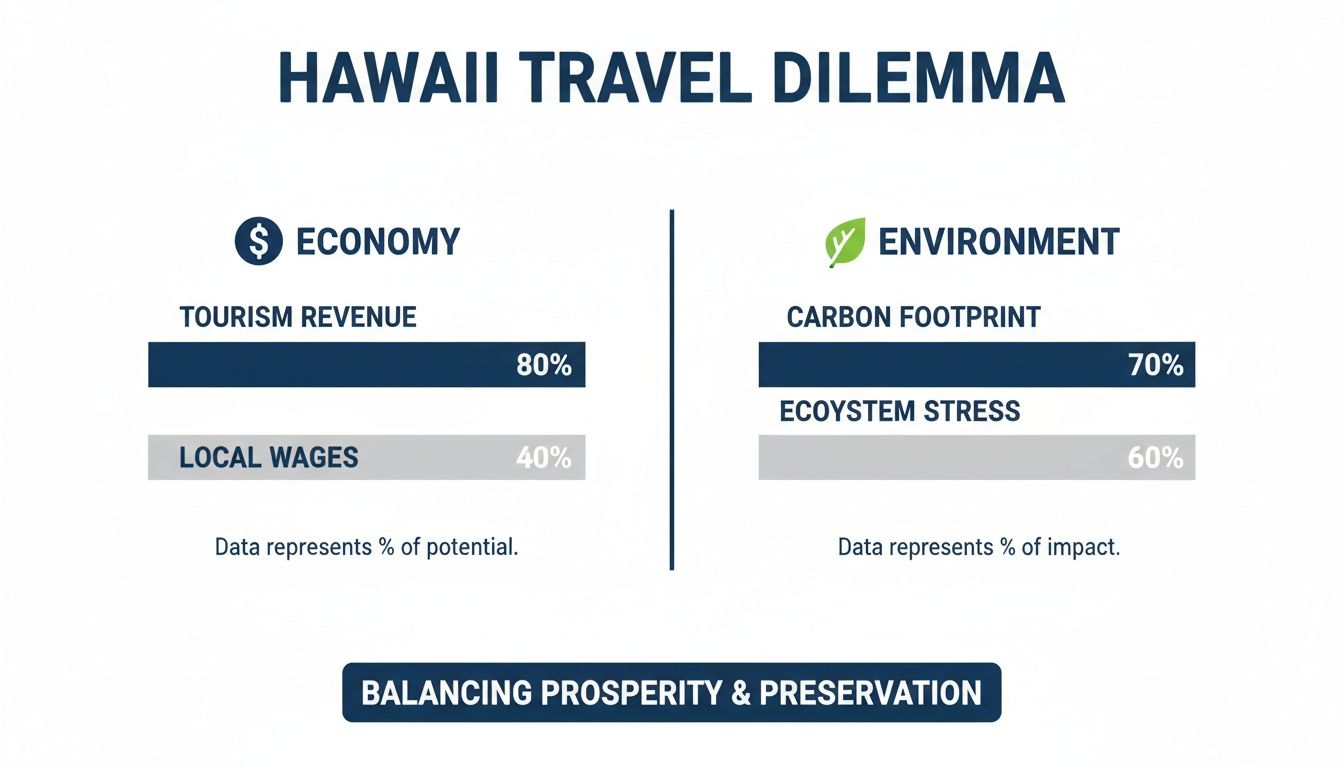
As the graphic shows, when economic growth isn’t checked, it can lead to serious environmental strain—a central piece of the ethical travel puzzle.
The Conflict with Regenerative Travel Principles
The whole point of regenerative travel is to leave a place better than you found it. It champions travelers who stay longer, respectfully immerse themselves in the local culture, and make a point to spend their money at locally-owned businesses. This is how a local economy can thrive without getting steamrolled. The current trend of high-impact, short-term tourism in Hawaii is the exact opposite of these ideals.
If you want to travel more mindfully, you might want to explore some eco-friendly alternatives to popular hotspots where tourism is managed more sustainably.
A Snapshot of Hawaii’s Tourism Metrics
To see this trend in black and white, let’s look at the numbers. The table below compares key tourism metrics, highlighting the growing gap between how much money is being spent versus how many people are actually showing up. This data really drives home the challenge Hawaii is up against in trying to balance its economy with the health of its environment and its people.
Hawaii Tourism: A Snapshot of Spending vs. Arrivals
The following data paints a clear picture: revenue is up, but it’s being driven by higher daily spending over shorter trips, not by an increase in visitors.
| Metric | Previous Year Data | Current Year Data | Year-Over-Year Change |
|---|---|---|---|
| Total Visitor Spending | $20.58 billion USD | $21.75 billion USD | +5.7% |
| Total Visitor Arrivals | 9,701,499 | 9,642,991 | -0.6% |
| Average Daily Spending | $246 USD per person | $273 USD per person | +11.0% |
| Average Length of Stay | 9.09 days | 8.95 days | -1.5% |
This pattern underscores the urgent need for a more sustainable and fair tourism model—one that benefits everyone, not just the bottom line. It’s a reminder that traveling ethically requires looking deeper than just flight prices and hotel deals.
A Closer Look at Tourism’s Impact on Oahu
To really get a feel for what those statewide numbers mean on the ground, you have to look at Oahu. It’s Hawaii’s most populated island and the one that sees the most visitors, making it a powerful case study for tourism saturation. This is where the pressure on local infrastructure is a daily reality, and where the ethical questions for travelers become crystal clear.
Even when visitor numbers dip slightly, the island still feels the strain of concentrated spending. Recent data reveals a strange paradox: in a single year, Oahu saw a minor 2% drop in arrivals, down to 5,679,047 visitors. But at the same time, visitor spending shot up 5.3% to a staggering $9.42 billion USD. Daily spending now averages $238 USD per person.
Fewer people are creating a more intense economic footprint, a trend that puts immense pressure on everything from highways to beaches. You can dig deeper into Hawaii’s record spending trends and what they mean for locals. This growing tension is a huge part of the debate over whether is it ethical to travel to Hawaii right now.
Infrastructure Under Pressure
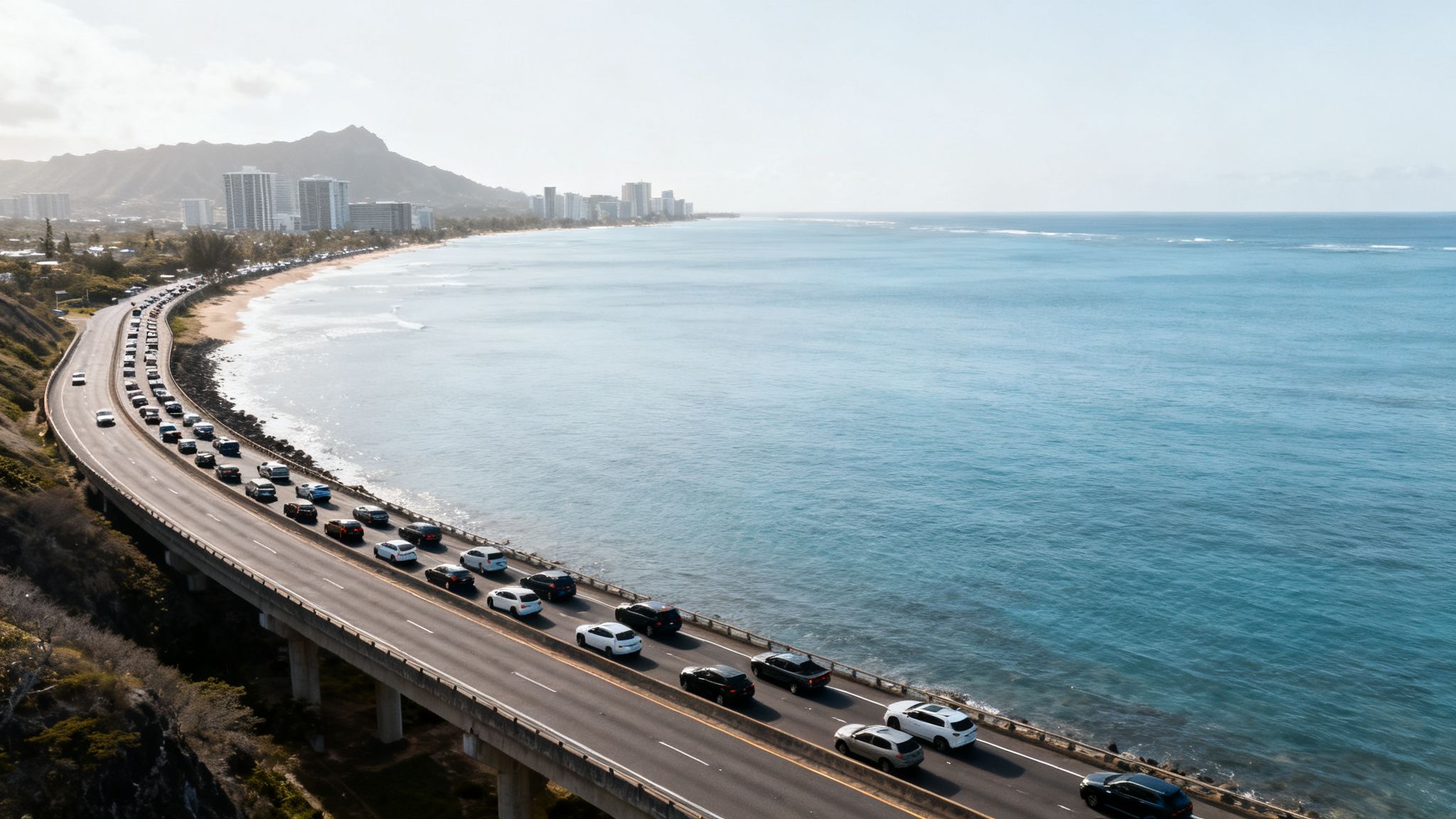
One of the most visible signs of this strain is Honolulu’s traffic. Commutes that should take a few minutes can easily stretch into hours, a frustration felt by residents just trying to get to work and visitors trying to get to the beach. This gridlock isn’t just an inconvenience. It worsens air pollution and chips away at the quality of life for the people who call Oahu home.
And it’s not just the roads. Natural treasures feel the pressure, too. Hanauma Bay, a world-famous snorkeling spot, now requires an online reservation system just to manage the crowds and protect its fragile coral reef. While measures like this help, they highlight the constant battle to preserve natural beauty in the face of overwhelming demand.
The Community Response: Is It Ethical to Travel to Hawaii Right Now
Despite these heavy challenges, an inspiring movement of community-led initiatives is working toward a more balanced future. These groups are on the front lines, showing what truly sustainable tourism can look like.
- Community-Led Conservation: Local organizations are actively restoring native ecosystems, from pulling invasive species in the Koʻolau mountains to organizing beach cleanups along the North Shore.
- Cultural Preservation: Native Hawaiian-owned businesses are sharing authentic cultural experiences, offering visitors a chance to learn about hula, traditional farming, or the Hawaiian language—far from the commercialized luaus.
- Supporting Local Economies: Farmers’ markets are thriving, creating a direct link between visitors and local growers. Choosing to buy produce here or dine at a family-owned restaurant ensures your money directly supports the community.
These positive actions prove that visitors have a choice. By seeking out and supporting these local champions, you can contribute to a model of tourism that respects and uplifts the island, rather than just extracts from it. Your travel decisions can either add to the strain or become part of the solution.
How to Practice Ethical and Regenerative Travel in Hawaii
Deciding you want to be part of the solution is the first, most important step. It’s about moving past the basic tourist checklist and embracing a mindset of regenerative travel—the powerful idea of leaving a place even better than you found it. This isn’t about perfection. It’s about traveling with intention, doing a bit of homework, and genuinely wanting to connect with the islands on a much deeper level.
This shift in thinking starts long before you even look at flights. It begins with education. Take some time to learn about Hawaiian history, including the illegal overthrow of the Hawaiian Kingdom. Understanding this context is non-negotiable for interacting with the local culture respectfully.
It also means being incredibly deliberate about where your money goes. When you actively choose to support locally-owned businesses, your travel dollars flow directly into the communities that make Hawaiʻi so special. That simple decision, made consistently, can make all the difference.
Instead of rushing from one famous spot to the next, a regenerative approach encourages you to slow down. Immerse yourself in just one or two areas. You’ll reduce your carbon footprint from inter-island travel and open yourself up to far more meaningful experiences.
Choose Accommodations and Tours with Care
Where you sleep and who you book with matters. A lot. Instead of defaulting to large, foreign-owned resorts, seek out smaller, locally-owned hotels, bed-and-breakfasts, or legal vacation rentals in designated tourist zones. These choices help ensure more of your money stays right here in the local economy.
When it comes to activities, look for tour operators who are Native Hawaiian-owned or can show a real commitment to sustainability. These guides offer a much richer, more authentic perspective on the culture and environment. They share the real stories behind the landscapes, helping you forge a genuine connection to the place. You can start by checking for local and sustainable tours that put community benefits first.
Support the Local Food System
One of the best—and most delicious—ways to travel regeneratively is by eating and shopping locally. Hawaiʻi has an incredible food scene that extends far beyond the resort buffets.
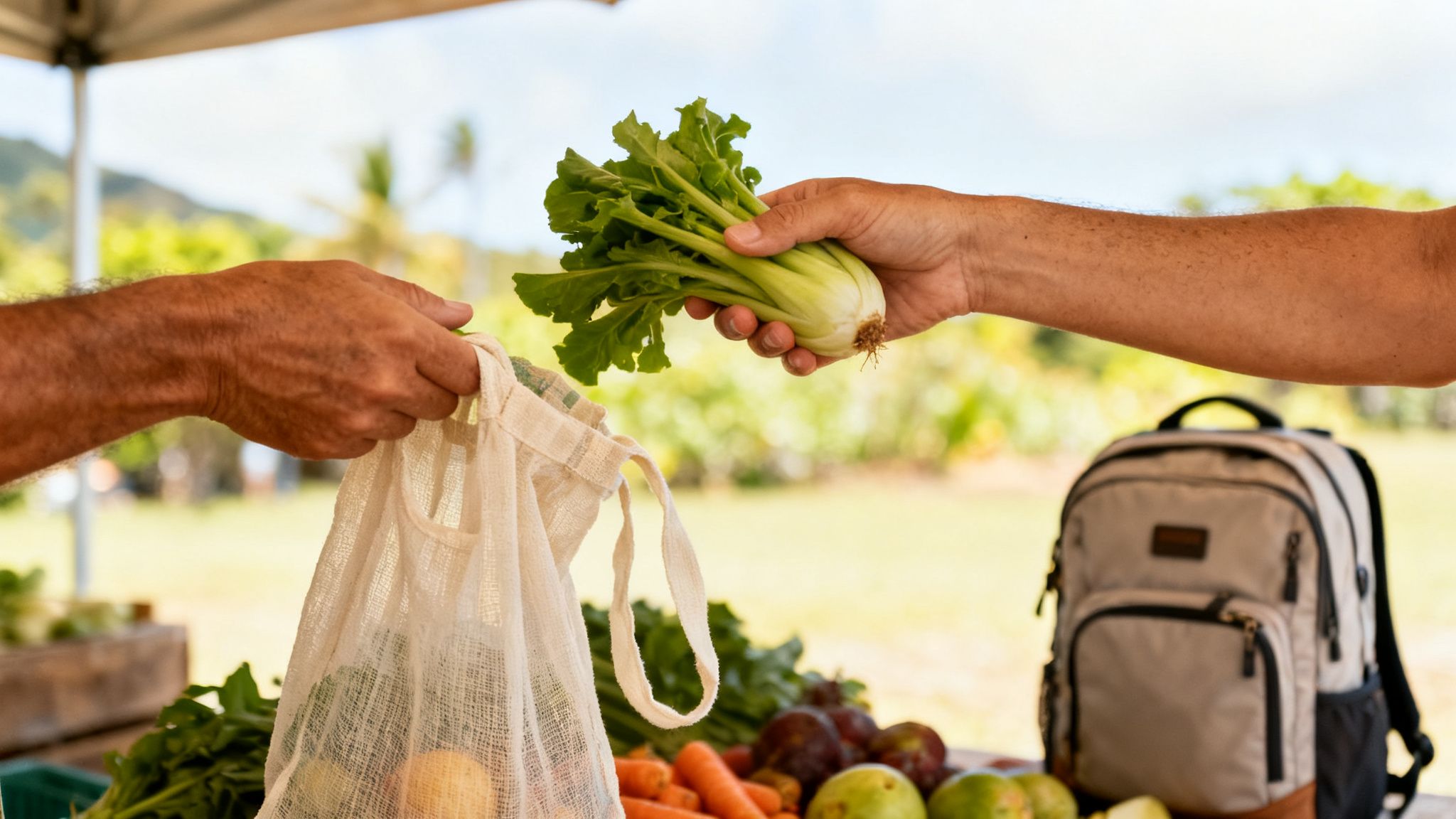
- Visit Farmers’ Markets: This is the best way to support local agriculture, taste unbelievably fresh produce, and meet the people who grow the food.
- Dine at Local Restaurants: Hunt down the family-owned eateries and food trucks. Not only will you get a more authentic taste of the islands, but your spending will directly support local families.
- Try Farm-to-Table Experiences: Many farms offer tours and dining events that give you a deep dive into Hawaii’s unique agricultural heritage.
By supporting the local food system, you help reduce the islands’ reliance on imported goods, which come with a heavy carbon footprint. Plus, everything just tastes better when it’s fresh.
Give Back Through ‘Voluntourism’
A powerful way to put regenerative principles into practice is to dedicate a small piece of your vacation to giving back. The Mālama Hawaiʻi program partners with a huge network of non-profits, offering visitors a chance to engage in meaningful work—often in exchange for special discounts at participating hotels.
The opportunities are diverse and have a real impact. You could find yourself helping restore a native fishpond, clearing invasive species from a forest, or joining a beach cleanup. These experiences do more than just help heal the land. They give you an unparalleled opportunity to learn from local conservationists. To learn more about this hands-on approach, check out our guide on eco-volunteering and regenerative travel.
When you participate, you shift from being a passive tourist to an active steward of the ʻāina (land).
Pack with Intention and Minimize Your Footprint
Finally, what you pack can make a real impact. To minimize waste and protect fragile ecosystems, be mindful of what goes in your bag.
Always bring a reusable water bottle to avoid single-use plastics. A good collapsible water bottle is great for saving space.
It is absolutely critical to use only reef safe sunscreen. Chemical sunscreens with oxybenzone and octinoxate are banned in Hawaiʻi because they cause devastating coral bleaching. Also, think about bringing a solid shampoo bar and biodegradable soap to cut down on plastic waste and chemical runoff into the ocean. These small, conscious choices, when multiplied by thousands of visitors, collectively make a huge difference in preserving Hawaii’s natural beauty.
Editor’s Pick: Mindful Tour Operator
For a travel experience that aligns with ethical principles, we recommend booking a tour through Travel ‘O‘o Farm on Maui. They offer a genuine farm-to-table tour that connects you directly with the land (ʻāina) and local agriculture. You get to tour the farm, learn about sustainable growing practices, and enjoy a meal made from ingredients you see harvested. It’s a non-hypey, authentic way to support the local food system and understand the importance of Mālama ‘Āina firsthand.
Navigating Hawaiian Culture with Respect
To get to the heart of the question—is it ethical to travel to Hawaii right now—we have to look past the environmental side and into the islands’ living culture. Ethical travel here isn’t just about recycling your plastic bottles. It’s about showing genuine respect for the history, the traditions, and the people who call this place home. That means showing up ready to learn, listen, and act with a bit of humility.
One of the first things to grasp is the deep, sacred connection Native Hawaiians have with the ‘āina (the land). This isn’t just scenery for your vacation photos. The land is an ancestor, a provider, and the very foundation of Hawaiian identity. Once you understand that, it changes how you see and interact with every beach, valley, and mountain.
This reverence is especially critical when you come across sacred sites, known as heiau. These are not tourist attractions. Think of them as you would a church, a temple, or a mosque—places with profound spiritual weight. Many are best appreciated from a distance. Never, ever touch, move, or take anything from these areas. Not even a small stone.
Practical Ways to Show Respect
Understanding the history is non-negotiable. The illegal overthrow of the Hawaiian Kingdom in 1893 is a raw, unresolved trauma that continues to shape the Native Hawaiian community today. Taking the time to learn about this history before you arrive is a fundamental sign of respect.
When you talk with residents, come to the conversation with an open mind and a willingness to listen. You’re a guest in their home, so avoid making assumptions. A simple smile and a friendly “aloha” can go a surprisingly long way.
“The aloha spirit is not just a greeting; it’s a way of life that involves mutual regard and affection. As a visitor, embracing this means treating others and the land with kindness and respect.”
How we share our experiences in this digital age also has a real-world impact. One of the most critical practices is to avoid geotagging sensitive or sacred locations on social media. This simple act helps protect fragile ecosystems and culturally significant sites from being trampled by crowds. If you find a beautiful, secluded spot, the best thing you can do is enjoy it in the moment—not broadcast its exact coordinates to the world. A good RFID blocking wallet can help keep your personal data secure while you focus on the moment.
Supporting Authentic Cultural Experiences
Your choices as a traveler can either bolster or undermine local culture. Make an effort to seek out and support Native Hawaiian-owned businesses, artists, and cultural practitioners. This is the best way to ensure your money directly benefits the community and helps keep authentic traditions alive.
Finally, while packing your suitcase with practical things like a universal travel adapter is smart, the most valuable thing you can bring is a respectful mindset. To see how this applies on a global scale, you can read our guide on what ethical travel really means. When you put cultural respect first, your trip can become a positive, meaningful exchange for both you and the people who host you.
Your Quick Guide for a Mindful Trip to Hawaii
So, is it ethical to travel to Hawaii right now? It’s a complicated question, but the short answer is: it can be, if you do it with intention. Think of this as your quick-reference guide for traveling with respect, built from the feedback of residents and community leaders.
These aren’t just tips—they’re actionable steps you can take to make sure your visit has a positive impact, not a harmful one.
Do Your Homework First: Before you even pack, take some time to learn about Hawaii’s real history, including the illegal overthrow of its kingdom. Showing up with some understanding of the local context is the first and most important step toward showing genuine respect.
Put Your Money Where It Matters: Make a conscious choice to spend your travel dollars at locally-owned hotels, restaurants, and tour companies. When you do, you’re ensuring that the money from tourism actually stays in the community and supports the people who live there.
Try Regenerative Travel: Go beyond just “leaving no trace” and aim to leave the islands a little better than you found them. You can participate in a hands-on voluntourism activity through the Mālama Hawaiʻi program, like helping restore a traditional native fishpond for a few hours.
Travel with a Lighter Footprint: Pack light. Using a single carry on backpack makes it easier to walk or use public transit instead of renting a car. Always, always use reef-safe sunscreen to protect the fragile coral that’s struggling to survive. A quick dry travel towel is another great way to save space and resources.
Practice Cultural Humility: Treat sacred sites (heiau) with the reverence they deserve by observing them from a distance. When you’re interacting with residents, listen more than you talk. And please, resist the urge to geotag sensitive natural or cultural spots on social media—it’s a direct cause of overcrowding that damages these precious places.
Low-Impact Travel Tools (Worth It)
Also, if you’re planning a trip and want to keep things simple, these tools help you travel smoother while staying mindful about impact.
Get an eSIM for reliable data → Disclosure: Partner link. No extra cost to you.
Pre-book a transfer for easy arrivals → Disclosure: Partner link. No extra cost to you.
Key Takeaways
- The Answer is Nuanced: Deciding if it is ethical to travel to Hawaii right now depends on how you travel. Mindful, respectful tourism that supports local economies can be beneficial.
- Mālama ‘Āina is Essential: Embrace the core Hawaiian value of caring for the land. This means minimizing your environmental impact, using reef-safe sunscreen, and respecting natural spaces.
- Support Local, Always: Prioritize spending your money at locally-owned businesses, hotels, and restaurants to ensure your economic contribution directly benefits the community.
- Cultural Respect is Non-Negotiable: Educate yourself on Hawaiian history, including the 1893 overthrow, before you arrive. Treat sacred sites with reverence and avoid geotagging them on social media.
- Regenerative Travel is the Goal: Aim to leave Hawaii better than you found it. Participate in voluntourism opportunities through programs like Mālama Hawaiʻi to give back directly.
- Maui is Open, but Sensitivity is Key: While visitors are encouraged to return to most of Maui to support its recovery, the historic town of Lāhainā must be avoided as it is a place of grieving and healing for residents.
This article was fact-checked using sustainability data from the World Green Building Council, the Global Ecotourism Network, and peer-reviewed architecture studies. All partner links are vetted for compliance with sustainable business certifications.
Join the Sustainable Work Movement
Want more rail-first itineraries, low-impact packing systems, and walkable base-city ideas?
Frequently Asked Questions
So, is it ethical to travel to Hawaii right now?
It can be, but only if you show up with a deep sense of responsibility. Tourism is the engine of the local economy, and shutting it off completely would hurt countless families. An ethical trip today means doing your homework on Hawaiian history, deliberately choosing to support locally-owned businesses, and participating in regenerative projects. It’s about recognizing you’re a guest in a sacred place and traveling with mālama (care).
Can I visit Maui after the wildfires?
Yes, Maui is open and officials are encouraging respectful travel, but you must come with extraordinary sensitivity. West Maui has reopened to visitors, with the critical exception of the historic town of Lāhainā. Support local businesses in open areas like Kā‘anapali, but it is absolutely essential to stay away from Lāhainā town as it is a place of grieving.
What does “support local” really mean in Hawaii?
In Hawaii, it means making conscious economic choices. Opt for locally-owned hotels or B&Bs, eat at family-run restaurants and food trucks, and book tours with companies that are Native Hawaiian-owned or have deep community roots. This ensures your travel dollars directly benefit the people who call the islands home.
How can I minimize my environmental impact?
The easiest first step is to only pack and use reef-safe sunscreen. Also, always carry a reusable water bottle to fight single-use plastic waste. Packing a solid shampoo bar and biodegradable soap in reusable toiletry bottles also cuts down on plastic and stops harmful chemicals from washing into the delicate watershed. Always stay on marked trails when hiking.
Is it okay to geotag photos on social media?
It is highly discouraged. Geotagging specific natural or cultural sites in Hawaii can lead to a sudden, overwhelming flood of people, causing environmental damage and disrespect at sacred places. It is better to tag the general island (e.g., “Oahu”) or describe the beauty without pinning it on a map.
What cultural etiquette should I be aware of?
Learn about Hawaiian history, including the illegal overthrow of the Hawaiian Kingdom in 1893. Treat heiau (sacred temples) with reverence by observing from a distance and never touching or removing anything. Remember that “Aloha” is a spirit of kindness and mutual respect. Approach every interaction with humility.
How can I give back to the community?
Participate in “voluntourism” through the Mālama Hawaiʻi program. It connects visitors with local non-profits for hands-on conservation and community projects, such as restoring an ancient fishpond or joining a beach cleanup. It’s a fantastic way to connect with the land (ʻāina) on a deeper level.
Is public transportation a good option?
Absolutely. Using public transport is a great way to lower your carbon footprint. On Oahu, “TheBus” is extensive and can get you to most major spots. It’s affordable and helps reduce traffic. On neighbor islands, transit is more limited but still an option for certain routes. A good packable daypack is perfect for carrying your essentials while you explore.
