

Planning a trip and searching for the best japan tourism spots that align with a slower, more sustainable travel style? You’re in the right place. Japan’s world-class rail network makes it one of the easiest countries to explore without a car. It connects ancient temples and serene mountain towns with incredible efficiency. This guide moves beyond the typical tourist trail. It focuses on destinations you can reach and enjoy with a low-carbon footprint.
We’ll explore iconic sites and hidden gems, all curated for the eco-conscious traveler who prefers the scenic route. By choosing rail-first itineraries and mindful activities, you can experience the profound beauty of Japan. At the same time, you can minimize your environmental impact. To keep things organized, I’ve packed my favorite lightweight travel backpack and am ready to show you how to do the same.
From the spiritual calm of Koyasan to the artistic energy of Naoshima Island, let’s dive into a journey. This journey is as good for the soul as it is for the planet. We’ll cover everything from the nearest train stations and travel times to the best low-impact activities. We’ll also cover accommodations, ensuring your adventure is both meaningful and responsible. This guide provides the practical details you need to plan a thoughtful trip through Japan’s most captivating tourism spots.
1. Fushimi Inari Taisha: A Top Japan Tourism Spot
Fushimi Inari Taisha is one of the most iconic Japan tourism spots. It is renowned for its seemingly endless path of thousands of vibrant vermillion torii gates. This important Shinto shrine, dedicated to Inari, the god of rice, sprawls across a wooded mountain in southern Kyoto. More than just a photo opportunity, the entire complex offers a unique, low-impact way to connect with Japan’s spiritual heritage through a mindful hike.
The main path winds 2.5 miles (4 kilometers) up Mount Inari. This creates a serene and immersive experience. While the lower sections are often crowded, venturing further up the trail reveals a quieter atmosphere. A slow, deliberate walk allows you to appreciate the intricate details of the gates. Many of these are donated by individuals and businesses. The peaceful nature surrounding the shrine is also a highlight.

Why It’s Worth Visiting
Beyond its visual appeal, Fushimi Inari offers a profound sense of peace. The journey up the mountain is a meditative experience. You will pass by smaller sub-shrines and quiet groves. It’s a fantastic example of slow, sustainable travel. The best way to experience it is on foot, leaving no trace behind. The hike is a rewarding physical activity that costs nothing, a key consideration when planning. You can check flight deals on Aviasales to manage your budget.
Essential Traveler Information
- Nearest Rail Connection: Inari Station (JR Nara Line) is directly opposite the shrine’s main entrance. It’s just a five-minute ride from Kyoto Station.
- Best Season: Visit during the shoulder seasons of spring (late March-May) or autumn (September-November). This provides pleasant hiking weather and beautiful foliage. To avoid the massive crowds, arrive before 6:30 AM or after 5:00 PM.
- Recommended Low-Impact Activities:
- Hike the full loop to the summit (2-3 hours) for panoramic views of Kyoto.
- Explore the quieter, less-traveled side paths branching off the main trail.
- Bring a collapsible water bottle to refill before you start, as there are no vending machines on the upper trails.
- Suggested Stay Length: A half-day (3-4 hours) is ideal to explore beyond the crowded entrance without rushing.
- Emissions & Transport Note: Accessing the shrine via the JR Nara Line is a highly efficient, low-carbon option from central Kyoto. The entire experience is pedestrian-focused, requiring no additional transportation.
2. Takayama Old Town, Japanese Alps
Tucked away in the Hida region, Takayama’s Old Town is one of the most enchanting Japan tourism spots. It offers a beautifully preserved glimpse into the Edo period. This former merchant town is defined by its narrow streets and traditional wooden machiya houses. It also features riverside morning markets. Its compact, car-free center makes it an ideal base for eco-conscious travelers.
The town’s entire historic district is designed for walking. This allows you to slowly discover its charms on foot. Stroll along the Miyagawa River and browse the bustling morning markets for local crafts and produce. You can also explore the many sake breweries that have operated for centuries. Takayama serves as a perfect multi-day hub. It encourages a slower pace of travel that fully immerses you in the rhythm of the Japanese Alps.
Why It’s Worth Visiting
Takayama excels at providing an authentic cultural experience without sacrificing its heritage. Its walkability is a core feature, making it a sustainable destination. By staying in a traditional ryokan with a kaiseki dinner, you support local innkeepers directly. The town’s role as a gateway to the region also aligns perfectly with a low-impact itinerary. You can learn more in this sustainable travel guide for 2025.
Essential Traveler Information
- Nearest Rail Connection: Takayama Station is served by the JR Takayama Main Line. The scenic “Hida” Limited Express train journey from Nagoya takes approximately 2.5 hours.
- Best Season: Visit during the shoulder seasons of spring (April-May) or autumn (October-November) for pleasant walking weather.
- Recommended Low-Impact Activities:
- Visit the Miyagawa or Jinya-mae morning markets before 7:00 AM to browse before the daily crowds.
- Take an early tour of a sake brewery (around 10:00 AM) for a more personalized experience.
- Use Takayama as a base for a bus day trip to the historic villages of Shirakawa-go.
- Pack your essentials in organized packing cubes to make moving between ryokans simple.
- Suggested Stay Length: A minimum of 3-4 days is recommended to justify the scenic train journey and fully explore the town and region.
- Emissions & Transport Note: Arriving via the JR Takayama Line is a highly scenic, low-carbon choice. Once there, the town is entirely walkable.
3. Hiroshima Peace Memorial Park & Museum: A Journey of Remembrance
The Hiroshima Peace Memorial Park is one of the most essential Japan tourism spots. It offers a profound and somber space for reflection. Centered around the iconic A-Bomb Dome, it is a stark reminder of the 1945 atomic bombing. The park is dedicated to remembrance and advocating for world peace. It represents human resilience and the city’s regeneration through thoughtful, sustainable urban design.

The expansive park, museum, and monuments provide crucial historical context. The experience is best approached with a slow, mindful pace. This allows time to absorb the powerful exhibits and peaceful atmosphere. This approach aligns perfectly with the principles of slow travel. It encourages a deeper, more meaningful connection with the destination.
Why It’s Worth Visiting
Hiroshima offers a vital educational experience that transcends typical tourism. Visiting the Peace Memorial Museum first provides necessary context before you walk through the tranquil park. This creates a powerful, reflective journey. The city itself is incredibly walkable and bike-friendly. It anchors a regional itinerary focused on low-impact exploration. It’s a testament to recovery and a powerful advocate for a peaceful future.
Essential Traveler Information
- Nearest Rail Connection: Hiroshima Station is a major Shinkansen (bullet train) hub. It’s an efficient 90-minute journey from Shin-Osaka Station. From there, the park is a short tram or bus ride away.
- Best Season: Spring (March-May) and autumn (September-November) offer comfortable weather for exploring the open-air park.
- Recommended Low-Impact Activities:
- Visit the museum right when it opens (8:30 AM) and explore the park in the afternoon for quieter reflection.
- Rent a bicycle to explore the city’s flat, accessible neighborhoods and discover local restaurants.
- Pack a reusable water bottle to stay hydrated while walking through the park and city.
- Suggested Stay Length: Plan for 1-2 nights in a central, walkable neighborhood to fully experience the park, museum, and city.
- Emissions & Transport Note: Traveling from Osaka or Kyoto via the Shinkansen is a highly efficient, low-carbon option. Once in Hiroshima, the city is best explored on foot, by bicycle, or using the public tram network.
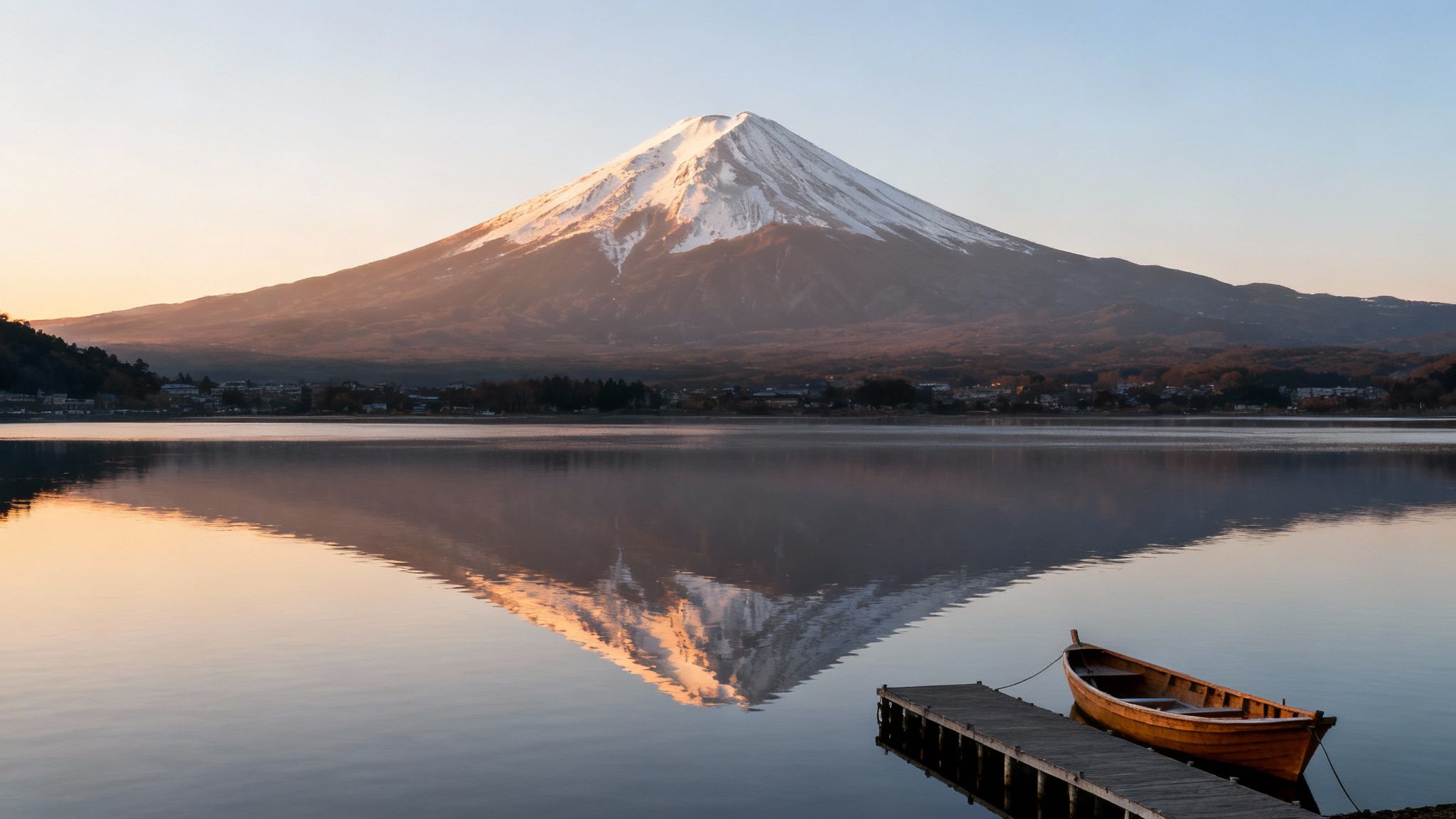
4. Mount Fuji: Sustainable Views from a Base City
Mount Fuji is arguably the most famous of all japan tourism spots. This iconic, snow-capped volcano has inspired art for centuries. Instead of joining the climbers, a more sustainable approach is to appreciate it from a distance. By basing yourself in walkable towns like Hakone or Kawaguchiko, you can enjoy stunning views. You also get soothing hot springs and low-impact exploration without contributing to over-tourism on the mountain.
This rail-first method allows you to immerse yourself in the natural beauty of the Fuji-Hakone-Izu National Park. You can use an efficient network of trains, cable cars, and buses. It’s a travel style centered on wellness and mindful appreciation. It trades a strenuous climb for serene hikes, lakeside bike rides, and relaxing soaks in traditional onsen. This car-free approach not only minimizes your carbon footprint but also maximizes your connection to the landscape.
Why It’s Worth Visiting
The true magic of Mount Fuji is often found in its presence, not its peak. Staying in a base town offers a more holistic and less crowded experience. It allows you to witness the mountain’s changing faces from dawn until dusk. It’s a perfect example of regenerative travel. You can support local economies by staying in traditional ryokan (inns) and enjoying local cuisine. This approach is both cost-effective and environmentally sound.
Essential Traveler Information
- Nearest Rail Connection: For Kawaguchiko, take the Fuji Excursion train from Shinjuku Station in Tokyo (approx. 2 hours). For Hakone, take the Odakyu Railway from Shinjuku to Hakone-Yumoto Station (approx. 90 minutes).
- Best Season: September through November offers clear skies for the best Fuji views and pleasant hiking weather. Spring (April-May) is also excellent.
- Recommended Low-Impact Activities:
- Cycle around Lake Kawaguchiko to find different viewpoints of the mountain.
- Complete the Hakone Round Course, a scenic loop using a train, cable car, ropeway, and boat.
- Hike the subalpine trails in the Fuji Five Lakes region instead of the summit.
- Pack a quick dry travel towel for spontaneous dips in local onsen.
- Suggested Stay Length: 2-3 nights is ideal to explore one of the base towns thoroughly without a car.
- Emissions & Transport Note: The extensive rail and public transport network in Hakone and the Fuji Five Lakes area makes car rental unnecessary.
5. Arashiyama Bamboo Grove & Tenryu-ji Temple, Kyoto
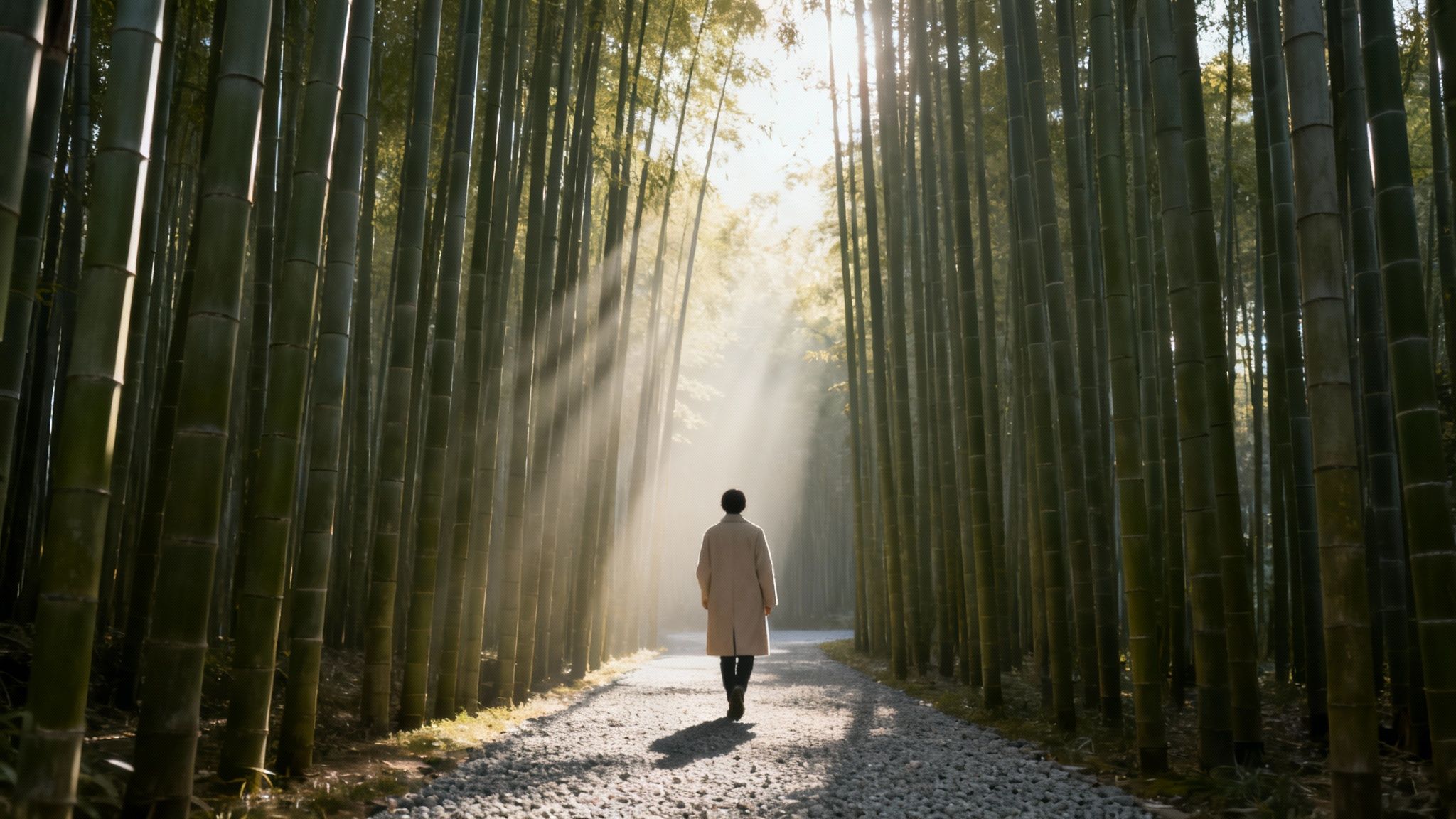
The Arashiyama Bamboo Grove is one of Kyoto’s most enchanting Japan tourism spots. It is an ethereal forest that creates a natural cathedral of towering green stalks. Adjacent to the UNESCO World Heritage Tenryu-ji Temple, the grove offers a serene walking experience. The path winds through the dense bamboo, with sunlight filtering down. This creates a magical atmosphere best enjoyed with a quiet, mindful approach.
This famous path is not just a quick photo stop. It is the gateway to the wider, culturally rich Arashiyama district. Combining a walk through the grove with a visit to the historic temple provides a perfect half-day of low-impact exploration. An early morning visit allows you to experience the sounds of the rustling bamboo. You can enjoy the peaceful ambiance without the usual crowds.
Why It’s Worth Visiting
The combination of natural beauty and profound cultural history makes Arashiyama a must-visit. The experience of walking through the soaring bamboo is meditative and grounding. By visiting early, you can enjoy this iconic site responsibly, avoiding peak hours. The entire district is highly walkable and best explored on foot or by renting a bicycle. This promotes a slower, more sustainable form of tourism.
Essential Traveler Information
- Nearest Rail Connection: Saga-Arashiyama Station (JR Sagano Line) is a 10-minute walk away. Alternatively, take the quaint Keifuku Randen Tram to Arashiyama Station for a scenic, local experience.
- Best Season: Visit in spring (late March-May) for pleasant weather or autumn (October-November) for stunning fall colors. The key is to arrive between 5:30 AM and 6:30 AM for solitude and the best light.
- Recommended Low-Impact Activities:
- Walk through the bamboo grove at dawn and continue to the Tenryu-ji Temple (¥800, or about $5 USD) when it opens.
- Enjoy a convenience store breakfast on the banks of the Katsura River.
- Rent a bicycle to explore the wider Arashiyama area, including the scenic Togetsukyo Bridge.
- Suggested Stay Length: Plan for a half-day (3-5 hours) to fully appreciate the grove, temple, and surrounding district.
- Emissions & Transport Note: Arriving via the JR Sagano Line or the charming Keifuku Randen Tram are both efficient, low-emission choices.
Editor’s Pick: Hakone Free Pass
For exploring the Mount Fuji region, the Hakone Free Pass is the best tool for a low-impact trip. It provides unlimited use of eight different modes of transport, including the scenic Hakone Tozan Railway and Ropeway. This pass simplifies travel logistics, encourages the use of public transit, and offers discounts at various attractions. It’s a practical, cost-effective way to experience the area’s natural beauty without a car.
6. Naoshima Island & Art Triangle (Seto Inland Sea)
Naoshima Island is one of the most unique Japan tourism spots. It’s an extraordinary testament to how art can revitalize a community. Located in the tranquil Seto Inland Sea, this island has been transformed into a world-class destination for contemporary art. It features museums by Tadao Ando, outdoor sculptures, and immersive art houses. It offers a slow-travel experience that is both stimulating and deeply connected to its natural setting.
The island encourages a mindful approach to travel, best explored by bicycle or on foot. This car-free exploration allows visitors to discover art installations in unexpected places. Naoshima, along with its neighbors Teshima and Inujima, forms an “Art Triangle.” This makes it a perfect base for a multi-day, low-impact journey through one of Japan’s most scenic regions.
Why It’s Worth Visiting
Naoshima offers a powerful example of regenerative tourism. Art and architecture blend seamlessly with the landscape and local life. The experience is about more than just viewing art. It’s about seeing how creativity can breathe new life into a place. Renting a bike and leisurely pedaling between galleries provides a sense of freedom. The journey itself becomes part of the art.
Essential Traveler Information
- Nearest Rail Connection: Take the JR Shinkansen to Okayama Station. From there, take a local JR Uno Line train to Uno Port (approx. 50-60 minutes). Ferries to Naoshima depart regularly from Uno Port.
- Best Season: Spring (April-May) and autumn (September-October) offer perfect cycling weather with pleasant temperatures.
- Recommended Low-Impact Activities:
- Rent an electric-assist bicycle upon arrival to explore the island’s hilly terrain with ease.
- Visit the Art House Project, where empty houses have been turned into permanent art installations.
- Pack a picnic lunch and your reusable water bottle to enjoy on one of the island’s quiet beaches.
- Suggested Stay Length: Plan for 2-3 days to fully appreciate Naoshima and consider a day trip to the neighboring art island of Teshima.
- Emissions & Transport Note: The journey via Shinkansen to Okayama is highly efficient. Once on the island, travel is entirely human-powered or via electric-assist bikes.
7. Kanazawa’s Geisha District, Kenroku-en Garden & 21st Century Museum
Kanazawa is a city where history and modernity blend seamlessly. This makes it one of the most compelling Japan tourism spots. Located on the Japan Sea coast, it offers a trio of exceptional cultural landmarks. These include the Higashi Chaya geisha district, Kenroku-en Garden, and the 21st Century Museum of Contemporary Art. This walkable city is a model for sustainable urbanism, allowing travelers to explore entirely on foot or via public transit.

This unique combination allows you to step from a preserved Edo-period teahouse into a world-class contemporary art space in minutes. Kanazawa’s pedestrian-friendly layout makes it an ideal base for a slower, more immersive travel experience. It provides a less crowded yet equally enriching alternative to more famous Japanese cities. For easy arrivals, consider pre-booking a transfer with a service like Welcome Pickups.
Why It’s Worth Visiting
Kanazawa perfectly balances deep cultural immersion with forward-thinking design. You can experience the quiet elegance of Kenroku-en, one of Japan’s most beautiful landscape gardens. Then, you can engage with thought-provoking modern art. The city’s commitment to preserving its heritage provides a unique travel narrative. Exploring the Omicho Market in the morning offers an authentic, low-impact way to connect with the local culture.
Essential Traveler Information
- Nearest Rail Connection: Kanazawa Station is a major hub served by the Hokuriku Shinkansen from Tokyo (2.5 hours). It is also served by the Thunderbird Limited Express from Kyoto (2.5 hours).
- Best Season: Visit in spring (April-May) for cherry blossoms or autumn (September-October) for stunning fall colors.
- Recommended Low-Impact Activities:
- Visit Kenroku-en Garden early (opens 6:00 AM, free before 8:00 AM) to enjoy its beauty in solitude.
- Explore Higashi Chaya district between 7:00 AM and 8:00 AM to experience its historic atmosphere.
- Enjoy the free outdoor installations at the 21st Century Museum.
- Stay hydrated by bringing a collapsible water bottle to refill throughout your day of walking.
- Suggested Stay Length: A 2-3 night stay is ideal to justify the rail journey and explore the city’s highlights at a relaxed pace.
- Emissions & Transport Note: Arriving by Shinkansen is the most efficient, low-carbon way to reach Kanazawa. The city is highly walkable, and its bus system is excellent.
8. Koyasan (Mount Koya) Monastic Community & Temple Stays
Koyasan, or Mount Koya, is a sacred mountain sanctuary. It stands out among Japan tourism spots for its profound spiritual atmosphere. This UNESCO World Heritage site is the headquarters of Shingon Buddhism and home to over 100 temples. It offers an unparalleled opportunity to experience life in a monastic community through an overnight stay, known as shukubo.
The entire mountop village is designed for pedestrian exploration. It is accessible via an electric cable car, which minimizes its environmental footprint. A visit here is a deep dive into centuries of tradition. You can participate in morning prayers and eat vegetarian Buddhist cuisine (shojin ryori). This car-free community provides a deeply authentic alternative to more crowded destinations.
Why It’s Worth Visiting
Koyasan offers an immersive cultural experience that goes far beyond typical sightseeing. Staying in a shukubo allows you to connect with Buddhist practices and enjoy serene temple gardens. You can also walk through the mystical Okunoin Cemetery, Japan’s largest. The experience is deeply restorative, offering solitude and a genuine connection to Japanese spiritual heritage. This focus on heritage makes it an essential stop for conscious travelers.
Essential Traveler Information
- Nearest Rail Connection: From Osaka’s Namba or Shin-Imamiya Station, take the Nankai Koya Line to Gokurakubashi Station (about 90 minutes). From there, a five-minute cable car ride ascends the mountain.
- Best Season: April-May and September-November offer pleasant weather for walking. Autumn brings stunning foliage, while spring offers mild temperatures.
- Recommended Low-Impact Activities:
- Stay at a temple (shukubo) for one or two nights to fully absorb the experience.
- Walk through Okunoin Cemetery at sunrise for an ethereal, crowd-free experience.
- Participate in the optional early morning meditation and fire rituals offered at your temple lodging.
- Use a packable daypack to carry essentials while exploring the car-free village on foot.
- Suggested Stay Length: A minimum of two days and one night is essential. Arrive by early afternoon to settle in before the 5:00 PM dinner.
- Emissions & Transport Note: The journey via the Nankai Electric Railway and the cable car is an efficient, low-carbon way to access this sanctuary.
9. Kinkaku-ji (Golden Pavilion) & Ryoan-ji Temple, Kyoto: Zen Aesthetics
Kinkaku-ji and Ryoan-ji offer a profound look into two distinct yet complementary Zen aesthetics. These neighboring temples are essential Japan tourism spots for understanding the nation’s appreciation for natural harmony. Kinkaku-ji, with its gold-leaf exterior shimmering over a mirror pond, represents opulent beauty. In contrast, the stark rock garden of Ryoan-ji embodies the quiet power of meditative simplicity.
Visiting both provides a balanced perspective on Japanese design and spirituality. The experience is about more than just sightseeing. It’s an invitation to slow down and observe. A contemplative walk between the two sites through a quiet forest path further connects you to the natural landscape. It offers a peaceful respite from Kyoto’s busier areas.
Why It’s Worth Visiting
The contrast between Kinkaku-ji’s vibrant splendor and Ryoan-ji’s austere grace is unforgettable. This pairing allows you to experience the breadth of Zen influence on Japanese culture in a single outing. The 15-minute forested walk between the temples is a low-impact activity in itself. It’s a journey into aesthetics, mindfulness, and the seamless integration of human creation with nature.
Essential Traveler Information
- Nearest Rail Connection: While not directly on a rail line, the temples are easily reached from Kyoto Station via a 40-minute bus ride. Use an IC card for a seamless ¥230 (about $1.50 USD) fare.
- Best Season: Visit in autumn (October-November) for stunning fall colors or spring (late March-April) for cherry blossoms. Arrive just as Kinkaku-ji opens at 9:00 AM or before it closes at 5:00 PM to avoid crowds.
- Recommended Low-Impact Activities:
- Walk the quiet forest path connecting Kinkaku-ji to Ryoan-ji (15-20 minutes).
- Practice silent meditation for 30 minutes while observing the Ryoan-ji rock garden.
- Enjoy a traditional lunch at Ryoan-ji’s Yudofu (boiled tofu) restaurant on the temple grounds.
- Exploring environmentally friendly accommodation options can enhance your low-impact trip.
- Suggested Stay Length: Allocate a half-day (3-4 hours) to visit both temples and walk between them without rushing.
- Emissions & Transport Note: Combining bus travel from a central station with walking is an efficient, low-carbon way to access this area.
10. Kusatsu Onsen (Hot Spring Town) & Alpine Hiking, Gunma Prefecture
Nestled high in the mountains, Kusatsu Onsen is one of Japan’s most celebrated hot spring towns. It is a prime example of authentic Japan tourism spots. Renowned for its large natural flow of hot spring water, this town offers a unique blend of wellness and alpine adventure. At an elevation of 3,937 feet (1,200 meters), Kusatsu provides a car-free, walkable village experience.
The heart of the town is the Yubatake (hot water field). This is a massive open-air system of wooden chutes that cool the steaming water. The town’s commitment to a pedestrian-friendly layout makes it an ideal destination for a regenerative stay. It combines the healing ritual of onsen bathing with invigorating mountain exploration.
Why It’s Worth Visiting
Kusatsu Onsen offers a perfect escape from urban life. It allows for a deep connection with nature and traditional Japanese wellness practices. The combination of high-altitude air and therapeutic waters is profoundly restorative. By booking a ryokan stay, you can fully immerse yourself in local culture. The easy access to hiking trails provides a fantastic low-impact way to experience Japan’s volcanic landscapes.
Essential Traveler Information
- Nearest Rail Connection: Take a Shinkansen to Karuizawa Station. From there, it’s a 70-80 minute bus ride to the Kusatsu Onsen Bus Terminal. The total journey from Tokyo is about 2.5-3 hours.
- Best Season: September to early November offers perfect hiking weather, clear mountain views, and beautiful autumn foliage.
- Recommended Low-Impact Activities:
- Hike the trail to Mount Kusatsu-Shirane (2.5-hour ascent) for incredible volcanic crater views.
- Explore the Tsutsuji-ga-Hama alpine meadows on a 3-5 hour trek.
- Bring a packable daypack for your hikes to carry water and snacks without needing a large bag.
- Suggested Stay Length: A minimum of two to three nights is essential to acclimatize, enjoy the onsen, and explore the trails.
- Emissions & Transport Note: Combining efficient rail travel to Karuizawa with a public bus is a low-carbon way to reach this mountain town. The entire village is easily explored on foot.
Top 10 Japan Attractions Comparison
This chart compares the top Japan tourism spots. It helps you plan based on complexity, resources, and outcomes.
Fushimi Inari Taisha, Kyoto
- Access & Planning Complexity: Low — JR Nara Line to Inari Station (15 min). Easy independent visit; plan early/late to avoid crowds.
- Resources Needed: Very low — Free entry; short 2–3 hr visit; optional rail pass (¥2,500 or about $16 USD).
- Expected Outcome: Iconic photogenic spiritual walk; strong cultural immersion; can be crowded.
- Ideal Use Cases: Early-morning photography, short cultural stop, budget travelers.
- Key Advantages & Tips: Free, walkable; visit before 6:30 AM; wear grippy shoes and bring water.
Takayama Old Town, Japanese Alps
- Access & Planning Complexity: Moderate — JR Takayama Line (2.5 hr from Nagoya); best as multi-day base.
- Resources Needed: Moderate — Ryokan ¥5k–7k/night (about $32-$45 USD); train ~¥7,560 (about $48 USD) from Nagoya; 3–5 day stays recommended.
- Expected Outcome: Authentic Edo-period town with preserved architecture and slow pace.
- Ideal Use Cases: Multi-day cultural immersion, digital-nomad slow-base, market/sake visits.
- Key Advantages & Tips: Walkable town; book 3–5 nights; visit morning markets and nearby Shirakawago.
Hiroshima Peace Memorial Park & Museum
- Access & Planning Complexity: Low–Moderate — Shinkansen ~90 min from Osaka; allow 4–5 hrs onsite.
- Resources Needed: Low — Museum ¥200 (about $1.25 USD); Shinkansen ~¥8,870 (about $56 USD) from Osaka; bike rental ¥500–1,000/day (about $3-$6 USD).
- Expected Outcome: Deeply educational and reflective; high historical impact.
- Ideal Use Cases: Peace education, contemplative visits, combine with Miyajima day trip.
- Key Advantages & Tips: Visit early, prepare emotionally, rent a bike to explore city.
Mount Fuji & Base Cities (Hakone, Kawaguchiko)
- Access & Planning Complexity: Moderate — Train ~90 min from Tokyo; weather-dependent; multiple transport modes.
- Resources Needed: Moderate — Ryokan ¥5k–8k/night (about $32-$51 USD); train ~¥3,070 (about $20 USD); local transport ¥1k–2k/day (about $6-$13 USD).
- Expected Outcome: Iconic mountain views + onsen wellness without summit; variable visibility.
- Ideal Use Cases: Scenic stays, onsen relaxation, day/subalpine hikes, photography.
- Key Advantages & Tips: Base in Hakone/Kawaguchiko; skip summit for sustainability; visit Sept–Oct.
Arashiyama Bamboo Grove & Tenryu-ji, Kyoto
- Access & Planning Complexity: Low — Randen/Keifuku tram 15 min; grove very crowded after early morning.
- Resources Needed: Very low — Grove free; Tenryu-ji ¥800 (about $5 USD); visit 45 min–2 hrs.
- Expected Outcome: Ethereal bamboo forest and garden serenity; highly photogenic but busy.
- Ideal Use Cases: Early-morning photography, short nature + temple circuit from Kyoto.
- Key Advantages & Tips: Go 5:30–6:30 AM; combine with Tenryu-ji and Okochi Villa; use tram.
Naoshima Island & Art Triangle
- Access & Planning Complexity: Moderate–High — Train to Okayama + ferry; ferry schedules limit flexibility.
- Resources Needed: Moderate–High — Ferry ¥680 (about $4.30 USD); combined museums ¥3,600 (about $23 USD); accommodation ¥4k–8k/night (about $25-$51 USD).
- Expected Outcome: World-class contemporary art in car-free island setting; contemplative pace.
- Ideal Use Cases: 2–3 day art retreats, cycling exploration, regenerative tourism focus.
- Key Advantages & Tips: Rent a bike, buy combined ticket, arrive on early ferry; plan meals.
Kanazawa: Geisha District, Kenroku‑en & 21st Century Museum
- Access & Planning Complexity: Moderate — Shinkansen/express 2.5 hr from Tokyo/Kyoto; 2–3 day stay ideal.
- Resources Needed: Low–Moderate — Accommodation ¥3k–4.5k/night (about $19-$29 USD); attractions ¥500–1,500/day (about $3-$9.50 USD); train ¥7.7k–13.3k (about $49-$85 USD).
- Expected Outcome: Rich blend of traditional and modern culture with excellent value and low crowds.
- Ideal Use Cases: Cultural exploration, gardens + museum visits, budget alternative to Kyoto.
- Key Advantages & Tips: Stay in Katamachi, visit Kenroku‑en early, use local buses/IC card.
Koyasan (Mount Koya) Monastic Community & Temple Stays
- Access & Planning Complexity: Moderate — Train + cable car (60 min from Osaka); requires 1–2 night stay and reservations.
- Resources Needed: Moderate — Shukubo ¥9k–15k/person (about $57-$95 USD) (incl. meals); cable car ¥1,600 (about $10 USD); total ~¥25k–35k (about $159-$223 USD).
- Expected Outcome: Profound spiritual immersion, meditation and authentic temple life.
- Ideal Use Cases: Spiritual retreats, deep cultural immersion, slow regenerative travel.
- Key Advantages & Tips: Book 2–4 weeks ahead; participate in morning meditation; allow 2+ nights.
Kinkaku‑ji & Ryoan‑ji Temple, Kyoto
- Access & Planning Complexity: Low — Bus/tram ~30–40 min from central Kyoto; easy walk between temples (15 min).
- Resources Needed: Low — Combined entry ~¥900–1,300 (about $6-$8 USD); bus ¥220 (about $1.40 USD); short visit 1–2 hrs.
- Expected Outcome: Classic Zen aesthetics and gardens; contemplative, highly photogenic sites.
- Ideal Use Cases: Short cultural stops, Zen contemplation, photography circuits.
- Key Advantages & Tips: Visit early or late to avoid crowds; walk forest path between sites.
Kusatsu Onsen & Alpine Hiking, Nagano Prefecture
- Access & Planning Complexity: Moderate — ~3 hrs from Tokyo via Karuizawa + local transfer; multi-day stay recommended.
- Resources Needed: Moderate — Ryokan ¥6k–10k/night (about $38-$64 USD); public onsen ¥500 (about $3 USD); transport ¥8k–10k (about $51-$64 USD) from Tokyo.
- Expected Outcome: Wellness-focused hot springs combined with alpine hiking and authentic town life.
- Ideal Use Cases: Wellness retreats, alpine day-hikes, multi-day restorative stays.
- Key Advantages & Tips: Visit Sept–Oct for hiking; book ryokan in advance; learn onsen etiquette.
Your Journey to a More Mindful Japan Awaits
Exploring Japan’s most celebrated tourism spots with a sustainable, rail-first approach isn’t about limitation. Instead, it’s about depth. This guide has journeyed from the ethereal torii gates of Kyoto’s Fushimi Inari to the soothing hot springs of Kusatsu Onsen. It demonstrates that mindful travel enhances every step of your adventure. By embracing Japan’s world-class railway network, you choose a path that respects the environment. It also offers unparalleled scenic beauty and cultural immersion.
This journey is about more than just reducing your carbon footprint. It’s about connecting with the local rhythm of life. It’s choosing a temple stay in Koyasan to understand monastic traditions. Or exploring Kanazawa’s historic districts on foot to appreciate its preserved craftsmanship. It’s about packing light with essentials like a trusty carry on backpack and a reusable water bottle. This helps you move seamlessly between cities, leaving nothing behind but positive impact. Opting for a regional rail pass over a domestic flight doesn’t just cut emissions. It reveals the stunning landscapes that connect these iconic destinations.
From the art-filled islands of the Seto Inland Sea to the alpine air of the Japanese Alps, each destination offers a unique opportunity. You can support local economies by staying in family-run ryokans and dining at small neighborhood restaurants. Also, you can participate in low-impact activities like hiking and cycling. With your universal travel adapter ready, you’ll find Japan is exceptionally well-equipped for this thoughtful style of travel. The efficiency of its public transport and the walkability of its cities make a car-free, low-impact trip not just possible, but preferable.
Embracing the Slow Travel Mindset in Japan
A mindful journey through Japan is an invitation to slow down and observe. Instead of rushing through a checklist, this approach encourages you to linger. Spend an extra day in Takayama to explore its morning markets. Or dedicate an afternoon to quiet reflection in Ryoan-ji’s zen garden. This pace allows for spontaneous discoveries, like a hidden tea house or a local festival. These often become the most cherished memories. It also minimizes travel fatigue, making your trip more restorative.
Choosing a longer stay in a walkable base city like Kyoto or Kanazawa allows you to explore regional japan tourism spots as day trips. This reduces the need to pack and move frequently. This strategy not only lowers your environmental impact but also deepens your connection to a specific place. It gives you time to become a regular at a local coffee shop. You can also learn a few phrases from your innkeeper and truly feel the pulse of the community. With your cable organizer travel case keeping tech tidy and noise canceling earbuds ready, you can settle in with ease.
Key Takeaways for Your Rail-First Japan Itinerary
- Prioritize Rail Travel: Japan’s Shinkansen and regional trains are efficient, scenic, and significantly lower in emissions than domestic flights. Plan your route using a Japan Rail Pass or regional passes for cost-effective travel.
- Choose Walkable Base Cities: Select locations like Kyoto, Kanazawa, or Hiroshima as hubs for longer stays. This minimizes daily travel and allows for immersive, low-impact exploration of the surrounding areas on foot or by local transit.
- Pack Light and Smart: A well-organized, minimalist packing system using compression packing cubes and a versatile packable daypack makes navigating train stations and cities effortless. Include eco-friendly items like a solid shampoo bar to reduce plastic waste.
- Travel During Shoulder Seasons: Visiting in spring (March-April) or autumn (October-November) offers pleasant weather and fewer crowds, reducing strain on local infrastructure.
- Support Local and Low-Impact Economies: Opt for locally owned accommodations (ryokans, minshukus), eat at small restaurants, and choose activities like hiking, cycling, and walking tours that have a minimal environmental footprint.
- Stay Connected Mindfully: Use an eSIM from a provider like Yesim to avoid plastic SIM cards and ensure you have reliable data for navigation and train schedules without the waste.
For more detailed guides on crafting the perfect rail-first itinerary and finding sustainable stays, explore the resources at Eco Nomad Travel. We provide the tools and insights you need to plan a trip that aligns with your values. This creates a deeper connection to the incredible japan tourism spots you visit.
Low-Impact Travel Tools (Worth It)
Also, if you’re planning a trip and want to keep things simple, these tools help you travel smoother while staying mindful about impact.
Get an eSIM for reliable data → Disclosure: Partner link. No extra cost to you.
Pre-book a transfer for easy arrivals → Disclosure: Partner link. No extra cost to you.
Frequently Asked Questions about Japan Tourism Spots
What is the most visited tourist spot in Japan?
Fushimi Inari Taisha in Kyoto is one of the most visited and photographed spots. Its thousands of red torii gates create an iconic pathway up the mountain, attracting visitors from all over the world. The Arashiyama Bamboo Grove, also in Kyoto, is another extremely popular destination.
What are the top 3 tourist attractions in Japan?
While it varies by interest, three consistently top-rated attractions are:
- Fushimi Inari Taisha (Kyoto): For its unique spiritual and visual experience.
- Mount Fuji: Japan’s iconic volcano, best viewed from base towns like Hakone or Kawaguchiko.
- Hiroshima Peace Memorial Park & Museum: For its profound historical significance and message of peace.
Is Japan good for tourism?
Absolutely. Japan is an excellent tourism destination with a unique blend of ancient traditions and futuristic technology. It offers incredible food, efficient and safe public transportation, stunning natural landscapes, and rich cultural heritage. Its safety and cleanliness also make it very appealing for travelers.
What is the most beautiful area in Japan?
Beauty is subjective, but many consider the Japanese Alps (including Takayama), the Fuji Five Lakes region, and the island of Hokkaido to be among the most beautiful areas. Kyoto is often cited as the most beautiful city for its preserved temples, gardens, and traditional architecture.
How many days are enough for Japan?
A minimum of 10 to 14 days is recommended for a first-time visitor. This allows you to explore major cities like Tokyo and Kyoto and take one or two side trips without feeling rushed. A 3-week trip would allow for a more in-depth exploration of different regions.
What should I not miss in Japan?
Do not miss experiencing a traditional onsen (hot spring), traveling on the Shinkansen (bullet train), visiting at least one temple in Kyoto, and trying authentic ramen and sushi. The juxtaposition of ancient shrines and modern cityscapes is a core part of the Japan experience.
Is it expensive to visit Japan?
Japan can be expensive, but it is also possible to travel on a budget. Major costs are accommodation and transportation. Staying in business hotels or hostels, eating at local ramen shops, and using a Japan Rail Pass can significantly reduce expenses. Compared to many Western European countries, daily costs can be quite reasonable.
What is the best month to visit Japan?
The shoulder seasons of spring (March-May) and autumn (September-November) are generally the best times to visit. These months offer pleasant weather and beautiful scenery, such as cherry blossoms in spring and vibrant foliage in fall. Summer can be hot and humid, while winter can be cold, especially in the north.
Join the Sustainable Work Movement
Want more rail-first itineraries, low-impact packing systems, and walkable base-city ideas?
This article was fact-checked using sustainability data from the World Green Building Council, the Global Ecotourism Network, and peer-reviewed architecture studies. All partner links are vetted for compliance with sustainable business certifications.
