
Are you seeking the ultimate job for digital nomad opportunities that do more than just pay the bills? Many remote workers now want careers that align with their values, especially a commitment to sustainable, low-impact travel. The world of remote work has evolved. It’s no longer just about freedom and flexibility; it’s about building a meaningful, location-independent career that supports a healthier planet. This guide is your roadmap to discovering professional paths that let you explore the world responsibly. We’ll explore ten incredible roles perfect for the eco-conscious nomad, from creative content creation to high-impact tech development.
Imagine combining your professional skills with a passion for slower, more intentional travel. You can design rail-first itineraries across Europe, develop tools that calculate travel emissions, or help others find regenerative stays. These aren’t just dream jobs; they are tangible, growing fields. Each role offers unique benefits, from high income potential to the deep satisfaction of contributing to a more sustainable future. This shift towards purpose-driven work is creating new avenues for nomads who want their travel to be a force for good.
Job for Digital Nomad Roles: Steps, Salary Ranges, and Where to Find Work
Transitioning into one of these roles is more accessible than you might think. We will provide actionable steps, typical salary ranges in USD, and the best platforms to find work for each job. Whether you’re a writer, a tech expert, a planner, or a people person, there’s a sustainable nomad career waiting for you. This guide offers the clarity you need to take that next step. You’ll also find practical advice on visas, taxes, and staying connected on the road with tools like an international eSIM from Airalo. Ready to build a career that truly moves you?
1. Sustainable Travel Writer & Content Creator
One of the most rewarding jobs for a digital nomad is becoming a Sustainable Travel Writer. This role involves creating content that champions eco-conscious travel, slow journeys, and low-carbon transportation. Instead of just highlighting destinations, you create in-depth guides, blog posts, and videos that show others how to travel more responsibly. This job perfectly merges a passion for travel with a commitment to protecting the planet.
As a sustainable content creator, your work goes beyond typical travel blogging. You might document scenic rail routes across Europe, calculate the carbon footprint of different travel options, or review eco-friendly guesthouses. The goal is to provide actionable, data-driven advice that empowers other nomads to make better environmental choices. This niche has gained significant traction, popularized by platforms like The Guardian’s travel section and authentic voices such as Jeremy Jarvis from Eco Nomad Travel.

This career path allows you to build a platform based on your values. By sharing compelling personal narratives about slower, more intentional journeys, you can inspire a community of like-minded travelers. It’s a job that directly supports a more regenerative approach to tourism.
Getting Started as a Sustainable Travel Writer
To succeed in this field, start by building authority with pillar content. These are comprehensive, long-form guides on topics like “The Ultimate Guide to European Night Trains” or “A Zero-Waste Packing List for Digital Nomads.” This establishes your expertise and provides immense value to your audience.
Next, focus on creating content clusters around specific regions or travel styles. For example, a series on car-free travel in Southeast Asia or a deep dive into walkable base cities in Italy. Use free tools like online carbon calculators to add data to your content, showing readers the tangible impact of their choices. Finally, build an email list from day one to create a direct connection with your readers, and be transparent about any affiliate relationships with sustainable brands or services you recommend. This builds trust and long-term credibility.
2. Sustainable Travel Consultant & Itinerary Planner: A Great Job for a Digital Nomad
A highly impactful job for a digital nomad is working as a Sustainable Travel Consultant. This role involves designing personalized, low-impact travel itineraries for eco-conscious clients. Instead of creating generic travel plans, you specialize in rail-first journeys, multi-city slow travel routes, and regenerative tourism experiences. This career allows you to help others explore the world responsibly while running a location-independent business.
As a sustainable travel planner, you provide a valuable service that saves clients time and reduces their environmental footprint. You might help a remote worker plan a three-month European workcation using only trains, or design a car-free itinerary for a couple exploring Southeast Asia. Your expertise lies in finding walkable base cities, vetting eco-certified accommodations, and optimizing routes to minimize carbon emissions. This specialized niche is growing, supported by platforms like Upwork and coaching sites such as Clarify Coaching, where independent consultants connect with clients.
This career path empowers you to promote a more mindful form of travel. By crafting itineraries that support local economies and protect natural environments, you directly contribute to a more positive tourism industry. It’s a job where your planning skills create meaningful, memorable, and sustainable adventures for others.
Getting Started as a Sustainable Travel Consultant
To launch your consultancy, begin by specializing in one or two regions where you have deep knowledge, such as the European rail network or island hopping in Thailand without flights. This allows you to build true expertise and market yourself as a specialist. Develop tiered service packages to attract a range of clients: a budget DIY plan with feedback, a standard full-planning service, and a premium package with ongoing support.
Next, create a toolkit of templates and resources to streamline your workflow. Use online carbon calculators to show clients the tangible emissions savings of their trip compared to conventional travel. Build a database of vetted eco-hotels and tour operators you can recommend. For a deeper understanding of what makes a tour operator truly sustainable, you can learn more about their operational standards. Finally, collect testimonials and before-and-after carbon data from every client to build a powerful portfolio that showcases your impact and value.
3. Carbon Footprint Calculator Developer & Data Analyst
For the tech-savvy digital nomad, a powerful career path is developing and managing carbon footprint calculators. This role involves building tools, apps, and platforms that help travelers measure and minimize their travel-related emissions. It perfectly combines software development and data science with a tangible sustainability goal: making the environmental impact of travel transparent and actionable. This job for a digital nomad directly empowers others to make more informed, low-carbon choices.
As a developer in this niche, your work focuses on creating user-friendly interfaces that process complex data. You might build a tool that compares train versus plane emissions for specific routes, a comprehensive trip calculator, or a platform offering data-backed offset recommendations. The aim is to translate climate science and transportation data into simple, interactive tools, as seen with Eco Nomad Travel’s calculator and similar features integrated by major rail operators like Deutsche Bahn.
This career allows you to build a product that serves the growing community of eco-conscious nomads. By providing accurate, easy-to-understand data on travel emissions, you help shift the industry toward greater accountability. It’s a technical job that creates a direct and positive environmental impact.
Getting Started as a Carbon Calculator Developer
Begin by developing a minimum viable product (MVP) focused on a specific niche, such as train travel in Western Europe or overland routes in Southeast Asia. This allows you to refine your methodology and build an initial user base without being overwhelmed. A focused approach is more effective than trying to cover all travel modes at once.
Next, leverage open-source carbon accounting databases from trusted sources like DEFRA or the IPCC to ensure your calculations are credible. You can enhance functionality by integrating with APIs like Rome2rio for routing options. To build trust, be completely transparent about your methodology and data sources. Finally, offer a free version of your tool to attract users, and consider partnering with travel media, NGOs, and rail operators to expand your reach and impact.
4. Sustainable Accommodation Reviewer & Property Scout
A fantastic job for a digital nomad is working as a Sustainable Accommodation Reviewer and Property Scout. This role involves researching, evaluating, and reviewing eco-certified accommodations and regenerative stays. It perfectly combines travel with investigative work, as you vet properties against sustainability criteria like GSTC certification, carbon footprint, waste practices, and positive community impact.
Your work helps other digital nomads find genuinely sustainable places to stay. You create detailed guides, honest ratings, and insightful assessments that cut through greenwashing. This niche is crucial for conscious travelers and is championed by platforms like Green Pearls and guides like The Good Travel Guide, which focus on verified eco-friendly lodging. You could create in-depth reviews, build partnerships with property owners, and earn commissions or sponsorships for your expertise.
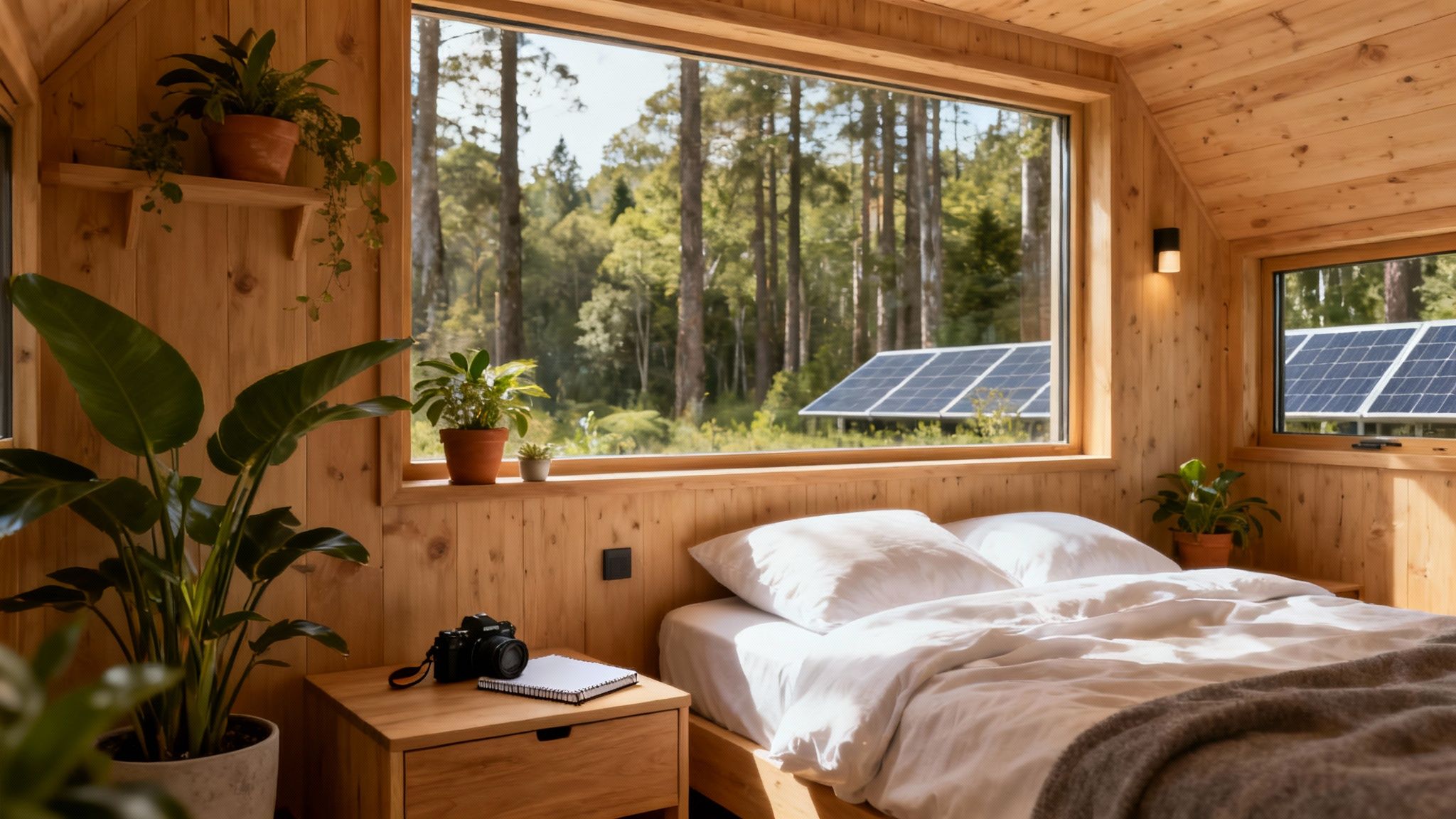
This career allows you to become a trusted authority in the eco-travel space. By providing transparent, well-researched content, you empower travelers to support properties that are truly making a difference. It’s a job that directly contributes to a more responsible and regenerative tourism industry, one eco-lodge at a time.
Getting Started as a Sustainable Accommodation Reviewer
To succeed, first develop a clear sustainability checklist to evaluate properties consistently. Prioritize accommodations with official certifications like those recognized by the Global Sustainable Tourism Council (GSTC) to build credibility. This gives your reviews a strong foundation and helps you identify truly eco-friendly lodging options.
Next, reach out to properties to request stays in exchange for detailed reviews, always being transparent with your audience about any sponsored content. Create highly valuable comparison posts like “Best Eco-Stays in Barcelona Under $110 USD/night” to attract search traffic. Consider building a searchable database on your website and offering a “verified eco-stay” badge to properties that meet your criteria, potentially for a fee. This establishes your brand and provides a valuable service to both travelers and property owners.
5. Remote-First Recruitment Specialist for Sustainable Travel Companies
Another impactful job for a digital nomad is becoming a Remote-First Recruitment Specialist focused on sustainable travel companies. This role connects purpose-driven organizations with top-tier remote talent. You act as the bridge between eco-tourism startups, green travel tech firms, and the writers, developers, and marketers who want to work for them. It’s a career that supports the growth of the sustainable travel ecosystem from the inside out.
As a niche recruiter, your work is more than just matching resumes to job descriptions. You specialize in understanding the unique culture and mission of sustainable businesses, finding candidates who are not only skilled but also deeply aligned with their values. You might help a B Corp-certified tour operator hire a remote operations manager or source a content strategist for a slow-travel booking platform. This role is popularized by the success of niche recruiting on platforms like LinkedIn Recruiter and AngelList Talent, but with a specific, sustainable focus.
This career allows you to build a business that directly fuels the regenerative travel movement. By helping conscious companies build strong, distributed teams, you contribute to their success and amplify their positive impact. It’s a fulfilling way to combine your networking skills with a passion for a healthier planet.
Getting Started as a Remote-First Recruitment Specialist
To launch your career, begin by building a pre-vetted talent pool of professionals passionate about sustainability. This gives you a head start when a client comes to you with an urgent hiring need. Focus on small to medium-sized companies (5–50 employees), as they frequently hire but often lack a dedicated internal recruiter.
Next, create case studies showcasing successful placements. Detail how your hire contributed to a company’s growth to demonstrate your value. Offer tiered service packages, from simple job board postings on sites like Greenjobs.com to full-service sourcing and placement. Finally, build relationships within the sustainable travel community by joining relevant LinkedIn groups and online forums. This helps you find both top-tier candidates and potential clients, establishing you as the go-to recruiter in this meaningful niche.
6. Slow Travel & Digital Nomad Coach
Another deeply fulfilling job for a digital nomad is becoming a Slow Travel & Digital Nomad Coach. This role is about guiding aspiring and current remote workers to design sustainable, location-independent lifestyles. You combine elements of life coaching, career strategy, and practical travel planning to help clients transition to slow travel, find long-term base cities, and maintain work-life balance while minimizing their environmental footprint.
As a coach, your work is transformative. You help people navigate the complex logistics and mindset shifts required to leave a traditional life behind. For example, you might develop a framework to help a client build a portable income stream, or create a step-by-step plan for them to establish a home base in a walkable European city. This job has been popularized by pioneers in the location-independent movement, like Tim Ferriss and communities such as Location Rebel, who offer structured coaching to achieve a nomadic lifestyle.
This career allows you to empower others based on your own experiences and values. By providing a clear roadmap and supportive accountability, you help clients avoid common pitfalls and build a life that is both adventurous and sustainable. It’s a rewarding way to scale your impact, helping dozens of people adopt a more intentional, low-impact way of living and working.
Getting Started as a Slow Travel & Digital Nomad Coach
To build a successful coaching practice, start by establishing credibility. Consider getting certified through a recognized body like the International Coaching Federation (ICF) to build trust. Then, develop your own signature framework, such as a “90-Day Slow Travel Launchpad,” to provide a structured, repeatable process for your clients.
Next, focus on building an audience and gathering social proof. Offer a lower-cost group coaching program initially to reach more people and collect powerful testimonials. You can attract leads by creating valuable free content like webinars or challenges that demonstrate your expertise. Finally, specialize in a specific niche, such as coaching creative professionals or families, to stand out in the market. Partnering with eco-nomad communities or travel platforms can also help you connect with your ideal clients.
7. Ethical Travel Affiliate & Partnership Manager
A highly strategic job for a digital nomad is becoming an Ethical Travel Affiliate & Partnership Manager. This role focuses on building bridges between sustainable content creators and eco-conscious brands, such as rail operators, responsible tour companies, and ethical gear outfitters. You are not just selling products; you are curating and managing partnerships that align with a specific audience’s values, ensuring authenticity and trust.
As an affiliate manager, your work involves a blend of marketing, negotiation, and analytics. You will identify potential partners, create commission structures, and track performance to optimize revenue for both the creator and the brand. The goal is to create mutually beneficial relationships that promote sustainable travel without resorting to greenwashing. This niche is crucial for monetizing platforms in a way that feels genuine, as seen with Eco Nomad Travel’s transparent partnerships with rail providers and sustainable booking platforms.
This career path allows you to operate at the intersection of business and advocacy. By carefully selecting partners, you help direct consumer spending toward companies that prioritize environmental and social responsibility. It’s a job that empowers conscious consumerism and supports the growth of a more regenerative tourism economy.
Getting Started as an Ethical Travel Affiliate Manager
To succeed, begin by deeply understanding an audience’s values and needs. This will guide your partner selection process, ensuring you only approach brands that genuinely resonate. Avoid companies with a history of greenwashing and prioritize those with transparent sustainability reports or third-party certifications.
Next, master the art of transparent disclosure. Always adhere to FTC guidelines and be upfront with your audience about affiliate relationships. Build trust by negotiating exclusive deals or creating custom landing pages that offer real value. Finally, focus on performance data. Use analytics to show partners how your collaboration is driving results and negotiate volume-based commissions or tiered rates to incentivize growth and scale revenue responsibly. This data-driven approach proves your value and builds long-term, stable partnerships.
8. Minimalist Packing & Zero-Waste Travel Guide Creator
An increasingly popular job for a digital nomad is becoming a Minimalist Packing and Zero-Waste Travel Guide Creator. This role involves creating content that teaches fellow travelers how to pack lighter, reduce waste, and travel more sustainably. Instead of just reviewing gear, you develop comprehensive systems, packing lists, and video tutorials that help nomads adopt luggage-light, eco-conscious habits for long-term travel.
As a minimalist content creator, your work solves a major pain point for nomads: the burden of overpacking and the desire to lessen their environmental impact. You might create detailed guides on building a “one-bag” capsule wardrobe, design downloadable checklists for a zero-waste toiletry kit, or produce video series reviewing durable, multi-purpose gear. The goal is to provide practical, actionable advice that makes sustainable, light travel accessible to everyone. This niche is championed by communities like the OneBag subreddit and sustainable brands like Patagonia.
This career allows you to build a trusted brand around a practical skill. By demonstrating your expertise and sharing your personal packing systems, you can cultivate a dedicated community. It’s a job that directly empowers others to travel more freely and responsibly, one packed bag at a time.
Getting Started as a Packing & Zero-Waste Guide Creator
To succeed in this field, start by creating a highly detailed piece of pillar content, like a definitive guide to one-bag travel or a comprehensive zero-waste packing list. This establishes your authority and provides immense value upfront. A well-structured list is a great way to prove your methodology and build an audience.
Next, develop content clusters around specific packing challenges, such as “Packing for Four Seasons in a Carry-On” or “The Ultimate Tech Kit for Remote Workers.” Create video tutorials demonstrating your packing techniques and reviewing sustainable gear. Finally, build an email list by offering free downloadable checklists and packing templates. This creates a direct line to your audience, allowing you to eventually launch a paid course on platforms like Teachable or partner with sustainable brands for affiliate income.
9. Regenerative Travel Destination Developer & Experience Designer
A truly impactful job for a digital nomad is becoming a Regenerative Travel Destination Developer. This role involves researching, developing, and promoting travel experiences in undervisited destinations that directly benefit local communities and ecosystems. Instead of driving traffic to over-touristed hotspots, you work to create low-impact, high-value travel opportunities that are sustainable, authentic, and equitable. This career path combines destination research, community engagement, and experience design into one powerful package.
As a destination developer, your focus is on creating tourism models that leave a place better than you found it. You might partner with a small cooperative in Southeast Asia to create homestay experiences, or work with cultural organizations in a walkable base city to design heritage tours that generate income for local artisans. The objective is to build travel that is regenerative, not extractive, a concept popularized by organizations like the Intrepid Foundation and its community-based tourism initiatives.
This career allows you to use your nomad lifestyle to build bridges and create lasting positive change. By documenting the stories of the communities you work with, you provide transparency and market these unique experiences to a global audience of conscious travelers. It’s a job that directly supports economic resilience and cultural preservation.
Getting Started as a Destination Developer
To succeed in this role, start by focusing on a single destination you know well to build a proof of concept. Partner with local guides, eco-friendly hotels, and cultural organizations from the very beginning to ensure the project is community-led and collaborative. This builds trust and ensures the experiences are authentic.
Next, design experiences that generate direct income for the local population. This could be a cooking class with a local family or a craft workshop led by community elders. Use data to measure your impact, tracking metrics like the carbon footprint of the experiences, the economic benefit to the community, and feedback from both travelers and locals. Finally, seek out impact funding through grants, B-Corp programs, or NGO partnerships to scale your efforts and build a sustainable business model that prioritizes people and the planet.
10. Remote Wellness & Digital Detox Retreat Facilitator
Another impactful job for a digital nomad is becoming a Remote Wellness & Digital Detox Retreat Facilitator. This role involves curating transformative experiences for other remote workers by designing and leading retreats focused on well-being, community, and disconnecting from technology. You become a guide who helps others combat burnout and find balance, often in beautiful, low-carbon, and walkable destinations.
As a facilitator, your responsibilities go beyond just logistics. You create structured programs that might include workshops on mindful work habits, guided nature walks, or group yoga sessions. The core mission is to create a restorative environment where digital nomads can recharge and build genuine connections. This field is gaining momentum, inspired by the community-building models of Remote Year and the mindfulness principles promoted by digital detox movements like Unplugged. It’s a career that directly addresses a growing need within the remote work community.
This career path allows you to create a business centered on sustainable and healthy living. By hosting retreats in eco-conscious locations and promoting slow travel, you can inspire a community to adopt healthier work-life practices. The growing interest in intentional disconnection, sometimes called “quietcations,” highlights the demand for these focused getaways. You can learn more about this trend and how to incorporate digital detox principles into your travel planning.
Getting Started as a Retreat Facilitator
To launch this career, start small with a pilot retreat for 8 to 12 people to test your concept and gather valuable testimonials. Choose walkable base cities with excellent public transit, like Barcelona or Lyon, to minimize environmental impact and simplify logistics for your attendees.
Next, partner with eco-certified accommodations that offer group rates and provide tiered pricing options (e.g., budget, mid-range) to make your retreat accessible to a wider audience. Build an email list from the very beginning to nurture potential attendees and use pre-sales or deposits to manage your cash flow effectively. Finally, create pre-retreat content like a digital detox guide to set clear expectations and facilitate a post-retreat community via a group chat to encourage repeat participation and build a loyal following.
10-Role Comparison: Sustainable Digital Nomad Jobs
| Role | Implementation Complexity 🔄 | Resource & Speed ⚡ | Expected Outcomes ⭐📊 | Ideal Use Cases | Key Advantages 💡 |
|---|---|---|---|---|---|
| Sustainable Travel Writer & Content Creator | Medium — research + storytelling + SEO | Low–Medium — laptop, travel costs; steady production cadence | Audience authority, steady ad/affiliate income; $2k–$8k/month | Long-form guides, route documentation, education for nomads | Flexible travel, diverse income streams, strong SEO potential |
| Sustainable Travel Consultant & Itinerary Planner | Medium–High — bespoke planning + client management | Medium — time per client, planning tools; slower per-project turnaround | High per-client revenue, repeat bookings; $3k–$10k/month | Personalized rail-first itineraries, high-value clients | High ARPU, referral potential, upsell services |
| Carbon Footprint Calculator Developer & Data Analyst | High — software + data science + compliance | High — developers, APIs, data maintenance; scalable after launch | Scalable SaaS/B2B revenue; $1.5k–$15k+/month | Emissions tools for platforms, enterprise licensing, traveler dashboards | Scalable product, multiple monetization paths, strong market demand |
| Sustainable Accommodation Reviewer & Property Scout | Medium — on-site audits + evaluation frameworks | Medium–High — travel for reviews, photography; moderate turnaround | Trusted property database, commissions/sponsorships; $1.5k–$5k/month | Vetting eco-lodgings, audience-facing reviews, property partnerships | Differentiated niche, credibility via audits, partnership opportunities |
| Remote-First Recruitment Specialist for Sustainable Travel Companies | Medium — recruiting + sector expertise | Low–Medium — sourcing tools, network building; moderate sales cycle | Placement fees and retainers; $2k–$8k/month | Hiring remote talent for green travel startups and platforms | High margins per placement, repeat business, remote work model |
| Slow Travel & Digital Nomad Coach | Medium — coaching frameworks + program delivery | Low–Medium — content, sessions; time-intensive per client | High-ticket coaching and programs; $3k–$10k/month | Lifestyle transitions, base-city selection, group coaching | Deep client relationships, scalable group programs, recurring revenue |
| Ethical Travel Affiliate & Partnership Manager | Low–Medium — negotiation + program setup | Low — audience, tracking tools; relatively fast launch | Recurring affiliate/partnership revenue; $1k–$8k/month | Monetizing content platforms via aligned brand partnerships | High-margin revenue, low ongoing workload after setup |
| Minimalist Packing & Zero-Waste Travel Guide Creator | Low–Medium — content + possible product development | Low — content tools; scalable via courses/products | Evergreen sales, affiliate commissions; $1.5k–$6k/month | Packing guides, courses, gear product lines for minimalists | Evergreen demand, multiple monetization channels, product potential |
| Regenerative Travel Destination Developer & Experience Designer | High — community engagement + impact measurement | High — travel, stakeholder coordination; slow revenue ramp | Impact-driven experiences, grants/partnerships; $2k–$8k+/month | Regenerative tours, community-based experiences, NGO partnerships | Tangible local benefits, grant funding potential, unique offerings |
| Remote Wellness & Digital Detox Retreat Facilitator | High — logistics, facilitation, legal/insurance | High — venues, staff, pre-sales; event-based cash flow | High per-event revenue; $4k–$15k+/retreat | Week-long wellness/digital detox retreats for remote workers | Strong per-person margins, community-building, repeat attendees |
Which Sustainable Nomad Career is Right for You?
Embarking on a new career path can feel like planning a multi-country train journey across an unknown continent: exhilarating, a bit daunting, and full of potential. Throughout this guide, we’ve explored ten distinct roles that perfectly marry the freedom of remote work with a deep commitment to sustainable, slow travel. Choosing the right job for a digital nomad is a deeply personal decision, one that hinges on your unique blend of skills, passions, and long-term goals.
Whether you found yourself drawn to the creative storytelling of a Sustainable Travel Writer, the analytical precision of a Carbon Footprint Calculator Developer, or the community-focused work of a Remote Wellness Retreat Facilitator, one truth remains constant: the world needs your specific talents. The sustainable travel movement is not a fleeting trend; it is a fundamental shift in how we interact with our planet and its diverse cultures. Each role we detailed offers a viable pathway to financial independence while actively contributing to a more regenerative, equitable, and mindful way of exploring the world.
The journey from your current position to a fulfilling remote career doesn’t happen overnight. It begins with a single, intentional step. This could be enrolling in a copywriting course, learning the basics of carbon data analysis, or networking with leaders in the regenerative tourism space. The key is to transform inspiration into action, building momentum one small, manageable task at a time. Your unique perspective as an eco-conscious traveler is not just a personal value; it is a professional asset waiting to be leveraged.
Charting Your Course: Actionable Next Steps
To move from aspiring to active sustainable digital nomad, focus on these critical next steps. This framework will help you build a solid foundation for your new career.
- Conduct a Skills & Passion Audit: Create two columns. In the first, list your current professional skills (e.g., project management, graphic design, data analysis). In the second, list your passions related to sustainable travel (e.g., minimalist packing, vegan travel, train itineraries). Look for the overlap; this is your sweet spot.
- Build Your Niche Portfolio: Don’t wait for a paid gig to start creating. If you want to be a writer, start a blog. If you want to be an itinerary planner, create three sample rail-first itineraries for different budgets and post them on LinkedIn. This portfolio becomes your proof of concept for potential clients. For instance, you could plan a detailed 14-day, low-impact trip through Italy, focusing on agriturismos and regional trains, costing under $2,000 USD.
- Network with Intention: Join online communities dedicated to sustainable travel and remote work. Engage thoughtfully in discussions, offer value without asking for anything in return, and connect with individuals whose work you admire. Platforms like LinkedIn and niche Facebook groups are invaluable for finding mentors and future collaborators.
The most rewarding job for a digital nomad is one that aligns with your core values and allows you to make a tangible, positive impact. By building your career around principles of sustainability, you’re not just earning a living; you’re becoming a part of the solution.
Editor’s Pick: The Ultimate Nomad Productivity Tool
For nomads juggling client work, travel planning, and personal projects, a robust organizational tool is non-negotiable. Notion stands out as the best all-in-one workspace. You can use it to build a content calendar, track client invoices, plan detailed train itineraries with embedded maps, create packing checklists, and even journal about your experiences. Its flexibility allows you to create a personalized system that grows with your business, keeping every aspect of your sustainable nomad life organized in one place.
Key Takeaways for Your Sustainable Nomad Journey
- Align Passion with Profession: The most sustainable careers merge what you’re good at with what you care about. Identify the intersection of your professional skills and your passion for eco-conscious travel to find your ideal role.
- Build a Niche Portfolio First: Don’t wait for permission or payment. Start creating content, sample itineraries, or case studies in your chosen niche to demonstrate your expertise and attract your first clients.
- Action Overwhelms Analysis: It’s easy to get stuck in the research phase. The key to transitioning is to take small, consistent actions every day, whether it’s updating your LinkedIn profile, taking an online course, or pitching your first potential client.
- Sustainability is a Professional Asset: Your commitment to low-impact travel is a unique selling proposition. Frame it as a core part of your professional brand to attract companies and clients who share your values.
- Financial Planning is Non-Negotiable: Before you leap, create a detailed budget. Understand your runway, set realistic income goals, and secure essential logistics like travel insurance through a reliable provider such as VisitorsCoverage.
Ready to take the next step and design a work-life that truly aligns with your sustainable values? At Eco Nomad Travel, we specialize in providing the resources, guides, and inspiration you need to build a fulfilling, low-impact life on the road. Explore our in-depth guides at Eco Nomad Travel to find your perfect path. This article was fact-checked using sustainability data from the World Green Building Council, the Global Ecotourism Network, and peer-reviewed architecture studies. All partner links are vetted for compliance with sustainable business certifications.
Join the Sustainable Work Movement
Want more rail-first itineraries, low-impact packing systems, and walkable base-city ideas?
FAQ: Job for Digital Nomad Careers (Sustainable Remote Work)
These FAQs answer the most common questions readers have about finding a job for digital nomad lifestyles, building stable income, and staying compliant while traveling sustainably.
Getting Started
1) What is the best job for digital nomad beginners?
The best job for digital nomad beginners is usually one that leverages an existing skill you can sell remotely right away—such as customer support, virtual assistance, content writing, basic design, or social media management. Start with roles that have clear deliverables and low barriers to entry, then specialize as you gain experience.
2) How do I know if a “remote” job is truly location-independent?
Read the fine print for location restrictions like “US only,” “EU time zone,” or “must reside in X state.” A truly location-independent job for digital nomad lifestyles will explicitly say “work from anywhere” or “global/anywhere,” and it will not require residency in a specific country.
3) How long does it take to land a job for digital nomad travel?
Many people land interviews within 2–6 weeks if they apply consistently and tailor each application. If you are switching industries, plan on 6–12 weeks while you build a portfolio, update your resume, and gather references that prove you can work remotely.
4) What skills are most in-demand for digital nomad work in 2026?
High-demand categories include software development, data/analytics, performance marketing, content/SEO, UX/UI design, customer success, project management, and operations. If you want the fastest path to a job for digital nomad flexibility, build one “core” skill plus one “support” skill (for example: SEO + writing, design + Webflow, PM + Notion systems).
Salary, Rates, and Income Stability
5) What salary range should I expect for a job for digital nomad roles?
It depends on role and experience. As a rough guide: entry-level remote roles can fall around $35k–$60k, mid-level roles often land around $60k–$110k, and specialized senior roles can exceed $120k+. Freelancers may earn more variability but can scale faster with retainers and premium positioning.
6) Is freelancing or full-time better for digital nomads?
Full-time provides predictable income and benefits, which can be ideal while you stabilize your travel routine. Freelancing provides more flexibility and can scale quickly once you have a portfolio and repeat clients. Many nomads start full-time and transition into freelance retainers later for more control.
7) How can I make my income more stable while traveling?
Prioritize recurring revenue: monthly retainers, long-term contracts, or a remote role with predictable pay. Build a 2–3 month cash buffer, keep your expenses lean, and avoid overbooking travel days. A stable job for digital nomad life often comes from systems—repeatable workflows, templates, and consistent client communication.
8) Can I earn a living with sustainable travel content creation?
Yes, but it is usually a medium-term strategy. Sustainable travel creators often combine income streams: affiliate partnerships, sponsorships, ads, digital products, and consulting. Treat it like a business: publish consistently, build an email list, and focus on search-intent topics that solve real problems.
Best Platforms to Find Remote Work
9) What are the best platforms to find a job for digital nomad work?
Use a mix: a big marketplace (LinkedIn), a remote-first board (We Work Remotely or Remote OK), a curated option (FlexJobs), and a niche board (Dynamite Jobs). For freelance work, Upwork can be a fast-start option. Using multiple platforms increases your odds while keeping your search focused.
10) How do I avoid remote job scams?
Red flags include upfront fees, pressure to act immediately, vague job descriptions, and requests for sensitive info early. Verify the company domain, confirm the role exists on the company website, and search for independent reviews. Legitimate employers won’t ask you to pay to get hired.
11) Should I apply with “Easy Apply” or use company websites?
Do both, but prioritize company websites for serious roles. “Easy Apply” is helpful for volume, but direct applications usually get better screening. For a job for digital nomad role, your best results typically come from targeted applications with a tailored resume and a short, specific cover note.
12) What should I put in my resume to stand out as a digital nomad candidate?
Emphasize remote readiness: asynchronous collaboration, clear writing, time-zone coordination, and self-management. Add measurable outcomes (revenue, traffic, retention, automation hours saved). Mention remote tools you actually use—Slack, Notion, ClickUp, GitHub, Figma—only if you can back it up.
Visas, Taxes, and Compliance
13) Do I need a digital nomad visa to work remotely abroad?
Not always. Some travelers rely on tourist stays, but that can be legally complex. Digital nomad visas can make long stays simpler and more compliant. Requirements vary by country and may include income thresholds, insurance, and background checks. If you want to stay longer in one place, a visa pathway can be worth it.
14) Will I owe taxes in the countries I visit?
Possibly. Tax rules depend on your residency, how long you stay, and the source of your income. Many nomads keep a clear “tax home” and avoid triggering residency in multiple countries. For anything beyond short trips, consult a qualified tax professional who understands expat/nomad scenarios.
15) What’s the safest way to handle contracts and payments abroad?
Use written agreements, clear scopes, and milestone payments. For freelancers, consider invoicing tools and payment providers that work internationally. Keep records of invoices, receipts, and travel dates. Documentation protects you if tax questions come up later.
16) Do I need special insurance for remote work travel?
Travel medical coverage is strongly recommended, and long-stay nomads often add electronics coverage for laptops/gear. If you plan retreats or client work that involves liability, consider professional coverage too. Match your policy to your trip length and activities.
Connectivity, Tools, and Sustainable Logistics
17) What do I need to stay connected reliably for a job for digital nomad life?
Prioritize two layers of internet: primary Wi-Fi plus a backup mobile data option. Many nomads use an international eSIM so they can land, activate, and work immediately without hunting for a local SIM. Keep a portable power bank and a universal adapter as basics.
18) How do I work while moving between cities without burning out?
Batch travel days and avoid heavy deadlines on transit days. Use a “slow travel” rhythm: stay longer (2–6 weeks), pick walkable bases, and plan work blocks. A sustainable job for digital nomad routine is about protecting focus and energy, not just chasing destinations.
19) What is the most sustainable way to travel as a digital nomad?
Choose rail-first routes where possible, reduce flight frequency by staying longer in each base, and prioritize walkable neighborhoods with public transit. Book eco-certified stays and support local businesses. Sustainability comes from fewer long-distance moves and smarter local mobility.
20) What is the single best next step if I want a job for digital nomad freedom?
Pick one role from this guide and commit to a 30-day plan: build a small portfolio, apply to 5–10 targeted roles per week (or pitch 5 clients), and track results. Consistent action beats endless research. One focused month can create real momentum toward a job for digital nomad life.
Note: Keep only one FAQ schema block on the page (below) to avoid duplicate markup.
