
Finding the right jobs for digital nomad lifestyles can feel overwhelming, especially when your goal is sustainable, slow travel. Many job boards are cluttered with roles that demand inflexible hours or are not genuinely remote-friendly. This makes it difficult to plan low-impact, rail-first itineraries or settle into a walkable base city for a long stay. You need a reliable income source that aligns with your values. This source must offer the flexibility to minimize your carbon footprint while exploring the world at a slower pace. The challenge is sifting through endless listings to find legitimate opportunities that support a regenerative travel mindset.
This comprehensive guide solves that problem by curating the best platforms for finding remote work that fits a sustainable, car-free travel plan. We move beyond generic lists to provide actionable insights into each job board. Consequently, we focus on features that matter most to eco-conscious nomads. You will discover which sites are best for specific career paths. These include freelance writing, graphic design, software development, and virtual assistance. We break down the pros and cons of each platform specifically for long-stay and train-based travelers. This helps you choose the right fit for your unique journey.
Each entry includes a detailed overview, screenshots to guide your search, and direct links to get you started immediately. We pinpoint the key features that help you filter for truly remote positions. Additionally, we identify companies with a culture that supports asynchronous work. This article is your roadmap to securing a stable remote career. It empowers you to fund your travels without compromising your commitment to sustainability.
1. LinkedIn Jobs: A Platform for Digital Nomad Jobs
Finding legitimate, high-quality jobs for digital nomad lifestyles often starts with tapping into the largest professional network on the planet. LinkedIn Jobs transcends being a simple job board; it’s an integrated ecosystem where your professional profile, network, and job search coexist. This makes it an indispensable tool for nomads who want to combine active applications with passive networking and personal brand building. For example, staying connected with a reliable eSIM ensures you can network from anywhere.
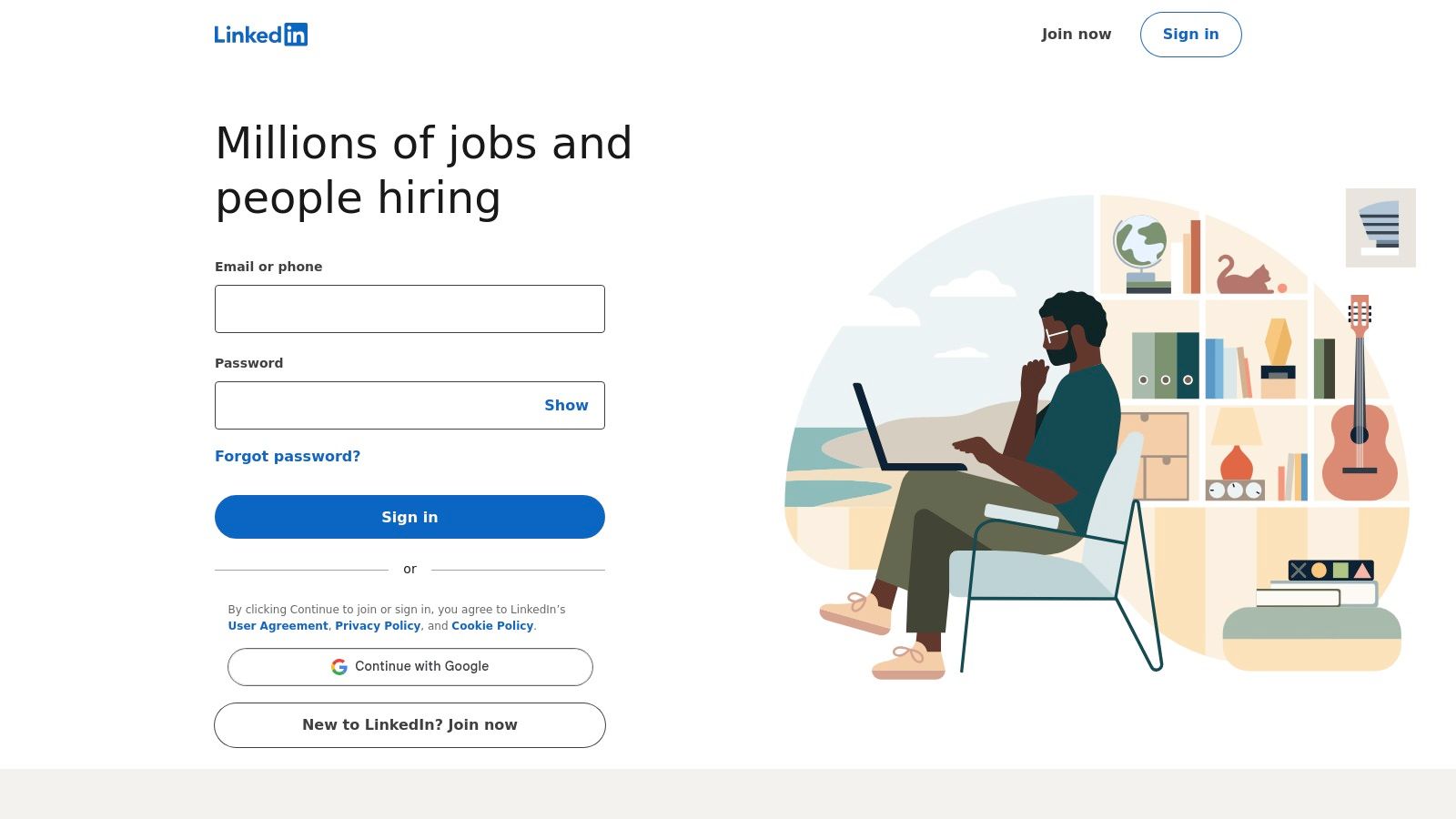
Unlike niche remote-only boards, LinkedIn’s sheer volume of listings from major U.S. and global employers is its primary advantage. You get a real-time pulse on the entire job market, not just a curated sliver. For digital nomads, this means access to freshly posted roles at established companies that are newly embracing remote work. These roles often appear before being syndicated elsewhere. This speed can be a significant competitive edge.
The platform’s true power lies in its integration. You can find a role, see who posted it, and check for mutual connections who work at the company. Then, you can send a personalized message to the hiring manager, all within minutes. This ability to go beyond a faceless application and make a human connection is invaluable. This is especially true when competing with a global pool of candidates.
How to Use LinkedIn Effectively for Nomad Jobs
Getting the most out of LinkedIn requires a strategic approach. Start by optimizing your profile with keywords relevant to your industry and remote work. Include terms like “remote,” “distributed teams,” and specific software skills. Your headline should clearly state your value proposition and that you are seeking remote opportunities.
Next, master the job search filters. The “Workplace type” filter is essential; always select “Remote.” However, don’t stop there. Use the “Date posted” filter to see roles listed in the “Past 24 hours” to be one of the first applicants. Create and save multiple searches with different keyword combinations and locations. For instance, search “Remote, United States” or “Remote, Europe” and turn on alerts for instant notifications.
Pro Tip: Many companies mislabel jobs. Some listings marked “Remote” may specify a particular state or country in the job description. Always read the fine print to ensure the role is truly location-independent and aligns with your travel plans.
Pros and Cons of LinkedIn Jobs
| Feature | Pro | Con |
|---|---|---|
| Volume | Enormous coverage of U.S. and global employers; new listings appear constantly. | Quality varies; many "remote" jobs are actually hybrid or have location restrictions. |
| Networking | Seamlessly integrated with your professional network for outreach to recruiters and employees. | Requires an active, well-maintained profile to be effective; can be time-consuming. |
| Alerts | Saved searches and instant alerts allow for very early applications, a key advantage. | The algorithm can sometimes be buggy, returning irrelevant results that require filter adjustments. |
| Cost | Free to use all core job searching and application features. | LinkedIn Premium offers more insights but comes at a monthly cost (starting around $29.99 USD per month). |
Ultimately, LinkedIn Jobs is a foundational tool. While you may find more curated remote roles on niche boards, no other platform offers the same scale and integrated networking power to uncover opportunities and connect directly with the people doing the hiring.
Website: https://www.linkedin.com/jobs
2. Remote OK
For those who want to cut through the noise of hybrid or location-specific roles, Remote OK is a foundational job board built exclusively for finding jobs for digital nomad lifestyles. It's one of the longest-running platforms dedicated solely to remote work. Therefore, it offers a high volume of listings across technical and non-technical fields. Its straightforward, no-frills interface prioritizes speed and efficiency. This makes it a favorite for nomads who need to quickly scan the latest opportunities.
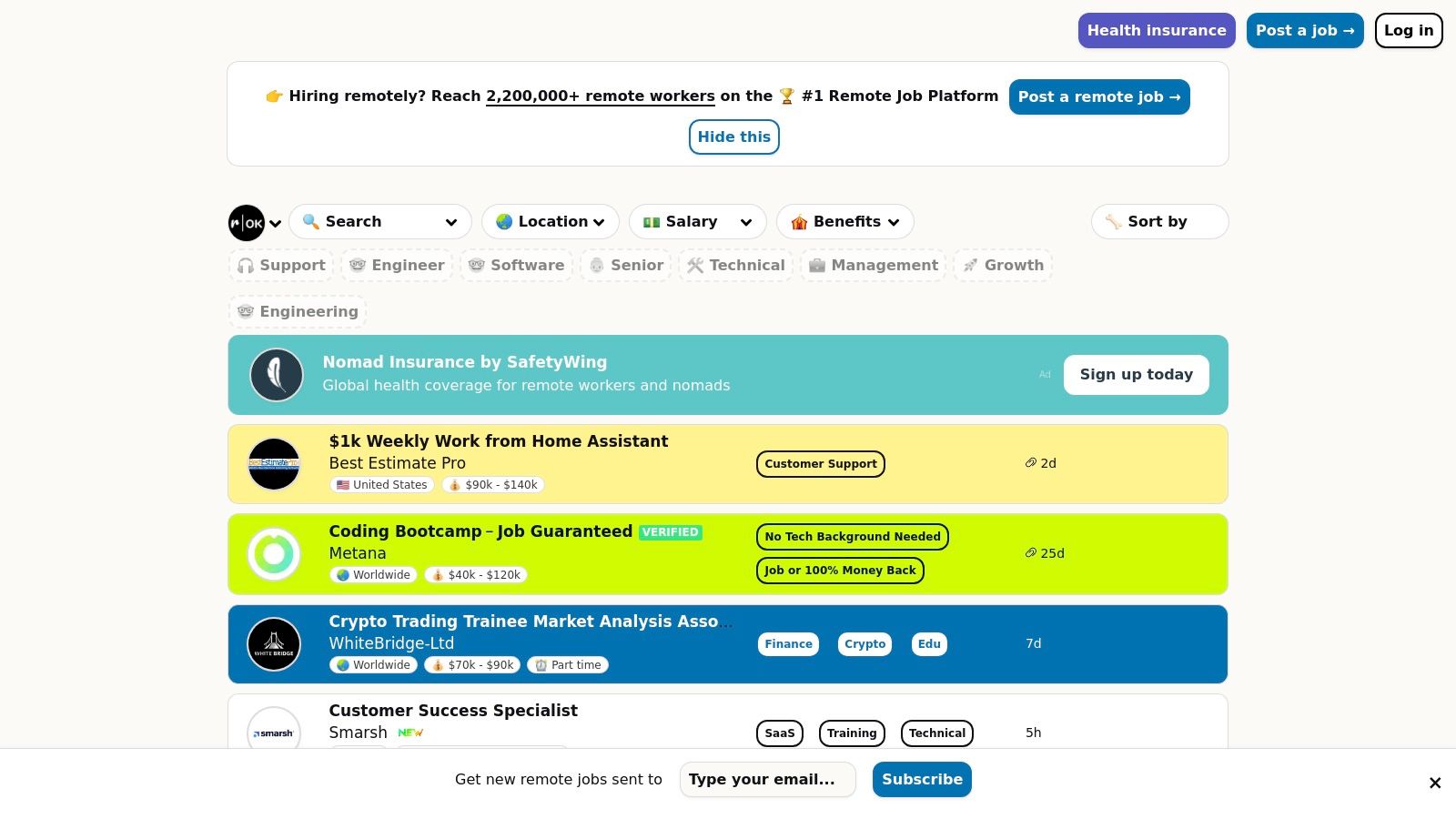
Unlike massive professional networks, Remote OK is a pure-play job board. Its primary advantage is its strict remote-only policy and detailed tagging system. Every single listing is for a distributed role. This eliminates the frustrating task of filtering out office-based or hybrid positions. Companies use tags to specify salary ranges, required skills, and crucial location constraints like "Worldwide," "North America," or "EU Only." This allows nomads to instantly see if a role aligns with their travel and tax residency plans.
The platform excels at providing rapid access to new postings. Savvy users can leverage its RSS feeds or API to get immediate notifications about new roles that match their criteria. This is often faster than email alerts from other sites. This focus on speed and transparent data gives applicants a critical edge in the competitive remote job market.
How to Use Remote OK Effectively for Nomad Jobs
To maximize your success on Remote OK, you must use its powerful sorting and filtering tools strategically. Begin by using the top navigation to narrow your search by function, such as "Marketing," "Design," or "Engineering." Once on the category page, immediately use the sorting options at the top. Sorting by "Date" shows you the newest listings first, which is essential for being an early applicant.
Next, apply the filter tags on the left-hand side. The most important filters for digital nomads are the location tags. Select "Worldwide" to see truly location-independent roles. You can also filter by specific experience levels, such as "Senior" or "Junior." Then, look for the "Salary" tag to focus on positions that meet your financial needs. This targeted approach turns a broad search into a highly curated list of relevant opportunities.
Pro Tip: Use the "Highest Paid" sort option occasionally to research market rates for your skills. This provides valuable data for salary negotiations, even if you don't apply for the top-paying roles listed.
Pros and Cons of Remote OK
| Feature | Pro | Con |
|---|---|---|
| Exclusivity | 100% remote-only listings eliminate the need to filter out hybrid or on-site jobs. | The quality of job descriptions can be mixed; thorough due diligence on each company is necessary. |
| Speed & Access | RSS feeds and API access provide near-instant notifications for new job postings. | Sponsored and featured posts can sometimes push newer, relevant listings further down the page. |
| Filtering | Excellent tagging for location (Worldwide, USA, etc.), salary, and benefits makes searching efficient. | The user interface is functional but less polished than larger, more modern platforms. |
| Cost | Completely free for job seekers to browse and apply to all listed positions. | Lacks the integrated networking features of platforms like LinkedIn. |
In short, Remote OK is an essential, high-signal resource for serious remote job seekers. It lacks the networking capabilities of a platform like LinkedIn. However, its laser focus on remote-only roles and powerful sorting tools make it one of the most efficient places to find legitimate jobs for digital nomad lifestyles.
Website: https://remoteok.com
3. We Work Remotely (WWR)
As one of the pioneers in the remote work space, We Work Remotely (WWR) has established itself as a trusted, high-signal platform for finding legitimate jobs for digital nomad professionals. It is not a massive aggregator but a curated, remote-first community. This focus on 100% remote roles means you won’t waste time sifting through hybrid or location-specific listings disguised as remote opportunities.
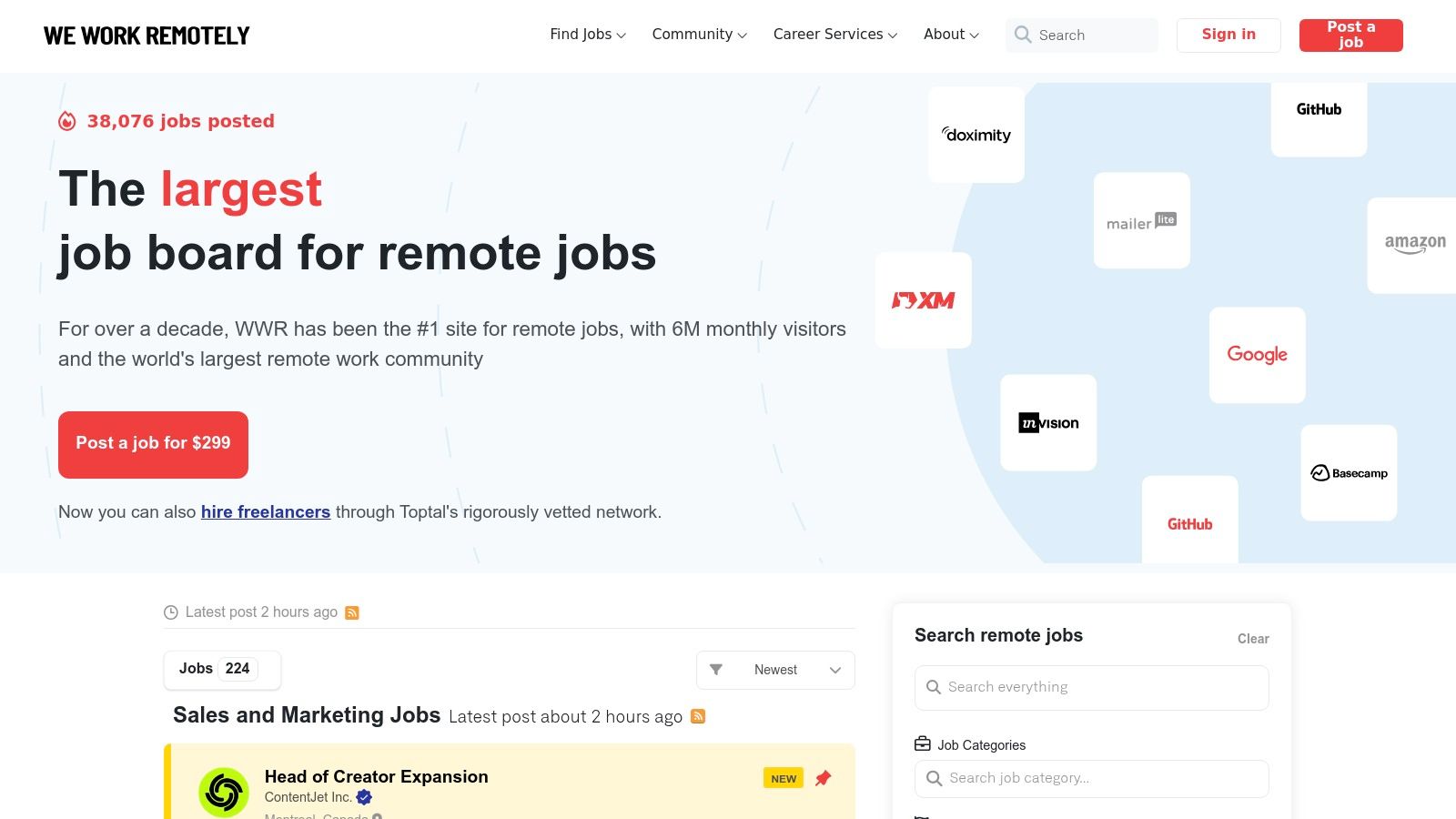
WWR’s primary advantage is its curation and reputation. Employers pay a significant fee (starting at $299 USD) to post a job. This acts as a natural filter against low-quality or non-serious offers. The listings are human-screened, ensuring they meet the platform’s standards. This results in a cleaner, more focused job search experience centered on roles from companies genuinely committed to distributed teams, from startups to established tech firms.
The platform is cleanly organized into clear categories like “Programming,” “Design,” “Marketing,” and “Customer Support.” This makes it easy to navigate to your area of expertise. Its long-standing presence in the remote work scene means it has a loyal base of employers who repeatedly use the platform to find top remote talent. For the digital nomad, this translates to a consistent stream of relevant, high-quality opportunities.
How to Use We Work Remotely Effectively for Nomad Jobs
To maximize your success on WWR, start by creating a candidate account. While you can browse listings without one, an account allows you to tailor your job feed to your specific skills and interests. Consider the “Pro” plan if you are actively searching. It provides instant alerts for new jobs that match your criteria, giving you a valuable head start on applications.
Regularly check the main job board, but also explore the “Top 100 Remote Companies” list. This feature is a goldmine for identifying businesses with a proven track record of hiring and supporting distributed teams. You can research these companies and proactively check their career pages. Alternatively, connect with their employees on other platforms like LinkedIn. This proactive approach can uncover roles before they are even posted on the main board.
Pro Tip: Pay close attention to the time zone requirements mentioned in job descriptions. While many roles are “work from anywhere,” some may require overlap with specific time zones (e.g., PST, EST, CET). Ensure these align with your planned travel destinations to maintain a sustainable work-life balance.
Pros and Cons of We Work Remotely
| Feature | Pro | Con |
|---|---|---|
| Curation | Listings are 100% remote and human-screened, leading to higher quality and relevance. | The volume of listings is lower than on massive aggregators like LinkedIn or Indeed. |
| Employer Quality | The high cost for employers to post a job often signals serious, well-funded companies. | The fee can deter smaller startups or non-profits from posting, slightly limiting variety. |
| Focus | Clear categories make it simple to find roles in tech, design, marketing, and support. | Fewer listings in non-tech fields compared to more generalist job boards. |
| Cost | Free to browse and apply to many jobs. | Full access to instant alerts and advanced application features requires a paid “Pro” candidate account. |
In summary, We Work Remotely is a premium, focused job board that prioritizes quality over quantity. It’s an essential resource for any digital nomad who wants to cut through the noise. It helps find serious, fully remote roles at companies that truly embrace the remote work culture.
Website: https://weworkremotely.com
4. FlexJobs
For nomads tired of sifting through scams and poorly defined “remote” roles, FlexJobs offers a curated, human-vetted alternative. It stands out by functioning less like a massive aggregator and more like a premium service dedicated to flexible work. Every single listing for jobs for digital nomad lifestyles on the platform is hand-screened by a real person to verify its legitimacy and remote status. This saves you invaluable time and energy.
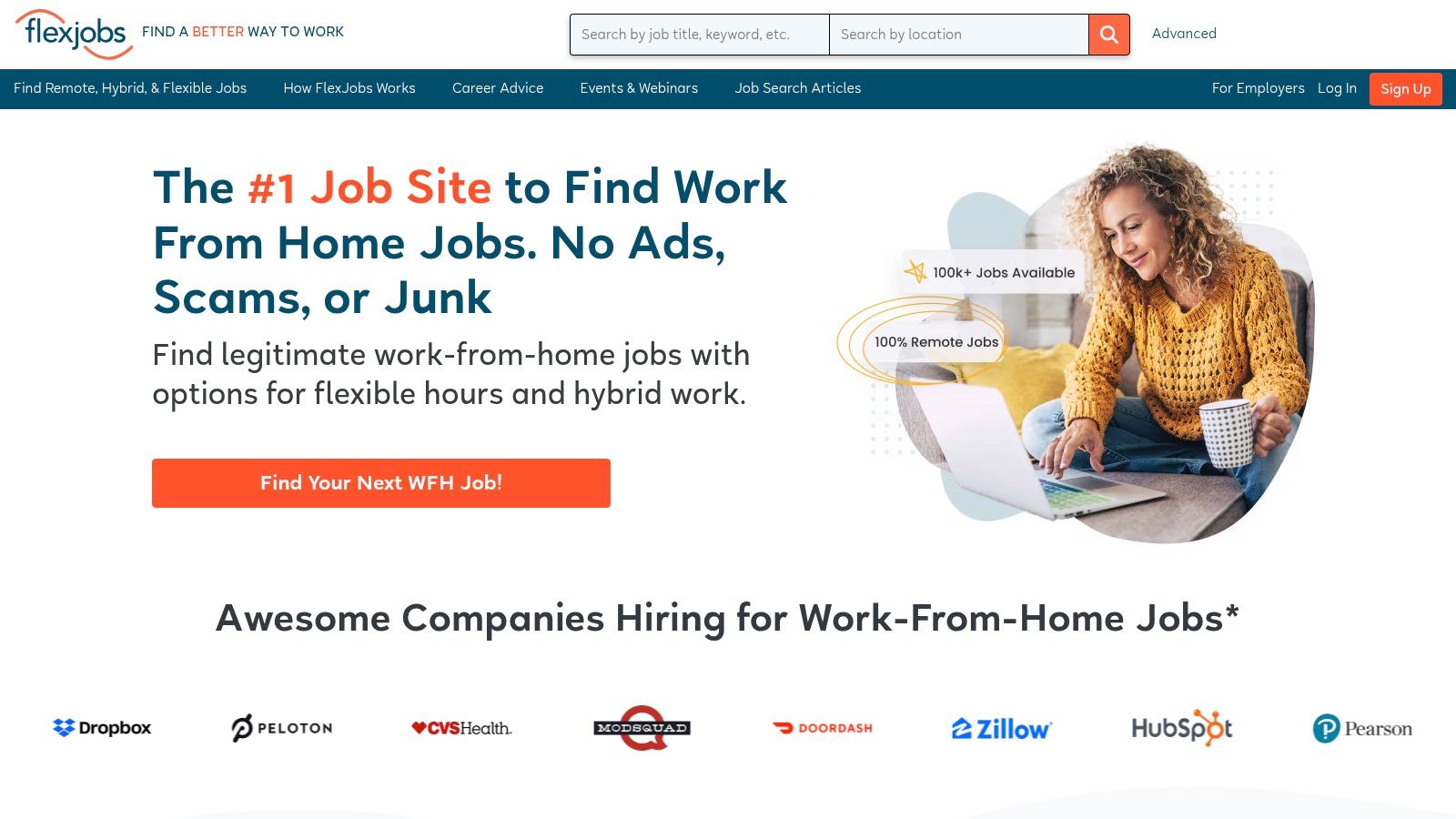
This quality-over-quantity approach makes FlexJobs a go-to for professionals across more than 50 career categories. It extends well beyond the typical tech-heavy listings found elsewhere. You’ll find legitimate opportunities in fields like project management, marketing, writing, and even healthcare. This diversity is especially useful for nomads looking to pivot careers or find roles that align with their specific skill sets, not just the most common remote jobs. Getting around to interviews is easy with a service like Welcome Pickups.
The platform’s value isn’t just in its listings. A subscription unlocks a suite of career development tools. These include skills tests to showcase your abilities, resume reviews, expert career coaching, and educational webinars. For a digital nomad, these resources can be critical for sharpening your competitive edge in a global market and ensuring your application materials stand out.
How to Use FlexJobs Effectively for Nomad Jobs
To maximize your FlexJobs investment, start by building a comprehensive profile. This includes uploading a tailored resume and completing any relevant skills tests offered on the platform. A high completion percentage can make you more visible to employers. Think of your profile as a one-stop-shop for recruiters to see your qualifications.
Dive deep into the advanced search filters. You can filter by “100% Remote Work,” job type (employee, freelance), and career level. Crucially, you can also filter by location requirements, such as “Work from Anywhere” globally. This is the gold standard for jobs for digital nomad seekers. Save multiple search alerts for different roles to get instant notifications when a matching job is posted.
Pro Tip: Use the FlexJobs company guide to research potential employers before you apply. The guide provides details on a company’s history with remote work, its culture, and other open positions. This research can help you personalize your cover letter and ask insightful questions during an interview.
Pros and Cons of FlexJobs
| Feature | Pro | Con |
|---|---|---|
| Vetting | Every job is human-screened, significantly reducing scam risk and saving time. | It’s a subscription service; you have to pay to view full details and apply (starting around $2.95 USD for a 14-day trial). |
| Variety | Excellent source for non-tech roles, part-time work, and diverse career fields. | Some jobs posted may also be available for free on direct company websites, but without the vetting. |
| Resources | Includes valuable career support like coaching, resume reviews, and skills tests. | The sheer number of listings is lower than on massive, free platforms like LinkedIn or Indeed. |
| Quality | High signal-to-noise ratio means you spend more time applying to relevant, legitimate roles. | Requires an upfront financial commitment, which might be a barrier for some job seekers. |
Ultimately, FlexJobs is an investment in efficiency and security. By paying a small fee, you gain access to a pre-vetted pool of high-quality remote jobs. You also get the tools to help you land one. This makes it an indispensable resource for the serious digital nomad.
Website: https://www.flexjobs.com
5. Upwork
For freelancers seeking a direct pipeline to project-based jobs for digital nomad lifestyles, Upwork is the world’s largest and most established marketplace. It moves beyond traditional job applications, functioning as a dynamic ecosystem. Here, you build a professional portfolio, bid on projects, and manage client relationships. This makes it an essential platform for nomads who prefer the autonomy of contract work over a single full-time employer.
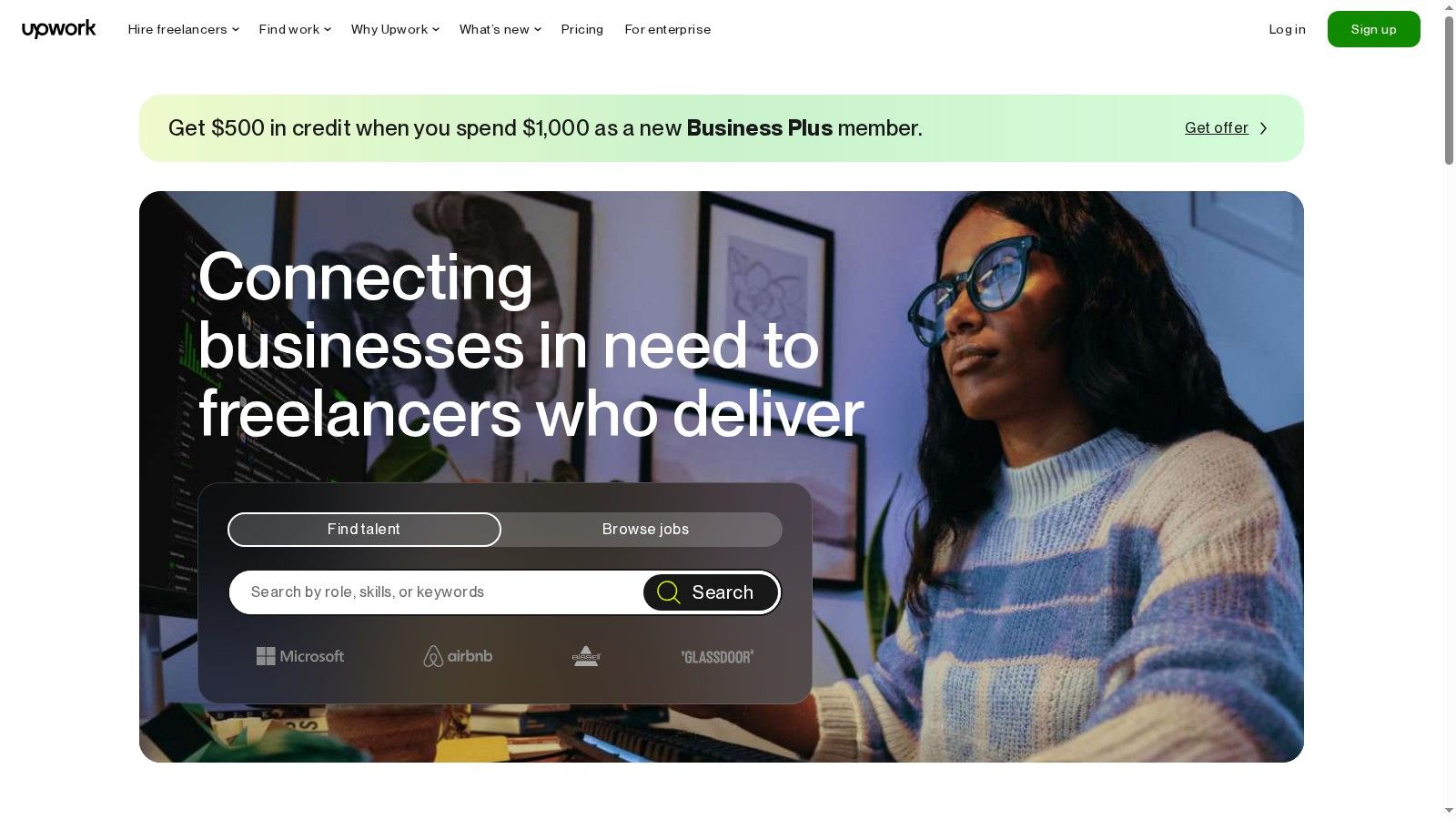
Unlike a conventional job board, Upwork’s primary advantage is its sheer volume of diverse, remote-friendly projects. It connects freelancers with clients from global startups to Fortune 500 companies. These clients seek specialized skills for short-term tasks, long-term contracts, and recurring retainers. For a digital nomad, this translates to unparalleled flexibility in managing workload and income streams while traveling. Don’t forget to protect your travels with travel insurance.
The platform’s strength lies in its built-in infrastructure designed for remote collaboration. Features like escrow payment protection, an hourly time tracker, and a streamlined invoicing system provide security. They also remove administrative burdens. This allows you to focus on delivering quality work for clients anywhere in the world. You can be confident that payment and project management logistics are handled.
How to Use Upwork Effectively for Nomad Jobs
Success on Upwork requires building a powerful profile and a strategic bidding process. Your profile is your storefront. It must be 100% complete and showcase your expertise with a clear, client-focused overview. Also include a professional photo and a portfolio of your best work. Use keywords relevant to your skills and remote work capabilities to appear in client searches.
When searching for projects, use filters to narrow down opportunities. Filter by “Payment verified” to avoid scams. Also, set your desired experience level and budget. Craft personalized, compelling proposals for each job you apply for. Avoid generic templates. Instead, address the client’s specific needs, explain how your skills solve their problem, and provide relevant examples from your portfolio.
Pro Tip: Start by bidding on a few smaller, easier-to-win projects to build your Job Success Score (JSS) and get positive reviews. A high JSS and strong feedback are critical for attracting higher-paying, long-term clients who are looking for reliable freelancers.
Pros and Cons of Upwork
| Feature | Pro | Con |
|---|---|---|
| Project Volume | Massive marketplace with thousands of new freelance projects posted daily across nearly every industry. | High competition can drive down rates, especially for entry-level work. Clients require careful vetting. |
| Payment Security | Integrated escrow and time-tracking tools provide robust payment protection for both hourly and fixed-price jobs. | Platform service fees are charged on earnings, ranging from 5-20%, which can impact your net income. |
| Flexibility | Ability to choose your projects, set your own rates, and build a flexible schedule that fits your travel plans. | Building a reputation and consistent client base takes significant time and effort upfront. |
| Cost | Free to create a profile and search for jobs. | Requires purchasing “Connects” (a virtual currency) to submit proposals for most jobs, starting around $0.15 USD per Connect. |
Ultimately, Upwork is a foundational platform for any nomad building a freelance career. While competition is high, no other marketplace offers the same scale of opportunity. It combines this with the security features needed to work confidently with clients from anywhere on the globe.
Website: https://www.upwork.com
6. Wellfound (formerly AngelList Talent)
For digital nomads drawn to innovation and high-growth environments, Wellfound is the essential gateway. Formerly AngelList Talent, this platform specializes in connecting talent with startups. This makes it a goldmine for finding remote jobs for digital nomad lifestyles within the tech ecosystem. It moves away from the corporate giants found on LinkedIn. Instead, it focuses on early to growth-stage companies that often build remote-first cultures from the ground up.
What sets Wellfound apart is its curated focus on the startup world, particularly in the U.S. market. The platform is less about volume and more about relevance. This is especially true for those targeting roles in engineering, product, design, marketing, and operations. This focus means you’re not sifting through thousands of irrelevant corporate postings to find opportunities that align with a flexible, autonomous work style. Startups listed here are often looking for individuals who can thrive independently, a perfect match for the nomadic professional.
The user experience is streamlined and candidate-centric. Creating a profile is straightforward. You can apply to multiple jobs with a single, comprehensive profile that showcases your skills, experience, and what you’re looking for. This efficiency is crucial for nomads managing job applications across different time zones. Furthermore, the platform is entirely free for job seekers. This removes any financial barriers to accessing these high-potential roles.
How to Use Wellfound Effectively for Nomad Jobs
To maximize your success on Wellfound, a tailored profile is key. Go beyond just listing your work history. Use the bio section to explicitly state your interest in remote work. Also, highlight past successes in distributed teams. Use precise keywords for your skills (e.g., “React,” “Figma,” “HubSpot”) as recruiters use these to search for candidates.
Leverage the platform’s powerful search filters. You can filter by “Remote” to see only location-independent roles. Dig deeper by filtering for company size, funding stage, and specific industries. This helps you find startups that match your risk appetite and career goals. Setting up alerts for new roles that match your criteria ensures you can be among the first to apply, giving you a competitive edge.
Pro Tip: Many startups on Wellfound offer equity as part of their compensation. Pay close attention to the salary and equity ranges provided on job listings. If the details are vague, don’t hesitate to ask for clarification early in the interview process to ensure the compensation aligns with your financial needs.
Pros and Cons of Wellfound
| Feature | Pro | Con |
|---|---|---|
| Niche Focus | Concentrated list of startup jobs, especially in tech, product, and marketing. | Fewer opportunities in non-tech sectors or traditional corporate roles. |
| Candidate Experience | Free for job seekers with a simple, clean interface and easy application process. | Competition for top-tier, well-funded startups can be extremely high. |
| Transparency | Many listings include salary ranges and equity details upfront. | Compensation clarity can be inconsistent, with some early-stage startups being vague. |
| Culture | Direct access to innovative, often remote-first companies that value autonomy. | Startup environments can be volatile; job security may be lower than at established firms. |
In conclusion, Wellfound is an indispensable tool for nomads who want to work on the cutting edge. While it lacks the sheer volume of LinkedIn, its specialized focus provides direct access to the most dynamic remote opportunities in the startup world.
Website: https://wellfound.com
7. Dynamite Jobs
For those seeking jobs for digital nomad roles outside the corporate giants, Dynamite Jobs offers a highly curated alternative. It specifically targets remote-first small to medium-sized businesses (SMBs), SaaS companies, and e-commerce brands. This focus makes it a goldmine for roles in operations, marketing, product, and customer success within leaner, more agile teams. These teams often champion asynchronous work.
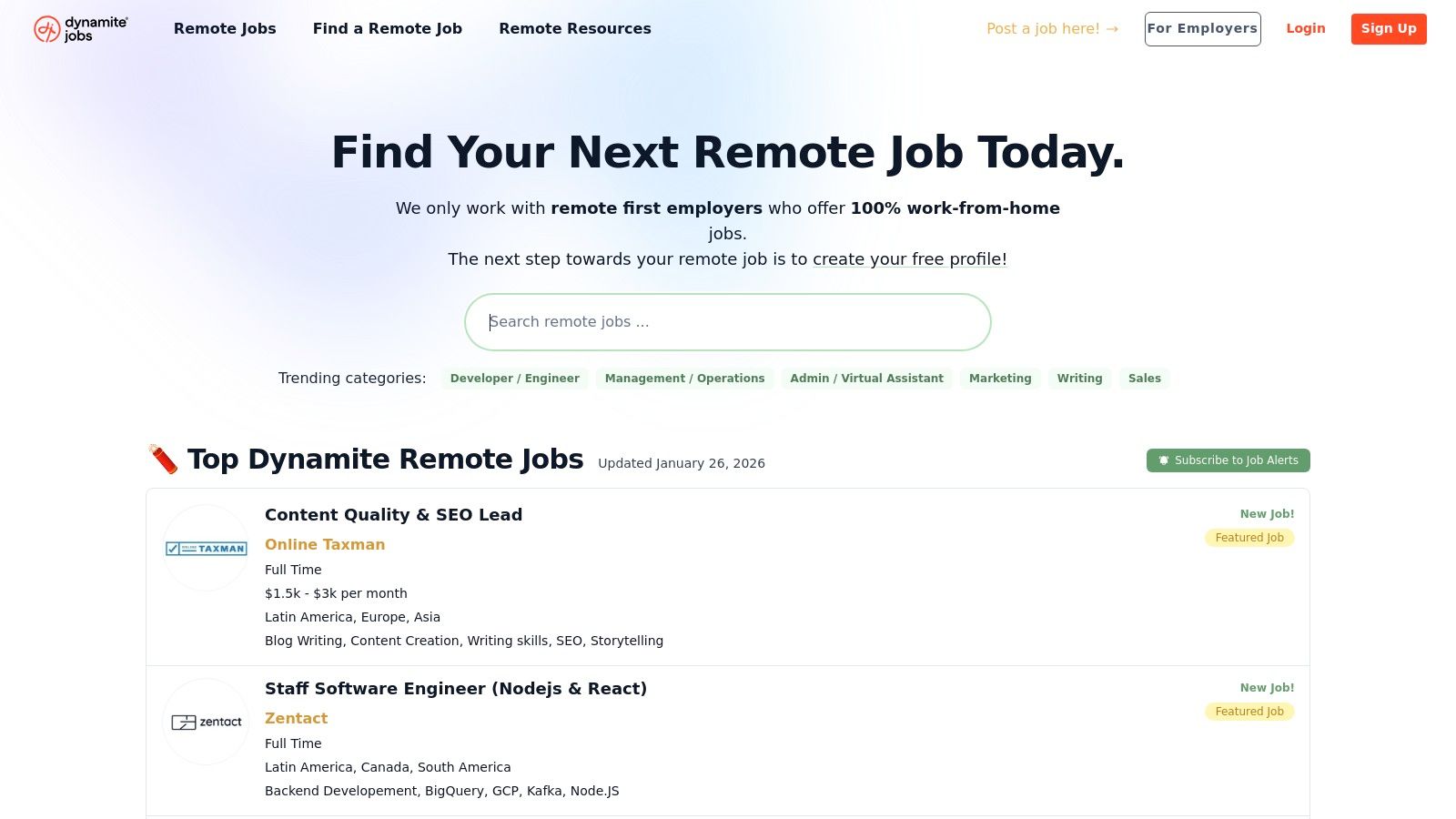
Unlike massive aggregators, Dynamite Jobs emphasizes quality over quantity. Every listing is 100% remote. This eliminates the need to sift through hybrid or location-restricted roles disguised as fully distributed. The platform was built by and for remote entrepreneurs. Therefore, there is a deep understanding of what makes a successful remote team. This results in listings from companies that genuinely value and understand the remote work lifestyle.
The platform provides a refreshing level of transparency. Job seekers can easily browse categories tailored to digital business skill sets. Furthermore, the built-in applicant tracking system helps improve employer responsiveness. This reduces the “application black hole” effect common on larger sites. It’s an environment built for direct connection with boutique, fully remote teams.
How to Use Dynamite Jobs Effectively for Nomad Jobs
To maximize your success on Dynamite Jobs, focus on showcasing skills relevant to their core audience. Highlight your experience in SaaS, e-commerce, or digital marketing. Emphasize your ability to work asynchronously across different time zones. This is a key trait valued by the platform’s employers.
Use the clear category filters to narrow your search to your area of expertise, such as “Marketing,” “Operations,” or “Customer Service.” Since the job inventory is smaller, it’s wise to check the site frequently for new listings. Setting up alerts is less of a feature here. So, proactive, regular browsing is your best strategy. Tailor your resume and cover letter for each application, speaking directly to the needs of a small, fast-moving remote business.
Pro Tip: Pay close attention to the company descriptions in the job listings. Many are bootstrapped, founder-led businesses. Research the company’s story and mission, then reference it in your application to show genuine interest and cultural fit.
Pros and Cons of Dynamite Jobs
| Feature | Pro | Con |
|---|---|---|
| Curation | Tightly curated, 100% remote listings from remote-first companies. | The total job inventory is significantly smaller than on major job boards. |
| Niche Focus | Excellent for non-enterprise roles like marketing, ops, and customer success in SMBs. | Fewer opportunities for highly specialized corporate or enterprise-level positions. |
| Employer Quality | Listings are from companies that are culturally aligned with remote work and asynchronous values. | Some roles, while remote, may still require specific time-zone overlap, often U.S.-based. |
| Cost | Free for job seekers to browse and apply for all listed positions. | The platform’s primary focus is on the employer experience, with fewer candidate-side features. |
Ultimately, Dynamite Jobs is the ideal platform for digital nomads who want to join a small, dedicated remote team where they can make a significant impact. It cuts through the noise of megaboards to connect you with companies that live and breathe the remote-first ethos.
Website: https://dynamitejobs.com
Top 7 Digital Nomad Job Platforms Comparison
This chart provides a quick overview to help you compare the best platforms for finding jobs for digital nomads.
LinkedIn Jobs
- 🔄 Implementation complexity: Moderate — set up profile, saved searches, outreach workflows
- ⚡ Resource requirements: Low monetary cost; time for networking and profile upkeep
- 📊 Expected outcomes: High volume & fast discovery; quality varies — ⭐⭐⭐
- 💡 Ideal use cases: Early application + recruiter outreach; broad U.S. roles
- ⭐ Key advantages: Large U.S. coverage; integrates networking with job discovery
Remote OK
- 🔄 Implementation complexity: Low — simple browsing, RSS/API integration available
- ⚡ Resource requirements: Free access; time to vet listings
- 📊 Expected outcomes: High global volume with recency/pay sorting; mixed quality — ⭐⭐⭐
- 💡 Ideal use cases: Remote‑only hunting across engineering, design, marketing
- ⭐ Key advantages: Remote‑only taxonomy, feeds/APIs and salary tags
We Work Remotely (WWR)
- 🔄 Implementation complexity: Low–Moderate — account required; Pro for full access
- ⚡ Resource requirements: Free/basic account; Pro paid plan for full apply features
- 📊 Expected outcomes: Curated, human‑screened remote listings; variable pay — ⭐⭐⭐
- 💡 Ideal use cases: Focused remote tech/marketing/product roles
- ⭐ Key advantages: Longstanding remote brand; visible employer posting signals
FlexJobs
- 🔄 Implementation complexity: Moderate — account/subscription required; vetted listings
- ⚡ Resource requirements: Paid subscription; career resources and webinars
- 📊 Expected outcomes: Higher signal‑to‑noise; lower scam risk but smaller volume — ⭐⭐⭐⭐
- 💡 Ideal use cases: Flexible, part‑time or non‑tech roles; mid‑career pivots
- ⭐ Key advantages: Human vetting and strong job‑search support resources
Upwork
- 🔄 Implementation complexity: Moderate — create profile, proposals, use platform tools
- ⚡ Resource requirements: Platform fees (0–15%), paid bids (Connects), time to build portfolio
- 📊 Expected outcomes: Direct client contracts and retainers; earnings subject to fees — ⭐⭐⭐
- 💡 Ideal use cases: Freelance projects, portfolio building, short/long contracts
- ⭐ Key advantages: Large marketplace, escrow/payment protection, time‑tracking tools
Wellfound (AngelList)
- 🔄 Implementation complexity: Low — free candidate access; apply via profile
- ⚡ Resource requirements: Free for job seekers; time to tailor startup profiles
- 📊 Expected outcomes: Dense startup listings; high competition and variable comp clarity — ⭐⭐⭐
- 💡 Ideal use cases: Startup engineering/product/marketing roles
- ⭐ Key advantages: Strong U.S. startup presence; straightforward candidate experience
Dynamite Jobs
- 🔄 Implementation complexity: Low — curated remote board with ATS for employers
- ⚡ Resource requirements: Free candidate access; smaller inventory than megaboards
- 📊 Expected outcomes: Tighter curation; lower noise for SMB roles — ⭐⭐⭐
- 💡 Ideal use cases: Remote‑first SMBs, SaaS, e‑commerce — ops/marketing/customer success
- ⭐ Key advantages: Focused remote‑first listings and better employer responsiveness
Your Next Chapter: Building a Sustainable Nomad Career
Embarking on a quest to find the perfect jobs for digital nomads can feel like navigating a vast, uncharted landscape. This article has mapped out the terrain. It provides a detailed guide to seven powerful platforms designed to connect you with sustainable, remote work. We’ve explored everything from the corporate-focused listings on LinkedIn Jobs to the niche, bootstrapped opportunities on Dynamite Jobs. This gives you a comprehensive toolkit to build your location-independent career.
Each platform, from the freelance-centric Upwork to the startup-focused Wellfound, offers a unique pathway. The key is to move beyond simply browsing. You must start building a strategic, multi-platform approach. Your ideal role might be waiting on a mainstream board like We Work Remotely or a highly curated one like FlexJobs. The journey isn’t about finding one perfect tool. It’s about leveraging the right combination of tools to match your skills, lifestyle, and commitment to sustainable travel.
Remember that the foundation of a successful digital nomad life is not just the job itself. It’s also how it integrates with your travel philosophy. The roles we’ve discussed are more than just income streams. They are enablers of a slower, more intentional way of seeing the world. They provide the flexibility needed for long-stay train journeys, walkable city explorations, and a reduced carbon footprint. This aligns your professional life with your personal values.
Choosing Your Job-Hunting Toolkit
Selecting the right platform depends entirely on your professional background and nomad aspirations. A seasoned software developer aiming for a stable, high-paying role with a tech startup will find Wellfound indispensable. In contrast, a creative professional building a portfolio of diverse clients might thrive in the project-based ecosystem of Upwork.
Consider these factors when building your strategy:
- Your Industry: Niche platforms like Dynamite Jobs cater to specific communities (e.g., location-independent businesses). Meanwhile, broader sites like LinkedIn cover every industry imaginable.
- Your Experience Level: Are you an entry-level professional or a senior expert? FlexJobs is excellent for vetted, professional roles, whereas Upwork offers opportunities for all skill levels.
- Your Desired Work Style: Do you prefer the stability of a full-time salaried position or the flexibility of short-term contracts? This will guide you toward platforms like Remote OK for full-time roles or Upwork for freelance gigs.
Ultimately, the most effective strategy involves creating a strong, consistent profile across two or three of these platforms. Tailor your applications, highlight your remote work skills, and be persistent. The right remote job is out there. With these tools, you are better equipped than ever to find it.
Editor’s Pick: The Best Platform for Vetted, Sustainable Roles
For nomads who prioritize quality over quantity and are committed to finding legitimate, flexible work, FlexJobs stands out. Its rigorous screening process eliminates scams and low-quality listings, saving you invaluable time and energy. While it requires a subscription, the investment pays for itself by providing direct access to professional-grade jobs that truly support a sustainable, long-term travel lifestyle. It is the ideal starting point for serious job seekers.
Key Takeaways
- Diversify Your Search: Don’t rely on a single job board. Use a combination of platforms like LinkedIn, Remote OK, and a niche site like Dynamite Jobs to maximize your opportunities.
- Align Job with Travel Style: The best jobs for digital nomads are those that support your travel philosophy, whether it’s long-stay bases or slow-travel rail journeys.
- Quality Over Quantity: Vetted platforms like FlexJobs can be worth the investment by filtering out scams and connecting you with high-quality, professional remote roles.
- Freelancing Offers Flexibility: For ultimate freedom and control over your schedule, freelance platforms like Upwork are unparalleled, allowing you to build a career around your travel plans.
- Startups are Nomad-Friendly: Wellfound is a goldmine for finding roles in innovative, remote-first startups that often embrace the digital nomad ethos.
- Networking is Crucial: Use platforms like LinkedIn not just for job searching but for building a professional network that can lead to future remote opportunities.
This article was fact-checked using sustainability data from the World Green Building Council, the Global Ecotourism Network, and peer-reviewed architecture studies. All partner links are vetted for compliance with sustainable business certifications. Ready to take the next step and design a travel life that aligns with your new remote career? At Eco Nomad Travel, we specialize in crafting sustainable travel plans, from rail-first itineraries to minimalist packing guides. Let us help you integrate your work with a low-impact, meaningful travel lifestyle.
Join the Sustainable Work Movement
Want more rail-first itineraries, low-impact packing systems, and walkable base-city ideas?
FAQ: Jobs for Digital Nomad Careers (Remote Work Platforms)
These answers cover the most common questions about finding jobs for digital nomad lifestyles using the platforms in this guide. Each FAQ is written to help you avoid location-restricted listings, spot remote-friendly employers, and build a sustainable, slow-travel career.
Getting Started With Jobs for Digital Nomad Work
1) What are the best jobs for digital nomad beginners?
Beginner-friendly options include virtual assistant roles, customer support, content writing, social media coordination, basic graphic design, and entry-level QA/testing. Start with roles that have clear deliverables and strong documentation, since these are easier to do asynchronously while you travel.
2) What skills matter most to land jobs for digital nomad roles quickly?
Remote-friendly skills that hire fast include customer support tools (Zendesk/Intercom), basic marketing (email + social), writing/SEO, project coordination (Notion/Asana/Trello), and a specialty you can prove with a portfolio (design, dev, analytics). Employers prioritize communication, reliability, and self-management as much as hard skills.
3) How do I choose the right job board for my goals?
Use LinkedIn for volume and networking, Remote OK for remote-only speed and tags, WWR for curated remote roles, FlexJobs if you want vetted listings, Upwork for freelance projects, Wellfound for startups, and Dynamite Jobs for remote-first SMBs and SaaS teams.
4) Should I focus on employee roles or freelancing first?
If you want stability for long-stay travel, employee roles are simpler (predictable income and fewer clients). If you want maximum flexibility and faster entry, freelancing can work well—especially if you can package one clear service and deliver it repeatedly. Many nomads start freelance and transition into a salaried role once their remote track record is strong.
5) How many platforms should I use at the same time?
Two to three is the sweet spot. One high-volume platform (LinkedIn), one remote-only board (Remote OK or WWR), and one niche option that matches your path (FlexJobs, Upwork, Wellfound, or Dynamite Jobs). This keeps your pipeline full without spreading your effort too thin.
Filtering for Truly Remote and Location-Independent Roles
6) How can I tell if a listing is truly location-independent?
Look for language like “work from anywhere,” “global,” or “worldwide.” Then scan for hidden constraints: “must be in X country/state,” “must overlap PST,” or “eligible to work in the EU/US.” If the job requires specific legal work authorization in a single country, it may still be remote—but not nomad-friendly.
7) Why do some “remote” jobs still require a specific region?
Most restrictions come from payroll compliance, taxes, data protection rules, and customer support time-zone coverage. Many companies can’t legally hire globally without an employer-of-record (EOR) partner, so they limit hiring to places where they already operate.
8) What does “asynchronous work” mean and why does it matter?
Asynchronous work means you don’t need to be online at the same time as your team all day. You collaborate through documented updates, tickets, and clear handoffs. For slow travel, async work is crucial because it reduces time-zone stress and lets you take trains, explore cities, and still meet deadlines.
9) What are the best search filters to use on LinkedIn for nomad work?
Use “Workplace type: Remote,” then add “Date posted: Past 24 hours” or “Past week.” Save multiple searches with different keyword variations (e.g., “remote operations,” “remote marketing coordinator,” “remote customer success”). Always open the description to confirm there are no hidden location limits.
10) Which platform is best for global “work from anywhere” roles?
Remote OK often makes global eligibility easier to spot via tags like “Worldwide.” FlexJobs can be excellent if you filter for fully remote plus location flexibility, but many vetted roles are still country-restricted. For true location independence, prioritize listings that explicitly say worldwide/global.
Applications, Profiles, and Getting Hired
11) How do I tailor my resume for jobs for digital nomad roles?
Use a “remote-ready” summary at the top, show results with numbers, and highlight async tools (Slack, Notion, Jira, Loom). Add one line that signals reliability: “Experienced working across time zones with documented, asynchronous workflows.” Keep it scannable and role-specific.
12) What should I write in a cover letter for remote-first companies?
Keep it short. Mention one relevant result, confirm your time-zone overlap (or async preference), and show how you communicate and ship work without hand-holding. Remote-first teams hire people who are clear, proactive, and dependable.
13) How quickly should I apply after a job is posted?
As fast as possible—ideally within 24–48 hours—especially on high-traffic boards. Early applications get reviewed first and can bypass the late-stage pile-up. Set alerts where available and do a daily scan on boards that don’t emphasize alerts.
14) How do I avoid scams when searching for jobs for digital nomad work?
Red flags include requests for upfront payments, “check deposit” schemes, vague company names, and off-platform pressure (Telegram-only interviews). Verify the company domain, check LinkedIn presence, and confirm roles are posted on the official career page when possible.
15) What portfolio projects help the most if I have limited experience?
Create 2–3 realistic, job-relevant samples: a mock customer support knowledge base, a short SEO content cluster, a simple landing page, a Notion project dashboard, or a small data report. Hiring managers want proof you can deliver without constant supervision.
Sustainable, Slow-Travel Logistics for Remote Work
16) How do I plan work hours while traveling by train?
Batch meetings on non-travel days, keep travel days async-only, and schedule your deep work for mornings. Choose trains with reliable onboard service when possible, but plan as if you’ll be offline—download docs and set expectations ahead of time.
17) What internet setup is best for digital nomad remote work?
Use a local SIM/eSIM plus a backup option (second eSIM or portable hotspot). Always test speed at your accommodation on day one. If you do video calls, prioritize stable upload speeds, not just fast downloads.
18) Which types of remote jobs best support slow travel and long stays?
Async-friendly roles with predictable deliverables work best: writing, design, development, operations, analytics, and many support roles. Jobs with heavy live-call schedules can be harder unless you stay in a compatible time zone for several months.
19) How do I talk to employers about time zones without losing the offer?
Lead with outcomes: confirm you can meet deadlines and provide overlap windows. Offer a practical plan (e.g., “I’m available 2–3 hours overlap with your core hours; the rest is async updates and documented handoffs”). Clarity reduces fear for hiring managers.
20) What’s the fastest path to a stable remote income for long-term nomad life?
Pick one role type, build a portfolio that matches it, apply daily for 30–60 days across 2–3 platforms, and track results (responses per 10 applications). If you need income immediately, combine a part-time remote role with 1–2 freelance retainers until you land a full-time position.
